Compare beds, group rooms, baths and the final journey to AMANeK, Court, ART, OMO7, CABIN, WBF and Takasago Onsen, with dates and booking details for the 2026–2027 Asahiyama Zoo shuttle.
- Region & Focus
- Asahikawa
- Reading Scope
- 26 min read · 14 chapters · 4 Q&As
- Official Verification
- 25 official sources checkedUpdated 31 October 2026
- Key Topics
- Where to stayBookingHot springs
Chapter Route Map (tap any stop)
- Choose your location around tomorrow's train, the zoo or an evening of bathing
- AMANeK Asahikawa: three beds in Superior Triple, an extra bed in Deluxe Triple
- Court Hotel Asahikawa: Japanese-style options for four to six guests
- ART Hotel Asahikawa: three 120 cm beds or connecting rooms for six
- ART's Spa Alpa and children's amenities: allow time to use them
- OMO7 Asahikawa: the third guest uses a sofa bed in Superior and Polar Bear Rooms
- The 2026–2027 zoo shuttle: book by the day before and return from the east gate
- CABIN Asahikawa: natural hot springs near the station, with a sofa bed for the third guest
- WBF Grande Asahikawa: two minutes from the east exit, with bath hours and child charges to compare
- Takasago Onsen rooms: standard tatami rooms, group rooms and three special hot-spring rooms
- Takasago's communal baths, family baths and dinner hours
- The final leg to Takasagodai: buses 53 and 630 to 8-chome
- Drivers need the right car park entrance; car-free guests need the right luggage store
- Arrival and departure days: connect airport buses, luggage storage and late check-in
- Quick Q&A
A hotel two or three minutes from the station is useful when you arrive in Asahikawa with luggage at night and need a JR train the next morning. If Asahiyama Zoo is your main outing, a hotel with a bookable return shuttle may save more travel. Three adults also need to check how the third person sleeps: in a permanent bed, an extra bed or a sofa bed. Choose the station area for a transfer day, consider consecutive nights in the city centre for a full zoo day, and set aside a whole evening in Takasagodai if you want natural hot-spring water in your room.
Choose your location around tomorrow's train, the zoo or an evening of bathing
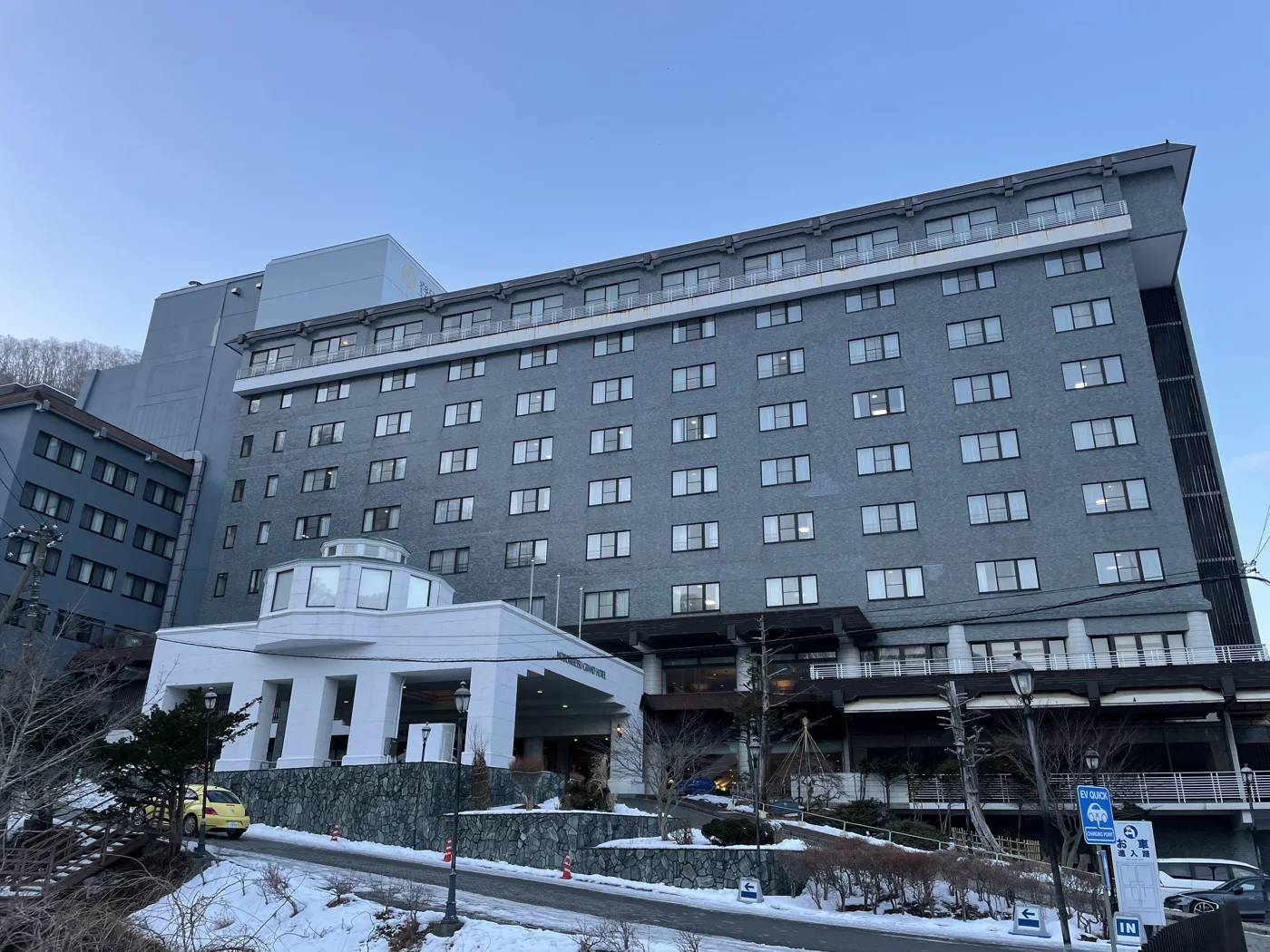
The north side of Asahikawa Station is the starting point for this hotel list. AMANeK, Court and CABIN are all near Ichijo-dori. You can leave your bags in your room, go out for dinner and return to the station for a JR train or bus the next day. Their differences are quite specific: AMANeK has a room with three 100 cm beds, Court has larger Japanese-style and Japanese-Western rooms, and CABIN brings a natural hot spring to the station area. Ranking your essential requirements is often quicker than comparing hotels by star rating.
Further north, around Rokujo-dori and Shichijo-dori, OMO7 and ART suit a city-centre stay. Both are more than ten minutes' walk from the station, but each has an Asahikawa Airport bus stop nearby. Arriving by air therefore involves a different journey from arriving by JR. With luggage in winter, compare the distance from the bus stop to the entrance: Rokujo Kyuchome and Shichijo Showa-dori are the stops to look for.
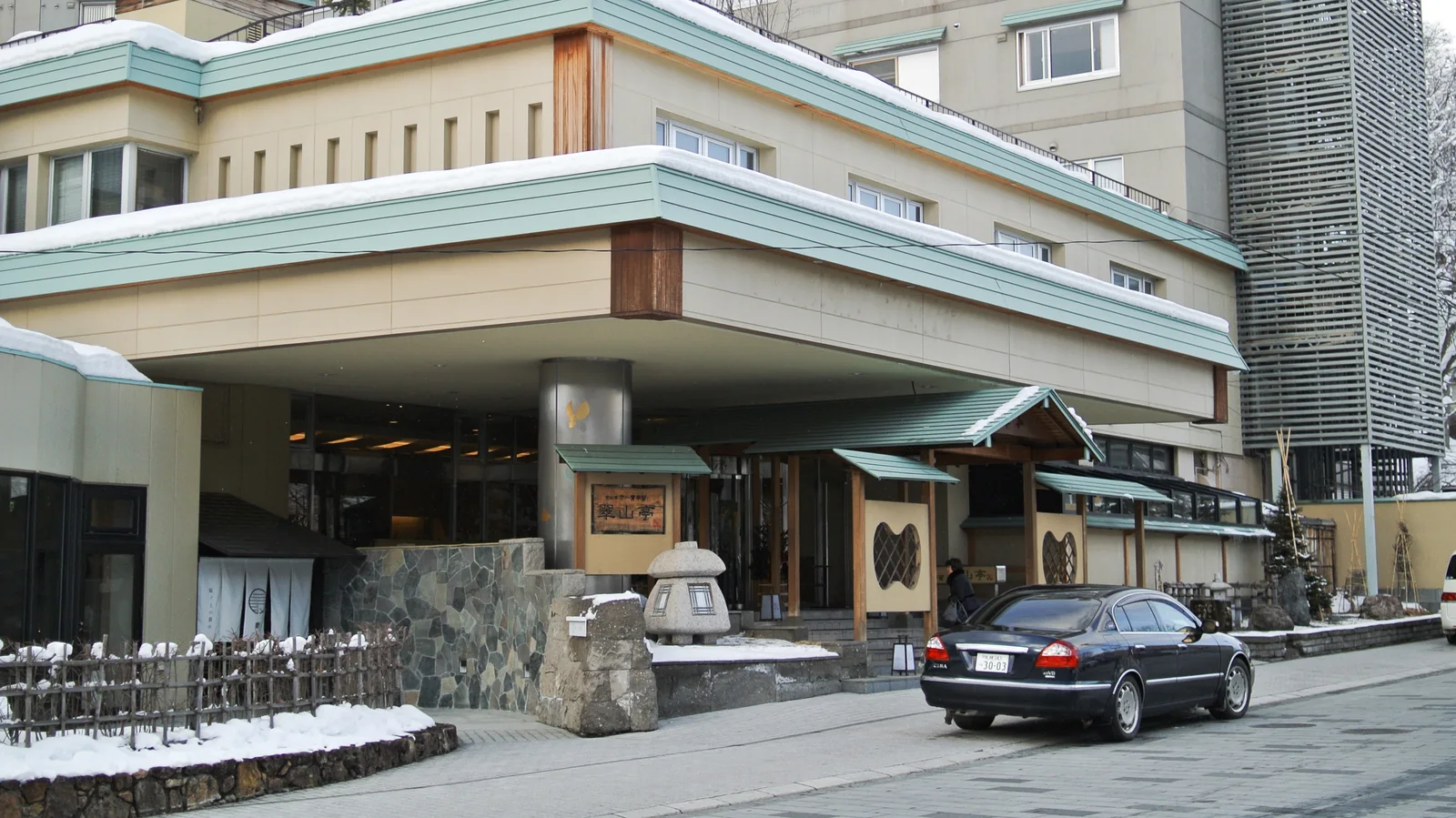
Takasagodai lies west of the centre. It suits an evening built around dinner, baths and your room. Takasago Onsen offers standard Japanese-style rooms, large rooms and rooms with natural hot-spring baths; the final leg is by local bus or taxi. A station hotel saves return journeys if you only plan to drop off luggage before heading back out for shopping and dinner. You will make better use of Takasagodai's rooms and facilities if you arrive early and settle in after dinner. The Asahikawa, Furano and Biei base guide also covers rooms, children's policies and arrival details for JR Inn Asahikawa and Dormy Inn Asahikawa, for comparison with this list.
| Hotel | Example room | Area | Beds or guest arrangements |
|---|---|---|---|
| AMANeK Asahikawa | Superior Triple | 23 m² | Three 100 cm beds |
| AMANeK Asahikawa | Deluxe Triple | 30 m² | Two 120 cm beds; an extra 100 cm bed for the third guest |
| Court Hotel Asahikawa | Japanese-Western suite | 53.9 m² | Two to five guests; Separate or Fusion |
| Court Hotel Asahikawa | 14-tatami Japanese-style room | 45 m² | Two to six guests |
| ART Hotel Asahikawa | Superior Triple | 24 m² | Three 120 cm beds; an extra bed for a fourth guest |
| OMO7 Asahikawa | Superior Room | 27–30 m² | Two 110 cm beds; sofa bed for the third guest |
| CABIN Asahikawa | Deluxe Twin/Triple | 22 m² | Two 100 cm beds; sofa bed for the third guest |
Compare beds, group rooms, baths and the final journey to AMANeK, Court, ART, OMO7, CABIN, WBF and Takasago Onsen, with dates and booking details for the 2026–2027 Asahiyama Zoo shuttle.
AMANeK Asahikawa: three beds in Superior Triple, an extra bed in Deluxe Triple
For three adults who each want a standard bed, start with HOTEL AMANEK Asahikawa's Superior Triple. The official site lists 23 m², one to three guests and three beds each 100 cm wide. The address is 218, Ichijo-dori 8-chome, Asahikawa. It suits three friends or children who already need their own beds.
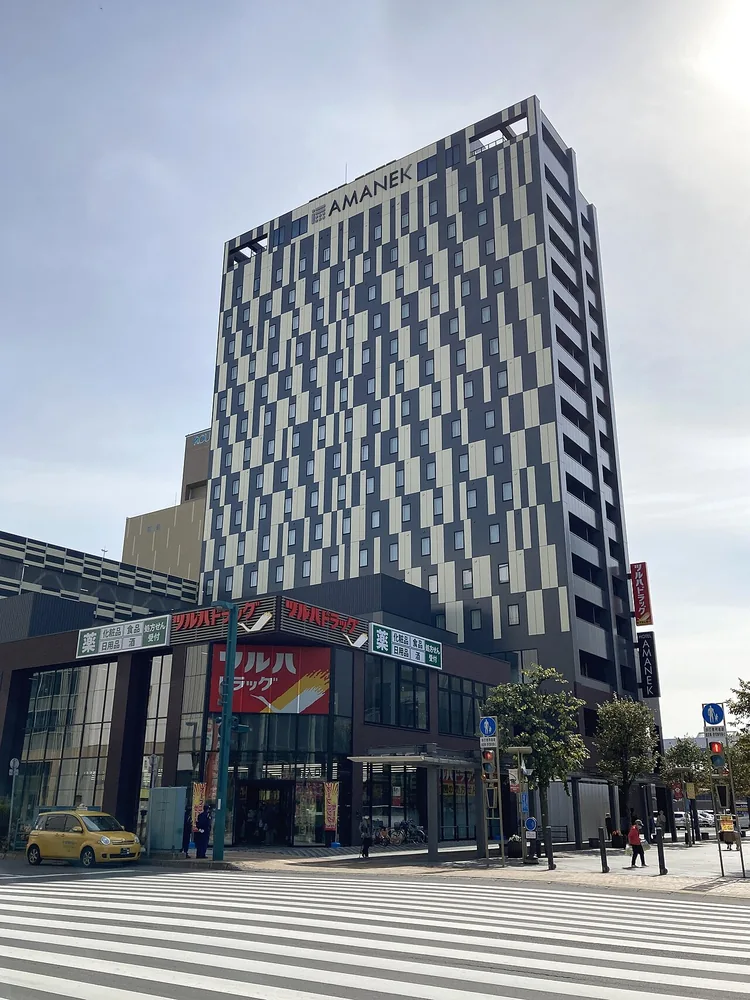
The Deluxe Triple is 30 m², with two 120 cm beds and an additional 100 cm bed for the third guest. Both are triple rooms: one uses its space for three narrower beds; the other combines two wider beds with an extra bed. Choose the latter if the two main users want 120 cm beds. Superior Triple is the more direct choice if all three want equal bed widths. Keep the two English room names side by side when comparing bookings.
For two people sleeping separately, the 17 m² Standard Twin has 100 cm beds, while the 19 m² Moderate Twin has two 120 cm beds. Both list beds that can be joined on request. The two- and three-person rooms have storage beneath raised beds for suitcases. For several nights, keeping frequently used clothes in one bag helps keep the floor clear, particularly after the third bed is made up.
The room equipment list specifies a shower cubicle. The top floor also has the Shiki-no-Yu bath with a view. The facilities page lists bathing hours of 15:00–01:00 the next day and 05:00–09:00; check-in is 15:00 and check-out 11:00. There is time for a bath before breakfast or after returning from dinner. If you need a bath in your room, compare CABIN's rooms with a prefabricated bathroom unit.
Court Hotel Asahikawa: Japanese-style options for four to six guests
The Court Hotel Asahikawa rooms page offers a broad choice. The address is 50-1, Ichijo-dori 9-chome, and the official access page gives a two-minute walk from Asahikawa Station. Three adults can choose the 22.9 m² Triple, which sleeps three and has 100 cm beds. The hotel has only three of these rooms.
For grandparents and children who would benefit from two separate areas, consider the two 53.9 m² Japanese-Western suites. Separate keeps the tatami area apart from the Western-style room. Fusion has sliding doors between the two, which can be opened to create a single space. Each sleeps two to five, and there is only one of each type. Separate suits families with different routines; Fusion lets you change the division between daytime activities and sleep. These rooms give family members separate places to sit, rest and sort their belongings.
For six people in one room, consider the 45 m², 14-tatami Japanese-style room, which sleeps two to six; there are two. The 31 m², eight-tatami Japanese-style room sleeps three, and there is just one. Sleeping in the tatami area allows more of the floor to be cleared during the day. For older travellers who find getting up from the floor difficult, Western-style beds or two twin rooms usually work better. Grouping people with similar bedtimes also reduces disruption from lights being switched on and off.
The 59 m² Maisonette Suite has a living room downstairs and a bedroom upstairs. It sleeps two to four, and there are three. It suits families who want a separate living room, but requires stairs within the room. A single-level Japanese-Western suite is easier with toddlers or companions who move slowly. Once you decide that four or five people will share, search for the specific room type: these large rooms are scarce. A last-minute search for four adults can easily leave you choosing two standard rooms.
ART Hotel Asahikawa: three 120 cm beds or connecting rooms for six
For three wider beds, start with ART Hotel Asahikawa's Superior Triple. The current official site lists 24 m² and three 120 cm beds, with an extra bed available for a fourth person. Comfort Triple is listed at 26 m² with 110 cm beds. Check the names and dimensions carefully: the larger Comfort room has narrower beds than Superior. Choose by the beds you need. A fourth bed takes up floor space, while four people also need more room to open suitcases and sit down for a snack. Four adults with plenty of luggage can compare the price of a triple with an extra bed against two twins, then decide how much they value sharing one room.
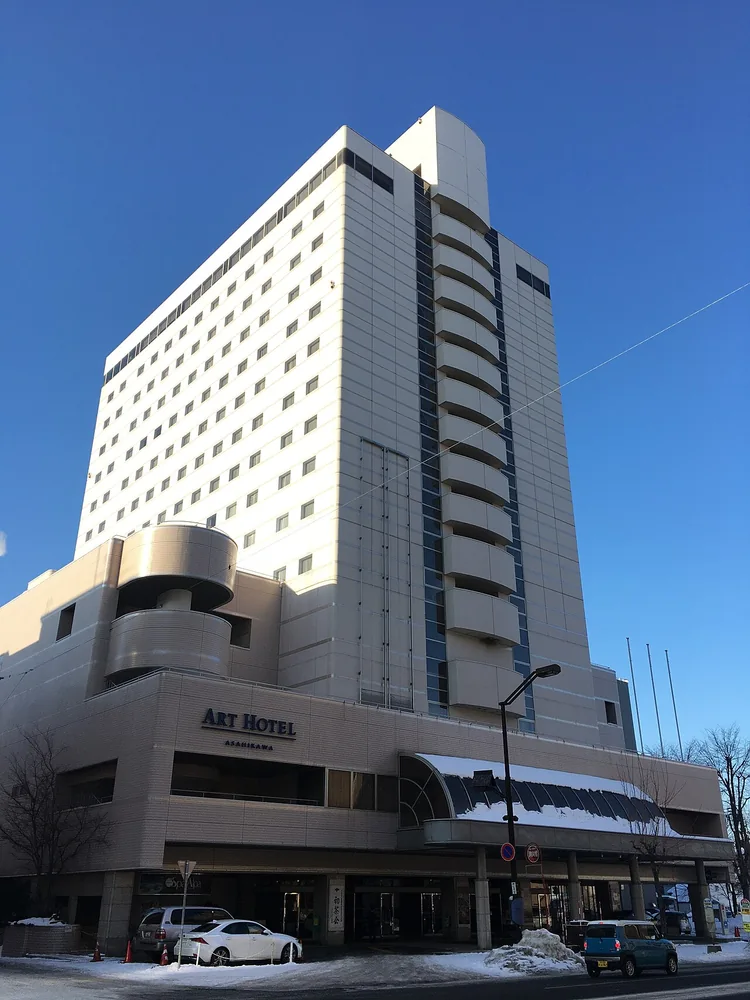
For a family of six or two families travelling together, the official site also lists Connecting Comfort Twin for up to six guests. Connecting rooms retain two living spaces while allowing easy access between them. Use the full Connecting room name when booking so the reservation specifies that layout. Adults and children can keep different routines.
The hotel is at Shichijo-dori 6-chome. It is about 15 minutes on foot or five minutes by taxi from JR Asahikawa Station's north exit. A city-bound bus from Asahikawa Airport stops at Shichijo Showa-dori in front of the hotel. Beds, group arrangements and a convenient airport bus stop can all justify choosing it. Allow for the journey back to the station if you have an early JR train.
ART's Spa Alpa and children's amenities: allow time to use them
Spa Alpa is for overnight guests only. It has two types of sauna, jet baths, reclining baths and a cold-water bath. Hours are 15:00–24:00 and 06:00–10:00 the next morning; the FAQ also gives last admission as 23:00. Guests use it free of charge. Bring your room key for the entrance and the women's bath security door, and take towels from your room. An evening bath after dinner in town or a short morning visit fits within normal stay hours.
For families, ART's accommodation FAQ says preschool children sharing an existing bed receive free accommodation and breakfast. Children's pyjamas in 95 cm and 115 cm sizes, toothbrushes and slippers are available. Bed guards can be borrowed free of charge. A limited number of cots for babies up to about one year old are also available, but some rooms cannot accommodate them. Give the reservations team your room name and equipment request when choosing a room. Bed guards and cots serve different needs.
The fitness area is inside Spa Alpa and keeps the same hours. Children of primary-school age and younger cannot use it; adults must bring their own sports shoes and clothing. One adult can stay with the children in the room while the other bathes or exercises. Extra space in a group room or connecting rooms becomes useful here, beyond the stated guest capacity, and children who need a nap can return early.
ART's tattoo rules are specific: exposed tattoos are prohibited in the baths, but guests may enter if they cover them with the designated patches sold at the ground-floor reception. Special clean bathing garments used to cover surgical scars are also welcome. Compare these conditions alongside the location and opening hours. If natural hot-spring water is a priority, look next at CABIN or WBF.
OMO7 Asahikawa: the third guest uses a sofa bed in Superior and Polar Bear Rooms
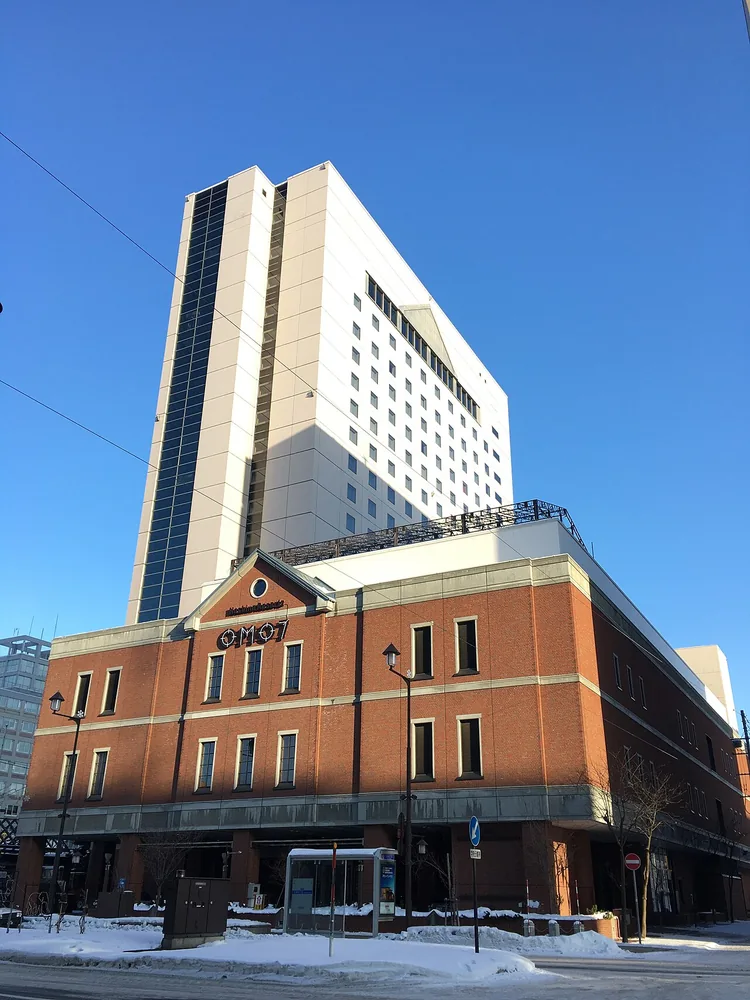
OMO7 Asahikawa by Hoshino Resorts is at Rokujo-dori 9-chome. Its animal-themed rooms and Asahiyama Zoo talks can make the hotel part of a zoo trip. Children interested in animals can attend a talk the evening before visiting the zoo. The official site lists a closure from 4 to 10 November 2026.
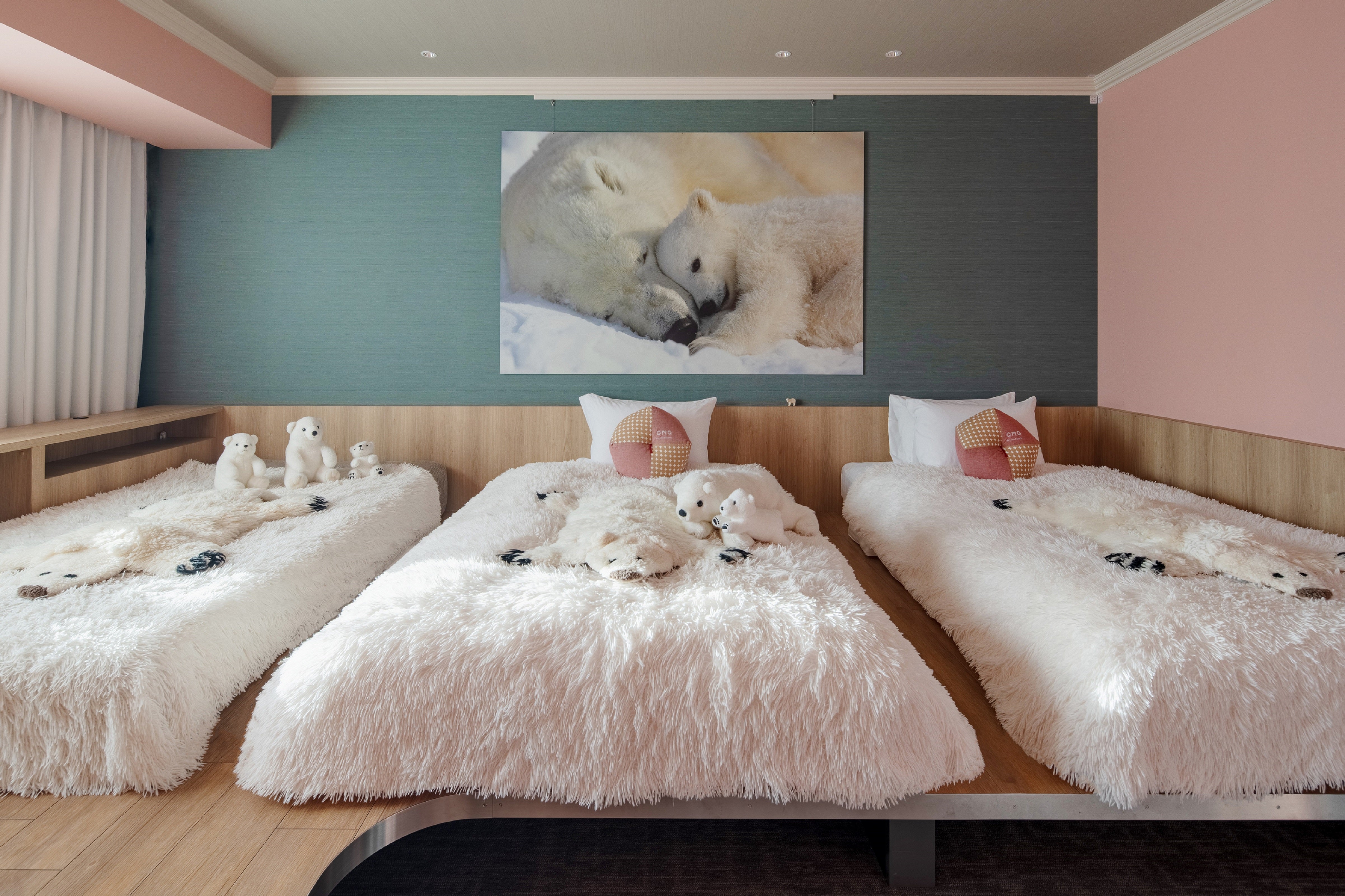
The standard Superior Room is listed at 27–30 m² for one to three guests, with two 110 × 195 cm beds. The third guest sleeps on the lounging sofa, also 110 × 195 cm, and guests lay out the bedding themselves. The Polar Bear Room has the same listed size, capacity and third-bed arrangement. Compared with three permanent beds, this layout leaves a larger sofa available during the day. With three adults, one lounging space becomes a bed at night.
For two guests, the 18 m² Studio Room has two 110 cm beds in an L-shaped layout and luggage storage underneath. Each person has a bed, with a table beneath the light. It suits a pair who spend most of the day out and return to rest. Superior's 27–30 m² gives more room for long conversations or children's activities. The hotel allows children aged six and under to share existing beds. The maximum number sharing per room is the room's stated capacity. Enter adults, children and those needing bedding together in the booking.
OMO7's access page gives about 15 minutes on foot or five minutes by taxi from Asahikawa Station. The airport bus takes about 50 minutes to Rokujo Kyuchome. Travelling directly from the airport saves the walk north with luggage after getting off at the station. The airport bus is also an option on departure, while onward JR journeys still start at the station. Separating the two arrival routes is especially useful for a winter city-centre stay.
The 2026–2027 zoo shuttle: book by the day before and return from the east gate
The OMO7 Asahiyama Zoo page lists a free return bus from 1 December 2026 to 5 April 2027, excluding the zoo closure from 30 December to 1 January. It is for overnight guests and requires a reservation by the previous day. If the shuttle is a reason for choosing the hotel, put the zoo on a full day after arrival. Arrive and arrange the reservation the evening before, then leave from the hotel in the morning.
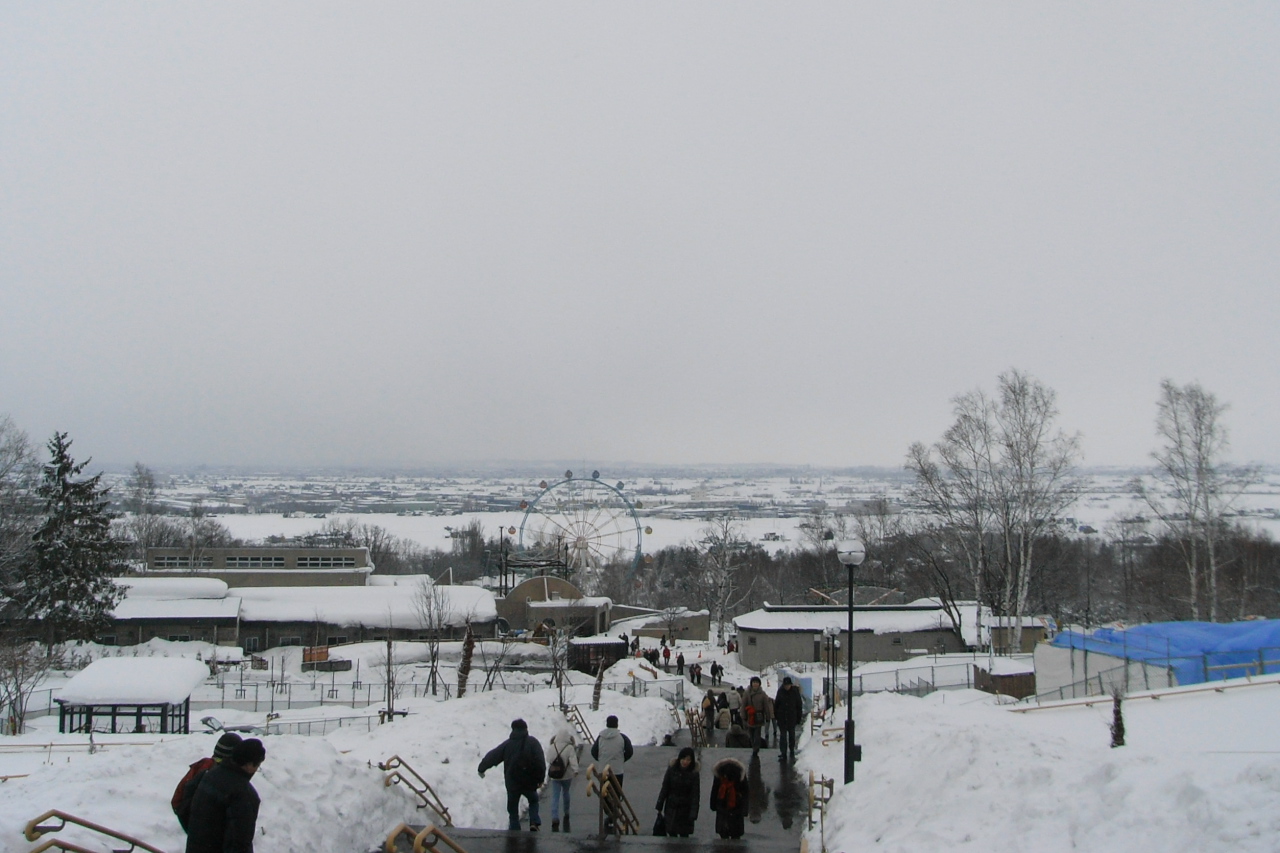
The official page lists outward departures at 10:00 and 11:30 and return departures at 14:00 and 15:30. The 11:30 and 14:00 services have different operating arrangements by date. Use the combinations available on your date's booking page to set your visit length. Leaving at ten and returning later in the afternoon gives a different pace from entering around midday. If a child needs a nap, first check whether the earlier return runs. Allow a longer stay if you want to cover more of the zoo.
Meet in the hotel's ground-floor lobby for the outward trip and at the zoo's east gate for the return. Save the exit on your phone using Google Maps for Asahiyama Zoo's east gate. The bus leaves on time, so finish your visit in the direction of that exit. The hotel shuttle and normal route buses have their own waiting areas. For two nights, attend a talk on the first evening, make the zoo the main outing on day two, then return for dinner or a walk in town. This is easier than repeatedly changing hotels. If you stay one night and visit after checking out, plan the JR or airport connection after the shuttle returns to the hotel. This helps everyone choose between the earlier and later return.
CABIN Asahikawa: natural hot springs near the station, with a sofa bed for the third guest
Premier Hotel-CABIN-Asahikawa's Deluxe Twin/Triple is the same 22 m² room type for one to three people. It has two 100 × 200 cm beds; a sofa bed provides the third sleeping place. With two guests the sofa remains seating, while with three it becomes a bed. A prefabricated bathroom unit in the room suits guests who want to bathe privately as well as use the communal baths.
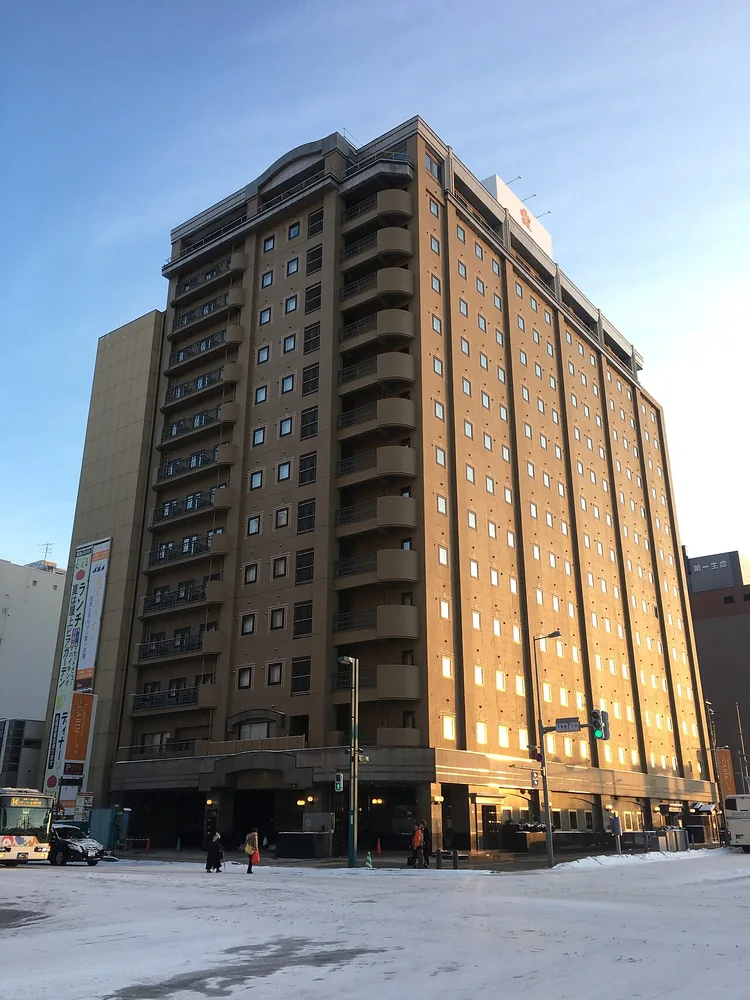
The hotel is at Ichijo-dori 7-chome. The official site gives a three-minute walk from Asahikawa Station and five minutes from the bus transfer area outside it. Compared with AMANeK and Court, CABIN's main distinction is the Kagura-no-Yu natural hot spring. There is no additional bathing fee for hotel guests, and the station remains easy to reach next morning.
The hot-spring page lists guest hours of 14:00–10:00 the following day, allowing overnight use. The men's and women's baths switch on Sundays, when the hours change. Take the bathing ticket from your room on your first visit, and bring room towels. Overnight opening is useful if you return late from dinner. A short walk and an evening soak can both be part of this station-area stay.
Children sharing beds are limited to one per bed. Beds in some twin rooms can be moved together by prior arrangement. A few bed guards are available, but there are no cots or pushchairs. The hotel does not normally serve lunch or dinner; banquet and group dinners require advance booking. With a breakfast-inclusive plan, therefore, arrange dinner in town. The baths exclude guests with tattoos or who are intoxicated. Adults should arrange bathing and supervision when bringing children.
WBF Grande Asahikawa: two minutes from the east exit, with bath hours and child charges to compare
The official introduction to Hotel WBF Grande Asahikawa gives about two minutes on foot from Asahikawa Station's east exit. Minapirika-no-Yu, its natural hot spring, is on Level 2. The hotel is at Miyashita-dori 10-chome. If a hot spring near the station matters, compare it with CABIN by arrival exit, room type and bathing hours.
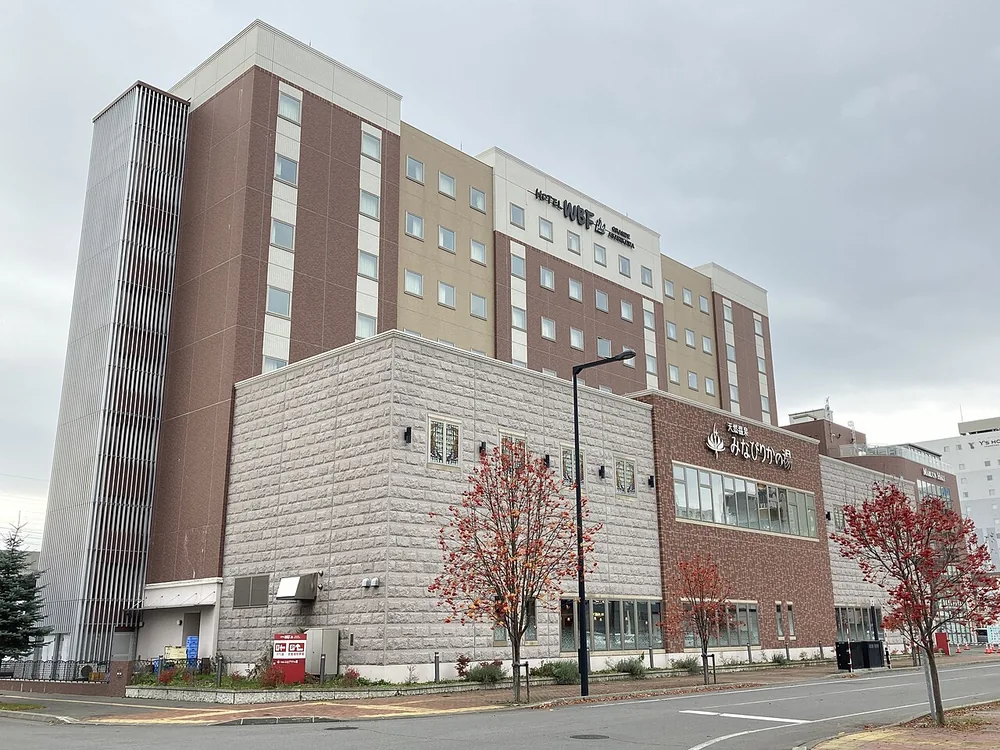
The baths open 06:00–24:00 and the sauna 06:00–23:00. Facilities include an outdoor bath, carbonated-water bath and jet bath. Unlike CABIN's overnight opening, WBF suits a bath before midnight and another after six in the morning. Set out the order of dinner, returning to the hotel and packing to see which timetable works better.
The hotel's FAQ says preschool children sharing an existing bed stay free, but each pays a separate ¥550 admission fee. Children of primary-school age and above pay the adult room rate. There are no cots. Add this admission fee when comparing the total for a young child with plans that charge for children's breakfast. Separating room, admission and breakfast charges shows the difference between a booking for two adults and one child and one for two adults. Bath rules are clear for young children: those wearing nappies may use only the showers. Children aged seven or over, or at least 120 cm tall, must use the bath for their sex. Primary-school children cannot bathe alone. Anyone needing adult help must have a carer of the same sex. Parents supervising children of different sexes can decide who accompanies whom and take turns after dinner.
Takasago Onsen rooms: standard tatami rooms, group rooms and three special hot-spring rooms
The Asahikawa Takasago Onsen rooms page separates accommodation by use. Main-building Japanese-style rooms such as Tokachi have eight to 14 tatami mats and a window-side seating area; some have night views. Annex rooms such as Suisho have eight to 12 tatami mats and are recommended for two to four people. The inn is at Takasagodai 8-chome. The whole property closed on 27 October 2026 for a boiler inspection, suspending both overnight stays and day bathing.
Groups of six to ten can consider large rooms such as Takachiho. These suit families, friends or residential groups who want to stay together better than squeezing extra people into a twin. Smaller parties can choose a twin or a six-tatami single Japanese-style room. The range lets guests match space to party size. Standard and large Japanese-style rooms centre on a shared tatami living area. Choose two smaller rooms if separate bedrooms matter.
For natural hot-spring water in your room, consider the two rock-bath special rooms on Level 3, Icho and Nanakamado. Nikko is a rooftop outdoor-bath special room occupying Level 4, the top floor. Stairs lead up and down to the outdoor bath above the room. With older relatives or children, access matters more than the names: the rock-bath rooms offer a straightforward arrangement close to the room; choose the rooftop space with its stairs in mind.
A private bath lets family members bathe in turn within their accommodation. It suits an evening spent at the inn before returning to the city the next day. Select the room labelled as a special room with a rock bath or rooftop outdoor bath, making the bath you want part of the room specification.
There are only two rock-bath rooms and one rooftop-bath room, so prioritise them once dates are fixed. Standard Japanese-style rooms suit travellers who plan to spend most of their time in the communal baths and other facilities.
Takasago's communal baths, family baths and dinner hours
Takasago Onsen's large communal baths use groundwater. Natural hot-spring water is supplied to certain special rooms and the separately charged family baths. The baths page describes rock baths, medicinal baths, saunas and family baths. Choose a special room from the previous section if a natural hot-spring bath in your room is the main purpose. A standard room and communal facilities suit a family who want to try different baths and spend time around the property afterwards.
The rooftop communal outdoor bath is listed as a summer facility. There is also a new ground-floor outdoor bath. For a winter stay, include the ground-floor baths in your route and plan rooftop views around seasonal opening. The homepage also excludes people with tattoos, tattoo stickers or who are intoxicated. This rule directly affects whether this bathing accommodation suits you.
The restaurant closes on Tuesdays, but opens on public holidays. Weekday lunch is 11:30–14:00, with last orders at 13:30; dinner is 17:00–20:30, with last orders at 20:00. On weekends and public holidays it opens continuously from 11:30 to 20:30. For one night, you could arrive towards evening, eat dinner, then return to your room to unpack and bathe. If meals are included in your booking, use the meal arrangements specified in that plan.
The restaurant serves set meals, ramen, curry and rice bowls, so children need not order the same set as adults. Soba, udon and ramen are boiled in the same pot. Travellers with a buckwheat allergy should avoid these shared-pot noodles and tell staff which ingredient causes the allergy. A children's activity area, manga and retro games offer ways to spend time after bathing. With children at an outlying hotel, dinner and somewhere to spend the evening also shape how comfortable the stay is.
HBC programme from 25 October 2022, featured on Takasago Onsen’s website and published by the property’s official channel.
The final leg to Takasagodai: buses 53 and 630 to 8-chome
The official Takasago Onsen access page gives a walk of about six minutes from Asahikawa Station to Ichijo-dori 7-chome, followed by about 30 minutes on Dohoku Bus 53 or 630. Get off at Takasagodai Hacchome and walk one minute to the inn. From the airport, first travel to Asahikawa Station, then take this local bus. Save the Takasagodai Hacchome bus stop map on your phone.
This leg works well in daylight with just the luggage needed for the night. Eat and buy supplies near the station before waiting at Ichijo-dori 7-chome, then base the evening at the inn. With several suitcases, or if you reach Asahikawa at dinnertime, a taxi from the station is easier to connect. The hotel lists about 15 minutes by taxi from the station and about 30 minutes by car from the airport.
For the zoo after a Takasagodai stay, split the trip into a return to the city and onward transport towards the zoo, or use a pre-booked vehicle throughout. This is a different choice from OMO7's direct shuttle: Takasagodai puts space and bathing at the centre of the evening, with the zoo journey arranged separately. For car-free families planning outings on two consecutive days, staying in the centre usually makes luggage and meeting times easier to manage.
Drivers need the right car park entrance; car-free guests need the right luggage store
Reaching the hotel street is only part of driving there. The Court access page lists 25 on-site parking spaces, a 155 cm height limit and a charge of ¥1,100 per night. Reservations are not accepted; taller vehicles are directed to nearby parking. Families hiring an SUV can compare its actual height with this limit. One person can unload while another parks, saving everyone a drive around the block.
AMANeK uses the adjoining D-Parking Asahikawa Ekimae. A dedicated passage connects Level 3 of this self-parking facility with Level 3 of the hotel. The official site lists ¥1,000 for 24 hours, payable at the car park. With children and bags in snow, this route into the building is useful. Compare it alongside the three-minute walk from the station. The hotel is on Ichijo-dori, within walking reach of city shopping and dining.
CABIN parking is first come, first served, with no reservations. The vehicle type affects the nightly charge, listed at ¥800–1,100. Vans, SUVs and estate cars may be sent to partner or coin-operated car parks. These arrangements do not allow taking the car out during the parking period. If you want to drive to dinner, explain your plans to parking staff before choosing a space. If you will walk around town, leave the car until check-out the next day.
Without a car, luggage storage helps connect an overnight stay with a sightseeing day. ART lists storage before check-in and after check-out. CABIN accepts bags before check-in, and AMANeK lists a luggage storage service. You can make the hotel your first stop, go out lightly loaded and return to check in. After check-out, include the collection point in your departure route, choosing transport back to the same hotel or the station to reduce the distance everyone carries bags.
Arrival and departure days: connect airport buses, luggage storage and late check-in
The Asahikawa Airport FAQ assigns buses for the city and Asahikawa Station to stop 1. Buses for the zoo, Asahidake, Biei and other directions use stop 2, to the left after leaving terminal exit 4. Dedicated airport buses follow flight arrivals and are scheduled to leave 30 minutes after the scheduled landing time. If a flight is delayed, they wait for passengers to disembark. The site says a full bus requiring an additional vehicle may mean about another 30 minutes' wait. Ordinary route and intercity buses follow their timetables. These waiting arrangements differ. Choose the service before planning the hotel connection, separating flight-delay handling from ordinary bus connections.
For ART, get off at Shichijo Showa-dori; for OMO7, use Rokujo Kyuchome. Stops close to the hotels help families with large bags arriving and leaving by air. If arriving from Sapporo by JR, AMANeK, Court and CABIN north of the station offer shorter walks. For different arrival and departure modes, you could take the airport bus into town and a taxi back to the station on departure. Include that journey in the total cost when balancing group rooms against station distance.
For a late winter flight, late dinner or delayed JR service, follow the contact rules of your booked hotel. ART's FAQ requires advance notice for arrivals after 22:00; check-in is 15:00 and check-out 11:00. WBF also requires contact after 22:00 and may cancel a booking after midnight without notice from the guest. CABIN accepts arrival-time changes but may cancel if you arrive much later without contacting it. Leave a working phone number and send your revised arrival time once a delay is clear. Adjust dinner and bathing to your actual arrival.
If you check out in the morning but leave in the afternoon, ART can store bags after check-out; return to collect them before onward transport. With OMO7's zoo bus, return to the hotel before heading to the station or airport. From Takasagodai, complete the bus leg from Takasagodai Hacchome into town before joining JR.
A few useful answers
Are there Asahikawa triple rooms with three permanent beds?
AMANeK Asahikawa lists a 23 m² Superior Triple with three 100 cm beds. ART Asahikawa lists a 24 m² Superior Triple with three 120 cm beds. AMANeK Deluxe Triple uses an extra bed, while CABIN Triple uses a sofa bed.
Which rooms near Asahikawa Station sleep five or six?
Court Hotel Asahikawa has two types of 53.9 m² Japanese-Western suite for two to five guests, and a 45 m², 14-tatami Japanese-style room for two to six. ART Hotel Asahikawa also offers Connecting Comfort Twin for up to six in the city centre.
When does OMO7 Asahikawa run its free zoo bus?
The official site lists 1 December 2026 to 5 April 2027, excluding 30 December to 1 January. It is for overnight guests, requires booking by the day before, and returns from the zoo east gate. Some departures run according to date.
Do standard Takasago Onsen rooms have natural hot-spring water?
Natural hot-spring water is supplied to the rock-bath special rooms, Nikko rooftop outdoor-bath special room and separately charged family baths. The large communal baths use groundwater. Standard Japanese-style rooms can use the communal facilities.
Official information and references
Sources used in this guide.
- AMANeK Asahikawa: room sizes, bed widths and sleeping arrangements
- AMANeK Asahikawa: baths, parking and facilities
- Court Hotel Asahikawa: all rooms and capacities
- Court Hotel Asahikawa: station access and parking height limit
- ART Hotel Asahikawa: triples, connecting rooms and Japanese-style rooms
- ART Hotel Asahikawa: airport stops and access
- ART Hotel Asahikawa: Spa Alpa for overnight guests
- ART Hotel Asahikawa: children, luggage and bath rules
- OMO7 Asahikawa: beds and bed sharing
- OMO7 Asahikawa: arrival from the station and airport
- OMO7 Asahikawa: 2026–2027 zoo shuttle
- CABIN Asahikawa: Deluxe Twin/Triple
- CABIN Asahikawa: natural hot spring and opening hours
- CABIN Asahikawa: access and parking
- CABIN Asahikawa: bed sharing, bed guards and meals
- WBF Grande Asahikawa: hot spring, children and bath rules
- Takasago Onsen: main building, annex, large rooms and special rooms
- Takasago Onsen: communal and family baths
- Takasago Onsen: buses and journey times
- Takasago Onsen: restaurant hours and allergies
- Takasago Onsen: videos featured by the property
- Asahikawa Airport: bus stops and delayed flight connections
- Takasago Onsen: water supplies, rooftop-bath stairs and admission rules
- Takasago Onsen: closure notice for 27 October 2026
- OMO7 Asahikawa: NOVEMBER FEST and closure from 4 to 10 November