Otokoyama Sake Brewing Museum is free to enter, while sake tastings take place next door at OTOKOYAMA SAKE PARK under a paid token system introduced in 2026. Here is everything you need to know about tasting fees, cutoff times, Dohoku Bus connections from Asahikawa Station, the two-floor exhibits, and packing bottles for your flight home.
- Region & Focus
- Asahikawa
- Reading Scope
- 21 min read · 11 chapters · 5 Q&As
- Official Verification
- 21 official sources checkedUpdated 22 November 2026
- Key Topics
- FoodItinerariesHokkaido
Chapter Route Map (tap any stop)
- The museum and tasting shop sit side by side
- Taking the Dohoku Bus from Asahikawa Station to Nagayama 2-jo 6-chome
- If you are driving, plan the return leg before drinking
- How the token tasting system works and how to budget
- Second floor: start with the ukiyo-e prints behind the name
- Third floor: vats, multilingual films, and spring water
- Reading the label before you pick a bottle to take home
- Duty-free allowances and packing bottles for your flight home
- Visiting with children, non-drinkers, or in snowy weather
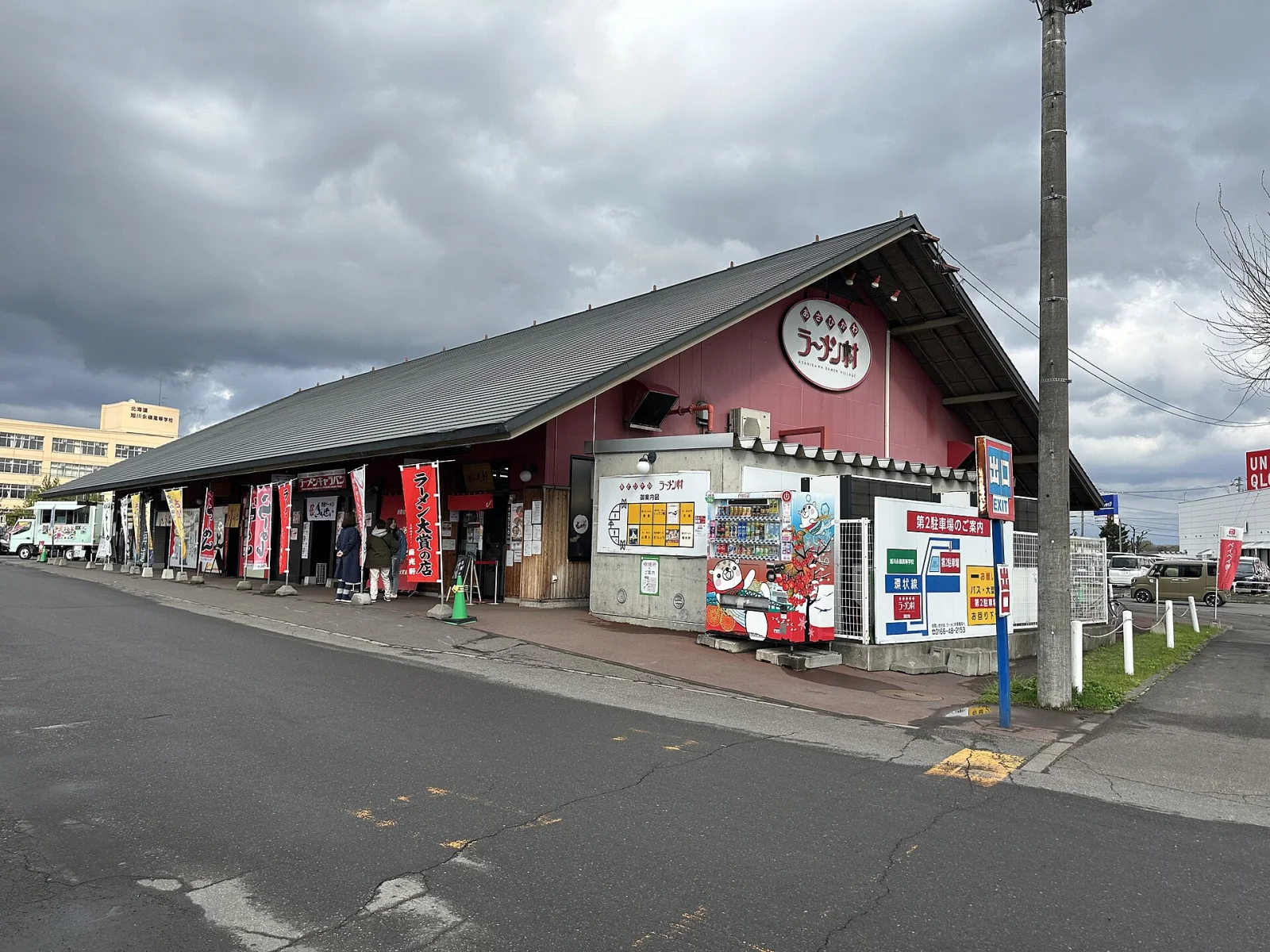
- Combining the brewery with Asahiyama Zoo and Ramen Village in one day
- Spring open-brewery day and Otokoyama Nature Park
- Quick Q&A
If you want to sample Otokoyama in Asahikawa, hop on a Dohoku Bus near the station and head out to Nagayama. The museum itself is free to enter, with Edo-period ukiyo-e prints and old wooden brewing vats upstairs, while tastings and bottle shopping happen right next door at OTOKOYAMA SAKE PARK. Since 2 March 2026, all tastings have operated on a paid token system, with token sales closing at 16:20. Give yourself around an hour for a first visit, or 90 minutes if you want to linger over the woodblock prints, compare a few pours, or take a unhurried break with family.
The museum and tasting shop sit side by side
Both buildings share the same site at 1-33 Nagayama 2-jo 7-chome, Asahikawa, Hokkaido. On maps, search for "Otokoyama Sake Brewing Museum" (*Otokoyama Sakezukuri Shiryokan*) for the exhibition hall and "OTOKOYAMA SAKE PARK" for tastings and retail. Both entrances sit in the same courtyard area, so you can decide which door to take once you arrive. Although the museum's official website still shows the old ground-floor tasting corner on its floor plan, the page notes that tastings and sales have moved next door. If you are following older travel notes, look up for the SAKE PARK sign rather than hunting for a tasting counter inside the museum.
The museum generally opens from 09:00 to 17:00 with free admission, closing for its annual New Year break from 31 December to 3 January. The retail park lists 30 December 2026 as its final trading day of the year, and nearby Asahiyama Zoo keeps slightly different holiday closures around those dates. If you are staying in Asahikawa over New Year, schedule Otokoyama on or before 30 December or from 4 January onwards, then build the rest of that day's transport around it. Group visits must be arranged directly with the brewery in advance; the museum's telephone number is 0166-76-5548.
Which building to enter first comes down to the clock. Arrive before midday and it makes sense to browse the museum's vats and woodblock prints first, then head next door to taste the labels you just read about. If you are coming across from the zoo late in the afternoon and want a tasting flight, go straight into SAKE PARK: token sales stop at 16:20 and the tasting counter shuts at 16:30, whereas the museum stays open until 17:00. Visitors focused solely on gift shopping can stay in the retail hall while companions explore the exhibits, using the shop entrance as an easy meeting point rather than trying to regroup across different floors.
If your schedule only leaves 40 minutes, pick a single focus. You can start with one ukiyo-e print on the second floor, head straight up to the third floor for the brewing film and traditional tools, or spend the entire slot sampling, reading back labels, and paying at the shop. You need closer to 90 minutes to cover both buildings properly and still step outside to taste the brewing water in front of the main cellar. When checking bus connections, treat that 90 minutes as on-site time only and add travel, waiting, and road-crossing margins separately.
Otokoyama Sake Brewing Museum is free to enter, while sake tastings take place next door at OTOKOYAMA SAKE PARK under a paid token system introduced in 2026. Here is everything you need to know about tasting fees, cutoff times, Dohoku Bus connections from Asahikawa Station, the two-floor exhibits, and packing bottles for your flight home.
Taking the Dohoku Bus from Asahikawa Station to Nagayama 2-jo 6-chome
From JR Asahikawa Station, walk into the city centre to bus stop 18 at 1-jo 8-chome and look for Dohoku Bus services bound for Nagayama. Routes 68 (Nagayama 13-chome Line) and 630 (Takasadai - Nagayama 2-jo Line) both include departures stopping at Nagayama 2-jo 6-chome, leaving you a two-minute walk from the brewery. Even though the brewery's street address is in 7-chome, the bus stop is in 6-chome, so save both pins on your phone map to avoid confusion on the way back.
A separate cluster of stops right outside the station, labelled Asahikawa Ekimae, also serves some departures. When checking schedules, note down the exact boarding stop, route number, and direction together—especially for route 630, which also runs in the opposite direction towards Takasadai. The operator's Dohoku Bus Asahikawa Station boarding-point guide helps pinpoint stop 18. Note that JR Nagayama Station on the Soya Main Line is a different stop altogether; travelling from central Asahikawa, the local bus is much more straightforward.
Check departure times on the Dohoku Bus stop-by-stop passing timetable, using table 17A (weekdays) or 17B (weekends and public holidays) outbound, and 18A or 18B for the return. The timetable abbreviates the stop as "Nagayama 2-6". Scan along that row for a departure time, then read up and down the same column to check the route number and the corresponding time at 1-jo 8-chome, as the grid mixes services with different termini that pass through town without serving Nagayama 2-6. The ride from 1-jo 8-chome takes just over 20 minutes in normal conditions, though you should add extra buffer for waiting and crossing the road in heavy snow.
On Dohoku Bus's published ordinary fare chart for route 68, the adult fare between 1-jo 8-chome and Nagayama 2-jo 6-chome is ¥330 each way, or ¥660 return; other routes follow their own fare tables. Local services accept cash as well as regional Do Card and Asaca Card transit cards, so short-stay visitors are best off carrying coins and ¥1,000 notes. When paying cash, take a numbered paper ticket (*seiriken*) as you board, check the matching fare on the screen at the front before your stop, and pay the driver when alighting at the front door. Each person in your group should take their own ticket so fares are easy to settle together.
For the return trip, locate the shelter facing back towards Asahikawa Ekimae, 1-jo 7-chome, or the city centre. Matching stops sit on opposite sides of the main road, so never dash across traffic if a bus is pulling in—always use the pedestrian crossing. Judge whether catching the next bus still works by working backwards from dinner bookings, reserved limited express trains, or hotel shuttles, and double-check special operating calendars over the New Year holidays. If you are on a tight schedule or carrying bulky luggage, ordering a taxi from the shop entrance saves waiting in Nagayama for a bus that requires another transfer.
If you are driving, plan the return leg before drinking
The brewery provides parking for 50 cars and 8 coaches, estimating drive times of roughly 30 minutes from Asahikawa Airport, 15 minutes from Asahiyama Zoo, 5 minutes from Asahikawa Ramen Village, and 15 minutes from the Takasu Interchange. Treat those figures as base driving times and allow extra minutes for city traffic lights, parking, and getting everyone in and out of the car. When setting your satnav, enter the address for the museum or OTOKOYAMA SAKE PARK so you do not accidentally route to Otokoyama Nature Park (*Otokoyama Shizen Koen*), a separate seasonal site run by the same company.
Japan's legal drinking age is 20, and the brewery strictly prohibits drivers from taking part in tastings. If your group is travelling by hire car, nominate one designated non-drinking driver before anyone buys tokens; they can still tour the museum, sample the spring water, and pick out bottles to take home. If every adult wants to taste, take the bus or a taxi both ways, or save the brewery for after you have dropped off the hire car. Anyone cycling that day should likewise leave drinking until after they finish riding.
When staying near Asahikawa Station, taking the bus out and a taxi back is a practical compromise: it keeps outbound fares low while letting you drop bottles straight back at your hotel before walking out for dinner. Small groups with a pushchair or luggage around late afternoon can also take a taxi from Asahiyama Zoo to Otokoyama and ride the bus back into town from Nagayama. When booking a cab, specify "Otokoyama Sake Brewing Museum in Nagayama" (*Nagayama no Otokoyama Sakezukuri Shiryokan*) along with the street address, and agree on one clear building entrance where your group will wait.
How the token tasting system works and how to budget
From 2 March 2026, the shop switched all sake tastings to a dedicated token system, with one token exchanging for a 15 ml sample. Published rates are ¥100 for 1 token, ¥200 for 3 tokens, ¥500 for 8 tokens, and ¥1,000 for 18 tokens, and unused tokens are non-refundable. A vending machine inside the shop dispenses tokens, though you should buy them at the main till if you need an itemised receipt.
If you only want a single taste on a first visit, ¥100 for one token keeps things simple. To compare styles from the day's list, ¥200 for three tokens covers an aromatic ginjo, a food-friendly junmai, and one bottle you rarely see back home—or two contrasting pours plus a final sample of the bottle you plan to buy. Pairing return route 68 bus fares with three tokens comes to ¥860 per adult before souvenirs or snacks. Read the tasting board first before choosing a token bundle so your spend matches what you actually want to try.
Give each sample a sniff first, take a small sip, and let the finish fade before moving on. Three simple questions are enough to tell bottles apart without jargon: does the aroma recall fruit, steamed rice, or stay fairly neutral; does the palate lean sweet, crisp, or rich in umami; and does the finish vanish cleanly or linger? Jotting down the sake name alongside your quick impression makes it far easier to find the right bottle on the shelves afterwards than trying to remember label designs. Keep water handy between pours to reset your palate.
When buying gifts, think about how the recipient normally drinks rather than picking whichever bottle tasted boldest at the counter. Someone who enjoys a slow glass with dinner will often prefer a versatile junmai suited to grilled fish, yakitori, or kelp-seasoned dishes over a highly perfumed presentation box. If you want an easy sipper to drink neat at home, look for gentler alcohol warmth and cleaner aromatics. When you only have a rough sense of what you like, showing staff "Karakuchi desu ka" asks if a bottle is dry, while "Hiya shite nomu no ga osusume desu ka" asks whether it is best served chilled.
For late-afternoon visits, remember the hard cutoff: 16:20 for buying tokens and 16:30 for closing the tasting counter. Factor in walking from the bus stop, crossing the road, reading the menu, and feeding the token machine—aiming to arrive by around 15:45 keeps things unhurried. If your bus only reaches the stop around 16:15, skip the tasting and use the remaining time for bottle shopping and one museum gallery instead. Staying a second night in Asahikawa gives you the option to return in daylight the next morning for a proper comparison.
Second floor: start with the ukiyo-e prints behind the name
The second floor spans centuries of brewing history, starting with the three characters for *Momenya*. According to Otokoyama's records, the Otokoyama brand originated with an Edo-period brewer trading under the house name Momenya in Itami. Asahikawa's precursor, Yamazaki Brewery, was founded in Hokkaido in 1887 and formally inherited the Otokoyama name and heritage from the Yamamoto family of Itami's Momenya main house in 1968. When you spot the *Momenya* tokubetsu junmai bottle at the shop counter, that lineage is what the label references.
Kitagawa Utamaro's *Natori-zake Rokkasen* (*Six Selected Famous Sakes*) pairs portraits of figures with celebrated brewers of the day. Look for the panel marked *Momenya no Otokoyama*, step back to take in the composition, and then read the inscription printed on the sheet. A highlight alongside it is the 22-sheet *junjo-zuri* progressive proof display, which demonstrates step by step how colour blocks layer figures, kimono folds, and backgrounds onto the paper. If you are curious about woodblock technique, study several consecutive sheets in sequence rather than glancing along the whole row.
Utagawa Kuniyoshi's *Seichu Gishin Meimei Kagami* (*Mirrors of Loyal Retainers*) also features in the collection, depicting the Ako retainers drinking Otokoyama—an image echoed in the brewery's *Kuniyoshi no Natori-zake* label. Even with only half an hour on site, linking that print upstairs to the bottle label next door ties both buildings together. The second floor also lists a Katsushika Hokusai hanging scroll and Momenya's secret Edo-period brewing manuscripts, making it worth the bulk of your museum time if you enjoy merchant history or traditional prints.
When visiting with children, skip a long lecture on Edo shogunate trade and turn the prints into a visual treasure hunt—asking them to spot sleeves, sake flasks, and characters before checking the progressive proofs to see which stage adds colour to the robes. Adults can pick a favourite print and note the artist's name before moving on. If you have time before heading up to the third floor, pause by the sake vessels and match the size of the wooden vats to how heavy mash and finished sake had to be moved by hand before modern bottling lines.
Third floor: vats, multilingual films, and spring water
The third floor focuses on historical brewing equipment such as wooden vats, paired with an introductory film on sake making and Otokoyama's history available in Japanese, English, Chinese, Korean, and Thai. Non-Japanese readers can watch the film first to grasp the sequence of steps, then walk over to the display cases to identify each tool. When examining the vats, notice their rims, diameters, and depths: steamed rice is divided for making *koji* or joining the fermentation mash (*moromi*), and each stage demands a different vessel for moving, stirring, and storage.
While watching the film, pay attention to saccharification and fermentation. Enzymes from *koji* mould convert rice starch into fermentable sugars while yeast turns those sugars into alcohol inside the same tank—a simultaneous process known in Japanese as *heiko fukuhakko* (multiple parallel fermentation). Temperature control, fermentation pace, and pressing all shape the final flavour. Pairing that knowledge with labels next door such as *nama-zake* and *namachozo-shu* clarifies whether a sake was pasteurised and at what stage. General visitors view the exhibits and video, while during the winter brewing season (*shikomi*) the brewery may also allow glimpses of active production work.
Outside in front of the main cellar (*honkura*), visitors can draw *Enmei Choju no Mizu*, the spring water (*shikomimizu*) drawn from the subterranean flow of the Daisetsuzan mountains. The tap is open from 09:00 to 17:00 with a limit of 20 litres per person. Bring a small reusable bottle if you simply want a taste; if you plan to fill large containers to take back to your accommodation, think beforehand about how you will carry them. Sharing a cold cup of spring water with children or non-drinkers—and connecting it back to where water enters the mash in the film—gives the visit a rewarding stop outside the tasting room.
The Daisetsuzan water itself is one of the main reasons to include Otokoyama on an Asahikawa itinerary, alongside the cold climate and rice-milling craft highlighted in the brewery's story. Stepping from the museum to the outdoor tap fixes the term *shikomimizu* (brewing water) in your head—a useful cue when visiting other Hokkaido sake breweries or craft breweries later in your trip to ask how local water shapes each stage. Looking back at the wooden vats upstairs, it becomes easier to picture which vessels held mash and which stored finished sake.
Reading the label before you pick a bottle to take home
Japan's National Tax Agency labelling standards make key brewing details easy to read once you know what to scan for. The rice polishing ratio (*seimaibuai*) shows how much of each brown rice kernel remains after milling: 55% means 55 parts stay after 45% of the outer layer is polished away. Junmai Ginjo requires a ratio of 60% or less and Junmai Daiginjo 50% or less alongside specific ingredient and production rules; *junmai* sake uses only rice, *koji*, and water, whereas *honjozo* permits a regulated addition of brewer's alcohol. Knowing these terms tells you the recipe and method, leaving tastings to reveal aroma and sweetness or dryness.
Even within Otokoyama, styles range from rich and sweet to bone-dry. On the official lineup, *Kanzake* is a 13% ABV sweet *tokubetsu honjozo* recommended either chilled or warmed; *Momenya* is a drier *tokubetsu junmai* where you notice the attack and clean finish; and *Kuniyoshi no Natori-zake* is a 15% ABV *tokubetsu junmai* milled to 55% and marked extra dry (*daikarakuchi*), tying directly back to the Kuniyoshi print on the second floor. Keeping those names handy makes matching bottles on the tasting list and retail shelves much faster.
If Hokkaido-sourced ingredients matter to you, flip the bottle to check where the brewing rice was grown. Otokoyama's flagship Junmai Daiginjo uses Yamada Nishiki rice from Hyogo Prefecture polished down to 38%, while the lineup also lists *Kita no Inaho Daikarakuchi*, brewed with Hokkaido-grown rice. Both are made in Asahikawa, yet their grain origins differ—worth checking if you are choosing a gift and deciding between Hokkaido terroir, the house flagship, or a label linked to the museum's ukiyo-e prints.
If you spot unpasteurised *nama-zake* such as *Sasaori* in the chilled cabinet, check the storage temperature on the label and count how many travel days remain before your flight home. Under Japanese labelling rules, *nama-zake* is completely unpasteurised, whereas *namachozo-shu* is stored unpasteurised and heated once prior to bottling. If you still have train journeys to Furano or Sapporo ahead with bags going on and off racks, wait until just before leaving Hokkaido to buy bottles marked "keep refrigerated" (*yo-reizo*), or choose a shelf-stable bottle that matches your itinerary—and pass on any refrigeration note if you are gifting it.
Seasonal and brewery-exclusive releases each serve a different purpose. Autumn's *Hiyaoroshi* is one example Otokoyama highlights to explain maturation, brewed in winter and rested in the cellar over summer before release. Where a brewery exclusive only differs in packaging or retail channel, fall back on taste, storage needs, and bottle size. If you want a keepsake tied to the museum without carrying extra glass, small sake cups, *maekake* brewery aprons, or pairing one bottle with matching cups can cut down on fragile luggage.
When buying unfamiliar bottles, photograph both the label name and bottle size before paying. Certain expressions carry different names domestically and abroad—for instance, Otokoyama markets *Kuniyoshi no Natori-zake* overseas under the name *Tokubetsu Junmai Otokoyama*. Relying on memory for "white label, Otokoyama, extra dry" easily leads to mix-ups, whereas saving the exact name, ingredients, and polishing ratio—plus front-and-back photos when buying for friends—makes future reorders unambiguous.
Duty-free allowances and packing bottles for your flight home
Check your home country's alcohol import limits before stocking up at the brewery, as allowances vary by destination. For reference, Taiwan Customs sets a duty-free limit of 1.5 litres per traveller aged 18 or over with no bottle-count cap: two 720 ml bottles total 1.44 litres within that threshold, while adding a 180 ml bottle brings the total to 1.62 litres and requires a red-channel customs declaration, up to a 5-litre declared cap. Remember that duty-free bottles picked up at the airport count towards the same combined personal total whether carried by hand or packed in checked bags.
For international departures from Japanese airports, standard cabin liquid rules limit each container to 100 ml inside a single transparent resealable bag of up to 1 litre. That means 300 ml and 720 ml bottles bought at the brewery must go in checked hold luggage—the rule is based on the container's printed capacity, not how much liquid remains inside. If you have an onward international connection after buying duty-free alcohol airside, check transfer security rules for sealed tamper-evident bags. Keeping photos of your brewery receipts and ABV labels on your phone saves digging through suitcases at transit checkpoints.
Ask the shop for extra protective wrapping on glass bottles, then seal each bottle inside a leakproof bag back at your hotel and cushion it in clothing in the centre of your suitcase. Lay down a base layer of clothes first, separate neighbouring bottles with folded garments, and pack soft items tightly into every gap so nothing rolls once zipped shut. If family members are each bringing a bottle, divide the allowance before checkout and remember to factor heavy glass, gift boxes, and other souvenirs into your checked baggage weight limit while it is still easy to swap sizes.
Visiting with children, non-drinkers, or in snowy weather
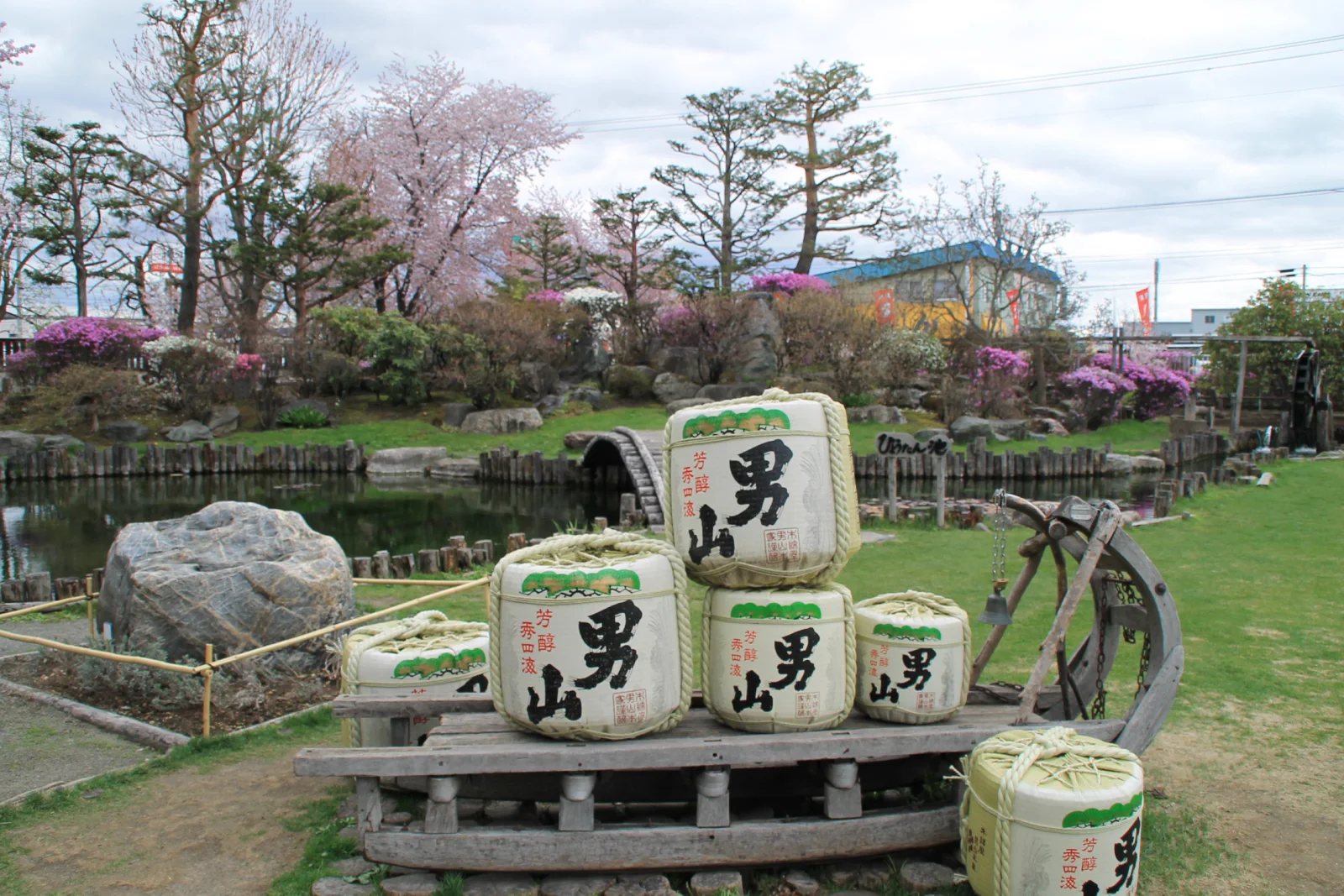
For a family stop, start on the museum's second floor with prints children can easily follow, continue to the third floor for the vats and film, and save the outdoor spring water tap or snacks for last. The former front garden has been redeveloped into *Ochoko Hiroba* (Sake Cup Square), named after the small *ochoko* tasting cup; the hero photograph above captures the older 2016 Japanese garden with its stacked barrels, arched bridge, and gourd-shaped pond. Follow the current site signage once you arrive, and designate the shop or museum doorway as your rendezvous point.
If you are hoping for soft-serve ice cream in late 2026, check SAKE PARK's machine-cleaning notices first. Scheduled cleaning pauses sales on 26 November and on 4, 15, and 23 December before resuming once finished, while 30 December carries a listed pause from 12:00 to 16:30. Families planning an afternoon ice-cream treat after lunch will have better luck on other operating days, or can save dessert for central Asahikawa instead.
If anyone in your party finds stairs difficult or is using a pushchair, assess the shop entrance and courtyard first before deciding whether to split up. Call 0166-76-5548 ahead of time if you plan to reach the second and third museum floors to confirm current entrance and lift access. Save the return bus schedule on everyone's phone rather than leaving one person to track timings. In snowy weather, put on coats, gloves, and have fares ready inside before walking out to the bus stop, and keep outdoor pauses short after dark by grouping shopping and indoor exhibits together.
Combining the brewery with Asahiyama Zoo and Ramen Village in one day
If you want a proper look around both sites on the same day, visit Asahiyama Zoo first. For the 2026–27 winter season from 11 November 2026 to 7 April 2027, the zoo opens from 10:30 to 15:30 with last admission at 15:00, and closes from 30 December 2026 to 1 January 2027. Late risers can push lunch slightly later to protect zoo time before checking what hour they can reach Nagayama. On dates with special evening zoo openings, check both the zoo's event schedule and bus timetables separately.
By public transport, catch Asahikawa Denkikido bus 41 or 47 from stand 6 at the Asahikawa Station Bus Terminal; fares effective from 1 September 2026 are ¥670 for adults and ¥340 for children each way. Taking a taxi directly from the zoo to Otokoyama is the cleanest link between the two, followed by a Dohoku Bus back to the station. Doing both legs by bus usually means routing back towards Asahikawa Station or the city centre to transfer, leaving plenty of slack between different operators' stops—especially if you want to arrive before the 16:20 tasting token cutoff after staying at the zoo until winter closing.
As a sample from the 2026–27 standard winter timetable, the 09:40 route 41 bus from Asahikawa Station reaches the zoo at roughly 10:22, lining up neatly with the 10:30 opening. If you plan to transfer through central Asahikawa in the afternoon, check connections such as the 13:40 route 41 departure from the zoo, scheduled back at Asahikawa Station at 14:23, bearing in mind you still have to walk to 1-jo 8-chome for the Dohoku Bus. When you would rather see more animal enclosures than rush a double bus ride, swap that middle hop for a taxi and leave dinner and onward waits in the city centre.
Drivers with a designated non-drinking driver can enter the zoo at opening time, drive over to Nagayama for Asahikawa ramen after midday, and finish at Otokoyama five minutes away from Ramen Village. If everyone wants a different ramen shop and queues look unpredictable, visit the brewery first for tastings and eat on the way back instead. Families with young children can also skip tastings and pair the zoo with the museum exhibits before returning near their hotel for dinner. Note that on 30 December the zoo is already closed for New Year while Otokoyama holds its final trading day of the year—making 30 December ideal for the brewery and 2 January onwards better for the zoo.
With only half a day in Asahikawa, pair Otokoyama with the station district: leave large bags in station lockers or at your hotel in the morning, take the bus out and back to Nagayama, eat lunch in the centre, and catch your afternoon JR train. On a two-night stay, visit the brewery on arrival day and keep the full middle day for the zoo, Biei or the Daisetsuzan area. Where intercity trains run infrequently, slot Otokoyama into your most flexible half-day, and check hotels around Asahikawa Station and the city centre so dinner and next-morning departures stay an easy walk away.
Leaving the brewery until after you drop off a hire car suits travellers spending their final night in Asahikawa before flying home. Finish driving in from Biei or the mountains, drop your luggage at the hotel, ride the bus out to Nagayama from near the station, and return to town for dinner—giving you immediate access to your room to pack or chill bottles according to their labels. If you only have a quick gap before heading to the airport, remember the brewery is about a 30-minute drive from Asahikawa Airport on top of car return, check-in, and baggage drop, so visiting the evening before makes for a far calmer tour.
Spring open-brewery day and Otokoyama Nature Park
The brewery's traditional February open day (*Sakagura Kaiho*) was renamed *Otokoyama Shimin Kansha Day* (Citizens' Appreciation Day) in 2026 and held on 19 April. One-off festival days run on separate hours and parking rules: in 2026 the event ran from 09:00 to 15:00 in the site car park, with both the shop and museum closing at 15:00, the regular tasting bar closed for the day, and the outdoor spring water tap shut on both the event day and the day before. Scheduled highlights included ceremonial sake-barrel openings (*kagami-biraki*) at 10:00 and 12:00, non-alcoholic *koji amazake*, and event-only bottles. If you are travelling in spring specifically for the festival, search the brewery's latest *Otokoyama Shimin Kansha Day* notice for that year's hours, overflow parking, and shuttle details.
Separately, the company operates Otokoyama Nature Park (*Otokoyama Shizen Koen*) in Higashiyama, Asahikawa, opening free of charge from 09:00 to 17:00 during the dogtooth violet (*katakuri*) blooming season from mid-April to early May. It sits a 15-to-20-minute drive from the brewery, or is reached by Dohoku Bus to the Otokoyama Koen stop. On flower-viewing days, check bloom updates before deciding which site to visit first; if you are in town for the brewery festival before the park opens for the season, spend your outdoor hours in central Asahikawa instead, and label "Nagayama Brewery" and "Higashiyama Nature Park" separately on group itineraries so nobody mixes them up.
The park's bloom updates distinguish *tsubomi* (buds) from *mankai* (full bloom) and separate early- and late-blooming trails—helpful when walking sloped paths with older relatives, as in late April 2026 when only the late-blooming route was listed in full bloom. If your trip coincides with the spring brewery event, you can visit the flower park in the morning and head to Nagayama in the afternoon, checking the event timetable first for anything you do not want to miss and factoring in bus waits between the park and the brewery.
A few useful answers
Does Otokoyama Sake Brewing Museum still offer free sake tastings?
Museum admission is free. Next door at OTOKOYAMA SAKE PARK, all sake tastings moved to a paid token system on 2 March 2026: one token buys a 15 ml pour, priced at ¥100 for one token or ¥200 for three, with token sales ending at 16:20.
Which bus goes from Asahikawa Station to Otokoyama Sake Brewery?
Walk from JR Asahikawa Station to bus stop 18 at 1-jo 8-chome and board a Dohoku Bus on route 68 or 630 that stops at Nagayama 2-jo 6-chome. The brewery is about a two-minute walk from the stop, and the adult single fare on route 68 is ¥330.
How long does a visit to Otokoyama Sake Brewery usually take?
Allow around 40 minutes if you only want to browse one museum floor or pick up bottles. Set aside an hour for both exhibition floors and a short tasting, or 90 minutes to watch the film, study the woodblock prints, and choose souvenirs at a relaxed pace, excluding travel time.
Can I combine Otokoyama Sake Brewery with Asahiyama Zoo?
Yes. The brewery estimates a 15-minute drive from Asahiyama Zoo. If you plan to taste sake, take a taxi from the zoo to the brewery before 16:20, then catch a Dohoku Bus back to Asahikawa Station.
Can I visit just for the exhibits or the spring water without tasting sake?
Yes. The second floor displays ukiyo-e woodblock prints and the third floor covers brewing tools and multilingual films. Outside the main brewery, the spring water tap is open free of charge from 09:00 to 17:00, capped at 20 litres per person.
Official information and references
Sources used in this guide.
- Otokoyama Co., Ltd. | Museum Hours, Year-End Holidays, and Access
- Otokoyama Sake Brewing Museum | Floor Guide, Tasting Relocation, and Spring Water
- OTOKOYAMA SAKE PARK | Notice on Paid Tasting System Effective 2 March 2026
- OTOKOYAMA SAKE PARK | Soft-Serve Ice Cream Sales Schedule for November-December 2026
- Otokoyama Co., Ltd. | Otokoyama Citizens' Appreciation Day 2026 Event Notice
- Otokoyama Co., Ltd. | Brand History and Subterranean Spring Water
- Otokoyama Co., Ltd. | Signature Sake Lineup
- Otokoyama Co., Ltd. | Core Sake Range
- Otokoyama Co., Ltd. | Seasonal Sake Releases
- Otokoyama Nature Park | Dogtooth Violet Bloom Updates and Park Access
- Dohoku Bus | Asahikawa Station Area Bus Stop Locations
- Dohoku Bus | Route Passing Timetables by Stop
- Dohoku Bus | Route 68 Nagayama 13-chome Line Ordinary Passenger Fare Table
- Dohoku Bus | How to Ride and Pay on Local Bus Routes
- City of Asahikawa | Asahiyama Zoo 2026-27 Winter Opening Hours and Closures
- Asahikawa Denkikido | Asahiyama Zoo Line Timetable, Boarding Stop, and Fares
- National Tax Agency of Japan | Quality Labelling Standards for Sake Production
- Japan Tourism Agency | How Japanese Sake Is Made
- Public Relations Office, Government of Japan | Legal Drinking Age and Age of Majority
- Ministry of Land, Infrastructure, Transport and Tourism (Japan) | Cabin Liquid Restrictions on International Flights
- Taipei Customs | Inbound Alcohol Duty-Free and Declaration Limits