Admission to the Otokoyama Sake Brewing Museum is free, while tastings take place next door at OTOKOYAMA SAKE PARK using a token system introduced in 2026. Covers tasting fees, token cutoff times, buses from Asahikawa Station, two floors of exhibits, and bringing bottles home.
- Region & Focus
- Asahikawa
- Reading Scope
- 21 min read · 11 chapters · 5 Q&As
- Official Verification
- 21 official sources checkedUpdated November 22, 2026
- Key Topics
- FoodItinerariesHokkaido
Chapter Route Map (tap any stop)
- The Museum and Tasting Shop Sit Side by Side
- Taking the Dohoku Bus from Asahikawa Station to Nagayama 2-jo 6-chome
- Decide the Ride Home First If Anyone Is Driving
- Budgeting Your Tasting with One Pour or Three
- Start on the Second Floor by Spotting the Brewery in Ukiyo-e Prints
- Third-Floor Brewing Vats, Multilingual Films, and Spring Water
- Reading the Label Before Picking a Bottle to Take Home
- Customs Allowances, Flight Liquid Rules, and Packing Bottles
- Visiting with Kids, Non-Drinkers, or in Snowy Weather
- Pairing Otokoyama with Asahiyama Zoo and Ramen Village in One Day
- Annual Brewery Festivals and Otokoyama Nature Park
- Quick Q&A
For a glass of Otokoyama in Asahikawa, catch a Dohoku Bus from near the station out to Nagayama. Admission to the Otokoyama Sake Brewing Museum is free, with Edo-period ukiyo-e prints and vintage wooden brewing vats upstairs. Sake tastings and bottle shopping happen right next door at OTOKOYAMA SAKE PARK. On March 2, 2026, the tasting counter switched entirely to paid pours, with token sales ending at 16:20. Plan on about an hour for a first visit, or 90 minutes if you want time to study the prints, compare pours, and take a break with family.
The Museum and Tasting Shop Sit Side by Side
Both buildings share the same site at 1-33 Nagayama 2-jo 7-chome, Asahikawa, Hokkaido. Search for the Otokoyama Sake Brewing Museum on your map for the exhibits, and OTOKOYAMA SAKE PARK for tastings and the retail shop. They share an entrance area, so you can decide which building to enter first once you arrive. The museum's official floor map still shows the old first-floor tasting counter, though the page notes that tastings and sales moved to the adjacent building. If you are following older travel guides, look up for the SAKE PARK sign when you reach the entrance rather than hunting for sake shelves inside the museum.
The museum is typically open from 9:00 to 17:00 with free admission, and closes for the year-end and New Year holidays from December 31 to January 3. The shop lists December 30, 2026 as its final operating day of the year. Those dates also overlap with Asahiyama Zoo's own holiday closures. If you are staying in Asahikawa over New Year's, schedule Otokoyama on or before December 30, or from January 4 onward, before locking in the rest of your transit. Tour groups are asked to contact the brewery in advance; the museum's phone number is 0166-76-5548.
Which building you visit first depends on when you arrive. If you get there before noon, start at the museum to see the brewing vats and woodblock prints, then head next door to taste the labels you just learned about. If you are coming from the zoo late in the afternoon and want to taste sake, go straight to the shop first: token sales stop at 16:20 and the tasting counter closes at 16:30, whereas the museum stays open until 17:00. Anyone only buying gifts can browse the retail floor while companions explore the exhibits. If your group splits up, set the shop entrance as your meeting spot rather than picking a floor inside.
If you only have 40 minutes, pick one focus. Exhibit-goers can start with a single ukiyo-e print on the second floor, or head straight to the third floor for the brewing film and equipment. Shoppers can spend the entire window tasting, reading back labels, and checking out. You need around 90 minutes to cover both buildings comfortably and still walk out to the main storehouse for a sip of brewing water. When timing your round-trip bus ride, count that 90 minutes strictly as time on the grounds, adding transit, waiting, and street-crossing time separately.
Admission to the Otokoyama Sake Brewing Museum is free, while tastings take place next door at OTOKOYAMA SAKE PARK using a token system introduced in 2026. Covers tasting fees, token cutoff times, buses from Asahikawa Station, two floors of exhibits, and bringing bottles home.
Taking the Dohoku Bus from Asahikawa Station to Nagayama 2-jo 6-chome
From JR Asahikawa Station, walk to Bus Stop 18 at 1-jo 8-chome in downtown Asahikawa and check Dohoku Bus departures bound for Nagayama. Look for Route 68 (Nagayama 13-chome Line) or Route 630 (Takasagodai-Nagayama 2-jo Line), checking the timetable for buses that stop at Nagayama 2-jo 6-chome. From there, it is roughly a two-minute walk to Otokoyama. Although the brewery's street address is in Nagayama 2-jo 7-chome, the bus stop is at 6-chome. Save both pins on your phone so it is easy to line up the right stop in either direction.
There is also another cluster of stops labeled Asahikawa Ekimae right outside the station, and some routes call there as well. When checking schedules, note your boarding stop, route number, and destination together, especially since Route 630 also runs in the opposite direction toward Takasagodai. The operator's Asahikawa Station area bus stop guide shows exactly where Stop 18 is located. Keep in mind that JR Nagayama Station is a separate stop on the JR Soya Main Line; coming from central Asahikawa, the bus stops listed above are far more straightforward.
Check stop times on the Dohoku Bus route passing timetables: look under 17A (weekdays) or 17B (weekends/holidays) for the outbound ride, and 18A (weekdays) or 18B (weekends/holidays) for the return. The stop name is abbreviated as Nagayama 2-6 on the chart. Scan that row for departure times, then follow the same column to match the route number and the time at 1-jo 8-chome. Because a single table mixes routes bound for different terminals, some buses pass through downtown without continuing to Nagayama 2-6. Under normal road conditions, the ride from 1-jo 8-chome to Nagayama 2-6 takes a little over 20 minutes; in snowy weather, build in extra buffer for waiting and crossing the street.
According to Dohoku Bus's standard passenger fare table for Route 68, the adult fare between 1-jo 8-chome and Nagayama 2-jo 6-chome is ¥330 one way and ¥660 round trip. On other routes, fares follow that specific route's tariff table. Dohoku Bus city routes accept cash as well as local Do Cards and Asaca Cards; for a short stay in Asahikawa, carrying coins or ¥1,000 bills is simplest. When paying cash, take a numbered boarding ticket (seiriken) as you get on, match that number to the fare display board near the front of the bus before your stop, and pay at the front door when exiting. Everyone traveling together should take their own ticket and have coins ready before arrival.
For the return trip, look on the map for the stop across the road marked toward Asahikawa Ekimae, 1-jo 7-chome, or downtown. Stops with the same name sit on opposite sides of the highway; even if a bus is approaching, do not dash across traffic and use the marked crosswalk instead. Decide whether catching a later bus works by counting backward from dinner reservations, limited express reserved seats, or a hotel shuttle. Around year-end and New Year's, check the operator's holiday timetable dates for both directions. If you are on a tight schedule or carrying heavy bags, taking a taxi directly from the shop saves you waiting in Nagayama or transferring buses.
Decide the Ride Home First If Anyone Is Driving
The brewery lists parking for 50 passenger cars and 8 large buses, with estimated driving times of about 30 minutes from Asahikawa Airport, 15 minutes from Asahiyama Zoo, 5 minutes from Asahikawa Ramen Village, and 15 minutes from Takasu IC. Treat those drive times as a baseline when planning a day trip, then add downtown traffic lights, parking, and loading in and out. Set your GPS to the address for the museum or SAKE PARK, and double-check that you do not accidentally route to Otokoyama Nature Park, a separate site run by the same company.
Japan's legal drinking age is 20, and the brewery prohibits drivers from tasting sake. If you are renting a car as a group, designate one person to stay completely alcohol-free before the other adults buy tokens at the counter. The designated driver can still tour the museum, drink the spring water, and pick out bottles to bring back. If every adult in the party wants to taste, travel by bus or taxi instead, or visit the brewery after returning the rental car. Travelers cycling later in the day should also save any drinking until they are off the bike.
If you are staying near Asahikawa Station, riding the bus out and taking a taxi back is a practical compromise. You keep the outbound fare low and can take a cab straight back to your hotel to drop off bottles before walking to dinner. Groups of two or three with strollers or luggage—especially toward late afternoon—can also take a taxi from Asahiyama Zoo to Otokoyama and ride the bus from Nagayama back downtown. When ordering a cab, specify the Otokoyama Sake Brewing Museum in Nagayama along with the street address, and agree on one specific building entrance where everyone will wait.
Budgeting Your Tasting with One Pour or Three
Since March 2, 2026, the shop has operated all sake tastings on a dedicated token system, where one token gets a 15 mL pour. Published bundles are ¥100 for 1 token, ¥200 for 3 tokens, ¥500 for 8 tokens, and ¥1,000 for 18 tokens, and unused tokens are non-refundable. A token vending machine stands inside the shop; if you need a receipt, purchase your tokens at the register counter instead.
If you only want to try one sake on your first visit, a single ¥100 token is the cleanest option. To compare styles on the day's tasting list, ¥200 for three tokens lets you sample an aromatic ginjo, a food-friendly junmai, and one bottle you rarely find back home. You can also pour two contrasting styles first and save your third token to confirm the bottle you want to buy. A round-trip Route 68 bus ride plus three tasting tokens totals ¥860 per adult, before snacks or bottles. Read the tasting menu before buying tokens so you put your budget toward the pours that actually interest you.
When tasting, smell the cup once, take a small sip, and let the aroma and finish clear before moving on. Three simple questions are enough to track what you like: Does the aroma remind you of fruit, steamed rice, or almost nothing at all? On the palate, is it sweet, crisp with acidity, or rich with umami? After swallowing, does it vanish cleanly or linger? Jot down the sake name and your notes so you can spot the bottle on the retail shelf without guessing from the label design. Keep water handy between pours to reset your palate.
If you are shopping for a gift, think about how the recipient usually drinks rather than just picking the boldest pour at the bar. Someone who sips slowly with dinner may appreciate a junmai that pairs well with grilled fish, salted yakitori, or kelp-seasoned dishes more than a heavily aromatic gift bottle. If you want a bottle for casual sipping on its own, look among the brighter, softer-textured options. When you only have a rough sense of what you want, show staff the phrases "Karakuchi desu ka?" (Is it dry?) or "Hiyashite nomu no ga osusume desu ka?" (Is it best served chilled?).
For late-afternoon tastings, remember the 16:20 cutoff for buying tokens and the 16:30 closing time for the tasting area. Factor in the time it takes to cross the street from the bus stop, walk into the shop, scan the menu, and buy tokens—aiming to reach the grounds around 15:45 keeps things relaxed. If your bus is scheduled to arrive at 16:15, skip the tasting and focus on bottle shopping and one exhibit floor. If you are staying in Asahikawa the following day as well, push a deeper tasting flight to the next morning or early afternoon.
Start on the Second Floor by Spotting the Brewery in Ukiyo-e Prints
The second floor spans centuries, so start by looking for the name Momenya. According to Otokoyama's history, a brewer in Edo-period Itami operated under the house name Momenya and originated the Otokoyama label. The Asahikawa brewery began as Yamazaki Sake Brewery in Hokkaido in 1887, then formally inherited the Otokoyama name from the Yamamoto family—the Itami Momenya main house—in 1968. If you see a bottle labeled Momenya Tokubetsu Junmai at the shop counter, that lineage is where the name comes from.
Kitagawa Utamaro's Six Selected Famous Sake Houses (Natori-zake Rokkasen) pairs portraits with celebrated sake brands. When you spot the print labeled Momenya no Otokoyama, step back to take in the composition before reading the calligraphy printed inside the frame. Another highlight of this display is a set of 22 progressive color-block proof sheets (junjizuri), showing layer by layer how the figure, kimono folds, and background come together. Anyone curious about woodblock technique can compare a few consecutive sheets closely, which reveals far more than scanning the whole row at once.
Utagawa Kuniyoshi's Portraits of the Loyal Retainers (Seichu Gishin Meimeikagami) is another core piece in the collection. The brewery drew on its imagery of the Ako retainers drinking Otokoyama to name the bottle Kuniyoshi no Natorizake. If you only have half an hour, following that single thread from the gallery wall to the retail shelf ties the two buildings together nicely. The second floor also lists hanging scrolls by Katsushika Hokusai and Momenya's secret Edo-era brewing manuscripts, making it worth spending most of your museum time here if you enjoy merchant history or woodblock art.
When visiting with kids, skip the Edo shogunate background and ask them to hunt for sleeves, sake flasks, and inscriptions in the prints, then check the progressive proof sheets beside them to see which step adds color to the robes. Adults can pick one print whose story clicks and jot down the artist's name before leaving the room. If you have extra time before heading up to the third floor, look closely at the serving vessels as well. From the size and layout of the wooden tubs, it is much easier to picture how sake was moved around before bottling.
Third-Floor Brewing Vats, Multilingual Films, and Spring Water
The third floor centers on traditional wooden vats and brewing tools, backed by films explaining sake production and Otokoyama's history in Japanese, English, Chinese, Korean, and Thai. Non-Japanese readers can watch the film first to grasp the sequence of steps, then match the equipment in the display cases. When looking at the vats, pay attention to rim diameter, overall size, and depth. Steamed rice splits into separate tracks—some used to cultivate koji mold, others added straight to the fermenting mash—and each stage requires different vessels for hauling, stirring, and storage.
Watch the film for how saccharification and fermentation work together. Koji enzymes first convert rice starch into sugar, and yeast turns that sugar into alcohol; inside the mash, both happen at the same time in a process called multiple parallel fermentation (heiko fukuhakko). Fermentation pace, temperature control, and pressing all shape the final flavor. Keeping that sequence in mind helps make sense of terms like namazake (unpasteurized sake) and namachozo-shu (stored unpasteurized, then heat-treated before shipping) back in the shop. Regular visitors see the artifacts and films, while during the winter brewing season (shikomi), the brewery also opens views of live production work.
Outside in front of the main storehouse, visitors can draw brewing water (shikomimizu) known as Enmei Choju no Mizu, or Water of Longevity. Otokoyama brews with subterranean water from the Daisetsuzan mountain range, and the tap is open from 9:00 to 17:00 with a limit of 20 liters per person. Bring a small travel bottle if you just want a taste; if you plan to haul a large jug back to your hotel, think through how you will carry it first. Sharing a cup with kids or non-drinkers—and connecting it to when water enters the mash in the film—gives them a hands-on part of the visit distinct from the tasting bar.
Daisetsuzan water is also part of what makes Otokoyama uniquely tied to Asahikawa. The brewery's official history pairs local groundwater, cold winters, and rice handling as the foundation of its style. Before walking out to the tap, remember the term shikomimizu (brewing water); when you see water sources highlighted at other Hokkaido sake breweries or beer halls later in your trip, you will know to check where that water enters the process. Looking back at the third-floor vats, it becomes easier to tell apart mash fermentation tubs from finished-sake storage vessels.
Reading the Label Before Picking a Bottle to Take Home
Japan's National Tax Agency sake labeling rules spell out several useful specs right on the bottle. Seimaibuai (rice polishing ratio) shows how much of the original brown rice kernel remains after milling: 55% means 100 parts of brown rice were milled down until 55 parts remained. Junmai Ginjo requires a polishing ratio of 60% or lower, and Junmai Daiginjo requires 50% or lower, alongside ingredient and production standards. Junmai uses only rice, rice koji, and water, whereas Honjozo may include a regulated amount of brewer's alcohol. These terms tell you the recipe and method; tasting tells you the aroma and sweetness.
Even within one brewery, styles range from sweet to bone-dry. Otokoyama lists Kanzake as a sweet Tokubetsu Honjozo at 13% ABV that works either chilled or warmed. Momenya is a drier-leaning Tokubetsu Junmai best judged by its entry and clean finish. Kuniyoshi no Natorizake is a 15% ABV Tokubetsu Junmai milled to 55% and labeled extra dry (daikarakuchi), linking straight back to Kuniyoshi's prints on the second floor. Keep those names handy to match against the day's tasting sheet or the retail shelves.
If Hokkaido-grown ingredients matter to you, flip the bottle over and check where the sake rice was harvested. Otokoyama's flagship Junmai Daiginjo uses Yamada Nishiki rice from Hyogo Prefecture polished to 38%. If you specifically want Hokkaido rice, the lineup also includes Kita no Inaho Daikarakuchi brewed with locally grown grain. Both are made in Asahikawa, just with different rice origins. When buying a gift, ask whether the recipient cares more about local Hokkaido rice, the brewery's signature bottle, or the ukiyo-e story from upstairs.
If you spot unpasteurized sake like Sasaori in the refrigerated case, check the storage temperature on the label and count how many travel days you have left. Under Japanese labeling standards, namazake is unpasteurized after brewing, while namachozo-shu is aged unpasteurized and heat-treated once before release. If you still have train rides to Furano or Sapporo ahead with frequent luggage transfers, either save any "keep refrigerated" (yo-reizo) bottles for the end of your Hokkaido trip or pick a shelf-stable bottle suited to your transit. When gifting a chilled bottle, be sure to pass along the refrigeration instructions.
Seasonal and brewery-exclusive releases each have their own appeal. Autumn's Hiyaoroshi is one example Otokoyama uses to illustrate maturation—brewed in winter and rested through summer in the cellar so the season is built into the method. When a brewery exclusive differs mainly by packaging or limited distribution, fall back on taste, storage requirements, and bottle size. If you want a keepsake tied to the museum without adding another heavy glass bottle to your suitcase, look at sake cups, decanters, or brewer's aprons, or pair one bottle with a matching ochoko cup.
If you are unfamiliar with the labels, take a single photo showing the sake's name and bottle size before checking out. Shops elsewhere in Japan or overseas sometimes sell the same brew under a different name—for instance, Kuniyoshi no Natorizake is marketed abroad as Tokubetsu Junmai Otokoyama. Relying on "white label, Otokoyama, extra dry" makes it easy to mix up bottles later, whereas keeping the exact Japanese product name, ingredients, and polishing ratio avoids confusion. That also helps if you are buying for friends and want everyone to know which exact release they received.
Customs Allowances, Flight Liquid Rules, and Packing Bottles
If you are flying home to Taiwan, Taiwan's Customs Administration grants travelers aged 18 and over a duty-free allowance of 1.5 liters of alcohol for personal use, with no limit on bottle count. Two 720 mL bottles total 1.44 liters, staying within the duty-free limit; adding one 180 mL bottle brings you to 1.62 liters, which must be declared on arrival. Airport duty-free purchases count toward the same per-person total whether carried by hand or packed in checked bags. Anything above the duty-free limit goes through the red declaration channel, capped at 5 liters total per passenger; travelers heading to other countries should check their own destination's allowance before buying.
For international departures from Japanese airports, standard carry-on liquid rules limit containers to 100 mL each inside a single 1-liter clear resealable bag. Any 300 mL or 720 mL bottles bought at the brewery must go in checked luggage—the limit is based on the container's labeled volume, so a half-empty large bottle still cannot go in carry-on. If you buy alcohol at an airside duty-free shop and have an international connection, check transit security rules for tamper-evident sealed bags. For bottles bought at the brewery, save photos of the receipt and each label's ABV on your phone before flying so you do not have to dig through your suitcase at a checkpoint.
At checkout, ask the shop for extra protective wrapping; once back at your hotel, seal each bottle inside a leak-proof bag, wrap it in clothing, and nestle it in the center of your suitcase with layers of clothes between bottles. Pad the bottom of the case first, place the bottles in, and pack soft items tightly into every gap so nothing rolls once zipped shut. If multiple family members are each bringing a bottle home, split up your real weight and volume allowance before paying, factoring in glass, gift boxes, and other souvenirs on your luggage scale. Deciding at the shop what fits is far easier than repacking at midnight in your hotel room.
Visiting with Kids, Non-Drinkers, or in Snowy Weather
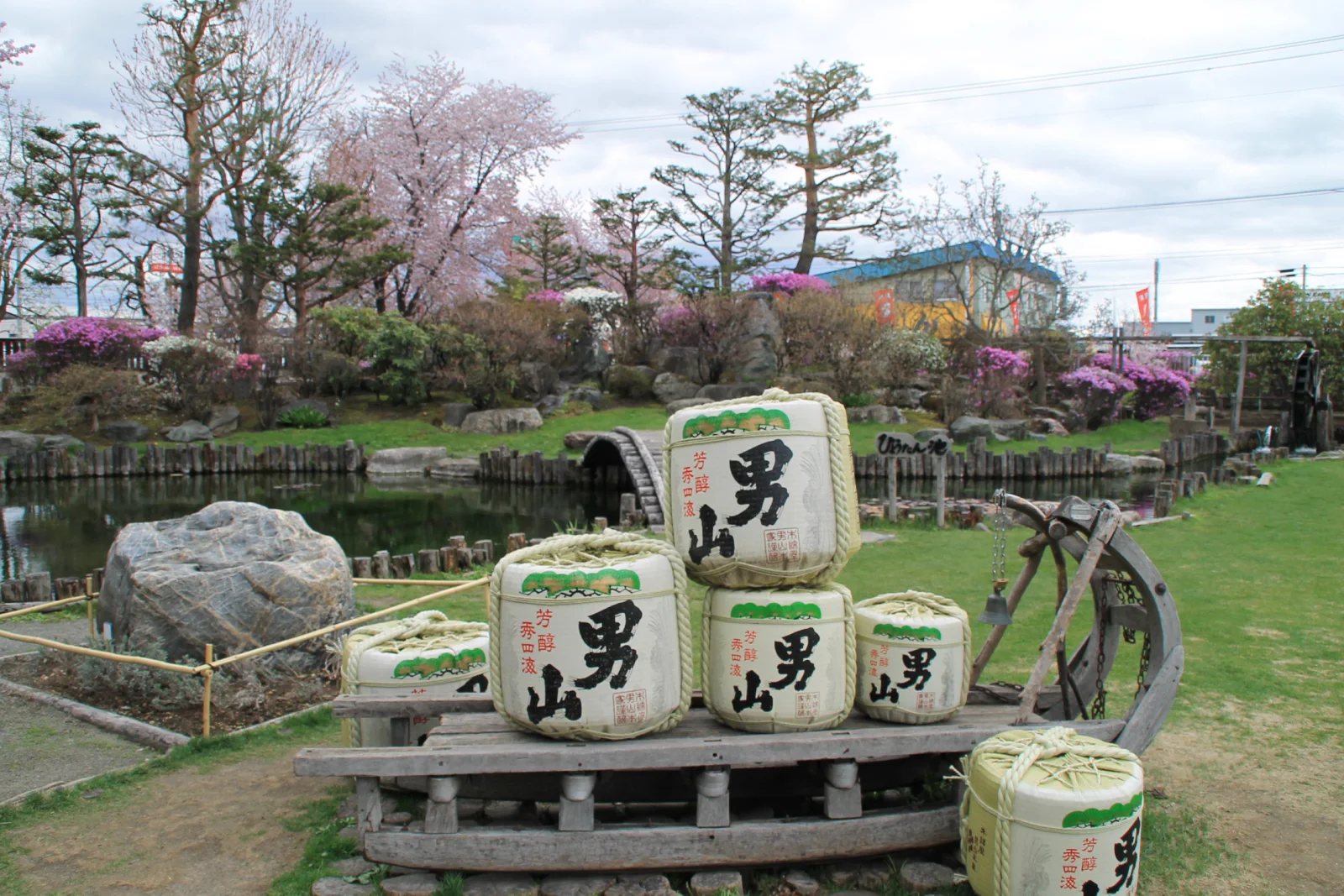
To make the brewery work for the whole family, start on the museum's second floor by picking out prints with details kids can spot, move up to the third floor for the brewing vats and films, and save the spring water tap or snacks for last. The front courtyard has been redesigned as Ochoko Plaza—ochoko means a small sake cup. The hero photo above shows the Japanese garden as it looked in 2016 before renovations, with sake casks, an arched bridge, and a gourd-shaped pond. Follow the updated signs on site to orient yourself around the plaza, and stick to the shop entrance or museum entrance when setting a meetup spot.
If you are hoping for soft-serve ice cream in late 2026, check SAKE PARK's machine-cleaning schedule. Sales are paused on November 26 and on December 4, 15, and 23, resuming once cleaning finishes, and on December 30 soft-serve is paused from 12:00 to 16:30. Families planning an afternoon soft-serve stop after lunch will have better luck on other operating days, or can grab dessert back near Asahikawa Station on maintenance dates.
If anyone in your group has trouble with stairs or uses a stroller, assess from the shop entrance and plaza whether to split into two smaller groups. Before heading up to the museum's second and third floors, call 0166-76-5548 to ask about the day's entrance access and floor layout so you can choose exhibits everyone can reach comfortably. Save the return bus timetable on everyone's phone rather than leaving one person in charge of checking times. On snowy days, put on coats, gloves, and have your bus fare ready indoors before walking out to the stop; if it is already getting dark, keep outdoor stops brief and group shopping and exhibits into a single indoor block.
Pairing Otokoyama with Asahiyama Zoo and Ramen Village in One Day
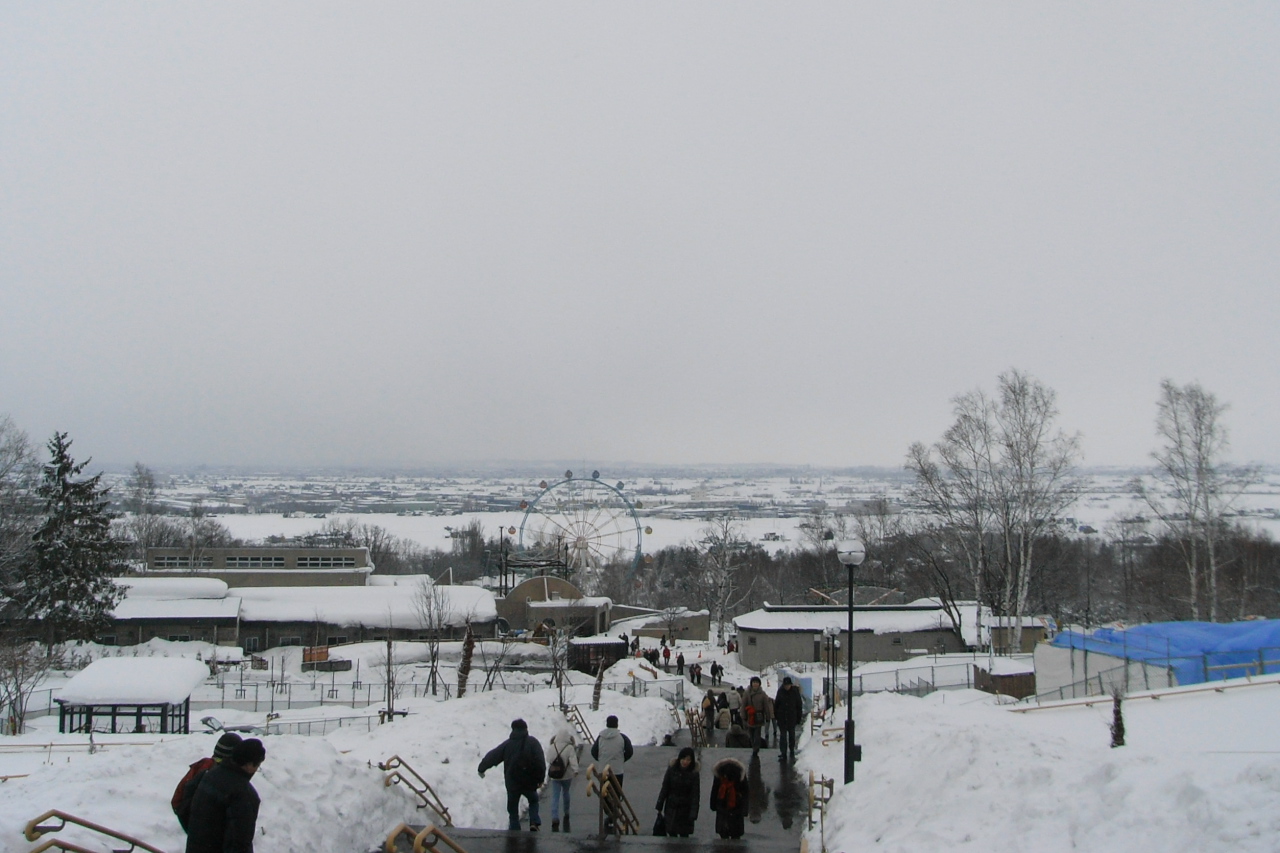
If you are visiting both in one day and want plenty of time with the animals, go to Asahiyama Zoo first. For the 2026–27 regular winter season (November 11, 2026 to April 7, 2027), the zoo is open from 10:30 to 15:30 with last entry at 15:00, and closed from December 30, 2026 to January 1, 2027. Late risers can push lunch later to protect zoo hours, then check what time they can realistically reach Nagayama. On dates with special evening zoo openings, plan around the zoo's and bus operator's event schedules separately.
By public transit, catch Asahikawa Denki Kido Bus 41 or 47 from Stand 6 at the Asahikawa Station bus terminal. As of September 1, 2026, the published one-way fare from Asahikawa Station to the zoo is ¥670 for adults and ¥340 for children. To continue to Otokoyama, taking a taxi straight from the zoo is the most direct link, followed by a Dohoku Bus back to the station. If you want to do both legs by bus, look up transfers near Asahikawa Station or downtown on the way back and leave buffer between the two operators' timetables. Anyone determined to taste sake should aim to reach Otokoyama before 16:20—staying at the zoo until winter closing and then making two bus transfers cuts it too close.
On the 2026–27 regular winter schedule, taking the 9:40 Bus 41 from Asahikawa Station puts you at the zoo around 10:22, right in time for the 10:30 opening. If you want to transfer downtown to Otokoyama later in the afternoon, check the 13:40 Bus 41 from the zoo, scheduled into Asahikawa Station at 14:23, then walk to 1-jo 8-chome for the Dohoku Bus. To linger longer at the animal exhibits, swap that connecting leg for a taxi and save dinner and bus waiting for downtown.
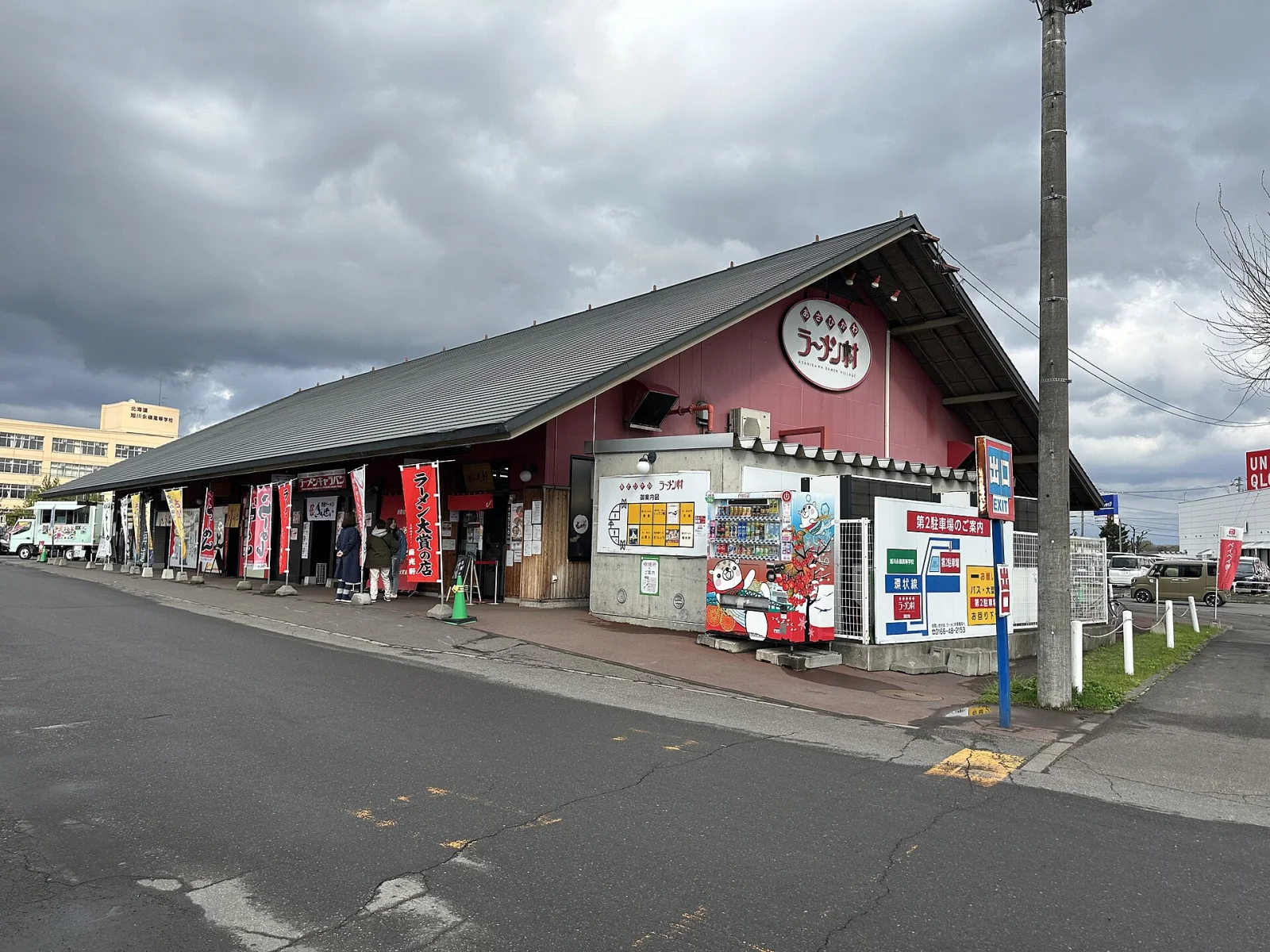
If you are driving with a designated non-drinking driver, hit the zoo at opening, head to Nagayama for Asahikawa ramen in the afternoon, and stop at Otokoyama just five minutes away from Ramen Village. When everyone wants a different ramen shop and lunch lines run unpredictably, visit the brewery first for tastings and eat on the way back. With kids, pairing the zoo strictly with the museum exhibits and having dinner near your hotel keeps the pace easy. Note that on December 30 the zoo is already closed for New Year's while Otokoyama is open for its final day of the year—making December 30 ideal for Otokoyama and January 2 onward for the zoo.
With only half a day in Asahikawa, keep Otokoyama and downtown together. Drop large bags at the station or your hotel in the morning, ride the bus out to Nagayama and back, and grab a meal downtown before catching your JR train. On a two-night stay, visit the brewery on your arrival day and dedicate a full day to the zoo, Biei, or the Daisetsuzan area. When onward trains run infrequently, put flexible stops on the shorter half-day. To cut down on hauling luggage, check hotels near Asahikawa Station and downtown with dinner and next-morning departures in mind.
Visiting the brewery after returning a rental car works well if you are spending your final night in Asahikawa before flying home. Finish your drive in from Biei or the mountains, drop your bags at the hotel, take the bus from near Asahikawa Station to Nagayama, and have dinner back by the station—giving you time to store any bottles properly according to their labels right away. If you only have a short gap before a flight, remember it is about a 30-minute drive from the brewery to Asahikawa Airport, plus car return, check-in, and bag drop, so going the afternoon before is far easier.
Annual Brewery Festivals and Otokoyama Nature Park
The brewery's open-house event formerly held in February (Sakagura Kaiho) was renamed Otokoyama Citizens Appreciation Day in 2026, taking place on April 19. One-day festivals follow different hours and parking rules from normal visits. In 2026, the festival ran from 9:00 to 15:00 in the grounds' parking area, and both the shop and museum closed early at 15:00. The shop's tasting counter was closed for the day, and the outdoor spring water tap was suspended on both the event day and the day before. Festival programming included ceremonial cask-opening ceremonies (kagami-biraki) at 10:00 and 12:00, rice-koji amazake, and single-day limited bottlings. If you are timing a spring trip around the festival, search Otokoyama's announcements for Otokoyama Citizens Appreciation Day to confirm that year's hours, overflow parking, and shuttle details.
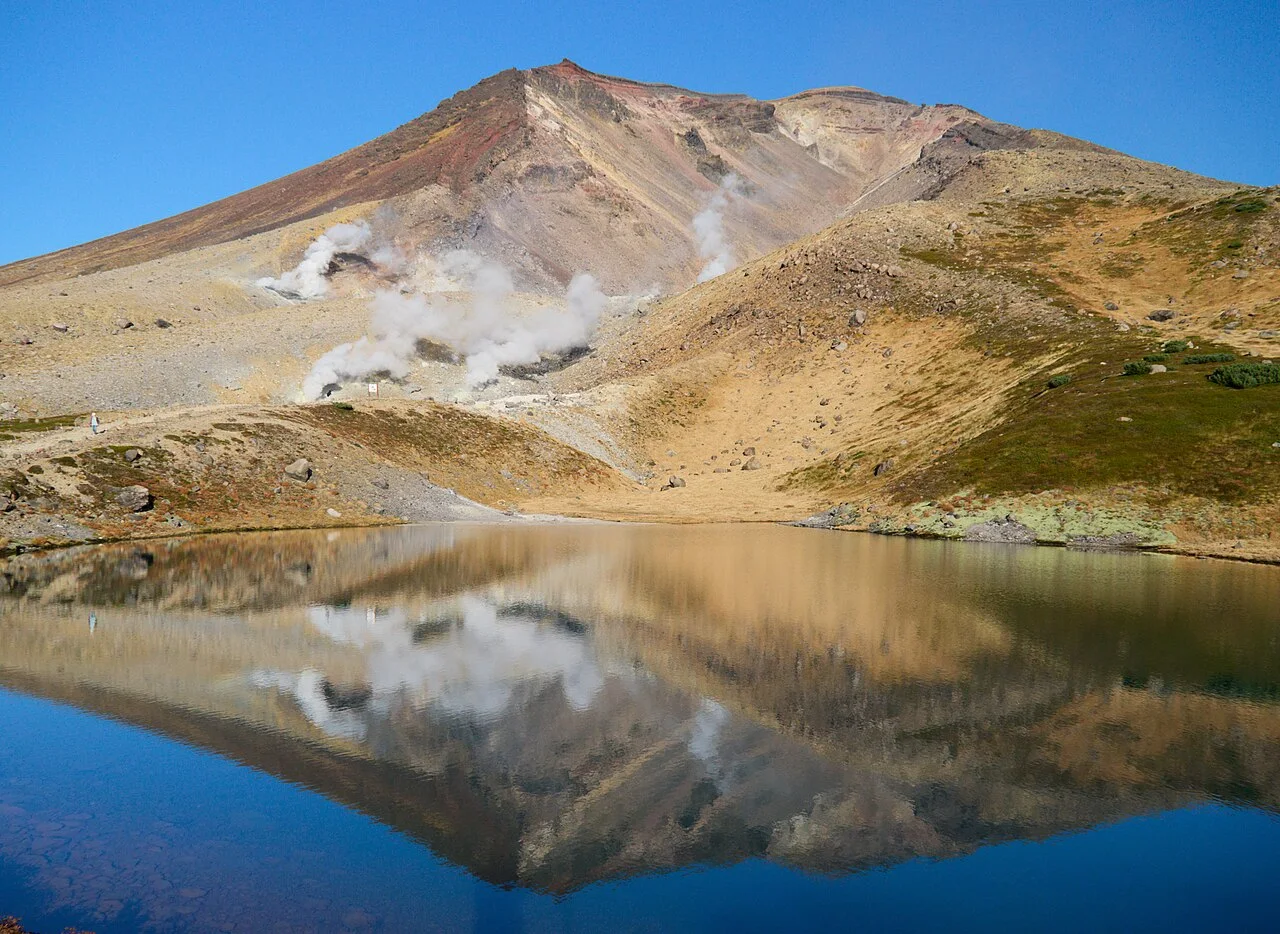
The same company also operates Otokoyama Nature Park in Higashiyama, Asahikawa. It opens seasonally for dogtooth violet (katakuri) blooms from mid-April to early May, with free admission from 9:00 to 17:00. It is a 15-to-20-minute drive from the brewery; by bus, look separately for the Otokoyama Koen stop on Dohoku Bus. During bloom season, check the park's flower updates to decide which site to visit first—and if you are in town for the spring brewery festival before the park opens for the season, keep your remaining outdoor time in central Asahikawa. Mark Nagayama (Brewery) and Higashiyama (Nature Park) distinctly on your itinerary so neither drivers nor companions confuse the two.
Bloom reports use terms like tsubomi (buds) and mankai (full bloom) and separate early- and late-blooming slopes. When visiting with older travelers, check conditions specifically for the hillside trail you plan to walk—in late April 2026, for instance, the official update noted that the late-blooming path had reached full bloom. If your visit overlaps with the spring festival, you can see the flowers in the morning and head to Nagayama in the afternoon, checking the event schedule for must-see times first and factoring in bus waits if traveling between the park and the brewery without a car.
A few useful answers
Does the Otokoyama Sake Brewing Museum still offer free sake tastings?
Admission to the museum is free. Next door at OTOKOYAMA SAKE PARK, all sake tastings switched to a paid token system on March 2, 2026. One token gets a 15 mL pour; tokens cost ¥100 for one or ¥200 for three, and sales stop at 16:20.
Which bus goes from Asahikawa Station to Otokoyama Sake Brewery?
Board a Dohoku Bus at Stop 18 at 1-jo 8-chome and look for Route 68, Route 630, or another service stopping at Nagayama 2-jo 6-chome. It is about a two-minute walk from the stop, and the one-way adult fare on Route 68 is ¥330.
How long does a visit to Otokoyama Sake Brewery usually take?
If you only plan to browse one exhibit floor or shop for bottles, around 40 minutes is enough. Allow about one hour for both exhibit floors and a short tasting, or 90 minutes if you want to watch the film, study the woodblock prints, and pick out souvenirs. Travel time is extra.
Is it worth pairing the brewery with Asahiyama Zoo?
Yes. The brewery lists a drive time of roughly 15 minutes from Asahiyama Zoo. If you plan to taste sake, take a taxi from the zoo to the brewery and ride a Dohoku Bus back to Asahikawa Station, aiming to arrive at the shop before 16:20.
Can I visit just for the exhibits or to fill up on brewing water?
Yes. The second floor displays ukiyo-e prints, and the third floor features brewing tools and multilingual films. Outside in front of the main storehouse, you can also draw free brewing water between 9:00 and 17:00 on regular days, up to 20 liters per person.
Official information and references
Sources used in this guide.
- Otokoyama Co., Ltd. | Museum Hours, Year-End Closures, and Access
- Otokoyama Sake Brewing Museum | Floor Guide, Tasting Shop Relocation, and Brewing Water
- OTOKOYAMA SAKE PARK | Notice on Paid Tastings Starting March 2, 2026
- OTOKOYAMA SAKE PARK | November-December 2026 Soft-Serve Sales Schedule
- Otokoyama Co., Ltd. | Otokoyama Citizens Appreciation Day 2026 Announcement
- Otokoyama Co., Ltd. | Brand History and Subterranean Water
- Otokoyama Co., Ltd. | Flagship Sake Lineup
- Otokoyama Co., Ltd. | Year-Round Sake Lineup
- Otokoyama Co., Ltd. | Seasonal Releases
- Otokoyama Nature Park | Dogtooth Violet Bloom Updates and Park Access
- Dohoku Bus | Asahikawa Station Area Bus Stop Locations
- Dohoku Bus | Route Passing Timetables by Stop
- Dohoku Bus | Route 68 Nagayama 13-chome Line Standard Passenger Fares
- Dohoku Bus | How to Ride and Pay on Local Routes
- City of Asahikawa | Asahiyama Zoo 2026-27 Winter Hours and Closures
- Asahikawa Denki Kido | Asahiyama Zoo Bus Schedule, Stops, and Fares
- National Tax Agency of Japan | Sake Manufacturing and Quality Labeling Standards
- Japan Tourism Agency | How Japanese Sake Is Made
- Public Relations Office, Government of Japan | Legal Drinking Age and Age of Majority
- Ministry of Land, Infrastructure, Transport and Tourism (MLIT) | International Flight Carry-On Liquid Restrictions
- Taipei Customs | Alcohol Entry Allowances and Declaration Limits