How to reach Mount Asahidake from Asahikawa Station or the airport, with ropeway fares, 2026 maintenance dates, Sugatami Pond trail conditions, Bus 66 timetables, winter snowshoeing, and onsen backups.
- Region & Focus
- Asahikawa
- Reading Scope
- 16 min read · 11 chapters · 4 Q&As
- Official Verification
- 19 official sources checkedUpdated November 22, 2026
- Key Topics
- SeasonsWinterHot springs
Chapter Route Map (tap any stop)
- Asahidake Ropeway Fares, Timetables, and 2026 Maintenance Dates
- Getting to Asahidake Onsen from Asahikawa Station and the Airport
- Walking from Sugatami Station to the Pond: Where Your Time Goes
- June Snowmelt, September Foliage, and October's First Snow
- Asahidake in Winter: Snowshoeing, Conditions, and Where to Start
- Driving to Asahidake: Parking, Supplies, and Winter Roads
- Sample Day Itineraries, Day-Use Onsen, and Return Bus Connections
- Where to Stay: Asahikawa, Higashikawa, or Asahidake Onsen
- Hiking Past Sugatami Pond: Where the Sightseeing Walk Ends
- When the Ropeway Closes: Backup Walks and Live Checks
- Asahidake vs. Sounkyo Kurodake: Choosing Between the Two Ropeways
- Quick Q&A
Take the first morning bus from Asahikawa Station and you will reach the Asahidake Ropeway base station by 9:03, leaving plenty of time for Sugatami Pond. The 10-minute ride climbs to 1,600 meters above sea level, where a 1.7-kilometer alpine loop trail leads past steaming volcanic vents and mirror-like views of the peak whenever the circuit is open. For first-time visitors, this loop is the highlight—save extra time afterward for a hot spring soak if your schedule allows. The ropeway closes for annual maintenance from November 16 to December 10, 2026, with service scheduled to resume December 11, though snow buries the summer trails by then and requires a winter itinerary.
Asahidake Ropeway Fares, Timetables, and 2026 Maintenance Dates
The Asahidake Ropeway (Daisetsuzan Asahidake Ropeway) operates in Higashikawa, with its base station, Sanroku Station, sitting at roughly 1,100 meters in the Asahidake Onsen area. Tickets are sold and passengers board at the base station before ascending to Sugatami Station near the fifth station, well below Hokkaido's highest peak at 2,291 meters. Some maps label the upper terminal 'Summit Station' (Sancho-eki), so use 'Sugatami Station' when coordinating a meeting point or sharing your location.
Adult fares apply from junior high school age and up. From November 1 through May 31, adult tickets are ¥2,800 round-trip and ¥1,700 one-way; from June 1 through October 31, they rise to ¥3,500 round-trip and ¥2,200 one-way. Child fares stay ¥1,750 round-trip and ¥1,100 one-way year-round, and each paying adult may bring one preschool-aged child free of charge. If you plan to walk the upper loop and ride back down, buy a round-trip ticket at the start. Both individual riders and tour groups board first-come, first-served without advance reservations, so budget extra time for ticket and boarding lines during autumn holiday weekends.
Departures run every 15 minutes from June 1 to October 20 and every 20 minutes from October 21 to May 31, meaning fares and intervals switch seasons on different dates—late October still charges peak fares even after service drops to 20-minute headways. First and last departures vary across summer and autumn, with additional weekday-versus-weekend shifts during foliage season, so check your exact travel date on the operator's calendar code. Note both the first uphill car and the last downhill car before setting out, especially if you are heading up in the afternoon.
During annual maintenance from November 16 to December 10, 2026, all ropeway rides are suspended and the operator's restaurant and shop close as well. For December 11 to 31, the published timetable runs from a 9:00 first ascent to a 15:40 final descent, departing every 20 minutes from both terminals. For trips in 2027, follow the monthly operating calendar on the official website. Service also halts without notice during high winds or lightning risk, so check the live operating status on the homepage before heading up.
How to reach Mount Asahidake from Asahikawa Station or the airport, with ropeway fares, 2026 maintenance dates, Sugatami Pond trail conditions, Bus 66 timetables, winter snowshoeing, and onsen backups.
Getting to Asahidake Onsen from Asahikawa Station and the Airport
Asahikawa Denki Kido's Bus No. 66 (Ideyu-go) runs four round-trips daily from downtown Asahikawa via Asahikawa Airport and Higashikawa Michikusa-kan to the Asahidake terminus directly outside the ropeway base station. Scheduled travel time is 1 hour 48 minutes from Asahikawa Station and 1 hour 3 minutes from the airport. At Asahikawa Station, board at Bus Stop 9 in front of the station and look for buses signed for 'Asahidake.' The route also serves stops closer to hotels, such as Asahidake Onsen Iriguchi, so stay on until the final stop if you are heading straight up the mountain.
Outbound buses depart Asahikawa Station at 7:15, 9:15, 12:15, and 14:15, picking up at Asahikawa Airport at 8:00, 10:00, 13:00, and 15:00, and arriving at Asahidake at 9:03, 11:03, 14:03, and 16:03. Return buses leave the Asahidake terminus at 9:55, 11:55, 14:55, and 16:55, with the final bus scheduled into the airport at 17:50 and Asahikawa Station at 18:33. Treat the 16:55 bus as a safety buffer on a day trip and aim for an earlier departure instead. If you are staying overnight in the onsen area, note the return pickup times at the stop nearest your hotel so you are not dragging suitcases uphill to Sanroku Station in the snow.
One-way adult fares to Asahidake are ¥2,300 from Asahikawa Station, ¥1,650 from Asahikawa Airport, and ¥1,450 from Higashikawa Michikusa-kan. Although the bus operator adjusts selected fares starting December 1, 2026, these three routes to Asahidake keep their existing rates. Ticket machines are located at the Asahikawa Denki Kido General Information Center and Asahikawa Airport; buy two tickets at once if you plan to ride back, as there is no round-trip discount. The bus accepts only local Asaca and DoCARD transit IC cards, so travelers carrying Suica, ICOCA, or other nationwide IC cards should have cash ready or buy paper tickets beforehand.
Because Bus 66 runs on a fixed local-bus schedule, leave enough buffer between your scheduled flight arrival and bus departure for deplaning and baggage claim. Flights landing after 15:00 miss the last bus, so arrange a hotel shuttle or alternative transport in advance if you are heading to the onsen area that night; catching the 15:00 bus puts you at the base station at 16:03, right around hotel check-in. Underfloor luggage space is limited to one piece per passenger in principle, capped at 0.25 cubic meters, under 2 meters in length, and 30 kg maximum weight. Skiers traveling with both a board bag and a large suitcase should check whether their lodging can accept or forward extra bags beforehand.
| Asahikawa Station | Asahikawa Airport | Asahidake Ropeway Sanroku Station |
|---|---|---|
| 07:15 | 08:00 | 09:03 |
| 09:15 | 10:00 | 11:03 |
| 12:15 | 13:00 | 14:03 |
| 14:15 | 15:00 | 16:03 |
Walking from Sugatami Station to the Pond: Where Your Time Goes
As soon as you step out of Sugatami Station, check the park map and trail condition boards. The loop measures roughly 1.7 kilometers; the official ropeway site estimates around 1 hour, while Hokkaido tourism guides allow 90 minutes. Plan on 90 minutes if you are traveling with family, stopping frequently for photos, or walking on wet gravel after rain, and add ropeway wait and ride times separately. The terrain rolls continuously—according to Ministry of Land, Infrastructure, Transport and Tourism data, the trail tops out near 1,670 meters, climbing almost immediately from the station.
The loop passes Sugatami Pond, Kagami Pond, and Suribachi Pond, with the latter two sitting side by side and labeled together on maps as Meoto Pond (Couple Ponds). On a first visit, head from Sugatami Station toward Observation Deck 1 to see low alpine flora and crater ponds before continuing to the Sugatami Pond overlook for full views of Mount Asahidake and its white steam vents. The slopes are completely exposed, so wind cuts straight through a light jacket. If strong gusts hit by the first viewpoint or someone in your group is struggling with the footing, turning back the same way still makes a rewarding short walk.
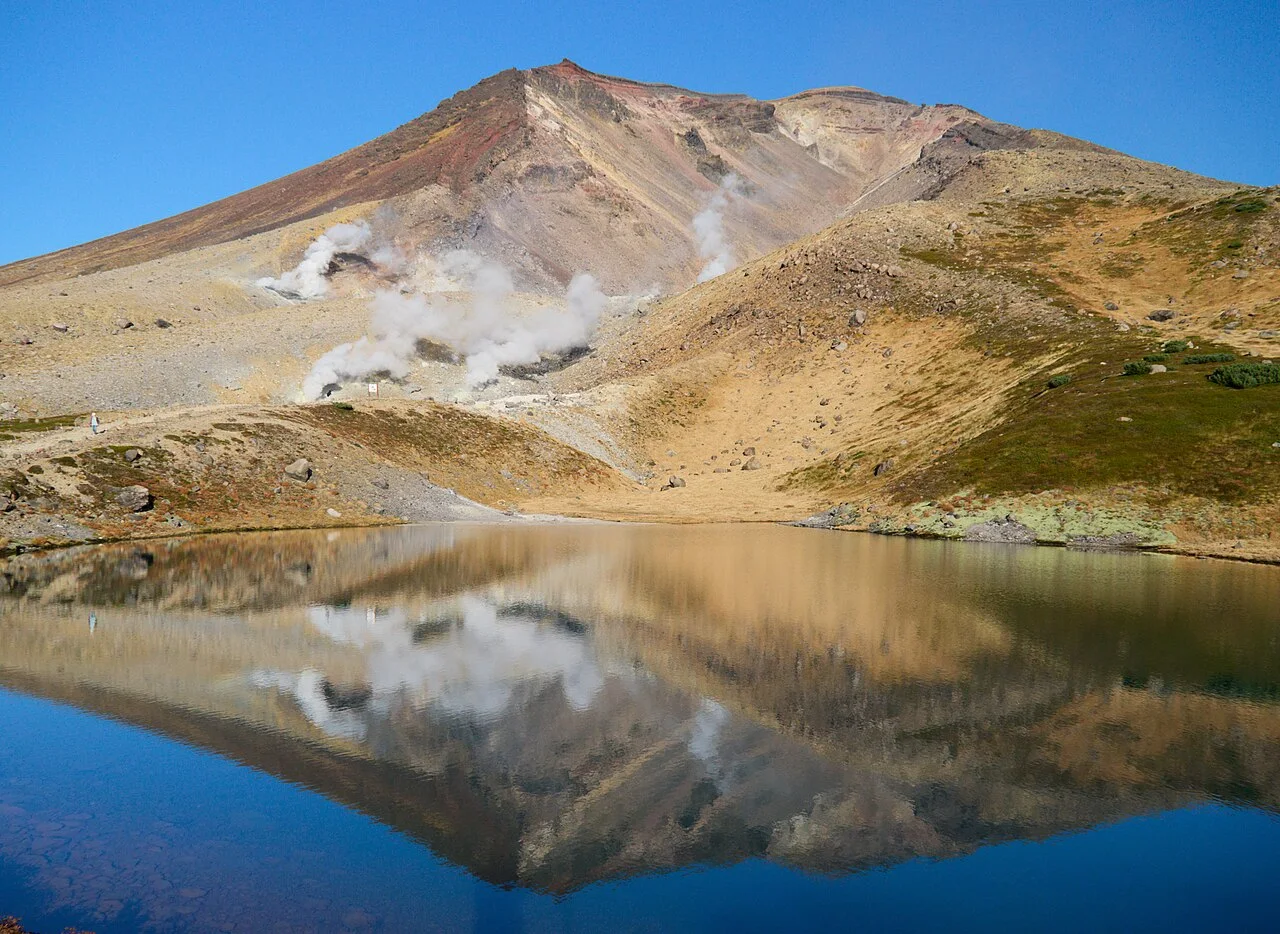
In Japanese, 'sugatami' means a full-length mirror. On calm, clear mornings, Sugatami Pond reflects Mount Asahidake and drifting steam plumes, framing shoreline boulders and the distant summit in one view. Even when wind ripples away the reflection, you can trace active fumaroles across the barren slope and watch volcanic gravel transition into carpets of alpine shrubs along the path. Stay on the marked trail and viewing decks for photos—the pond edges are slick, and everything inside the roped boundaries is protected alpine habitat. Factor photo stops into your clock, since 10 or 15 minutes at each pond quickly adds up to another ropeway departure cycle.
The ponds sit at different points around the loop. At Meoto Pond, check the lakeside signposts to tell Kagami Pond and Suribachi Pond apart. If you only have time for one spot, follow signs from Sugatami Station toward 'Sugatami Pond' or Observation Deck 5 and return along the same leg. Sugatami Pond fills a volcanic crater depression, and its overlook aligns the water, bare rock slopes, and steaming mountainside in a single panorama. When the station map shows the Nakamichi shortcut open, you can cut across from Observation Deck 1 toward Sugatami Pond instead of walking the outer loop.
Wear shoes with solid tread—waterproof boots after rain or during snowmelt—and pack a windproof, rain-resistant shell. Gravel sections, stone steps, and uneven rock drops make the full loop impassable for strollers, and even baby-carrier users should weigh their footing on steep stone steps before committing. If anyone in your party struggles with downhill steps, use Sugatami Station as a meeting point so hikers can walk out and back while others enjoy the summit views near the station or head down early. Saving energy for older relatives and kids leaves more stamina for a hot spring soak back at the base.
Sugatami Station has flush restrooms—use them before starting the trail—and carry drinking water plus a quick snack in a daypack for the wait back down. Pack out every scrap of trash from the mountain. The ropeway site notes that rubber boots are available to rent at Sugatami Station, which comes in especially handy outside peak summer. Even if your own shoes are waterproof, check ground conditions for frost, packed snow, or ice before deciding whether to rent boots, shorten the walk, or stay near the station. An extra layer keeps you warm at viewpoints, while good traction determines how safely you descend the stone steps.
Visitors interested in alpine wildflowers or volcanic geology can check the Asahidake Visitor Center calendar for the 'Sugatami Guide Walk,' or opt for the 'Asahidake Onsen Nature Walk' around the base area if someone in your group prefers to skip the ropeway. Both programs take registrations by phone or at the visitor center desk up to 15 minutes before departure, though participants must be able to communicate in Japanese. Tours leave on fixed schedules, so bus riders should confirm departure times and allow walking time from the bus terminus to the visitor center.
June Snowmelt, September Foliage, and October's First Snow
The ropeway operator designates June through mid-October as the standard walking season. Early summer is all about tracking the snowline: lower ground may already be blooming while shaded slopes hold deep snowbanks. When the ropeway resumed service on May 23, 2026, a visitor center patrol found roughly 80 percent of the loop still snow-covered, obscuring the trail line. If completing the full circuit matters to you in early summer, check the visitor center's weekly trail photos first to see whether stone steps and pondside slopes are exposed—from late May through June, you can ride up from a green valley straight into active snowmelt.
From early June to mid-August is the prime alpine wildflower season. Chinguruma (alpine avens) bloom in clusters of small white blossoms before developing feathery seed plumes that blanket the slopes in soft tufts. Bloom timing varies with elevation, so species absent near the station often appear deeper along the loop. Even in midsummer, pack a windbreaker: the ropeway lifts you out of sheltered forest onto an exposed mountainside where standing still at an overlook feels noticeably colder than walking. In rain, breathable mesh sneakers soak through quickly, making tall socks and a spare dry pair more useful than an extra T-shirt.
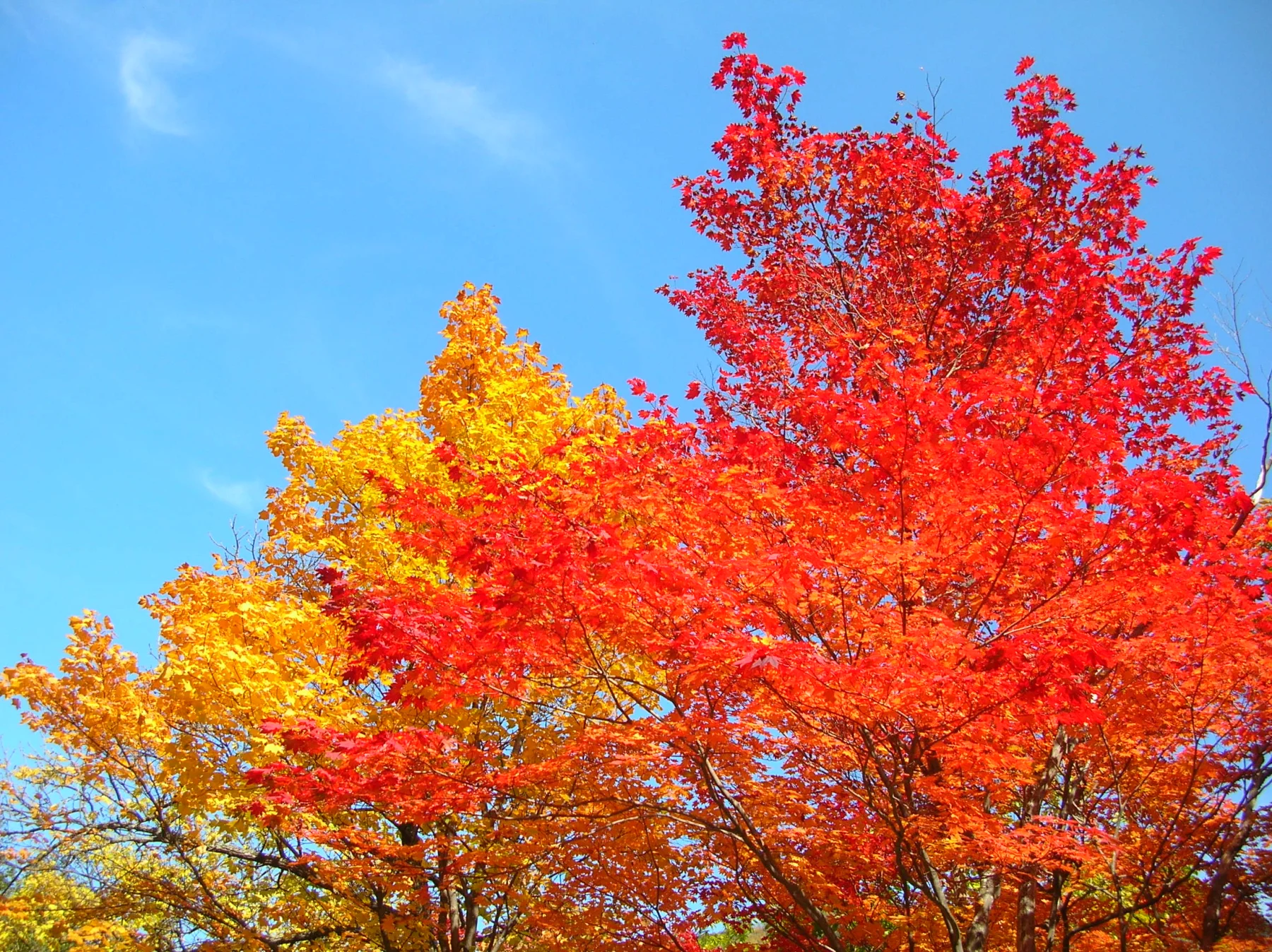
Autumn color turns at higher elevations first and creeps gradually down toward the base. Mid-September is typically prime for upper-slope foliage, though it is smart to cross-check recent photos from Sugatami Station alongside views along the ropeway corridor, as lower slopes can stay vivid even after high ridges turn brown. On autumn weekends, take the earliest bus or stay overnight at the base so you can ride up right after breakfast. Arriving around midday often means burning your walking window in the ticket and boarding queues.
While lowlands across Hokkaido stay in autumn mode through October, upper Asahidake can freeze early. After the season's first snowfall on October 2, 2026, the visitor center recorded -1°C at Sugatami Station in the morning, with iced-over steps and snow-covered paths toward the pond. On days like that, even if the ropeway is running, pick a turnaround point based on actual footing—and stick to cleared areas near the station if you are wearing everyday sneakers. Keep your itinerary flexible to grab a clear morning if you want fall color and fresh snow in the same frame, and never judge trail footing from a pond photo posted two weeks earlier.
Asahidake in Winter: Snowshoeing, Conditions, and Where to Start
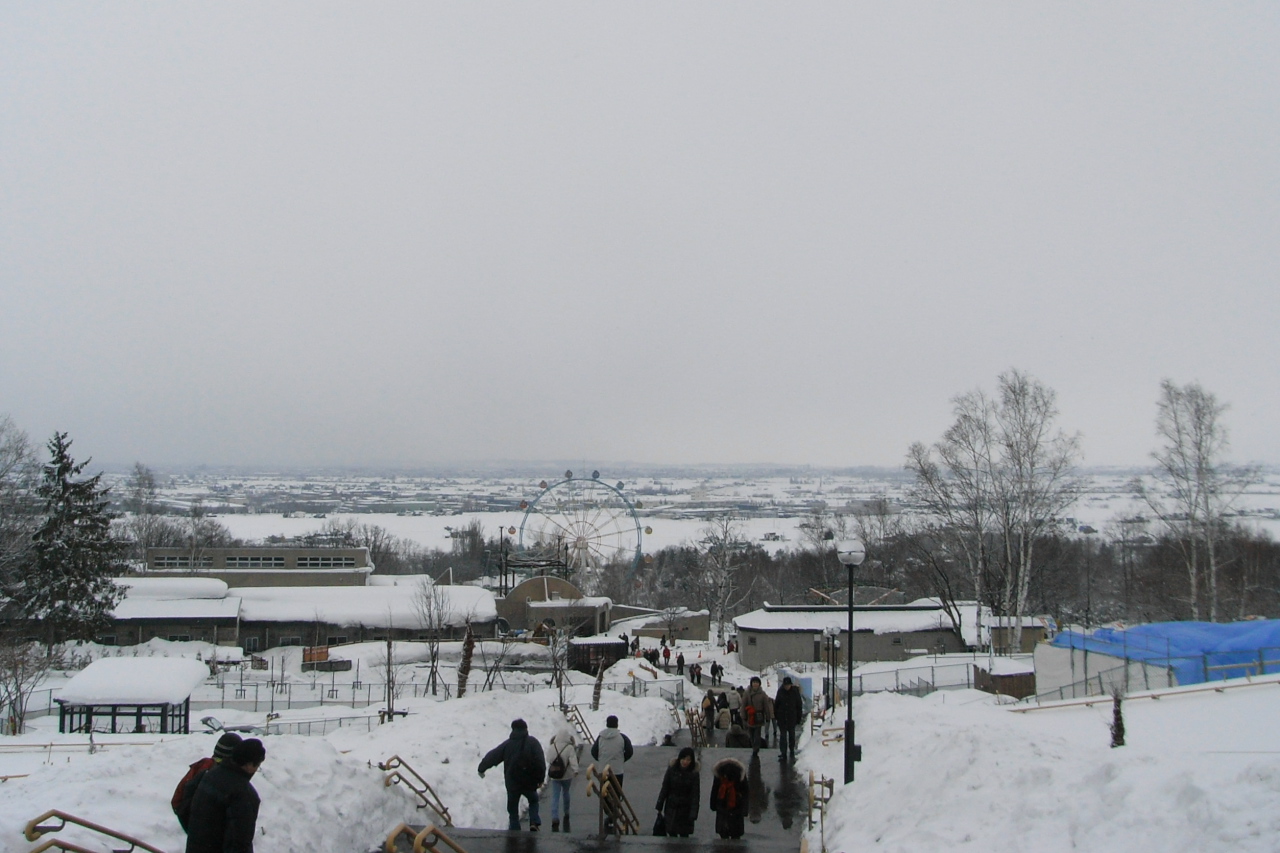
In winter, you can still ride the operating ropeway to Sugatami Station for sweeping snowscapes, though deep snowpack buries the summer ponds, gravel trails, and stone steps. Check visibility from inside the station before stepping out; in whiteout conditions, stay strictly within marked safe zones near the building even if the snow at your feet looks tempting for photos. Use the 1.7 km summer loop map only to orient place names, and rely on the visitor center's seasonal winter map for open snow routes.
First-time snowshoers are much better off starting on the forest trails around Asahidake Onsen, where you can ask staff which sections are open and easily head back to the visitor center or your hotel if you tire. The Asahidake Visitor Center opens snowshoe rentals on December 11, 2026, offered first-come, first-served on site. Aim for the morning if renting that day, pick your route length once fitted, and wear your own winter boots, windproof shell, and insulated gloves. Cross-country ski gear is also available for rent; stick to marked open sections along the onsen ski courses and stay off the center of groomed ski tracks.
The winter ropeway carries skiers and snowboarders, but permission to bring boards aboard depends on whether snow depth meets opening criteria for each ski course, as announced by the operator. Treat the December 11 restart primarily as your baseline for sightseeing trips, and confirm course openings, gear rules, and weather separately before traveling to ski. Terrain accessible from the top station carries high wind, poor visibility, and avalanche risks; first-timers should stick to marked base trails or book a guided outing, while backcountry skiers need full avalanche gear, navigation tools, and experienced partners.
Base-area winter trails also open in stages. According to the visitor center's November 19, 2026 monthly bulletin, grooming had begun on cross-country tracks, but snow toward Wasabi-numa Marsh remained too thin for the full loop, leaving only shorter versions open. Even when hotel driveways look blanketed in snow, sheltered marshes and forest slopes may lag behind, so check daily center updates and trailhead signs before setting out. If you rent snowshoes, test the boot fit and bindings inside the center so you are not stopping mid-trail in freezing air to adjust straps.
Even short winter stops demand proper warmth. Riding a heated bus uphill leaves you cozy until you step outside, and waiting at the stop for the ride down can chill your hands and toes fast—a spare pair of dry gloves and winter boots with room for your toes to wiggle make a noticeable difference. If a blizzard hits while you are staying in the onsen area, keep outings close to your hotel and proceed only while trail markers stay clearly visible. There is no harm in cutting a walk short and spending the afternoon in the hot springs while the storm blows through.
Driving to Asahidake: Parking, Supplies, and Winter Roads
Drivers approach from Asahikawa via downtown Higashikawa. The stretch from central Higashikawa to Asahidake Onsen runs about 30 kilometers, making town the natural last stop for water, snacks, and lunch supplies; before climbing, move winter coats and grippy footwear out of your trunk into the cabin. Even if city streets look dry when you leave Asahikawa, shaded mountain curves, bridge decks, and parking lots can still hold black ice. If conditions deteriorate, stay in Higashikawa until the road is safe both ways.
At the base, parking is split between the public lot outside the visitor center and the ropeway's own lot; Higashikawa tourism materials note that the ropeway lot is free from November through May and paid from June through October. Follow posted lot signs rather than relying solely on GPS parking icons. On mid-September weekends, budget extra time for parking queues and ticket lines, and follow temporary traffic marshals when lots fill. Overnight guests staying nearby should ask their hotel where to park before check-in and walk to the ropeway if convenient.
The mountain access road to Asahidake Onsen is plowed through winter, though deep ruts and whiteouts can slow traffic sharply. Rent a vehicle with winter snow tires, check mountain road and base forecasts before leaving, and aim to drive down in daylight. Never schedule a flight departure or car return tightly behind the final downhill ropeway car. Once parked, note your row and exit lane in case evening snowfall buries your car's outline, and save your hotel's Japanese name and offline map on your phone rather than trusting mountain cell reception.
Sample Day Itineraries, Day-Use Onsen, and Return Bus Connections
Catching the 7:15 bus from Asahikawa Station puts you at Sanroku Station by 9:03, giving you a full morning on the mountain. In summer and autumn, you can hike the upper loop, eat lunch back at the base, and catch the 14:55 return bus to reach Asahikawa Station at 16:33. If you linger over photos or plan a midday hot spring soak, drop back to the 16:55 bus instead. The 9:15 departure arrives at 11:03 and still leaves ample time for Sugatami Pond—fit lunch around your ropeway ride and adjust your base stay accordingly. Traveling with kids or older companions favors the 7:15 bus, leaving plenty of room for rests at the station while still catching an afternoon bus down.
The 12:15 bus from Asahikawa Station reaches the base at 14:03. Under the December schedule, that leaves time for the next ascent and up to an hour of snow viewing around Sugatami Station before the final descent. The 14:15 bus arrives at 16:03—already past the December 2026 last downhill run, even if you sprint to the ticket counter—making it strictly a hotel check-in transfer. If you board either afternoon departure at Asahikawa Airport instead, your boarding stop and time change, but the arrival times at Asahidake stay identical.
For a day-use soak, look into Kamigami-no-Yu at the Yukomanso Annex. Its official site lists reception from 12:00 to 18:00 and bathing until 19:00 at ¥1,200 for adults, ¥600 for elementary school students, and free for preschoolers, with towel rentals available separately. The bathhouse entrance sits in the annex beside the main inn, right off the Asahidake Onsen Iriguchi bus stop. Afternoon buses back toward Asahikawa pass that stop at 14:57 and 16:57; plan your walk and lunch around midday so you can soak unhurriedly and catch the 16:57 ride without rushing out of the bath. Because last entry closes after the final bus departs, always anchor your soak to the bus schedule.
If half your group came mainly for hot springs while others want the full summit loop, everyone can ride the same morning bus up, reunite at the Asahidake Onsen Iriguchi stop afterward, and ride back to Asahikawa together. Day visitors use the separate annex bath rather than the overnight guest baths, so purchase your day-use ticket directly at the annex. If you check out of a hotel before bathing, pack your return bus ticket, dry clothes, and a towel in an easy-to-reach daypack rather than unpacking a suitcase at a snowy bus stop.
Round-trip Bus 66 fare from Asahikawa Station totals ¥4,600 per adult. Combined with a summer/autumn round-trip ropeway ticket, transport comes to ¥8,100; with the winter ropeway fare, it drops to ¥7,400. From Asahikawa Airport, round-trip bus fare totals ¥3,300, a useful benchmark if you are heading straight to a base hotel on arrival day. Budget onsen entry, towel rentals, and meals separately, and tally those transit totals across your group before deciding whether to stay in Asahikawa or spend a night at the mountain base.
Where to Stay: Asahikawa, Higashikawa, or Asahidake Onsen
Staying near Asahikawa Station suits car-free travelers planning a flexible day trip up the mountain. Buses depart straight from the station square, letting you pivot to city plans if forecasts turn poor. If your autumn itinerary also covers Biei or Furano, book two or more nights in Asahikawa and save Asahidake for whichever day brings the clearest mountain weather. Returning to the city also gives you far wider dinner options, even if weather sends you down early.
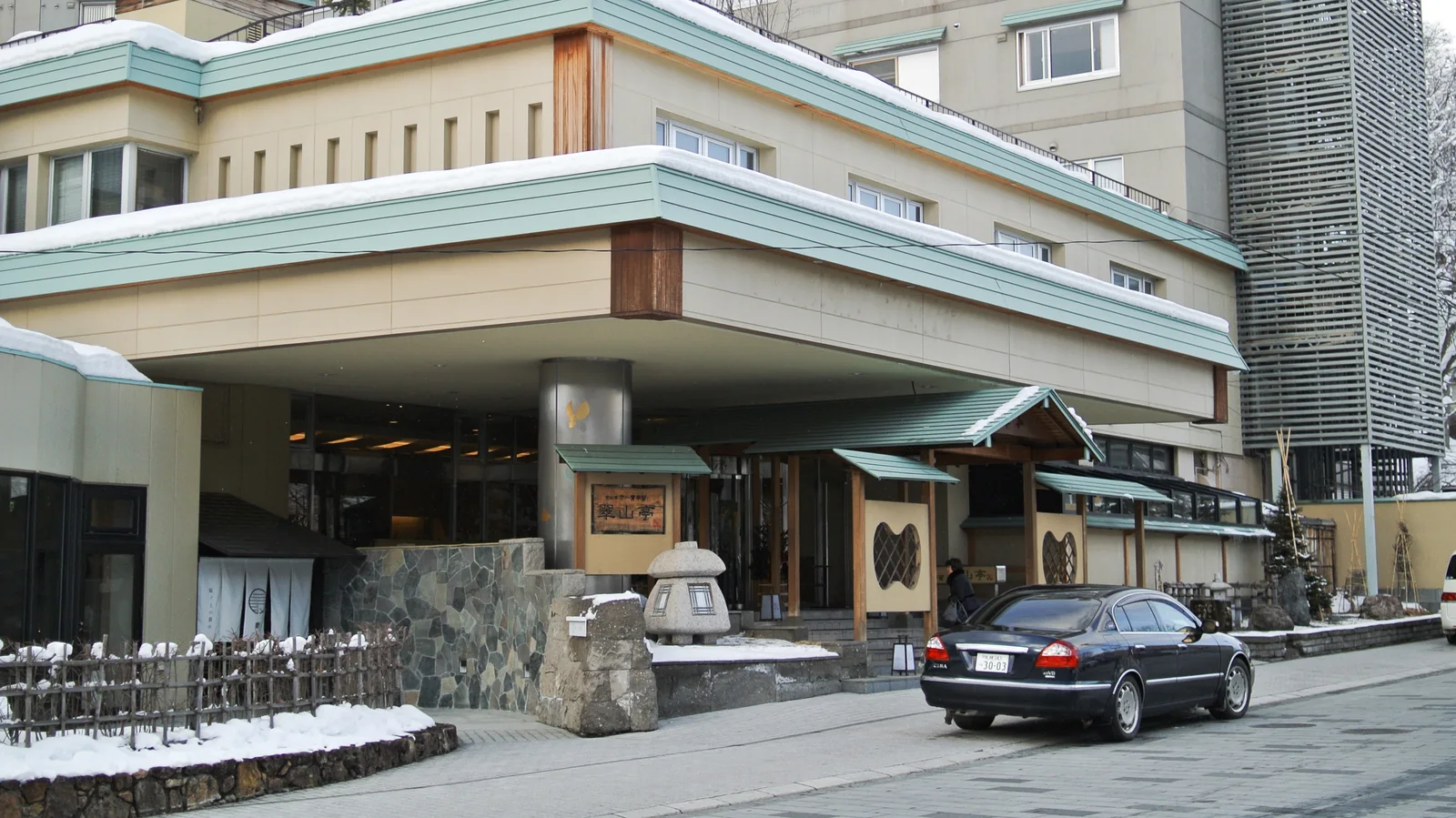
Asahidake Onsen is worth an overnight stay if you want early-morning mountain light, two chances at clear visibility, or direct access to a hot bath after skiing. Lodgings stretch down the mountain road from right beside Sanroku Station to the onsen entrance, so note your property's nearest bus stop and winter walking route from the road before booking. Late-afternoon arrivals should confirm last dinner check-in and shuttle cutoffs, as standalone restaurants are scarce in the valley. Before catching an early ropeway the next morning, ask whether your hotel can store large luggage after checkout so you can board the return bus at the same stop.
Central Higashikawa works well for drivers splitting their time between mountain outings and valley towns. You still have the 30-kilometer drive up to Asahidake Onsen, but if wind shuts the ropeway down, you can grab lunch in town and easily redirect to Asahikawa or Biei. Bus travelers staying in Higashikawa board at Michikusa-kan on the same four-times-daily Bus 66 timetable. If you are debating splitting two nights between the base and town, check whether the mountain hotel includes dinner and weigh the convenience of walking straight to the first ropeway against repacking bags between stays.
Hiking Past Sugatami Pond: Where the Sightseeing Walk Ends
The true summit of Mount Asahidake rises to 2,291 meters—nearly 700 vertical meters above Sugatami Station. Past the pond near the Asahidake Ishimuro stone shelter, the trail shifts into loose gravel, shifting scree, and steep wind-exposed pitches. While casual sightseers fill the boardwalks between Sugatami Station and the pond, fog beyond the trailhead junction demands map skills, marker reading, and confident route-finding. Check mountain trail reports at the visitor center beforehand, carry offline maps, and set a strict turnaround time to guarantee making your downhill ropeway.
On a summit morning, allocate separate buffers for hiking, breaks, your descent ropeway, and the final bus, and carry waterproof wind gear, warm layers, ample water, and a headlamp. Cold temperatures and zero-shelter winds intensify quickly with elevation. Snow-season ascents require full winter mountaineering gear and experience—the ropeway merely shortens the approach. Routes to Susoaidaira or the ridge traverse toward Mount Kurodake also require dedicated hiking days with up-to-date checks on snowfields, trail markers, and mountain huts, never an impromptu add-on after walking Sugatami Pond.
The visitor center asks hikers to file a climbing itinerary with Hokkaido Police in advance and sign the trailhead registers located at Sanroku Station, Sugatami Station, and the trailhead. The last flush toilets sit at Sugatami Station; farther up, Asahidake Ishimuro provides only a booth for portable waste bags. For longer climbs, buy a portable toilet kit in Higashikawa or at the visitor center before heading up and pack it out afterward. Another trail climbs roughly 500 vertical meters between the base and Sugatami via Tennin-ga-hara Marsh, carrying its own map and snow conditions that require a full daylight window.
The alpine park sits inside protected habitat, so stay strictly within roped trails and never step onto fragile vegetation. All of Daisetsuzan is also brown bear territory; the visitor center posts current sightings, tracks, and trail closures. Follow all active advisories on the day of your visit, never approach wildlife for photos, and pack out every food scrap. When crossing junctions or ridgelines, take note of landmarks and return bearings in case fog rolls in.
When the Ropeway Closes: Backup Walks and Live Checks
Before leaving your hotel, check live ropeway status alongside the latest Sugatami trail report. Clear skies paired with icy trails suit a short overlook visit at the upper station followed by a day-use onsen soak; if the ropeway is suspended while mountain roads remain open, pivot to base-level walks instead. Note that the Asahidake Visitor Center also closes from November 16 to 27, 2026, and again over the New Year holiday from December 31 to January 5—on those dates, check individual hotel bath schedules directly.
Higashikawa also operates a live webcam at Sugatami Station overlooking the slopes at 1,600 meters, letting you verify whether clouds shroud the summit and how far snow covers the mountainside. Pair that visual check with the visitor center's written trail report to confirm footing, and double-check the image timestamp if you look before dawn. Make any go-or-no-go call before boarding Bus 66—if you wait until arriving at the base station to cancel, you will be stuck waiting until the next scheduled return bus.
During snow-free months, the visitor center's Asahidake Onsen Nature Trail map outlines gentle forest walks around Yukomambetsu Marsh and surrounding conifer woods right near the base. In June 2026, the visitor center announced that aging boardwalk sections were closed, cutting off the full circuit and limiting access to out-and-back walks entered from the ropeway side. You can also check the Komakusa Course marked on the same map. Because foliage turned at Sugatami Pond by September 17, 2026 while trees around the onsen were only starting to yellow, late-September visitors should leave time for the lower woods as well.
Once winter sets in, follow the separate snowshoe and cross-country ski maps, as base-trail openings are announced independently from upper-mountain conditions. If you learn at Asahikawa Station that the ropeway is closed, swapping to city plans immediately saves more than three hours of round-trip bus time. If you have already reached Asahidake Onsen, pairing a hot spring soak with a scheduled return bus is far simpler than scrambling to reach another mountain.
Asahidake vs. Sounkyo Kurodake: Choosing Between the Two Ropeways
Choose Higashikawa's Asahidake on your first trip if you want active volcanic fumaroles and a customizable alpine loop with clear pond reflections. Sounkyo, on the Kamikawa side of the park, works better for gorge and waterfall scenery paired with an overnight stay along an onsen street. The Kurodake Ropeway rises about 7 minutes from Sounkyo Station to Kurodake Station at the fifth station (around 1,300 meters), where a short walk connects to a chairlift up to the seventh station. Non-hikers can take in mountain views at Kurodake's fifth station and stroll the gorge below—just keep Asahidake on your itinerary if pond reflections are your main goal.
The two ropeways are run by separate operators. From Kamikawa Station, Dohoku Bus reaches Sounkyo in about 30 minutes, leaving a 5-minute walk from the bus stop to the Kurodake Ropeway base station, whereas Asahidake relies on Bus 66 from Asahikawa Station or the airport. Car-free travelers hoping to visit both should base in Asahikawa and tackle them on separate days so there is still time to walk the trails and relax at the base. Drivers can hike Asahidake first and move over to Sounkyo the next day for an onsen stay—where gorge sightseeing stays worthwhile even under persistent summit cloud cover, leaving the morning after check-in for a final ropeway call.
A few useful answers
How much is a round-trip adult ticket on the Asahidake Ropeway?
Adult round-trip tickets cost ¥2,800 from November 1 through May 31 and ¥3,500 from June 1 through October 31. Child round-trip tickets are ¥1,750 year-round.
When does the Asahidake Ropeway close for maintenance in 2026?
Annual maintenance runs from November 16 to December 10, 2026. From December 11 to 31, the published timetable runs from a 9:00 first ascent to a 15:40 final descent, though high winds or lightning risk can halt operations temporarily.
How do I take the bus from Asahikawa Station to the Asahidake Ropeway?
Board Bus No. 66 (Ideyu-go) at Bus Stop 9 outside Asahikawa Station and ride to the Asahidake terminus (¥2,300 one-way per adult). For a day trip, keep the 14:55 and 16:55 return departures in mind.
Do first-time visitors need to hike to the summit of Mount Asahidake?
No. The 1.7-kilometer Sugatami Pond loop right outside Sugatami Station passes alpine ponds and volcanic fumaroles in 60 to 90 minutes when open. Reaching the summit requires taking the mountain climbing trail, plus winter mountaineering gear and experience during snow season.
Official information and references
Sources used in this guide.
- Asahidake Ropeway | Fares, Boarding Info, and Operating Calendar
- Higashikawa Tourism Association | November–December Ropeway Maintenance Notice
- Asahikawa Denki Kido | Route 66 Asahidake Line
- Asahikawa Denki Kido | Asahidake Line Bus Stop at Asahikawa Airport
- Asahikawa Denki Kido | December 2026 Bus Fare Schedule
- Ministry of Land, Infrastructure, Transport and Tourism | Sugatami Pond Loop Guide
- Asahidake Visitor Center | Seasonal Trail Maps and Base Area Routes
- Asahidake Visitor Center | Climbing Plans, Restrooms, and Trail Etiquette
- Asahidake Visitor Center | November Newsletter and Year-End Closure Dates
- Asahidake Visitor Center | Winter Snowshoe Rentals
- Asahidake Visitor Center | Snowpack Conditions on May 23, 2026
- Asahidake Visitor Center | Snow and Ice Conditions on October 2, 2026
- Asahidake Visitor Center | Partial Closure Notice for Yukomambetsu Park
- Asahidake Visitor Center | Guided Walk Event Calendar
- Higashikawa Tourism Association | Asahidake Onsen Access and Parking
- Higashikawa Tourism Association | Sugatami Station Live Webcam
- Yukomanso | Day-Use Onsen Hours and Admission
- Sounkyo Kurodake Ropeway | Access and Facilities
- Ministry of the Environment | Daisetsuzan National Park