An 85-minute Lake Akan excursion boat stops at Churui Island to see marimo. Plan your day around the two piers, Bokke Nature Trail, and the Ainu theatre, plus Kushiro bus half-days, bad-weather alternatives, and winter ice seasons.
- Region & Focus
- Eastern Hokkaido
- Reading Scope
- 20 min read · 11 chapters · 5 Q&As
- Official Verification
- 31 official sources checkedUpdated 22 November 2026 at 08:00 GMT+8
- Key Topics
- ItinerariesSeasonsHot springs
Chapter Route Map (tap any stop)
- Pin the Two Piers and the Theatre First
- The 85-Minute Excursion Boat Includes the Marimo Exhibit
- Where to See Marimo—and What to Do if Boats Are Cancelled
- The Bokke Mud Pots: 30 Minutes Out and Back, or 45 Minutes from the Pier
- Craft Workshops and Theatre Showtimes in Lake Akan Ainu Kotan
- Full-Day Plan in Boat Season: Island in the Morning, Ainu Kotan in the Afternoon
- Car-Free Half-Day from Kushiro: Lock In Your Return Bus First
- Shore Plans for Rain, High Winds, or Cancelled Boats
- Lake Akan in Winter: Check Ice Venue Opening Dates First
- Hot Springs and Dinner at Lake Akan: What to Sort the Day Before
- Linking Kushiro Shitsugen Wetland or the Three Eastern Lakes: Where Lake Akan Fits
- Quick Q&A
For a first visit during the boating season, start with the 85-minute excursion boat to see marimo on Churui Island, then follow the Bokke trail back to Akankohan Visitor Centre before heading west to Lake Akan Ainu Kotan. Visiting on a day-return bus from Kushiro leaves half a day: pick either the boat or a stage performance. If you want to catch the 21:00 'Lost Kamuy' show or go ice fishing in winter, staying a night by the lake works much better.
Pin the Two Piers and the Theatre First
Lake Akan's hotels, piers, and shops cluster along the southern shore. Lake Akan Ainu Kotan (the Ainu village) and the Ikor theatre sit at the western end, while walking east along the hot-spring street brings you to Akankohan Visitor Centre. Bokke's mud pots lie in the woods between the visitor centre and the lakeshore. Cross the town once during the day with lunch along the street, and your afternoon flows straight into a forest walk or a matinee. Stay in this area and you can walk back to your hotel after an evening show.
Akan Sightseeing Boat uses two piers: Marimo-no-Sato Pier (Marimo-no-Sato Sanbashi) to the east and Koun-no-Mori Pier (Koun-no-Mori Sanbashi) near the Ainu village. Official boat timetables run from the eastern pier. Save both exact pier names on your phone map, plus Akanko Bus Centre. Searching simply for 'Lake Akan' tends to drop a pin in the middle of the lake or on a deserted shore, which easily sends drivers and suitcase-hauling travellers the wrong way.
On the eastern edge of the hot-spring town, Akankohan Visitor Centre is an indoor exhibition hall accessible directly by road. Over on the northern side of the lake, the Marimo Exhibition and Observation Centre sits on Churui Island and requires a boat. Meanwhile, the town centre has Akanko Marimu-kan, which houses the tourist information desk. All three names pop up on local maps. Head to Akankohan Visitor Centre for forest trails; head straight to the excursion boat ticket office if you want to see the giant marimo out on the island.
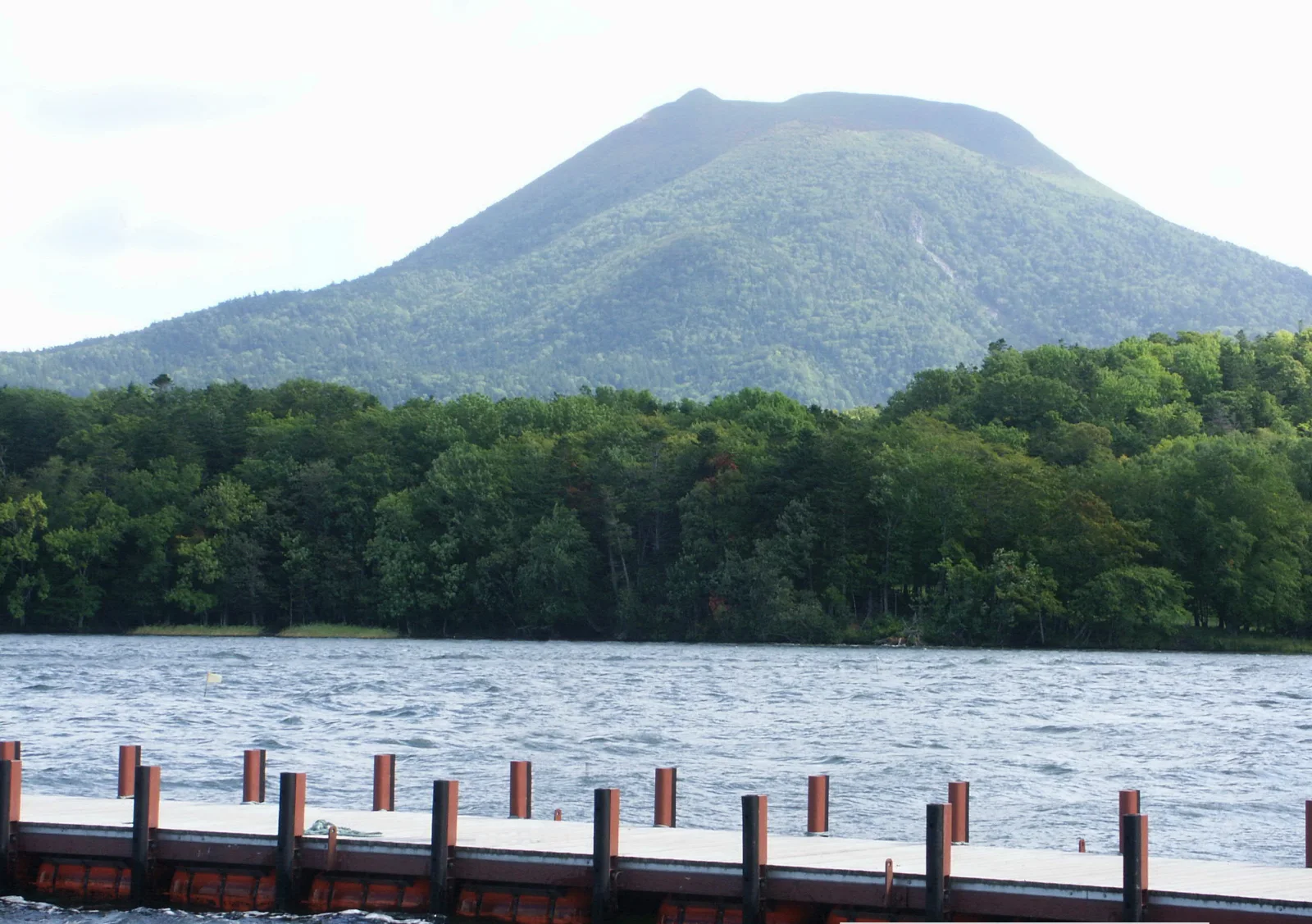
The hot-spring district sits within the Akan section of Akan-Mashu National Park. Mount Oakan rises in view from both the water and the shore, though its summit has its own separate hiking route. On foot, a south-shore stroll covers only one corner of the lake: private land blocks the northern shore, so you cannot walk all the way round Lake Akan. When booking an excursion boat, look for the full-lake loop route, but keep walking plans strictly to the signposted lakeside trails.
| Destination | Map Search Name | How It Connects |
|---|---|---|
| Eastern excursion boat pier | Marimo-no-Sato Sanbashi (Marimo-no-Sato Pier) | Follows the operator's standard timetable |
| Pier near Ainu Kotan | Koun-no-Mori Sanbashi (Koun-no-Mori Pier) | Departs and returns 5 minutes off the eastern pier schedule |
| Lakeside visitor centre | Akankohan Visitor Centre | Free marimo tanks inside; trailhead behind the building |
| Ainu theatre | Lake Akan Ainu Theatre Ikor | Pick your showtime first, then plan meals and buses around it |
| Lake Akan bus terminal | Akanko Bus Centre | Terminus for the Route 30 Akan Line to and from Kushiro Station |
An 85-minute Lake Akan excursion boat stops at Churui Island to see marimo. Plan your day around the two piers, Bokke Nature Trail, and the Ainu theatre, plus Kushiro bus half-days, bad-weather alternatives, and winter ice seasons.
The 85-Minute Excursion Boat Includes the Marimo Exhibit
The regular excursion boat covers roughly 18 km, looping the lake from Marimo-no-Sato Pier in around 85 minutes. That includes about 15 minutes ashore on Churui Island to view the marimo. Everyone boards and disembarks together under crew instructions, so watch the re-boarding time even if you want one last look at the tanks. Standard fares revised on 15 March 2026 are ¥2,700 for adults and ¥1,390 for children, including entry to the island centre.
Individual travellers can buy regular boat tickets on the day at the pier. Check the operator's daily timetable carefully: Koun-no-Mori Pier departs 5 minutes later than Marimo-no-Sato Pier and arrives back 5 minutes earlier. Calculating lunch or bus connections at the western end using the eastern timetable can easily throw you off by several minutes. If Bokke is next, get off at the eastern pier and step straight onto the lakeside path; if you browse Ainu Kotan first, board from the western pier to save walking the whole street twice.
The 2026 regular timetable lists eight daily sailings from 1 May to 20 October, starting at 08:00 with the last boat at 16:00. From 21 October to 10 November the 16:00 sailing drops off, and from 11 to 30 November only four departures run at 09:00, 11:00, 13:00, and 15:00. Sailings from 15 to 30 April are listed as irregular, so check directly with the boat operator on the day if you visit then. Late-autumn visitors taking the local bus back to Kushiro face a double pinch from fewer sailings and earlier return buses.
The same company also runs smaller motorboats with different stop options. Its Course 1 omits the marimo viewing stop altogether, and a solo passenger chartering a boat is charged at the two-person rate. If you simply want a shorter trip on the water, tell the ticket desk how many are in your party and whether you want to land on the island so they can point out the right route. Travellers with young children or anyone prone to seasickness should keep an extra warm layer to hand: it can feel sunny ashore, then turn sharp once the boat clears the shelter of the bay.
As soon as the boat pulls away from the pier, the mountains behind the hot-spring street and the forested shoreline open up. The regular circuit passes scenic Takiguchi before calling at Churui Island. Even under low cloud, there is plenty to watch around the bay mouths, in the boat's wake, and along the wooded banks. Waiting for a later sailing might clear the peaks, though it squeezes your theatre and bus connections—if you are returning the same day, set your latest boat cutoff well ahead of your bus.
Where to See Marimo—and What to Do if Boats Are Cancelled
The Marimo Exhibition and Observation Centre on Churui Island is the main draw for seeing large spherical marimo. Follow the flow inside straight off the boat, start at the big main tank, then browse the panels that catch your eye. Exactly how large the specimens are depends on the current display, and families can easily compare big and small spheres side by side at the glass. If you only have an afternoon, the island stop is already built into the boat fare, leaving time back ashore for the forest trail or a show.
Marimo are a species of freshwater green algae. Their fine filaments can cling to stones or drift loosely across the lakebed; the familiar velvet spheres in the tanks are dense colonies woven from countless threads. According to Kushiro City, Lake Akan grows unusually large clusters because of its lakebed composition, spring-fed water, and gentle wind-driven currents that slowly roll the balls over. Having just crossed the bays by boat makes the exhibition's diagrams of currents and underwater terrain click straight away.
Kushiro City closes the island exhibition hall for the winter. During winter, when rough weather grounds the boats, or when sailings clash with your bus timetable, head to Akankohan Visitor Centre instead. It also holds tanks of Lake Akan marimo alongside local freshwater fish such as Japanese huchen (ito) and landlocked sockeye salmon (himemasu), and its floor is covered with a giant aerial map of the Akan area—great for tracing the south shore you walked earlier and seeing where Churui Island sits relative to the piers. Older maps still label this building by its former name, Akankohan Eco-Museum Centre.
The visitor centre normally opens from 09:00 to 17:00 with free admission. It closes on Tuesdays (or the following Wednesday if Tuesday is a national holiday), and the Ministry of the Environment also lists a New Year closure from 29 December to 3 January. If you only have two hours at the lake on a closed day, shift your time to Ainu Kotan and the hot-spring street—or buy a boat ticket if sailings are running, as the fare includes the island exhibit.
The marimo of Lake Akan are designated a Special Natural Monument of Japan, and their wild habitat is strictly protected. Stick to the display tanks for viewing and never scoop algae from the shore on a walk. Town shops sell marimo-shaped sweets and small souvenirs if you want something easy to pack, while woodcarving and embroidery are best saved for the workshops in Ainu Kotan.
The Bokke Mud Pots: 30 Minutes Out and Back, or 45 Minutes from the Pier
Bokke is a cluster of bubbling mud pots whose name comes from the Ainu word for 'boiling'. Warm mud and gas push up through the forest floor right beside the lake, filling the clearing with steam, popping bubbles, and the scent of sulphur. Seeing it after stepping off the boat gives an instant sense of where Lake Akan's geothermal heat breaks the surface behind the hot-spring town. Keep behind the wooden railings: the visitor centre notes that erupting mud can reach nearly 97°C, and some vents inside the fence emit scalding water or gas alone.
For the short loop, head north from behind Akankohan Visitor Centre for about 10 minutes to reach Bokke, then return the same way. That section is flat and surfaced; if anyone in your group tires easily, plan a break back at the centre and allow around half an hour in total including time at the mud pots. Starting from the eastern pier instead, the Ministry of the Environment route runs roughly 1 km (30 minutes) along the lake to Bokke and another 0.5 km (15 minutes) to the visitor centre—listed by the centre as 1.5 km and 45 minutes overall.
Watch the signposts where the paths split. Mori no Komichi is a narrower woodland path leading toward the First Car Park and feels much more like a proper hill trail; the Bokke Nature Trail (Bokke Yuhodo) is the main route linking the mud pots and the pier. If you fancy a longer walk under the trees, the official estimate from the First Car Park to Bokke via the narrower path is around 25 minutes. With a pushchair, in snow, or when watching the clock for a bus, stick to the direct out-and-back from behind the visitor centre.
The trail is normally open 24 hours, though sections are closed after fallen trees or brown bear sightings. Turn back at any closure barrier, and stick to the hot-spring street if your soles lack grip or snow starts falling. Paths are not cleared in winter and require snowshoes when drifts deepen. If you are travelling with older relatives or young children without winter gear, ask at the visitor centre how far is passable that day and base yourselves around the indoor exhibits and gritted town pavements.
Yezo spruce, Sakhalin fir, and broad-leaved trees shade the woods, where Ezo sika deer and Hokkaido squirrels are often spotted—stop and watch quietly rather than following them. From late April to mid-May, white Asian skunk cabbage blooms in the marshland behind the visitor centre. In seasons when daylight fades early on the south shore, save the forest walk for daylight and keep evening strolls to the lit hot-spring street. Remember that the 45-minute estimate from pier to centre covers walking alone: add buffer for browsing the exhibits and getting back.
Craft Workshops and Theatre Showtimes in Lake Akan Ainu Kotan
Lake Akan Ainu Kotan is a living settlement where Ainu craftspeople live and work. Along the lane, artisan-run shops sell woodcarvings, embroidery, and traditional mukkuri mouth harps. Look closely at the timber, makers' signatures, and carved patterns on display, and ask shopkeepers before photographing or handling pieces you plan to buy. Carved bears are only a small part of the craft: leave time for family-pattern textiles and wooden utensils, and stick to the public lanes, shops, and theatre since private homes and studios sit right alongside them.
Ikor is the indoor theatre at the heart of the village. For an introduction to traditional song and dance, choose a performance of Ancient Ainu Dance. If you prefer storytelling and contemporary staging, book 'Akan Yukar: Lost Kamuy', which explores the bond between the Hokkaido wolf and the Ainu people through traditional dance, contemporary choreography, and digital projection. Standard admission for junior high school age and above is ¥1,500 for Ancient Ainu Dance and ¥2,200 for both 'Lost Kamuy' and 'Full Moon Rimse'; all three productions are ¥700 for primary school children.
From 1 May to 31 October, the annual programme lists Ancient Ainu Dance at 11:00, 13:30, and 20:00, 'Full Moon Rimse' at 15:00, and 'Lost Kamuy' at 21:00. From November to April, weekdays generally run only the two evening shows, with the 15:00 matinee added on weekends and national holidays. Regular performances last about 30 minutes. Check the theatre's current notices before locking in dinner plans—all shows are already scheduled to suspend from 20 to 23 January 2027, and festival dates can also alter times.
If you want a guided forest walk or hands-on craft workshop with an Ainu guide, look at the individual bookings offered by the Akan Ainu Craft Cooperative. The 'Anytime, Ainutime!' programme starts from two participants and is separate from the school-group woodcarving sessions listed on the same website. Families booking a workshop should check eligibility first and build boat times around the session window. If you are simply passing through, browsing a couple of studios and catching one stage performance makes far better use of your visit than sitting around waiting for curtain-up.
Travellers interested in the history of local carving and embroidery should note Onnecise, the village's craft exhibition hall housing historical Lake Akan pieces alongside modern works. The cooperative has announced that its next opening is scheduled for 1 May 2027, so during winter substitute open studio shops instead. To track down a particular artist's work, check the shop directory on the cooperative's site before walking down the lane.
Full-Day Plan in Boat Season: Island in the Morning, Ainu Kotan in the Afternoon
Hotel guests and early-arriving drivers can catch the 09:00 sailing from Marimo-no-Sato Pier, returning to the same dock around 10:25. Walk straight along the lake via Bokke to Akankohan Visitor Centre to see the aerial floor map, grab lunch near the street, and continue west to Ainu Kotan. During the regular May-to-October theatre season, both the 13:30 Ancient Ainu Dance and the 15:00 'Full Moon Rimse' fit easily. If the morning feels tight, save the visitor centre for just before hotel check-in or do only the short mud-pot loop.
Once your morning boat time is pinned down, keep lunch and shopping flexible. Before an afternoon show, stop by the theatre box office straight after lunch to pick up tickets, then browse nearby shops until doors open. If you have booked an evening performance, explore the lane during the day, head back to your hotel for dinner and a soak, and return after dark. Two short visits work smoothly if you are staying in the main hot-spring town; guests at riverside hotels further upstream need to check the last shuttle back.
For a lighter walk, take lunch right after the boat docks and tackle Bokke in the afternoon as a short out-and-back behind the visitor centre. If an afternoon thunderstorm rolls in, skip the woods and keep both the indoor marimo tanks and the theatre on your schedule. When boats still run in rain, that 15-minute island stop still involves open-air boarding and a short outdoor walk—pack decent rainwear rather than cancelling the rest of your lakeside day.
Drivers can leave their car in their hotel's designated spaces or pull into a public car park. For a half-day visit starting at the forest trail, use Akankohan First Car Park opposite the convenience store; the visitor centre itself has no standard parking spaces, though its website lists accessible bays and loan wheelchairs inside. Anyone travelling with a pushchair or mobility aid should contact the boat operator in advance with the item's type and dimensions to confirm boarding arrangements at both the pier and Churui Island before adding the cruise to their day.
Car-Free Half-Day from Kushiro: Lock In Your Return Bus First
Akan Bus Route 30 (the Akan Line) runs from Kushiro Station Bus Terminal to Akanko Bus Centre. Do not get off when you see Akan-cho or Tancho no Sato out of the window—stay on to the final stop for the hot-spring town. Direct buses take roughly two hours from Kushiro Station. If you are flying in, compare the airport bus first: going straight from Kushiro Airport to Akanko Bus Centre takes about 75 to 80 minutes and saves detouring through downtown Kushiro, with select services stopping directly at Lake Akan hotels.
Take Akan Bus's April 2026 timetable (valid through 30 November): leaving Kushiro Station at 10:10 puts you at Lake Akan at 12:10, and the return Akan Line departs Akanko Bus Centre at 16:15. That pairs neatly with the 13:00 excursion boat, which returns around 14:25 and leaves plenty of room for a nearby lunch or lakeside stroll. Even when the 15:00 boat runs, it does not dock back at the eastern pier until around 16:25—too late for that bus. Use that same check when planning connections, watching the separate markings for July-to-October seasonal departures.
With only a few hours on shore, groups with mixed priorities can easily split at the pier: boat passengers head out to see the island marimo while non-boaters browse the visitor centre or take an early lunch, meeting back near the harbour for the walk to the bus terminal. If everyone wants to see a stage performance, skip the boat and aim for the 13:30 or 15:00 show. On winter weekdays, when shows mostly move to the evening, a day trip works best as a lakeside walk paired with the visitor centre.
When heading straight from Kushiro Airport to a lakeside hotel, distinguish between the Akan Airport Liner and the standard Route 30 service. The airport liner offers online tickets and has its own list of hotel stops, whereas the regular Akan Line terminates at Akanko Bus Centre—check the official hot-spring street map from your drop-off point before wheeling bags to your hotel. Flying home? Verify your bus gets you to the terminal in good time for check-in before squeezing in a morning soak, forest stroll, or souvenir run.
Arriving in Kushiro by JR train? Look up onward buses for your exact arrival date first. Trains pulling in during the afternoon can still connect to Lake Akan, though you will likely reach the hot-spring town around dusk—treat that evening purely as check-in and dinner. Saving the boat for the next morning leaves time for a cruise before lunch and a relaxed onward departure, without scrambling to rebook theatre tickets from the train.
Shore Plans for Rain, High Winds, or Cancelled Boats
When visibility drops across the lake, check the boat operator's daily running status first. If sailings are off, start at Akankohan Visitor Centre for the marimo tanks and relief maps, adding the short walk behind the building to Bokke if the rain eases. In steady downpours, anchor your timing to the easiest indoor show at Ainu Kotan and keep lunch and craft shopping at that end of town. If a cancellation happens to fall on a Tuesday when the visitor centre is closed, spend your two or three hours on a theatre performance and a sit-down meal, keeping the shore path for a dry break.
Late November requires telling three distinct phases apart: days when regular boats drop to four sailings, the shoulder gap after boats stop before the ice park opens, and the full winter ice season. Checking the operating calendar is far more reliable than looking at old lake photos. If landing on Churui Island is a must, travel strictly during dates and hours with scheduled daytime boats; if your dates fall in the shoulder gap between seasons, build the stay around hotel dining, morning baths, and the Ainu theatre, topping up the daylight hours with lakeside walks.
Visitors coming for autumn colour can stay in the Bokke woodland or drive east of the hot-spring street to Takimibashi Bridge. The Kushiro & Lake Akan Tourism Association puts Takimibashi around 5 km from town, separate from the south-shore walking loop, so visit in daylight well away from boat departure crunches. Akankohan Visitor Centre notes that first snow can arrive as early as late October to early November—pack a windproof shell over your autumn layers and wear footwear that grips wet or slick ground.
Multi-generational groups can comfortably linger at the visitor centre: faster walkers can head out the back to Bokke while others browse the fish tanks and specimens indoors, meeting back at the exit. With children, turning the visit into a quick look at how a single marimo sphere forms gives everyone a focus as soon as they step inside. If rain still has not eased after half an hour, walk back along the shop-lined main street for lunch and a warm place to sit.
Afternoon hotel check-in pairs naturally with an evening theatre visit. On a half-board stay, check the dinner serving windows on your confirmation first so you leave plenty of time to walk over and collect tickets before the final curtain. If you plan to eat by the lake and then catch a bus out, mark Akanko Bus Centre as your next destination before setting out for the day so a long soak or souvenir browse does not eat into boarding time.
Lake Akan in Winter: Check Ice Venue Opening Dates First
Regular excursion boats stop in winter and the Churui Island marimo hall closes. The frozen-lake season revolves around official venues such as Aisuland Akan, opening for smelt ice fishing and snow activities. Even when the lake looks solidly frozen, stay strictly inside marked operator zones and keep to the shore once events close: on 1 April 2026, the tourism association announced the previous season had ended on 31 March and urged visitors not to step onto the still-frozen surface. Current opening notices tell you far more than hotel photos or last year's travel dates.
Split a winter day cleanly: outdoor activities in the morning, indoor stops in the afternoon. Anyone ice fishing should confirm gear rental and start times with the venue desk, while non-participants in the group can take in the snowy shoreline nearby and meet up afterwards at the visitor centre. Before trying the Bokke trail, check snow depth and closures, and stay behind the guardrails around the hot mud vents. Pack a spare pair of dry gloves for children spending long stretches in the snow, and leave generous time ashore for hot food or a bath.
Catching the bus in winter for the theatre comes down to a clear choice. For a day trip, target a weekend or Japanese national holiday when the 15:00 show appears on the calendar, checking your walk back to the bus terminal after curtain-down. The weekday 20:00 Ancient Ainu Dance and 21:00 'Lost Kamuy' shows call for an overnight stay. If you are driving onward to Lake Mashu or Kushiro, setting off the next morning lets you judge the weather and road surface in daylight instead of tackling icy roads at night—see our Hokkaido winter driving guide for daylight hours, conditions, and prep.
Treat the April thaw as a season of its own. Ice venues have usually wrapped up while regular boat sailings are still intermittent. Focus instead on Akankohan Visitor Centre, the Bokke mud pots, and Ainu Kotan, and stay overnight to catch clear windows for lakeside walks—leaving the view from the water for a warmer trip once scheduled cruises resume.
Hot Springs and Dinner at Lake Akan: What to Sort the Day Before
The biggest perk of staying overnight is catching an evening theatre performance and taking an early south-shore walk before the first buses roll in. If your focus is the boat, trails, and Ikor, staying right in the hot-spring town matters far more than chasing a specific hotel brand. Day-trippers from Kushiro hoping for a single soak should pick a hotel with published day-visitor bathing hours, note the final admission time, and allow time to walk back to Akanko Bus Centre. For both an evening and a morning bath, book a night by the lake.
For a midday soak, check the day-use plan at New Akan Hotel: its website lists 12:00 to 17:00 at ¥1,300 for adults, covering both the panoramic main baths and the rooftop Tenku Garden Spa. Swimwear or a free loan bathing gown is required on the rooftop, and towels must be brought along or rented. Tohokan offers day bathing from 07:00 to 09:00 and 15:00 to 22:00 at ¥500 for junior high school age and above. On a Kushiro day trip, the hotel opening at noon lets you bathe early and still fit in one short shore walk before heading back to the bus terminal.
While wandering the hot-spring street by day, public foot and hand baths make a handy breather—the tourism map marks Akanko Marimo Foot Bath Ure Karip alongside a hand bath, so carry a small towel to dry off before boarding a bus. When choosing a hotel for an open-air bath or lake views, read day-use and room listings carefully, as a lake-view guest room does not guarantee a lake-view communal bath. Compare areas and accommodation trade-offs in our guide to Kushiro and Lake Akan Onsen stays.
For meals inside Ainu Kotan, the cooperative's shop directory lists eateries serving venison and mountain vegetables. If you are heading to a matinee, pick a diner with confirmed lunchtime hours and leave a little margin before curtain-up. When your evening is simply a bath and hotel dinner, a half-board rate saves walking back out along the street in search of food; if you prefer dining independently on local specialities, check kitchen closing times before choosing a room-only or bed-and-breakfast plan.
Simply tally up the activities you plan to include. At standard adult rates, the excursion boat plus Ancient Ainu Dance comes to ¥4,200, or ¥4,900 with 'Lost Kamuy' instead. Both the Bokke trail and Akankohan Visitor Centre are free, while day bathing, craft workshops, and transport are priced separately. If you are travelling with older relatives and staying at a hot-spring hotel, use the afternoon for the marimo tanks or Ainu Kotan rather than squeezing in an extra paid bath.
Linking Kushiro Shitsugen Wetland or the Three Eastern Lakes: Where Lake Akan Fits
Both Kushiro Shitsugen Wetland and Lake Akan work well from central Kushiro, though the wetland has multiple access points on opposite sides of the city. Drivers combining both in a single day should pick one viewpoint or short boardwalk along their morning route and limit the afternoon at Lake Akan to a single headline activity—or stay overnight at the lake if you want the boat, Ainu Kotan, and an evening show. Check Kushiro Shitsugen viewpoints and transport before ordering your drive.
Driving from Lake Akan toward Teshikaga, Lake Kussharo, and Lake Mashu, the Ministry of the Environment's three-lakes route makes Sokodai Lookout along the Akan-Mashu Crossing Road a natural pause. Sokodai overlooks Lakes Panketo and Penketo in the Akan basin—quite separate from Bihoro Pass on Lake Kussharo's western rim. Beyond Sokodai, choose between the Lake Mashu viewpoints, Mount Io, or Sunayu on Lake Kussharo depending on where you are sleeping and what you most want to see. If you have to drive back to Kushiro that night, drop one viewpoint mid-route rather than delaying your departure from Lake Akan until dusk.
Car-free travellers aiming to see all three lakes in one sweep can book Akan Bus's reservation-only Pirika sightseeing bus. Announced to run daily from 18 April to 20 December 2026, it departs Kushiro and stops at Lake Mashu Observation Deck 1, Mount Io, and Lake Kussharo Sunayu before reaching Lake Akan. The stop at Lake Akan lasts 120 minutes, including lunch at your own expense—enough for a relaxed meal paired with a stroll or Akankohan Visitor Centre. If the 85-minute excursion boat is non-negotiable, book the segment that lets you alight at Lake Akan Onsen, stay overnight, and leave on the regular route bus next day.
Choosing between Lake Akan and Mashu for an overnight stay? Base yourself at Lake Akan for an Ainu stage show and a quiet morning walk by the water, or move across to Teshikaga or Kawayu if your days centre on Lake Kussharo, Sunayu, and Mount Io to cut down on backtracking. Multi-lake travel time depends on where you sleep and change buses, not straight-line distances on a map. Travellers arriving from Abashiri, Shiretoko, or Tokachi can map out transit days with our Eastern Hokkaido lakes and wildlife guide, then count backwards from Kushiro, the airport, or your next bed to decide how long to stay at Lake Akan.
A few useful answers
How long does the Lake Akan excursion boat take, and can you stay longer on the island?
The regular circuit from Marimo-no-Sato Pier takes around 85 minutes, including about 15 minutes ashore on Churui Island to view the marimo. Everyone must re-board at the crew's designated time. For unhurried browsing, visit the marimo tanks and relief maps at Akankohan Visitor Centre on the shore instead.
Where can you see Lake Akan marimo without taking the boat?
Head to Akankohan Visitor Centre. Its free indoor tanks display marimo and freshwater fish, normally from 09:00 to 17:00, closed Tuesdays (or the next day when Tuesday is a national holiday) and over the New Year period. The Churui Island hall is reachable only by boat and closes in winter.
How long does the Bokke trail walk take?
Walking behind Akankohan Visitor Centre to the Bokke mud pots takes around 10 minutes each way, or roughly half an hour return including viewing time. From Marimo-no-Sato Pier via Bokke to the visitor centre, the Ministry of the Environment estimates 1.5 km and 45 minutes. Private land blocks the northern shore, so you cannot walk all the way round Lake Akan.
Are there daytime dance performances at Lake Akan Ainu Kotan?
From May to October, the regular timetable features daytime performances of Ancient Ainu Dance and 'Full Moon Rimse'. From November to April, the 15:00 'Full Moon Rimse' runs only on weekends and national holidays, with weekday shows scheduled mostly in the evening. Always check the theatre's closure notices if your trip falls around local events.
Can you visit Lake Akan as a day trip by bus from Kushiro Station?
Yes—Route 30 (the Akan Line) reaches Akanko Bus Centre in about two hours. Lock in your return bus first, then choose either one excursion boat sailing or one daytime show alongside a lakeside walk. To see an evening performance, plan to return to Kushiro the next day.
Official information and references
Sources used in this guide.
- Akan Sightseeing Boat | Lake Akan Excursion Boat Timetable and Fares
- Akan Sightseeing Boat | Motorboat Routes and Pricing
- Ministry of the Environment | Lake Akan Excursion Boat and Lakeside Trail Route
- Kushiro City | Lake Akan Marimo and the Two Exhibition Halls
- Kushiro City | Growing Conditions of Lake Akan Marimo
- Akankohan Visitor Centre | Bokke Nature Trail
- Akankohan Visitor Centre | Trails, Parking, and Visitor FAQs
- Ministry of the Environment | Akankohan Visitor Centre Renaming and Closures
- Akan Ainu Craft Cooperative | Ikor Theatre and Admission Prices
- Akan Ainu Craft Cooperative | Annual Performance Schedule
- Akan Ainu Craft Cooperative | January 2027 Full-Day Closure Notice
- Akan Ainu Craft Cooperative | Akan Yukar: Lost Kamuy Programme
- Akan Ainu Craft Cooperative | Guided Tours
- Akan Ainu Craft Cooperative | Hands-On Experience Eligibility
- Akan Ainu Craft Cooperative | Village Craft Shops and Dining
- Akan Bus | Route 30 Akan Line and Airport Connections
- Akan Bus | Kushiro Airport to Lake Akan Timetable
- Akan Bus | Pirika Three-Lakes Sightseeing Bus
- Kushiro & Lake Akan Official Tourism | Lake Akan Onsen Street Map
- Kushiro & Lake Akan Official Tourism | Marimo Foot Bath and Hand Bath
- Kushiro & Lake Akan Official Tourism | End of Ice Season and Ice-Access Warning
- Ministry of the Environment | Akan-Mashu National Park Features and Geography
- Ministry of the Environment | Akan, Mashu, and Kussharo Three-Lakes Driving Route
- Akan Sightseeing Boat & Akan Bus Tours | 2026 Scheduled Excursion Boat Tour
- Akan Bus | Revised April 2026 Master Route Timetable
- Akan Ainu Craft Cooperative | Onnecise Craft Exhibition Hall
- Akan Ainu Craft Cooperative | Onnecise Opening Notice
- Akankohan Visitor Centre | Autumn Weather and Clothing Advice
- Kushiro & Lake Akan Official Tourism | Takimibashi Bridge and Area FAQs
- New Akan Hotel | Day-Use Hot Spring
- Tohokan | Day-Use Bathing Fares and Hours