How to visit Kushiro Shitsugen without a car: compare Hosooka Observatory, Kushiro City Marsh Observatory and the Onnenai Boardwalk, plus 2027 SL Fuyu-no-Shitsugen dates, Tsurui red-crowned cranes and driving routes.
- Region & Focus
- Eastern Hokkaido
- Reading Scope
- 22 min read · 13 chapters · 10 Q&As
- Official Verification
- 21 official sources checkedUpdated 22 November 2026
- Key Topics
- ItinerariesRail travelSeasons
Chapter Route Map (tap any stop)
- Choosing your entry point on a first visit
- Which station to use for Hosooka Observatory
- Planning a half-day local train trip around your return train
- Kushiro City Marsh Observatory: indoor galleries and a step-free trail
- Onnenai Boardwalk: 2026–27 winter closures and open visitor centre
- Pairing two west-side stops on the Akan Bus Tsurui Line
- 2027 SL Fuyu-no-Shitsugen dates, fares and stops
- Riding all the way to Shibecha vs alighting midway
- After 2026: what replaces the Norokko sightseeing train
- Red-crowned cranes in Tsurui Village: Tsurumidai vs Otowa Bridge
- Lake Toro, Lake Takkobu and canoeing the Kushiro River
- Driving the northern route: navigate to exact car parks
- Fitting Kushiro Shitsugen into an Eastern Hokkaido itinerary
- Quick Q&A
On a first visit to Kushiro Shitsugen, take a JR train to Hosooka Observatory on the east side if you want sweeping views of the winding Kushiro River. For lowland boardwalks, pushchair-friendly paths or winter red-crowned cranes, catch the Akan Bus Tsurui Line from outside Kushiro Station along the west side. Because no direct public transport connects the two sides, pick one for a half-day trip or allow two days to cover both. In winter, the SL Fuyu-no-Shitsugen steam train lets you alight at Kushiro-Shitsugen Station for Hosooka or ride all the way to Shibecha, running on designated dates from January to March 2027, while parts of the Onnenai Boardwalk are closed for repairs over the same winter.
Choosing your entry point on a first visit
Kushiro Shitsugen lies just north of central Kushiro, with viewpoints scattered around the fringes of the marsh. Picture Kushiro Station as your hub: along the east side, the JR Senmo Main Line links Hosooka Observatory and Lake Toro; along the west side, Hokkaido Prefectural Route 53 runs past Kushiro City Marsh Observatory, Onnenai and Tsurumidai. To look over spring-fed creeks from the north, you will need Kottaro Marsh Observatory in Shibecha Town. Because each sits on a different rail line or road, typing "Kushiro Shitsugen" into a map app only drops a pin in the middle of the swamp—always navigate to your specific observatory, visitor centre or railway station.
The marshland beneath Hosooka and the lakes to the east preserve the geology of an ancient sea that once covered the Kushiro plain. As the sea retreated, water and sediment pooled in the low basin to create today's wetlands, leaving behind coastal lagoons such as Lake Toro, Lake Shirarutoro and Lake Takkobu. In 1980, Kushiro Shitsugen became Japan's first wetland designated under the Ramsar Convention, followed by national park status in 1987. To grasp how its rivers, peatland and lakes fit together, start from a high vantage point before browsing the maps and aquatic displays inside a visitor centre.
Perched on an eastern terrace, Hosooka Observatory looks far across the Kushiro River towards a wide horizon. On the west side, the City Marsh Observatory pairs indoor galleries with a short boardwalk, while Onnenai drops your eye level down to the reeds and timber planks. Given a single half-day, choose Hosooka to appreciate the sheer scale of the marsh. If anyone in your group feels the cold easily and wants to alternate between warm galleries and outdoor air, the City Marsh Observatory is simpler to pace. When seeing red-crowned cranes is your winter priority, Tsurumidai alone justifies a west-side outing.
Kushiro Station serves as the shared departure point for both trains and the Tsurui Line bus. Staying near the station without a car makes it easy to swap days, switch sides or trim a walk and still get back to a convenient base. If you only have an afternoon, check usable return departures first, then pick one main stop from the table below. Route lines and entry points are mapped on the Kushiro Akan-ko Tourism Association wetland transport map.
| What you want to see | Where to go | Car-free access |
|---|---|---|
| Meandering bends of the Kushiro River | Hosooka Observatory (east side) | JR Senmo Main Line to Kushiro-Shitsugen Station, then walk uphill |
| Indoor exhibits and a short boardwalk | Kushiro City Marsh Observatory (west side) | Akan Bus Tsurui Line to Shitsugen Tenbodai stop |
| Close-up wetland flora | Onnenai Boardwalk (west side) | Akan Bus Tsurui Line to Onnenai, walk to the visitor centre |
| Wild red-crowned cranes in winter | Tsurumidai (west side) | Akan Bus Tsurui Line to Tsurumidai stop |
| Lakes and freshwater habitats | Lake Toro (east side) | JR Senmo Main Line to Toro Station |
| Northern creeks and spring-fed marshes | Kottaro Marsh Observatory | Pre-booked sightseeing taxi or hire car |
How to visit Kushiro Shitsugen without a car: compare Hosooka Observatory, Kushiro City Marsh Observatory and the Onnenai Boardwalk, plus 2027 SL Fuyu-no-Shitsugen dates, Tsurui red-crowned cranes and driving routes.
Which station to use for Hosooka Observatory
If you are travelling by local train to Hosooka Observatory, look for Kushiro-Shitsugen Station rather than Hosooka Station. There is a separate Hosooka Station one stop further north towards Toro. Should a journey planner route you to Hosooka Station by mistake, reset the destination to Kushiro-Shitsugen and check whether trains actually call there on your travel date. Heading north out of Kushiro, the correct station order is Toya, Kushiro-Shitsugen, Hosooka, then Toro.
From Kushiro-Shitsugen Station, an uphill trail leads past the Hosooka Visitors' Lounge to the main viewing deck. The Kushiro Akan-ko Tourism Association estimates around 20 minutes for the full walk, with the lounge sitting partway along. If you are walking with children, trudging through snow or stopping for photographs, allow the same 20 minutes on the way back plus extra leeway to reach the platform. Drivers can park right by the observatory and walk up the slope beside the lounge; in icy conditions, take extra care on the steps and shaded bends.
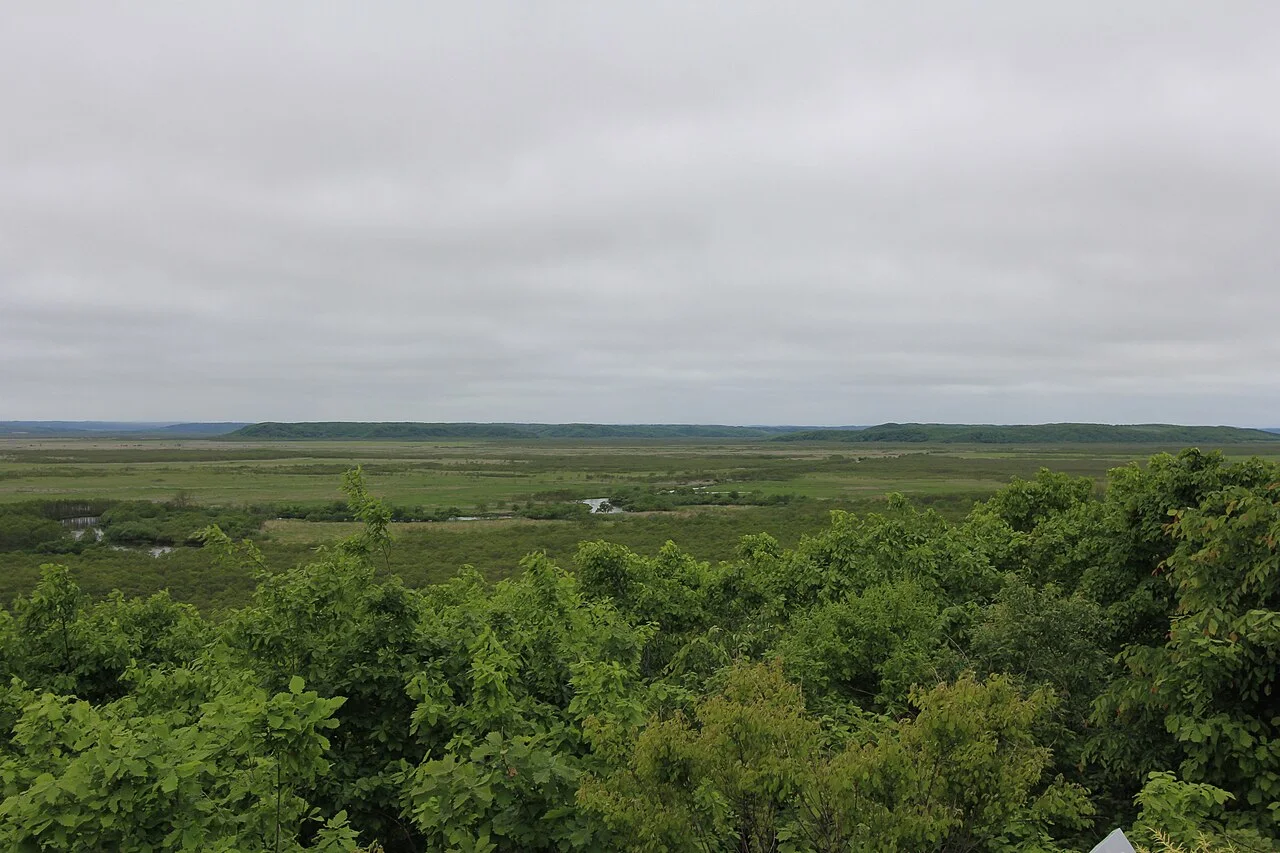
Once on the deck, scan for the river first. Parts of the Kushiro River hide behind reeds and woodland, so tracing the visible strips of water helps reveal how the channel loops across the plain. On clear days, look across the marsh for Mount Oakan and Mount Meakan. Dusk brings shifting reflections on the water and warm tones along the horizon, though even under grey skies the dark channels stand out crisply against the pale marsh grass. On a phone, frame the horizon slightly above centre to keep the foreground bends in shot.
Entry to the outdoor deck is free. The Hosooka Visitors' Lounge keeps separate hours—10:00–16:00 from December to March, closed over the New Year holidays—making it a handy warm-up stop before heading back downhill. If you stay for sunset, compare dusk times against your return train before setting off. Once the lounge closes, the walk back down to the platform is entirely outdoors, so consider saving your stroll and photos for daylight when paths are icy. Check trailhead details and addresses in the Hosooka Observatory and Visitors' Lounge guide.
Planning a half-day local train trip around your return train
The Senmo Main Line runs north from Kushiro towards Shibecha, Mashu and Abashiri. Using the JR Hokkaido timetable, check both outbound and return schedules specifically under the Kushiro-Shitsugen column—some winter trains passing through the marsh skip the station altogether. Take a screenshot of the column showing only trains that stop, complete with direction, seasonal footnotes and date. Set an alarm for your return departure before leaving the platform so you are not glued to your phone while watching the river.
When train intervals are generous, treat Hosooka as a unhurried stroll with time to move around the deck and browse the photo displays inside the lounge. If the gap between trains is tight, calculate realistic walking times for the slowest person in your party up to the deck and back down to the platform. Should the timing look borderline, switch to a later pair of trains or go to Lake Toro instead; a five-minute margin vanishes quickly on snowy, slippery paths in winter.
Riding on to Toro suits travellers who want an easy lakeside walk. Comparing the Toro and Kushiro-Shitsugen columns side by side shows whether to linger by the lake or pair it with a marsh viewpoint. If you are continuing north to Mashu or Abashiri the same day, confirm that the next train serves both stops and reaches your overnight base. When timetables do not line up neatly, pick one stop now and save the other for your return journey via Kushiro.
Travellers catching onward long-distance trains to Abashiri or Sapporo should leave plenty of buffer between the marsh and their connection. Weigh the cost of an extra night in Kushiro against the disruption of rebooking an entire leg if heavy snow delays local services. On the day, check live cancellations or delays on the JR Hokkaido Eastern Hokkaido service status page, and verify station stops in advance via the JR Hokkaido Senmo Main Line timetable.
Kushiro City Marsh Observatory: indoor galleries and a step-free trail
On the west side, Kushiro City Marsh Observatory stands at 6-11 Hokuto, Kushiro City. Entry to the ground floor is free, while the second floor upwards requires a ticket: ¥480 for adults, ¥250 for high school students, and ¥120 for primary and junior high pupils. The second floor showcases wetland habitats and local fish, with wider views from the third-floor gallery and rooftop. Standard hours are 08:30–18:00 from April to September and 09:00–17:00 from October to March, closed over the New Year holidays—ideal for ducking inside with children or waiting out bad weather before deciding how far to walk. Full ticket details and free-access zones are listed in the Kushiro City Marsh Observatory guide.
The full circular boardwalk outside measures roughly 2.5 km. Heading clockwise from the main building, the 1 km stretch to the Satellite Observatory is designated step-free. Visitors with pushchairs or wheelchairs can walk out to this viewpoint and return the same way for an easier 2 km round trip, while groups splitting up can set a meeting point at the main entrance or trailhead. In winter, judge snow depth, slush and slopes on the spot—even on a short turnaround, you still have the indoor viewing floors as backup.
Visiting both the Satellite Observatory and the main building quickly highlights why they complement each other. Inside the main building, exhibits help you read the landscape from an elevated perch; out at the Satellite Observatory, the trees suddenly part to reveal the marsh stretching away at eye level, restoring the sense of distance lost among the woodland planks. If you are watching bus times, ask your companions whether they prefer indoors or outdoors and focus on one rather than rushing. On a first full loop, allow extra time to check junction maps, as an out-and-back walk is far simpler to time than hurrying along an unfamiliar return half.
To continue north towards Tsurumidai on the same trip, catch the next northbound bus bound for Tsurui. When heading back to town in the afternoon, do not mistake the building's 17:00 closing time for the last bus departure. Allow plenty of time for toilets, snacks, snowy paths outside the entrance and crossing the road before your bus arrives, particularly if anyone in your group walks slowly.
Onnenai Boardwalk: 2026–27 winter closures and open visitor centre
Onnenai pairs low-lying boardwalks with a visitor centre, letting you examine reeds, sedges, sphagnum moss and alder woodland up close. Even a short walk reveals how subtle changes in moisture shift the vegetation between open meadow and scrub—making it much easier to read the patchwork of colours when you later look down from Hosooka. Step inside the centre first to pick up a map showing which paths stay flat and where they join the old Tsurui light railway trackbed.
Japan's Ministry of the Environment announced maintenance works starting 28 September 2026, closing sections of the boardwalk until an estimated 12 February 2027. The map attached to the Ministry of the Environment closure notice clearly separates the car park stairs, visitor centre, open sections and work zones. The outer loop reaching the observation deck is closed, though parts of the route towards the old Tsurui railway line remain accessible, with some stretches shared with work crews. Stick to open paths and turn back at barrier signs; if your main goal is the complete outer loop, either visit after reopening or swap to the Satellite Observatory trail at the City Marsh Observatory.
The visitor centre generally opens 09:00–16:00 from November to March and 09:00–17:00 from April to October, closing on Tuesdays and from 29 December to 3 January. Bus stops sit on opposite sides of the road outside—note the return stop as you step off. Drivers can park beside Route 53 and walk down the stairs to the building; wheelchair users should telephone the centre on 0154-65-2323 beforehand to use accessible parking behind the facility. Free wheelchairs are available to borrow, and routes can be tailored using the closure map.
Because the boardwalk is narrow, wait for a wider passing bay before stopping to photograph birds or plants at your feet. Leaning out over railings or stepping off the planks onto the marsh damages fragile ground and risks a fall. Dew or frost makes timber planks slick, so waterproof boots with grippy soles matter far more than trying to cover extra distance early in the morning. To see what blooms each month, check the Onnenai Boardwalk seasonal nature map produced with the Ministry of the Environment.
Pairing two west-side stops on the Akan Bus Tsurui Line
At the Kushiro Station Bus Terminal, look for the Tsurui Line—most buses serving the marsh carry the Route 20 number. Confirm your destination and intermediate stops before boarding. Travelling north, buses call at Shitsugen Tenbodai, the Onnenai area and then Tsurumidai. Not every departure covers the entire line, and a late outbound bus may leave you without a practical return service to town. Tsurumidai sits roughly 50 minutes from Kushiro Station and just a 1-minute walk from the bus stop.
When combining two west-side stops, decide how long you want at your primary destination before picking an onward bus. In winter, lock in daylight hours at Tsurumidai first, then slot the City Marsh Observatory in before or after depending on timetable gaps. Although Onnenai and the City Observatory sit along the same road, long waits between buses make walking along snow-banked verges tiring, especially with children or a pushchair—sticking to one well-timed stop is often wiser. Pin both drop-off stops and your final return stop on your phone map before setting out.
Full stop-by-stop timetables, zone fares and digital tickets appear under the Tsurui Line section on the official Akan Bus route page. Check the weekday, Saturday or Sunday/public holiday symbols for your travel date before reading down the column for your stop. If hopping off at two stops using digital tickets, check fare zones first so you budget for each leg. Whenever companions want to linger longer in one spot, returning from the same stop saves an extra roadside wait.
Note that Akan Bus summary sheets sometimes print the stop as "Onnenai Visitor Centre", whereas full-stop timetables list "Onnenai". Cross-reference both sheets carefully, and make sure you alight at the Tsurumidai stop for the crane sanctuary. If you visit the cranes first and ride south towards Kushiro to stop at the City Marsh Observatory, read the inbound Kushiro-bound timetable for your final leg—a detail easily overlooked when planning outbound connections.
As an example from the Akan Bus master timetable valid through 30 November 2026: the 08:45 departure from Kushiro Station reaches the City Marsh Observatory at 09:24; you can then catch the 11:04 bus towards Tsurui to arrive at Tsurumidai at 11:21, and return on the 12:09 service arriving back at Kushiro Station at 13:10. This works well if you want a full look at the observatory followed by a brief stop with the cranes. For longer crane-watching in January or February, check the winter timetable valid for your exact travel dates rather than relying on autumn schedules.
2027 SL Fuyu-no-Shitsugen dates, fares and stops
JR Hokkaido's operating calendar schedules the SL Fuyu-no-Shitsugen steam train for 16–17, 22–24 and 29–31 January; 5–7, 11–14, 19–21, 23 and 26–28 February; and 6–7 and 13–14 March 2027. That makes 26 operating days in total, with one return journey daily between Kushiro and Shibecha. An early October winter-train press release only covered January and February, so rely on the dedicated calendar page if planning a March trip.
A single adult ticket between Kushiro and Shibecha costs ¥3,060 (¥1,380 base fare plus ¥1,680 reserved seat fee), or ¥6,120 for a full round trip. Every carriage is reserved seating, so book outbound from Kushiro and inbound from Shibecha—or your chosen boarding stop—starting one month ahead via Ekinet or a JR Midori-no-Madoguchi ticket office. If you hold a ticketless reserved seat voucher, you still need a valid base-fare ticket. Crucially, JR Hokkaido notes that IC smart cards cannot be used as tickets at intermediate stops along this line, so pick up paper tickets in Kushiro beforehand.
Once seats open, confirm your exact dates and segments before booking so your group can sit together. Decide which direction matters most to you; if only one leg is available, pair it with a local train for the other half after double-checking station stops and connection times. Full schedules and ticketing rules are posted on the JR Hokkaido SL Fuyu-no-Shitsugen guide.
| Station | Towards Shibecha | Towards Kushiro |
|---|---|---|
| Kushiro | 11:05 dep | 15:42 arr |
| Higashi-Kushiro | 11:12 dep | 15:35 dep |
| Kushiro-Shitsugen | 11:38 dep | 15:09 dep |
| Toro | 11:58 dep | 14:50 dep |
| Kayanuma | 12:12 dep | 14:25 dep |
| Shibecha | 12:35 arr | 14:00 dep |
Riding all the way to Shibecha vs alighting midway
If your priority is photographing the steam locomotive, soaking up the vintage carriages and watching the scenery roll past, ride the full line to Shibecha. Arriving at 12:35 leaves 85 minutes before the 14:00 return departure—enough for lunch near the station and a short stroll. Staying close to the station makes winter timing predictable; if you prefer a sit-down meal, check lunchtime opening hours and walking distances ahead of time, or pick up an ekiben lunch box in Kushiro before boarding. Always factor in snowy pavements when heading back for the return train.
To spend the heart of the day inside the marsh, leave the outbound train at Kushiro-Shitsugen, walk up the Hosooka trail to the observatory, and catch your reserved afternoon service back to Kushiro. Using the SL train in both directions gives roughly three and a half hours between the 11:38 arrival and 15:09 return departure. Allowing for the uphill walk and platform wait, pack lunch in town beforehand. Fixing both trains before setting off beats trying to fit a marsh stop onto a Shibecha round trip later.
For Lake Toro, step off at Toro Station—using the 11:58 outbound stop and 14:50 return gives time for both the shoreline and the indoor exhibits. Book Toro as your turnaround station from the outset by checking return seat availability before planning your lakefront walk. On sold-out days, ride a local train to either Kushiro-Shitsugen or Toro instead and put the savings towards wildlife viewing or a guided tour.
The train pairs Tancho observation cars with Daruma Stove cars, so check the seat map online before selecting places. Action shots of the marsh and river framed between birch trees are easiest from inside the train, while trackside photographers should stick strictly to public, safe vantage points behind railway boundaries. Whichever option you choose, listen closely to station and onboard announcements, as certain carriage doors do not open at shorter rural platforms.
After 2026: what replaces the Norokko sightseeing train
Many online itineraries still mention taking the summer Kushiro Shitsugen Norokko sightseeing train to Hosooka. However, JR Hokkaido confirmed that the Norokko train made its final run on 10 October 2026, concluding service between Kushiro and Toro. Throughout 2027, regular local trains on the Senmo Main Line continue serving Hosooka and Lake Toro, though new luxury rail options are arriving for those linking wider Eastern Hokkaido routes.
JR Hokkaido plans to operate its new Akai Hoshi ("Red Star") sightseeing train between Kushiro and Shiretoko-Shari from late April to mid-July 2027, running outbound as Shitsugen no Ibuki and inbound as Sanroku no Mebuki. Shiretoko-Shari-bound services schedule roughly a 60-minute stop at Kushiro-Shitsugen Station so passengers can stretch their legs. A single adult ride-only ticket starts at ¥14,350, with dining packages available for a full multi-leg rail experience. If you simply want to walk up to Hosooka for river views, ordinary local train tickets remain the straightforward choice. Route directions and fares are separated on the JR Hokkaido Akai Hoshi routes and fares page.
Red-crowned cranes in Tsurui Village: Tsurumidai vs Otowa Bridge
Travellers arriving by bus from Kushiro should make Tsurumidai their first stop. With the observation area right beside the bus stop, you can lift your binoculars or telephoto lens within moments of stepping off. On a first winter visit, spend a relaxed spell here during daylight and add the City Marsh Observatory if buses allow. Further along, the Tsurui-Ito Tancho Sanctuary—run by the Wild Bird Society of Japan—adds a nature centre and indoor viewing room, making it a better choice if you want to ask staff about leg bands, crane behaviour or conservation, ideally on a separate slot from Tsurumidai.
According to Tsurui Village's update on 23 October 2026, supplementary winter feeding at both sites begins in December and runs until late February, or early March if deep snow lingers. At Tsurumidai, feeding usually takes place around 09:00 and between 13:00 and 14:00, though flock movements affect exact times. Because cranes linger throughout snowy days, bus travellers can simply plan around convenient daytime departures rather than shivering through extra hours for a specific feeding slot. The village notes peak crane numbers in January and February, tapering from late February with mostly juveniles remaining in March.
Otowa Bridge offers a completely different dawn scene, looking from a designated vantage point towards roosting cranes standing in the Setsuri River mist. To shoot freezing winter sunrises here, arrange a hire car or pre-booked taxi, park only in official spaces, and walk quietly along public paths to the viewing area. Keep tripods and camera bags tucked neatly out of residents' lanes. Anyone travelling with children will find a daytime bus trip to Tsurumidai far less punishing than a pre-dawn start.
Both Tsurumidai and the sanctuary are active feeding grounds for wild red-crowned cranes. Stay behind observation barriers, never step onto feeding fields, offer food or fly drones near the birds, and avoid bringing pets, climbing fences or making loud noises. If cranes wander close to the road, watch from a respectful distance rather than following them onto carriageways or private farmland. Seasonal dates and viewing etiquette are detailed in the Tsurui Village red-crowned crane feeding notice.
Lake Toro, Lake Takkobu and canoeing the Kushiro River
From Toro Station, it is roughly a 10-minute walk to the Lake Toro Eco-Museum Centre Arucotto on the south shore. Admission is free, featuring water-themed exhibits on underwater marsh life, alder groves and sedge meadows alongside lakeside windows. Opening hours are 10:00–17:00 from April to October and 10:00–16:00 from November to March, closed Wednesdays and over the New Year holidays. If you only want an unhurried walk and warm indoor break, pair the shoreline with the museum—bring binoculars to scan for waterbirds before matching them to the habitat displays inside.
For higher panoramas north of Toro, trails climb to the Sarubo and Sarurun observatories overlooking several marshes and lakes. Allow extra time on these hilly paths, which turn slippery after rain or snowmelt and under fallen leaves; if short on time, stick to the lakeshore and museum rather than rushing both viewpoints. Further south beside Lake Takkobu, the Ministry of the Environment closed the steps up to Yumegaoka Observatory on 9 October 2026 due to a wasp nest, with no reopening date announced—head to Hosooka instead for east-side panoramas. Trail notes appear in Shibecha Town's Lake Toro sightseeing guide.
The Ministry of the Environment highlights the stretch from Lake Toro down to Hosooka as a classic guided canoeing route. From water level between walls of reeds, bends that looked tiny from Hosooka unfold curve by curve as you drift past bankside vegetation and overhanging trees. First-timers should book a guided trip with full equipment and shuttle transfers included, checking the meeting point, take-out dock and whether transport returns you to your car park or JR station. Drivers launching from an upstream slipway likewise need transfers tying car and passengers back together.
Scheduling a canoe trip as your first morning activity leaves the afternoon free to adjust observatory stops around your finish time. Car-free visitors must confirm pick-up zones in advance, along with minimum age limits and cold-weather gear rules in winter. If high winds or water levels force a cancellation, fall back on the Lake Toro shoreline and Eco-Museum Centre, or take a train to Hosooka—and always line up a backup train or taxi if your paddle finishes close to an early afternoon departure.
Driving the northern route: navigate to exact car parks
Drivers wanting contrasting marsh views in a single day can start on the west-side boardwalk at the City Marsh Observatory, cross via the Kushiro Shitsugen Road, and finish at Hosooka on the east side. Save the longer link from Lake Toro up to the northern viewpoints for spring or summer, when daylight lasts longer. In winter, weigh your confidence on snowy roads carefully: open plains bring strong crosswinds and rural lanes hide black ice under tree shadows, so aim for just two solid stops before dusk with an optional short walk in between.
On the northern edge, Kottaro Marsh Observatory sits off Hokkaido Prefectural Route 1060, reached by a flight of steps from roadside parking. Drive slowly across the railway level crossing and along the gravel approach for wide views over the winding Kottaro River and spring-fed wetlands. Stair and handrail repairs carried out from July 2026 finished on 22 October, and Shibecha Town confirmed the path has reopened. Note that steps, paths and the deck are not cleared of snow in winter—turn back and head to Lake Toro if ice builds up, and aim to complete the rural drive back to Kushiro in daylight.
Nearby Cape Kirakotan lies inside a designated Natural Monument protection zone, requiring either an Agency for Cultural Affairs permit or an authorised guide to enter. To see hillside springs feeding directly into lowland channels, book a half-day tour with a permitted local guide. Even though both northern spots look close on a map, calculate travel times using actual drivable roads and separate trailheads; entry rules are explained in the Cape Kirakotan access guide.
If you stay overnight near Lake Toro and drive National Route 391 towards Mashu the next morning, Kottaro makes a natural daytime detour along the same corridor. Trying to squeeze it into a Kushiro day trip after a morning in Tsurui Village adds substantial driving time. Should you hire a chartered taxi to link multiple viewpoints, give the driver exact car park pins and planned dwell times at each stop to compare full-route quotes accurately.
Fitting Kushiro Shitsugen into an Eastern Hokkaido itinerary
With only one full day, pick either Hosooka or Lake Toro in spring and summer, leaving the afternoon for dinner or a harbour walk back in Kushiro. In winter, birdwatchers should anchor their day at Tsurumidai, adding the City Marsh Observatory only if Tsurui Line bus connections align cleanly. If the SL Fuyu-no-Shitsugen is your main goal, build the day around your ticketed Shibecha or mid-route stops without trying to cram in the west side too. With two days available, put train-dependent east-side plans on an SL operating day and save the bus-served west side for the other.
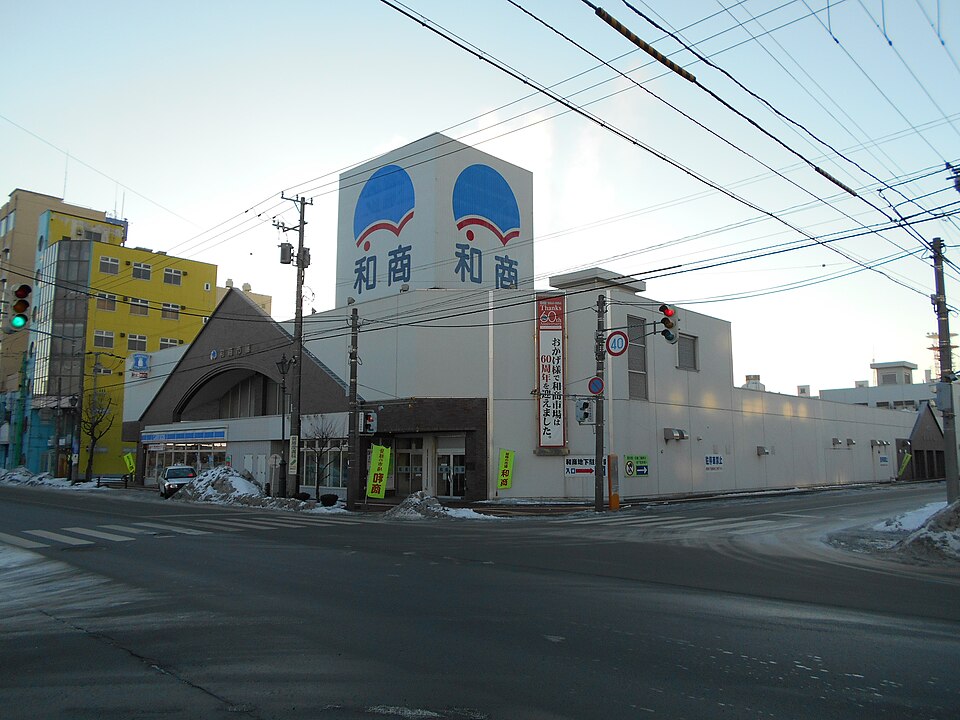
Flying into Kushiro Airport without a hire car? Take the airport shuttle bus to Kushiro Station—around 45 minutes and ¥1,200 for an adult single—as no direct buses connect the terminal with marsh trailheads. If your flight lands leaving only one outbound train or bus to the wetland, spend that half-day in town instead. Pair breakfast or provisions at Washo Market with evening harbourfront dining beside Nusamai Bridge using our Kushiro city markets and harbour walk guide.
Travellers with suitcases should pick accommodation near the station or use station coin lockers so bags never weigh down trail walks or bus transfers. Drivers overnighting around Lake Toro can keep lakeshore walks and canoeing neatly grouped the next morning. If hotels at Lake Akan, Lake Mashu or Abashiri are already booked, work backwards from check-in and check-out times: Hosooka and Toro pair well with rail legs, while Tsurui Village works best as a day trip from Kushiro. To link marshlands with lakes and wildlife bases further east, see our Eastern Hokkaido lakes and wildlife route.
When rain or thick sea fog rolls in, swap Hosooka for the indoor displays at Lake Toro on the east side, or retreat to the upper viewing floors at the City Marsh Observatory on the west. If gales or heavy snow disrupt regional transport altogether, Kushiro City Museum offers a strong indoor introduction to the wetland and Eastern Hokkaido wildlife—shift lunch back into town and keep the marsh flexible for clearer skies the next day.
A few useful answers
How can I visit Kushiro Shitsugen without hiring a car?
For the east side, take the JR Senmo Main Line from Kushiro Station to Kushiro-Shitsugen or Toro stations. For the west side, board the Akan Bus Tsurui Line outside Kushiro Station to reach the City Marsh Observatory, Onnenai and Tsurumidai. There is no direct public transport linking the two sides, so allow two days if you want to explore both.
Should I get off at Kushiro-Shitsugen Station or Hosooka Station for Hosooka Observatory?
Get off at Kushiro-Shitsugen Station and walk uphill for around 20 minutes to reach Hosooka Observatory. Hosooka Station is a separate stop further up the Senmo Main Line towards Toro. In winter, check the Kushiro-Shitsugen column on the JR timetable carefully, as not all trains stop there.
Is there an admission fee for Kushiro Shitsugen?
Hosooka Observatory, the Onnenai Visitor Centre and boardwalk, and Tsurumidai are all free to enter. The ground floor of Kushiro City Marsh Observatory is free, while the second floor and above cost ¥480 for adults, ¥250 for high school students, and ¥120 for primary and junior high pupils.
Which area is most suitable for visiting with a pushchair?
Kushiro City Marsh Observatory is the best choice. Starting clockwise from the main building, the roughly 1 km path to the Satellite Observatory is step-free and you can return the same way. At Onnenai, stairs connect the main car park to the visitor centre, though wheelchair users can phone ahead to arrange rear accessible parking.
Does the SL Fuyu-no-Shitsugen steam train run in March 2027?
Yes. JR Hokkaido's dedicated page lists operating dates on 6–7 and 13–14 March, making 26 operating days across January, February and March. The train departs Kushiro at 11:05 and leaves Shibecha on the return leg at 14:00.
How much is the SL Fuyu-no-Shitsugen train, and can I ride just part of the route?
A single adult fare between Kushiro and Shibecha is ¥3,060, comprising the ¥1,380 base fare and ¥1,680 reserved seat supplement. Shorter segments such as Kushiro to Kushiro-Shitsugen or Toro can also be booked. All seats are reserved and go on sale one month before travel.
Can I walk the Onnenai Boardwalk in winter 2026–27?
The visitor centre remains open as usual and selected stretches of boardwalk stay open. However, maintenance work closes the outer loop leading to the observation deck until an estimated 12 February 2027; check the Ministry of the Environment access map for currently open paths.
When is the best time to see red-crowned cranes in Tsurui Village?
Tsurui Village lists January and February as peak months for crane numbers. Feeding at Tsurumidai and the Ito Sanctuary runs from December until the end of February, or early March depending on snow cover. By bus, Tsurumidai is roughly a 1-minute walk from the bus stop.
Will the Kushiro Shitsugen Norokko train still operate in 2027?
No. JR Hokkaido confirmed that the Kushiro Shitsugen Norokko sightseeing train ended service permanently on 10 October 2026. In 2027, you can ride regular local trains on the Senmo Main Line, or book the SL Fuyu-no-Shitsugen on selected winter dates.
Are there direct buses from Kushiro Airport to the wetland?
Not directly. If travelling by public transport, take the airport shuttle bus to Kushiro Station first, then change onto a JR train or the Tsurui Line bus. Drivers can navigate straight to their chosen entry point, as the City Marsh Observatory, Onnenai Boardwalk and Hosooka each have separate car parks.
Official information and references
Sources used in this guide.
- Kushiro Akan-ko Tourism Association | East, West and North Access to Kushiro Shitsugen
- Kushiro Akan-ko Tourism Association | Hosooka Observatory and Visitors' Lounge
- Kushiro Shitsugen National Park Liaison Council | Hosooka Lounge Opening Hours
- Kushiro Akan-ko Tourism Association | Kushiro City Marsh Observatory Fees and Trails
- Akan Bus | Tsurui Line Full-Stop Timetable and Zone Fares
- Akan Bus | Kushiro Airport Shuttle Bus
- JR Hokkaido | Senmo Main Line Timetable
- JR Hokkaido | SL Fuyu-no-Shitsugen Operating Dates, Stops and Reservations
- JR Hokkaido | 2026 Norokko Operating Summary and Final Run
- JR Hokkaido | 2027 Akai Hoshi Kushiro–Shiretoko-Shari Operating Plan
- Tsurui Village | 2026–27 Red-Crowned Crane Feeding and Viewing Rules
- Tsurui Village | Tsurumidai, Ito Sanctuary and Otowa Bridge
- Ministry of the Environment | Onnenai Boardwalk Partial Closure and Access Map
- Kushiro Shitsugen National Park Liaison Council | Onnenai Visitor Centre
- Ministry of the Environment | Yumegaoka Observatory Stairway Closure
- Ministry of the Environment | Kushiro Shitsugen National Park Spots and Water Activities
- Ministry of the Environment | Kushiro Shitsugen National Park Overview
- Ministry of the Environment | Kushiro Shitsugen Topography and Coastal Lagoons
- Shibecha Town | Kushiro Shitsugen, Lake Toro and Nearby Attractions
- Kushiro Shitsugen National Park Liaison Council | Lake Toro Eco-Museum Centre
- Shibecha Town | Kottaro Marsh Observatory Reopening and Winter Access