Plan a Lake Akan day trip around the 85-minute sightseeing cruise to see marimo moss balls, both piers, the Bokke trail, and Ainu theater shows—plus half-day Kushiro bus timing, bad-weather backups, and winter ice activities.
- Region & Focus
- Eastern Hokkaido
- Reading Scope
- 20 min read · 11 chapters · 5 Q&As
- Official Verification
- 31 official sources checkedUpdated November 22, 2026 at 08:00 AM GMT+8
- Key Topics
- ItinerariesSeasonsHot springs
Chapter Route Map (tap any stop)
- Pin Both Piers and the Theater on Your Map First
- The 85-Minute Sightseeing Cruise Includes Marimo Admission
- Where to See Marimo—Even If Boats Are Canceled
- The Short Bokke Walk Takes About 30 Minutes; Pier to Visitor Center Is 45 Minutes
- Browse Workshops in Ainu Kotan and Time Your Visit to Ikor Theater
- Full-Day Boat-Season Plan: Morning Cruise, Afternoon in Ainu Kotan
- Car-Free Half-Day Itinerary: Lock In Your Return Bus to Kushiro First
- On-Shore Plans for Rain, High Winds, or Canceled Boats
- Winter at Lake Akan: Check Whether the Ice Venue Is Open First
- Hot Springs and Dinner at Lake Akan: What to Plan the Day Before
- Fitting Lake Akan Around Kushiro Wetland or the Three Eastern Hokkaido Lakes
- Quick Q&A
On a first trip to Lake Akan during boat season, start with the 85-minute sightseeing cruise to Churui Island for marimo moss balls, walk back along the Bokke trail to the Akankohan Visitor Center, and finish at Lake Akan Ainu Kotan on the west end of the hot spring street. If you are making a half-day round trip by bus from Kushiro, pick either the cruise or a theater show. To catch the 9:00 PM "Lost Kamuy" performance or go ice fishing in winter, stay overnight by the lake.
Pin Both Piers and the Theater on Your Map First
Lake Akan's hotels, piers, and shops cluster along the southern shore. On the west end sit Lake Akan Ainu Kotan and the theater Ikor; heading east along the hot spring street leads to the Akankohan Visitor Center. The Bokke mud volcano lies in the woods between the visitor center and the lakeshore. Walk the length of the street during the day, stop there for lunch, and pair the afternoon with a forest walk or a stage show. If you stay in this district, you can walk back to your hotel after an evening performance.
Akan Sightseeing Cruise operates two piers: Marimo-no-Sato Pier on the east side and Koun-no-Mori Pier near Ainu Kotan. Published timetables use the east pier as the start and end point. Save both piers by their full names in romaji on your map app—Marimo no Sato Sanbashi and Koun no Mori Sanbashi—along with Akanko Bus Center. Searching just for "Lake Akan" often drops a pin in the middle of the lake or on a stretch of shore far from the hot spring street, an easy trap when driving or rolling luggage.
On the east side of the hot spring street, the Akankohan Visitor Center is an indoor facility accessible directly by road. On the north side of the lake, the Marimo Exhibition and Observation Center sits on Churui Island and requires a boat. In town, you will also see Akanko Marimu-kan, which houses the tourist information center. Because all three names show up on local maps, head to the Akankohan Visitor Center for forest trail access, and go straight to the cruise ticket counter if you want to see the large marimo spheres on the island.
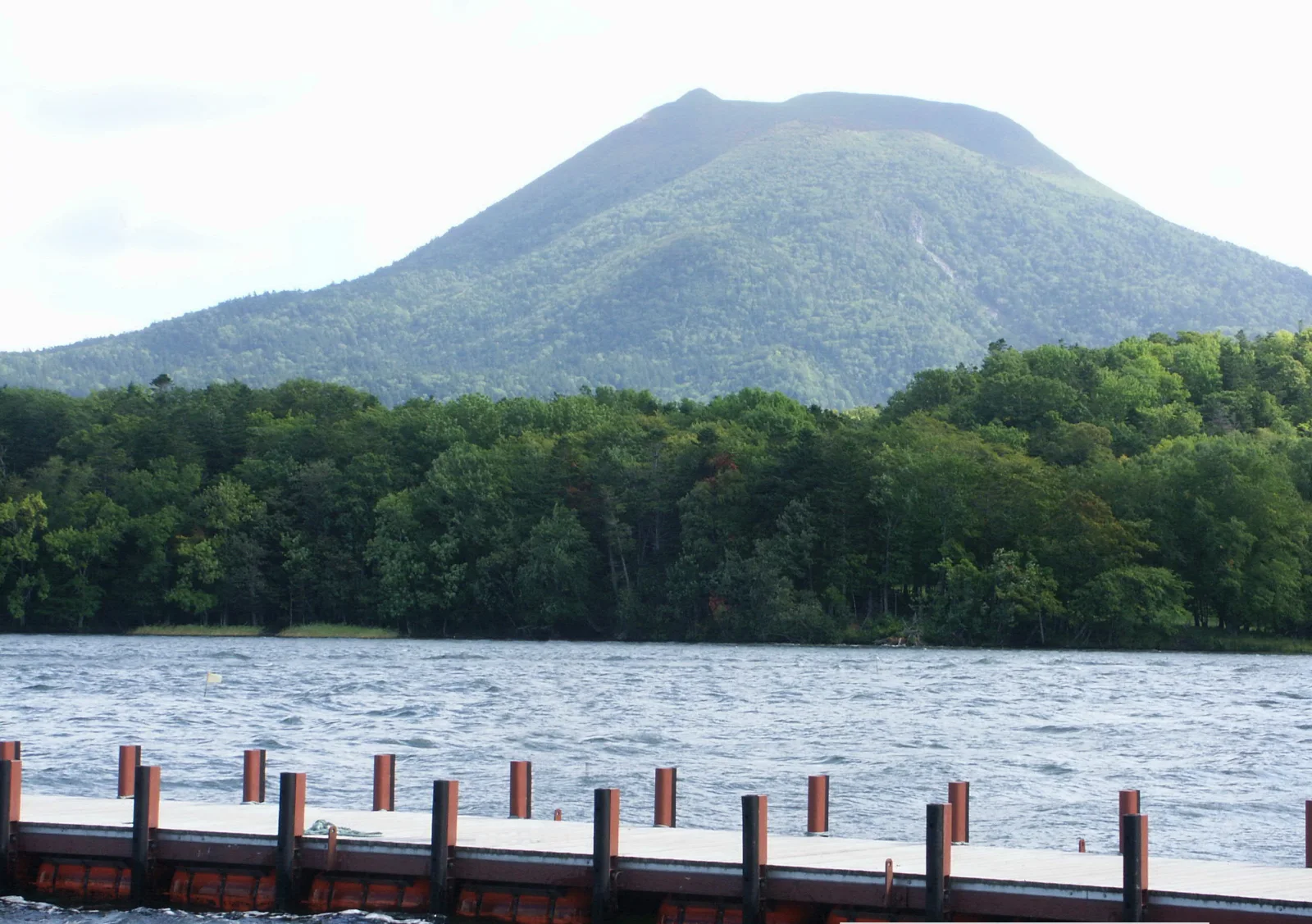
The hot spring town sits in the Akan area of Akan-Mashu National Park. Mount Oakan is visible from both the water and the shore, though its summit has a separate hiking trail. Walking the south shore covers only one stretch of the lake; private land occupies the north shore, so visitors cannot hike a full loop around the lake on foot. When itineraries advertise a "full Lake Akan circuit," that applies to the sightseeing boat—stick to marked lakeshore trails when walking.
| Destination | Map Search Name (Romaji) | How to Connect |
|---|---|---|
| East sightseeing pier | Marimo no Sato Sanbashi | Uses the baseline departures published by the cruise operator |
| Pier near Ainu Kotan | Koun no Mori Sanbashi | Boarding and return times differ by 5 minutes from the east pier |
| Lakeside visitor center | Akankohan Visitor Center | Free aquarium tanks inside; forest trailhead behind the building |
| Ainu theater | Akanko Ainu Theater Ikor | Pick your showtime first, then plan meals and transit around it |
| Lake Akan bus terminal | Akanko Bus Center | Stop for Route 30 Akan Line buses to and from Kushiro Station |
Plan a Lake Akan day trip around the 85-minute sightseeing cruise to see marimo moss balls, both piers, the Bokke trail, and Ainu theater shows—plus half-day Kushiro bus timing, bad-weather backups, and winter ice activities.
The 85-Minute Sightseeing Cruise Includes Marimo Admission
The standard sightseeing cruise covers roughly 18 km in about 85 minutes round trip from Marimo-no-Sato Pier. That total includes roughly 15 minutes ashore on Churui Island to view the marimo exhibit. Passengers board and re-board on the crew's schedule, so keep an eye on the call time even if you want a longer look at the tanks. Regular fares revised on March 15, 2026, are ¥2,700 for adults and ¥1,390 for children, including island exhibition admission.
Individual travelers can buy standard cruise tickets on site. Check the operator's schedule for the day of travel: boats leave Koun-no-Mori Pier 5 minutes later than Marimo-no-Sato Pier and return there 5 minutes earlier. Calculating lunch or bus connections on the west end using the east pier timetable can easily throw you off by several minutes. If Bokke is next, disembark at the east pier and step straight onto the lakeshore trail; if you browse Ainu Kotan first, board at the west pier to save yourself an extra walk across town.
The 2026 regular timetable lists eight daily departures from May 1 through October 20, starting at 8:00 AM and ending at 4:00 PM. From October 21 through November 10, the 4:00 PM sailing drops off. From November 11 through November 30, only four sailings run: 9:00 AM, 11:00 AM, 1:00 PM, and 3:00 PM. Sailings from April 15 to 30 are listed as irregular, so confirm that day's schedule with the cruise company before heading out. Late autumn travelers taking a route bus back to Kushiro often run into both fewer boats and earlier final buses.
The same operator also runs smaller motorboats with different stops depending on the route. Course 1 does not include the marimo exhibit, and a solo passenger hiring a motorboat pays the two-person rate. If you simply want a shorter ride on the water, tell the ticket counter your group size and whether you want the island stop so they can match you to the right boat. Keep a warm outer layer handy if you are traveling with young children or anyone prone to motion sickness—even on sunny days, it gets noticeably colder once the boat leaves the shelter of shore.
Right after leaving the dock, you see the mountains rising behind the hot spring town and dense forest lining the shore. The standard loop passes the scenic Takiguchi bay before reaching Churui Island. When low clouds sit over the peaks, the bays, wake trails, and shoreline woods still make the ride worthwhile. Waiting for a later sailing might catch clearer mountain views, but it squeezes your theater and bus schedule—day-trippers should set a hard cutoff before their outbound bus.
Where to See Marimo—Even If Boats Are Canceled
The Marimo Exhibition and Observation Center on Churui Island is the best place to see large spherical marimo. Follow the walkway straight inside off the boat, start at the main tank, and skim the panels that interest you. Exact sizes depend on the current display, and families can compare large and small spheres side by side in the same tank. For travelers with only an afternoon, the island stop is built into the cruise, leaving your shore time free for the forest trail or a theater show.
Marimo are a type of freshwater green algae whose filaments either cling to rocks or drift loosely across the lakebed. The familiar velvety spheres in the tanks are dense colonies of tangled filaments. According to the City of Kushiro, Lake Akan produces colonies of large spheres thanks to a combination of lakebed composition, spring water inflow, and wind-driven currents that gently roll the spheres. Seeing the bays and open water from the boat makes the exhibit panels on currents and lakebed conditions much easier to picture.
The city-run island center closes for winter. In cold weather, during wind cancellations, or whenever boat and bus schedules clash, go to the Akankohan Visitor Center instead. It houses tanks with Lake Akan marimo alongside freshwater fish such as Japanese taimen (ito) and landlocked sockeye salmon (himemasu), plus a giant aerial photo of the Akan area across the floor where you can trace the south shore and see where Churui Island sits relative to the piers. Older maps still list this building under its former name, Akankohan Eco-Museum Center.
The visitor center is typically open 9:00 AM to 5:00 PM with free admission. It closes on Tuesdays (or the following Wednesday if Tuesday is a national holiday) and over the New Year period from December 29 through January 3, per the Ministry of the Environment. If you only have two hours by the lake on a closed day, spend them in Ainu Kotan and along the hot spring street, or buy a cruise ticket that includes the island center if boats are running.
Lake Akan's marimo are a designated Special Natural Monument of Japan, and their wild habitat is strictly protected. Stick to the exhibition tanks and do not try to scoop algae from the shoreline. Souvenir shops sell marimo-themed sweets and small gifts if you want something light to pack home, while Ainu Kotan is the place to look for local woodcarvings and embroidery.
The Short Bokke Walk Takes About 30 Minutes; Pier to Visitor Center Is 45 Minutes
Bokke is a mud volcano whose name comes from an Ainu word meaning "boiling." Steam, bubbling mud, and sulfur fumes rise together from the forest floor right beside the lake. Visiting it after your boat loop helps orient where the hot spring district sits and where geothermal heat breaks the surface. Stay behind the railings: the visitor center notes that erupting mud can reach nearly 97°C, alongside vents releasing scalding water and gas inside the fenced zone.
For the short route, walk north from behind the visitor center—about 10 minutes each way on a flat, paved path. With time at the mud vents and a break inside the visitor center, budget around 30 minutes total. Starting from the east pier, the Ministry of the Environment route follows the lakeshore for about 1 km (30 minutes) to Bokke, then another 0.5 km (15 minutes) to the visitor center, which lists the full stretch at 1.5 km and 45 minutes.
Watch the signs at trail junctions. Mori-no-Komichi is a narrower woodland path leading to the First Parking Lot and feels closer to a hiking trail, while the Bokke Nature Trail (Bokke Yuhodo) is the main route connecting the mud volcano and the pier. If you want extra forest time, the official walk from the First Parking Lot to Bokke via the side path takes about 25 minutes. With a stroller, in snow, or on a tight bus schedule, stick to the direct out-and-back from the visitor center.
The trail is normally open 24 hours a day, though sections close when fallen trees block the path or brown bears are spotted nearby. Turn back at any closure sign, and switch to the paved hot spring street if soles get slick or snow starts falling. The trail is not plowed in winter and requires snowshoes when snow piles deep. If you are with older relatives or young children without winter gear, ask at the visitor center how far the path is passable and build your outing around indoor exhibits and cleared sidewalks.
The woods mix Yezo spruce, Sakhalin fir, and broadleaf trees, with Hokkaido sika deer and Hokkaido squirrels frequently active nearby—stop to watch quietly rather than chasing them. From late April to mid-May, white Asian skunk cabbage (mizubasho) often blooms in the wetland behind the visitor center. During months when daylight fades early along the south shore, finish the forest walk before dusk and save evening strolls for the lit hot spring street. Remember that the 45-minute pier-to-center figure covers walking time only; leave extra minutes for exhibits and your next transit leg.
Browse Workshops in Ainu Kotan and Time Your Visit to Ikor Theater
Lake Akan Ainu Kotan is a living, working Ainu community. Artisans run woodcarving and embroidery shops along the lane alongside stores selling traditional mukkuri mouth harps. Look closely at the wood grain, maker signatures, and carved motifs, and ask permission before photographing or handling pieces for purchase. Carved bears are only one corner of the craft here—spend time looking at embroidery and woodenware carrying specific family and artist styles. Homes and private workshops have separate entrances, so keep your walk to the shops, theater, and public lanes.
Ikor is the indoor theater inside the village. If you want an introduction to traditional song and dance, choose a Traditional Ainu Dance performance. For storytelling and stage production, go for "Akan Yukar: Lost Kamuy," which explores the relationship between the Hokkaido wolf and the Ainu using traditional dance, contemporary choreography, and digital projection. Standard admission for junior high school students and adults is ¥1,500 for Traditional Ainu Dance and ¥2,200 for both "Lost Kamuy" and "Full Moon Rimse"; elementary school students pay ¥700 for all three shows.
From May 1 to October 31, the annual schedule runs Traditional Ainu Dance at 11:00 AM, 1:30 PM, and 8:00 PM, "Full Moon Rimse" at 3:00 PM, and "Lost Kamuy" at 9:00 PM. From November through April, weekdays feature the two evening performances, with the 3:00 PM show running on weekends and Japanese national holidays. Regular shows last about 30 minutes. Check closure notices before booking dinner: all performances are already scheduled to be dark from January 20 to 23, 2027, and festival dates can also shift showtimes.
If you want a guided forest walk or craft workshop with an Ainu instructor, check individual bookings through the Akan Ainu Craft Cooperative. The "Anytime, Ainutime!" program accepts groups of two or more, separate from the school-group woodcarving courses listed on the site. Families hoping to book a hands-on session should confirm eligibility first, then schedule boat times around the workshop window. If you are simply strolling through Ainu Kotan, browsing a couple of studios and catching one performance at Ikor beats waiting around just for curtain time.
For deeper background on local carving and embroidery, the village also houses the Onnecise craft museum, displaying historical pieces from Lake Akan Onsen alongside modern artisans' work. The craft cooperative lists its next scheduled reopening date as May 1, 2027. In winter or during closures, focus on open craft shops instead—you can look up individual makers in the cooperative's directory to find their storefronts along the street.
Full-Day Boat-Season Plan: Morning Cruise, Afternoon in Ainu Kotan
Hotel guests and early-arriving drivers can catch the 9:00 AM cruise from Marimo-no-Sato Pier, returning around 10:25 AM. From there, walk the lakeshore trail past Bokke to the Akankohan Visitor Center to see the aerial floor map. Grab lunch along the street and head west into Ainu Kotan. During the regular May-to-October season, you can easily make the 1:30 PM Traditional Ainu Dance or the 3:00 PM "Full Moon Rimse." If the morning feels rushed, save the visitor center for right before hotel check-in or do only the short out-and-back to Bokke.
Once your morning boat time is locked in, keep lunch and shopping flexible. Before an afternoon show, pick up your theater tickets right after lunch and browse the shops until doors open. If you book an evening performance, look around the craft stores during the day, return to your hotel for dinner and a soak, and walk back out for the show. Making two trips into Ainu Kotan is effortless if you are staying on the hot spring street; guests at upstream riverside properties should check shuttle schedules and final pickup times in advance.
To cut down on walking, grab lunch straight after the boat returns and swap the full trail for the short afternoon walk behind the visitor center. If afternoon thunderstorms roll in, drop the woods and keep both the indoor marimo tanks and the theater on your schedule. When cruises still operate in the rain, remember the 15-minute Churui Island stop involves boarding and an outdoor walk—pack rain gear rather than scrapping indoor plans on shore.
Drivers can leave their cars in designated hotel lots or pick a public parking area first. For a half-day forest walk starting from the visitor center, park at Akankohan Dai-ichi (First) Parking Lot across from the convenience store; the visitor center itself has no general parking, though its website lists accessible parking spaces and free loaner wheelchairs inside. Visitors bringing strollers or walkers onto the cruise should contact the boat operator ahead of time with equipment dimensions to confirm pier and island boarding access before buying tickets.
Car-Free Half-Day Itinerary: Lock In Your Return Bus to Kushiro First
The Route 30 Akan Line runs from the Kushiro Ekimae Bus Terminal to Akanko Bus Center. Passing "Akan-cho" or "Tancho-no-Sato" out the window means you are not at the lake yet—stay onboard to the final stop for the hot spring district. Main direct buses take about two hours from Kushiro Station to Lake Akan. If you are flying in, compare direct airport buses first to skip transferring through downtown Kushiro: Akan Bus lists airport shuttles taking roughly 75 to 80 minutes to Akanko Bus Center, with select buses stopping directly at Lake Akan Onsen hotels.
Using Akan Bus's April 2026 schedule (valid through November 30) as a reference, the 10:10 AM bus from Kushiro Station arrives at Lake Akan at 12:10 PM, pairing with a 4:15 PM return on the Akan Line from Akanko Bus Center. That leaves plenty of room for the 1:00 PM sightseeing cruise, which returns around 2:25 PM and gives you time for lunch or a quick walk nearby. Even when the 3:00 PM boat operates, it docks back at the east pier around 4:25 PM—too late for that return bus. Check footnotes carefully, as seasonal services running only from July through October carry separate markers.
With only a few hours on shore, anyone skipping the cruise can split off at the pier to explore the visitor center or grab an early lunch before meeting back up to walk to the bus terminal. If everyone wants to catch a theater show, save the boat for another trip and aim for the 1:30 PM or 3:00 PM performance. Since winter weekday shows run mostly at night, a same-day bus trip in winter works best as a walk paired with the visitor center.
When riding straight from Kushiro Airport to a lakeside hotel, distinguish between the Akan Airport Liner and the standard Route 30 bus. Airport shuttle tickets can be booked online, and buses serving hotels follow their own stop lists. The regular Akan Line terminates at Akanko Bus Center, so pull up the official hot spring town map from that drop-off point before rolling luggage to your hotel. On departure day, verify your bus arrives at the airport ahead of check-in before squeezing in a morning soak, trail walk, or souvenir run.
If you arrive in Kushiro by JR train, look up connecting buses for your exact arrival date first. Reaching Kushiro in the afternoon often means arriving in the hot spring town around dusk, so treat day one simply as check-in and dinner. Saving the lake cruise for the next morning lets you ride the boat, have lunch, and continue onward without scrambling to reschedule theater tickets from the train.
On-Shore Plans for Rain, High Winds, or Canceled Boats
When visibility drops on the water, check the cruise operator's daily status first. If boats are canceled, start at the visitor center for the marimo tanks and topographic map, then take the short trail behind the building to Bokke if the rain eases. In steady rain, line up the most convenient showtime at Ikor Theater and keep lunch and craft-shop browsing on the west side. If your visit falls on a Tuesday when the visitor center is closed, spend two to three hours on a theater performance and a meal, adding the south-shore paths only if the weather clears.
Late November requires telling three distinct phases apart: days when regular boat service drops to four sailings, the shoulder gap after boats stop but before ice venues open, and the active winter ice season. Trust the calendar over photos of the lake. If stepping onto Churui Island is non-negotiable, travel on dates and hours with confirmed daytime sailings. If your dates fall in the seasonal gap, anchor the trip around hotel dinners, morning hot springs, and Ainu theater shows, adding lakeside walks around them.
Autumn leaf-peepers can stay among the trees in the Bokke woods or drive east of the hot spring street to Takimibashi Bridge. The Kushiro and Lake Akan Tourism Association lists the bridge at roughly 5 km from town, separate from the walkable south-shore loop, so plan it as a daytime drive without squeezing it against ferry boarding. Because the visitor center notes early snow can arrive from late October into early November, pack a windproof shell over fall layers and wear shoes with grip for wet paths.
Multigenerational groups can linger at the visitor center: part of the family can tackle the short trail out back while others browse the fish tanks and specimens inside before meeting at the exit. With kids, frame the stop around what forms each green sphere so they know which tank to look for right away. If rain fails to let up after 30 minutes, head back to the main strip of shops for a warm meal and a break.
Afternoon hotel check-in pairs naturally with an evening show at Ikor. If you booked a half-board stay with dinner and breakfast, check your check-in sheet for dining hours and leave enough cushion to walk to the theater and pick up tickets before the last curtain. If you plan to eat near the lake and catch a bus out, mark Akanko Bus Center as your next pin before heading out so soaking and souvenir shopping do not cut into boarding time.
Winter at Lake Akan: Check Whether the Ice Venue Is Open First
Regular sightseeing cruises halt in winter, and the Churui Island marimo center closes. Once the lake freezes, the focus shifts to official venues such as Ice Land Akan for smelt ice fishing and snow activities. Even when the surface looks solid, stay strictly inside areas marked open by operators and remain on shore once venues close. On April 1, 2026, for instance, the tourism association announced the season had ended on March 31 and asked visitors to stay off the ice even though the lake was still frozen—current status notices always beat hotel promo photos or last year's dates.
Structure winter days outdoors in the morning and indoors in the afternoon. Anglers should confirm gear rentals and session start times with the ice venue, while non-fishing companions can enjoy snowy views from the adjacent shore before meeting up at the visitor center. Before walking to Bokke, ask about snow depth or trail closures, and stay outside the railings near the steaming mud vents. Pack an extra pair of dry gloves for kids playing in the snow, and leave time back in town for lunch or a hot spring soak.
If you are riding the bus in winter mainly for a theater show, plan a weekend or Japanese national holiday that has the 3:00 PM performance and verify your walk back to Akanko Bus Center afterward. Weekday 8:00 PM Traditional Ainu Dance and 9:00 PM "Lost Kamuy" shows are better suited to overnight stays. Drivers heading onward toward Mashu or Kushiro can stay the night, skip driving on icy roads in the dark, and set off in daylight after checking weather and road conditions. For winter road prep and daylight timing, see our Hokkaido winter driving guide.
Treat April's ice-melt shoulder season as its own itinerary. Ice venues have usually wrapped up while sightseeing boats are still on irregular schedules, so focus on the visitor center, Bokke mud volcano, and Ainu Kotan, staying overnight to catch calm shoreline walks. Save the open-water boat perspective for a return visit once regular sailings resume.
Hot Springs and Dinner at Lake Akan: What to Plan the Day Before
The biggest perk of staying overnight is catching an evening show at Ikor and walking the quiet south shore the next morning before the first buses arrive. If your trip centers on the cruise, trail, and theater, picking a hotel right on the hot spring street matters more than chasing a specific brand name. Day-trippers from Kushiro wanting one soak should choose a hotel with published day-use bath hours, check last entry times, and budget the walk back to Akanko Bus Center. To soak both night and morning, you will need an overnight room.
For a midday soak, check the day-use plan at New Akan Hotel, listed on its site from 12:00 PM to 5:00 PM at ¥1,300 for adults, covering both the panoramic indoor baths and the rooftop Sky Garden Spa. Swimwear or complimentary hotel bathing wear is required on the rooftop; bring your own towel or rent one for a fee. Tohokan opens to day visitors from 7:00 AM to 9:00 AM and 3:00 PM to 10:00 PM at ¥500 for junior high students and adults. Day-trippers from Kushiro who want an earlier bath can take the midday option and still fit in one short shore stop before heading to the bus terminal.
While strolling the hot spring street by day, pause at a foot and hand bath—the tourism association map marks Akanko Marimo Foot Bath Ure-Karip with a hand bath right beside it, so pack a small towel to dry off before boarding a bus. When comparing open-air baths or lake-view day-use passes, check whether "lake view" refers to guest rooms or the public bath itself, as they are not always the same. For help weighing base locations, see where to stay in Kushiro and Lake Akan Onsen.
If you want to eat in Ainu Kotan, the cooperative's shop directory lists restaurants serving venison, wild mountain vegetables, and other local dishes. Before an afternoon show, pick a diner with posted midday hours so you have margin to reach the theater. If your evening is just soaking and relaxing, a half-board rate with dinner included saves a walk back out to look for open restaurants—just check last-order times in town before opting for room-only or breakfast-only plans.
Budget your day simply by adding up the activities you want. At standard adult rates, the cruise plus Traditional Ainu Dance comes to ¥4,200, or ¥4,900 with "Lost Kamuy" instead. Walking the Bokke trail and visiting the Akankohan Visitor Center are free, while day-use baths, craft workshops, and buses are priced separately. If you are traveling with older relatives who plan to use your hotel's bath, spend the afternoon at the marimo tanks or in Ainu Kotan rather than paying for an extra day-use soak.
Fitting Lake Akan Around Kushiro Wetland or the Three Eastern Hokkaido Lakes
Both Kushiro Wetland and Lake Akan can be reached from downtown Kushiro, though the wetland has multiple entry points on different sides of the city. Drivers combining both in one day should visit one lookout or short boardwalk along their morning route and pick a single must-do activity at Lake Akan that afternoon. If you want the cruise, Ainu Kotan, and an evening show, stay overnight at Lake Akan. Because several wetland viewpoints sit on the opposite side of Kushiro, check our Kushiro Wetland viewpoints and transit guide before locking in your driving order.
Driving from Lake Akan toward Teshikaga, Lake Kussharo, and Lake Mashu, the Ministry of the Environment's three-lakes route includes a pull-off at Sokodai Lookout along the Akan-Mashu Odan Road. Note that Sokodai overlooks Lake Panketo and Lake Penketo in the Akan basin, unlike Bihoro Pass on the west rim of Lake Kussharo. Beyond Sokodai, choose between the Lake Mashu viewpoints, Mount Io, and Sunayu on Lake Kussharo depending on where you are sleeping and what views you want. If you must drive back to Kushiro that night, drop one viewpoint mid-route rather than staying at Lake Akan until dusk.
Car-free travelers wanting to see all three lakes in one sweep can book Akan Bus's reservation-only Pirika-go sightseeing bus. For 2026, it is announced to run daily from April 18 through December 20, departing Kushiro for Lake Mashu Observation Deck 1, Mount Io, and Lake Kussharo Sunayu before reaching Lake Akan. The stop at Lake Akan lasts 120 minutes, including lunch on your own—best spent eating and taking a relaxed walk or visiting the Akankohan Visitor Center. If the 85-minute cruise is essential, book a segment that lets you get off at Lake Akan Onsen, stay overnight, and leave on a local route bus the next day.
When picking one overnight base between Lake Akan and Mashu, choose Lake Akan if you want an evening Ainu performance or early-morning lakeside walks. If your itinerary leans heavily toward Lake Kussharo, Sunayu, and Mount Io, sleeping in Teshikaga or Kawayu Onsen cuts out backtracking. Transit time and cost across eastern Hokkaido depend on where you sleep and change buses, not straight-line distances on a map. Travelers arriving from Abashiri, Shiretoko, or Tokachi can map out transfer days with our Eastern Hokkaido lakes and wildlife base guide and work backward from Kushiro, the airport, or the following night's hotel.
A few useful answers
How long is the Lake Akan sightseeing cruise, and can I stay longer on the island?
The regular loop from Marimo-no-Sato Pier takes about 85 minutes, including roughly 15 minutes on Churui Island to view the marimo exhibit. You must re-board on the crew's set schedule. For a slower look at the algae and local geography, visit the free tanks and displays at the Akankohan Visitor Center on shore.
Where can I see Lake Akan marimo without taking the boat?
Go to the Akankohan Visitor Center. Its free indoor tanks display marimo alongside freshwater fish and are typically open 9:00 AM to 5:00 PM, closed Tuesdays (or the next day if Tuesday is a national holiday) and over the New Year holidays. The Churui Island center is accessible only by boat and closes in winter.
How long does the Bokke trail walk take?
Walking from behind the Akankohan Visitor Center to Bokke takes about 10 minutes each way, or roughly 30 minutes round trip with time at the mud vents. From Marimo-no-Sato Pier via Bokke to the visitor center, the Ministry of the Environment estimates 1.5 km and 45 minutes. Private property along the north shore prevents walking a full loop around Lake Akan.
Are there daytime dance performances at Lake Akan Ainu Kotan?
From May through October, the regular schedule includes daytime Traditional Ainu Dance shows and "Full Moon Rimse." From November through April, the 3:00 PM "Full Moon Rimse" runs only on weekends and national holidays, while weekday shows take place in the evening. Always check theater closure notices before going.
Can I visit Lake Akan as a same-day bus trip from Kushiro Station?
Yes—the Route 30 Akan Line reaches Akanko Bus Center in about two hours. Lock in your return bus first, then choose either one daytime cruise or one theater show paired with a lakeside walk. If you want to see an evening performance, return to Kushiro the next morning.
Official information and references
Sources used in this guide.
- Akan Sightseeing Cruise: Lake Akan Cruise Timetable and Fares
- Akan Sightseeing Cruise: Motorboat Routes and Pricing
- Ministry of the Environment: Lake Akan Cruise and Lakeshore Trail Route
- City of Kushiro: Lake Akan Marimo and Exhibition Facilities
- City of Kushiro: Growth Environment of Lake Akan Marimo
- Akankohan Visitor Center: Bokke Nature Trail
- Akankohan Visitor Center: Trail, Parking, and Facility FAQ
- Ministry of the Environment: Akankohan Visitor Center Renaming and Closure Days
- Akan Ainu Craft Cooperative: Ikor Theater and Ticket Prices
- Akan Ainu Craft Cooperative: Annual Performance Schedule
- Akan Ainu Craft Cooperative: January 2027 Full-Day Theater Closure Notice
- Akan Ainu Craft Cooperative: Akan Yukar Lost Kamuy Show Details
- Akan Ainu Craft Cooperative: Guided Tours
- Akan Ainu Craft Cooperative: Workshop and Experience Eligibility
- Akan Ainu Craft Cooperative: Village Craft Shops and Dining
- Akan Bus: Route 30 Akan Line and Airport Connections
- Akan Bus: Kushiro Airport to Lake Akan Timetable
- Akan Bus: Pirika-go Three Eastern Hokkaido Lakes Sightseeing Bus
- Kushiro and Lake Akan Official Tourism: Lake Akan Onsen Town Map
- Kushiro and Lake Akan Official Tourism: Marimo Foot Bath and Hand Bath
- Kushiro and Lake Akan Official Tourism: End of Ice Season and Lake Access Notice
- Ministry of the Environment: Akan-Mashu National Park Features and Topography
- Ministry of the Environment: Akan, Mashu, and Kussharo Three-Lakes Driving Route
- Akan Sightseeing Cruise and Akan Bus Travel: 2026 Regular Cruise Schedule
- Akan Bus: April 2026 Revised Route Bus Timetable
- Akan Ainu Craft Cooperative: Onnecise Craft Museum
- Akan Ainu Craft Cooperative: Onnecise Reopening Notice
- Akankohan Visitor Center: Autumn Weather and Clothing
- Kushiro and Lake Akan Official Tourism: Takimibashi Bridge and Area FAQ
- New Akan Hotel: Day-Use Hot Springs
- Tohokan: Day-Use Bath Fees and Hours