Travel from Hakata via Hainuzuka to Yame Fukushima. Visit Yokomachi Machiya Exchange Center and Sakaiya, eat at SoL, then make and collect paper at the washi museum. Includes reserved tea-tour options at Ushijima Tea.
- Region & Focus
- Yame-Fukushima
- Reading Scope
- 36 min read · 20 chapters · 4 Q&As
- Official Verification
- 19 official sources checkedUpdated November 22, 2026
- Key Topics
- ItinerariesFoodKyushu
Chapter Route Map (tap any stop)
- Choose a day for both the museums and lunch
- Hakata via Hainuzuka: connect the train around the bus journey
- From Fukushima stop, make a loop through the eastern townhouses
- The earthen passage behind the white wall reveals merchant life
- Curving roads and waterways preserve the castle town’s structure
- Yokomachi Machiya Exchange Center: learn the streets, then choose your tea
- How the public townhouses survived
- Sakaiya: Yakusugi cedar and rosewood in a detached reception room
- SoL beside Fukushima stop keeps lunch within the walk
- Traditional Crafts Center: paper alongside altars, lanterns and everyday objects
- Handmade washi: the work before fibers enter the vat
- The kozo season, bleached paper and unbleached paper
- October 2026 workshop prices: choose a project and collection time together
- Reserve a two-hour guide for architecture and crafts
- Buying Yame tea: distinguish the origin name from the production method
- Tea utensils bring altar craftspeople’s lacquer and maki-e to the table
- A separate tea-focused day: Ushijima Tea’s factories and five-tea tasting
- Before the factory: season, walking conditions and site rules
- A practical Fukushima day from start to finish
- Daytime costs and the return journey
- Quick Q&A
A day in Yame Fukushima can take you from a brewing merchant’s earthen passage to Sakaiya’s detached reception room, back to the Fukushima bus stop for lunch, then to a workshop where kozo fibers become your own postcards. White-walled townhouses, a paper workshop and local tea each offer details worth stopping for. Travel from Hakata by changing to a bus at Hainuzuka, and save the tea fields and factory for another day centered on tea.
Choose a day for both the museums and lunch
An ordinary Tuesday is the simplest fit for two public townhouses, handmade paper and lunch. The Exchange Center and Sakaiya normally close Mondays, moving the closure to the following day if Monday is a Japanese holiday. The paper museum opens on Mondays that are national or other designated holidays. Lunch restaurant SoL closes Thursdays and two additional Wednesdays each month, and serves no Friday lunch. The main neighborhood route also works on Saturdays and Sundays, using that day’s train timetable.
Visit the white-walled streets in the morning and start papermaking around 14:00, leaving time for craft displays while your work dries. Both townhouses open at 10:00; the paper museum opens at 9:00. Early arrivals can walk outdoors first or start near the Traditional Crafts Center. Ordinary visits to the Exchange Center and Sakaiya are free, so most spending is on food, transport and your chosen craft.
Travel from Hakata via Hainuzuka to Yame Fukushima. Visit Yokomachi Machiya Exchange Center and Sakaiya, eat at SoL, then make and collect paper at the washi museum. Includes reserved tea-tour options at Ushijima Tea.
Hakata via Hainuzuka: connect the train around the bus journey
From Hakata, take the JR Kagoshima Main Line to Hainuzuka, then Horikawa Bus’s Haya Line to Fukushima. JR lists southbound local and rapid trains under the Kurume/Omuta direction. Check the stopping pattern includes Hainuzuka. A through rapid avoids an intermediate change, and an early start leaves a useful margin for the bus.
For example, JR’s official timetable for Tuesday, November 10, 2026 lists a rapid leaving Hakata at 7:52 and reaching Hainuzuka at 8:44. The 9:31 bus reaches Fukushima at 9:52, leaving 47 minutes to exit the station, find the stand and wait. This suits the townhouses’ 10:00 opening. The bus’s “ユ” mark means via Youme Town Yame and Kamenoko.
The official Haya Line table has a printed revision date of October 1, 2024. The 9:31–9:52 service appears in all three day categories: weekdays, Saturdays, and Sundays/Japanese national holidays. The return 16:37 from Fukushima to 16:59 at Hainuzuka is also the same in all three. Arrange paper collection before 16:00 so the final half-hour can be used to return to the stop.
In the JR return example for the same November 10, the train leaves Hainuzuka at 17:13 and reaches Hakata at 18:26. That gives 14 minutes after the bus arrives at 16:59. JR lists northbound services under Kurume/Hakata/Kokura/Moji. For another travel date, use JR’s date menu and the matching bus day category. Fix the Fukushima bus times first, then connect trains at either end.
For roughly half an hour longer, the next Haya Line return is 17:09–17:31 on weekdays and Saturdays, or 17:10–17:32 on Sundays and Japanese national holidays. Move your train connection later too. On Sundays and national holidays, returning via Hainuzuka is the most direct option: the Kurume Line’s Sunday/holiday table has no afternoon departures in the Fukushima column, with other services starting at intermediate stops such as Yarimizu or the medical center.
From Fukushima stop, make a loop through the eastern townhouses
Inset Map 1 in the city’s visitor booklet places Fukushima stop north of the neighborhood, the Exchange Center among streets to the south, Sakaiya to the west, and the Traditional Crafts Center and washi museum on the southern edge. Horikawa and Nishitetsu each have a Fukushima stop. SoL’s one-minute walk is measured from the Nishitetsu stop. For Hainuzuka, find Horikawa Bus and its Hainuzuka-bound boarding position.
Official walking times from Fukushima are about 10 minutes to the Exchange Center and 12 minutes to Sakaiya. Start at the center and follow the white-walled streets near Fukushima Hachimangu toward Sakaiya. The tourism association’s eastern townscape course connects Sakaiya, Hachimangu, the Exchange Center, former district office and Railway Park in about an hour. On a self-guided walk, give the two townhouses more time and use the morning until 11:45.
Allow half an hour to walk and look between the houses, then 20 minutes from Sakaiya back to the bus-stop area. These allowances include streetscapes, crossings and finding entrances. The official 10 and 12 minutes each describe a separate stop-to-building walk.
After lunch, head south through the Exchange Center/Sakaiya area to the facilities containing the Traditional Crafts Center and Tokimeki. Allow 35 minutes including the walk and check-in. For the return, head north from the craft center through the neighborhood at 16:00 and reach Horikawa’s Fukushima stop before 16:30.
The earthen passage behind the white wall reveals merchant life
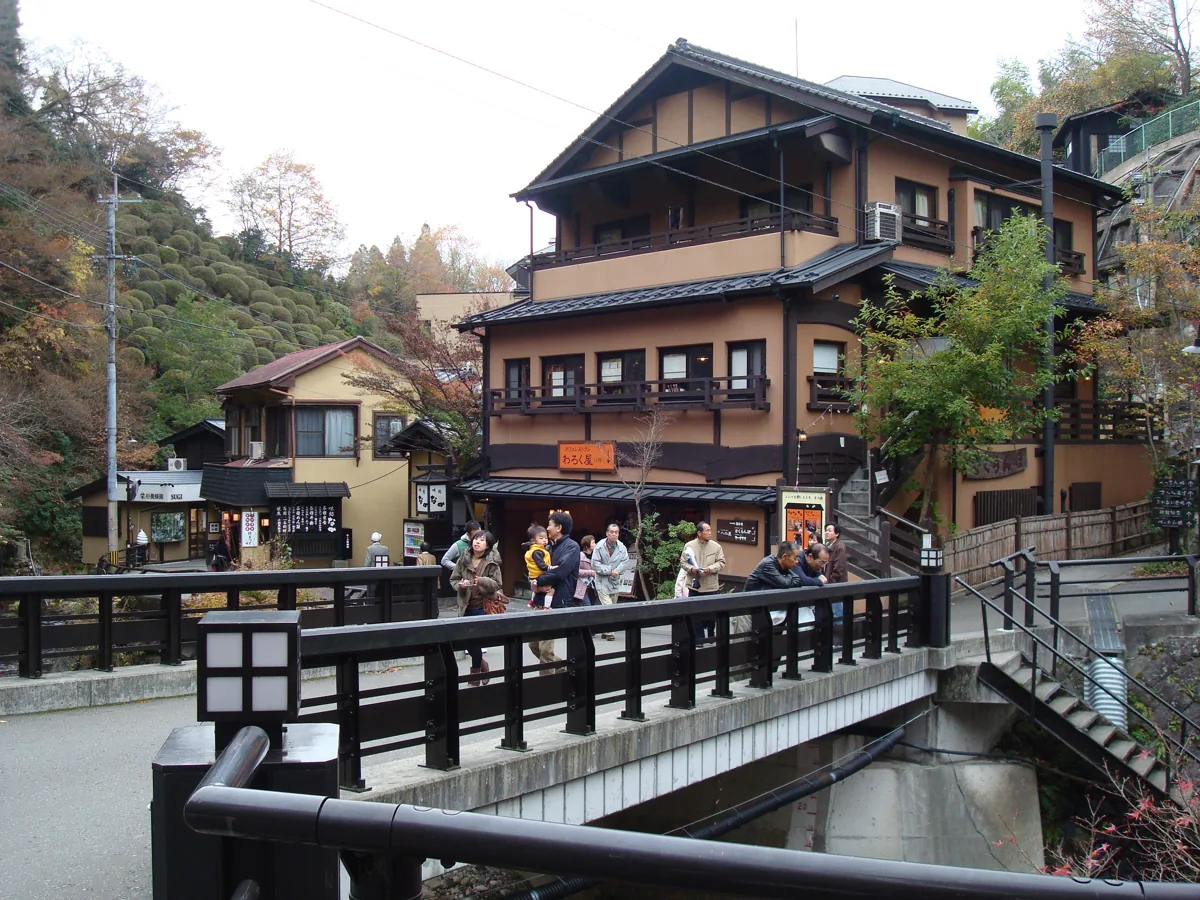
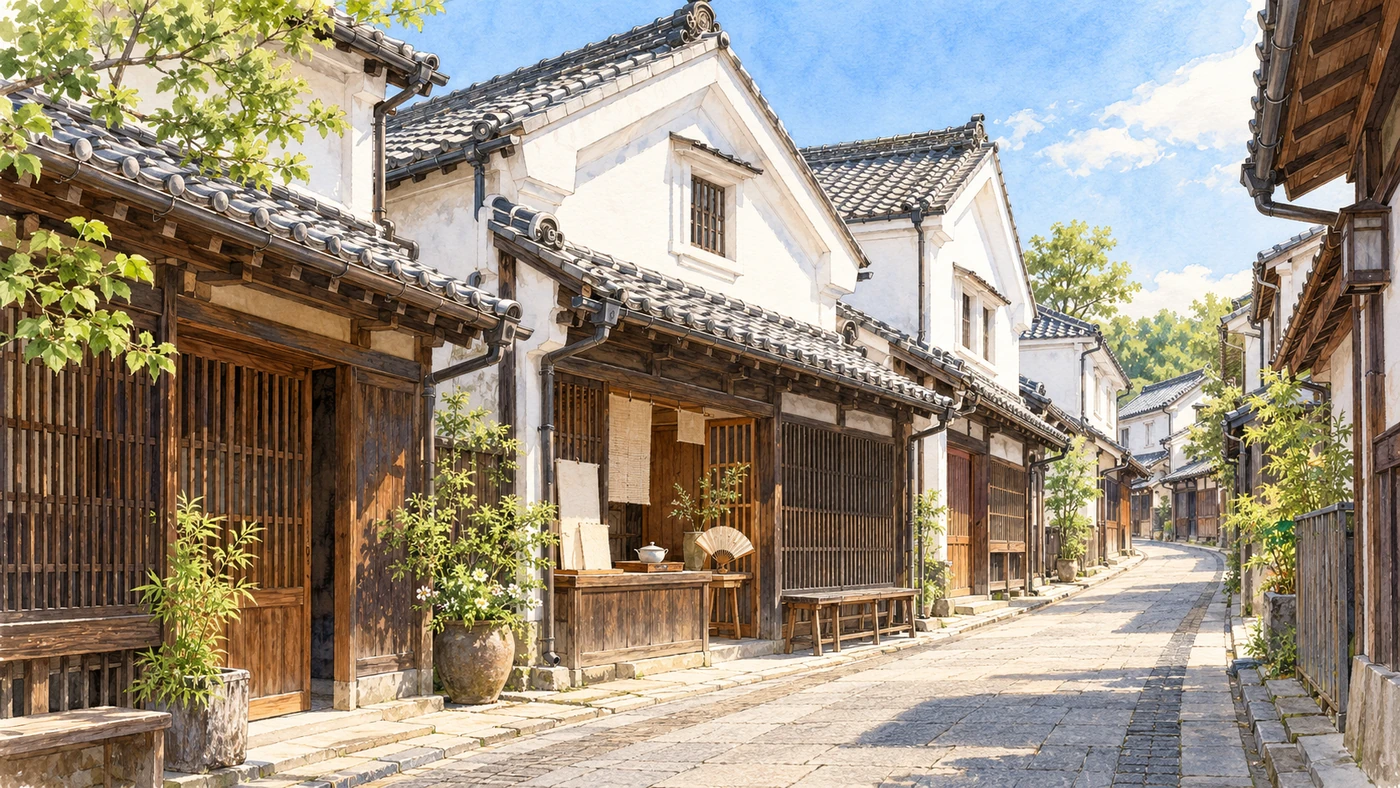
The city calls Fukushima’s basic townhouse form igura: an earthen-walled storehouse style combining a gable-end entrance, hip-and-gable roof and plastered walls. Repeated Edo-period fires preceded these buildings, which developed from late Edo into Meiji. Along the street, identify the roof facing the road, then upper walls and eaves, rather than treating every white house as the same shell.
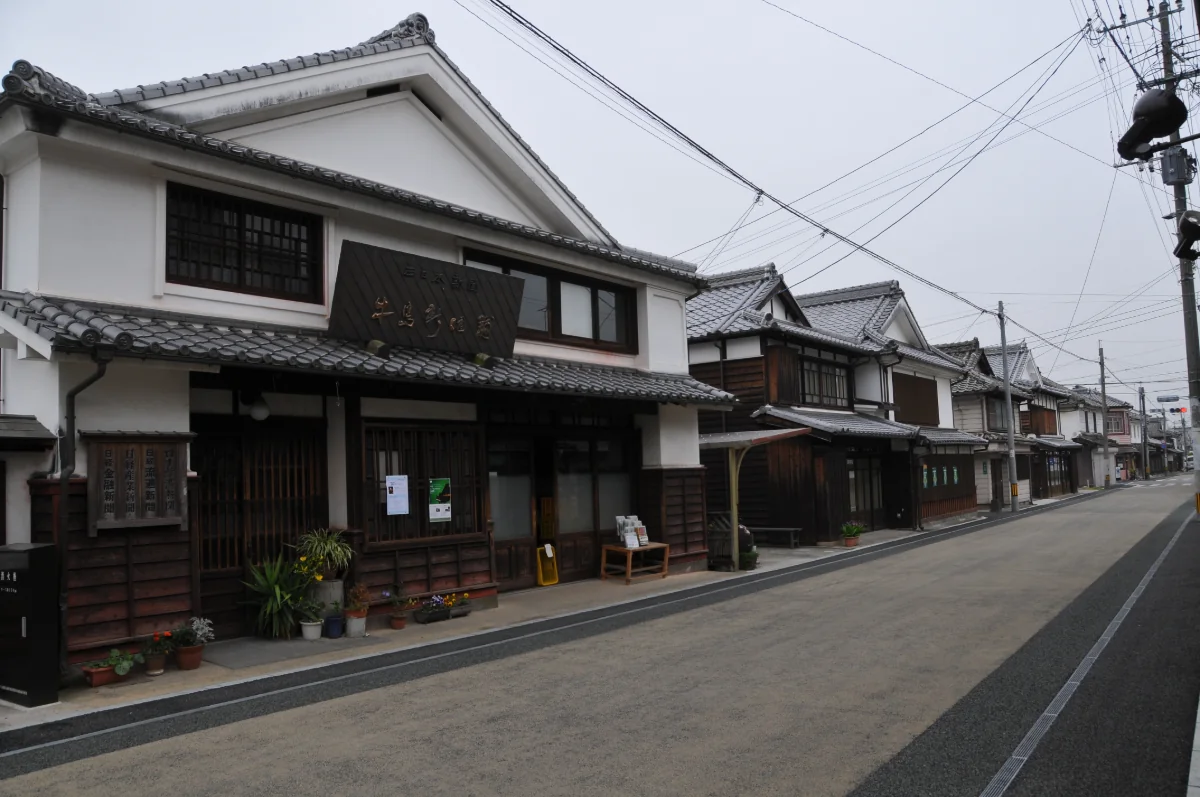
Narrow frontages extend into long plots. A typical ground floor has three or four rooms in a row, with an earthen passage alongside linking front and back. A courtyard faces the reception room; a corridor along it connects toilet and bathroom, while kitchen, detached reception room and storehouses lie deeper inside. Read the plan to see how trade, family life and hospitality occupied different positions.
Some late-Edo to early-Meiji townhouses retain open spaces extending upward between floors, used for moving goods. Compare their height with the narrow frontage: merchant needs shaped both horizontal passages and vertical space. In public interiors, ask how goods moved and where guests sat. The building becomes more than a front-view photograph.
Roads changed the houses too. Widening in mid-Meiji and early Showa cut back street-facing eaves and altered ground-floor fronts, while upper floors retained more of their earlier appearance. If shopfront and upper story differ, compare them before moving on. The street’s changes are visible in those two levels.
Curving roads and waterways preserve the castle town’s structure
Fukushima began as the town below Fukushima Castle. Merchant land between the road outside the castle and its moat was divided into long narrow plots. After the castle was abolished in 1620, Fukushima continued as Yame’s transport and economic center. Long plots, bending streets and waterways surviving from the moat place the building shapes within their original street conditions.
Later transport moved activity elsewhere. From the Meiji period, national roads, a horse-drawn tramway from Hainuzuka and an electric tramway from Kurume made Dobashi the gateway. As motor roads and ring routes developed, commercial functions shifted outward. Many traditional townhouses consequently remained along the old road. After seeing merchant interiors, look back at the street’s scale to distinguish it from modern main roads.
Yokomachi Machiya Exchange Center: learn the streets, then choose your tea
Yokomachi Machiya Exchange Center, at Honmachi 94, opens 10:00–17:00. It offers local history, rest space, and information on events and shops, about 10 minutes on foot from Fukushima bus stop. It normally closes Mondays, the following day when Monday is a Japanese holiday, and December 28–January 4. It makes a useful first indoor stop.
The Yame tea cafe description introduces susuricha: tea slowly brewed in a lidded bowl and sipped in small drops, followed by eating the leaves with vinegar-soy sauce. The leaves provide one more step after the tea is finished.
How the public townhouses survived
Sakaiya’s public access is directly connected with local preservation. The Kinoshita family donated the house to the city in 1988; it opened in 1992 after restoration. A major typhoon in 1991 damaged townhouses and led to demolitions, prompting residents to confront the loss of the streets building by building. Preservation then involved roofs, walls and woodwork, along with finding new uses for empty houses.
The Exchange Center opened in May 1997, and Fukushima was selected as an Important Preservation District for Groups of Traditional Buildings in May 2002. The results extend beyond continuous historic facades. Public buildings let visitors read plans and components, while other houses remain shops and homes within the street. Focus interior visits on public facilities and use only the areas individual businesses open to visitors.
Sakaiya: Yakusugi cedar and rosewood in a detached reception room
The Kinoshita family brewed sake from the Edo period under the trading name Sakaiya. Its detached reception room, completed in 1908, accommodated distinguished guests. City-listed details include a single-board Yakusugi cedar transom and a rosewood alcove frame. Look up at the transom, then down to the alcove’s lower edge to see how components arrange the reception space.
Sakaiya stands at Honmachi 184, about 12 minutes from Fukushima stop, and opens free of charge from 10:00 to 17:00. Closures match the Exchange Center: ordinary Mondays, the shifted closure after a holiday, and December 28–January 4. Learn about the neighborhood at the center first, then see a specific reception space at Sakaiya.
For brief ordinary photography, avoid occupying rooms or garden and obstructing other visitors. Coming-of-age and pre-wedding photography require advance telephone notice. A facility-use application is needed when occupying the space. Ordinary visitors viewing woodwork and garden can simply come during opening hours; exclusive-use procedures do not apply to every visitor.
SoL beside Fukushima stop keeps lunch within the walk
Bar & Kitchen SoL is at Motomura 425-11, listed by its operator as one minute from Nishitetsu’s Fukushima stop. It serves Spanish food, with lunch 11:30–14:30 and last orders at 13:30. The townhouses open on Thursdays, but SoL closes. It opens Friday evenings but serves no Friday lunch, and closes on two additional Wednesdays each month. Tuesday, Saturday or Sunday fits this lunch plan more easily.
The Simple Lunch costs ¥1,650 including tax, with the day’s salad, homemade soup, baguette and paella. The ¥2,200 SoL Lunch adds two tapas, a choice of paella, dessert of the day and a drink. The ¥2,860 SoL Special Lunch adds beef skirt steak and replaces dessert with Basque cheesecake.
The restaurant blends rice from Yame and Imari with Spanish seasonings for its paella and uses vegetables, rice and meat from the Yame area. Paella is cooked to order, so order your main dish when seated. Allow an hour for lunch before walking toward the craft center.
The lunch menu also lists individual paellas: seafood ¥1,210, chicken and mushroom ¥1,155, squid ink ¥1,265, and cheese ¥1,375, all including tax. Reservations: 0943-24-8941.
Traditional Crafts Center: paper alongside altars, lanterns and everyday objects
Before papermaking, see the Traditional Crafts Center’s Buddhist altars and lanterns. The tourism association’s indoor route groups Yame Fukushima altars, Yame lanterns, lantern-puppet models, the washi museum and stone lanterns. The puppet models are in the folk museum; the golden tea room is visited only when open. This sequence connects paper with woodworking, surface finishes and metal decoration.
The city’s craft introduction lists lacquer coating, maki-e decoration and metal fittings in Yame altars. Wooden structures, metalwork and surface decoration involve different work before becoming a finished altar. The same lacquer and maki-e techniques also make tea utensils, accessories and interior objects. Look first at material joints, then surface patterns, beyond the overall gold appearance.
Yame lanterns use local handmade paper painted with flowers, birds and landscapes. The booklet shows both hanging and standing forms. Lighting uses paper’s translucency, light weight and ability to take shape. When making your own sheet, recall how the lantern surface carries lines. Paper is a material of thickness, fibers and light effects as well as a writing surface.
The city booklet also lists bamboo baskets, sieves and everyday goods. Compare fine-bamboo containers with paper fans and tea coasters to see how materials change shape for their purpose. Return to the displays while your paper dries, or choose something useful in the sales area.
Handmade washi: the work before fibers enter the vat
The Yame Handmade Washi Museum is attached to the Traditional Crafts Center. You can watch demonstrations and make postcards, bookmarks or fans. Its process explanation divides papermaking into preparation, sheet forming and drying, with preparation taking longest. Learn where the fibers come from before a short workshop, so the wet sheet you lift connects with the preceding work.
Yame washi mainly uses kozo, locally called kago, taking the white inner bark beneath the dark outer bark. The museum describes soaking, scraping away surface bark and damaged parts, cooking in alkaline liquid, then repeated washing to remove alkaline residue and impurities. Scraping and washing seem remote from a finished sheet, but determine whether clean, even fibers reach the vat.
Beating loosens bundles into individual fibers; a disintegrator disperses them further. The museum specifically explains that this step does not crush the material to pulp. Follow the change from bundles to dispersed fibers in a demonstration. Once they enter the vat, the arm movements have a clear context.
Traditional production adds mucilage extracted from tororo-aoi roots to help disperse fibers. The museum explicitly states that it buys a chemical paste with a similar molecular structure. Watch how the screen and frame lift a layer of material and how rocking evens the sheet. Consider materials and tools separately rather than focusing only on the final decorative pattern.
Wet sheets are stacked, gradually pressed to remove water, separated one by one and placed on drying boards, then checked against light for damage and thickness. That is the full craft process explained by the museum. In the visitor workshop, staff dry and finish your design, so you wait before collecting it.
The kozo season, bleached paper and unbleached paper
The museum’s raw-material explanation begins in winter. After kozo loses its leaves and stops growing, that year’s branches are cut and usable bark fibers removed. Your half-hour at the vat uses material that has already undergone extensive preparation. Read the diagrams of scraping, cooking and washing before looking at the pulp to understand the work behind evenly dispersed fibers.
The process distinguishes bleached and unbleached paper. Bleached sheets undergo treatment and washing after alkaline residue is removed; unbleached sheets skip the corresponding steps. Both then have remaining impurities picked out before beating. When choosing paper, compare color, fibers and thickness. Whiteness and a clean surface are separate observations, and a final decorative piece does not erase the work of preparation.
October 2026 workshop prices: choose a project and collection time together
From October 1, 2026, the museum’s new fees are ¥1,000 for four postcards, ten business cards, one shikishi square board or two tanzaku strips. Four postcards are easier to divide among friends than one large work. For a single writing surface, choose a shikishi or strips. Decide how you will use the result before choosing.
A mixed set of two postcards and four bookmarks, or eight bookmarks, costs ¥1,200. One standard fan is ¥1,500 and one oval fan ¥2,000. Postcards suit mailing or gifts; bookmarks slip into a book, while a fan needs space protected from pressure. Each price covers one workshop set, and companions can choose different projects.
The listed activity time is 30 minutes for 1–12 people and one hour for 24 people, followed by another 30–40 minutes for drying and finishing. For a small group, that totals about 60–70 minutes, plus check-in and movement. Five or more people must book through the Yame Traditional Crafts Center, telephone 0943-22-3131. Give the total group size.
Workshop reception is 9:00–16:00, and the museum closes at 17:00. Using the listed small-group time of 30 minutes plus 30–40 minutes drying, a 14:00 start gives an estimated collection around 15:00–15:10, plus check-in and on-site waits. The museum suggests other facilities or the Tokimeki local-products shop while waiting. Collect in the same facility group, then start toward Fukushima stop at 16:00.
The museum is at Honmachi 2-123-2. It closes Mondays, except Japanese national or other designated holidays, and December 29–January 3. The townhouses’ New Year closure starts December 28, one day earlier. To enter both types of facility around New Year, avoid dates in their shared closure period.
Reserve a two-hour guide for architecture and crafts
The Yame City Volunteer Guides offer a roughly 120-minute Traditional Crafts Center and eastern townscape route. It starts with craft displays, then Sakaiya, Fukushima Hachimangu, the former kenban office site, Exchange Center, former district office and Railway Park. For town stories alone, choose the roughly 60-minute eastern route. There is also a western route for the craftworkers’ streets.
The tourism association’s June 2022 program lists ¥1,500 per group per hour for up to ten people. Groups of 11 or more pay ¥100 per person per hour. Meet at the Traditional Crafts Center’s main entrance, with a start agreed between 10:00 and 15:00. Apply at least five days ahead by calling 0943-22-3131. This covers guiding; papermaking is charged separately by project.
To replace the morning’s independent walk with a guide, tell the office about the townhouses and lunch, then agree meeting point, endpoint and duration. Request Chinese or other languages when applying. The original route ends at Railway Park in the south, while lunch is beside Fukushima stop in the north. Include that connecting walk.
Buying Yame tea: distinguish the origin name from the production method
Yame Dento Hon Gyokuro has defined production features. The Ministry of Agriculture, Forestry and Fisheries registration lists overhead shading with natural materials, naturally trained tea plants and hand-picking. Plants grow in their natural form, are shaded with materials such as straw before harvest, and have their new shoots picked. The name refers to specific cultivation and harvesting methods. Start with the product name on the package.
Yame Dento Hon Gyokuro was registered as Japan GI No. 5 on December 22, 2015. The GI introduction places its gardens in hilly areas of Yame and surrounding municipalities. Factories first process fresh leaves into aracha, or crude tea, then refine appearance and aroma into finished tea for sale. Within tea labeled Yame-grown, distinguish tea type, cultivation and processing stage.
Straw and sumaki for the shading frames also depend on local weaving and supply. The GI introduction describes sumaki as loosely woven natural coverings of straw, reeds and similar materials. The cultivation tools themselves depend on the region’s handwork and equipment.
Tea utensils bring altar craftspeople’s lacquer and maki-e to the table
Fukuoka’s tourism association introduces Maruya Sabo at Honmachi 154, where a matcha experience takes place at tables in an earthen-floor space. Its described sequence starts with tea prepared by the host, followed by a second bowl you whisk yourself. Chairs suit visitors unused to kneeling. Observe the first preparation, then pick up the scoop and whisk yourself for two different perspectives.
The same introduction specifies the utensils’ craft: the natsume tea caddy uses lacquer and maki-e techniques of Yame Buddhist-altar craftspeople; bowls come from Yame’s Kazami kiln, with scoops and trays by local artisans. Read these alongside the merchant buildings to give craft concrete uses in preparing, serving and offering tea.
A separate tea-focused day: Ushijima Tea’s factories and five-tea tasting
For tea processing, Ushijima Tea offers factory tours by reservation to general visitors. Meet at its Yame main store, Tsunoe 405-4. The basic route visits Factory 1, Factory 2 and a tea field, then returns to the store, taking about 60–70 minutes with one tea sample and a souvenir. For groups under ten, the fee is ¥700 including tax per person of junior high school age or older. This is a tour product booked separately from accommodation packages.
The short route takes about 30–40 minutes, omitting Factory 1 but retaining the finishing factory, tea field and store tasting. The same small-group fee of ¥700 applies from junior high school age. The difference is content and walking time. For how crude tea becomes a finished product, the basic route’s two factories make their roles easier to compare.
The five-tea comparison adds five Yame teas in the store after the basic tour, totaling about 90–100 minutes. It is for two to five people, at ¥4,400 including tax per person of junior high school age or older. The shop chooses the teas; matcha is not included. Book basic and short tours at least one week ahead, and the five-tea course at least two weeks ahead. Choose what your companions want before adding other facilities.
The normal tour seasons are January 11–June 20 and October 1–December 20, starting at 10:00 or 14:00 on weekdays, one group per slot. Some weekends or holidays are available during the new-tea season. Apply through the inquiry form on the official factory page. The store replies by phone or email to say whether it can accept the booking. Fix the slot in your itinerary after receiving acceptance.
Ushijima Tea’s official Japanese-language factory introduction, to accompany the reserved tour option for a separate day.
Before the factory: season, walking conditions and site rules
Factory 1 handles sencha raw material. Factory 2 handles finishing, packing, tea bags and powder processing. Outside the new-tea season, visitors generally see stopped machines in Factory 1. The store places new-tea manufacturing from mid-April to around Golden Week. Seeing machinery layout and seeing freshly picked leaves being processed call for different dates.
Ushijima’s Factory 1 processes sencha and does not manufacture tencha. Leaves from its own garden first go to a partner tencha factory, then return for grinding into powder. The powder room is viewed only through glass, has no stone mill, and may have stopped machines. If your goal is stone-milled matcha, this tour offers different content. If initial sencha processing, finishing and packing interest you, the two factories show their separate work.
All travel between factories and field is on foot, with no seated rest places on the way and multiple level changes inside. Strollers and walking carts cannot enter. Viewing powder processing upstairs in Factory 2 also requires stairs. With children or slower-walking family members, use these conditions to choose whether the short route suits you rather than relying on minutes alone.
For the finishing factory, bring and wear a mask, change into slippers, put on a simple cap and clean your clothing. Hand-carried items are generally not taken into work areas. Tours normally proceed in rain or snow; bring rain gear and clothing for the temperature. The store decides cancellation in thunderstorms or typhoons. Do not drink alcohol before visiting. Arrival more than 30 minutes after the start is treated as cancellation.
During the factory pause from June 21 to September 30, a separate five-tea comparison takes place at the main-store counter. It lasts about 30–40 minutes for two to five people, at ¥3,850 including tax per person of junior high school age or older. Apply by telephone at least two weeks ahead. This version is entirely an in-store tasting, with no factory or field walk and no matcha. It suits visitors concerned about heat or mainly interested in comparing teas.
The factory meeting point is Tsunoe 405-4. Give it a separate day centered on your reserved slot, with time to arrive early, change shoes and organize belongings.
A practical Fukushima day from start to finish
Using the November 10 train example, leave Hakata at 7:52, reach Hainuzuka at 8:44, take the 9:31 bus and reach Fukushima at 9:52. Walk about 10 minutes to the Exchange Center. Read the neighborhood introduction from 10:10 to 10:45, then allow half an hour along streets near Hachimangu and visit Sakaiya from 11:15 to 11:45. Return north to SoL beside Fukushima stop for lunch at 12:15, comfortably before the 13:30 last order.
Leave at 13:15 and head south, reaching the craft-center area for check-in at 13:50 and papermaking at 14:00. A small group spends about 30 minutes making, then sees craft displays or browses Tokimeki, collecting around 15:00–15:10. Use the time after 15:10 for more crafts, rest and packing your work. Start back at 16:00, board at 16:37, reach Hainuzuka at 16:59, then take the 17:13 train to Hakata at 18:26.
In rain, retain indoor visits to the Exchange Center and Sakaiya, shortening photo stops between them. Papermaking, exhibits and the local-products shop are clustered in the southern facilities. If lunch runs long, omit the extra street stroll and go straight to the craft center. A 14:00 activity leaves much more time for completion, drying and the return than arriving just before reception closes at 16:00.
Daytime costs and the return journey
The published Haya Line fare table, revised October 1, 2019, shows ¥350 at the Hainuzuka/Fukushima intersection, giving a ¥700 return-bus budget based on that table. Add ¥1,000 for four postcards and ¥1,650 for SoL’s Simple Lunch: ¥3,350 together. With the ¥2,200 SoL Lunch, the total is ¥3,900. JR travel to and from Hakata, tea, other shopping and optional guiding are extra.
A few useful answers
How do I get from Hakata to Yame Fukushima by public transit?
Take the JR Kagoshima Main Line from Hakata to Hainuzuka, then the Horikawa bus on the Haya Line to the Fukushima stop. To return via Hainuzuka, pick your bus first and look for a connecting JR train to Hakata.
What day of the week is best for a day trip to Yame Fukushima?
An ordinary Tuesday fits both townhouses, lunch at SoL, and papermaking into one day. Yokomachi Machiya Exchange Center and Sakaiya close on Mondays, or the next day if Monday is a Japanese holiday. SoL closes on Thursdays and two Wednesdays a month and doesn't serve lunch on Fridays.
How long does papermaking at the Yame Washi Museum take, and do I need to book?
For 1 to 12 people, papermaking takes about 30 minutes, plus 30 to 40 minutes for drying before pickup. Groups of five or more must book. As of October 1, 2026, making four postcards costs ¥1,000.
How far ahead should I book an Ushijima Tea factory tour?
Book the standard or short tour at least a week ahead. Book the five-tea tasting at least two weeks ahead for 2 to 5 people, with about 90 to 100 minutes for the tasting and factory tour. Use the website form to request a booking and get a reply by phone or email.
Official information and references
Sources used in this guide.
- Yame City: Yokomachi Machiya Exchange Center
- Yame City: former Kinoshita residence (Sakaiya)
- Yame Traditional Crafts Center: handmade washi museum and October 2026 prices
- Ushijima Tea: factory tour routes and booking rules
- Yame City: Fukushima townscape history and preservation
- Yame Fukushima Tourism Association: Yame tea cafes
- Yame City: Sakaiya facility use and photography
- Ministry of Agriculture, Forestry and Fisheries: GI No. 5 Yame Dento Hon Gyokuro
- Japan Geographical Indication Council: Yame Dento Hon Gyokuro
- Fukuoka Tourism Association: matcha experience with original Yame tea utensils
- Yame Traditional Crafts Center: handmade washi process
- Horikawa Bus: Haya Line timetable
- Horikawa Bus: Haya Line fares
- Horikawa Bus: Kurume Line timetable
- SoL: lunch menu, opening hours and access
- Yame City: official visitor booklet (crafts, maps and transport)
- Yame Fukushima Tourism Association: guide routes and applications
- JR Kyushu: Hakata–Hainuzuka trains for November 10, 2026
- JR Kyushu: Hainuzuka–Hakata trains for November 10, 2026