Plan a visit from Arita or Kami-Arita Station, with the Kyushu Ceramic Museum, Uchiyama kiln walls, Sueyama Shrine, pottery workshops and Arita Será. Includes meals, transport and opening conditions.
- Region & Focus
- KyushuAttractions
- Reading Scope
- 32 min read · 14 chapters · 4 Q&As
- Official Verification
- 23 official sources checkedUpdated November 22, 2026
- Key Topics
- ItinerariesFoodKyushu
Chapter Route Map (tap any stop)
- Choose your priorities: production, old streets or tableware shopping
- Understand Arita and Imari before entering the museum
- An hour in the galleries: focus on history and the Shibata Collection
- From porcelain stone to blue-and-white decoration
- Lunch with local ceramics: near Arita Station or in Uchiyama
- From Arita Station to the Kyushu Ceramic Museum
- Uchiyama: old merchants’ buildings in a ceramics town
- Three ways to see ceramics in and around Uchiyama
- Explore both sides of Uchiyama’s streets
- Sueyama Shrine: porcelain on an architectural scale
- Book a workshop time, then arrange the route around it
- Buying ceramics in Uchiyama and Arita Será
- Full-day and half-day plans
- Fares, buses and event days
- Quick Q&A
Start by deciding what you want to bring home from Arita: a better understanding of ceramics, or a box of dishes for your table. For the first, begin at the Kyushu Ceramic Museum, then explore Uchiyama’s old shops, kiln walls and Sueyama Shrine. For shopping, allow more time at the specialist stores in Arita Será. You can combine both routes, but Arita Será is about 2 km from Arita Station and lies outside the main Uchiyama walking route. A taxi makes the day easier if you buy large items or travel with someone who cannot walk far.
Choose your priorities: production, old streets or tableware shopping
If you arrive by train, distinguish Arita Station from Kami-Arita Station. Arita Station works well for the Kyushu Ceramic Museum and shopping areas farther away. Kami-Arita Station is near eastern Uchiyama and lets you enter or leave from the other end of the street. Check whether your outbound and return trains stop at Kami-Arita before choosing a station. Special trains and stops during the spring pottery fair do not apply to ordinary days.
For a first visit, combine the Kyushu Ceramic Museum and Uchiyama. The museum displays ceramics from across Kyushu and different periods. Uchiyama places shops, old warehouses, walls made with reused kiln materials and a shrine in their street setting. Seeing the objects first helps connect the names on museum labels with local life.
For a practical workshop, reserve wheel throwing or ceramic painting at Rokuroza near Izumiyama. Your work needs firing and shipping, so treat it as a souvenir that arrives later. Do not plan to take a freshly thrown bowl away that evening. To watch craftspeople making ceramics, choose a weekday workshop visit at Gen-emon Kiln. Watching production and making your own piece are separate activities.
If shopping is your main aim, give Arita Será an uninterrupted part of the day. Its cluster of specialist ceramics stores lets you compare everyday dishes, gifts and craft pieces. In Uchiyama, fit shopping into your street walk. Decide whether you want rice bowls, plates or gifts, then choose stores accordingly. You do not need to visit every shop in both areas.
Plan a visit from Arita or Kami-Arita Station, with the Kyushu Ceramic Museum, Uchiyama kiln walls, Sueyama Shrine, pottery workshops and Arita Será. Includes meals, transport and opening conditions.
Understand Arita and Imari before entering the museum
You may arrive at Arita Station and find labels for Ko-Imari, or Old Imari, in the display cases. Both names relate to the same history of production and shipping. According to the tourism association, porcelain production began in Arita in the early 17th century after Korean potters including Yi Sam-pyeong found porcelain stone at Izumiyama. The wares were shipped from Imari and therefore also became known as Imari ware. Early Imari generally refers to pieces from the start of Arita porcelain production in the 1610s to around 1650. These names help with labels, but comparing shapes and decoration across periods is more useful on site than memorizing dates.
Early pieces were mainly blue-and-white sometsuke ware. By the 1640s, Arita was producing iro-e, with colors applied over the glaze. Find two pieces you like in the museum: one mainly blue and white, and another with several colors. Compare their lines, the space occupied by patterns and the areas left blank. Then read the dates and shapes on the labels. This gives you a starting point for choosing pieces in shops later.
Do not call every multicolored piece Kakiemon. Kakiemon refers to a specific history and kiln, and exhibition labels distinguish works and styles. For unfamiliar names, read the museum’s explanation of period, origin and technique. In a shop, ask who made a piece and which collection it belongs to. For everyday dishes, start with how they feel in your hand and choose a size you will use often. Ask before handling samples to compare their weight. Recording the diameter of your usual plates on your phone also helps you judge whether purchases will stack at home.
An hour in the galleries: focus on history and the Shibata Collection
The Kyushu Ceramic Museum’s official floor plan lists Gallery 1 for Arita ware history, Gallery 2 for the Shibata Collection, Gallery 3 for old Kyushu ceramics and Gallery 4 for modern Kyushu ceramic art. With one hour, start with the background in Gallery 1, then examine Edo-period pieces in Gallery 2. Add the other galleries if time allows. Displays and exhibition periods change, so read the current information at the entrance. If your group has different interests, agree to meet in a particular gallery or rest area. Each person can choose a favorite piece and show it to the others, allowing everyone their own pace.
The Arita porcelain collection donated by Akihiko and Yuko Shibata contains 10,311 pieces and traces changes through the Edo period. A museum announcement in March 2026 said that Gallery 2 would display about 1,000 pieces, with around 800 replaced in the rotation, for approximately one year. Instead of scanning every object, follow changes within one type. Pick a few plates and compare their rims, central patterns and blank areas, then read the labels for their periods and techniques.
For companions less familiar with history, each person can find a bowl they would use, a plate they would give as a gift and a piece they would keep purely for display. Explaining those choices draws attention to rims, patterns and size. Anyone who cooks can also look at displays related to dining. Imagine sauce in a small dish or a main course on a large plate, and consider how much of the pattern the food would cover.
Outside the galleries, the musical mechanical clock offers a rest stop. Families can see the clock before entering, or take a break after part of the exhibition, to reduce the pressure of urging children onward. If you plan lunch in Uchiyama, decide on leaving whether to eat near Arita Station or continue into the district. Do not delay lunch past a restaurant’s last order simply to finish every gallery.
From porcelain stone to blue-and-white decoration
Arita ware has traditionally depended on craftspeople with different roles. Raw material passes through shaping, bisque firing, underglaze painting, glazing and high-temperature firing before becoming a bowl on the table. Some pieces receive overglaze decoration and another firing afterward. When a plate seems expensive, ask about its decoration and production as well as its size and purpose. The processes help explain how it differs from another everyday plate.
Sometsuke uses gosu pigment to paint blue designs on the body. Glaze looks like a white liquid when applied and temporarily hides the painting. After the high-temperature firing, it forms a transparent glassy layer and the pattern becomes visible again. The tourism association explains that sometsuke pieces decorated only with gosu can be complete after firing at about 1,300°C. Compare line thickness and blurred edges on blue-and-white plates, then examine how the designs fit different shapes.
Overglaze painting adds colors such as red, green, yellow and gold to the glazed surface after high-temperature firing. A further firing fixes them in an overglaze kiln. The tourism association calls overglaze decoration on white porcelain aka-e, and overglaze decoration added to sometsuke somenishiki. These terms help with labels, but read each shop’s description of the actual piece. Color alone does not establish its age, and a printed everyday plate is not a hand-painted work.
The workshop choices differ in the same way. Wheel throwing lets you shape an object by hand; painting focuses on brushwork and patterns. Choose throwing if you want to make your own bowl shape, or painting if you prefer drawing and do not want to spend time shaping it first. Materials, firing and completion arrangements depend on the workshop package. Ask about fees and shipping when booking. If you have a fixed return time, make the workshop’s meeting time the first fixed point in your day.
ARITA EPISODE 1 (1616–), published by SagaKouhouMovie and selected by the Arita Tourism Association, uses pottery-making footage to show the division of work in workshops.
Lunch with local ceramics: near Arita Station or in Uchiyama
Gallery Arita brings ceramics from the display case to the table. The tourism association describes about 2,500 coffee cups on display, with a choice of cup when ordering a hot drink. Meals include a set centered on godofu, and the restaurant also serves Arita-yaki Gozen. The official page lists 11:00–17:00, last orders at 16:30 and irregular closing days. At 3057 Honmachi Otsu, Arita, it fits the station area or museum part of the day.
Godofu is a local soy-milk food. The tourism association describes soy milk mixed and worked with kudzu and starch, then cooled in a mold. Tofu no Takahashi says its own product uses Japanese soybeans and potato starch. Recipes and serving styles differ by shop. For a savory meal, look at set menus; for a small portion, ask what is available that day. If taking it back to your accommodation, ask how to store and eat it, and buy it near the end of the day. Ordering a lunch set lets you try it with side dishes and local tableware. Avoid it if you have a soy allergy, and ask the shop about other ingredients as needed.
Gallery Maison de Arita is in Akae-machi. The tourism association lists ceramics displays and a café with tatami seating, open 10:00–19:00 and closed Tuesdays, Wednesdays and over New Year. It is a place to sit during an Uchiyama walk; upstairs seats are sometimes used for reserved events. If your day revolves around a workshop booking, choose lunch nearby after checking that time, instead of forcing it between morning and afternoon museum visits.
Arita-yaki Gozen serves several dishes in Arita ware, with the menu set by each restaurant. Mention dietary restrictions when reserving lunch so the restaurant can tell you whether it can provide a suitable meal.
From Arita Station to the Kyushu Ceramic Museum
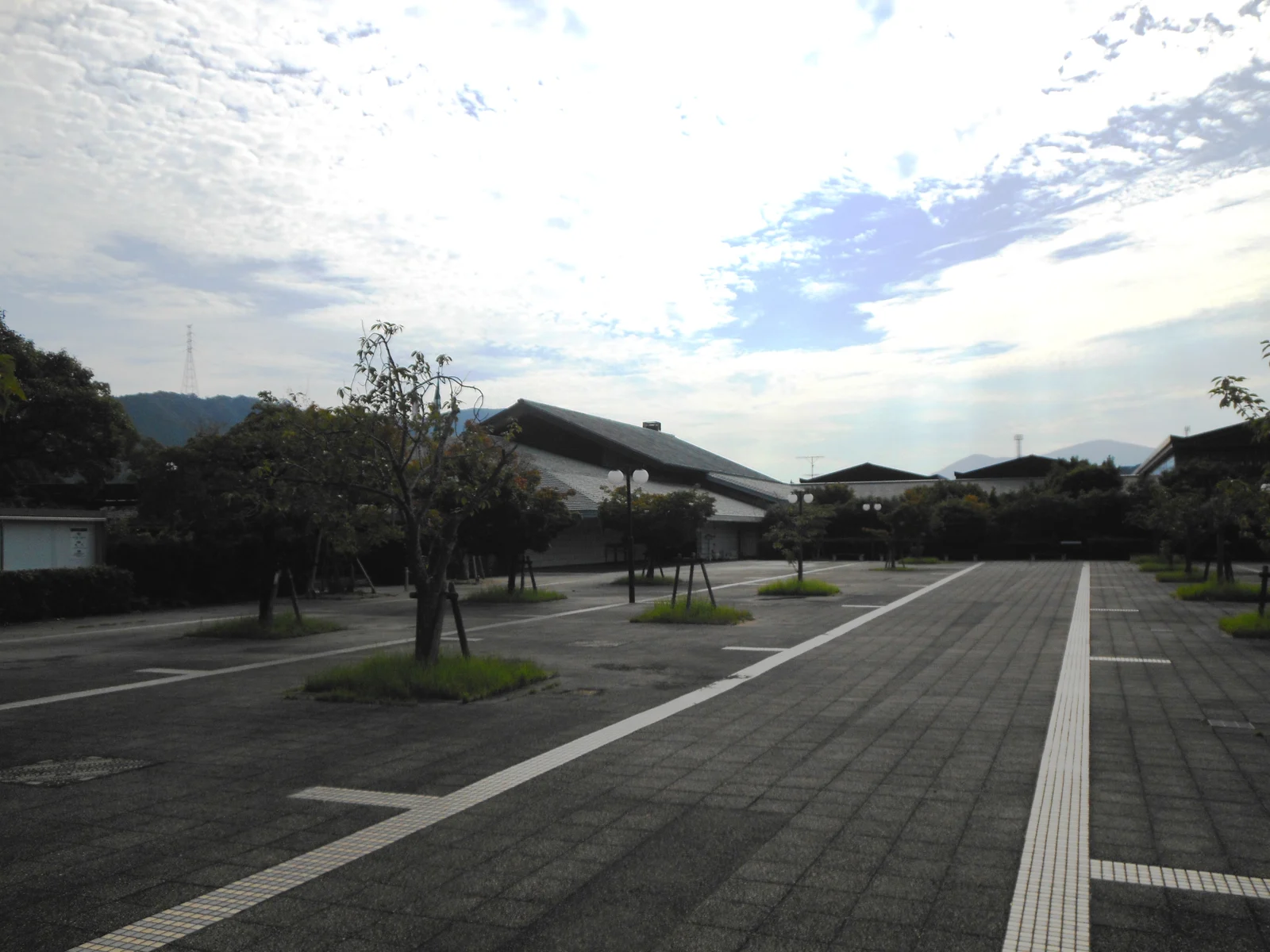
The Kyushu Ceramic Museum is about a 12-minute walk from Arita Station on JR and Matsuura Railway, making it a convenient first stop after arrival. Its collection includes ceramics from Hizen and across Kyushu, plus modern ceramic art. It gives first-time visitors a basis for comparing Arita ware. Admission is free; special exhibitions may charge separately. Official hours are 9:00–17:00, with last admission at 16:30. It closes Mondays, or the next weekday when Monday is a national holiday or other holiday, and over New Year.
Use three questions as you look: What was this object originally used for? What attracts you to its pattern and shape? Which size would you use at home? You do not need to memorize every kiln name first. After the museum, you can tell a shop assistant that you want a small bowl, a pale blue-and-white piece or a plate with blank space, rather than starting from scratch at the shelves.
The museum has an Arita porcelain musical mechanical clock made through cooperation among several kilns. The tourism association says it moves to music every 30 minutes. Alternate the clock and galleries with children. If there is a lot to see that day, shorten street shopping to allow more time indoors.
This museum and the Arita Ceramic Art Museum below have similar names but different locations, collections and fees. The prefectural Kyushu Ceramic Museum is near Arita Station. The smaller Arita Ceramic Art Museum occupies a former ceramics warehouse in Uchiyama. Enter the full name when navigating to avoid going to the wrong one.
Uchiyama: old merchants’ buildings in a ceramics town
The Uchiyama preservation district follows the street for about 2 km from Iwayagawachi to Izumiyama. Shops and buildings from different periods line the route. Allow time to stop and look rather than trying to enter every shop. When you find something to buy, ask about other sizes and gift boxes before deciding whether to pay now. Leave heavy purchases until later to make onward travel easier. For gifts, consider the recipient’s usual tableware as well as quantity and packaging. Small dishes combine easily with existing sets, while larger plates need storage space at home.
Turn into an alley with tonbai walls and look for firebricks, used kiln tools and ceramic fragments within them. They differ from the tidy shopfronts: materials once used in firing remain part of the town’s everyday scenery. Keep residents’ entrances clear and do not point your camera into private homes.
The Arita Ceramic Art Museum is in Ōdaru, in a ceramics warehouse built in 1874. Its collection centers on Meiji-period Arita ware. It also holds a large blue-and-white plate depicting Arita ceramic workers quarrying, crushing stone, shaping and carrying out other tasks. Make this plate a focus before exploring the town. Look at its production scenes, then continue to Izumiyama to consider where the raw material came from.
The museum opens 9:00–16:30. Adult admission is ¥120; high-school students and younger enter free. It closes Mondays, or the following day when Monday is a national holiday. The official schedule gives exceptions for opening during the pottery fair and closing over New Year. It is about a 20-minute walk from Kami-Arita Station or a 7-minute drive from Arita Station. If you have time for only one museum, choose the prefectural museum to compare Kyushu ceramics, or this one to combine a warehouse building with an Uchiyama walk.
Three ways to see ceramics in and around Uchiyama
Near Kobira, add the Koransha Old Ceramics Exhibition Hall to your walk. The tourism association describes the Meiji-period Arita main store as a ground-floor showroom and shop, with old ceramics and art upstairs. The upper floor is free to visit. Listed hours are 9:00–17:00, with a New Year closure. It suits visitors interested in one brand’s development who want to compare exhibits with current products. View the upstairs collection, then return to the shop and compare patterns, uses and sizes you can recognize.
The Arita Ceramic Art Museum focuses in part on the ceramics industry and its former warehouse building. It is small and close to the Uchiyama street route. You can spend a short time on the large workers’ plate before looking for kiln walls outside. The Kyushu Ceramic Museum has a broader approach to history and regional ceramic art, and works well as the main indoor activity on a rainy day. You need not visit all three: choose the prefectural museum for historical pieces, the town museum for the streets and industry, and Koransha for a brand’s work.
Gen-emon Kiln offers another option. The tourism association lists its showroom as open 8:00–17:00 on weekdays and 9:00–17:00 on weekends and national holidays, with a New Year closure. Workshop and archive visits are listed for weekdays. It is in Maruo, so include travel there and back to the station in your schedule. The showroom and workshop serve different purposes. If you arrive with little time, prioritize what you want to see. Ask about that day’s workshop access before replacing part of your Uchiyama walk. A weekend showroom visit does not include the weekday workshop visit by default.
Explore both sides of Uchiyama’s streets
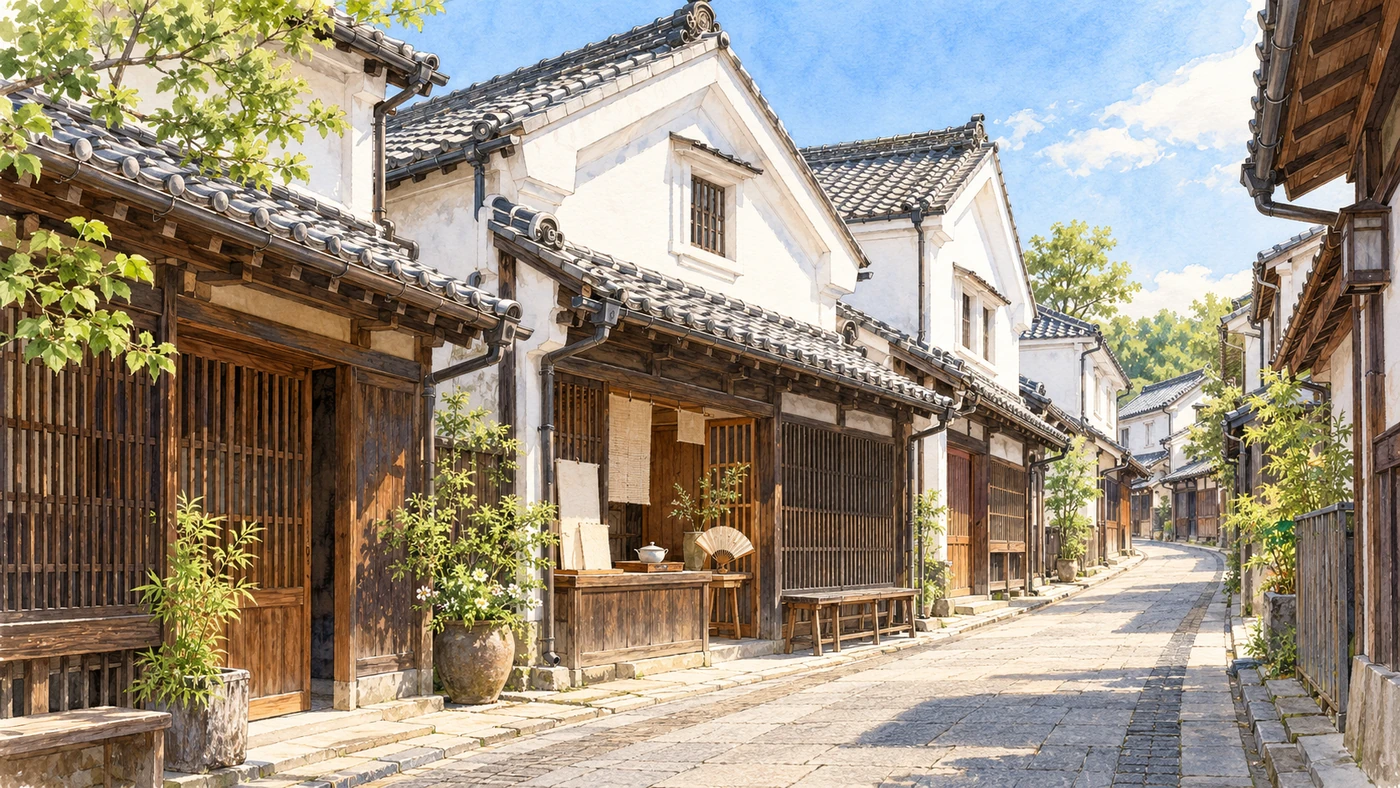
Most surviving Uchiyama townhouses were built after the great fire of 1828. The streets combine buildings from the late Edo, Meiji, Taisho and Showa periods. The tourism association explains that merchants mainly occupied the main street, while kiln owners and painters often lived and worked on the back streets. Tonbai walls also enclosed their properties and workplaces. Start with storefronts and façades, then enter the alleys behind them to compare the scale and materials.
Kiln walls are spread among several sites. The association points to back streets between the large ginkgo near Izumiyama and the Arita Ceramic Art Museum in Ōdaru. Choose a stretch to explore rather than searching for every wall on a map. To learn about buildings and their past uses, the tourism association offers Machinaka Guide tours, with a two-hour route dedicated to learning about Arita porcelain and the kilns, and a one-and-a-half-hour walking route through the streets. Arrange the meeting point, language and fee when applying. For a first visit without separate architectural research, a guide gives the street visit a clearer order.
Arita-kan is a useful reference point for visitor information in the district. The tourism association provides walking maps with streets, facilities and transport symbols. Mark the museums and booked activities you will visit, and allow time for lunch and the journey back. If your group splits up to shop, agree on a recognizable meeting place and time. “Nearby” is hard to use along a long street. For fragile purchases, note the shop, size and price, then decide after meeting whether to return together. Collecting them late in the day also reduces the time spent carrying porcelain through alleys.
Sueyama Shrine: porcelain on an architectural scale
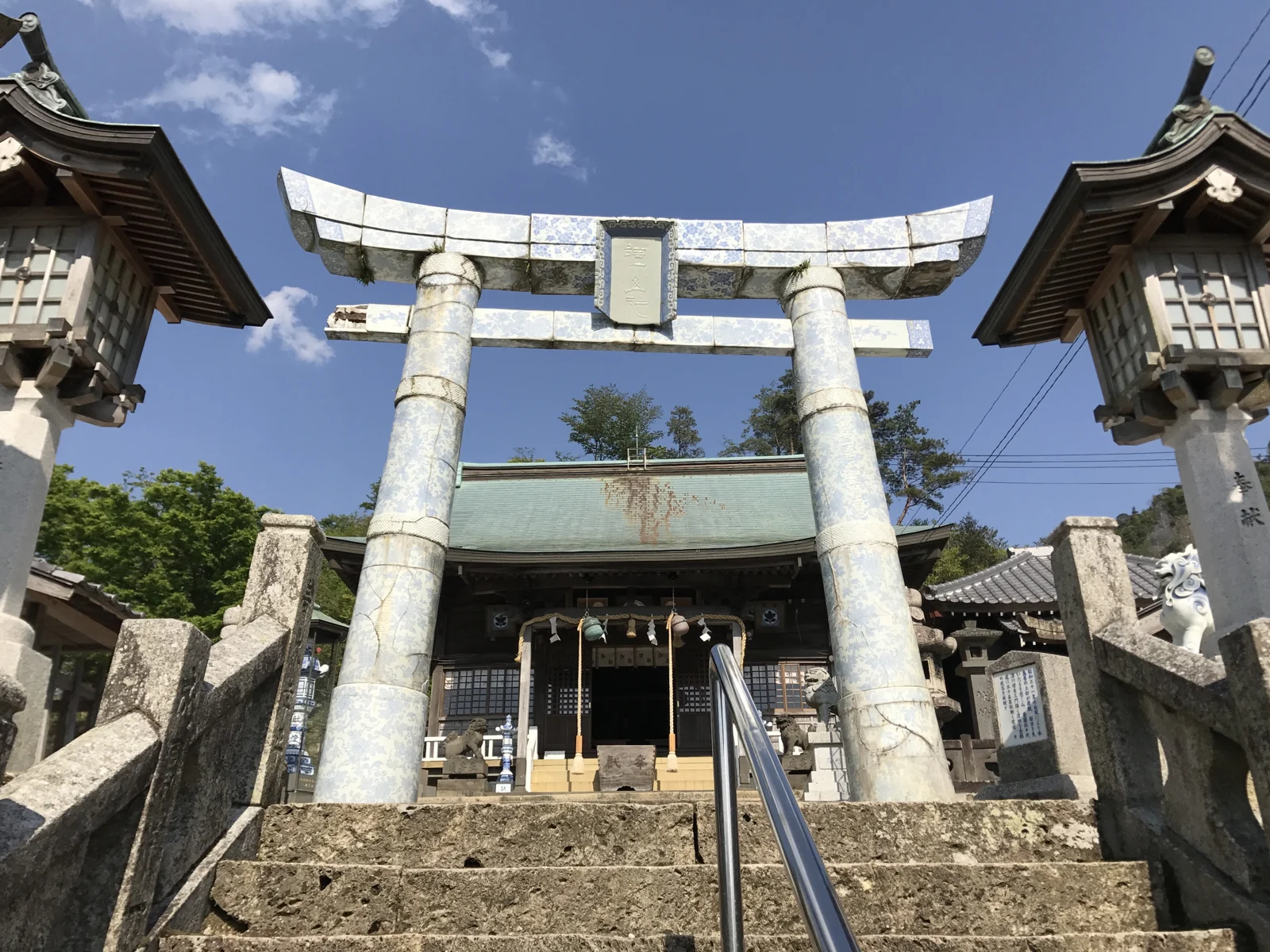
Parts of Sueyama Shrine’s torii gate, guardian dogs and enclosing fence are made of porcelain. Their pale blue-and-white decoration shows another use for Arita ware beyond the dining table. As you approach from the street, look at the gate’s proportions, then move closer to its patterns and surface. Follow the shrine’s worship route and keep entrances clear when taking photographs.
The approach crosses a railway level crossing. When the alarm starts, stay behind the white line and wait for the train to pass before crossing. With children, pause outside the crossing so your group can go across together. Do not stop on the tracks for photographs.
To follow the raw material further, continue toward Izumiyama Quarry. The tourism association links the porcelain stone found here to the origins of Arita porcelain. Going from fired, decorated pieces back to the material source helps connect the production steps more clearly than finished shop products alone. Add Izumiyama according to your energy and return train. Uchiyama and the shrine already provide enough for a half-day walk.
Book a workshop time, then arrange the route around it
Rokuroza in Izumiyama offers wheel throwing and ceramic painting. The tourism association lists throwing at ¥1,360 and a package including trimming and firing at ¥2,040. Painting prices vary by object, and shipping costs extra. Firing and delivery take about two to three months. Ask about delivery destinations, costs and payment before booking. Listed hours are 10:00–15:00, closed Thursdays and over New Year, with reservations required. Call 0955-41-1302. Ask which session you can attend, then place other stops before and after it. The association lists shaping time as within one hour, with firing limited to two pieces. Larger families should give the number of participants and each person’s preferred activity when booking, so waiting time is not mistaken for free shopping time.
For production without making a piece yourself, consider Gen-emon Kiln. The tourism association describes weekday access to its workshop and Old Imari archive, with traditional handwork visible in the workshop. Put it in the first half of a weekday visit; on weekends, focus on collections, streets and shopping. Ask the kiln about that day’s arrangements if you have a specific interest.
With children, let them choose either a workshop or a museum as the main activity, and keep the other flexible. Handmade work must wait for firing before delivery. If they want something to take home that day, choose a small finished piece after the workshop. Ask staff to pack it and place fragile items in a supportive bag.
Buying ceramics in Uchiyama and Arita Será
In Uchiyama, shopping fits between views of the streets. It suits visitors who want to look slowly at buildings and enter shops that appeal to them. If you want a particular brand, locate its store first. A business may have shops in both Uchiyama and Arita Será, with different stock and displays. Shobido Honten, for example, says its Nakanohara store focuses on outlet items, while its Arita Será store has more stock and gift choices. The latter makes it easier to buy a coordinated gift set in one stop.
Arita Será lists normal hours of 10:00–17:00, with some shops differing. It is about 2 km or a 6-minute drive from Arita Station. The complex includes dining and accommodation, and officially lists 800 parking spaces and accessible toilets. Drivers can visit before leaving Arita. Rail travelers should ask about a return taxi before shopping, rather than searching for transport while carrying porcelain.
Bring your household habits into the shop: can you hold the rice bowl in one hand, and will the plate fit your cupboard? For a gift set, ask whether enough matching pieces are available. Ask about the specific product before using it in a microwave, dishwasher or oven. Gold decoration and different glazes mean appearance alone is no guide to heat resistance.
Before paying, ask for packaging suitable for carrying, and ask about delivery, international shipping and damage procedures. Keep receipts separate from the products and protect heavier bowls and plates with a hard outer case. To walk without bags first, photograph the item name, dimensions and shop name, then return there at the end to buy.
Full-day and half-day plans
A day without a car: Walk from Arita Station to the Kyushu Ceramic Museum in the morning, then continue to Uchiyama. Eat in the district and spend the afternoon on the Arita Ceramic Art Museum, kiln-wall alleys and Sueyama Shrine. Leave from the station best suited to that day’s trains. For more ceramics shopping, shorten Uchiyama, take a ride to Arita Será and leave through Arita Station. Arrange the museum and lunch around your train’s arrival.
A day by car: Start at the Kyushu Ceramic Museum, then visit Izumiyama or your reserved workshop. Park at an Uchiyama visitor parking lot and walk between the art museum, kiln walls and shrine. Finish with shopping at Arita Será. The tourism association lists parking at the art museum, Sueyama Shrine and other sites; events may have different arrangements. A car carries shopping bags, but park once for the street walk instead of moving it between every small stop.
Half a day: Choose either the prefectural museum with part of Uchiyama, or Uchiyama with Sueyama Shrine. The first starts with the collection; the second gives more time to the townscape. If shopping is your main purpose, go straight to Arita Será and allow time for the trip back to the station.
Mondays or rain: Both museums normally close Mondays, with different rules for shifting the closure around holidays. Focus instead on open shops, Arita Será and reserved workshops. In rain, shorten the alley walk and spend more time in open stores and museums. Adjust for major events or special closures using the organizers’ and facilities’ notices for that day.
Fares, buses and event days
The official visitor page lists Arita’s community bus at ¥200 per ride for adults and ¥100 for elementary-school children. Day passes cost ¥500 and ¥250 respectively. Listed regular suspensions are April 28–May 6, the day of the Sarayama Festival and January 1–3. Check your stop, direction and service for the day before using the bus. If missing one bus would affect your return train, a taxi is a more direct backup. The tourism association lists Arita Taxi, 0955-42-3131, and Saihi Kamenoi Taxi, 0955-43-3000. Give the museum or pickup location, passenger count, luggage count and intended station arrival time when booking. Mention large boxes of dishes so the company knows how much space you need.
Bicycle rental gives travelers without a car another option. The tourism association lists rentals from 9:00 to 17:00, starting at ¥500. Some rental points have suspended service during the spring pottery fair. For substantial porcelain purchases or travel with children, basket capacity and protection for fragile items affect the choice. Walk the streets first if helpful, then decide whether to buy large pieces.
The return point affects where your walk ends. The tourism association’s rental rules list three return points for ordinary bicycles: KILN ARITA tourist information, Arita-kan and Harada Liquor Store at Kami-Arita Station. Harada Liquor Store closes Sundays. Electric-assist bikes are rented by KILN ARITA for ¥1,000 per rental, plus a ¥1,000 deposit refunded on return, and must be returned to the original rental point. To enter at one end and leave at the other, choose a return station using the ordinary-bike return points. For electric assistance, schedule a return to KILN ARITA before 17:00. Rental use is limited to Arita town.
The spring pottery fair and autumn events change crowds, temporary transport and shop displays. If the event is your reason for visiting, use that year’s organizer announcements for dates and access. Choose an ordinary day for quieter exhibitions or workshop visits. Weekdays and weekends have different opening and workshop conditions. Put your main priority in its confirmed opening period, then arrange the rest around it.
A few useful answers
Which train station should I use for a visit to Arita?
Get off at Arita Station for the Kyushu Ceramic Museum, about a 12-minute walk away. Use Kami-Arita Station to start at the eastern end of Uchiyama’s old streets. Check that your trains in both directions stop there.
How should I spend half a day in Uchiyama and at Sueyama Shrine?
Start on Uchiyama’s main street, then turn into the back lanes to see the tonbai walls made with firebricks and pottery shards. Walk on to Sueyama Shrine to see the porcelain details on the torii gate and guardian statues.
Do I need to book a pottery workshop in Arita, and when will my piece ship?
Book ahead at Rokuroza in Izumiyama for wheel throwing or pottery painting by calling 0955-41-1302. Firing and shipping take about two to three months, and shipping costs extra.
Where can I shop for tableware in Arita?
Head to Arita Será to compare everyday tableware and gifts at several specialty ceramics shops. It’s about 2 km from Arita Station, or about six minutes by car. Usual hours are 10 a.m. to 5 p.m., with some variation by shop.
Official information and references
Sources used in this guide.
- History of Arita ware
- How Arita ware is made
- Arita Ceramic Art Museum
- Walking through Uchiyama
- Sueyama Shrine
- Koransha Old Ceramics Exhibition Hall
- Gen-emon Kiln
- Rokuroza
- Gallery Arita
- Gallery Maison de Arita
- Arita Será
- Shobido frequently asked questions
- Getting to Arita
- Guided sightseeing
- Local Arita cuisine
- Tofu shop
- Tonbai kiln walls
- Kyushu Ceramic Museum: Arita Tourism Association
- Saga Prefecture: 2026 Shibata Collection rotation
- Saga Prefecture: old and modern Kyushu ceramics galleries
- Saga cultural property record: 10,311 Shibata Collection pieces
- Kyushu Ceramic Museum official floor plan
- Arita Tourism Association bicycle rental rules