Compare Unzen and Obama Onsen in Nagasaki. Plan Unzen Jigoku, steam cooking and a seaside footbath, with buses, day baths, places to stay and meals.
- Region & Focus
- KyushuAttractions
- Reading Scope
- 27 min read · 12 chapters · 4 Q&As
- Official Verification
- 19 official sources checkedUpdated November 22, 2026
- Key Topics
- ItinerariesFoodKyushu
Chapter Route Map (tap any stop)
- Choose your hot spring town: mountain Unzen or seaside Obama
- From Nagasaki: check buses in both directions before choosing a stop
- Half a day in Obama: steam-cooked lunch and a seaside footbath
- Unzen Jigoku: fumaroles, paths and the martyrs’ monument
- Day baths: leave time to get ready and catch your bus
- Stay overnight: plan dinner and the next day’s bus together
- Places to stay and food experiences that need advance planning
- Your first steam-cooked meal: restaurant ingredients or your own
- Time in Unzen: paths, information and meals
- Adjust for rain, closures and different interests
- Basic costs for a two-person day trip
- Frequently asked questions
- Quick Q&A
For a hot spring trip from Nagasaki, start by choosing Unzen in the mountains or Obama beside Tachibana Bay. At Unzen, steaming geothermal fields sit beside the hot spring town. Walk the paths, eat hot spring eggs, then try a sulfur bath. Obama brings sea views, a footbath and seafood cooked with hot spring steam into one afternoon. Both towns are on the same bus route from Nagasaki, but each needs time for meals, walks and an overnight stay. Choose your base first, then decide whether to visit the other town. With one day, choose Unzen for its geothermal fields and day baths, or Obama for steam cooking and the seaside footbath. Staying overnight makes it easier to see both: travel from Nagasaki to Obama for lunch on day one, then continue to Unzen for the night. Walk through the geothermal fields and bathe on day two before returning to Nagasaki. If the seaside evening matters most, stay in Obama and visit Unzen earlier in the day. Buses are infrequent. Use the places and sequence below to choose a route, then fit each leg to the timetable for your travel date.
Choose your hot spring town: mountain Unzen or seaside Obama
Unzen City includes both seaside Obama and Unzen Onsen in the mountains. An address containing “Obama-cho” does not mean that a hotel is on the Obama coast. Locate Unzen Jigoku or Hot Foot 105 on the map, then check the nearest bus stop to your hotel. An address alone can make two separate towns look like a single walkable area.
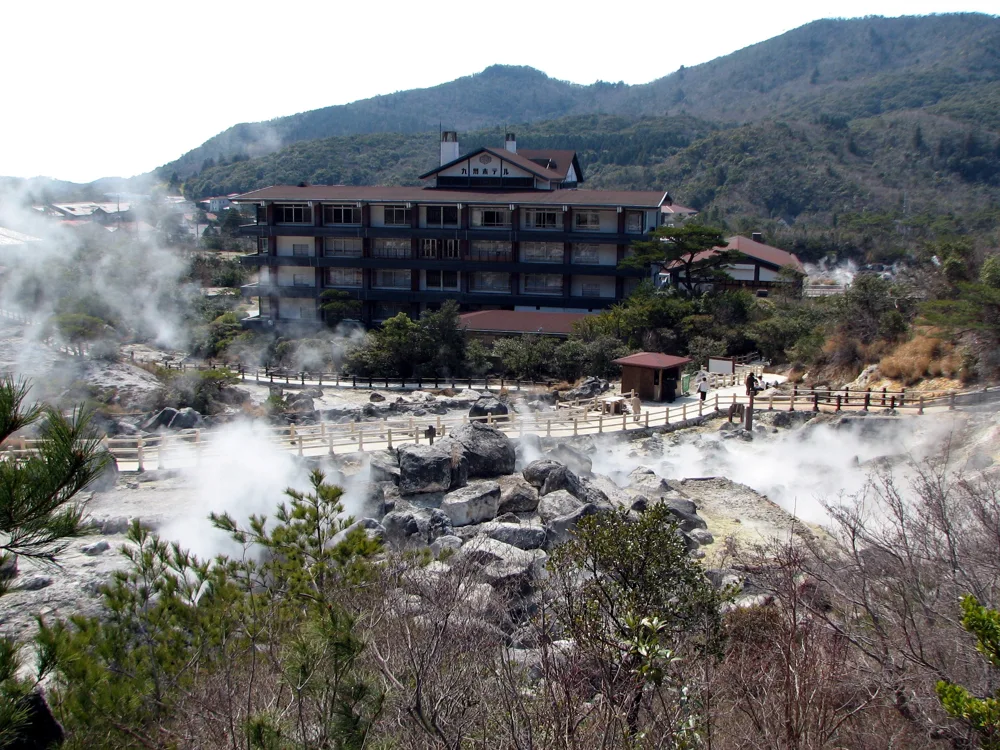
Choose Unzen if you want to see volcanic terrain. Paths beside the hot spring town pass fumaroles and mud volcanoes, with hotels and shops nearby. The area is known for sulfur springs; Kojigoku Onsenkan offers milky-white water for day visitors. Stay here to spend daylight on the paths and have dinner and a bath at your hotel, without cutting the walk short to return to the city.
Obama faces Tachibana Bay. Steam cookers beside the footbath let you cook seafood and vegetables with hot spring steam. Its chloride springs differ from Unzen’s sulfur springs up in the mountains. Choose Obama for lunch, a seaside walk and a bath. Choose Unzen for steam rising from the ground and paths through the geothermal fields. These are two hot spring towns that require transport between them, rather than different waters in the same pool.
Travel companions who do not use communal baths can still enjoy Obama’s seaside walk and footbath. Unzen offers geothermal paths, hot spring eggs and shops. The footbath, steam cookers and full bathing facilities have separate opening hours. If you arrive in the afternoon, do activities with a last admission time first, then leave time for a walk.
The Unzen Tourism Bureau’s city film connects coast, forests and lakes. Use these landscapes to choose where to stay and walk in Obama or Unzen Onsen.
Compare Unzen and Obama Onsen in Nagasaki. Plan Unzen Jigoku, steam cooking and a seaside footbath, with buses, day baths, places to stay and meals.
From Nagasaki: check buses in both directions before choosing a stop
The Nagasaki Prefectural Bus express service to Obama and Unzen leaves from Nagasaki Station and travels via Obama to Unzen. Seats do not require reservations; passengers board in queue order. Pay when you get off, using cash or a nationally interoperable transport IC card. Cash passengers should bring change: the onboard machine cannot change ¥10,000, ¥5,000 or ¥2,000 notes, or the new ¥500 coins.
For a day trip, first check the outbound Nagasaki Station–Obama or Nagasaki Station–Unzen service, then the return journey. Check this before booking dinner in Nagasaki, so the last bus does not conflict with your meal. If you continue uphill from Obama, check that service separately. Before reaching Unzen, decide whether you will stop again on the way back. A short distance on a map can leave very different amounts of visiting time depending on the gap between buses.
The operator offers digital round-trip tickets between Nagasaki Station and either Obama or Unzen through myroute and STLOCAL. In October 2026, they cost ¥2,790 for Obama and ¥3,420 for Unzen. Each covers a return trip over its specified route; getting off ends validity for the remaining onward section. If you stop in Obama before continuing to Unzen, calculate the two legs and the ticket conditions separately. This is not a pass for unlimited stops. People sharing one ticket screen must travel with the ticket holder. Show the ticket in the app; screenshots are not accepted. The official timetable also states that STLOCAL tickets are valid for four days from purchase. myroute tickets are valid for four days from first use and can be bought up to 30 days ahead. For an overnight trip, use the starting date specified by your chosen app so the ticket does not expire before departure.
For example, the timetable linked from the Prefectural Bus website and dated April 1, 2026 lists a 9:10 departure from Nagasaki Station, reaching Obama at 10:27 and Unzen at 10:51. The return leaves Unzen at 16:10 and Obama at 16:34, reaching Nagasaki Station at 17:51. This gives roughly six hours in Obama or five in Unzen, enough to explore one area at a relaxed pace. In Obama, have lunch after arrival, then use the footbath or a bath in the afternoon. In Unzen, walk through the geothermal fields first and use the remaining time for food and bathing. The fare table lists one-way fares of ¥1,900 to Unzen and ¥1,550 to Obama. Round-trip tickets suit journeys returning over the same section.
The outbound express departs from Nagasaki’s “Station Terminal”; the return timetable lists arrival at the station’s “Transport Plaza.” Both are described as Nagasaki Station, but the boarding and arrival locations differ. Check the boarding point map before going, rather than searching for the outbound platform in the station plaza. If you stop in Obama and take the next Prefectural express uphill, this timetable lists its arrival in Obama at 14:27 and Unzen at 14:51. That leaves time for lunch, but creates two separate bus journeys. Check the actual service and applicable ticket type for your date.
From Nagasaki Airport, the Unzen Tourism Bureau gives a different public transport route: take a bus to Isahaya Station, then a Shimatetsu bus to Unzen. Its listed journey times are about 35 minutes from the airport to Isahaya and about 80 minutes from Isahaya to Unzen, excluding transfer waits. Airport and Nagasaki city departures use different routes. If you travel uphill on your arrival day, allow for immigration, baggage collection and transfers. The Shimatetsu stop and timetable search covers the Obama and Unzen directions. On October 27, 2026, this search page redirected to a system maintenance notice. During maintenance, ask Shimabara Railway for the timetable and establish your connection before booking your first night in the mountains.
Driving lets you move around restaurant and bath opening hours, but allow for mountain roads and parking. Paid parking is available near Unzen Jigoku. The official Obama footbath information lists nearby municipal parking at ¥250. If you want to watch the sunset in Obama before driving uphill, arrange dinner and check-in with your accommodation first, so a rushed journey does not cost you the sea view you came for.
Half a day in Obama: steam-cooked lunch and a seaside footbath
Hot Foot 105 stands beside Tachibana Bay, about a five-minute walk from Obama Bus Terminal. The 105-meter footbath takes its name from the spring’s source temperature. It has seated, walking and pet footbath areas. Unzen City lists the footbath as free, with a separate basket fee for the adjoining steam cookers. Bring a towel and shoes and socks that are easy to remove before walking back to a restaurant or the bus stop.
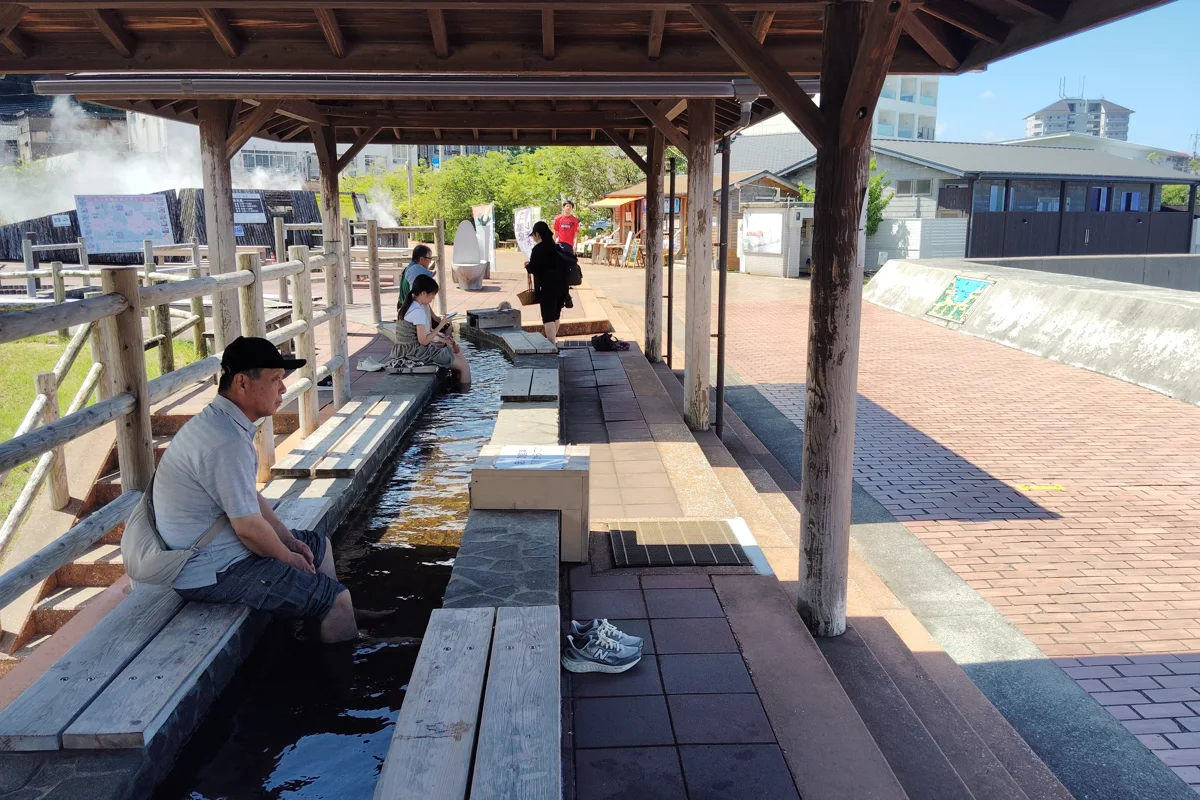
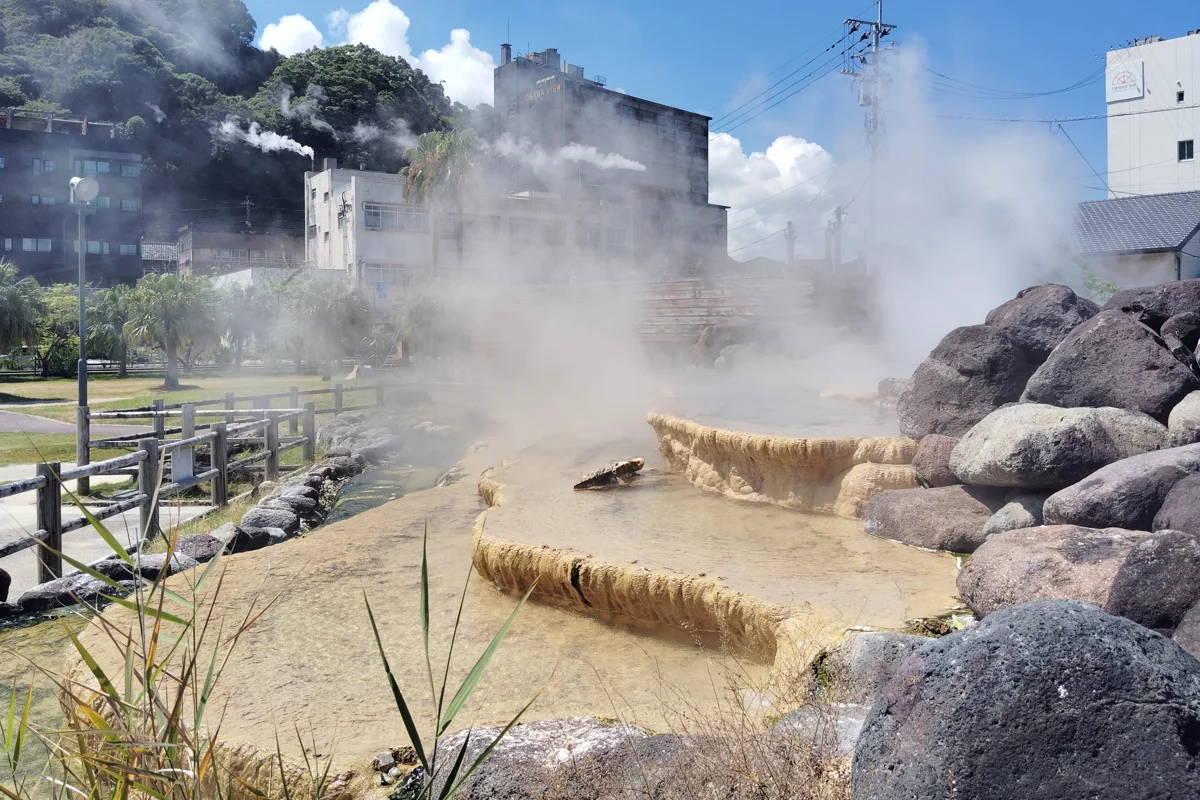
The tourism bureau lists opening hours of 10:00–19:00 from April through October, with steam cookers until 18:30. From November through March, hours are 10:00–18:00, with cookers until 17:30. It closes on the third Wednesday of each month and January 4 and 5, and may close in severe weather. A steaming basket costs ¥200 per 30 minutes; ingredients cost extra. In winter, cooking ends earlier than foot bathing. Steam your food first and soak your feet afterward, rather than waiting until sunset to look for a basket.
The self-service cookers suit visitors who want to choose their own ingredients. The official description suggests seasonal vegetables and seafood cooked in hot spring steam. These cookers are a separate option from nearby restaurants. If you do not want to prepare ingredients, consider Mushigamaya, introduced by the tourism bureau, for the restaurant’s ingredient combinations. If you want to choose your own, ask about baskets, seasonings and utensils first. Cook raw ingredients thoroughly, keep clear of hot steam when opening the lid and follow the instructions on site.
A simple afternoon starts with lunch, followed by time at the footbath and coast. The basket is hired in 30-minute units; eating and cleaning up take additional time. If little time remains before your return bus, choose prepared food rather than adding a cooking activity at the last minute. On the third Wednesday, when the footbath closes, eat at a local restaurant and select an open bath using the city’s notices.
Obama has more to eat than steamed dishes. Unzen City’s introduction lists Obama champon noodles, yusenpei crackers and hot spring eggs as local specialties. Champon makes a meal on a cold day or when you would rather not steam ingredients yourself. Buy yusenpei to take away. Seafood varies with the restaurant and its daily supplies. Read the menu for the fish and cooking methods available, rather than expecting a particular seasonal catch year-round.
Unzen Jigoku: fumaroles, paths and the martyrs’ monument
Unzen Jigoku is free to explore. The tourism bureau lists it as open around the clock, but there is no lighting at night. Walk the established paths in daylight to see the surface and signs clearly around the fumaroles. The official estimate for a circuit is about 30–40 minutes. Add time for photos, eggs, information boards and a slower pace; walking time and stops are separate.
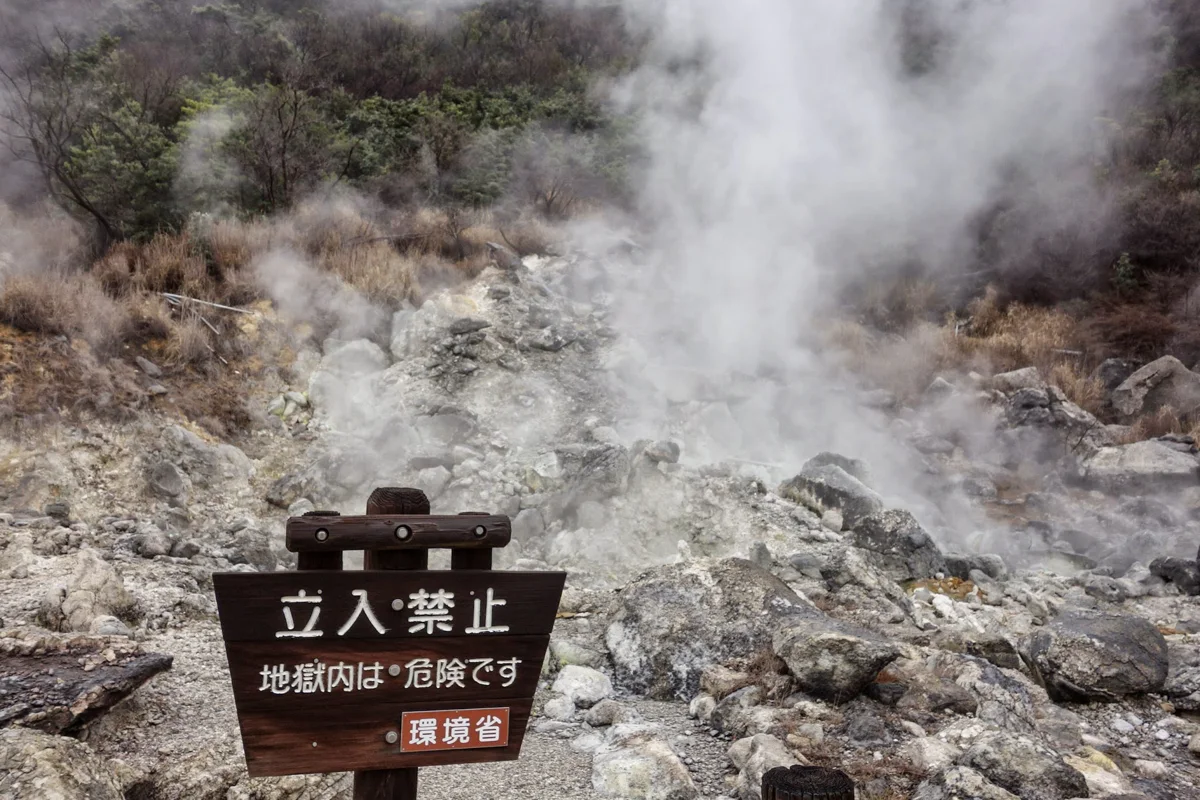
See strong steam emissions from the Daikyokan Jigoku viewpoint, then look at the small cones of pale-gray mud at the mud volcanoes. They show different forms of geothermal activity: visible steam at the former and shapes that change with surface moisture at the latter. Stay on the paths. Do not enter fenced or steaming areas, or touch emerging hot water.
The Christian martyrs’ monument recalls religious persecution during the Edo period. Alongside the natural landscape, the site preserves memories of that persecution. Pause to read the explanation at the monument before continuing along the path. When taking photos, leave space for other visitors and people who want to stop quietly.
The foot-steaming area at Jigoku Chaya uses geothermal heat and steam. It differs from Obama’s footbath, where you put your feet in warm water. Official guidance says not to go barefoot or keep your feet in one place for long because of the risk of burns. It closes in rain or when temperatures are too high. The paths have no admission charge; food and other services at the teahouse cost extra.
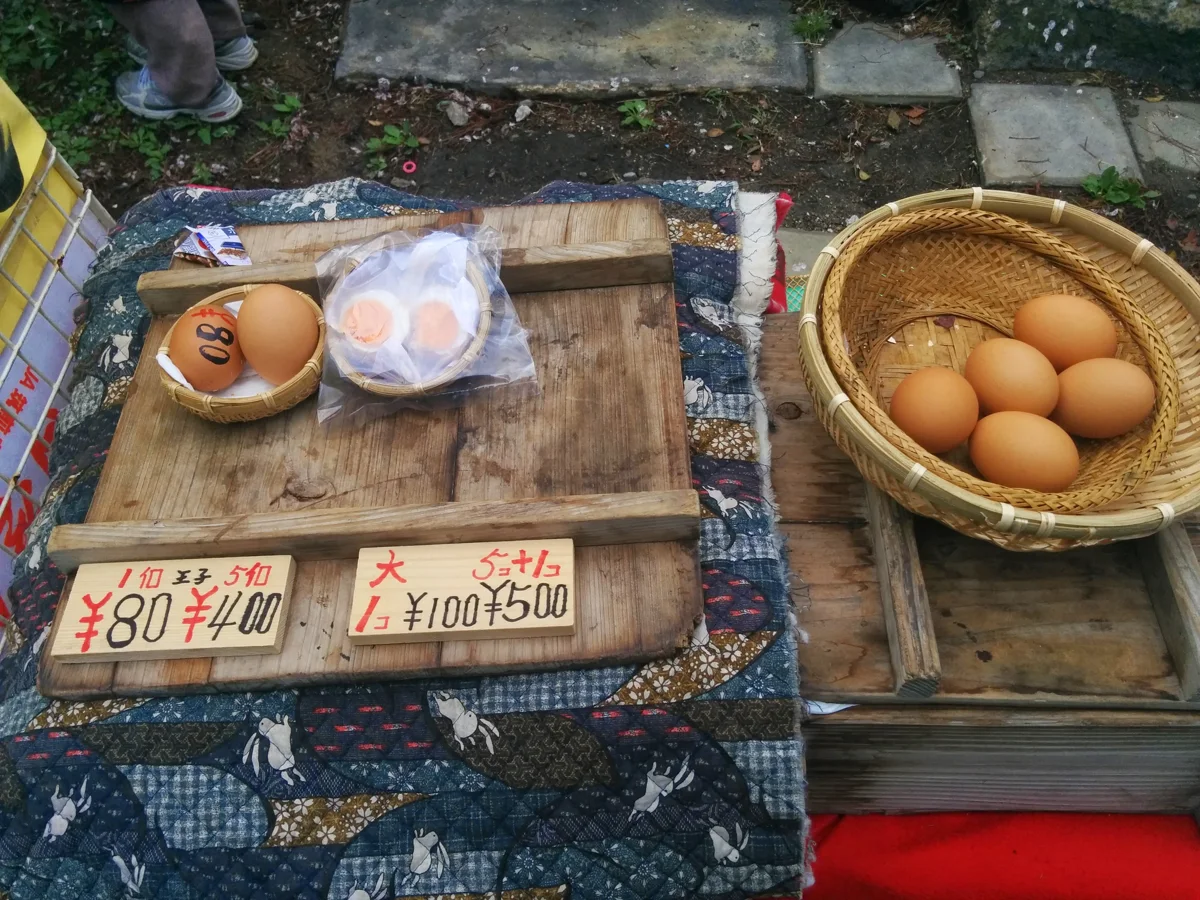
Unzen Jigoku Kobo sells eggs cooked with geothermal steam. Official hours are 10:00–17:00, or until sold out. In October 2026, prices were ¥200 for two eggs or ¥400 for five. They make a snack to share during your walk. Decide where to have your main meal and when to catch the bus, then fit the egg stop into the route.
Day baths: leave time to get ready and catch your bus
For milky-white water in Unzen, consider Kojigoku Onsenkan. The operator’s July 2026 notice lists hours of 9:30–19:00, closed Wednesdays except national holidays. Admission is ¥500 for adults and ¥250 for children. The Unzen Tourism Bureau also lists shampoo and soap. The bath is in the Kojigoku area. Locate it precisely rather than assuming that anything called “Unzen” is next to your arrival stop. Put the bath, paths, bus stop and accommodation on one map to plan the journey.
Wash before entering the bath and keep towels out of the water. For a bus day trip, allow time to change, dry your hair, walk back to the stop and wait, as well as time in the bath. If two travelers move at different speeds, agree on a meeting time at the entrance. A buffer between bathing and the bus makes the trip easier than staying until the last minute and running to the stop.
For municipal baths in Obama, consult Unzen City’s bath opening information. As of October 27, 2026, the city page still listed Hama-no-Yu as closed from August 24 for hot-water storage tank work, expected to continue until late October. During that period, use Obama for food and the footbath, and plan a full bath at Jokiya or Kojigoku Onsenkan in the mountains.
For children or companions who need private space, check the specific accommodation or bath plan, age rules and availability of private baths. An in-room bathroom, a communal hotel bath and a reservable private bath are separate facilities. To avoid shared bathing, choose a plan that explicitly includes private facilities. Obama’s footbath lets companions who skip full bathing join in, although it remains an outdoor activity affected by the weather.
Stay overnight: plan dinner and the next day’s bus together
For a night in the mountains, leave Nagasaki in the morning and stop in Obama for lunch and the footbath. Take an afternoon bus to Unzen, leave your luggage at the hotel and walk through the geothermal fields. Spend the evening on dinner and bathing at your accommodation. The next day, walk more paths, visit Kojigoku or return to Nagasaki as time allows. If you arrive near dinner time, save the geothermal fields for daylight the next day rather than adding an unlit night walk.
For a seaside stay, keep the sea-view hours for Obama. Visit Unzen Jigoku and buy hot spring eggs first, then travel downhill to check in at Obama in the afternoon. If the cookers are still open, eat steamed food before returning to your accommodation. Have a leisurely breakfast and pack the next morning, then leave on your chosen return bus. When the weather makes sitting by the sea uncomfortable, spend more time on indoor meals and the accommodation’s baths. In the mountains, prioritize daylight walks and day baths.
Before choosing accommodation, check whether dinner is included, the latest check-in time and the actual distance from the bus stop. If your hotel serves dinner, avoid a late lunch just to fit in every specialty. For a room-only plan, identify restaurants open that evening in advance. Check the facilities and occupancy limit of the specific room for sea views, private baths or group stays. A hotel’s homepage photo does not establish what every room includes.
If you bring large bags to Unzen, ask whether your accommodation can store them before check-in. Day visitors should carry only what they need. Reaching the paths and baths involves walking; wheeled luggage slows hills and transfers. Wear walking shoes and bring a small towel, water and a bag for the wet towel. Shoes that are easy to remove also help at Obama’s seaside footbath.
Places to stay and food experiences that need advance planning
Yuyado Jokiya in Obama is near the bus terminal and suits guests who want to cook with steam during their stay. Its website describes cookers for fish and seasonal vegetables bought by guests, alongside communal and private baths. Listed day-bath prices are ¥500 per adult and ¥250 per child for the communal bath. A 50-minute private bath costs ¥1,000 per adult and ¥500 per child for day visitors, capped at ¥2,500 per session. Adult rates apply from junior high school age, child rates from age three, and children under three enter free. Private-bath charges differ for overnight guests. Book a private slot for a family bath and calculate the charge for your group; the per-person price is not a flat price for the whole bath. Reception for both communal day baths and day-use private baths is 9:00–21:00. Private sessions last 50 minutes; arrange last admission and departure around the booked slot.
The tourism bureau lists Japanese-style rooms, rooms for four or more guests and one Western-style room at Jokiya. If you have heavy luggage, compare the route from the terminal. Jokiya’s September 29 notice lists exclusive group bookings on October 31 and November 1, 2026, and closure on November 3. It reopens at noon the day after a closure. On those dates, do not plan day bathing or cooking around normal public hours; choose the footbath and restaurants, or stay on a different day. To steam your own dinner, allow time to buy and prepare ingredients. If you prefer not to cook, eat at a restaurant or choose another inn with dinner included.
In Unzen, hand-baking yusenpei at Totomiya Honpo can be a separate activity. The tourism bureau’s activity page lists spring and fall weekends and Japanese national holidays, for participants in fifth grade or above. Sessions start at 14:00 and 16:00, taking about 45 minutes for two people or 60 minutes for four. The tax-inclusive price is ¥3,300 per person, for groups of two to four, with telephone reservations at 0957-73-2155. Two people pay ¥6,600 in total; four pay ¥13,200. Choose an eligible spring or fall weekend or holiday slot, reserve by phone, then plan buses. If you want this between visits to the mountains and coast in one day, secure a confirmed slot before arranging connections. If no booking is available, buy ready-made crackers as gifts instead.
Totomiya Honpo makes yusenpei with wheat flour, sugar, eggs, baking soda and hot spring water. The tourism bureau describes the process of baking each cracker by hand. Some freshly baked takeaway versions retain the “ears” that spill beyond the mold. Boxed gifts and freshly baked takeaway crackers suit different occasions; ask the shop what is available that day if you want to eat them there.
Crackers, hot spring eggs and steam-cooked meals serve different purposes. Crackers travel well as gifts, eggs from Jigoku Kobo are a walking snack, and steaming seafood and vegetables requires time for a basket and a meal. To try all three, have a steamed meal in Obama, then share eggs and buy crackers in Unzen the next day. Avoid squeezing all three stops into one lunch break. Tell staff about egg, wheat or seafood allergies before ordering, and read package labels.
Your first steam-cooked meal: restaurant ingredients or your own
Obama has two easily confused options. The cookers beside the footbath charge by basket time, with visitors handling their own ingredients. Mushigamaya provides a restaurant experience with ingredient combinations. Both use hot spring steam, but their procedures, dining spaces and prices are separate. A restaurant combination saves a shopping trip when this is your first visit and lunch time is short. Choose a basket if you have time and want to combine your own vegetables and seafood. Ask which type of service is meant by “steam cooker”; do not automatically add a restaurant set price to the public basket fee.
When shopping, choose ingredients with similar cooking times. Ask the seller whether they are cleaned, how long they need and how to tell when they are fully cooked. Use the equipment provided for fish, shellfish and meat, and keep raw and cooked food separate. Tell staff about shellfish or other allergies. Cooker availability and ingredient arrangements depend on operations that day. Ask at the cookers before buying, rather than arriving with raw food to find them closed.
Steam is very hot when you open the lid. Use the tools provided and wait for staff instructions. Children can watch from a safe distance, without reaching toward the steam outlet. Put hot food on a stable surface before sharing it. Allow time to clear utensils and return to the bus stop afterward. The public cooker’s 30 minutes is a basket-use unit; eating, waiting and shopping are not automatically included.
A hotel cooker lets you do this outside the lunch period. Jokiya’s website describes cooking fish and vegetables bought at nearby supermarkets or direct-sales shops. A tourism bureau report also mentions guests bringing ingredients and seasonings. Overnight guests can shop during the day and use the cookers according to the hotel’s arrangements after check-in. If you arrive late, choose a hotel meal or nearby restaurant. For a steamed breakfast, include preparation, eating and cleaning in your time before checkout.
Time in Unzen: paths, information and meals
Taking a morning bus uphill lets you walk through the geothermal fields before the last return service begins to constrain the afternoon. The official 30–40-minute circuit estimate is a starting point for walking time. Add time for children, photos or reading the martyrs’ monument information. Afterward, choose lunch, hot spring eggs and a bath. Companions who skip bathing can browse shops or visit the information center annex, then meet at an agreed place.
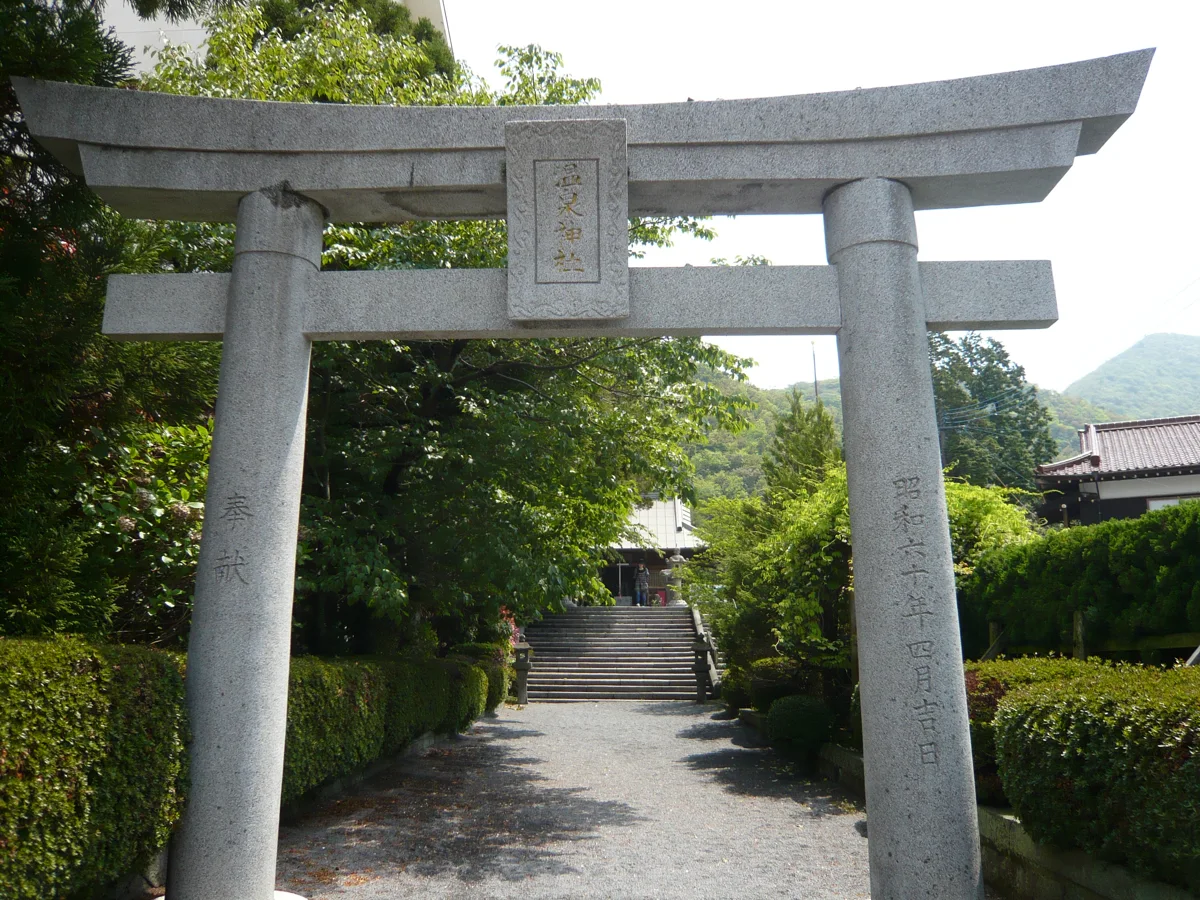
Onsen Shrine near the geothermal fields makes a short stop beside the walk. The tourism bureau places it close to Jigoku at 319 Unzen, Obama-cho, Unzen City. Companions more interested in walking than bathing can stay in this same area. Restaurants in Unzen also serve champon and sara udon. Use the tourism bureau’s restaurant list to choose lunch. Check opening days and map locations, then decide whether to eat after the paths or after bathing.
Day visitors adding cracker baking at 14:00 must allow for the actual session and the walk to the bus stop afterward. About 60 minutes for four participants takes more of the afternoon than about 45 minutes for two. With the example bus leaving Unzen at 16:10, a 16:00 session cannot connect to that return. Choose 14:00 and check availability and reservations for your date, or stay overnight.
Adjust for rain, closures and different interests
In rain, start with wind strength, rainfall and facility notices. The footbath may close in severe weather; foot steaming at Jigoku stops in rain or excessive heat. For a short shower, eat in a restaurant first, then choose an outdoor route according to conditions. If wind and rain affect movement, replace the outdoor footbath with an open indoor bath. Leave the geothermal paths for suitable weather and keep your chosen return bus as the fixed point.
The Unzen Oyama Information Center Annex has exhibits on Unzen’s history and information on hikes and baths. Official hours are 9:00–17:00, closed Thursdays, with free admission. Get off at the “Unzen Oyama no Johokan” stop beside it. Visit before the geothermal walk to understand the terrain and route, or use an indoor pause in rain to plan your next leg. On Thursdays, simply omit this stop; the geothermal fields and hot spring town remain options.
If some companions want a bath and others want a slow walk, split into two groups within Unzen. Bathers can go to the chosen facility, while walkers stay on the geothermal paths and browse shops. Meet at the bus stop or hotel entrance. Do not split between the two hot spring towns and expect to meet naturally an hour later. Obama and Unzen still require a timed bus journey. Separate activities within one area are easier to coordinate.
Basic costs for a two-person day trip
For two adults traveling between Nagasaki Station and Obama, two ¥2,790 digital round-trip tickets total ¥5,580. Sharing one basket for 30 minutes adds ¥200, for ¥5,780. This covers only transport tickets and basket hire; ingredients, meals and other baths cost extra. If you skip the basket and use Jokiya’s communal bath instead, two adult admissions total ¥1,000, making transport plus baths ¥6,580. These calculations use official prices visible in October 2026. Restaurant bills, parking and accommodation are additional. If two people also book the hand-baking activity, budget its ¥3,300 per person separately: ¥6,600 for two, distinct from the public basket fee.
For two people visiting Unzen, two ¥3,420 round-trip tickets total ¥6,840. Add ¥500 per adult at Kojigoku Onsenkan for a total of ¥7,840. The geothermal paths are free. Two hot spring eggs cost ¥200, bringing transport, bathing and eggs to ¥8,040. Use these examples to compare the basic routes. Meals and travel between stops cost extra on a day trip, as do any separate fares created by stopping in Obama before continuing to Unzen.
Frequently asked questions
Can I visit Unzen and Obama in one day? You can fit them around buses, but every stop reduces time in the other town. An overnight stay makes it easier to complete the geothermal walk, use the footbath, cook with steam and visit a full bath. For a day trip, choose one main area first.
Is Obama’s footbath a full hot spring bath? It soaks only your feet and is separate from baths where you change clothes. The footbath is free, baskets cost extra, and Kojigoku Onsenkan charges admission for bathing. The seaside footbath and geothermal paths both suit companions who skip full baths.
Can I take the same express bus directly from Nagasaki Airport? The Prefectural express described here starts at Nagasaki Station. From the airport, the tourism bureau suggests traveling to Isahaya and transferring to a Shimatetsu bus. Choose your departure point before buying tickets, because these routes have different starting points.
Are Unzen Jigoku and Kojigoku Onsenkan in the same place? Both are in the Unzen hot spring area, but one is a geothermal walking site and the other a day bath. Add each landmark separately to your map and allow for the walk or ride between them.
What if I want to add Nita Pass? That requires more mountain transport and visiting time. If this trip centers on Jigoku and the two hot spring towns, keep accommodation, meals and buses in place first. With a full additional time slot, check mountain transport and weather for the day. Avoid making the ropeway a final compulsory stop before dinner.
A few useful answers
How do I get from Nagasaki Station to Obama Onsen and Unzen by bus?
Take the prefectural express bus from the terminal in front of Nagasaki Station. It stops in Obama before continuing to Unzen. Seats are first come, first served, and you pay as you get off with cash or a transit IC card accepted nationwide.
How much are round-trip bus tickets from Nagasaki to Obama or Unzen, and are stopovers allowed?
In October 2026, digital round-trip tickets from Nagasaki Station cost ¥2,790 to Obama and ¥3,420 to Unzen on myroute or STLOCAL. Getting off early ends that leg of the trip, so if you stop in Obama on the way to Unzen, pay separately for the next ride.
How much do the seaside footbath and public steam cookers in Obama cost?
The seaside footbath is free. Next door, a steaming basket costs ¥200 for 30 minutes, with ingredients paid for separately. The footbath is about a five-minute walk from Obama Bus Terminal, and the cookers close half an hour earlier.
Is there an admission fee for Unzen Jigoku, and how long is the walk?
Admission is free, and the loop takes about 30 to 40 minutes. Allow more time for photos or to read the information at the martyrs’ memorial. The trail is open around the clock and has no lighting at night, so go during daylight.
Official information and references
Sources used in this guide.
- Nagasaki Prefectural Bus timetables and fares
- April 2026 timetable
- Obama footbath and steam cookers
- Unzen Jigoku
- Walking through Unzen Jigoku
- Kojigoku Onsenkan opening notice
- Jokiya
- Introduction to Jokiya
- Yusenpei baking experience
- Unzen City bathing facilities
- Unzen Tourism Bureau transport FAQ
- Obama Onsen and steam cooking
- Unzen Oyama Information Center Annex
- Shimatetsu bus stops
- Hand-baking prices per person and group sizes
- Jokiya closures and exclusive bookings in October and early November 2026
- Current Unzen Jigoku facility page and map
- Shimabara Railway system maintenance notice
- Official Unzen City introduction to Obama steam cooking