Separate a Karatsu culture day from a Yobuko harbor day. Explore castle exhibits and Nanatsugama’s geology, compare Kyozan Kiln painting and hand-building by age, time, firing, payment and shipping, then choose a day trip or an overnight stay.
- Region & Focus
- KyushuAttractions
- Reading Scope
- 38 min read · 15 chapters · 4 Q&As
- Official Verification
- 22 official sources checkedUpdated November 22, 2026
- Key Topics
- ItinerariesFoodKyushu
Chapter Route Map (tap any stop)
- Give Karatsu to castles, buildings and pottery, and Yobuko to the market and coast
- Read Karatsu Castle’s plan, then connect it with the town outside
- How to look at Old Karatsu ware before visiting a kiln
- The Former Takatori Residence: a Noh stage and domestic details
- Choose the Former Karatsu Bank or Former Oshima Residence to complete a city day
- Kyozan Kiln painting: decorate a bisque-fired piece without spending the afternoon shaping clay
- Kyozan hand-building: shape and paint a vessel, for ages ten and over
- Kyozan payment, cancellation and shipping: match the price to the payment method
- Nakano Tochi Kiln: connect the station’s red lion with a large climbing kiln
- Yobuko morning market: dried fish, produce and harbor life
- A seated squid set meal: distinguish the dish and restaurant address
- The Nakao residence: add harbor-town architecture beside the market
- Nanatsugama formed in two stages: rock cracked, then waves cut caves
- Cave mouths from the sea, grassland and coast from above: choose a half-day perspective
- One day or one night: decide the booked main activity first
- Quick Q&A
Karatsu and Yobuko each deserve a full day. Choose central Karatsu for castle exhibits, modern architecture and making pottery. Choose Yobuko for the morning market, squid dishes and a sea view of Nanatsugama. With one day, choose one side; stay overnight to add the other.
Give Karatsu to castles, buildings and pottery, and Yobuko to the market and coast
With one day, choose central Karatsu if you like exhibitions, architecture and ceramics. Choose a Yobuko harbor day for the morning market, squid dishes and Nanatsugama sea caves. Each has its own timetable: the market is a morning activity, pottery follows booked sessions, and the Former Takatori and Oshima residences close on Mondays. Decide what you want to spend time on before choosing transport. This is more useful than joining every map pin into a loop.
A city day can start with Karatsu Castle’s exhibits, continue to the Former Takatori Residence and Former Karatsu Bank, then include one pottery activity. If you have two hours and want to make a vessel yourself, make Kyozan Kiln’s hand-building session the main activity and shorten other building visits. For a taste of painting with iron glaze, choose the shorter painting session. These differ in time, age suitability and how the finished work is produced; “pottery experience” does not describe one interchangeable ticket.
A harbor day starts at the morning market. Browsing dried fish and seafood stalls, sitting down to a squid set meal, and viewing cave mouths from the sea are separate activities. Your lunch restaurant may be in Tononoura rather than on the market street. Nanatsugama’s clifftop path has a separate land entrance. To see both sea and land perspectives, make that the afternoon’s focus rather than an extra stop after the boat.
For bus connections from Fukuoka, boat tickets and boarding conditions, continue with the Karatsu and Yobuko transport section in the Fukuoka guide. Fix your main city or harbor activity first, then choose outward and return services that leave time to visit.
Separate a Karatsu culture day from a Yobuko harbor day. Explore castle exhibits and Nanatsugama’s geology, compare Kyozan Kiln painting and hand-building by age, time, firing, payment and shipping, then choose a day trip or an overnight stay.
Read Karatsu Castle’s plan, then connect it with the town outside
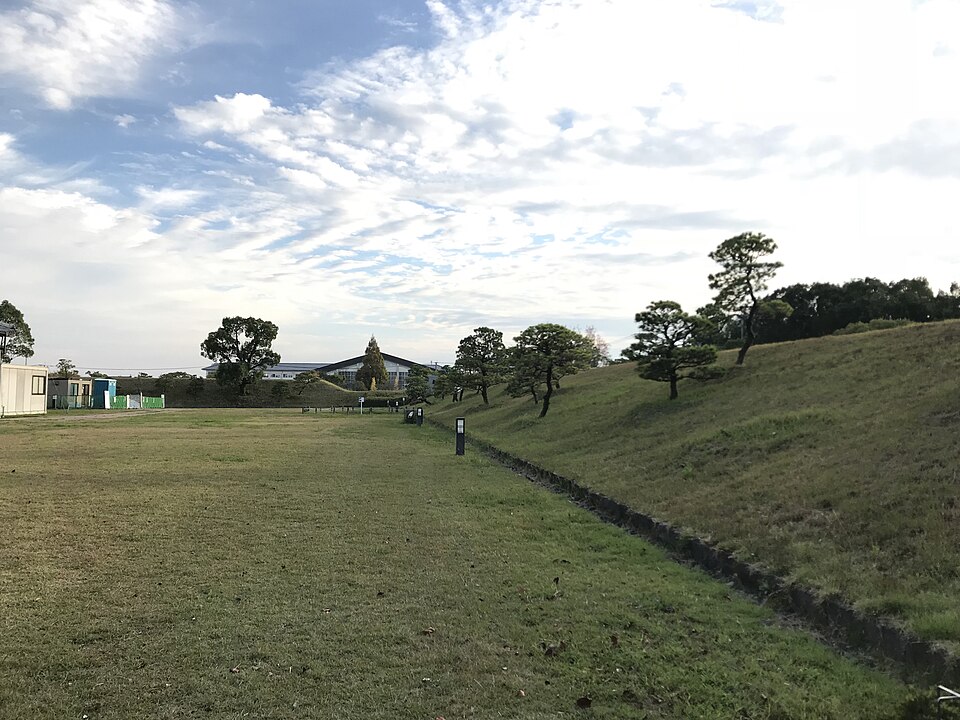
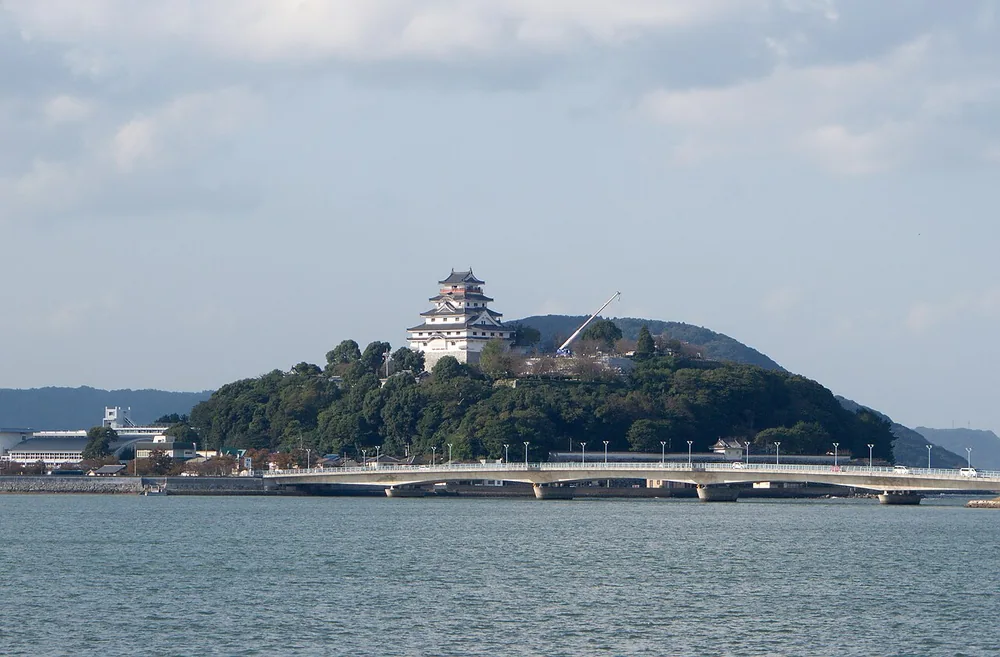
The official castle introduction separates the castle’s construction from the present keep. Construction began in 1602 and took seven years. The keep you see today was built in 1966 as a cultural tourism facility and houses a local history museum. Keep this sequence in mind: the visit can then move beyond an exterior photograph to the relationship between exhibits and castle town.
The permanent exhibition guide describes a detailed castle plan thought to have been drawn for the change of lord in 1762. It records gates, turrets and guardhouses. First see how the castle was divided, then go to the fifth-floor observation level to locate city and waterfront: Karatsu Bay to the north, the castle town to the south, Niji no Matsubara and Mount Kagamiyama to the east, and Nishinohama to the west. The plan explains the earlier layout; the windows show how today’s city spreads along bay and river mouth.
Gold-leaf roof tiles are another useful starting point. The official account describes fragments found in fill behind an old stone wall in the second enclosure south of the keep platform. They raise questions about ties with Hizen Nagoya Castle and the Toyotomi government. Read them as excavated objects, noting the find location and the official interpretation. This shows how a museum reconstructs history from objects more clearly than simply remembering the story that materials from Nagoya Castle were reused.
Read weapons and documents separately. With Hizen Tadayoshi’s naginata, focus on blade shape and later alterations. The red-lacquer armor passed down by the Imai family shows how lacquer, gold maki-e decoration and imported fabric formed warrior equipment. Iemochi’s letter and Hideyoshi’s red-seal document concern authority, provisions and supply management. Craft enthusiasts can spend time on materials; history readers can follow the documents’ functions. The exhibits need not all be treated as the same kind of “antique.”
How to look at Old Karatsu ware before visiting a kiln
The castle exhibition guide calls pottery made from the late 16th to mid-17th century Old Karatsu. Its displays also connect Karatsu ware, townspeople’s culture and industry with local life. Look first at how rim, body and base are formed, then at where glaze and decoration sit. This is a viewing sequence: understand the vessel’s structure before its surface. You need not memorize every technique first.
A bowl raises different questions in a display case and in your hands at a workshop. Exhibitions let you compare finished shapes and colors; hand-building makes you decide wall thickness, opening and where to hold it. If you have a booking that day, study one or two shapes that interest you at the castle and take that question to the workshop. It is easier to engage than to decide what to make only after sitting at the table.
Karatsu ware also belongs in everyday use. The Karatsu Tourism Association’s introduction describes it as earthen-bodied pottery, including tableware and sake vessels as well as tea ceramics. When buying, start with a cup, rice bowl or plate you would use. Decide what food it will hold, then compare pieces. Museum history, workshop making and use at the table can form a complete city theme.
At galleries, identifying surface decoration helps comparisons. The tourism association classifies Karatsu ware by clay, glaze and technique. E-Karatsu uses iron-rich pigment to paint designs before glazing and firing, often plants, flowers and birds. Madara-Karatsu uses an opaque straw-ash glaze; iron from the clay or pine ash from the fuel can produce blue and black spots. Look at brushwork in the former and fired markings in the latter.
Kuro-Karatsu uses an iron-rich glaze whose iron content and oxidation produce colors from amber and brown to deep black. Chosen-Karatsu uses iron and ash glazes that merge naturally at high temperature, often joining black glaze below with milky white glaze above. For an everyday plate, compare how these colors are distributed and imagine where your food would sit.
Mishima and Kohiki use other surface treatments. Mishima involves stamping or incising partly dried clay, then applying slip and glaze. Kohiki covers partly dried brown clay with white slip before adding ash or other glaze. The association specifically notes that Kohiki was introduced to Karatsu in modern times and does not occur in Old Karatsu. With a white surface, read the name and technique rather than dating it by color alone.
These types also help you choose an activity. Kyozan Kiln’s formal sessions produce E-Karatsu; participants decide the vessel’s shape and design. For spots, flowing glaze or Kohiki effects, compare completed pieces. Making your own vessel and choosing a potter’s finished work involve different ways of looking and taking part.
The Former Takatori Residence: a Noh stage and domestic details
The Former Takatori Residence, home of coal entrepreneur Takatori Koreyoshi, is a nationally designated Important Cultural Property. Its Japanese architecture includes a Western-style building and a Noh stage within the residence. Take time to see how spaces served reception, living and cultural activities. The stage is a key to reading the house, beyond being a large object inside it.
Move closer to the cedar-door paintings, cloisonné sliding-door fittings and transoms. The large hall shows the scale of reception; doors and fittings show details encountered while moving through rooms. The managing Karatsu City Cultural Foundation also identifies Western rooms, an earthen storehouse, bathhouse and storage buildings as clues to daily life. Ask which spaces guests saw and how the family lived.
Regular opening is 9:30–17:00, with last admission at 16:30. Admission is JPY 520 for general visitors, JPY 260 for elementary and junior-high students, and free for preschool children. Groups of 20 or more receive a 20% discount. It closes Mondays, or the following day when Monday is a national holiday, and December 29–January 3. See the operating calendar for special holiday openings. The address is 5-40 Kitajonai, Karatsu, about 15 minutes on foot from Karatsu Station.
If you also plan a kiln visit, work backward from the residence’s admission deadline. A two-hour afternoon pottery session fits better after a morning residence visit. To study the house slowly, put the shorter painting activity in another slot. Both require pauses to look. Squeezing them into late afternoon often leaves only a rush to the next entrance.
Choose the Former Karatsu Bank or Former Oshima Residence to complete a city day
The Former Karatsu Bank head office was completed in 1912. Designed by Tanaka Minoru under Tatsuno Kingo’s supervision, it is a Queen Anne-style building and a Saga Prefectural Important Cultural Property. Moving from the Takatori house to the bank changes the subject from a private residence to modern commercial architecture. Both connect with the prosperity of the Karatsu coalfields, but their uses and architectural language differ greatly.
The bank is at 1513-15 Honmachi, about a 10-minute walk from Karatsu Station. Admission is free, opening is 9:00–18:00, and it closes December 29–31. For a Monday city day, it is easier to include than residences with regular Monday closure. It also offers a wider afternoon window before returning to the station. When events are announced, plan around that day’s use of the multipurpose hall.
The Former Oshima Residence returns you to Japanese domestic architecture. Oshima Kotaro’s main house is thought to date from 1893. Look at how residence, garden and details form a complete property. If domestic spaces interest you more than a bank exterior, add it alongside Takatori. If the afternoon is reserved for hand-building, one residence plus the bank usually allows a closer visit.
The Former Oshima Residence is at 4-23 Minamijonai, about 10 minutes on foot from Karatsu Station or five minutes from Karatsu Bus Center. General visits are free, 9:00–17:00. It closes Mondays and December 29–January 3, moving closure to the following day when Monday is a national holiday. The official 7:00–21:00 range is for use arranged by advance application. Individual sightseeing uses the regular visitor hours.
Kyozan Kiln painting: decorate a bisque-fired piece without spending the afternoon shaping clay
Kyozan Kiln’s painting activity uses a bisque-fired vessel and the iron glaze used for Karatsu decoration. The finished work is E-Karatsu. The Japanese official page gives about 30 minutes, with arrivals accepted 9:30–16:00 except 12:00–13:00. This shorter activity leaves more time for historic houses. You decorate the surface; the vessel’s shape is already made.
The vessel determines the fee. The Japanese page lists a small tea cup at JPY 1,650; a large tea cup, rice bowl or roughly 14 cm plate at JPY 2,200 each; and a roughly 16 cm large plate at JPY 2,750, all tax included. A cup or plate also changes how a design sits on curved or flat surfaces. Think of a simple composition, then choose a vessel for the use you want to keep.
Your piece is fired in the wood kiln with the studio’s own work, taking about two to three months to finish. Postage costs extra. You leave the workshop on the day, while the finished piece follows a later firing schedule. To take pottery home during the trip, browse completed work in the attached gallery and handle that purchase separately from your activity piece.
The foreign-visitor page says staff are not fluent in foreign languages. Tell them your visit date and time in advance; bring an interpreter if you need detailed making instructions. A demonstration for a simple drawing and a detailed technical discussion require different language support. Include vessel choice, participant count and language needs in the booking so the workshop can prepare.
Kyozan hand-building: shape and paint a vessel, for ages ten and over
Choose Kyozan’s hand-building session to decide the vessel’s form yourself. Using Karatsu clay and a tabletop wheel, you hear a potter’s explanation, then shape and paint E-Karatsu. The Japanese page gives about 100–120 minutes and JPY 4,400 per person including tax. The tools are for hand-building and tabletop work; the overseas page specifically says electric wheels are unavailable.
Hand-building is for ages ten and over. Elementary-school children must have an adult accompany and assist them. The kiln recommends painting for children under ten. Each participant gets one person’s portion of clay; one portion cannot be split among several people. For two adults and two children, assign activities by the children’s ages, then ask how the workshop can arrange them in one session. This avoids changing a four-person plan into shared materials on arrival.
Hand-building arrivals are accepted 9:30–10:30 in the morning and 13:00–15:00 in the afternoon. These are arrival windows, not a requirement to finish every piece by 15:00. Contact the workshop by phone or email with date, number of people and desired arrival time, then wait for its availability reply. Last-minute requests may not fit. Fix this slot first, then place the castle and buildings around it.
Pieces take about two to three months to finish. Postage is extra; collecting in person avoids it. Bring a hand towel. Do not enter the working wheel area without permission or borrow tools yourself. People too intoxicated to follow instructions or work are refused entry. The kiln may cancel sessions during warnings or other severe weather.
Kyozan payment, cancellation and shipping: match the price to the payment method
The overseas visitor page lists separate credit-card prices: JPY 1,750 for a small tea cup; JPY 2,310 each for a large tea cup, rice bowl or small plate; JPY 2,890 for a large plate; and JPY 4,620 per person for hand-building. Activity and EMS shipping fees can be paid by card. The Japanese page lists cash and bank transfer after invoicing. Budget with the price for your intended payment method rather than combining figures from both pages.
The cancellation policy published September 13, 2026 separates unavoidable reasons such as weather and transport from voluntary cancellation. The former incur no cancellation fee; other cancellations after a firm booking incur a charge. The policy suggests keeping uncertain plans at the inquiry or provisional-hold stage. The studio will try to accommodate changes in party size and arrival time. From the day before onward, contact it by phone at 0955-77-2131.
For delivery, the kiln asks you not to request unattended drop-off. Pieces have no replacements, and shipping damage is handled case by case. Groups wanting a name label on each piece pay an extra JPY 200 per person before tax and must request it at booking; it cannot be added on the day. Agreeing on delivery first also avoids discovering months later that addresses and ways to identify each person’s work remain unsettled.
The kiln website lists the gallery at 4614-1 Kagami, Karatsu, about a 10-minute walk from Nijinomatsubara Station. Gallery hours are 9:30–17:30, with year-end/New Year and irregular closures. The tourism association’s activity listing gives the workshop as 4958 Kagami. Save the meeting place in your booking reply with the date. Go to the gallery to see work, and follow the workshop’s confirmed meeting instructions to make it. The website also lists workshop hours of 9:00–17:00, no workshop-only tours, and no eating or drinking in gallery or workshop. Allow separate time for viewing, booked making and lunch.
Nakano Tochi Kiln: connect the station’s red lion with a large climbing kiln
If kiln construction and large ceramic works interest you, arrange a visit to Nakano Tochi Kiln. Its official introduction says Matsushima Yagoro built the connected-chamber climbing kiln in the late-Edo Ansei era. It was made large to fire life-size or larger human figures, with two fire openings in its lower firing chamber. Focus on its scale and how fire enters for more than a pottery-shop visit.
The red lion ceramic sculpture in the plaza outside Karatsu Station’s north exit provides a related finished object. The kiln describes it as about 3.5 m high and 2.1 metric tons, taking a year to make. As it could not fit in the kiln whole, head, body and wheeled base were made separately. The station shows the result; the kiln explains how large ceramics must be divided and fired. This pair also suits visitors who do not want to make pottery themselves.
The making page offers hand-building and wheel throwing for two to six people, up to two hours, with one to three pieces within that time. There is only one wheel, used in turn. Staff later trim and glaze the work; choices are black, white Kohiki or plain gray. Hand-building costs JPY 4,400 and wheel throwing JPY 6,600, plus postage. Overseas delivery adds a JPY 5,000 handling fee. This differs from shaping and then painting your own piece at Kyozan.
If the climbing kiln is your main interest, contact the kiln for a viewing visit. Staff may be away, so advance contact is needed. For shaping and painting, choose Kyozan hand-building. For the kiln structure and its connection with the red lion, include Nakano’s viewing visit in your city day. Choose one main activity, then add castle exhibits or a historic house.
Yobuko morning market: dried fish, produce and harbor life
The tourism association’s market listing includes seafood, dried fish, vegetables, fruit, pickles, fresh flowers, sweets and pottery. On the market street in the morning, look beyond “live squid” signs. Identify fresh fish for the day, processed dried fish and local farm produce to see how harbor and surrounding farmland share one market street.
For a named example, see Himono Yamamoto. The shop lists horse mackerel and barracuda almost year-round, with sardines, mackerel and Spanish mackerel depending on season. Products include overnight-dried squid, sakura-boshi horse mackerel, salt-dried barracuda, whole salt-dried flying fish and salted wakame. Even dried fish varies by species and seasoning. These product names give you a starting point when asking about gifts.
Overnight-dried squid and restaurant live-squid sashimi require different meal plans. The shop recommends lightly grilling its overnight-dried squid. If you will take a boat and return to Fukuoka that day, decide whether to buy food needing later preparation or use the market for browsing and small purchases. Match quantities to your accommodation, meals and later travel, rather than buying a bag at every stall and carrying them all day.
The market usually runs 7:30–12:00 and closes on New Year’s Day; individual stalls open at different times. Himono Yamamoto lists the same market hours and main-shop hours of 8:00–17:00 at 2387-9 Yobuko, Yobukocho. Identify a particular shop by name and street number. A morning stall and an all-day main shop offer different visiting windows.
A seated squid set meal: distinguish the dish and restaurant address
Kaisenmon Ikataro lists a live-squid sashimi set at JPY 3,850, including squid sashimi, a side dish, rice, miso soup and shumai. Use this to understand lunch as a complete meal: starch, sides and squid are in one set. Decide whether that is what you want or whether a small market purchase is enough.
The restaurant also lists a JPY 1,790 fried-prawn set with prawns, chawanmushi, a side dish, rice and miso soup. Companions who avoid raw food can choose this named cooked option rather than all sharing the live-squid choice. The official site says dishes vary with supplies. Ask what is available that day, then fit lunch around your sailing.
The restaurant is at 1946-2 Tononoura, Yobukocho, normally open 11:30–18:00 with irregular closures. It has parking and seating including tatami rooms. This is a different address from the market street. Without a car, include travel away from the harbor, to the restaurant and onward after lunch; do more than compare menu prices. If the market and boat are your priorities, choose a lunch location that fits them.
The Nakao residence: add harbor-town architecture beside the market
Yobuko also has a public building where you can pause to study local industry. The Former Nakao Residence of the Whaling Group Leader is a Saga Prefectural Important Cultural Property. Eight generations of the Nakao family ran whaling operations from Yobuko for about 170 years, from the Edo period to early Meiji. The tourism association notes that the building appears in the Edo whaling picture Ogawajima Whaling Battle, preserving the appearance of a town house of that time.
Connect house, industry records and harbor location. Today you walk through a district of market stalls and squid restaurants; the exhibits concern a maritime industry of another era. Compare the building with its image in the historical picture. Looking at how the house is depicted, then returning to the structure before you, gives more substance than a brief account of wealth from whaling.
The Saga Prefecture official listing places it about two minutes on foot from the market street, at 3750-3 Yobuko, Yobukocho, and about five minutes from Yobuko bus stop. Opening is 8:45–17:00, last admission 16:30. Admission is JPY 210 for general visitors, JPY 100 for elementary and junior-high students, and free for preschool children. Groups of 20 or more receive a 20% discount. It closes Wednesdays, or the following day when Wednesday is a national holiday, and December 29–January 3.
If you also visit the Former Takatori Residence, compare how homes connect with livelihoods: coal mining for Takatori, whaling and Yobuko harbor for Nakao. Both give local industry a physical house, in city and port-town settings. With one harbor day, visit Nakao instead of a second market walk. To study both residences closely and add the castle and pottery, split them over two days.
Nanatsugama formed in two stages: rock cracked, then waves cut caves
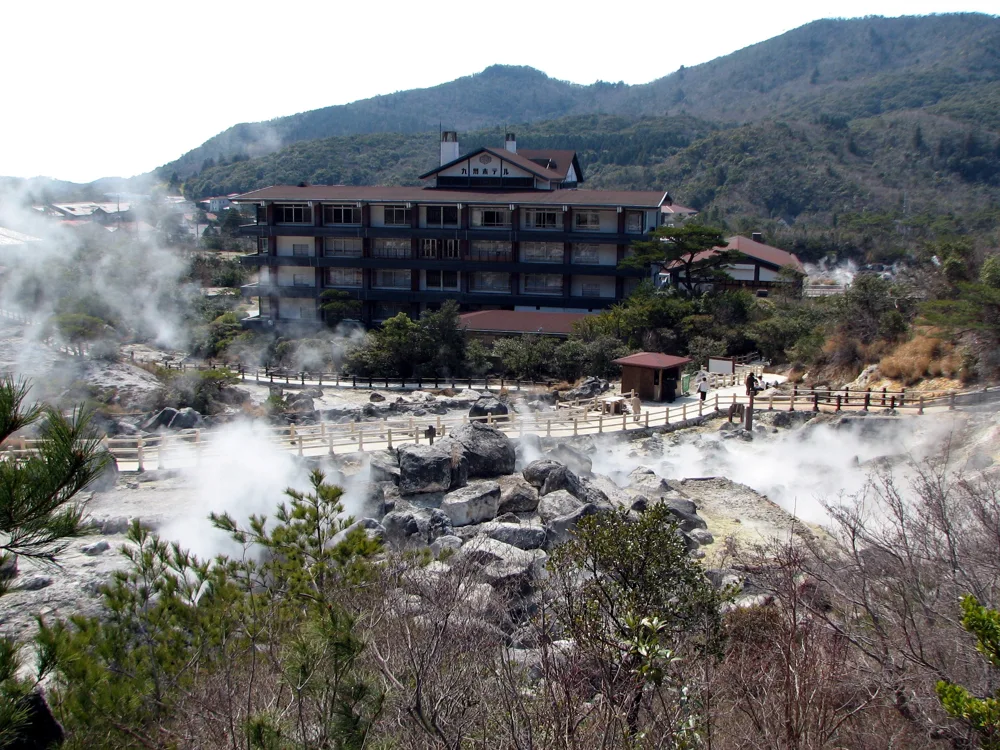
The Saga Prefecture guide separates columnar joints from sea caves. Lava contracted as it cooled and solidified, leaving regular column-shaped cracks. Waves from the Genkai Sea then eroded the basalt into a row of caves. First find the columns in the cliff, then see where the cave mouths cut into it. This reveals two processes beyond counting seven dark openings.
The Agency for Cultural Affairs record for Yakataishi no Nanatsugama describes smaller upper columns that may lean or lie sideways, and larger, regularly upright columns below. Part of the southernmost cave passes through as a stone arch. Look for these details from the sea. Changes in column direction and walls left between caves give different forms to the same coast.
Nanatsugama became a Natural Monument in 1925. The agency separately records Karatsu City becoming its managing body in 1926; these dates refer to different events. Focus on the rock before you. Official information gives the largest opening as about three meters wide and the cave as 110 meters deep. From outside, you see the entrance and part of the interior; use the depth to understand scale. Continued wave erosion along cracks connects columnar rock and caves.
Reduce your questions to two: how are the columns arranged, and where do waves cut into the rock? The first draws attention to the rock’s structure; the second returns your eyes to the sea. These observations distinguish Nanatsugama from an ordinary coastal cliff without memorizing geological ages. With children, finding straight and tilted columns is easier than remembering a string of terms.
Cave mouths from the sea, grassland and coast from above: choose a half-day perspective
MarinePal’s Ikamaru offers a Nanatsugama viewing and Yobuko cruise of about 40 minutes. From the boat, you face the cliffs and see cave mouths, columnar rock and sea together. This is a more direct view of cave fronts than the clifftop. Entry into a cave depends on that day’s waves and the operator’s judgment.
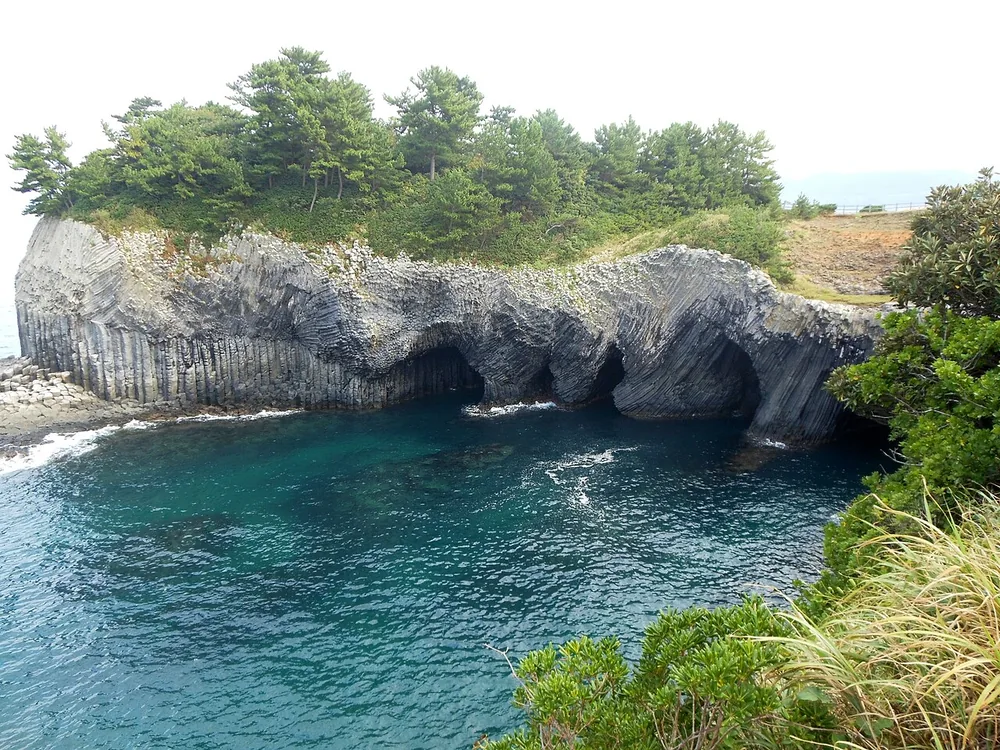
By land, Nanatsugama offers grassland above the caves, a viewing platform and walking paths. Saga’s official information lists about 50 free parking spaces and toilets. From the Nanatsugama Iriguchi bus stop, it is still about a 30-minute walk. This entrance and Yobuko pier are separate starting points. The half-hour walk is one way from stop to site; reserve time to walk back too.
Without a car, the market, lunch and sea viewing generally form a full harbor day. If the clifftop is your priority, give the main afternoon block to Nanatsugama by land and reduce other stops. Driving makes both perspectives easier, but check the day’s sailings before deciding the order. When rough seas stop boats, the landform remains, yet outdoor walking also needs to fit that day’s weather.
Use the operator’s footage to see the distance between Nanatsugama’s cave mouths and the sea, then decide between sea viewing and the clifftop path.
One day or one night: decide the booked main activity first
For a city culture day, reserve the morning for Karatsu Castle and one residence, have lunch, then make a booked painting or hand-building session the afternoon’s main activity. Add the Former Karatsu Bank if time permits. With nearly two hours of hand-building, omit one house. A painting session leaves longer inside the buildings. On Mondays, put Takatori and Oshima closures into the calendar first and build the day from castle, bank and booked activity.
A harbor day starts with the market, then a seated lunch and Nanatsugama by sea. If the clifftop path matters most, let it replace some harbor activities. Give each stop a clear task: identify dried fish at the market, choose a suitable restaurant set, and identify columns and cave mouths at Nanatsugama. After an afternoon spent reaching Nanatsugama by land, save Karatsu Castle for another day.
An overnight stay lets you separate these two kinds of day. Visit the castle and bank one afternoon, then Yobuko’s market next morning; or focus on pottery and residences on day one and the coast on day two. Choose accommodation to serve the next morning’s first activity. For a Kyozan booking, settle the route to the meeting point first. For a market-led day, prioritize early arrival at the harbor.
A few useful answers
Should I spend my day in Karatsu or Yobuko?
Pick central Karatsu for Karatsu Castle, historic buildings, or a pottery workshop. Pick Yobuko for the morning market, squid dishes, and a cruise past the Nanatsugama sea caves. Stay overnight if you want a day in each.
Which Kyozan Kiln workshop is best for kids, pottery painting or hand-building?
Kyozan Kiln recommends pottery painting for kids under 10. It takes about 30 minutes and uses pottery that’s already been fired once. Hand-building and painting takes 100–120 minutes, is open to ages 10 and up, and requires an adult to help elementary school children.
What time does Yobuko Morning Market open, and is it open on New Year’s Day?
Yobuko Morning Market usually runs from 7:30 am to noon, with opening times varying by stall, and closes on New Year’s Day. You’ll find fresh and dried fish, produce, and pickles along Asaichi-dori.
What can I see at Nanatsugama by boat or on foot?
The Ika Maru cruise takes about 40 minutes and gives you a sea-level view of the cave mouths and rock columns. The crew decides whether to enter a cave based on the waves. The clifftop grassland, lookout, and trails are about a 30-minute walk from the Nanatsugama Iriguchi bus stop.
Official information and references
Sources used in this guide.
- Karatsu Castle interior and permanent exhibition guide
- About Karatsu Castle
- Former Takatori Residence
- Former Takatori Residence FAQ
- Former Karatsu Bank head office
- Former Oshima Residence
- Pottery activities
- For customers from overseas
- Activity booking cancellation policy
- Kiln information and access
- Making pottery
- Viewing the kiln
- Yobuko morning market
- Product guide
- Recommended menu and restaurant information
- Yakataishi no Nanatsugama
- Nanatsugama
- Nanatsugama sightseeing boat Ikamaru
- Former Nakao Residence of the Whaling Group Leader
- Former Nakao Residence of the Whaling Group Leader
- Six types of Karatsu ware
- Karatsu Tourism Association | Kyozan Kiln pottery activity