Separate a Karatsu culture day from a Yobuko harbour day. Explore castle displays and Nanatsugama's geology, compare Kyozan Kiln's painting and hand-building by age, time, firing, payment and delivery, then choose a day trip or overnight stay around the market and lunch.
- Region & Focus
- KyushuAttractions
- Reading Scope
- 38 min read · 15 chapters · 4 Q&As
- Official Verification
- 22 official sources checkedUpdated 22 November 2026
- Key Topics
- ItinerariesFoodKyushu
Chapter Route Map (tap any stop)
- Karatsu for castles, buildings and ceramics; Yobuko for market and coast
- Read the castle plan, then connect it with the town outside
- Recognise Old Karatsu ware before visiting a kiln
- Former Takatori Residence: the Noh stage and domestic details
- Former Karatsu Bank and Former Oshima Residence: choose a city-day addition
- Kyozan Kiln painting: decorate a fired vessel in a shorter session
- Kyozan Kiln hand-building: shape and paint, for ages ten and above
- Kyozan payment, cancellation and delivery: use the applicable price list
- Nakano Tochi Kiln: connect the station's red lion with the climbing kiln
- Yobuko morning market: dried fish, produce and harbour life
- A seated squid set meal: distinguish the menu from the location
- Nakao Residence: harbour-town architecture beside the market
- Nanatsugama formed in two stages: cracks first, caves later
- Cave mouths from the sea, grassland from the clifftop: choose your view
- One day or one night: fix the booked main activity first
- Quick Q&A
Karatsu and Yobuko each deserve a full day. Choose central Karatsu for castle exhibitions, modern architecture and making pottery. Choose Yobuko for the morning market, squid and a sea view of Nanatsugama. With one day, pick one. Stay overnight to give the other its own day.
Karatsu for castles, buildings and ceramics; Yobuko for market and coast
With one day, choose central Karatsu if you enjoy exhibitions, architecture and ceramics. Choose a Yobuko harbour day for the morning market, squid dishes and Nanatsugama sea caves. Each has its own schedule: the market is a morning activity, pottery follows booking times, and the former Takatori and Oshima residences close on Mondays. Decide what you want to spend time on before choosing transport, rather than joining every map pin into a circuit.
Start a city day with Karatsu Castle's displays, continue to the Former Takatori Residence and Former Karatsu Bank, then choose one pottery activity. If you have two hours to make a vessel yourself, make hand-building at Kyozan Kiln the main activity and shorten the building visits. For a simple iron-glaze drawing, choose the shorter painting session. These options differ in duration, suitable ages and how the finished work is produced. They are separate activities with different conditions.
A harbour day starts with the morning market. Dried-fish and seafood stalls, a seated squid set meal and a sea view of the cave entrances are distinct activities. Your lunch restaurant may be in Tononoura rather than on the market street. The Nanatsugama clifftop path has a separate land entrance. If you want both sea-level and land views, make them the afternoon's focus rather than adding the path as a quick stop after the boat.
For buses and connections from Fukuoka, boat tickets and boarding conditions, continue with the Karatsu and Yobuko transport section of the Fukuoka guide. Fix the city or harbour day's main activity first, then choose outward and return services that leave time to visit.
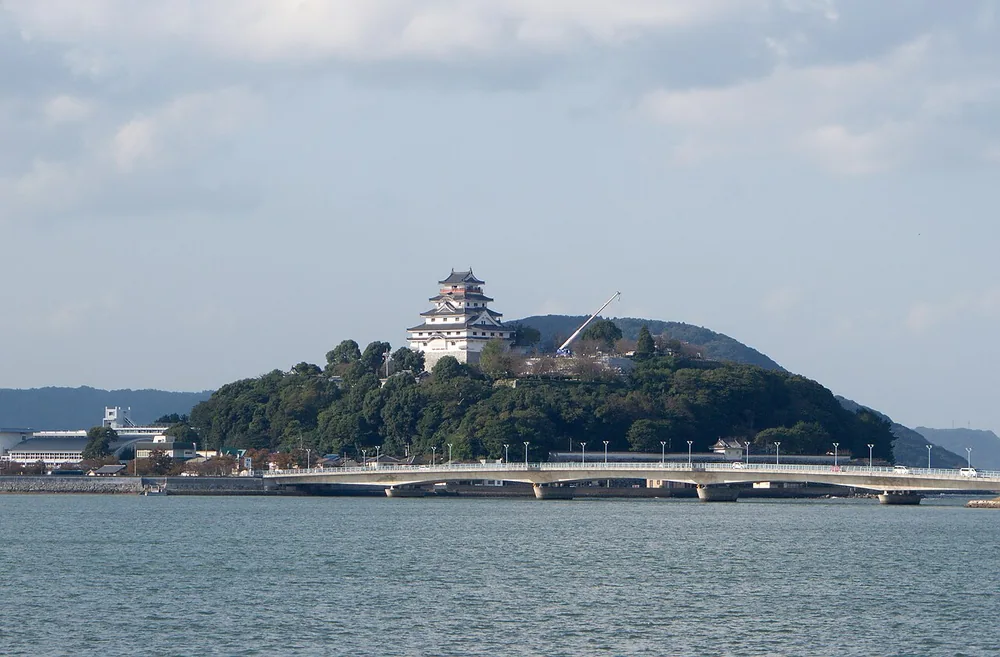
Separate a Karatsu culture day from a Yobuko harbour day. Explore castle displays and Nanatsugama's geology, compare Kyozan Kiln's painting and hand-building by age, time, firing, payment and delivery, then choose a day trip or overnight stay around the market and lunch.
Read the castle plan, then connect it with the town outside
The official Karatsu Castle introduction distinguishes the original construction from the present keep. Work on the castle began in 1602 and took seven years. The keep visible today was built in 1966 as a cultural and tourism facility, with a local history museum inside. Keeping this sequence in mind shifts the visit from an exterior photograph to understanding the relationship between the displays and castle town.
The official permanent-exhibition guide introduces a detailed castle plan thought to have been drawn for a change of lord in 1762, showing gates, turrets and guard posts. First identify the castle's divisions, then use the fifth-floor observation level to locate the city and waterfront: Karatsu Bay to the north, the castle town south, Niji-no-Matsubara and Kagamiyama east, and Nishinohama west. The plan explains the old layout; the windows show how today's city extends along the bay and river mouth.
Gold-leaf roof tiles offer another starting point. The official explanation describes fragments excavated from fill behind an old stone wall in the second enclosure south of the keep platform. These prompt questions about connections with Hizen Nagoya Castle and the Toyotomi government. Treat them as excavated objects: look at where they were found and the inference proposed by the museum. This reveals more about reconstructing history from objects than simply remembering the story of materials reused from Nagoya Castle.
View weapons and documents separately. With Hizen Tadayoshi's naginata, focus on blade form and later alterations. The Imai family's red-lacquer armour shows how lacquer, gold maki-e and imported textiles formed a warrior's equipment. Iemochi's letter and Hideyoshi's red-seal document concern authority, provisions and material management. Spend time on materials if you enjoy craft, or on the documents' purposes if history interests you. The exhibits reward different ways of looking.
Recognise Old Karatsu ware before visiting a kiln
Karatsu Castle's guide uses Old Karatsu for wares made from the late sixteenth to mid-seventeenth centuries. Its pottery, townspeople's culture and industry displays connect ceramics with local life. Start by looking at how a rim, body and base were formed, then where glaze and decoration sit. This gives a viewing sequence: structure first, surface second, without having to memorise every technique.
The same bowl raises different questions in a display case and in your hands at a workshop. In an exhibition, compare finished shapes and colours. When hand-building, you decide the wall thickness, opening and where the vessel is held. If you have booked a session, choose one or two forms in the castle that interest you and take those questions to the workshop. It is easier to engage than deciding what to make only when you sit down.
Karatsu ware also belongs on the everyday table. The Karatsu Tourism Association's pottery introduction describes it as earthenware, with everyday and sake vessels as well as tea wares. When buying, start with a cup, rice bowl or plate you will use. Think about what it will hold, then compare pieces. Museum history, workshop making and use at the table can form one connected city theme.
Recognising surface decoration helps when browsing galleries. The tourism association classifies Karatsu ware by clay, glaze and technique. E-garatsu is painted with iron-bearing pigment, then glazed and fired, often with plants, flowers and birds. Madara-garatsu uses an opaque straw-ash glaze. Iron from the clay or pine ash from the fuel can produce blue and black spots. Look for brushwork in the former and fired mottling in the latter.
Kuro-garatsu uses an iron-rich glaze, ranging from caramel and brown to deep black according to iron content and oxidation. Chosen-garatsu uses iron and ash glazes that merge naturally at high temperature, often joining a black lower glaze with a milky white upper glaze. For an everyday plate, compare the distribution of colour and imagine where the food will sit.
Mishima and kohiki use other surface treatments. Mishima is stamped or incised into partly dried clay before slip and glaze are applied. Kohiki covers partly dried brown clay in white slip, followed by an ash glaze or another glaze. The association specifically notes that kohiki entered Karatsu in modern times and does not occur in Old Karatsu. Read the name and technique before dating a white surface by colour alone.
These types also help you choose an activity. Kyozan Kiln specifies E-garatsu as the finished style of its practical sessions; participants choose the vessel shape and design. For mottling, flowing glazes or kohiki effects, compare completed pieces. Making your own vessel and choosing a potter's finished work offer different ways to participate.
Former Takatori Residence: the Noh stage and domestic details
The Former Takatori Residence was the home of coal entrepreneur Koreyoshi Takatori and is a nationally designated Important Cultural Property. Its Japanese architecture includes Western-style rooms and an indoor Noh stage. Take time to see how the spaces served reception, home life and the arts. The stage is a key to understanding the house.
Move closer to examine the cedar-door paintings, cloisonné sliding-door fittings and transoms. The great hall reveals the scale of hospitality; doors and fittings show details encountered while walking through and opening rooms. The Karatsu City Cultural Foundation's explanation also points to Western-style rooms, earthen storehouses, bathing rooms and warehouses as clues to life at the time. Ask which spaces guests saw and how the family lived.
Normal opening is 9:30–17:00, with last admission at 16:30. Standard admission is ¥520, primary and lower secondary school pupils ¥260, and preschool children free. Groups of 20 or more receive a 20% discount. It closes on Mondays, or the following day when Monday is a public holiday, and from 29 December to 3 January. Consult the operating calendar for special opening during consecutive holidays. The address is 5-40 Kitajonai, Karatsu, about 15 minutes on foot from Karatsu Station.
If you are also visiting a kiln, work backwards from the residence's last admission. Put the house in the morning if a two-hour pottery session fills your afternoon. If you want a close look at the residence, choose a shorter painting session in another time slot. Both need time to stop and look; squeezing them into late afternoon can reduce the visit to rushing between entrances.
Former Karatsu Bank and Former Oshima Residence: choose a city-day addition
The Former Karatsu Bank head office was completed in 1912, designed by Minoru Tanaka under the supervision of his teacher Kingo Tatsuno. The Queen Anne-style building is a Saga Prefecture Important Cultural Property. Moving from Takatori's home to the bank shifts from a private residence to modern commercial architecture. Both relate to the prosperity of the Karatsu coalfield, but their functions and appearance differ considerably.
The bank is at 1513-15 Honmachi, about ten minutes on foot from Karatsu Station. Admission is free, opening is 9:00–18:00, and it closes from 29 to 31 December. On a Monday city visit, it is easier to include than residences with fixed Monday closures. Its longer afternoon hours also suit a stop before returning to the station. Where events are announced, plan around that day's use of the multipurpose hall.
The Former Oshima Residence returns to Japanese domestic architecture. Kotaro Oshima's main house is thought to have been completed in 1893. Look at how the house, garden and architectural details form a residential compound. Add it to Takatori if domestic spaces interest you more than the bank's exterior. If the whole afternoon is reserved for hand-building, one residence plus the bank usually allows a closer visit.
The Former Oshima Residence is at 4-23 Minamijonai, about ten minutes on foot from Karatsu Station or five minutes from Karatsu Bus Centre. General visits are free, from 9:00 to 17:00. It closes on Mondays and from 29 December to 3 January; if Monday is a public holiday, it closes the next day. The official 7:00–21:00 hours apply to use arranged through an advance application. Casual visitors should use the general visiting hours.
Kyozan Kiln painting: decorate a fired vessel in a shorter session
The painting experience at Kyozan Kiln starts with a bisque-fired vessel. You draw with the iron glaze used in Karatsu decoration, producing E-garatsu ware. The Japanese official page gives a duration of about 30 minutes and arrival hours of 9:30–16:00, excluding 12:00–13:00. It is the shorter option if you want more time in the historic residences. You decorate a surface; the vessel's shape is already made.
The vessel determines the price. The Japanese page lists a small tea cup at ¥1,650; a large tea cup, rice bowl or roughly 14 cm plate at ¥2,200 each; and a large plate of about 16 cm at ¥2,750, all including tax. A cup and plate differ in more than cost: the design sits on a curved or flat surface. Think of a simple composition and choose a vessel for the use you want.
Your work is fired in the wood kiln alongside the studio's pieces. Completion takes about two to three months, with postage charged separately. You leave the workshop that day, while the finished piece follows a later firing schedule. To take pottery home during the trip, browse the adjoining gallery for completed work and handle that purchase separately from your activity piece.
Kyozan's overseas visitor page says staff have limited foreign-language ability. Give your visit date and time ahead; it recommends bringing an interpreter if you need detailed production explanations. Watching a demonstration and drawing a simple pattern requires different language support from a detailed discussion of technique. Include your vessel choice, participant numbers and language needs in the booking enquiry so the workshop can prepare.
Kyozan Kiln hand-building: shape and paint, for ages ten and above
Choose hand-building at Kyozan Kiln to determine the vessel's shape yourself. Using Karatsu clay and a tabletop wheel, you hear the potter's explanation, then make and paint the piece, finished as E-garatsu. The session takes about 100–120 minutes. The Japanese page lists ¥4,400 per person including tax. This is hand-building with tabletop tools; the overseas page explicitly excludes use of an electric wheel.
Hand-building is for ages ten and above. Primary school children need an adult to accompany and help them. The kiln recommends painting for children under ten. Each person receives an individual clay allocation, which cannot be split among several participants. For two adults and two children, choose the activities by the children's ages first, then ask how the workshop can arrange them in the same slot. This avoids arriving with four people's plans based on sharing one clay pack.
Accepted arrival windows for hand-building are 9:30–10:30 in the morning and 13:00–15:00 in the afternoon. These are arrival windows, so 15:00 is not a deadline for finishing every piece. Enquire by telephone or email with your date, numbers and desired arrival time; the workshop will confirm availability. Enquiries close to the visit date may not secure a space. Fix this session first, then fit the castle and buildings around it.
Pieces take about two to three months to finish. Postage is extra; collecting in person incurs no postage. Bring a hand towel. Do not enter the wheel-working area or borrow tools without permission. Anyone too affected by alcohol to follow explanations or work will be refused entry. The kiln may cancel activities during severe weather, including weather warnings.
Kyozan payment, cancellation and delivery: use the applicable price list
The Kyozan overseas visitor page has a separate credit-card price list: ¥1,750 for a small tea cup; ¥2,310 for a large tea cup, rice bowl or small plate; ¥2,890 for a large plate; and ¥4,620 per person for hand-building. Activity and EMS postage fees can be paid by card. The Japanese page lists cash and bank transfer following an invoice. Budget using the prices for your intended payment method, rather than mixing the two lists.
The cancellation policy published on 13 September 2026 separates unavoidable causes such as weather and transport from voluntary cancellations. Unavoidable cancellations incur no fee; cancellations for other reasons after a confirmed booking are charged. The policy suggests keeping changeable plans at enquiry or provisional-hold stage. The studio will try to accommodate changes in numbers and arrival time. From the day before your visit onwards, contact it by telephone on 0955-77-2131.
For delivery, the kiln asks you not to request unattended drop-off. The works are irreplaceable, and transit damage is handled case by case. Groups wanting each piece labelled with a name pay an additional ¥200 per person before tax and must request it when booking; it cannot be added on the day. Decide the delivery arrangement together so addresses and identification of each piece are organised before they are ready months later.
The Kyozan website lists the gallery at 4614-1 Kagami, Karatsu, about ten minutes on foot from Niji-no-Matsubara Station. Gallery hours are 9:30–17:30, with year-end/New Year and irregular closures. The tourism association's activity information lists the workshop separately at 4958 Kagami. Save the confirmed meeting place with your booking date. For finished work, go to the gallery; for making in the work area, follow the workshop's meeting instructions. The website also lists workshop hours of 9:00–17:00. Standalone workshop viewing is unavailable, and eating and drinking are prohibited in both workshop and gallery. Allow separate time for browsing, booked making and lunch.
Nakano Tochi Kiln: connect the station's red lion with the climbing kiln
If kiln construction and large ceramic works interest you, arrange a visit to Nakano Tochi Kiln with the studio. Its official account says Matsushima Yagoro built this multi-chamber climbing kiln during the Ansei era in the late Edo period. It was made large enough to fire life-size or larger figures, with two firing mouths in the dogi-ma chamber. Focus on the kiln's scale and how fire enters it.
The red ceramic lion in the square outside Karatsu Station's north exit is a related work you can see. The kiln describes it as about 3.5 m high and weighing 2.1 tonnes, with a year spent making it. Because the whole piece would not fit in the kiln, the head, body and wheeled platform were made separately. The public work shows the result; the kiln explains how large ceramics must be divided and fired. This pairing also suits visitors who do not want to make pottery themselves.
The Nakano making page also offers hand-building and wheel throwing for two to six people, lasting up to two hours. Participants can make one to three pieces within the session, sharing a single wheel in turns. Staff do the later trimming and glazing, with plain black, white kohiki or grey finishes available. Hand-building costs ¥4,400 and wheel throwing ¥6,600, plus postage. Overseas delivery has an additional ¥5,000 handling fee. This differs from making and then painting your own work at Kyozan.
If viewing the climbing kiln is your priority, contact the studio specifically for a viewing visit. Staff may be away, so the official advice is to contact them first. Choose Kyozan hand-building for shaping and painting your own piece; choose a Nakano visit for the large kiln's structure and its connection with the red lion. Make one the main activity and arrange castle displays or a residence around it.
Yobuko morning market: dried fish, produce and harbour life
The tourism association's morning market listing includes seafood, dried fish, vegetables, fruit, pickles, flowers, sweets and pottery. On the market street in the morning, look beyond live-squid signs. Identify fresh fish for today's use, processed dried fish and local farm produce to see how the harbour and surrounding farmland share the street.
For a named example, look at Himono Yamamoto. It lists horse mackerel and barracuda almost year-round, with sardine, mackerel and Spanish mackerel varying by season. Products include overnight-dried squid, sakura-boshi horse mackerel, salt-dried barracuda, whole salt-dried flying fish and salted wakame. Even within dried fish, species and preparation differ. Use these product names when asking about gifts.
Overnight-dried squid and a restaurant's freshly prepared live-squid sashimi call for different food plans. The shop recommends lightly grilling the dried squid. If you still have a boat trip and a return to Fukuoka ahead, decide whether to buy food that needs preparation later or use the market mainly for looking and a small purchase. Match quantities to your accommodation, meals and onward travel rather than carrying a bag from every stall all day.
The market normally runs from 7:30 to 12:00 and closes on New Year's Day; individual stall times vary. Himono Yamamoto gives the same market hours, with its main shop open 8:00–17:00 at 2387-9 Yobuko, Yobuko-cho. Use the name and address to find a specific business. A morning stall and a main shop open throughout the day offer different visiting windows.
A seated squid set meal: distinguish the menu from the location
Kaisenmon Ikataro lists its live-squid sashimi set at ¥3,850, with squid sashimi, a side dish, rice, miso soup and shumai. Use this to judge the shape of lunch: rice, sides and squid are already combined. Decide whether you want a complete set meal or just a small market purchase.
The same restaurant lists a ¥1,790 fried-prawn set with fried prawns, steamed egg custard, a side dish, rice and miso soup. Companions who do not eat raw food can choose this named cooked meal instead of everyone sharing the live-squid option. The official site says ingredients can change with supplies. Ask what is available on the day, then fit lunch around the boat departure.
The restaurant is at 1946-2 Tononoura, Yobuko-cho, normally open 11:30–18:00 with irregular closures, parking and seating including tatami rooms. This is a different address from the morning market street. Without a car, include leaving the harbour, reaching the restaurant and returning to the next stop in lunch time. Compare location as well as menu prices. If market and boat are the priorities, choose lunch within a workable range of both.
Nakao Residence: harbour-town architecture beside the market
Yobuko also has a public historic building where you can explore local industry. The Nakao Residence of the whaling organisation's head is a Saga Prefecture Important Cultural Property. Based in Yobuko, eight generations of the Nakao family operated whaling for about 170 years from the Edo period to early Meiji. The tourism association notes that the house appears in the Edo whaling image Ogawajima Geigei Kassen and retains the form of a town house of that period.
Connect the house, industry records and harbour location. Today's walk takes you through a morning market and squid restaurant district; the displays concern the maritime industry of another age. Compare the building with its image in the historical painting. Looking at how the house is drawn and then at the structure in front of you gives more substance than a brief account of wealth made from whaling.
The official Saga guide places the residence about two minutes on foot from the market street, at 3750-3 Yobuko, Yobuko-cho, and about five minutes from Yobuko Bus Stop. Opening is 8:45–17:00, with last admission at 16:30. Standard admission is ¥210, primary and lower secondary school pupils ¥100, and preschool children free; groups of 20 or more receive a 20% discount. It closes on Wednesdays, or the following day if Wednesday is a public holiday, and from 29 December to 3 January.
If you also visit the Former Takatori Residence, compare how each house connects with its owners' livelihood: coal for Takatori, whaling and Yobuko harbour for Nakao. Both place local industry in a physical home, one in the city and one in the port town. With just a harbour day, use Nakao Residence instead of a second market stroll. A close visit to both houses plus castle and pottery fits better across two days.
Nanatsugama formed in two stages: cracks first, caves later
The official Saga explanation of Nanatsugama separates columnar jointing from sea caves. Lava contracted as it cooled and hardened, leaving regular column-shaped fractures. Waves from the Genkai Sea then eroded the basalt into a row of caves. Look for the columns on the cliff first, then where the cave mouths cut into them. This shows both processes instead of simply counting seven dark openings.
The Agency for Cultural Affairs record for Yakataishi Nanatsugama describes smaller columns higher up, sometimes tilted or horizontal, and larger, regularly upright columns below. At the southernmost cave, part of the rock is pierced through to form an arch. Look for these details from the sea: changes in column direction and the rock remaining between caves give the coast its varied forms.
Nanatsugama was designated a Natural Monument in 1925. The agency separately records Karatsu City becoming the managing body in 1926; the dates serve different purposes. Focus on the visible rock. The official maximum cave dimensions are roughly 3 m across at the entrance and 110 m deep, but the outside view shows the mouth and part of the interior. Use the depth to understand scale. Continuing wave erosion along fractures connects the columnar cliff with its caves.
Reduce the observation to two questions: how are the columns arranged, and where do waves cut into the rock? The first draws attention to the rock's structure, the second to the sea. These points explain how Nanatsugama differs from an ordinary coastal cliff without memorising geological ages. With children, finding upright and slanting columns is easier than learning a string of technical terms.
Cave mouths from the sea, grassland from the clifftop: choose your view
MarinePal's Ikamaru combines sea views of Nanatsugama with a Yobuko cruise, taking about 40 minutes. From the boat you face the cliff, with cave mouths, columnar rock and sea in one view. This is more direct than the clifftop for studying the cave fronts. Entry into a cave depends on the day's waves and the operator's judgement.
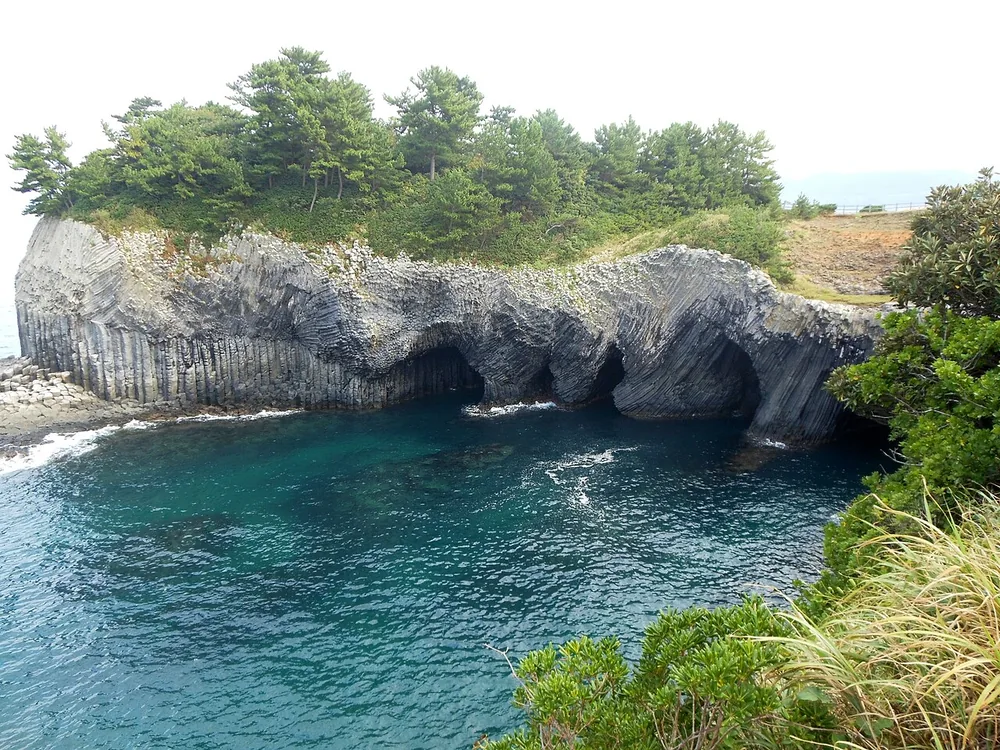
By land, Nanatsugama offers grassland above the caves, viewpoints and paths. Saga's official guide lists about 50 free parking spaces and toilets at Nanatsugama Car Park. From Nanatsugama-iriguchi Bus Stop, it is still about a 30-minute walk. This entrance and Yobuko pier are separate starting points. That half-hour is one way from the stop to the site, so leave time to walk back.
For a car-free harbour day, the morning market, lunch and sea excursion usually fill the day. If the clifftop is your main interest, reserve much of the afternoon for the land route and reduce other stops. Driving makes both views easier, but check the day's boat operation before deciding the order. If rough seas stop the boat, the landscape remains; a land walk still needs a decision based on that day's weather.
Use the operator's footage to see the distance between the Nanatsugama cave entrances and the sea, then decide between viewing from a boat and walking the clifftop path.
One day or one night: fix the booked main activity first
For a city culture day, reserve the morning for Karatsu Castle and one residence, have lunch, then make a booked painting or hand-building session the afternoon's main activity. Visit the Former Karatsu Bank if time allows. With nearly two hours of hand-building, omit one house. A painting session leaves more time inside the buildings. On Mondays, mark the Takatori and Oshima closures first and build the day around the castle, bank and booked activity.
A harbour day starts with the morning market, followed by a seated lunch and Nanatsugama from the sea. If you most want the clifftop path, let it replace part of the harbour programme. Give each stop a clear purpose: identify dried fish at the market, choose a suitable restaurant set, and recognise columns and cave mouths at Nanatsugama. If the afternoon is already committed to the land route, save Karatsu Castle for another day.
An overnight stay lets the two kinds of day remain separate. Visit the castle and bank in Karatsu one afternoon, then Yobuko's morning market the next day. Or devote day one to pottery and residences, followed by the coast on day two. Choose accommodation for the following morning's first activity. With a Kyozan booking, arrange the journey to its meeting point first. If the market is the focus, prioritise an early arrival at the harbour.
A few useful answers
Should I spend the day in Karatsu or Yobuko?
Choose central Karatsu for Karatsu Castle, historic buildings or a pottery workshop. Head to Yobuko for its morning market, squid dishes and a boat trip past the Nanatsugama sea caves. Stay overnight to give each place a day of its own.
Is pottery painting or hand-building better for children at Kyozan Kiln?
Kyozan Kiln recommends painting pottery for under-10s. It takes about 30 minutes and uses pottery that’s already been fired once. Shaping and painting your own piece takes 100–120 minutes and is open to ages 10 and up, with an adult on hand to help primary school children.
When does Yobuko Morning Market open, and is it open on New Year’s Day?
Yobuko Morning Market usually runs from 7.30 am to midday, with opening times varying by stall, and closes on New Year’s Day. Look for fresh and dried fish, fruit and veg, and pickles along Asaichi-dori.
How do the boat trip and clifftop walk at Nanatsugama compare?
The Ika Maru takes about 40 minutes and lets you see the cave mouths and rock columns from the water. The crew decides whether to enter a cave depending on the waves. The clifftop grassland, viewpoint and paths are about 30 minutes on foot from the Nanatsugama Iriguchi bus stop.
Official information and references
Sources used in this guide.
- Karatsu Castle | Interior and permanent exhibitions
- About Karatsu Castle
- Former Takatori Residence
- Former Takatori Residence | FAQs
- Former Karatsu Bank head office
- Former Oshima Residence
- Kyozan Kiln | Pottery experiences
- For customers from overseas
- Activity booking cancellation policy
- Kiln information and access
- Nakano Tochi Kiln | Making
- Nakano Tochi Kiln | Viewing
- Yobuko morning market
- Himono Yamamoto | Products
- Ikataro | Recommended menu and restaurant information
- Yakataishi Nanatsugama
- Nanatsugama
- Nanatsugama sightseeing boat Ikamaru
- Nakao Residence of the whaling organisation's head
- Nakao Residence of the whaling organisation's head
- Six types of Karatsu ware
- Karatsu Tourism Association | Kyozan Kiln pottery experience