A Saga day trip from Hakata: walk to the Honmaru palace in the morning and explore Yanagicho in the afternoon. Includes three walking legs, half-day choices, Monday closures, lunch and JR and airport connections for 14 November 2026.
- Region & Focus
- KyushuSide trips
- Reading Scope
- 32 min read · 10 chapters · 4 Q&As
- Official Verification
- 24 official sources checkedUpdated 22 November 2026
- Key Topics
- ItinerariesRail travelFood
Chapter Route Map (tap any stop)
- Choose a full castle-town day or a single afternoon
- Hakata to Saga: leave by the south exit and walk to the palace entrance
- Read the Honmaru palace’s spaces before Saga’s modernisation displays
- From castle to Yanagicho: give the outdoor walk a clear endpoint
- Choose among Yanagicho’s seven buildings: start with the bank and Koga house
- Lunch in Yanagicho: Cone Kuriya’s hours and prices
- Three orders: castle first for a full day, lunch first at noon, one area for two hours
- Mondays, days after holidays and the doll festival: check whether interiors open
- Rain, pushchairs and slower walkers: retain interiors and shorten road legs
- Back to Hakata or onward to the airport: work back from the final two legs
- Quick Q&A
For a car-free day in Saga, walk from the station to the Honmaru palace, continue to Yanagicho for lunch and two or three historic buildings, then walk back to Saga Station. The three main legs total about 5.4 kilometres, plus walking inside museums and around the streets. For a full day, start with the castle. Arriving at noon, eat first and leave the Honmaru, open until 18:00, for the afternoon.
Choose a full castle-town day or a single afternoon
For one day from a Hakata base, combine Saga Castle History Museum with Yanagicho. See the reconstructed palace and late-Edo displays in the morning, eat in the old streets at noon, choose a few merchant buildings in the afternoon and walk back to Saga Station. The castle explains domain government and modernisation; Yanagicho shows how merchants lived, traded and used their houses. The subjects connect without requiring a visit to every building. For a first visit, retain the Honmaru, Former Koga Bank and Former Koga Residence, then choose one other building by interest.
Choose between Saga and Takeo Onsen according to what you most want from the day. For history, timber interiors, streets and tea, choose Saga. For bathing, Mifuneyama’s garden or illuminated autumn leaves, give Takeo the whole day and plan a return or overnight stay for evening activities. Saga and Takeo-Onsen are different stations. Combining half a day in each first squeezes lunch and slow looking. See alternative days near Fukuoka for Mifuneyama and Ureshino, and the seven-day Kyushu route for intercity travel and base choices.
With half a day, count actual time inside. Arriving at noon and wanting Yanagicho lunch, visit Yanagicho before the Honmaru. Arriving at 14:00 or 15:00, choose just one area. Yanagicho normally ends admission at 16:30; the Honmaru stays open until 18:00, making it the better later stop. A detailed visit to one museum is more complete than rushing through seven houses before closing.
For a full day, give the castle, lunch and Yanagicho separate space, and treat travel between them as its own segment. The walking route suits people able to walk for half a day with luggage already stored. The three road legs total about 5.4 kilometres before indoor walking. If companions cannot walk far, use the Honmaru’s official bus directions and take a taxi from castle to Yanagicho. The Yanagicho museum also lists about 10 minutes by taxi from Saga Station. Give full museum names as pickup and drop-off points, saving energy for exhibits and houses.
A Saga day trip from Hakata: walk to the Honmaru palace in the morning and explore Yanagicho in the afternoon. Includes three walking legs, half-day choices, Monday closures, lunch and JR and airport connections for 14 November 2026.
Hakata to Saga: leave by the south exit and walk to the palace entrance
The full-day example uses Saturday 14 November 2026. JR Kyushu’s Relay Kamome 13 for that date leaves Hakata at 08:54 and reaches Saga at 09:33, a 39-minute train journey. Get off at Saga for the city. You need not continue to Takeo-Onsen or connect to the Nishi Kyushu Shinkansen Kamome. Allow separately for waiting, station exit and city walking. The 39 minutes is not the whole journey from a Hakata hotel to the palace entrance.
This is a limited express. Buy for the Hakata–Saga section and your actual seat category, or follow the terms of an applicable JR pass. Local trains offer another time-and-price choice. Compare official services and connections for the same day before trading a longer journey for a lower budget. The walking route needs no separate city transport pass. If rain or tiredness leads to buses, pay those fares separately.
Leave Saga Station by the south exit for the palace walk. Collect belongings, use the toilet and refill water inside before starting navigation. The walking route from Saga Station to Saga Castle History Museum shows about 2.4 kilometres and 33 minutes via Prefectural Route 29 and Honmaru-dori. This guide allows 40–50 minutes for crossings and finding the entrance. Navigate to Saga Castle History Museum, not the broader Saga Castle Park. The visit starts only when you reach the museum doorway.
After the 09:33 arrival, aim to leave the south exit around 09:45. A 40–50-minute walk puts arrival around 10:25–10:35. For a 10:15–11:40 museum visit, take transport from the station instead. The prefecture’s Honmaru tourism page lists buses towards the castle ruins, alighting at Hakubutsukan-mae, Saga Television-mae or Saga-jo-ato. These are different stops. Choose one, navigate onward to the museum entrance and include the final walk in arrival time.
To avoid the long station walk, use the History and Folklore Museum’s official access directions for Yanagicho. It lists about one minute on foot from Gofuku Motomachi; Cone Kuriya in the Former Hisatomi Residence gives about four minutes on its own access page. These times lead to different entrances. Walking visitors can navigate directly to Former Koga Bank or the restaurant without detouring to a bus stop. For the return, set Saga Station as the destination rather than ending navigation at a bus stop.
Read the Honmaru palace’s spaces before Saga’s modernisation displays
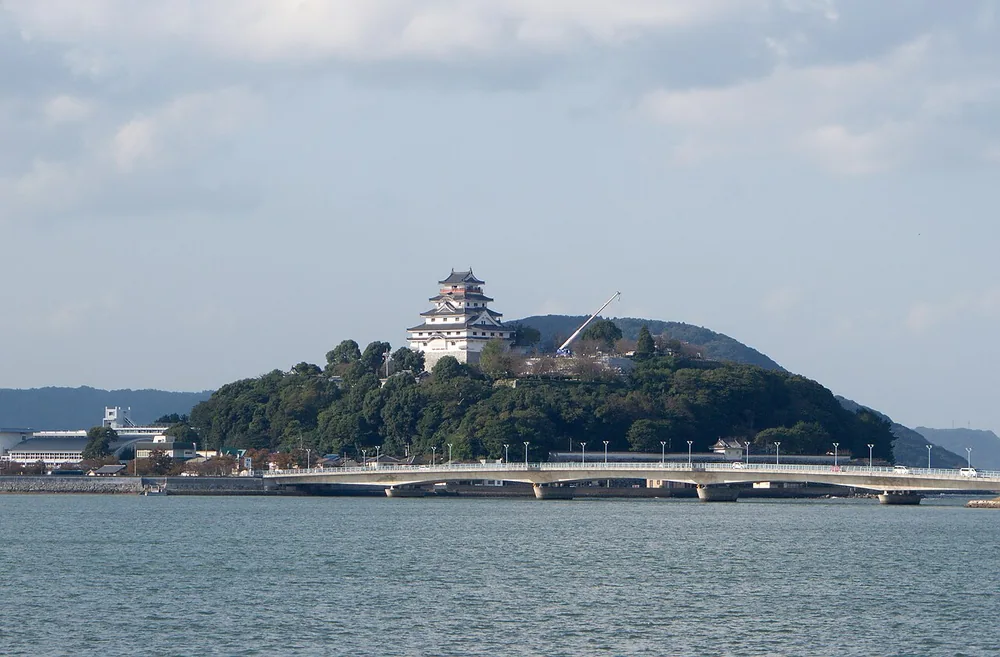
The prefecture’s official tourism information lists the History Museum as open 09:30–18:00 with free admission and voluntary donations. Regular year-end closure is 29 December–1 January, with additional temporary closures. The palace was reconstructed while protecting remains of the Tenpo-era Honmaru beneath it. The timber spaces are part of the visit. Start with room scale, corridors and relationships between inside and outside, then read how the exhibits explain late-Edo Saga.
On a first visit, follow the museum route through the main spaces and choose a place to pause and read the full layout. A timber palace offers more than a photograph of a large room. Notice how columns and sliding doors divide views between rooms, and how much of the grounds appears from the corridor. When reading reconstruction information, distinguish the present building from the protected remains below. This is more useful than remembering only its size.
Displays cover Saga domain science and technology and figures of the late Edo and Meiji Restoration periods. If the history is unfamiliar, choose one reading thread: what problem people were trying to solve, what technology they used and how they moved it forward. Follow the people displays for biographies, or give longer to technology sections. Companions need not read every panel at the same pace. Meet at an identifiable exit or rest point inside.
Allow 75–90 minutes for an independent visit as a planning suggestion. Extend the morning for a guided tour. The official tourism page lists free volunteer tours of about an hour, with donations accepted. For group reservations, the Honmaru website’s maintenance page currently gives 0952-41-7550. State date, party size, desired language and arrival time. Individuals can ask how that day’s commentary is arranged. If you want to revisit exhibits after a tour, do not book lunch for the exact moment it ends. 公告.
The prefectural page also describes Sunday historical skits. On the Saturday example, use the time for palace and exhibits rather than scheduling a performance not listed for that day. For a Sunday performance-focused visit, adjust around the museum’s published daily arrangements. With young children, see the spaces first, then let interested adults take turns reading. A break outside for children is easier than making everyone complete the same written content.
A short film released by the Saga Prefecture Tourism Federation in 2024 enters through Shachi Gate and introduces the palace and late-Edo exhibits, including a virtual reconstruction of the great hall. Preview the building and exhibition spaces before choosing subjects to read closely inside.
From castle to Yanagicho: give the outdoor walk a clear endpoint
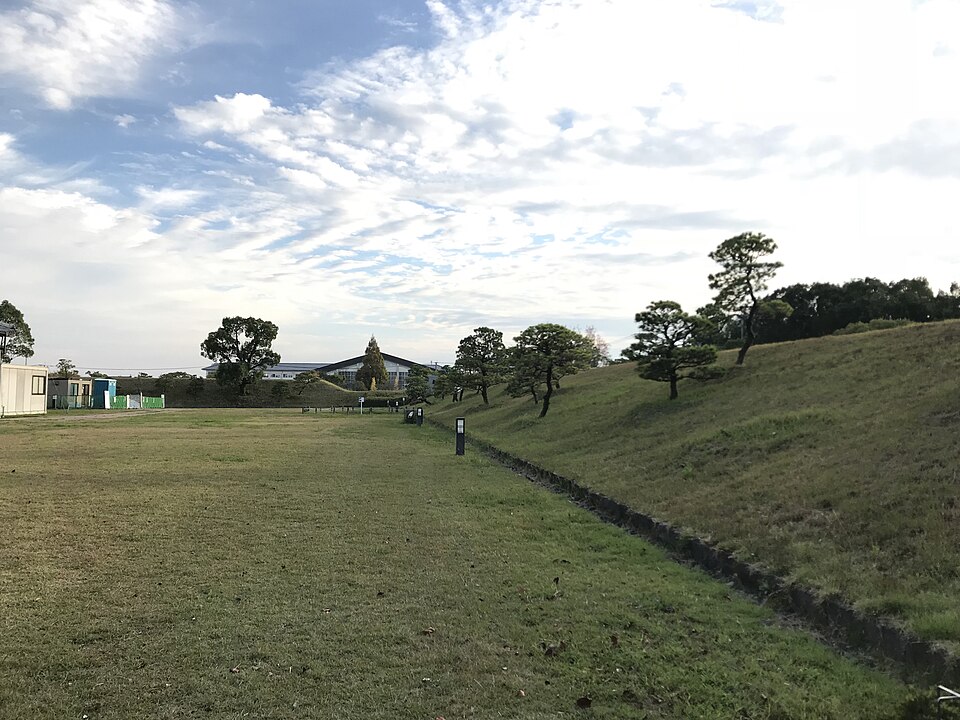
After the museum, look at the palace and grass from outside before deciding when to leave. The photograph’s lawn, stone edging and distant roofs help identify the castle’s open scale. Yanagicho offers a different view through close street facades and doorways. On a full day, allow another 20–30 minutes for outdoor time and rest at the castle. In rain, shorten this to moving straight on after leaving the museum.
The walk from the History Museum to Former Koga Bank is about 1.3 kilometres and 19 minutes via Nagasaki Kaido. This guide allows 30–40 minutes for crossings, entrances and short stops. With lunch booked, change the endpoint to Cone Kuriya at 4-16 Yanagicho and check the remaining time. The bank and restaurant have different entrances; reaching the bank is not being seated to order. Slower walkers or those avoiding sun can take a taxi directly to the selected museum or restaurant, giving the full Japanese name and address.
If adding another museum on the way, decide what matters most today, then remove part of Yanagicho. Other museums around the castle have their own exhibitions and opening days. Without separate time for them, limit the castle area to the Honmaru and surroundings rather than promising everyone another quick museum on departure. If the Honmaru takes longer, Former Koga Bank and Former Koga Residence still preserve the contrast between domain government and commercial life.
Outdoor rest should let everyone sit, drink and handle rainwear. In winter wind, waiting on grass may be less comfortable than going inside. In summer, finish the transfer before lunch rather than choosing a long street after everyone is hungry. With wheelchairs or pushchairs, use paved routes and avoid uneven photo detours. Before entering a historic building, let staff direct you to a suitable entrance and place for equipment.
Choose among Yanagicho’s seven buildings: start with the bank and Koga house
The Saga City History and Folklore Museum comprises seven buildings across the old streets and nearby area, rather than seven galleries in one ticketed building. Start with Former Koga Bank’s public commercial space, then Former Koga Residence’s domestic setting. After those, choose a townhouse, crafts or coffee according to interest. Allow about two to three hours for lunch and the streets together rather than assuming ten minutes in every building.
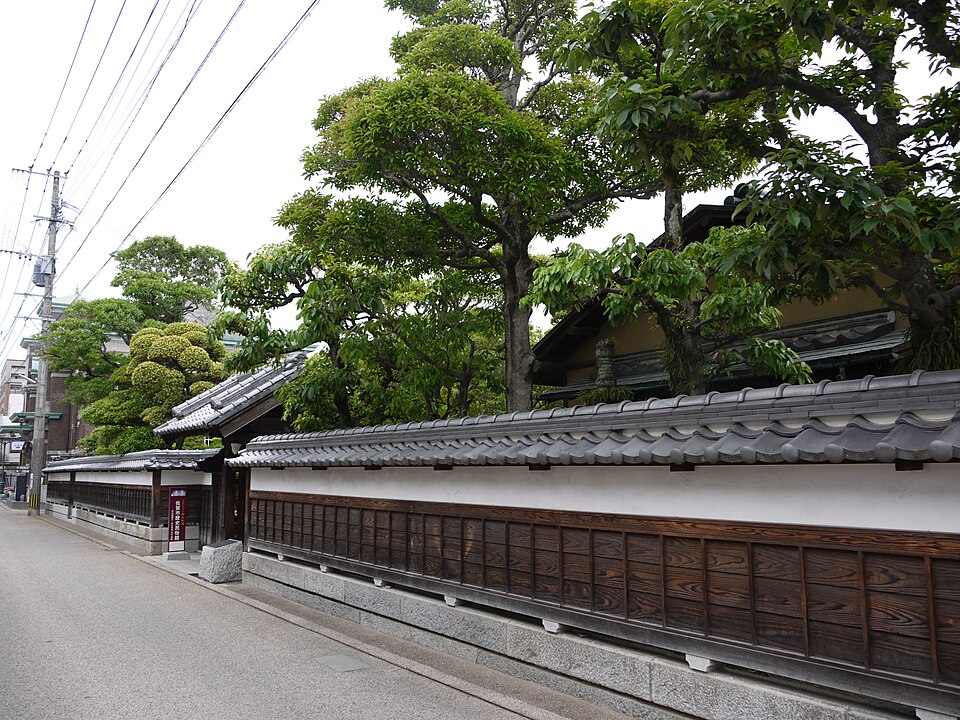
The surviving Former Koga Bank was built in 1906 and extended west in 1916. Restoration sought its appearance and interiors at the height of the Taisho period. The bank was founded in 1885, a different date from the present building’s construction. Consider how much frontage and open space a customer-facing business needed, then compare its walls and interior with the house’s doors, corridors and tatami rooms. The Romanza dining space also operates inside; exhibitions, music events and meals use different areas.
The Former Koga Residence, built in 1884, belonged to the bank’s founder. It has a hip-and-gable roof, and the museum identifies its samurai-residence form as different from the gabled townhouses along the street. Look at transoms, sliding screens and wooden doors, then how the large hall of about 50 tatami mats connects with neighbouring rooms. It was once used as a traditional restaurant, then restored towards its earlier appearance. Read this home and the Honmaru’s governmental rooms through the same questions: who lived here, and who was received here?
For an earlier townhouse, choose the Former Ushijima Residence. The museum estimates early-18th-century construction; at the present site, original structural timbers were reassembled and relocated to represent its late-Meiji appearance. Its broad earthen-floored space and heavy framing make a useful comparison with the Koga tatami rooms. For a traditional exterior adapted to banking, choose Former Sansho Bank. Follow its slightly curved gable roof and copper fire doors to the central open-height space and decoration, seeing how one building accommodated different functions. Choose one of these to add another architectural comparison.
The Former Fukuda Residence lies off Nagasaki Kaido on a Matsubara side street, at 4-3-15 Matsubara. It merits the extra walk for a modern Japanese-style house or Saga Nishiki textiles. The 1918 main house retains a Western reception room, stained glass and gardens facing individual rooms. It also offers Saga Nishiki displays, demonstrations and experiences. Hand-weaving, one-day experiences and courses have different application arrangements. One-day experiences and beginners’ courses require advance booking with the Saga Nishiki Promotion Council on 0952-22-4477. Replace another building with the activity rather than adding it just before returning to the station.
The Former Morinaga Residence retains northern and southern storehouses and a dwelling, now used by Japanese black tea, Nabeshima Dantsu carpet and craft shops. Concentrate time here if textiles or tea interest you. The Former Hisatomi Residence was built in 1921 as a footwear wholesaler. Beams, earthen floors and signs remain, with cafe and photography spaces downstairs and different studios above. Both are working buildings. Follow shop routes and enter upstairs studios only when open or hosting an event. This gives Yanagicho both restored exhibition houses and businesses still operating today.
Lunch in Yanagicho: Cone Kuriya’s hours and prices
For lunch within a historic house, consider Monozukuri Cafe Cone Kuriya in Former Hisatomi Residence, at 4-16 Yanagicho. The restaurant menu gives lunch from 11:30 and last orders at 14:30; the homepage lists normal opening until 15:00. For the earlier transport-based arrival, eat 13:00–14:00; for the full walking route, use 13:15–14:15. If Honmaru exhibits run late, eat before visiting Former Koga Bank. Private parties from 17:00 to 21:00 are separately booked arrangements, not ordinary dinner service extending after the museums close.
The basic Yuttari Course includes a drink. Karaage chicken is ¥1,650 including tax, braised hamburger steak ¥1,760 including tax, and a children’s plate ¥935 including tax. Two adults choosing one chicken and one hamburger steak pay ¥3,410; adding a children’s plate makes ¥4,345. This is food, excluding rail, city buses, extra desserts and experiences. Recalculate menu additions or reductions for other course formats.
The restaurant’s access and opening page lists closure every Monday and on the final Tuesday of each month. Check museum and restaurant calendars separately: a normal Tuesday museum opening does not mean this restaurant serves every Tuesday. The Saturday 14 November example fits its usual opening days. Families can compare its described tatami seating and children’s meals. State actual needs for high chairs, pushchair space or ingredients to avoid when reserving so the restaurant can arrange suitable seats and food.
For afternoon tea only, the cafe also has individual drinks and desserts, still within afternoon opening hours. The tea space in Former Morinaga Residence suits visitors making tea a Yanagicho theme. If you have rested for an hour at lunch, you need not schedule a second cafe. Give the time to one chosen house or return to the station early.
Distinguish room hire from dining. Some rooms in the Koga and Fukuda residences can be hired for events. Published room charges, times and food rules apply to hirers. Ordinary visitors order lunch at restaurants; a room-hire rule permitting food does not mean taking a bento into a tatami room. If concerts, wedding photography or events occupy rooms, follow that day’s open areas and spend the time at another building.
Three orders: castle first for a full day, lunch first at noon, one area for two hours
For a full walking day, use the 09:33 Saga arrival, leave the south exit at 09:45 and reach the Honmaru at 10:25–10:35. A 75–90-minute visit puts departure around 11:40–12:05. Add 20–30 minutes outside and 30–40 minutes to Yanagicho for arrival between 12:30 and 13:15, with lunch 13:15–14:15. Taking transport to start the Honmaru at 10:15 and leave at 11:40, followed by the same outdoor and walking allowances, gives a 12:30–12:50 Yanagicho arrival and lunch around 13:00. Both fit the 14:30 last orders. Afterwards, see Former Koga Bank and Former Koga Residence, then one other building by interest.
For a roughly one-hour Honmaru tour, ask its meeting and finish times before adjusting lunch. If it starts at 11:00, move Yanagicho lunch later and take transport from castle to restaurant. There is no need to revisit every exhibit after the tour. Two Yanagicho buildings are enough for the afternoon. Keen architecture visitors can shorten post-lunch coffee for Koga house details; others can finish with a short street walk after two buildings.
For a noon arrival, walk or take the museum’s suggested transport from Saga Station to Yanagicho, eat, start Former Koga Bank and Residence around 13:15 and leave around 14:30. Allow 30–40 minutes in the reverse direction to the Honmaru, entering around 15:10, visiting until 16:30 and then walking to the station. For a 15:00 museum entry, take a taxi between the areas. Put earlier-closing Yanagicho first and later-closing Honmaru second to retain useful time in both. Remove the other five buildings, a second coffee and outer castle circuits first.
With only two hours, or a fixed afternoon train, the Honmaru alone is simplest. If houses and food are the main aim, keep only Former Koga Bank, Former Koga Residence and a meal. Two hours includes city transport both ways; an hour’s meal leaves only a short visit. Choose the priority before arrival. Work back from your intended return rather than treating the 18:00 closure as a suitable finish for everyone.
For an earlier return, reverse the route: start in Yanagicho at its 09:00 opening, eat early and continue to the Honmaru. This suits travellers already staying in Saga who can reach the streets directly in the morning. From Hakata on the example train, castle first flows better. For any version, groups splitting up should name the full building and entrance for a meeting, not “near the seven buildings”, so one person is not waiting at the bank while another searches the Koga house.
Mondays, days after holidays and the doll festival: check whether interiors open
The History and Folklore Museum’s normal rules give 09:00–17:00 opening, last entry 16:30, and free visits on ordinary opening days. It closes on Mondays, moving to Tuesday if Monday is a public holiday. It also closes the day after a public holiday, unless that day is Saturday or Sunday. Year-end closure is normally 29 December–3 January, subject to calendar adjustment, with separate special maintenance closures. Check both weekdays and holiday positions when choosing a date.
On an ordinary Monday, make the Honmaru and castle area the main visit, use Yanagicho only for exterior street views and eat at a business open that day. If Koga and Fukuda interiors are your priority, choose another opening day. Tuesday is not automatically safe: it can follow a Monday holiday or another public holiday. Restaurants and studios have their own calendars, especially Cone Kuriya’s closure on the final Tuesday each month.
Apply exceptional openings only with a formal announcement. For example, the museum announced opening throughout the balloon festival from 30 October to 3 November 2026, including the normally closed Monday. This is a specified-period exception. A separate announcement gives a Yanagicho lighting ceremony at 18:00 on 7 November, around the museum car park. Night street events and daytime interiors are separate. For the night scene, return later; daytime entry still follows each building’s hours.
During the doll festival, some areas charge admission and hours may change. For a doll-display trip, first choose that year’s announced dates, paid buildings and ticket categories before deciding on a combined ticket. The normally free two-building route may have different entrances and ticketing during events. If architecture rather than special displays is your aim, choose from areas open that day. Budget extra tickets separately from meals rather than using ordinary free admission as the festival budget.
The museum also states that events may occupy parts of buildings or rooms. If the Koga house’s main hall matters most, check the museum event page for its use and access. If occupied, spend longer at Former Koga Bank, Ushijima Residence or Sansho Bank instead. Comparing two or three building types is a more achievable aim than expecting every room to be empty at once.
Rain, pushchairs and slower walkers: retain interiors and shorten road legs
In rain, protect the Honmaru exhibits and your chosen Yanagicho interiors. Use the prefectural page’s bus stops for station-to-Honmaru access, a taxi between areas and, if needed, a taxi from Yanagicho to Saga Station. This reduces all three road walks. Use full Japanese names of the History Museum, Former Koga Bank or restaurant as pickup and drop-off points rather than broad terms such as “near the castle” or “old town”. Pay the actual fare and compare the convenience together if several people share.
If leaving the Honmaru without visiting Yanagicho, follow the outward road back to Saga Station and allow 40–50 minutes. Do not detour to another area for one house photograph. From Yanagicho, walk directly to the station, starting navigation at the last building’s door. Former Fukuda Residence lies on a Matsubara side street, away from Former Koga Bank. If finishing there, reset the route from Fukuda rather than returning to the bank first. The final building choice then also accounts for distance and remaining energy.
The Honmaru’s official tourism information lists ramps, wheelchair-accessible toilets, nappy-changing facilities, a nursing room and wheelchair loans, as well as changes in level. Travellers needing a wheelchair or particular transfer space can use these facilities as starting points for questions, giving equipment dimensions and desired entrance. Historic houses differ. Access available in Former Koga Bank cannot be assumed at Fukuda Residence, townhouse upper floors or shop tatami rooms. Follow staff directions and plan around floors you can visit comfortably.
With children, alternate an earthen-floor or large-room observation with lunch and a short street walk. Adults can take turns with details while another rests with the children, rather than visiting several buildings before the final meal. If rain has soaked shoes and socks, eat or return to the station, keeping enough time for the favourite building. Numerous indoor sights are no reason to extend the day. For flights, preserve time for luggage collection and airport transport first.
Back to Hakata or onward to the airport: work back from the final two legs
For a normal full day, leave the Former Koga Bank area at 16:15 and follow the walking route to Saga Station. The map gives about 1.7 kilometres and 24 minutes via Prefectural Route 30. This guide allows 35–45 minutes, reaching the station around 16:50–17:00. If finishing at another building, change the start to its door. For souvenir shopping before the station, finish the houses earlier and include shopping time here rather than looking for shops while rushing.
For Hakata, take Midori (Relay Kamome) 48, leaving Saga at 18:10 and arriving Hakata at 18:51. A station arrival at 16:50–17:00 leaves 70–80 minutes for luggage, food and the platform. For a fixed dinner reservation, look up an earlier train. The 18:10 is one return option, not a reason to prolong museum time if you want your hotel earlier.
The three main walking legs total about 2.4 + 1.3 + 1.7 = 5.4 kilometres. Map estimates total 33 + 19 + 24 = 76 minutes; this guide allows 40–50, 30–40 and 35–45 minutes, or 105–135 minutes altogether. Add indoor walking, outdoor castle rest and short Yanagicho street walks. Budget JR returns, lunch, drinks and personal shopping. Walking has no fare; add actual bus or taxi costs if you switch. Honmaru and the History and Folklore Museum on ordinary opening days are free. Festival paid areas and extra experiences are separate.
For Saga Airport, first check the prefecture’s airport bus timetable. The 25 October 2026–27 March 2027 edition separates semi-express and direct services. Semi-express buses call at Hakubutsukan-mae; direct buses run from the bus centre to the airport. If you visit Yanagicho first and finish at the Honmaru with luggage with you, walk to Hakubutsukan-mae for a semi-express without returning to Saga Station. If luggage is stored at the station, collect it and board at the bus centre.
On the 14 November example date, a semi-express leaves Saga Station Bus Centre at 17:30, calls at Hakubutsukan-mae at 17:38 and reaches the airport at 18:05. That row connects with the 19:20 Saga–Haneda flight. This is a domestic evening arrangement; still complete airline check-in and security as required after bus arrival. Adult single fares are ¥600 from the bus centre and ¥550 from Hakubutsukan-mae. From Yanagicho, leaving Former Koga Bank around 16:15 with a 35–45-minute walk reaches the railway station at 16:50–17:00. Collect luggage and walk to the bus centre, aiming for the boarding point at 17:15 for the 17:30 bus. With heavy luggage or tired legs, leave earlier and take transport. This semi-express does not pick up at Gofuku Motomachi.
In the same winter timetable, direct buses for Taipei flights leave the bus centre in the morning on Tuesdays, Thursdays and Sundays at 09:40, 09:55 and 09:10 respectively. Saturday has no listed Taipei direct service. For those morning flights, put the full Saga visit on the previous day and retain only breakfast, luggage and airport transport on departure day. Direct buses do not call at Hakubutsukan-mae. Semi-express services use domestic stop 1 at the airport and direct services international stop 2; go to the correct check-in area for your flight. The prefecture says no reservation is needed and eligible nationwide interoperable transport IC cards are accepted. Full buses may require the next service or a taxi, so choose a bus leaving ample airline check-in time.
A few useful answers
How far is it to walk from Saga Station to the castle and Yanagicho and back?
The round trip on foot is roughly 5.4 km. Allow about 2.4 km from the south exit of Saga Station to Saga Castle History Museum, then 1.3 km to the Former Koga Bank in Yanagicho and another 1.7 km back to the station.
If I arrive in Saga at midday, should I go to the castle or Yanagicho first?
Have lunch and visit the historic houses in Yanagicho first, then head to the castle museum. Last entry in Yanagicho is usually at 16:30 and the castle museum closes at 18:00. If you arrive around 2 or 3 pm, choose one area.
Which of Yanagicho’s seven buildings should I see on a first visit?
Start at the Former Koga Bank to see where it received its customers, then visit the Former Koga Residence, where the bank’s founder lived. For a third stop, try the Former Ushijima Residence, a traditional townhouse.
Is the Saga City History and Folklore Museum in Yanagicho open on Mondays?
The museum is normally closed on Mondays. When Monday is a Japanese public holiday, it opens that day and closes on Tuesday instead. It also closes the day after a public holiday, except when that day is a Saturday or Sunday.
Official information and references
Sources used in this guide.
- Saga Prefectural Saga Castle History Museum | Official Saga tourism
- Saga Museums
- Saga City History and Folklore Museum
- Visitor guide | Saga City History and Folklore Museum
- Former Koga Bank | Saga City History and Folklore Museum
- Former Koga Residence | Saga City History and Folklore Museum
- Former Ushijima Residence | Saga City History and Folklore Museum
- Former Sansho Bank | Saga City History and Folklore Museum
- Former Fukuda Residence | Saga City History and Folklore Museum
- Former Morinaga Residence | Saga City History and Folklore Museum
- Former Hisatomi Residence | Saga City History and Folklore Museum
- Cafe menu | Cone Kuriya
- Access | Cone Kuriya
- JR Kyushu | Station timetable
- JR Kyushu | Train details: outward service
- JR Kyushu | Train details: return service
- Airport access bus times | Saga Prefecture
- Yanagicho lighting ceremony announcement | Saga City History and Folklore Museum
- Balloon festival opening announcement | Saga City History and Folklore Museum
- Google Maps walking route: Saga Station to Saga Castle History Museum
- Google Maps walking route: Saga Castle History Museum to Former Koga Bank
- Google Maps walking route: Former Koga Bank to Saga Station
- Saga City History and Folklore Museum | Access
- Saga Castle History Museum | Notice suspending new volunteer-guide applications on 11 November 2026