Compare Hatsumode routes for Meiji Jingu, Senso-ji, and Kawasaki Daishi, including Senso-ji midnight bell ringing, Zojo-ji's early bell schedule, and JR overnight trains, plus New Year's hours, amulet counters, and where to stay.
- Region & Focus
- TokyoWhen to visit
- Reading Scope
- 23 min read · 10 chapters · 7 Q&As
- Official Verification
- 33 official sources checkedUpdated November 22, 2026
- Key Topics
- WinterSeasonsRail travel
Chapter Route Map (tap any stop)
- Choose the Ritual First, Then Pick Your Venue
- Check Your Final Connection Before New Year's Eve
- Entering Meiji Jingu via Harajuku, Yoyogi, or Sangubashi
- Prayer Reservations and Worship Lines at Meiji Jingu
- Hearing the Bell at Bentenyama and Visiting Senso-ji's Main Hall
- Reaching Kawasaki Daishi via Keikyu Kawasaki
- Early Bell Ringing at Zojo-ji and Daytime Visits in Akasaka and Ochanomizu
- Staying Near Senso-ji, Shibuya Station, or Kawasaki Station
- Arriving on New Year's Eve, Traveling with Kids, or Facing Cold Rain
- Budgeting for Transit, Amulets, and Sit-Down Meals
- Quick Q&A
Planning Hatsumode in Tokyo for New Year's Day 2027 starts with deciding whether you want to be out at midnight. If you want to hear the New Year's Eve bell at Senso-ji, spend both the evening and the night near Asakusa. If you prefer walking Meiji Jingu's forested approach, head to Harajuku on New Year's morning or enter from Yoyogi. Set aside a separate half-day for Kawasaki Daishi by taking the Keikyu Daishi Line to the temple gates, praying at the Main Hall, and browsing Nakamise afterward. Travelers staying in Shinjuku, Shibuya, or Ueno can ride JR Yamanote Line overnight trains back on New Year's Eve 2026, though anyone needing a post-midnight subway or private-line transfer should map out each leg in advance.
Choose the Ritual First, Then Pick Your Venue
Hatsumode is the first visit of the New Year to a Shinto shrine or Buddhist temple. Listening to the temple bell on the night of December 31 is Joya no Kane, while Hatsumode itself begins once the clock crosses into January 1. Heading out after you wake up on New Year's morning still counts. Travelers focused on a specific ceremony should pick their date and hour first; those who simply want a walk along a grand approach and a fortune slip should start with whichever site sits closest to their hotel. Meiji Jingu sits between Harajuku and Yoyogi, Senso-ji anchors Tokyo's east side, and Kawasaki Daishi is across the prefectural border in Kanagawa, so trying to hit all three in a single night adds two long cross-city transfers.
When choosing where to spend midnight, picture the street you will be standing on when the crowd disperses. Meiji Jingu's Harajuku entrance connects directly to JR and subway lines, and the northern Yoyogi entrance also meets JR tracks, giving anyone staying along the Yamanote Line a clear path home. Senso-ji's advantage is its straightforward walk from Kaminarimon Gate through Nakamise to the Main Hall, making it easy to pair dinner and lodging in the same neighborhood. Kawasaki Daishi requires an extra Keikyu transfer via Keikyu Kawasaki to the Daishi Line on both the way there and the way back, which fits much better into a daytime schedule connected to central Tokyo.
If you only have two or three days in Tokyo, keep New Year's morning for Hatsumode and eat lunch nearby to leave room in your schedule. Guests based in Shibuya or Shinjuku pair naturally with Meiji Jingu; those in Kuramae or Asakusa are set up for Senso-ji. If you are already heading toward Yokohama, you can stop at Kawasaki along the way, leave bags at your hotel or near the station, walk the temple approach, and catch your next train. When you have a Shinkansen departure or international flight later that morning, treat this stop as optional and leave extra buffer for train waits, queues, and bag pickup.
For travelers hoping to experience two different New Year traditions in one evening without racing between Asakusa and Kawasaki, there is an easier pairing. Watch the early bell ringing at Zojo-ji in Shiba Park, then walk to JR Hamamatsucho Station to take the Yamanote Line back to your hotel for the night and visit another shrine or temple the next day. You get one distinct event on New Year's Eve and one on New Year's Day, with unhurried restaurant hours in between.
| Venue | Best Fit | Main Stations |
|---|---|---|
| Meiji Jingu | Daytime forest walk or late-night visit via JR | Harajuku, Yoyogi |
| Senso-ji | Midnight bell listening or daytime Nakamise and Main Hall walk | Asakusa (Tokyo Metro Ginza Line) |
| Kawasaki Daishi | Daytime visit paired with Nakamise or lunch at Kawasaki Station | Kawasaki-Daishi (Keikyu Daishi Line) |
| Zojo-ji | Early New Year's Eve bell ringing with a same-night return to your hotel | Daimon (Toei), Hamamatsucho (JR) |
Compare Hatsumode routes for Meiji Jingu, Senso-ji, and Kawasaki Daishi, including Senso-ji midnight bell ringing, Zojo-ji's early bell schedule, and JR overnight trains, plus New Year's hours, amulet counters, and where to stay.
Check Your Final Connection Before New Year's Eve
On October 22, 2026, JR East announced overnight special service across six Greater Tokyo lines running from after the last regular train on December 31 into New Year's morning 2027. The Yamanote Line's inner and outer loops will run roughly from 1:00 AM to 4:50 AM at intervals of about 10 to 30 minutes, while the Keihin-Tohoku and Negishi lines will operate between Sakuragicho and Omiya from roughly 1:00 AM to 4:00 AM at intervals of 10 to 80 minutes. Those windows apply to the corridors as a whole, so check the exact departure heading in your direction once you reach Harajuku, Ueno, or Kawasaki. JR plans to load the timetables into digital schedules and the JR East app starting December 7, and will run on holiday schedules from December 30 through January 3.
Anyone staying west of Shinjuku needs to check the Chuo Line Rapid and the Chuo-Sobu Line Local separately. Local trains are scheduled to run overnight between Mitaka and Chiba from about 12:10 AM to 4:40 AM at intervals ranging from roughly 10 to 125 minutes, whereas the Chuo Line Rapid overnight service covers Mitaka to Takao with only a few fixed departures. If you are staying in Nakano or Koenji, exit Meiji Jingu on the north side toward Yoyogi and search your return route by local station names. If your phone shows a long wait, decide early whether to leave the shrine before the peak rush. Travelers staying around Tokyo Station can rely directly on the Yamanote Line rather than following daytime Chuo Rapid transfer habits.
When searching transit apps, set the date to January 1 and enter your real departure time along with the station nearest your hotel. Stopping your search at Shinjuku Station makes it easy to overlook the last leg home. If your hotel is within walking distance of Shinjuku Station, boarding the Yamanote Line at Harajuku or Yoyogi is enough. If you are staying near a Nishi-Shinjuku subway station, however, exiting JR Shinjuku can still leave a noticeable street walk—a connection that feels effortless by subway during the day becomes a solo walk after midnight. Save a walking route from the JR exit to your hotel lobby before heading out in case underground passages are closed.
Other rail operators publish their own schedules independently. Neither the Tokyo Metro Ginza Line, the Toei Asakusa Line, nor the Keikyu Daishi Line is included in JR East's announcement. If you stay at Senso-ji for the full bell ringing, prioritize lodging within walking distance. Returning to Tokyo from Kawasaki Daishi adds another step: while JR Kawasaki Station sits on the overnight Keihin-Tohoku corridor, there is still a gap between the temple gates and the JR station, so the two timetables have to line up. If you plan to fall back on a taxi, pick a legal curbside pickup spot outside traffic restrictions rather than dropping your pin directly in front of Kaminarimon or Daisanmon Gate.
When traveling in a group, agree beforehand on which line, direction, and exit you will use to regroup. Anyone using a wheelchair or stroller needs elevators, which can mean letting part of the group board an earlier train, making station platforms a frustrating place to wait. Travelers who wait until after midnight to look up their ride back also frequently mistake the first regular morning train for an overnight special. If your search only returns standard holiday first trains, map out the walk on either side of the subway or save your shrine visit for daylight.
Entering Meiji Jingu via Harajuku, Yoyogi, or Sangubashi
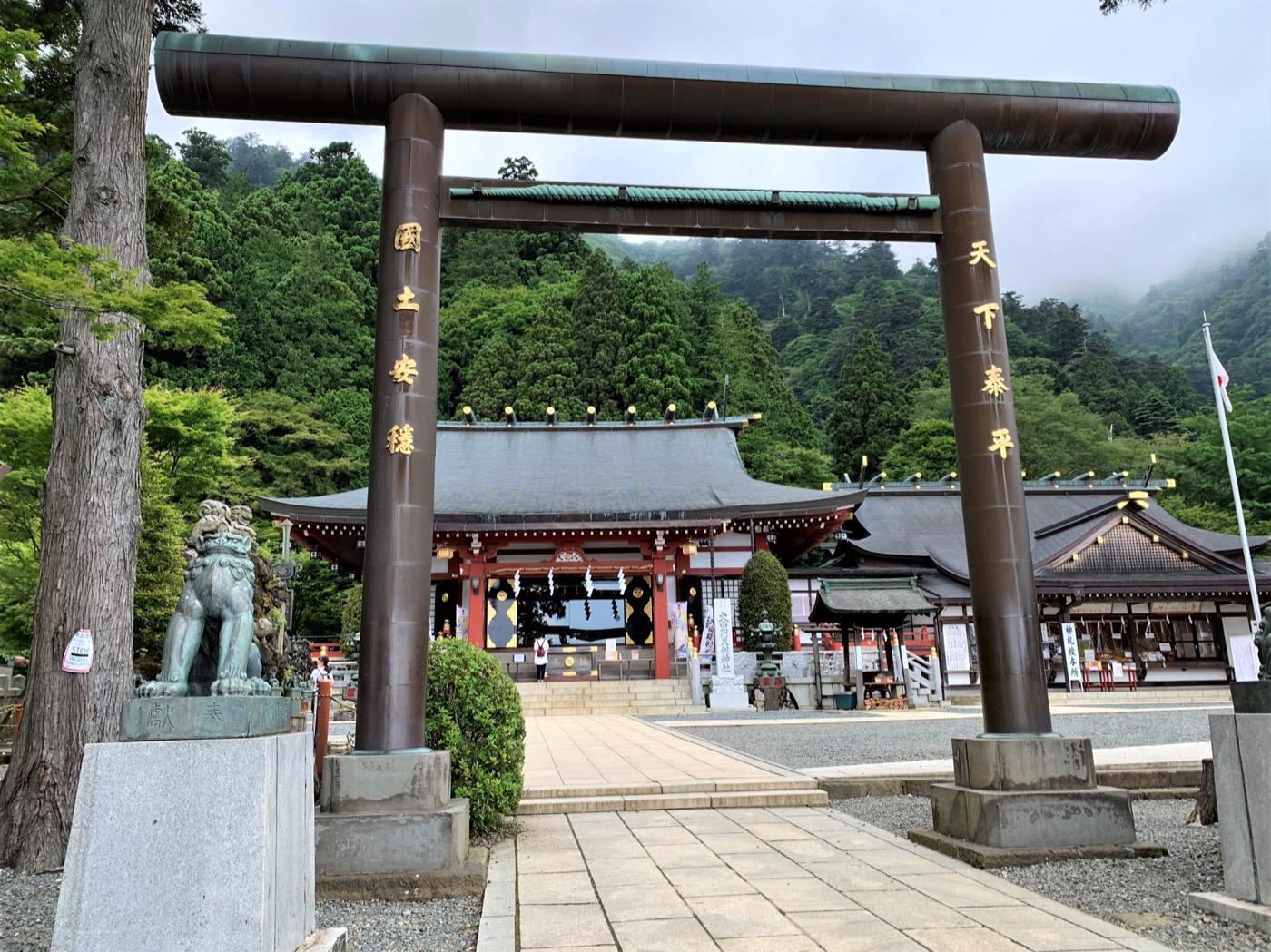
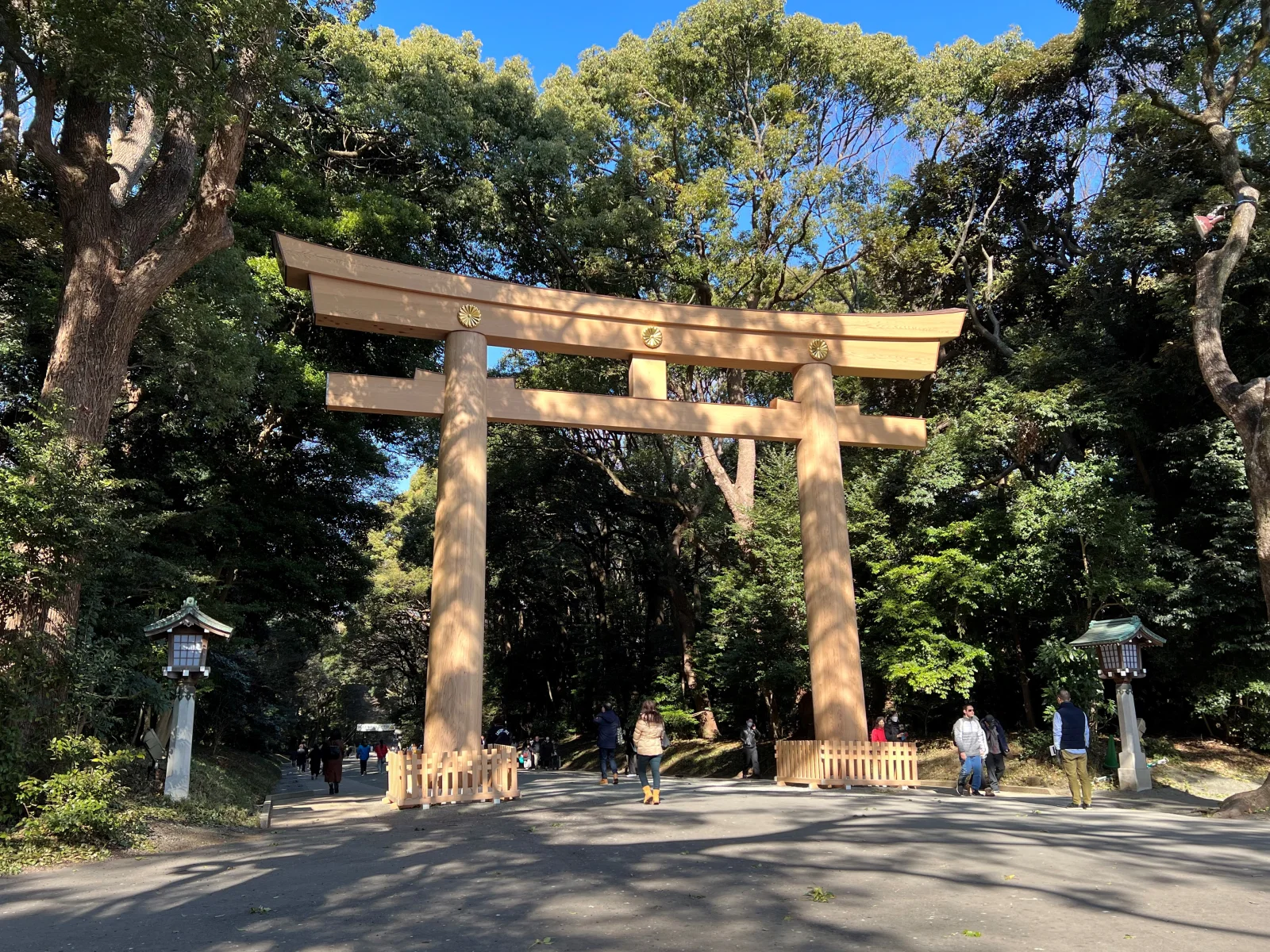
The Harajuku entrance opens directly onto the South Approach (Minami-sando). From JR Harajuku Station, take the Omotesando Gate West Exit; from Meiji-jingumae (Harajuku) Station on the Chiyoda or Fukutoshin lines, use Exit 2. Both exits bring you up near the First Torii, leading down a tree-lined gravel path toward the junction for the main shrine buildings. Meiji Jingu lists a baseline walk of roughly 10 minutes from any gate to the main hall, though where the New Year's queue begins determines how long it actually takes. Seeing the torii right outside the station does not mean you are close to the front of the worship line.
Coming from Shinjuku, you can ride straight to Yoyogi Station on JR or the Toei Oedo Line and enter through the Yoyogi Gate. Kitasando Station on the Fukutoshin Line also connects to this entrance, with the shrine noting about a 5-minute walk from the station exits. This approach works well if you are staying in Yoyogi or southern Shinjuku, or planning to take JR back later. Travelers along the Odakyu Line can get off at Sangubashi Station and walk about 5 minutes from the West Exit, skipping any transfer through Harajuku—especially convenient for daytime visits from western Shinjuku.
Meiji Jingu's regular gate hours track sunrise and sunset: 6:40 AM to 4:00 PM in December and 6:40 AM to 4:20 PM in January. For New Year's Eve into early January, check the shrine's dedicated Hatsumode schedule once posted; while 2027 corporate and group prayer slots have already been published, general New Year's gate hours have not yet been updated. If your main goal is strolling the forested path and paying respects, aim for a morning in early January; if you want a midnight entry, wait for the official Hatsumode hours to go live and work backward to pick your departure time.
Most people pick the Harajuku entrance so they can walk the full South Approach from the First Torii. If your priority afterward is catching the Yamanote Line, save Yoyogi Station's location on your map before setting out and follow one-way crowd signs if the paths split. Worship lines and amulet queues often run separately, so finish your prayers first and then look for signs marked Juyosho (amulets) or Goshuin rather than backtracking along regular map routes.
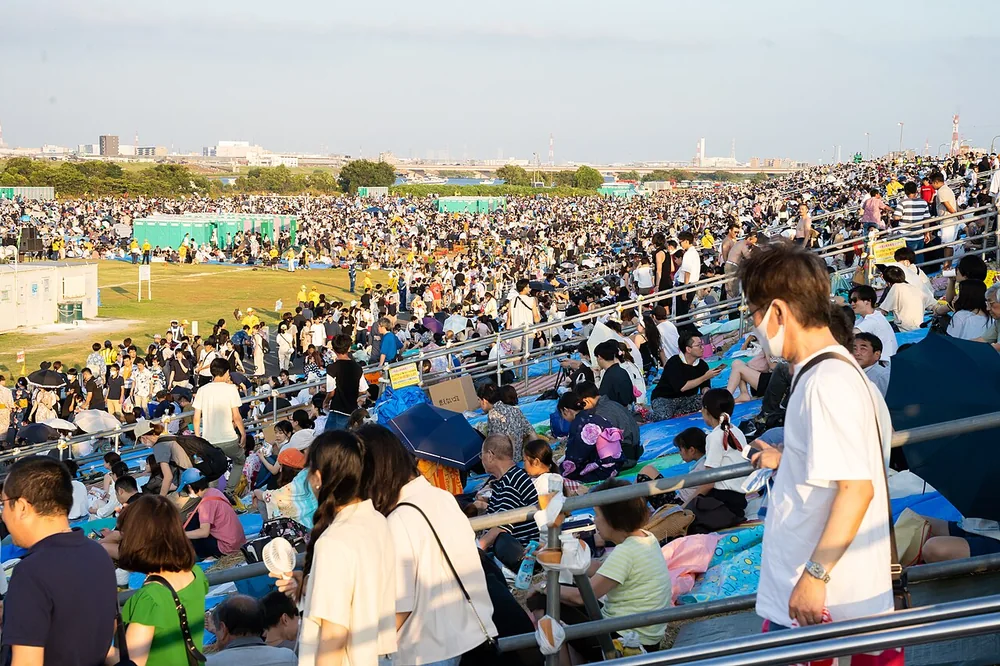
Meiji Jingu's Hatsumode guide notes that the heaviest crowds historically hit between 10:00 PM on New Year's Eve and 3:00 AM on New Year's Day, plus after 10:00 AM across the first three days of January. If you want both the full walk and lunch in Harajuku, arriving early in the morning keeps the two from colliding. Wheelchair users can borrow wheelchairs at the entrances, so ask staff there before starting down the path. Wet gravel is hard work to push a chair or stroller across, and turning back halfway is far harder than choosing your route at the gate.
Prayer Reservations and Worship Lines at Meiji Jingu
To pay your respects in front of the main worship hall (Haiden), follow the signs for Sanpai; general worship is free and requires no booking. Follow the traditional etiquette of two bows, two claps, and one final bow, and stop at an open purification fountain (temizuya) along the approach if available before entering the main courtyard. If you decide midway through the line that you want an amulet, finish bowing at the hall first, then step aside toward the amulet counters so you stay out of the main flow of visitors.
Only organizations booking formal New Year prayers at the Kaguraden follow the 2027 (Reiwa 9) corporate and group prayer notice. Reception hours run 1:00 AM to 5:00 PM on January 1, 9:00 AM to 4:30 PM on January 2-7, and 9:30 AM to 4:00 PM on January 8-31. Online bookings open November 9, 2026 at 10:00 AM JST and close November 27 at 6:00 PM JST on a first-come basis, capped at 30 people per group including the representative. Offerings start at ¥30,000, with bank transfer due by December 4; groups present their confirmation notice and check in 20 minutes before their slot.
Families seeking an individual blessing inside the Kaguraden apply separately under the shrine's personal prayer service rather than the corporate track. If everyone in your party simply wants to make a personal wish, finish general worship and draw an Omigokoro slip as a keepsake. Unlike standard fortune slips, Meiji Jingu's Omigokoro prints waka poems by Emperor Meiji and Empress Shoken with commentary and an English translation, reading more like a personal reflection without good-luck or bad-luck labels.
Hearing the Bell at Bentenyama and Visiting Senso-ji's Main Hall
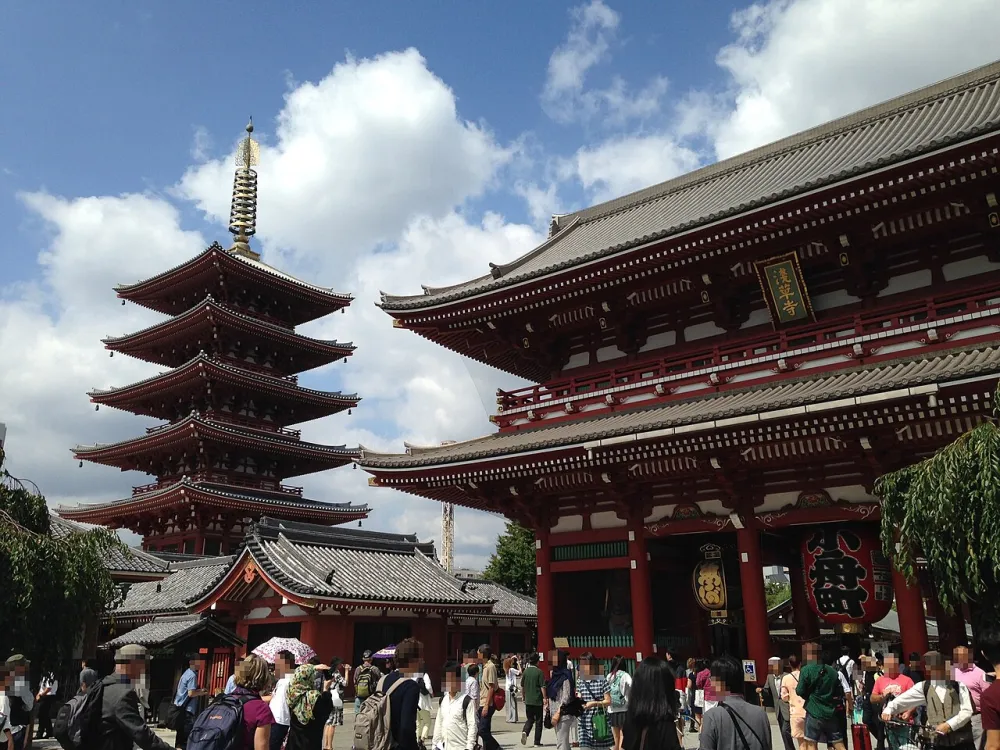
To enter Senso-ji through Kaminarimon Gate, ride the Tokyo Metro Ginza Line to Asakusa Station and take Exit 1, marked for Senso-ji and Kaminarimon, which has elevator access. The approach runs straight from Kaminarimon through Nakamise shopping street and Hozomon Gate to the Main Hall enshrining Sho Kannon. The bell tower stands on Bentenyama hill in the southeast corner of the grounds, separate from the Main Hall worship axis. When leaving, follow whatever barriers or one-way lanes are open, and tell companions to meet back at your hotel lobby if separated rather than stopping in front of Kaminarimon. On the Toei Asakusa Line, Exit A4 leads toward Kaminarimon and Senso-ji, while strollers and wheelchairs should use the A2b elevator toward Komagatabashi and walk north along Edo-dori. If your group arrives on different subway lines, pick a street address outside as your meetup point instead of simply saying "the Asakusa Station exit."
Senso-ji lists Joya no Kane under its New Year's Eve (Omisoka) events. After a preliminary Buddhist service at Bentenyama, bell ringing begins at midnight on January 1 with three uncounted opening strikes (sute-gane) followed by 108 strikes performed by members of the Hyakuhachikai over roughly 40 minutes. Visitors listen from designated areas along the open walkways; there are no public slots to line up and ring the bell yourself. If you only want to hear the opening strikes, agree with your companions ahead of time when to head out so nobody assumes midnight automatically puts you at the Main Hall steps.
Formal New Year's prayer services inside Senso-ji's Main Hall start at midnight on January 1 and continue through January 7, running roughly every 30 to 60 minutes until near closing time according to temple listings. Participants write their name and wish on a wooden prayer tablet and register before entering the inner sanctuary (naijin), while general visitors bow with palms together in the outer sanctuary (gejin). Regular winter Main Hall hours are 6:30 AM to 5:00 PM, with New Year closing times and daily prayer sessions published on a separate January schedule.
For goshuin seals, walk to Yogodo Hall just to the left as you face the Main Hall, where you can request stamps for Sho Kannon or Daikokuten of the Asakusa Seven Lucky Gods. Standard hours are 8:00 AM to 4:30 PM, with adjusted hours during the New Year period. If only one person in your family wants a stamp, have everyone else wait outside the main queue rather than pulling the whole group from the Main Hall line into Yogodo Hall. For daytime photos along Nakamise or souvenir shopping, it is far easier to come back on a regular weekday walk following a Senso-ji visiting route.
If New Year's Day brings rain and you are traveling with kids who still want to see Kaminarimon, wait until after 9:00 AM and use the Asakusa Culture Tourist Information Center across the street as your staging point. Taito Ward lists the building as open year-round in principle from 9:00 AM to 8:00 PM with tourist information and indoor rest space. During passing showers, organize strollers and rain gear there before deciding whether to push on to the Main Hall or grab an early meal. Save an open-air stroll along the Sumida River for the afternoon once the weather clears.
Reaching Kawasaki Daishi via Keikyu Kawasaki
Coming from central Tokyo, take the Keikyu Main Line from Shinagawa to Keikyu Kawasaki, transfer to the Keikyu Daishi Line bound for Kojimashinden, and get off at Kawasaki-Daishi Station, an 8-minute walk from the temple according to official directions. When setting your map app, search specifically for "Kawasaki Daishi Heiken-ji" or "Kawasaki Daishi Daisanmon Gate"—searching only "Kawasaki" often sends you to JR Kawasaki Station several stops away. If you are already arriving by JR in the daytime, you can also take Rinko Bus Route Kawa 23 bound for Daishi from Bus Stop 7 at the JR Kawasaki East Exit.
On December 31, 2026, Kawasaki Daishi schedules its final year-end Kechigan Dai-Goma fire ritual at 3:30 PM in the Main Hall (Daihondo), followed at night by the Joya Horaku service at the Bell Tower; the bell ringing and midnight Goma ceremony mark the turn of the year. Normal winter opening hours for the Main Hall are 6:00 AM to 5:30 PM, though the temple's access page limits that standard timetable to February 1 through December 30 and issues New Year hours separately. If you want to visit on New Year's Eve without fighting midnight transit, centering your trip around the afternoon ritual lets you ride regular trains back.
Advance registration (Gantan Negaioki) for the midnight New Year's Day Goma ritual suits travelers who can visit the temple grounds early. Application forms are handled at the temple's Goma reception counter from November 21 to December 30, 2026, with blessed prayer plaques available for pickup from January 1 to 31, 2027. If you are praying for family well-being and staying in Japan after New Year's Day, it is simpler to drop by during regular daytime Goma sessions. You can also just pay respects at the Main Hall, snack along the Nakamise lane outside Daisanmon Gate, and head back to Kawasaki Station.
When visiting with older relatives, walk straight from Daisanmon Gate to the Main Hall first, then add the Bell Tower or Yakushiden Hall if everyone still has energy. On the temple map, goshuin stamps are handled at the Goji Shino Uketsuke-jo counter, so follow signs with that name once inside. Effective November 21, 2026, Kawasaki Daishi charges ¥500 for each goshuin stamp and ¥500 for standard amulets such as ward-off-evil, good fortune, and academic success, while traffic-safety amulets in a gold brocade pouch are ¥1,000. Factor those prices into your cash budget ahead of time, and plan for a daytime visit if you want to browse Daruma stalls and Nakamise shops alongside counter hours.
Staying around Kawasaki Station lets you eat dinner near the tracks, drop luggage at your hotel, and catch JR trains to Yokohama or Shinagawa the next morning. If your goal is being inside Kawasaki Daishi at midnight, however, staying by the JR station still leaves the return trip from the temple to work out. For a one-night stay, compare walking routes on your hotel map from Kawasaki-Daishi Station versus Keikyu Kawasaki Station to decide which end of the trip you want right outside your door.
Early Bell Ringing at Zojo-ji and Daytime Visits in Akasaka and Ochanomizu
If you prefer to hear the New Year's Eve bell earlier in the night, Zojo-ji updated its schedule in November 2026: the service begins at 9:30 PM on December 31, bell ringing runs from 9:45 PM, and the event wraps up around 11:00 PM. It is about a 5-minute walk from Daimon Station on the Toei Asakusa or Oedo lines, or an easy walk from JR Hamamatsucho, giving you a realistic chance to catch pre-midnight trains back to your hotel. Visitors hoping to strike the bell themselves should note that Zojo-ji distributes public bell-ringing tickets starting December 1, 2026 at 9:00 AM JST at the temple office on the second floor of the hall—only practical if your travel dates overlap with ticket distribution.
If you are staying near Akasaka or Tameike-sanno, Hie Shrine makes an easy daytime Hatsumode stop. Exit 2 at Akasaka Station on the Chiyoda Line and Exit 7 at Tameike-sanno Station on the Namboku or Ginza lines are both listed by the shrine as roughly a 3-minute walk. Because the shrine sits uphill, anyone using a cane or pushing a stroller should look for the approach entrance equipped with escalators. Pairing one visit with a neighborhood meal keeps you close to your hotel and saves a round trip across town to Harajuku.
Travelers staying in Ochanomizu or Akihabara have Kanda Myojin right nearby. It is roughly a 5-minute walk from JR Ochanomizu Station's Hijiribashi Exit, about 5 minutes from Exit B1 of Shin-Ochanomizu Station on the Chiyoda Line, and around 7 minutes from Akihabara's Electric Town Exit. Visit in the daytime, then walk over to Akihabara for lunch or shopping before boarding your return train straight from there. These neighborhood shrines still draw New Year crowds, but you avoid extra transfers and have plenty of nearby spots to duck into if lines look too long.
If you are spending a few days in Asakusa and want to split your visits beyond New Year's Day, pray at Senso-ji first and walk north to Matsuchiyama Shoden on another morning. Taito Ward lists this Senso-ji branch temple as the Bishamonten stop on the Asakusa Seven Lucky Gods route, and it holds its annual Daikon Festival on January 7. You can walk part of the way along the Sumida River path or cut through sheltered side streets if it is windy. Since Matsuchiyama Shoden sits on a low hill, check the slope and return route on a map beforehand if you have a stroller rather than assuming the walk stays flat.
Staying Near Senso-ji, Shibuya Station, or Kawasaki Station
When booking a hotel for Senso-ji's New Year's Eve bell, verify that you can walk back from the Main Hall rather than relying only on the station name on a booking page. Richmond Hotel Asakusa Main Building sits in Asakusa 2-chome, listed by the operator as a 3-minute walk from Tsukuba Express Asakusa Station Exit A1 and about 8 minutes from Ginza Line Asakusa Station Exit 1. Staying on that side makes a midnight return effortless, though if you are catching an early Toei Asakusa Line train toward the airport the next morning, leave extra walking time instead of going by the Tsukuba Express estimate.
If you are traveling with older family members and heavy luggage, or taking the Tobu Line north the next day, look at Asakusa Tobu Hotel next to Tobu Asakusa Station. Located in Asakusa 1-chome, it is listed as roughly a 30-second walk from the Tobu Skytree Line station and sits right by the Ginza and Toei subway entrances. You will walk a bit farther back from the Main Hall after midnight than guests staying right behind the temple, but hauling large suitcases into the station the following morning is far easier. Even if you are keeping one hotel across your whole trip, trace the walking route from both your lobby and the Main Hall rather than trusting straight-line map distances on booking sites.
For a late-night visit to Meiji Jingu, staying within walking distance of JR Shibuya or Shinjuku Station works well as long as you check which station passages close overnight. At JR East Hotel Mets Shibuya, listed as a 4-minute walk from JR Shibuya Station's New South Gate, the usual daytime shortcuts across the tracks via Shibuya Sakura Stage or through Shibuya Stream are closed from 1:00 AM to 4:00 AM. The hotel provides an overnight map using the same New South Gate exit, dropping down to the second floor of Sakura Stage and following the pedestrian skybridge to street level—save that route to your phone before boarding your train to Shibuya.
If you are staying in Kawasaki primarily to catch a JR train the next morning, look on the JR Kawasaki Station side first. Hotel Metropolitan Kawasaki, for instance, is listed as roughly a 2-minute walk along the elevated deck from the JR Central West Exit. It works seamlessly for an overnight stop before heading to Yokohama, while Rinko Bus Stop 7 for Kawasaki Daishi sits at the JR East Exit and Keikyu Kawasaki is a short walk away for the Daishi Line. Families with babies or older travelers should weigh the extra transfer walk from a JR-side hotel against carrying bags farther if they stay closer to the temple.
Always match your booking dates to Japan Standard Time (JST). Heading to check in right after a New Year's Eve dinner usually still falls on December 31, whereas arriving after listening to the midnight bells puts you past 1:00 AM on January 1—meaning you still book the night of December 31 and notify the front desk of a late check-in. When booking a two-night stay, judge transit options by your latest planned return to the room. A short walk in Asakusa, an open overnight walkway in Shibuya, or the last bus from Kawasaki Daishi shapes how early you get to sleep far more than a generic "minutes from station" badge.
Arriving on New Year's Eve, Traveling with Kids, or Facing Cold Rain
If your flight lands at Haneda in the late afternoon of December 31, focus first on getting into the city, checking in, and eating dinner. Travelers staying in Shinagawa or Shibuya can wait until New Year's morning to ride the Yamanote Line to Harajuku. In Asakusa, if you still have energy late at night, drop your bags in the room and walk out toward Kaminarimon empty-handed; if everyone is worn out, save your visit for New Year's morning in the outer sanctuary and spend the rest of the day exploring Asakusa. Skip switching hotels after that first night so you save your energy for walking the next day.
When traveling with children or older adults, handle breakfast, restrooms, and warm-up stops before stepping onto the shrine approach. If you plan to enter Meiji Jingu before 10:00 AM, eat breakfast near your hotel first. Once you reach the torii, if the line looks longer than your group can comfortably handle, pivot to a relaxed morning around Harajuku and come back a few days later—moving your visit past January 4 takes off much of the crowd pressure. If kids feel the cold quickly, Asakusa's daytime indoor spots beat standing along the riverfront on New Year's Eve.
On windy, rainy nights, wear a hooded coat and shoes with reliable grip so your hands stay free to steady children or check exits on your phone. Anyone who needs medication or snacks on a schedule should pack water, pills, and small bites before leaving the hotel, treating street stalls and restaurants as extras. If you have non-refundable dinner reservations, train tickets, or airport transfers, count backward from those deadlines to set a hard departure time from the shrine or temple. When something has to give, drop the goshuin line or an extra neighborhood walk first so you still finish the main visit.
On rainy days in Asakusa, you can also hop on the Toei Asakusa Line to Oshiage and duck straight into Tokyo Solamachi near Exits B3 and A2 for indoor dining and shopping. Keep in mind that if your hotel is west of Senso-ji, walking back to the Toei subway station still means spending time outdoors. When a downpour picks up, ducking into the tourist center across from Kaminarimon or heading back to your hotel takes far less effort than pushing a wet stroller across blocks. If you pick a backup indoor spot, choose somewhere with food options for both kids and adults so you can sit down as soon as lunchtime hits and keep your shrine plans flexible.
Budgeting for Transit, Amulets, and Sit-Down Meals
General shrine and temple visits are free, so your actual costs come down to train fares, amulets, and food. For a simple round trip on Tokyo Metro, regular adult fares for the shortest 1-6 km band are ¥180 by paper ticket (¥360 round trip) or ¥178 by IC card (¥356 round trip); the 7-11 km band runs ¥210 by paper ticket (¥420 round trip) or ¥209 by IC card (¥418 round trip). Longer hops from Meiji-jingumae or transfers onto JR and Keikyu lines add up leg by leg. If your Hatsumode plan only involves one or two subway rides, tapping an IC card per ride is plenty; before buying a multi-operator day pass, verify which lines it covers and count how many trips you will actually take.
Tokyo Metro's 24-hour ticket costs ¥700 for adults and ¥350 for children. Four single rides at the minimum ¥178 IC fare total ¥712, making the pass worth considering once you hit four Tokyo Metro trips in a window. If you ride JR to Harajuku in the morning and only take the Ginza Line once in the afternoon, however, the pass barely gets used. Paper 24-hour tickets start counting from your first gate entry and must be started before the last train on the day of purchase, while IC-loaded versions begin immediately at purchase—something to factor in if your travel spans New Year's Eve into New Year's Day.
Before stepping up to an amulet counter, decide who you are buying for. At Kawasaki Daishi, pairing one ¥500 good-luck amulet with a ¥500 goshuin stamp comes to ¥1,000 per person; if you also need a goshuincho stamp book, the temple lists ¥1,500 for cloth-bound and ¥1,800 for brocade editions, sold separately from the stamps themselves. Carry small cash for other shrines and temples according to posted prices, and keep coins handy if everyone wants to draw a fortune slip so nobody is digging through a backpack at the window. Formal indoor prayer services sit in a separate budget and schedule tier from bowing at the main hall.
Sweet amazake and grilled dango from festival stalls make great post-visit snacks, while proper meals are easier to anchor around your hotel neighborhood. Booking a room with breakfast saves you from hunting for an open cafe near the temple gates early in the morning. Anyone using Asakusa as a night base can review Asakusa accommodation areas to line up walking distance and dinner reservations together—that way, if someone gets cold and leaves early, you still have a sit-down meal waiting and won't have to double back through crowd barriers on New Year's Eve.
One more line item belongs in your plan if your hotel is far from where you celebrate midnight: taxis often form long lines outside traffic-control zones on New Year's Eve. Before splitting a cab, check how many passengers and strollers fit in a single vehicle. If your group would need two taxis, paying a bit more for a hotel within walking distance often beats hunting for the cheapest room several stations away.
A few useful answers
Do I have to arrive at midnight on New Year's Day for Tokyo Hatsumode?
Going after sunrise on New Year's Day or during early January works just fine. Aiming for midnight makes the most sense if you want to hear Senso-ji's New Year's Eve bell and can walk back to a hotel in Asakusa.
Do I need a reservation for general New Year's worship at Meiji Jingu?
General worship in front of the main hall (Haiden) is free and requires no reservation. Meiji Jingu's published 2027 group prayer schedule applies specifically to corporate and organizational ceremonies held inside the Kaguraden.
Can visitors ring the New Year's Eve bell at Senso-ji?
No. At Senso-ji, members of the Hyakuhachikai strike the bell 108 times while visitors listen. If you want to ring a temple bell yourself, look into Zojo-ji, which issues public bell-ringing tickets starting December 1, 2026 at 9:00 AM JST.
Can I ride the JR Yamanote Line back to my hotel on New Year's Eve 2026?
Yes. JR East has announced overnight trains on both the inner and outer loops of the Yamanote Line from roughly 1:00 AM to 4:50 AM at 10-to-30-minute intervals. If you need a subway or private railway transfer, check that operator's separate timetable.
Is Keikyu Kawasaki Station right next to Kawasaki Daishi?
No. At Keikyu Kawasaki Station, transfer to the Keikyu Daishi Line, get off at Kawasaki-Daishi Station, and walk about 8 minutes to the temple.
What time does Zojo-ji's 2026 New Year's Eve bell ringing start?
The Buddhist service begins at 9:30 PM on December 31, bell ringing starts at 9:45 PM, and the ceremony is scheduled to wrap up around 11:00 PM.
Where do I get a goshuin temple stamp at Senso-ji?
Face the Main Hall and walk to the left to find Yogodo Hall. Regular goshuin hours are 8:00 AM to 4:30 PM, with special hours during the New Year's period.
Official information and references
Sources used in this guide.
- JR East Winter 2026 Special Train Schedule and New Year's Eve Overnight Service
- Meiji Jingu Hatsumode Special Guide and New Year Crowd Routes
- Meiji Jingu 2027 (Reiwa 9) Corporate and Group New Year Prayers
- Meiji Jingu Gate Hours and Worship Etiquette
- Meiji Jingu Access and Wheelchair Rental
- Meiji Jingu Omigokoro Waka Poem Fortune Slips
- Meiji Jingu Kaguraden Individual Prayer Services
- JR East Harajuku Station Exits
- Tokyo Metro Meiji-jingumae (Harajuku) Station Accessibility Facilities
- Senso-ji Joya no Kane New Year's Eve Bell Ringing
- Senso-ji New Year Great Prayer Services
- Senso-ji Main Hall and Winter Opening Hours
- Senso-ji Yogodo Hall Goshuin Stamps
- Tokyo Metro Asakusa Station Exits
- Taito Ward Asakusa Culture Tourist Information Center
- Kawasaki Daishi Access and Standard Opening Hours
- Kawasaki Daishi December 2026 Buddhist Services
- Kawasaki Daishi Gantan Negaioki Goma Application and Pickup
- Kawasaki Daishi Amulet and Goshuin Fee Revision
- Kawasaki Daishi Precinct Map and Goshuin Counter
- Zojo-ji 2026 New Year's Eve Bell Schedule Change Notice
- Zojo-ji Access Guide
- Hie Shrine Access Guide
- Kanda Myojin Access Guide
- Tokyo Metro Regular Paper Ticket and IC Card Fares
- Tokyo Metropolitan Bureau of Transportation Toei Asakusa Station Map
- Taito Ward Matsuchiyama Shoden and Daikon Festival
- Tokyo Solamachi Oshiage Station Access
- Tokyo Metro 24-Hour and One-Day Passes
- Richmond Hotel Asakusa Main Building Access
- Asakusa Tobu Hotel Access
- JR East Hotel Mets Shibuya Access and Overnight Route
- Hotel Metropolitan Kawasaki Access