Compare the completed 2026 event rules for Jingu Stadium and Chichibunomiya Rugby Stadium: performances, reserved seats, restricted views, children, wheelchairs, re-entry, and station routes.
- Region & Focus
- TokyoFestivals and fireworks
- Reading Scope
- 30 min read · 14 chapters · 8 Q&As
- Official Verification
- 13 official sources checkedUpdated October 26, 2026
- Key Topics
- SeasonsBookingRail travel
Chapter Route Map (tap any stop)
- Choose the performance venue before comparing fireworks distance
- The 2026 event has ended: separate gate opening, performances, fireworks, and after-live shows
- Jingu Stadium standard seats: locate the arena and stands before comparing prices
- Second-level roof seats and pair seats buy different features
- Restricted-view seats: identify whether the stage or the fireworks are affected
- Chichibunomiya: distinguish standard, annotated, and restricted-stage seats
- Ticket channels and same-day sales: keep the official route and collection instructions
- Children and wheelchair users: decide ages, companion tickets, and entrances together
- Entering Jingu Stadium: connect Shinanomachi or Kokuritsu-kyogijo to your ticketed gate
- Entering Chichibunomiya: use the event route from Aoyama-itchome
- Two control periods: road closures and no-entry areas have different times
- Water, rainwear, and photography: pack around the venue rules
- Getting back after 8:30 p.m.: decide whether to stay for the after-live show
- Postponement, refunds, and artist-focused trips: cancellation on both dates is the key condition
- Quick Q&A
When choosing Jingu Gaien Fireworks tickets, first decide which venue’s music acts you want to see. Then compare seat prices. Jingu Stadium and Chichibunomiya Rugby Stadium have separate stages, lineups, and reserved seats. Extra ticket releases include seats with restricted stage views, obstructed fireworks views, and even seats where the roof blocks the fireworks entirely. The 45th event ended on August 8, 2026. The ticket and transport rules below describe that edition and help explain the two viewing options. For your next trip, decide how you rank the music and fireworks, then wait for the organizer to announce the dates and seat categories.
Choose the performance venue before comparing fireworks distance
“Jingu Gaien” on the booking screen names the event area. Your actual choice is Jingu Stadium or Chichibunomiya Rugby Stadium. Both had entirely reserved seating in 2026. The venue on your ticket determines where you sit, which live acts you see, and which side of Tokyo’s Gaien area you use to enter and leave. If companions book separately, agree on the venue before comparing seat categories. Otherwise, you could spend the same evening in different stadiums. The official 2026 lineup listed Shonan no Kaze, ≒JOY, nobodyknows+, and Ken Matsudaira at Jingu Stadium, with aoen after the fireworks. Chichibunomiya listed CLASS SEVEN, T.N.T, and MYERA, with Sayuri Date after the fireworks. Those separate lineups can change the order of your decisions: find your chosen artist’s venue, then choose an acceptable seat there.
The fireworks launch from around the Gaien rubber-ball baseball ground. Both venues are nearby, but their live music takes place in different locations. The website also announced fireworks set to songs by TOMORROW X TOGETHER and explicitly said the group would not perform in person. Distinguish a soundtrack collaboration from an artist appearance. If you mainly want fireworks, your priorities can shift to view restrictions, your companions’ needs, and the journey back.
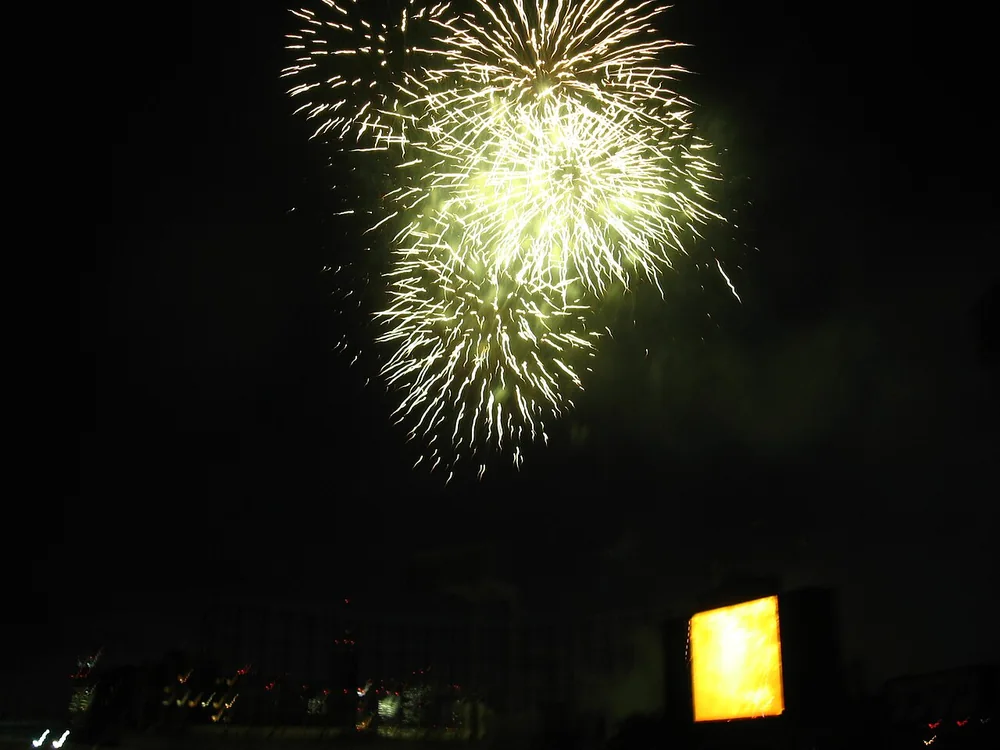
Nikkansports’ recording of the 2023 Jingu Gaien Fireworks offers a look at an earlier edition. When comparing seats for the edition you plan to attend, place the full ticket name beside that edition’s seating chart. Identify the stage direction, seating blocks, and entrance.
Nikkansports’ recording of the 2023 Jingu Gaien Fireworks shows fireworks in the night sky and accompanies this section’s discussion of earlier editions.
Compare the completed 2026 event rules for Jingu Stadium and Chichibunomiya Rugby Stadium: performances, reserved seats, restricted views, children, wheelchairs, re-entry, and station routes.
The 2026 event has ended: separate gate opening, performances, fireworks, and after-live shows
The organizer’s homepage confirms that the August 8, 2026 event has ended. Fireworks were scheduled for 7:30–8:30 p.m., with about 10,000 shots and no break during the display. Jingu Stadium opened at 4 p.m., with performances starting at 5 p.m. Chichibunomiya opened at 3 p.m.; its performance start was finally corrected to 5 p.m. That meant three and a half hours between gate opening and fireworks at Jingu and four and a half at Chichibunomiya. Early arrivals spent part of that outdoor wait in daylight. Chichibunomiya’s performance had previously been listed for 4 p.m. On August 5, the organizer explicitly changed it to 5 p.m. while retaining the 3 p.m. gate opening. The venue manager’s event list still showed the old time. In that case, use the organizer’s dated correction that specifies both the old and new times. A single “evening fireworks” block in your itinerary misses this distinction: if music is your priority, misreading the start time changes when you need to take your seat.
Gate opening means spectators can enter, not that every artist starts at once. Jingu Stadium’s ticket page said an opening act would appear from the performance start; Chichibunomiya explicitly had no opening act. The artist page also listed after-live shows, so the 8:30 p.m. fireworks finish was neither the end of the whole program nor your arrival time at the station. If you stay for the extra music, allow for it in dinner plans, return transport, and your children’s evening routine.
When using the 2026 rules for comparison, the relationships between these times are most useful. Once the next edition is announced, put your first chosen performance, entry time, and last chosen act on the same timetable. Then plan your arrival in Tokyo. Do not book a new edition’s date by carrying forward last year’s day of the week.
Jingu Stadium standard seats: locate the arena and stands before comparing prices
The 2026 ticket page divided standard stadium seating into Arena SS at ¥15,000 per person, Arena S at ¥12,000, and Arena A at ¥11,000. Stand S seats on the first-base side, third-base side, and behind home plate were all ¥12,000. Stand A seats on the third-base side were ¥11,000. S and A refer to seating blocks within that edition, not grades that mean the same thing across venues. Arena S and Stand S cost the same but have different locations and access routes.
In that price range, moving from ¥11,000 to ¥12,000 adds ¥1,000 per person or ¥2,000 for two. Moving from Arena S to SS adds ¥3,000 per person. Calculate the total for your group, then decide whether the extra cost buys a stage position you value. Mark acceptable areas, stairs, and ways to stay together before sorting by price. That is more useful than assuming SS is better in every respect.
Compare your full ticket name with the seating chart specifically for the fireworks event. Regular baseball seating information helps you understand the stands, but the concert stage and event entrances use the fireworks-day layout. If one companion wants to see the artists’ expressions while another mainly wants the night sky, agree on those priorities first. The organizer does not accept venue changes or seat exchanges after purchase; discussing different wishes afterward cannot change the booking.
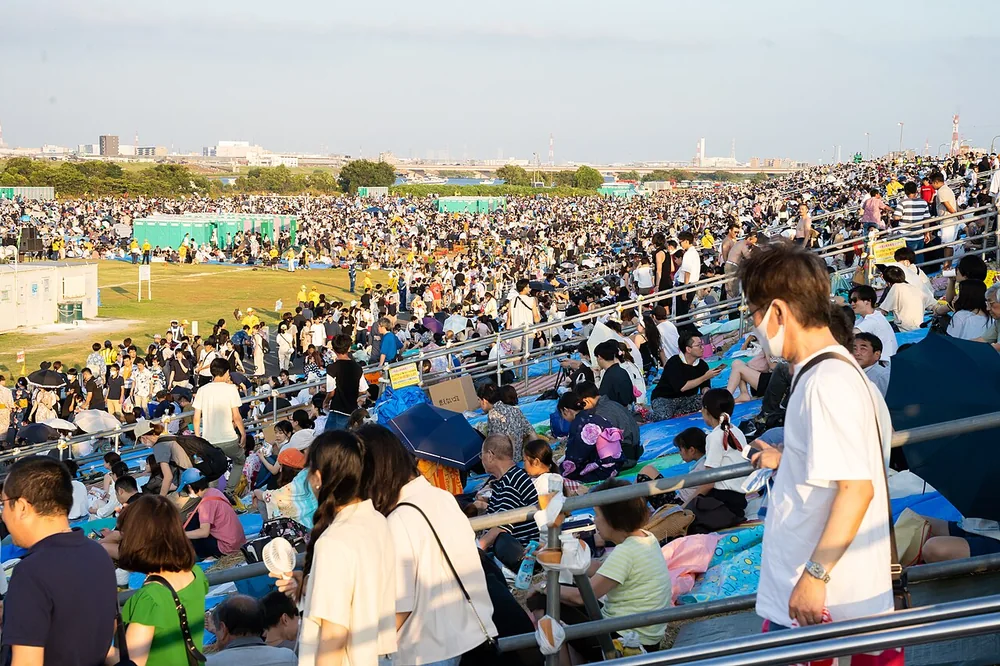
A reserved seat removes any need to spread a mat on the road to claim a viewing spot. Use the time to reach your ticketed entrance, complete any hand-baggage check, and find your block and row. Allow for the space your backpack or shopping bags will take once seated. Keep luggage within your own seat area and leave aisles clear.
Second-level roof seats and pair seats buy different features
Jingu Stadium’s second-level roof seats, added on July 18, 2026, cost ¥24,000 per person in the first four rows and ¥13,000 from row five onward. The organizer described this as the stadium’s only roofed seating area, facing the stage with a view over the field. Compare both roof coverage and the front-versus-rear row prices. Two seats in the first four rows cost ¥48,000; two from row five cost ¥26,000, a ¥22,000 difference.
The pair seats released at the same time had a side table at each seat and storage underneath. They cost ¥22,500 per person and were sold in units of two: ¥45,000 per pair. Two travelers may value the storage and space for food and drinks. A group of three cannot simply multiply the individual price by three and assume three adjacent seats of that type are available. The unit of sale is itself a selection condition.
For two adults, a ¥45,000 pair costs ¥3,000 less than two second-level seats in the first four rows at ¥48,000, but ¥19,000 more than two seats from row five at ¥26,000. These totals buy different combinations of side tables, row positions, and roof coverage. People carrying drinks and small bags may value a table, while travelers controlling costs may accept a rear row. This comparison is closer to the actual decision than ranking only the ¥22,500 and ¥24,000 individual prices.
Keep the complete Japanese product name, row range, and sales unit when comparing these additional seat types across booking screens. Add any fees shown at checkout to your group total. If you want both music and fireworks, first remove products that explicitly restrict either view, then compare standard seats and seats with added facilities. If the stage is your main purpose and you accept losing the fireworks view, examine the stage-viewing ticket. Choose the category to fit what you want to watch.
Restricted-view seats: identify whether the stage or the fireworks are affected
Jingu Stadium’s “花火観覧席(ステージ見切れ),” added on August 1, 2026, cost ¥10,000 per person. You could watch the fireworks, but parts of the stage performance, performers, or stage could be hard to see. The degree of restriction depended on the seat. Fireworks viewers willing to trade stage visibility for a lower price could consider it. Anyone attending for a particular artist and wanting performance details should remove it from their shortlist.
The other product, “ステージ観覧席(花火見切れ),” cost ¥8,000 per person. Its description was more direct: you could see the stage, but the roof blocked the fireworks. This did not mean merely losing one small part of the display. Being inside Jingu Stadium did not give these seats an open view of the night sky. Two tickets totaled ¥16,000. The apparent saving over standard seats corresponded to the fireworks content you gave up.
For both products, the organizer ruled out refunds or seat changes based on the viewing conditions. Before paying, read which view is restricted in the parentheses: stage or fireworks. Show your companions the same wording. If one person books for the group, do not translate “見切れ” as a harmless discount category. Resolve its meaning before discussing what a neighboring row might see. Additional seats also had separate release dates and sold-out statuses. In 2026, standard seats came first, seats with extra facilities followed in mid-July, and restricted-view seats in early August. A low price released at one stage was not necessarily an opening price available to everyone throughout the edition.
Chichibunomiya: distinguish standard, annotated, and restricted-stage seats
Chichibunomiya Rugby Stadium’s standard stand seats cost ¥7,000 per person in 2026. Its additional “注釈付き指定席” also cost ¥7,000, but walls, pillars, or the roof obstructed part of the fireworks, to a degree that varied by seat. Standard seats and annotated seats had different conditions despite sharing a price. Read the whole ticket name after finding the ¥7,000 figure.
That edition also offered ¥6,000 “花火観覧席(ステージ見切れ)” tickets. The fireworks were visible, but parts of the stage performance, performers, or stage could be hard to see. If music did not matter to you, that trade-off was comparable to Jingu Stadium’s ¥10,000 product with the same name. If you wanted T.N.T or CLASS SEVEN, preserve stage visibility first instead of comparing only each venue’s cheapest ticket.
For two adults, standard Chichibunomiya seats totaled ¥14,000, versus ¥22,000 for Jingu Stadium Arena A or Stand A: an ¥8,000 face-value difference. Add transport, booking fees, and food to each ticket subtotal before deciding whether the desired performance warrants that difference. The venues offer different live content, so compare prices after identifying whom you will see. One more condition changes the afternoon: Jingu Stadium allows return through a designated re-entry gate, while Chichibunomiya does not allow re-entry. If you choose Chichibunomiya and enter at its 3 p.m. opening, bring the drinking water and personal items you will need later. Do not plan to step out for a meal in Aoyama after entering. Complete outside errands before your first entry.
Ticket channels and same-day sales: keep the official route and collection instructions
General sales began at 10 a.m. on July 4, 2026. The organizer’s ticket page linked to Pia and TV Asahi Ticket. Asoview, Lawson Ticket, and e+ were later added for Chichibunomiya. Not every channel sold both venues; some were explicitly marked Chichibunomiya only. Even on a familiar platform, identify the product’s venue before checkout so payment convenience does not lead you to buy the other event ticket.
International travelers need a workable delivery process on the booking page: the required membership, telephone verification, accepted payment methods, and whether admission uses an electronic ticket or separate collection. Save the order number, collection code, venue, and seat details separately. Obtain the actual admission ticket before arrival. A booking confirmation and collection instructions serve different purposes. A screenshot of payment alone is not enough at the gate.
The organizer’s FAQ had said remaining same-day tickets would be sold online only. A newer homepage notice on event day distinguished the venues: Jingu Stadium sold online until 7:30 p.m., with no on-site counter. Chichibunomiya had both online sales and a same-day counter from 3 to 7:30 p.m. The notice said the counter did not accept cash; it accepted credit cards, transit electronic money, QR payments, and other listed methods. Sales ended when capacity was reached, and purchases could not be changed or refunded. This was an actual 2026 update, so the older FAQ sentence should not become a permanent rule.
Lost tickets were not reissued. Venue and seat changes after purchase were not accepted, and resale for profit was prohibited. For an international trip, secure tickets for the correct venue before arranging the afternoon and transport around them. That is more dependable than expecting to exchange tickets on arrival. If general sales have ended, use only legitimate channels still listed by the organizer for that edition. Do not base a booking on an unknown seller’s promise to get you inside.
Children and wheelchair users: decide ages, companion tickets, and entrances together
Both venues required tickets from age four in 2026. Children aged three and under could attend free on a guardian’s lap. Count each child using their age on event day and how they will sit, rather than railways’ school-age child-fare rules. Two adults and a four-year-old mean three ticketed spectators. At ¥11,000 per standard seat, that is ¥33,000 before booking fees. Free lap admission suits a child an adult can hold while watching. From entry through music and fireworks, the child stays in the same area for a long time, and the parent must also hold them while waiting to leave. To give a young child a separate seat, buy the seating product offered on the ticket page. Strollers were allowed but had to be folded and stored without obstructing others; they could not serve as extra aisle seating.
Wheelchair users had to buy wheelchair-space tickets. Their companion also needed the same ticket type, with at most one companion per wheelchair. Visitors watched from their own wheelchairs; none were available to borrow at the venues. In 2026, wheelchair tickets went on sale during general first-come, first-served sales. Arrange the user’s and companion’s tickets together rather than buying only one and expecting a companion to stand beside them on arrival. The entrances differed by venue. Jingu Stadium’s area was within the arena: take your collected tickets to staff at “三塁側アリーナ入口,” the third-base-side arena entrance. Chichibunomiya used its existing wheelchair area in the stands, with check-in at “銀杏並木側東入場口,” the east entrance on the ginkgo avenue side. Save the Japanese entrance name with the tickets, then connect the station’s step-free route to that gate. That gives you a complete arrival plan.
Entering Jingu Stadium: connect Shinanomachi or Kokuritsu-kyogijo to your ticketed gate
To reduce congestion, the event notices directed Jingu Stadium spectators to JR Shinanomachi or Kokuritsu-kyogijo on the Toei Oedo Line. The access page also listed Sendagaya. Many routes work on an ordinary stadium visit, but for fireworks night, follow that edition’s crowd-routing guidance and then connect to the entrance on your ticket. Navigating to the stadium’s center can overlook whether you need an arena, stand, or wheelchair entrance. The official JR Shinanomachi timetable page lists Chuo–Sobu Line local trains: east toward Ochanomizu and Chiba, west toward Shinjuku and Mitaka. When leaving your accommodation, identify this type of train rather than assuming every train labeled “Chuo Line” stops at Shinanomachi. Choose your return direction in advance too. Then follow signs to the right platform instead of comparing the whole Tokyo network in a crowd.
If you stay along the Oedo Line, consider Kokuritsu-kyogijo. The Tokyo Metropolitan Bureau of Transportation provides entrance and accessibility information for the station. With a wheelchair or stroller, connect the elevator’s street location to your ticketed stadium entrance using a step-free route. If you arrive in Gaien early, distinguish the Japan National Stadium building from the subway station with the same Japanese name. Your ticketed destination remains Jingu Stadium.
The organizer prohibited meeting inside the nearest stations and warned that communications around the event could be unreliable. Meet at your accommodation or earlier along the route, then arrive together. If entering separately, allocate everyone’s venue, gate, and tickets beforehand so the only person holding the group’s tickets is not standing at the other stadium. Open the required ticket page before reaching the gate to avoid stopping there to search email.
Entering Chichibunomiya: use the event route from Aoyama-itchome
The Chichibunomiya FAQ listed Gaienmae and Aoyama-itchome as nearby stations, but the event notices and access page specifically asked spectators to use Aoyama-itchome Station to spread the crowds. The edition’s traffic-control map marked the Chichibunomiya approach in green. Give that event-day guidance priority over ordinary “nearest station” advice. Gaienmae may be convenient on a normal day, but directing everyone down the same street defeats the event routing.
Aoyama-itchome serves the Tokyo Metro Ginza and Hanzomon lines and the Toei Oedo Line. Choose the system that suits your accommodation, then follow that edition’s permitted street route to Chichibunomiya. Keeping the same system for the return can remove an improvised change. For travelers staying toward Shibuya or on eastern subway routes, a direct trip back matters more than a small difference in the apparent station-to-stadium distance.
The 2026 map approached Chichibunomiya from the Aoyama-itchome side via the ginkgo avenue. Wheelchair check-in was also at the east entrance on that side. If you want a daytime walk around Gaien, finish on the correct entrance side instead of reaching the west side and circling back. Once evening controls start, staying on the same side is easier to follow than repeatedly crossing the areas around different venues. Read the Tokyo Metro Aoyama-itchome page and operator information for exits and step-free facilities, then follow the directions open on the day. Arrows on the event map describe the arrival route; they do not make every exit and intersection freely passable all evening. With children, older companions, or wheelchair users, complete the final street section and rest inside rather than waiting at a station exit.
Two control periods: road closures and no-entry areas have different times
The official 2026 traffic-control map used different symbols for vehicle restrictions and no-entry areas. Road traffic controls ran approximately 5:30–9:30 p.m.; access restrictions around the launch area ran approximately 7–9 p.m. Yellow indicated roads with vehicle restrictions, while blue hatching marked no-entry areas. Pedestrians followed the routes provided on site, and fireworks viewing belonged inside the ticketed venues.
Some roads were marked for residents or users of specified venues and facilities only. The inbound Gaien entrance and exit on the Shuto Expressway Route 4 Shinjuku Line were also restricted from 5:30 to 9:30 p.m. Those exceptions applied to named groups; spectators could not use an adjacent facility’s access exception to justify a taxi entering. The organizer also warned that cars could not leave nearby parking facilities during controls. Parking close by did not necessarily let you drive away immediately after the show.
The official access page explicitly said there was no free viewing venue and that viewing from roads and sidewalks was prohibited. That changes the plan for travelers without tickets: Aoyama-dori, the ginkgo avenue, and intersections beside the stadium are not substitute standing seats. Streets must remain usable for residents, other facility users, and ticket holders. Keeping them clear follows the event rules better than searching for a corner with a glimpse of fireworks. Taxis must obey closures too. For a pickup, arrange a lawful, reachable point outside the controlled area, then allow time to leave your seat and walk there. Do not place the pickup at your ticketed gate. If a companion cannot walk to an accessible pickup point, resolve accessible transport while choosing tickets, rather than expecting a vehicle to reach the gate through departing crowds.
Water, rainwear, and photography: pack around the venue rules
The organizer allowed water flasks and plastic drink bottles but prohibited glass bottles and cans. Buy drinks in permitted packaging to avoid discarding them at the entrance. A flask or bottle that fits within your seat area makes movement through the stands easier than large food bags and hard-sided coolers. Keep food packaging and trash in your own bag. Umbrellas and parasols could be brought in but could not be used during music performances or fireworks, so bring a raincoat you can wear. Roof seats are one facility option, while a raincoat also covers the outdoor walk from the station, trips away from the seat, and departure. Early arrivals face sunshine too. Choose sun protection that can be put away when performances start; do not leave an umbrella blocking other people’s view.
Photographing fireworks was allowed, but photographing the artists’ live performances was prohibited. Tripods and monopods of every size were banned. Use handheld equipment instead of carrying a support you cannot set up. Adjust camera settings and phone brightness before performances begin. When shooting the sky, avoid holding a screen or arm in front of people behind you for long periods. Pets were not allowed, smoking was prohibited in seating areas, and drones could not fly without permission. These rules determine what to bring with your fireworks ticket. If you shop in the afternoon, leave large bags at your accommodation before entering with a smaller evening bag.
Getting back after 8:30 p.m.: decide whether to stay for the after-live show
If you want aoen at Jingu Stadium or Sayuri Date at Chichibunomiya, treat that final music set as the end of your program. Entering only the 8:30 p.m. fireworks finish into a journey planner leaves out the extra performance, getting up, exiting, and walking to the station. If you have an early flight or long-distance train the next day, choose a return to your accommodation with few changes and room for delay. Avoid making the final minutes of a performance carry a tight connection.
Jingu Stadium spectators can plan around Chuo–Sobu Line local trains from Shinanomachi or the Oedo Line from Kokuritsu-kyogijo. Chichibunomiya spectators can start with the subway lines at Aoyama-itchome. Write down your accommodation-bound direction before entering, such as “Shinanomachi toward Shinjuku” or “Aoyama-itchome, Hanzomon Line toward Oshiage.” Afterward, you need only check service and local routing, without debating a station, restaurant, and hotel at the same intersection.
The traffic map also shows nearby Sendagaya, Gaienmae, and Kita-sando stations. Whether to use another station depends on the roads open that night and your companions’ energy. An unfamiliar detour after dark may take longer than the queue it avoids. Follow staff directions away from entrances first, then stop somewhere clear of traffic to organize the next leg. If your group has different accommodation, distribute tickets, phones, and individual return routes before entry. If messages fail, following the agreed route back separately is easier than waiting inside a station for the last person. The organizer warned of communications disruption, so a paper copy of the hotel name, address, and route is useful. For help on site, ask staff instead of pushing back against the crowd to search for someone.
Postponement, refunds, and artist-focused trips: cancellation on both dates is the key condition
The 2026 plan was to proceed in light rain and postpone to August 9 in severe weather. The official FAQ allowed refunds only if both August 8 and 9 were canceled. Cancellation on the 8th followed by postponement to the 9th did not qualify. If your Tokyo stay covered only the 8th, that rule could turn a usable ticket into one you could not use the next day. For a trip centered on the fireworks, whether you can stay an extra night is an important itinerary condition.
The organizer’s notices also said some artists might be unable to perform if the event moved to the 9th, with no ticket refund in that situation. If you book for a particular artist, decide whether you accept fireworks with a changed lineup. That is different from cancellation on both dates. Flights, accommodation, and other reservations follow their own booking terms. Fireworks-ticket refund rules do not replace a hotel’s cancellation deadline.
If both dates were canceled, refunds were handled by the original sales channel. Keep the complete tickets, order number, and booking-platform details, then read that channel’s procedure and deadline. If companions bought parts of the group’s tickets on different platforms, handle those orders separately. The organizer’s FAQ specified where refunds were processed; there was no need to seek one at another seller’s counter.
The edition’s official overview had said a severe-weather decision would be posted at noon, while the FAQ said 2 p.m. The August 8 homepage also retained a 7 a.m. “planned to proceed” update and a 2 p.m. “will proceed” update. On event day, use the latest timestamped homepage status when deciding when to leave or wait, rather than relying on a single fixed announcement time.
A few useful answers
Can I still buy tickets for the 2026 Jingu Gaien Fireworks?
The 45th event ended on August 8, 2026. The prices, venues, and controls in this guide describe that edition. The organizer’s new announcements govern the next edition’s date and sales.
Do Jingu Stadium and Chichibunomiya have the same live acts?
They have separate lineups. In 2026, Jingu Stadium included Shonan no Kaze and ≒JOY; Chichibunomiya included CLASS SEVEN and T.N.T. Their after-live shows also differed. Choose your artist’s venue, then buy tickets for it.
Is Jingu Stadium’s ¥8,000 stage-viewing seat suitable for fireworks?
The 2026 product was ステージ観覧席(花火見切れ). The official description said the roof blocked the fireworks. Its purpose was stage viewing.
How are tickets counted for children aged three and four?
In 2026, children aged four and over needed tickets. Those aged three and under could attend free on a guardian’s lap. Strollers could enter but had to be folded and stored without obstructing others.
Does a wheelchair companion need a ticket?
Yes, a wheelchair-space ticket was required, with at most one companion per wheelchair. Check in at Jingu Stadium’s third-base-side arena entrance or Chichibunomiya’s east entrance on the ginkgo avenue side.
Can I leave and come back after entering?
In 2026, Jingu Stadium allowed return through its designated re-entry gate. Chichibunomiya did not allow re-entry.
Can I wait for fireworks on the ginkgo avenue or roads without a ticket?
The organizer provided no free viewing venue. Viewing from roads or sidewalks was prohibited, and people without tickets were asked not to gather around the event.
Can I get a refund if only August 8 is canceled?
The 2026 rules required cancellation on both August 8 and 9 for a refund. Postponement to the 9th after cancellation on the 8th did not qualify. Nor did an artist’s inability to appear because of postponement.
Official information and references
Sources used in this guide.
- Jingu Gaien Fireworks organizer: 2026 conclusion, time correction, and event-day sales notices
- Jingu Gaien Fireworks organizer: overview of the 45th event in 2026
- Jingu Gaien Fireworks organizer: 2026 venue prices and additional-seat conditions
- Jingu Gaien Fireworks organizer: 2026 lineups and after-live shows at both venues
- Jingu Gaien Fireworks organizer: FAQ on children, wheelchairs, re-entry, photography, and refunds
- Jingu Gaien Fireworks organizer: designated stations and venue rules
- Jingu Gaien Fireworks organizer: venue access and no free viewing area
- Jingu Gaien Fireworks organizer: traffic-control map dated July 8, 2026
- JR East: Shinanomachi Station routes and directions
- Tokyo Metro: Aoyama-itchome Station
- Tokyo Metropolitan Bureau of Transportation: Kokuritsu-kyogijo Station
- Meiji Jingu Gaien: rail access points
- Japan Sport Council: Chichibunomiya 2026 event list, retaining the former 4 p.m. start