Tokyo winter attractions and illuminations for 2026–27, covering lighting dates in Marunouchi, Hibiya, Roppongi, and Ebisu, observation deck ticket prices, and post-Christmas, rainy-day, and New Year's Day plans.
- Region & Focus
- TokyoWhen to visit
- Reading Scope
- 28 min read · 7 chapters · 6 Q&As
- Official Verification
- 37 official sources checkedUpdated November 22, 2026
- Key Topics
- WinterSeasonsTokyo & Kanto
Chapter Route Map (tap any stop)
- Pick a Night Based on Your Travel Dates
- Walking Tokyo Station, Gyoko-dori, and Hibiya
- Roppongi Hills, Tokyo Midtown, and the Ice Rink
- Yebisu Garden Place: Chandelier, Promenade, and Indoor Backups
- Which Tokyo Observation Deck to Choose in Winter
- Christmas Markets and Daytime Backups Around New Year's
- Where to Stay and How to End the Night
- Quick Q&A
Visiting Tokyo in December 2026? For your first night of winter illuminations, start at Tokyo Station's Marunouchi exit and walk south under the lit trees toward Hibiya. If you want Tokyo Tower in your night photos, head to Roppongi Hills' Keyakizaka Street—and before December 20, you can pair it with Tokyo Midtown's soap-bubble light show. After Christmas, lights keep glowing in Marunouchi, Hibiya, and Ebisu. For daytime observation decks, keep in mind that sunset hits around 4:30 PM in early December, so book an entry slot well ahead of dinner.
Pick a Night Based on Your Travel Dates
The walk from Tokyo Station to Hibiya works best for first-time visitors. You start at the red-brick station, stroll under the Marunouchi street trees, and continue through Yurakucho to Hibiya—with plenty of buildings to duck into for dinner and train stations at both ends when your feet get tired. If you want Tokyo Tower in the frame, book dinner in Roppongi and walk from Keyakizaka to Tokyo Midtown afterward. Traveling with older relatives or looking for a shorter stroll? Head to Yebisu Garden Place. A covered walkway leads straight from the JR station to the Clock Plaza, where you can decide whether to continue down to the Center Plaza.
November 26 to December 20, 2026, is the sweet spot when Roppongi's Keyakizaka lights and Tokyo Midtown's bubble show run on the same night. From December 21 to 25, Tokyo Midtown Garden still runs its light show alongside several Christmas markets around the city. Starting December 26, shift your focus to Marunouchi, Hibiya, and Ebisu. Even after January 12, Ebisu keeps its outdoor illuminations lit, though the centerpiece shifts from the Center Plaza chandelier back to the sloping promenade and brick buildings. Once Marunouchi's main stretch wraps up on February 15, guests staying near Tokyo Station can ride straight to Hibiya instead of hunting for Christmas displays along Naka-dori.
If you only have an hour or two on arrival day, pick a neighborhood near your hotel and keep the first night to dinner and a walk. Observation decks usually require checking in on a separate floor, and booking a sunset slot on arrival day piles immigration, baggage claim, and airport transit delays onto a fixed entry time. Save the decks for day two and pair that evening with a free, unticketed illumination walk that's easy to shuffle around. With kids in tow, pick an endpoint where you can sit down for a hot meal, and pin that building on your map before heading out.
| Venue | Dates | Standard Hours | Special Notes |
|---|---|---|---|
| Marunouchi Naka-dori | Nov 12, 2026 – Feb 14, 2027 | 16:00–23:00 | Extended until midnight in Dec; Gyoko-dori runs Nov 27–Dec 25 |
| Hibiya Naka-dori & 6F Garden | Nov 12, 2026 – Feb 28, 2027 | 16:00–23:00 | Naka-dori switches to deep blue from Dec 26 |
| Roppongi Keyakizaka | Nov 5 – Dec 25, 2026 | 17:00–22:00 | 66 Plaza follows a separate lighting schedule |
| Tokyo Midtown MIDWINTER LIGHTS | Nov 26 – Dec 25, 2026 | 17:00–23:00 | Bubble show runs through Dec 20 |
| Yebisu Garden Place Outdoor Lights | Nov 14, 2026 – Feb 28, 2027 | 16:00–23:00 | Baccarat chandelier runs through Jan 11 (11:00–23:00 daily) |
Tokyo winter attractions and illuminations for 2026–27, covering lighting dates in Marunouchi, Hibiya, Roppongi, and Ebisu, observation deck ticket prices, and post-Christmas, rainy-day, and New Year's Day plans.
Walking Tokyo Station, Gyoko-dori, and Hibiya
To see Tokyo Station's historic facade, exit JR Tokyo Station on the ground floor via the Marunouchi Central Gate onto Marunouchi Station Square. Walk along Gyoko-dori toward the Imperial Palace, then turn back for a clear front view of the red-brick building. Marunouchi Naka-dori intersects Gyoko-dori one block west—turn onto Naka-dori near the Marunouchi Building or Shin-Marunouchi Building to see the lit trees. If you arrive by bus on the Yaesu side, follow the station or underground passage signs for Marunouchi to cross through first. When meeting friends at the station, write "outside the JR ground-floor Marunouchi Central Gate" rather than just "Tokyo Station Central Gate."
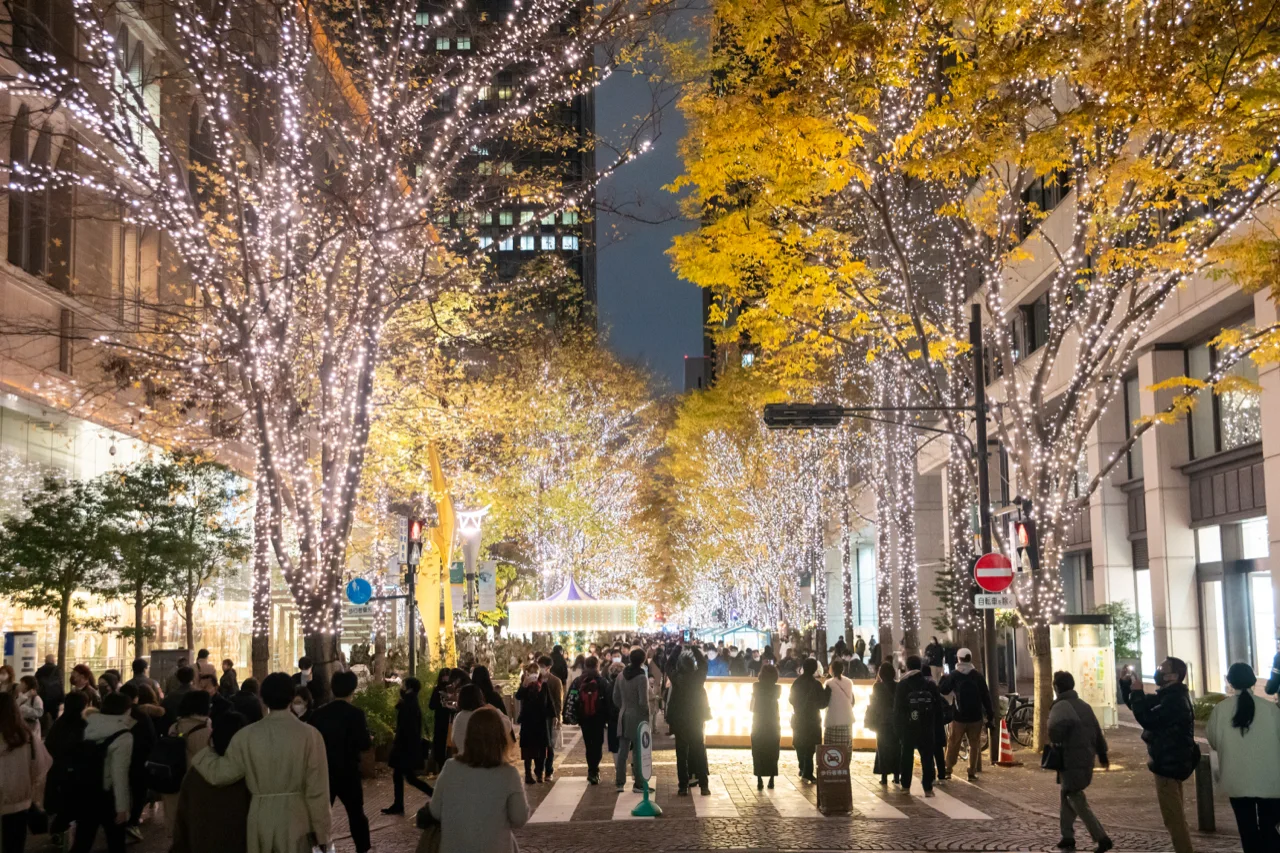
The 25th annual Marunouchi Illumination runs from November 12, 2026, through February 14, 2027. Stretching roughly 1.2 km along Naka-dori, it lights up about 200 street trees across Marunouchi, Yurakucho, and Otemachi. Standard hours are 16:00 to 23:00, extending until midnight (24:00) from December 1 to 31. Gyoko-dori keeps its own schedule from November 27 to December 25, also lit from 16:00 to 24:00. To see both streets in December, photograph the station from Gyoko-dori first, then walk south down Naka-dori toward Yurakucho for dinner. If you want to catch the seasonal Harry Potter-themed indoor installations inside the Marunouchi and Shin-Marunouchi buildings, visit by December 25.
Continue south from Yurakucho to Tokyo Midtown Hibiya, where the display splits across the Step Plaza out front, Hibiya Naka-dori along the street, and the 6F Park View Garden. The easiest order is to cover the street-level lights first. When you are ready for the 6th-floor garden, take the elevator up—the terrace looks down over the park, while the plaza installations sit right at your feet, so you can skip one or the other depending on how much walking your group wants to do. Heading straight to Hibiya? Take the Hibiya Line (H08), Chiyoda Line (C09), or Toei Mita Line to Hibiya Station and follow underground exit A11 directly into Tokyo Midtown Hibiya. If you walked down from Tokyo Station, hopping on the train at Hibiya saves you from backtracking up Naka-dori.
The long-season lights along Hibiya Naka-dori and the 6th-floor garden run from November 12, 2026, to February 28, 2027, from 16:00 to 23:00. Naka-dori glows gold and amber through December 25 before switching to a deep-blue palette from December 26 onward. After Christmas, walking from Marunouchi's golden trees straight into Hibiya's deep-blue stretch gives you two distinct moods in a single evening. With an early dinner reservation, arrive at Tokyo Station around 16:00 to catch the plaza in lingering twilight, eat, and stroll down to Hibiya afterward. In the rain, enter the mall straight from Hibiya Station for dinner and keep your umbrella walk to the short strip beside Step Plaza.
The Creema handmade crafts and accessories market pops up at Tokyo Midtown Hibiya on December 19–21 and December 23–25. Note that the market is closed on December 22, so meet friends at a restaurant or the plaza if you go that night. If you are planning dinner around the stalls, separate food huts from craft stalls—grab bites toward Marunouchi and browse handmade goods after dinner so you aren't carrying shopping bags through the next mall. If the area gets crowded at closing time, pick a specific floor inside the mall as a meeting spot rather than a tree on a street corner.
Roppongi Hills, Tokyo Midtown, and the Ice Rink
Roppongi's illuminations sit in two separate complexes near Roppongi Station. Roppongi Hills is on the Mori Tower side—take the Hibiya Line to Roppongi Station and follow Exit 1C through the concourse directly into the complex. From Shibuya, Toei Bus RH01 stops at both "Roppongi Hills" and "Roppongi Keyakizaka," letting you start at whichever end you want to photograph first. From 66 Plaza near Mori Tower, walk through Oyane Plaza to reach Keyakizaka Street. Tokyo Midtown lies across Gaien-Higashi-dori; take the Toei Oedo Line to Roppongi Station Exit 8 for direct access. There is also an underground passage from the Hibiya Line, though it includes stairs—wheelchairs and strollers are better off using the elevator-equipped Oedo Line route. On the Chiyoda Line, Nogizaka Station Exit 3 is about a 3-minute walk to Tokyo Midtown, making it easy to visit Midtown first and walk over to Roppongi Hills.
Keyakizaka's SNOW & BLUE illumination runs from November 5 to December 25, 2026, from 17:00 to 22:00, draping roughly 970,000 lights along a 400-meter slope. To frame Tokyo Tower between the glowing trees, claim a steady spot where the tower is clearly visible before shooting. When crowds pack the pedestrian bridge or the top of the slope, step onto the side sidewalks—you still get full views of the lined trees without waiting at the crosswalk. If you come down from Mori Tower late in the evening, do Keyakizaka first and save 66 Plaza for your walk back to the station. 66 Plaza is lit from November 13 to December 25, generally from 17:00 to 24:00 (turning off at 23:00 on the final night).
To work dinner into the route, note that the Oyane Plaza Christmas Market (November 21 – December 25) closes at 21:00—one hour earlier than Keyakizaka. If you arrive at Roppongi Hills before 17:00, browse the stalls and grab snacks before Keyakizaka switches on. If you already have a weekend dinner booking, treat the market as a quick stop and keep moving if food lines get long. Even under the covered plaza roof, winter nights carry a brisk wind, so save sit-down meals for restaurants inside the complex.
Tokyo Midtown Garden's MIDWINTER LIGHTS runs free from November 26 to December 25, 2026, from 17:00 to 23:00. Each light sequence lasts about 4 minutes; the soap-bubble effect runs through December 20, while the regular light show continues afterward. For a bubble-focused evening, either catch one cycle at 17:00 before walking to Keyakizaka for dinner, or dine at Roppongi Hills first and reach Midtown Garden before 23:00. To avoid crossing the main avenue twice, finish at whichever complex sits closer to your hotel or train line. Midtown's "Hikari no Sanpomichi" (Path of Light) stays lit from 17:00 to 23:00 through February 23, 2027, with light-changing performances on the hour and half-hour—handy for timing a quick post-dinner stroll in January or February.
Tokyo Midtown's outdoor ice rink operates from December 5, 2026, to February 23, 2027 (closed January 1), open 11:00 to 21:00 with last entry at 20:00. Weekday skating fees are ¥2,000 for high school students and adults, and ¥1,400 for junior high students and younger, plus ¥500 for skate rentals. During the December 12 – January 3 holiday period, posted rates rise to ¥2,300 and ¥1,700, respectively, with a ¥300 spectator admission fee. For a family of two adults and one child all skating with rentals during holiday rates, that single stop comes to ¥7,800. Skating before visiting both light zones easily pushes dinner late, so consider eating at Midtown first and walking to Keyakizaka if everyone still has energy. Because the rink may adjust hours for bad weather or unsuitable temperatures, keep indoor dining and shopping at Midtown as your backup plan.
Yebisu Garden Place: Chandelier, Promenade, and Indoor Backups
Exit JR Ebisu Station via the East Exit ticket gates, turn right, and follow signs along the Ebisu Skywalk—the official listed walk is about 5 minutes. On the Tokyo Metro Hibiya Line, Exit 1 takes roughly 7 minutes. Most of the approach from the JR station is covered, though the promenade slope and Center Plaza inside Yebisu Garden Place are outdoors. If anyone in your group walks slowly, pause at the Clock Plaza right by the entrance before deciding whether to head down the slope, since you return to the JR station the same way. If you plan to visit the Tokyo Photographic Art Museum, spot its directional signs on the way in so finding the station in the dark is effortless.
The complex's champagne-gold illuminations light the entrance, Clock Plaza, promenade slope, and Chateau Square from November 14, 2026, through February 28, 2027, from 16:00 to 23:00. The Baccarat ETERNAL LIGHTS crystal chandelier in Center Plaza runs from November 14 through January 11, lit daily from 11:00 to 23:00. The complex's advertised 100,000 lights refer to the outdoor trees and grounds, whereas the Baccarat display is a single chandelier fitted with 250 lights. Visiting by day to see the crystal and returning after dark for the trees means walking the same stretch twice; if you only have an hour, arrive just after 16:00 to catch both at once.
For the 10-meter Christmas tree, stop at Clock Plaza first. Both the tree and the Clock Plaza market run through December 25, 2026, while the Chateau Square market opens from November 27. Both markets operate 17:00–20:00 on weekdays and 12:00–20:00 on weekends and public holidays, and may cancel in rain or strong winds. Coming from Shibuya after work for dinner? Browse the stalls before 20:00. If you arrive in Ebisu later, walk straight down to Chateau Square for the illuminated chateau facade and grab dinner back near the station without rushing to beat stall closing times.
When it rains, ducking into an indoor gallery beats waiting out the dusk on an open slope. The Tokyo Photographic Art Museum is normally open 10:00–18:00 (until 20:00 on Thursdays and Fridays), with last admission 30 minutes before closing and separate tickets per exhibition. It closes for the year-end holidays from December 28, 2026, to January 1, 2027, then reopens January 2 and 3 (10:00–18:00) with free admission to the 2nd- and 3rd-floor galleries (the 4th-floor library remains closed). It closes again on January 4, and has a scheduled maintenance closure from January 18 to February 4. On January 2, you can tour the galleries in the afternoon and step out for the chandelier at dusk without having to time a specific lighting ceremony. On museum closure days, swap the indoor stop for shops and cafes in Center Plaza along the exact same covered path.
Which Tokyo Observation Deck to Choose in Winter
To watch late-afternoon sunlight shift into city lights, check sunset times before locking in your ticket. According to the National Astronomical Observatory of Japan, sunset in Tokyo in early December 2026 falls around 16:28. Entering at 16:30 often leaves only twilight glow. To catch lit streets and dusk colors, aim for an entry slot between 15:00 and 15:30, and arrive at the station early enough to clear the ticket gate, ride the elevator, and claim a window spot. If your priority is seeing Mount Fuji, keep a flexible morning open to swap in whichever day brings clear skies. When clouds hide the mountain by late afternoon, shift your focus to nearby buildings and street lights—higher floors mainly change the downward angle over the city.
Tokyo Skytree pairs naturally with Asakusa, the Sumida River, and Oshiage. Ride the Hanzomon Line or Toei Asakusa Line to Oshiage Station and walk about 7 minutes from the gates to the 4th-floor main entrance (use the accessible elevator lobby in East Yard if needed). Both the West and East exits of Tobu Railway's Tokyo Skytree Station also lead straight to the 4th floor. Standard tickets for the 350m Tembo Deck start at ¥1,800 for adults and ¥900 for children; combo tickets adding the 450m Tembo Galleria start at ¥3,000 for adults and ¥1,500 for children, with dynamic pricing by date and time slot (high schoolers and up pay adult rates; junior high students and younger pay child rates). Buying at the 4th-floor counter or kiosk adds a ¥500 per-ticket issuing fee. If you start with a Tembo Deck ticket, you can upgrade to the Galleria on-site for ¥1,400 (adults) or ¥700 (children), though upgrades may pause when crowded. Save the higher combo spend for clear-visibility days and start at 350m otherwise.
Tokyo City View at Roppongi Hills sits indoors on the 52nd floor of Mori Tower (the former rooftop Sky Deck has permanently closed). From November 13, 2026, through February 14, 2027, it hosts "The Little Prince" exhibition, open 10:00 to 22:00 (last entry 21:30). Exhibition-period adult tickets are ¥2,200 online or ¥2,400 at the 3rd-floor counter, and ¥1,000 online for ages 4 through junior high; a ¥3,000 pair ticket is also sold through December 25. Entry uses timed slots, and same-day counter sales depend on availability. In January or early February, when you want an elevated view of Tokyo Tower without standing in winter wind, this indoor deck pairs cleanly with Tokyo Midtown's long-season lights—and if rain or fog cuts visibility, you still have the exhibition inside.
SHIBUYA SKY works best if you are already spending the afternoon in Shibuya. Follow subway exit B6 toward Shibuya Scramble Square and take the elevator to the 14th-floor entrance before ascending to the deck. Official online adult tickets cost ¥2,700 for entry before 14:59 and ¥3,400 from 15:00 onward, released two weeks in advance. Once an adult slot sells out online, no same-day counter tickets are available for that time. Children aged 6–11 (and 12-year-olds still in elementary school) use a ¥1,200 child ticket purchased at the counter—secure the adult slot online first, then sort out child tickets on arrival. The open-air rooftop closes during high winds, rain, snow, or approaching thunderclouds, while the 46th-floor indoor Sky Gallery stays open. Under official ticket terms, eligible official-site tickets whose reserved entry falls during a rooftop closure qualify for free same-day cancellation prior to entry—check rooftop status before scanning your QR code if you want that option.
When shooting from an observation deck in winter, decide ahead whether wind or glass glare is your bigger obstacle. Shibuya's open rooftop restricts loose gear—only phones or small pocketable/strapped cameras are allowed, while bags and tripods go into lockers. Skytree and Tokyo City View shoot through glass, so stand close to the pane at night to minimize reflections from interior lighting. On a first visit with kids, handle restrooms, lockers, and a backup meetup spot on the arrival floor before walking out to the windows so nobody gets separated near the elevator queues.
Staying in Roppongi during a stretch of rainy days? Swap outdoor walks for the Mori Art Museum on Mori Tower's 53rd floor. "Mariko Mori: Sansan" runs through March 28, 2027, with online adult tickets at ¥2,600 on weekdays and ¥2,800 on weekends and holidays (free for junior high students and younger). The museum usually stays open until 22:00, except Tuesdays when it closes at 17:00—important to double-check if you plan an evening museum-and-lights combo after a day trip to Hakone or Kamakura. A ¥4,500 online adult combo covers both Mori Art Museum and "The Little Prince" below, though combo sales are suspended from December 18, 2026, through January 3, 2027 (book separately during those dates). On dark, overcast days, pick the exhibition you care about most first and save the second ticket for the next day.
Christmas Markets and Daytime Backups Around New Year's
The ticketed Tokyo Christmas Market in Shiba Park and the handmade market in Hibiya are run by separate organizers. The Shiba Park event runs December 4–25, 2026, entering via Onarimon Station Square, about a 1-minute walk from Toei Mita Line Onarimon Station Exit A6. It opens at 16:00 on day one and 11:00 daily thereafter, with last entry at 21:00. Through December 23, entry costs ¥1,000 for adults on weekdays, ¥1,500 on weekends, and ¥500 for elementary students; on Christmas Eve and Christmas Day, rates rise to ¥2,000 for adults and ¥1,000 for elementary students (free for preschoolers). If your family just wants lights and dinner, Oyane Plaza in Roppongi Hills or Marunouchi Naka-dori skips the admission fee; include Onarimon if you want wooden huts and hot food right near Tokyo Tower, with a direct Mita Line ride back to Hibiya. The market's second ticketed venue in Shin-Toyosu runs November 20 – December 25 and fits best as a stop on the way back from the waterfront.
Spending an evening in Sumida in December? Have lunch in Asakusa and cross over to Oshiage in the afternoon. Tokyo Skytree Town's Dream Christmas runs from November 5 to December 25, 2026—anchor your afternoon around your 4th-floor deck check-in time, then browse the mall and outdoor lights below. If rain moves in, families can pivot to Sumida Aquarium on the 5th and 6th floors of the same complex (adults ¥2,700). Because the deck and aquarium sell separate tickets, book just one paid attraction in advance and leave the other slot open for shopping and dining so you can adjust to the weather. Staying near Tokyo Station? Take the JR Sobu Rapid Line to Kinshicho and transfer one stop on the Hanzomon Line to Oshiage, then ride the Ginza Line back if you finish with dinner in Asakusa.
Once Christmas passes, check museum holiday closures before heading to Ueno. The Tokyo National Museum is closed for maintenance on December 15; from December 22 to 25, only the Gallery of Horyuji Treasures and the Kuroda Memorial Hall open; and the entire complex closes for year-end holidays from December 26 to 31. On January 1, 2027, it opens from 12:00 noon to 20:00. Regular exhibition admission is ¥1,000 for adults and ¥500 for university students. Exit Ueno Station via the Park Exit and walk straight toward the grounds; bag inspections take place at the main gate, so leave rolling suitcases in a station locker or at your hotel. To see the Main Gallery (Honkan) before New Year's, go prior to December 22. On January 1, save the morning for shrine visits or breakfast, enter the museum after lunch, and finish around Tokyo Station for dinner and lights. See our Tokyo National Museum visit guide for building schedules and ticket details.
For New Year's Day sunrise, Tokyo Skytree runs a special early opening on January 1, 2027, from 5:30 to 7:30 JST; the online lottery for standard tickets (¥11,000, including both decks and a ¥1,000 shop voucher) closes November 26, 2026, at 23:59 JST, and applications cannot be canceled or refunded. Regular hours begin at 8:00 JST. Staying in Oshiage or Sumida avoids pre-dawn cross-city transfers. If you just want a post-sunrise view, Tokyo Metropolitan Government Building in Shinjuku opens both its North and South observation rooms free to the general public on January 1 from 7:30 to 17:00 JST (the 6:00–7:30 South room slot is lottery-only). Both rooms close December 29–31 and January 2–3, making January 1 a standalone opening. Traveling with older relatives on New Year's Day? Stick to one free daytime deck and ride over to Ebisu or Yurakucho in the afternoon.
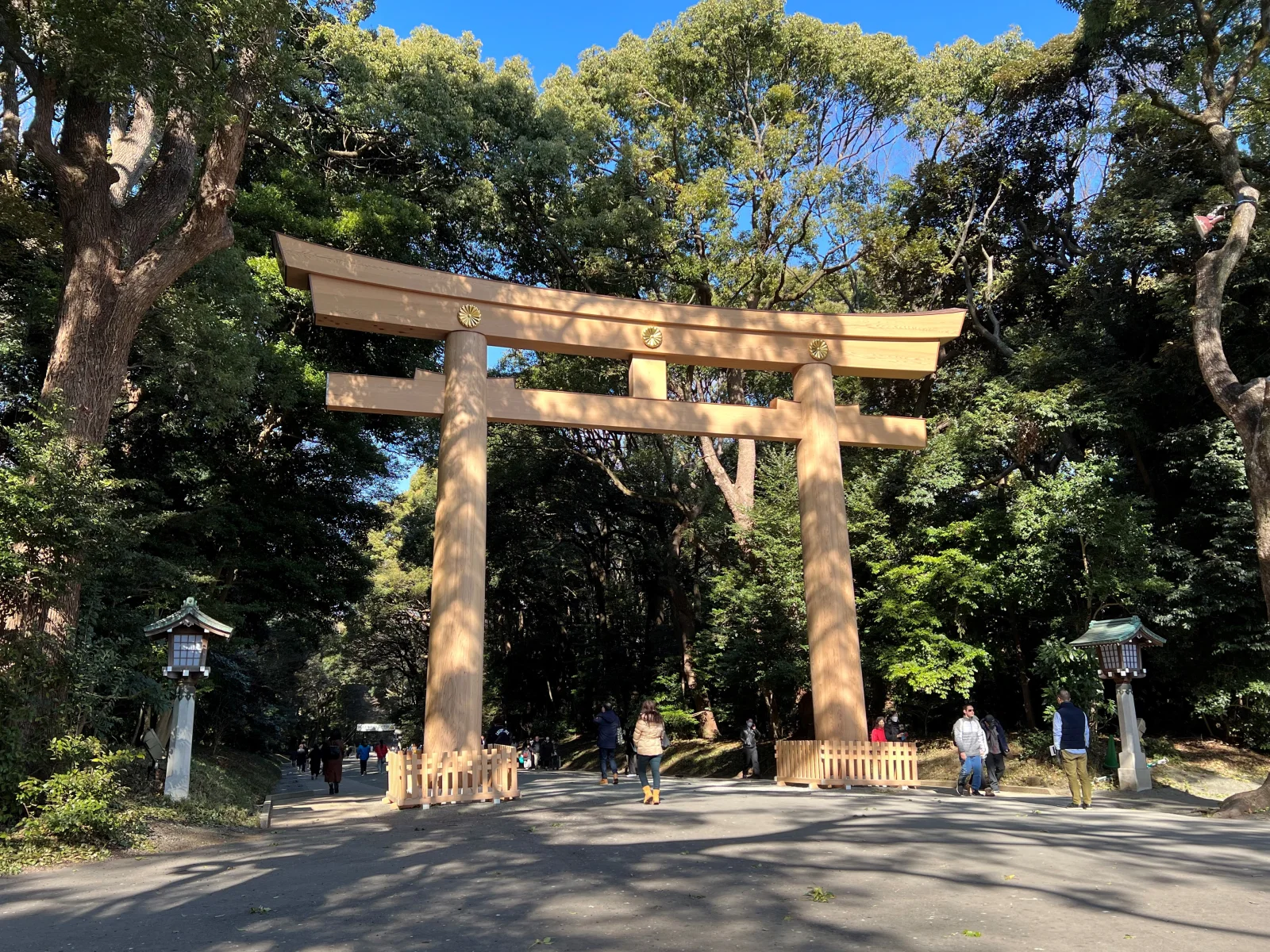
Keep hatsumode (first shrine visit of the year) separate from evening light routes. Pairing Senso-ji with Tokyo Skytree keeps your January 1 morning on the same side of town before crossing the Sumida River. Heading to Meiji Jingu? Enter from the Harajuku side via Harajuku Station or Meiji-jingumae Station and walk the forested approach to the main precinct. If this is your first time navigating New Year's crowds, leave a generous buffer between shrine lines and any fixed restaurant or observation deck bookings. If people in your group split up between prayer lines and charm counters, agree on a clear station exit as your meetup point so anyone finished early can head to lunch.
Where to Stay and How to End the Night
If you only have two nights in Tokyo before catching an early Shinkansen, staying in Marunouchi or Yurakucho lets you scale your evening light walk up or down. On the west (Marunouchi) side of Tokyo Station, you can drop your bags and step straight onto Station Square for night photos of the red-brick facade. Staying on the Yaesu side is equally convenient for morning trains, though it adds a cross-station walk at night. If you want to finish with Hibiya's lights before checking out, hotels around Yurakucho and Hibiya let you walk straight down Naka-dori from Tokyo Station back to your room, with Ginza right next door for dinner. Always check the real walking route from the specific station exit to your hotel—and verify elevator access if you're rolling luggage through underground passages.
Two concrete Tokyo Station options illustrate the trade-off. Hotel Metropolitan Tokyo Marunouchi connects directly to the Nihombashi Exit at the northeast corner of the station, making Shinkansen transfers effortless while still letting you walk across to the Marunouchi side at night. Remm Hibiya sits by Tokyo Takarazuka Theater—about 4 minutes from JR Yurakucho Station's Hibiya Exit and 2 minutes from Chiyoda Line Hibiya Station Exit A13—so you can walk straight back after seeing Hibiya's lights. Book the former if you have an early departure and want Marunouchi and Hibiya in one night; pick the latter if you plan to dine around Yurakucho and Ginza two evenings in a row without crossing Tokyo Station daily.
Spending two nights focused on museums, observation decks, and illuminations? Base yourself around Roppongi Station. Because Roppongi Hills and Tokyo Midtown sit on opposite sides of the district, staying near the Hibiya Line makes the walk back from Keyakizaka smoother, while hotels near Oedo Line Exit 8 put you steps from Midtown Garden. If you are already staying in Ueno for your first night and flying out via Ueno at the end of your trip, changing hotels just for winter lights means repacking and storing bags for no reason—simply ride the Hibiya Line to cover Roppongi one night and Ebisu the next.
If your trip includes Shibuya shopping or a next-day walk to Harajuku, pairing Shibuya and Ebisu evenings works cleanly. Shibuya Station's maze of exits often makes the real walk from shopping centers to hotels longer than a straight map line suggests; if your hotel sits on the opposite side of the Yamanote tracks, meet for dinner at a specific mall floor or entrance rather than outside on the street. In Ebisu, staying on the east side puts you close to Yebisu Garden Place, letting you dine first and stroll afterward; guests on the west side have easy Hibiya Line access but a slightly longer walk across to the East Exit. With strollers and toddlers, pick one fixed station entrance as your split-up point so anyone tired can head back early. At JR-East Hotel Mets Shibuya, the hotel is about a 4-minute walk from the New South Gate via Shibuya Stream—use that same side after coming down from SHIBUYA SKY to save an extra loop with shopping bags on your final night.
Build your evening budget around the tickets you actually plan to buy. Marunouchi's street trees, Keyakizaka, Tokyo Midtown Garden, and Ebisu's outdoor lights are all free. In Roppongi, anchor one evening around either an indoor exhibition or the ice rink; if you want both, book the earlier slot first and see how much energy remains after dinner. For example, two adults pairing lights with "The Little Prince" before December 25 spend ¥3,000 total on the pair ticket before food and transit; switching to weekday skating at Midtown costs ¥5,000 total for two adults including standard skate rentals. Food and crafts at Christmas markets are pay-as-you-go—if your group already has a dinner reservation, treat the market as an optional stop for mulled wine or gifts, with the nearest station exit ready if anyone wants to head back early.
A few useful answers
Are Tokyo winter illuminations still lit after Christmas?
Yes. Marunouchi Naka-dori stays lit through February 14, 2027, while Hibiya Naka-dori, Hibiya's 6th-floor garden, and Yebisu Garden Place continue through February 28. Note that Ebisu's Baccarat chandelier ends earlier on January 11.
Until when can you see the bubble light show in Roppongi?
The soap-bubble effect at Tokyo Midtown Garden runs through December 20, 2026. The standard MIDWINTER LIGHTS display continues through December 25, lit daily from 17:00 to 23:00.
Which Tokyo Station exit is best for seeing the Marunouchi lights for the first time?
Leave JR Tokyo Station on the ground floor via the Marunouchi Central Gate onto Station Square to view the red-brick facade, walk down Gyoko-dori toward the Imperial Palace until it meets Marunouchi Naka-dori, and turn south toward Yurakucho.
What time should I book a Tokyo observation deck in winter?
In early December 2026, sunset falls around 16:28. To see daylight shift into night views, book entry around 15:00–15:30 and arrive early at the ticket gate. Note that SHIBUYA SKY's online adult fare increases starting with the 15:00 slots.
What are good rainy-day indoor backups in Tokyo over New Year's?
In Oshiage, pivot to Tokyo Skytree Town or Sumida Aquarium. In Ebisu, the Tokyo Photographic Art Museum closes December 28 through January 1 and reopens January 2. On January 1, the Tokyo National Museum opens from 12:00 noon to 20:00.
Can you go ice skating in Roppongi on January 1, 2027?
No—Tokyo Midtown's outdoor ice rink is closed on New Year's Day. For a January 1 indoor backup, visit the Tokyo Metropolitan Government Building observation rooms in Shinjuku, open free to the general public from 7:30 to 17:00 JST.
Official information and references
Sources used in this guide.
- Marunouchi.com: Marunouchi Winter Events, Gyoko-dori, and Markets
- Chiyoda City Tourism Association: Marunouchi Illumination Dates and Coverage
- JR East: Tokyo Station Gates and Station Map
- Tokyo Midtown Hibiya: 2026 Illuminations, Color Schemes, and Markets
- Tokyo Metro: Hibiya Station Exit A11 and Station Layout
- Roppongi Hills: Keyakizaka, 66 Plaza, and Oyane Plaza Events
- Mori Building: Roppongi Hills Christmas Event Announcement
- Roppongi Hills Museum & Observatory: Exit 1C and Bus Access
- Tokyo Midtown Roppongi: Winter Illuminations, Bubble Show, and Ice Rink Fees
- Tokyo Midtown: Oedo Line Exit 8 and Nogizaka Access
- Yebisu Garden Place: Long-Season Winter Illuminations
- Yebisu Garden Place: Baccarat Exhibition Dates and Lighting Hours
- Yebisu Garden Place: Access and JR East Exit Route
- Tokyo Photographic Art Museum: Year-End and New Year Schedule Notice
- Tokyo Photographic Art Museum: Opening Hours and Closed Days
- National Astronomical Observatory of Japan: December 2026 Tokyo Sunrise and Sunset Table
- Tokyo Skytree: Observation Deck Ticket Prices and Issuing Fees
- Tokyo Skytree: 4th-Floor Entrance and Accessible Route
- Tokyo Skytree: Public Transit Lines and Transfers
- Tokyo City View: 'The Little Prince' Exhibition Tickets and Dates
- Tokyo City View: Rooftop Sky Deck Permanent Closure Notice
- SHIBUYA SKY: Ticketing and Rooftop Safety Rules
- SHIBUYA SKY: Shibuya Station Exit B6 and 14th-Floor Entrance
- SHIBUYA SKY: Official Online Ticket and Rooftop Closure Refund Terms
- Tokyo Christmas Market Shiba Park: Ticket Prices, Entrance, and Hours
- Tokyo Christmas Market 2026: Shiba Park and Shin-Toyosu Dates
- Tokyo Skytree Town: Dream Christmas 2026
- Sumida Aquarium: Admission Ticket Prices
- Sumida Aquarium: Floors and Access
- Tokyo National Museum: Opening Days, Ticket Prices, and Entry Rules
- Tokyo Skytree: 2027 New Year's Day First Sunrise Special Opening
- Tokyo Metropolitan Government Bureau of Finance: Observatory Regular and New Year's Day Notice
- Meiji Jingu: Hatsumode Harajuku Entrance and Access
- Mori Art Museum: 'Mariko Mori: Sansan' Dates, Tickets, and Combo Restrictions
- Hotel Metropolitan Tokyo Marunouchi: Nihombashi Exit Access Route
- Remm Hibiya: Walking Routes from Hibiya and Yurakucho Stations
- JR-East Hotel Mets Shibuya: New South Gate Access Route