Your 2026–27 guide to Tokyo winter attractions and illuminations, covering lighting dates for Marunouchi, Hibiya, Roppongi and Ebisu, ticket prices for three observation decks, plus routes for post-Christmas, rainy days and New Year's Day.
- Region & Focus
- TokyoWhen to visit
- Reading Scope
- 28 min read · 7 chapters · 6 Q&As
- Official Verification
- 37 official sources checkedUpdated 22 November 2026
- Key Topics
- WinterSeasonsTokyo & Kanto
Chapter Route Map (tap any stop)
- Choose Your Evening by Travel Dates
- Walking Tokyo Station, Gyoko-dori and Hibiya
- Roppongi Hills, Tokyo Midtown and the Ice Rink
- Ebisu's Chandelier, Promenade and Indoor Options
- Which Tokyo Observation Deck to Choose in Winter
- Christmas Markets and Daytime Backups Over Year-End
- Where to Stay and How to Budget by Your Final Stop
- Quick Q&A
Visiting Tokyo in December 2026? For your first evening of winter illuminations, start from Tokyo Station's Marunouchi side and follow the tree-lined avenues down to Hibiya. If you want Tokyo Tower in the frame, head to Keyakizaka at Roppongi Hills, and before 20 December you can pair it with the bubble show at Tokyo Midtown. Once Christmas passes, Marunouchi, Hibiya and Ebisu still keep their lights on. For daytime views from above, sunset arrives around 16:30 in early December, so book an entry slot well ahead of dinner.
Choose Your Evening by Travel Dates
The stretch from Tokyo Station to Hibiya suits first-time visitors best. Walking from the red-brick station past Marunouchi's illuminated trees towards Yurakucho and Hibiya lets you duck indoors for a meal whenever you like, with stations at both ends when you are ready to head back. To capture Tokyo Tower against the winter sky, book dinner in Roppongi, stroll along Keyakizaka and continue to Tokyo Midtown. If you are travelling with older relatives or prefer a shorter walk, head to Yebisu Garden Place. A covered walkway leads straight from the JR station to Clock Square, where you can decide whether to carry on down to Centre Plaza.
Between 26 November and 20 December 2026, you can catch both the Roppongi Keyakizaka lights and Tokyo Midtown's bubble show on the same night. Arriving between 21 and 25 December still gives you the Midtown Garden light show alongside several Christmas markets. From 26 December onwards, shift your focus to Marunouchi, Hibiya and Ebisu; especially after 12 January, when Yebisu's outdoor lights remain lit even though the spotlight shifts from Centre Plaza's crystal chandelier back to the brick buildings and sloping promenade. From 15 February, the main Marunouchi display wraps up, so those staying near Tokyo Station can take a short train ride straight to Hibiya instead of hunting for leftover Christmas installations along Naka-dori.
If you only have an hour or two on your arrival evening, pick a neighbourhood close to your hotel and keep night one to dinner plus a gentle stroll. Observation decks normally require checking in on a separate floor, and booking a sunset slot on the day of a long-haul flight leaves you at the mercy of immigration queues, baggage reclaim and airport transfers. Save the high-altitude views for your second day and pair that evening with an unticketed illumination walk, which makes reshuffling plans effortless. When travelling with children, choose a route that ends somewhere you can sit down for a hot meal, and pin that exact building on your map before heading out.
| Venue | Dates | Standard Hours | Key Schedule Notes |
|---|---|---|---|
| Marunouchi Naka-dori | 12 Nov 2026 – 14 Feb 2027 | 16:00–23:00 | Extended to midnight in Dec; Gyoko-dori 27 Nov – 25 Dec |
| Hibiya Naka-dori & 6F Garden | 12 Nov 2026 – 28 Feb 2027 | 16:00–23:00 | Naka-dori switches to deep blue from 26 Dec |
| Roppongi Keyakizaka | 5 Nov – 25 Dec 2026 | 17:00–22:00 | 66 Plaza runs on separate hours |
| Tokyo Midtown MIDWINTER LIGHTS | 26 Nov – 25 Dec 2026 | 17:00–23:00 | Bubble show runs until 20 Dec |
| Yebisu Garden Place Outdoor Lights | 14 Nov 2026 – 28 Feb 2027 | 16:00–23:00 | Baccarat chandelier until 11 Jan, lit daily from 11:00 |
Your 2026–27 guide to Tokyo winter attractions and illuminations, covering lighting dates for Marunouchi, Hibiya, Roppongi and Ebisu, ticket prices for three observation decks, plus routes for post-Christmas, rainy days and New Year's Day.
Walking Tokyo Station, Gyoko-dori and Hibiya
To see Tokyo Station's facade, exit JR Tokyo Station via the ground-floor Marunouchi Central Gate into Marunouchi Station Square. Walk towards the Imperial Palace along Gyoko-dori, then turn back for a clear front view of the brick building. Marunouchi Naka-dori crosses Gyoko-dori perpendicularly, so turn onto it near the Marunouchi Building or Shin-Marunouchi Building for the illuminated trees. If you arrive by highway bus on the Yaesu side, follow the station or underground passage signs marked Marunouchi before heading out. When meeting friends at the station, typing "outside the JR ground-floor Marunouchi Central Gate" is far clearer than simply writing "Tokyo Station Central Gate".
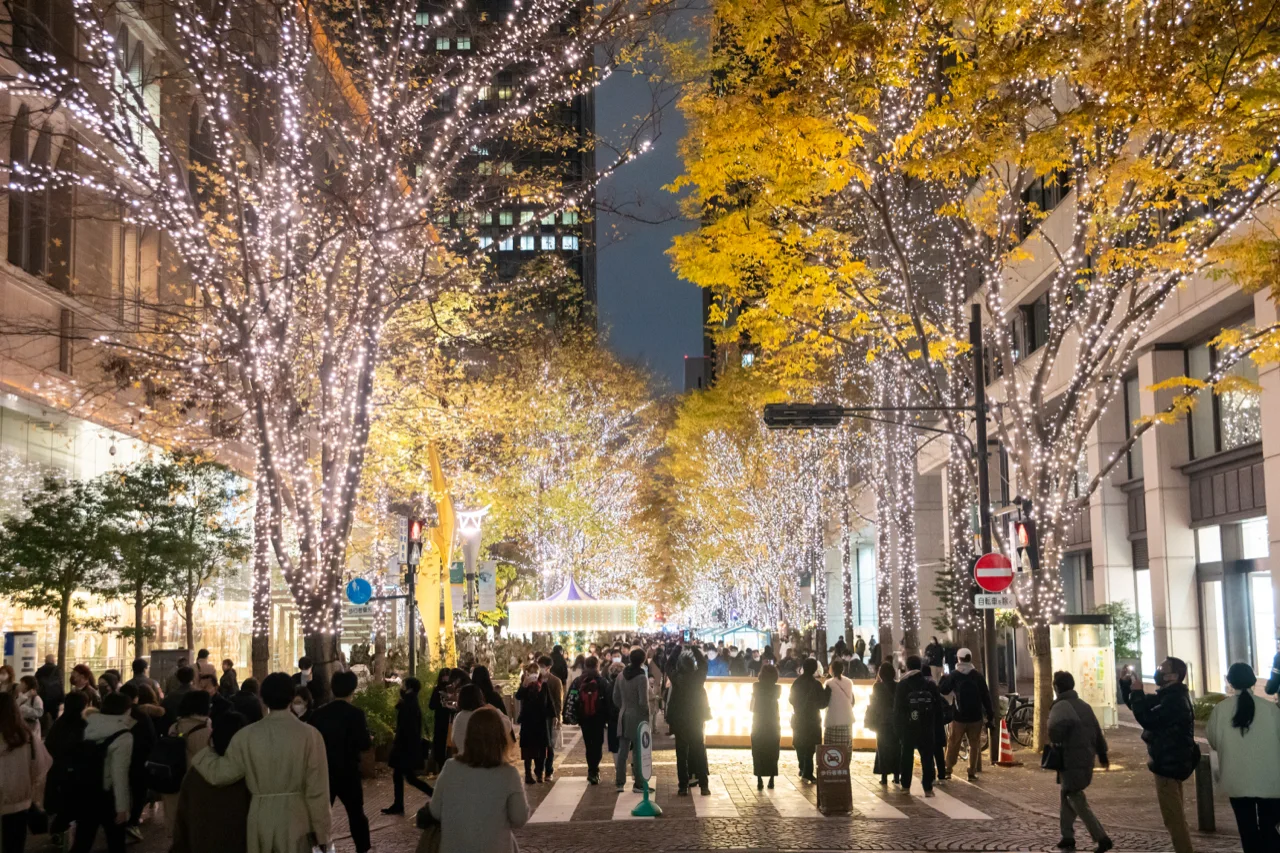
The 25th edition of Marunouchi Illumination runs from 12 November 2026 to 14 February 2027. Roughly 200 street trees are lit along the 1.2-kilometre stretch of Naka-dori from Marunouchi through Yurakucho and Otemachi. Standard hours are 16:00 to 23:00, extending until midnight (24:00) throughout December from the 1st to the 31st. Gyoko-dori keeps its own schedule from 27 November to 25 December 2026, also lit from 16:00 to midnight. To see both streets in December, photograph the station from Gyoko-dori first, then stroll south down Naka-dori and stop in Yurakucho for dinner. If you want to see the seasonal Harry Potter installations, include the indoor displays inside the Marunouchi Building and Shin-Marunouchi Building, which run until 25 December.
Continuing south from Yurakucho brings you to Tokyo Midtown Hibiya, where displays span the Step Plaza out front, Hibiya Naka-dori alongside the complex and the 6th-floor Park View Garden. The easiest order is to cover the ground-level streets first. Take the lift up to the garden terrace when you are ready for an elevated view over the park, whereas the plaza installations sit right at your feet, so you can tailor the route to how far your group wants to walk. Heading straight to Hibiya by underground? Take the Hibiya Line (H08), Chiyoda Line (C09) or Toei Mita Line to Hibiya Station and follow underground Exit A11 directly into Tokyo Midtown Hibiya. Those walking down from Tokyo Station can board a train back from Hibiya instead of retracing their steps along Naka-dori.
The long-season lights along Hibiya Naka-dori and the 6th-floor garden run from 12 November 2026 to 28 February 2027, 16:00 to 23:00. Naka-dori glows in gold and amber until 25 December, then switches to a predominantly deep-blue palette from 26 December. To enjoy two contrasting moods in a single post-Christmas evening, walk Marunouchi's golden trees first and continue straight into Hibiya's blue section. With an early dinner booking, arrive at Tokyo Station at 16:00 while daylight lingers over the square, eat first and walk down to Hibiya afterwards. On rainy nights, step straight out of Hibiya Station into the complex for dinner, cutting your umbrella walk down to the short stretch beside Step Plaza.
The Creema market at Tokyo Midtown Hibiya runs from 19 to 21 and 23 to 25 December, showcasing handmade crafts and accessories. Note that the market takes a break on 22 December, so meet friends at a restaurant or the plaza if you are visiting that night. For dinner plans, treat wooden food huts and craft stalls separately: grab hot snacks towards Marunouchi beforehand and browse the craft stalls after your meal so you are not lugging shopping bags into another centre. When crowds swell near closing time, agree to regroup on a specific floor inside the building rather than beneath a tree on a street corner.
Roppongi Hills, Tokyo Midtown and the Ice Rink
The illuminations around Roppongi Station span two distinct complexes. Roppongi Hills sits on the Mori Tower side: ride the Hibiya Line to Roppongi Station, follow signs for Roppongi Hills and take Exit 1C through the connecting concourse. Coming directly from Shibuya, Toei Bus RH01 stops at both "Roppongi Hills" and "Roppongi Keyakizaka", letting you start at whichever end you wish to photograph first. Near Mori Tower, 66 Plaza leads smoothly into O-yane Plaza and then down to Keyakizaka-dori. Tokyo Midtown lies across Gaien-Higashi-dori and connects directly to Exit 8 of Roppongi Station on the Toei Oedo Line. There is also an underground passage from the Hibiya Line to Midtown, though it includes stairs, so wheelchair and pushchair users should favour the Oedo Line's lift-equipped route. From the Chiyoda Line, Nogizaka Station Exit 3 is about a three-minute walk to Tokyo Midtown, making it easy to visit Midtown first and continue to Roppongi Hills.
Keyakizaka's SNOW & BLUE display runs from 5 November to 25 December 2026, 17:00 to 22:00, lighting the 400-metre slope with roughly 970,000 LEDs. To frame Tokyo Tower between the glowing trees, find a spot where the tower is clearly visible and plant your feet before shooting. When crowds pack the footbridge or the top of the slope, stepping to the side pavement still gives a clear line down the illuminated avenue without waiting for a centre-road crossing shot. If you come down from Mori Tower late in the evening, prioritise Keyakizaka first and pass through 66 Plaza on your way back to the station. 66 Plaza is lit from 13 November to 25 December, usually from 17:00 to 24:00, switching off at 23:00 on the final night.
To weave dinner into the route, note that the O-yane Plaza Christmas Market runs from 21 November to 25 December until 21:00—an hour earlier than Keyakizaka. Arriving at Roppongi Hills before 17:00 lets you browse the stalls and pick up your top food picks before moving on once Keyakizaka lights up. If you already have a weekend dinner reservation, treat the market as a quick stop and keep moving if queues at the food counters grow long. Even under the plaza roof, winter nights carry a chill wind, so reserve proper sit-down meals for an indoor restaurant.
Tokyo Midtown's MIDWINTER LIGHTS in the Midtown Garden is free to enter from 26 November to 25 December 2026, 17:00 to 23:00. Each light sequence lasts around four minutes, with the bubble show running until 20 December and standard lighting continuing afterwards. For dinner timing around the bubbles, you have two clean options: catch one cycle at 17:00 before walking to Keyakizaka for dinner, or eat at Roppongi Hills first and stroll over to the garden before 23:00. To avoid crossing the main junction twice, leave whichever side sits closer to your hotel or return station until last. Midtown's "Hikari no Sanpomichi" light walk continues until 23 February 2027 from 17:00 to 23:00, with light transitions every hour on the hour and half-hour, making it easy to time a viewing around a January or February dinner booking.
The outdoor ice rink at the same site opens from 5 December 2026 to 23 February 2027, closed on New Year's Day. Opening hours are 11:00 to 21:00, with last entry at 20:00. Weekday skating fees are ¥2,000 for high school students and above and ¥1,400 for junior high school students and younger, plus ¥500 skate hire for either ticket. During the published holiday period from 12 December to 3 January, rates rise to ¥2,300 and ¥1,700 respectively, with a ¥300 spectator admission fee. For a family of two adults and one child skating with hire skates during the holiday window, that alone comes to ¥7,800. Squeezing both illumination zones in after skating can push dinner late, so eat at Midtown first and save Keyakizaka for afterwards if your legs still have energy. The rink may adjust operations in poor weather or unsuitable temperatures, in which case staying indoors for dining and shopping is an easy pivot.
Ebisu's Chandelier, Promenade and Indoor Options
Exit JR Ebisu Station via the East Exit ticket gates, turn right and follow signs along the Yebisu Skywalk towards Yebisu Garden Place, listed officially as roughly a five-minute walk. From the Hibiya Line, Ebisu Station Exit 1 takes around seven minutes on foot according to official guidance. Most of the approach is under cover, though the sloped promenade and Centre Plaza inside the complex are open to the elements. If anyone in your group walks at a gentler pace, pause at Clock Square right by the entrance and check the weather before heading downhill; returning the same way leads straight back to the JR line. If you plan to visit the Tokyo Photographic Art Museum, look out for museum signs as you near the complex so you know your way back towards the station after dark.
Champagne-gold illuminations brighten the entrance, Clock Square, the sloping promenade and Chateau Square from 14 November 2026 to 28 February 2027, 16:00 to 23:00. Baccarat ETERNAL LIGHTS is a separate centrepiece in Centre Plaza, running from 14 November to 11 January, 11:00 to 23:00. While the complex's roughly 100,000 bulbs cover the outdoor grounds, the Baccarat installation is a single crystal chandelier holding 250 lights. You can admire the crystal by daylight and return along the lit trees after dark along the very same walkway. With only an hour to spare, arrive just after 16:00 to catch both the illuminated plaza and the chandelier in one sweep.
For the Christmas tree, pause first at Clock Square. The roughly 10-metre tree and Clock Square market run until 25 December 2026, while the nearby Chateau Square market begins on 27 November; both operate 17:00 to 20:00 on weekdays and 12:00 to 20:00 on weekends and public holidays, subject to cancellation in rain or strong winds. Coming straight from Shibuya for an after-work meal, browse the market before 20:00. If you reach Ebisu later in the evening, head directly to Chateau Square for the illuminated architecture and grab dinner back near the station without tying your night to stall closing times.
When rain hits, ducking into an indoor gallery beats waiting on an exposed slope for nightfall. The Tokyo Photographic Art Museum normally opens 10:00 to 18:00, extending to 20:00 on Thursdays and Fridays, with last admission 30 minutes before closing and separate tickets per exhibition. It closes for the year-end break from 28 December 2026 to 1 January 2027; on 2 and 3 January it opens 10:00 to 18:00 with free admission to the 2nd- and 3rd-floor galleries, while the 4th-floor library remains closed. It closes again on 4 January and has a further closure from 18 January to 4 February. On 2 January, you can pair a daytime exhibition with the chandelier at dusk without rushing for a single switch-on moment. On museum closure days, swap the indoor stop for browsing shops or a coffee in Centre Plaza, using the exact same covered route from the station.
Which Tokyo Observation Deck to Choose in Winter
To watch late-afternoon sunlight sweep across the city grid before nightfall, check sunset times first and book backwards. National Astronomical Observatory of Japan tables put Tokyo sunset around 16:28 in early December 2026. Entering at 16:30 often leaves only fading twilight. Aim for an entry slot between 15:00 and 15:30 to photograph streets in daylight alongside the dusk glow. Reach the ticket barrier ahead of your slot to leave breathing room for lifts and finding a window spot. If Mount Fuji is your main goal, keep a morning flexible so you can swap days and ascend on the clearest sky. Should clouds hide the mountain by late afternoon, shift your focus to nearby towers and evening light displays, as going higher mainly alters your urban angle.
Tokyo Skytree pairs neatly with Asakusa, the Sumida River and Oshiage. Ride the Hanzomon Line or Toei Asakusa Line to Oshiage Station, where the 4th-floor main entrance is roughly a seven-minute walk from the ticket gates. Step-free visitors can follow the official accessible route via the East Yard lift lobby up to the 4th floor. Both the West and East exits of Tobu Skytree Station also lead up to the 4th floor. Standard tickets for the 350-metre Tembo Deck start from ¥1,800 for adults and ¥900 for children; combo tickets adding the 450-metre Tembo Galleria start from ¥3,000 for adults and ¥1,500 for children, varying by date and time slot. High school students and older pay adult rates, while junior high school students and younger count as children. Buying at the 4th-floor ticket counter or machines adds a ¥500 issuing fee per ticket. You can also buy a deck ticket first and add Galleria access up on the deck for ¥1,400 (adults) or ¥700 (children), though sales may pause during busy periods. Save the combo spend for crisp, clear visibility and start with 350 metres if skies look hazy.
Roppongi Hills' Tokyo City View is the indoor observation deck on the 52nd floor of Mori Tower, as the former rooftop Sky Deck has permanently closed. From 13 November 2026 to 14 February 2027 it hosts "The Little Prince" exhibition, open 10:00 to 22:00 with last entry at 21:30. Online adult tickets during the exhibition cost ¥2,200, compared with ¥2,400 at the 3rd-floor counter, while online tickets for children aged four through junior high school are ¥1,000; a ¥3,000 pair ticket is also sold until 25 December. Entry uses timed slots, with same-day counter sales only available when capacity allows. For elevated views of Tokyo Tower in January or early February without braving rooftop winds, this indoor deck combines well with Tokyo Midtown's long-season illuminations. Even if rain or mist shrinks visibility, the exhibition fills your time nicely before you decide how far to walk downstairs.
SHIBUYA SKY suits anyone already spending the afternoon in Shibuya. From the underground, follow signs for Exit B6 and Shibuya Scramble Square up to the 14th-floor entrance, then transfer to the observation levels. Online adult tickets cost ¥2,700 for entry up to 14:59 and ¥3,400 from 15:00 onwards, released within a two-week booking window. Once an adult online slot sells out, no tickets for that time are sold at the counter either. Children aged six to eleven, plus twelve-year-olds still in primary school, require a separate ¥1,200 child ticket bought at the counter, so secure the adult slot online first and add accompanying children on site. The rooftop may close in high winds, rain, snow or approaching thunderclouds, while the 46th-floor indoor observation corridor stays open. Under official ticket terms, eligible tickets bought via the designated website can be cancelled free of charge on the day prior to entry if the rooftop is closed at your booked time—check rooftop status before scanning your QR code.
When taking a camera up in winter, decide whether wind or glass reflections pose the bigger hurdle. On the Shibuya rooftop, only permitted phones or pocket-sized cameras with straps are allowed, with bags and tripods stored in lockers. Both Tokyo Skytree and Tokyo City View sit behind glass, so move close to the pane at night to block interior lights from reflecting in your shot. On a first visit with children, sort out toilets, lockers and a lost-and-found meeting point on the arrival floor before stepping out to the windows, where groups easily split up around lift queues.
If you are staying in Roppongi and hit several consecutive rainy days, swap outdoor walks for the Mori Art Museum on Mori Tower's 53rd floor. The "Mariko Mori: Sansan" exhibition runs until 28 March 2027; online adult tickets cost ¥2,600 on weekdays and ¥2,800 on weekends and public holidays, with free entry for junior high school students and younger. Most days stay open until 22:00, though Tuesdays usually close at 17:00—worth checking before planning an evening visit, especially after a day trip to Hakone or Kamakura. An online ¥4,500 adult combo ticket covers both the Mori Art Museum and "The Little Prince" below, though combo sales are suspended from 18 December 2026 to 3 January 2027, during which you should book separate slots. On dreary, overcast days, pick the exhibition that interests you most and save the other ticket for the following day.
Christmas Markets and Daytime Backups Over Year-End
The ticketed Tokyo Christmas Market in Shiba Park is run by a different organiser from the Hibiya craft market. The Shiba Park venue runs from 4 to 25 December 2026, with the entrance at Onarimon Station Front Square, about a one-minute walk from Exit A6 of Onarimon Station on the Toei Mita Line. Opening day starts at 16:00, and subsequent days open from 11:00 with last entry at 21:00. Up to 23 December, adult entry is ¥1,000 on weekdays and ¥1,500 on weekends, with primary school children at ¥500; on Christmas Eve and Christmas Day, rates rise to ¥2,000 for adults and ¥1,000 for primary school children, while pre-schoolers enter free. If your family simply wants lights and a meal, Roppongi Hills' O-yane Plaza or Marunouchi Naka-dori saves the entry fee. Add Onarimon if you specifically want wooden chalets and hot food near Tokyo Tower, as the Mita Line also runs straight back to Hibiya without a transfer. A second paid market runs in Shin-Toyosu from 20 November to 25 December, which fits neatly before heading back into central Tokyo from the bay area.
Spending a night in Sumida in December pairs lunch in Asakusa with an afternoon in Oshiage. Tokyo Skytree Town's Christmas event runs from 5 November to 25 December 2026; if you hold observation deck tickets, handle your 4th-floor check-in first before browsing the shops and outdoor lights below. Should rain arrive with children in tow, pivot to Sumida Aquarium on the 5th and 6th floors of the same complex (adult entry ¥2,700). As both attractions ticket separately, pre-book just one paid venue and keep the rest of the afternoon flexible for dining and browsing indoors. Guests staying near Tokyo Station can take the JR Sobu Rapid Line to Kinshicho and change one stop on the Hanzomon Line to Oshiage, returning via the Ginza Line if dining in Asakusa.
After Christmas, note museum holiday closures carefully when planning Ueno. The Tokyo National Museum closes for maintenance on 15 December, opens only the Gallery of Horyuji Treasures and Kuroda Memorial Hall from 22 to 25 December, and shuts the entire site from 26 to 31 December. On 1 January 2027, it opens from 12:00 noon until 20:00. Regular exhibition admission is ¥1,000 for adults and ¥500 for university students. Walk towards the museum from Ueno Station's Park Exit, and leave suitcases in station lockers or at your hotel as staff inspect hand luggage at the main gate. Anyone hoping to tour the Honkan main building before New Year should go before 22 December. Visiting on New Year's Day leaves the morning free for shrine visits or breakfast before entering after lunch, followed by dinner and lights around Tokyo Station. For gallery splits and ticket types, see our Tokyo National Museum visiting guide.
For first sunrise on New Year's Day, Tokyo Skytree runs a special opening on 1 January 2027 from 05:30 to 07:30. The online lottery for standard tickets closes at 23:59 JST on 26 November 2026, priced at ¥11,000 per ticket including both observation decks and a ¥1,000 shop voucher; applications cannot be cancelled or refunded. Normal hours resume at 08:00. Staying in Oshiage or Sumida spares you a pre-dawn cross-city train commute. For daytime views after sunrise, the Tokyo Metropolitan Government Building's North and South Observation Rooms in Shinjuku open free to general visitors on 1 January from 07:30 to 17:00, while the 06:00 to 07:30 South Room sunrise slot is lottery-only. Both observation rooms close from 29 to 31 December as well as 2 and 3 January, making New Year's Day a standalone opening. When guiding older relatives on 1 January, stick to a single free public deck and ride over to Ebisu or Yurakucho in the afternoon.
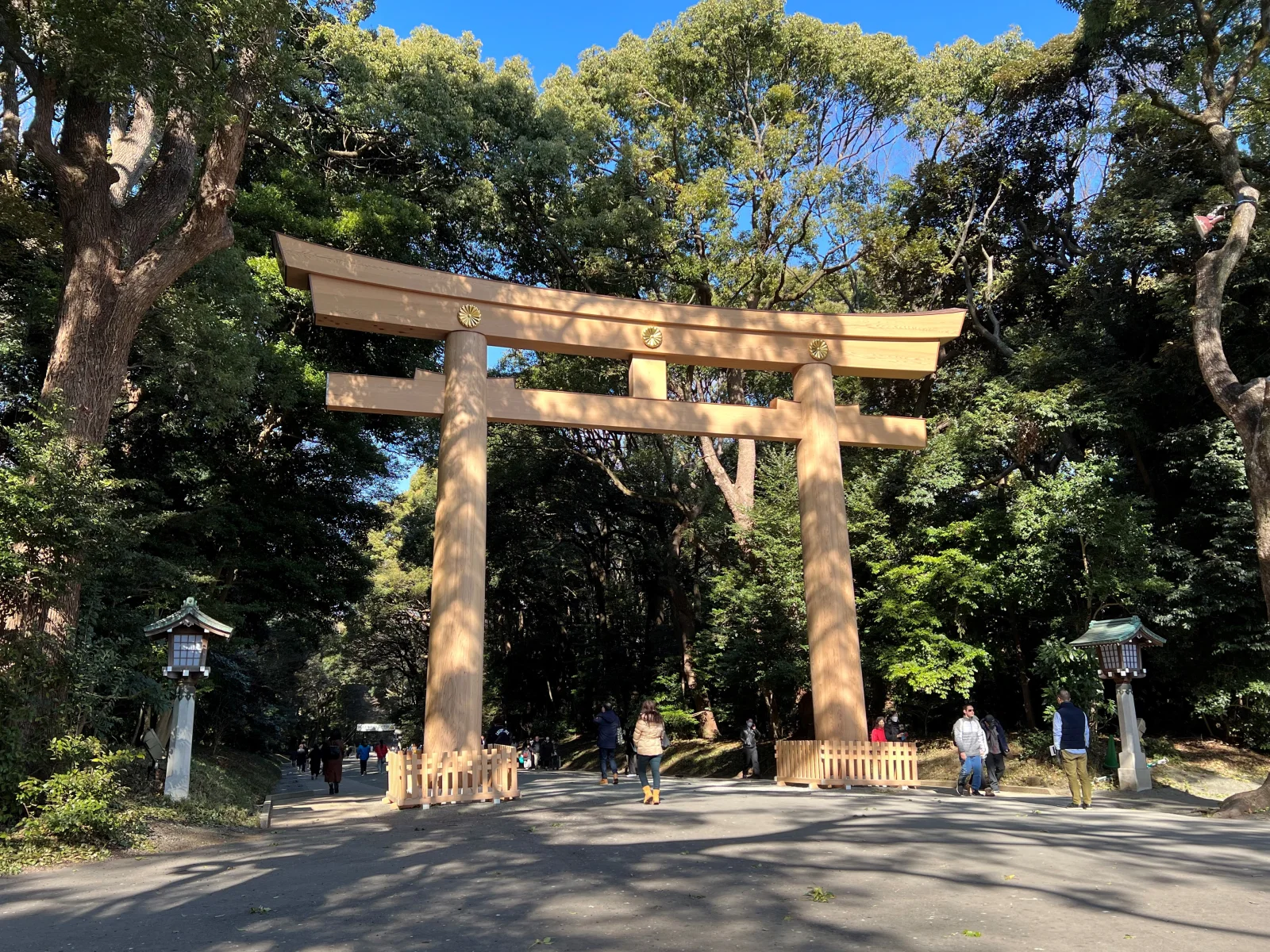
Keep hatsumode shrine visits separate from evening light trails. Pairing Senso-ji with Tokyo Skytree keeps your New Year's morning on the same side of town before crossing the Sumida River. For Meiji Jingu, enter via the Harajuku Gate from Harajuku Station or Meiji-jingumae Station and allow time for the long gravel approach to the main sanctuary. If this is your first time braving New Year queues, schedule fixed restaurant or deck reservations well after your shrine visit with buffer time in between. Should companions split up between the prayer queue and charm counters, agree on a clear station exit to regroup so anyone hungry can go ahead for lunch.
Where to Stay and How to Budget by Your Final Stop
For a two-night Tokyo stay followed by an early-morning Shinkansen, basing yourself in Marunouchi or Yurakucho lets you adjust your evening walk to any length. Staying on the west Marunouchi side of Tokyo Station lets you drop bags and walk straight into the station square for night photos of the red-brick facade. The Yaesu side is equally handy for morning trains, though it adds one extra walk through the station each evening. If you plan to finish with Hibiya's lights, a hotel in Yurakucho or Hibiya lets you walk straight home from Tokyo Station down Naka-dori, with Ginza dining close by. Always trace the actual route from the station exit to your hotel door, and check whether underground passages have lift access when wheeling luggage.
Two real-world Tokyo Station examples show the trade-off. Hotel Metropolitan Tokyo Marunouchi connects directly to the Nihombashi Exit at the north-east corner of the station, keeping Shinkansen transfers effortless while letting you walk through the station complex to the Marunouchi side at night. Remm Hibiya sits opposite the Tokyo Takarazuka Theater, about four minutes from JR Yurakucho Station's Hibiya Exit and two minutes from Chiyoda Line Hibiya Station Exit A13, so you can stroll straight back to your room after Hibiya's illuminations. Choose the former for an early departure while bundling Marunouchi and Hibiya into one night, or pick the latter if you plan two evenings of dining around Yurakucho and Ginza without crossing the station daily.
To string together museums, decks and illuminations over two straight nights, stay near Roppongi Station. Because Roppongi Hills and Tokyo Midtown sit on opposite sides, guests near the Hibiya Line side have the easiest walk back from Keyakizaka, whereas those near Oedo Line Exit 8 can head straight indoors from Midtown Garden. If you are already booked into Ueno on night one and flying out via Ueno on your final day, switching hotels purely for night lights only creates extra luggage storage stops. Instead, link Roppongi and Ebisu directly along the Hibiya Line—one neighbourhood per evening—and avoid hauling bags between rooms or relearning station exits.
Travellers shopping in Shibuya or heading to Harajuku the next morning will find a Shibuya-and-Ebisu pairing seamless. Shibuya Station has many exits, and walking from shopping towers to a hotel often takes longer than a straight line on a map suggests; if your hotel sits across the Yamanote tracks, meet for dinner at a specific mall floor or entrance instead. Ebisu's east side lies closest to Garden Place, making dinner followed by a stroll straightforward. Those staying on the west side can still use the Hibiya Line, though reaching Garden Place requires walking across to the East Exit. Families with young children and pushchairs can set a fixed station entrance to split up early if someone tires. At JR-East Hotel Mets Shibuya, the walk from the New South Gate takes roughly four minutes via the Shibuya Stream side—using that same side passage after coming down from Shibuya Sky saves an extra loop on your final evening when carrying shopping bags.
Build your winter budget from the tickets you know you will buy. Marunouchi's tree lights, Keyakizaka, Tokyo Midtown Garden and Yebisu's outdoor displays are all free. Cap a Roppongi night at either one indoor exhibition or the ice rink; if you really want both, book the earlier slot first and see whether the second fits after dinner. For two adults combining art and lights before 25 December, "The Little Prince" pair ticket totals ¥3,000 before dinner and fares. Swap in weekday Midtown ice skating and two tickets with standard skate hire come to ¥5,000. Market food and gifts remain pay-as-you-go. When a group already has a restaurant booking, leave the Christmas market for anyone keen on mulled wine or souvenirs, while others can head back via the same station entrance whenever they wish.
A few useful answers
Are winter illuminations still on in Tokyo after Christmas?
Yes. Marunouchi Naka-dori stays lit until 14 February 2027, while Hibiya Naka-dori, the 6th-floor garden and Yebisu Garden Place continue until 28 February. Ebisu's Baccarat crystal chandelier closes earlier on 11 January.
Until when can I see the bubble illuminations in Roppongi?
Tokyo Midtown's garden bubble show in Roppongi runs until 20 December 2026. The regular MIDWINTER LIGHTS display continues until 25 December, open daily from 17:00 to 23:00.
Which Tokyo Station exit is best for seeing the Marunouchi illuminations first?
Leave JR Tokyo Station via the ground-floor Marunouchi Central Gate into the station square to admire the red-brick facade, walk down Gyoko-dori towards the Imperial Palace until it meets Marunouchi Naka-dori, and then follow the lit trees towards Yurakucho.
What time should I book a Tokyo observation deck in winter?
Sunset in early December 2026 falls around 16:28. To watch daylight fade into city lights, book an entry slot around 15:00 to 15:30 and arrive early at the ticket gate. Note that online adult tickets for SHIBUYA SKY switch to a higher fare from 15:00 onwards.
What indoor options work if it rains in Tokyo over New Year?
In Oshiage, move indoors to Tokyo Skytree Town or Sumida Aquarium. In Ebisu, the Tokyo Photographic Art Museum closes from 28 December to 1 January, reopening on 2 January. On New Year's Day itself, the Tokyo National Museum opens from 12:00 noon until 20:00.
Can I go ice skating in Roppongi on 1 January 2027?
No, Tokyo Midtown's outdoor ice rink is closed on New Year's Day. For an indoor New Year's Day plan instead, head to the Tokyo Metropolitan Government Building observation rooms, which open to general visitors from 07:30 to 17:00.
Official information and references
Sources used in this guide.
- Marunouchi.com: Marunouchi Winter Events, Gyoko-dori and Markets
- Chiyoda City Tourism Association: Marunouchi Illumination Dates and Coverage
- JR East: Tokyo Station Ticket Gates and Station Map
- Tokyo Midtown Hibiya: 2026 Illuminations, Colour Themes and Markets
- Tokyo Metro: Hibiya Station Exit A11 and Station Floor Plan
- Roppongi Hills: Keyakizaka, 66 Plaza and O-yane Plaza Events
- Mori Building: Roppongi Hills Christmas Event Announcement
- Roppongi Hills Museum & Observatory: Exit 1C and Bus Access
- Tokyo Midtown Roppongi: Winter Illuminations, Bubble Show and Ice Rink Fees
- Tokyo Midtown: Oedo Line Exit 8 and Nogizaka Access
- Yebisu Garden Place: Long-Season Illuminations
- Yebisu Garden Place: Baccarat Exhibition Dates and Lighting Hours
- Yebisu Garden Place: Access and JR East Exit Route
- Tokyo Photographic Art Museum: Year-End and New Year Schedule Notice
- Tokyo Photographic Art Museum: Opening Hours and Closure Calendar
- National Astronomical Observatory of Japan: December 2026 Tokyo Sunrise and Sunset Table
- Tokyo Skytree: Observation Deck Fares and Issuing Fees
- Tokyo Skytree: 4th-Floor Entrance and Accessible Route
- Tokyo Skytree: Public Transport Access and Transfers
- Tokyo City View: The Little Prince Exhibition Fares and Dates
- Tokyo City View: Rooftop Sky Deck Permanent Closure Notice
- SHIBUYA SKY: Ticketing and Rooftop Safety Rules
- SHIBUYA SKY: Shibuya Station Exit B6 and 14th-Floor Entrance
- SHIBUYA SKY: Official Ticket Terms and Rooftop Closure Refund Policy
- Tokyo Christmas Market: Shiba Park Fares, Entrance and Hours
- Tokyo Christmas Market 2026: Shiba Park and Shin-Toyosu Schedules
- Tokyo Solamachi: Dream Christmas 2026
- Sumida Aquarium: Admission Fees
- Sumida Aquarium: Floors and Access
- Tokyo National Museum: Opening Days, Fares and Entry Rules
- Tokyo Skytree: 2027 New Year's Day First Sunrise Special Opening
- Tokyo Metropolitan Government Bureau of Finance: Observation Rooms Regular and New Year's Day Notice
- Meiji Jingu: Hatsumode Harajuku Entrance and Access
- Mori Art Museum: Mariko Mori: Sansan Dates, Tickets and Combo Restrictions
- Hotel Metropolitan Tokyo Marunouchi: Nihombashi Exit Access Route
- Remm Hibiya: Walking Routes from Hibiya and Yurakucho Stations
- JR-East Hotel Mets Shibuya: New South Gate Access Route