Take the bus from Odakyu Isehara Station's north exit and the Oyama Cable Car to the lower Afuri Shrine. Plan Oyama-dera and Koma-sando, compare ordinary tickets with the Tanzawa-Oyama Freepass, and arrange the November 2026 evening return separately from a summit hike.
- Region & Focus
- KantoShrines and temples
- Reading Scope
- 35 min read · 17 chapters · 5 Q&As
- Official Verification
- 17 official sources checkedUpdated 9 November 2026
- Key Topics
- ItinerariesRail travelSeasons
Chapter Route Map (tap any stop)
- The cable car reaches the lower shrine; keep the summit for a hiking trip
- Tokyo to Isehara: choose a train that actually stops there
- North exit stop 4: ride to the Oyama Cable bus terminus
- Koma-sando's 15-minute climb is the first stamina check
- Using the three cable-car stations: lower shrine first, Oyama-dera on return
- Ordinary tickets and the Freepass: count the sections you will ride
- Paying by card and tapping through the gate are separate processes
- At the lower shrine: leave room for worship, views and rest
- Saryo Sekison is an optional break; its closing time is not the last cable car
- Oyama-dera: steps and the main hall, with a walk after the stopover
- Treat Onnazaka as a trail and keep the cable car as a return option
- Choosing autumn dates: daylight foliage or evening lights
- 2026 autumn lights, 20–29 November: two sites and a planned descent
- Back to Isehara: descend by cable car, then walk to the bus
- A full day or an afternoon start: what to leave out
- When weather or companions change, shorten the route to a comfortable visit
- Driving and staying at the foot: parking still leaves the approach steps
- Quick Q&A
For a first visit to Oyama in Kanagawa, take the bus and cable car to Afuri Shrine's lower shrine, then stop at Oyama-dera on the way down. Shrine visits, autumn leaves and tofu dishes make a full day. The lower shrine is on the mountainside; the main shrine at the summit requires a separate hike. The 2026 autumn illumination runs from 20 to 29 November. To stay for the lights, first connect the cable car, approach walk and bus back to Isehara.
The cable car reaches the lower shrine; keep the summit for a hiking trip
For shrines, autumn colour and views across the Sagami Plain on a first Oyama visit, make the lower Oyama Afuri Shrine your destination. Take the cable car up, then visit Oyama-dera at the intermediate stop according to your energy. The lower shrine is on the mountainside; the main shrine is at the summit, with no cable car between them. Confusing arrival at Afuri Shrine with arrival at the summit adds a long hike to a day intended for tea and views. This is Oyama in Isehara, pronounced おおやま, with transport starting at Odakyu Isehara Station.
The shrine's grounds guide places the lower shrine at about 700 metres above sea level and gives about 90–120 minutes on foot from there to the summit shrine. That is the ascent only. Add descent, breaks and the return cable car separately. For a lower-shrine visit and autumn leaves at Oyama-dera, stay in those two areas. To reach the summit, make hiking the day's main activity and add the temple, café or autumn lights only if time remains.
For visitors based in Tokyo, I would choose a full day trip: reach Isehara in the morning, go up before noon, have lunch and visit Oyama-dera in the afternoon before returning to the city. For illumination, shift the day later: ascend in the afternoon, see one or two areas after dark and descend by cable car. The difference lies in the return. There is no need to add Otokozaka or Onnazaka just to make a loop on the map.
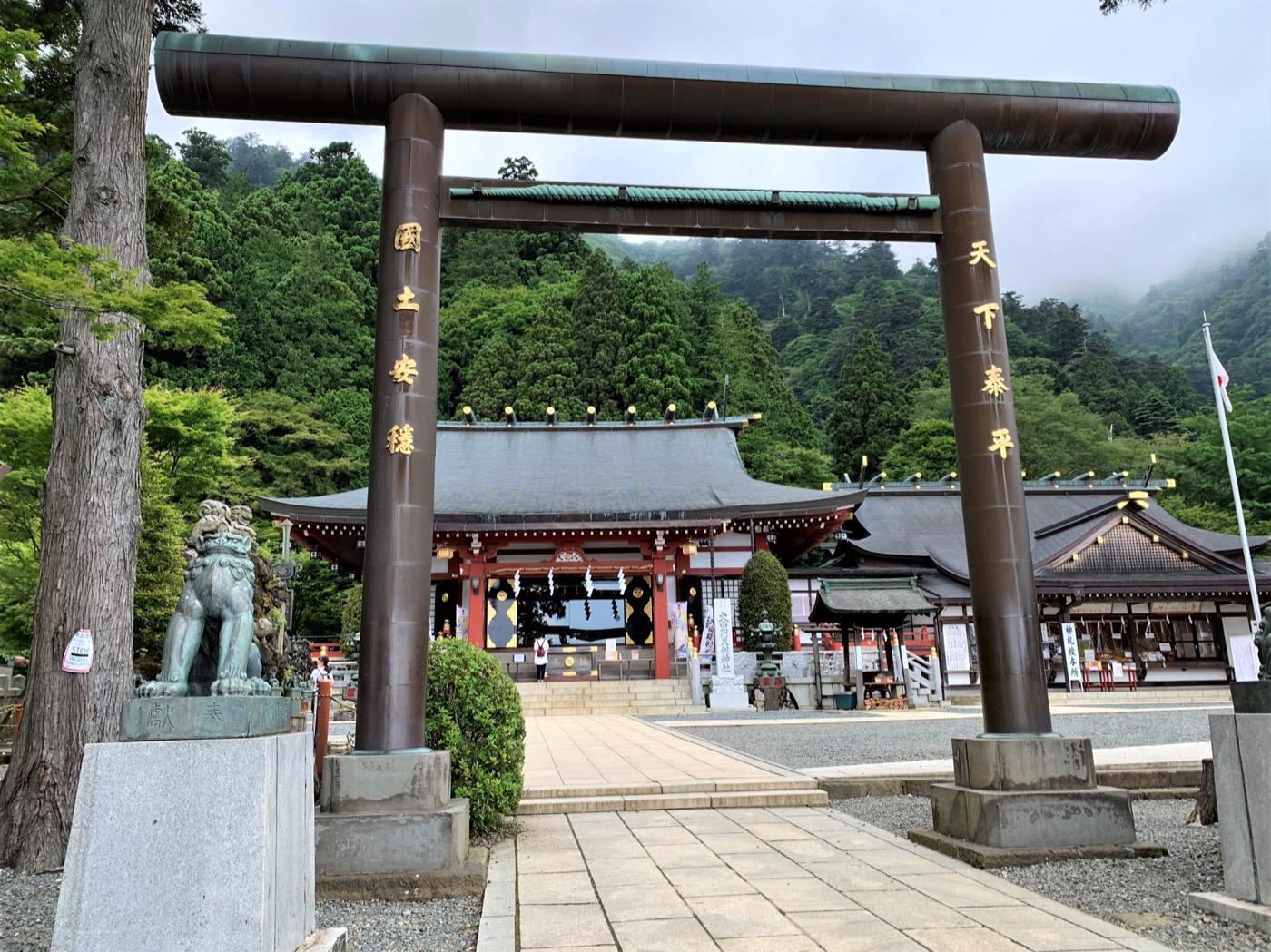
Take the bus from Odakyu Isehara Station's north exit and the Oyama Cable Car to the lower Afuri Shrine. Plan Oyama-dera and Koma-sando, compare ordinary tickets with the Tanzawa-Oyama Freepass, and arrange the November 2026 evening return separately from a summit hike.
Tokyo to Isehara: choose a train that actually stops there
From Shinjuku, use the Odakyu Odawara Line to Isehara. Enter the full station name 伊勢原 and choose a direct or connecting service for your departure time. Train type, stops and waiting affect arrival even from the same starting station. From Tokyo Station, Ueno or another JR area, include the hotel-to-Odakyu interchange journey and compare whether Shinjuku is the easiest route. Start the travel calculation at your accommodation, rather than using Shinjuku–Isehara running time alone to predict shrine arrival.
For a Romancecar, choose a service stopping at Isehara and buy a separate limited-express ticket. The Tanzawa-Oyama Freepass's basic rail coverage does not include the reserved-seat surcharge. Even with an A pass, buy the required limited-express seat ticket. Ordinary trains usually make a relaxed day return easier to adjust, especially if you do not want mountain queues to threaten a reserved departure.
At Isehara, use the north exit for the bus and mountain journey. Save a return search too: descend from Oyama, return to Isehara and take Odakyu towards your accommodation. If the following day involves a flight or early departure, the daytime version leaves more room for dinner and packing. Avoid another city activity with a fixed reporting time on the same day.
North exit stop 4: ride to the Oyama Cable bus terminus
From Isehara Station's north exit, use stop 4 for a Kanagawa Chuo Kotsu bus to 大山ケーブル, Oyama Cable. Route I10 is common; direct services may also run according to the day's operation. The operator's access introduction gives about 25–30 minutes from the station to the mountain foot. Check the destination even at stop 4, and stay on to the terminus rather than getting off at an earlier stop containing Oyama in its name.
There is still an approach walk from the Oyama Cable bus terminus to Oyama Cable Station. The tourism association gives about 15 minutes, including steps. It starts after the bus arrives. On autumn weekends, bus queues, road traffic and cable-car queues each add time. A 30-minute bus plus a six-minute cable car does not make the station-to-shrine journey 36 minutes.
Prepare your transport card or ticket before queuing, carry your backpack in front and keep the bus aisle clear. The return bus leaves the mountain-foot terminus for Isehara Station's north exit. On morning arrival, look at the stop, queue position and that day's return information. This is easier than finding them after dark. Use tickets within their stated coverage and pay extra for sections outside it.
Koma-sando's 15-minute climb is the first stamina check
The route from bus to cable car passes through こま参道, Koma-sando. The tourism association gives about 15 minutes and 362 steps. Shops alternate with stairs, offering Oyama spinning tops, souvenirs and tofu meals. For the shrine first, follow the main approach. For shop browsing, add a separate stop rather than retaining the official walking-only estimate.
With older companions or children, observe their stair-climbing pace here. If reaching the cable car already takes several breaks, make the upper visit a lower-shrine return and omit walking Onnazaka. Enough energy to visit the shrine does not necessarily mean enough for a stone-step descent. Pushchairs and large luggage make the approach harder. Leave cases at your accommodation and carry only what you need on the mountain. For a step-free route requirement, explain the actual assistance needed to the operator before departure.
Fit food to the route too. Eat at the mountain foot before the cable car and buy only a snack on return, or ascend first and have lunch after descending. Even with a café planned at the lower shrine, carry water and simple food so lunch does not depend entirely on a scenic seat becoming available. For evening lights, an early main meal followed by a warm drink as a break works better than relying on the drink as dinner.
Using the three cable-car stations: lower shrine first, Oyama-dera on return
The stations run from Oyama Cable at the foot through Oyama-dera to Afuri-Jinja at the upper terminus. The operator's published times give about six minutes for the full ride and about two minutes between the intermediate station and either end. The short journey divides the height difference between shrine and temple into two rideable sections. For shrine visits and foliage, this leaves more flexibility than deciding in advance that you must walk between them.
On a first visit, ride to Afuri-Jinja, visit the lower shrine and enjoy the view. On return, get off at Oyama-dera, visit the temple and continue to the foot. Ordinary full-line tickets allow a stopover at Oyama-dera. Explain the intended return stop when buying and keep the ticket. At the intermediate station, check uphill and downhill platform signs. After visiting, board towards Oyama Cable rather than following an arriving train back uphill.
The temple still requires walking after leaving Oyama-dera Station. Its access page gives about 200 metres, with steps before the temple. Getting off does not reveal the whole temple from the platform. If the lower shrine has taken most of the afternoon or children are clearly tired, ride straight to the foot and save the temple for another visit. A stopover entitlement need not become an extra rushed stop.
Ordinary tickets and the Freepass: count the sections you will ride
As checked on 27 October 2026, the cable-car website lists adult full-line fares of ¥640 single or ¥1,270 return. Primary-school children pay ¥320 single or ¥640 return; adults are junior-high-school age and above. For either half, Oyama Cable–Oyama-dera or Oyama-dera–Afuri-Jinja, adult fares are ¥360 single or ¥700 return, and primary-school fares ¥180 single or ¥350 return. For the lower shrine with a temple stop on return, compare the full-line journey rather than buying a half-line ticket and adding another on the mountain.
Odakyu's Tanzawa-Oyama Freepass is valid for two days. The A pass includes unlimited Oyama Cable Car rides; B excludes them. Both include unlimited Odakyu travel between Hon-Atsugi and Shibusawa, designated bus sections, and one outward and one return journey between the departure station and the unlimited-travel area. From Shinjuku, adult A and B prices are ¥2,520 and ¥1,560; child prices are ¥920 and ¥400. From Machida or another station, compare its departure price rather than detouring to Shinjuku to use that fare.
For a Shinjuku adult, A costs ¥960 more than B. B plus an ordinary ¥1,270 cable-car return totals ¥2,830, ¥310 more than A. B offers a discounted full-line single at ¥580. If you truly ride only once, B plus that single totals ¥2,140, less than A. Choose this alongside your walking ability. Saving ¥380 is no reason to adopt an unfamiliar mountain path as an unplanned descent.
For families, calculate adults, each primary-school child and children of other ages separately, then add meals. Ask the ticket office for the tickets needed for the actual party, including preschool children. Two-day validity can suit a stay along the line, but can also be used for just one day. Its second day need not prompt extra hot springs or shrines without a transport plan on a day trip.
For cancelling a digital Freepass before travel begins, EMot's terms deduct a ¥220 fee per ticket, with refunds through the original app or EMot website. Refunds after travel begins and changes to the outward rail section require customer-service assistance. Bus and cable-car staff do not refund digital Freepasses on site. If suspension leaves a cable-car section unused, retain the ticket and journey details for customer service rather than joining the ordinary cable-car ticket queue to refund the whole pass.
| Ticket | Adult / primary-school child | Suitable route |
|---|---|---|
| Full-line cable-car return | ¥1,270 / ¥640 | Lower-shrine return, with an Oyama-dera stopover |
| Full-line cable-car single | ¥640 / ¥320 | A fully planned walk in the other direction |
| Half-line cable-car return | ¥700 / ¥350 | A half-line return, such as Oyama-dera only |
| A Freepass from Shinjuku | ¥2,520 / ¥920 | Rail, designated buses and cable car |
| B Freepass from Shinjuku | ¥1,560 / ¥400 | Rail and designated buses; cable car extra |
Paying by card and tapping through the gate are separate processes
The cable-car ticket office accepts cash, credit cards, transport IC cards such as PASMO and Suica, and PayPay. Direct gate entry accepts EMot digital tickets and supported contactless credit cards. Transport IC cards cannot be tapped directly at the gate. With Suica, buy a ticket at the office and use that ticket to travel. Choose the right ticketing or entry queue on arrival rather than discovering the difference at its end.
For mobile tickets, open the ticket at the foot and check the battery and usability. In a group, settle who holds which tickets. Explain stopovers, child tickets and discounts to staff before purchasing. Checking each family member's ticket is easier than reaching the gate and finding a missing section.
For EMot Tanzawa-Oyama Freepasses bought from 10 January 2026, A has three separate screens for rail, bus and cable car; B has rail and bus screens. At the cable car, open its QR code for the reader. On buses, use the bus screen. Locate each ticket on the phone first and switch to the correct screen for each mode, rather than repeatedly presenting the rail screen to the cable-car gate.
During ordinary operation, end stations depart at minutes 00, 20 and 40 each hour; the intermediate station lists 02, 22 and 42. There are additional weekday times before closing. Extra services run when busy, but plan with room around published hours. Normal weekday opening is 09:00–16:30, and weekends and holidays 09:00–17:00. Autumn evening extensions apply on the event dates. Do not extend the special last service to all November or use another mountain's cable-car deadline for Oyama.
At the lower shrine: leave room for worship, views and rest
Afuri-Jinja Station starts the lower-shrine visit. Follow the approach, visit the shrine and then stop at the open viewing area. This mountainside perspective differs from the streets below. In clear weather, views extend towards Sagami Bay. For broad mountain views, daylight arrival offers more than an evening-only visit, showing the terrain and layers of the city clearly.
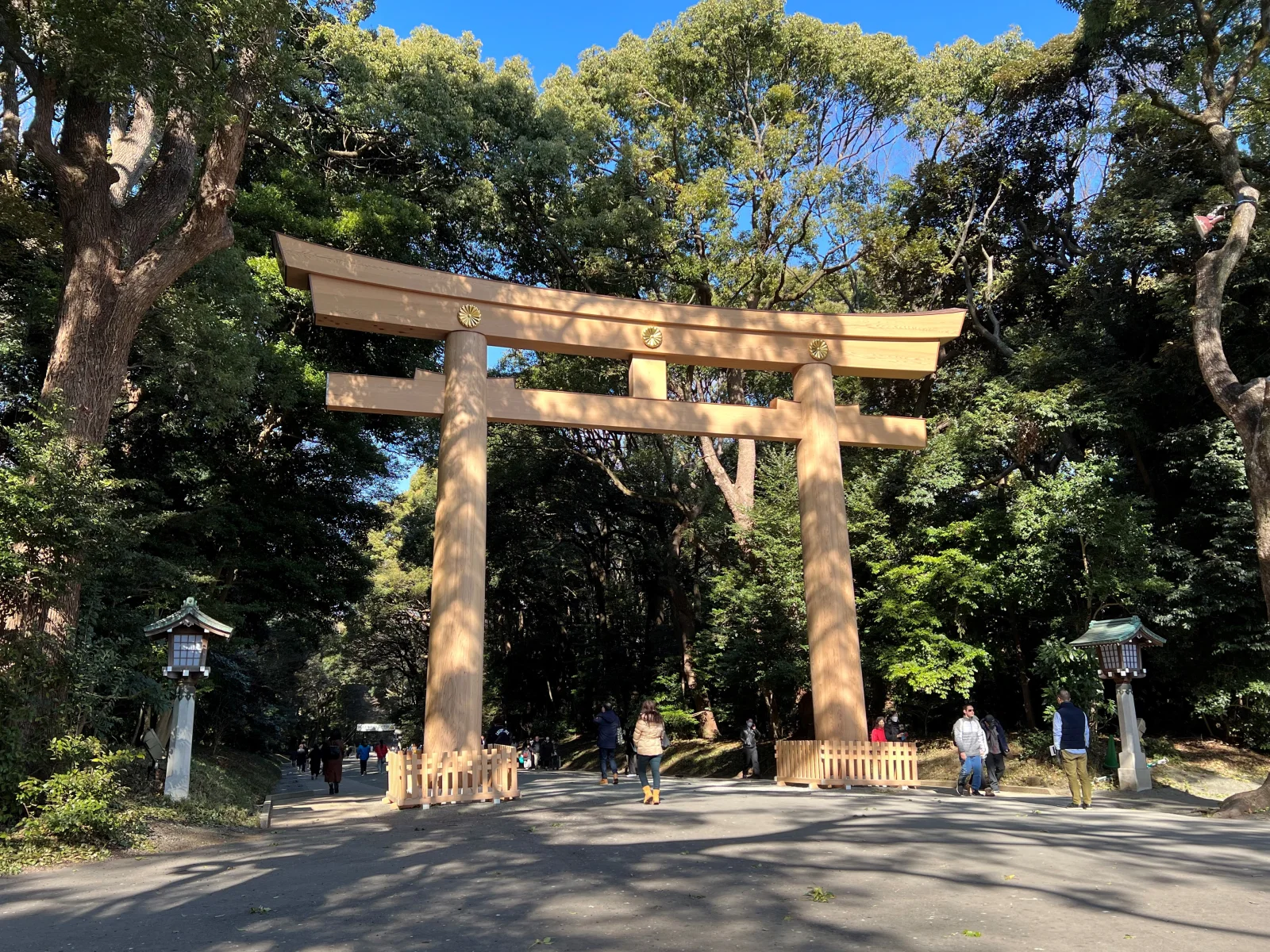
For photographs, keep the worship route clear. Split portraits, the torii and distant views into separate frames rather than placing the whole family in the middle of steps for a long wait for an empty background. There is more than one photo point. Visiting and resting together works better than going straight from the cable car to a café and rushing the shrine at the end. In the busy foliage season, add waiting for a goshuin or shrine items to this stop.
If cloud or mist obscures the distance, focus on the buildings, steps and nearby trees and shorten the wait outdoors. Do not keep pushing the temple and descent later while waiting for cloud to clear. Agree a departure time from the lower shrine. Anyone wanting to sit longer can rest in the same area. For separate activities, name a station or clear landmark for meeting rather than simply the front of the shrine.
Saryo Sekison is an optional break; its closing time is not the last cable car
Saryo Sekison beside the lower shrine can be a rest after visiting. Leave extra lower-shrine time if you want to sit with the view. If the terrace is your priority, accept the seating and waiting situation before deciding to eat. Avoid a return plan that depends on obtaining one particular seat.
For the illuminated evening, have a main meal before ascending and leave the café for an afternoon break. Set the return by cable-car and bus arrangements, then eat at the mountain foot after dark.
If there is only time for one drink, leave out extra dessert waiting and return to the station afterwards. A long queue is a reason to visit Oyama-dera first, or rest briefly where permitted and descend. The scenic café can merit time, but a shrine visit and views followed by a full meal at the foot also work well.
Oyama-dera: steps and the main hall, with a walk after the stopover
Oyama-dera is a Buddhist temple and Afuri is a Shinto shrine; each can be visited in the same day. The temple traces its foundation to the monk Roben in 755. Its maples and main hall are the autumn focus. From Oyama-dera Station, approach the trees and steps leading to the hall, then follow the visitor route uphill. For a maple-tunnel photograph, daylight shows the relationship between canopy, stone steps and statues on either side.
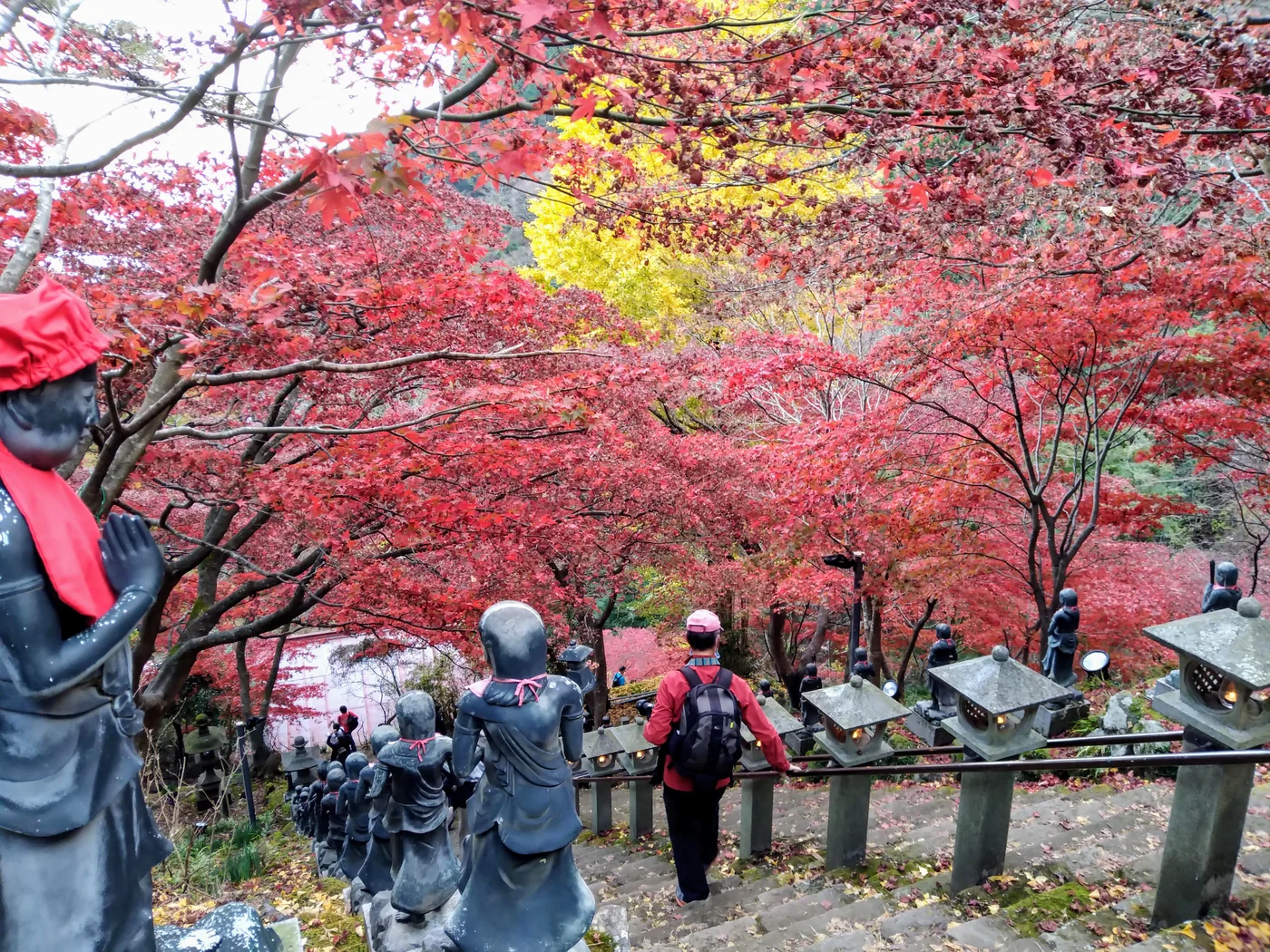
When stopping for photographs, leave space for people going up and down. Companions can meet where they do not obstruct the stairs. After rain or among fallen leaves, slow down, finish the stair section and then find a position to look back. Avoid stepping backwards on a stair for a photograph. Even after the cable car saves a long climb, the temple steps still require a decision based on the knees and energy you have that day.
The temple's official directions give about 200 metres from Oyama-dera Station, to be walked again on return. Near cable-car closing, set a temple departure time before fitting in worship, photographs or other activities. Follow the temple's current information for prayers, goma rituals and special events. An autumn-viewing visit need not make ceremonies or experiences compulsory for every traveller.
Treat Onnazaka as a trail and keep the cable car as a return option
Otokozaka and Onnazaka are walking approaches on Oyama. To walk, locate them on the cable-car operator's walking map and choose a section to combine with the ride. Onnazaka passes the Oyama-dera area and can link temple and foot. The word woman in its name does not mean level ground or make it suitable for all children, older visitors or pushchairs.
The tourism association's walking estimates from Oyama Cable Station to the lower shrine are about 40–60 minutes on Onnazaka and about 40 minutes on Otokozaka. Consider Onnazaka for the temple along a slower walk. Consider Otokozaka for a direct ascent only with mountain-path preparation. Both begin near the cable-car station, after the approach steps. When estimating an ascent from bus arrival, count both sections rather than treating them as alternatives.
A cable-car stopover already serves a visit focused on the temple maples, without walking all of Onnazaka. If you want the trail, choose exact start and finish points, keep daylight, wear shoes with suitable grip, and count breaks and downhill pace. For knees sensitive to descents, walking up and riding down is an option. Uphill uses energy; downhill challenges knees and footing. No one direction is easier for everyone.
For evening lights on unfamiliar terrain, use the cable car both ways and stay in illuminated visiting areas. A phone light helps show your feet but does not replace planning and equipment for an unknown mountain path. If service stops unexpectedly, ask station staff about conditions and available arrangements before waiting or shortening the visit. Do not cut downhill along the shortest thin line on a map.
Choosing autumn dates: daylight foliage or evening lights
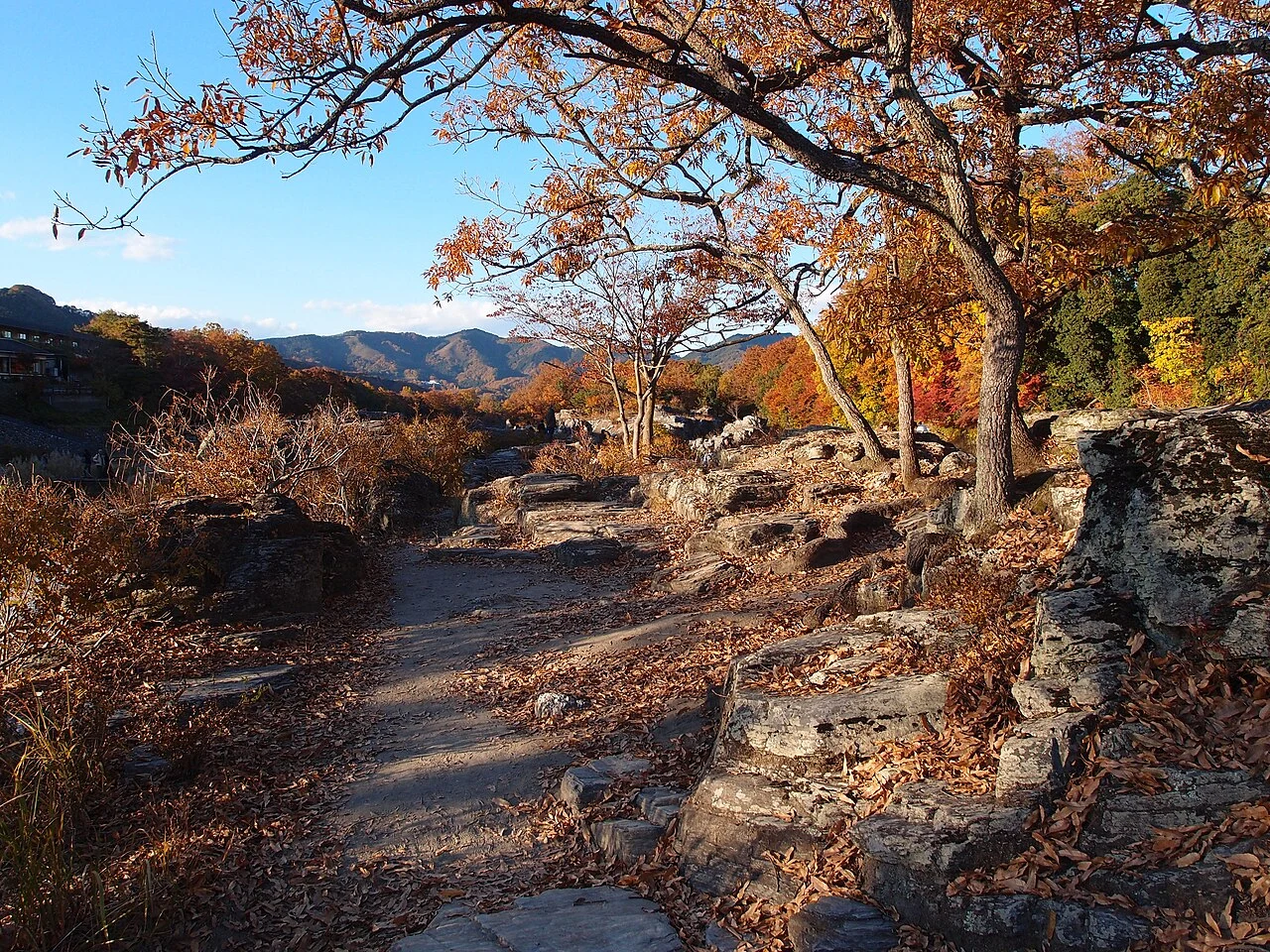
The Isehara tourism association gives Oyama-dera's usual start of colour as early to mid-November, with the better viewing period around mid- to late November. The lower shrine is another main foliage area. Use that period to arrange leave, then follow that year's reports at different elevations. For tree crowns beside the temple stairs, use dated Oyama-dera photographs. A general Oyama foliage label does not mean the summit, lower shrine and foot change together.
Day and night offer different views. Daylight suits the full steps, buildings and near and distant scenery. Evening brings illuminated maples and city lights towards the lower shrine. For one visit without a late Tokyo return, the daytime version is complete. For photography with time after dark, arrive in the afternoon, photograph daylight and retain only the place you most want to revisit at night. This reduces repeated cable-car rides through crowds.
Use layers that pack away on an autumn visit. Climbing approach steps, standing for transport and sitting on a terrace feel different. A light warm layer, windproof jacket and accessible rainwear allow more adjustment than one thick garment. For night photographs, keep hands warm and the phone charged. Keep equipment packed while walking and photograph only after stopping securely.
Four Seasons of the Sacred Mountain, published on Isehara City's official channel and made by a city publicity supporter. Use it alongside this section when comparing daylight autumn foliage and evening illumination.
2026 autumn lights, 20–29 November: two sites and a planned descent
The Isehara tourism association's 2026 notice lists Oyama-dera and the lower Afuri Shrine illumination from Friday 20 to Sunday 29 November. Lights begin after sunset and end at 19:00 on weekdays or 20:00 on weekends and holidays. Cable-car hours extend to the corresponding 19:00 or 20:00 during the same period. Plan evening visits within those ten days. Other November dates use their applicable ordinary hours.
To see both, reach the lower shrine in the afternoon, visit, enjoy the view and wait for darkness before descending to Oyama-dera. Alternatively, see the temple lights first, ascend to the lower shrine and finally ride down the full line. The first keeps the return moving downhill; the second leaves the favourite lower-shrine night view until last. Check intermediate-station evening services and queues, then set a firm departure from the second site. Lights until 20:00 do not mean you can only start walking to the cable car at 20:00.
One site is easier to arrange. Choose Oyama-dera for illuminated maple-lined stairs or the lower shrine for city views and shrine scenery, then descend directly. Leave out the second if the outward queue was long or companions feel cold. Check Japanese holidays separately from ordinary weekdays: 23 November is a holiday within the event, so the usual Monday 19:00 closing does not apply.
Back to Isehara: descend by cable car, then walk to the bus
The evening return has four parts: cable car from the lower shrine or Oyama-dera to the foot, Koma-sando on foot, bus to Isehara and railway to your accommodation. The Odakyu platform is still a long way from the bottom cable-car station. Check Kanagawa Chuo Kotsu services from Oyama Cable to Isehara Station's north exit for your date. Pick a desired bus and work backwards to departure from the shrine or temple, allowing for queues and the approach walk.
The last cable car sets the mountain-transport limit. Buses and Odakyu trains have separate timetables. Even if the event notice mentions extended cable-car service, check the current bus announcement separately. Weekdays, weekends, Japanese holidays and extra services may differ. Save the date, stops and direction, rather than a column of times without its heading. If changing to another railway, save that final connection too.
For a Romancecar return, leave enough room before the reserved departure for queue changes. You can also wait until reaching Isehara and buy a service with available seats once the connection is certain. For ordinary trains, check destinations and changes; the fastest service need not be the only choice. Leave out a Tokyo activity with fixed admission after the lights. A late meal near your accommodation lets the descent proceed at a comfortable pace.
If a queue exceeds the allowance, leave the photo point earlier and drop the final shopping stop. Shop before ascending or buy only items already selected on the way down. Road traffic and waiting are harder to control. Shortening stops you control is more effective than rushing down stairs.
A full day or an afternoon start: what to leave out
For the daytime plan, reach Isehara in the morning, take the bus, walk the approach and ride up. Visit the lower shrine first, have lunch or a short tea break, stop at Oyama-dera in the afternoon and return to the foot. This is the sequence; exact times depend on your train, queues and pace. Riding between the two religious sites saves energy for each site. A first visit need not also cover an entire walking trail.
Leaving Tokyo only in the afternoon, choose the lower shrine or Oyama-dera on an ordinary operating day. At Isehara, compare cable-car closing and the bus queue. With too little time, eat along the mountain-foot approach and choose another day to ascend. In winter or earlier darkness, summer experience is a poor measure of remaining daylight.
For evening illumination, eat lunch before ascending, walk the approach slowly in the afternoon and see the temple or lower shrine by day. After sunset, visit the chosen illuminated area. Seeing both daylight and night views mainly requires longer at the same place rather than more distant attractions. With children, agree beforehand to one evening site. Adults adding a second need clear meeting times too.
With one spare day near Tokyo, give Oyama the full day in Isehara's mountain area. Kamakura's coast, Mount Takao and Hakone are separate outings whose transfers and road journeys take time away here. To compare destinations, read the site's Tokyo day-trip and overnight choices. Once you choose Oyama, return to this bus, cable-car and temple route.
When weather or companions change, shorten the route to a comfortable visit
Check cable-car operation on departure day. The operator says heavy rain, strong wind, thunder and other abnormal weather can stop service. If ascent is unsuitable from the start, choose an indoor Tokyo outing. If conditions change after reaching Isehara, obtain operating information before deciding on a meal at the foot only. Avoid converting a cable-car outing into an unprepared mountain hike just to use the return rail fare.
In light rain with normal cable-car service, shorten the visit to the lower shrine and return if rain increases. If cloud and rain already hide the view, a planned night-view visit can end in daylight. Shoes suited to your companions, a raincoat or compact rainwear help more than assuming city-walking speed. On steps, stop somewhere wide before checking directions on a phone.
With older companions or young children, make the temple steps optional and prioritise a lower-shrine return and a meal. For a wheelchair or other mobility assistance, describe needs to the cable-car operator and facilities first and plan within the access they confirm. People can complete different routes: one adult can take children down early while others continue at the lower shrine, with tickets, contact details and meeting points settled beforehand.
Allow toilets and water once at the foot and once on the mountain, especially when the return bus may involve standing or queuing. The cable-car company says the bottom station's toilets open only during operating hours. Do not plan to return inside for toilets after closing. If eating on the approach later, sort children's clothing, handwashing and warmth before leaving the upper area so bags need less unpacking while waiting.
Prepare separately for the summit. The published 90–120 minutes covers only the lower-shrine ascent to the main shrine. A hike needs full ascent and descent time, suitable footwear and clothing, water, food and lighting, plus a check of that day's mountain conditions. For the lower shrine, Oyama-dera and autumn lights, putting the summit on another day gives every part more time.
Driving and staying at the foot: parking still leaves the approach steps
Drivers should set a mountain-foot car park as the destination. The cable-car company lists municipal car park 1 with 84 ordinary-car spaces at ¥600 per day, and car park 2 with 44 at ¥1,000 per day. No. 1 is about 600 metres below the bus terminus; No. 2 is nearer it. These are parking options at the foot. Cars cannot drive directly to the cable-car boarding point, and the approach steps remain after parking. Driving does not remove this final walk for people with limited stamina.
The operator advises using municipal car park 2 at 541-2 Oyama, Isehara, if navigation wrongly directs you towards a closed road on the Hinata side. Check the full road direction rather than setting the summit or lower shrine as a driveable destination in search of the closest point. Autumn parking is limited and early arrival does not fix journey duration. Without a specific need to drive, a bus from Isehara avoids finding parking.
For an overnight stay, distinguish mountain-foot shukubo lodgings from hotels near Isehara Station. The foot combines tofu meals, the approach and accommodation. The station suits an onward Odakyu journey next day. With dinner and breakfast included, ask about both return after the lights and dinner time, and choose a plan that fits. If dinner comes before illumination, return early to eat and go out again. If the lodging is the main focus, visit by day and rest afterwards without another ascent for night views.
Enter the actual party size, children's ages and required bedding, then read the chosen plan's cancellation dates and rates. If you intend to change dates in poor weather, compare the free-cancellation cutoff with the date you expect to decide. An overnight booking is not essential for the lights: one evening site and an early descent can still make a Tokyo day trip. A stay adds time; arrange the last services before relying on it to solve the return.
A few useful answers
Does the Oyama Cable Car go straight to the summit?
It reaches Afuri-Jinja Station and the lower shrine on the mountainside. The shrine gives about 90–120 minutes uphill from the lower shrine to the summit main shrine, with descent extra. An autumn day trip can cover only the lower shrine and Oyama-dera.
Do I need two cable-car tickets to visit Oyama-dera?
Ordinary full-line tickets allow a stopover at Oyama-dera Station. Explain the route when buying and keep the ticket. The temple is still about 200 metres on foot from the station.
Can I tap Suica directly at the Oyama Cable Car gate?
You can buy tickets with a transport IC card at the ticket office, but cannot tap that card directly for gate entry. Direct entry supports EMot digital tickets and contactless credit cards.
When is the 2026 autumn illumination?
20–29 November, from after sunset until 19:00 on weekdays or 20:00 on weekends and holidays. Cable-car hours extend correspondingly during the event. Check the return bus separately for your date.
Must I walk Onnazaka between the lower shrine and Oyama-dera?
You can ride the cable car and get off at Oyama-dera Station. Onnazaka is a walking approach requiring daylight, suitable footwear and energy. With older companions or children, use the cable car throughout.
Official information and references
Sources used in this guide.
- Oyama Cable Car | Timetable and fares
- Oyama Cable Car | Access
- Oyama Cable Car | Walking map
- Odakyu | Tanzawa-Oyama Freepass prices and purchase
- Odakyu | Freepass coverage
- Kanagawa Chuo Kotsu | Oyama access introduction
- Oyama-dera | History and access
- Isehara tourism association | Oyama autumn foliage
- Isehara tourism association | 2026 Oyama autumn illumination
- Oyama Afuri Shrine | Grounds and hiking times
- Oyama Afuri Shrine | Saryo Sekison
- EMot | Freepass ticket-screen changes from 10 January 2026
- EMot | Tanzawa-Oyama Freepass terms and refunds
- Isehara tourism association | Transport, walking and assistance FAQ
- Isehara tourism association | Koma-sando and its 362 steps
- Isehara City | Official YouTube channel video list
- Town News, Isehara | Shrine priest makes a video to share his love of Oyama