Take the bus from Odakyu Isehara Station’s north exit and the Oyama Cable Car to the lower shrine, Oyama-dera and Koma Sando. Compare fares and the Tanzawa-Oyama Freepass, keep summit hiking separate, and plan the return after November 2026 autumn lights.
- Region & Focus
- KantoShrines and temples
- Reading Scope
- 35 min read · 17 chapters · 5 Q&As
- Official Verification
- 17 official sources checkedUpdated November 9, 2026
- Key Topics
- ItinerariesRail travelSeasons
Chapter Route Map (tap any stop)
- The cable car reaches the lower shrine; save the summit for a hiking day
- Tokyo to Isehara: choose a train that actually stops there
- North-exit stand 4: take the bus to the Oyama Cable terminus
- The 15-minute Koma Sando approach is also an early energy check
- Using the three cable-car stations: lower shrine first, temple on the return
- Regular tickets and passes: count the sections you will ride
- Buying with a card and tapping through the gate are separate processes
- At the lower shrine: make time for worship, views and rest
- Saryo Sekison is a rest option; its closing time does not set the last cable car
- Oyama-dera: the steps and main hall require a walk from the station
- Treat Onnazaka as a trail; you can still keep the cable car for descent
- Choose daylight foliage or evening lights before choosing your date
- 2026 autumn lights, November 20–29: two sites and a staged return
- To reach Isehara, descend by cable car and walk to the bus first
- A full day or afternoon start: what to leave out
- When weather or companions change, shorten the route to something manageable
- Driving and base accommodation: parking still leaves the approach steps
- Quick Q&A
For a first visit to Oyama in Kanagawa, take the bus and cable car to Afuri Shrine’s lower shrine, then stop at Oyama-dera on the way down. Shrine visits, autumn leaves and tofu dishes make a full day. The lower shrine is partway up the mountain; the summit shrine requires a separate hike. The 2026 autumn lights run November 20–29. To stay after dark, plan the cable car, approach walk and bus back to Isehara together.
The cable car reaches the lower shrine; save the summit for a hiking day
For shrines, autumn leaves and views over the Sagami Plain, make Oyama Afuri Shrine’s lower shrine your first-visit destination. Take the cable car up and add Oyama-dera at the intermediate stop according to your energy. The lower shrine is on the mountainside, with the main shrine at the summit and no cable car between them. Treating Afuri Shrine as the summit adds a substantial hike to a day intended for tea and views. This is Oyama in Isehara, pronounced Ooyama in Japanese, reached from Odakyu Isehara Station.
The shrine’s grounds guide places the lower shrine at about 700 meters and gives about 90–120 minutes on foot from there to the summit main shrine. That is the ascent only. Add descent, rests and the cable car return. For a lower-shrine and Oyama-dera foliage day, stay within those areas. Summit hikers should make hiking the main activity, with temple visits, coffee and evening lights added only if time allows.
For travelers staying in Tokyo, I would choose a full day trip: Isehara in the morning, up the mountain before lunch, a meal, then Oyama-dera in the afternoon before returning. For lights, shift later: go up in the afternoon, see one or two areas after dark and take the cable car down. The main difference is the return. You need not add Otokozaka or Onnazaka just to make a loop on a map.
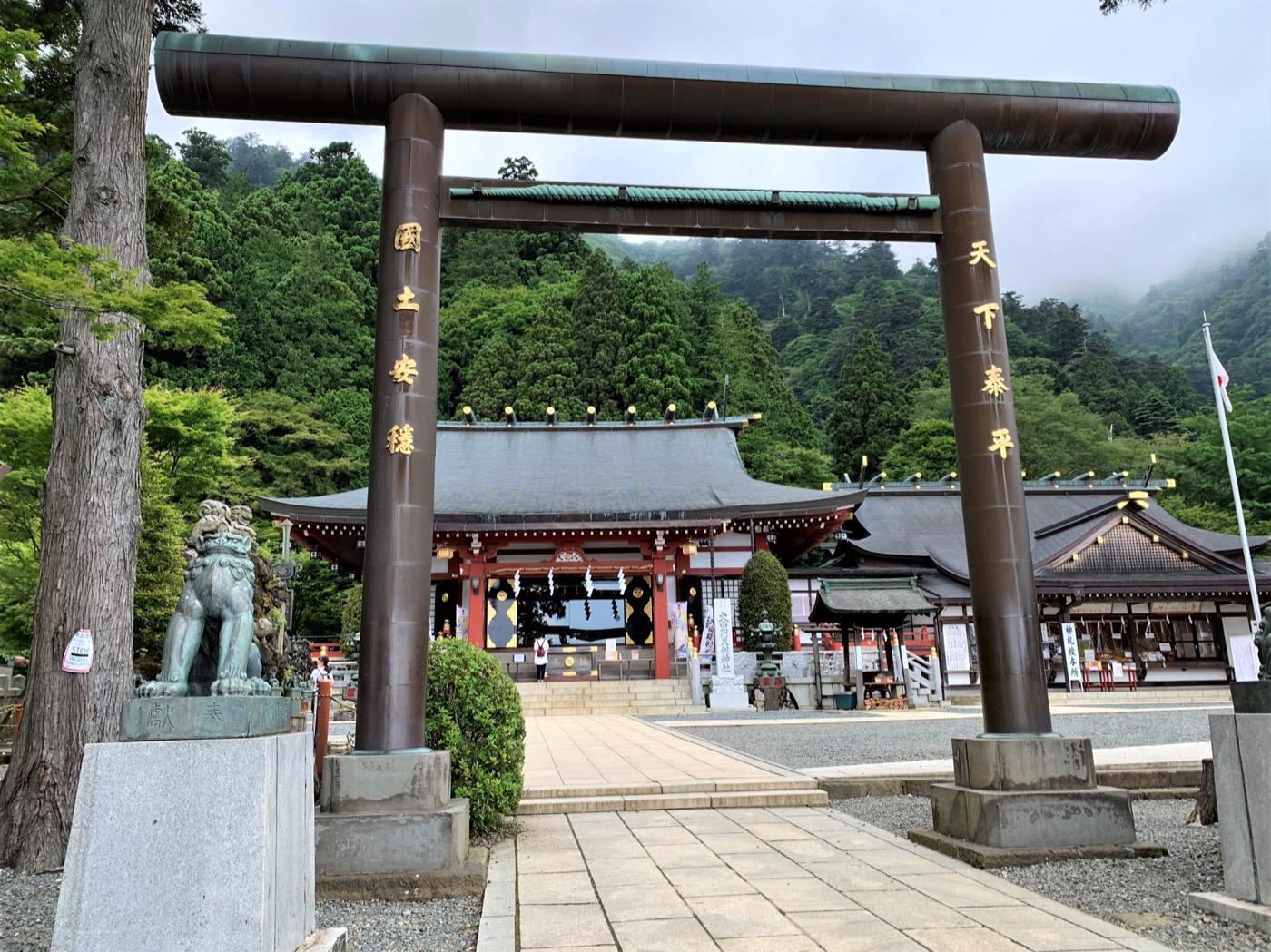
Take the bus from Odakyu Isehara Station’s north exit and the Oyama Cable Car to the lower shrine, Oyama-dera and Koma Sando. Compare fares and the Tanzawa-Oyama Freepass, keep summit hiking separate, and plan the return after November 2026 autumn lights.
Tokyo to Isehara: choose a train that actually stops there
From Shinjuku, use the Odakyu Odawara Line to Isehara. Enter the full station name, 伊勢原, and choose a direct or connecting train for your departure time. Train type, stops and waiting change arrival time even from the same starting station. From Tokyo Station, Ueno or another JR area, include the hotel-to-Odakyu transfer and compare whether Shinjuku is the best approach. The journey starts at your accommodation; Shinjuku–Isehara running time alone does not tell you when you can reach the shrine.
For a Romancecar, choose a service stopping at Isehara and buy the limited-express ticket separately. The Tanzawa-Oyama Freepass’s basic rail coverage and reserved seat are separate charges. Even with Pass A, buy the seat ticket required for the express you take. Ordinary trains usually make an easy day return more flexible if you do not want mountain queues to threaten a reserved departure.
At Isehara, use the north exit for the bus and mountain route. Save return information too: first descend to Isehara, then take Odakyu toward your accommodation. Before a flight or early start the next day, the daytime version leaves more time for dinner and packing. Avoid another city activity requiring punctual check-in that same day.
North-exit stand 4: take the bus to the Oyama Cable terminus
From Isehara Station north-exit stand 4, take Kanagawa Chuo Kotsu toward 大山ケーブル, Oyama Cable. Route I10 is common; direct services may also operate that day. The operator’s access introduction gives about 25–30 minutes from the station to the mountain base. Check the destination, not just stand 4, and do not get off at an earlier stop simply because its name includes Oyama.
The Oyama Cable bus terminus and Oyama Cable railway station are separated by an approach walk. The tourism association gives about 15 minutes, including steps, after the bus arrives. On autumn weekends, bus waits, road congestion and cable-car queues each add time. Thirty minutes by bus plus six on the cable car does not make a 36-minute station-to-lower-shrine trip.
Prepare your travel card or ticket before queuing, hold your backpack in front and leave the aisle clear. For the return, board at the same mountain-base terminus toward Isehara Station’s north exit. Check the stop, queue and return information when arriving in the morning rather than searching after dark. Use the coverage of your ticket version and pay separately outside designated sections.
The 15-minute Koma Sando approach is also an early energy check
The route from the bus to the cable car follows Koma Sando, こま参道. The tourism association lists about 15 minutes and 362 steps. Shops line the stepped approach, with Oyama spinning tops, souvenirs and tofu meals. To reach the shrine first, follow the main approach. If browsing every shop, add shopping time rather than using the official walking-only estimate.
With children or older travelers, check stair pace here. If several rests are needed before the cable car, take it both ways to the lower shrine and drop the Onnazaka walk. Enough energy to worship does not mean enough for a full stone-step descent. Strollers and large bags make the approach harder. Leave luggage at your accommodation and carry only a backpack with what you need on the mountain. If a companion needs a step-free route, explain the actual assistance needs to the operator before travel.
Fit meals to the route. Eat at the base before the cable car and buy only a snack on return, or go up first and have lunch after descending. If planning coffee at the lower shrine, still carry water and a simple snack rather than making lunch depend entirely on a scenic-seat queue. For autumn lights, an early full meal works well, with a warm drink as a rest rather than the only dinner.
Using the three cable-car stations: lower shrine first, temple on the return
The stations run from Oyama Cable at the base through Oyama-dera to Afuri-jinja at the top. The operator’s timetable gives about six minutes for the full ride and about two minutes from the middle station to either end. This short ride divides the height difference between shrine and temple into two manageable sections. For worship and foliage, it leaves more flexibility than committing to walk between them.
On a first visit, ride to Afuri-jinja, visit the lower shrine and enjoy the view. On return, get off at Oyama-dera for the temple, then continue to the base. A regular full-line ticket allows a stopover at Oyama-dera. Explain your planned return stop when buying and keep the ticket. At the middle station, check uphill and downhill signs and platforms. After the temple, use the Oyama Cable direction rather than following an arriving car back uphill.
You still walk from Oyama-dera Station to the temple. The temple’s access page gives about 200 meters, including the steps in front. The platform itself does not provide the full temple view. If the lower shrine has taken most of the afternoon or children are tired, ride directly to the base and save the temple for another visit. You need not rush to use the stopover privilege.
Regular tickets and passes: count the sections you will ride
As checked on October 27, 2026, the cable-car website lists full-line adult fares of ¥640 single and ¥1,270 return, with elementary-school fares of ¥320 and ¥640. Adult fares apply from junior-high-school age. Half-line travel, base to Oyama-dera or Oyama-dera to Afuri-jinja, costs adults ¥360 single or ¥700 return, and elementary pupils ¥180 or ¥350. For the lower shrine plus a temple stop on return, compare a full-line journey rather than buying half-line tickets and adding more uphill.
Odakyu’s Tanzawa-Oyama Freepass is valid for two days. Pass A includes unlimited Oyama Cable Car rides; Pass B excludes them. Both include unlimited Odakyu travel from Hon-Atsugi to Shibusawa, designated bus sections, and one outward and one return trip between the departure station and the free-travel area. From Shinjuku, adult A is ¥2,520 and B is ¥1,560; child prices are ¥920 and ¥400. From Machida or another station, compare that departure’s prices rather than detouring to Shinjuku for its fare.
For a Shinjuku adult, A costs ¥960 more than B. Adding a ¥1,270 regular cable-car return to B totals ¥2,830, or ¥310 more than A. B offers a discounted full-line single at ¥580. If you genuinely ride only once, B plus that single totals ¥2,140, less than A. Match the choice to walking ability. Saving ¥380 is not a reason to improvise a descent on an unfamiliar mountain trail.
For a family, calculate adults, each elementary pupil and other ages separately, then add food. For young children and required ticket types, give the counter the actual traveling numbers. Two-day validity can fit an overnight stay or be used for just one day. An unused second day is not a reason to add unplanned hot springs or temples to a day trip.
If canceling an electronic pass before travel, EMot terms list a ¥220 handling fee per ticket, with refunds through the original app or EMot website. After travel starts, refund requests and changes to the outward rail section go through customer support. Bus and cable-car counters do not refund electronic passes. If a cable-car suspension leaves unused travel, retain the ticket display and itinerary for support rather than joining a normal ticket queue to refund the whole pass.
| Ticket | Adult / elementary pupil | Suitable route |
|---|---|---|
| Full-line cable-car return | ¥1,270 / ¥640 | Lower shrine and back, with an Oyama-dera stopover |
| Full-line cable-car single | ¥640 / ¥320 | A fully planned walk in the other direction |
| Half-line cable-car return | ¥700 / ¥350 | Half-line return, such as the temple only |
| Pass A from Shinjuku | ¥2,520 / ¥920 | Rail, designated buses and cable car |
| Pass B from Shinjuku | ¥1,560 / ¥400 | Rail and designated buses; cable car extra |
Buying with a card and tapping through the gate are separate processes
The cable-car counter accepts cash, cards, transport IC cards such as PASMO and Suica, and PayPay. Direct gate entry supports EMot electronic tickets and contactless credit cards, but not transport IC cards. With Suica, buy a ticket at the counter and enter with it. Choose the right purchase and entry queue on arrival rather than discovering the difference at its end.
For a phone ticket, open it at the base and check battery and operation. In a group, agree who holds each ticket. For stopovers, child fares or discounts, explain the route to staff before buying. Checking the family’s tickets one by one is easier than finding a missing section at the gate.
EMot Tanzawa-Oyama Freepasses purchased from January 10, 2026 have three displays for A—rail, bus and cable car—and two for B—rail and bus. At the cable car, open its QR code for the reader; on buses, use the bus display. Locate them on your phone in advance and switch for each mode instead of repeatedly scanning a rail page at the cable-car gate.
In normal operation, end stations depart at minutes 00, 20 and 40, with the intermediate station at 02, 22 and 42. There are additional listed times near weekday closing. Extra services may run when busy, but keep margin within published hours. Regular hours are 9:00–16:30 weekdays and 9:00–17:00 weekends and holidays. Autumn extensions follow event dates. Do not apply the late closing throughout November or borrow another mountain’s cable-car deadline.
At the lower shrine: make time for worship, views and rest
Afuri-jinja Station starts the lower-shrine walk. Follow the worship route, visit the shrine, then stop in an open viewpoint. The view differs from the base streets, with Sagami Bay visible in clear weather. For broad mountain views, arrive in daylight rather than only for the autumn lights so you can see the terrain and city layers.
Photograph from places clear of worship routes. Separate portraits, torii and distant views into different frames rather than keeping the family on central steps waiting for an empty scene. The lower shrine has more than one photo spot. Worship followed by rest works better than rushing straight to a cafe and squeezing in the shrine last. In foliage crowds, add waiting for a goshuin seal or shrine items.
If cloud hides the distance, focus on buildings, steps and nearby trees and shorten outdoor waiting. Do not push the temple and return transport later while waiting for clouds to lift. Agree on a departure time from the lower shrine. Those staying seated can rest in the same area. For separate activities, meet at a named station or grounds landmark rather than just in front of the shrine.
Saryo Sekison is a rest option; its closing time does not set the last cable car
Saryo Sekison beside the lower shrine can be a rest after worship. Allow more lower-shrine time if you want to sit with the view. If the terrace is the priority, accept the actual seating and queue before deciding on food rather than planning the return around a guaranteed seat.
For autumn lights, eat a full meal before going up and use the tea room for an afternoon rest. Follow cable-car and bus times for the return, with another meal at the base after dark.
If there is only time for a drink, skip another dessert wait and return to the station afterward. A long queue is a reason to visit Oyama-dera first or rest briefly where permitted before descending. The scenic tea room can deserve time, but worship and views followed by a full meal at the base are equally workable.
Oyama-dera: the steps and main hall require a walk from the station
Oyama-dera is a Buddhist temple and Afuri is a Shinto shrine; you can visit both in one day. The temple traces its foundation to the priest Roben in 755. Maples in front and the main hall are autumn highlights. From Oyama-dera Station, look at the steps and trees leading to the hall, then follow the worship route up. Daylight shows the relationship between canopy, stone steps and statues on either side for a maple-tunnel photograph.
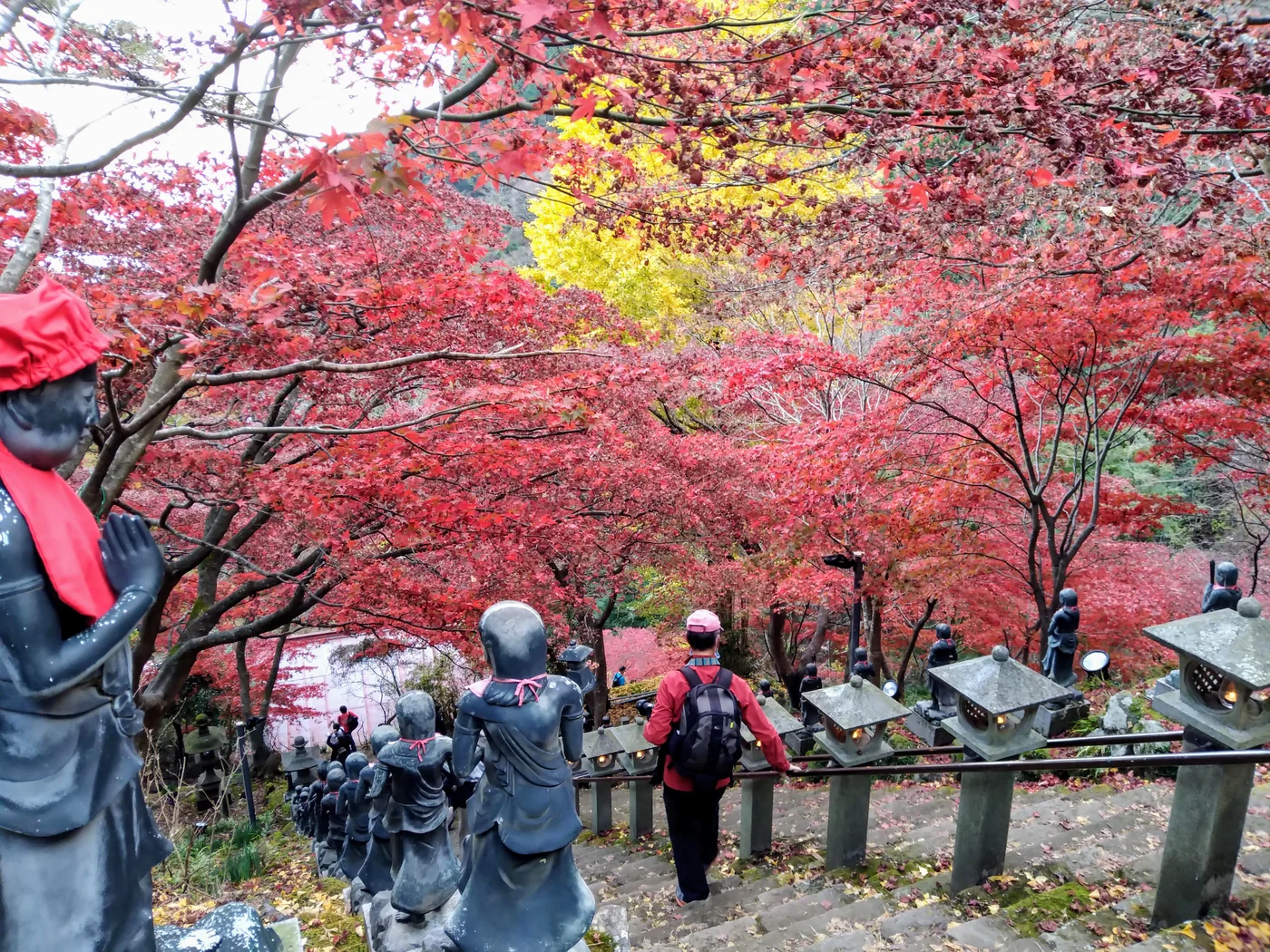
When stopping on steps, leave space for people going both ways and meet companions out of the flow. Slow down after rain or with fallen leaves. Finish the steps before finding a place to look back rather than stepping backward on one tread for a shot. If knees are sensitive, assess this section using current energy even after the cable car saves the longer climb.
The temple lists about 200 meters from the station, which you must walk again on return. Near cable-car closing, set a temple departure time before worship, photographs or other activities. Prayers, goma rituals and special temple events follow current temple information. A foliage visit need not make every ceremony or experience compulsory.
Treat Onnazaka as a trail; you can still keep the cable car for descent
Otokozaka and Onnazaka are walking approaches. Use the cable-car operator’s walking map to locate yourself, then choose a section to combine with rides. Onnazaka passes near Oyama-dera and can link the temple with the base. Its name does not mean flat or suitable for every child, older traveler or stroller.
The tourism association’s walking estimates from Oyama Cable Station to the lower shrine are about 40–60 minutes by Onnazaka and about 40 by Otokozaka. Consider Onnazaka for the temple and a slower approach. Otokozaka suits those prepared for mountain walking who want a direct ascent. Both begin near the cable-car station, after the approach steps. The bus arrival-to-station walk and mountain approach are separate, not interchangeable time allowances.
For photographs of temple maples, a cable-car stopover already achieves the aim without the full Onnazaka trail. To walk, choose clear endpoints, keep daylight, wear suitable grippy shoes and include rests and downhill pace. With knees sensitive to descent, consider walking up and riding down. Uphill needs energy; downhill tests knees and foot placement. No single direction is easier for everyone.
For autumn-light visitors unfamiliar with the route, use the cable car both ways and stay in lit worship areas. A phone light helps with footing but does not replace route planning and equipment on unfamiliar trails. If service stops unexpectedly, ask station staff about conditions and available arrangements before waiting or shortening the visit. Do not descend along the map’s shortest thin line.
Choose daylight foliage or evening lights before choosing your date
The Isehara tourism association lists Oyama-dera’s usual start of color as early to mid-November, with the better viewing period around mid- to late November. The lower shrine is another main foliage area. Use that range to plan leave, then check current conditions at different heights. For the canopy over the temple steps, judge from Oyama-dera photographs and observation dates rather than assuming summit, lower shrine and base change together.
Daylight shows complete steps, buildings and near and distant scenery. At night, lamps highlight maples alongside city lights in the lower-shrine direction. For one visit without a late Tokyo return, the daytime plan is complete. Keen photographers willing to stay can arrive in the afternoon, photograph daylight and keep only the place they most want to revisit after dark, reducing repeated cable-car rides through crowds.
Pack layers for a foliage day. Climbing approach steps, standing for transport and sitting on a terrace feel different. A thin warm layer, windproof jacket and accessible rain gear are easier to adjust than one heavy garment. For night views, protect hands from cold and preserve phone battery. Put equipment away while walking and photograph from a stable stop.
Seasons of the Sacred Peak, published on Isehara City’s official channel and made by a city promotion supporter. When planning an autumn visit, use it alongside this section’s comparison of daytime foliage and evening lights.
2026 autumn lights, November 20–29: two sites and a staged return
The Isehara tourism association’s 2026 announcement gives Oyama-dera and the lower shrine lighting from Friday, November 20 to Sunday, November 29. It starts after sunset and ends at 19:00 weekdays or 20:00 weekends and holidays. Cable-car hours extend to the same respective times during the period. Plan evening visits within those ten days. Other November dates use their applicable normal hours.
To see both, arrive at the lower shrine in the afternoon, worship, enjoy the view and stay until dark before descending to Oyama-dera. Alternatively, see the temple lights first, then go up to the lower shrine and take the full ride down last. The first makes a straightforward downhill return; the second leaves a favorite shrine night view for last. Check evening intermediate-stop services and queues, and fix a departure from the second site. Lights until 20:00 do not mean starting toward the cable car at 20:00 leaves time to ride.
One site is easier. Make Oyama-dera the main evening stop for maple-lined steps, or the lower shrine for shrine and city views before riding straight down. Drop the second if the outward queue was long or companions feel cold. Separate weekdays from Japanese holidays: November 23 is a holiday within the event, so the ordinary Monday 19:00 closing does not apply.
To reach Isehara, descend by cable car and walk to the bus first
The evening return has four stages: cable car from the lower shrine or Oyama-dera, Koma Sando walk, bus to Isehara and rail to your accommodation. Leaving the cable car still puts you far from an Odakyu platform. Check Kanagawa Chuo Kotsu for your date’s Oyama Cable–Isehara north-exit timetable. Choose a target bus, then work backward to leaving the shrine or temple, allowing for queues and the approach walk.
The last cable car limits mountain transport; buses and Odakyu have separate schedules. An event page’s extended cable-car hours still require a separate current bus check. Weekdays, weekends, Japanese holidays and extra services can differ. Save date, stop and direction rather than a cropped time column without headings. Include the final connection if another railway is needed.
For a Romancecar return, leave enough margin for queue changes, or buy an available seat only after reaching Isehara and knowing you can catch it. For ordinary trains, check destination and transfer rather than always waiting for the fastest service. Avoid a Tokyo event requiring punctual arrival after autumn lights. A late meal near your accommodation lets the descent follow your walking pace.
If queues exceed the margin you allowed, leave the photo spot earlier and drop final shopping. Buy before going up, or choose purchases in advance for quick collection on descent. Roads and queues are hardest to control. Shortening stops you control works better than rushing down steps.
A full day or afternoon start: what to leave out
For a daytime visit, reach Isehara in the morning, take the bus, walk the approach and board the cable car. Visit the lower shrine first, then lunch or a short tea stop. Get off at Oyama-dera on the afternoon descent, then return to the base. This is a sequence rather than a fixed schedule; adjust for trains, queues and pace. Riding between shrine and temple preserves energy for their grounds. A first visit need not also include the entire trail.
If leaving Tokyo in the afternoon on an ordinary operating day, choose just the lower shrine or Oyama-dera. At Isehara, compare cable-car closing and bus waiting time. With too little time, eat along the base approach and go up another day. In winter or shorter daylight, do not use a summer trip’s daylight expectations.
For autumn lights, eat lunch before going up, walk the approach slowly, see the temple or lower shrine in daylight and stay for your selected lit area after sunset. Seeing day and night requires a longer stay in the same place rather than more distant stops. Agree in advance on one evening site with children. Adults adding a second need a clear meeting time.
With one spare Tokyo side-trip day, give it to the Isehara mountain area. Kamakura’s coast, Mount Takao and Hakone are separate outings; transfers and roads take sightseeing time. If still choosing, read the site’s Tokyo day-trip and overnight choices. Once you choose Oyama, return to this bus, cable-car and shrine route.
When weather or companions change, shorten the route to something manageable
Check cable-car operation on departure day. The operator says abnormal weather including heavy rain, strong wind and thunder can suspend service. If conditions are unsuitable from the start, stay in Tokyo for an indoor day. If disruption appears after reaching Isehara, get operating information before choosing a meal at the base. Do not turn a cable-car-based walk into an unprepared mountain hike just to use the train fare.
In light rain with normal cable-car service, shorten to the lower shrine and return if rain increases. If cloud and rain hide the planned night view, finish in daylight. Shoes and packable rainwear suited to companions matter more than assuming a city-walking pace. On steps, stop in a wider space before checking directions instead of walking while looking at your phone.
With older travelers or young children, make the temple steps optional and prioritize the lower-shrine return and one meal. For wheelchairs or other assistance, explain needs to the cable car and facilities, confirm actual reach and then plan. Different companions can finish differently. One adult can take children down early while others continue worship, provided tickets, contact details and the meeting point are clear.
Allow toilets and water at both base and mountain, particularly when the return bus may involve standing or queues. The cable-car company says toilets inside the base station open only during cable-car operating hours. Do not rely on using them after closing. Before leaving the mountain, deal with children’s layers, handwashing and warmth if eating on the approach, so waiting does not require unpacking everything.
Prepare separately for the summit. The shrine’s 90–120 minutes covers only the lower-shrine-to-main-shrine ascent. A hike needs full ascent and descent time, suitable footwear and clothing, water, food, lighting and current mountain conditions. For the lower shrine, Oyama-dera and lights, moving the summit to another day gives each section more room.
Driving and base accommodation: parking still leaves the approach steps
Drivers should navigate to a base parking lot first. The cable-car company lists Municipal Parking Lot 1 with 84 ordinary-car spaces at ¥600 per day and Lot 2 with 44 at ¥1,000. Lot 1 is about 600 meters below the bus terminus; Lot 2 is closer. These are parking choices at the base. Cars cannot reach the cable-car boarding point, and approach steps remain after parking. Driving does not remove this final effort.
The operator advises using Municipal Parking Lot 2 at 541-2 Oyama, Isehara if navigation incorrectly directs you toward a closed road in Hinata. Drivers should check the whole road approach rather than set the summit or lower shrine as a drive-to destination. Autumn parking is limited, and an early start does not make journey time fixed. Without a specific need to drive, a bus from Isehara avoids looking for a space.
For an overnight stay, distinguish base temple lodgings from accommodation near Isehara Station. The base combines tofu meals, approach and lodging; the station makes next-day Odakyu departure easier. For dinner-and-breakfast plans, check return time after the lights against dinner and choose a compatible plan. If dinner comes before lighting, return early to eat and go out again. If lodging is the main aim, rest after daytime worship without going up again for views.
Enter actual guest numbers, children’s ages and bedding needs, then read the chosen plan’s cancellation dates and rates. If weather may trigger a change, compare the free-cancellation deadline with when you expect to decide. You need not book a room just for the lights: one site and an earlier descent can still fit a Tokyo day trip. An overnight stay adds time rather than repairs an unchecked last-service plan.
A few useful answers
Does the Oyama Cable Car reach the summit?
It reaches Afuri-jinja Station and the lower shrine on the mountainside. The shrine gives 90–120 minutes from there up to the summit main shrine, with descent extra. A foliage day can focus on the lower shrine and Oyama-dera.
Do I need two cable-car tickets to visit Oyama-dera?
A regular full-line ticket allows a stopover at Oyama-dera Station. Explain your route when buying and keep the ticket. The temple is still about 200 meters on foot from the station.
Can I tap Suica directly into the Oyama Cable Car?
You can buy a ticket with a transport IC card at the counter, but cannot tap that card directly through the gate. Direct entry supports EMot tickets and contactless credit cards.
When are the 2026 autumn lights?
November 20–29, from after sunset until 19:00 weekdays or 20:00 weekends and holidays. Cable-car hours extend accordingly during the same period. Check return buses separately for your date.
Must I walk Onnazaka between the lower shrine and Oyama-dera?
You can ride the cable car and get off at Oyama-dera. Onnazaka is a walking approach requiring daylight, footwear and energy. With older travelers or children, use the cable car throughout.
Official information and references
Sources used in this guide.
- Oyama Cable Car | Timetable and fares
- Oyama Cable Car | Access
- Oyama Cable Car | Walking map
- Odakyu | Tanzawa-Oyama Freepass prices and sales
- Odakyu | Freepass coverage
- Kanagawa Chuo Kotsu | Oyama transport introduction
- Oyama-dera | History and access
- Isehara tourism association | Oyama autumn leaves
- Isehara tourism association | 2026 Oyama autumn illumination
- Oyama Afuri Shrine | Grounds and hiking times
- Oyama Afuri Shrine | Saryo Sekison
- EMot | Freepass display changes from January 10, 2026
- EMot | Tanzawa-Oyama Freepass terms and refunds
- Isehara tourism association | Transport, walking and assistance FAQ
- Isehara tourism association | Koma Sando and its 362 steps
- Isehara City | Official YouTube channel video list
- Town News, Isehara | Shrine priest makes a video to share a love of Oyama