Compare Edogawa and Ichikawa paid seats, free areas and child allowances. Plan entry and departure via Shinozaki, Koiwa, Edogawa, Mizue, Ichikawa or Motoyawata, with 2026 prices, ticket collection, refunds and access rules.
- Region & Focus
- TokyoFestivals and fireworks
- Reading Scope
- 33 min read · 16 chapters · 4 Q&As
- Official Verification
- 20 official sources checkedUpdated October 31, 2026
- Key Topics
- SeasonsBookingRail travel
Chapter Route Map (tap any stop)
- Choose the Tokyo or Ichikawa bank before opening ticket sales
- Edogawa reserved seats: ground-level chairs, embankment chairs and slope mats
- Unreserved paid areas still need tickets; free viewing is outside them
- Ichikawa platform and pair seats: different sizes and child allowances
- Resident presales and general sales: who can apply?
- Edogawa electronic tickets and Ichikawa paper tickets: collect before heading to the river
- Entering from Shinozaki: head toward Stairway 10, then your ticket area’s stairs
- Entering Ichikawa: Channel C is separate from E, F and G
- Four Edogawa exit stations: nearest does not always mean fastest
- Leaving Ichikawa: stay with the Sobu Line or head upstream
- Allow for phased release instead of rushing the first stairs
- Three accessible-viewing arrangements, including companions
- Food, shade and camera equipment depend on your ticket area
- Refunds, resale and cancellation have separate conditions
- Keep accommodation on your route and the daytime plan light
- Free-area place-saving rules differ by bank; keep routes clear
- Quick Q&A
The first choice for Edogawa fireworks is which riverbank to use. Tokyo’s Edogawa Ward and Ichikawa in Chiba watch the same fireworks on the same evening, but each bank has its own tickets, entry checks and embankment routes. With an Ichikawa ticket, enter from an Ichikawa-side station. With an Edogawa ticket, consider Shinozaki, Koiwa, Edogawa or Mizue for the journey back. The 51st Edogawa Fireworks Festival and 42nd Ichikawa Citizens Fireworks Festival took place on August 1, 2026 and have ended. That edition ran from 19:15 to 20:20.
Choose the Tokyo or Ichikawa bank before opening ticket sales
The two organizers across the Edogawa River have similar event names, but the distinction directly affects your trip. The Edogawa venue is on the riverbed in front of Shinozaki Park; Ichikawa’s main venue is by Ozu 3-chome. Both see the same fireworks. A ticket gives you a different position, ground surface, entrance and exit route. The official Edogawa FAQ states that the events operate separately. Ichikawa tickets cannot enter Edogawa’s paid area, and sponsor seats are also separate.
If you are staying in Tokyo and want to return along the Toei Shinjuku Line, start with Edogawa-side seats. If you are staying farther east on the JR Sobu Line or already traveling toward Chiba, Ichikawa usually fits your route more easily. This is a transport choice, but also consider how far everyone can walk. A slightly cheaper ticket often is not worth a detour to the other bank. Keep the full Japanese event name with your booking instead of writing only “Edogawa fireworks” in the itinerary.
If group members buy separately, agree on the organizer, date and seat type before choosing a meeting station. If your tickets are for different banks, meet before entry, then each enter from the bank shown on your ticket. Ichikawa also has a Gyotoku venue reached from Tokyo Metro Myoden Station. JR Ichikawa Station’s south exit serves the main Ozu 3-chome venue. For a start from Myoden, plan around Gyotoku. For platform, pair or reserved chair seats, use the Ozu layout on the ticket. The two venues connect to different stations, so write the full venue name in meeting messages.
Compare Edogawa and Ichikawa paid seats, free areas and child allowances. Plan entry and departure via Shinozaki, Koiwa, Edogawa, Mizue, Ichikawa or Motoyawata, with 2026 prices, ticket collection, refunds and access rules.
Edogawa reserved seats: ground-level chairs, embankment chairs and slope mats
Edogawa offered reserved areas A–E in 2026. Chair seats in A–D were on the embankment-top cycle path, with one person per seat: ¥7,000 in A and D, ¥9,000 in B and ¥8,000 in C. Ground-level E seats cost ¥5,000 each. The official ticket table also lists blue-sheet spaces for two or four, priced per space. Choose how you want to sit before choosing a price; this serves physical needs better than asking only which area is closest to the front.
Two-person blue-sheet spaces cost ¥12,000 in A and D, ¥15,000 in B and ¥14,000 in C. Each is 180 centimeters wide and 90 deep. Four-person spaces measure 180 by 180 centimeters and cost ¥20,000 in A and D, ¥26,000 in B and ¥24,000 in C. They are on the embankment slope and require sitting on a mat. Friends sharing food may accept this, but anyone with knee or back discomfort should consider chairs first.
For two adults in A or D, two chairs total ¥14,000 versus ¥12,000 for a two-person sheet space, a ¥2,000 difference. Four chairs in the same area total ¥28,000 versus ¥20,000 for a four-person sheet, a difference of ¥8,000. The saving involves choosing slope seating over chairs. Food, ticket fees and transport are extra. Dividing a space price by the number of people does not make the experiences equivalent.
The system assigns reserved positions; you cannot select an exact location when buying. Edogawa says seats bought together within the purchase limit will be adjacent. Decide who will buy the tickets, place the group’s allowable quantity in one order and settle each person’s share.
Unreserved paid areas still need tickets; free viewing is outside them
Edogawa’s F, G, H and I were paid unreserved areas in 2026. Downstream ground-level F and upstream ground-level H cost ¥2,000 per person. Downstream embankment-top G cost ¥4,000; downstream slope G and upstream slope I cost ¥3,000. “Unreserved” means first choice of position within your purchased area. Reception gives out one 90-centimeter-square blue sheet per ticket. Bringing a large sheet to take more space breaks the rules.
These tickets suit people who can sit on the ground, are willing to check in early and want a lower ticket price. Two adults in F or H pay ¥4,000 in total. To sit together, enter together and lay out the issued sheets as staff direct. Keep luggage within your own space rather than using someone else’s area. In wind, hold the sheet down with your belongings, then return it at the designated collection point on exit.
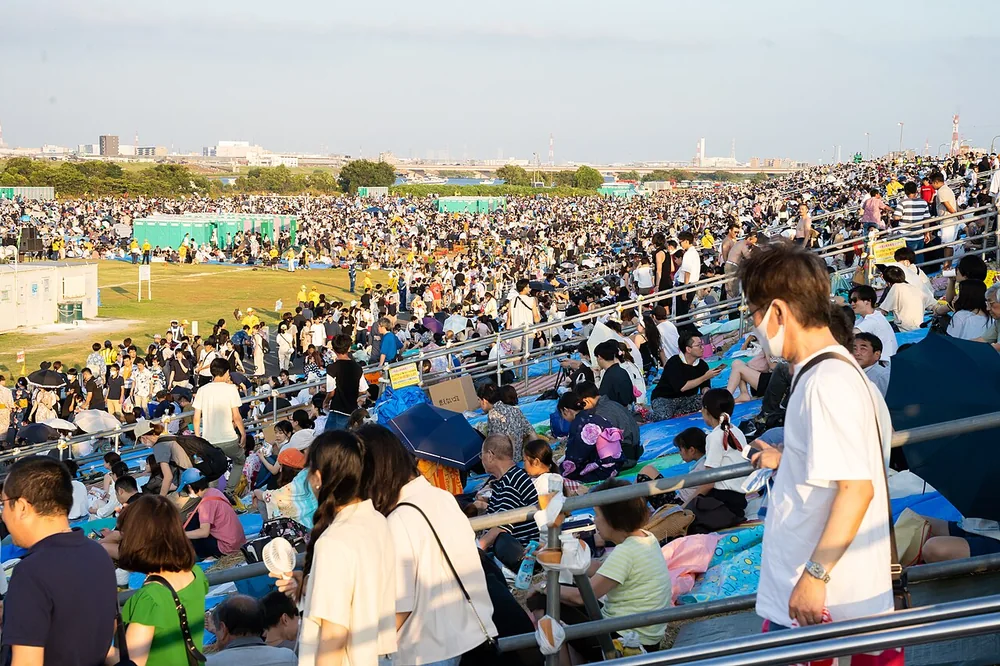
Free viewing is a separate option outside the sponsor and paid areas. It has no assigned seat number and does not provide a paid viewing position. Check the map for that edition, choose a reachable legal area on the upstream or downstream edge, then choose your station. Treating the whole embankment as free access will leave you blocked at the central ticket checks. Using a free-area entrance with a paid unreserved ticket also creates a detour.
For an evening by the river with friends, choose an outer free area you are happy with and plan food and departure. If someone needs a backrest and a fixed position throughout, choose reserved chairs. To control the budget while accepting ground seating, compare paid unreserved areas F–I.
Ichikawa platform and pair seats: different sizes and child allowances
Ichikawa’s 2026 raised platform spaces cost ¥25,000 for up to four adults and measured 180 by 90 centimeters. Pair spaces on the slope cost ¥13,000 for up to two and measured 150 by 90 centimeters. Chairs cost ¥8,000 per person and paid unreserved areas ¥5,000 per person. The designated official seller, CN Playguide, lists platform spaces as sets of four tickets and pair spaces as sets of two. Keep both the full ticket count and actual group size in your records.
Ichikawa’s platform space and Edogawa’s four-person blue-sheet space both accommodate four adults, but measure 180 by 90 and 180 by 180 centimeters respectively. The former is half the area, with a different surface type. If four people want to sit cross-legged with bags and food, agree first that Ichikawa’s width and depth are workable. To reduce the strain of floor seating, compare the total for four chairs instead of relying on the label “four-person space.”
Ichikawa’s free child allowance depends on seat type. Each platform space can include up to two children aged three or younger for free. Each pair space or chair ticket can include one child aged three or younger, seated on a guardian’s lap. Each paid unreserved ticket can include one preschool child. A four- or five-year-old does not qualify for the reserved-seat allowance for children three and under. Edogawa instead allows each adult one preschool child on their lap; elementary-school children and older need tickets, and elementary- and junior-high-school students must be with a guardian. Ichikawa has no child ticket price. Count everyone who exceeds the free age or accompanying-child conditions as requiring a ticket. For a family, note each child’s age, who will hold them and who will handle the return if they fall asleep. Holding a child for hours affects an adult’s rest. Capacity and a comfortable family seating arrangement both need attention.
Resident presales and general sales: who can apply?
Edogawa’s 2026 ward-resident presale was a lottery, open May 30–June 7, with results from June 9. General sales from June 13 were first come, first served. The resident presale notice limits eligibility to Edogawa residents and excludes duplicate applications under the same name. A short stay at a hotel in the ward does not let a traveler use its address as their residence.
Ichikawa’s 2026 city-resident presale ran June 7–9; general sales began June 10. A separate lottery for complimentary sponsor invitations was explicitly limited to Ichikawa residents. It provided paid unreserved-area access, rather than a free ticket lottery open to all tourists. Travelers can choose general sales or other legitimate public offers. Do not make a free lottery your assumed budget option.
Sales hours also vary by channel. Ichikawa’s CN page shows the online resident presale starting June 7, while FamilyMart machine applications began only at noon on June 9. Phone and web services also have their own hours. If you plan to use a convenience store after arriving in Japan, choose a channel you can actually use and note its application dates, payment deadline and ticket-issuing chain together.
Edogawa electronic tickets and Ichikawa paper tickets: collect before heading to the river
Edogawa tickets bought from July 6, 2026 onward were electronic only. Receive them in the Chikepla app using a member account and the phone number registered at purchase for the device that will display the ticket. The official rules say that number cannot be changed after registration. Collect the ticket on the device you plan to bring to Japan and check that the ticket and seat details open. Keep the phone, charging equipment and booking contact details in your day bag.
The official Edogawa instructions run through the ticket email, app installation, account setup and collection using the receipt number plus the last four digits of the account phone number. The entry-check screen opened the day before that edition. Staff verify it on entry and issue a paper re-entry pass. Checks can happen at the venue perimeter, so do not wait until the seating area to install the app.
Earlier Edogawa paper tickets were mailed and served as neck-worn passes. Wear these, or the re-entry pass issued after electronic verification, as directed and keep them until the event ends. Share ticket QR codes and order details only with people who need them. Publicly posting a personal ticket as an itinerary screenshot risks someone else using it. Ichikawa’s CN online page allows purchases without member registration, with collection at FamilyMart or 7-Eleven. For convenience-store payment, the system sends two emails. Use the special 13-digit number in the second email to pay; the reservation number in the first is insufficient. You receive a wristband after entry and must retain it for re-entry. This differs from Edogawa’s electronic process. Keep separate collection notes if group members buy for different banks.
Entering from Shinozaki: head toward Stairway 10, then your ticket area’s stairs
Edogawa’s paid areas opened at 16:00 in 2026. From Shinozaki Station, the ticket-holder route directs visitors straight along Shinozaki Ekidori toward Stairway 10. After traffic restrictions begin at 17:30, Shinozaki Kaido becomes pedestrian-only. Use the dedicated stairway for your ticket area. The nearest riverside point on a map may not admit your ticket type.
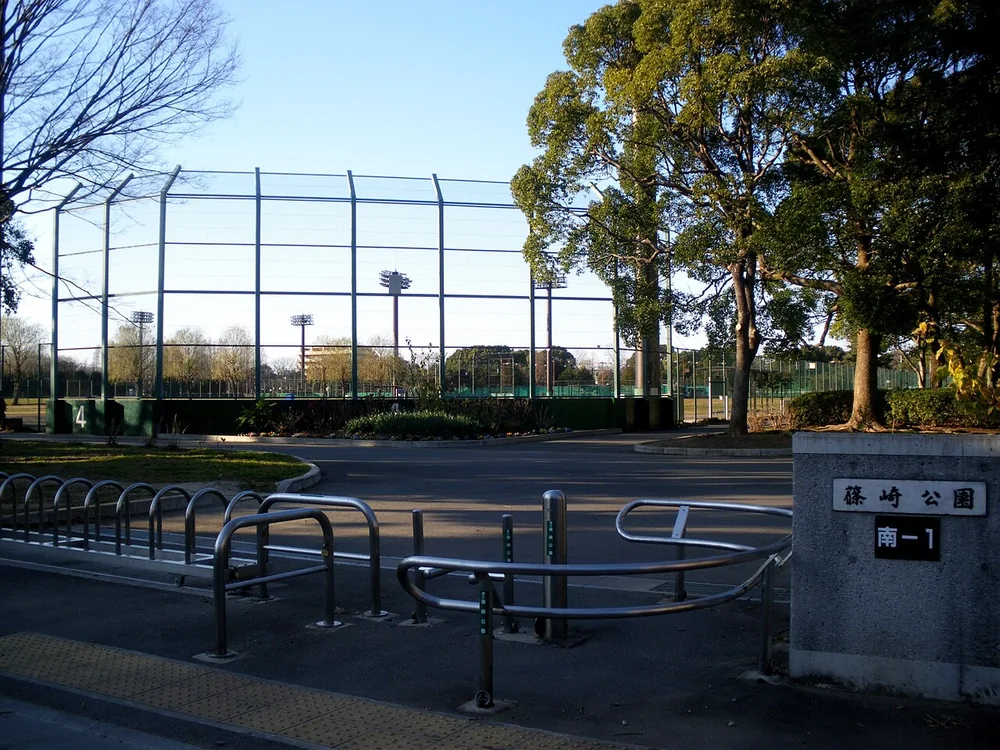
From Koiwa, follow the flag-marked route, walk south, or downstream, along the riverbed and take your area’s dedicated stairs up to reception. The final approach differs between these two routes. Save the organizer’s entrance map, area letter and reception position together rather than only a broad riverbed landmark, then use that same map on arrival.
From 17:30, central Stairways 3–11 and the riverside road between them have access restrictions. Only sponsor or paid-ticket holders can enter the central area. Stairways 3 and 11 allow exit only from the riverbed toward Shinozaki Kaido. Through access along the embankment-top cycle path is also restricted. To reach the other end, use Shinozaki Kaido or paths inside Shinozaki Park. Free-area visitors crossing the center to find friends will encounter these limits.
Edogawa designates the plaza outside Shinozaki Station’s north exit as a waiting point. Do not gather inside the station or at entrances. Once everyone has arrived and bought food and water, walk to your ticket area together. Anyone arriving separately should save the actual entrance, area letter and group contacts, then call from the designated entrance rather than searching back and forth through the central checks.
Entering Ichikawa: Channel C is separate from E, F and G
Ichikawa’s paid seating opened at 17:30 in 2026, later than Edogawa. The main venue is about a 15-minute walk from JR Ichikawa Station’s south exit. The organizer says it becomes very crowded after 18:30. Those 15 minutes describe ordinary walking, with extra time needed to get off the train, leave the station, reach the embankment entrance and pass ticket checks. Arriving at the station with your family at 19:00 leaves every step until just before the start.
The official Ichikawa ticket page separates routes by ticket: platform, pair and chair seats use Channels E, F and G; paid unreserved tickets use C; sponsor seating uses E. These letters identify access channels. Edogawa’s A–I letters identify ticket areas. Compare letters with the map for your own bank, rather than using an area code from the other side.
Ichikawa reserved seats do not allow exact seat selection. Multiple tickets bought together are usually consecutive, but if the system shows separate seats, decide whether you accept that before payment. For children or older relatives who need help, use one order within its capacity. Do not buy single tickets separately and expect to be seated together on arrival.
Have dinner outside the station before entering the restricted core. No food or drink is sold within Ichikawa’s paid area. Re-entry is allowed, but a shopping trip still means crossing the crowds. If one person leaves for supplies, others must watch shared belongings and children, reducing time together for the program. Bring essentials in one trip and treat stalls and food trucks as extras.
A venue-walking video from Ichikawa City’s official channel, embedded directly in the fireworks organizer’s venue guide.
Four Edogawa exit stations: nearest does not always mean fastest
Edogawa’s official return guide gives both walking and station-entry waiting times: Shinozaki, 15 minutes walking and about 60–90 minutes waiting; Koiwa, 25 minutes and about 30–60 minutes; Keisei Edogawa, 25 minutes and about 10–20 minutes; Mizue, 45 minutes and about 0–10 minutes. These are the organizer’s dispersal estimates for that edition. Use them to compare effort; staff control actual access on the night.
If you can walk farther and your accommodation connects to the Toei Shinjuku Line, consider Mizue first. About half an hour more walking trades for less time standing outside Shinozaki. That trade does not suit young children, foot injuries or anyone too tired for a long walk. Ask separately how long each person can walk continuously and how long they can stand in a crowd. The answers can differ.
Keisei Edogawa and JR Koiwa both have official walking estimates of 25 minutes, but different queue estimates. Include Edogawa if your accommodation connects to the Keisei Line. If you need the JR Sobu Line, compare the Koiwa queue with the extra time for a transfer. A shorter station queue is less useful if it creates an unfamiliar connection afterward. From 20:00, entry to Shinozaki uses the south exit; the west exit closes during the departure peak. Follow the official queue on Shinozaki Ekidori rather than everyday navigation to another entrance. Put away maps you have been checking while still on the embankment, then follow directions once in the organized queue. Leaving to shop and rejoining also changes your return-time estimate.
Leaving Ichikawa: stay with the Sobu Line or head upstream
JR Ichikawa Station draws the largest concentration of departures. The organizer also recommends walking upstream along the Edogawa toward Keisei Konodai Station, or toward the less concentrated JR Motoyawata Station. These connect to different railway lines. For accommodation on the Sobu Line, keep Motoyawata as an alternative. For a Keisei connection, compare Konodai. Choose your direction within the venue to avoid reaching Ichikawa Station and then turning back against the crowd.
Ichikawa-Mama is another nearby station listed by the organizer, with a Keisei Line connection. Find the exit from your ticket area toward the station on the venue map, then check services back to your accommodation. Adults traveling with children should each save transfer station names and the hotel address in case the group splits. Once you choose Motoyawata or Konodai, leave in that direction and use your planned transfers after entering the station.
From the Gyotoku venue, center your return on Myoden Station and the Tokyo Metro Tozai Line. This suits people already staying on the Tozai Line who accept a more distant viewing position; it is a separate plan from the Ozu 3-chome paid area. Going from Gyotoku to JR Ichikawa to meet friends afterward adds travel that night. Friends staying on different lines can eat together by day and leave at night according to their ticket area and accommodation.
Ichikawa’s 2026 traffic restrictions ran 17:00–22:00, with some roads at JR Ichikawa Station’s north exit restricted from 20:00. Parking lots inside the zone could not be entered or exited during restrictions. For a taxi, first leave the closed zone and expect nearby congestion. Parking by the river does not solve departure. The organizer also shortened south-exit bus routes. Base your return on trains and a walk you can manage, then check specific usable buses.
Allow for phased release instead of rushing the first stairs
Edogawa’s 2026 paid areas used phased departure: sponsor seats and C and E first, then A, B and D, followed by F, G, H and I. The notice estimated roughly ten minutes between groups, with a possible wait of up to 30 minutes at your seat. A cheaper unreserved ticket also means a later release. Fireworks ended at 20:20; that cannot also be the time you assume you are outside the embankment.
For free-area viewers, the organizer suggests staying in place for 20–30 minutes after the end, or first walking along the riverbed away from the center toward an available exit. Include this wait to avoid crowds on the stairs. Use the toilet and pack rubbish and bags first. When it is time to move, leave together instead of reorganizing belongings at a narrow stair entrance.
Several Edogawa bus limits are easy to miss. Routes can be heavily delayed or full after the fireworks. There are no extra buses from Shinozaki to Ichinoe or Kasai. The Route 28 service toward Funabori changes its boarding point after restrictions begin; the official transport page gave an expected last service of 20:11 for that edition. That is before the fireworks end, so it cannot be a fallback after watching the whole display.
Avoid fixed-time long-distance transport, airport pickups or restaurant bookings that evening. If your accommodation has a late-return or check-in deadline, tell it your expected arrival window. Work backward from the final leg to the hotel, including phased release, the embankment walk and station-entry queues.
Three accessible-viewing arrangements, including companions
Edogawa’s paid E area had wheelchair spaces at ¥5,000 per person in 2026. Companion seats were separately ticketed at the same price, with up to two per wheelchair space. The organizer describes a dedicated space with the chair removed, so the viewer remains in their wheelchair and companions use adjacent chairs. Buy wheelchair and companion tickets directly rather than buying a slope mat and requesting a change.
For free viewing, Edogawa also provides general wheelchair spaces on the embankment-top cycle path near Stairways 2 and 15. No reservation is taken, with up to two companions. The official FAQ requires an accompanying assistant. This differs from paid E wheelchair seating in location, payment and use. Choose an arrangement, then connect a workable entrance and return route.
Ichikawa’s viewing area and parking for disabled visitors were in the grounds of Municipal Ozu Junior High School. Advance applications began June 8, 2026 and closed when full. The dedicated notice requires name, phone number, address, vehicle type and plate number, and number of companions. Parking passes are mailed separately. This is not a service you register for at ordinary paid-area reception. Ichikawa’s general riverbed venue is not barrier-free, provides no on-site assistants and does not store strollers. Discuss station elevators, ground surfaces, stairs or ramps, toilets and the return route with the organizer if access needs are substantial. If the available route is still too long, compare officially ticketed indoor viewing or an evening away from the embankment to reduce crowd crossings.
Food, shade and camera equipment depend on your ticket area
Edogawa sold soft drinks at the venue from 16:00 to 18:30 in 2026, with no alcohol sold inside. Ichikawa sold no food or drink in its paid area. Bring enough water and essential meals on either bank, especially for young children, food allergies or people who need regular meals. Have a seated meal during the day and bring small, easy-to-clear portions for the evening instead of taking the whole family out to find dinner just before the start.
In Edogawa’s paid area, parasols and tents could be used until 18:30, then had to be packed away. Bringing tables or ordinary chairs is prohibited. Paid unreserved areas F–I make an exception for low-back chairs around 30 centimeters high. Chair-ticket areas already have organizer-provided seating. A high chair in a mat area blocks people behind and breaks the rules. Use wearable rain gear instead of opening an obstruction among close-packed seats.
Camera rules differ by bank. Edogawa limits tripods to seated eye height or lower, without disturbing others. Ichikawa asks viewers not to erect tripods in paid areas. If photography is a priority, use this difference to choose a bank before selecting equipment. A tripod that stays in your bag only adds weight on the way home. Decide before booking whether phone clips or a handheld camera will meet your needs.
After a long wait by the river and a departure walk, shoes often matter more than clothes. Even with a yukata, wear footwear that can cover the route. Carry only what you need and leave large luggage at your accommodation. Edogawa’s paid-area reception does not store strollers, and the organizer recommends avoiding them. If your family needs one, arrange folding and carrying and choose a return route you can still manage when the child is tired.
Refunds, resale and cancellation have separate conditions
Edogawa tickets cannot be changed, canceled or refunded at the buyer’s request. If the organizer cancels for severe weather or another covered reason, refunds follow its rules; there is no refund if the display ends partway through. Official resale in 2026 used Chikepla Trade from noon on July 10 to 11:59 on July 23. Tickets bought on or after July 11 were excluded. Resale eligibility depends on the original purchase date, not simply whether the platform has a resale feature.
The official seller’s resale fee is 8% of each ticket price, or a flat ¥440 per ticket priced at ¥5,500 or less, plus paper-ticket return postage and bank transfer fees. Buyers also pay purchase and electronic-ticket usage fees. If your trip may change, list the fees you can accept. Unofficial resale breaches festival rules and can lead to refused entry. Handing tickets to a stranger does not replace the official transaction process.
Ichikawa refunds require cancellation by the organizer. There is no refund after the show begins and no postponement for severe-weather cancellation. CN says to retain admission tickets for a refund. Delivery and payment fees are not refunded, and claims must follow the announced period and method. Keep the original ticket after cancellation news and follow CN’s deadline and instructions. Accommodation and transport remain subject to their own bookings. Note each of the three costs’ last cancellation times rather than one budget line saying “refundable.” Edogawa’s cancellation criteria include sustained strong winds, lightning risk, warnings and a special heatstroke alert. Ordinary rain may still allow the show to proceed. Read the organizer’s event-status announcement that day and follow evacuation and traffic directions.
Keep accommodation on your route and the daytime plan light
If you are staying several nights in Tokyo, you can usually keep your hotel and return on a familiar route. For Edogawa, compare the Toei Shinjuku Line from Shinozaki or Mizue, the Keisei Line from Edogawa and the JR Sobu Line from Koiwa. Staying near a station does not mean you must use it. If everyone can walk to another station, compare the full journey to your room, not just river to station.
For Ichikawa, accommodation along JR Ichikawa or Motoyawata can reduce line changes, but check which exit leads to the hotel entrance. Returning from the main embankment to the station’s south exit still leaves a station-area walk for north-side hotels. If changing hotels that day, store luggage and complete available check-in steps in the afternoon. Take only a light bag to the venue rather than hauling luggage through the departure crowd.
Families can plan lunch near the station, a rest in the room, afternoon supplies and then the walk to the entrance. Friends wanting more sightseeing can fit one indoor activity and an early dinner on the same bank instead of adding a distant trip. Save energy for the riverbank walk and wait when ticket areas begin admitting around 16:00–17:30. A full shopping morning followed by a rushed afternoon usually costs you rest first.
Ichikawa also offered special viewing at the I-Link Town observation facility in 2026, at ¥6,000 per person. Applications were limited, with a lottery if oversubscribed, and everyone aged four and above needed a ticket. Viewing is indoors, with buildings and smoke affecting sightlines. This is a separate ticket: embankment tickets do not admit you, and ordinary observation-facility opening does not mean free entry on fireworks night. If you prefer indoors, choose an official plan like this and follow that edition’s sales and entry arrangements.
Free-area place-saving rules differ by bank; keep routes clear
In Edogawa’s 2026 free areas, place-saving opened at 17:00 on July 31, the day before, with about one square meter per person as the guide. Items placed before opening were removed. Stakes, ropes and paint that damage the embankment are prohibited. Ichikawa prohibits advance place-saving and patrols to remove items on the previous day and earlier. The banks watch the same fireworks on the same day but use different place-saving rules; Edogawa’s timetable does not apply in Ichikawa.
Manage your own position in the free area without putting belongings in public passageways. If your group wants to arrive only in the evening and needs fixed space together, a ticket with formal seating arrangements makes this easier. Any plan to put down a mat early must follow that bank’s opening time. Keep entry and exit roads clear throughout.
Pack your mat, food wrappers and equipment together before leaving. Edogawa’s rubbish stations are near temporary toilets; locate them on the venue map. Ichikawa is entirely non-smoking, with no smoking area. To wait for friends outside an exit, move away from narrow paths and station entrances and meet at the prearranged point. The stretch between embankment, residential streets and station remains part of the fireworks trip.
A few useful answers
Can Edogawa and Ichikawa fireworks tickets be used on either bank?
No. The two banks see the same fireworks on the same evening, but tickets and sponsor seats are checked separately. Enter an Ichikawa ticket from the Ichikawa bank and an Edogawa ticket from the Tokyo bank.
Are Edogawa’s unreserved areas free?
Paid unreserved areas require tickets. In F–I, each person receives a 90-centimeter-square blue sheet and chooses a position within the purchased area on arrival. Free viewing is outside sponsor and paid areas.
Shinozaki is nearest. Must I return that way?
Shinozaki attracts the largest crowds. The 2026 organizer also recommended Keisei Edogawa and Mizue for dispersal. Choose based on walking ability, accommodation route and on-site restrictions. After 20:00, queue for Shinozaki through the south exit.
Can preschool children enter free on both banks?
Edogawa allows each adult one preschool child on their lap. Ichikawa’s reserved-seat allowance is for children aged three or younger: up to two per platform space, or one for pair and chair seating. Each paid unreserved ticket can include one preschool child.
Official information and references
Sources used in this guide.
- Edogawa | Official paid seats and ticket terms
- Edogawa | Ward-resident presale lottery
- Edogawa | Paid-seat FAQ
- Edogawa | Ticket-holder entrances and phased departure
- Edogawa | Electronic ticket collection
- Edogawa | Transport and buses
- Edogawa | Return station recommendations
- Edogawa | Venue access restrictions
- Edogawa | Free viewing and accessibility FAQ
- Edogawa | Viewing rules and cancellation criteria
- Edogawa | Venue map
- Ichikawa | 2026 event homepage
- Ichikawa | Official seat types and access channels
- Ichikawa | Designated ticket seller CN Playguide
- Ichikawa | FAQ
- Ichikawa | Traffic restrictions
- Ichikawa | Advance accessibility applications
- Ichikawa | Invitation lottery for city residents
- Ichikawa | Special observation-facility viewing
- Ichikawa | Official venue guide and transport video