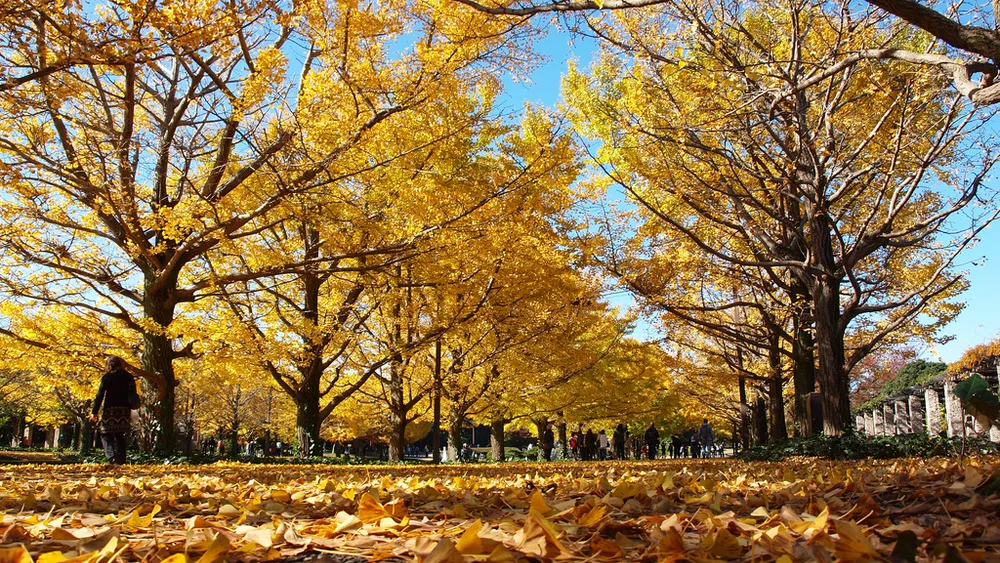
A 2026 Tokyo Christmas guide based on official schedules from Roppongi Hills, Marunouchi, and Tokyo Midtown Hibiya: the Roppongi Christmas Market opening November 21, Marunouchi's 1.2 km champagne-gold lights, the five-property CHRISTMAS HILLS stamp rally, and practical evening routes.
- Region & Focus
- TokyoWhen to visit
- Reading Scope
- 17 min read · 7 chapters · 7 Q&As
- Official Verification
- 7 official sources checkedUpdated November 20, 2026
- Key Topics
- SeasonsItinerariesTokyo & Kanto
Chapter Route Map (tap any stop)
- 2026 Tokyo Christmas Official Schedule
- Roppongi Christmas Market: German Stalls and O-yane Plaza
- Marunouchi: 1.2 km of Champagne Gold and Harry Potter Themes
- CHRISTMAS HILLS Stamp Rally and Hibiya After Dark
- Three Evening Route Combinations
- Costs: Admission, Stamp Rally, and Budget Planning
- Day-to-Night Itinerary Pairing
- Quick Q&A
Tokyo's Christmas displays don't switch on all at once. Official schedules roll out in stages: Roppongi Hills kicks off November 5, Marunouchi and Hibiya follow on November 12, the Roppongi Christmas Market opens November 21, and Marunouchi Street Park joins on November 27. Lining up these dates and nightly shutoff times is the difference between a smooth two- or three-hour evening loop and showing up to dark trees or long lines. Use this timeline to see where actual German market stalls are operating, which streets stay lit past midnight, how to finish the multi-mall stamp rally without detours, and how construction at Hibiya Park's Fountain Plaza changes plans for 2026.
2026 Tokyo Christmas Official Schedule
Put the official 2026 announcements side by side and the staggered timeline stands out immediately. Roppongi Hills Christmas 2026 runs from November 5 through December 25, lighting up the roughly 400-meter SNOW&BLUE display on Keyakizaka-dori daily from 5:00 PM to 10:00 PM. The Roppongi Christmas Market opens later, running November 21 to December 25 from 11:00 AM to 9:00 PM at O-yane Plaza. In Marunouchi, the Harry Potter-themed MARUNOUCHI BRIGHT HOLIDAY runs November 12 to December 25, with champagne-gold street lights staying on until 12:30 AM; Marunouchi Street Park 2026 Winter joins along Marunouchi Naka-dori and Gyoko-dori on November 27. Over in Hibiya, Tokyo Midtown Hibiya's Magic Time Illumination runs from November 12 all the way to February 28, 2027.
That calendar also gives you the easiest crowd-dodging strategy in town: stagger your visit around launch dates. In early November, only Roppongi Hills is lit, so holiday crowds haven't converged yet—making mid-November or earlier ideal for clean Keyakizaka photos. Once the market opens on November 21, weekend evenings pack both O-yane Plaza and Keyakizaka. During the two weeks leading up to Christmas, both Marunouchi and Roppongi peak every night. Visiting illuminations in November and saving the market for a weeknight cuts wait times dramatically.
Hibiya Park requires a separate note this year. According to the Tokyo Metropolitan Park Association, the Grand Fountain and Fountain Plaza are closed off for construction, and no new 2026 announcement has been issued by organizers for the Christmas market traditionally held there. If you are heading to Hibiya at night, anchor your evening around Tokyo Midtown Hibiya's Magic Time Illumination (November 12 through February 28, 2027) and the park's two-day Shinji-ike Pond lighting and HIBIYA PARK TERRACE event on December 19 and 20, rather than walking to Fountain Plaza expecting stalls.
Depending on when you land, the season breaks into four distinct windows. From November 5 to 20, Roppongi's lights are on without the market, while Marunouchi and Hibiya are either just starting or not yet open—the quietest window for photographing Keyakizaka-dori. From November 21 to early December, every major venue is active, making weeknights the sweet spot for full experiences with manageable crowds. From mid-December through December 25, countdown crowds peak, especially on weekends at O-yane Plaza and Keyakizaka; go then for festive energy, or avoid it if you care about clear photo frames. After December 25, the Christmas market and Keyakizaka lights wrap up, leaving Marunouchi's extended winter season (through February 14, 2027) and Hibiya's illuminations (through February 28) for New Year and winter visitors.
Transit between spots couldn't be simpler. All three hubs sit directly outside major rail or subway exits: Roppongi Station for Roppongi Hills, Tokyo Station for Marunouchi, and Hibiya Station directly connected to Tokyo Midtown Hibiya. You only pay standard city subway fares, and each district works best as its own self-contained walking loop. Unlike suburban light parks, the main cost on a central Tokyo Christmas night is queue time, not transit time.
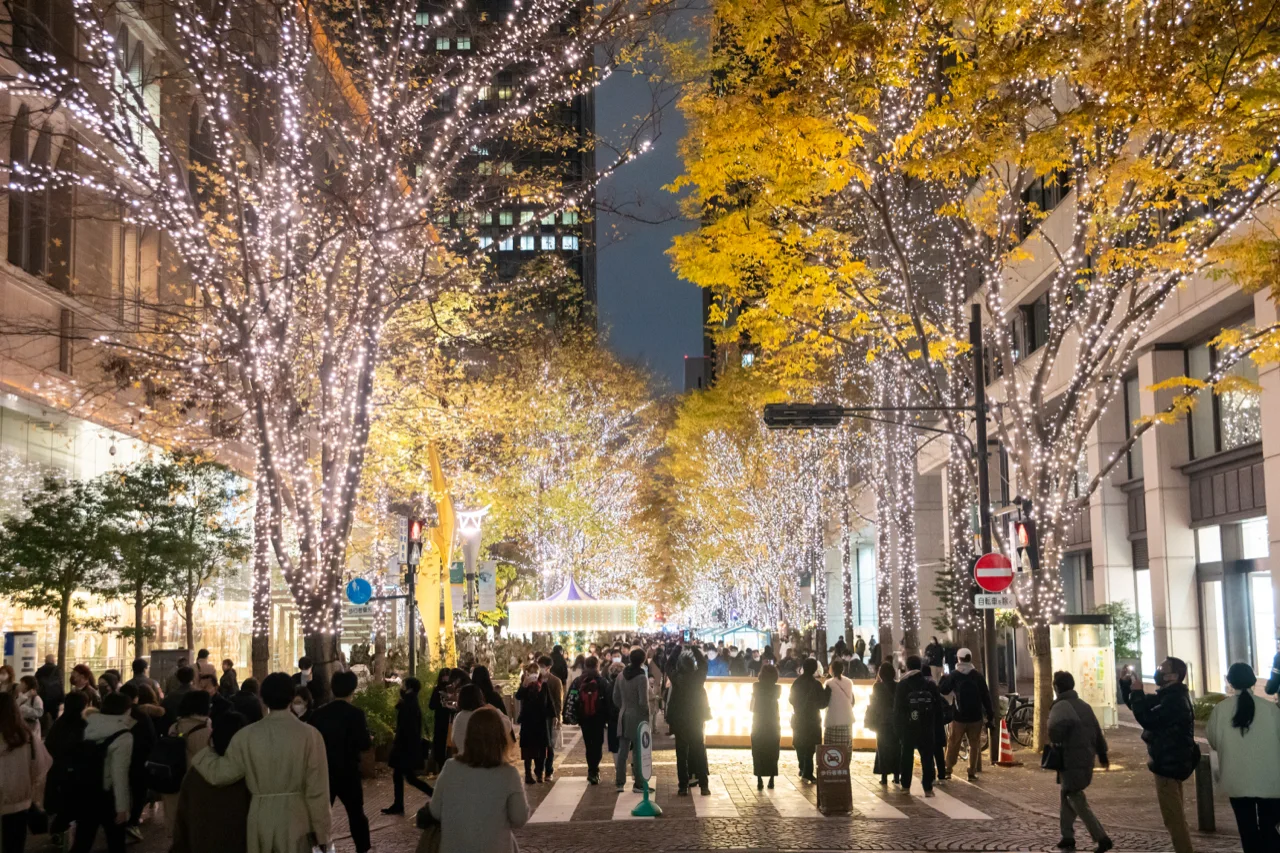
A 2026 Tokyo Christmas guide based on official schedules from Roppongi Hills, Marunouchi, and Tokyo Midtown Hibiya: the Roppongi Christmas Market opening November 21, Marunouchi's 1.2 km champagne-gold lights, the five-property CHRISTMAS HILLS stamp rally, and practical evening routes.
Roppongi Christmas Market: German Stalls and O-yane Plaza
The Roppongi Christmas Market runs November 21 through December 25, open daily from 11:00 AM to 9:00 PM at Roppongi Hills O-yane Plaza. Ten booths focus on German holiday traditions, including the heritage German ornament shop Kathe Wohlfahrt alongside classic stalls serving gluhwein, sausages, and seasonal treats. At ten booths, it's compact—about an hour covers eating and browsing—so its real strength is proximity to the 400-meter Keyakizaka lights and Mori Garden night views. Between 11:00 AM and 5:00 PM, foot traffic is noticeably lighter, which suits shoppers hunting for Kathe Wohlfahrt ornaments or families with kids who prefer skipping evening crowds. If you want the full glow, wait until after 5:00 PM to pair Keyakizaka with a mug of mulled wine.
Keyakizaka-dori's SNOW&BLUE display glows in crisp silver-and-white tones from November 5 to December 25, switching on at 5:00 PM and shutting off promptly at 10:00 PM. That 10:00 PM cutoff catches many visitors off guard; linger over a two-hour dinner first and you risk arriving after 9:30 PM with little time left. The cleanest pacing is to reach Roppongi Hills before 5:00 PM, stroll past Mori Garden, shoot Keyakizaka with Tokyo Tower framed in the background around 6:00 PM, move over to O-yane Plaza for German snacks at 7:00 PM, and head back to the station just before the market closes at 9:00 PM.
Beyond the plaza and tree-lined slope, Roppongi Hills runs a third layer indoors: shops and restaurants launch CHRISTMAS GIFT SELECTION and holiday dining specials from November 12 through December 25, nine days ahead of the market itself. Shoppers looking for gifts or seated dining can stay inside, while street photographers and gluhwein fans stick to Keyakizaka and O-yane Plaza, all steps from the same station exit. Because O-yane Plaza sits beneath a massive overhead canopy, the market also stays comfortable in cold December rain—making Roppongi the safest rainy-night option of the three hubs.
Travelers splurging on a formal holiday dinner can look next door to Grand Hyatt Tokyo inside the Roppongi Hills complex. The hotel takes orders for nine varieties of Christmas cakes from December 1 to 25 and serves special holiday menus at its restaurants from December 19 to 25. You can grab a warm cup of gluhwein outside at O-yane Plaza at dusk and step straight into a celebratory dinner under the same roof. Cake reservations and restaurant bookings are handled separately, so lock both in early if you want both.
For a seamless Roppongi evening, exit the subway before 4:30 PM to browse the indoor holiday gift displays (open from November 12 onward, so mid-November visitors still catch them). Step outside right at 5:00 PM as the 400-meter Keyakizaka display switches on, glancing over toward Mori Garden's lights along the way. After 6:30 PM, duck under the O-yane Plaza roof for gluhwein and grilled sausages while they're hot, then start walking back toward the station around 8:30 PM to beat the 9:00 PM closing rush.
If you have visited Roppongi in past years, don't rely on old habits. In 2026, the Christmas market is confined to O-yane Plaza, while Keyakizaka-dori features illuminated trees with no food stalls along the slope itself. Stall counts, layouts, and hours can also adjust slightly each season, so spending three minutes checking the official event page before heading out beats improvising on a freezing sidewalk.
Marunouchi: 1.2 km of Champagne Gold and Harry Potter Themes
Marunouchi's centerpiece is a continuous 1.2 km corridor of champagne-gold street trees—the densest walkable light display in central Tokyo. Official viewing hours run from 6:00 AM all the way to 12:30 AM, giving you two and a half extra hours past Roppongi's 10:00 PM shutoff. Every evening between 5:00 PM and 9:00 PM, a roughly three-minute light show ripples down the street every 15 minutes on the hour and quarter-hours, so there's no need to stake out a specific viewing spot.
In 2026, Marunouchi layers two seasonal programs over its signature trees. First is the Harry Potter collaboration, MARUNOUCHI BRIGHT HOLIDAY: Harry Potter — Magical Snow in Marunouchi, running November 12 through December 25. Second is Marunouchi Street Park 2026 Winter, opening November 27 along Marunouchi Naka-dori and Gyoko-dori with outdoor seating and seasonal stalls. Beyond Christmas Day, Marunouchi's broader winter holiday celebration continues until February 14, 2027, keeping the avenue festive through New Year's and Valentine's Day.
The easiest way to walk Marunouchi is to start at Tokyo Station and follow Marunouchi Naka-dori south toward Yurakucho, covering the full 1.2 km champagne-gold avenue and catching one of the 15-minute light shows after 5:00 PM. From November 27 onward, Street Park stalls dotted between Naka-dori and Gyoko-dori let you grab gluhwein or light bites as you stroll straight down to Tokyo Midtown Hibiya—all on foot without touching another subway turnstile. Because the corridor is completely open-air, winter wind or rain makes it feel colder than Roppongi's covered plaza or Hibiya's indoor atrium, so save Marunouchi for a crisp, dry night.
That 12:30 AM shutoff is a lifesaver for late arrivals. If an evening flight into Haneda puts you at your downtown hotel past 10:00 PM, Keyakizaka is already dark, yet Marunouchi's golden trees stay lit for more than two more hours—giving you a real Christmas atmosphere right outside Tokyo Station on night one. At the other end of the clock, the 6:00 AM switch-on rewards early risers with empty sidewalks and soft dawn light mixing with champagne-gold LEDs.
If you are planning a mid-to-late November trip, circle November 27 as your dividing line. The Harry Potter installations appear across Marunouchi venues alongside the champagne-gold trees from November 12, rather than replacing them, but Street Park's outdoor food stalls don't arrive on Naka-dori and Gyoko-dori until November 27. Before that date, head to Roppongi's O-yane Plaza or dine inside Hibiya if you want market snacks; from November 27 onward, all three Marunouchi layers run together in one place.
CHRISTMAS HILLS Stamp Rally and Hibiya After Dark
For 2026, Mori Building connects five complexes—Roppongi Hills, Azabudai Hills, Toranomon Hills, Omotesando Hills, and Ark Hills—in the CHRISTMAS HILLS 2026 stamp rally from November 5 through December 25. Download the free Hills App, register as a member, and earn one digital stamp for each single tax-included purchase of ¥1,000 or more. Collecting one stamp at three different Hills locations unlocks a ¥1,000 shopping voucher valid at participating stores. The smartest way to play is simply folding it into meals and errands you already planned: Roppongi, Azabudai, and Toranomon sit within easy walking range, so you can claim the voucher without detouring across town.
Down in Hibiya, the nighttime anchor is Tokyo Midtown Hibiya's HIBIYA Magic Time Illumination 2026, running from November 12 through February 28, 2027. Its biggest advantage is longevity: once Christmas markets and Keyakizaka shut down after December 25, Hibiya keeps glowing through the end of February, making it a top evening stroll for January and February trips. Next door at Hibiya Park, Fountain Plaza remains off-limits due to construction, with activity limited to the Shinji-ike Pond lighting and HIBIYA PARK TERRACE event on December 19 and 20.
Pairing Marunouchi and Hibiya into one evening flows effortlessly. Start at Tokyo Station around dusk, walk Marunouchi Naka-dori through a light show, cut across Gyoko-dori to Tokyo Midtown Hibiya for the Magic Time displays, and—if your trip lands on December 19 or 20—step into Hibiya Park for the Shinji-ike Pond lights. The whole route runs roughly two kilometers, far easier than hopping on and off subways in heavy winter coats.
Inside Tokyo Midtown Hibiya, indoor programming picks up the slack whenever temperatures drop: Christmas wreath giveaways and MY CHRISTMAS MY SHOWTIME run November 12 to December 25, the Biteki Festival starts November 6, and a winter dining collaboration between two in-house restaurants runs through December 25. Compared with Marunouchi's open-air streets, Hibiya offers a much denser cluster of warm indoor dining and events if winter rain moves in.
To turn the CHRISTMAS HILLS stamp rally into a natural afternoon-to-evening walk, start at subway-connected Toranomon Hills for afternoon coffee or browsing to earn stamp one. Walk through the redeveloped blocks to Azabudai Hills for an early dinner and stamp two, then take a 15-minute stroll toward Roppongi Hills in time for the 5:00 PM Keyakizaka switch-on and finish stamp three at a shop or O-yane Plaza. All three count in the Hills App—just show your logged-in screen at checkout. If you are already shopping in Harajuku or Aoyama during the day, swap in Omotesando Hills or Ark Hills instead; any three distinct Hills properties with ¥1,000+ tax-included receipts qualify.
Three Evening Route Combinations
Distill the three hubs into three practical evening plans. Option one is the Roppongi All-in-One: arrive before 5:00 PM for Mori Garden and Keyakizaka's 5:00 PM switch-on, move to O-yane Plaza at 7:00 PM for the 10 German market stalls, and take the subway back before the 9:00 PM market close—ideal for concentrating food and photos in one zone or staying dry in the rain. Option two is the Marunouchi + Hibiya Walk: leave Tokyo Station at 5:00 PM, walk Marunouchi Naka-dori's 1.2 km champagne-gold avenue with a 15-minute light show, grab Street Park snacks near Gyoko-dori, and finish at Tokyo Midtown Hibiya's Magic Time display. Option three is the Hills Stamp Rally Loop: start in Azabudai or Toranomon in the afternoon and walk into Roppongi by dusk to stack lights, market snacks, and a ¥1,000 voucher.
Crowd timing maps straight onto these schedules. Weekend evenings from mid-December onward bring peak congestion at O-yane Plaza, so aim for weeknights or arrive before 6:00 PM if you want breathing room with your gluhwein. Keyakizaka photo crowds surge in the first hour after sunset; circling back around 9:30 PM during the final half-hour before the 10:00 PM shutoff yields much cleaner shots. Along Marunouchi, the 5:00 PM to 9:00 PM light show repeats every 15 minutes across the entire avenue, so there's zero reason to camp on one corner early. Stick to weeknights and official hours as late December approaches and you skip most of the bottleneck.
Pair any of these three routes with daytime sightseeing from our Tokyo Neighborhoods guide. If your trip also includes mountain ski time or hot springs outside the city, slotting a Christmas market walk into your last night back in central Tokyo works neatly, since everything runs on standard subway rides and short walks with zero extra suburban transit.
Families traveling with young kids will have the easiest time prioritizing early starts and short distances. Roppongi Christmas Market opens at 11:00 AM, giving kids room to watch German booths prep food without evening shoulder-to-shoulder crowds. Marunouchi Street Park spreads flat along Naka-dori, making stroller navigation straightforward, while Tokyo Midtown Hibiya keeps most activities tight around one complex. None of these routes require late nights—two to three hours after an early dinner wraps everything up comfortably.
For crisp night photography, each venue favors a different approach. At Keyakizaka, shooting uphill from the base between 5:00 PM and 6:00 PM captures deep twilight blue behind the silver lights before the sky turns pitch black. On Marunouchi Naka-dori, frame straight down the center of a crosswalk to pull depth from the golden trees, and stay in place through one 15-minute light cycle to catch the color shifts. At O-yane Plaza, overhead canopy lighting keeps stall signs and food bright without relying on twilight. Casual photography is welcome across all three areas, though tripods and commercial shoots must follow on-site rules—keep moving on crowded sidewalks.
Matching routes to trip length is simple. Roppongi packs market food, tree lights, and rain cover into one stop; Marunouchi plus Hibiya suits tight schedules, late-night arrivals, or anyone wanting Tokyo's longest illuminated walk; and the Hills stamp rally rewards travelers already dining across Mori properties. With three nights in Tokyo, run one route each evening; with only one night, pick Roppongi if you want a German market, or Marunouchi-to-Hibiya if you want grand avenues of lights.
Costs: Admission, Stamp Rally, and Budget Planning
All three Christmas zones keep baseline travel costs at zero because admission is completely free. Roppongi's O-yane Plaza is open-access, Marunouchi Naka-dori and Gyoko-dori are public streets, and Tokyo Midtown Hibiya's displays spread freely inside and outside the complex. There are no entrance tickets or minimum spend requirements—you can walk an entire evening route for the price of a subway ride, spending only on the snacks, mulled wine, or gifts you choose.
The clearest built-in savings is the CHRISTMAS HILLS 2026 stamp rally from November 5 to December 25: spend at least ¥1,000 (tax included) per single transaction at three different Hills complexes to get a ¥1,000 store voucher. If you already plan to eat lunch, grab coffee, and buy a small gift across three properties, that ¥1,000 voucher is pure bonus; detouring or buying extra items just to chase stamps wipes out the value. Put your first two ¥1,000+ stops in the afternoon, then unlock and spend the voucher on your third stop at Roppongi Hills that evening. Meanwhile, Roppongi's GIFT SELECTION dining promos and Hibiya's winter dining tie-ins run concurrently from November 12 to December 25 for bundled holiday shopping.
Evening spending breaks down cleanly by neighborhood. Roppongi centers on German market gluhwein, sausages, and mall boutiques; Marunouchi leans toward Street Park street snacks and Naka-dori shops; Hibiya focuses on sit-down indoor restaurants and winter tasting menus. Choose Roppongi or Marunouchi for casual grazing, or book a Tokyo Midtown Hibiya restaurant or Grand Hyatt Tokyo's December 19-25 holiday menu when you want a seated celebration—your budget scales up or down completely on your terms.
Day-to-Night Itinerary Pairing
The least tiring way to slot Christmas lights into a Tokyo trip is keeping day and night in the same station zone. Check our Tokyo Neighborhoods guide for daytime anchors: pair a Roppongi evening with Roppongi Hills museums or Minato Ward shopping so you roll straight into the 5:00 PM Keyakizaka switch-on without changing trains. Pair Marunouchi with Tokyo Station and the Imperial Palace Outer Gardens, and pair Hibiya with Ginza and Yurakucho. Ending each day inside the same transit hub spares you cross-town rush-hour subways.
If your winter trip combines city sightseeing with nearby ski resorts, bookend your mountain leg with these evening walks. Using our Tokyo Ski Day Trips and Yuzawa Stays plan, stepping off a returning Shinkansen at Tokyo Station puts you steps away from Marunouchi's champagne-gold lights—or you can stop by Roppongi's market after its 11:00 AM opening on your departure afternoon before boarding your train. Late December overlaps peak ski conditions with peak Tokyo illuminations, letting snow and city lights complement each other effortlessly.
Keep the hard calendar cutoffs in mind when booking flights. Roppongi Hills Christmas, the Roppongi Christmas Market, Keyakizaka illuminations, the CHRISTMAS HILLS stamp rally, and Marunouchi's Harry Potter program all wrap up promptly on December 25. Make sure to visit on or before December 25 for the German market and Christmas-specific events; between November 21 and 26, Roppongi's market is open while Marunouchi Street Park hasn't launched yet, so go straight to O-yane Plaza for outdoor stalls. If you arrive on or after December 26, focus on Marunouchi's extended winter season (through February 14, 2027) and Tokyo Midtown Hibiya's Magic Time Illumination (through February 28, 2027) so you still get full evening lights without showing up to cleared-out plazas.
A few useful answers
When does the 2026 Roppongi Christmas Market open?
It runs from November 21 to December 25, 2026, open daily from 11:00 AM to 9:00 PM at Roppongi Hills O-yane Plaza. Ten stalls focus on German holiday traditions, serving gluhwein, sausages, stollen, and seasonal snacks.
What are the lighting hours for the Keyakizaka illuminations?
From November 5 to December 25, 2026, the SNOW&BLUE illuminations along the roughly 400-meter Keyakizaka-dori light up daily from 5:00 PM to 10:00 PM sharp. If you plan to have dinner first, watch the clock so you don't arrive after lights-out.
How late do the Marunouchi illuminations stay on?
Marunouchi's 1.2 km stretch of champagne-gold trees is lit from 6:00 AM to 12:30 AM, making it the latest-running Christmas display in central Tokyo. Between 5:00 PM and 9:00 PM, a roughly three-minute light show also runs every 15 minutes.
How does the CHRISTMAS HILLS stamp rally work?
From November 5 to December 25, download the free Hills App, register an account, and earn one digital stamp per single tax-included purchase of ¥1,000 or more. Collect one stamp each at three different Hills properties to redeem a ¥1,000 shopping voucher. Roppongi Hills, Azabudai Hills, and Toranomon Hills are all within walking distance of each other.
Is the Hibiya Park Christmas Market happening in 2026?
The Tokyo Metropolitan Park Association has announced that Hibiya Park's Grand Fountain and Fountain Plaza are closed off for construction, with no new 2026 announcement from organizers for the traditional Hibiya Christmas Market. Plan around Tokyo Midtown Hibiya's Magic Time illuminations (November 12 to February 28, 2027) and the park's limited December 19-20 Shinji-ike Pond event instead.
Can you visit the Christmas markets on a rainy evening?
Yes, if you head to Roppongi. The Roppongi Christmas Market sits under O-yane Plaza's large roof, so you can browse and eat even in rain. Marunouchi and Hibiya illuminations are mostly along open streets, making indoor dining at Tokyo Midtown Hibiya or Roppongi Hills better bets in bad weather.
Are there still winter illuminations in Tokyo after Christmas?
Yes. Tokyo Midtown Hibiya's Magic Time Illumination runs through February 28, 2027, and Marunouchi's broader winter holiday season continues through February 14, 2027, so evening displays remain active in January and February.
Official information and references
Sources used in this guide.
- Roppongi Hills Christmas 2026 | Roppongi Hills (Overall Season Schedule)
- Roppongi Hills CHRISTMAS 2026 Official Page (Christmas Market & Keyakizaka Illuminations)
- CHRISTMAS HILLS 2026 (Five-Property Stamp Rally)
- MARUNOUCHI BRIGHT HOLIDAY 2026 | Marunouchi (Viewing Hours & Light Show)
- Marunouchi Winter Holiday Season 2026 (Street Park Winter)
- Tokyo Midtown Hibiya | HIBIYA Magic Time Illumination 2026
- Tokyo Metropolitan Park Association | Hibiya Park (Fountain Plaza Closure Notice & December Events)