Compare flat-rate taxis and private airport transfers from Haneda and Narita into Tokyo, including terminal pickup points, child seats, luggage sizing, flight delays, and early-morning departures.
- Region & Focus
- Tokyo
- Reading Scope
- 18 min read · 11 chapters · 6 Q&As
- Official Verification
- 18 official sources checkedUpdated November 22, 2026
- Key Topics
- Airport transfersBookingTravel budget
Chapter Route Map (tap any stop)
- Decide Between the Taxi Stand and Pre-Booking
- Haneda's Three Types of Pickup Points Are in Different Spots
- Landing at Narita Terminal 3: You Can Catch Your Ride Right There
- Where Flat-Rate Taxi Fares Differ
- What You Pay For With Tokyo MK Private Transfers
- When Does a Private Car Pay Off? Check These Two Legs First
- How to Report Child Seats, Wheelchairs, and Oversized Bags
- Write Clear Quote Requests and Pickup Instructions
- Timing Late-Night Arrivals and Early-Morning Departures
- Heading to Urayasu, Yokohama, or Changing Airports? Quote the Full Route
- Adding a Stop En Route? Include Every Spot and Wait Time
- Quick Q&A
If you fly into Haneda and stay in Shinjuku, taking an official taxi from the stand during the day costs a flat rate of ¥9,000 plus expressway tolls. From Narita to that same hotel, the flat-rate taxi fare jumps to ¥31,500 or ¥32,500 depending on the expressway route. At Haneda, travelers with large suitcases can walk straight to the taxi stand; at Narita, check direct trains first if your hotel sits near a station. When your group needs two child seats, space for a folding wheelchair, or several oversized bags, send that exact luggage list to a private transfer company for a quote.
Decide Between the Taxi Stand and Pre-Booking
If you are flying into Haneda with one or two bags, you can wait until you clear customs to decide. When your hotel is close to a Keikyu Line or Tokyo Monorail stop, taking the train saves on fare. If the walk from the station takes more than ten minutes, it is raining, or your bags are awkward to roll, head to the official taxi stand outside arrivals and show your hotel address to confirm the flat-rate fare. Grabbing a cab on the spot also avoids waiting-time overage fees if immigration lines run long.
Pre-booking makes the biggest difference when you need a specific vehicle or hands-on handoff. Families who need support from baggage claim to the car can give the operator child-seat details, meeting instructions, wheelchair dimensions, and the exact hotel entrance ahead of time. Japanese operators offer both pre-booked versions of airport flat-rate taxis (priced by destination zone) and private hire cars, which can also carry one-way fixed rates. Before booking, check who operates the vehicle, the exact car model, the pickup location, and the full fee breakdown.
If someone in your group lands on a later flight, pick a meeting point everyone can reach easily before joining the taxi queue or setting a pickup time. Shared shuttles usually charge per person, so verify whether your booking drops off at your hotel door, a nearby stop, or only within designated zones. When your group has a fixed check-in or meetup time, factor in stops for other passengers and the final walk from the drop-off point. Direct hotel limousine buses are also worth comparing.
Hauling luggage through station transfers often matters more than shaving a few minutes off a train timetable. Around Tokyo Station, estimate the walk from the train platform to your hotel door in two separate legs. Save your hotel's main entrance on your phone map before flying so you can choose between the train, bus, or taxi stand as soon as you land. If only the final stretch is tricky, taking the train from Narita into central Tokyo and catching a short cab ride still gets your bags right to the lobby.
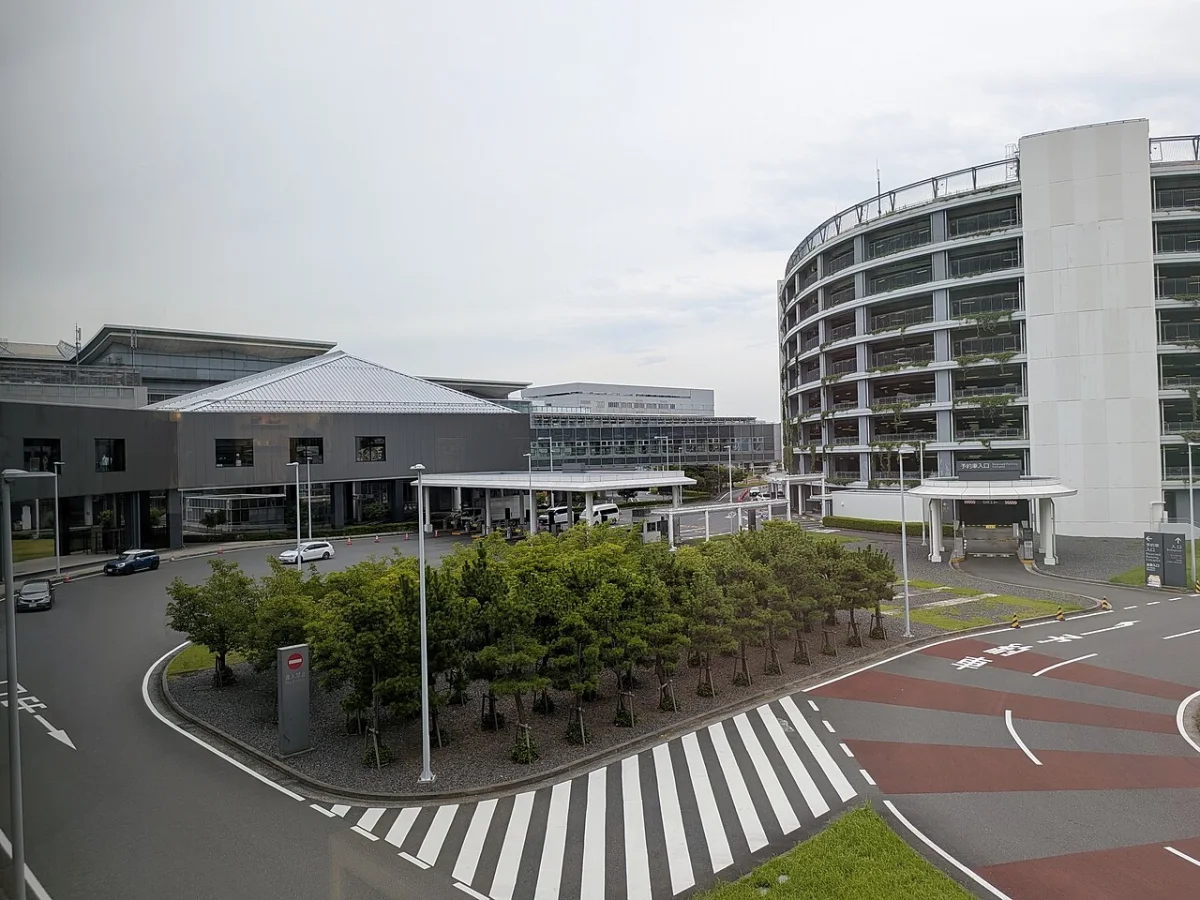
Compare flat-rate taxis and private airport transfers from Haneda and Narita into Tokyo, including terminal pickup points, child seats, luggage sizing, flight delays, and early-morning departures.
Haneda's Three Types of Pickup Points Are in Different Spots
Haneda's airport code is HND. Terminal 1 handles domestic flights, Terminal 2 serves domestic flights plus selected ANA international flights, and Terminal 3 handles international flights. On codeshare tickets, give your transfer provider both the operating airline and flight number, and follow the terminal listed by the airline or airport arrivals board on the day of travel. The Terminal 2 international arrivals lobby is on the 2nd floor south side; check whether your booking includes a lobby greeter or requires walking to a pickup zone.
At Haneda Terminal 3, standard taxis board at 1F Lane 2, Berth 21. The airport designates the 8th floor of the P5 parking garage for ride-hailing apps and pre-booked taxis at Terminal 3, though pickup spots shift during congestion, so follow live instructions inside your app. Standard taxi stands at Terminals 1 and 2 are on the 1st floor, while app-hailed and pre-booked taxi zones for both terminals are on the 2nd-floor departures level near Exits 7 and 2, respectively. Follow lane signs by destination—routes toward Yokohama and Kawasaki have separate designated berths.
If you booked a meet-and-greet service with a name sign, stay inside the designated arrivals hall specified on your confirmation until the greeter escorts you to the car. On airport signage, taxis are marked for walk-up or app cabs, while pre-booked private cars follow hire-car designations. If your voucher simply says "Arrival," confirm the exact floor, information counter, or exit number before flying. Terminal 2 has separate pickup areas for domestic and international arrivals, so texting "Terminal 2 International, 2F South" works far better than sending a selfie with no visible landmarks.
When an information counter or pillar number serves as your landmark, stay put until the driver or greeter replies before moving your group. Travelers who wander to another floor to look for the car often cross paths with a greeter walking in from the parking garage. If you are using a ride-hailing app, confirm a driver has actually been assigned and check whether the pickup pin refreshed while your group waits in a spot with space for luggage carts.
For trains into central Tokyo from Haneda, the Keikyu Line connects to Shinagawa or runs through onto the Toei Asakusa Line, while the Tokyo Monorail terminates at Hamamatsucho for easy JR transfers. Heading to Shimbashi, Higashi-ginza, or Asakusa? Check stopping patterns for direct Keikyu through-trains. If your hotel near Shinagawa sits on the far side of the station or uphill and you land late, a short taxi ride handles that last stretch easily. For Shinjuku stays, check which hotels have direct Limousine Bus stops that day and compare the post-drop-off walk.
Landing at Narita Terminal 3: You Can Catch Your Ride Right There
Narita's airport code is NRT. Official airport guides place taxi stands at Berth 15 for Terminal 1, and Berths 28 and 31-A for Terminal 2; from Terminal 3, follow signs through the pedestrian walkway to the taxi stand. For Terminal 1 international pickups, confirm whether you arrive in the North or South Wing. If you book a private car, have the operator write a clear, identifiable meeting point on the voucher so you do not walk down to the taxi lanes while your driver waits outside a different exit.
To take JR or Keisei trains from Terminal 3, you must go to Terminal 2's Airport Terminal 2·3 Station via the pedestrian walkway or the free terminal shuttle bus (which departs from Stop 1 when traveling from Terminal 2 to Terminal 3). If part of your group takes the train while others take a private car, agree to meet at the hotel before departing so neither group makes an unnecessary terminal detour. If you are staying next to Ueno or Nippori stations, the walk to the train is still far cheaper than a long-distance private car. For groups with a folding wheelchair and large suitcases, though, a private transfer eliminates the terminal transfer, city station exit, and final walk—just make sure your booking lists Terminal 3 as the pickup terminal.
Even with big suitcases, splitting the trip into two legs works well. The Narita Express (N'EX) runs to Tokyo, Shinagawa, Shibuya, and Shinjuku, while the Keisei Skyliner serves Nippori and Keisei-Ueno. If you are staying at a major hotel in West Shinjuku with direct Limousine Bus service, compare bus schedules and exact drop-off stops first. For Asakusa, look for Keisei Access Express trains running directly onto the Toei Asakusa Line, or ride the Skyliner and transfer at Nippori or Ueno. To compare rail and bus options from both airports, see our Tokyo Airport to City Transit Guide.
When two parts of your group clear customs at different Narita terminals, gathering at one agreed pickup point after meeting up avoids double-stop complications. If strollers or mobility needs require separate pickups at two terminals, list the pickup order and expected wait between groups when requesting a quote so the operator writes multi-stop timing into the booking. Any Terminal 3 passengers should factor in the walkway or shuttle transfer time.
Where Flat-Rate Taxi Fares Differ
Flat-rate taxi zones depend on the Tokyo ward in your hotel's street address. The Marunouchi side of Tokyo Station sits in Chiyoda Ward, while walking deeper into the Yaesu commercial district puts you in Chuo Ward. Narita groups Chiyoda and Chuo into the same fare zone, whereas Haneda prices wards individually. Because booking sites often label hotels across this area simply as "Tokyo Station," send the full street address so the driver uses the right zone and pulls up to the right entrance.
In the table below, the Haneda column shows daytime flat-rate fares set by the Tokyo Taxi Association effective April 20, 2026. The two Narita columns list Narita Airport's published flat-rate zones to Tokyo, separated by the Keiyo Road and Shuto Expressway Wangan Line routes. All figures are one-way base fares; highway tolls are charged extra. For example, a Narita-to-Taito Ward cab runs ¥29,000 via Keiyo Road or ¥31,000 via the Wangan Line, plus tolls—ask your driver which route they plan to take if you want an exact total estimate.
Two Narita zone boundaries trip up travelers regularly. Odaiba (in Minato Ward) and Higashi-Yashio (in Shinagawa Ward) fall into Zone B alongside Koto and Sumida wards, while the rest of Minato and Shinagawa wards sit in Zone D. Even if a hotel has "Odaiba" in its name, the fare follows its street address. Both Haneda and Narita flat-rate fares also assume expressway routing; if you ask the driver to stay on local surface streets the entire way, the ride switches to the standard meter.
Late-night and early-morning surcharges apply from 22:00 to 05:00. Under the Tokyo Taxi Association's Haneda schedule, the late-night flat rate rises to ¥10,700 for Shinjuku Ward and ¥10,800 for Taito Ward. Narita Airport publishes similar late-night/early-morning flat-rate tiers, plus an additional surcharge when routing via the Tokyo Bay Aqua-Line. If your flight clears customs past midnight, quote based on your actual boarding time rather than your scheduled landing time.
For return trips from central Tokyo to Haneda, ask your hotel to dispatch a participating flat-rate taxi company. Tokyo Taxi Association rules require reserving at least one hour before pickup—hailing a cab off the street still runs on the meter even if the taxi displays a Haneda flat-rate sticker. If you need a larger van-style taxi, request a quote separately so you can weigh one large cab against two standard sedans.
Tokyo-based operators also offer pre-booked flat rates for Narita. The association lists a pre-booked Shinjuku-Narita flat rate of ¥28,000 during the day and ¥33,000 late night/early morning, excluding tolls. When using this option, verify vehicle availability in both directions and confirm the exact airport pickup procedure. Walk-up rides from Narita Airport always follow the airport's own zone chart. For pickups in Shinjuku heading to Narita, specify whether the cab should pull up to the main entrance or a side driveway so your driver does not wait on the wrong street.
On outbound trips to Haneda, the association's flat rate covers a single city pickup point, though an en-route pickup within the same ward along the direct route may be allowed as an exception; detours switch part of the trip to the meter. Conversely, if everyone boards at the same hotel for Haneda but needs different terminals, the rules explicitly allow dropping passengers off at multiple terminals through the final stop. Give the driver your airlines and terminal drop-off order when booking so nobody is scrambling to check boarding passes mid-ride.
| Destination Ward | Haneda | Narita (via Keiyo Road) | Narita (via Shuto Expwy Wangan Line) |
|---|---|---|---|
| Chiyoda Ward (Marunouchi, etc.) | ¥7,600 | ¥29,000 | ¥31,000 |
| Taito Ward (Ueno, Asakusa, etc.) | ¥9,100 | ¥29,000 | ¥31,000 |
| Sumida Ward (Oshiage, etc.) | ¥9,100 | ¥28,000 | ¥28,000 |
| Shinjuku Ward | ¥9,000 | ¥31,500 | ¥32,500 |
| Shibuya Ward | ¥8,500 | ¥31,500 | ¥32,500 |
What You Pay For With Tokyo MK Private Transfers
Take Tokyo MK's published private transfer rates as an example. Starting May 21, 2026, for its vehicle tier covering the Toyota Alphard, GranAce, and Mercedes-Benz V-Class, one-way service between Haneda and Shinjuku Ward is listed at ¥31,000; Narita pickups to Tokyo's 23 wards are ¥53,000, while departures from the 23 wards to Narita are ¥45,000. These rates include tax, meet-and-greet signage, and airport parking, with highway tolls billed extra. The price gap between a walk-up flat-rate taxi and a private hire car reflects guaranteed pre-dispatch, terminal meet-and-greet service, and a confirmed vehicle class.
Under this Tokyo MK plan, Haneda arrivals allow 2 hours from actual touchdown to final drop-off, while Narita arrivals allow 3 hours, with overtime billed in 30-minute increments. That window covers immigration, baggage claim, and the drive itself. If it takes 1 hour 40 minutes after landing at Narita just to board the car, and the drive takes 1 hour 30 minutes (3 hours 10 minutes total), you cross into the first 30-minute overtime block—¥4,000 for the Alphard/V-Class tier. Because some providers start a free-waiting clock after a set buffer post-landing while MK caps total door-to-door time from touchdown, always check where the overtime clock starts.
Services advertising "flight tracking" adjust automatically for minor delays, but if your flight number changes, diverts, or cancels, contact the dispatcher directly to update the booking. Under Tokyo MK's terms, if a transfer begins or ends between 22:00 and 05:00, a 1.25x late-night multiplier applies. If your flight is scheduled to land at Haneda around 21:00 and your hotel is across town, ask for a quote that accounts for crossing 22:00 en route.
You can also add a foreign-language driver when booking online. Tokyo MK lists English- or Chinese-speaking drivers for Haneda transfers at ¥2,000 per hour (minimum ¥4,000), billed from the start of waiting until drop-off. For Narita pickups, an English- or Chinese-speaking driver is listed at ¥6,000 for up to 3 hours including waiting time. As long as you can connect with your greeter in the arrivals hall, advance customer support plus your hotel's address written in Japanese is often enough; book language assistance if you need help coordinating stops on the road or assisting elderly passengers.
When comparing booking platforms against Japanese operators, break down any "all-inclusive" headline price line by line. Confirm that base fare, expressway tolls, parking, late-night surcharges, child seats, and overtime rules appear on the same quote. Also check the exact cancellation cutoff in Japan Standard Time (JST), who processes the credit card charge, and how the company notifies you if your assigned vehicle changes on pickup day. If you pay online in JPY on an overseas card, separate any foreign transaction fees or exchange spreads from charges paid locally so your group can split costs accurately.
When Does a Private Car Pay Off? Check These Two Legs First
For four adults traveling from Narita to Shinjuku—assuming everyone and their bags fit in one taxi—the airport flat rate breaks down to ¥7,875 per person via Keiyo Road or ¥8,125 via the Wangan Line before tolls. By comparison, JR East lists a regular-car Narita Express (N'EX) one-way fare to Shinjuku at ¥3,330 per adult, or ¥13,320 for four. Use those numbers as your baseline: the extra spend buys a direct ride from customs to your hotel lobby, which pays off most when walking long distances is hard. If your hotel is just a few blocks from JR Shinjuku Station, pairing the train with a short local taxi often hits the sweet spot.
From Haneda to Shinjuku, four adults splitting the ¥9,000 daytime flat rate pay ¥2,250 each plus a share of tolls. Once your group's luggage forces you into two sedans—doubling both the base fare and tolls—comparing the combined total against a single large minivan makes financial sense. If your group is staying at two separate hotels, splitting into two cabs at the airport avoids paying a large van to make two city stops; if everyone checks into the same property, staying in one vehicle keeps things simple.
Always compare true door-to-door totals: train fare plus last-mile cabs, bus tickets plus the walk from the stop, or taxi fares times the number of vehicles plus tolls. Factor in child rail and bus discounts under each operator's age rules instead of multiplying every seat by the adult fare. You can also split your strategy by direction: take the train on arrival when you are traveling light during daytime hours, and book a car for the return trip once shopping bags fill extra suitcases.
There is also a hidden friction cost that spreadsheets miss. At rail transfer stations, able-bodied travelers can haul bags up stairs or onto platforms, while kids, seniors, or anyone pushing a wheelchair cannot carry an equal share. Look at who can actually handle luggage before comparing prices: if one adult watches the kids and another juggles multiple suitcases, think through how many trips or transfers that exit requires. Avoiding fragmented station transfers is often the real value of putting the whole family in one car.
How to Report Child Seats, Wheelchairs, and Oversized Bags
A vehicle's "passenger capacity" only tells you how many seats it has. When the third row is up, rear cargo depth shrinks dramatically, and a child seat can eat into the width of the neighboring seat. Measure your folded stroller across all three dimensions and list it separately from large suitcases, carry-ons, and long gear. If two vehicle types advertise the same seat count, ask the operator whether your specific seat configuration and luggage list fit together—and have them note the confirmed vehicle class or cargo capacity on your voucher.
With four adults and four large hard-shell suitcases, even a four-seat standard sedan may not hold all the bags in the trunk—tell the taxi stand attendant your exact bag count so they can dispatch an appropriate vehicle or split you into two cabs. For vans, ask if one side of the back row can fold down for long items while leaving enough belted seats for everyone else. Quote ski bags or camera cases by the exact length of the longest case so gear does not end up jutting into passenger legroom. Confirm luggage counts separately for arrival and departure if you expect to add a souvenir suitcase before flying home.
Under Japan's Road Traffic Act Enforcement Order, private passenger cars require child seats for children under age 6, though licensed taxis and certain regulated passenger services have legal exemptions. Even so, you can—and should—request child seats when pre-booking a transfer. Send each child's age, height, and weight, and specify on the voucher if an infant needs a rear-facing seat. When booking two child seats, ask how many the vehicle can fit, who installs them, and how many adult seats remain open. If you bring your own seat, confirm belt or ISOFIX compatibility with the vehicle model first.
For a folding wheelchair that stows in the trunk, give the operator its folded dimensions, weight, and whether the passenger can transfer into a regular car seat. If the passenger must remain seated in the wheelchair during the ride, reserve an accessible vehicle with a ramp or lift, and provide both chair dimensions and whether it is motorized so they match the right ramp capacity and tie-downs. After clearing customs, wait in an open meeting spot with turning space and tell the driver or greeter what assistance is needed. For seniors who can walk a few steps, a low-step, wide-door minivan is often easier to board than a tall SUV.
Heading from Narita to Urayasu? Spell out on your booking whether you are going to Tokyo Disneyland, Tokyo DisneySea, an official resort hotel, or another Maihama-area hotel. If you are dropping off at a hotel, include all strollers and child seats in the transfer inquiry and handle next-day park shuttles separately. On evening arrivals, confirm late check-in procedures with your hotel before landing rather than trying to change drop-off addresses at the curb.
Write Clear Quote Requests and Pickup Instructions
When requesting an arrival quote, put everything in one message: local Japan date, NRT or HND, flight number, scheduled landing time, arrival terminal, full destination address, passenger count, and exact luggage list. For departures, swap in your hotel pickup time and departure airline terminal. If your hotel brand has multiple branches with similar names, include the Japanese property name, postal code, and phone number from your confirmation email. For vacation apartments, share the nearest street corner where a car can briefly stop—or an entrance photo—so the driver can spot it before entering a one-way alley.
Before paying, confirm every detail on a single summary: whose name goes on the sign, which messaging app you will use, and how many minutes before a no-show is declared. For flight-tracked bookings, clarify both when overtime charges begin and the absolute cutoff time when a driver leaves. If your group arrives on two different flights, request a quote timed to the later flight and have the earlier group wait at a set spot so the waiting clock does not start ticking on the first touchdown.
Save your voucher, local dispatch phone number, and terminal map offline on your phone before boarding so you can message as soon as mobile data connects. If a restroom stop with kids, oversized baggage delays, or a lost-luggage claim slows you down, message the operator with your location and estimated delay. Once you hear back, you can weigh paying an extra waiting block against canceling and taking two walk-up taxis. Ignore strangers soliciting rides inside the arrivals hall—Japan's Ministry of Land, Infrastructure, Transport and Tourism states that licensed private hire cars must be pre-booked with an operator, and curb soliciting violates operating rules.
When you meet your driver, double-check the booking name, operator name, and drop-off address before loading up. If the vehicle or driver was swapped at the last minute, verify the new license plate through the booking platform or the operator's official support channel. If your group splits into two cabs, have one person in each car save the driver's contact details and keep a payment receipt, and load each person's bags into the car they are riding in. Pull passports, medication, and hotel keycards out into a carry-on bag before suitcases go into the trunk.
Keep two quick local phrases handy in romaji or show your hotel address on your screen. At a taxi stand, point to the address and ask "Kono jusho made, teigaku unchin de ikemasu ka?" ("Can we take the flat rate to this address?"). If you are waiting outside a Terminal 3 exit for a greeter, message "Dai-san taminaru no tochaku robi ni imasu" ("I am in the Terminal 3 arrivals lobby") along with the exit or pillar number in front of you, then stay put until they reply.
Timing Late-Night Arrivals and Early-Morning Departures
To tell whether you can catch the last train, count backward from your estimated customs exit—not your landing time. Landing at Haneda at 22:30 means clearing immigration, collecting bags, and walking to the station before checking that night's final Keikyu or Monorail departures. If your trip requires a city transfer, verify that the last connecting train is still running too. Even if trains only get you as far as Shinagawa or Hamamatsucho, you can finish the last leg by taxi. Groups needing two child seats, a wheelchair-accessible van, or two hotel drop-offs are usually better off pre-booking a late-night vehicle.
On late Narita arrivals, check the last train departure from your arrival terminal—Terminal 3 travelers must add the walk or shuttle ride over to Terminal 2. If even staying near a central station puts your check-in past midnight, ask the hotel if late check-in is staffed and keep a working way to reach the front desk. When you do not need to be in central Tokyo until the next morning, compare the cost of an airport hotel plus morning train tickets against a late-night private transfer. At airport hotels, check when the last free hotel shuttle runs and how to get there if you miss it.
For departures, work backward from your airline's check-in counter cutoff, subtracting drive time, a traffic buffer, and time to load luggage at the curb. There is a big difference between an 8:00 AM flight and needing to arrive at the airport by 8:00 AM—double-check which time you enter when booking a car. Early in the morning, settling check-out, retrieving stored bags, or unlocking an apartment lobby door before the car pulls up keeps the driver from waiting.
On departure day, keep rail backups in mind (such as direct trains from Tokyo Station, Shinagawa, or Shinjuku) in case Shuto Expressway roadwork, snow, or holiday traffic stalls the highway. If you already booked a car, call the dispatcher to ask about rerouting or cancellation fees before switching to the train. When multiple people share one departure vehicle to different terminals, write every passenger's terminal on the reservation so nobody has to rearrange stacked suitcases on the airport curb.
Heading to Urayasu, Yokohama, or Changing Airports? Quote the Full Route
Urayasu sits in Chiba Prefecture and Yokohama is in Kanagawa Prefecture—even when booking sites lump those hotels under "Tokyo sightseeing," fares follow the actual prefecture and city. Always ask for a route-specific fixed fare and toll estimate using your exact address, especially from Narita to Tokyo Bay hotels where Tokyo MK's 23-ward rates do not apply. Haneda's official site lists direct buses to Tokyo Disney Resort and Yokohama; if you have heavy luggage or elderly travelers, compare how far the bus stop sits from your hotel entrance.
When transferring between Haneda and Narita, your main constraint is the check-in cutoff for your next flight. Haneda's official guide lists the Airport Limousine Bus at roughly 65 to 85 minutes for ¥3,600 one-way, while rail riders can look up through-trains linking Keikyu, Toei, and Keisei lines. Remember that transit time only covers airport-to-airport travel: on separate tickets with checked bags, add immigration, baggage claim, finding the bus or platform, and re-checking bags plus security at the second airport. Book a private car when bus or train schedules do not line up, and put both terminals on the order.
Write both flight numbers, your first scheduled arrival, and the second flight's check-in cutoff on a single note when requesting a transfer quote. Tell the operator explicitly that it is a same-day airport transfer so they can judge whether the buffer works. Because traffic between Haneda and Narita is all surface or expressway travel, giving yourself a generous layover helps far more than trying to shave minutes with a frantic transfer. If you arrive on a red-eye and stay near the second airport for a next-morning flight, verify late-night pickup spots between the terminal and your hotel.
Adding a Stop En Route? Include Every Spot and Wait Time
Even a quick convenience store run, dropping off a friend at a second hotel, or stopping to pick up keys should go into your initial quote request. Standard one-way transfers like Tokyo MK's point-to-point service cover an airport and one destination address—even a brief convenience store stop along the way requires hourly charter pricing. If you switch to an hourly charter, confirm whether the clock starts when the driver meets you, at vehicle arrival, or at flight touchdown. Check whether driving, waiting, and parking time all count toward the hourly cap, and how attraction parking fees and cross-zone tolls are billed.
When combining arrival transfers with sightseeing, build stops along the natural direction to your hotel. Flying into Narita and staying in Ueno? Arrange a drop-off and pickup spot around Asakusa before continuing to your hotel. Landing at Haneda for a hotel in Shinagawa or Minato? Pick a stop that sits along the inbound corridor so wrapping up straight to your hotel stays simple. If your group splits up to shop, set a firm meeting spot and time so hourly charter charges do not creep upward. On departure day, work backward from your airport arrival deadline and keep sightseeing to one stop you can skip if traffic builds.
Before leaving bags in the car during a stop, take passports, medication, cash, and valuables with you, and ask the operator where the driver waits and whether the vehicle stays at the drop-off curb. Around morning markets or shopping streets, short-term parking is often on a parallel back street. Save the exact pickup spot on your phone before stepping out and agree to reconvene on a street where the car can legally pull over. If you want to end a half-day charter early, check whether unused hours are refundable before deciding whether to head straight to the hotel or add one more stop.
A few useful answers
How much is a Tokyo airport transfer to Shinjuku?
Daytime flat-rate taxi fares to Shinjuku Ward are ¥9,000 from Haneda, and ¥31,500 (via Keiyo Road) or ¥32,500 (via the Shuto Expressway Wangan Line) from Narita—all plus expressway tolls. Pre-booked private cars are priced by vehicle class and service tier.
Where are the taxi stands and ride-hailing pickup spots at Haneda Terminal 3?
Standard taxis depart from 1F Lane 2, Berth 21. According to Haneda Airport's official guide, ride-hailing apps and pre-booked taxis pick up on the 8th floor of the P5 parking garage, though locations can shift during congestion—follow your app's live directions. Meet-and-greet bookings wait in the arrivals lobby per your confirmation.
Can you take a taxi directly from Narita Terminal 3?
Yes. Follow terminal signs along the pedestrian walkway directly to the Terminal 3 taxi stand. If you want to take JR or Keisei trains instead, walk or take the terminal shuttle to Airport Terminal 2·3 Station at Terminal 2.
Do airport private transfers wait for free if a flight is delayed?
Check whether your booking starts the clock at your scheduled or actual arrival time and how much total time is included. For example, Tokyo MK's airport transfer plan starts from actual touchdown and covers 2 hours total to drop-off from Haneda or 3 hours from Narita, billing overtime in 30-minute blocks. Notify the dispatcher directly if your flight number changes.
How should I book child seats for a Tokyo airport transfer?
Send each child's age, height, weight, and the total number of seats needed when requesting a quote, and ask the operator to list the exact seat types, count, and fees on your confirmation voucher. If bringing your own seat, check vehicle compatibility and installation method in advance.
Can I hail a flat-rate taxi on the street in Tokyo to go to Haneda?
No. Under Tokyo Taxi Association rules, flat-rate departures from central Tokyo to Haneda must be pre-booked with a participating operator or dispatch center at least one hour before pickup. Hailing a cab on the street runs on the standard meter, whereas airport-to-city flat rates are available directly at airport taxi stands.
Official information and references
Sources used in this guide.
- Haneda Airport | Taxi Stands, App Pickup, and Pre-Booked Car Zones
- Haneda Airport | Terminals, Operating Airlines, and Flight FAQs
- Haneda Airport | Terminal 2 Floor Map
- Haneda Airport | Keikyu Line and Tokyo Monorail
- Haneda Airport | Bus Routes and Boarding Stops
- Haneda Airport | Direct Rail and Bus Transfers to Narita
- Narita International Airport | Flat-Rate Taxi Zones and Terminal Stands
- Narita International Airport | Terminal Shuttle Bus and T2-T3 Walkway
- Narita International Airport | Limousine Bus and Airport Bus Routes
- Tokyo Taxi Association | 2026 Haneda and Narita Flat-Rate Fare Schedule
- Tokyo Taxi Association | Haneda Flat-Rate Booking, Tolls, and En-Route Stops
- Tokyo MK | Haneda & Narita Airport Transfer Fares and Terms
- JR East | Narita Express (N'EX) Fares and Tickets
- Keisei Electric Railway | Skyliner Route Guide
- Keisei Electric Railway | Rail Access from Narita Airport to Asakusa
- National Police Agency (Japan) | Child Seat Regulations
- e-Gov Japan | Road Traffic Act Enforcement Order Article 26-3-2
- Ministry of Land, Infrastructure, Transport and Tourism (Japan) | Licensed Private Transfers vs. Illegal Soliciting