The Otaru Tourist Association divides the city into 13 hotel zones. Stay by the canal to step straight onto the 63-gas-lamp promenade, pick Otaru Station for a one-minute snow-proof walk with bags, choose Chikko for 296-room bay views, or retreat to Asarigawa Onsen for multi-night soaking. Verified check-in times, transit, and bath access across eight flagship stays.
- Region & Focus
- Otaru
- Reading Scope
- 14 min read · 7 chapters · 4 Q&As
- Official Verification
- 9 official sources checkedUpdated November 20, 2026
- Key Topics
- Where to stayWinterHokkaido
Chapter Route Map (tap any stop)
- Pick Your Route First: Narrowing 13 Official Zones Down to 6 Bases
- Otaru Canal: Warehouses and Gas Lamps Right Outside Your Door
- Otaru Station Area: One-Minute Walks With Bags and Bedtime Soaks
- Minami-Otaru & Sakaimachi: Sleeping Amid Century-Old Merchant Streets
- Otaru-Chikko & Shukutsu: Bayfront Resorts and Aquarium Access
- Asarigawa Onsen: Making the Ryokan Your Destination
- Transit & Seasons: Aligning Check-In Windows With Your Itinerary
- Quick Q&A
Picking a hotel in Otaru starts with choosing your base, not comparing room rates. Stay in the Ironai canal district and you step straight out onto a stone-warehouse promenade lit by 63 gas lamps. Book right outside Otaru Station and you can roll your suitcase into the lobby within a minute of stepping off a snowy evening train. Otaru-Chikko puts your window directly over Ishikari Bay, while Asarigawa Onsen turns the ryokan itself into the main event. The Otaru Tourist Association divides city lodging into 13 zones; this guide narrows them down to the six most practical bases and verifies check-in hours, transit links, and bath setups across eight flagship properties—all aligned with the 32-minute Rapid Airport rail cadence to and from Sapporo for both quick overnighters and multi-night road trips.
Pick Your Route First: Narrowing 13 Official Zones Down to 6 Bases
The Otaru Tourist Association's official lodging directory splits the city into 13 districts: Otaru Station, Otaru Canal, Sakaimachi, Sushiyadori & Hanagin, Minami-Otaru Station, Otaru-Chikko, Asarigawa Onsen, Shukutsu/Takashima/Temiya, Tenguyama/Otaru University of Commerce, Asari/Zenibako, Shioya/Ranshima, Okusawa/Kiroro, and the Yoichi area. Property types span standard hotels, business hotels, ryokan, minshuku, and Western-style pensions, all the way to whole-house villas, condominium hotels, day-use onsen, and campgrounds. Decide what kind of stay you want before browsing. Families and larger groups should look closely at whole-house villas and condo hotels: a single unit keeps everyone together with a shared living room, something standard city hotels can only match with adjoining rooms. Filtering by area first and property category second on the association's site beats scrolling aimlessly through booking-site rankings.
You do not need to memorize all 13 districts—a quick look at the map groups them cleanly. Otaru Station, Otaru Canal, Sakaimachi, and Sushiyadori connect easily on foot to form the historic downtown core. Minami-Otaru sits one train stop south, Otaru-Chikko anchors the waterfront back toward Sapporo, Asarigawa Onsen and Kiroro tuck inland into the mountains, and Shukutsu/Takashima/Temiya curve along the northern coast. For travelers doing an overnight side trip from Sapporo, the decision really boils down to six bases: the canal district, Otaru Station, Minami-Otaru & Sakaimachi, Otaru-Chikko, Asarigawa Onsen, and Shukutsu. The four central areas sit roughly 10 minutes apart on foot, differing mainly in evening atmosphere and how much snow you want to drag bags through; the outer three serve specific goals—bayfront resorts, dedicated hot-spring stays, and full-day aquarium visits.
A simple mental map makes choosing much easier. Step out of JR Otaru Station's main exit and you are immediately among the business hotels of Inaho. Follow the main bus corridor or cut through the old streets for 10 to 13 minutes and you reach the canal in Ironai. One stop south lies Minami-Otaru Station, with the historic merchant strips of Sakaimachi Street and Sushiyadori sandwiched in between. Otaru-Chikko sits one stop closer to Sapporo, where a 296-room waterfront resort rises at Chikko 11-chome. Asarigawa Onsen heads inland into the valley (best by car or bus), and Shukutsu loops north past the port—lock in your transport plan before booking either of those last two.
Matching your trip style to a base is straightforward. Want evening walks and photos beside illuminated canal warehouses? Stay by the canal. Need to haul heavy bags onto an early morning train or straight to the airport? Stay by the station. Traveling as a family of four looking for spacious rooms and bay views? Target Chikko. Planning a full day at Otaru Aquarium with kids? Pick Shukutsu. Booking two or more nights solely to soak and unwind? Go straight to Asarigawa Onsen. Below, we break down each base using verified property details.
For advice on which night of a Hokkaido itinerary belongs in Otaru, where to stash oversized luggage, and how much winter transit buffer to build in, check our four-day Sapporo and Otaru itinerary first. Once your night count is set, use this guide to lock in both your hotel and connecting rides.
| Base | Flagship Properties (Association Listings) | Best For |
|---|---|---|
| Otaru Canal (Ironai) | OMO5 Otaru, UNWIND HOTEL & BAR, Hotel Nord Otaru, Furukawa, Etchuya | Night canal walks, photography, ryokan baths |
| Otaru Station Area | Dormy Inn PREMIUM (Tomoshi-no-Yu), ALPHABED INN, Authent Hotel | Heavy luggage, early trains, in-house public baths |
| Minami-Otaru & Sakaimachi | Uomatsu Ryokan and historic machiya guesthouses | Shopping streets, glassware, music boxes |
| Otaru-Chikko | Grand Park Otaru (296 rooms) | Spacious family rooms, ocean views, easy Sapporo access |
| Shukutsu, Takashima & Temiya | Hotel Neuschloss Otaru | Otaru Aquarium trips, rental-car travelers |
| Asarigawa Onsen | Otaru Ryotei Kuramure, Musashitei, Asari Classe | Dedicated onsen getaways, multi-night stays, driving |
The Otaru Tourist Association divides the city into 13 hotel zones. Stay by the canal to step straight onto the 63-gas-lamp promenade, pick Otaru Station for a one-minute snow-proof walk with bags, choose Chikko for 296-room bay views, or retreat to Asarigawa Onsen for multi-night soaking. Verified check-in times, transit, and bath access across eight flagship stays.
Otaru Canal: Warehouses and Gas Lamps Right Outside Your Door
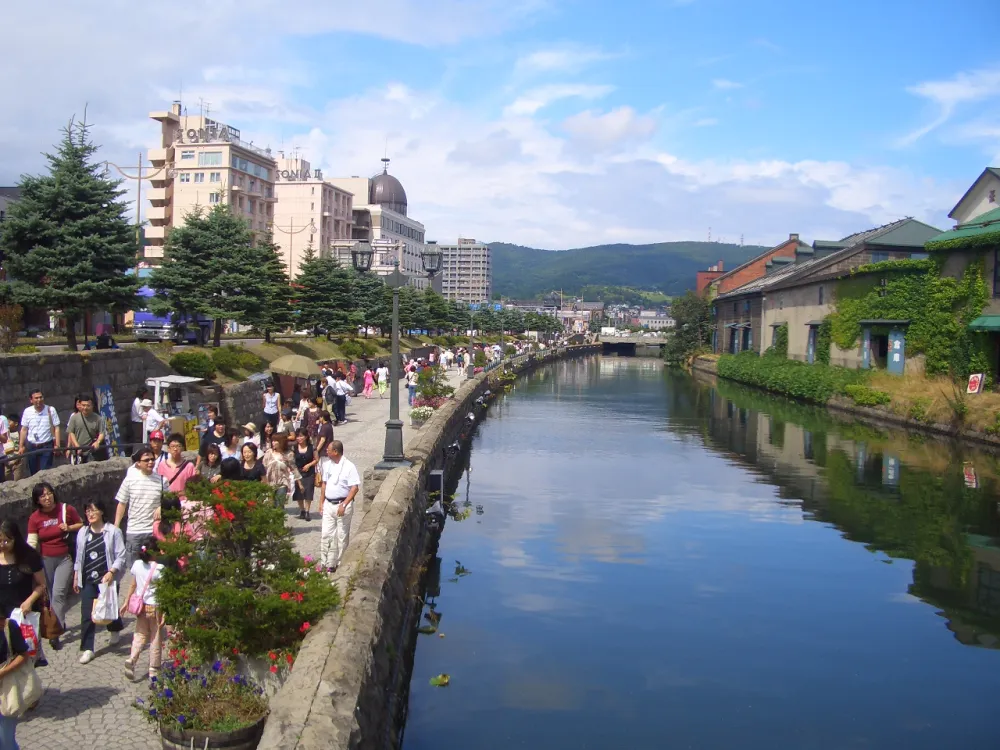
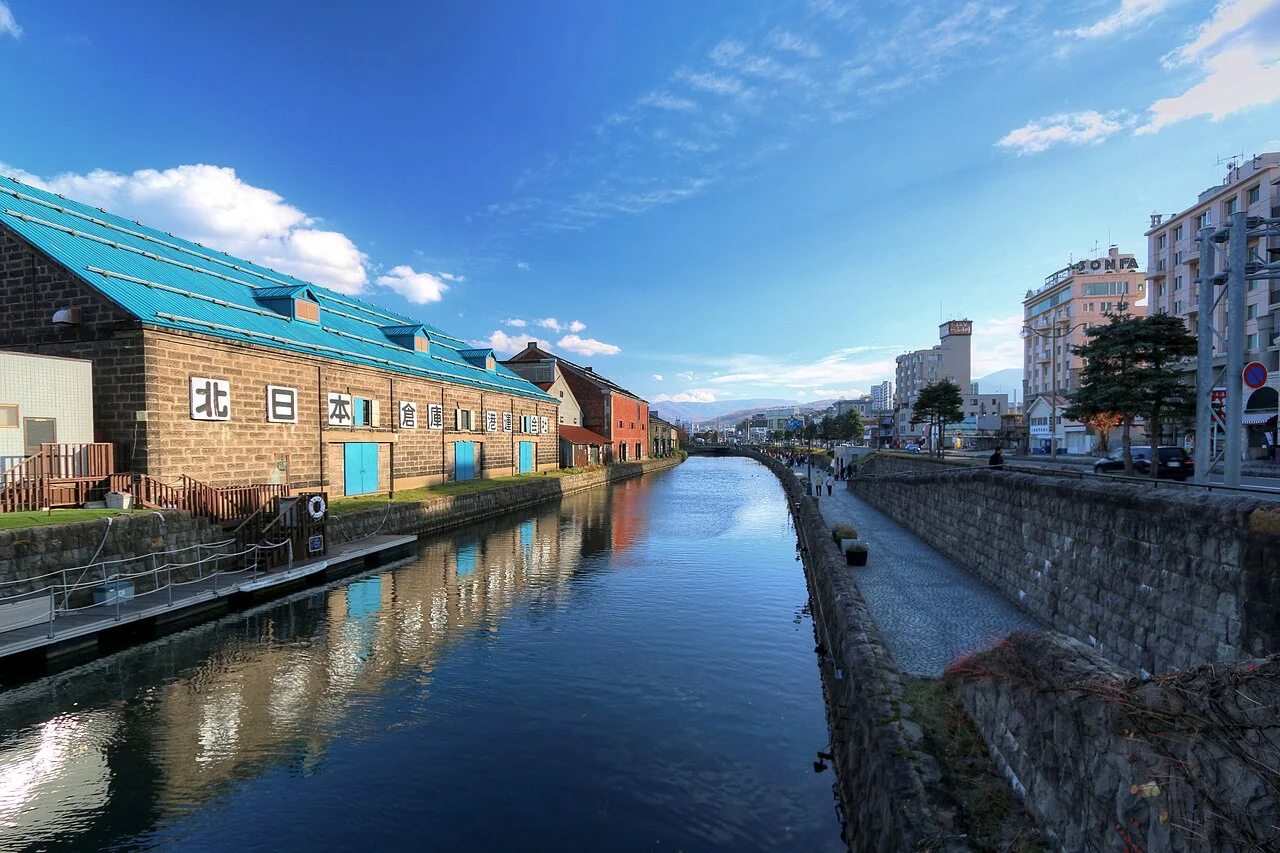
Completed in 1923 (Taisho 12) and stretching 1,140 meters, Otaru Canal was reshaped in 1986 (Showa 61) when half its width was converted into a roadway, leaving today's gently curving stone-paved promenade lined with masonry warehouses. That sweeping arc was never an artificial design flourish—it follows the original coastline contours left behind by land reclamation, creating the classic curved composition seen in every postcard. With 63 gas lamps standing beside old warehouses converted into restaurants, the promenade transforms completely between daylight and dusk.
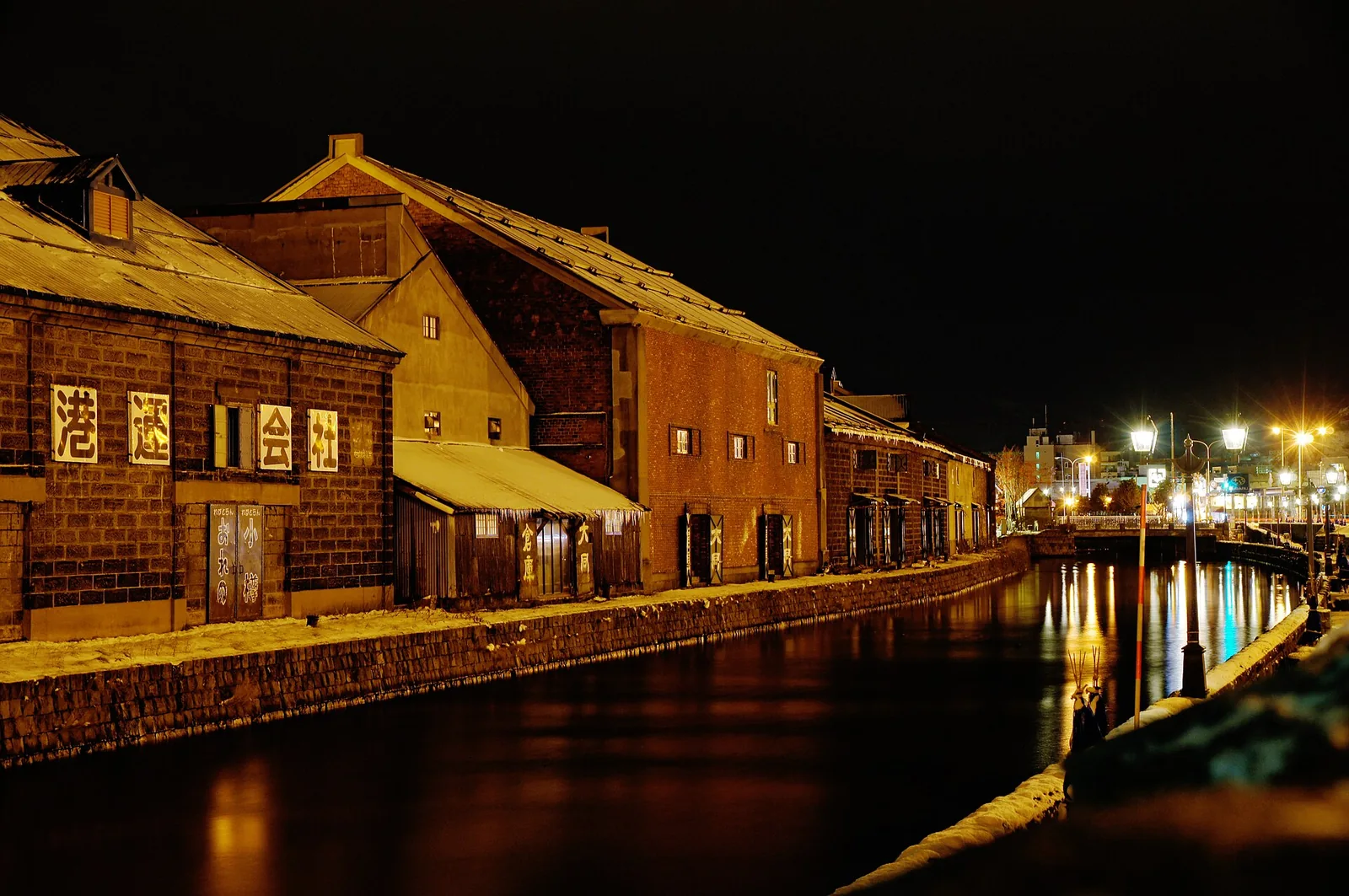
Timing your walk to the official lighting schedule makes all the difference. The promenade's gas lamps burn from sunset until 24:00, while the floodlights on the warehouse facades stay on until 22:30. Along the North Canal section, light sensors keep lamps running from 18:00 until 4:00 in summer (June through August). During the winter Otaru Snow Light Path festival, the gas lamps switch on early at 15:00. Staying by the canal lets you split your outing into two relaxed rounds: shoot the lit stone facades right after dusk, grab dinner, and wander back out for quiet gas-lamp reflections without sprinting before the 22:30 cutoff.
Canal-side hotels cluster tightly in Ironai 1-chome, all within walking distance of JR Otaru Station. Hoshino Resorts' OMO5 Otaru (Ironai 1-6-31), a 9-minute walk from the station with 15:00 check-in and 11:00 check-out, occupies the repurposed historic Former Otaru Chamber of Commerce and Industry building. With OMO Ranger guided neighborhood walks and Kitaichi Glass kerosene lamps glowing in the evening lounge, it turns an overnight stay into a deep dive into old Otaru—an easy win for first-timers.
Just down the block, UNWIND HOTEL & BAR OTARU (Ironai 1-8-25, about a 10-minute walk from Otaru Station) brings sleek contemporary style to a heritage structure over 90 years old. Its check-in window runs late from 15:00 to 24:00, taking the stress out of late flights or final evening buses. Guests get complimentary morning high tea, and BAR IGNIS serves drinks beside a flickering fireplace from 19:30 to 23:30, bookending the day with a real sense of occasion.
If you want a traditional hot-spring ryokan right on the water, look at Unga no Yado Otaru Furukawa (Ironai 1-2-15, roughly a 13-minute walk or 5-minute taxi from Otaru Station). Check-in is 15:00 and check-out stretches to 12:00—the latest in the canal district, leaving plenty of time to store bags and stroll once more after breakfast. Its communal baths rotate between men and women: Ichi-no-Yu is built from local Otaru soft stone, while Ni-no-Yu features a fragrant cypress open-air bath, so soaking once at night and once in the morning lets you experience both.
At the budget and heritage end, longtime ryokan Etchuya sits just a 3-minute walk from the Asakusabashi side of the canal, offering the earliest check-in in the area at 13:00 (check-out 10:00) for travelers prioritizing value and classic tatami character. MYSTAYS' Hotel Nord Otaru also anchors Ironai 1-4-16. Together, these five properties span huge differences in price and style while sharing the exact same unbeatable front-row canal address.
Before heading out on foot, note a few key landmarks along the route. Asakusabashi Garden holds the iconic postcard angle and sits right next to a tourist information desk. Chuobashi Garden is the boarding pier for the Otaru Canal Cruise, where looking up at the stone warehouse walls from water level adds dramatic scale. Walking north brings you to the Former NYK Otaru Branch (a National Important Cultural Property), and the Otaru International Information Center inside Canal Plaza handles directions, lockers, and transit questions. Spend the day following our one-day Otaru Canal and Sakaimachi route through glass studios and historic shops, rest at your Ironai hotel before dusk, and head back out once the lamps come on.
The canal-side advantage spikes sharply in winter. You can photograph the warehouse floodlights before 22:30, linger over the gas-lamp reflections until midnight, or—in summer—slip out early for an empty North Canal sunrise. Guests staying back by Otaru Station, by contrast, face an uphill walk over icy sidewalks into the cold wind once the 22:30 lights go out.
Picking among the canal hotels is straightforward: choose OMO5 or UNWIND for adaptive-reuse design, Furukawa for ryokan hospitality and hot-spring baths, or Etchuya to keep costs down. Just keep in mind that Ironai dinner spots revolve around canal warehouse restaurants and Sushiyadori, and popular tables book out fast on winter weekends—reserve ahead so a relaxed stroll back along the water ends your night cleanly.
Otaru Station Area: One-Minute Walks With Bags and Bedtime Soaks
The flagship stay by the station is Natural Hot Spring Tomoshi-no-Yu Dormy Inn PREMIUM Otaru (Inaho 3-9-1), a 1-minute walk from JR Otaru Station and about 7 minutes off the Sasson Expressway's Otaru IC (15:00 check-in, 11:00 check-out). It features an in-house natural hot-spring public bath fed by silky alkaline hypotonic mineral water, letting you soak before bed without stepping outside. On-site parking is clearly priced at ¥1,400 per night—a rare piece of transparent fee info in central Otaru for drivers.
Surrounding station-front properties stick firmly to a streamlined business-hotel playbook: ALPHABED INN Otaru Ekimae, Authent Hotel Otaru, GRIDS PREMIUM HOTEL OTARU, THE GREEN OTARU, and Otaru YaDo. They share compact rooms, lower rates than canal-side boutiques, and lobbies steps from the ticket gates—ideal for shaving transit friction down to zero when catching the 32-minute Rapid Airport train back to Sapporo.
This zone works best for three types of travelers: anyone arriving on a snowy winter evening who refuses to haul roller bags over slushy sidewalks, early risers catching trains to the airport or Asahikawa, and budget-minded visitors who would rather spend on sea urchin donburi and shopping than hotel square footage. Stepping out of the station straight into your hotel cuts winter walking distance in half compared to the canal—and dragging heavy luggage across packed snow and ice takes twice the effort and time, especially with kids in tow.
Having a natural hot spring inside a station hotel makes timing your baths effortless. Soak once to warm up after afternoon sightseeing or skiing, stroll down to the canal after dinner to see the lights, and return for one more mineral soak right before sleep without worrying about rigid ryokan bathing windows.
There is also an overlooked transit perk here: the Otaru Station Bus Terminal right out front serves as Hokkaido Chuo Bus's local hub. Buses up to the Tenguyama Ropeway (about 20 minutes), north to Otaru Aquarium in Shukutsu, and inland to Asarigawa Onsen all depart directly from the station plaza. Car-free travelers aiming to hit night views, the aquarium, and hot springs in one trip minimize transfer walks by sleeping right here.
In the tourist association's directory, this district has the highest concentration of business hotels—all built around comfortable beds, private baths, and prime transit access. Treat it as a pure sleep-and-go hub: filter first by meters from the station and whether there is a natural public bath, then sort by price. Dormy Inn wins that filter almost every time if the bath matters to you; if you are after sweeping ocean views, oversized family rooms, or full ryokan dining, skip the station cluster and look further out.
The only real trade-off is giving up canal views from your room window—catching the evening lights takes a 10-minute walk down and a 10-minute walk back. Time that stroll right after dinner and step straight into the hot bath when you return, and those 20 minutes become an easy digestif walk rather than a chore.
Minami-Otaru & Sakaimachi: Sleeping Amid Century-Old Merchant Streets
Lodging around Minami-Otaru Station is sparse, anchored by Uomatsu Ryokan and historic-building guesthouses near the Former Okawa Pharmacy. Between Minami-Otaru and Otaru stations runs Sakaimachi Street and Sushiyadori & Hanagin—the densest stretch of century-old storefronts and heritage stone buildings in town. Stays here are small in scale with lean online listings, tailored to travelers planning to explore the shopping streets slowly on foot.
There is a smart, gravity-assisted way to tackle this strip. Get off the train at Minami-Otaru Station and walk north past Sakaimachi's music box halls and glass workshops before cutting into Sushiyadori for classic nigiri, riding a gentle downhill slope all the way to the canal and Otaru Station. Walking the opposite direction from Otaru Station puts the whole route slightly uphill. Light packers benefit most from staying in this pocket; if you are hauling large suitcases, drop them in station or canal lockers first.
Former merchant houses and pharmacies from the Taisho and early Showa eras—like the Former Okawa Pharmacy—have largely been reborn as character-filled cafes, craft shops, and small galleries meant for unhurried browsing door by door. Staying tucked inside this neighborhood puts you on quiet historic side lanes after dark instead of busy tourist avenues.
The tourist association lists Sushiyadori & Hanagin as its own zone for good reason: most of Otaru's famed sushi counters and old-school izakaya gather here, making evening its liveliest hour. Uomatsu Ryokan on the Minami-Otaru side pairs with Sakaimachi machiya guesthouses to cover this end of town—eat along Sushiyadori, then follow the gentle downhill walk north to see the canal lights before heading back.
Just weigh the trade-offs honestly before booking. In winter, street bustle peaks during daylight hours; after dark, this pocket grows far quieter than Ironai with fewer late-night dining options. Travelers chasing maximum convenience are better off at the canal or station, while anyone who values waking up inside a century-old merchant house above all else will feel right at home here.
Otaru-Chikko & Shukutsu: Bayfront Resorts and Aquarium Access
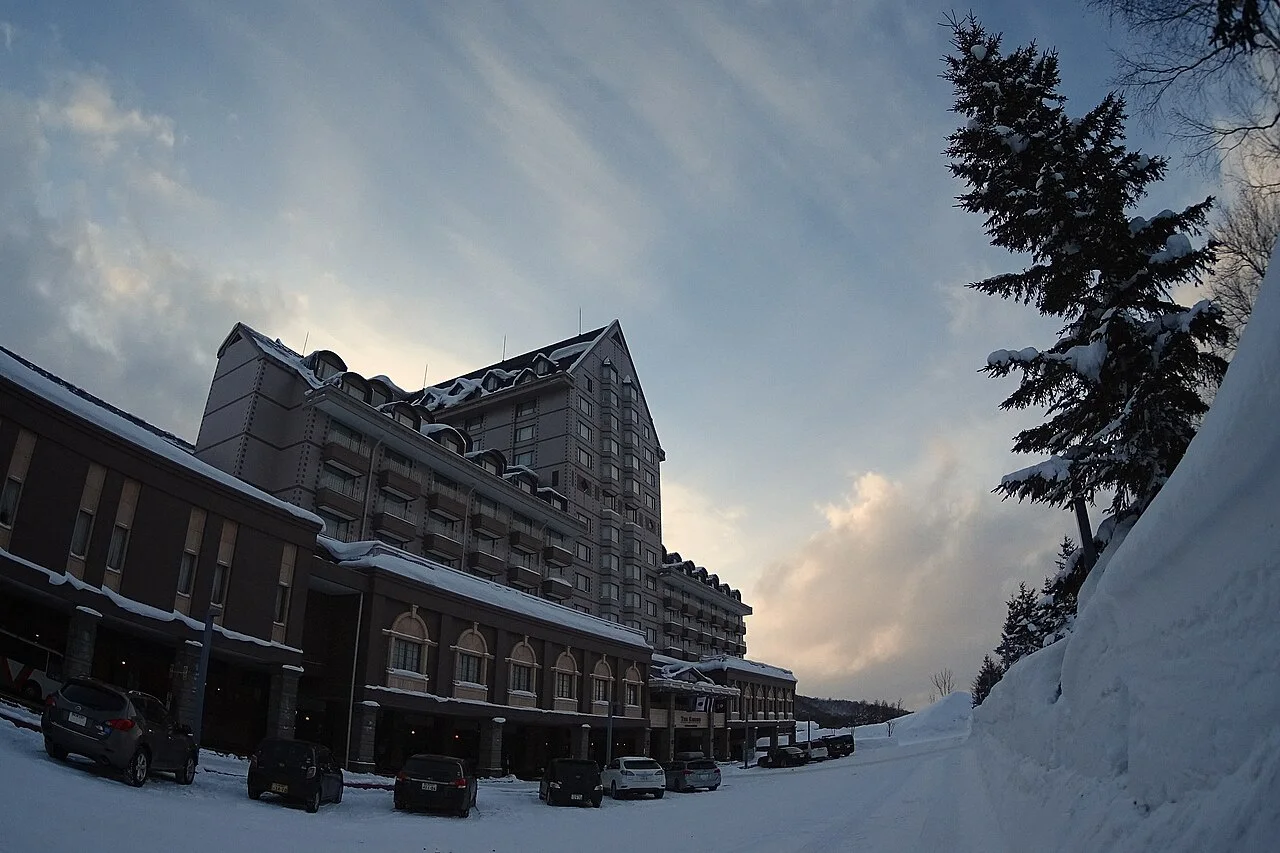
At Chikko 11-3, Grand Park Otaru houses 296 spacious rooms split between Ocean-side views over Ishikari Bay and Otaru Port and Mountain-side rooms, just a 5-minute walk from JR Otaru-Chikko Station. Check-in starts early at 14:00, with a 10:00 check-out (among both the earliest check-ins and earliest check-outs in the city). With conference-resort scale and a waterfront chapel, it is Otaru's most practical option for families of four needing full twin-plus space or groups booking multiple rooms together.
Chikko also holds a sharp rail advantage. The JR Rapid Airport train stops directly at Otaru-Chikko Station, so there is no need to backtrack into Otaru Station when heading toward Sapporo. Spend your final night in Chikko, walk five minutes to the platform with your bags the next morning, and ride straight through to New Chitose Airport. Looking out over cargo ships and harbor lights from an ocean-view room shows a completely different side of the port city from the canal—splitting two nights between downtown and Chikko lets you experience both.
Looping north past the harbor brings you to Shukutsu, where Hotel Neuschloss Otaru (Shukutsu 3-282) sits perched above the cape right beside Otaru Aquarium. It is about a 15-minute drive from JR Otaru Station, or a 10-minute walk from the Hokkaido Chuo Bus "Otaru Aquarium" stop, and offers both free parking and a free reserved shuttle from Otaru Station (15:00 check-in, 11:00 check-out). Families spending a full day at the aquarium skip the rush for the last bus back downtown and simply walk back to their room at closing time.
Reaching Neuschloss is hassle-free whether you drive or book the hotel shuttle. If you take the public bus to the Otaru Aquarium stop instead, leave extra buffer for that 10-minute walk on snowy winter paths. Guests counting on the complimentary station shuttle should contact the hotel right after booking to reserve a seat—it is the only property in Shukutsu explicitly advertising free station transfers, neutralizing the remote headland location.
Parents with toddlers will immediately appreciate staying in Shukutsu. Because the bus stop sits right outside the aquarium gates and the outdoor marine-animal shows take real energy in summer heat, being next door lets you split the visit into morning and afternoon sessions—heading back to your room for an air-conditioned nap at midday before returning refreshed for the penguin parade. No downtown hotel can match that flexibility.
You do not have to book a Chikko hotel room just to enjoy an ocean-view soak: Otaru Onsen Ospa, listed under the Chikko district, operates as a waterfront day-use bathhouse. Both Chikko and Shukutsu trade downtown nightlife and shopping streets for three-sided sea views and deep quiet—ideal as a second-night change of pace after a night in central Otaru.
Asarigawa Onsen: Making the Ryokan Your Destination
Tucked into a valley southeast of downtown, Asarigawa Onsen turns the accommodation itself into the reason for the trip. Official listings highlight the luxury ryokan Otaru Ryotei Kuramure, sea-facing Hotel Musashitei, and Otaru Asari Classe Hotel, alongside European-style cabins at Winkel Village, Boyo Schanze, and the Asarigawa Onsen Auto Camping Ground. All three main hot-spring properties open their baths to day-trippers, and even locals regularly drive up from town for an afternoon soak.
Staying here feels worlds away from central Otaru. Located about a 15-minute drive from JR Otaru Station, the valley swaps shopping arcades and canal warehouses for traditional half-board (one-night, two-meal) ryokan stays, indoor and open-air hot-spring baths, and deep mountain quiet. On a two-night Otaru trip, spend night one by the canal for evening lights and night two in Asarigawa solely to soak; if you only have one night and still want a bath, Dormy Inn at the station or Furukawa by the canal keeps logistics far smoother.
Asarigawa pairs best with a rental car—simply exit the Sasson Expressway at Otaru IC and head up the valley. The mountain roads remain passable in winter, though snowbanks and black ice call for slower driving and extra time compared to summer. Skiers can also pair Asarigawa lodging with the nearby Okusawa and Kiroro slopes to stretch a winter budget further than slope-side hotels. Without a car, you rely on Chuo Bus routes and hotel shuttles; last mountain buses depart much earlier than downtown lines, making post-dinner trips into the city unrealistic in winter, so confirm shuttle schedules before booking.
Price tiers here span wider than most visitors expect. At the top sits Kuramure with boutique half-board suites; mid-range travelers have resort hotels Musashitei and Asari Classe; and Winkel Village cottages, Boyo Schanze, and the auto campground cover self-catering cabins and campervans. Few other valleys put luxury ryokan, chalets, and RV camping side by side—a mix none of Otaru's six other zones can replicate.
Compared with southern Hokkaido's headline spa towns, Asarigawa stays compact, reasonably priced, and close to Sapporo, keeping the transit cost of adding an extra night very low. For a broader look at Noboribetsu and Lake Toya, see our southern Hokkaido resort and onsen guide. The short hop from Otaru Station—far easier than running down from Sapporo to Noboribetsu—is exactly why Asarigawa shines as a second-night add-on.
Transit & Seasons: Aligning Check-In Windows With Your Itinerary
The JR Rapid Airport line serves as Otaru's rail backbone, running from Sapporo in as little as 32 minutes and from New Chitose Airport in 75 minutes. Inside Otaru, it stops sequentially at Otaru-Chikko, Minami-Otaru, and Otaru stations, with reserved u-seat spots available for an extra ¥520. Because those three stations map directly onto three distinct hotel zones, stepping off at the stop closest to your hotel saves major effort on luggage days—and paying the ¥520 u-seat supplement during peak travel hours guarantees you are not standing in the aisle with suitcases.
Working with each property's check-in and check-out times also keeps your schedule tight. Etchuya opens earliest at 13:00, followed by Grand Park in Chikko at 14:00, while station and canal hotels generally start at 15:00 (with UNWIND extending check-in from 15:00 to 24:00 for late arrivals). Check-out runs from 10:00 at Etchuya and Grand Park up to 12:00 at Furukawa. Always drop bags at your hotel on arrival so you can explore hands-free; on departure day, plan around the gap—a 10:00 check-out means leaving bags at the front desk before sightseeing, while Furukawa's 12:00 check-out buys two extra hours for an unhurried morning soak.
Beyond trains, Hokkaido Chuo Bus runs the Kosoku Otaru-go express bus to and from Sapporo alongside direct airport coaches from New Chitose, all converging at Otaru Station Bus Terminal. Drivers can take the Sasson Expressway or follow National Route 5 in roughly 1 hour and 20 minutes. Just remember to factor parking fees into hotel math: Dormy Inn by the station charges ¥1,400 per night, whereas Neuschloss in Shukutsu includes free parking—once added to room rates, the winner often flips.
Winter visitors should lock in exact dates for Otaru's signature night views and seasonal closures. Mt. Tenguyama (summit elevation 532.4 m), ranked alongside Sapporo's Mt. Moiwa and Mt. Hakodate as one of Hokkaido's top three night views, runs its winter ropeway from November 28, 2026 through March 28, 2027. Winter round-trip fares are ¥2,000 (¥1,800 in summer), or ¥2,450 for a winter set ticket including round-trip Chuo Bus fare from Otaru (about a 20-minute ride), with a summit cafe, a 128-meter zipline, and a roughly 400-meter slide waiting at the top. Crucially, the ropeway shuts down completely from November 4 to November 27 for seasonal maintenance, and runs shortened hours over New Year's (December 31 to January 3)—so holiday travelers should schedule their night-view ride before December 31.
The canal also follows a clear winter event calendar: the Blue Canal illumination kicks off on November 1, Canal Candle Night takes place on December 18, and gas lamps turn on early at 15:00 throughout the Otaru Snow Light Path festival. Staying in Ironai puts every one of these winter displays within an easy walk, so match your travel dates to the calendar before locking in which weekend you spend in town.
Reverse-engineering that winter calendar gives you an instant booking strategy. November 1 (Blue Canal launch), November 28 (Tenguyama winter ropeway reopening after the November 4–27 maintenance gap), December 18 (Canal Candle Night), and Snow Light Path weekends drive the highest canal-side rates and fastest sellouts. Target midweek dates outside those peaks to save money, or lock in an Ironai room early if you want the full festival lineup before refining the rest of your plan.
To sum up the six bases cleanly: pick Otaru Station or the canal district for a one-night Sapporo side trip, Otaru-Chikko for spacious family rooms and bay views, Shukutsu for aquarium trips by car, and Asarigawa Onsen for multi-night soaking. To stitch your Otaru stay back into a broader Sapporo and southern Hokkaido route, return to our four-day Sapporo and Otaru itinerary for the full day-by-day breakdown.
A few useful answers
Should I stay near Otaru Canal or Otaru Station?
It comes down to evening strolls versus luggage convenience. Choose the Ironai canal district (OMO5, UNWIND, Furukawa—a 9-to-13-minute walk from JR Otaru Station) if you want warehouse views and gas lamps right outside your door. Choose the station-front zone (such as Dormy Inn PREMIUM, a 1-minute walk from JR Otaru Station) if you want to minimize dragging bags through snow or have an early train. Both areas connect easily on foot, while Chikko, Shukutsu, and Asarigawa Onsen offer distinct advantages for ocean views, aquarium access, and dedicated hot-spring stays.
Where can I soak in an onsen in Otaru without booking an overnight stay?
Dormy Inn PREMIUM's Tomoshi-no-Yu (alkaline hypotonic mineral spring) by the station is primarily for overnight guests, and Furukawa by the canal features alternating stone and cypress open-air baths. For day-use soaking without staying overnight, Kuramure, Musashitei, and Asari Classe in Asarigawa Onsen all welcome drop-in bathers, as does the ocean-view Otaru Onsen Ospa in Chikko. For a dedicated bath trip, Asarigawa Onsen is the strongest pick.
Is it convenient to go straight from New Chitose Airport to Otaru for one night?
Yes. The JR Rapid Airport train runs from New Chitose Airport to Otaru in as little as 75 minutes, stopping at Otaru-Chikko and Minami-Otaru along the way, so properties like Grand Park Otaru or Dormy Inn by the station are a direct single-seat ride. Adding a ¥520 u-seat reservation guarantees a spot with your luggage. If your flight lands too late for the last train, staying your first night in Sapporo and riding the 32-minute morning train into Otaru is the safer play.
Is Otaru Canal lit up on winter nights, and when do the lights turn off?
Yes. The 63 gas lamps along the promenade burn daily from sunset until 24:00, and the stone warehouse floodlights stay on until 22:30. The North Canal section uses light sensors, running from 18:00 to 4:00 in summer (June through August). During the Otaru Snow Light Path festival, gas lamps light up early at 15:00. Canal-district guests can wander out anytime, while station-front guests face a walk of about 10 minutes each way.
Official information and references
Sources used in this guide.
- Otaru Tourist Association | Stay in Otaru (13 Lodging Zones & Property Directory)
- Otaru Tourist Association | Access to Otaru (32-Min Rapid Airport, Bus & Driving Routes)
- Otaru Tourist Association | Otaru Canal (1,140 m Length, 63 Gas Lamps & Lighting Hours)
- Otaru Tenguyama Ropeway | Operating Hours & Fares (Winter 2026/11/28-2027/3/28)
- OMO5 Otaru by Hoshino Resorts | Official Website (Former Chamber of Commerce, 15:00/11:00)
- UNWIND HOTEL & BAR OTARU | Official Website (15:00-24:00 Check-In, Morning High Tea)
- Natural Hot Spring Tomoshi-no-Yu Dormy Inn PREMIUM Otaru | Official Website (1 Min from JR Otaru Station)
- Grand Park Otaru | Official Website (296 Rooms, 5 Min from Otaru-Chikko Station, 14:00/10:00)
- Unga no Yado Otaru Furukawa | Official Website (Ichi-no-Yu Stone Bath, Ni-no-Yu Cypress Open-Air, 15:00/12:00)