Compare Otaru hotels for canal-view rooms, group stays, natural hot springs, and private in-room baths, factor in the accommodation tax, and map luggage, dinner, winter shuttles, and a 2-day itinerary.
- Region & Focus
- Otaru
- Reading Scope
- 24 min read · 8 chapters · 6 Q&As
- Official Verification
- 33 official sources checkedUpdated November 22, 2026
- Key Topics
- Where to stayBookingRail travel
Chapter Route Map (tap any stop)
- Plan Your Arrival Night and Departure Before You Book
- Picking a Canal-View Room: Windows, Floors, and Extra Beds
- One Night Near Otaru Station: Linking Luggage, Breakfast, and Onsen
- Ocean-View Baths in Shukutsu and Natural Hot Springs in Asarigawa
- Comparing Half-Board, Breakfast-Included, and Room-Only Rates
- A 2-Day Stay: Evening Canal Walk or Mt. Tenguyama?
- Adding a Second Night: Splitting Shukutsu and an Onsen Stay
- 2027 Otaru Snow Light Path and Winter Weather Backups
- Quick Q&A
When booking an Otaru hotel for the first time, start with where you want to be at night. If you want to stroll the canal after dinner, book in Ironai or right along the water. If you are rolling big suitcases through snow and catching an early JR train the next morning, staying right outside Otaru Station saves effort. If your trip centers on a ryokan dinner and natural hot springs, leave the afternoon open for Asarigawa. Labels like canal-side, ocean view, and private open-air bath mean very different things on booking sites. Below is how actual room layouts, meal times, and winter transit fit together into workable one-night and two-night itineraries.
Plan Your Arrival Night and Departure Before You Book
Arriving by JR train? Pin Otaru, Minami-Otaru, and Otaru-Chikko stations separately on your map first. Otaru Station connects directly to Sankaku Market and the station-front bus terminal; walking straight down Chuo-dori toward the harbor puts you at the canal in about 10 minutes. Minami-Otaru Station sits near the southern end of Sakaimachi Street, about a 7-minute walk to the Otaru Music Box Museum Main Building. Otaru-Chikko Station lies farther east and works best for grabbing a taxi up to Asarigawa or reaching the waterfront mall complex. When a booking page vaguely lists "JR Otaru area," plan your luggage drop around the exact station the hotel recommends, then check which station your departing train stops at.
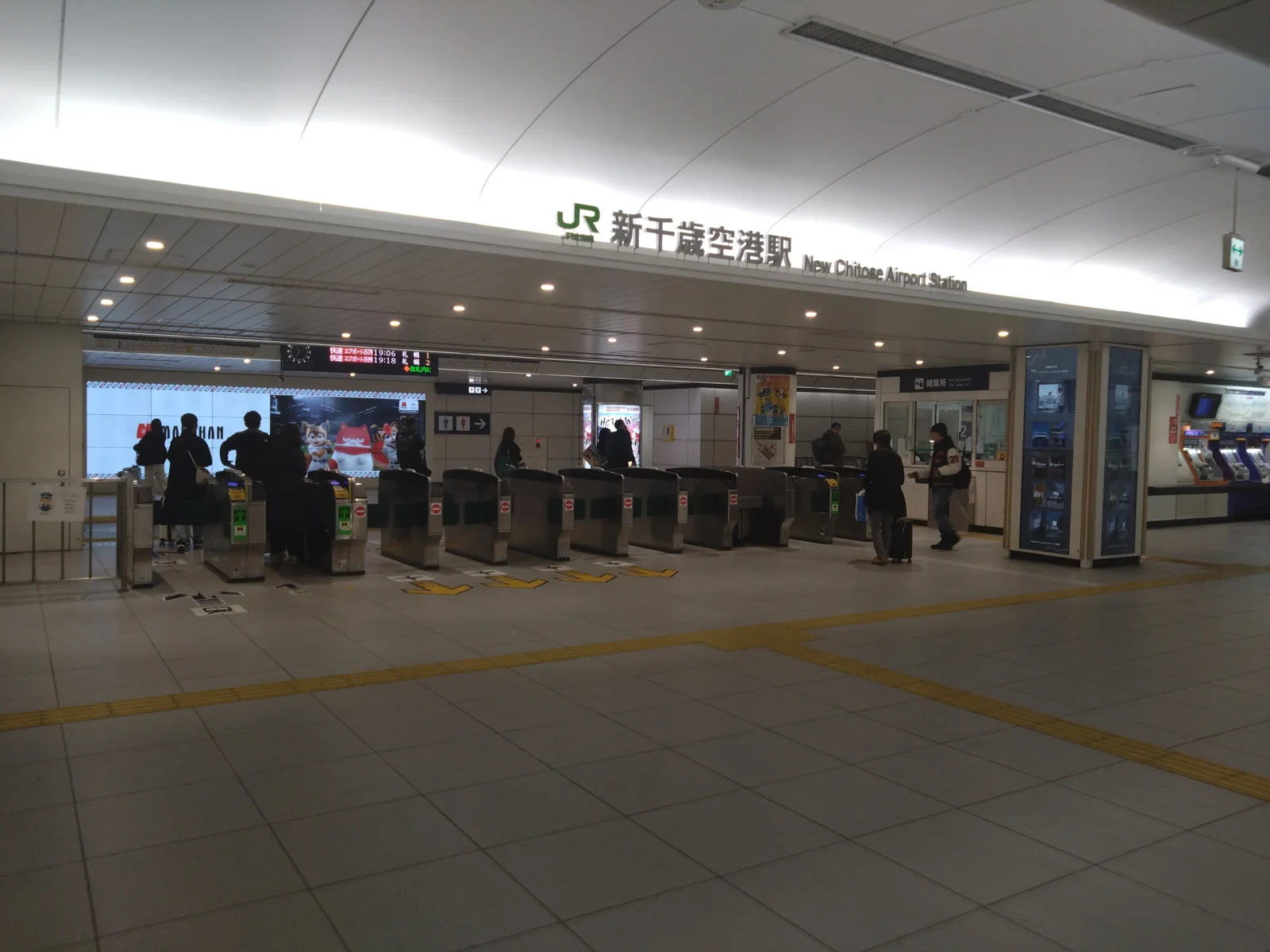
Direct Rapid Airport trains run from New Chitose Airport to Otaru, with JR Hokkaido listing a fastest travel time of 73 minutes. When boarding in Sapporo, check the train's final destination: only trains bound for Otaru go the full distance, while Teine-bound and Hoshimi-bound trains terminate early. You can tap a Suica or other IC card for unreserved seating in standard cars, while Car 4's u-seat requires a separate reserved-seat ticket. If you are landing with kids and want the family seated together, factor that reserved-seat supplement into your arrival budget—along with the time needed to clear baggage claim, exit the station, drop bags, and transfer.
For an afternoon arrival, store your bags first and walk from the southern end of Sakaimachi Street toward the canal. If your hotel is in front of Otaru Station, save fragile glassware, music boxes, and sweets until closer to departure so you are not hauling them twice. Staying around Ironai lets you split shopping into two rounds, drop packages back in your room, change into warmer layers, and head out after dinner with just a phone and gloves. The walking distances on a map look similar, but whether you have a morning bus to catch or plan to go back out late changes how that 10-minute buffer feels.
Heading onward to Yoichi or Kutchan the next day? Otaru Station is your transfer hub. JR Hokkaido excludes the stretch toward Yoichi, Kutchan, and Niseko from IC card coverage, so buy paper tickets before boarding. If you are heading back to the airport, anchor your schedule to your flight check-in deadline and count backward for JR trains and bag pickup—see our New Chitose Airport to Sapporo and Otaru transfer guide for rail and bus details. If you stay out on the cape or at a hillside onsen ryokan, factor in the extra ride back down into town before catching an early train.
| Evening Priority | What to Book First | Next-Morning Flow |
|---|---|---|
| Canal night views or watching the water from your room | Ironai or canal-side hotels; confirm the room type explicitly specifies canal view | Morning canal walk, pack up at the room, then head to the station |
| Hauling bags in snow and catching a morning JR train or bus | Right outside JR Otaru Station, with hotel breakfast or Sankaku Market nearby | Check out and step straight across to the station or bus terminal |
| Ocean views and turning in right after hotel dinner | Ocean-view rooms on the Shukutsu bluff; reserve the station shuttle ahead | Take the shuttle back to Otaru Station or walk down to Otaru Aquarium |
| Ryokan dinner and natural hot springs as the main event | Asarigawa Onsen; check private room baths and dinner start times | Take a morning soak before riding a bus or taxi back to town |
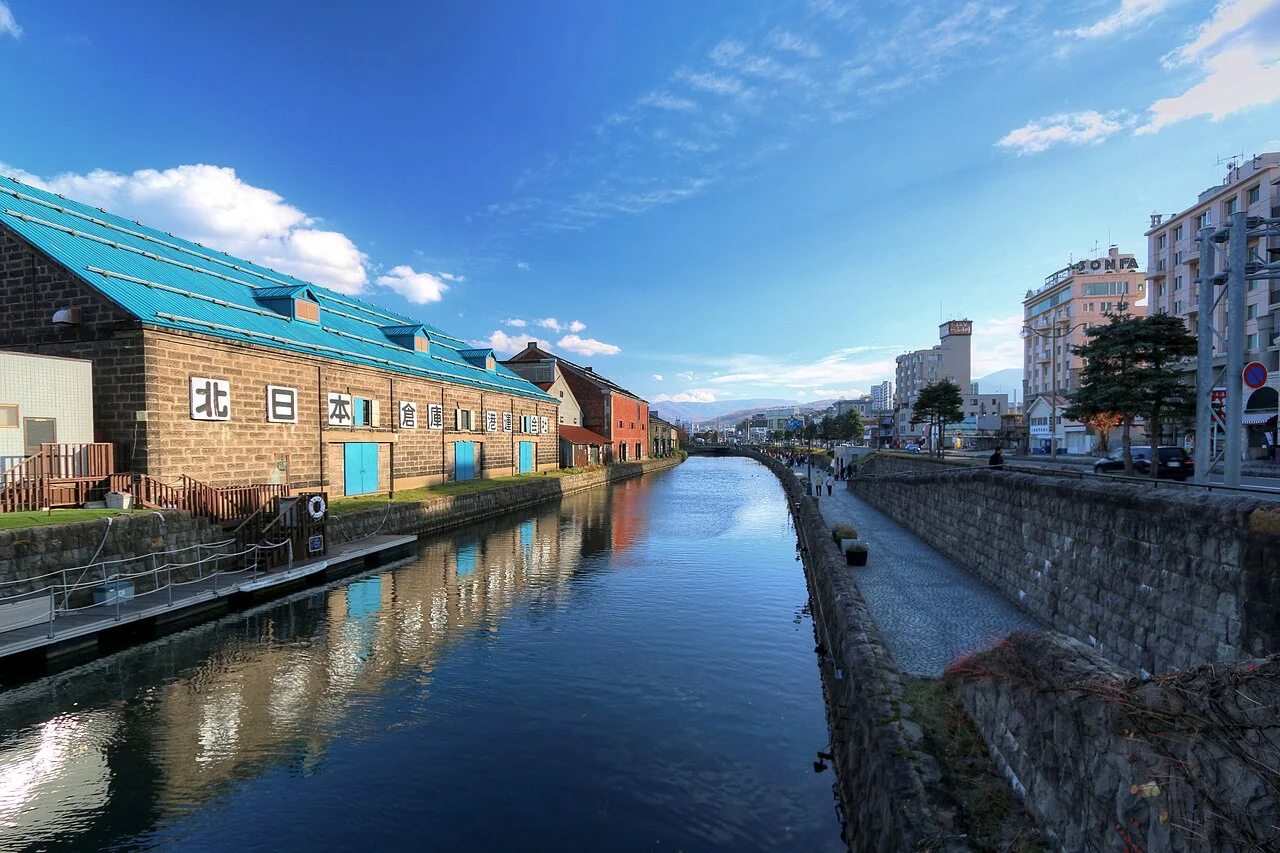
Compare Otaru hotels for canal-view rooms, group stays, natural hot springs, and private in-room baths, factor in the accommodation tax, and map luggage, dinner, winter shuttles, and a 2-day itinerary.
Picking a Canal-View Room: Windows, Floors, and Extra Beds
Hotel Nord Otaru sits directly across from the canal, an easy downhill walk from Otaru Station along Chuo-dori. Its official room guide lets you filter for canal-facing rooms and lists exact orientation, square footage, and bed counts. Couples sharing one queen bed can look at the 25-square-meter Standard Queen, which angles toward the canal and stone warehouses. Need separate beds? The 30-square-meter canal-side Superior Twin holds two fixed beds plus up to two extra beds. Enter all four guests when searching so you can compare it fairly against family rooms under the exact same occupancy rules.
Floor height and window placement inside the same hotel change what you actually see. The Executive River Twin is a high-floor corner room at 57 square meters sleeping up to five, and the hotel notes that even its bathroom window looks out over the canal. The Grande Japanese-Western room also measures 57 square meters, sleeps up to six, and pairs two beds with four Japanese futon sets. If everyone in your group insists on a raised bed, split rooms by fixed bed count rather than max capacity. Traveling with two older relatives who want comfortable bathing and easy movement? The Accessible Twin offers wider walkways, a dedicated washing area, grab bars by the tub and toilet, and sleeps up to three.
If you only plan to stroll outside and sleep back at the hotel, mountain-side rooms right next to the canal work just fine. Hotel Nord's Comfort Double is 15 square meters, fits up to two guests, and faces the hills. When two travelers each bring a large suitcase, weigh the price difference between one tight room and two rooms against actual floor space to open bags and walk around. Three adults eyeing the cheaper Standard Twin need to book the Type B configuration rated for three guests—third-party booking sites frequently label both Type A and Type B simply as Standard Twin, so verifying bed count and occupancy saves time.
For historic character, UNWIND HOTEL & BAR Otaru in Ironai occupies the 1931 former Etchuya Hotel, preserving the original structure while updating rooms with separated baths and toilets. It sits on a quiet city block well suited for walking the historic bank district by day and strolling down to the canal at night. Its Loft room puts two small double beds on the main floor and two single beds up in the loft. Only book it if kids are happy climbing upstairs and nobody in the group makes frequent nighttime trips down to the bathroom—otherwise, compare two standard twin rooms on a single level.
If someone in your group cannot easily go back out at night, paying for a canal-facing window lets everyone watch the lights come on indoors. If you are definitely walking down to the bridges after dark for photos anyway, put the room-view premium toward dinner, an extra bed, or taxis instead. Even when two rooms both claim water views, window seating, open floor space for two people moving around, and checking photos for structural pillars matter far more than the building's exterior.
One Night Near Otaru Station: Linking Luggage, Breakfast, and Onsen
Dormy Inn PREMIUM Otaru sits about one minute on foot from JR Otaru Station and reopened on August 1, 2026 after renovations. Its second-floor natural hot spring bathhouse draws indoor bathwater from a private onsen source, and the renovated men's and women's baths now include saunas with automated water ladling. Travelers catching early trains who still want a proper soak can spend the afternoon on Sakaimachi Street, bathe after dinner, and simply walk across the street with their bags the next morning. Room layouts include doubles, twins, and Japanese-Western rooms; families generally compare one Japanese-Western room against two twin rooms, leaving clothes and bags upstairs while heading down to the bath.
The hotel serves breakfast from 6:30 to 9:30 (last entry 9:00), featuring build-your-own seafood rice bowls and grilled seafood. Prefer Sankaku Market that morning? Exit the station, turn left, and climb the short flight of steps right next to the building. The market operates from 6:00 to 17:00, though individual stalls and eateries set their own hours, so pick your target spot ahead of time. On a tight train morning, eating at the hotel—or grabbing an early market breakfast before collecting bags—is the smoothest play. If everyone in your group wants something different, treat the market as a shared stop and build in buffer time for queues and paying separately.
Walking downhill from the station to the canal means dragging wheeled suitcases back uphill on departure. Decide which station you are leaving from before storing bags. When booking, separate pre-check-in storage, post-check-out storage, and final pickup cutoff. UNWIND's FAQ spells out standard luggage hours clearly: bags are accepted from 7:00 on check-in day until 23:00 on check-out day, with valuables and fragile items kept with you. At other hotels, message ahead with arrival time, pickup time, and bag count. If you plan to visit the North Canal the next morning before departing from Otaru Station, leaving bags by the station avoids backtracking to Sakaimachi Street.
When your room isn't ready yet, leave bags at your hotel or consult the Otaru Tourism Association map for lockers around the station. Planning to explore the port area until evening before checking in? Coin lockers are also available at Port Marche otarue right next to the International Tourist Information Center. Match your locker location to your final departure point, not just your first stop. Keep glassware, refrigerated foods, cameras, and medication in your daypack; if you are heading straight out after check-out, pack coats, spare layers, and chargers in one accessible compartment so you aren't repacking on the lobby floor.
With toddlers or anyone who tires easily on foot, street crossings, stairs, and having a nearby room for one parent to rest matter more than raw walking minutes. Sankaku Market has steps at the entrance; staying right by the station makes it easy to leave a stroller in the room while adults take turns grabbing food. If heavy snow hits after dinner, take a taxi straight back from the canal to the station, or cut over at Chuo-dori and save extra canal photos for calmer weather the next morning. Save your hotel's Japanese name and address on your phone so you can show the driver directly.
Ocean-View Baths in Shukutsu and Natural Hot Springs in Asarigawa
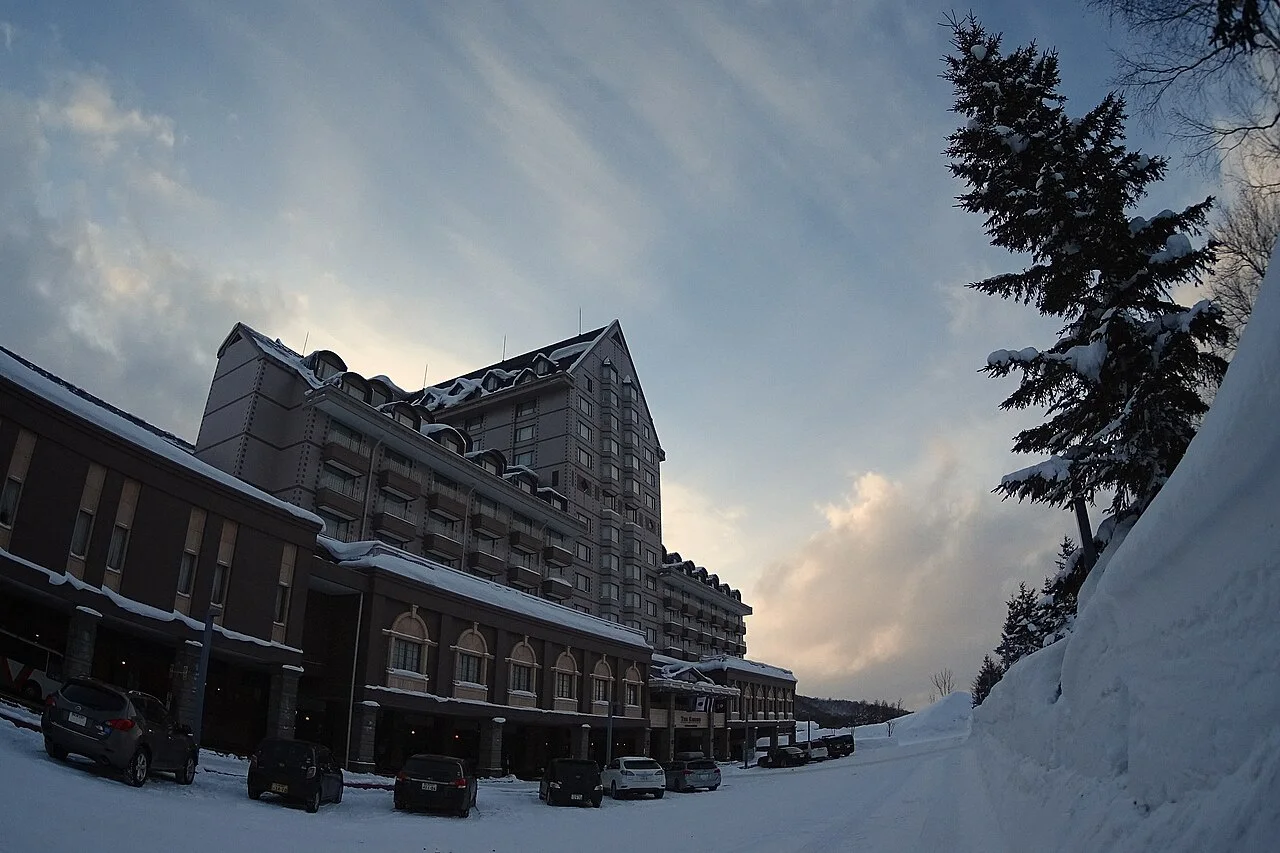
You stay out in Shukutsu for the cape and open sea. Hotel Neuschloss Otaru perches on the bluff above Otaru Aquarium; according to the hotel, every guest room features a soft-water open-air bath with windows you can open or close. Ask for an east-facing room to watch sunrise over the water, or a west-facing room if you want summer sunsets toward the Shakotan Peninsula, as highlighted by the Otaru Tourism Association. Arriving late? Pick your room direction based on the morning view. Note that Phase 1 exterior wall construction is scheduled from March 16 to December 19, 2027, primarily affecting the 8th floor and city-facing side; the hotel remains open and removes view-obstructed rooms from sale, so verify room availability against your travel dates if orientation is the whole point of your stay.
Neuschloss runs a complimentary, reservation-required shuttle from Otaru Station. By public bus, board #10 or #11 from Platform 3 at the station bus terminal—be sure to take a bus running all the way to Otaru Aquarium—and walk about 10 minutes from the stop. The Otaru Tourism Association adds an essential detail rarely mentioned on booking platforms: that 600-meter stretch climbs up to a 16% grade. Hauling big suitcases uphill on snow or ice is miserable, so book the station shuttle. If you are visiting the aquarium after check-out, decide beforehand whether to leave bags at the hotel or carry them down, since you won't want large luggage inside the exhibits.
East of downtown, Otaru Kourakuen in Asarigawa is a classic hot spring ryokan. Ride Hokkaido Chuo Bus #13 (Asarigawa Onsen Line) from Platform 2 at the Otaru Station Chuo Bus Terminal to the Kourakuen stop, listed by the ryokan as roughly a 30-minute ride. Coming from Sapporo by JR and want to skip part of the city bus ride? Get off at JR Otaru-Chikko Station and take a taxi for about 15 minutes. By contrast, coastal JR Asari Station is unstaffed and has no waiting taxi rank—getting off there with luggage means waiting for a dispatched cab before dinner.
Starting December 11, 2026, Hokkaido Chuo Bus adds route A13 departing Authent Hotel Otaru via the Otaru Canal Terminal, a new stop outside the hotel, Otaru Station, and Otaru-Chikko Station to Asarigawa Onsen. On the winter timetable, A13 runs one round trip daily—departing Authent Hotel Otaru at 8:13 and returning from Asarigawa Onsen at 17:00—geared toward daytime skiers. Checking in to a ryokan in the afternoon? Use regular bus #13 instead, which includes winter afternoon departures from Otaru Station at 14:05 and 15:05, with reduced holiday service from December 31 to January 3. The #13 fare from Otaru Station to the Asarigawa Onsen terminus is ¥410; Kourakuen is a few stops earlier, so fares are calculated by stop.
Kourakuen check-in is 15:00 and check-out is 11:00. Its two large bathhouses operate from 15:00 to 24:00 and again from 5:00 to 10:30 the next morning, swapping men's and women's sides overnight. Guests in rooms with private open-air baths can soak continuously from check-in to check-out. Because the shared bathhouses enforce a tattoo restriction, travelers with tattoos should book a room with an attached bath. For a family of four, early risers can hit the large baths at dawn while others soak in the room bath before breakfast, then everyone meets at the dining table together.
For wheelchair users, Kourakuen's FAQ notes ramps and elevators inside the main building, though the route to Mori no Yu-ya includes stairs and Iwa no Yu has a small step requiring companion assistance. If you plan to rely on in-room bathing and washing, confirm doorway widths, threshold heights, and grab-bar placement from the room entrance to the bath with the ryokan before booking. Out on the cape, Hotel Neuschloss lists one barrier-free ocean-side Japanese-Western room with a step-free entrance, sliding doors, and an emergency call button—there is only one such room, so secure it first before arranging shuttle seating and companion seats.
Comparing Half-Board, Breakfast-Included, and Room-Only Rates
If you plan to stay out downtown in the evening, room-only or breakfast-included rates give you the most freedom. Booking dinner around Hanazono or Sushiya-dori? Lock in your restaurant reservation time first, then slot your canal stroll before or after the meal. For a slower morning inside a historic building, UNWIND serves a three-tier breakfast starting at 7:30 with last entry at 9:30. Catching an early morning bus out of town? Dormy Inn opens breakfast earlier, making it easier to eat before checkout. When you want a simple dinner downtown, save Sankaku Market for lunch or the next morning and keep your evening open for a seated restaurant.
Heading to Asarigawa for half-board (dinner and breakfast included) only makes sense if you lock in an afternoon arrival. Kourakuen's dinner starts at 18:00, with seating slots at 18:30, 19:00, and 19:30; the ryokan notes that the latest 19:30 seating serves all courses at once. Parties of two or three usually dine in-room, while groups of four or more or guests in Western-style rooms dine in private dining rooms. Any food allergies must be submitted on the ryokan's allergy form roughly three days prior to check-in for everyone in your party. If your incoming flight and transit connections won't get you to the ryokan before the final dinner cutoff, spend night one by Otaru Station or the canal and head out to the hot springs the next afternoon.
Before comparing rates on Japanese booking platforms, input exact counts for adults, children, and extra beds. City hotels usually quote a total room price, while onsen ryokans often display per-person rates first—and children's meals, extra beds, and bedding fees may appear under separate line items. Always compare final checkout totals for the exact same date and headcount, folding in dinner, breakfast, extra bus or taxi fares, and parking. Late arrivals can run the same math comparing "one night downtown plus onsen the next day" against "straight to the ryokan" to see how many actual hours at the property the price difference buys.
From April 1, 2026, Otaru City collects a local accommodation tax alongside Hokkaido's prefectural accommodation tax. Together, the combined per-person, per-night tax is calculated on the pre-tax room-only rate: ¥300 under ¥20,000, ¥400 from ¥20,000 to under ¥50,000, and ¥700 for ¥50,000 and above, excluding separately itemized meals. Two adults staying in a Tier 1 room pay ¥600 total per night, or ¥1,200 over two nights. At hot spring properties that also charge a separate bathing tax, keep that line item distinct when tallying your final bill.
When comparing plans, check deposit requirements, free-cancellation deadlines, and post-deadline penalty fees carefully. If you are waiting on travel companions to confirm leave during major winter events, hold a refundable station-front room first and switch to a canal-view room once dates lock in. After canceling the backup booking, save the new confirmation email and verify meal inclusion, guest count, and the Japanese property name. Booking back-to-back nights under two separate reservations? Send both confirmation numbers to the hotel ahead of time and make sure the room category and guest count match so you don't have to check out mid-stay.
A 2-Day Stay: Evening Canal Walk or Mt. Tenguyama?
Arriving around midday on Day 1? Drop your bags first and pick one starting point. Staying by the station lets you walk downhill along Chuo-dori past Chuo Bridge to the canal, then south via Asakusa Bridge and Sakaimachi Street through Marchen Intersection to the Otaru Music Box Museum Main Building. Traveling light with just daypacks and arriving via Minami-Otaru? Walk north from the Music Box Museum instead and save the canal for right before hotel check-in. You can pace shop stops and timing using our Otaru Canal and Sakaimachi Street walking guide, knocking out shopping during the day so your evening stays free by the water.
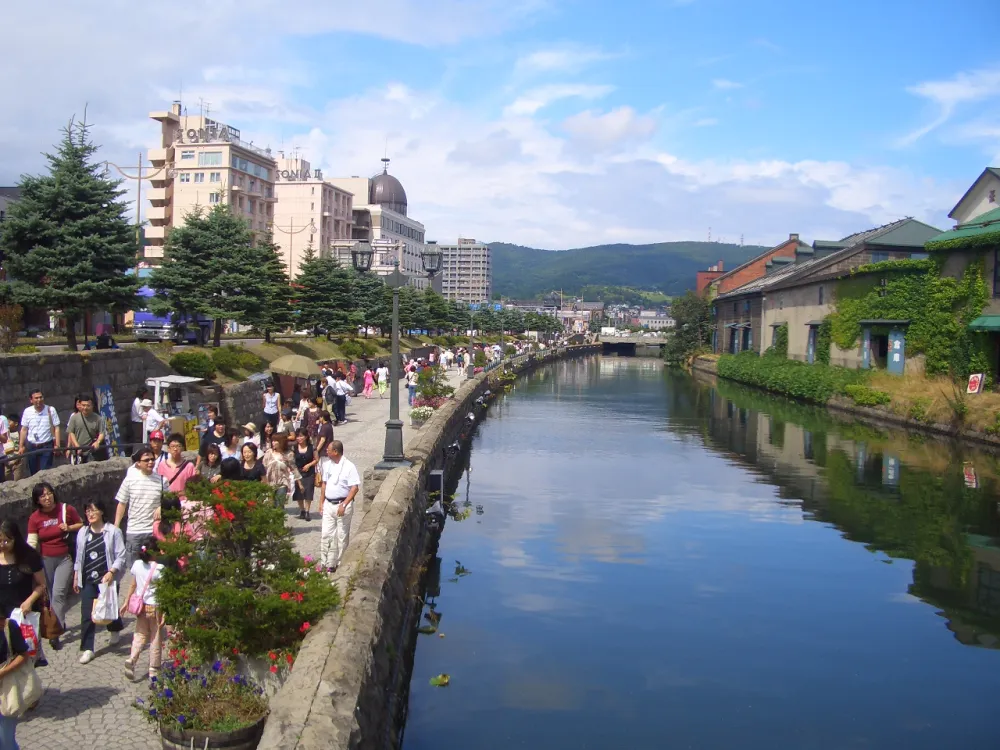
If your evening plan is simply a canal walk, step down to the promenade from Asakusa Bridge or Chuo Bridge after dinner. According to the Otaru Tourism Association, gas lamps along the promenade stay lit from sunset until 24:00, while the floodlights illuminating the warehouse facades switch off at 22:30. Aim to arrive before 22:30 if you want both the lit stone facades and water reflections; in winter, taking a short walk before dinner is often much more comfortable. The North Canal operates on separate light-sensor hours (18:00 to 4:00 from June through August). If you want to cover both the south and north stretches, map your return walk along well-lit main streets or cut back up Chuo-dori once you have your main warehouse shots.
Going up Mt. Tenguyama instead? Make the ropeway your main Day 1 evening activity. Catch bus #9 from Platform 4 at the Otaru Station terminal for a roughly 20-minute ride. Note that the ropeway closes for maintenance from November 4 to 27, 2026. Winter season runs November 28, 2026 through March 28, 2027, with round-trip fares of ¥2,000 for adults and ¥1,000 for children; standard winter hours put the last ascent at 19:48 and last descent at 20:00, except on December 31 and January 2–3 when the final descent moves up to 17:00, and January 1 when it drops to 16:00. Those holiday dates require an afternoon ride rather than a post-dinner trip, so check both the downhill ropeway cutoff and return bus times before leaving the station.
On snowy nights, low clouds at the summit sometimes blank out the city lights completely. Check the operator's live visibility and operations update before heading to the base station; if visibility is poor, stay downtown for dinner and a canal walk instead. Groups who prefer an unhurried dinner should book a later restaurant table before heading up the mountain. Want to get back early for a hotel bath? Ride the ropeway around sunset and save the canal stroll for the next morning—either way avoids cramming shopping, the mountain, dinner, and late check-in into one rushed evening.
How far you wander for an early Day 2 canal look depends on where you slept. Walking out from Ironai lets you loop between two bridges for quiet reflections and return straight to your room. Starting early from a station-front hotel? Grab breakfast along the walk back. Work backward from your hotel's luggage pickup cutoff to set check-out timing: if you have a morning train, retrieve bags by the station right after breakfast; if you leave in the afternoon, finish your top museum or shop visits first before collecting your luggage. Anchor flights, dining reservations, and shuttles on your timeline first, then slot photo walks and last-minute shopping in between.
Adding a Second Night: Splitting Shukutsu and an Onsen Stay
Even on a one-night stay, you can fit in one outlying stop the next morning. To see the coast at Shukutsu or visit Otaru Aquarium after breakfast, take bus #10 or #11 from Otaru Station (¥240 adult, ¥120 child one-way). Note the seasonal schedule: the aquarium closes November 24 through December 11, 2026, then operates winter hours from December 12, 2026 to February 23, 2027 from 10:00 to 16:00 (last entry 15:30), with the Marine Animal Park and amusement park closed. Line up bus arrivals with showtimes if you want to catch performances; if you are mainly there for coastal views, only linger in Shukutsu on clear weather days.
With two consecutive nights in one city hotel, finish dinner and the canal on Night 1, dedicate Day 2 to the aquarium, and return at your own pace. Splitting one night by the canal and one night in Asarigawa gives you a relaxed half-day in downtown Otaru after breakfast before taking bus #13 with your luggage in the afternoon in time for a pre-dinner soak. Trying to visit both Shukutsu and Asarigawa? Prioritize whichever leg has fewer bus departures, and store suitcases at Otaru Station while going out to Shukutsu so you can grab them seamlessly at the hub instead of dragging bags up and down the cape.
Your margin for error depends heavily on where you check out. Staying overnight in Shukutsu puts the aquarium right next door on arrival or departure day, cutting out an extra bus round trip. By contrast, checking into an Asarigawa ryokan comes with a firm dinner seating window. Trying to catch the final afternoon show at the aquarium, bus back to Otaru Station, collect bags, and ride out to Asarigawa in winter leaves almost no cushion before dinner service. Finish the main aquarium exhibits earlier and catch an earlier bus back—or swap the final leg from downtown to the ryokan for a taxi.
If you are just making a quick daytime loop from Sapporo with no evening plans, keep your hotel base in Sapporo. Once you want canal night shots, quiet dawn light, or unhurried ryokan time, staying one night connects dusk and morning without two extra train rides back and forth. Two nights work best if you want separate blocks for the aquarium, historic architecture, and a full ryokan dinner—especially helpful for slower-paced family members—or you can keep one downtown base for both nights and rely on hotel baths or a daytime onsen trip if you hate repacking.
2027 Otaru Snow Light Path and Winter Weather Backups
The Otaru Tourism Association lists the 2027 Otaru Snow Light Path for February 6 to 13, 2027. If you are coming specifically for the festival, book a room within walking distance of the permanent canal promenade first, then map your route once official venue zones and hours are posted. During the festival, canal promenade gas lamps turn on earlier at 15:00; check the event's own schedule for exact candle-lighting times at each site. Meeting a larger group after dinner? Pick a main-street bridgehead as your meetup spot and decide on the ground whether to walk one stretch or two, keeping turnbacks easy if you have kids in tow.
Dragging rolling luggage in snow is downhill along Chuo-dori toward the canal and all uphill coming back to the station. Non-slip winter boots, touchscreen-friendly gloves, and a hands-free backpack help far more than relying on dry-pavement walking estimates. Slow down on bridge decks and painted crosswalk lines, and grab a taxi outside the station whenever ice builds up or wheels jam. When riding buses out to Shukutsu or Asarigawa, screenshot the Japanese stop name beforehand—winter bus windows fog up and snow often buries roadside signs, so matching audio announcements against your phone keeps you from missing your stop. Drivers should save garage height limits, first-come parking rules, and snowy-day entrance directions in their navigation notes.
Need an indoor backup when snow forces a cancellation on Mt. Tenguyama? Head to the Bank of Japan Otaru Museum inside the historic former Otaru Branch. Winter hours from December through March run 10:00 to 17:00 (last entry 16:30) with free admission; it closes Wednesdays (opening when Wednesday is a public holiday) and December 29 through January 5. Because Ironai's historic bank street sits right behind the canal, you can easily step back out for photos the moment squalls clear. If the museum is closed, duck into Sakaimachi Street's glassworks or music box shops, keeping outdoor walking tight near Asakusa Bridge and warming up at a shop before moving on with kids.
In spring and autumn, compare weekday and weekend rates for the exact same room within the same week—rate swings between nights can beat the price gap between two different hotels. In milder weather, walk Sakaimachi Street in the afternoon, drop glassware and pastries back at your room around dusk, and stroll the canal after shop rush ends. Planning a canal boat cruise? Base your afternoon around confirmed sailing times and swap in the historic bank street if wind or rain cancels boats. In winter, start from whichever exit lies closest to your hotel, head out during lulls in wind and snow, and wait until afternoon visibility clears before committing to the mountain.
Driving into central Otaru for one night? Confirm parking availability and vehicle height limits early. Dormy Inn's mechanical tower parking operates first-come, first-served at ¥1,400 per night with a 2-meter height cap for tall vehicles; approaching from Otaru Station down Chuo-dori toward the canal, turn left into the lot—left-side traffic means you cannot turn right into it coming back uphill from the canal. Measure rental cars fitted with roof racks before arriving and look for flat surface lots if needed. Driving to Kourakuen in Asarigawa? Follow the ryokan's instruction to enter the main gate from Hokkaido Route 1 (Asari Onsen-dori) using the address 5-18-2 Shinko, Otaru so GPS doesn't send you up the back road.
On departure morning in snowy weather, check JR Hokkaido service alerts first thing and leave earlier for the station walk or shuttle. If trains delay, remember that hotel breakfast, room checkout, and onward transit sit on three separate tickets or bookings with different modification rules. As a bus backup, check Hokkaido Chuo Bus's direct airport highway bus between Otaru and New Chitose Airport, watching boarding and alighting restrictions at intermediate stops. Anyone catching an early or long-haul flight should build extra transfer and bag-retrieval cushion well beyond the listed train ride time.
A few useful answers
Where is the most convenient area to stay on a first trip to Otaru?
If you are hauling bags on JR trains and catching an early train the next morning, stay in front of Otaru Station. If canal night views and popping back to your room to warm up matter more, stay in Ironai or along the canal and verify room orientation before booking.
How do three or four guests book a canal-view room in Otaru?
Look for rooms like the canal-side Superior Twin at Hotel Nord Otaru, which sleeps up to four with two fixed beds plus up to two extra beds. If everyone needs their own bed, search with the exact guest count to compare extra-bed rooms against booking two twin rooms.
Can I stay at a hotel with natural hot springs in central Otaru?
Yes. Dormy Inn PREMIUM Otaru right across from JR Otaru Station has a second-floor natural hot spring bathhouse supplied by its own private source. If you want a private open-air bath in your room paired with half-board dining, look at the bath-equipped rooms at Otaru Kourakuen in Asarigawa.
Is the ocean-view hotel in Shukutsu reachable by bus?
Yes. Take bus #10 or #11 from Otaru Station to the Otaru Aquarium stop. The final stretch up to Hotel Neuschloss Otaru is an uphill walk of roughly 600 meters, so book the hotel's complimentary station shuttle in advance if you are traveling in snow or with heavy suitcases.
Is one night in Otaru enough?
One night gives you enough time for canal night views, hotel breakfast the next morning, and either Mt. Tenguyama or Shukutsu on a half-day loop. Stay two nights—one downtown and one at an onsen ryokan—if you want a relaxed visit to Otaru Aquarium plus a full ryokan dinner in Asarigawa.
Do Otaru hotels charge a separate accommodation tax?
Yes. Starting April 1, 2026, a combined Otaru City and Hokkaido prefectural accommodation tax applies per person per night based on the pre-tax room-only rate: ¥300 for stays under ¥20,000, ¥400 for ¥20,000 to under ¥50,000, and ¥700 for ¥50,000 and above.
Official information and references
Sources used in this guide.
- JR Hokkaido | Rapid Airport Trains Linking New Chitose Airport, Sapporo, and Otaru
- Otaru Tourism Association | Otaru Canal Walking Guide and Lighting Hours
- Otaru Tourism Association | Walking Route to Otaru Music Box Museum Main Building
- Hotel Nord Otaru | Room Orientations, Layouts, Bed Counts, and Capacity
- Hotel Nord Otaru | Hotel Access
- UNWIND HOTEL & BAR Otaru | Historic Former Etchuya Hotel
- UNWIND HOTEL & BAR Otaru | Guest Rooms and Loft Layouts
- UNWIND HOTEL & BAR Otaru | Luggage Storage and Breakfast Hours
- Dormy Inn PREMIUM Otaru | Hotel, Natural Hot Springs, and Post-Renovation Reopening
- Dormy Inn PREMIUM Otaru | Breakfast Hours
- Dormy Inn PREMIUM Otaru | Parking and Vehicle Size Limits
- Otaru Tourism Association | Sankaku Market Hours and Entrance
- Otaru Tourism Association | Tourist Information Centers and Coin Lockers
- Hotel Neuschloss Otaru | In-Room Open-Air Baths and Water Quality
- Hotel Neuschloss Otaru | Barrier-Free Ocean-Side Guest Room
- Hotel Neuschloss Otaru | 2027 Exterior Wall Construction and Affected Rooms
- Otaru Tourism Association | Hotel Neuschloss Otaru Views and Station Shuttle
- Otaru Tourism Association | Slope from Otaru Aquarium Bus Stop to Neuschloss
- Otaru Kourakuen | Bus Stop, JR Transfer, and Driving Entrance
- Otaru Kourakuen | Check-In/Out, Dining, Bathing, and Accessibility FAQ
- Otaru Kourakuen | Private-Source Hot Springs and In-Room Open-Air Baths
- Hokkaido Chuo Bus | 2026 Winter Timetable Revision and New Route A13
- Hokkaido Chuo Bus | Asarigawa Onsen Line 13 and A13 Winter Timetable
- City of Otaru | Accommodation Tax Effective Date, Tiers, and Calculation
- City of Otaru | Accommodation Tax Handbook and Pre-Tax Room Rate Rules
- Otaru Tenguyama Ropeway | Winter Operating Hours and Round-Trip Fares
- Otaru Tourism Association | Tenguyama Ropeway November 2026 Maintenance Closure
- Otaru Tenguyama Ropeway | Bus #9 Boarding Platform
- Otaru Aquarium | 2026–2027 Winter Hours and Closure Dates
- Otaru Aquarium | Bus Routes and Fares
- Otaru Tourism Association | 2027 Otaru Snow Light Path Dates
- Bank of Japan Otaru Museum | Opening Hours and Closed Days
- Hokkaido Chuo Bus | Direct Bus Between Otaru and New Chitose Airport