Arriving internationally or domestically, choose JR for Sapporo or Otaru, or airport buses for Odori and Susukino. Separate the ¥1,230 base fare from two u-seat supplements, understand unreserved buses and December route changes, and plan late arrivals, early departures and disruption alternatives.
- Region & Focus
- SapporoTransportation and passes
- Reading Scope
- 32 min read · 13 chapters · 6 Q&As
- Official Verification
- 15 official sources checkedUpdated October 27, 2026
- Key Topics
- Airport transfersRail travelBooking
Chapter Route Map (tap any stop)
- Choose transport by the hotel door: Sapporo Station, Odori/Susukino or Otaru
- From international arrivals, connect to the domestic terminal for the B1 JR station
- Three Airport train types: check the next service and its actual destination
- The ¥1,230 base fare and two seat supplements: ¥1,000 or ¥800
- Tickets and gates: IC pays the fare; keep seat details on your phone
- Airport buses are unreserved: tickets do not remove queues, and transport IC is not accepted
- Save separate outbound and return stops; routes change December 11
- Connect Odori, Susukino or Nakajima Park all the way to the entrance
- For late arrivals, calculate reaching the platform before the 23:21 train
- Work backward from airline deadlines for early departures
- For JR disruption, check the affected section and separate alternatives from refunds
- Children, large cases and wheelchairs need separate ticket, space and boarding decisions
- Collect bags before connecting the airport station to the correct terminal
- Quick Q&A
For a hotel beside Sapporo Station, start with JR. For Odori, Susukino or Nakajima Park, compare the bus stop with the actual hotel entrance. For a direct stay in Otaru, find an Airport train whose destination is Otaru. The easily missed parts are the walk from international arrivals to the domestic-terminal B1 station, the transfer after Sapporo Station, and the return from luggage collection to the correct terminal. Connect those sections before choosing unreserved seats, a seat supplement or a longer direct bus ride.
Choose transport by the hotel door: Sapporo Station, Odori/Susukino or Otaru
For accommodation near Sapporo Station, JR is usually the direct starting point: board at New Chitose Airport Station and walk from Sapporo to the hotel. If the hotel is north of the station, count the internal walk after the gates and finding the north exit too. Record the hotel's official name and entrance, not just a Sapporo Station pin that may send your cases in the wrong direction.
For Odori or Susukino, reaching Sapporo by train is only the first part; subway or walking follows. An airport bus near the hotel can save taking luggage through another station, in exchange for a longer road journey and wait. The airport overview estimates about 40 minutes by JR or one hour 50 minutes by bus toward Sapporo. Use these to compare modes, then check the actual service and stop-to-door distance for your hotel.
For an Otaru stay, search directly for Otaru as destination. The airport estimates about one hour 15 minutes by JR, adult base fare ¥2,040, with u-seat extra. Some Airport trains run through; others need a change. If the hotel is near Minami-Otaru or across the canal area, add that final route. Otaru and Minami-Otaru have their own exits and streets; the shared name does not make them interchangeable.
Two adults with one case each, staying beside Sapporo Station and still feeling alert, can start with ordinary unreserved seating. Compare u-seat if a fixed seat matters. For a tired family staying in Susukino, check whether the next bus stops within a manageable walk. If a passenger must remain in a wheelchair, have the operator confirm equipment and arrangements first. A transfer-free bus that requires folding the wheelchair into the luggage hold may not meet the need.
For sightseeing days, hotel districts and an Otaru day route, see the four-day Sapporo and Otaru guide. Write out arrival at the first room and arrival at the departure terminal before filling the days between. If day one is only an evening arrival, plan dinner near the accommodation.
| Accommodation endpoint | Check first | Add this section |
|---|---|---|
| Near Sapporo Station | JR Airport | Sapporo gates and north/south exits to hotel |
| Odori, Susukino, Nakajima Park | Airport bus near lodging, or JR plus subway | Directional bus stop, or Sapporo transfer |
| Otaru, Minami-Otaru | JR with correct destination and stops | Through service or transfer, then hotel walk |
Arriving internationally or domestically, choose JR for Sapporo or Otaru, or airport buses for Odori and Susukino. Separate the ¥1,230 base fare from two u-seat supplements, understand unreserved buses and December route changes, and plan late arrivals, early departures and disruption alternatives.
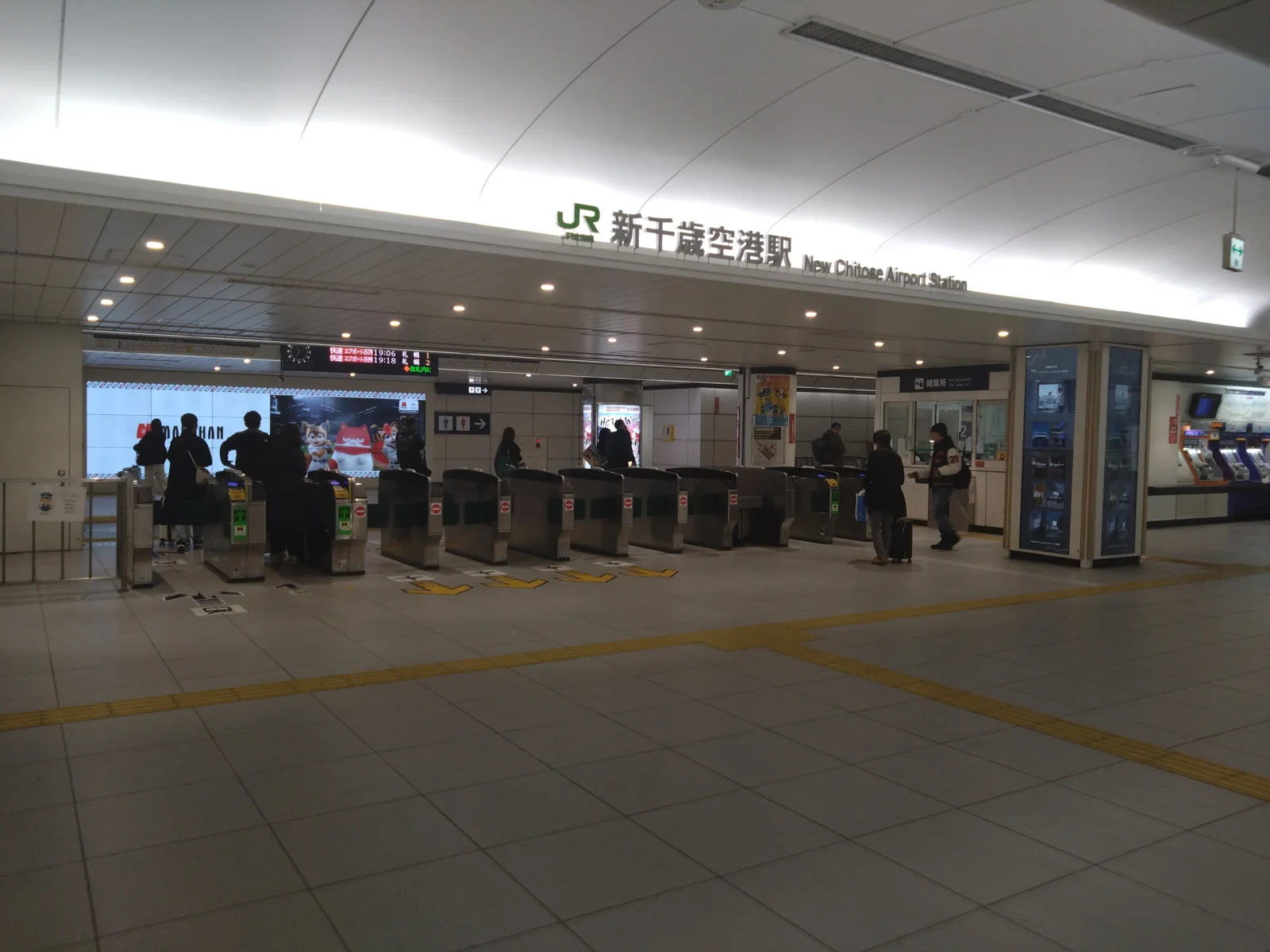
From international arrivals, connect to the domestic terminal for the B1 JR station
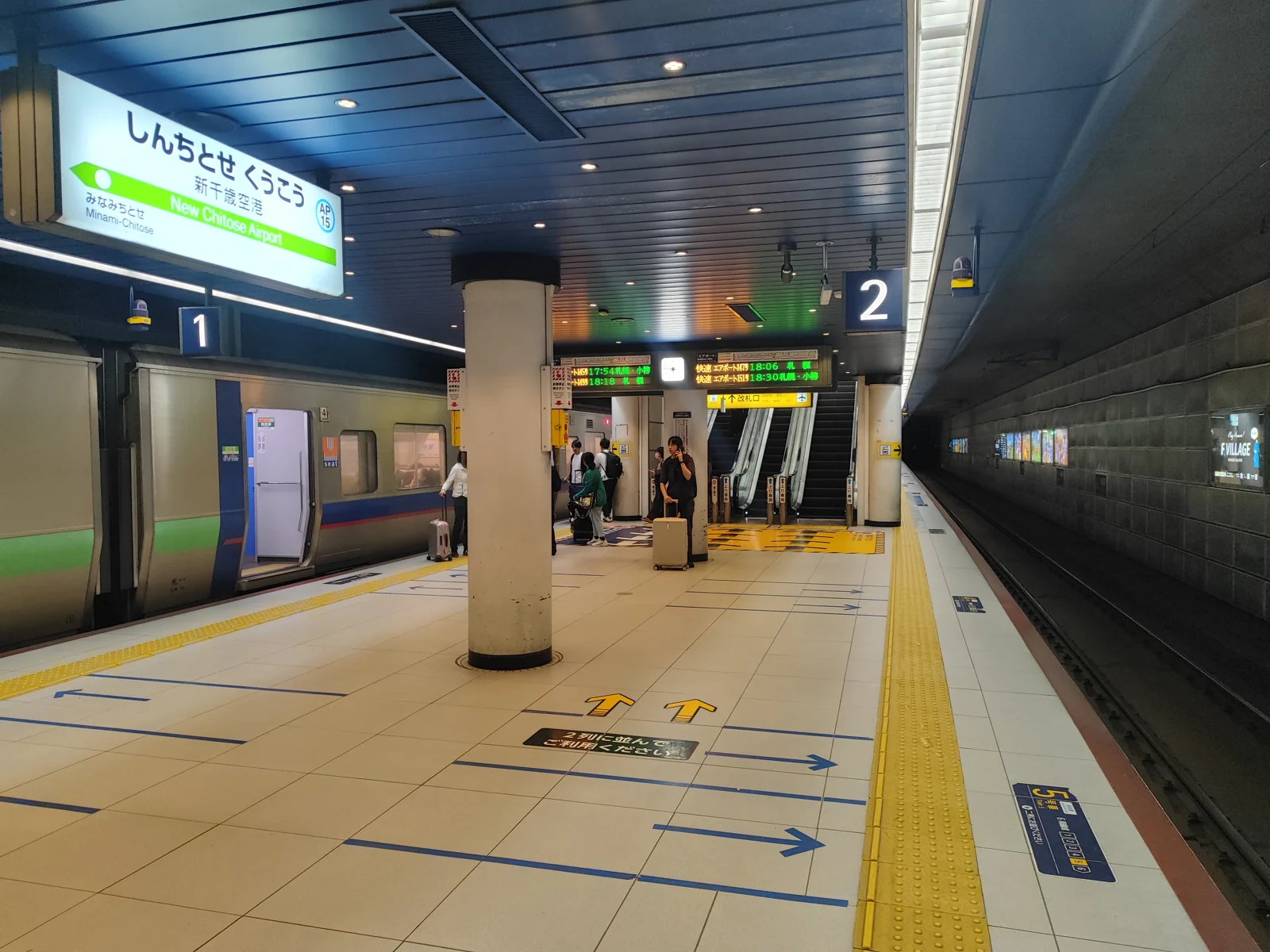
The airport JR access page locates the station on domestic-terminal B1. After an international flight, complete immigration, checked-bag collection and customs. In the public area, follow signs for JR and the domestic terminal. These procedures and the terminal walk separate the flight's arrival time from reaching the JR ticket area.
International arrivals are on 2F. Follow the 2F connecting passage to domestic 2F, then JR signs down to B1. With strollers, large cases or wheelchairs, use elevator signs for the crossing and descent. Reach the domestic terminal before looking for B1 rather than simply heading down throughout. Keep the airport floor map on your phone and check your terminal and floor after arrival.
Domestic arrivals are on 1F; follow JR signs down to B1, without the international-terminal crossing. If companions arrive at different terminals, meet at “domestic B1, New Chitose Airport Station ticket area” or another named place, not just “airport exit.” Domestic 1F bus waiting areas are not the international arrivals exit either.
After customs, use toilets, change clothes and organize bags first. Keep documents, tickets and payment accessible with one hand before heading to the station. A platform is not a place to open cases for coats. Mobile seat bookings can be made before the gates in an area where you can stop. One person can check destination and train while another handles children and cases, instead of managing everything at the ticket machine.
For buses, go to the relevant terminal's 1F boarding area. International 1F has a transport information counter; domestic 1F has bus counters. Use airport and operator stop maps to find your stop rather than dragging cases to B1 for JR prices and back again. If trains show disruption, check alternatives in the public area before deciding which floor to use.
A walk from Central Plaza to JR New Chitose Airport Station, demonstrating escalator and elevator routes separately.
Three Airport train types: check the next service and its actual destination
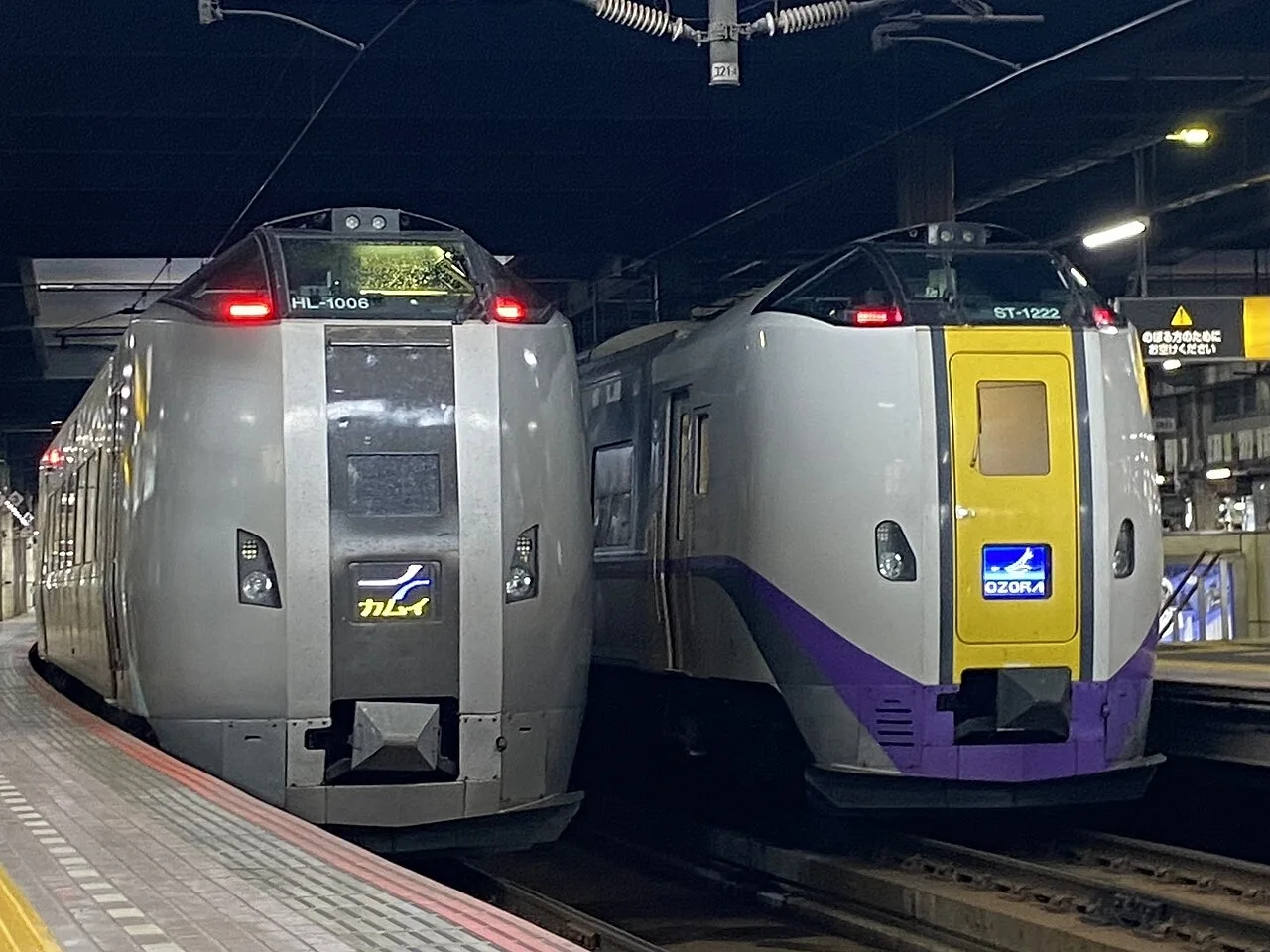
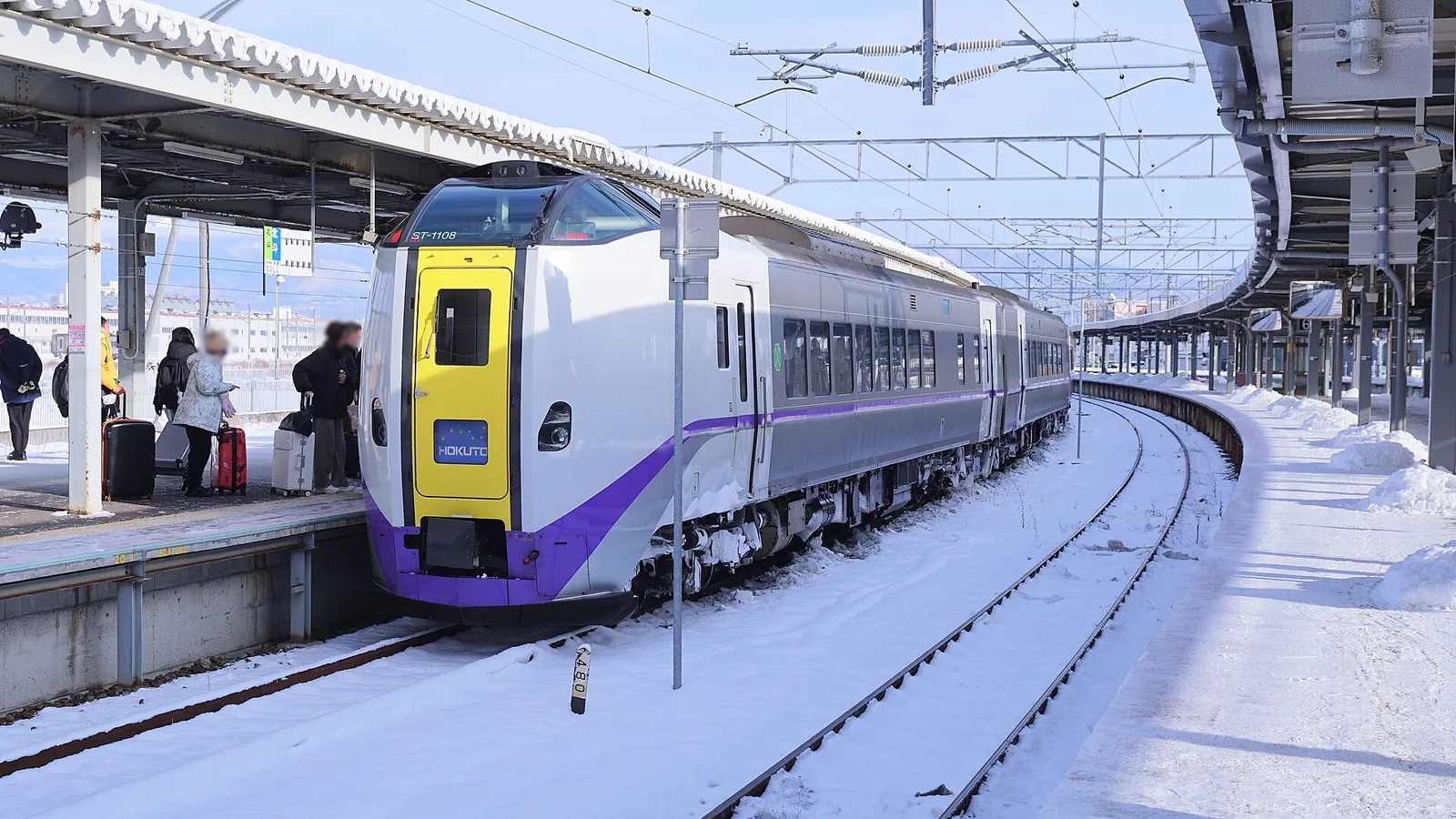
JR Hokkaido runs Special Rapid, Rapid and Semi-Rapid Airport trains, with different stops and journey times. The official train page lists six hourly daytime departures from 09:00 to 16:00: one Special Rapid, three Rapid and two Semi-Rapid. It says the first departure arrives first. Start with the next boardable train stopping at your destination rather than letting it leave while waiting for the fastest-sounding name.
The daytime comparison gives fastest times of 36, 37 and 43 minutes respectively. A main promotional graphic separately gives an all-day fastest of 33 minutes. Plan hotel connections from your chosen train's actual departure and arrival. If it takes over 40 minutes to Sapporo, use that time, then add gates and the hotel walk. A “fastest” claim does not remove that train's stops.
Destination and stopping information matter more than the service name. A direct Otaru train suits travelers avoiding another luggage move. If the next train ends at Sapporo or Teine, check the connection shown in the same search. Compare an earlier departure with a transfer against a later through service, including platform changes, elevators and moving children.
Before the platform, note where to change, the next departure time and destination. Save both parts of a two-leg search rather than reaching Sapporo with only a screenshot of the first. For an Otaru-bound train, check Minami-Otaru stops if needed. If staying near Otaru Station, use Otaru as destination instead of getting off early with cases for a sightseeing route.
Late arrivals cannot assume daytime through services continue to the last train. The airport train page lists a 23:21 Special Rapid from New Chitose Airport to Teine, explicitly departing on time even if flights are delayed. Its endpoint is Teine. Check a complete viable connection separately for Otaru that night. Immigration, baggage, the station walk and tickets must all be done before the 23:21 departure.
The ¥1,230 base fare and two seat supplements: ¥1,000 or ¥800
JR's official fare table gives an adult ordinary fare of ¥1,230 from New Chitose Airport to Sapporo. For ordinary unreserved seating, prepare that base fare. Use available seats or stand as directed and secure bags when full. It suits travelers with flexibility and no need to sit. This section alone does not require a regional pass.
Car 4's u-seat is reserved. A standard paper reserved-seat ticket adds ¥1,000, with the ordinary fare paid separately. This makes ¥2,230 for one adult to Sapporo. Understand both the fare ticket and seat ticket. A ticket with a seat number still needs the base fare included or separately covered for the whole ride.
The other option is Eki-net's u-seat ticketless seat ticket at ¥800. It covers only the reserved seat. Pay the ¥1,230 adult base fare by IC or paper ticket separately for ¥2,030 total. That is ¥200 below the ordinary ¥1,000 seat supplement, or ¥400 for two adults. Compare purchase method and membership conditions too.
For two adults over the same section: unreserved is ¥1,230 × 2 = ¥2,460; standard paper reserved seating is (¥1,230 + ¥1,000) × 2 = ¥4,460; the ¥800 seat-ticket route is (¥1,230 + ¥800) × 2 = ¥4,060. The difference buys reserved seats. Choose unreserved if both can stand and prefer to save. If one needs a seat, check actual availability before deciding whether both should upgrade.
For adjacent family seats, check the actual seat map or ticket-office allocation. Paying the supplement alone does not establish adjoining seats. Follow luggage facilities and staff instructions; a seat number does not reserve another space for a large case. Buy the applicable child fare and seat ticket for a child's own seat instead of moving into someone else's reservation aboard.
| Method | Base fare per person | Seat supplement per person | Two adults total |
|---|---|---|---|
| Ordinary unreserved | ¥1,230 | 0 | ¥2,460 |
| Standard u-seat reserved-seat ticket | ¥1,230 | ¥1,000 | ¥4,460 |
| u-seat ticketless seat ticket | ¥1,230 | ¥800 | ¥4,060 |
Tickets and gates: IC pays the fare; keep seat details on your phone
For IC travel to Sapporo, check that the card is accepted and has enough balance, and use the same card entering and exiting. Each companion needs an appropriate travel medium. Two seats in one order still require two base fares. With mobile payment, identify the transport card used to enter so you do not switch cards at exit.
With IC plus u-seat ticketless, the gate handles the base fare, while the train uses your booked service and seat. Keep your phone able to log in to Eki-net and open the purchase-history detail page for inspection, showing date, section, train and seat. Seeing a seat on your phone covers only the seat layer. If you have neither a fare ticket nor an IC entry, cover the base fare first; an order total that looks like a train ticket is not enough to judge.
Japanese Eki-net needs membership. With two or more on one order, companions must ride with the applying member, and children cannot apply alone. If a parent books four and someone later wants to leave first, split or change through the original channel so each group's tickets meet conditions. Sending one order screenshot to four phones does not create four independent tickets.
The foreign-language airport train page also offers JR-EAST Train Reservation's E-ticket route: select train, seat and E-ticket, then pay without collecting a paper seat ticket. This Reserved Seat E-ticket cannot pass gates; base fare still needs IC or a paper fare ticket. Confirm each product's amount and process in the foreign-language system or Japanese Eki-net. Do not automatically apply the Japanese ¥800 product to another order. For one on-site transaction, use machines or the counter for ordinary paper tickets.
If flight or customs delays mean you cannot catch your booked Eki-net u-seat train, change through the original order before it leaves your boarding station, within system hours and seat availability. After missing it, the ticketless seat ticket expires; later reserved seating needs another purchase. To reduce uncertainty, collect bags and reach the station before choosing an available departure. At busy times with scattered seats, choose separate seats, a later train or unreserved travel.
Airport buses are unreserved: tickets do not remove queues, and transport IC is not accepted
Hokuto Kotsu's central Sapporo route is first-come, first-served without reservations. A ticket does not hold a place on a particular departure. Find the queue end, check the bus destination and follow staff for luggage and boarding. If one just left, plan from the next at your current stop. Buying a ticket and shopping elsewhere does not preserve your queue position.
The central Sapporo route currently costs ¥1,500 adults and ¥750 children for Sapporo Station and major central stops. Two adults pay ¥3,000, ¥540 more than JR unreserved at ¥2,460. If it stops near your hotel, compare that difference with a saved city transfer. If you still need a long subway ride, reassess the full cost.
Payment includes cash, the operator's listed contactless credit cards and PayPay. Suica and other transport IC cards cannot pay this route's fare. A card usable on JR may leave you needing another bus payment method. For contactless credit cards, tap once boarding and once alighting, using the same card. A physical card and its phone version are different media; keep one throughout.
The usual luggage allowance is one case per person, and a full hold may mean refusal. Explain two large cases, strollers or unusual sizes to staff or the counter before queuing, giving the total count to obtain a workable arrangement. Keep passports, money, medicine and essentials in your hand bag. Retain identifying information after handing cases to staff and collect them at the stop. Do not bury medication needed en route in the hold.
A full bus means waiting for the next, and the hold has limits too. Leave room for another wait before a flight. Under the operator's guidance, wheelchairs must fold into the hold and passengers must transfer to bus seats. For remaining in a wheelchair or boarding assistance, confirm a workable service first, then choose JR assistance or other arranged transport. Do not discover equipment mismatches at the roadside.
Save separate outbound and return stops; routes change December 11
Use the airport bus page to identify your terminal. Central Sapporo and direct services terminating at Nakajima Park use domestic ANA-side stop 22, JAL-side stop 14 and international 1F stop 84. Read the timetable's three columns from your actual stop. If the last departure skips one stop, use a served boarding point you can reach.
Sapporo drop-off and return pickup can differ too. After arriving near the hotel, save the airport-bound stop separately, noting road side, landmarks and direction. Identically named stops may separate boarding and alighting. On checkout day, follow the saved return location instead of relying only on where you got off days earlier.
For Odori, compare an actual stop, not the whole park. Regular airport-origin buses currently drop at Minami 3-jo Susukino; direct buses use Susukino Minami 4 Nishi 1. For the named Nakajima Park stop, use direct services. Airport-bound regular and direct buses both board at Minami 4 Nishi 3 in Susukino. Each has its own table. Select by direction, service type and street corner to distinguish arrival and return.
In its October 21, 2026 notice, Hokuto Kotsu announced a central Sapporo route reorganization from December 11, including direct Susukino-to-airport and hotel-loop changes. October's current table suits travel before that change. For December 11 onward, open the reorganization site and choose stops and departures again. If outbound and return straddle the change, use each ride's date rather than saving only one table.
Name saved files by date and direction, such as “November arrival: international terminal to Susukino drop-off” and “December return: hotel to airport pickup,” adding official stop names and times. A dated official stop map is more useful than an old stop photo without direction. Share terminal and direction clearly when dividing tasks with companions.
| Terminal / side | Floor and stop | Timetable column |
|---|---|---|
| Domestic ANA side | 1F, stop 22 | New Chitose Airport ANA side |
| Domestic JAL side | 1F, stop 14 | New Chitose Airport JAL side; check whether served |
| International | 1F, stop 84 | New Chitose Airport international terminal |
Connect Odori, Susukino or Nakajima Park all the way to the entrance
Put the hotel address on a map and count crossings from the airport bus stop, including wide roads, then compare JR plus subway. Straight-line distance can hide an entrance on the far side or a detour after leaving an underground station. Hotel directions can identify entrances and nearby stops, but verify bus service in the operator's current table.
For example, two travelers with one case each staying in Susukino still need the subway and a walk after JR Sapporo. If the next central bus drops at a manageable corner and the queue is not full, it reduces handling. If the wait is long or road delays are announced, compare current JR operation and the remaining Sapporo leg. Queues change the decision. Keep two door-to-door routes so you have a choice on site.
For a return from the named Odori Park stop, current direct services are 07:22 and 08:22; Nakajima Park's are 07:15 and 08:15. Regular airport-bound services do not list these two named stops. Use the regular-service official map to choose another reachable pickup. These times are for planning before December's change; use the new table from December 11.
Around Nakajima Park, distinguish the subway station, airport-bus stop and a particular hotel's pickup point. “Nakajima” in the name does not put them at one doorway. Services stopping at named hotels do not deliver to every nearby property. For families, one adult can check the hotel entrance while the other waits with bags somewhere clear of the path, then finish the walk together.
Look at the return route in practice after arrival. While going out for dinner, identify the airport-bound stop and waiting area rather than finding them first after checkout. If routes change during the stay, save both versions and use only the new one for the return. Once maps and stops are settled, decide whether departure-day bags stay at the hotel or go directly to the airport.
| Area | Airport → city drop-off | City → airport pickup |
|---|---|---|
| Sapporo Station | Regular: Sapporo Station; Direct: Sapporo Station | Sapporo Station (regular / direct) |
| Odori | Regular: Odori Park; Direct: Odori Park | Odori Park (direct); for regular buses, choose a served stop |
| Susukino | Regular: Minami 3-jo Susukino; Direct: Minami 4 Nishi 1 | Minami 4 Nishi 3 (regular / direct) |
| Nakajima Park | Nakajima Park (direct) | Nakajima Park (direct) |
For late arrivals, calculate reaching the platform before the 23:21 train
Break a late arrival into flight landing, customs and bags, terminal crossing, station arrival and departure. The 23:21 train does not wait for delayed flights. In arrivals corridors or while bags are still missing, procedures and the terminal walk remain. Check airport and JR live operation that night, then connect the whole route to accommodation.
Use a self-set example: landing at 22:00 and clearing customs at 22:50 leaves only 31 minutes until 23:21 for the station walk and tickets. Add your own allowance for young children, special bags and immigration queues. If those 31 minutes cannot cover the crossing and boarding, arrange other reachable accommodation or transport before departure.
At the station, check which remaining trains actually serve your destination. A Teine train does not establish a same-night route to Otaru. If no Otaru connection remains, arrange reachable accommodation and contact the original hotel, then travel next day. Do not board toward a dead-end connection just to retain the original city order. Include the hotel's latest check-in and contact it directly if late.
One late-bus column in the current table gives ANA side 22:55, international 22:59 and no JAL-side stop, then next-day Minami 3-jo Susukino 00:03, Odori Park 00:07 and Sapporo Station 00:12. This example was checked October 27, 2026 and precedes December's change. Road delays and full buses affect boarding. Wait by your terminal's column. If transport cannot reach the hotel, ask airport information still in service or transport operators for an available alternative, giving passenger and case counts.
If the flight is close to the last service from the outset, compare a first night near the airport or a flight change when booking. Confirm hotel pickup, boarding location, final acceptance and latest check-in individually. An available bed and a way to reach it are separate arrangements. Travel into Sapporo or Otaru from that accommodation with your cases next day rather than compensating for a short first evening with overnight movement.
Work backward from airline deadlines for early departures
Write the airline's check-in, bag-drop and boarding deadlines first, then choose terminal arrival. JR reaches domestic B1 only. International passengers still go upstairs and through the connecting facilities to international check-in. List gates, terminal crossing and airline procedures separately before choosing a city departure.
If you set a personal target of 07:30 at international check-in, subtract B1-to-international travel, gate exit and disembarking, then find a train. After finding its scheduled airport arrival, work back through bag collection at the hotel, the station walk and ticket purchase or collection. Replace the whole calculation for another airline, flight or special baggage.
The official JR search checked October 27, 2026 showed the first Sapporo airport train at 05:50. Search your actual date and use the complete arrival time to test the check-in target. If even the first transport cannot meet it, move near the airport the night before or book suitable transport. From Otaru, check the early Otaru-to-airport connection separately; Sapporo's first departure does not establish an Otaru service at the same time.
A current regular airport-bus example leaves Sapporo Station at 05:15 and reaches the domestic terminal at 06:32. International flights still require the terminal crossing and check-in allowance. Read the direct-service table separately; do not combine the regular 05:15 departure with a shorter direct-bus duration. Check a fallback if the first bus is full before deciding on a city stay.
Allow the correct-stop walk, queue and possible wait for another bus. Add your own delay margin beyond scheduled road time. If JR or buses announce problems, adjust early rather than waiting until your original bus fails to arrive to search for something still on time. Prepare city breakfast in advance so it does not consume a critical half-hour after checkout.
Airport service information gives usual opening hours: domestic 05:00–23:30, international 05:00–21:00 and connecting facilities 05:00–23:30, with possible changes for flight alterations or delays. Resting inside after closure is not allowed except in accommodation facilities. A final city night saves one hotel move but requires early commuting. Near-airport accommodation still needs actual terminal transport and latest check-in checked. International counters operate around flights; a 05:00 terminal opening does not mean your airline accepts bags then.
For JR disruption, check the affected section and separate alternatives from refunds
Check whether suspension affects airport–Minami-Chitose, the Sapporo direction or the section onward to Otaru, and note the update time. JR Hokkaido's airport disruption guide links operating information and alternatives. At stations, follow announcements, displays and staff; before leaving, read official updates from your accommodation.
Suspended trains increase demand for buses and taxis, and weather can affect alternatives too. Check whether buses run and which stops still board, then inspect queues. If buses are also suspended, moving to the stop creates no extra service. Before everyone heads to the most familiar stop, confirm usable sections and places to wait.
Keep the original JR ticket. The disruption guide says paper tickets can receive full refunds when abandoning the trip, or the unused portion when abandoning partway. For a canceled reserved train booked via JR-EAST Train Reservation, an uncollected order is automatically canceled, including Reserved Seat E-tickets. For uncollected travel-agency purchases, contact the agency; collected tickets follow paper-ticket rules. If outbound travel is used and only return remains, give that status to the original channel or counter too.
Record independently bought buses or taxis separately from the JR ticket. Keep alternative receipts, original tickets and disruption notices, and process refunds by product and event rules. Taxi quotes depend on destination, vehicle, roads and supply; get a current price from an operator able to take you. Reference prices on the disruption page show budget scale; pay according to the actual confirmed arrangement.
If connecting to a flight, tell the airline current transport conditions and expected arrival, then ask about changes for your order. If restoration timing is unclear, set your own decision point and switch to the checked alternative if arrival cannot be confirmed by then. One companion can check JR and another alternatives, then assign the full party and case count to one workable arrangement to avoid duplicate orders.
Children, large cases and wheelchairs need separate ticket, space and boarding decisions
JR's child-ticket rules define adults as 12-plus and children as six to under 12. Exceptions for a 12-year-old still in elementary school or a six-year-old before enrollment explicitly apply to elementary schools under Japan's School Education Act and their pupils. School enrollment outside Japan does not automatically qualify; buy by actual age and eligibility. Child ordinary fares are half the adult fare, dropping a final ¥5, so airport–Sapporo costs ¥610.
Two adults and an eight-year-old in unreserved seating pay ¥1,230 × 2 + ¥610 = ¥3,070 in base fares. For the child's own u-seat, add that product's child seat charge and check the actual family seats. An infant or preschool child occupying a reserved seat alone also needs a child fare and reserved-seat ticket. If eligible to travel free on a lap, follow those conditions. Choose lap or separate seating first, then tickets, reducing last-minute seat moves aboard.
On JR, find suitable luggage space, secure handles and wheels, and keep aisles, doors and other seats clear. On buses, check case count and hold space first. A family of four with four cases differs from four cases plus two strollers. List quantities and foldability to avoid reorganizing at the door.
Wheelchair users should provide transfer ability, foldability, dimensions and assisting companions. If a bus requires folding into the hold, confirm you can board and transfer. With JR, tell the station the boarding assistance and destination needed. Check the hotel-door-to-station-elevator section separately too. A single impassable stair can remove the benefit of fewer transfers.
Stroller families can pack loose items before arrival and keep children with one designated adult through tickets and gates. If splitting into two groups, each needs base fares, contacts and the accommodation address. Multi-person ticketless orders still require travel with the applying member. Two people can share pushing bags, but ticket use cannot split freely. Explain these as separate tasks.
Collect bags before connecting the airport station to the correct terminal
For sightseeing after checkout, decide where bags stay, when you must collect them and where you board afterward. Hotel and station storage change detour distance. If the last stop is Susukino but bags are beyond Sapporo Station, collection is a full journey. Do not put only Susukino-to-airport travel in the schedule.
The night before, put return tickets, terminal and airline in one record. If companions shop separately, meet at storage or a confirmed transport entrance so all cases are together before boarding. Avoid one person queuing at the bus while another rushes from afar with everyone's bags, only to discover tickets do not preserve places.
After JR arrives at domestic B1, domestic passengers follow their airline's check-in signs and international passengers follow the international connection. Confirm the terminal before shopping outside the gates. Put snacks, packing and duty-free after check-in arrangements. If someone goes the wrong way, specify a floor and information counter for meeting so those waiting can describe their location clearly.
Return bus times quoted here reach the domestic terminal. Collect cases and check their identification, then follow your airline's terminal and counter directions. International passengers must allow further movement. For different flights, separate boarding passes, documents and essentials beforehand. At the correct check-in area, follow airline bag-drop and security procedures.
| Step | Enter your conditions | Decide next |
|---|---|---|
| Check-in and bag drop | Airline deadlines, terminal, special baggage | Set target arrival at check-in |
| Station / bus stop to counter | Domestic or international, floors, party needs | Set acceptable airport arrival time |
| Primary transport and fallback | Travel-date timetable, operation, bus queues | Choose departure and alternative margin |
| Bag collection and checkout | Storage, hotel entrance, boarding stop | Set shopping cutoff and departure from accommodation |
A few useful answers
Must I buy the JR base fare and u-seat ticket together?
Both must be covered, but can be separate. Airport–Sapporo adult base fare is ¥1,230 by applicable IC or paper ticket. Add a standard ¥1,000 reserved-seat ticket or a ¥800 ticketless seat ticket meeting Eki-net conditions.
Can I reach Sapporo without an Airport seat reservation?
Yes, use ordinary unreserved seating according to availability. For a fixed seat or adjacent family seats, check actual u-seat availability and supplements.
Must I wait for the next bus even with a ticket?
The central Sapporo route is unreserved and first-come, first-served. A ticket holds no specific departure. Full seats mean another wait, and a full hold may mean luggage refusal. Allow waiting time before a flight.
Can I use Suica on the New Chitose–Sapporo bus?
Hokuto Kotsu’s route does not accept transport IC such as Suica. Use cash, listed contactless credit cards or PayPay. Tap a credit card boarding and alighting, using the same medium throughout.
Can I catch JR if I arrive at New Chitose at 23:21?
23:21 is departure of the airport train to Teine, which leaves on time even for delayed flights. Landing still leaves immigration, bags, terminal travel and tickets. Check that night’s remaining transport and reachable accommodation.
Can I use current bus stops for December 2026 travel?
Hokuto Kotsu announces central Sapporo reorganization December 11. Use the table for each actual travel date. If arrival and return straddle December 11, save applicable stops and times separately.
Official information and references
Sources used in this guide.
- JR Hokkaido: Airport trains, stops, u-seat and 23:21 service
- JR Hokkaido: u-seat ticketless seat tickets and conditions
- New Chitose Airport: JR location and access
- New Chitose Airport: floor maps
- New Chitose Airport: bus directions and stops
- Hokuto Kotsu: central Sapporo timetables, stops, payment and luggage
- JR Hokkaido: airport disruption and refunds
- JR Hokkaido: official base fare table
- JR Hokkaido: child ages and Japanese school exceptions
- JR Hokkaido: foreign-language Airport train and E-ticket process
- New Chitose Airport: terminal opening hours
- Chuo Bus: December 11 route-change site
- Hokuto Kotsu: December 11, 2026 central Sapporo reorganization
- Eki-net: ticketless seat conditions and missed trains
- JR Hokkaido: travel-date timetable and fare search