Starting March 14, 2026, all JR Hokkaido limited express trains became all-reserved, ending non-reserved seats and S-kippu tickets. Compare the Kamui and Lilac limited express trains (as fast as 1 hr 25 min, ¥5,440 standard fare) with the Kosoku Asahikawa-go highway bus (¥2,500, 2 hr 25 min in winter) across fares, travel times, and booking strategies.
- Region & Focus
- SapporoTransportation and passes
- Reading Scope
- 16 min read · 8 chapters · 7 Q&As
- Official Verification
- 5 official sources checkedUpdated November 20, 2026
- Key Topics
- Rail travelBookingHokkaido
Chapter Route Map (tap any stop)
- The Two Core Routes: Comparing Time and Fares
- All-Reserved Rules: Unreserved Seat Tickets and Retired Passes
- The Two New Discount Fares: Tokudane 1 and Tokuwari
- Bus Details: Joint Operators and Boarding Points
- Station Flow at Both Ends: Planning Your First Step After Arrival
- Picking Your Train Seat: u-Seat, Green Car, and Multi-Purpose Rooms
- Winter Delays and Snowstorm Backups
- At the Terminal: Asahikawa Station and Asahiyama Zoo Tickets
- Quick Q&A
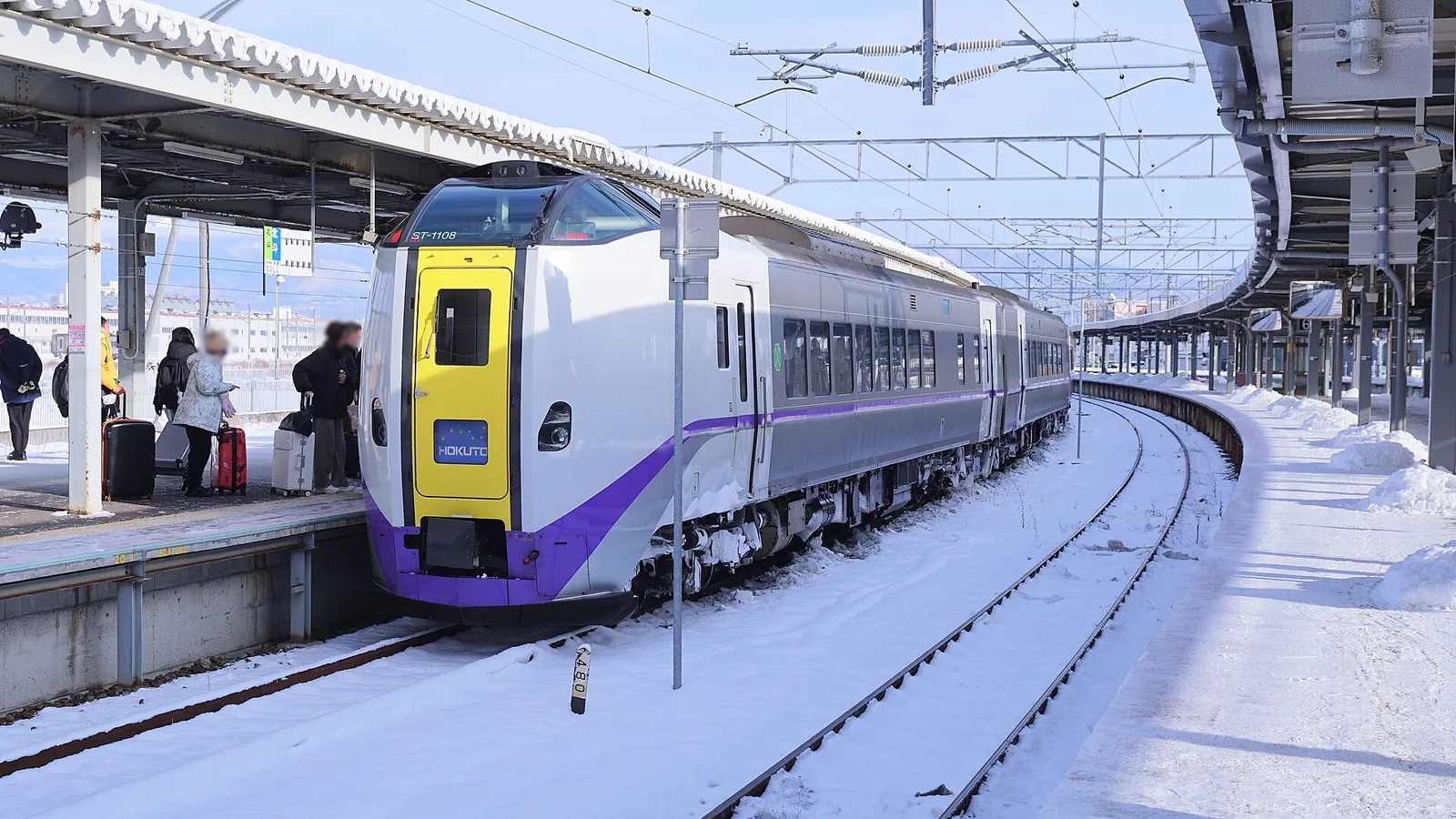
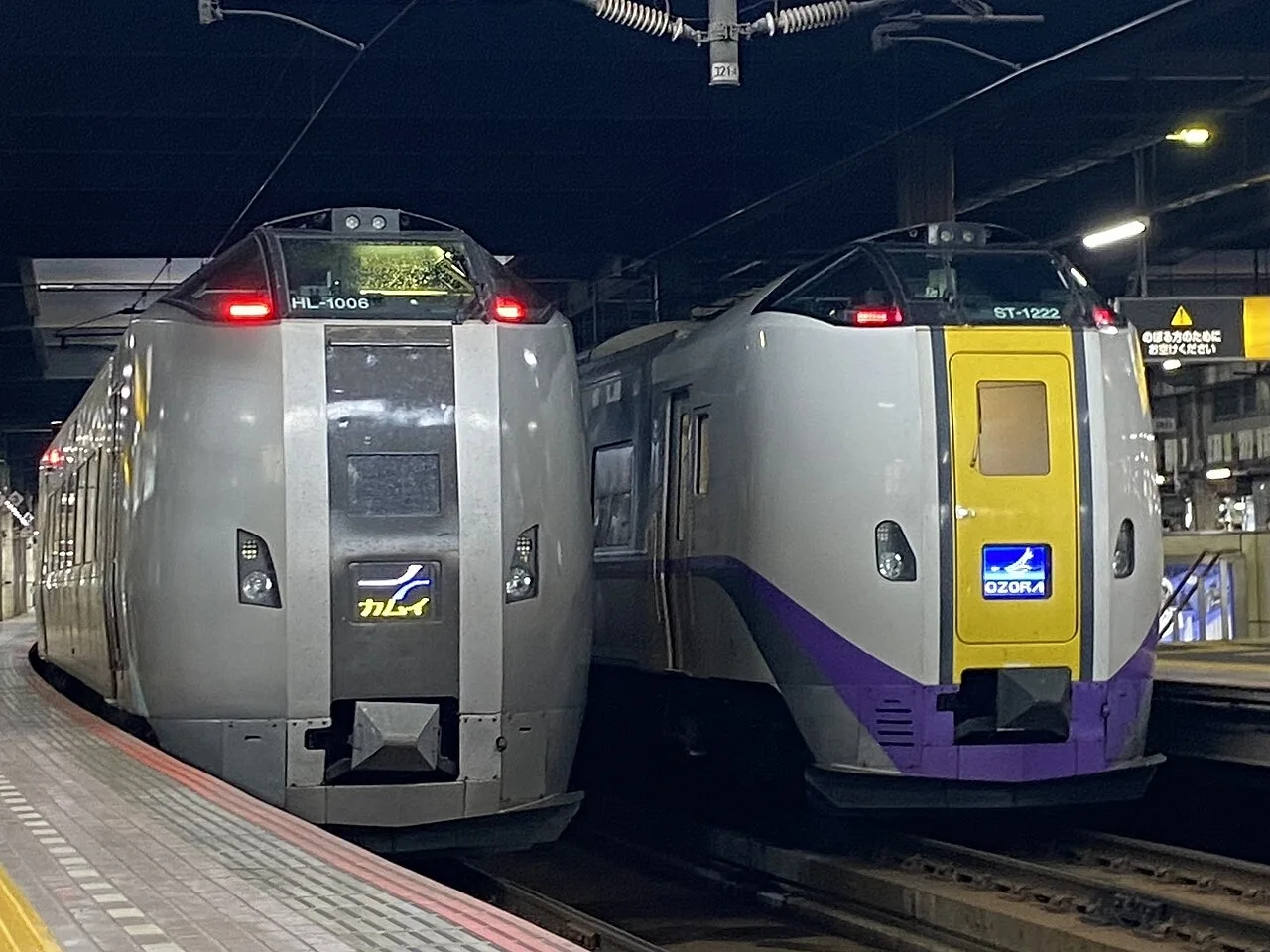
Travelers heading between Sapporo and Asahikawa have two main options: JR Hokkaido's Kamui or Lilac limited express trains, which make the trip in as little as 1 hour 25 minutes, or the Kosoku Asahikawa-go highway bus via the Do-O Expressway for ¥2,500, taking about 2 hours 25 minutes in winter. On March 14, 2026, JR Hokkaido converted all of its limited express trains to all-reserved seating, retiring both non-reserved cars and the popular S-kippu discount tickets. That shift rewrites the playbook for buying train tickets. Here is how rail and bus compare on price, transit time, online advance fares, and blizzard backups so you can match your ride to your schedule and budget.
The Two Core Routes: Comparing Time and Fares
On the rails, JR operates the Limited Express Kamui and Lilac between Sapporo and Asahikawa in as little as 1 hour 25 minutes. According to JR Hokkaido's November 19, 2025 press release, the full, non-discounted adult one-way fare (base fare plus reserved-seat express surcharge) following the spring 2026 overhaul is ¥5,440. On the road, the Kosoku Asahikawa-go highway bus covers roughly 140 kilometers along the Do-O Expressway at a flat ¥2,500 one-way fare, taking about 2 hours 5 minutes from April through November and around 2 hours 25 minutes during the December-to-March snow season.
Lay those numbers side by side and the train beats the bus by 40 minutes to a full hour, while the standard fare gap sits around ¥2,940. For a single trip, the choice is straightforward: if you are landing and racing to catch the penguin walk at Asahiyama Zoo or making a tight connection for a bus to Sounkyo, the hour saved by JR is well worth the premium, and travelers prone to motion sickness will also appreciate the smoother rail ride. Conversely, if you are hauling large suitcases on a tight budget, boarding curbside at Sapporo Station and stepping off right outside Asahikawa Station avoids dragging luggage up and down train platforms while keeping costs low. Round-trip rail riders should jump to the online discount section below, while round-trip bus riders should look at the 4-ride ticket book.
There is no reason to lock yourself into the same mode for both directions—mixing an early morning JR train outbound with a relaxed bus ride back gives you far more flexibility. Hokkaido winter weather changes on a dime, so keeping the boarding points and last departure times for both train and bus saved in your notes leaves you much better prepared when heavy snow causes delays.
Geographically, the 136-kilometer rail corridor follows the Hakodate and Soya Main Lines north through Iwamizawa, Bibai, Sunagawa, and Takikawa before entering the broad Kamikawa Basin, while the highway bus runs roughly 140 kilometers almost entirely on the expressway. Daytime frequencies are high on both corridors. From spring through autumn, the decision comes down purely to time versus money; major delays and cancellations cluster heavily in deep winter from December through March.
One forgiving feature of this corridor is that both Sapporo and Asahikawa are full-service hub stations with clear signage, ample coin lockers, and plenty of dining options. Missing a departure here does not trap you on a remote platform for two or three hours like a rural branch line. Outside of chasing early-bird web discounts or traveling during peak Snow Festival dates, leaving room to check the morning snow report before committing works just fine on ordinary weekdays.
Once you weigh speed against cost, common travel scenarios sort themselves cleanly. Solo travelers, tight itineraries, and anyone prioritizing schedule certainty should pick the JR limited express. Pairs or groups looking to save nearly ¥6,000 round-trip—money easily redirected toward Genghis Khan lamb barbecue or Asahikawa ramen—will get better value from the highway bus. If you plan multiple round trips over several days for skiing or repeat visits to Asahiyama Zoo, a 4-ride bus ticket book delivers the lowest per-trip cost. Summer trims about 20 minutes off the bus schedule, though JR still holds roughly a one-hour speed advantage.
The stark contrast in ticketing comes down to policy: on March 14, 2026, JR Hokkaido implemented its system-wide all-reserved seating rule announced in November 2025, whereas the three bus companies jointly operating the highway route made no changes. As a result, the bus retains walk-up flexibility—queue at the stop, tap an IC card, or use a paper coupon book—while JR has moved into an advance-booking era that reshapes how winter visitors plan their days.
Although train frequencies look similar year-round, seat availability feels dramatically tighter in winter. Local commuters, ski crowds, Asahiyama Zoo penguin-walk visitors, and February Sapporo Snow Festival travelers all converge on the same trains, frequently selling out reserved seats on weekends and holidays. On quiet off-season weekdays you can still buy a seat at the station on departure day, but during peak winter periods you should lock in seats several days ahead.
Intermediate stops also affect how restful the ride feels. Limited express trains stop at Iwamizawa, Bibai, Sunagawa, and Takikawa, bringing steady aisle traffic as local passengers board and alight. The highway bus runs virtually nonstop once it merges onto the Do-O Expressway. Travelers hoping to sleep straight through or focus on work face fewer interruptions on the bus, while the train's station calls give you a clear sense of progress toward the Kamikawa Basin.
| Feature | JR Limited Express Kamui / Lilac | Kosoku Asahikawa-go Highway Bus |
|---|---|---|
| Fastest Time | Approx. 1 hr 25 min | Apr-Nov: ~2 hr 5 min / Dec-Mar: ~2 hr 25 min |
| Standard Fare | ¥5,440 (adult) | ¥2,500 (adult) |
| Discount Fares | Tokudane 1: ¥2,440-¥4,340 | 4-ride ticket book (4-mai-tsuzuri kaisuken) |
| Seating Policy | All-reserved (from March 14, 2026) | Unreserved (first-come, first-served) |
| Boarding Points | JR Sapporo Station limited express platforms | Sapporo Ekimae Stop #2, Odori Terminal Stop #3, Asahikawa Ekimae Stop #7 |
Starting March 14, 2026, all JR Hokkaido limited express trains became all-reserved, ending non-reserved seats and S-kippu tickets. Compare the Kamui and Lilac limited express trains (as fast as 1 hr 25 min, ¥5,440 standard fare) with the Kosoku Asahikawa-go highway bus (¥2,500, 2 hr 25 min in winter) across fares, travel times, and booking strategies.
All-Reserved Rules: Unreserved Seat Tickets and Retired Passes
Effective with the March 14, 2026 timetable revision, every JR Hokkaido limited express train runs with 100% reserved seating, including both the Kamui and Lilac between Sapporo and Asahikawa, officially retiring non-reserved express tickets. JR Hokkaido cited chronic crowding in non-reserved cars, long platform queues, and complaints from riders forced to line up early at the doors just to claim a seat. Moving to all-reserved cars increases bookable seat inventory, eliminates platform waits, and removes the need for conductors to check tickets seat by seat.
To accommodate spontaneous travelers who arrive at the station without a reservation, JR introduced the Zaseki Mishitei-ken (seat-unassigned ticket). It lists only your travel date and route—not a specific train or seat number—and costs the exact same as a standard reserved-seat express ticket. Once aboard, you may sit in any unoccupied ordinary-car reserved seat, though you must yield it if the ticketed passenger boards at a later stop; if the train is full, you stand with no fare refund. Crucially, this ticket cannot be bought online via Ekinet and cannot be converted into a seat assignment afterward—it is sold only at station reserved-seat vending machines, operator-assisted machines, and Midori-no-Madoguchi ticket counters.
Alongside the seating overhaul, JR discontinued the station-sold discount passes long favored by independent travelers. The S-kippu round-trip discount ticket, Sapporo Kayo-toku Kippu, Asahikawa/Nayoro 4-ride ticket book, and family staples like the Asahiyama Zoo Kippu and Asahiyama Zoo Access Kippu have all been retired. Saving money on JR now hinges entirely on the two online-only fares covered in the next section.
Before relying on a Zaseki Mishitei-ken, understand what it actually is: not a budget alternative, since you pay full reserved-seat pricing without a guaranteed seat and stand without compensation on sold-out trains. It exists strictly as a fallback for travelers whose departure time is uncertain. Frequent visitors used to buying a non-reserved ticket at the gate and hopping aboard will need to break that habit from spring 2026 onward.
Daily commuters felt the shift too, moving onto the Tokkyu e-Pass subscription or Kayo Yell+ pass, which lets passholders reserve seats starting seven days ahead at station machines or counters (not on Ekinet). Short-term tourists cannot use those commuter products, but commuter bookings snap up peak morning and evening seats early, causing holiday and peak-season trains to sell out faster than before.
The new policy leaves only two small exception segments across the network where local trains do not run: between Higashi-Muroran and Muroran on the Muroran Main Line (Limited Express Suzuran) and between Shin-Yubari and Shintoku on the Sekisho Line (Limited Express Ozora and Tokachi), where riders holding only a base fare ticket can occupy open ordinary reserved seats. Neither segment affects Sapporo-Asahikawa, though it is handy to know if you continue toward Obihiro or Kushiro.
From a traveler's standpoint, the trade-off is clear. Planners who book online ahead of time gain complete peace of mind with a guaranteed seat and zero boarding scramble. Walk-up riders lose some spontaneity and must fall back on same-day web discounts or the Zaseki Mishitei-ken. Knowing which style fits your trip prevents the new rules from throwing off your pacing.
Do not assume seasonal extras are exempt—JR's announcement explicitly states that all seasonal and special limited express services operate as all-reserved too. Winter ski specials and event trains follow the exact same reservation requirement, and because extra trains often run shorter formations with fewer seats, book those first if your trip relies on them.
If your itinerary spans both JR East and JR Hokkaido on a single long-distance paper through-ticket—such as riding the Hokkaido Shinkansen from Tokyo and connecting onto an intra-Hokkaido limited express—verify in advance which booking channels support seat selection for each leg, as Ekinet, ticket machines, and staffed counters handle inter-company tickets differently. Point-to-point Sapporo-Asahikawa travel stays entirely within JR Hokkaido, keeping the rules far simpler.
Families and groups of six or more should factor in an extra booking step. Under the all-reserved system, Ekinet caps the number of seats per single online reservation, so booking seven or more seats together requires a staffed station counter's group booking desk. If you split into two separate online orders, open the seat map during checkout to place both groups adjacent rather than in separate cars.
The Two New Discount Fares: Tokudane 1 and Tokuwari
Taking over from the S-kippu as the primary money-saver is the Ekinet-exclusive Limited Express Tokudane 1. This one-way bundle combines the base fare and reserved-seat express surcharge between Sapporo and Asahikawa at dynamic prices ranging from ¥2,440 to ¥4,340 depending on projected demand. Sales run from 10:00 AM JST one month before travel until 11:50 PM JST the day before departure, with limited discounted seats per train. After purchasing, you must pick up a physical paper ticket at a station reserved-seat machine anytime before departure, though Sapporo Station machines develop long queues at peak hours—avoid cutting pickup down to the final five minutes.
The second newcomer is the Ticketless Limited Express Seat Ticket, known for short as Tokuwari. It digitizes only the reserved-seat express surcharge, while you pay the base fare by tapping a Kitaca or Mobile Suica IC card at the ticket gates—meaning zero paper tickets to print. Also exclusive to Ekinet with capped inventory per train, its standout perk is availability right up until departure time on the day of travel, making it your last line of defense for saving money on a spur-of-the-moment ride.
Put the two tickets side by side and the choice is obvious. If your schedule is locked in at least a day ahead and you want the lowest total fare including the base ticket, book Tokudane 1. If you are already at Sapporo Station, decide to take the train at the last minute, and carry an IC card, grab Tokuwari on your phone. As for the Tokkyu e-Pass subscription tied to commuter passes, short-term visitors only need to know it exists for locals.
Locking in either web fare starts with setting up an Ekinet account. International visitors can register and buy tickets online before leaving home, though Tokudane 1 still requires scanning your pickup code at a station reserved-seat machine after arriving in Japan. Getting familiar with your login and pickup screen before departure beats fumbling with your phone in a freezing Sapporo concourse. Because Tokudane pricing fluctuates with demand, early bookings hug the ¥2,440 floor while peak trains near capacity revert to the full ¥5,440 fare.
One small slip trips up plenty of same-day Tokuwari buyers at the gates: Tokuwari covers only the express surcharge, while your IC card pays the base fare. Make sure your Kitaca or Suica holds enough balance for the full base fare before tapping in. Likewise, once the limited Tokuwari allocation on a popular train sells out, prices jump back to standard rates, so check remaining seats before heading to the station.
If your travel dates straddle the transition period, note that station-sold tickets such as the S-kippu and R-kippu began phasing out on March 9, 2026, while Tokudane and Tokuwari sell year-round. Double-check whether your travel date falls before or after March 14 so you do not waste time asking at a Midori-no-Madoguchi counter for a retired pass.
Pickup and changes follow distinct rules for each product. Tokudane 1 tickets can be printed at compatible reserved-seat machines across JR East and JR Hokkaido anytime prior to boarding, whereas Tokuwari links straight to your IC card with no paper printout. Refunds and train changes follow Ekinet terms—modifying your train online before departure generally costs much less in fees than canceling outright and rebooking, so glance over the change policy before paying.
Tokudane 1's price spread makes spending two minutes comparing departure times worthwhile. Off-peak trains with lower projected ridership drop down to the ¥2,440 floor, while prime rush departures climb to ¥4,340—nearly a ¥2,000 one-way swing on the exact same route. Skipping Friday evenings, Sunday afternoons, and Snow Festival peaks in favor of mid-day weekday departures captures the deepest savings.
When debating whether to book early or decide on the day, the pricing makes the answer clear: that ¥2,440 floor rate appears only on advance bookings, whereas waiting until departure day leaves you with Tokuwari or the ¥5,440 full fare. Checking Ekinet two or three days ahead usually keeps rail fares between ¥2,500 and ¥4,500, narrowing the gap with the bus enough that you can choose based on timing rather than price alone.
Bus Details: Joint Operators and Boarding Points
The Kosoku Asahikawa-go highway bus is jointly operated by JR Hokkaido Bus, Hokkaido Chuo Bus, and Dohoku Bus as a one-driver, nonstop express with no highway rest-area breaks. Three boarding and drop-off numbers matter: Sapporo Ekimae Stop #2 outside Sapporo Station, Chuo Bus Sapporo Terminal Stop #3 near Odori, and Asahikawa Ekimae Stop #7 at the destination. Payment options onboard are remarkably flexible, covering SAPICA and major nationwide IC transit cards, contactless credit cards, and cash—even the 4-ride ticket book (4-mai-tsuzuri kaisuken) can be bought directly from the driver.
That surviving 4-ride ticket book is the biggest practical divide between the bus and JR's post-2026 system. While JR wiped out every station-sold paper discount, the bus coupon book remains on sale onboard as well as at Chuo Bus counters (in the Nihon Seimei Building and Sapporo Terminal) and the Dohoku Bus office outside Asahikawa Station. Any trip totaling four or more one-way segments—including two travelers making one round trip—drops your per-ride cost even lower with a 4-ride book.
Saving over ¥2,000 per ride comes with a different onboard experience than the train. The two-hour-plus highway run offers no restroom breaks at service areas and no seat reservations; underfloor luggage bays swallow large suitcases easily, yet seats lack dependable laptop power outlets. If you plan to work or recharge gear in transit, the window seats in Car 1 of JR limited express trains feature power outlets, and Green Car seats add outlets plus cup holders—an inherent hardware edge for rail.
For travelers who prefer not to carry a pocketful of coins, paying the bus fare is surprisingly seamless. Beyond the flat ¥2,500 fare via Kitaca, Suica, or SAPICA, onboard readers accept contactless tap-to-pay credit cards (Visa, Mastercard, JCB, American Express, UnionPay, Diners Club, and Discover). Tap on, tap off, and you are done—buying the coupon book is equally painless.
When picking your Sapporo boarding stop, do not confuse Sapporo Ekimae with Sapporo Terminal—they sit in different districts. If your hotel is around JR Sapporo Station, Sapporo Ekimae Stop #2 is steps away; if you are staying near Odori Park or Tanukikoji, Chuo Bus Sapporo Terminal Stop #3 is much closer. Because all three operators share a unified schedule, you can board at whichever stop fits your hotel.
Transferring between stops on foot is straightforward at both ends. Sapporo Ekimae Stop #2 sits just outside JR Sapporo Station's South Exit, a slow five-minute walk in winter snow, while Asahikawa Ekimae Stop #7 sits inside the station-front bus terminal—on a different level from the JR ticket gates, but clearly signposted throughout. With unified branding, shared stops, and identical fares across all three bus companies, simply confirm the destination sign reads Asahikawa and hop aboard.
On an unreserved highway bus, your place in line determines where you sit. Window seats and back-row pairs disappear first; hand large suitcases to the driver for the underfloor bay while keeping your passport and valuables in your daypack. Since retrieving luggage at Asahikawa means queuing briefly along the side bay, arriving at the stop 10 minutes early pays off when you want a good seat or have a tight connection.
Station Flow at Both Ends: Planning Your First Step After Arrival
Orient yourself before leaving your hotel in Sapporo. JR limited express trains depart from JR Sapporo Station's main platforms—with no onboard ticket checks under the all-reserved system, just have your paper reserved ticket or Tokuwari-linked IC card ready at the gate. Highway buses leave from Ekimae Bus Terminal Stop #2 through a separate entrance, though both routes connect via snow-sheltered walkways. Families hauling heavy bags should agree on train or bus before stepping outside so nobody ends up trudging back and forth between terminals in deep winter.
Arriving in Asahikawa is even cleaner: JR Asahikawa Station and the station-front bus terminal (Stop #7) sit side by side in the same complex, letting you connect without crossing a major street. City buses bound for Asahiyama Zoo and long-distance coaches to Sounkyo and Biei depart right out front, backed by plentiful coin lockers and restaurants inside and around the station. Stashing big bags in a locker before heading light to the zoo is the classic move; see our Asahikawa, Furano, and Biei guide for zoo transit details.
Good planning on this corridor also accounts for missing a departure. Daytime JR trains run frequently enough that missing one rarely derails a schedule, whereas bus headways vary more by hour—and late at night, the two modes have different final departure times that dictate whether you can linger over Asahikawa ramen before heading back to Sapporo. Screenshot both the JR and bus final departure tables before leaving your hotel so you can pivot instantly if snow hits.
Picking Your Train Seat: u-Seat, Green Car, and Multi-Purpose Rooms
The two limited express models on this route have distinct layouts: the Lilac runs six-car formations and the Kamui runs five-car formations, combining for roughly every-30-minute daytime departures and around 24 round trips daily. The Lilac features a spacious three-abreast Green Car with laptop outlets along the window wall, plus window-side outlets on both sides of ordinary Car 1; select departures also carry upgraded u-Seat reserved seating, which appears on the day's consist chart. Nose art across the fleet showcases 24 rotating designs inspired by six northern Hokkaido themes, making each train's livery luck of the draw.
Travelers with infants or anyone feeling unwell should note the onboard Multi-Purpose Room. This private compartment supports nursing or quiet rest; it cannot be reserved ahead of time, so ask the conductor once onboard to unlock it rather than struggling in a standard seat. Luggage racks and wheelchair-accessible restrooms are clearly marked on official train consist diagrams, and advance seat booking lets you place yourself right next to the car with the facilities you need.
Boarding is noticeably simpler under all-reserved seating. Once you book Tokudane 1 on Ekinet and print your paper ticket at a machine before departure, just sit in your assigned seat without expecting a conductor check. If you miss your booked train, catch an empty seat on a later train the same day or obtain a Zaseki Mishitei-ken following station rules.
Choosing the right seat comes down to your priorities. Need to work on a laptop? Book the Green Car or a window seat in Car 1. Want snow scenery heading north toward Asahikawa? Pick a window seat on the right side in the direction of travel for sweeping views across the Kamikawa Basin and distant Tokachi mountain range. Prefer peace and quiet? Avoid Car 4's restroom and vestibule traffic—and since all-reserved trains run fuller now, booking early near the end-of-car luggage racks gives big-bag travelers peace of mind.
Quietness and legroom vary noticeably across classes. The Lilac's three-abreast Green Car provides generous solo and paired seating well worth the upgrade when traveling with older relatives. Standard cars feel warm and comfortable, with Car 1 outlets covering solo business travelers well, while u-Seat sections on select trains act like a compact business class with limited inventory that sells quickly.
Plan food and drinks before boarding. JR Hokkaido ended onboard dining cars and cart sales long ago, and the highway bus runs straight through for over two hours without stops, so pick up ekiben bento boxes and bottled water in the Sapporo or Asahikawa station concourses beforehand. Winter train heaters run hot and dry, making plain water far more refreshing than hot coffee.
Keep practical limits in mind before counting on the Multi-Purpose Room. While welcoming for nursing parents, dizzy riders, or children needing a quiet break, it is not a full nursery and has no bed—bring your own changing mat and supplies. Since it cannot be booked online, flag down the conductor during their first pass through the car.
Winter Delays and Snowstorm Backups
The highway bus takes a blunt, realistic view of Hokkaido snowstorms: from December through March, the official schedule lengthens estimated travel time from 2 hours 5 minutes to 2 hours 25 minutes, baking a 20-minute winter cushion straight into the timetable. JR's 1-hour-25-minute schedule includes no seasonal padding, meaning blizzards, heavy drifts, or wet snow freezing track switches can trigger sudden delays or cancellations—checking JR Hokkaido's live operations page every winter morning is essential.
When chaining connections, put non-negotiable deadlines on the lower-risk side. If you are simply transferring from a Sapporo hotel to an Asahikawa hotel, either train or bus works fine. If you are catching a flight out of Asahikawa Airport or one of the infrequent buses up to Sounkyo Onsen, leave plenty of margin on an early JR train and save the slower highway bus for the return trip or clear-sky days.
Cancellation and refund policies also differ sharply when a blizzard shuts down transit. Because the highway bus relies on pay-as-you-board fares and multi-ride books, canceled runs leave you with virtually no refund penalty. JR handles suspensions through fee-free refunds, rebookings, or arranged substitute transport (furikae yuso), covering both Tokudane 1 and standard reserved tickets—review the refund terms before paying so you know where you stand.
Looking at winter reliability from another angle makes the choice clearer. JR flies in clear weather, yet extreme blowing snow can cause abrupt delays or full halts. The bus looks an hour slower on paper, but its 2-hour-25-minute estimate already assumes sluggish winter roads. If you have a dinner reservation or shuttle you simply cannot miss, building your schedule around that conservative bus timing reduces stress considerably.
Save a three-step storm checklist on your phone for rough winter mornings. First, if JR cancels service, check immediately whether the highway bus is running; if both shut down, pivot to indoor plans in whichever city you are already in. Second, if expressway closures stop the bus, switch quickly to a JR limited express. Third, if both run with delays, recalculate your onward connections using a conservative 2-hour-25-minute-plus baseline so you can adapt calmly inside the warm station concourse.
Do not monitor just one feed when storms hit. JR Hokkaido posts train alerts on its main site and route status pages, while Chuo Bus, Dohoku Bus, and JR Hokkaido Bus update highway services separately, often minutes or hours apart. Check JR first, then the bus operators, before hauling luggage out of your hotel lobby.
One final asymmetry favors the rails in severe weather: when JR trains halt due to storms, JR occasionally arranges official replacement buses that accept existing rail tickets per station announcements. If expressway closures shut down the highway bus, however, bus tickets do not grant free boarding on JR trains—a distinction worth keeping in mind before buying tickets ahead of an incoming blizzard.
At the Terminal: Asahikawa Station and Asahiyama Zoo Tickets
Stepping off the highway bus at Asahikawa Ekimae Stop #7 leaves you virtually attached to JR Asahikawa Station, sparing you a freezing trek with luggage. Local buses to Asahiyama Zoo depart straight from the station plaza; check current ¥670 one-way bus fares plus winter and summer zoo hours in our Asahikawa, Furano, and Biei guide.
Families planning a zoo trip from spring 2026 onward face an important budgeting change. Following JR's move to all-reserved seating, both the Asahiyama Zoo Kippu and Asahiyama Zoo Access Kippu packages combining train, bus, and zoo admission have been discontinued. Moving forward, you buy transport (JR or bus), the station-front city bus, and zoo admission separately—recheck admission prices in our Asahikawa guide to tally the updated family total.
If Asahikawa is your jumping-off point for Sounkyo, Biei, or Furano, seasonal JR Furano Line and local train details live in that same regional guide. Better still, every rule covered here—all-reserved seating, the Zaseki Mishitei-ken, and Tokudane web fares—applies equally if you continue north on the Limited Express Soya to Wakkanai or east on the Limited Express Okhotsk toward Abashiri.
Day-trippers heading up to see the penguins or hit the slopes before returning to sleep in Sapporo should pay close attention to the final evening departures. Both JR limited express trains and highway buses adjust their last runs across winter timetables, so screenshot both final-train and final-bus times the night before—one glance over dinner tells you whether you have time for another bowl of ramen or need to head straight to the platform.
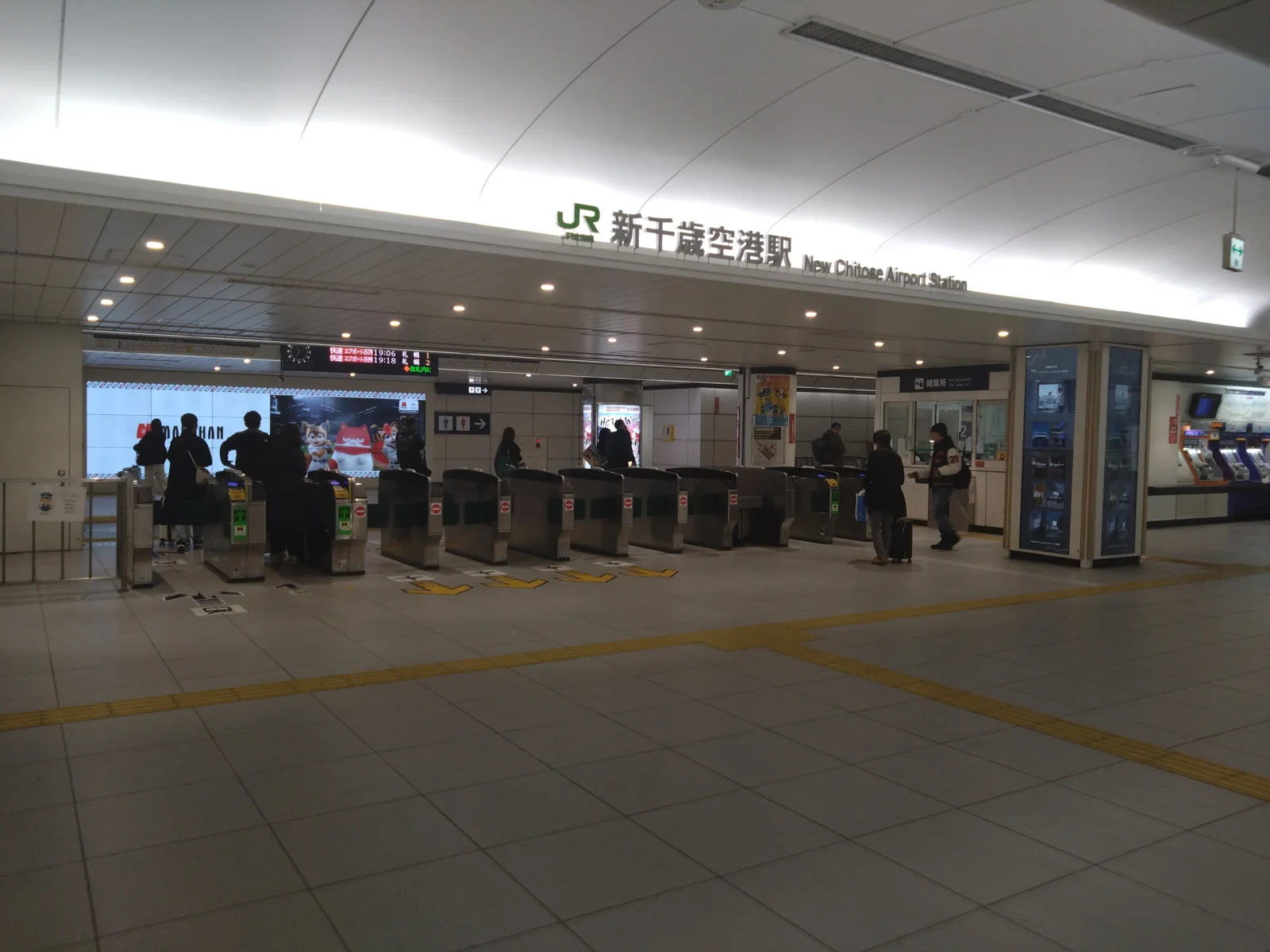
Within the broader Hokkaido transit puzzle, use our New Chitose Airport transfer guide for flights into Sapporo, or the airport section of our Asahikawa and Furano guide if flying directly into Asahikawa Airport. This page zeroes in on the 140-kilometer Sapporo-Asahikawa spine linking those hubs smoothly.
Zooming out to northern Hokkaido as a whole, Sapporo-to-Asahikawa is the master switch. Whether you connect onward to the Sounkyo Ice Waterfall Festival, Furano's ski runs, the Soya line to Japan's northernmost tip at Wakkanai, or the Okhotsk line to Abashiri's drift ice, mastering all-reserved seating and web early-bird fares makes the rest of your northern itinerary effortless.
If you still cannot decide on the morning of departure, let the weather outside your window break the tie. Crisp, sunny skies favor a window seat on the JR limited express watching sunlit snowfields across the Kamikawa Basin. Fierce winds whipping up ground blizzards sometimes leave the expressway bus less disrupted than exposed rail lines—seasoned northern Hokkaido travelers frequently make the final call after checking the sky.
Take 30 seconds before leaving to write three lines in your phone notes—your Sapporo departure, expected Asahikawa arrival, and onward connection—and your winter link between Sapporo and Asahikawa is locked in, leaving you free to enjoy the snow with solid backups in your pocket.
A few useful answers
Should I take the JR train or the highway bus from Sapporo to Asahikawa?
Take the JR limited express (as fast as 1 hr 25 min) if you are short on time or connecting directly to Asahiyama Zoo or Sounkyo buses. Choose the Kosoku Asahikawa-go highway bus (¥2,500 one way, ~2 hr 25 min in winter) to save money or travel in a group. For four or more one-way rides, a 4-ride bus ticket book lowers the cost further, while JR savings depend on Ekinet's Limited Express Tokudane 1 (¥2,440-¥4,340).
What changed with JR Hokkaido's all-reserved seating on March 14, 2026?
All JR Hokkaido limited express trains—including the Kamui and Lilac between Sapporo and Asahikawa—became 100% reserved seating, ending non-reserved express tickets. Walk-up riders without a reservation must buy a Zaseki Mishitei-ken (same price as a reserved seat; lets you take open ordinary seats until a ticketed rider arrives, or stand with no refund if full), sold only at station machines and Midori-no-Madoguchi counters.
How do I save on JR fares now that the S-kippu is gone?
JR's discounts shifted to two Ekinet-exclusive web fares: book Limited Express Tokudane 1 at least a day ahead (available 10:00 AM JST one month out until 11:50 PM JST the night before), or grab Tokuwari on the day of travel right up to departure (ticketless express surcharge paired with an IC card for the base fare). On the bus side, the 4-ride ticket book remains available.
What should I do now that the Asahiyama Zoo Kippu is discontinued?
Because JR retired its combined rail-bus-admission passes, buy your intercity transport (JR train or highway bus), the Asahikawa station-front city bus (¥670 one way), and zoo admission separately, and recalculate your total family budget before heading out.
Do winter snowstorms delay trains or buses?
The highway bus builds snow slowdowns into its December-March schedule at 2 hr 25 min. JR limited express trains do not add seasonal padding to their 1 hr 25 min schedule and delay or cancel based on real-time blizzard conditions. Leave extra buffer ahead of flights or key connections, and check both JR Hokkaido and bus operator alerts first thing in the morning.
Are there power outlets on the limited express trains?
Yes. Every Green Car seat on the Lilac includes a power outlet and cup holder, and window seats on both sides of ordinary Car 1 offer laptop outlets (select trains also offer u-Seat cabins). The highway bus lacks equivalent power outlets, making JR the better choice if you need to work or charge devices.
What if all reserved seats are sold out or I do not have a reservation?
First check adjacent departures on the same day for remaining reserved seats. If trains are sold out or your timing is fluid, buy a Zaseki Mishitei-ken at a station ticket machine or Midori-no-Madoguchi counter for the same price as a reserved-seat ticket, take any open ordinary reserved seat (yielding it if the seat holder boards), or ride standing with no fare difference refunded.
Official information and references
Sources used in this guide.
- JR Hokkaido | March 14 Timetable Revision Special Page (All-Reserved Seating & Seat-Unassigned Tickets)
- JR Hokkaido | Press Release (PDF): Asahikawa Limited Express All-Reserved Seating & Discount Ticket Updates (Includes ¥5,440 Standard Fare & ¥2,440-¥4,340 Tokudane)
- JR Hokkaido | Limited Express Lilac (789-0 Series) Train Guide
- JR Hokkaido Bus | Kosoku Asahikawa-go Timetable & Fares
- JR Hokkaido | Official Portal (Fares & Timetable Search)