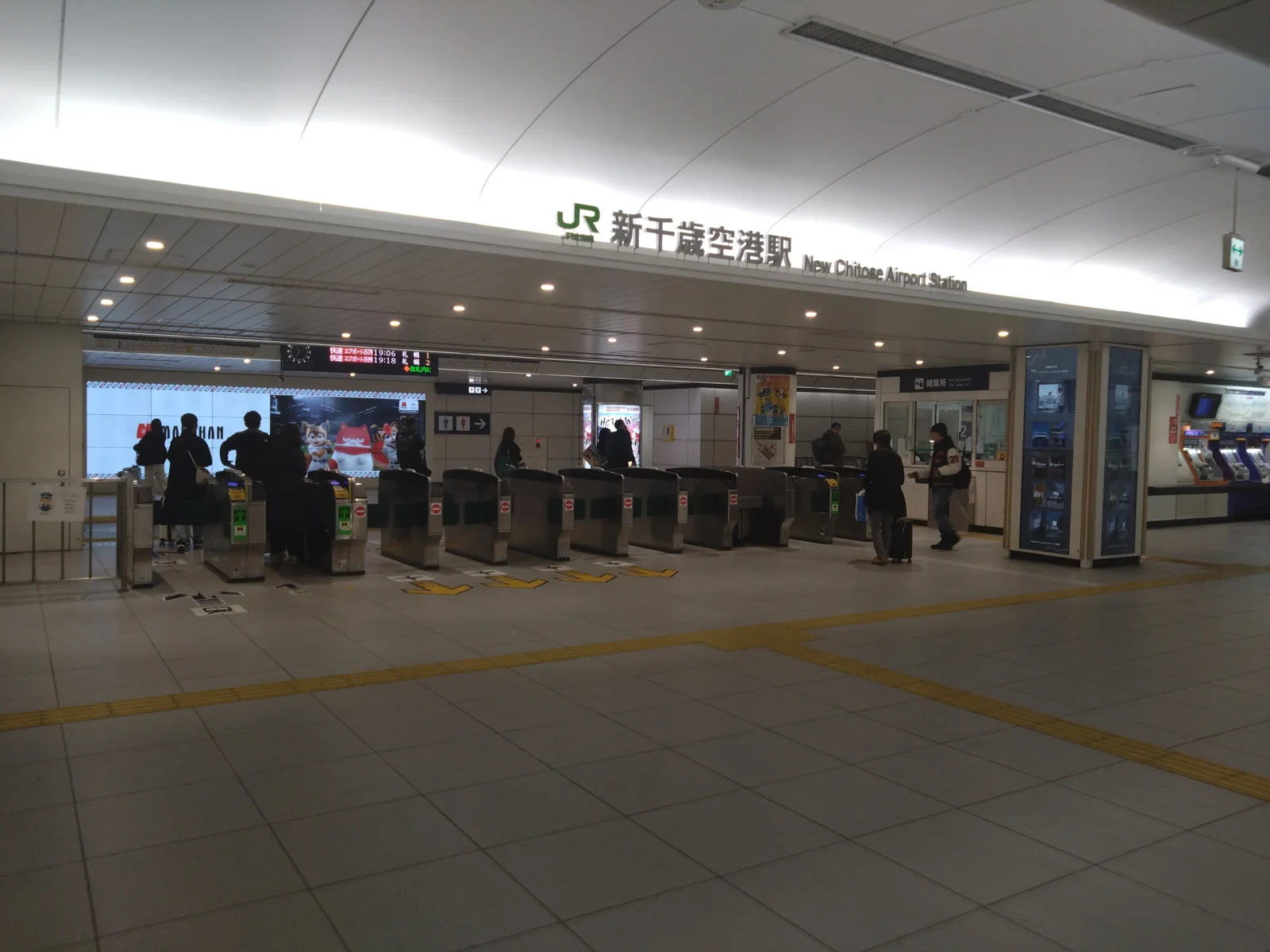
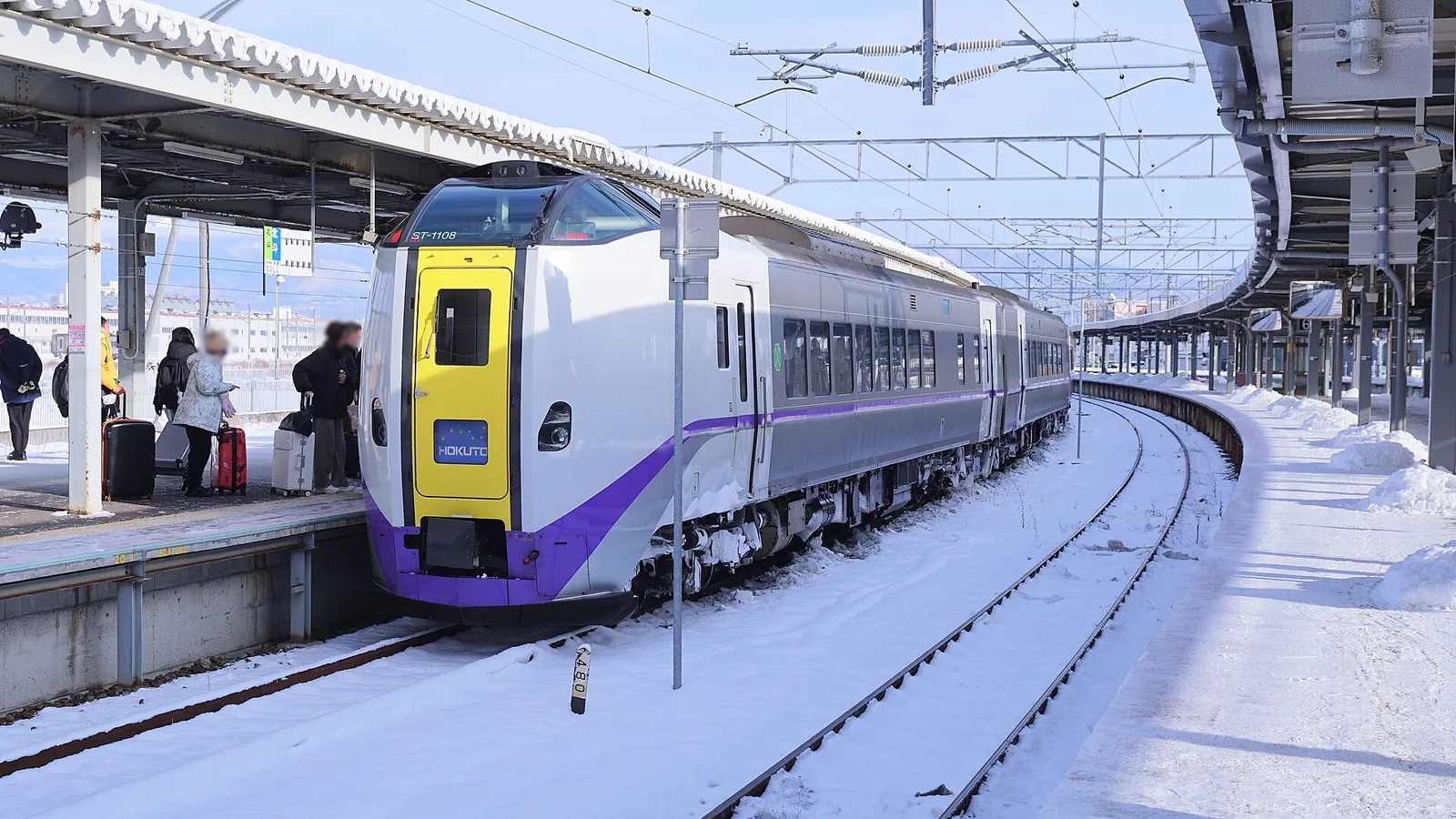
From 14 March 2026, all JR Hokkaido limited express trains become reserved-seat only, retiring unreserved seats and the S-Kippu pass. Compare the Kamui and Lilac expresses (from 1 hour 25 minutes, ¥5,440 full fare) with the Kosoku Asahikawa-go highway bus (¥2,500, 2 hours 25 minutes in winter) for fares, journey times, and booking.
- Region & Focus
- SapporoTransport and passes
- Reading Scope
- 16 min read · 8 chapters · 7 Q&As
- Official Verification
- 5 official sources checkedUpdated 20 November 2026
- Key Topics
- Rail travelBookingHokkaido
Chapter Route Map (tap any stop)
- The Two Main Routes: Journey Times and Fares Side by Side
- New All-Reserved Rules: Unallocated-Seat Tickets and Discontinued Passes
- Two New Discount Fares: Tokkyu Tokudane 1 and Tokuwari
- Highway Bus Details: Three Joint Operators and Boarding Points
- Station Layouts at Both Ends: Planning Your First Step After Arrival
- Choosing Seats on the Limited Express: u-Seat, Green Car, and the Multi-Purpose Room
- Winter Delays and Snowstorm Contingencies
- Onward Connections in Asahikawa: Station Transfers and New Zoo Ticket Rules
- Quick Q&A
Two main options link Sapporo and Asahikawa: JR Hokkaido's Limited Express Kamui and Lilac trains take as little as 1 hour 25 minutes city-to-city, while the Kosoku Asahikawa-go highway bus runs along the Do-o Expressway for a flat ¥2,500 and takes about 2 hours 25 minutes in winter. From 14 March 2026, every JR Hokkaido limited express train becomes reserved-seat only, retiring the familiar unreserved carriages and S-Kippu discount tickets and requiring a fresh approach to buying fares. This guide sets the rail and coach options side by side—covering fares, journey times, the latest online discount tickets, and snowstorm contingencies—so you can pick the right ride for your schedule and budget.
The Two Main Routes: Journey Times and Fares Side by Side
By rail, the core services are JR's Limited Express Kamui and Limited Express Lilac, taking as little as 1 hour 25 minutes between Sapporo and Asahikawa. According to JR Hokkaido's press release dated 19 November 2025, once the spring 2026 changes take effect, the undiscounted adult single fare (basic fare plus reserved-seat express surcharge) is ¥5,440. On the road, the Kosoku Asahikawa-go highway bus covers roughly 140 kilometres along the Do-o Expressway in about 2 hours 5 minutes from April to November, rising to around 2 hours 25 minutes during the December-to-March snow season, at a flat single fare of ¥2,500.
Put those figures side by side and the train beats the coach by 40 minutes to an hour, while the full-fare gap sits at ¥2,940. Choosing for a single journey is straightforward: if you arrive the same morning and need to catch the penguin walk at Asahiyama Zoo or make a tight connection onto a Sounkyo bus, the hour saved on JR is well worth paying for, and travellers prone to motion sickness will find the rails far steadier. Conversely, if you have bulky suitcases or want to keep costs down, boarding the bus outside Sapporo Station and stepping off outside Asahikawa Station avoids hauling bags up and down platforms—both comfortable and easy on the wallet. Anyone taking JR both ways should read the online discount ticket section below, while round-trip bus riders should look out for the four-ticket book.
There is no need to lock yourself into the same mode for both legs; splitting the trip—taking an early train out and a relaxed bus back—often works best. Hokkaido's winter weather changes fast, so keeping both the train and coach boarding points and last-departure times in mind leaves you far better placed during heavy-snow delays than sticking rigidly to one option.
Geographically, the Sapporo–Asahikawa railway spans roughly 136 kilometres north along the Hakodate and Soya Main Lines, calling at Iwamizawa, Bibai, Sunagawa, and Takikawa before entering the wide Kamikawa Basin; the highway bus runs almost entirely on the Do-o Expressway for 140 kilometres. Both corridors have frequent daytime departures, so from spring through autumn it is largely a trade-off between time and money, with weather delays and cancellations concentrated in deep winter from December to March.
One welcome perk of this corridor for independent travellers is that both Sapporo and Asahikawa are major hubs with clear signage, ample luggage lockers, and plenty of places to eat. Even if you miss a departure, you will not be stranded for two or three hours as on remote branch lines. Outside early-bird discount quotas and peak Snow Festival dates when advance seat reservations are essential, keeping plans flexible on ordinary weekdays and deciding based on that morning's snow conditions works well.
Looking at typical travel styles makes the choice clearer. Solo travellers on a tight schedule with room in the budget should take the JR limited express. Pairs or groups who would rather put nearly ¥6,000 saved on a return trip towards Genghis Khan mutton barbecue or Asahikawa ramen are better off on the highway bus. Anyone commuting several days in a row to ski resorts or making two visits to Asahiyama Zoo will get the best value from the four-ride bus ticket book. In summer the coach shaves 20 minutes off its winter schedule, though the train still holds nearly an hour's speed lead.
The stark difference in how you buy tickets comes down to JR Hokkaido's network-wide shift to all-reserved seating—announced in November 2025 and taking effect on 14 March 2026—while the three coach operators running the highway bus kept their existing system unchanged. As a result, the bus still lets you queue on the spot and tap an IC card or hand over a book ticket, whereas JR enters a full reservation era that reshapes how winter visitors plan connections.
Although train headways stay much the same between winter and summer, seat availability inside the carriages is a different story. Winter brings local commuters, skiers, Asahiyama Zoo penguin-walk crowds, and February Sapporo Snow Festival visitors all at once, so weekend and public-holiday trains regularly sell out ahead of time. On quiet off-season weekdays you can usually still buy a seat at the station on the day, but in peak periods be sure to book a few days ahead.
Stopping patterns also affect how restful the ride feels. JR expresses call at regional towns including Iwamizawa, Bibai, Sunagawa, and Takikawa, with local passengers coming and going along the aisle; once the highway bus joins the Do-o Expressway, it runs virtually non-stop with very few intermediate pickups. If you want to sleep undisturbed or focus on laptop work without constant movement around you, the bus offers fewer interruptions—while JR's town stops give you a clear sense of how close you are to the Kamikawa Basin.
| Item | JR Limited Express Kamui / Lilac | Kosoku Asahikawa-go Highway Bus |
|---|---|---|
| Fastest journey | Approx. 1 hr 25 min | Apr–Nov approx. 2 hr 5 min / Dec–Mar approx. 2 hr 25 min |
| Full adult single | ¥5,440 | ¥2,500 |
| Discount tickets | Tokkyu Tokudane 1: ¥2,440–¥4,340 | 4-ticket book (4-maitsuzuri kaisuken) |
| Seating system | All-reserved seats (from 14 March 2026) | No seat reservations (open seating) |
| Boarding points | JR Sapporo Station limited express platforms | Sapporo Ekimae Stop 2, Odori Stop 3, Asahikawa Ekimae Stop 7 |
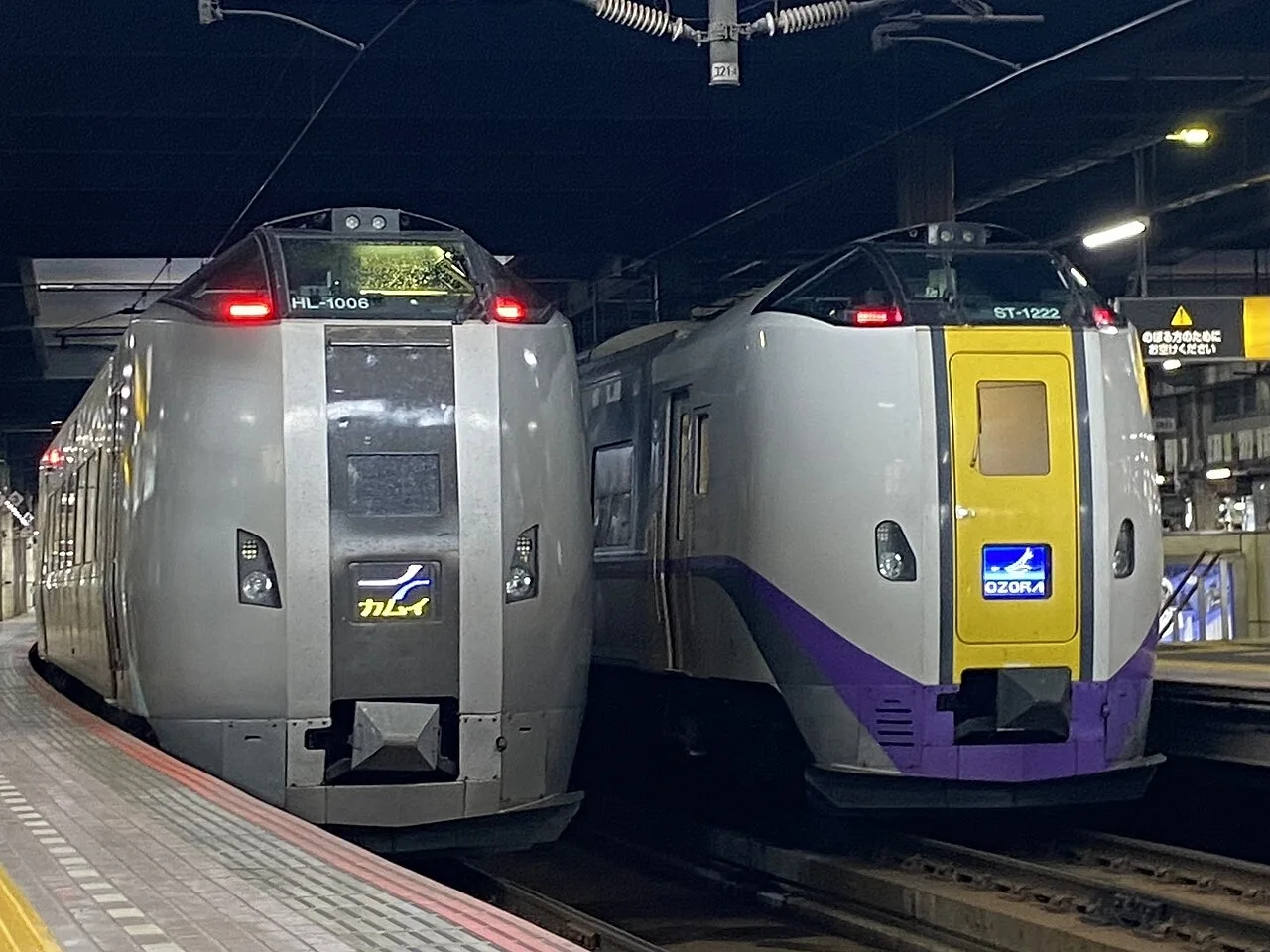
From 14 March 2026, all JR Hokkaido limited express trains become reserved-seat only, retiring unreserved seats and the S-Kippu pass. Compare the Kamui and Lilac expresses (from 1 hour 25 minutes, ¥5,440 full fare) with the Kosoku Asahikawa-go highway bus (¥2,500, 2 hours 25 minutes in winter) for fares, journey times, and booking.
New All-Reserved Rules: Unallocated-Seat Tickets and Discontinued Passes
Starting with the timetable revision on 14 March 2026, every JR Hokkaido limited express train operates with 100% reserved seating—including the Kamui and Lilac services between Sapporo and Asahikawa—bringing unreserved limited express tickets to an end. JR Hokkaido states that unreserved cars previously suffered from chronic crowding, long platform queues, and complaints that passengers had to stand by the doors early just to secure a seat; moving to all-reserved seating increases bookable capacity, eliminates platform queuing, and removes the need for conductors to check tickets seat by seat.
To accommodate passengers who turn up at the station without a prior reservation, JR has introduced an unallocated-seat ticket (Zaseki Mishiteiken). Valid only for the specified date and route without tying you to a specific train or seat number, it costs exactly the same as a standard reserved-seat express surcharge and lets you sit in any vacant seat in ordinary reserved carriages. However, if the passenger holding that reservation boards, you must give up the seat, and if the train is full you must stand with no fare refund. Crucially, this ticket cannot be bought online via Ekinet nor upgraded to a specific seat afterwards; it is sold exclusively at station reserved-seat ticket machines, operator-assisted machines, or Midori-no-Madoguchi ticket offices.
Alongside the overhaul, station-sold discount passes formerly favoured by independent travellers are being withdrawn in one sweep. The S-Kippu unreserved return ticket, Sapporo Kaitoku Kippu, Asahikawa–Nayoro 4-ticket book, and popular family bundles such as the Asahiyama Zoo Kippu and Asahiyama Zoo Access Kippu are all discontinued. Going forward, saving money on JR shifts entirely to the two online-only fares broken down in the next section.
Before relying on the unallocated-seat ticket, keep its purpose clear: it is not a budget alternative. You pay the full reserved-seat price without a guaranteed seat, risk standing the entire way on busy departures with no refund, and simply gain a fallback option when your schedule is too fluid to commit to a departure time. Regular visitors accustomed to grabbing an unreserved ticket on arrival and hopping straight aboard will need to break that habit from spring 2026.
Local commuters holding season passes are also adapting under the new system, using the Limited Express e-Pass subscription or Kayo Yell+ pass to reserve seats up to seven days before travel (via station machines and counters rather than Ekinet). While short-term visitors cannot buy these commuter products, daily riders snap up morning and evening peak seats well ahead of time, meaning peak-season trains fill up noticeably earlier than in past years.
The new rules leave just two short exception sections across Hokkaido where basic-fare passengers may sit in vacant ordinary reserved seats without an express reservation, as no local trains serve them: between Higashi-Muroran and Muroran on the Muroran Main Line (Limited Express Suzuran), and between Shin-Yubari and Shintoku on the Sekisho Line (Limited Express Ozora and Tokachi). Neither applies between Sapporo and Asahikawa, though travellers continuing towards Obihiro or Kushiro should keep them in mind.
From a traveller's perspective, the trade-offs of the 2026 overhaul are clear-cut. Anyone willing to book ahead gains certainty, removing the old gamble of fighting for an unreserved seat—book early online and your seat is locked in. Spontaneous travellers lose a bit of turn-up-and-go simplicity and must fall back on either the unallocated-seat ticket or same-day online fares. Knowing which camp you fall into keeps the new rules from disrupting your itinerary.
Do not assume only regular timetable services are affected: JR's announcement explicitly confirms that all seasonal extras and temporary limited express trains will also be 100% reserved. Winter ski specials and event trains fall under the same booking rules, and because seasonal formations are often shorter with fewer seats, booking early is essential if you want a specific extra departure.
If your route combines JR East and JR Hokkaido on a single paper through-ticket—such as riding the Hokkaido Shinkansen up from Tokyo and connecting onto a Hokkaido express—check in advance which booking channel can issue seat reservations for each leg, as Ekinet, ticket machines, and staffed counters handle inter-company tickets differently. Journeys wholly between Sapporo and Asahikawa stay within JR Hokkaido, keeping the rules far simpler.
Families or groups of six or more should also build in an extra step when booking. Under the all-reserved system, Ekinet caps the number of seats per online transaction, so reserving more than six seats together requires using the group booking procedure at a station ticket office. If you split the party into two separate online bookings, open the seat map during checkout to place both groups next to each other rather than ending up in different carriages.
Two New Discount Fares: Tokkyu Tokudane 1 and Tokuwari
Stepping into the S-Kippu's shoes as JR's main money-saver is the Ekinet online-exclusive Tokkyu Tokudane 1. This single bundle covers both the basic fare and the reserved-seat express surcharge between Sapporo and Asahikawa, priced dynamically between ¥2,440 and ¥4,340 depending on forecast demand. Booking opens at 10:00 JST one month before the travel date and closes at 23:50 JST the day before departure, with a limited seat allocation on each train. Once booked, you must collect a physical paper ticket from a station reserved-seat machine—anytime up to departure day—though queues at Sapporo Station machines grow long at busy hours, so do not leave collection until five minutes before your train.
The second newcomer is the Conventional-Line Ticketless Limited Express Ticket (Zairaisen Ticketless Tokkyuken, shortened to Tokuwari). This digitises only the reserved-seat express surcharge, while your basic fare is deducted automatically when you tap a Kitaca or Mobile Suica IC card at the ticket barriers, letting you travel completely paper-free. Also exclusive to Ekinet with capped seat numbers, its standout advantage is that you can buy it right up until departure time on the day of travel—making it your final money-saving safety net for last-minute train trips.
Placed side by side, the choice between the two fares is straightforward. If your plans are fixed at least a day ahead and you want to discount the entire ticket, pick Tokudane 1. If you are already at Sapporo Station on the day with an IC card in your pocket and decide to take the train, open your phone and grab Tokuwari. As for the Limited Express e-Pass subscription paired with commuter season tickets, short-term visitors are ineligible and only need to know it exists.
To unlock either online discount, the first hurdle is setting up an Ekinet account. International travellers can register and purchase online before leaving home, though after arriving in Japan you will still need to scan your collection code at a station reserved-seat machine for Tokudane 1. Getting familiar with the login and collection screens before you fly beats fumbling with your phone in Sapporo's winter chill. Remember too that Tokudane uses demand-based pricing: early bookings sit closer to the ¥2,440 floor, while busy peak trains climb towards full price at ¥5,440.
When buying Tokuwari on the day of travel, one tiny detail trips up plenty of visitors at the ticket barriers: Tokuwari only covers the express surcharge, while the basic fare comes straight off your IC card. Always check that your Kitaca or Suica holds enough credit for the full basic fare before tapping through. Likewise, once the limited Tokuwari quota on popular trains sells out, prices revert to standard rates, so check remaining availability before setting off.
If your trip straddles the March 2026 transition, note that older station-sold passes such as S-Kippu and R-Kippu stop being sold from 9 March 2026 onwards, whereas Tokudane and Tokuwari remain on sale year-round. Double-check whether your travel date falls before or after 14 March so you do not queue at a ticket office asking for a retired pass.
Collection and amendment rules also differ slightly. Tokudane 1 tickets can be printed at compatible reserved-seat machines across both JR East and JR Hokkaido anytime prior to travel, while Tokuwari links straight to your IC card with no paper needed. Refunds and changes follow Ekinet's terms; amending your train online before departure normally costs far less in fees than cancelling outright and rebooking, so glance over the conditions before paying.
The price spread inside Tokudane 1 easily rewards two minutes of comparison across departures. Quiet off-peak trains with lower forecast loads drop to the ¥2,440 floor, whereas sought-after peak services climb to ¥4,340—nearly a ¥2,000 single-journey swing on the exact same route. Dodging Friday evenings, Sunday afternoons, and Snow Festival rush hours in favour of mid-day weekday departures captures the deepest savings.
That price curve settles the age-old dilemma of whether to book ahead or decide on the day: the ¥2,440 rock-bottom fare only appears when you book in advance, leaving you with Tokuwari or the ¥5,440 full fare if you wait until arrival. Checking Ekinet two or three days out typically locks in a single rail fare between ¥2,500 and ¥4,500, narrowing the gap with the coach enough that you can pick purely on timing rather than budget.
Highway Bus Details: Three Joint Operators and Boarding Points
The Kosoku Asahikawa-go highway bus is operated jointly by JR Hokkaido Bus, Hokkaido Chuo Bus, and Dohoku Bus as a one-driver direct service with no motorway service-area stops along the way. Memorise three stop numbers: Stop 2 outside Sapporo Station, Stop 3 at the Chuo Bus Sapporo Terminal near Odori, and Stop 7 outside Asahikawa Station for arrival and return. Payment on board is notably flexible, accepting SAPICA and major nationwide transit IC cards, contactless bank cards, and cash—and you can even buy the four-ride ticket book (4-maitsuzuri kaisuken) directly from the driver.
Keeping the ticket book and return discounts intact is where the bus breaks decisively from JR's new policy. While JR swept away its station paper discounts, the bus's four-ticket book remains on sale on board, at Chuo Bus counters (in the Nihon Seimei Building and Sapporo Terminal), and at Dohoku Bus's Asahikawa Ekimae office. As soon as your party uses four single rides—such as two people making a return trip—buying one four-ticket book pushes the per-ride cost even lower.
Naturally, saving over ¥2,900 brings a different onboard experience compared with the train. The two-hour-plus journey has no rest stop and no seat reservations, and while the underfloor hold swallows large suitcases with ease, there are no reliable laptop power outlets at the seats. If you want to catch up on work or charge devices en route, JR's ordinary Car 1 window seats and every Green Car seat provide power sockets—a hardware difference worth noting.
For visitors who prefer not to carry pockets full of coins, paying the bus fare is remarkably straightforward. Besides tapping a Kitaca, Suica, or SAPICA card against the flat ¥2,500 fare, the onboard reader directly accepts contactless credit and debit cards (Visa, Mastercard, JCB, American Express, UnionPay, Diners Club, and Discover)—just tap on and tap off, or pick up a ticket book equally easily.
When choosing where to board in Sapporo, do not confuse Sapporo Ekimae with Sapporo Terminal—they are separate locations. If you are staying around JR Sapporo Station, Stop 2 outside the station is quickest; if your hotel sits near Odori Park or Tanukikoji, Stop 3 inside the Chuo Bus Sapporo Terminal is much closer on foot. All three operators share the same timetable and fares, so pick whichever stop suits your hotel.
On the ground, both ends are easy to navigate. Sapporo Ekimae Stop 2 stands just a short walk from JR Sapporo Station's South Exit—allow five unhurried minutes through snow—while Asahikawa Ekimae Stop 7 sits inside the station-front bus terminal, on a separate concourse level from the JR ticket gates but clearly signposted throughout. Because the three coach companies share stops, fares, and routing, simply board any coach displaying Asahikawa on the front destination board.
On an unreserved open-seating coach, your place in the queue dictates where you sit. Popular window seats and rear-row pairs go first, large luggage goes into the side hold loaded by the driver, and passports and valuables stay with you in the cabin. Because reclaiming suitcases at Asahikawa involves waiting by the luggage bay after disembarking, arriving at the stop 10 minutes early is smart insurance if you want a good seat or a brisk exit.
Station Layouts at Both Ends: Planning Your First Step After Arrival
Before leaving Sapporo, lock in which side of the station complex you are heading to. JR limited express trains depart from the JR Sapporo Station express platforms—with no onboard ticket checks under all-reserved rules, simply have your paper ticket or Tokuwari-linked IC card ready at the gates—whereas highway buses leave from Stop 2 outside the station via a separate entrance. Both routes offer snow-sheltered walkways, though families hauling multiple suitcases should agree on rail or coach before setting off rather than trudging back and forth between buildings in midwinter.
Arrival in Asahikawa is far simpler: JR Asahikawa Station and the station-front bus terminal (Stop 7) sit side by side in the same complex, allowing you to switch between modes without crossing a busy road. Local buses to Asahiyama Zoo and long-distance coaches towards Sounkyo and Biei depart directly from the station forecourt, supported by plentiful coin lockers and restaurants inside and around the station—leaving heavy bags in a locker before heading straight to the zoo is the classic routine, detailed further in our Asahikawa, Furano, and Biei guide.
It is also worth pencilling a missed-departure contingency into your phone notes. Daytime JR expresses run frequently enough that missing one adds a manageable wait, whereas highway bus intervals widen at certain hours and evening last departures differ between rail and road—which directly determines whether you have time for a bowl of Asahikawa ramen before heading back to Sapporo. Save screenshots of the last train and last bus times before leaving your hotel so you can adapt in seconds if snow slows you down.
Choosing Seats on the Limited Express: u-Seat, Green Car, and the Multi-Purpose Room
The two train types sharing this line have distinct layouts: the Lilac runs in six-car formations and the Kamui in five, combining for roughly 24 return departures a day at around 30-minute intervals during daytime hours. The Lilac features a spacious three-abreast Green Car with power outlets along the window walls, while ordinary Car 1 on both trains provides laptop sockets at window seats on either side; selected services also offer upgraded u-Seat reserved seating, shown on the day's formation board. Look out too for the 24 different northern-Hokkaido-themed cab wraps—whichever design pulls in is down to luck on the day.
Parents travelling with infants or anyone feeling unwell should remember the onboard multi-purpose room. This private compartment is intended for nursing or brief rest; it cannot be reserved ahead of time, so simply ask the conductor once aboard to unlock it rather than struggling in your seat. Dedicated luggage racks and wheelchair-accessible toilets are clearly marked on official formation diagrams, making it easy under all-reserved rules to pick seats right beside the facilities you need.
Boarding is noticeably smoother with every seat reserved. Once you book Tokudane 1 on Ekinet and print your ticket at a machine before travel day, you simply take your assigned seat without conductor interruptions; if you miss your booked train, you will need to switch to a vacant seat on a later departure or pick up an unallocated-seat ticket according to station rules.
Matching your seat choice to your plans makes the 85-minute run far more pleasant. Book the Green Car or ordinary Car 1 window seats if you need mains power; pick a right-hand window seat heading north towards Asahikawa for sweeping views across the snowy Kamikawa Basin and distant Tokachi mountain range; or avoid Car 4 if you prefer to stay clear of toilet and doorway foot traffic. With higher load factors under all-reserved seating, anyone with large suitcases aiming for the luggage zones at the carriage ends should reserve early.
Quietness and legroom also vary meaningfully by class. The Lilac's three-abreast Green Car gives solo and paired seats generous breathing room and is well worth the upgrade when travelling with older relatives; standard carriages feel warm and comfortable with handy Car 1 sockets for solo work, while the u-Seat—available only on select trains in small numbers—acts like a mini business class that sells out fast.
Stock up on food and drinks before boarding, as neither JR trains (which ended trolley and buffet service long ago) nor the non-stop two-hour-plus highway coach sell refreshments on board. Pick up an ekiben bento and bottled water in the Sapporo or Asahikawa station concourses beforehand; Hokkaido winter train heating runs remarkably warm and dry, so plain water satisfies far better than another hot coffee.
Keep a few practical limits in mind before counting on the multi-purpose room. While genuinely helpful for breastfeeding mothers, unwell passengers, or toddlers needing a quiet spell, it is not a fully equipped nursery and contains no bed, so bring your own changing mat and supplies. Because it cannot be booked online, mention it to the conductor as soon as they pass through your carriage.
Winter Delays and Snowstorm Contingencies
When Hokkaido snow sets in, the highway bus takes a straightforward approach: its official timetable automatically stretches the December–March estimate from 2 hours 5 minutes to 2 hours 25 minutes, baking a 20-minute winter slowdown right into the schedule. JR's 1 hour 25 minute timing carries no seasonal padding, so when blizzards, heavy snow, or wet snow freeze points and switches, delays or cancellations depend entirely on live day-of bulletins—making a quick morning check of JR Hokkaido service status essential in winter.
That makes it smart to place tight, unmissable connections on the lower-risk side of your day. If you are simply moving between hotels in Sapporo and Asahikawa, either rail or road works comfortably; if you are catching a flight at Asahikawa Airport or an infrequent bus up to Sounkyo Onsen, take an early JR express with generous buffer time and save the slower coach for the return leg or clear weather.
Refund and compensation rules also diverge if a blizzard halts services. Because the highway bus uses pay-on-boarding and ticket books, cancelled departures rarely leave you out of pocket on refund fees. On JR, official suspension notices trigger fee-free refunds, itinerary changes, or rail-replacement transport (furikae yuso), and both Tokudane 1 and standard reserved tickets follow JR's disruption policy—worth skimming before checkout for peace of mind.
Viewing the two modes through a winter-reliability lens helps calibrate expectations. JR is blisteringly fast in clear weather, yet feels jarring when heavy blowing snow forces sudden delays or halts; the highway bus looks an hour slower on paper, but its 2 hour 25 minute winter timing already builds in caution. If your evening involves an unmissable dinner booking or hotel shuttle, benchmarking your schedule against the coach's conservative 2 hour 25 minute baseline takes away a lot of stress.
Save a simple three-step storm checklist on your phone for snowy mornings. If JR announces cancellations, check straightaway whether the highway bus is running, and if both are halted, pivot decisively to indoor plans in Sapporo or Asahikawa. If the Do-o Expressway closes and halts coaches, switch immediately to a JR limited express. If both are running with delays, recalculate onward connections assuming at least 2 hours 25 minutes by bus so you can adjust calmly inside the station concourse.
Be sure to check both sides rather than relying on a single status feed. JR Hokkaido posts updates on its main website and route pages, whereas highway bus alerts come separately from Chuo Bus, Dohoku Bus, and JR Hokkaido Bus—often at slightly different times. On blizzard mornings, refresh both rail and coach updates and confirm services are moving before dragging suitcases out of your hotel.
One asymmetrical safeguard is worth knowing in advance: when JR suspends limited express trains, it occasionally arranges rail-replacement buses that honour JR tickets under station guidance. By contrast, if the expressway closes and the highway bus stops running, a bus ticket does not grant free transfer onto JR trains—a distinction that can tip the balance towards booking rail first when major snowstorms are forecast.
Onward Connections in Asahikawa: Station Transfers and New Zoo Ticket Rules
Stepping off the highway bus at Asahikawa Ekimae Stop 7 puts you virtually door-to-door with JR Asahikawa Station, sparing you a cold trek with luggage. Local buses bound for Asahiyama Zoo leave right from the station forecourt; check the current ¥670 single bus fare and seasonal winter and summer zoo hours in our Asahikawa, Furano, and Biei guide before boarding.
Families heading to the zoo face an important budget change from spring 2026. Alongside JR's all-reserved seating shift, the old all-in-one Asahiyama Zoo Kippu and Asahiyama Zoo Access Kippu—which bundled train, bus, and zoo admission—have been permanently withdrawn. Going forward, you buy your rail or highway bus fare, the station-front local bus, and zoo entry separately, so re-tally total family costs against our Asahikawa guide before setting off.
If Asahikawa is just your staging post for Sounkyo, Biei, or Furano, seasonal trains and local services on the JR Furano Line are covered in the same regional guide. Moreover, the all-reserved rules, unallocated-seat tickets, and Tokudane online fares explained here apply equally if you continue north to Wakkanai on the Limited Express Soya or east to Abashiri on the Limited Express Okhotsk.
Day-trippers heading up to see the penguins or hit the slopes before returning to Sapporo at night need to watch one final constraint: the last departure home. Both JR limited express and highway bus final services shift slightly under winter timetables, so screenshot both last-departure times the night before—by late afternoon one glance tells you whether there is time for Asahikawa ramen or if you should head straight for the platform.
Zooming out to the wider Hokkaido network, check our New Chitose Airport transfers guide for getting into town on arrival, or the airport-shuttle section of our Asahikawa and Furano guide if you are flying straight into Asahikawa Airport. With this 140-kilometre Sapporo–Asahikawa spine mapped out, every leg locks smoothly together.
Across northern Hokkaido itineraries, Sapporo–Asahikawa is the master switch. Whether you are branching off to the Sounkyo Ice Waterfall Festival and Furano ski slopes, riding the Soya straight up to Japan's northernmost tip at Wakkanai, or catching the Okhotsk towards Abashiri's drift ice, mastering the all-reserved system and early-bird online fares makes every subsequent intercity hop far smoother.
If you are still undecided on the morning of travel, let the view outside your window make the call. On crisp, clear mornings, sitting by a JR window watching the endless snowfields of the Kamikawa Basin glide past is a treat in itself; when fierce winds whip up ground blizzards, coaches on the Do-o Expressway sometimes cope better than exposed rail tracks, and seasoned northern Hokkaido travellers often make their final pick based on the morning sky.
Take 30 seconds before setting out to jot three lines side by side in your phone: your Sapporo departure, your expected arrival in Asahikawa, and your onward connection there. With those locked in alongside a backup option, the winter corridor between Sapporo and Asahikawa is completely covered—leaving you free to enjoy the snow.
A few useful answers
Should I take the JR train or highway bus from Sapporo to Asahikawa?
Take the JR limited express (as fast as 1 hour 25 minutes) if you are short on time or catching immediate buses to Asahiyama Zoo or Sounkyo. Choose the Kosoku Asahikawa-go highway bus (¥2,500 single, about 2 hours 25 minutes in winter) to save money, especially in pairs or groups. Four or more rides favour the bus's four-ticket book, while JR discounts rely on Ekinet's Tokkyu Tokudane 1 (¥2,440–¥4,340).
What changed with JR Hokkaido's all-reserved seating on 14 March 2026?
All JR Hokkaido limited express trains—including the Kamui and Lilac between Sapporo and Asahikawa—switched exclusively to reserved seating, ending unreserved limited express tickets. Walk-up passengers without a reservation must buy an unallocated-seat ticket (Zaseki Mishiteiken) from a station machine or Midori-no-Madoguchi ticket office at the same price as a reserved seat; you may take any empty ordinary reserved seat, must yield it if a reservation holder boards, and receive no refund if forced to stand.
How do I save money on JR now that the S-Kippu is discontinued?
Savings on JR move to two Ekinet online-only fares: book Tokkyu Tokudane 1 at least a day in advance (on sale from 10:00 JST one month prior until 23:50 JST the day before travel), or grab Tokuwari on the day of travel right up until departure (a ticketless express surcharge paired with an IC card for the basic fare). On the highway bus, the four-ticket book remains on sale.
What should I do now that the Asahiyama Zoo Kippu pass is retired?
With JR's bundled rail-bus-admission passes discontinued, buy your transport ticket (JR train or highway bus), the local bus from outside Asahikawa Station (¥670 single), and Asahiyama Zoo admission separately. Families should recalculate total costs item by item before travel.
Do winter snowstorms delay trains and buses?
The highway bus already builds winter slowdowns into its 2 hour 25 minute December–March timetable. JR limited express trains carry no seasonal buffer, so heavy snow or frozen points can trigger delays or suspensions announced on the day. If you have a flight or critical connection afterwards, leave generous slack and check both JR Hokkaido and bus operator alerts first thing in the morning.
Are there power sockets on the limited express trains?
Yes. Every seat in the Lilac's Green Car has a power socket and drinks holder, and window seats on both sides of ordinary Car 1 also feature laptop outlets (select services add u-Seat carriages too). The highway bus has no seat power outlets, making JR the better pick if you need to work or charge devices.
What if all reserved seats are sold out?
First check nearby departures on the same day for remaining reserved seats. If trains are full or your schedule is uncertain, purchase an unallocated-seat ticket from a station ticket machine or Midori-no-Madoguchi counter for the same price as a standard reserved seat, sit in any vacant ordinary reserved seat, give it up if the ticketed passenger arrives, and stand without a refund if the train is completely full.
Official information and references
Sources used in this guide.
- JR Hokkaido — 14 March Timetable Revision Special Page (All-Reserved Seating & Unallocated-Seat Tickets)
- JR Hokkaido — Asahikawa Limited Express All-Reserved Seating & Discount Ticket Update Press Release PDF (¥5,440 & Tokudane ¥2,440–¥4,340)
- JR Hokkaido — Limited Express Lilac (789-0 Series) Train Guide
- JR Hokkaido Bus — Kosoku Asahikawa-go Timetable & Fares
- JR Hokkaido — Official Portal (Fares & Timetable Search)