When does a private car in Osaka pay off? Compare published 8-hour rates, vehicle capacities, and surcharges, verify legal green plates, and plan Nara-Uji, Wakayama, and KIX airport transfers.
- Region & Focus
- KansaiTransportation and passes
- Reading Scope
- 22 min read · 12 chapters · 5 Q&As
- Official Verification
- 30 official sources checkedUpdated November 22, 2026
- Key Topics
- BookingItinerariesAirport transfers
Chapter Route Map (tap any stop)
- Which Osaka Itineraries Actually Justify a Full-Day Car
- Where Cars Drop Off and Pick Up at Osaka Castle
- Spotting Legal Green Plates and Verifying the Carrier Before Paying
- Comparing 8-Hour Charter Rates Apples to Apples
- Check the Back Row and Cargo Space Before Picking a Vehicle
- Specify Child Seats and Wheelchair Needs When Booking
- Quotes, Payment Terms, and Day-Of Route Changes
- How to Pace a Nara and Uji Day Trip
- Save Rural Kyoto for Another Day, and Check Yoshino Access Rules Early
- Planning Wakayama City in a Day vs. Multi-Day Shirahama and Kumano
- Build Meals, Walking, and Pickups Into the Clock
- Price Kansai Airport Transfers Separately
- Quick Q&A
The smartest way to use a private car in Osaka is to stitch together multiple hard-to-reach stops in a single day—say, seeing the Great Buddha in Nara in the morning and sipping tea in Uji in the afternoon while traveling with toddlers or seniors who struggle with long walks. If your day centers on Osaka Castle, Namba, and Umeda, trains or occasional point-to-point taxis usually make far more sense. Published 8-hour rates from Osaka operators range from ¥57,950 to ¥74,500 depending on vehicle class and service model. Send the exact same route, schedule, and luggage list when requesting quotes so you can compare base fares alongside tolls, waiting time, and overtime charges.
Which Osaka Itineraries Actually Justify a Full-Day Car
Pin every stop on a map and trace the transit route all the way to the entrance. Taking the Kintetsu train from Namba to Nara works cleanly if your group only plans to explore Nara Park—buy round-trip tickets and cover the rest on foot or via a short local ride. A full-day car only eliminates exhausting transfers when you also add Uji in the afternoon, need to drop two older relatives back at the same Osaka hotel, and are hauling a stroller. Put the hotel-to-hotel door-to-door timeline of both options side by side; that tells you far more than comparing raw driving time against train duration.
A group of four can still breeze through on trains, while a party of two might genuinely benefit from a car. The tipping point comes down to how much gear you carry onto each ride, how far you have to walk between platforms, and how long you wait if you miss a connection. Factor in the hidden friction of local buses too: whether everyone gets a seat at the stop, whether strollers must be folded, and how far you still have to walk in the rain. If only one leg feels awkward, price a single ride-hail or taxi for that segment before committing your budget to an all-day charter.
Travelers with a fixed checklist should also price group day-tour buses. If getting from your hotel to the meeting point is straightforward and the bus stops where you want to go, solo travelers and couples can put the savings toward better meals. When people in your group move at different paces—say, one person needs scheduled rest breaks while others want extra walking time—check whether the group can split up and where the car can loop back for pickup. Considering a rental car instead? Tally the rental rate, insurance coverage, fuel, expressway tolls, and parking fees, and be honest about who wants to drive back into Osaka after a full day out.
It is easy to overestimate what a car buys you inside the city. Osaka Castle, Dotonbori, and Umeda connect seamlessly by rail, and you will spend far more time browsing shops and streets than sitting in traffic. Save cabs for getting back to the hotel after heavy shopping so you stay free to linger wherever you like. If this is your first time mapping out the city, check how to group Osaka neighborhoods across three days to cluster nearby sights before deciding if you need a car at all.
When does a private car in Osaka pay off? Compare published 8-hour rates, vehicle capacities, and surcharges, verify legal green plates, and plan Nara-Uji, Wakayama, and KIX airport transfers.
Where Cars Drop Off and Pick Up at Osaka Castle
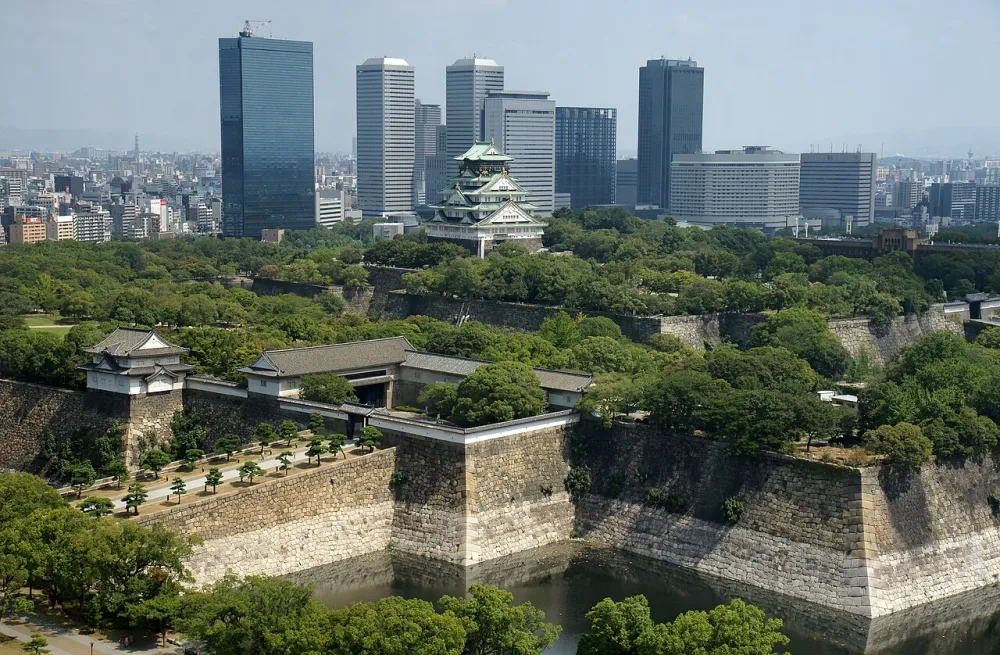
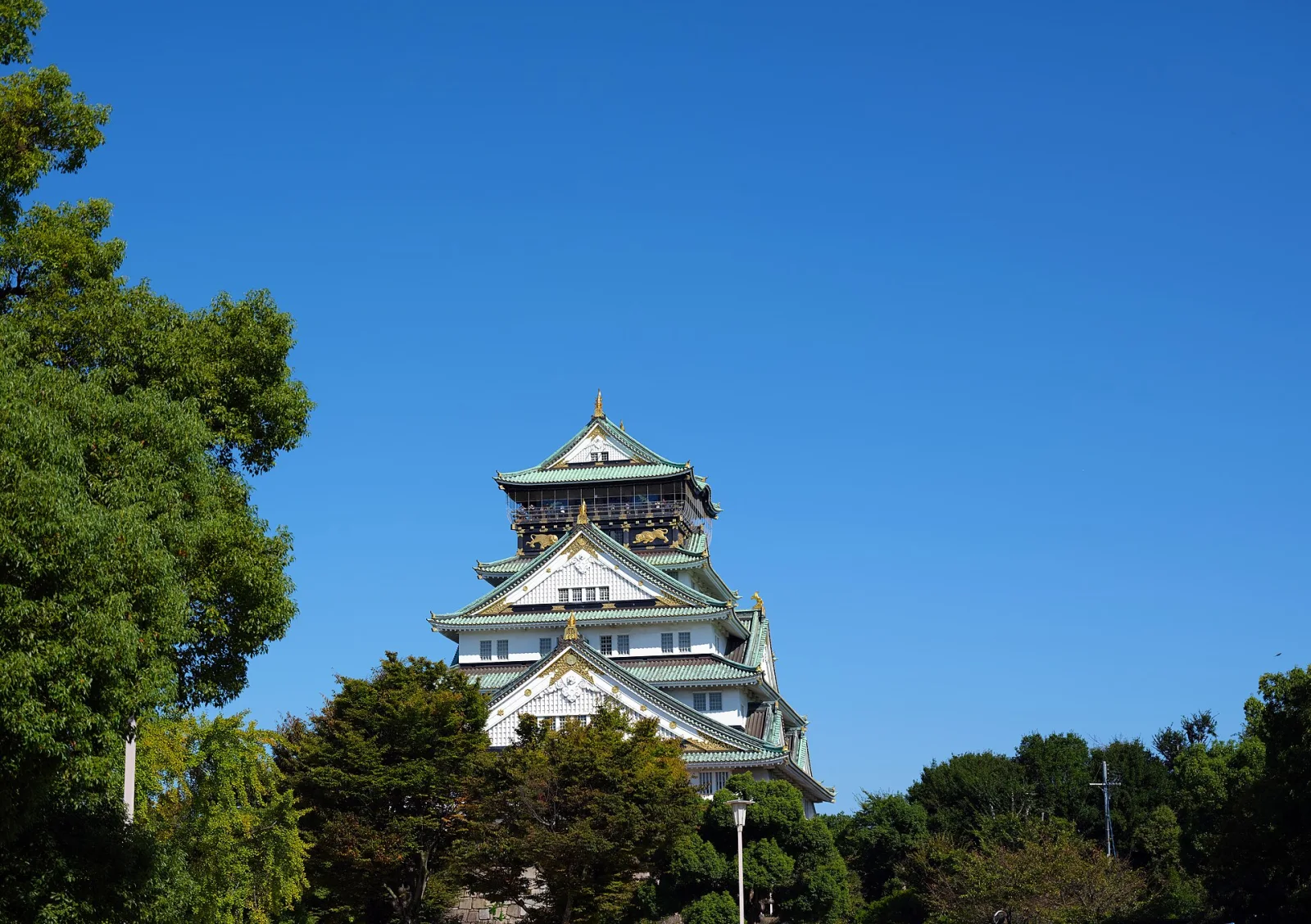
For Osaka Castle keep, put "Osaka Castle Park Otemon Gate Taxi Stand" on your itinerary instead of dropping a pin directly on the keep. Private vehicles are generally barred from entering the park except for emergency access, so park authorities direct taxi and hire-car passengers to use the Otemon Gate drop-off and pick-up zone. From Otemon Gate, you still walk across the grounds to reach the main tower. Travelers who struggle with stairs can follow the gentler sloped paths from here—just build in extra time for the incline and rest stops. Visitors with mobility needs can ask staff at the keep entrance for elevator access.
Otemon Gate also has a tour-bus bay, which the park designates strictly for drop-offs. If you book a larger van or minibus, have the operator confirm the exact pickup spot for your vehicle size rather than assuming it shares the taxi zone. Cross-check your itinerary pin against the official park map so everyone knows which direction to walk after stepping out and exactly where to meet later. If your group splits up inside the park, agree to exit on the same side so nobody gets stuck trekking all the way back from the east side to Otemon Gate.
If Osaka Castle is your only stop in that part of town, riding the Osaka Metro to Tanimachi 4-chome Station and entering through Otemon Gate is straightforward. Walkers who do not mind extra distance can enter from JR Morinomiya or Osakajokoen Station, depending on which exit points toward your next neighborhood. If family members wear out on the way back, you can easily hail a taxi at Otemon Gate. Pair the official park map with our Osaka Castle Park and Keep guide to decide upfront whether you want to go inside the tower or stick to strolling and photos around the grounds.
Spotting Legal Green Plates and Verifying the Carrier Before Paying
Japan's Ministry of Land, Infrastructure, Transport and Tourism (MLIT) classifies carrying paying passengers without proper registration or licensing under the Road Transportation Act as illegal "shirotaku" (white-plate taxis). Licensed sightseeing taxis and pre-booked chauffeur vehicles (known locally as hire cars) display green license plates with white lettering. Hire cars operate strictly by advance reservation through an authorized dispatch office. Even with a green plate, drivers soliciting walk-up rides in airport terminals are breaking operating rules—if you need an unbooked ride upon landing, walk directly to the official taxi stand.
Before paying, ask the seller which Japanese transport company will actually dispatch the vehicle. Your confirmation or customer support should provide the carrier's official Japanese company name, dispatch office or phone number, and licensed passenger-carrier details. When booking through an online travel agency or marketplace, the billing name on the checkout page is often just the payment intermediary; verify the actual operating company on your voucher or support email. Once the driver sends pickup details, match the company name, plate number, and meeting spot against your booking. If a last-minute vehicle swap happens, get the updated plate number through your original booking channel before boarding.
Osaka Prefecture also runs an authorized Japanese-style rideshare program where licensed taxi companies dispatch privately owned vehicles under strict operating rules. If you see a white plate, double-check what kind of service you actually booked. Should a white-plate private car show up when your voucher specifies a licensed sightseeing vehicle, contact your booking platform immediately to dispatch the right car. If anyone at the curb asks you to cancel your booking and pay the driver in cash instead, verify the change via your original support hotline first and keep all original booking and payment records.
Comparing 8-Hour Charter Rates Apples to Apples
As of November 22, 2026, Osaka Limo Transfer lists a reference rate of ¥57,950 (tax included) for an 8-hour round-trip sightseeing charter starting and ending in central Osaka, excluding expressway tolls and parking. Osaka MK lists its Hiace 8-hour timed charter at ¥74,500 (tax included), with overtime billed at ¥3,500 per 30-minute block. Nihon Kotsu Kansai also publishes a sightseeing taxi example starting at ¥6,900 for the first hour in a standard sedan, metered from the time the car leaves its depot, with parking, road tolls, meals, and attraction fees billed separately. Use these three structures to understand how pricing differs—then request fresh quotes from each operator using your exact pickup address, drop-off point, and travel window for your specific Nara-Uji date.
Start by pinning down what starts and stops the clock. Your group might think of 8:30 AM hotel pickup to 4:30 PM restaurant drop-off as an 8-hour day, but if the operator starts the meter from garage dispatch or charges deadhead return fees, ask them to state the exact billable hours for those two timestamps. Long lunches, shopping breaks, or museum visits while the driver waits on standby still count toward chartered hours. Any "8-hour" product page should translate cleanly into where your trip finishes and the latest minute you can step out without triggering overtime.
You can still compare a flat-rate full-vehicle quote against a time-and-distance quote. Ask both providers to break out the tax-included base fare, any mileage cap, overtime increments, how tolls and parking are settled, plus surcharges for larger vehicles, child seats, or language-capable drivers. Some stops assign different parking lots by vehicle size, so if you upgrade from a sedan to a van, verify whether estimated parking fees go up too. If payment is split into two installments, get the deposit amount, balance due date, and accepted currency or on-site payment methods in writing.
Running the numbers with a delay shows how quickly costs shift. Using Osaka MK's published Hiace rate, slipping past 8 hours into the first 30-minute overtime bracket raises the fare from ¥74,500 to ¥78,000 before tolls and parking. Split across six travelers, that is ¥13,000 per person for the vehicle; across eight, it is ¥9,750 per person—though adding people means recalculating luggage space too. If your budget sits right at the ceiling, designate the final stop as optional when requesting your quote and ask the driver to give you a heads-up before crossing into any overtime bracket.
Keep short transfers separate from full-day charters when running comparisons. If easy trains cover your outbound and return legs and you only need a car between a park and a temple, compare two point-to-point rides against a short hourly hire. If you plan to finish outside Osaka and take the train back, give the final city and station upfront so operators can factor in service boundaries and return deadhead rules. Hotel-switch days work well for one-way touring, though if you end in a different city, build time into the schedule for dropping bags at the new hotel.
Check the Back Row and Cargo Space Before Picking a Vehicle
Give operators the exact headcount of adults and children, the number and approximate sizes of all suitcases, plus any folded strollers, walkers, or wheelchairs. If you have four passengers and four checked bags, spell out that exact combination. Osaka MK's published guide for the Alphard HV recommends four passengers and two suitcases—and similarly priced tiers often dispatch from a shared pool (for instance, grouping the Alphard HV and GranAce together without guaranteeing a specific model). If four large bags are non-negotiable, ask which vehicle models actually fit them before booking. For tiers where vehicle assignment depends on luggage volume on the day, get the minimum guaranteed cargo capacity in writing.
Two or three travelers with light bags can start with a sedan or compact MPV. When traveling with older adults, sliding side doors help in tight curbsides, though you should still check step-in height, grab-handle placement, and how much twisting is needed to get seated. If you need child safety seats, ask which row they install into and whether an adult can still sit comfortably beside them. Families using two car seats should specify who needs to sit next to the kids so the dispatcher can map out the seating plan accurately.
Groups of six to eight should request quotes for full-size vans like a Toyota Hiace. Once luggage spills onto passenger seats or headcount exceeds real capacity, compare upgrading to a larger vehicle against booking two separate cars. In Nara or mountain areas where vehicles may be directed to different parking lots, have both cars agree on one shared meeting point. When choosing an oversized vehicle, ask the driver to check whether any stops enforce height limits, length restrictions, or separate tour-bus zones. For families with mixed stamina, two vehicles also let half the group head back early for a nap while others linger.
Specify Child Seats and Wheelchair Needs When Booking
In Japan, private passenger vehicles are generally required to use child safety seats for children under age six. Under Article 26-3-2 of the Road Traffic Act Enforcement Order, licensed commercial passenger operators—including taxis and pre-booked hire cars—are exempt from that legal requirement. On long highway drives, however, you should still book seats matched to each child's height and weight. Write the child's age, weight, and required seat type and count directly into the order. Specify rear-facing infant seats explicitly, and if you plan to bring your own seat, confirm anchor compatibility (such as ISOFIX) beforehand so you do not discover it will not fit at pickup. For reference, Osaka MK lists child seat rentals starting from ¥3,300 per day, so include rental fees when comparing quotes.
If a wheelchair user can transfer into a regular car seat, send the folded chair's length, width, height, and weight so the operator can check whether it fits alongside your luggage. If the passenger must remain seated in the wheelchair throughout the ride, request an accessible vehicle equipped with a ramp or lift and proper tie-downs, and provide both the seated height and the combined weight of the passenger plus any power wheelchair. Make sure there is still room inside for a companion to ride alongside them. On multi-stop routes, share every pickup point in advance so the driver can plan curb space for safe loading.
Having the right car only solves the driving portion. Before locking in your route, cross-check each attraction's official accessibility map for ramps, stairs, and accessible entrances. At Todai-ji in Nara, you can walk from the taxi drop-off on the west side of the Great Buddha Hall and enter via the ramp on the front left side of the hall. Nigatsu-do's upper terrace still requires climbing stairs; if energy is tight, stick to the lower plaza and keep the Great Buddha Hall as your main visit. On rainy days, move any pickup spots that require standing around to covered, easily recognizable areas.
Quotes, Payment Terms, and Day-Of Route Changes
You can handle the entire quote request in one clear message: travel date, start and end addresses, passenger and luggage counts, target stops, total hours, and any pre-booked tickets or dining reservations. Paste each hotel's official Japanese name and a map pin—same-brand hotels in Osaka often share nearly identical English names, so never rely on abbreviations alone. Add specific gates for major sights, such as the west side of Todai-ji's Great Buddha Hall or the Omote or South Gate at Byodo-in. If you are checking out on the charter morning, allow time to settle bills and bring bags down before the driver arrives.
Hotel pickups come down to two questions: where the driver can legally stop and where you can easily spot the car. If your hotel sits on a narrow alley, pick a nearby legal curb or intersection and ask the operator for a reference photo or unmistakable storefront sign. Hunting for the front entrance once the driver arrives wastes more time than gathering the whole group in the lobby five minutes early. Share the license plate, meeting spot, and driver's contact info with everyone in your party, and pick one coordinator so half the group does not wander off with the driver while the rest wait somewhere else.
Break down what kind of language support you actually need. Are you looking for customer service in your language before the trip, a driver who can understand route adjustments on the spot, or someone to escort you inside sights and give guided commentary? Put that distinction in writing. When requesting a driver who speaks a specific language, ask what backup support is provided if an illness or schedule change forces a driver swap. If you only need basic timekeeping in the car, handing the driver a printed sheet with Japanese place names and a simple schedule usually works fine. Mark "droppable stops" on that same sheet, and send an updated map pin by message before moving a pickup spot on the day.
Read the cancellation and change policy carefully before paying, paying close attention to whether deadlines run on Japan Standard Time (JST) or your home time zone, what percentage is forfeited after the free window, and whether changing dates triggers repricing. For typhoons, road closures, attraction shutdowns, or flight cancellations, ask who officially declares the suspension and how refunds differ between voluntary customer cancellations and operator non-dispatch. If part of a mountain route can swap to flatland sights, agree beforehand on whether total hours or route pricing changes. When settling tolls, parking, or overtime directly on the day, check each line against your confirmation and keep the itemized receipt.
How to Pace a Nara and Uji Day Trip
To cover both cities smoothly, ask for quotes structured as "depart Osaka hotel, Todai-ji Great Buddha Hall in the morning, Uji in the afternoon, return to Osaka in the evening." Keep Nara focused on the Great Buddha Hall and adjacent Nara Park, and pick a lunch spot in that same zone. Head straight to Uji after lunch and limit the afternoon to Byodo-in, the Uji Riverbank, and Omotesando street. Distances between the Great Buddha Hall, the west-side drop-off, and deeper park trails vary dramatically, so draw your boundary around what the slowest walker in your group can handle. Nara Prefecture notes heavy traffic and full parking around Nara Park on spring and autumn weekends—if Todai-ji ends up being your only Nara stop, taking the train to Kintetsu-Nara Station and using a short cab or walking can be far more predictable.
Whether to flip the route depends on entering the Phoenix Hall. While Byodo-in's garden and the Hoshokan Museum operate under standard admission hours, entering the Phoenix Hall interior requires picking up a same-day timed ticket inside the garden, issued starting at 9:10 AM in batches of 35 visitors until slots run out. If stepping inside the hall is a must-do, put Uji first, grab your time slot right on arrival, and tour the garden while waiting. If admiring the Phoenix Hall across the pond and visiting the museum satisfies your group, Nara first works fine. Byodo-in has no dedicated parking lot; drivers typically use private Uji Parking right outside the South Gate. Keep your gate, Omotesando walk, and lunch spot in one compact walking loop.
Heading straight to a sit-down lunch in Uji before walking back to grab Phoenix Hall tickets sounds convenient, until a restaurant queue eats both halves of your afternoon. Knock out the time-sensitive entry first, then leave tea snacks flexible enough to switch to takeout if needed. If half your group prioritizes a tea room while the other half wants to tour the Phoenix Hall interior, split up outside Byodo-in and set a clear gate for pickup. Wheelchairs can access the Hoshokan Museum and most of the garden, though the Phoenix Hall interior, rear grounds, and Saisho-in have steps and elevation changes. If gravel paths get tough to push across, gravel-friendly wheelchairs are available to borrow on-site at the Omote Gate and South Gate ticket counters.
End the afternoon with a short stroll along the Uji River or head straight back to Osaka. Want to squeeze Fushimi Inari into the same day? Decide upfront which stop you are willing to cut short. Both Nara and Uji involve substantial walking; adding a third major stop piles on extra ticketing, parking, and regrouping, which almost always eats into the rest breaks meant for kids and older travelers. Browse our Nara walking and lodging guide alongside our Uji Byodo-in, riverside, and tea shop guide to pick the sections worth keeping.
Save Rural Kyoto for Another Day, and Check Yoshino Access Rules Early
If Ohara in northern Kyoto is on your wish list, treat it as a half-day centerpiece. A car from Osaka skips the multi-transfer commute into Ohara and can drop you back in central Kyoto or return to Osaka afterward. Sanzen-in Temple has no dedicated parking; visitors are directed to private lots near the Ohara bus stop, followed by roughly a 10-minute walk up the temple approach. Wheelchairs can manage the main grounds paths, though the Shinden and Kyakuden halls have stairs. If Sanzen-in is your sole stop, taking the Kyoto Subway to Kokusaikaikan Station and transferring to a bus is an easy alternative. Trying to stack Fushimi or Arashiyama on the same day? Check how to split Kyoto by neighborhood and early-morning timing before overloading the route.
Mount Yoshino restricts vehicle access during peak cherry blossom and autumn foliage crowds. For spring 2026, Yoshino Town issued cherry blossom traffic controls and adjusted shuttle dates based on actual bloom and weather; for autumn 2026, official notices covered October 24 through November 30, authorizing police to activate traffic restrictions during congestion that block vehicles from proceeding past Yoshinoyama Tourist Parking toward Katte-jinja Shrine. When planning a spring 2027 cherry blossom trip, check Yoshino Town's seasonal traffic map first to confirm how far a car can actually drive before deciding whether to charter from Osaka. If Yoshino is your main goal during peak season, taking the Kintetsu train to Yoshino Station and walking up Nanamagari-zaka or riding seasonal shuttles avoids hunting for mountain parking altogether.
In autumn and winter, heavy rain, snow, or mountain road closures can derail hill routes fast—the smartest backup plans stay close to your main highway and allow a clean drop-off back in the city. Check NEXCO West's real-time expressway traffic portal before setting out, and have your operator confirm local road closures on mountain routes. If a detour forces a massive loop, drop the mountain stop outright and pivot to an indoor sight near a train station so switching back to rail stays effortless.
Planning Wakayama City in a Day vs. Multi-Day Shirahama and Kumano
For a single-day charter from Osaka, Wakayama Castle and Kimiidera Temple easily fill two complete stops. Head to Wakayama Castle in the morning while energy is fresh to see if the climb to the keep feels doable, then continue to Kimiidera in the afternoon. Wakayama City offers climbing assistance for visitors with mobility challenges—check the city's castle accessibility page ahead of time if needed, and keep a grounds-only stroll as a backup. Kimiidera climbs 228 stone steps from its Romon Gate, though an on-site cable car lets visitors skip the long staircase. Since both landmarks work smoothly by transit, you can also follow our car-free day plan for Wakayama Castle and Kimiidera and save taxis just for the station-to-hillside hop.
Shirahama deserves its own trip, especially if you want an overnight onsen stay. If you do tackle Shirahama's coast as a day trip from Osaka, pick either Sandanbeki Cliffs or Senjojiki Rock Plateau, add a brief stop near Engetsu Island, and time your departure so highway backups still get you back to Osaka comfortably. On windy days, swap exposed coastal walkways for a shorter stop or check into your ryokan early. To combine Wakayama Castle and Shirahama, stop in Wakayama City on day one, sleep in Shirahama, and explore coastal viewpoints on day two before heading north—just anchor day one's finish line to your ryokan's final dinner check-in cutoff so you are not rushing a second sight.
If your group handles trains well, ride JR Limited Express services for the long haul and transfer to local buses or pre-booked cars from Shirahama or Kii-Tanabe. Add up round-trip express tickets, station-to-ryokan cabs, and coastal point-to-point rides against an Osaka-based charter before deciding. Since luggage peaks on day one heading to the ryokan, leave bags at the hotel on day two while touring the coast and collect them right before boarding for the return—that even lets you book different vehicle sizes across the two days.
Kumano's three grand shrines—Hongu Taisha, Hayatama Taisha, and Nachi Taisha—span both inland mountains and the coast, making two to three days from Osaka a far more realistic pace. Spending one night in the Hongu hot spring area covers the mountain leg cleanly, while staying near Kii-Katsuura or Shingu sets up easy access to Nachi Falls and Seiganto-ji Temple. Both the Kumano Sanzan Council and Tanabe City Kumano Tourism Bureau publish detailed train-and-bus routes; if using transit, plan backward from your last return connection. If chartering a car, break down daily driving hours, driver rest and lodging rules, and where billing starts on day two. Hikers tackling a short Kumano Kodo segment must also specify both trailhead and exit point so the driver has a legal place to pick up.
Build Meals, Walking, and Pickups Into the Clock
Start your timeline by circling every hard deadline: Phoenix Hall timed-ticket entry, lunch bookings, ryokan check-in cutoffs, or airport drop-off. Then write in the hidden buffer around every car ride—unloading the group, walking to the ticket gate, touring inside, waiting at restrooms, and finding your driver afterward. If your family plans to exit an attraction from opposite sides, mark the pickup spot on a shared map in the morning so the group with kids or seniors is not left standing on a curb twice.
Sketch a 9-hour draft schedule to spot where bottlenecks hit: say, 90 minutes from hotel to stop one, 90 minutes sightseeing, 60 minutes for lunch, 60 minutes driving between areas, 90 minutes at stop two, and 90 minutes back to Osaka—that already hits 8 hours before adding a 1-hour buffer for pickups, traffic, and parking. Use this strictly as a planning exercise and let operators estimate true drive times from your exact addresses. If you only want to pay for an 8-hour block, trim one visit or drop a stop so real breathing room remains before you book.
One of the easiest calls to make early on the road is your cutoff time. If a queue still stretches out the door at 2:30 PM and you need to leave Uji by 3:30 PM, pivot straight to a riverbank walk or grab tea to go. Ask the driver to text before pulling up to narrow street entrances, and wait until the entire group has gathered before calling the car forward so it does not block traffic. If someone hits a wall mid-afternoon, ask your operator according to your booking terms whether rerouting the final drop-off back to the hotel alters the fare.
If you want to end at a different hotel, train station, or restaurant, give the operator one concrete drop-off point that holds for the day. Groups having dinner before heading back to the hotel can either get dropped at the restaurant and ride the train home afterward, or pay the car to wait through dinner—both work, depending on how many paid hours dinner eats up. Before rolling back into Osaka, double-check each person's onward connection if anyone faces a hard curfew so nobody gets caught out realizing they still have another transfer ahead.
Price Kansai Airport Transfers Separately
For airport pickups, send your flight number, scheduled arrival time, terminal, passenger headcount, and luggage tally. Flights landing past midnight must use the local Japanese arrival date so you do not accidentally book the previous night. At Kansai International Airport Terminal 1, pre-booked cars pick up outside the 1st floor at bays 1 and 7 per the airport map, while regular taxis operate from separate ranks; Terminal 2 follows its own airport map and operator instructions. If your booking includes lobby meet-and-greet with a name sign, check the exact meeting point first so you can walk out to the car zone together. Under Osaka MK's flat-rate pickup guide, Terminal 1 international arrivals meet at the Meeting Point between the North and South Arrival Gates, while Terminal 2 passengers meet at the Arrival Gate, with airport parking billed separately in both cases.
Immigration and baggage claim are the biggest wildcards on arrival. Ask operators whether complimentary wait time starts at scheduled landing, actual touchdown, or your requested pickup time, whether delays track automatically by flight number, what overtime costs once free wait time expires, and whether a missed dispatch can be rebooked. If your group lands on two separate flights, they may arrive at different terminals—set the group pickup around the later flight, or split up and send older travelers straight to the hotel first if the gap is wide. If customer support closes overnight, save the 24-hour emergency dispatch number right alongside your voucher on your phone.
Staying near Nankai Namba, JR Tennoji, or Shin-Osaka? Compare last-train and airport-bus options first in our Kansai Airport transit comparison. A private transfer pays off most when your hotel sits a long walk from the station, your group has heavy bags, or customs pushes you past convenient late-night trains. Many operators offer flat-rate airport pickups—ask for one all-in quote covering expressways, the airport access bridge toll, and airport parking, and submit your return airport drop-off details separately rather than assuming both directions cost the same.
If your hotel sits right beside Shin-Osaka Station, benchmark against rail fares first. Foreign passport holders entering Japan under Temporary Visitor status can buy JR West's discounted "HARUKA One-Way Ticket." According to ticketing terms effective November 1, 2026, the fare from Kansai Airport to Osaka or Shin-Osaka is ¥1,900 per adult—or ¥7,600 for four adults. By comparison, Osaka Limo Transfer lists a published reference fare of ¥27,650 from KIX to central Osaka, excluding tolls and parking. If elevators or a quick cab bridge the gap from the station to your hotel lobby, that math makes it easy to weigh door-to-door convenience.
For departures, book a standalone airport drop-off or make the terminal the final stop of a morning charter. Working backward from airline check-in and bag-drop cutoffs, keep the final sightseeing stop brief and easy to skip if traffic backs up. Leave extra cushion for bad weather or delays crossing the airport access bridge rather than burning your margin on a sit-down meal or hotel checkout. Before loading the trunk, pull passports, phones, and essential medications into your carry-on bag so nothing critical gets buried under suitcases.
A few useful answers
How much does an 8-hour private car charter in Osaka cost?
Published examples checked on November 22, 2026 include ¥57,950 from Osaka Limo Transfer for an Osaka city round-trip sightseeing charter and ¥74,500 from Osaka MK for a Hiace, both tax-included. Request quotes using the exact same pickup/drop-off addresses, date, hours, vehicle class, and luggage count, then add expressway tolls, parking, and potential overtime fees.
Is checking for a green license plate enough when booking a private car?
When booking a sightseeing taxi or pre-booked hire car, cross-check three details: the green commercial license plate, the dispatched vehicle number, and the actual operating carrier. Hire cars must be reserved in advance. If you need a car on the spot at the airport, head straight to the official taxi rank.
What vehicle should we book for two children and four large suitcases?
Give the operator the exact headcount of adults and children, the installation system required for both child seats, and dimensions for all suitcases and strollers. Start by requesting quotes for an MPV or full-size van, and require written confirmation of remaining passenger seats and rear cargo space once the seats are installed.
Can we visit Nara, Uji, and Fushimi Inari in one day from Osaka by private car?
For a first-time trip, stick to Nara and Uji. If entering the Phoenix Hall interior is a top priority, visit Uji first to grab same-day timed tickets, then continue to Nara. Save Fushimi Inari for a separate Kyoto-focused day.
Can an Osaka private car charter end at Kansai International Airport?
Yes. List the airport terminal as your drop-off point when requesting a quote, along with your flight date and departure time, so the operator can price the time, distance, and airport transfer fees accurately. If your main goal is hauling luggage, price out a standalone hotel-to-airport transfer separately for comparison.
Official information and references
Sources used in this guide.
- Ministry of Land, Infrastructure, Transport and Tourism (MLIT): Illegal White-Plate Taxis and Unauthorized Solicitation
- Osaka Prefecture: Implementation of Japan-Style Rideshare in Osaka
- National Police Agency of Japan: Child Safety Seat Requirements
- Japanese Law Translation / e-Gov: Road Traffic Act Enforcement Order
- Cabinet Office of Japan: Child Seat Guidance and Commercial Carrier Exemptions
- Osaka Limo Transfer: Sightseeing Charter and Airport Transfer Reference Rates
- Osaka MK: Charter Vehicles, Luggage Limits, and Hourly Rates
- Nihon Kotsu Kansai: Sightseeing Taxi Rates and Metering Rules
- Osaka Castle Park: Taxi, Tour Bus, and Step-Free Access FAQ
- Osaka Castle Keep: Access and Parking Information
- Osaka Castle Keep: Admission and Elevator Access
- Todai-ji Temple: Precinct Map and Great Buddha Hall Wheelchair Route
- Nara Prefecture: Traffic and Parking Around Nara Park
- Byodo-in Temple: Area Hours and Phoenix Hall Interior Timed Entry
- Byodo-in Temple: Parking and Wheelchair-Accessible Areas
- Ohara Sanzen-in Temple: Driving, Bus, and Approach Access
- Kyoto Prefecture Tourism Federation: Sanzen-in Wheelchair Access and Accessible Restrooms
- Yoshino Town: 2026 Cherry Blossom Season Traffic Notice
- Yoshino Town: Cherry Blossom Traffic Information Portal
- Yoshino Town: 2026 Autumn Season Traffic Restrictions
- NEXCO West: Real-Time Expressway Traffic and Closures
- Wakayama City: Wakayama Castle and Mobility Climbing Support
- Wakayama Prefecture Official Tourism Guide: Kimiidera Temple Steps and Cable Car
- Wakayama Prefecture Official Tourism Guide: Wakayama Castle, Shirahama, and Kumano Driving Route
- Kumano Sanzan Council: Train and Bus Access from Kyoto, Osaka, and Kobe
- Tanabe City Kumano Tourism Bureau: Kumano and Shirahama Local Bus Timetables
- Kansai International Airport: Pre-Booked Car and Taxi Pickup Areas by Terminal
- Osaka MK: Airport Arrival Meeting Points
- Nankai Electric Railway: Access Between Kansai Airport and Osaka Namba
- JR West: HARUKA One-Way Ticket for Visitors and Eligibility Rules