When is a private car hire in Osaka worth it? Compare published 8-hour fares, vehicle capacities and surcharges, check legal green licence plates, and plan Nara, Uji, Wakayama and Kansai Airport routes.
- Region & Focus
- KansaiTransport and passes
- Reading Scope
- 22 min read · 12 chapters · 5 Q&As
- Official Verification
- 30 official sources checkedUpdated 22 November 2026
- Key Topics
- BookingItinerariesAirport transfers
Chapter Route Map (tap any stop)
- Which Osaka itineraries actually warrant a full-day car
- Where to get dropped off and picked up at Osaka Castle
- Spotting legal green plates and checking the operator before you pay
- How to compare 8-hour charter rates
- Factoring in the back row and luggage space before choosing a vehicle
- Specify child seats and wheelchair requirements at the time of booking
- Sending your quote request, paying and adapting plans on the day
- Planning a Nara and Uji day trip
- Saving Kyoto's outskirts for another day, and checking Yoshino's access rules
- One day in Wakayama City, and how long to give Shirahama and Kumano
- Fitting meals, walking and pick-ups into a realistic schedule
- Pricing Kansai Airport transfers separately
- Quick Q&A
The easiest way to justify a private car for a day in Osaka is when it joins up several awkward legs in one outing—for instance, visiting Nara's Great Buddha in the morning, continuing to Uji for tea in the afternoon, and travelling with young children or older relatives who find long walks tiring. If your day stays around Osaka Castle, Namba and Umeda, taking the train or saving taxis for the single hardest stretch usually makes more sense. Published 8-hour rates from Osaka operators include ¥57,950 and ¥74,500 depending on the vehicle class and service model. When requesting quotes, send the exact same route, timings and luggage list to every operator, and compare expressway tolls, waiting charges and overtime rates side by side.
Which Osaka itineraries actually warrant a full-day car
Pin every stop for the day on a map and measure the journey all the way to the entrance. Travelling from Namba to Nara on the Kintetsu line is straightforward if your group is only seeing Nara Park—you buy single tickets each way and cover the town on foot or with one short taxi hop. Once you add Uji in the afternoon, want to deliver two older relatives back to the same Osaka hotel, and are carrying a pushchair, a full-day car cuts out several genuinely tiring transfers. Putting hotel-to-hotel times for both options on a single timetable gives a far truer comparison than looking at rail versus road journey times alone.
A group of four can still be better off by train, while a pair of travellers might sensibly opt for a car. What tips the balance is how much gear you carry on each boarding, how far you have to walk between platforms and how long a missed connection sets you back. Factor in the real friction of public buses too: whether everyone gets a seat while waiting, whether you have to fold the pushchair, and how much further you must walk in the rain. If the hassle is confined to one leg, price up a single point-to-point taxi before committing a full day's budget to a charter.
Travellers with a fixed sightseeing list can also compare organised day-trip coaches. If getting from your hotel to the departure point is easy and the coach stops at the sights you want, one or two people can keep the savings for meals. Where companions need different pacing—say one person wants regular rests while others walk further—check whether the group can split up and where the vehicle can pick you up again. If you are weighing up self-drive car hire instead, add the rental fee, insurance cover, fuel, motorway tolls and parking fees, and be honest about whether anyone wants to drive back to Osaka after a full day out.
It is easy to overestimate how useful a car is on an in-city day. Osaka Castle, Dotonbori and Umeda link cleanly by rail, and you will usually spend far longer browsing shopping districts than sitting in traffic. Save the car for airport or luggage transfers, or hail a taxi back to the hotel after shopping so you stay free to linger as long as you like. First-timers planning central Osaka can check our district-by-district three-day Osaka itinerary to cluster sights tightly before deciding whether any city driving is needed.
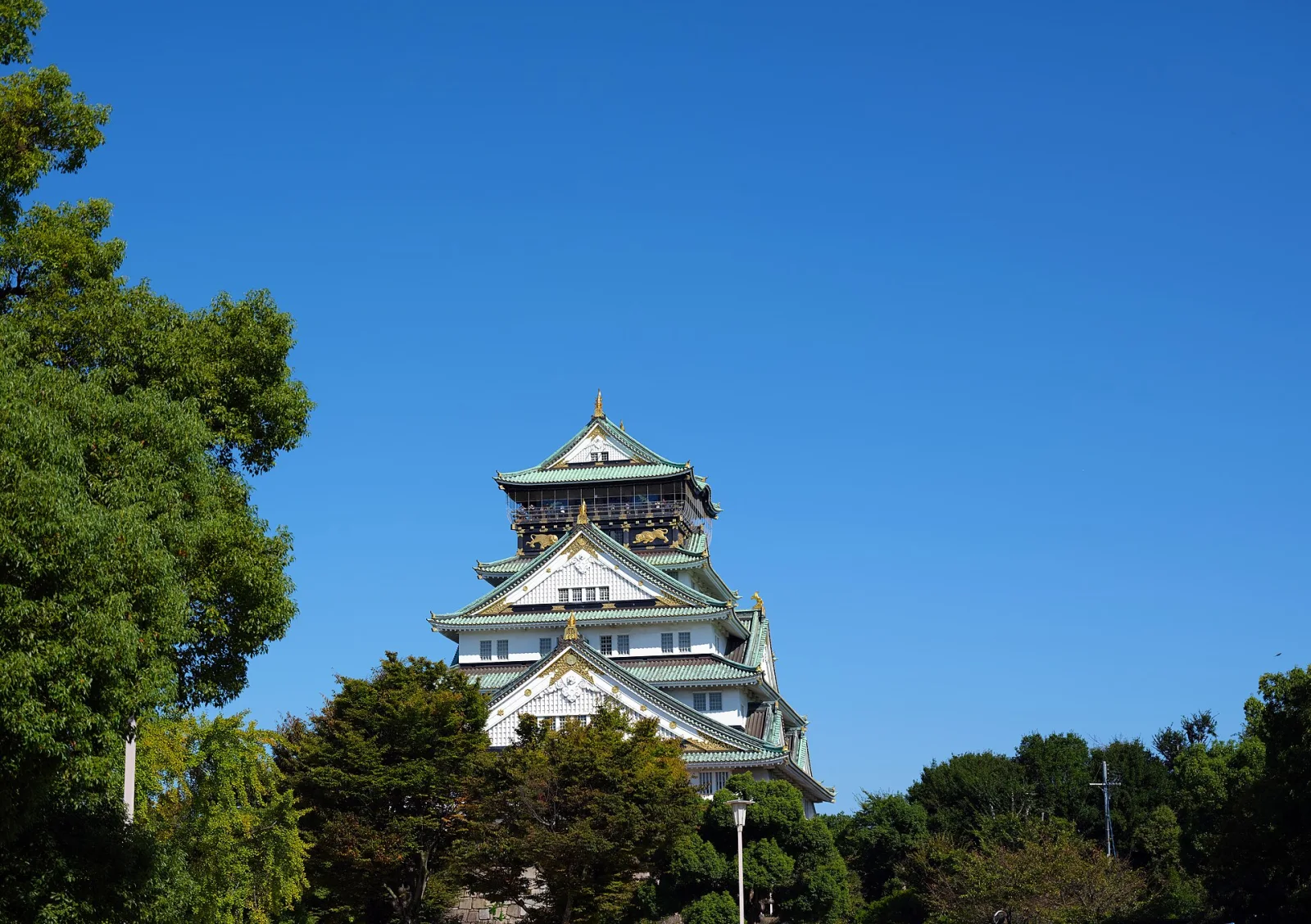
When is a private car hire in Osaka worth it? Compare published 8-hour fares, vehicle capacities and surcharges, check legal green licence plates, and plan Nara, Uji, Wakayama and Kansai Airport routes.
Where to get dropped off and picked up at Osaka Castle
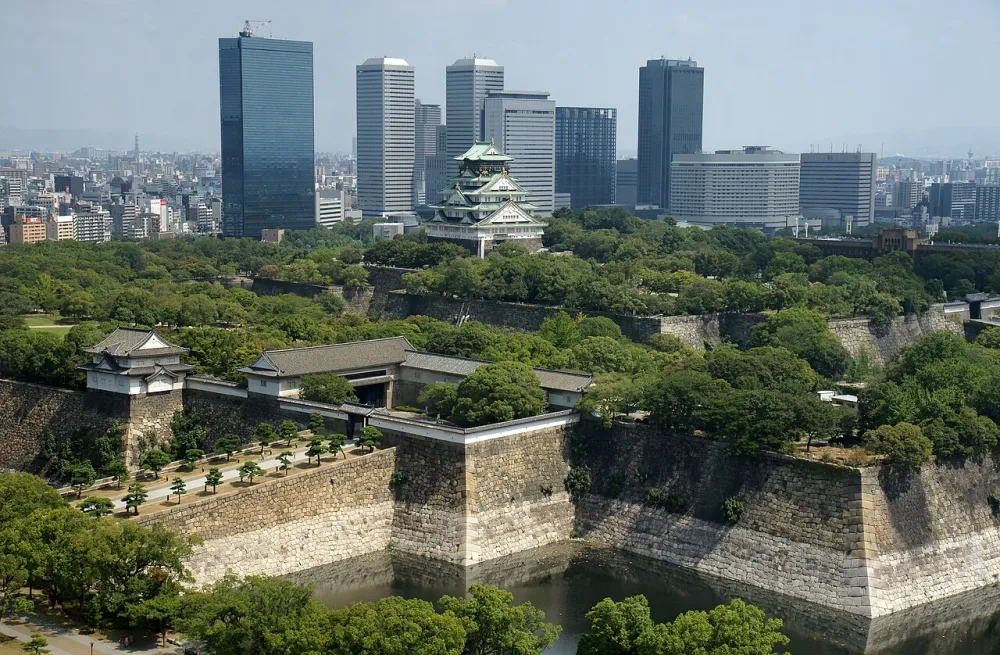
If Osaka Castle Keep is on your schedule, write "Osaka Castle Park Otemon Gate Taxi Pick-up/Drop-off Area" on your itinerary rather than dropping a pin on the keep itself. Park rules bar vehicles other than emergency cars from entering the grounds, and visitors arriving by taxi are directed to alight and board at Otemon Gate. From Otemon Gate you still walk across the park to reach the keep. Anyone who struggles with steps can take this gentler approach, leaving extra time for the sloped paths and rest stops; visitors with reduced mobility can ask staff at the keep for lift access inside.
Otemon Gate also has a coach drop-off bay, which the park specifies is strictly for setting down passengers. If you have booked a larger vehicle, ask the operator to confirm the exact return pick-up spot for your vehicle size rather than treating the taxi rank by Otemon Gate and the coach drop-off bay as interchangeable. Match your itinerary pins against the official park map so everyone knows which direction to walk after alighting and where to regroup. If members of your party split up inside the grounds, agree to exit on the same side so nobody ends up detouring back around from the east side to Otemon Gate.
When Osaka Castle is your only stop, taking the Osaka Metro to Tanimachi Yonchome Station and entering via Otemon Gate works well. Walkers happy to cover more ground can enter from JR Morinomiya or Osakajokoen Station, picking their exit according to where they head next; anyone too tired for the walk back can catch a taxi from Otemon Gate. Pair the park map with our Osaka Castle Keep and Park guide to decide beforehand whether you want to go inside the keep or simply stroll and take photographs in the grounds.
Spotting legal green plates and checking the operator before you pay
Japan's Ministry of Land, Infrastructure, Transport and Tourism refers to carrying paying passengers without the permits or registration required under the Road Transportation Act as shirotaku—unlicensed white-plate taxis. Legal sightseeing taxis and pre-booked private-hire cars (known as hire) in Osaka carry green commercial licence plates. Private-hire cars operate strictly by advance booking through a licensed depot. Even with a green plate, a driver touting walk-up rides in the airport arrivals area is breaking the rules of that licence; if you need an unbooked ride at the airport, go straight to the official taxi rank.
Before paying, ask the seller which Japanese transport company is actually dispatching the vehicle on the day. Your booking confirmation or customer support team should be able to provide the operator's registered Japanese company name, depot or contact number, and passenger transport details. When booking through a travel agency or online platform, the company name at the top of the checkout page is often just the payment collector—check the itinerary voucher or support email for the real carrier. Once the driver sends a message, cross-check their company name, registration plate and pick-up point against your confirmation; if a substitute vehicle is dispatched at short notice, have the original booking channel update the plate number before you meet at the agreed spot.
Osaka Prefecture also runs an authorised Japanese ride-share scheme in which licensed taxi firms manage private vehicles under specified operating conditions. If a white-plated car turns up, first check exactly what service you booked. Should a private white-plate car arrive for an order specifying a commercial sightseeing vehicle, contact your booking platform immediately to insist on the vehicle type stated in your confirmation. Never agree to a driver's request to cancel the original order and pay cash on the spot; verify any change through the official support number and keep all booking and payment receipts.
How to compare 8-hour charter rates
As of 22 November 2026, Osaka Limo Transfer lists a guide price of ¥57,950 (tax included) for an 8-hour sightseeing charter starting and ending in central Osaka, with expressway tolls and parking charged separately. Osaka MK lists an 8-hour Hiace charter at ¥74,500 (tax included), with overtime charged at ¥3,500 per 30-minute block. Nihon Kotsu Group Kansai publishes an example sightseeing taxi rate starting at ¥6,900 for the first hour in a standard saloon in Osaka, metered from the depot, with parking, road tolls, meals and admission fees extra. These three figures illustrate how pricing models differ; to compare a specific Nara and Uji day out, ask each operator for a fresh quote using identical pick-up and drop-off addresses and times.
Define the start and finish clearly. Being collected at your hotel at 08:30 and dropped at a restaurant at 16:30 looks like 8 hours to the traveller, but if an operator starts the clock when the car leaves its depot or adds a deadhead return fee, make them put the exact billable hours in writing. Time spent waiting while your group has lunch, shops or tours a temple still counts towards the hire period. Whatever "8 hours" appears on the booking page should translate cleanly into an exact drop-off location and latest finish time.
You can still compare a flat per-vehicle quote against an hourly-plus-mileage quote. Ask both companies to break down the tax-inclusive base fare, any mileage cap, overtime increments, how tolls and parking are settled, and surcharges for larger vehicles, child seats or language support. Some routes use different car parks depending on vehicle size, so upgrading from a saloon to a larger van can also raise your parking bill. If payment is split into a deposit and a balance, have them specify due dates and which currency or payment method is accepted on the day.
Build potential delays into your maths to see how costs diverge. Using Osaka MK's published Hiace fare, slipping just into the first 30-minute overtime block turns ¥74,500 plus ¥3,500 into ¥78,000, before tolls and parking. Split across six passengers that comes to ¥13,000 per person for the vehicle, or ¥9,750 each across eight—though adding passengers means re-checking boot capacity too. If you are right against your budget ceiling, designate the final stop as optional when booking and ask the driver to warn you before entering any overtime bracket.
Price short hops and full-day charters separately. If outbound and return trains are convenient and only the link from a park to a temple is awkward without a car, add up two single taxi rides against an hourly hire. If you plan to finish in another prefecture and return by train, give the final city and station name at the start so the operator can quote within their operating area and factor in the empty return leg. A hotel-change day can double as a one-way sightseeing transfer, though if you end in a new city you will need to allow time for dropping bags at the next hotel.
Factoring in the back row and luggage space before choosing a vehicle
Give the operator exact counts of adults and children, followed by the number and approximate dimensions of every suitcase plus any folded pushchair, walking frame or wheelchair. If there are four passengers and four checked suitcases, state that combination plainly. Osaka MK's published guide for an Alphard HV recommends four passengers with two suitcases, and some operators group the Alphard HV and GranAce under a single price tier where either model may be assigned without guaranteeing which one. If four large bags are non-negotiable, ask which vehicle actually fits them rather than guessing, and if an operator says they assign cars on the day based on luggage, get the minimum guaranteed cargo space in writing.
For two or three passengers with light bags, start with a saloon or compact MPV. When travelling with older relatives, sliding side doors help in tight bays, though you should still check the step height, grab handles and how much twisting is needed to reach the seat. If you need child seats, ask which row they go in and whether an adult can still sit alongside; families using two child seats should say who needs to sit next to the children so the operator can check the cabin layout properly.
Groups of six to eight should ask for quotes on a full-size van such as a Toyota Hiace. Once passenger numbers exceed real seating or luggage spills into seats, compare a larger vehicle against hiring two cars. In Nara or mountain areas where vehicles may be directed to different car parks, agree a single meeting point if taking two cars; with an oversize van, have the driver check height limits, length limits or coach bay rules at each stop. For multi-generational groups with different energy levels, two cars also let one part of the family head back early for a rest while the others stay on.
Specify child seats and wheelchair requirements at the time of booking
In Japan, children under six must generally travel in a child safety seat in private cars. Commercial passenger operators—including licensed taxis and pre-booked private-hire cars—hold an exemption under Article 26-3-2 of the Order for Enforcement of the Road Traffic Act, yet on longer drives it is still far safer to fit seats suited to each child's height and weight. Write every child's age, weight, seat type and quantity on the booking. Specify rear-facing infant seats explicitly, and if bringing your own seat, check the vehicle's anchor points and belt fit beforehand so you do not discover on arrival that it will not install. Osaka MK, for example, lists child seat rental from ¥3,300 per day, so include those rental fees when comparing quotes.
If a wheelchair user can transfer into a standard car seat, send the folded dimensions and weight of the chair so the operator can verify it fits alongside your luggage. If they need to remain in the wheelchair throughout the journey, request a ramp- or lift-equipped accessible vehicle with tie-downs, and provide the seated user's total height plus the combined weight of any electric wheelchair and passenger. Check that there is still room inside for a companion to ride alongside them, and share every pick-up point on a long route so the driver can plan safe kerbside space to deploy the ramp.
Vehicle access only solves the road leg—cross-check step-free entrances, slopes and staircases on each attraction's official website before locking in your plan. At Nara's Todai-ji Temple, you can walk from the taxi pick-up/drop-off point on the west side of the Great Buddha Hall and enter via the ramp on the left of the main facade. Nigatsu-do's upper terrace still involves flights of steps, so if stamina is limited, stick to the lower plaza and make the Great Buddha Hall the main event. In heavy rain, switch exposed kerbside waiting points to covered, unmistakable landmarks.
Sending your quote request, paying and adapting plans on the day
You can send a complete quote request in one concise message: include your date, start and finish addresses, passenger and luggage breakdown, desired stops, total hire hours, and any pre-booked tickets or dining reservations. Paste each hotel's Japanese name and a map pin—same-brand chains often have multiple branches nearby, so avoid vague English abbreviations. Add exact entrance gates for sights, such as the west side of Todai-ji's Great Buddha Hall or Byodoin's Omote-mon or Minami-mon gate. If you are checking out of your hotel that morning, allow time to settle the bill and bring bags down before the pick-up slot.
When arranging a hotel pick-up, you are solving two problems: where the driver can legally stop, and where your group can spot the vehicle. If your hotel sits down a narrow lane, agree on a main-road corner where stopping is permitted, using a photo or clear shopfront sign. Leaving a driver to hunt for an entrance wastes far more time than gathering the group in the lobby five minutes early. Share the registration plate, meeting spot and driver contact details with everyone, and appoint one spokesperson so half the party does not wander off with the driver while the rest wait at reception.
Be specific if you ask for English or other language assistance: clarify whether you only need multilingual customer support on the booking, a driver who can handle simple schedule changes on the road, or someone to guide and interpret inside attractions. Put that expectation in the order, and if booking a specific language driver, ask what backup applies if a driver is reassigned. Where you only need to confirm timings in the car, handing the driver a neat sheet with Japanese place names and target times is usually enough. Mark optional stops as skippable on the same sheet, and send an updated map pin by message before changing any meeting spot on the day.
Read the cancellation and amendment terms carefully before paying: check whether deadlines follow Japan Standard Time (JST) or your local booking time, what penalties apply past the free cancellation window, and whether moving dates triggers a repricing. Ask who makes the call if a typhoon, road closure, attraction shutdown or flight cancellation disrupts the day, and how refunds differ between voluntary cancellations and operator non-dispatch. If part of a mountain route can swap to flat city stops, clarify upfront whether total hours or route fees change; if tolls, parking or overtime are collected in person at the end, check every item against your confirmation and keep an itemised receipt.
Planning a Nara and Uji day trip
To cover both towns comfortably, request quotes for: "Depart Osaka hotel, Todai-ji Great Buddha Hall in the morning, Uji in the afternoon, return to Osaka in the evening." Keep Nara focused on the Great Buddha Hall and neighbouring Nara Park, choosing a restaurant in the same area for lunch. Head straight to Uji afterwards and stay within the compact triangle of Byodoin Temple, the Uji River and Omotesando street. The walk between the Great Buddha Hall, the west drop-off bay and the wider park adds up quickly, so set boundaries to match the slowest walker in your group; Nara Prefecture also warns of heavy congestion and full car parks around Nara Park during spring and autumn weekends and holidays. If Nara boils down to Todai-ji alone, taking the Kintetsu train to Kintetsu-Nara Station plus a short walk or local taxi gives tighter control over timings.
Whether to reverse the order hinges on entering Byodoin's Phoenix Hall. The gardens and Hoshokan Museum follow standard admission hours, whereas entry inside the Phoenix Hall requires picking up a same-day numbered ticket inside the gardens, with distribution opening at 09:10 for groups of 35 until slots sell out. If going inside the hall is a priority, start in Uji, grab your timed ticket on arrival, and explore the gardens while waiting. Visitors content to photograph the Phoenix Hall across the pond and tour the museum can happily keep Nara first. Byodoin has no private car park of its own—drivers use the private Uji Parking area outside Minami-mon gate—so keep your entrance gate, Omotesando browsing and lunch within the same walkable pocket.
Queuing for lunch in Uji before walking over to Byodoin for tickets looks tidy on paper, yet a slow restaurant queue can cost you both slots. Tackle the strictest timed entry first, then leave tea and sweets flexible enough to grab as takeaway if needed. If half the group prefers a relaxed teahouse while others queue for the hall, split outside the temple and fix a clear gate for pick-up. Wheelchairs can access the Hoshokan Museum and most of the garden paths, though the Phoenix Hall interior, rear walkway and Saishoin have steps; manual wheelchairs suited to gravel paths can be borrowed on site at the Omote-mon or Minami-mon ticket offices.
Wrap up with a short stroll along the Uji River or head straight back to Osaka. Think twice before squeezing Fushimi Inari into the same day—ask yourself which earlier stop you are willing to cut short. Both Nara and Uji involve substantial walking, and adding a third major stop with fresh parking, entry and regrouping usually eats straight into the rest breaks meant for children and older travellers. Use our Nara walking and overnight guide and our Uji Byodoin, riverfront and teahouse guide to pick the specific corners worth keeping.
Saving Kyoto's outskirts for another day, and checking Yoshino's access rules
If Kyoto's Ohara valley is on your wish list, treat it as a half-day anchor rather than an add-on. Starting from Osaka, a car links neatly out to Ohara—which otherwise takes multiple public-transport changes—before dropping you in central Kyoto or taking you back to Osaka. Sanzen-in Temple has no dedicated car park; drivers are directed to private car parks around the Ohara bus stop, followed by roughly a 10-minute walk up the temple approach. Wheelchair users can follow the main path, though buildings housing the Shinden and Kyakuden halls have steps. For Sanzen-in alone, taking the Kyoto Municipal Subway to Kokusaikaikan Station and transferring to a bus is an easy alternative; if you also want Fushimi or Arashiyama, consider splitting across two days with our Kyoto district and early-morning guide.
Mount Yoshino adjusts vehicle entry rules according to crowds during cherry blossom and autumn foliage seasons. In spring 2026, Yoshino Town enforced blossom-season traffic restrictions and shifted shuttle schedules to match bloom progress and weather; for autumn 2026, notices covering 24 October to 30 November authorised police-led controls during peak congestion, blocking vehicles from continuing past Yoshinoyama Tourist Parking towards Katte Shrine. For spring 2027, check Yoshino Town's current seasonal traffic map first to confirm which car park or shuttle hub a vehicle can actually reach before booking a charter from Osaka. If Yoshino is your sole destination during peak bloom, taking the Kintetsu line to Yoshino Station and walking Nanamagari-zaka—or using seasonal shuttles—avoids car park gridlock altogether.
In autumn and winter, when heavy rain, snow or mountain closures strike, the best Plan B sits close to your original corridor and ends near a main urban station. Check NEXCO West's live expressway traffic updates before setting off, and ask your operator to verify local municipal restrictions on mountain roads. If a diversion requires a huge detour, drop the mountain stop outright in favour of an indoor sight near a railway line so switching to the train later stays effortless.
One day in Wakayama City, and how long to give Shirahama and Kumano
For a single-day charter from Osaka, pairing Wakayama Castle with Kimiidera Temple already fills two substantial stops. Visit Wakayama Castle in the morning while energy is high enough to climb to the keep, then continue to Kimiidera in the afternoon. Wakayama City runs an ascent assistance service for visitors with reduced mobility—arrange it in advance via the city's castle support page, and keep a grounds-only stroll as an easy backup. Kimiidera's main Romon gate leads up 228 stone steps, though a cable car on site opens the hilltop precinct to visitors who prefer not to climb. Both sights are straightforward by train too; follow our car-free Wakayama Castle and Kimiidera day guide and save taxis for the short hop between the station and the base of the hill.
Shirahama rewards its own dedicated trip, especially with an overnight ryokan stay. If you do tackle Shirahama as a coastal day return from Osaka, pick either Sandanbeki Cliffs or Senjojiki Rock Plateau alongside a brief stop by Engetsu Island, leaving enough margin to beat evening traffic back into Osaka. In strong coastal winds, swap exposed cliff paths for a shorter stop or check into your ryokan early. Combining Wakayama Castle and Shirahama works better over two days: leave Osaka in the morning, explore Wakayama City, overnight in Shirahama, then tour the coast before heading north—making your ryokan's latest dinner check-in time the hard deadline for day one.
If everyone in your party handles trains comfortably, ride JR limited express services for the long coastal stretch and use local buses or pre-booked taxis from Shirahama or Kii-Tanabe. Total up return limited express tickets, station-to-hotel rides and one-way coastal taxis against a full charter from Osaka before deciding. Since luggage is heaviest on day one, leave bags at the hotel on day two while touring the coast and collect them right before boarding your onward train, which also lets you choose different vehicle sizes on each day if needed.
The Kumano Sanzan shrines—Hongu Taisha, Hayatama Taisha and Nachi Taisha—stretch across inland valleys and the coast, making two or three days from Osaka far more realistic. Staying overnight in the Hongu hot-spring area covers the mountain half first, while basing yourself near Kii-Katsuura or Shingu suits Nachi Falls and Seiganto-ji Temple. Both the Kumano Sanzan Council and Tanabe City Kumano Tourism Bureau publish train and bus connections—when using public transport, always work backwards from the last return bus or train. For a multi-day charter, itemise daily driving hours, driver rest periods and accommodation, and where the next day's clock starts; hikers walking only a short stretch of the Kumano Kodo should supply exact trailhead and finish points so the driver can confirm a safe pick-up bay.
Fitting meals, walking and pick-ups into a realistic schedule
Start by circling any unmovable deadlines on your schedule: a timed Phoenix Hall entry slot, lunch booking, ryokan check-in or airport check-in. Next, write in the friction around every drive—alighting, walking to the ticket gate, queueing for admission, toilet stops and meeting the driver on exit. If your group plans to leave an attraction through different gates, mark the exact pick-up pin on a map that morning so children and older relatives are not left standing on an exposed kerb.
Sketching a rough 9-hour timetable quickly shows where delays creep in: 90 minutes from hotel to stop one, 90 minutes sightseeing, 60 minutes for lunch, 60 minutes transferring to stop two, 90 minutes sightseeing and 90 minutes back to Osaka totals 8 hours—leaving 1 hour for regrouping, traffic and parking. Treat this strictly as a planning exercise and let your operator calculate real drive times between your exact addresses. If your booking is capped at 8 hours, trim one stay or drop a stop before placing the order so a genuine buffer remains.
The simplest way to protect your day is agreeing your departure cut-offs upfront. If you see a long lunch queue at 14:30 while needing to leave Uji by 15:30, switch straight to takeaway tea and a riverside walk. Message the driver to pull up only once everyone has reached the meeting spot so the car does not block narrow streets. Should someone tire unexpectedly, you can always ask to return to the hotel instead of pushing on to the final stop—just confirm via your booking terms whether a route change alters the fee.
You can finish the charter at another hotel, a major railway station or a restaurant, provided you supply a usable drop-off address for that day. If the group plans to have dinner before returning to the hotel, compare getting dropped at the restaurant and catching a train home afterwards against paying the driver to wait through dinner. Either works; the difference is simply how many paid charter hours dinner consumes. Before reaching Osaka, double-check every traveller's evening plans and onward connections so nobody arrives at the final drop-off point unexpectedly needing another transfer.
Pricing Kansai Airport transfers separately
For airport arrivals, send your flight number, scheduled landing time, terminal, passenger count and full luggage tally. Flights landing after midnight must use the local Japanese date so you do not accidentally book for the night before. At Kansai International Airport Terminal 1, reserved vehicles load outside the ground-floor (1F) arrivals kerbside at Bays 1 and 7 shown on the airport map, separate from regular taxi ranks; at Terminal 2, follow the airport map and your operator's instructions. Where your confirmation states a meet-and-greet driver holding a name board in the arrivals hall, check the exact meeting spot first before walking out to the bay together. On Osaka MK's fixed-rate plan, for example, international arrivals at Terminal 1 meet their driver at the Meeting Point between the North and South Arrival Gates, and Terminal 2 passengers meet at the Arrival Gate, with airport parking charged separately.
Immigration and baggage reclaim are the biggest wildcards at arrivals. Ask whether free waiting time runs from scheduled landing, actual touchdown or your chosen pick-up time; whether the driver tracks flight delays automatically; what excess waiting costs; and whether a replacement vehicle can be sent if you miss your slot. Parties arriving on separate flights—potentially into different terminals—should set the group pick-up around the later flight, take separate transfers if the gap is wide, or send older travellers straight to the hotel first. If customer support closes overnight, save an out-of-hours emergency number alongside your booking voucher before boarding.
If your hotel sits near Nankai Namba, JR Tennoji or Shin-Osaka, check late-evening train and limousine bus options first in our Kansai Airport transfers comparison. Where a private transfer genuinely earns its keep is saving the awkward last leg when your hotel is a long walk from the station, you are hauling heavy suitcases, or border delays leave you missing the last convenient train. Several operators offer fixed airport rates—ask for expressway tolls, the Sky Gate Bridge toll and airport parking to be itemised on the same quote, and price your departure transfer separately rather than assuming the return fare matches arrival.
Hotels beside Shin-Osaka Station give an easy rail benchmark. Foreign passport holders entering Japan as Temporary Visitors can purchase JR-WEST's HARUKA One-Way Ticket: according to fare schedules effective from 1 November 2026, the journey from Kansai Airport to Osaka or Shin-Osaka costs ¥1,900 per adult, or ¥7,600 for four adults combined. By comparison, Osaka Limo Transfer lists a guide fare of ¥27,650 from Kansai Airport to central Osaka, excluding tolls and parking. If lifts or a brief station taxi connect Shin-Osaka cleanly to your hotel door, setting those figures side by side makes it easy to see whether a door-to-door charter is worth the premium.
Departures can be booked as a standalone airport transfer or as the final drop-off of a morning charter. With the latter, count backwards from your airline's check-in and bag-drop deadline, keeping the last sightseeing stop brief and easily skippable. Leave generous slack for bad weather or congestion on the airport bridge rather than burning your buffer on a lingering lunch or hotel check-out. Before loading the boot, keep passports, phones and essential medication in your cabin bags so nothing vital gets buried under suitcases.
A few useful answers
How much does an 8-hour private car charter in Osaka cost?
Published examples checked on 22 November 2026 include ¥57,950 with Osaka Limo Transfer for an Osaka city round-trip sightseeing tour and ¥74,500 for an 8-hour Hiace charter with Osaka MK, both tax-inclusive. Ask operators to quote on the exact same pick-up and drop-off addresses, date, duration, vehicle class and luggage count, then list expressway tolls, parking and any overtime charges separately.
Is checking for a green licence plate enough when booking a private car?
When booking a sightseeing taxi or private-hire car (hire), match three details: the green commercial licence plate, the confirmed vehicle registration number and the actual operating transport company. Private-hire cars must be pre-booked; if you need a vehicle on arrival at the airport without a reservation, use the official taxi rank.
Which vehicle should we choose for two children and four large suitcases?
Give the operator the exact number of adults and children, the fixing system required for both child seats, and the dimensions of your suitcases and pushchair. Request quotes for an MPV or a large van, and ask them to confirm both the remaining passenger seats and boot space once both child seats are fitted.
Can we cover Nara, Uji and Fushimi Inari in one day from Osaka?
On a first visit, stick to Nara and Uji. If seeing inside the Phoenix Hall at Byodoin is your priority, head to Uji first to collect a same-day timed entry ticket before continuing to Nara. Save Fushimi Inari for a separate Kyoto-focused day.
Can an Osaka private car charter finish at Kansai International Airport?
Yes—list the terminal as your drop-off point when requesting a quote, along with your flight date and departure time, so the operator can price the journey to the airport by time, mileage and fees. If your main reason for hiring a car is moving luggage, compare that against booking a single hotel-to-airport transfer instead.
Official information and references
Sources used in this guide.
- Ministry of Land, Infrastructure, Transport and Tourism (MLIT) | Unlicensed White-Plate Taxis and Illegal Touted Rides
- Osaka Prefectural Government | How Japan's Ride-Share Scheme Operates in Osaka
- National Police Agency | Using Child Car Seats
- e-Gov Law Search | Order for Enforcement of the Road Traffic Act
- Cabinet Office | Child Seat Guidance and Exemptions for Commercial Passenger Transport
- Osaka Limo Transfer | Guide Fares for Sightseeing and Airport Transfers
- Osaka MK | Private-Hire Vehicles, Luggage Capacity and Hourly Rates
- Nihon Kotsu Group Kansai | Sightseeing Taxi Fares and Time-Charging Rules
- Osaka Castle Park | FAQs on Taxis, Coach Drop-Offs and Step-Free Access
- Osaka Castle Keep | Access and Car Parking
- Osaka Castle Keep | Admission and Lift Access
- Todai-ji Temple | Precinct Map and Wheelchair Route to the Great Buddha Hall
- Nara Prefecture | Traffic and Parking Around Nara Park
- Byodoin Temple | Opening Hours and Phoenix Hall Interior Entry Slots
- Byodoin Temple | Parking and Wheelchair-Accessible Areas
- Ohara Sanzen-in Temple | Driving, Bus and Approach Access
- Kyoto Prefecture Tourism Federation | Wheelchair Access and Accessible Toilets at Sanzen-in
- Yoshino Town | Traffic Notice for the 2026 Cherry Blossom Season
- Yoshino Town | Cherry Blossom Traffic Information Portal
- Yoshino Town | Autumn 2026 Traffic Restrictions
- NEXCO West | Live Expressway Traffic and Road Closures
- Wakayama City | Wakayama Castle and Ascent Assistance
- Wakayama Prefecture Official Tourism Guide | Kimiidera Temple Steps and Cable Car
- Wakayama Prefecture Official Tourism Guide | Driving Route for Wakayama Castle, Shirahama and Kumano
- Kumano Sanzan Council | Rail and Bus Routes from Kyoto, Osaka and Kobe
- Tanabe City Kumano Tourism Bureau | Kumano and Shirahama Local Bus Timetables
- Kansai International Airport | Reserved Vehicle and Taxi Pick-Up Points by Terminal
- Osaka MK | Airport Arrival Meeting Points
- Nankai Electric Railway | Travel from Kansai Airport Station to Osaka Namba
- JR-WEST | HARUKA One-Way Ticket Fares and Eligibility for Overseas Visitors