Choose Oki ferries from Sakaiminato or Shichirui and distinguish Saigo, Beppu, Hishiura, and Kurii. Plan Kuniga, Akiya, Red Cliff, and Candle Island around local boats, buses, room layouts, and cancellation terms.
- Region & Focus
- Oki Islands
- Reading Scope
- 34 min read · 18 chapters · 4 Q&As
- Official Verification
- 17 official sources checkedUpdated October 29, 2026
- Key Topics
- ItinerariesBookingWhere to stay
Chapter Route Map (tap any stop)
- Choose a night on Dogo, or keep two nights for the three Dozen islands
- Sakaiminato or Shichirui: choose the destination island before the mainland overnight city
- What the actual October 29, 2026 timetable reveals about conflicting plans
- Matsue Station stop 9: which port does the connecting bus serve?
- Second-class ferries, high-speed boats, and vehicles require different bookings
- Calculate fares by segment; buy another ticket after an island stop
- Dozen local boats: Isokaze carries passengers; Ferry Dozen also carries cars
- Kuniga Coast: drive between two levels, or walk 2.8 km downhill
- Urago and Beppu are different ports; the 15:00 bus affects your overnight island
- Akiya Coast on Nakanoshima: red volcanic rock and a heart-shaped opening
- Chiburijima’s Red Cliff: give the west coast a proper outing
- Candle Island on Dogo: stay on Dogo after the sunset boat
- Saigo on Dogo: Oki Plaza’s 35 m² twin and 53 m² suite
- Book Plaza transfers the previous day; separate evening arrivals from morning boats
- Entô at Hishiura: showers for two, futons for three, and a five-person Japanese-Western room
- Entô meals and luggage: book dinner before choosing the next day’s local boat
- Boat tickets, cruises, and hotels have separate cancellation timelines
- Two nights: choose sunset priority or Dozen coasts
- Quick Q&A
After the Candle Island sunset cruise, there is no boat to Dozen, so stay on Dogo that night. The Kuniga Coast sightseeing bus starts at Urago on Nishinoshima. Put these two timings into your accommodation plan before choosing a ferry from Shichirui or Sakaiminato. The four islands can then become places to stop and explore.
Choose a night on Dogo, or keep two nights for the three Dozen islands
For Candle Island’s sunset, spend the first night on Dogo. For Matengai and Red Cliff, stay in Dozen and save a Dogo return journey. With only two nights, choose one side to explore. To visit all four islands, allow a separate crossing day rather than making every day a sequence of checkout, boat, car collection, and rushing for another boat. Your first useful list is the island for each night and the port for the next departure.
Dogo’s municipality is Okinoshima Town, with Saigo as its main passenger port, written 西郷港 in Japanese. The other three inhabited islands form Dozen: Nishinoshima belongs to Nishinoshima Town, with Beppu as its main port; Nakanoshima belongs to Ama Town, with Hishiura; Chiburijima belongs to Chibu Village, with Kurii, written 来居. Use these pairings for boats, cars, and hotel addresses. In particular, do not confuse Ama’s Nakanoshima with Osaka’s Nakanoshima.
Each island has separate roads and ports. Even a short crossing requires leaving the hotel, buying tickets, waiting, and finding onward ground transport. If someone wants time in the room looking at the sea, make it a scheduled part of the day. Staying at one base and visiting another island is usually easier to manage than moving each night for a different view. Keep the sunset-cruise night on Dogo. Use the official island and transport overview as your place-name list before booking rooms.
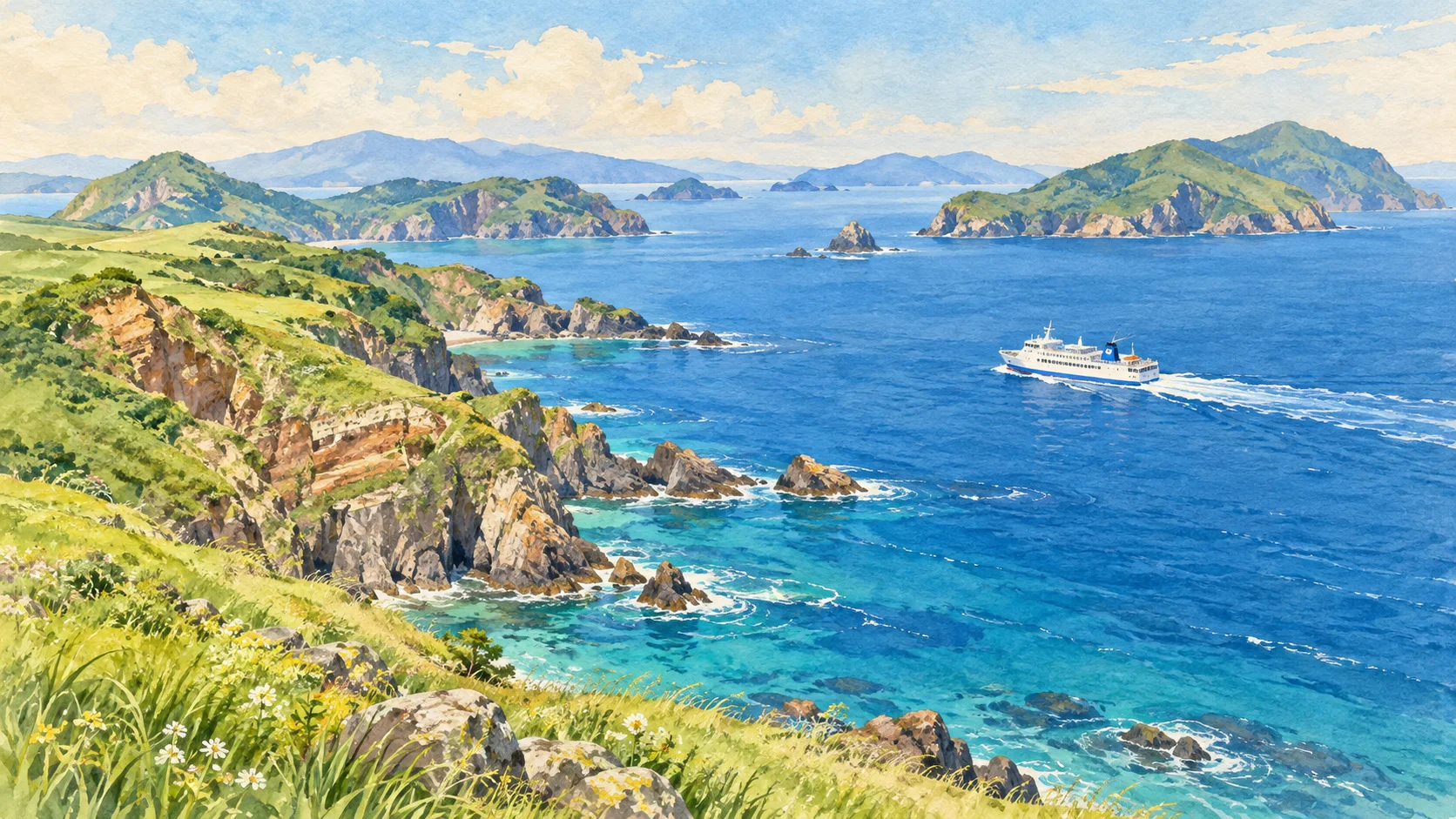
Choose Oki ferries from Sakaiminato or Shichirui and distinguish Saigo, Beppu, Hishiura, and Kurii. Plan Kuniga, Akiya, Red Cliff, and Candle Island around local boats, buses, room layouts, and cancellation terms.
Sakaiminato or Shichirui: choose the destination island before the mainland overnight city
The two mainland departure points are Sakaiminato in Tottori Prefecture and Shichirui Port in Matsue, Shimane. From a Matsue stay, use a connecting bus to the port. From Yonago via Sakaiminato, match the land journey to Sakaiminato Station with the boat’s actual starting port. A ticket from Shichirui still requires the journey from Sakaiminato to Shichirui. Board at Sakaiminato only if the ticket says Sakaiminato. Staying in Yonago does not make every Oki sailing leave there.
Read down the same boat’s column in the timetable. A boat may visit Dogo before Dozen, or leave Sakaiminato for Kurii and Beppu before Saigo. Passing an island is different from calling there. Down arrows mean continued sailing, so you cannot plan to disembark at those entries. For Hishiura, find its arrival time, then distinguish subsequent departures from local-boat transfers.
For a mainland night beforehand, compare Matsue room choices or Yonago and Kaike accommodation. Before an early boat, plan whether breakfast is available, when to collect luggage, and where to board the bus.
What the actual October 29, 2026 timetable reveals about conflicting plans
For October 29, 2026, Oki Kisen’s date search shows Kuniga leaving Shichirui at 9:00 and reaching Saigo at 11:25. It leaves Saigo at 12:00, reaches Hishiura at 13:10, then leaves at 13:30 for Beppu, arriving at 13:45. Staying aboard to Nishinoshima means arriving after Urago’s 13:00 sightseeing bus. Compare the 15:00 departure instead, adding the municipal bus from Beppu to Urago. This is a dated example; select the date again for another travel day.
That day’s Shirashima leaves Sakaiminato at 14:10, reaches Kurii at 16:35, Beppu at 17:10, and Saigo at 18:35, without calling at Hishiura. For an Ama first night, investigate a local transfer within Dozen. This is not a direct afternoon Sakaiminato–Hishiura boat. Disembarking at Kurii at 16:35 leaves little daylight. Arrange Red Cliff ground transport and accommodation separately; it suits an overnight stay rather than a long coastal day.
Read the full return direction too. That day, a ferry leaves Saigo at 15:40 for Shichirui at 18:05. Another leaves Saigo at 8:30, calls at Hishiura, Beppu, and Kurii, and reaches Sakaiminato at 13:20. Your final island overnight changes the available return. A Saigo departure time is not the boarding time at a port near a Dozen hotel. The Oki Kisen date timetable and connecting buses share a page; save the departure date with the results.
Matsue Station stop 9: which port does the connecting bus serve?
The October 29, 2026 connecting table lists Matsue Station 7:50 to Shichirui 8:30 for the 9:00 ferry, boarding at stop 9. A bus also leaves Sakaiminato Station at 8:24 for Shichirui at 8:39. These arrivals leave about half an hour or less before sailing. Prepare the passenger form, booking details, and payment before boarding the bus, then handle the port procedures directly. Do not make buying breakfast inside the port essential.
The same date lists Matsue Station 13:00 to Sakaiminato Station 13:40 for the 14:10 sailing. The afternoon high-speed boat leaves Shichirui at 15:45, with a connecting Matsue bus at 14:35 arriving at 15:15. Ferry and high-speed bus tables have separate headings. Keep those headings in saved images so you do not take an afternoon Sakaiminato bus for a Shichirui boat.
The checked page lists adult buses at ¥1,200 from Matsue to either Shichirui or Sakaiminato, and ¥500 from Sakaiminato Station to Shichirui. After the 18:05 ferry arrival at Shichirui, the table lists a bus at 18:10 reaching Matsue Station at 18:50. High-speed connections instead note departure after passengers have disembarked or finished boarding. Choose onward long-distance trains from the actual station arrival, rather than starting the transfer allowance at docking.
Second-class ferries, high-speed boats, and vehicles require different bookings
Without a vehicle and wanting flexibility, compare ferry second class first. Oki Kisen lists individual second-class passengers as able to board without reservations; groups of 15 or more must book. Special second class and higher cabins accept phone reservations, with no online ferry cabin booking. Call for a fixed cabin before booking island activities. No online cabin option does not mean the ferry is full.
Rainbow Jet high-speed boats require reservations by phone or online. Each person can carry up to two items, each with combined length, width, and height no more than 1 m and a weight no more than 10 kg, fitting by their feet or on their lap. Medium and large items such as coolers, fishing gear, and golf bags cannot be carried. Measure your suitcase before choosing the boat. Keep crossing-day clothes and camera equipment in small luggage you can move yourself.
Cars and motorcycles on mainland ferries require a separate phone reservation. Car length follows the vehicle inspection certificate. Vehicle customers must reach the departure port counter one hour before sailing to complete procedures, earlier than the connecting buses in the previous section arrive. Arrive earlier independently rather than using the car-free passenger bus timing. For island rental cars, arrange collection and return separately on each island to reduce shipping queues and costs. See the cabin, baggage, and vehicle booking rules.
Calculate fares by segment; buy another ticket after an island stop
From June 1, 2026, adult one-way mainland–Oki fares are ¥3,870 for ferry second class, ¥4,990 for special second class, and ¥7,360 for high-speed boats. Dogo–Dozen costs ¥1,760 in ferry second class or ¥3,360 by high-speed boat. A mainland return in second class totals ¥7,740. Add a Dogo–Dozen return at ¥1,760 each way for ¥11,260 total. Accommodation, buses, activities, and Dozen local boats are extra.
Elementary school children pay half the adult fare. One preschool child aged six or below travels free with each adult, but a child occupying a separate high-speed seat pays half the adult fare. List children needing seats when buying tickets. Hotel bed-sharing follows the booked product separately. For two children, individual boat seats and extra room futons are different cost questions.
Oki Kisen states that disembarking partway invalidates the unused onward part of the ticket. For a Saigo night before continuing to Beppu, buy separate segments. A ticket to a farther port cannot be resumed the next day after your stop. Dozen also has separate Oki Kisen routes and Oki Kanko local services with different fares. Record operator, segment, boat, and port together. The current passenger fares also link vehicle rates; use the revision applicable to your sailing date.
Dozen local boats: Isokaze carries passengers; Ferry Dozen also carries cars
Oki Kanko’s Isokaze and Ferry Dozen provide short journeys among Nishinoshima, Ama, and Chiburijima. Isokaze carries 70 passengers; Ferry Dozen carries 100 and about ten cars. Neither accepts advance reservations; boarding is first come, first served. Dogo–Dozen crossings still use Oki Kisen ferries or high-speed boats. Keep that route map separate from the local network serving the three Dozen islands.
Current local one-way fares on both boats are ¥300 for adults and ¥100 for children. Ferry Dozen lists ¥1,000 for transporting a car under 5 m. Handle passenger and vehicle tickets separately. Two local adult journeys cost ¥600, a more accurate estimate than deriving them from mainland fares. For another operator’s large ferry, use that company’s segment price.
A July 27, 2026 notice requires buying tickets at machines before boarding. Machines are at Beppu’s office and Isokaze boarding point, Hishiura’s office local-boat waiting room, and Kurii’s local boarding point. Kurii has no office. After buying your boarding ticket there, ask the crew to arrange vehicle transport. Buy before waiting at the correct berth so you do not leave the queue when the boat arrives. Save the new local ticket notice with the port map.
Beppu separately marks Isokaze and Ferry Dozen boarding points. Identify the next boat before walking to its waiting area. The local site links both regular and temporary 2026 timetables. For a day trip, choose the boat back to base first, then work backward through the coastal drive. If a temporary timetable applies, rebuild the complete connection. If the final leg also needs Oki Kisen to the mainland, stay on the departure island the previous night to reduce dependence on two operators that day.
Kuniga Coast: drive between two levels, or walk 2.8 km downhill
Kuniga combines sea cliffs viewed from above with a rock arch seen from the shore. Matengai is 257 m high, overlooking the sea. Tsutenkyo reveals an arch where the sea eroded the center of the rock. See Matengai and Kuniga Beach together for two landforms rather than leaving after one viewpoint. The sightseeing bus links these two elevations for visitors without cars.
Oki Kanko’s regular 2026 bus starts at Urago Port’s sightseeing-boat boarding point, visits Matengai and Kuniga Beach, and returns to Urago in one hour 45 minutes. It costs ¥4,000 for adults and ¥2,000 for children, running daily March 21–October 31 that year. For November onward, arrange land sightseeing by rental car or reserved taxi. Do not carry this autumn 2026 bus schedule into winter or another year.
For more walking, choose the optional Matengai–Kuniga Beach section: officially 2.8 km, descending 235 m, taking about 70 minutes. It requires sustained downhill walking. Those with knee discomfort can stay on the vehicle route. Tell the operator beforehand if some walk and others ride, including meeting arrangements. Transfers follow the descent, so prepare shoes, water, and pack weight for its length rather than a short harbor walk.
Urago and Beppu are different ports; the 15:00 bus affects your overnight island
The Kuniga sightseeing bus meets at Urago; inter-island ferries and main local services use Beppu. The operator lists about 6 km between them. The municipal bus stops at Urago Kankosen Noribamae, with a flat ¥200 fare. For the 13:00 tour, the 2026 page lists Beppu 12:19 to Urago 12:43. After the tour ends at 14:45, its listed connection is Urago 14:51 to Beppu 15:15.
For the 15:00 tour, it lists Beppu 14:00 to Urago 14:26. After finishing at 16:45, pay an extra ¥200 for the sightseeing bus to continue to Beppu, arriving at 17:00; request this at the counter. This suits a Beppu-area night and avoids waiting for another route bus. For Hishiura or Kurii that night, schedule ticket purchase, the walk to the local berth, and the selected boat after the 17:00 arrival.
If local boats do not connect on your date, stay on Nishinoshima or choose an earlier Kuniga tour. With an Ama hotel booked, prioritize 13:00 to retain afternoon return time to Hishiura. If the mainland boat reaches Beppu only in the afternoon, compare 15:00 plus a Nishinoshima night. Choose tour, crossing, and room together before discovering in Urago that the bed is on another island. Check the Kuniga bus season, departures, and connections for that year.
Akiya Coast on Nakanoshima: red volcanic rock and a heart-shaped opening
Akiya on Nakanoshima’s northeast coast suits close land-based views of volcanic rock. The Ministry of the Environment explains that volcanic activity about 2.8 million years ago formed the landscape, with porous volcanic rock in red cliffs and visible layers and islets along the coast. Start where red rock meets sea, then follow the established path to the large rock with a heart-shaped opening. The photographed shape then sits within a whole coastline.
Official guidance gives about 20 minutes by car from Hishiura and about five minutes along the coastal path to the heart-shaped rock viewpoint. Allow return transport and boat waiting separately from coastal time. For a Hishiura night, make Akiya the main daytime outing and save evening for the harbor-front view, rather than rushing back from the northeast near dark.
Ama has public buses, with local timetables linked from the tourism access page. Choose the outbound stop and return to Hishiura before filling in coastal time. For control over timing, compare rental cars and bicycles. The official site describes Nakanoshima as relatively gentle terrain; cyclists still need to allow return distance, locking up, and bike return. Book both taxi directions: the coast is some distance from port. Use the Ministry’s Akiya Coast guide to choose time for layers and paths.
The Oki Islands UNESCO Global Geopark introduction to Akiya Coast explains red basalt, volcanic ejecta, and the heart-shaped opening formed by marine erosion.
Chiburijima’s Red Cliff: give the west coast a proper outing
Red Cliff runs about 1 km along Chiburijima’s west coast, rising 50–200 m. The Ministry describes an exposed cross-section of a crater eroded after eruptions about six million years ago. Iron oxidation in lava spatter creates the red, while repeated eruptions left stripes. At the viewpoint, look for boundaries between red and darker layers, then the cliff’s direction. This reveals its scale better than seeking only the reddest wall.
Official guidance gives about 25 minutes by car from Kurii. Treat the return drive, viewing, and port wait as one outing. If you only have time by the harbor, save Red Cliff for another day. Chibu taxis do not wait at the port continuously; tourism guidance requires reservations, and rental cars are limited. Secure ground transport before choosing the surrounding local boats for a direct west-coast visit.
With an e-bike, consider hills and the energy needed to return. A rental car or booked taxi suits less climbing. A land viewpoint and a boat view face different directions; the latter also depends on operator, season, and sea conditions. For land-based viewing, use the Ministry’s Red Cliff landscape and access guide. Return through Kurii to the same base after a day trip, leaving luggage in your room.
Candle Island on Dogo: stay on Dogo after the sunset boat
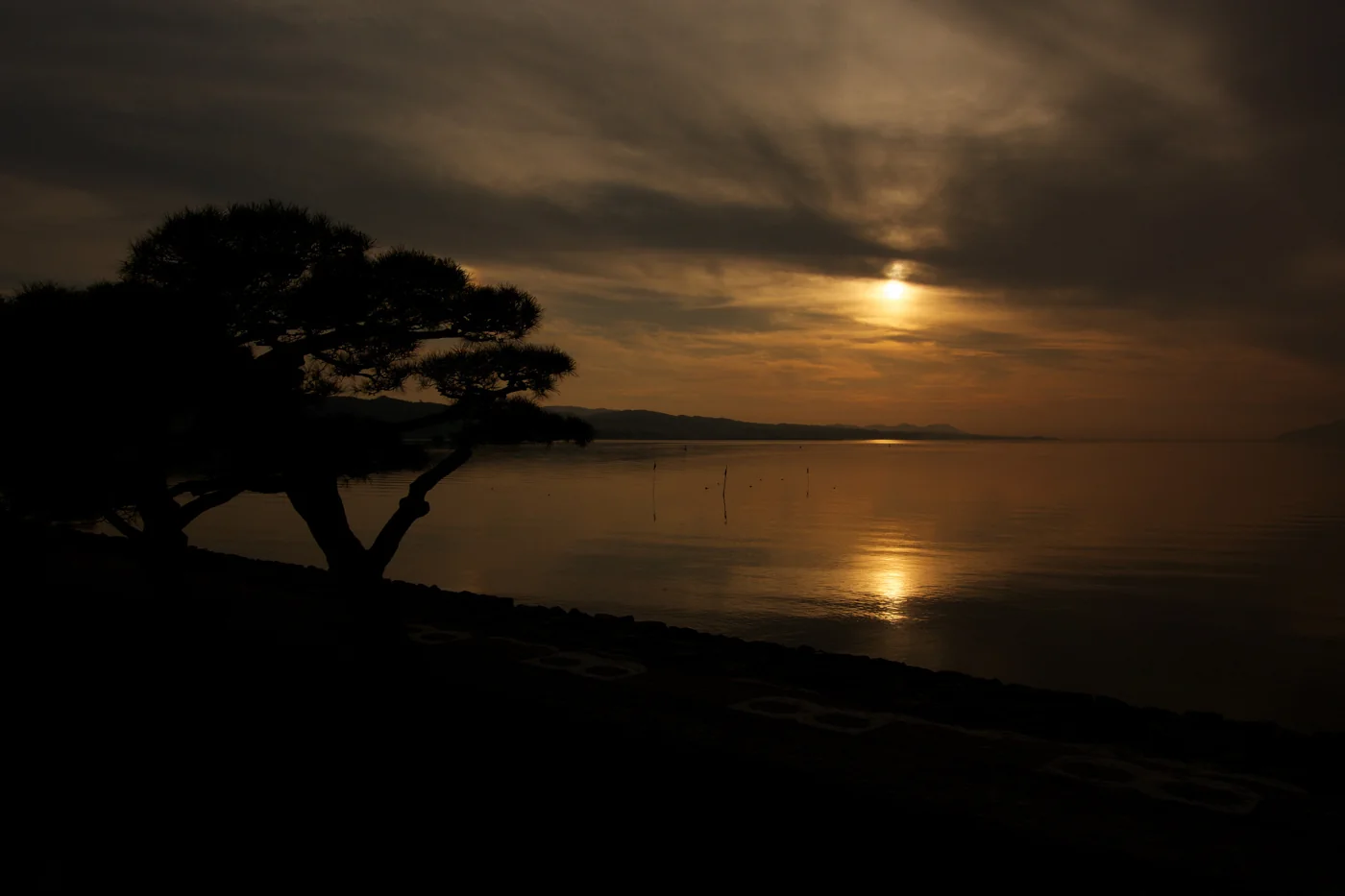
Candle Island’s cruise most strongly changes overnight order. The official experience page lists April 1–October 31, about 50 minutes aboard, with departure between 16:00 and 18:00 according to sunset. Late October’s 16:10 is a guide; the actual time is announced that day. Seeing sunset as a flame atop the rock requires the right angle, sunlight, and sea conditions. Allow the complete cruise rather than adding an inter-island boat afterward.
The operator explicitly states there is no onward Dozen boat after the activity, so accommodation must be in Okinoshima Town that night. If Ama or Nishinoshima is already booked, move the cruise to your Dogo night. Fukuura quay is about 35 minutes by car from Saigo. Route buses can leave a long wait before the cruise, and none return afterward. Bus arrivals need a reserved taxi back.
Reservations use the app named “エルクール” on the official site. Sailing is assessed around 15:00 that day; meeting is about 30 minutes before the confirmed departure, with notification around 15:00–15:30. Keep the afternoon reachable rather than filling it with remote stops. After notification, go to the quay at the specified time. Call the Okinoshima Town Tourism Association by 17:00 the previous day for cancellation or participant changes. If sailing is confirmed, pay cash on site: ¥4,000 for adults and ¥2,000 for children.
Wheelchairs cannot be carried on this cruise. Wheelchair travelers must call the tourism association before booking to discuss mobility and assistance needs. If canceled, keep the Dogo hotel and return transport, spend the evening at the hotel or harbor, and contact your booked taxi. Start the next day’s crossing from its original dated timetable, avoiding cascading changes to other islands’ rooms and tickets. See the cruise reservation, meeting, and return conditions.
Saigo on Dogo: Oki Plaza’s 35 m² twin and 53 m² suite
For a next-day Saigo boat, compare Oki Plaza Hotel near the port. Its site lists about five minutes on foot from Saigo, at 11-1 Minatomachi, Okinoshima Town. A Saigo luggage base keeps morning departure and car collection together. Candle Island still requires a separate trip to Fukuura quay; harbor lodging and sunset boarding are different locations.
For two, compare Superior Twin (スーペリアツイン) and Sokai Panorama Suite (蒼海パノラマスイート). The first is 35 m² with Hollywood twin beds, bath, and toilet. The 53 m² suite also lists Hollywood twins, plus a view bath and windows facing sea and port town in different directions. Start with the suite for a harbor view from the bath; for twin beds and an ordinary bathroom, start with 35 m².
Japanese-Western rooms list 8- or 12-tatami areas plus twin beds. Japanese rooms include an 8-tatami room with bath and toilet and a 10-tatami room with toilet. Choose the room explicitly listing a bath for bathing in-room; choose twins or Japanese-Western for beds. Keep full Japanese room names in your comparison so the 10-tatami room is not priced as equivalent to the 8-tatami room with bath. Standard check-in is 16:00 and checkout 10:00; follow a specific product’s different times where stated. Check the official Plaza rooms individually.
Book Plaza transfers the previous day; separate evening arrivals from morning boats
Plaza lists free transfers only between Saigo Port and hotel, by advance reservation. Evening transfers meet scheduled arrivals and morning transfers serve scheduled departures; arrange them by the day before your stay. Supply date, boat name, and actual arrival. From Dozen, include the departure port so the hotel can identify the sailing. The site lists an 8:00 hotel departure for the 8:30 morning ferry. Finish packing and checkout before the vehicle leaves.
Communicate late arrivals by sailing. The hotel page still describes the last transfer using an 18:30 arrival, while Oki Kisen’s October 29, 2026 timetable gives Saigo 18:35. Provide 18:35 and Shirashima when booking and ask for that sailing’s transfer arrangement. For walking independently, use the hotel’s roughly five-minute distance.
From the airport, the official route is a paid airport bus to Oki Port Plaza-mae, followed by about five minutes on foot. For an early boat, keep the morning focused on checkout and reaching port. Save bathing and walking for the evening to meet the transfer time. The Plaza transfer and airport access page gives its booking deadline.
Entô at Hishiura: showers for two, futons for three, and a five-person Japanese-Western room
For consecutive Nakanoshima nights with day trips to Nishinoshima or Chiburijima, Entô is about three minutes on foot from Hishiura’s passenger terminal, keeping luggage and short crossings together. Rooms are split between BASE main building and NEST annex. Start with sleeping places and bathing. For two adults wanting a bed each, compare annex NEST 2: 27 m², two semi-double beds, and a sea-view shower. For an in-room bath and terrace, NEST DX is 54 m² with two double beds, accommodating two adults plus two bed-sharing children.
Three adults can consider 51 m² NEST WA, with two doubles and the option to add one Japanese futon, a terrace, sea-view bathtub, and tatami. Capacity is three adults plus two bed-sharing children. If all three want Western beds, compare BASE’s 26 m² Western room: two semi-doubles plus an extra bed, unit bathroom, and up to three adults. Agree who uses the futon or extra bed before comparing prices.
For four, 52 m² SUPERIOR WA has two queen beds and up to two futons according to occupancy, with separate bath and toilet. For five adults, BASE’s 52 m² Japanese-Western room has two semi-doubles, three futons, an 8-tatami area, and separate bath and toilet. For wheelchair turning room, compare 68 m² NEST JS and its universal design, with step-free floors and wider circulation listed by the hotel. See Entô room layouts and capacities.
Entô meals and luggage: book dinner before choosing the next day’s local boat
Book Entô Dining dinner by the previous day and disclose food allergies when reserving. For meal-inclusive stays, follow the order’s meal arrangement. Breakfast runs 7:00–9:00 with five starting slots; the hotel recommends 7:00 for the morning high-speed boat. For dinner back at Hishiura, work backward from the final day-trip boat through the coast and drive. For dinner on Nishinoshima, select a local boat back to Hishiura first and book the restaurant to the same timetable.
Free luggage storage starts at 7:00 on arrival day, with collection by 22:00 on checkout day. The tourism association in Hishiura’s terminal also stores bags; the hotel access page says staff can deliver them to rooms. Before leaving a suitcase and taking another local boat, agree where it is stored and how it is collected. For an overnight move to another island, take the large case or arrange overnight storage separately, respecting the checkout-day limit.
Check-in starts at 15:00. For room time, leave at least one afternoon in Hishiura. If going out early and returning late both days, prioritize the sleeping places and port location you need. The water outside a sea-view room is Dozen itself; sitting to watch boats deserves time too. Use the Entô meal and luggage FAQ as a pre-arrival contact list.
Boat tickets, cruises, and hotels have separate cancellation timelines
Article 12 of Oki Kisen’s passenger terms permits one change without a change fee, subject to available capacity, before an ordinary ticket expires or before the assigned sailing departs. Fare differences are charged or refunded. Coupon books and commuter passes are excluded. Decide before departure; arriving after the boat leaves invokes different conditions. Give the original ticket, assigned sailing, and requested replacement together rather than waiting until it sails.
Article 17 allows the operator to set refund charges within these ceilings for an unvalidated assigned-sailing ticket canceled before departure: ¥200 seven or more days beforehand; the higher of 10% of face value or ¥200 from six to two days beforehand; and the higher of 30% or ¥200 from the previous day until departure. For an unvalidated ordinary ticket without a specified sailing, the ceiling is ¥200 during validity. No fee applies to refunds of unused portions when the operator terminates transport through measures such as cancellation under Article 5. These are passenger terms; retain the corresponding terms for vehicle shipping and separately bought packages. See Articles 12 and 17 of the passenger terms for the full categories.
Entô’s general accommodation cancellation schedule is free 15 or more days before, 20% at 8–14 days, 50% at 2–7 days, and 100% the previous day, on the day, or for no-show. Specific plans use their own terms. The FAQ waives fees when bad weather cancels a flight or ferry and prevents arrival. Keep the actual cancellation notice and contact the hotel so the cause can be considered. Voluntary itinerary changes follow the booked plan’s deadlines.
Candle Island’s deadline for participant changes and cancellation is 17:00 the previous day, a separate procedure from hotel percentage charges. Handle the boat company’s notice first, then contact that night’s hotel, rental car, and activities, recording each completion. Canceling one boat ticket leaves the other bookings intact. If dropping an island, handle each booking so a room or driver is not left waiting.
Two nights: choose sunset priority or Dozen coasts
For two nights focused on Candle Island, spend the first day on Dogo. Take a boat reaching Saigo early enough, leave luggage, and prepare for the afternoon cruise. Stay on Dogo. If crossing to Dozen on day two, choose a sailing that actually calls at Hishiura or Beppu and stay on the arrival island. On day three, use the mainland sailing to determine remaining time. Choose just one main Dozen coast activity; Kuniga, Akiya, and Red Cliff need not all fit the remaining afternoon.
For a Dozen coast focus, stay both nights at Hishiura or Beppu. Leave luggage on arrival and give the full day to Nishinoshima’s Kuniga. Only add Akiya or Chiburijima’s Red Cliff if another half day fits the boats. From Hishiura, Akiya can suit arrival or departure day; Beppu makes the 15:00 Kuniga bus easier to use.
Extend the stay to combine a Dogo night with consecutive Dozen nights. Put only one main outing on the crossing day: Saigo to Hishiura in the morning, luggage storage, then Akiya, for example. Give Kuniga another full day and allow a separate Chiburijima return trip. All four islands then have ground time rather than port calls alone. Spend the final night on an island served by your chosen mainland return, so checkout, luggage collection, and boarding form one transport sequence.
A few useful answers
Can I visit all four Oki islands in two nights?
Choose either Dogo sunsets or Dozen coasts as the focus. For ground time on all four islands, add crossing days and consecutive Dozen nights, then choose entry and departure from your travel date’s boats.
Do Dozen local boats require reservations?
Neither Isokaze nor Ferry Dozen accepts reservations. Boarding is first come, first served; buy tickets at the designated port machine before boarding.
Can I stay in Ama after the Candle Island cruise?
The official guidance states there is no boat to Dozen after the cruise. Stay in Okinoshima Town on Dogo that night.
Can I see Kuniga Coast without driving?
The regular sightseeing bus from Urago runs March 21–October 31, 2026, with a separate municipal bus from Beppu to Urago. In winter, arrange land sightseeing through options such as a reserved taxi.
Official information and references
Sources used in this guide.
- Oki Kisen: routes and first-time travel
- Oki Kisen: dated boats and connecting buses
- Oki Kisen: cabin, high-speed boat, and vehicle reservations
- Official Oki tourism: four islands and local transport
- Official Oki: Candle Island cruise
- Oki Plaza Hotel: rooms and facilities
- Entô: named rooms and sleeping places
- Oki Kanko: Dozen local boats and ports
- Oki Kanko: regular 2026 Kuniga bus
- Entô: meals, storage, and cancellation
- Entô: Hishiura access and luggage
- Oki Plaza Hotel: address and port transfers
- Ministry of the Environment: Akiya Coast
- Ministry of the Environment: Chiburijima Red Cliff
- Oki Kisen: passenger and child fares
- Oki Kanko: July 27, 2026 advance ticket notice
- Oki Kisen: passenger transport terms