Choose Oki ferries from Sakaiminato or Shichirui, distinguish Saigo, Beppu, Hishiura and Kurii, and plan Kuniga, Akiya, Sekiheki and Candle Island around local boats, buses, rooms and cancellation terms.
- Region & Focus
- Oki Islands
- Reading Scope
- 34 min read · 18 chapters · 4 Q&As
- Official Verification
- 17 official sources checkedUpdated 29 October 2026
- Key Topics
- ItinerariesBookingWhere to stay
Chapter Route Map (tap any stop)
- Choose a night on Dogo, or keep two nights for Dozen
- Sakaiminato or Shichirui: destination island first, mainland base second
- What the actual 29 October 2026 timetable shows
- Matsue Station stand 9: which port does the bus serve?
- Ferry second class, high-speed boats and vehicles need different bookings
- Calculate fares by segment; disembarking ends the unused ticket portion
- Dozen local boats: Isokaze carries people; Ferry Dozen also carries cars
- Kuniga Coast: see two heights by bus, or walk 2.8 km downhill
- Urago and Beppu are different ports; the 15:00 session shapes your night
- Akiya Coast on Nakanoshima: red volcanic rock and a heart-shaped opening
- Chiburijima’s Sekiheki: allow time for the western red cliffs
- Candle Island: sleep on Dogo after the sunset cruise
- Stay in Saigo: Oki Plaza’s 35 m² twin or 53 m² suite
- Book Plaza transfers by the previous day; separate late arrivals and early boats
- Entô at Hishiura: shower twins, a third futon or a room for five
- Meals and luggage at Entô: reserve dinner before choosing the next boat
- Separate ferry, cruise and hotel cancellation timelines
- Two nights: choose sunset or Dozen coasts as the main rhythm
- Quick Q&A
After the Candle Island sunset cruise, no boat goes to Dozen, so that night must be on Dogo. The Kuniga Coast sightseeing bus leaves from Urago on Nishinoshima. Put those two constraints into your overnight plan before choosing a ferry from Shichirui or Sakaiminato. Then the four islands become places to stop and explore.
Choose a night on Dogo, or keep two nights for Dozen
For Candle Island sunset, spend the first night on Dogo. For Matengai and Sekiheki cliffs, stay in Dozen and avoid an extra Dogo return. With only two nights, explore one side in depth. To visit all four islands, allow a separate crossing day rather than making every day check-out, boat, car collection and another boat. Your first useful list is where you sleep each night and which port you leave from next morning.
Dogo’s municipality is Okinoshima Town, and its main passenger port is Saigo, written 西郷港. The other three inhabited islands form Dozen. Nishinoshima is Nishinoshima Town, mainly served by Beppu; Nakanoshima is Ama Town, mainly Hishiura; Chiburijima is Chibu Village, mainly Kurii, written 来居. Use these pairings for boats, cars and hotel addresses, especially to avoid confusing Ama’s Nakanoshima with Osaka’s.
Roads and ports are separate on each island. Even a short crossing requires hotel departure, tickets, waiting and new ground transport. If a companion wants time in the room looking at the sea, count it as a real part of the day. Consecutive nights at one base with a day trip elsewhere are usually easier than moving nightly for a new view. Keep the sunset-cruise night on Dogo. The official four-island transport guide provides a place-name reference before booking.
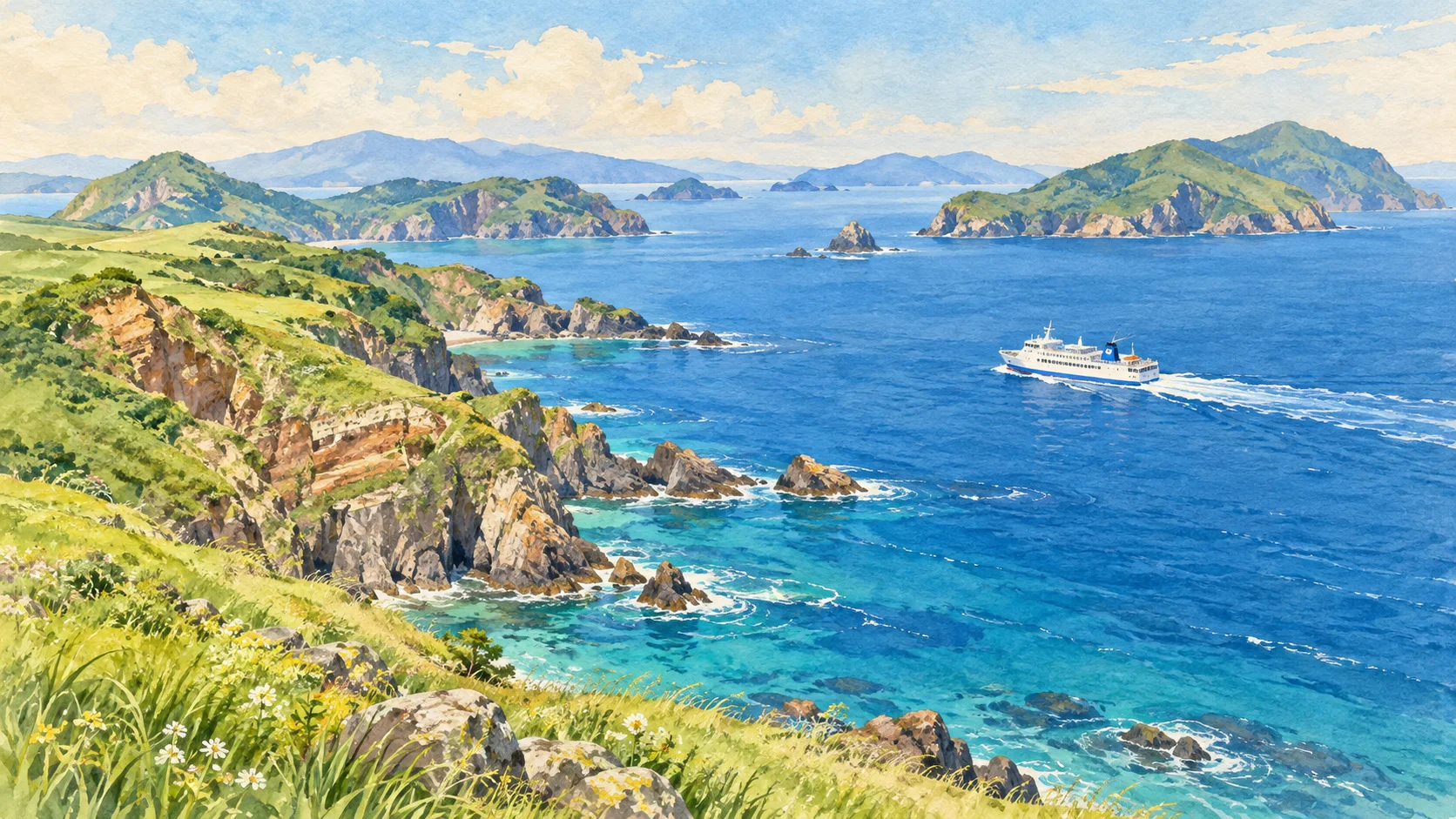
Choose Oki ferries from Sakaiminato or Shichirui, distinguish Saigo, Beppu, Hishiura and Kurii, and plan Kuniga, Akiya, Sekiheki and Candle Island around local boats, buses, rooms and cancellation terms.
Sakaiminato or Shichirui: destination island first, mainland base second
Mainland departures use Sakaiminato in Tottori and Shichirui in Matsue, Shimane. From Matsue, use a connecting bus to the port. From Yonago via Sakaiminato, match the land journey to the actual departure port. A Shichirui ticket still requires travel from Sakaiminato to Shichirui; only a Sakaiminato departure boards there. Staying in Yonago does not make every Oki sailing a Sakaiminato departure.
Read down one vessel’s column in the timetable. A boat may call at Dogo before Dozen, or leave Sakaiminato for Kurii and Beppu before Saigo. Passing an island differs from calling there. A downward arrow means continued sailing, so you cannot plan to disembark at that row. For Hishiura, find its arrival time, then distinguish subsequent departures and local connections.
For the mainland night, compare Matsue hotel room choices or Yonago and Kaike accommodation. Before an early boat, plan breakfast availability, luggage collection and the bus stop together.
What the actual 29 October 2026 timetable shows
In Oki Kisen’s date query for 29 October 2026, Kuniga leaves Shichirui at 09:00 and reaches Saigo at 11:25. It leaves Saigo at 12:00, reaches Hishiura at 13:10, departs at 13:30 and reaches Beppu at 13:45. Staying aboard from Shichirui to Nishinoshima arrives too late for Urago’s 13:00 sightseeing bus. Compare the 15:00 session instead and add the Beppu–Urago municipal bus. This is a date-specific example; select the date again for another trip.
That day’s Shirashima leaves Sakaiminato at 14:10, reaching Kurii at 16:35, Beppu at 17:10 and Saigo at 18:35, without calling at Hishiura. For a first night in Ama, investigate a Dozen local-boat transfer rather than treating it as a direct afternoon Hishiura boat. A 16:35 Kurii arrival is already near evening. Arrange Sekiheki road travel and lodging separately: it suits an overnight stay, not a long coastal day.
Read the full return direction too. The 15:40 Saigo ferry reaches Shichirui at 18:05. Another leaves Saigo at 08:30 via Hishiura, Beppu and Kurii, reaching Sakaiminato at 13:20. The final island night changes available returns. Dozen guests cannot use Saigo’s departure as the boarding time at their nearby port. The dated Oki Kisen timetable and connecting buses share a page; save the sailing date with it.
Matsue Station stand 9: which port does the bus serve?
The same 29 October 2026 connection table gives Matsue 07:50 to Shichirui 08:30 for the 09:00 ferry, from stand 9. Sakaiminato Station has an 08:24 bus reaching Shichirui at 08:39. These leave about half an hour or less before sailing. Prepare the passenger form, reservation and payment before boarding the bus, then go straight to procedures rather than making port breakfast essential.
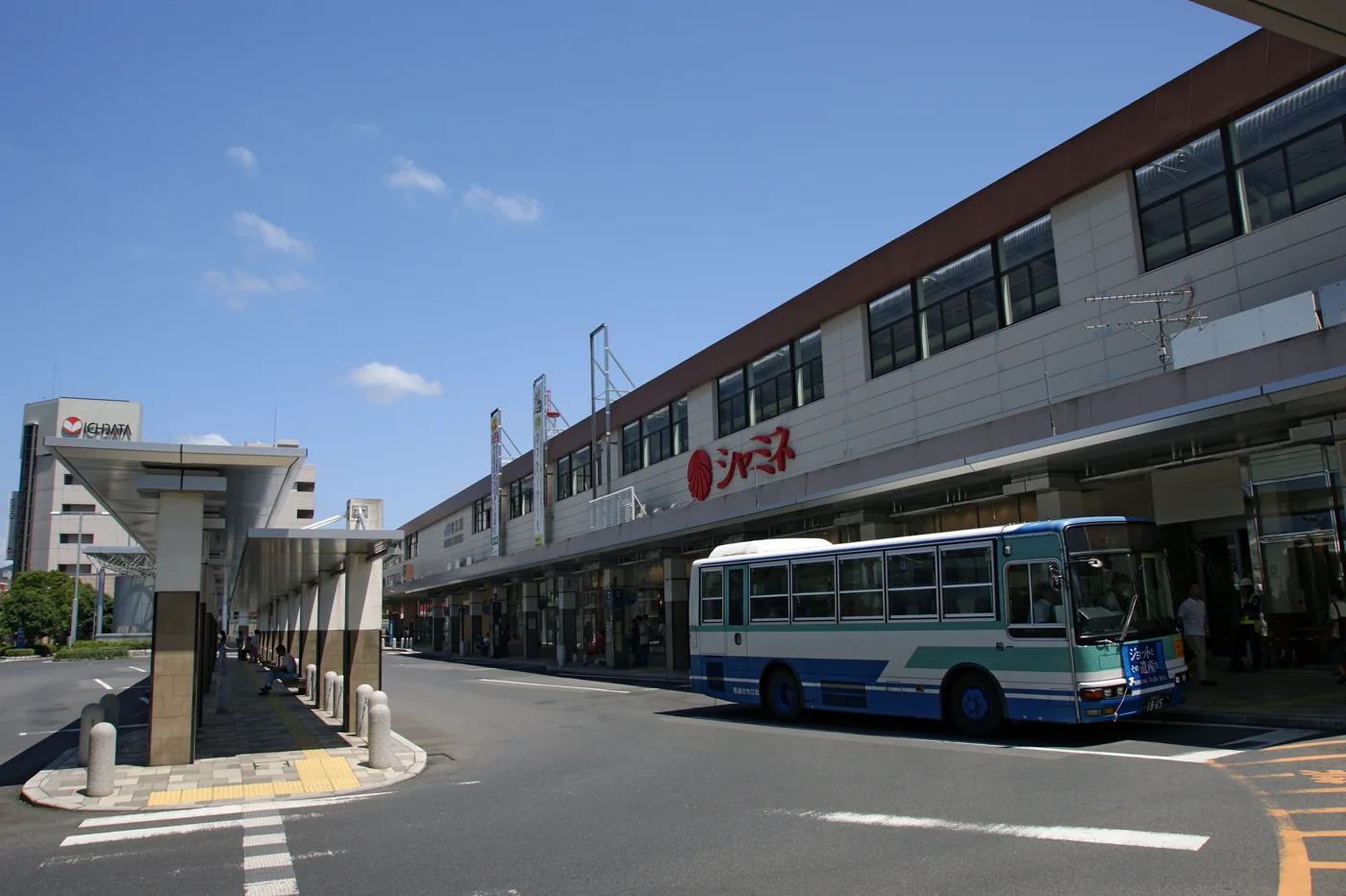
The same day lists Matsue 13:00 to Sakaiminato Station 13:40 for the 14:10 boat. The afternoon high-speed boat leaves Shichirui at 15:45, connected by Matsue 14:35 to port 15:15. Save the ferry or high-speed heading with the bus table, so an afternoon Sakaiminato bus is not mistaken for a Shichirui connection.
The checked page lists adult bus fares of ¥1,200 from Matsue to either Shichirui or Sakaiminato, and ¥500 from Sakaiminato Station to Shichirui. After the ferry reaches Shichirui at 18:05, the table gives a bus at 18:10 reaching Matsue at 18:50. High-speed connections separately say departure follows completed disembarkation or boarding. Choose onward long-distance trains from actual station arrival, not the moment the boat docks.
Ferry second class, high-speed boats and vehicles need different bookings
Without a car and wanting flexibility, compare ferry second class first. Oki Kisen says individuals can board second class without reservations; groups of 15 or more must book. Special second class and higher cabins accept telephone bookings, not online ferry-cabin reservations. If a fixed resting cabin matters, telephone before booking activities. Missing online cabin inventory does not mean the boat is full.
Rainbow Jet high-speed boats require telephone or online reservations. Each person may carry up to two items, each with total dimensions within one metre and weight no more than 10 kg, fitting at feet or on the lap. Medium or large items such as cool boxes, fishing gear and golf bags are not permitted. Measure suitcases before choosing the boat and keep crossing clothes and cameras in small luggage you can carry.
Cars and motorcycles on mainland ferries require separate telephone reservations. Car length follows the vehicle inspection certificate. Vehicle passengers must complete port-counter procedures one hour before sailing, earlier than the connecting-bus arrivals above. Arrive independently in good time rather than using the foot-passenger bus schedule. For island car hire, agree collection and return on each island to reduce vehicle-shipping queues and costs. See the cabin, luggage and vehicle booking rules.
Calculate fares by segment; disembarking ends the unused ticket portion
Adult one-way fares from 1 June 2026 are ¥3,870 for mainland–Oki ferry second class, ¥4,990 special second class and ¥7,360 high-speed. Dogo–Dozen costs ¥1,760 second class or ¥3,360 high-speed. A mainland return in second class totals ¥7,740. Add a Dogo–Dozen return at ¥1,760 each way for ¥11,260 overall. List lodging, buses, activities and Dozen local boats separately.
Primary-school children pay half the adult fare. Each adult can bring one preschool child aged six or under free, but a preschool child occupying a separate high-speed seat pays half the adult fare. List children needing seats when buying tickets. Hotel bed-sharing follows the accommodation product separately. With two children, boat seats and extra room futons are different costs.
Oki Kisen states that disembarking en route invalidates the onward ticket portion. Buy separate segments for a night in Saigo before continuing to Beppu. A ticket from the mainland to a farther port cannot be paused overnight and resumed. Dozen also has separate Oki Kisen and Oki Kanko local rates. Record operator, segment, vessel and port together. The current passenger fares also include vehicle rates; use the revision for your sailing date.
Dozen local boats: Isokaze carries people; Ferry Dozen also carries cars
Oki Kanko’s Isokaze and Ferry Dozen link Nishinoshima, Ama and Chiburijima. Isokaze carries 70 passengers; Ferry Dozen carries 100 and about ten cars. Neither accepts advance reservations: boarding is first come, first served. Dogo–Dozen still uses Oki Kisen ferry or high-speed services. Keep the Dozen local map separate when planning land and boat connections.
Both local boats currently cost ¥300 adult and ¥100 child one way. Ferry Dozen lists ¥1,000 vehicle shipping for a car under five metres. Passenger and vehicle tickets are separate. An adult making two local crossings can budget ¥600, rather than extrapolating mainland fares. For a large ferry from another operator, use that company’s segment rate.
An announcement dated 27 July 2026 requires tickets from machines before boarding. Machines are at Beppu’s office and Isokaze boarding point, inside Hishiura’s local waiting room and at Kurii’s local boarding point. Kurii has no office. For vehicle shipping there, buy passenger tickets then ask crew. Buy before joining the correct queue rather than leaving it when the boat arrives. Save the new local-ticket announcement with the port map.
Beppu marks separate boarding points for Isokaze and Ferry Dozen. Identify your next vessel before choosing a waiting area. The local site links regular and temporary 2026 schedules. For a day trip, choose the return to your base first, then work backwards through coastal road travel. Rebuild all connections under a temporary timetable. If the last leg also connects to Oki Kisen for the mainland, sleep on the departure island the previous night to reduce same-day dependence on two operators.
Kuniga Coast: see two heights by bus, or walk 2.8 km downhill
Kuniga combines high views over sea cliffs with an upward view of a rock arch from the shore. Matengai rises 257 metres; Tsutenkyo is an arch cut through rock by the sea. Put Matengai and Kuniga Beach together to understand both landforms rather than leaving after one viewpoint. This is why the sightseeing bus suits car-free visitors: it links two heights.
Oki Kanko’s regular 2026 bus leaves the sightseeing-boat boarding point at Urago Port, visits Matengai and Kuniga Beach and returns to Urago in one hour 45 minutes. Adult fare is ¥4,000, child ¥2,000. It runs daily from 21 March to 31 October that year. From November, plan hire cars or reserved taxis rather than extending the 2026 autumn service into winter or next year.
For more walking, choose the optional Matengai–Kuniga Beach section: officially 2.8 km, descending 235 metres in about 70 minutes. It requires sustained downhill walking. Those with knee trouble can stay on the vehicle route. Tell the operator before departure if the group splits between walkers and riders, including meeting arrangements. There are connections after the descent too. Prepare shoes, water and bag weight for this distance, not just a harbour stroll.
Urago and Beppu are different ports; the 15:00 session shapes your night
The Kuniga bus assembles at Urago; inter-island ferries and main local boats use Beppu. The operator gives about six kilometres between them. The municipal bus costs ¥200 throughout; alight at Urago Kankosen Noriba-mae. The 2026 connection for the 13:00 tour leaves Beppu at 12:19 and reaches Urago at 12:43. After the 14:45 finish, the listed municipal bus leaves at 14:51 and reaches Beppu at 15:15.
For 15:00, the listed bus leaves Beppu at 14:00 and reaches Urago at 14:26. After the 16:45 finish, an extra ¥200 extends the sightseeing bus to Beppu, arriving at 17:00; request it at the counter. This suits a night near Beppu and removes a separate bus wait. For Hishiura or Kurii that night, add ticket buying, the walk to the local boarding point and the selected boat after 17:00.
If your date’s local boats do not connect, stay on Nishinoshima or choose the earlier tour. With Ama lodging booked, prioritise 13:00 to leave an afternoon return window. Arriving at Beppu from the mainland only in the afternoon, compare 15:00 with a Nishinoshima night. Choose bus session, crossing and room together rather than discovering at Urago that the bed is on another island. The Kuniga bus dates, sessions and connections are the starting point.
Akiya Coast on Nakanoshima: red volcanic rock and a heart-shaped opening
Akiya on Nakanoshima’s north-east coast suits close ground-level views of volcanic rock. The Ministry of the Environment describes a landscape formed by volcanic activity about 2.8 million years ago, with red cliffs of porous volcanic rock, strata and islets. Start where red rock meets sea, then follow established paths to the boulder’s heart-shaped opening. Place the famous shape in its wider coast.
Official travel time from Hishiura is about 20 minutes by car, then about five minutes on the coastal path to the heart-rock view. Add return travel and boat waiting to the coastal stay. With a Hishiura night, make Akiya the main daytime outing and keep evening for the harbour-front sea view rather than rushing back near dark.
Ama has public buses linked from the tourism transport page. Find the outward stop and return to Hishiura before filling in shore time. For flexibility, compare hire cars or bicycles. The official site calls Nakanoshima relatively flat, but cycling still includes return distance, locking and return procedures. Reserve both taxi directions rather than hoping to call one after the walk. The ministry’s Akiya Coast guide helps choose time for strata and paths.
Oki Islands UNESCO Global Geopark’s Akiya Coast introduction explains red basalt, volcanic ejecta and a heart-shaped opening formed by marine erosion.
Chiburijima’s Sekiheki: allow time for the western red cliffs
Sekiheki runs about one kilometre along Chiburijima’s west coast, with cliffs 50–200 metres high. The ministry describes an eroded volcanic crater section from eruptions about six million years ago. Iron oxidation in lava spray produced red colouring, and repeated deposits left bands. From the viewpoint, find red-to-dark layer boundaries and the direction of the cliff, rather than only its reddest patch, to understand its scale.
Official driving time from Kurii Port is about 25 minutes. Treat return driving, viewing and waiting at the port as one outing. If there is only time around the harbour, leave Sekiheki for another day. Chibu taxis do not wait at the port at all times; tourism guidance requires reservations, and hire cars are limited. Secure ground transport before selecting the local boats around it.
E-bike riders should consider hills and return energy. Hire cars or reserved taxis suit those avoiding climbs. Land viewpoints and sea excursions show different directions; boat views also depend on operator, season and conditions. For a land-focused visit, use the ministry’s Sekiheki landscape and road information. Return via Kurii to the same base and leave luggage in the original room.
Candle Island: sleep on Dogo after the sunset cruise
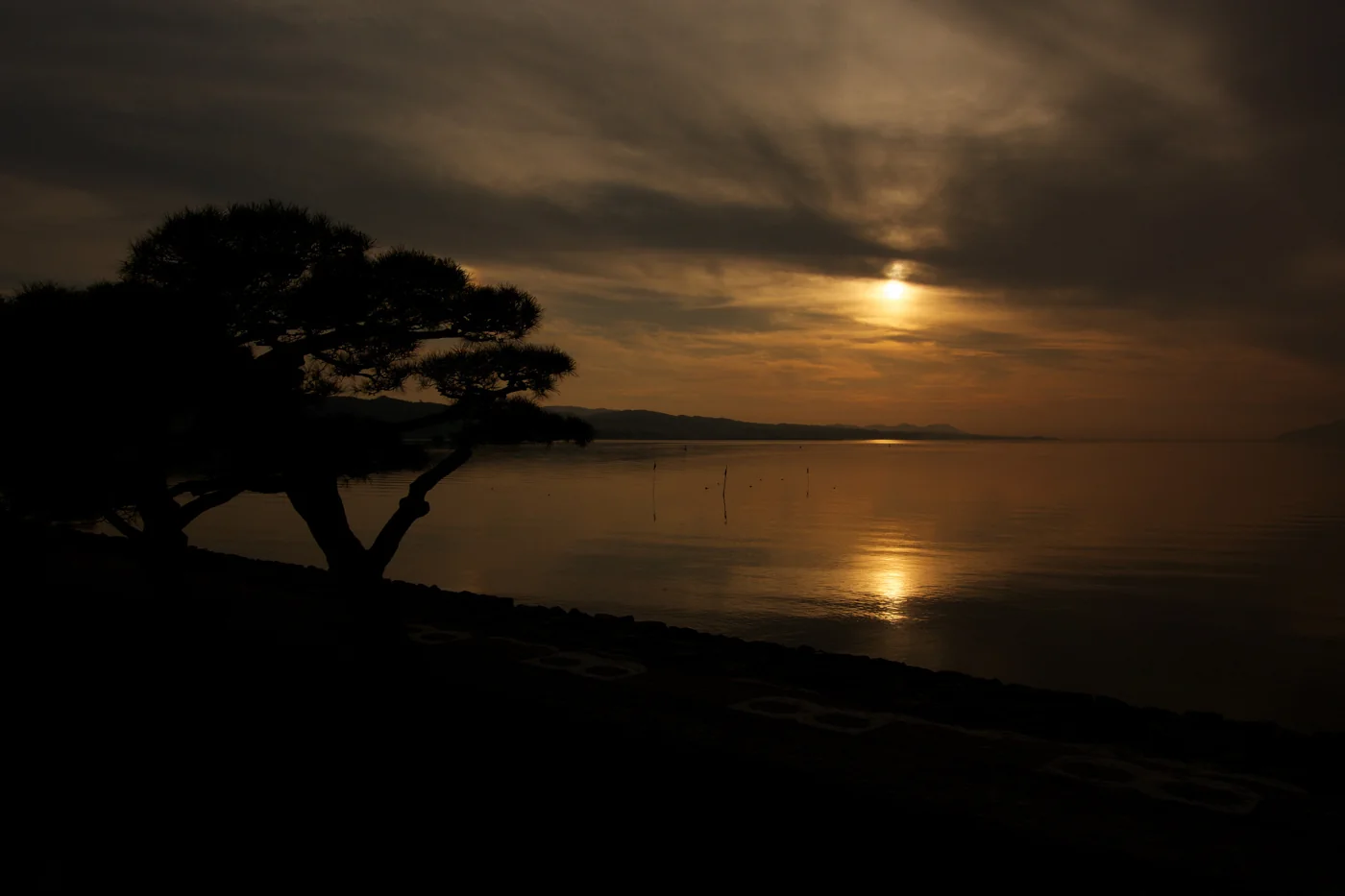
Candle Island most strongly affects overnight order. The official activity page lists 1 April–31 October, about 50 minutes aboard, with departure between 16:00 and 18:00 according to sunset. The late-October guide time is 16:10, but the actual time is notified that day. The flame-like sunset above the pillar needs the right angle, sunlight and sea conditions. Leave the full trip free and do not add an onward island boat.
The operator explicitly says no Dozen boat follows the cruise, so accommodation must be in Okinoshima Town that night. If Ama or Nishinoshima is already booked, move the cruise to the Dogo night. Saigo to Fukuura quay takes about 35 minutes by car. Buses may leave a long wait before sailing, and there is no return bus afterwards. Bus users must reserve a return taxi.
Reservations use the Elcool (エルクール) app via the official site. Sailing is judged around 15:00 that day. Assembly is about 30 minutes before the confirmed departure, notified around 15:00–15:30. Do not fill the afternoon with remote places out of contact. After notification, reach the quay at the specified time. Call Okinoshima Town Tourism Association by 17:00 the previous day for cancellation or number changes. If sailing is confirmed, pay cash on site: adult ¥4,000, child ¥2,000.
Wheelchairs cannot be carried on this cruise. Wheelchair travellers must telephone the association before booking to discuss movement and help. If cancelled, keep Dogo lodging and return transport, use evening for the hotel or a short harbour stop, and contact the booked taxi. Resume the next day’s crossings under the original dated timetable to avoid cascading room and ticket changes. See the Candle Island booking, assembly and return conditions.
Stay in Saigo: Oki Plaza’s 35 m² twin or 53 m² suite
For a Saigo departure next morning, compare Oki Plaza Hotel near the port. Its site gives about five minutes on foot from Saigo, at 11-1 Minatomachi, Okinoshima Town. A Saigo luggage base concentrates morning departures and car collection. Candle Island still requires separate travel to Fukuura quay; hotel harbour and cruise boarding are different places.
For two, compare Superior Twin (スーペリアツイン) and Sokai Panorama Suite (蒼海パノラマスイート) by their full room names. The former is 35 m² with Hollywood twin beds, bath and toilet. The latter is 53 m², also Hollywood twin, with a view bath and windows in different directions over sea and port town. Start with the suite for harbour views from the bath, or the 35 m² room for twin beds and an ordinary bathroom.
Japanese-Western rooms list eight or twelve tatami mats plus twin beds. Japanese rooms include an eight-mat type with bath and toilet and a ten-mat type with toilet. For in-room bathing, choose a type explicitly listing a bath. For beds, choose twin or Japanese-Western. Keep full Japanese room names in the comparison so a ten-mat room is not mixed with an eight-mat room with bath. Standard check-in is 16:00 and check-out 10:00; follow product-specific times where stated. Check the official Plaza rooms individually.
Book Plaza transfers by the previous day; separate late arrivals and early boats
Plaza’s free reserved transfer covers only Saigo Port and hotel. It serves scheduled evening arrivals and morning departures and must be arranged by the day before the stay. Supply date, vessel and actual arrival time. From Dozen, include the departure port so the hotel can identify the service. The site lists an 08:00 hotel departure for the 08:30 ferry; finish packing and payment before the vehicle leaves.
Use exact sailing details for evening arrivals. The hotel page still describes the last transfer with an 18:30 arrival, while the 29 October 2026 ferry timetable gives Saigo 18:35. Provide 18:35 and Shirashima when booking and obtain the hotel’s arrangement for that service. For walking, use the official approximate five-minute distance.
From the airport, the official route is a paid airport bus to Oki Port Plaza-mae, then about five minutes on foot. Before an early boat, focus morning preparation on check-out and port arrival. Leave bathing and walks for the preceding evening to meet the specified transfer time. The Plaza transfer and airport information gives the booking deadline.
Entô at Hishiura: shower twins, a third futon or a room for five
For consecutive Nakanoshima nights with day trips to Nishinoshima or Chiburijima, Entô is about three minutes on foot from Hishiura terminal. It separates the BASE main building and NEST annex. Choose sleeping arrangement and bathing first. Two adults wanting separate beds can compare NEST 2: 27 m², two semi-double beds and a sea-view shower. For a bath and terrace, NEST DX is 54 m² with two double beds, capacity two adults plus two bed-sharing children.
For three adults, 51 m² NEST WA has two double beds and one additional Japanese futon, terrace, sea-view bath and tatami, capacity three adults plus two bed-sharing children. If all three want Western beds, compare BASE’s 26 m² Western room (洋室), with two semi-doubles plus an extra bed, unit bathroom and maximum three adults. Agree who uses futon or extra bed before comparing prices.
For four, 52 m² SUPERIOR WA has two queen beds and up to two futons added according to numbers, with separate bath and toilet. Five adults can share BASE’s 52 m² Japanese-Western room (和洋室): two semi-doubles, three futons and eight tatami mats, also with separate bath and toilet. For wheelchair turning space, compare universally designed 68 m² NEST JS, listed with step-free floors and wider circulation. See Entô’s official room layouts and capacities.
Meals and luggage at Entô: reserve dinner before choosing the next boat
Entô Dining dinner requires booking by the previous day. State allergies when reserving; follow the meal arrangements of an inclusive accommodation product. Breakfast runs 07:00–09:00 with five start slots. The hotel recommends 07:00 before an early high-speed boat. For hotel dinner after island hopping, work backwards from the final Hishiura return through coast and road travel. For dinner on Nishinoshima, select a boat back to Hishiura first and book the restaurant to the same timetable.
Free luggage storage starts at 07:00 on check-in day and lasts until 22:00 on check-out day. The tourism association in Hishiura terminal also stores bags, and the hotel access page says staff can deliver them to the room. Before dropping cases and boarding another local boat, agree storage and collection arrangements. For an overnight on another island, move the large cases or arrange overnight storage separately rather than extending check-out-day storage beyond its limit.
Check-in starts at 15:00. If room time matters, leave at least one afternoon at Hishiura. For two days out from early to late, prioritise the needed beds and port access. The sea-view window already faces Dozen waters; watching boats is time worth keeping. Use Entô’s meal and luggage FAQ as the pre-arrival contact list.
Separate ferry, cruise and hotel cancellation timelines
Article 12 of Oki Kisen’s passenger terms allows one change, subject to capacity, before an ordinary ticket expires or a specified-service ticket departs. There is no change fee, but fare differences are paid or refunded. Coupon and commuter tickets are excluded. This suits advance changes; arriving after departure involves different conditions. Provide original ticket, specified service and desired replacement together before the original leaves.
Article 17 sets maximum fees for unused, unvalidated specified-service tickets cancelled before departure: ¥200 seven days before; from six to two days before, the higher of 10% of face value or ¥200; from the previous day until departure, the higher of 30% or ¥200. The company sets fees within those caps. For unvalidated ordinary tickets without a specified sailing, the maximum during validity is ¥200. When the company takes Article 5 measures such as cancellation and refunds the unused portion, no fee applies. These are passenger terms; retain relevant terms for vehicle shipping or separately purchased packages too. See Articles 12 and 17 of the passenger terms for full categories.
Entô’s general accommodation schedule is free 15 days before, 20% at 8–14 days, 50% at 2–7 days, and 100% the previous day, on the day or for no-show. Specific plans use their own terms. The FAQ waives cancellation fees when bad weather cancels a flight or ferry and prevents arrival. Keep the actual cancellation notice and contact the hotel so the reason can be applied. Voluntary itinerary changes follow the booked plan’s deadlines.
Candle Island number changes and cancellations must be reported by 17:00 the previous day, a separate procedure from hotel percentages. Handle the shipping notice first, then hotel, car and activities, recording each completion. Cancelling one boat ticket leaves other reservations intact. If removing an island, process each booking to avoid an unused room or a driver still waiting at the quay.
Two nights: choose sunset or Dozen coasts as the main rhythm
For two nights with Candle Island first, keep the first day on Dogo. Take a boat arriving early enough at Saigo, store luggage and prepare for the afternoon cruise, then sleep on Dogo. On day two, choose a service actually calling at Hishiura or Beppu and sleep on the arrival island. On day three, use the departure boat to determine remaining time. Choose one main Dozen coastal outing rather than putting Kuniga, Akiya and Sekiheki into the remaining afternoon.
For Dozen coasts, spend both nights at Hishiura or Beppu. Store bags on arrival and give the full day to Kuniga. Add either Akiya or Chiburijima’s Sekiheki only if another half day fits actual boats. Hishiura guests can put Akiya on arrival or departure day; Beppu guests connect more easily with the 15:00 Kuniga bus.
With a longer stay, combine one Dogo night and consecutive Dozen nights. Keep one main outing on the crossing day: for example Saigo to Hishiura in the morning, luggage storage, then Akiya. Give another full day to Kuniga and a separate Chiburijima return. Each island then has ground time, beyond a port call. Spend the final night on an island served by your chosen mainland return, making check-out, luggage collection and boarding one transport sequence.
A few useful answers
Can I visit all four Oki islands in two nights?
Choose Dogo sunsets or Dozen coasts as the main focus. To spend time ashore on all four, add a crossing day and consecutive Dozen nights, using your travel date’s boats to set arrival and departure.
Do Dozen local boats need reservations?
Isokaze and Ferry Dozen do not accept reservations and board first come, first served. Buy tickets from each port’s designated machine before boarding.
Can I return to Ama after the Candle Island cruise?
The official guidance says no boat goes to Dozen after the cruise. Stay in Okinoshima Town on Dogo that night.
Can I see Kuniga Coast without driving?
The regular sightseeing bus leaves Urago from 21 March to 31 October 2026, with a separate municipal bus from Beppu. In winter, arrange road transport such as a reserved taxi.
Official information and references
Sources used in this guide.
- Oki Kisen | Routes and first-time boarding
- Oki Kisen | Dated sailings and connecting buses
- Oki Kisen | Cabins, high-speed boats and vehicle reservations
- Official Oki tourism | Island names, inter-island and local transport
- Official Oki tourism | Candle Island cruise
- Oki Plaza Hotel | Rooms and facilities
- Entô | Named rooms and sleeping arrangements
- Oki Kanko | Dozen local boats and ports
- Oki Kanko | 2026 Kuniga regular sightseeing bus
- Entô | Meals, luggage and cancellation
- Entô | Hishiura access and luggage
- Oki Plaza Hotel | Address and port transfers
- Ministry of the Environment | Akiya Coast
- Ministry of the Environment | Chiburijima Sekiheki
- Oki Kisen | Passenger fares and child tickets
- Oki Kanko | Advance-ticket notice, 27 July 2026
- Oki Kisen | Passenger transport terms