Compare named rooms near Matsue Station and Lake Shinji: third beds, children sharing, in-room hot springs, accessibility, meal times, cancellation, luggage and transfers for your party.
- Region & Focus
- Matsue
- Reading Scope
- 32 min read · 16 chapters · 4 Q&As
- Official Verification
- 17 official sources checkedUpdated 28 October 2026
- Key Topics
- Where to stayBookingHot springs
Chapter Route Map (tap any stop)
- Put the third sleeping place and departure station on one booking sheet
- Matsue Tokyu: compare beds before the 29.8 m² twin and 38.2 m² Japanese-Western room
- Tokyu children sharing beds: preschool children free, one per bed
- JR Matsue Station to Tokyu: north exit and lifts
- Ichibata’s two triples: an extra bed by the lake or a sofa bed in the west wing
- For four or six, distinguish Ichibata’s Japanese-Western rooms
- Naniwa Issui 301 and 302: the third bed changes daytime space
- Rooms 306/307 for five; 303/305 for two with showers
- Lake views: water, evening colours or the setting sun itself?
- Private bathing and care needs: match room 308 feature by feature
- Ichibata dinner and breakfast: buffet times and a 07:00 start
- Naniwa Issui meals: private dining and dinner starting by 19:30
- Tokyu breakfast: separate regular and special-period prices
- Late arrivals and cancellation: Tokyu’s 15:00 deadline and Naniwa Issui’s three-day charges
- Driving: first-come Tokyu parking and Naniwa Issui’s inland entrance
- One minute or eight from the Ichibata station means different luggage plans
- Quick Q&A
A third sleeping place may be an extra bed or a sofa bed. An in-room hot spring also changes room choices, meal times and check-out. Start with named rooms at these three hotels, give everyone a sleeping place, then choose between the JR station and Lake Shinji for the night.
Put the third sleeping place and departure station on one booking sheet
Three adults wanting separate sleeping places can start with Hotel Ichibata’s Lake View Triple and Superior Triple. For an in-room hot spring, look at named Naniwa Issui rooms. For two adults and a preschool child leaving by JR next day, Matsue Excel Hotel Tokyu’s station location and bed-sharing rules are easier to arrange. Decide who sleeps where before choosing views and meals.
The locations are specific: Tokyu is about three minutes on foot from JR Matsue Station’s north exit; Ichibata about one minute from Matsue Shinjiko Onsen Station; Naniwa Issui about eight minutes from that same Ichibata Railway station, with a station transfer by reservation. The final walk with luggage differs even between the two hot-spring properties.
Room details, meal times and rules below were checked on 28 October 2026. Start with Tokyu’s 29.8 m² twin, Ichibata’s 33 m² lake-view triple and Naniwa Issui rooms 301 or 306/307, searching the same date and guests. Private bathing, three sleeping places and easy departure lead to different choices. Put required features in the room field to compare prices on the same basis.
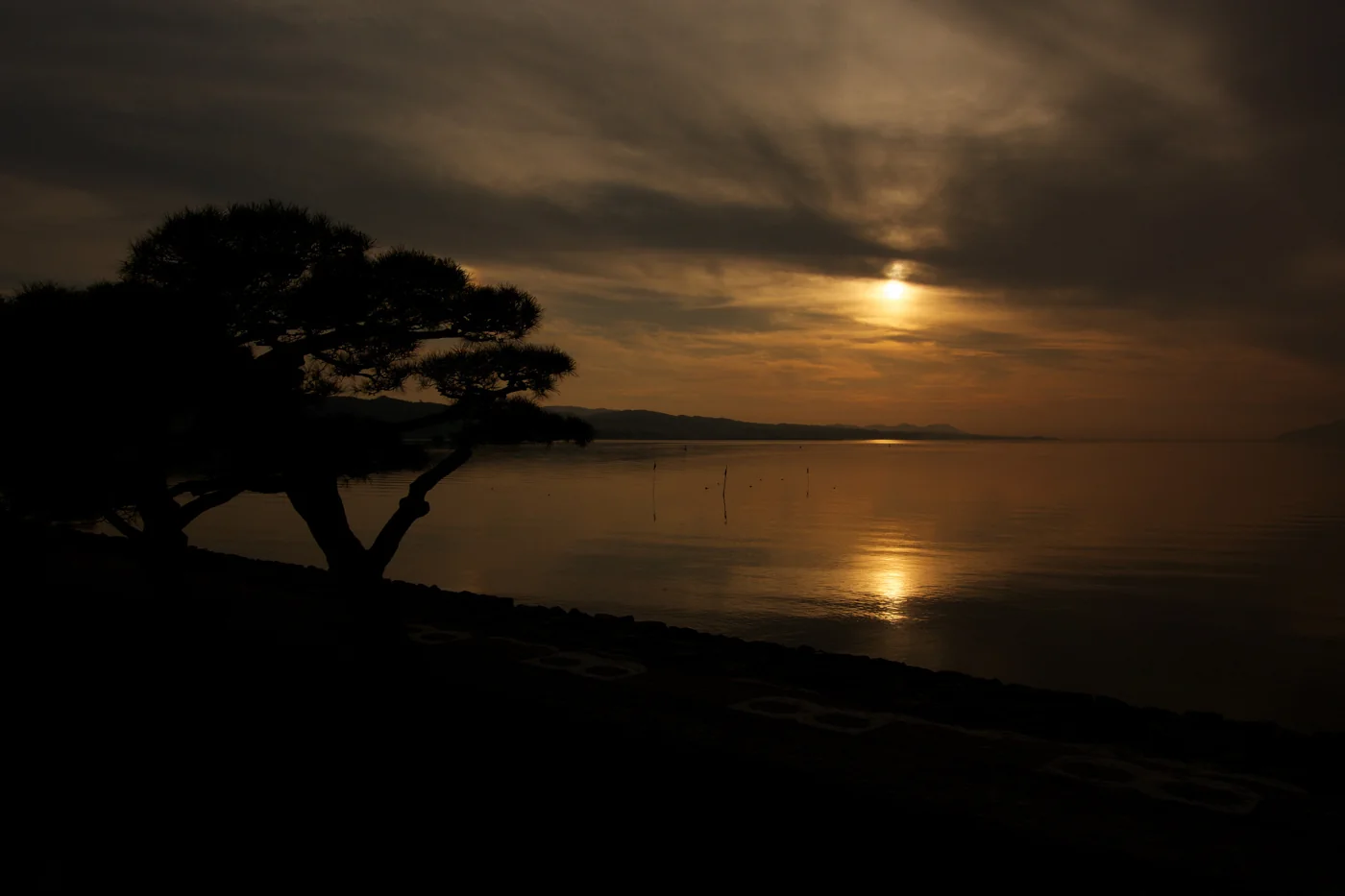
Compare named rooms near Matsue Station and Lake Shinji: third beds, children sharing, in-room hot springs, accessibility, meal times, cancellation, luggage and transfers for your party.
Matsue Tokyu: compare beds before the 29.8 m² twin and 38.2 m² Japanese-Western room
Matsue Excel Hotel Tokyu is at 590 Asahimachi, Matsue. The official room page lists Standard Twin at 17–21.1 m² and Superior Twin at 29.8 m², both with two 110 × 195 cm beds. The main difference is room area. For two people with two cases, 29.8 m² buys more room to move, with the same bed width. See official rooms and bed dimensions.
Deluxe Twin and Deluxe Twin (Japanese-Western Room) are both 38.2 m² with two 120 × 203 cm beds, wider and longer than the first two twins. The Japanese-Western room can suit families wanting space to organise clothes during the day. Use the full Japanese room name when booking: the ordinary Deluxe Twin and the Japanese-Western option in brackets are separate choices.
Standard Twin, Superior Twin and Deluxe Twin have occupancy of one to three. For three separate sleeping places, choose a three-person product and record both main beds and the third guest’s bedding. If you want the third-bed type explicit during comparison, Ichibata’s two triples give clearer details.
The 17 m² Standard Double has one 160 × 195 cm bed; the 29.8 m² Superior Double has one 195 × 200 cm bed. Adults sharing can choose by width, while friends wanting separate beds should look at twins. Even the largest room has an occupancy limit: the 53.1 m² Suite is listed for one or two, so three guests should choose a type listed for three.
Tokyu children sharing beds: preschool children free, one per bed
Tokyu’s child-support page says accommodation and breakfast are free for children from birth to preschool age sharing an adult’s bed without a separate bed, limited to one child per bed. Children using their own bed pay the adult price. For two adults and a child, decide first whether the child sleeps separately. See the official bed-sharing rules.
For example, if two adults use separate 110 cm beds, one young child shares with one adult. Families used to wider beds can compare Deluxe Twin’s 120 cm beds or Superior Double’s 195 cm bed. Twins let people sleep separately; one wider double puts adults and child on the same sleeping surface.
Primary-school children and children using their own beds count in the adult field of the website search. Primary-school breakfast has a separate child price. The search separates bed-sharing preschool children from guests using beds. Search by actual sleeping places when adding a child’s bed to see capacity and total price. For two young children, enter each age and assigned bed.
The hotel offers children’s toothbrushes and other items, restaurant high chairs and cutlery. Shimanekko children’s yukata come in large and small sizes, by reservation and in limited numbers. Request sizes after booking and collect them at reception on arrival.
JR Matsue Station to Tokyu: north exit and lifts
Head towards the north exit at Matsue Station. Tokyu’s official step-free route turns right after the JR ticket gates to entrance A of the underpass, west of Matsue International Tourist Information Centre. Take the lift down, then the lift to street level at exit D. Head east, cross the pedestrian crossing, walk about 40 metres and turn left at the first junction without signals. Save the A/D instructions for large cases or a pushchair. See the official lift route.
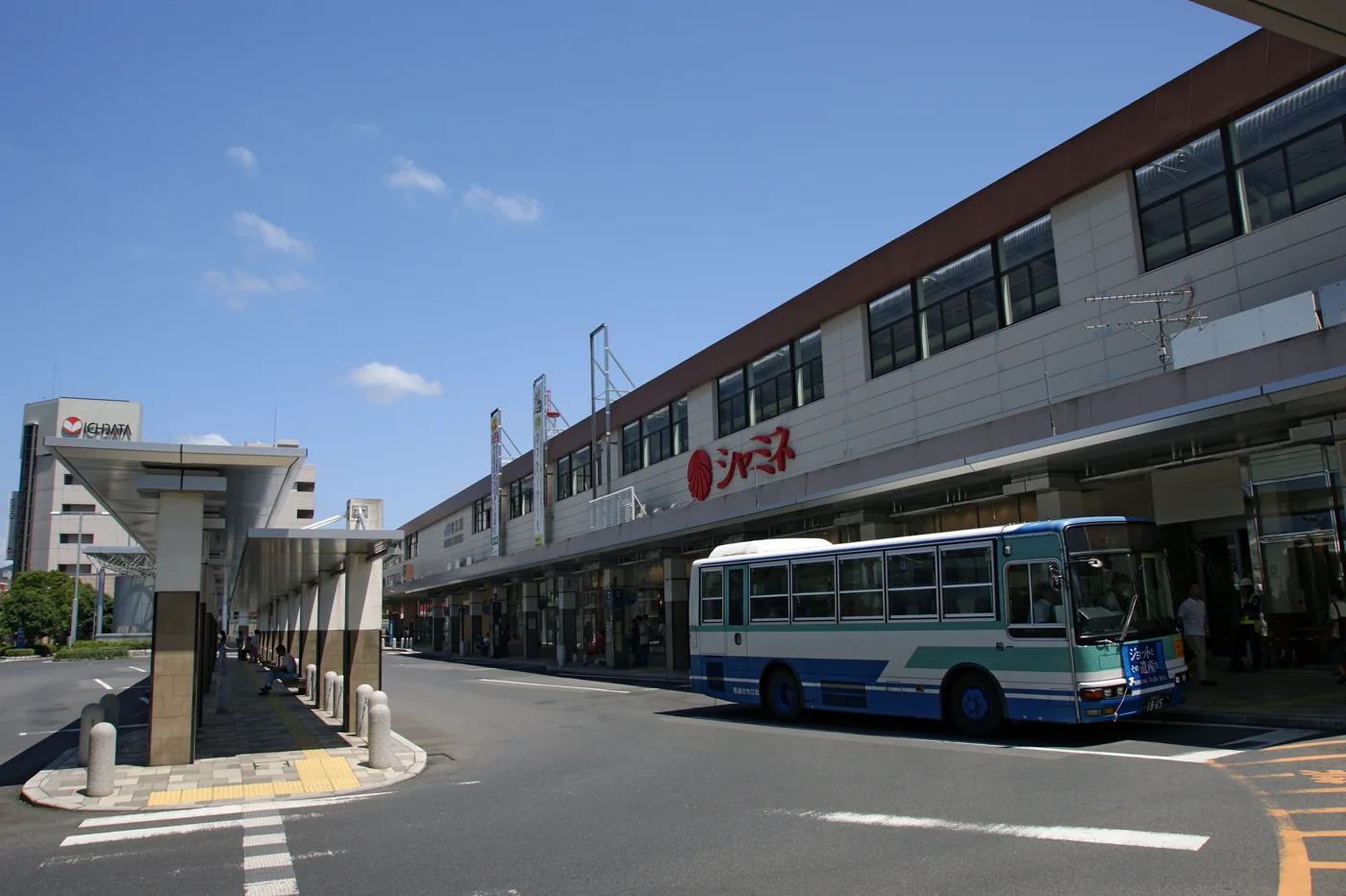
For a fixed JR train after breakfast, allow time for the lifts at A and D. Pack before breakfast so you can leave afterwards without returning to organise luggage.
Check-in is 15:00 and check-out 10:00. This station base suits dinner in town and a JR departure next day. For Ichibata Railway, you still need to reach Matsue Shinjiko Onsen Station. Write down which station you depart from before booking to keep the morning luggage route clear.
Ichibata’s two triples: an extra bed by the lake or a sofa bed in the west wing
Hotel Ichibata is at 30 Chidoricho, Matsue. Its new main building’s Lake View Triple is on Levels 3–6 (3F–6F), 33 m² for three, with two 120 cm beds and one extra bed. Bath and toilet are separate. This gives three adults a clear lake-facing layout with separate bathroom use. See Ichibata’s official room specifications.
The Level 5 (5F) west-wing Superior Triple is 36 m² with two 140 cm beds and a sofa bed, also for three, with a unit bathroom. Its main beds are wider, but the third guest uses a sofa bed and bathroom use differs. It adds 3 m²; agree who uses the sofa bed before choosing.
The website places this west-wing type under City Side Rooms, while the new main building triple is under Lake View Rooms. To open the curtains onto Lake Shinji, choose the Lake View name. If out most of the day and wider main beds matter more, the west-wing triple has its own value.
Two adults with a child needing separate bedding can also start with these triples. Once a sofa becomes a bed, daytime seating changes, and luggage uses the remaining space after all three beds are made. Compare lake-view extra-bed rooms for the view and west-wing rooms for wider main beds, then add meal-inclusive three-person totals.
| Room | Area and aspect | Sleeping places | Bathroom |
|---|---|---|---|
| Lake View Triple | 33 m², lake side of new main building | Two 120 cm main beds + one extra bed | Separate bath and toilet |
| Superior Triple | 36 m², west-wing city-side room group | Two 140 cm main beds + sofa bed | Unit bathroom |
For four or six, distinguish Ichibata’s Japanese-Western rooms
The new main building’s Lake View Japanese-Western Room is 33 m² with tatami space, two 120 cm beds and occupancy of four. The west wing’s Two-room Japanese-Western Room is 61 m² with two 140 cm beds and occupancy of six. The first combines a lake view and sharing; the second adds space and two-room separation for different generations’ routines. If four separate sleeping places are needed, list the remaining bedding for each guest.
A family of four staying one night can start with a two-adult, two-child plan in the 33 m² lake-view room. Four adults need more space for luggage, bathing and changing, so also price the 61 m² two-room option. Separate occupancy, main beds and ages to see who uses beds and who uses other bedding.
Friends preferring separate rooms can compare two city-side rooms against one large Japanese-Western room. Separate rooms allow different bedtimes and bathroom use; one large room keeps conversation and childcare together. Agree on routines before the view so everyone means the same thing by staying together.
Naniwa Issui 301 and 302: the third bed changes daytime space
Naniwa Issui MINAMO rooms 301 and 302 are lake-facing Western-style twins with open-air baths. The bed page lists two 120 × 200 cm beds, which can be joined as a Hollywood Twin by reservation no later than the day before arrival. Two adults and one bed-sharing young child are one arrangement. For a third separate sleeping place, arrange an extra bed in advance: up to three guests using beds plus one bed-sharing young child. See the MINAMO room-number guide.
For an extra bed in either room, the hotel removes the chairs and table. You lose the original place to sit for tea and snacks. Three adults should choose from the three-person layout rather than expecting the furniture in two-person photographs. For someone working or reading in the room, this trade-off matters more than the floor.
Rooms 301 and 302 can also be reserved together as connecting rooms. Four adults wanting main beds each and easy access between rooms can compare that arrangement. Reserve both as one connecting pair. It costs differently from three sharing with an extra bed, but provides two bathrooms and more independent rest space.
Rooms with open-air baths have check-in at 15:00 and check-out at 11:00. Arriving in the afternoon gives more time for private bathing than arriving just before dinner. Baths in 301 and 302 use Matsue Shinjiko Onsen water. Set the bed layout the day before, then take turns bathing and resting after arrival.
Rooms 306/307 for five; 303/305 for two with showers
MINAMO 306 and 307 are Japanese-Western rooms with open-air baths, two 120 × 200 cm beds and three futons on tatami, for five guests. The ten-mat Japanese area connects to the bed area without a partition. Three generations can share if all accept one open sleeping space. Different bedtimes and late conversation need that lack of separation considered.
The 130 cm-diameter Shigaraki ceramic tub is described as semi-open-air, with walls on three sides and an opening frame on the lake side. There is a separate shower area. It suits private Matsue Shinjiko Onsen bathing. The room entrance, shower and bath each have changes in level of about 15 cm; guests who struggle with steps can compare another layout.
Rooms 303 and 305 are eight-mat Japanese rooms for two, with futons and a multifunction shower only. Check-in is 16:00 and check-out 10:00, unlike the open-air-bath rooms. For two guests happy with futons and shared hot-spring baths, these offer another equipment choice. Choose a room with the corresponding check-out if you want to stay until 11:00.
Rooms 303, 305, 306 and 307 have no balconies and their windows cannot be opened. For an outdoor terrace, choose a named room with that space. These large windows offer an indoor lake view. Separate sitting with a lake view, private bathing and outdoor access into distinct needs.
Lake views: water, evening colours or the setting sun itself?
Naniwa Issui’s room overview says all rooms face Lake Shinji, but the building’s position means the sun’s disc cannot be seen sinking from guest rooms. You can see lake water, sky and evening colours in suitable weather. For a photograph of the sun dropping towards the lake, plan an outside viewing stop; value the room for water views throughout the stay.
Ichibata has lake-side and city-side rooms. If the budget permits one upgrade, consider time in the room. An afternoon arrival and departure after breakfast give more lake-view time. A late return and dawn departure favour beds and bathroom layout. Avoid paying for a view while spending all viewing hours outside.
For lakeside evening viewpoints and a two-city trip, see Two car-free days in Matsue and Izumo. Fix the hotel dinner start first, then choose evening colours from your room or a full sunset outside. One main evening plan leaves time to return, change and eat.
Private bathing and care needs: match room 308 feature by feature
Naniwa Issui 308 is an accessible corner Japanese-Western room for four, with two electric beds and two tatami futons. Beds are 120 × 200 cm, height-adjustable from 25 to 61.5 cm, with adjustable back and knee angles. They cannot form a Hollywood Twin. Check-in is 16:00 and check-out 10:00. Request bed rails or bedside supports at booking, specifying left or right. See the hotel’s electric-bed and extra-bed guide.
The room has no changes in floor level, sliding door openings of at least 80 cm, toilet rails and an accessible unit bathroom. Bath water is normally heated water, but hot-spring water can be requested at reception; staff enter the room to fill it. An automatic lifting shower chair and bath lift cannot be used in this bathroom. Carers can compare these details with normal bathing needs.
Rooms 301 and 302 also have level interiors and sliding door openings of at least 80 cm, but their toilets, washbasin areas and bathrooms lack a 150 cm-diameter wheelchair turning space. Rooms 306 and 307 have the 15 cm level changes above. Choose turning, transfer and bathing space before an open-air tub. Room-number details narrow choices better than an accessible-hotel filter alone.
For shared bathing, Naniwa Issui’s main and outdoor baths open 16:00–24:00 and 05:30–10:00. Men’s and women’s baths do not swap, and there is no private family bath. Ichibata’s panoramic hot spring is on the west wing’s Level 6 (6F), reached internally from the new main building. If all bathing must happen in the room, make the bath and care equipment required room features.
The official Matsue Shinjiko Onsen channel interviews Naniwa Issui’s president about accessible spaces and universal design in the property.
Ichibata dinner and breakfast: buffet times and a 07:00 start
Ichibata’s guest dining page lists Avancia dinner buffet at 17:00–21:00, last orders 20:30. Busy periods may use two 90-minute sittings. Match the dinner start to arrival when choosing half board. If staying outside until dark, choose a suitable sitting and bathing time first. See the guest dining page.
At the check, adult buffet dinner cost ¥4,300 on weekdays and ¥4,500 on Saturdays, Sundays and holidays; primary-school children ¥2,000; younger children aged three and above ¥800, including tax and service. Two adults and a primary-school child buying dinner separately total ¥10,600 on a weekday or ¥11,000 on a holiday. Compare that family dinner cost with the difference between breakfast-only and half-board plans.
Breakfast is 07:00–09:30, last orders 09:00, with clam soup, Nita rice, freshly prepared eggs and grilled fish listed. For an Ichibata Railway departure, pack first, eat, then check out and collect belongings. The station is about one minute away, but ticket purchase and entry still take time, as does a full breakfast.
The hotel also has Aoi teppanyaki. Save the restaurant and meal type on your half-board booking; buffet and teppanyaki have different contents and prices. A buffet lets companions choose separately. For allergies or special meals, provide actual restrictions at booking for the specified restaurant.
Naniwa Issui meals: private dining and dinner starting by 19:30
Dinner at Naniwa Issui starts from 18:00, no later than 19:30. Breakfast starts from 07:30, no later than 09:00, with times arranged at check-in. Both meals are in dedicated private dining rooms, without room service. Families wanting to rest while eating should include the walk from room to dining space and back. See the cuisine and private dining guide.
Meals include seasonal kaiseki and Shimane wagyu-themed kaiseki according to plan. Breakfast includes Lake Shinji clam soup. Children’s meals also require advance booking. For two adults and a child, decide the child’s meal choice before putting headcount and charges on one order. Bed-sharing settles sleep, while meal portions need separate entries.
Contact the hotel at least four days before use for food allergies, texture-adjusted meals for swallowing needs, vegetarian or vegan food, religious diets, gluten-free meals and similar requirements. It uses a shared kitchen; adjustments depend on specific needs and ingredient procurement and cannot be prepared in time if requested on the day. Give ingredients, acceptable textures and exclusions together to reduce repeated exchanges.
If a half-board stay would mean arrival after 19:30, choose a compatible dining arrangement before booking or change transport into Matsue. This is the latest dinner start. Late-night entry rules concern returning to the building, rather than extending dinner indefinitely.
Tokyu breakfast: separate regular and special-period prices
Tokyu’s MOSORO breakfast runs 07:00–10:00. The page updated on 19 August 2026 lists regular prices of ¥2,800 for adults and ages 13+, ¥1,800 for primary-school children and free for younger children. Special prices apply on 19–26 November 2026 and 31 December 2026–3 January 2027: ¥3,200 for adults and ¥2,100 for primary-school children. Two adults and one primary-school child total ¥7,400 normally or ¥8,500 in those periods. See Tokyu breakfast prices and dishes.
Compare the family breakfast charge with the breakfast-plan supplement for the same date and room. For departure before 07:00, room-only with your own breakfast usually fits better. For a slow meal before leaving by JR, breakfast near the station saves an outside search and luggage move.
Listed local dishes include clam miso soup, Nita rice, Izumo soba, akaten fish cakes and ago-noyaki, alongside freshly prepared eggs. Divide your appetite between rice, soup and local items for Sanin flavours; a buffet gives children portion flexibility. Tokyu’s child page makes preschool bed-sharing breakfast free, so calculate it separately from paid primary-school meals.
Late arrivals and cancellation: Tokyu’s 15:00 deadline and Naniwa Issui’s three-day charges
Tokyu’s Matsue stay guidance states that standard cancellations for fewer than ten guests cost 100% from 15:00 the day before, on the day and for no-shows. The basis is the reserved accommodation price including service and consumption tax. Online prepaid products may have separate terms. For a refundable plan, record 15:00 the day before explicitly. See Tokyu Matsue cancellation rules.
The lodging agreement currently linked by Naniwa Issui lists, for 14 guests or fewer, 30% three and two days before arrival, 50% the day before and 100% on the day or for a no-show, based on the basic accommodation charge. Its start point and charge basis differ from Tokyu’s. If rates are close but transport or headcount may change, compare those flexible days too. See Naniwa Issui agreement, Schedule 2.
The same agreement allows the hotel to treat a booking as cancelled if no arrival time was given and the guest has neither arrived nor contacted it by 20:00 on arrival day. Where a time was given, the threshold is two hours after it. For train delays, contact the ryokan with a revised arrival time and handle dinner timing at the same time.
Naniwa Issui’s FAQ gives a 24:00 curfew, after which guests use the entrance intercom. Learn the entry method before going out. It lists major credit cards, debit cards and several electronic payments. Save deposit, on-site payment and prepaid-product deadlines separately, and retain cancellation confirmation for a booking record you can check.
Driving: first-come Tokyu parking and Naniwa Issui’s inland entrance
Tokyu has 30 standard-car spaces on site, first come, first served. Guest parking costs ¥1,200 per night from 15:00 to 10:00 next day, with extra time at ¥100 per 30 minutes. Ask staff about exits during the stay. If full, the hotel points to three nearby car parks with equivalent guest-use arrangements. Align parking and check-in if sightseeing first.
Ichibata uses the car park immediately west of the hotel, with entrances from the southern lake side and northern station side. The hotel warns that navigation to its address may lead towards the station; use parking Mapcode “163 470 470*85”. Parking first and then carrying luggage inside is easier than stopping near the station to find the entrance, particularly with several cases.
Naniwa Issui has free surface parking outside its entrance, but the main entrance is on Matsue Shinjiko Onsen Chuo-dori, opposite the lake-facing Route 431 side. Navigate to the main entrance. Request a wheelchair-user space when booking. Three 8 kW standard chargers cost ¥300 per hour or ¥2,500 per night, free for Porsche, Audi and Volkswagen vehicles; request charging at reservation.
One minute or eight from the Ichibata station means different luggage plans
The official walk from Matsue Shinjiko Onsen Station is about one minute to Ichibata and eight minutes to Naniwa Issui. The first suits taking luggage straight to a train after breakfast. For the second, walk or reserve the free station transfer by phone. That transfer serves this Ichibata Railway station. JR Matsue Station is listed about ten minutes away by car, requiring separate transport.
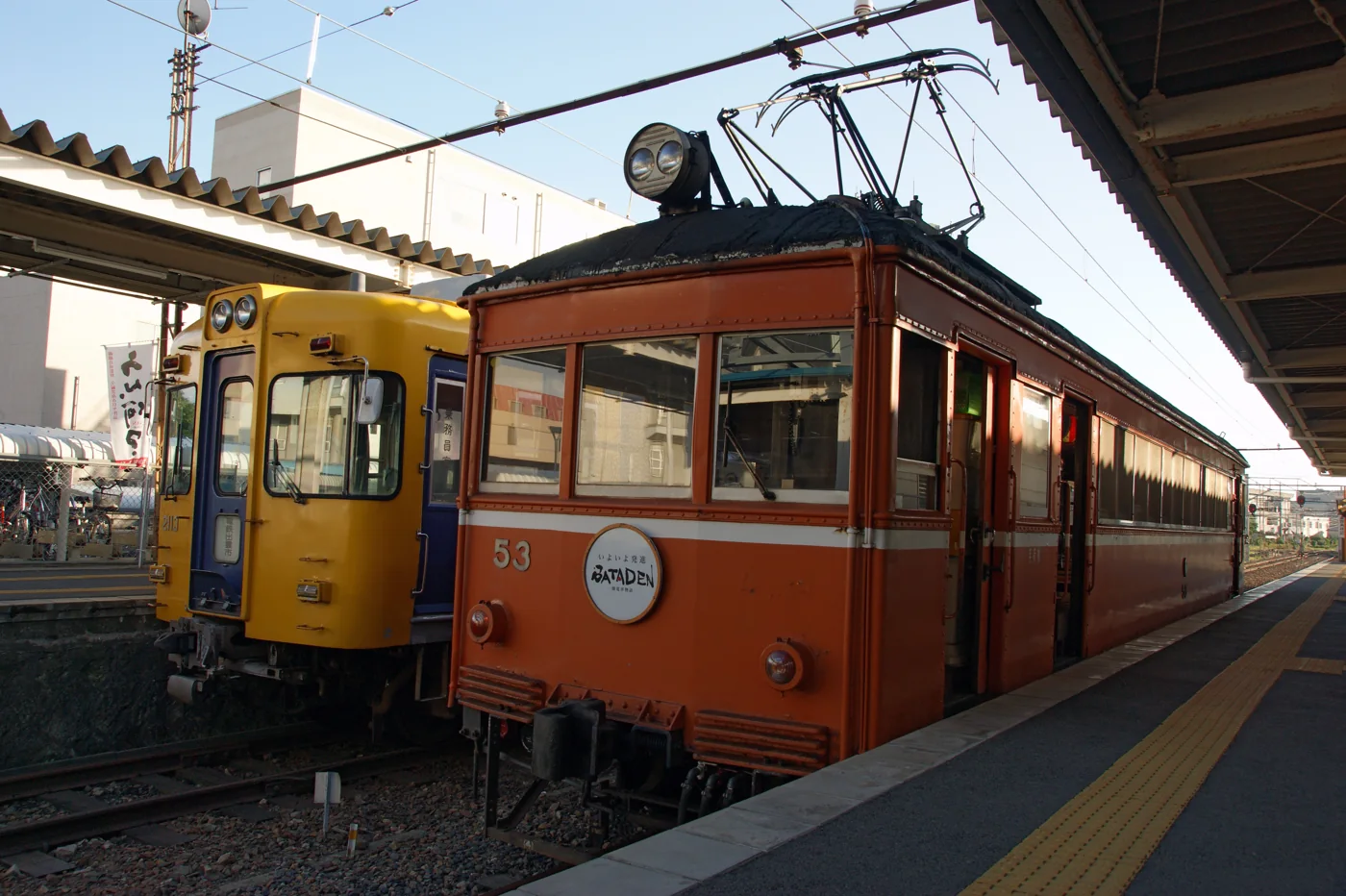
For large luggage delivered to Naniwa Issui, the FAQ asks for the stay date and booking name on the label. Reception also stores bags before check-in. If arriving in Matsue in the morning, separate that evening’s items from your day bag, then use your planned walk or transfer. Keep medicines, identification and day clothes with you if sending luggage ahead.
At the 28 October 2026 check, the access page said a shortage of Matsue taxis and designated-driver services meant the hotel could not reserve them for guests; travellers had to contact providers directly. Arrange transport before a JR arrival just ahead of dinner. Give the correct station, date and arrival time for any transfer, rather than treating hotel shuttles and taxis as the same service.
A few useful answers
Which Matsue rooms give three adults separate sleeping places?
Hotel Ichibata’s Lake View Triple lists two 120 cm beds and an extra bed; west-wing Superior Triple has two 140 cm beds and a sofa bed. Naniwa Issui 301/302 can add a third bed, removing the table and chairs. Rooms 306/307 have two beds and three futons for up to five.
Does every Naniwa Issui room have a hot-spring bath?
Rooms 301/302 and 306/307 list private hot-spring baths. Rooms 303/305 have showers only. Room 308 normally uses heated water, with hot-spring water available by request at reception. Compare bathroom layouts by room number.
Can I see the sun setting from a lake-view room?
Naniwa Issui says rooms face the lake but do not show the sun’s disc sinking. They offer water, sky and evening colours in suitable weather. Ichibata has lake-side and city-side rooms; choose a Lake View name for the lake.
Which breakfast suits an early departure?
Tokyu and Ichibata start at 07:00; Naniwa Issui at 07:30. Tokyu suits JR departures. For Ichibata Railway, Hotel Ichibata is about one minute from Matsue Shinjiko Onsen Station; Naniwa Issui about eight minutes, with a reservable transfer from that station.
Official information and references
Sources used in this guide.
- Matsue Excel Hotel Tokyu: rooms, bed dimensions and occupancy
- Matsue Excel Hotel Tokyu: child support and bed-sharing rules
- Matsue Excel Hotel Tokyu: access, lifts and parking
- Hotel Ichibata: named rooms, third beds and bathrooms
- Hotel Ichibata: station access and parking entrances
- Naniwa Issui: MINAMO Level 3 (3F) room layouts
- Naniwa Issui: access, taxi availability and parking
- Matsue Excel Hotel Tokyu: check-in, check-out and cancellation
- Naniwa Issui: twin, joined, extra and electric beds
- Naniwa Issui FAQ: meals, baths, transfers and luggage
- Naniwa Issui: rooms and lake-view direction
- Hotel Ichibata: panoramic hot-spring location
- Hotel Ichibata: guest dinner, breakfast and prices
- Hotel Ichibata: restaurants
- Naniwa Issui: kaiseki, private dining and special-meal deadlines
- Matsue Excel Hotel Tokyu: breakfast hours, prices and dishes
- Naniwa Issui: currently linked lodging agreement, Schedule 2 cancellation fees