Where to stay in Dogo Onsen? Compare baths and dining at Funaya, Kowakuen Haruka, and Dogo Miyu, pick the right Matsuyama neighborhood, and plan your soak and day-two route.
- Region & Focus
- Shikoku
- Reading Scope
- 22 min read · 7 chapters · 6 Q&As
- Official Verification
- 36 official sources checkedUpdated November 22, 2026
- Key Topics
- Where to stayRyokanHot springs
Chapter Route Map (tap any stop)
- Staying by the Honkan, Dogo Onsen Station, or Downtown Matsuyama?
- Three Dogo Onsen Ryokans and Who Each Fits Best
- How to Read "Open-Air Bath," "Private Bath," and Half-Board Listings
- Two Soaks in One Night: Pick One Public Bath First
- Getting to Dogo from the Airport, JR Matsuyama Station, and Okaido
- Working Backwards from Dinner on a Half-Board Stay
- Splitting Day Two Between Matsuyama Castle and Shimonada
- Quick Q&A
On a first trip to Matsuyama in Ehime, spend a night right in Dogo Onsen town if you want to stroll out in a yukata after soaking at the Honkan. Prioritize Funaya for ryokan kaiseki dining and garden grounds, Kowakuen Haruka for eighth-floor panoramic baths looking toward Matsuyama Castle, or Dogo Miyu for a private open-air hot-spring tub in every room (guests junior high age and up only). If you plan just one public bath visit and have an early JR train the next morning, stay near JR Matsuyama Station and slot Dogo into the previous afternoon.
Staying by the Honkan, Dogo Onsen Station, or Downtown Matsuyama?
Iyotetsu streetcars terminate at Dogo Onsen Station. Right outside sits Hojoen Park, where you enter the roughly 250-meter, L-shaped Dogo Shopping Arcade (Dogo Haikara Street) that leads to Dogo Onsen Honkan. Asuka-no-Yu and Tsubaki-no-Yu sit side by side along a side lane midway through the arcade. Book within this pocket and you can break up checking in during the afternoon, heading out to a public bath, and returning to your hotel for dinner into short walks. In the rain, the arcade roof keeps you dry, though you will still want a few extra minutes with an umbrella between your ryokan, the arcade, and the bathhouse entrances.
If you want evening strolls every night and easy access to the first bath session at dawn, staying near the Honkan beats staying by the station. If you are rolling large suitcases, catching an airport bus, or only planning one public bath visit, the area right outside Dogo Onsen Station saves effort. On the map, check two routes separately: first from Dogo Onsen Station to the hotel entrance, and second from the hotel to the bathhouses you plan to visit. Around the elevated Sagidanicho area in particular, the driveway and the pedestrian guest entrance are sometimes two different routes. Kowakuen Haruka has a guest-only elevator leading down near the Honkan, while its website provides a separate driving route to its parking lot.
Okaido works well when you want to split Matsuyama Castle, dinner, and an onsen soak across different parts of the day. Head north to reach the Matsuyama Castle Ropeway Shinonomeguchi Station, or walk into the Okaido Shopping Arcade and the Nibancho/Sanbancho dining districts for dinner. Taking the streetcar back to Okaido after a soak in Dogo is usually a shorter ride than going all the way back to JR Matsuyama Station. For a late-night bath, check Iyotetsu's timetable tool first and line up the last return streetcars against each bathhouse's final ticket cutoff. Leave enough buffer before the last tram to change clothes, dry your hair, and walk to the stop.
Searching hotel sites for just "Matsuyama Station" makes it easy to mix up two different stations. JR Matsuyama Station serves trains to Shimonada, Imabari, and Yawatahama; to board a city streetcar from there, walk out to the "JR Matsuyama-ekimae" tram stop. Iyotetsu's "Matsuyamashi Station" is a separate hub better suited for suburban rail lines and downtown shopping. If you have an early JR train the next morning, enter "JR Matsuyama Station" on the map before picking a hotel. When transferring from Dogo after checkout, factor in three separate steps: walking to Dogo Onsen Station, waiting for a streetcar, and entering JR Matsuyama Station.
Even on a two-night stay, you only need to spend one night at a hot-spring ryokan. If your second day is packed with Matsuyama sightseeing, staying both nights at the same hotel saves a luggage transfer and waiting for afternoon check-in. If day two requires an early-morning departure, spend night one in Dogo, tour the castle area the next day, and shift to a hotel near JR Matsuyama Station so the room switch happens right where it saves you morning transit time. Compare actual room rates for your exact dates and party size to see whether keeping a weekend night in Dogo or shifting to a weekday makes more sense.
Where to stay in Dogo Onsen? Compare baths and dining at Funaya, Kowakuen Haruka, and Dogo Miyu, pick the right Matsuyama neighborhood, and plan your soak and day-two route.
Three Dogo Onsen Ryokans and Who Each Fits Best
Funaya is about a 3-minute walk from Dogo Onsen Station, with a stream and footbath inside its Eifutei garden. Its large communal baths—Hinoki-no-Yu and Mikage-no-Yu—both feature open-air pools and swap genders between morning and evening, letting overnight guests experience both in one stay. If you prefer lingering at the ryokan, strolling the garden in the afternoon and sitting down for a Setouchi kaiseki dinner suits the pace better than rushing straight to a public bath after check-in. For in-room hot-spring soaking, the official site lists Special Rooms piped with Dogo Onsen water, while the Haiku Lounge Suite comes with a cypress hot-spring tub. Companions who prefer beds can choose Western twin rooms or twin-plus-tatami hybrid rooms.
Funaya offers plans with breakfast and dinner served in garden-side guest rooms as well as Western-room plans with dinner in the dining area. If anyone in your group tires easily from walking, a garden-side room with in-room dining cuts out an extra walk in the evening. Guests who want proper beds and an after-dinner stroll can book a dining-room kaiseki plan with a twin room and use the two communal baths. If you arrive with time to spare before check-in, stop by the footbath in Eifutei garden—it is free to use, with posted hours from 12:00 to 20:30.
Kowakuen Haruka (Hotel Kowakuen Haruka) sits on the hillside above the Honkan. Its eighth-floor "Haruka-no-Yu" panoramic bath features open-air pools, indoor pools, and reclining baths looking out toward the Honkan and Matsuyama Castle. The hotel lists large-bath hours from 13:00 to 01:00 the next morning and 06:00–10:00, closing for cleaning from 10:00 to 13:00. Soak during daylight for the city views, then take the dedicated elevator down toward the Honkan after dinner. The hotel also has a reservable, wheelchair-accessible private indoor hot-spring bath available between 15:00 and 21:00 at ¥4,400 per group for one hour. Families traveling with someone who needs mobility assistance can book that private hour before dinner and leave the eighth-floor bath to whoever wants the panorama.
Kowakuen Haruka's pedestrian entrance plugs neatly into a public-bath walk. Across from the Honkan at Botchan Square, look for the guest-only elevator to head back up to the hotel. If you are driving, follow the "For Guests Arriving by Car" directions on the official website to reach the side driveway and parking lot. When arriving by taxi or dropping off a companion with a wheelchair, set the hotel's main entrance as your destination. If you already used the hotel's large bath in the afternoon, you can stroll down after dinner just to see the Honkan lit up at night, then soak once more at the hotel before bed. If your family wants to bathe together, save your evening walk for Botchan Square and the arcade and reserve the private bath for a shared soak.
Kowakuen Haruka's official site lists a 40-square-meter Corner Deluxe room with separate twin-bed and tatami zones sleeping up to four, giving adults sitting space after children go to sleep. Groups of five can look at connecting tatami rooms laid out entirely with futons. Two guests needing wheelchair access can book the 35-square-meter Universal Twin alongside the hotel's private bath, factoring in the route from bedroom to bathroom and toilet stops along the way. For families, the front desk lends bed rails, child toilet seats, step stools, and children's yukata. Standard twin rooms also include access to the panoramic bath; for Dogo Onsen water inside your room, look at the Suite with a stone panoramic bath or the "Tokinone" annex rooms, which have both an indoor and an outdoor tub.
Dogo Miyu is the most straightforward pick if you want to do all your soaking inside your room. All 30 guest rooms feature an open-air hot-spring bath and terrace accessible 24 hours a day. Two-person options include the 52-square-meter Superior and 58-square-meter Premier. Trios can book the 66-square-meter Deluxe, which pairs two beds with a tatami area for a futon. The 77-square-meter Suite accommodates up to four, and the property also offers one accessible suite with a wider restroom and a wheelchair-accessible sink. Room pages state that guests of junior high school age and older are accepted at adult rates, while the FAQ notes that children aged 12 and under cannot stay; if you have a 12-year-old who has already started junior high, use the inquiry form on the official site to confirm with their age and school grade before booking.
At Dogo Miyu, breakfast and dinner are served at restaurant Tachibana, with dinner start times between 18:00 and 19:30 and breakfast starting no later than 09:00. Both the in-room open-air baths and the panoramic communal bath draw Dogo Onsen water, with room tubs using heated circulation without added tap water. The hotel's tattoo policy is explicit: guests with tattoos use their in-room bath. Note that the panoramic bath changing-room entrance has a step, so wheelchair users will need assistance there. If restroom space, tub thresholds, and floor levels matter for your group, compare the single accessible suite first and treat the upper-floor communal bath as optional.
| Ryokan | How You Want to Soak | Best Plans to Check First |
|---|---|---|
| Funaya | Swap between two communal baths morning and evening, or book an onsen-piped room | Garden-side room with in-room dining, Western-Japanese twin, or onsen-piped Special Room |
| Kowakuen Haruka | Eighth-floor panoramic bath or wheelchair-accessible private indoor bath | Stays balancing walks to the Honkan and arcade with strong on-site baths |
| Dogo Miyu | 24-hour open-air hot-spring bath in every guest room | Groups aged junior high and up, booked by exact room capacity and bed count |
How to Read "Open-Air Bath," "Private Bath," and Half-Board Listings
To bathe in your room, open the room-type details on the booking page and look for terms like kyakushitsu rotenburo (in-room open-air bath), onsen-tsuki kyakushitsu (room with hot spring), or onsen hikiyu (piped hot-spring water). Labels like daiyokujo (large bath) and tenbo-buro (panoramic bath) usually refer to shared hotel facilities. Basu-tsuki only means the room has a private bathroom—if you want hot-spring water in it, check that specific room's tub notes. When Japanese listings mix tatami and Western-Japanese hybrid layouts, inspect the bed configuration too. Two beds plus one futon fits three adults, but if everyone wants a proper bed, search for three-bed rooms or split into two rooms. Searching by exact headcount saves you from picking a room first and asking later whether an extra guest can be added.
Kashikiri-buro and kazoku-buro are private baths rented by the group in timed slots. Check the fee and the latest available slot first, and save both your room reservation and bath slot to your calendar whenever they are booked separately. With kids, coordinate bath times and meal times together: if little ones crash right after dinner, an afternoon private slot right after check-in is more practical. If someone in your group struggles with squatting or getting up, check whether the bathroom has a shower stool, grab bars, and a step-free entry. A wheelchair that clears the doorway still needs room to turn inside, so share your chair dimensions and the exact transfer help needed directly with the ryokan if necessary.
Ippaku nishoku and yuchoshoku-tsuki mean half-board (dinner and breakfast included). Choshoku-tsuki means breakfast only, and sudomari means room only. When comparing an official site against booking platforms, match the exact date, room type, guest count, dining venue, and payment terms side by side. When you spot a lowest rate for two guests, open the breakdown to confirm whether it is per person or the room total. Add the bathing tax, parking, and any separate private-bath fees shown at checkout. Matsuyama City's standard bathing tax is ¥150 per person per day; verify the exact charge listed on your checkout summary or hotel fee notice.
Before booking half-board, check what time you can realistically reach the ryokan. Dinner has a final seating cutoff, and an early-evening flight arrival still needs time for baggage claim, waiting for the bus, walking to the hotel, and checking in. Forwarding your bags ahead saves you from hauling suitcases, but it does not buy you extra dining hours. Save kaiseki plans for days when you arrive early; if you reach Dogo in the evening, book a breakfast-only plan and eat along Okaido or Dogo Shopping Arcade after picking a restaurant whose hours fit your schedule. If you plan to take an early train to Shimonada the next morning, check when breakfast starts. At Dogo Miyu, for instance, the earliest breakfast seating is 07:30, letting you soak on-site first and head to the station right after eating.
When booking with young children, fill in every field for age, required bedding, and meals. Japanese booking forms often separate shokuji ari (meals included) and futon ari (futon included)—if you need both, compare total family prices with both selected. If anyone has dietary restrictions, list the exact ingredients when booking a meal plan and confirm whether the kitchen can accommodate them. If you are already eating a full kaiseki dinner at the ryokan and also want to try Ehime's signature taimeshi (sea bream rice), save taimeshi for lunch. Matsuyama-style taimeshi cooks the sea bream and rice together in one pot, while Uwajima-style tops warm rice with sea bream sashimi and sauce; if you are traveling with kids who prefer cooked fish, look for takikomi (pot-cooked) on the menu.
During cherry blossom season, autumn foliage, or New Year's holidays, finding a room for four is far harder than booking for two. When your dates are fixed and you require an in-room bath or in-room dining, search first by exact date and guest count for that specific room category. If your plans might change, note the exact free-cancellation deadline and cutoff time in JST on your calendar alongside any separate public-bath private room reservations. Couples who only care about visiting public bathhouses and are flexible on beds, meals, and stairs can compare Okaido hotels in the same search. If four-person rooms at your preferred ryokan are sold out, compare the price of two twin rooms against one suite before switching neighborhoods.
Two Soaks in One Night: Pick One Public Bath First
Combining your ryokan's on-site bath with one public bathhouse is the easiest way to structure a single night. First-timers usually start with Kami-no-Yu downstairs at Dogo Onsen Honkan: ¥700 for adults and ¥350 for ages 2–11, open 06:00–23:00 with last tickets at 22:30. To relax upstairs in a yukata with tea, choose the Kami-no-Yu Second-Floor Seat at ¥1,300 for adults (last tickets at 21:00). The Tama-no-Yu Second-Floor Seat is ¥2,000 for adults and grants access to both Kami-no-Yu and Tama-no-Yu, the second-floor lounge, and a self-guided look at the Yushinden Imperial Bath. Plan dinner around your ticket tier's last-entry cutoff rather than the building's final closing hour.
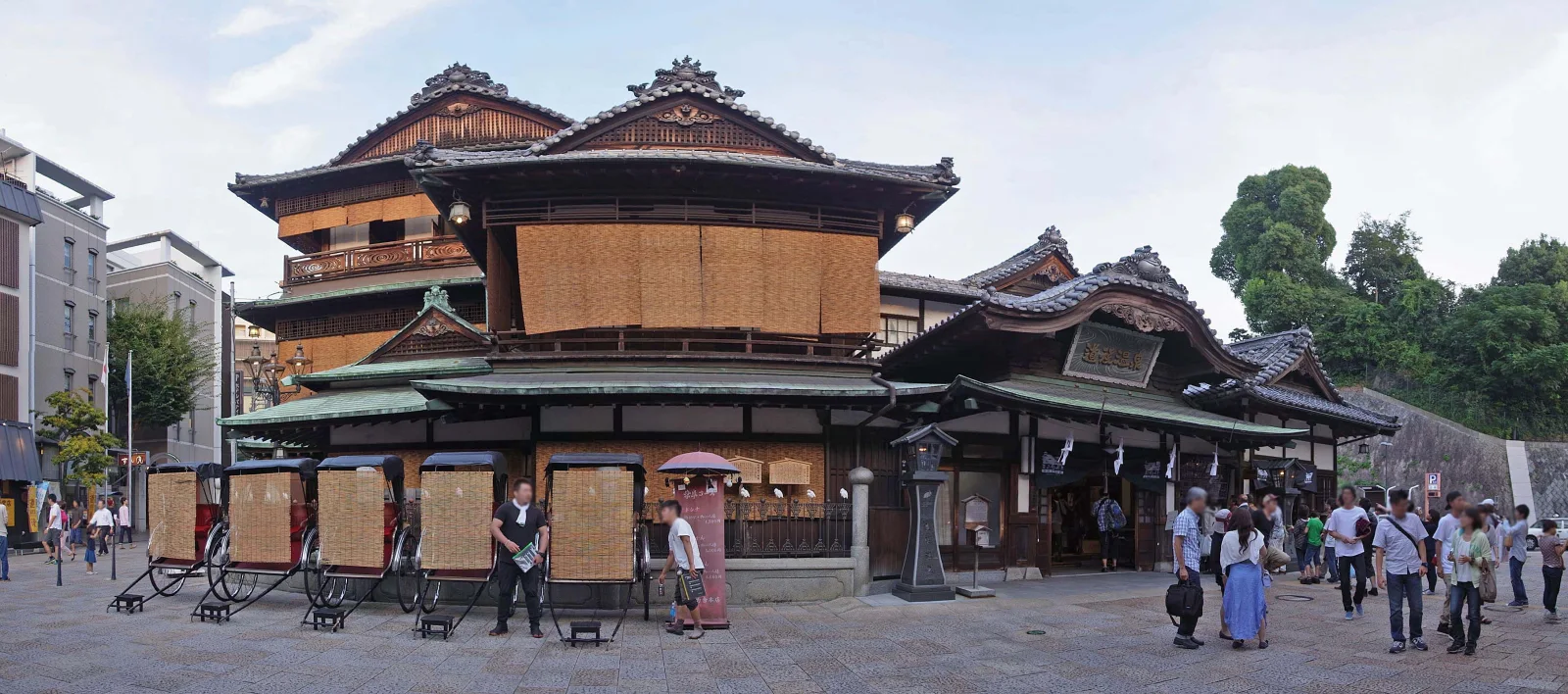
Dogo Onsen Honkan is a designated National Important Cultural Property that resumed full-building operations on July 11, 2024, with its conservation and repair project wrapping up on December 20, 2024. Staying nearby lets you separate admiring the architecture from taking your soak: look over the wooden facade at dusk, then pick a ticket tier to bathe the next day. Dogo Onsen's official homepage shows live wait statuses for each bathhouse. Regular bathing operates by queue or numbered wait ticket depending on crowds, and once daily admissions close, only ticket holders already in hand are admitted. If a long line forms right before your ryokan dinner, push the Honkan soak to before breakfast the next morning. For a closer look at the ticket tiers and layout before buying, see our guide to Dogo Onsen Honkan tickets and bathing flow.
Asuka-no-Yu works best when you want an unhurried bathhouse visit. Its first floor offers both indoor and open-air baths at ¥610 for adults and ¥300 for ages 2–11, while second-floor large-hall or private-room tickets add upstairs lounge time after bathing downstairs. Families wanting their own bath can reserve a second-floor Special Bathroom modeled after the Yushinden, which includes both the private bath and lounge space. It costs ¥2,040 per group plus ¥1,690 per adult and ¥830 per child aged 2–11. Advance reservations are required and open online from 90 days ahead until 22:00 the day before; same-day bookings can be requested by phone at 089-932-1126 at least two hours ahead.
Although the Honkan's "Hisho-no-Ma" and "Shirasagi-no-Ma" are also listed as private rentals, those reserve a third-floor lounge room only—bathing is still in the shared Kami-no-Yu and Tama-no-Yu pools. Similarly, Asuka-no-Yu's standard second-floor private rooms are lounges; look specifically for "Special Bathroom" when booking a private tub. If you want the 90-minute private lounge on the Honkan's third floor, pick a slot well clear of dinner. Families with kids should check the 2–11 age bracket on public bathhouse rate charts, as it differs from hotel child-pricing tiers.
Tsubaki-no-Yu is the practical stop when you mainly want a straightforward soak and wash. It opens at 06:30 with last tickets at 22:30, charging ¥500 for adults and ¥200 for ages 2–11 under the revised fares taking effect in May 2026. The bathhouse does not stock shampoo or body wash; lockers cost ¥10 and hair dryers run ¥10 per 3 minutes. Bring a small bag with a towel, toiletries, and coins, then stroll back through the arcade afterward. Next door at Asuka-no-Yu, the first floor provides soap, shampoo, and hair dryers, though you should still bring your own towel with the base ticket. Since the two sit right beside each other, you can easily check the wait next door if your first choice has a line.
If you want to visit all three public bathhouses during an overnight stay, look at the Three-Bathhouse Pass starting September 2026 at ¥1,440 for adults and ¥680 for ages 2–11. Valid on the day of purchase and the following day, it covers one entry each to Honkan Kami-no-Yu downstairs, Asuka-no-Yu first floor, and Tsubaki-no-Yu, though you cannot pay the difference to upgrade to an upstairs lounge tier. If you only plan to visit the Honkan and Asuka-no-Yu's first floor, two individual adult tickets total ¥1,310, making separate tickets cheaper. Decide first whether you want to tick off all three baths or linger with tea at one before buying.
Dogo Onsen's official spring classification is an alkaline simple thermal spring, with source water blended and temperature-regulated at distribution stations before reaching the public baths and ryokans. When comparing bath facilities, focus on whether a bath uses piped onsen water, offers an open-air pool, and fits your schedule. Wash thoroughly before entering any communal pool, keep towels out of the water, tie up long hair, and never take photos in changing rooms or bathing areas. If you drink alcohol with dinner, save the public bath for the next morning. At ryokans that swap men's and women's baths between night and morning, bathing once before bed and once in the morning is far easier than trying to squeeze two soaks in after dinner.
Even if you stay near JR Matsuyama Station, you can still visit a Dogo ryokan's scenic large bath as a day visitor. Kowakuen Haruka accepts day-use bathers from 13:00 to 21:00 at ¥1,800 for adults and ¥770 for ages 3 through elementary school (free under age 3), with daily capacity listed on its reservation page. Dogo Miyu limits both its room baths and panoramic bath to overnight guests, so day-trippers from downtown should stick to the public bathhouses or ryokans with day-use plans. For dinner in Okaido afterward, take an earlier day-use slot and board a streetcar toward Matsuyamashi Station or JR Matsuyama-ekimae, getting off at Okaido.
Getting to Dogo from the Airport, JR Matsuyama Station, and Okaido
At Matsuyama Airport, head to bus stops 4 and 5 for city-bound limousine buses and look for the Airport Limousine Bus signed for Dogo Onsen Station. Iyotetsu lists the ride at about 40 minutes, costing ¥1,200 cash or ¥1,180 cashless for adults—the same fare as Okaido. If you are traveling light with a backpack and have time to spare, compare the regular airport route bus from stop 3, which also stops at Dogo Onsen Station for ¥830 cash or ¥810 cashless for adults. Check the destination sign on the front of the bus before boarding, as some city-bound departures terminate at Matsuyamashi Station.
After exiting JR Matsuyama Station, follow the "Shinai Densha" (City Tram) signs to the JR Matsuyama-ekimae stop and take Line 5 bound for Dogo Onsen (about 25 minutes). From Matsuyamashi Station, Line 3 takes about 20 minutes; from Okaido, take any Dogo Onsen-bound tram. City streetcars charge a flat adult fare of ¥250 cash or ¥230 cashless, accepting ICOCA and other nationwide IC cards. Cash riders pay upon exiting, and the fare box does not make change, so break bills into coins beforehand. Heading back to catch a JR train, check platform signs for Line 5 to JR Matsuyama-ekimae; trams signed for Matsuyamashi Station are for returning downtown.
If you are staying in Okaido and taking the limousine bus back to the airport, note that Iyotetsu marks the airport-bound stop separately—search for the airport-bound Okaido stop rather than waiting across from where you got off on arrival. If you want one more soak on your flight day, go in the morning, eat breakfast, grab your bags, and head straight to the bus, saving any queue-heavy Honkan ticket tiers for check-in day. With two or more large suitcases and a late arrival, a short taxi ride from Dogo Onsen Station to your hotel saves effort, especially for hillside properties.
Iyotetsu's vintage Botchan Train runs only on Saturdays, Sundays, and national holidays, suspending service from December 30 through January 3. Fares are ¥1,300 per ride for adults and ¥650 for children. For departures from Dogo, same-day numbered boarding tickets for specific trains are distributed at the station ticket counter starting at 08:30. If you want to ride it, pick up a ticket the next morning and simply use a regular streetcar on your arrival day. Capacity is strictly capped, so anyone with a timed JR connection the next day should treat the Botchan Train as a separate sightseeing activity.
Working Backwards from Dinner on a Half-Board Stay
On an early-afternoon arrival, drop your bags at the ryokan first. Using an 18:00 dinner as an example, walk out around 16:00 to check live wait times at the Honkan. A downstairs Kami-no-Yu session allows 60 minutes, plus the walk back to your hotel. If the queue pushes your return too close to dinner, soak in your ryokan's own bath instead and stroll down to see the Honkan lit up after dinner. To split time between both, visit the Honkan right after waking up and return for breakfast—a clean way to keep bathing and dinner from colliding.
Evening walks naturally start at Hojoen Park. Modeled after the Honkan's Shinrokaku pavilion, the Botchan Karakuri Clock performs daily from 08:00 to 22:00 with characters from Natsume Soseki's novel Botchan. It chimes on the hour normally, stepping up to every 30 minutes on weekends, national holidays, and peak months such as March, April, August, and November. Hojoen Park also has a free footbath where kids can take a break right by the station—bring a small towel to dry your feet. From there, browse the arcade for Botchan dango and citrus sweets on your way to the Honkan facade. Budget an hour for a relaxed loop, adding extra time if you plan to sit down for snacks or wait for a bath.
Guests staying near the Honkan can add a morning stroll up to Kanmuri-yama's Sora no Sanpomichi (Sky Promenade) on the south side, which looks down over the entire wooden bathhouse. Its free footbath is listed as open 06:00–21:00. Reaching the viewpoint from the Honkan involves an uphill walk or stairs, so with strollers, slower walkers, or rain, Hojoen Park's footbath by the station is a shorter alternative. If you have time before breakfast after photographing the Honkan, stop by the No. 4 Hot Spring Distribution Station northwest of the station to try the hand bath—its exhibition room is open free from 09:00 to 20:00, and the hand bath runs 24 hours, fitting neatly into checkout or tram waits. If you want to hear the Shinrokaku time drum (Toki-daiko), it is struck at 06:00, 12:00, and 18:00.
On heavy-rain days, keep queue-dependent sights flexible. The arcade is covered, though you should switch from ryokan yukata and wooden clogs back into street clothes and regular shoes on wet pavement. Duck into the arcade from the station, pick up snacks, and check real-time wait boards for the Honkan and Asuka-no-Yu; if the rain picks up, retreat to your ryokan's indoor bath and hit the public baths early the next morning. On clear days when kids have energy to burn, walk or ride the tram to Dogo Park and the Yuzuki Castle ruins. Its free museum is open 09:00–17:00, generally closed Mondays (or the following weekday when Monday is a holiday) and from December 29 through January 3.
Stays in early December 2026 require planning around annual maintenance closures. On December 1, Dogo Onsen Honkan is closed all day for year-end cleaning, and the Sora no Sanpomichi and No. 4 Distribution Station close for the morning. On December 2, Asuka-no-Yu and Tsubaki-no-Yu close all day instead. Guests staying the night of December 1 can visit Asuka-no-Yu or Tsubaki-no-Yu that afternoon and hit the Honkan before breakfast on December 2; guests staying December 2 can do the Honkan first and pick between the other two the next morning. Outside those two dates, official notices list normal operating hours through the year-end and New Year holidays.
Splitting Day Two Between Matsuyama Castle and Shimonada
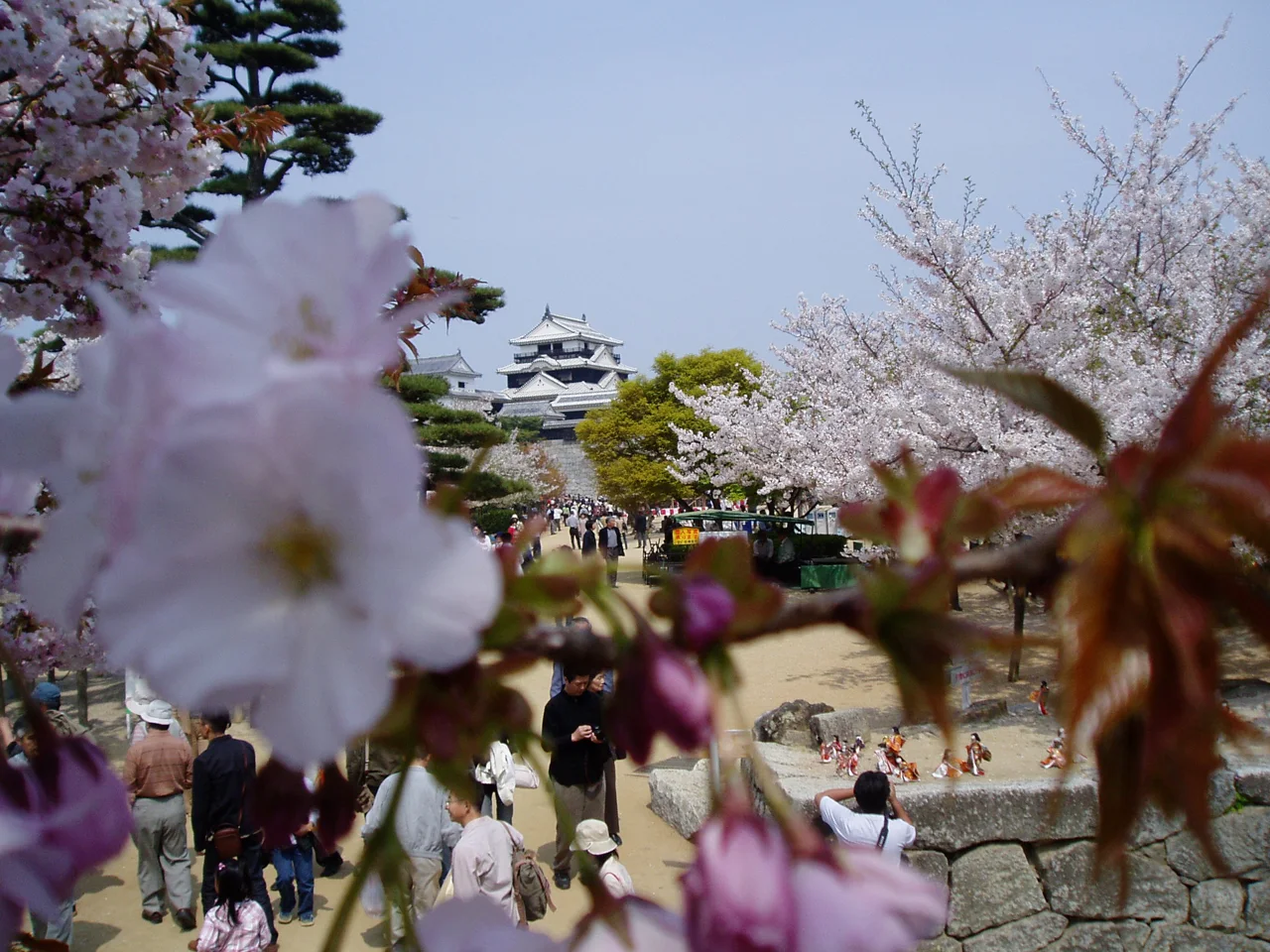
If you only have half a day left for central Matsuyama, soak in the morning, check out, and take the streetcar to Okaido. From the tram stop, walk north up Ropeway Street for about 5 minutes to Shinonomeguchi Station, ride the ropeway or single-seat chairlift to Chojaganaru, and walk another 10 minutes to the castle keep. With older travelers or tired legs, stopping at the free Honmaru Square still gives you a break with views. Round-trip ropeway/chairlift tickets are ¥520 for adults and ¥260 for children; keep admission is ¥520 for adults and ¥160 for elementary students. Preschoolers cannot ride the single chairlift, and rain suspends the lift in favor of the ropeway. In December and January, the ropeway stops running at 17:00, so watch your timing if you try to squeeze it in on a late afternoon arrival. For spring visits, check our Matsuyama Castle cherry blossom and ascent guide to time the ropeway versus the walking trails.
When you want to fit in the castle, Dogo Onsen, and Shimonada, save Shimonada for day two. Visit Matsuyama Castle on day one and check into Dogo in the afternoon. Rather than hauling bags onto an early train, check out after breakfast, ride Line 5 from Dogo Onsen Station back to JR Matsuyama-ekimae, and board a coastal Yosan Line local train. JR timetables label trains stopping at Shimonada as running via the "Ai-aru Iyonada Line" or "Shimonada / Iyo-Nagahama." Trains with the same Iyo-Ozu or Yawatahama destination running via Uchiko take the inland mountain route, so check the route display before buying tickets or boarding rather than relying on the final terminus alone.
Plan your coastal trip backwards from the return train. JR Shikoku's Shimonada Station timetable separates Matsuyama-bound and Yawatahama-bound columns, with some return services requiring a transfer at Iyo-shi. Lock in the last two workable return trains first, then pick your outbound departure from Matsuyama. For sunset, line up train departure times against that day's sunset and leave margin for waiting on the platform or retrieving luggage. If returning in time for a ryokan dinner looks tight, eat your kaiseki dinner in Dogo the first night and save the coast for day two. If you are flying out the same day, work backwards from your airport limousine bus; when schedules leave little margin, save Shimonada for another trip with a full afternoon.
Drivers can head straight toward Iyo-shi after checkout. Iyo City directs Shimonada visitors to parking at the Shimonada Community Center (Shimonada Sports Park) or the temporary municipal lot roughly 150 meters from the station—navigate directly to the lot name and walk to the platform. If low clouds or rain ruin visibility on your only open scenic slot, pivot to Okaido in downtown Matsuyama instead. Nearby sits the Saka no Ue no Kumo Museum, typically closed Mondays and during exhibition changeovers; it is a single streetcar ride from Dogo, easy to slot in after checking its monthly calendar over breakfast.
A few useful answers
How should I choose a ryokan for just one night in Dogo Onsen?
Stay in Dogo Onsen town if you want to walk easily between the Honkan, shopping arcade, and your hotel. Pick Funaya for kaiseki dining and gardens, Kowakuen Haruka for eighth-floor panoramic baths, or Dogo Miyu for an open-air hot-spring tub in every room. If you have an early JR train the next morning, stay near JR Matsuyama Station and take Line 5 to Dogo for the afternoon.
Can young children stay at Dogo Miyu?
Room pages state that guests aged junior high and older are charged adult rates, and the FAQ specifies that children aged 12 and under cannot stay. Families with elementary-schoolers or toddlers can stay at Kowakuen Haruka and reserve its private indoor bath, or book a second-floor Special Bathroom at Asuka-no-Yu.
Are the Honkan's private rooms actually private baths?
No—Hisho-no-Ma and Shirasagi-no-Ma reserve private third-floor lounges only, while bathing remains in the shared public pools. For a private tub where your family can bathe together, reserve a second-floor Special Bathroom at Asuka-no-Yu.
Can I use the Three-Bathhouse Pass on the next day?
Yes, it is valid on the day of purchase and the following day. At ¥1,440 for adults, it includes one admission each to Honkan Kami-no-Yu downstairs, Asuka-no-Yu first floor, and Tsubaki-no-Yu.
Is there a direct bus from Matsuyama Airport to Dogo Onsen?
Yes, the Iyotetsu Airport Limousine Bus to Dogo Onsen Station takes about 40 minutes and costs ¥1,200 cash or ¥1,180 cashless for adults. Regular airport route buses also serve Dogo Onsen Station.
Which public bathhouses close in early December 2026?
Dogo Onsen Honkan closes all day on December 1, while Asuka-no-Yu and Tsubaki-no-Yu close all day on December 2. Overnight guests can simply visit whichever bathhouses are open each day.
Official information and references
Sources used in this guide.
- Dogo Onsen Official Website (Live Wait Times, Hours, and Reservations)
- Dogo Onsen Honkan (Ticket Tiers, Baths, and Conservation Work)
- Dogo Onsen Honkan Full-Building Reopening Notice
- Asuka-no-Yu (Baths, Special Bathrooms, and Fees)
- Tsubaki-no-Yu (Revised Fares, Facilities, and Three-Bathhouse Pass)
- Dogo Onsen December 2026 Year-End Cleaning Closure Notice
- Dogo Onsen Public Bathhouses FAQ (Reservations and Amenities)
- Dogo Onsen Bathing Etiquette
- Dogo Onsen Water Quality and Toki-daiko Time Drum
- Dogo Onsen Sightseeing Guide (Sora no Sanpomichi, Karakuri Clock, and Footbaths)
- Funaya (Communal Baths and Garden Footbath)
- Funaya Stay Plans (In-Room Dining, Kaiseki, and Onsen-Piped Rooms)
- Funaya Guest Rooms (Western Rooms and Haiku Lounge Suite)
- Funaya Official Website (Walk from Station and Eifutei Garden)
- Kowakuen Haruka Bath Guide (Panoramic Bath and Private Bath)
- Kowakuen Haruka Floor Guide
- Kowakuen Haruka Access (Guest-Only Elevator and Parking Route)
- Kowakuen Haruka Rooms (Capacity, Bedding, and In-Room Onsen)
- Kowakuen Haruka Facilities and Loanable Children's Items
- Dogo Miyu Guest Rooms (Room Types, Age Policy, and Capacity)
- Dogo Miyu FAQ (Dining, Baths, and Wheelchair Access)
- Matsuyama City Bathing Tax Guide
- Ehime Official Tourism Guide (Dogo Shopping Arcade and Footbaths)
- Ehime Official Tourism Guide (Regional Taimeshi Styles)
- Iyotetsu Dogo Access Guide (Airport and Streetcar Routes)
- Iyotetsu Streetcar and Bus Riding Guide
- Iyotetsu Airport Limousine Bus Schedule and Airport-Bound Stops
- Matsuyama Airport Bus Stops, Limousine Bus, and Route Bus Fares
- Iyotetsu Botchan Train Operating Days and Boarding Guide
- Yuzuki Castle Museum Access and Closure Information
- Matsuyama Castle Visitor Guide (Keep and Ropeway Hours and Fares)
- Matsuyama Castle Access and Ropeway Shinonomeguchi Station
- JR Shikoku Shimonada Station Timetable
- JR Shikoku Matsuyama Station Timetable (via Shimonada and Iyo-Nagahama)
- Iyo City Shimonada Station Visitor Parking Guide
- Saka no Ue no Kumo Museum Opening Calendar