Compare sea views, beach and stadium seating, D/X free-invitation eligibility and ticket-area entrances. Link Kaihin-Makuhari Station, Makuhari-Hongo buses and hotels to your return, using prices and rules from the completed 2026 edition.
- Region & Focus
- KantoFestivals and fireworks
- Reading Scope
- 35 min read · 20 chapters · 5 Q&As
- Official Verification
- 14 official sources checkedUpdated November 7, 2026
- Key Topics
- SeasonsBookingWhere to stay
Chapter Route Map (tap any stop)
- Choose between a sea view and a chair before selecting an area
- Read the map twice: first for the sea, then for your gate
- A, B and S are close together, but views and pricing units differ
- E removes the sand; D adds eligibility requirements
- G stadium seats: a chair, with over-water fireworks on screen
- H, I and X: lower-cost aerial views and their trade-offs
- F at Yura no Sato: baths and fireworks in one place
- Applying for free seats: D residency and X’s general lottery are separate
- Buying paid tickets: handle the full product name, children and physical tickets together
- Kaihin-Makuhari Station: know the central and park gates, then north and south exits
- Routes to the beach, stadium and X split between the convention center and hotels
- Cross before 19:15: late arrivals must use the surface crossing
- Connecting from the Sobu Line: buses at Makuhari-Hongo, Makuhari and Inage
- Returning to Tokyo: the organizer recommends Kaihin-Makuhari
- Returning to the Sobu or Keisei lines: north-exit bays and the temporary stop
- A night in Makuhari: compare the walk back to three hotels
- Check whether hotel packages include tickets, then connect the next day
- Families and wheelchairs: mat size, companion tickets and gates belong together
- The afternoon wait: keep food, cooling and photography within your space
- Weather cancellation and refunds: keep tickets and separate hotel costs
- Quick Q&A
To see fireworks over the sea directly, start with a sea-facing ticket area. For a fixed chair, start with stadium reserved seating. Makuhari’s beach, stadium and convention-center parking areas have separate ticket checks. Choose your entrance, ground surface and route back to your room together.
Choose between a sea view and a chair before selecting an area
Makuhari Beach Fireworks Festa takes place around Makuhari Seaside Park in Mihama Ward, Chiba. Viewing areas use the beach, stadium, artificial turf and Makuhari Messe parking lot. The 48th edition in 2026 marked 900 years since the founding of Chiba and ran on August 1 from 19:30 to 20:30. The organizer announced its completion on August 2. Prices and routes below are for that 2026 edition.
For fireworks opening across the sea, first compare B’s over-water fireworks seating or sea views from C, D and E. For close aerial fireworks, look at A; groups of five can compare S. For a fixed chair throughout, G’s stadium reserved seats are more suitable. H, I and X focus on aerial fireworks, without a direct view of the over-water performance. This distinction matters more to your ticket choice than the roughly 24,000-firework total.
The organizer’s event overview requires advance application for every visitor by viewing area. Free invitations also involve a lottery and ticket checks. For two adults with children, choose ground and seating the whole family can manage, then place accommodation on the same return route. This makes the evening easier to plan than chasing the lowest individual ticket price.
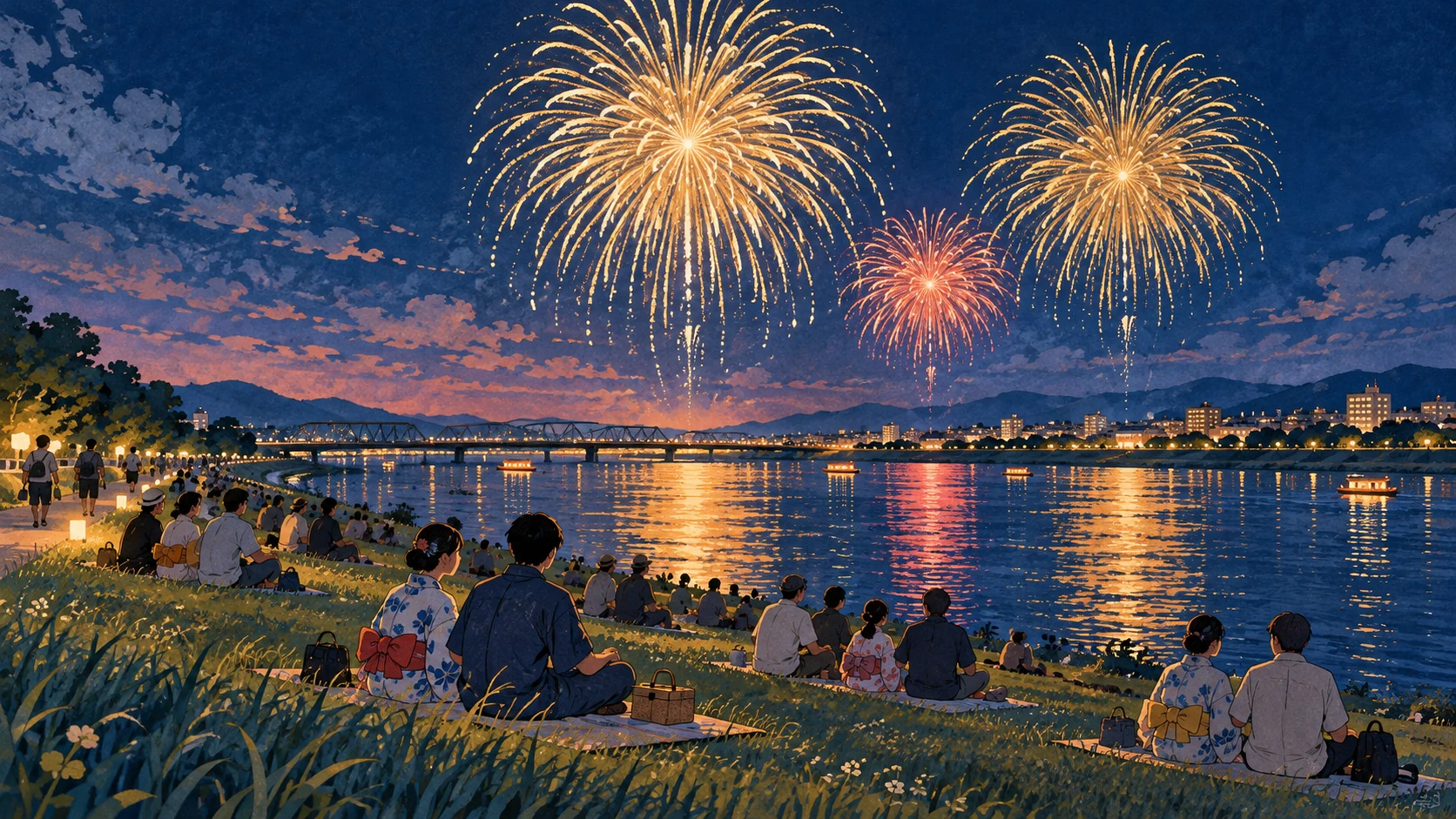
Compare sea views, beach and stadium seating, D/X free-invitation eligibility and ticket-area entrances. Link Kaihin-Makuhari Station, Makuhari-Hongo buses and hotels to your return, using prices and rules from the completed 2026 edition.
Read the map twice: first for the sea, then for your gate
Open the official 2026 surrounding-area map. Locate A, B, C, D, E, F and S along Makuhari Beach, then inland JFA Yume Field, ZOZO Marine Stadium and X nearer the Makuhari Messe parking lot. The yellow area beside the water is off-limits. It is not a shortcut between viewing areas.
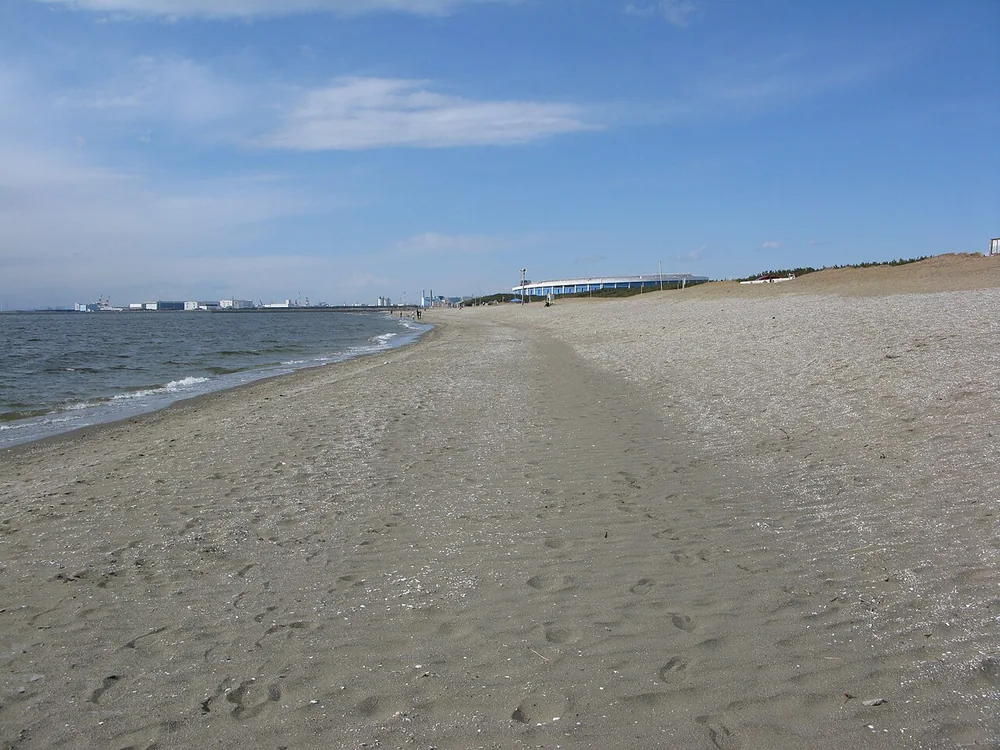
The beach looks continuous, but checks use a shared A/B gate, a C-only gate and a shared D/E/F gate. S, H and A wheelchair seating have another entrance approached from the same direction. G checks tickets at the stadium; I has an artificial-turf entrance; X uses the convention-center parking side. If friends buy different areas, eat and meet before entry, then each head to the area printed on their ticket.
Save the whole map on your phone rather than a crop of the seating area. The relationship between hotels, station, crossings and gates helps you navigate at night. Use a map app to find Kaihin-Makuhari Station or a hotel address. For road crossings, bridges and queues on fireworks day, follow the event map and on-site directions.
A, B and S are close together, but views and pricing units differ
In 2026, A’s Beach Aerial Fireworks seats and B’s Beach Over-Water Fireworks seats each cost ¥6,000 per person. Both are unreserved beach areas with mats issued on entry. A emphasizes close aerial launches; B faces Makuhari’s signature over-water fireworks. The organizer lists S, A and B as the closest viewing areas to the launch site. For two adults wanting fireworks spreading over the sea, start with B.
S’s Prime Group area costs ¥50,000 per group for up to five people, on a 1.8-by-2.4-meter patch of artificial turf on the beach. Filled by five adults, that is ¥10,000 each; two people still buy the whole space. It suits families or friends willing to pay for a fixed group area. The official seating page lists S as assigned space, while A and B are unreserved. After paying for an unreserved area, you must find an available position inside it. S’s fixed space still means sitting on the ground. If an older relative’s main need is a chair with a backrest, look directly at stadium reserved seats rather than choosing S because it costs most.
E removes the sand; D adds eligibility requirements
E’s Beachside Parking seats cost ¥4,000 per person in 2026 on asphalt. Like C and D, it offers a broad view of over-water and aerial fireworks. Asphalt makes sand in shoes and mat cleanup easier to manage, but summer paving still holds heat. You can use your own cushioning within the issued mat’s area. For two adults, E totals ¥8,000, saving ¥4,000 against two A or B tickets.
D’s City Resident Free Invitation Beach area has “beach” in its name, but the official surface table lists asphalt. It is a free invitation area requiring advance application by Chiba residents, with wheelchair spaces inside. Check the surface table as well as the name. For a free option, you also need resident eligibility and a successful lottery result. Only when both apply can D enter your plan. C is for sponsors. Though adjacent on the seaside map, the three have separate access routes to tickets: purchase for E, resident lottery for D and sponsorship for C. Families with a D winning postcard use the D/E/F entrance group rather than following a C passage they see ahead.
G stadium seats: a chair, with over-water fireworks on screen
G is inside ZOZO Marine Stadium. In 2026, standard stadium reserved seats cost ¥4,000 per person. Viewers watch aerial fireworks from infield seats and the over-water performance on a large screen, with stadium concessions open. Consider this first if chairs and stadium facilities matter more than a direct sea view. If your purpose is to see low fireworks spreading across the water with your own eyes, keep your ticket area beside the sea.
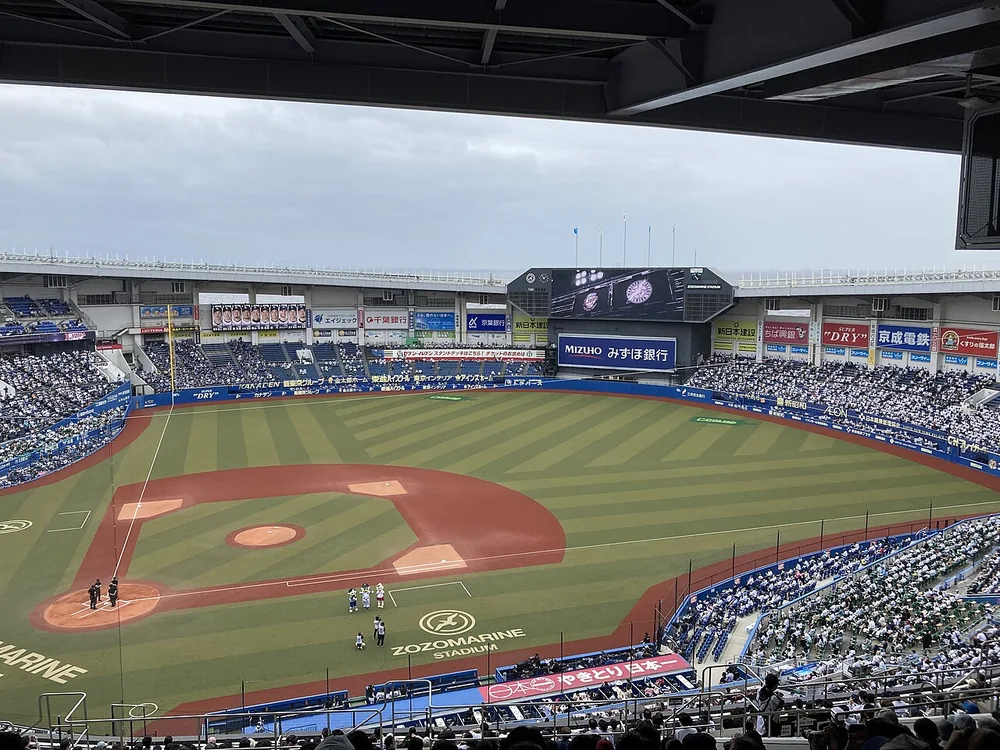
G also offers a table-equipped box for up to five at ¥22,500, pair seats at ¥9,000 and four-person seats at ¥18,000. Four standard reserved seats total ¥16,000, so the four-person product adds ¥2,000. Five people filling a box pay the equivalent of ¥4,500 each. Compare whether the group seating and table help you, keeping each price in its original sales unit.
G also has ¥3,500 infield ground-area tickets, with unreserved mat seating. These are inside the stadium alongside reserved seats but require sitting on the ground. If a purchase screen shows only “G,” read the full Japanese ticket name to distinguish infield chairs, boxes and ground seating. This helps avoid the wrong product for someone unable to sit cross-legged for long.
H, I and X: lower-cost aerial views and their trade-offs
H’s stadium-side seats cost ¥2,500 per person in 2026 on asphalt; I’s JFA Yume Field artificial-turf seats cost ¥3,000. Both are unreserved, and the organizer explicitly says the over-water fireworks cannot be seen. If you simply want to sit and look up at aerial fireworks, H has a price advantage and I offers artificial turf. If the sea performance matters, focus on suitable products in A–E.
X is in the Makuhari Messe parking lot, with separate city-resident and general free invitations, both requiring advance application. The surface is asphalt and no mat is issued. Bring your own sheet; the organizer gives up to one square meter per person as the space guide. X mainly sees aerial fireworks, without a direct over-water view, and is separate from the beach ticket areas. These three areas combine different prices, surfaces and viewing content. Two adults pay ¥5,000 in H or ¥6,000 in I, versus ¥12,000 in B. If moving the difference into your hotel budget, also compare whether aerial or over-water fireworks matter most to you.
F at Yura no Sato: baths and fireworks in one place
F is the special viewing area at Makuhari Onsen Yura no Sato. In 2026 it cost ¥9,000 per person, with viewing in the space in front of the entrance. It included same-day bathing, hot-stone bathing, rental face and bath towels, plus benefits such as a return admission invitation valid through the end of November 2026. The product allowed facility use from 16:30 to 24:00; food and other paid services were extra. Compare this package if you want indoor rest before fireworks and a bath afterward.
This also changes the return. If bathing before leaving, plan transport for your actual departure rather than the 20:30 fireworks finish. A hotel within walking distance of Makuhari can connect a later bath departure with your room. Yura no Sato is inside JFA Yume Field at 26 Mihama, Mihama Ward, Chiba. Its official site lists about a 20-minute walk from Kaihin-Makuhari Station.
F is unreserved; the FAQ lists a limited number of folding chairs. Separate wheelchair tickets are provided on the facility side, with companions buying advance tickets. Inside, wheelchair access extends as far as the changing room. If you need assistance in the baths, choose according to what you can do and your companion arrangements, separately from ordinary fireworks wheelchair seating.
Applying for free seats: D residency and X’s general lottery are separate
In 2026, free city-resident invitations covered 6,500 people in D and 24,000 in X. X also had 10,000 general free invitations, open to both people outside Chiba and city residents. Online applications closed at 23:59 on May 19. Resident applications could also be sent by postcard, which had to arrive that day. Applications required the representative’s and companions’ names; the resident form allowed four companions.
Each winning group received one postcard at the representative’s stated address, listing the whole group’s names. The organizer mailed these on July 1 and sent no unsuccessful-result notices. D and X entrances check identification showing name and address. Winning postcards cannot be transferred or traded on auction sites. Cards with names erased or suspected of improper trading are refused.
Free-invitation groups should enter together. For a late arrival, the representative must go outside to meet them, then complete identity checks together. If the representative cannot attend, an originally registered companion may enter with the winning postcard and identification. An unregistered replacement is not allowed. These entry rules in the organizer’s FAQ affect the family’s meeting time. Tell every group member once the postcard arrives.
Buying paid tickets: handle the full product name, children and physical tickets together
The organizer listed FANY, Pia, Lawson, eplus and Seven among 2026 sales channels, but products differed by platform. G boxes, pair seats and four-person seats had their own sales links. An event listing on a platform does not mean every ticket type is sold there. Select the full product name on the official ticket page, then follow its specific link to match price and headcount.
Elementary-school children and older need tickets. Each ticket can include one preschool child. Show the official ticket or winning postcard on site; photos and purchase histories are not accepted. Lost tickets cannot be reissued. If collecting at a convenience store, put its deadline and collection details among your pre-departure tasks. Store the issued ticket securely instead of searching booking emails at the gate. On July 31, the organizer announced all 2026 paid tickets sold out, with no event-day sales. Hotels also sold selected ticket types and packages. Hotel New Otani Makuhari restaurant packages were sold through its own website. For a room-plus-ticket product, check headcount, viewing area, meal time and ticket handover location. Ordinary room bookings follow their own rate-plan terms.
Kaihin-Makuhari Station: know the central and park gates, then north and south exits
JR Keiyo Line Kaihin-Makuhari is the nearest rail arrival point to the main venue. The organizer lists an ordinary walk of about 15–20 minutes to Makuhari Seaside Park and about 20 minutes to the Makuhari Messe parking lot. Use these distances to assess bags and energy. The event evening adds queues and crossing restrictions. You still need the right entrance, ticket check and position after arriving. An earlier afternoon arrival leaves a full entry window.
JR added the Park Gate on the Soga side in 2025, announcing it as an unstaffed IC-only gate. The JR Kaihin-Makuhari station information lists the staffed Central Gate from first to last train and the unstaffed Park Gate from 4:45 to 22:00, with an intercom. The Central Gate offers direct staff help for ticket or IC-card problems. The general venue direction is south of the station. Buses back to Makuhari-Hongo, Makuhari or Inage mostly use north-exit stops. On a first visit, identify your arrival exit and return bus bay by day. If station entry is organized into queues at night, follow the queue to an open entrance rather than cutting across crowds for another gate.
Routes to the beach, stadium and X split between the convention center and hotels
With A or B tickets, follow the official map through Makuhari Seaside Park toward the shared seaside A/B gate. For C, find its gate beside JFA Yume Field. D, E and F follow shared signs toward the Yura no Sato side. S, H and A wheelchair tickets use the designated gate beside the stadium. At Kaihin-Makuhari Station, show staff the full ticket name rather than asking only for “the beach” to get a precise direction.
G ticket holders head to ZOZO Marine Stadium and its G entrance; I ticket holders head to JFA Yume Field’s artificial-turf entrance. X goes toward Makuhari Messe parking, without first visiting a beach ticket check. If a family of four buys G’s four-person seats, use the stadium as everyone’s destination. Do not mistake G’s ground-seating product for a different seaside entrance.
The official map marks A wheelchair seating in blue on the sea side and provides a separate A wheelchair access map. Reception differs from the ordinary A/B gate, and companions need the corresponding wheelchair-area tickets. Before leaving the station or hotel, tell everyone the ticket type and approach so nobody queues for the whole group at the ordinary A gate.
Cross before 19:15: late arrivals must use the surface crossing
Traffic restrictions around the venue ran from 18:00 to about 22:30 in 2026. Pedestrian bridges had separate hours. The map’s circled bridges, including Seaside Bridge, Mihamaen intersection, Makuhari Seaside Park intersection, Messe Ohashi intersection and the one in front of Toyosuna Park, closed from 19:15 to 20:30. The Messe intersection bridge on the Hotel New Otani Makuhari side closed earlier, at 19:00, with a stated exception for hotel users.
When the bridges close, the designated alternative is the ground-level pedestrian crossing at Mihamaen intersection. Leaving your hotel at 19:10 may find a usual five-minute route changed by barriers. Complete dinner, ticket collection and a toilet stop separately before the show. Make reaching your reception before bridge closures the first target, rather than simply “at the beach before 19:30.”
The downward escalator in front of Kaihin-Makuhari Station’s south exit closed that event day from 18:00 until 7:00 the next morning. With a stroller, luggage or difficulty on stairs, follow elevator and on-site accessible-route directions from the station. Leave large bags at the hotel first so arrival and departure require only one easily carried bag.
Connecting from the Sobu Line: buses at Makuhari-Hongo, Makuhari and Inage
For connections from the Sobu or Keisei lines, Makuhari-Hongo Station had organizer-arranged extra buses. In 2026, south-exit Bay 0 served a temporary stop near the convention center, listed for S, A wheelchair, G, H and X. South-exit Bay 1 buses to Kaihin-Makuhari connected to seaside A–I. Extra buses were planned from 15:30 to 22:00 that year, at ¥230.
From JR Makuhari, take Chiba Seaside Bus from the north exit to Kaihin-Makuhari. From Keisei Makuhari, take the same-direction service from the station bus plaza. Inage has Heiwa Kotsu from east-exit Bay 8 and Keisei Bus from west-exit Bay 5. The station names are similar. If your accommodation says Makuhari-Hongo, keep “Hongo” in the query to avoid Makuhari’s stops. Buses connect the Sobu Line and Kaihin-Makuhari but still have queues that evening. Top up your return IC-card balance during the day and save the return stops on the official access page. If returning to the Sobu Line, decide between the temporary stop and Kaihin-Makuhari’s north exit in advance. Walking back and forth between them adds distance.
Returning to Tokyo: the organizer recommends Kaihin-Makuhari
The official 2026 departure-route map guides seaside viewers through paths between the park and hotels, and stadium-side crowds toward the convention center and station. X leaves from the parking side. Arrows are departure directions, not a loop you can walk against freely. Leave your area and pass the designated crossings first, then organize phones and IC cards where you do not obstruct passage.
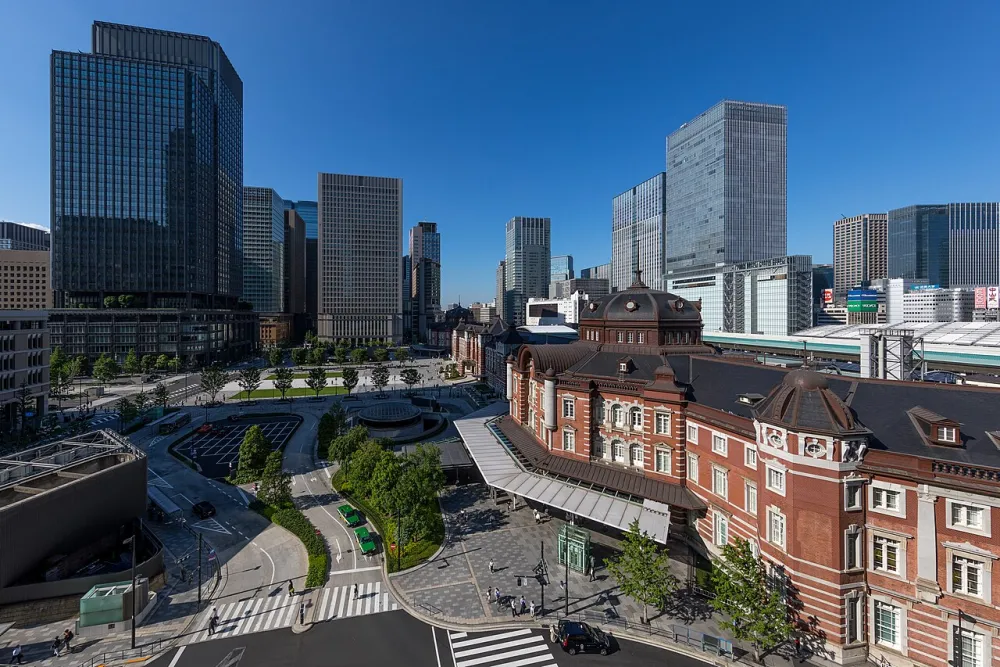
Both Kaihin-Makuhari and Makuharitoyosuna may restrict station entry. The organizer specifically notes that Tokyo-bound trains may already be crowded when reaching Makuharitoyosuna and recommends Kaihin-Makuhari for Tokyo returns. Either station may involve waiting. Follow the organizer’s route toward Kaihin-Makuhari, then queue for the entrance open on site.
For Tokyo, Maihama or another Keiyo Line hotel, plan the actual final transfer to your accommodation. After the 20:30 finish, you still need to leave seating, cross roads, enter the station and wait for a train. If the hotel needs another line, search the full journey rather than only the leg to Tokyo Station. If you must catch a punctual long-distance train, consider staying in Makuhari before buying fireworks tickets to remove that distant post-show connection.
Returning to the Sobu or Keisei lines: north-exit bays and the temporary stop
The temporary bus stop for Makuhari-Hongo operated until 22:00 in 2026. Kaihin-Makuhari north-exit Bay 1 was another option. For JR Makuhari, use north-exit Bay 7 for services marked JR Makuhari Station/Nagasaku-cho–Hanashima Park. Extra direct buses to Inage used north-exit Bay 8, with another Inage service from Bay 6. The organizer warns that Bay 6 services are limited and suggests also using the Makuhari-Hongo direction.
Write the return as a complete route: leave your seating area along the departure arrows, reach the temporary stop, take a Makuhari-Hongo bus and transfer to the Sobu Line for your hotel. If your ticket area is nearer Kaihin-Makuhari Station, target north-exit Bay 1. Everyone then knows the endpoint if separated, instead of one person looking for south-exit taxis while another searches north for a bus. Official taxi pickup and drop-off points are Makuhari Messe’s central turnaround and Kaihin-Makuhari Station’s south-exit turnaround. Vehicles cannot stop near ticket reception. If someone needs a pickup, choose an allowed point and include traffic reopening times and waiting space. A taxi called to a beach entrance cannot simply follow normal-day navigation there.
A night in Makuhari: compare the walk back to three hotels
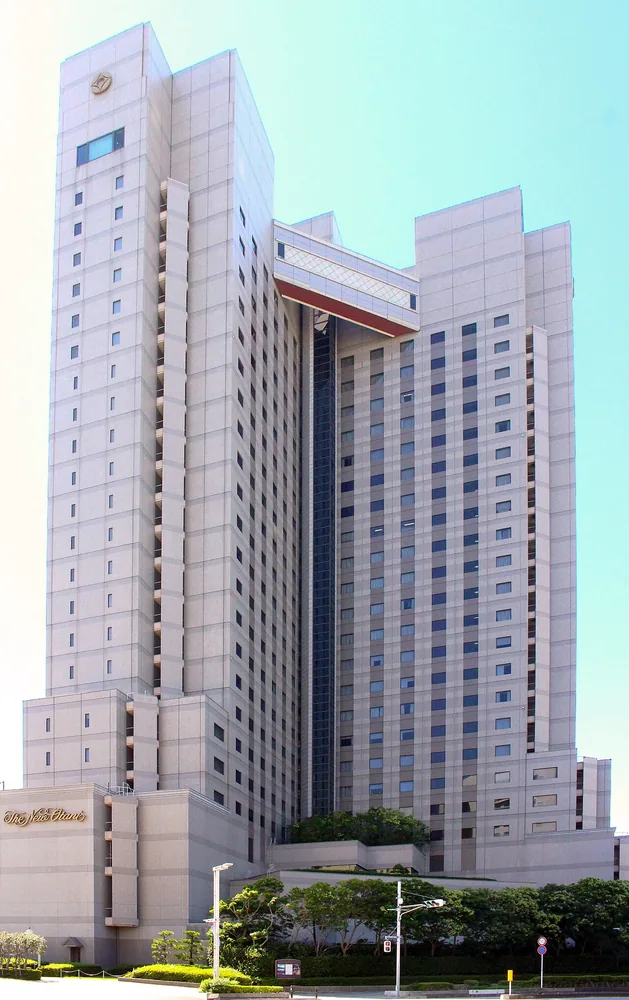
The direct benefit of staying is reducing departure to a walk back to your room. Hotel New Otani Makuhari is at 2-120-3 Hibino, Mihama Ward, Chiba. Its access page gives about five minutes on foot from Kaihin-Makuhari’s south exit. Main and east lobby entrances are open 24 hours; the banquet-side entrance opens 7:00–20:00, with separate hours for the elevated-walkway entrance. Use an official ground-level entrance as your destination after the show and identify it during daytime check-in.
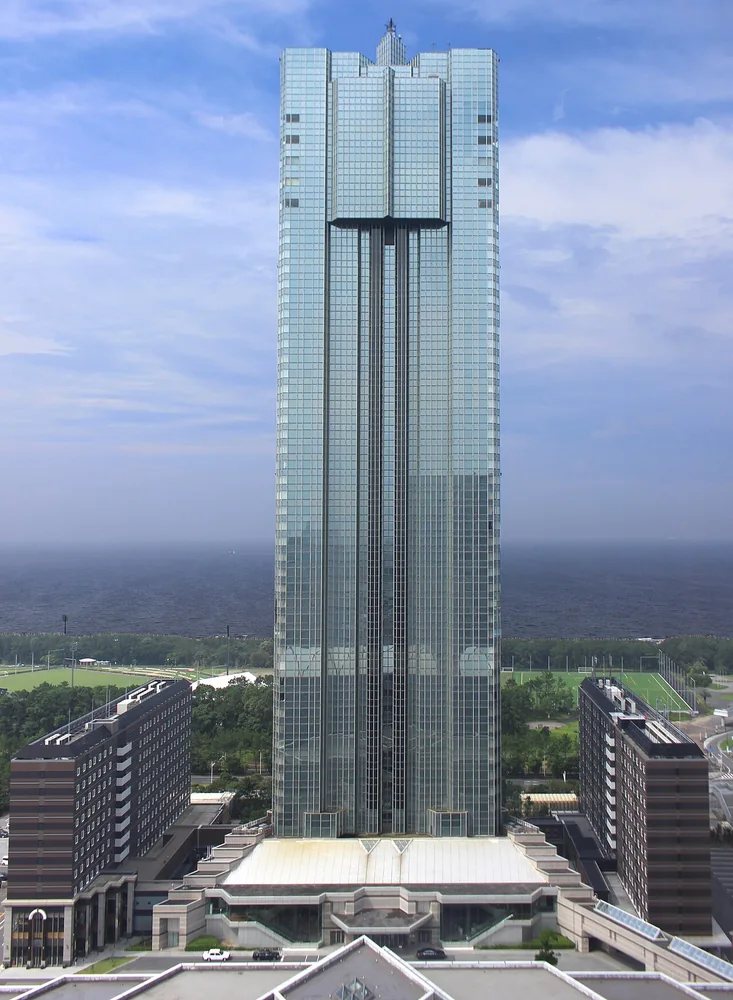
APA Hotel & Resort Tokyo Bay Makuhari is at 2-3 Hibino. Its official access page gives a seven-minute walk from Kaihin-Makuhari. It lies between the convention center and sea, worth comparing for a stadium or seaside viewing plan with a nearby room. Keep the full hotel name and booked building, identify your accommodation entrance on arrival, then walk to fireworks reception.
Hotel Springs Makuhari is at 1-11 Hibino. Its official page gives a two-minute walk from the station. On the north side, it concentrates next-morning trains and station-area meals. Choosing it means returning to the station area before the hotel; a seaside hotel can end your walk before reaching the station. Include that difference in room-price comparisons. If companions want to avoid crossing the station district again, crowd direction matters more than the quoted minutes from a station.
Check whether hotel packages include tickets, then connect the next day
For fireworks-and-hotel packages, match date, headcount and ticket area. Two adults with an elementary-school child need a suitable room and entry for three ticket-requiring people. If a package includes only two tickets, choose a product that provides the whole group’s tickets. Restaurant-plus-viewing products must also fit meal time into the route. The restaurant’s distance from your gate affects whether you arrive before restrictions.
Room prices vary by date, room and cancellation plan. Compare the total for the same date, headcount, taxes and equivalent meals, listing whether event tickets are included or paid separately. For a hotel product with fireworks viewing, use the viewing location stated in that product. Compare the three hotels above for a walk back. For a room view, choose a product explicitly providing in-room viewing. If heading to Maihama or central Tokyo the next morning, a Makuhari night lets you pack and eat breakfast before taking the Keiyo Line. If you already returned to your original Tokyo hotel, keeping luggage and a multi-night stay there saves moving. Both plans work. The choice is between moving hotels by day and taking a longer trip after the display. With young children or older relatives, reducing required nighttime vehicle legs is usually worth prioritizing.
Families and wheelchairs: mat size, companion tickets and gates belong together
Several 2026 mat areas issued 60-by-60-centimeter mats per person. An accompanying preschool child received no extra mat. Strollers must be folded inside viewing areas and are not stored by the organizer. There is no nursing room. Feed and change young children before entry to reduce trips through reception during the display and leave enough mat space for sitting, lying down and belongings.
A wheelchair group in A can have up to five people including companions. Companions must buy the same wheelchair-area ticket type. G wheelchair spaces allow four companions: two use folding chairs and two sit behind across an aisle. E wheelchair tickets watch from D’s wheelchair space. Handle the difference between ticket name and actual position when booking the whole group so caregivers reach the correct gate and area.
Ordinary areas generally prohibit bringing chairs and tables. The FAQ allows a simple chair for people unable to use a mat because of injury or physical condition, placed with consideration for viewers behind; reception may ask about its use. For dependable chair seating, G reserved seats are the clearest choice. For wheelchair, companion and toilet routes, plan the group with dedicated tickets and the official accessibility map.
The afternoon wait: keep food, cooling and photography within your space
X opened at 16:00 in 2026; Makuhari Seaside Park’s S and A–I opened at 16:30, leaving a wait before the 19:30 launches. The organizer allows outside food, drink and alcohol, with bag checks at reception. Leave large luggage at your accommodation and fit water, food, a thin cushion and rubbish bags to your area’s space. If entering early, eat a main meal beforehand rather than relying on concession queues just before the display for the whole family’s dinner.
In 2026, JFA Yume Field’s indoor futsal court opened specially as a free air-conditioned rest area. Mist equipment was also installed near reception and elsewhere. For re-entry after a rest, keep your wristband on and use the re-entry gate beside reception. Mats are not replaced, and valuables should stay with you. If anyone feels unwell from heat, rest and rehydrate first rather than remaining in the sun to hold an unreserved spot.
Tripods are prohibited. Do not stand at your position to film or occupy passageways. The over-water display spreads low; from a seated position, a phone can still include sea and sky. If someone is in front, adjust the camera angle rather than holding it overhead for long periods. Pets cannot enter, but assistance dogs can. The entire venue is non-smoking, including electronic and heated-tobacco products.
Weather cancellation and refunds: keep tickets and separate hotel costs
There was no postponement date in 2026. The organizer planned to announce a severe-weather or strong-wind cancellation decision around 9:00 that day, but could also cancel later after a sudden weather change or disaster. Cancellation before launches begin allows a refund of face value during a specified period. A stop after launches begin does not. Damaged, lost or heavily soiled tickets that cannot be read are also ineligible for refunds, so protect official tickets throughout the trip.
Hotels, train tickets and restaurants follow their own booking terms. Give event tickets, accommodation and transport separate budget columns, with the final cancellation date and charge after that deadline. If cancellation is announced that morning, you can decide whether to keep the Makuhari room, switch to a city day or cancel under the plan without searching multiple orders again. To understand the over-water display first, the organizer’s ticket page links directly to Chiba TV’s official 2026 broadcast. Refer to the seating table when choosing seats.
The official broadcast of the 48th festival in 2026 published by Chiba TV.
A few useful answers
Can I watch free at the beach without a Makuhari ticket?
In 2026, every visitor needed advance application. D and X free invitations also required a winning postcard. The organizer provided no nearby viewing area for unticketed visitors. Free invitations use the formal application and identity-check process.
Is G stadium seating suitable for a direct view of over-water fireworks?
G offers aerial fireworks from the stadium and the over-water display on a large screen. For a direct sea view, compare seaside areas first. H, I and X do not have direct views of the over-water performance.
Do elementary-school and preschool children need tickets?
In 2026, elementary-school children and older needed tickets. Each ticket could include one preschool child, without an extra mat. Strollers had to be folded in viewing areas, with no organizer storage.
Is Makuharitoyosuna faster for returning to Tokyo?
The organizer warns that Tokyo-bound trains may already be crowded at Makuharitoyosuna and recommends Kaihin-Makuhari. Either station may restrict entry. Follow the designated departure route and on-site queue.
If canceled, is the festival postponed or all travel refunded?
There was no postponement in 2026. Cancellation before launches began allowed a face-value refund within the specified period; a stop after the start did not. Travel costs follow their own bookings. Keep official tickets intact.
Official information and references
Sources used in this guide.
- Chiba Citizens Fireworks Festival Executive Committee | 2026 overview and completion notice
- Organizer | 2026 viewing areas, prices, surfaces and sea views
- Organizer | Tickets, children, free invitations and refund rules
- Organizer | Entry, strollers, wheelchairs, rest and re-entry FAQ
- Organizer | Station connections, bridge hours and departure
- Organizer | 2026 venue and ticket-area entrance map
- Organizer | 2026 departure-route map
- JR East | Current Kaihin-Makuhari ticket-gate information
- JR East | Park Gate opening in 2025 and IC-only access
- Hotel New Otani Makuhari | Access and entrance hours
- APA Hotel & Resort Tokyo Bay Makuhari | Address and access
- Hotel Springs Makuhari | Address and access
- Makuhari Onsen Yura no Sato | Location and walking access
- Chiba TV | Official 2026 fireworks broadcast