Compare sea views, beach and stadium seating, D/X free invitation eligibility and area entrances. Plan Kaihimmakuhari Station, Makuharihongo buses and your hotel return, using prices and rules from the completed 2026 edition.
- Region & Focus
- KantoFestivals and fireworks
- Reading Scope
- 35 min read · 20 chapters · 5 Q&As
- Official Verification
- 14 official sources checkedUpdated 7 November 2026
- Key Topics
- SeasonsBookingWhere to stay
Chapter Route Map (tap any stop)
- Choose sea views or chairs before choosing a ticket area
- Read the venue map twice: first for the sea, then for your gate
- A, B and S are close together but offer different views and pricing units
- E avoids sand; D requires eligibility: match sea views with how you sit
- G stadium seats: chairs, with sea fireworks shown on screen
- H, I and X: lower-cost aerial fireworks with a different view
- F Yurakirari: baths and fireworks in one place
- Applying for free seats: D resident eligibility and X general lotteries are separate
- Paid tickets: handle the full product name, children and physical tickets together
- Kaihimmakuhari Station: central and park gates, then north and south exits
- From the station, beach, stadium and X routes split among hotels and Messe
- Cross before 19:15: late arrivals use a ground-level crossing
- Arriving from the Sobu Line: buses at Makuharihongo, Makuhari and Inage
- Returning to Tokyo: use the organiser’s Kaihimmakuhari route
- Returning to Sobu or Keisei: north-exit bays and the temporary stop
- One night in Makuhari: compare routes back to three hotels
- Check whether your room package includes tickets, then plan the next day
- Families and wheelchairs: mat size, companion tickets and the right entrance
- Afternoon waiting: keep food, cooling and photography within your space
- Wind, rain and refunds: retain tickets and separate event and room costs
- Quick Q&A
For a direct view of fireworks over the sea, start with seafront areas. For a fixed chair, start with reserved stadium seating. Makuhari’s beach, stadium and convention-centre car park have separate ticket checks. Choose your entrance, ground surface and route back to your room alongside your seat.
Choose sea views or chairs before choosing a ticket area
Makuhari Beach Fireworks Festa takes place around Makuhari Seaside Park in Mihama, Chiba City. Viewing areas occupy the beach, stadium, artificial turf and Makuhari Messe car park. The 48th edition on 1 August 2026 marked 900 years since Chiba’s founding and ran from 19:30 to 20:30. The organiser announced its completion on 2 August. Prices and routes below refer to that 2026 edition.
For fireworks spreading across the sea in front of you, compare B’s sea-fireworks seats or the sea views from C, D and E. For close aerial fireworks, look at A; groups of five can compare S. G’s reserved stadium seats suit those wanting a fixed chair throughout. H, I and X focus on aerial fireworks without a direct view of the sea performance. This distinction helps choose a ticket more than the headline total of about 24,000 fireworks.
The organiser’s event overview states that every attendee must apply in advance for a viewing area. Free invitations also involve lotteries and ticket checks. For two adults with children, choose a surface and sitting arrangement everyone accepts, then put accommodation on the same return route. This makes the evening easier than pursuing the lowest individual price.
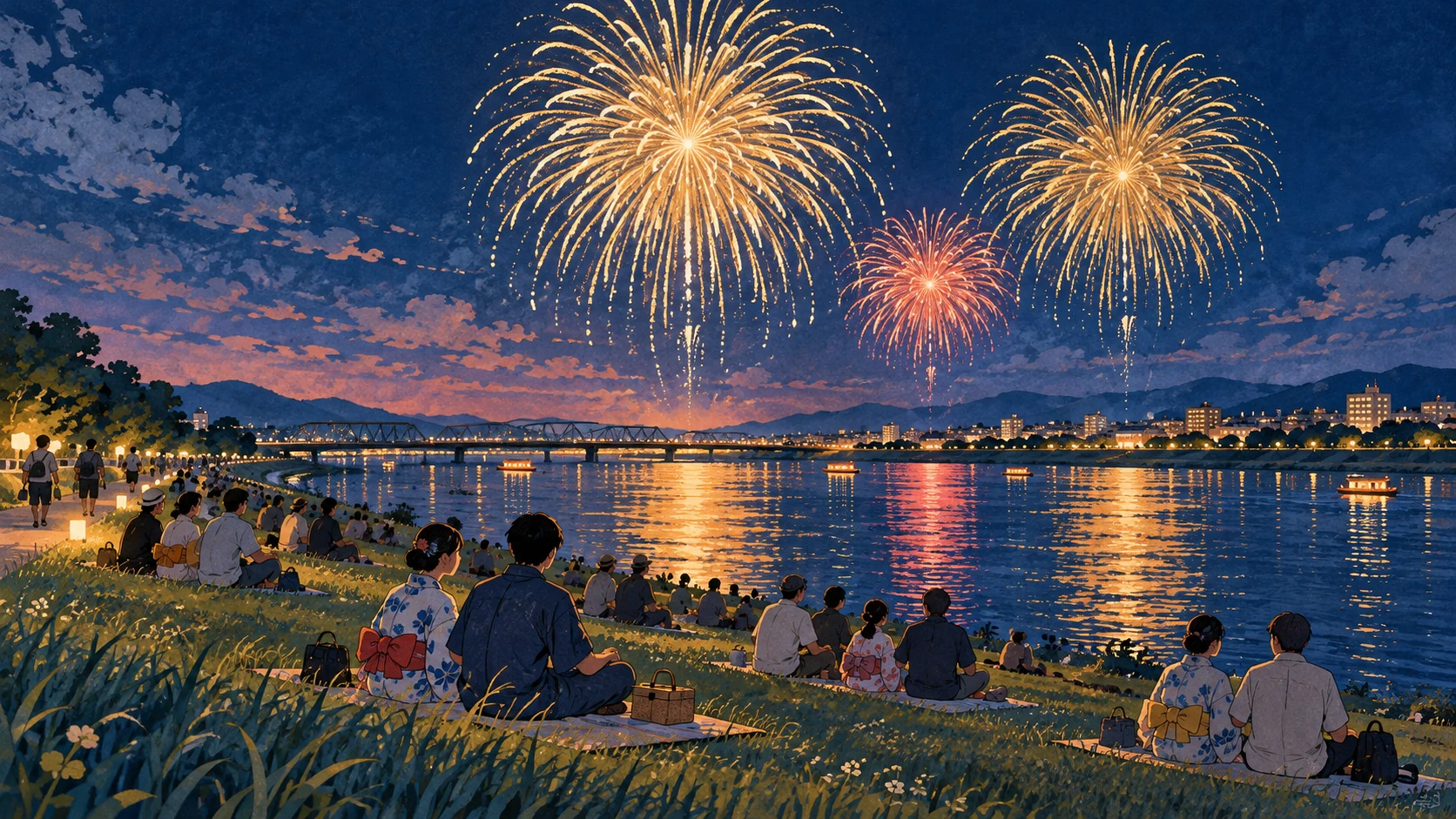
Compare sea views, beach and stadium seating, D/X free invitation eligibility and area entrances. Plan Kaihimmakuhari Station, Makuharihongo buses and your hotel return, using prices and rules from the completed 2026 edition.
Read the venue map twice: first for the sea, then for your gate
Open the official 2026 area map. Locate A, B, C, D, E, F and S along Makuhari Beach, then inland JFA Yume Field, ZOZO Marine Stadium and X nearer the Makuhari Messe car park. Yellow areas beside the sea are no-entry zones, not shortcuts between viewing areas.
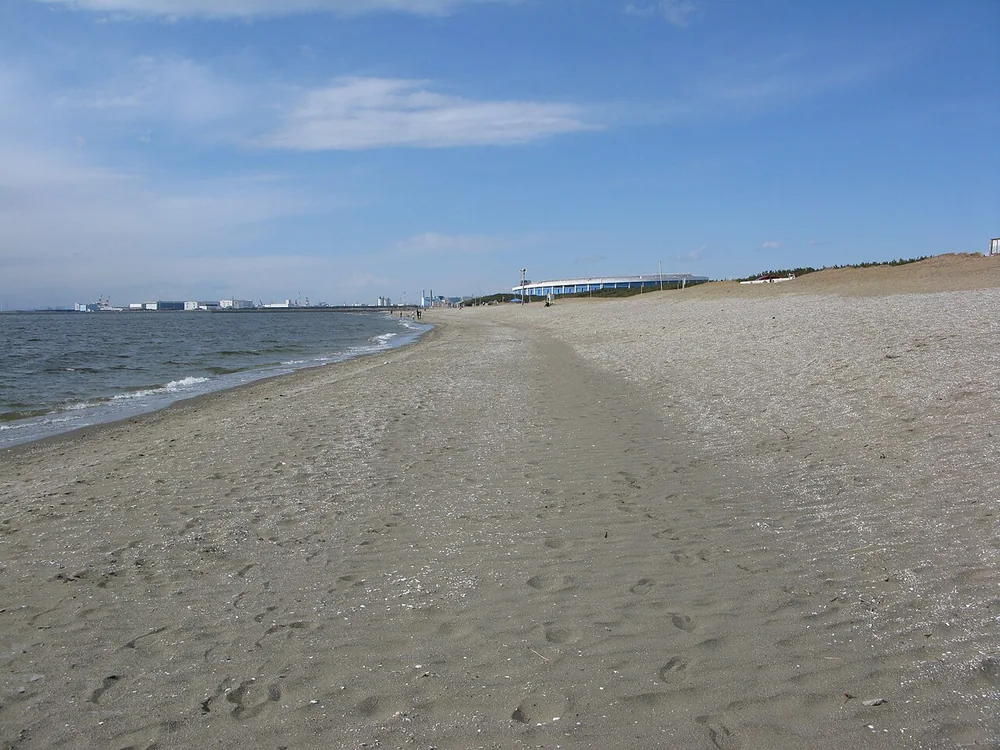
The beach looks continuous, but ticket checks use shared A/B gates, a dedicated C gate and shared D/E/F gates. S, H and A wheelchair seating have another entrance in a common direction. G checks tickets at the stadium entrance, I uses an artificial-turf entrance, and X uses the convention-centre car park side. Companions with different areas should eat and meet before entry, then follow their own tickets.
Save the whole map rather than cropping it to seats. The relationships between hotels, station, crossings and entrances help you find your way at night. A map app locates Kaihimmakuhari Station or your hotel address. On fireworks day, use the event map and staff directions for road crossings, bridges and queues.
A, B and S are close together but offer different views and pricing units
In 2026, A “Beach Aerial Fireworks Seats” and B “Beach Sea Fireworks Seats” each cost ¥6,000 per person. Both are unreserved beach areas with a mat issued on entry. A focuses on close aerial launches, while B faces Makuhari’s distinctive sea fireworks. The organiser lists S, A and B as the closest areas to the launch site. Two adults seeking the image of fireworks spreading over the sea can start with B.
S “Prime Group Seats” cost ¥50,000 per group for up to five people in a 1.8 × 2.4 metre artificial-turf space on the beach. With five adults, that is ¥10,000 each; a pair still buys the whole space. It suits families or friends willing to pay for a defined group area. The official viewing-area page lists S as allocated space and A/B as unreserved. After paying for unreserved entry, you still find an available position within that area. S’s fixed space also involves ground seating. If an older relative’s main need is a chair with a back, look directly at reserved stadium seating rather than choosing S because it costs most.
E avoids sand; D requires eligibility: match sea views with how you sit
E “Seaside Car Park Seats” cost ¥4,000 per person in 2026 on asphalt. Like C and D, it offers an overall view of both sea and aerial fireworks. Asphalt makes sand in shoes and mat packing easier to manage than the beach, but retains summer heat. You can use your own cushioning within the organiser’s allocated mat area. Two adults pay ¥8,000 in E, ¥4,000 less than two A or B tickets.
D “Citizen Free Invitation Beach Seats” includes “beach” in its name, but the official surface table lists asphalt. It is a free invitation area for advance applications by Chiba City residents, with wheelchair spaces inside. Compare the area name with the surface table when choosing ground conditions. To choose it for price, you need resident eligibility and a successful lottery result first. D becomes an itinerary option only with both. C is sponsor seating. Though adjacent on the seafront map, each has a separate route to access: purchase for E, resident lottery for D and sponsorship for C. Families holding a D winner postcard use the D/E/F entrance group rather than following the C passage ahead.
G stadium seats: chairs, with sea fireworks shown on screen
G is inside ZOZO Marine Stadium. Standard reserved stadium seats cost ¥4,000 per person in 2026. Spectators watch aerial fireworks from infield seats and the sea performance on a large screen; stadium shops also open. It suits those willing to exchange a direct sea view for chairs and stadium facilities. If your aim is to see low fireworks spread across the water in person, keep your choice on the seafront.
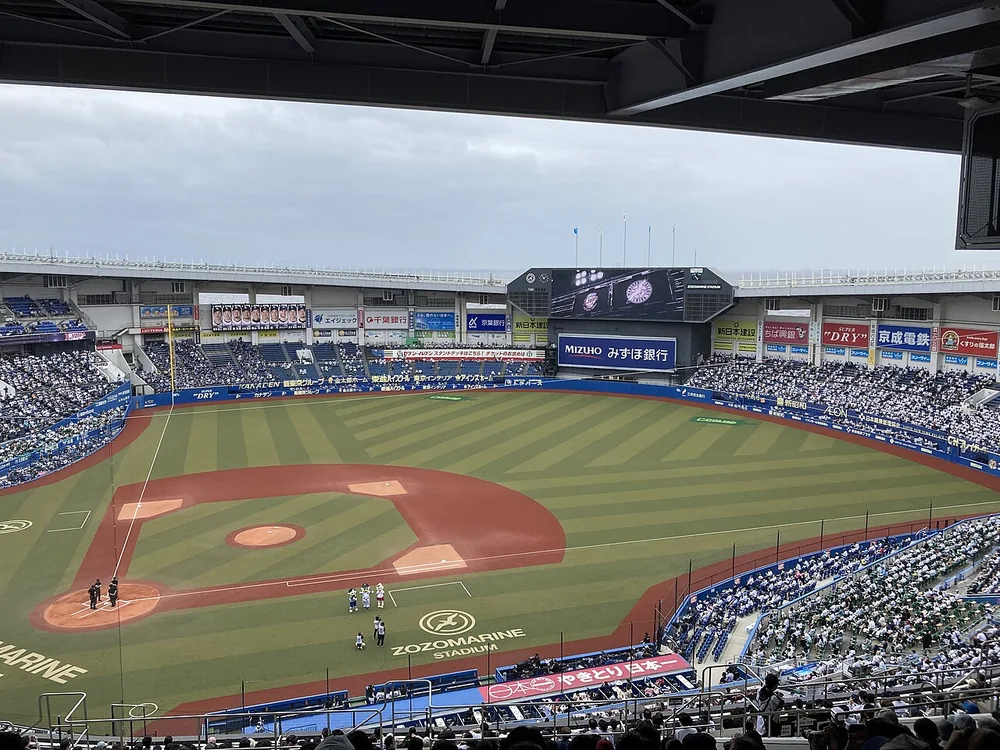
G also has table-equipped BOX seats for up to five at ¥22,500, pair seats at ¥9,000 and four-person seats at ¥18,000. Four adults pay ¥16,000 for four standard reserved seats, so a four-person product adds ¥2,000. Five sharing a BOX pay ¥4,500 each. Compare whether the grouped seating and table are useful, and retain each product’s original pricing unit.
G also offers infield ground seating at ¥3,500, an unreserved mat area. Although inside the same stadium as reserved seats, it requires sitting on the ground. If a purchase screen says only “G”, read the full Japanese ticket name to distinguish infield chairs, BOX seats and “グラウンド席” ground seats. This prevents buying the wrong product for someone unable to sit cross-legged for long.
H, I and X: lower-cost aerial fireworks with a different view
H stadium-side seating cost ¥2,500 per person in 2026 on asphalt. I at JFA Yume Field cost ¥3,000 on artificial turf. Both are unreserved, and the organiser explicitly says the sea fireworks cannot be seen. For sitting and looking up at aerial fireworks, H has a price advantage and I offers artificial turf. If the sea programme matters, keep comparisons among suitable A–E products.
X occupies the Makuhari Messe car park and has resident and general free invitations, both requiring advance application. It is asphalt, with no mat supplied; bring your own sheet. The organiser gives an area guideline of no more than one square metre per person. X mainly shows aerial fireworks, without a direct sea-performance view, and is separate from beach areas. These three areas combine different prices, surfaces and viewing content. Two adults pay ¥5,000 in H or ¥6,000 in I, against ¥12,000 in B. If putting the difference towards accommodation, also compare which performance matters most: aerial or sea fireworks.
F Yurakirari: baths and fireworks in one place
F is special viewing at Makuhari Onsen Yurakirari. At ¥9,000 per person in 2026, it offered viewing in front of the facility entrance, same-day bathing, hot-stone bathing and face/bath towel hire. Benefits also included a later admission invitation valid until the end of November 2026. That edition allowed facility use from 16:30 to midnight, with food and other paid services extra. Compare this package if you want an indoor rest before the display and a bath afterwards.
This changes the return plan too. If bathing afterwards, plan around your actual departure from the facility rather than the 20:30 fireworks finish. Accommodation within walking distance in Makuhari can connect with a late departure. Yurakirari is within JFA Yume Field at 26 Mihama, Mihama Ward, Chiba City. The facility website gives a walk of about 20 minutes from Kaihimmakuhari Station.
F is unreserved, with a limited number of folding chairs listed in the FAQ. Separate wheelchair tickets use space on the facility side; companions buy advance tickets. Wheelchair use inside extends as far as the changing rooms. Anyone needing help within the baths should choose according to the movements they can manage and their companion arrangements, separately from ordinary fireworks wheelchair seating.
Applying for free seats: D resident eligibility and X general lotteries are separate
In 2026, free resident invitations covered 6,500 people in D and 24,000 in X. X also offered 10,000 general free invitations, open to visitors from outside Chiba City as well as residents. Online applications closed at 23:59 on 19 May. Resident applications could also use a postcard, which had to arrive that same day. Forms asked for the representative’s and companions’ names; the resident scheme allowed four companions.
Winners receive one postcard per group at the representative’s stated address, listing everyone’s name. The organiser posted these on 1 July and sent no unsuccessful notices. D and X entrances check documents identifying name and address. Winner postcards cannot be transferred or traded on auction sites. Postcards with names erased or suspected illicit transactions are refused entry.
Free-invitation groups should gather before entry. For a late arrival, the representative must go outside to collect them, then complete identity checks together. If the representative cannot attend, an originally registered companion can enter with the winner postcard and identification. An unregistered replacement cannot take their place. These organiser FAQ entry rules directly affect family meeting times. Tell every companion once the postcard arrives.
Paid tickets: handle the full product name, children and physical tickets together
The organiser listed FANY, Pia, Lawson, eplus and Seven among 2026 sales channels, but products differed between platforms. G BOX, pair and four-person seats, for example, had their own sales links. An event name still appearing on a platform does not mean every ticket type is sold there. Choose the complete ticket name on the official ticket page, then follow that product’s link to match price and capacity.
Primary school pupils and older require tickets, and each ticket allows one preschool child. Entry requires the official ticket or winner postcard; photographs and purchase histories are not accepted. Lost tickets cannot be reissued. If collecting at a convenience store, complete collection before travel using the stated deadline and details. Keep the official tickets safe rather than searching order emails at the gate. On 31 July, the organiser announced that all 2026 paid tickets were sold out, with no same-day sales. Hotels also sold specified tickets and packages, including Hotel New Otani Makuhari restaurant packages through its own website. For accommodation-plus-ticket products, compare party size, viewing area, meal time and ticket handover location. Ordinary room bookings follow their own rate plan.
Kaihimmakuhari Station: central and park gates, then north and south exits
The nearest railway access to the main venue is JR Keiyo Line Kaihimmakuhari Station. The organiser lists a normal walk of about 15–20 minutes to Makuhari Seaside Park and about 20 minutes to Makuhari Messe car park. Use these distances to judge luggage and stamina. Event-night waits and crossing restrictions add time. After reaching the station, you still need the correct gate, ticket check and seat. An earlier afternoon arrival leaves a full entry allowance.
JR added the Park Gate on the Soga side in 2025, described in its opening notice as an unstaffed IC-only gate. JR’s Kaihimmakuhari Station information lists the staffed Central Gate as open from first to last train, and the unstaffed Park Gate as open from 04:45 to 22:00 with an intercom. The Central Gate gives more direct staff assistance for ticket or IC-card problems. The main venue is south of the station; buses towards Makuharihongo, Makuhari and Inage mainly use north-exit stops. On a first visit, identify your arrival exit and return bus bay by daylight. If evening station entry uses an organised queue, follow it to the open entrance rather than cutting across people to switch gates.
From the station, beach, stadium and X routes split among hotels and Messe
A/B ticket holders follow the official map through the Makuhari Seaside Park direction to the seafront A/B entrance. C ticket holders seek the C gate beside JFA Yume Field. D/E/F follow those signs towards the Yurakirari side. S, H and A wheelchair tickets use the designated gate by the stadium. At Kaihimmakuhari Station, show staff the full ticket name rather than simply asking for “the beach”.
G ticket holders head to ZOZO Marine Stadium and its G entry. I ticket holders head to the JFA Yume Field artificial-turf entrance. X heads towards Makuhari Messe car park, without first going to beach checks and backtracking. A family of four with G four-person seats can set a shared stadium destination, preventing anyone from treating G ground seating as another seaside entrance.
The official map marks A wheelchair viewing in blue by the sea and provides a separate A wheelchair access map. Its reception differs from the general A/B gate, and companions need corresponding wheelchair-area tickets. Before leaving the station or hotel, tell companions the ticket type and approach so no one queues for the whole group at general A reception.
Cross before 19:15: late arrivals use a ground-level crossing
In 2026, surrounding traffic restrictions ran from 18:00 to about 22:30. Pedestrian bridges had separate hours. Bridges circled on the map at Seaside Bridge, Mihama-en Junction, Makuhari Seaside Park Junction, Messe Ohashi Junction and in front of Toyosuna Park closed from 19:15 to 20:30. The Messe Junction footbridge by Hotel New Otani Makuhari closed earlier at 19:00, with a stated exception for hotel users.
When footbridges close, the official alternative is the ground-level pedestrian crossing at Mihama-en Junction. Leaving a hotel at 19:10 can mean a familiar five-minute direction is already changed by barriers. Complete dinner, ticket collection and toilet stops separately before the display. Aim to reach your reception before bridge restrictions rather than merely writing “beach before 19:30”.
The downward escalator outside Kaihimmakuhari Station’s south exit closed from 18:00 on the event day until 07:00 the next morning. With a pushchair, luggage or difficulty on stairs, follow lifts and on-site accessible guidance as you leave the station. You can also leave large bags at the hotel first and carry one easily secured bag for both arrival and departure.
Arriving from the Sobu Line: buses at Makuharihongo, Makuhari and Inage
For Sobu or Keisei connections, Makuharihongo is the organiser’s extra-bus access station. In 2026, south-exit Bay 0 served a temporary stop near the convention centre, listed for S, A wheelchair, G, H and X. South-exit Bay 1 served Kaihimmakuhari Station, connecting to seaside areas A–I. The extra service was scheduled from 15:30 to 22:00 at ¥230.
From JR Makuhari Station, Chiba Seaside Bus runs from the north exit to Kaihimmakuhari. From Keisei Makuhari, use the station-front bus plaza in the same direction. Inage has Heiwa Kotsu from east-exit Bay 8 and Keisei Bus from west-exit Bay 5. These station names differ by only a few characters. If staying in Makuharihongo, keep the full name in searches rather than accidentally finding Makuhari Station’s stops. Buses connect the Sobu Line and Kaihimmakuhari but also have queues that evening. Prepare enough IC-card credit on daytime arrival and save the return stops from the official access page. For a Sobu Line return, decide whether to walk to the temporary stop or Kaihimmakuhari’s north exit. Switching between them on the spot adds walking.
Returning to Tokyo: use the organiser’s Kaihimmakuhari route
The official 2026 departure map directs seaside areas through paths between the park and hotels, and stadium-side flows towards the convention centre and station. X leaves from the car park side. Arrows guide departure; they are not a circular walking route to use freely in reverse. Leave your area and cross at the designated junction first, then sort phones and travel cards where you will not obstruct others.
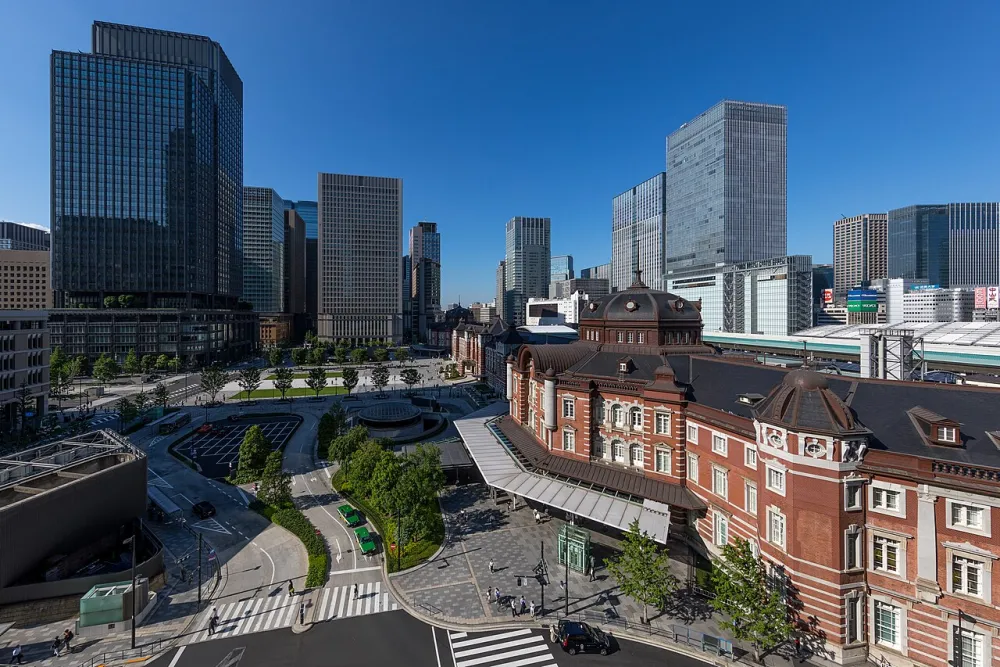
Both Kaihimmakuhari and Makuharitoyosuna may restrict station entry. The organiser specifically notes that Tokyo-bound trains may already be crowded when reaching Makuharitoyosuna and recommends Kaihimmakuhari for Tokyo returns. Both can involve waiting. Follow the official departure route towards Kaihimmakuhari, then queue at the entrance opened on site.
For Tokyo, Maihama or other Keiyo Line accommodation, plan the actual hotel’s final connection. After the 20:30 finish, you still leave the seating area, cross roads, enter the station and wait for a train. If changing lines, search the whole journey rather than only as far as Tokyo Station. If you need a punctual long-distance service, choose a Makuhari overnight stay before buying fireworks tickets to remove the required long transfer afterwards.
Returning to Sobu or Keisei: north-exit bays and the temporary stop
The temporary bus stop for Makuharihongo operated until 22:00 in 2026. Kaihimmakuhari north-exit Bay 1 is another boarding point. For JR Makuhari, use north-exit Bay 7 marked “JR幕張駅/長作町・花島公園行” (JR Makuhari/Nagasakucho and Hanashima Park). Extra direct Inage buses use Bay 8, with another Inage route from Bay 6. The organiser notes limited service from Bay 6 and suggests also using the Makuharihongo direction.
Write the full return in one sentence: follow your area’s departure route to the temporary stop, take a Makuharihongo bus, then change to the Sobu Line for your accommodation. From a seating area nearer Kaihimmakuhari Station, target north-exit Bay 1 instead. Everyone then knows the final destination, avoiding one person heading for south-exit taxis while another seeks north-exit buses. Designated taxi boarding points are the Makuhari Messe central turning area and Kaihimmakuhari south-exit turning area. Vehicles cannot pick up or drop off near reception. For someone needing collection, use an allowed boarding point and consider restriction end times and waiting space. Calling a car to the beach gate does not let the driver approach by an ordinary-day navigation route.
One night in Makuhari: compare routes back to three hotels
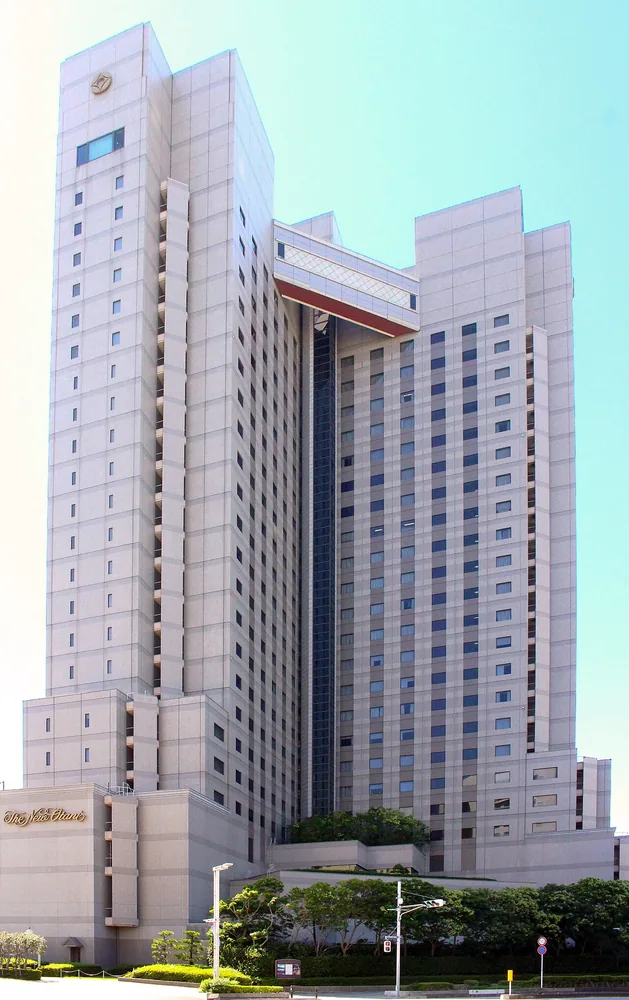
An overnight stay directly reduces the post-display task to walking back to your room. Hotel New Otani Makuhari is at 2-120-3 Hibino, Mihama, Chiba. Its access page lists about five minutes from Kaihimmakuhari’s south exit. The main and east lobby entrances open 24 hours, the banquet-side entrance 07:00–20:00, and the skywalk entrance has separate hours. For the return after fireworks, target an official ground-level entrance and identify it during daytime check-in.
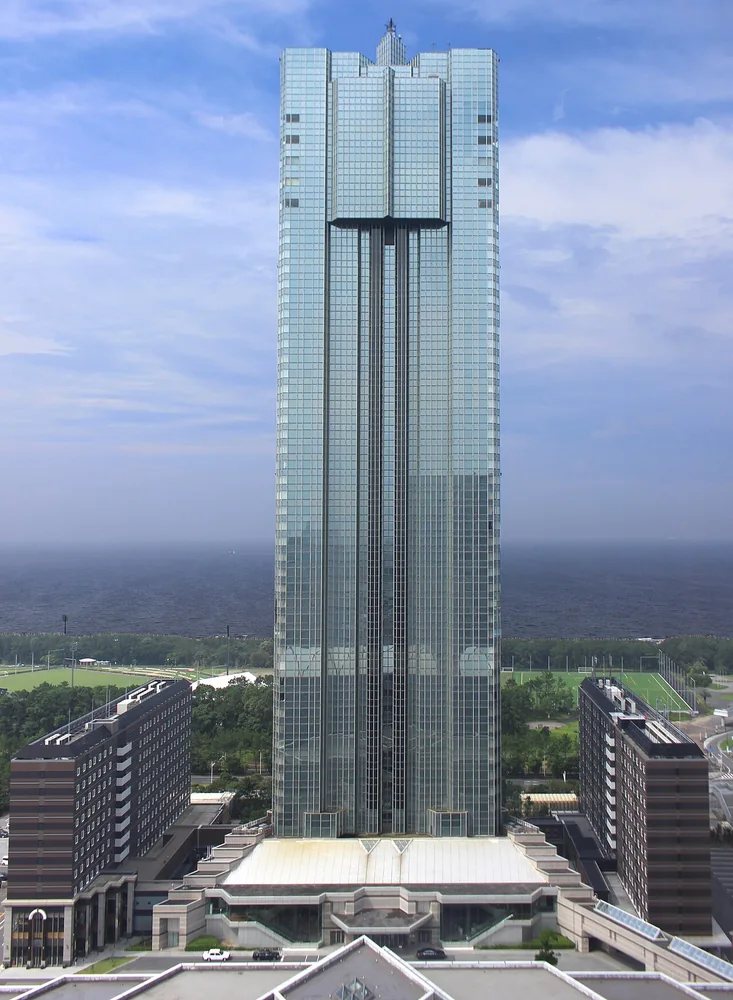
APA Hotel & Resort Tokyo Bay Makuhari is at 2-3 Hibino. The official walk from Kaihimmakuhari is seven minutes, between the convention centre and sea. Compare it when keeping stadium or seafront viewing and accommodation in the same area. Retain the full hotel name and the tower stated on your booking. Find your accommodation entrance on arrival before walking to fireworks reception.
Hotel Springs Makuhari is at 1-11 Hibino. Its official access page gives a two-minute station walk on the north side, concentrating next-morning trains and station-area meals. Staying here means returning to the station area before continuing to the hotel. A seaside hotel lets you finish walking before reaching the station. Include this distinction with room prices. If companions want to avoid crossing the station area again, crowd direction is more useful than a simple “minutes from station” figure.
Check whether your room package includes tickets, then plan the next day
The key accommodation-and-ticket package checks are date, party size and viewing area. Two adults with a primary-school child need admission for three ticket-requiring people as well as a suitable room capacity. If a package includes only two tickets, choose a product that supplies the whole group. For restaurant-plus-viewing products, include meal time in the entry route. Restaurant-to-gate distance affects whether you arrive before restrictions.
Room prices vary with date, room type and cancellation plan. Compare same-date, same-party totals with taxes, fees and equivalent meals, then show whether event tickets are separate or included. If a hotel product offers fireworks viewing, plan around the viewing location it states. Compare the three hotels above for a walk back to your room. For in-room viewing, choose a product explicitly providing that arrangement. If heading to Maihama or central Tokyo the next morning, a Makuhari stay allows luggage sorting and breakfast before the Keiyo Line. If returning to your original Tokyo hotel that night, keeping luggage and consecutive-night arrangements there saves moving. Both work. The difference is whether you move hotels by day or make a longer journey after fireworks. With young children or older relatives, reducing required night-time transport legs is usually more valuable.
Families and wheelchairs: mat size, companion tickets and the right entrance
In 2026, several mat areas issued 60 × 60 cm per person, without an extra mat for accompanying preschool children. Pushchairs must be folded within viewing areas and are not stored by the organiser. There is no nursing room. Feed and change young children before entry to reduce journeys through reception during the show and leave enough mat space for resting and belongings.
Area A’s wheelchair seating allows a group of up to five including companions, who need tickets using the same wheelchair reception. G wheelchair seating allows four companions: two on folding chairs and two in seats behind, across the aisle. E wheelchair ticket holders watch from D’s wheelchair space. Resolve differences between ticket names and actual positions when booking for everyone, so carers use the correct entrance and area.
General areas normally prohibit visitors’ own chairs and tables. The FAQ allows a simple chair for people unable to sit on mats because of injury or physical condition, with positioning that respects those behind; reception may ask about it. For a dependable chair arrangement, G reserved seats are the direct option. For wheelchair, companion and toilet access, use dedicated tickets and official accessible maps for the whole group.
Afternoon waiting: keep food, cooling and photography within your space
X opened at 16:00 in 2026; Makuhari Seaside Park’s S and A–I opened at 16:30, leaving a wait until the 19:30 display. The organiser permits outside food, drinks and alcohol and checks bags at reception. Leave large luggage at your accommodation and limit water, food, thin cushioning and rubbish bags to your area’s space. Early arrivals can eat a main meal beforehand rather than relying on a shop queue for the family’s dinner just before the show.
In 2026, JFA Yume Field’s indoor futsal hall opened specially as a free air-conditioned rest area, and the organiser installed misting equipment at reception and other points. If leaving your area for a rest, keep your wristband on and use the re-entry gate beside reception. Mats are not replaced; carry valuables with you. If a companion feels unwell from heat, prioritise rest and water rather than continuing sun exposure to hold an unreserved position.
Tripods are prohibited. Do not stand in your place to photograph or occupy passageways. Sea fireworks spread lower, so a seated phone view can include water and sky. If someone is in front, adjusting the camera angle is less disruptive than holding the phone overhead for long periods. Pets cannot enter; assistance dogs can. The whole venue is non-smoking, including electronic and heated tobacco products.
Wind, rain and refunds: retain tickets and separate event and room costs
There was no postponement date in 2026. The organiser scheduled its severe-weather or strong-wind decision announcement for about 09:00 that day. Sudden weather changes or disasters could still cause cancellation later. If cancelled before fireworks start, the ticket face value is refunded within a specified period. No refund applies after fireworks begin. Damaged, lost or heavily soiled unreadable tickets also cannot be refunded, so keep official tickets safe throughout the trip.
Hotels, transport and restaurants each follow their own reservation conditions. Give event tickets, accommodation and transport separate budget lines, each with its cancellation deadline and charge after that deadline. A morning cancellation notice then lets you decide whether to keep the Makuhari stay, switch to city activities or cancel under your plan, without searching multiple orders again. To understand the sea-fireworks view first, the organiser’s ticket page directly links Chiba TV’s official 2026 broadcast. Compare the seating table when choosing seats.
Chiba TV’s official broadcast of the 48th event in 2026.
A few useful answers
Can I watch free at the beach without a Makuhari fireworks ticket?
In 2026, every attendee needed an advance application; D/X free invitations also required a winner postcard. The organiser provided no surrounding viewing space for unticketed visitors. Use the formal application and identity-check process for free invitations.
Is G stadium suitable for a direct view of sea fireworks?
G shows aerial fireworks from the stadium and the sea performance on a large screen. For a direct sea view, compare seafront areas. H, I and X do not directly show the sea performance.
How do primary-school and preschool children get tickets?
In 2026, primary school pupils and older needed tickets. Each ticket allowed one preschool child. Free accompanying children received no extra mat. Pushchairs had to be folded inside viewing areas, with no organiser storage.
Is Makuharitoyosuna faster for the return to Tokyo?
The organiser warned that Tokyo-bound trains might already be crowded at Makuharitoyosuna and recommended Kaihimmakuhari. Either station may restrict entry. Follow designated departure routes and queues.
If the fireworks are cancelled, are they postponed or are all travel costs refunded?
There was no postponement in 2026. Cancellation before fireworks begin refunds ticket face value within the specified period; cancellation after starting does not. Travel costs follow individual booking contracts. Keep official tickets intact.
Official information and references
Sources used in this guide.
- Chiba Citizens Fireworks Executive Committee | 2026 overview and completion notice
- Organiser | 2026 viewing areas, prices, surfaces and sea views
- Organiser | Purchases, children, free invitations and refunds
- Organiser | Entry, pushchairs, wheelchairs, rest and re-entry FAQ
- Organiser | Station connections, bridge hours and departure
- Organiser | 2026 venue and viewing-area entrance map
- Organiser | 2026 departure-route map
- JR East | Current Kaihimmakuhari gate information
- JR East | 2025 Park Gate opening and IC-only access
- Hotel New Otani Makuhari | Access and entrance hours
- APA Hotel & Resort Tokyo Bay Makuhari | Address and access
- Hotel Springs Makuhari | Address and access
- Makuhari Onsen Yurakirari | Location and walking access
- Chiba TV | Official 2026 fireworks broadcast