Start a free autumn foliage walk in central Kyoto at Demachiyanagi, following Shimogamo Shrine's Tadasu-no-Mori and the Kamogawa Delta to Kyoto Gyoen's ginkgoes. Choose routes for November or December leaf peaks, with low-walking options, Kyoto Station finishes, and Toji night illumination ticket prices.
- Region & Focus
- KyotoFall foliage
- Reading Scope
- 23 min read · 9 chapters · 6 Q&As
- Official Verification
- 24 official sources checkedUpdated November 22, 2026
- Key Topics
- SeasonsItinerariesTravel budget
Chapter Route Map (tap any stop)
- Half a Day from Demachiyanagi to Kyoto Gyoen, or Head South with a Full Day
- Visit Kyoto Gyoen in November, Save Tadasu-no-Mori for Early December
- Enter Tadasu-no-Mori from the South and Decide Your Turnaround at the Romon Gate
- Three Ways to Walk the Kamogawa River--Pick a Bridge as Your Finish
- Finding Ginkgoes in Kyoto Gyoen: North Entry and Three South Exits
- Kyoto Imperial Palace and Park Facilities: Separate Gates and Hours
- Pick Your Starting Point by Hotel Location, and Match Tickets to Your Actual Route
- See Toji's Pagoda by Day, or Buy Night Illumination Tickets at the East Gate
- Which Stretches to Cut When It Rains, Energy Runs Low, or Kids Are Along
- Quick Q&A
Half a day from Demachiyanagi to Kyoto Gyoen covers a full free autumn foliage walk in central Kyoto. Start at Keihan Demachiyanagi Station, walk through Shimogamo Shrine's Tadasu-no-Mori forest, loop back to the Kamogawa Delta, and cross Kamo Ohashi Bridge heading west to find the giant ginkgo at the Ichijo-tei Site inside Kyoto Gyoen. If you visit in mid-November, prioritize Kyoto Gyoen's golden leaves first; in early December, save most of your time for Shimogamo Shrine, where colors typically turn later. With extra time in the afternoon, continue along a stretch of the Kamogawa River or head back to Kyoto Station to see Toji Temple's five-story pagoda--note that evening foliage illumination inside Toji's grounds requires a separate paid ticket.
Half a Day from Demachiyanagi to Kyoto Gyoen, or Head South with a Full Day
Start at Keihan Demachiyanagi Station. In the morning, enter Tadasu-no-Mori first, walk up toward the Romon Gate, and loop back along the approach to the river. The Kamogawa Delta sits right beside the station; ten minutes is enough to take in the confluence of the two rivers, or you can step down to the riverside path for a short stroll. After the delta, cross Kamo Ohashi Bridge onto Imadegawa-dori, cross the Kawaramachi-Imadegawa intersection heading west, and follow Imadegawa-dori to the north side of Kyoto Gyoen. Once inside the park, you can exit at Imadegawa Station, or continue south through the grounds for a second ginkgo spot and leave from Marutamachi Station instead. Both sit on the Karasuma Subway Line, making it easy to wrap up early if you have a late lunch or someone in your group wants to head back to the hotel.
Budget three to four hours for the half-day route, including unhurried stops and one sit-down break. If you arrive at Demachiyanagi at 9:00, give Shimogamo Shrine about an hour, then decide at Kamo Ohashi Bridge how far to walk along the riverbank. Plan lunch around Demachiyanagi or Kawaramachi-Imadegawa before entering Kyoto Gyoen, where it is easy to pivot to another restaurant if a line is too long. If you prefer a late lunch at the end of the walk, enter Kyoto Gyoen from the north, see the Ichijo-tei Site first, and step back out onto the street near Imadegawa. The durations in the table below reflect walking and photo stops; you can shift transit and meal breaks earlier or later as needed.
With a full day, keep the morning in the north and choose one southbound option for the afternoon. To see more water, bridges, and traditional riverside buildings, walk down to Sanjo or Shijo for a meal and finish downtown. If you plan to see Toji Temple's evening illumination, take the subway back from Kyoto Gyoen to Kyoto Station in the afternoon, leaving time to transfer, eat dinner, and walk to the East Gate. On a map, both the Kamogawa River and Toji sit south of the park, yet Toji lies southwest of Kyoto Station--walking the river all the way down to Shijo before cutting across to Toji adds extra east-west ground. If you want both, let the Kamogawa Delta stand in as your river view for the day.
If Kyoto Station is your main transit hub for the day and you are carrying luggage, store it before leaving the station. Leaving bags, souvenirs, and suitcases near Kyoto Station lets you pick them up smoothly when transferring back to the subway or Kintetsu line in the afternoon, and keeps you unencumbered on the northern gravel paths. Travelers catching an early train from Kyoto the next morning can end the evening with dinner around Kyoto Station. If you are staying near Shijo-Kawaramachi, walking the southern Kamogawa stretch to Shijo Ohashi Bridge leads straight back to your hotel, making it smarter to save Toji for another day.
| Time Available | Suggested Route | Exit Point |
|---|---|---|
| About 1 hour | In November, head straight into Kyoto Gyoen for the Ichijo-tei Site ginkgo; in early December, check Tadasu-no-Mori foliage conditions first | Imadegawa Station or Demachiyanagi Station |
| 3 to 4 hours | Tadasu-no-Mori, Kamogawa Delta, and northern Kyoto Gyoen, with a meal stop along the way | Imadegawa Station (Karasuma Line) |
| Daytime into evening | Complete the northern loop, return to the Kamogawa River in the afternoon, and walk south to a chosen bridge | Keihan Sanjo Station, Gion-Shijo Station, or Hankyu Kyoto-Kawaramachi Station |
| Evening add-on at Toji | Shorten the riverside walk, cross Kyoto Gyoen to the Karasuma Line, and ride south | Kyoto Station Hachijo Exit or Kintetsu Toji Station |
Start a free autumn foliage walk in central Kyoto at Demachiyanagi, following Shimogamo Shrine's Tadasu-no-Mori and the Kamogawa Delta to Kyoto Gyoen's ginkgoes. Choose routes for November or December leaf peaks, with low-walking options, Kyoto Station finishes, and Toji night illumination ticket prices.
Visit Kyoto Gyoen in November, Save Tadasu-no-Mori for Early December
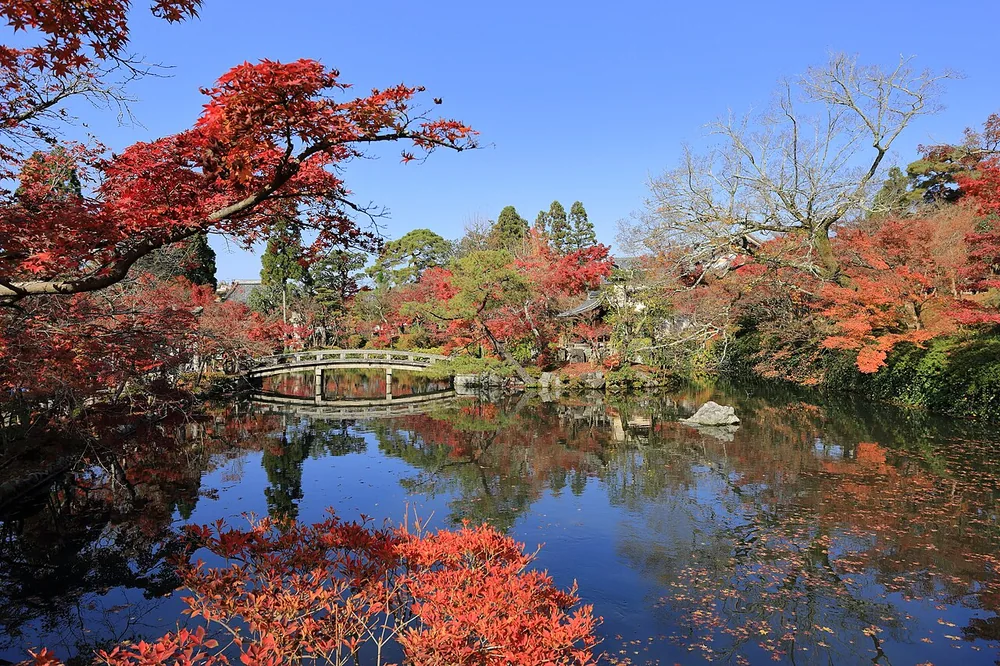
The Kyoto City Tourism Association lists typical peak foliage for Kyoto Gyoen from mid-November to early December, while Shimogamo Shrine begins peaking from early December onward. Separated by just a few blocks, the two spots follow different leaf schedules. In mid-November, anchor your morning around Kyoto Gyoen's ginkgoes and leave half an hour to check the early-turning woods in Tadasu-no-Mori. If you see Kyoto Gyoen's ginkgoes glowing bright yellow on your first day and want to photograph them before heavy rain arrives the next day, make the park your first stop via Imadegawa and head east toward the river afterward.
In its seasonal report released on November 13, 2026, the Ministry of the Environment noted that the giant ginkgo at the Ichijo-tei Site was turning yellow, and mapped out the large trees at the Gyokado Site and the tree-lined avenue north of the Kan'innomiya Mansion Site. When balancing transit time and sunlight, dated reports naming specific trees and locations help you pick which gate to enter first thing in the morning. When checking the official Kyoto autumn foliage updates, match the exact spot, check the update date, and look for labels like "irozukihajime" (starting to turn), "migoro" (peak viewing), or "rakuyo" (fallen leaves). If the two spots are out of sync, give the morning to whichever has better color.
If you have two full days between late November and early December, pair both spots into one half-day walk and save the second day for a destination that warrants a longer stay. If updates show the Ichijo-tei Site has already shed its leaves while the southern avenues still hold color, switch your entry point to Marutamachi. Likewise, if photos of Shimogamo from the day before show a carpet of fallen maple leaves, decide whether you want canopy views or ground-level color. A crisp morning after leaf fall is still worthwhile for low-angle shots lining the approach, whereas if you want crimson branches overhanging temple eaves, prioritize locations where recent photos still show leaves on the boughs.
The Ministry of the Environment's official autumn foliage map for Kyoto Gyoen also marks cherry and zelkova trees. Within the same park, you can spot orange-red upper branches, golden crowns, and fallen leaves scattered across the lawns. To catch both palettes in half a day, start under the tall canopy at the Ichijo-tei Site, walk south to the water around Kujo Pond, and exit at the south end. If you have your heart set on bright red maples and Tadasu-no-Mori is still mostly green, use the official map to look for maples west of Teramachi-gomon Gate rather than spending extra time hopping to another station on a hunch.
When the forecast calls for only half a day of sun, compare the past one or two foliage updates for each spot before deciding whether to overhaul the day or simply swap the order of the two stops. Save the brightest hours for whichever location is closer to peak color. If strong morning winds give way to afternoon sun, a heavily shedding ginkgo still rewards you with thick drifts of yellow leaves along the path. By contrast, Tadasu-no-Mori's shaded approach reads nicely even under overcast skies, where diffuse light brings out the layers of branches and foliage. If darkness falls just as you reach the gate of a tree in peak form, concentrate your photos on the stop that gets direct daylight.
When planning for autumn 2027, pick your travel week using historical peak windows--especially if Tadasu-no-Mori is a priority, in which case booking stays into early December pays off. Once dated seasonal reports start rolling in, split Kyoto Gyoen and Shimogamo across morning and evening or consecutive days. Reports of "irozuki" (beginning to color) work best for targeting a single standout tree or gate. Even if most leaves have dropped after days of high wind, focus your walk on whichever zones still hold color and round out the afternoon with the Imperial Palace or a stretch along the river.
Enter Tadasu-no-Mori from the South and Decide Your Turnaround at the Romon Gate
Searching your map app for "Tadasu-no-Mori" or "Kawai Shrine" makes it easier to join the main approach from the forest's southern tip. Take Exit 5 from Keihan Demachiyanagi Station to street level, follow the crosswalk to Kawai Bridge, cross the bridge, and turn right onto Shimogamo Shrine's approach past the First Torii Gate and Kawai Shrine. The shrine's walking route and precinct map estimates about a 12-minute walk from Demachiyanagi Station. Leave extra time if you plan to linger for photos in the woods and around the Romon Gate. On the return walk past Kawai Bridge, cut toward the delta to connect with Kamo Ohashi Bridge and take note of which river each bridge crosses.
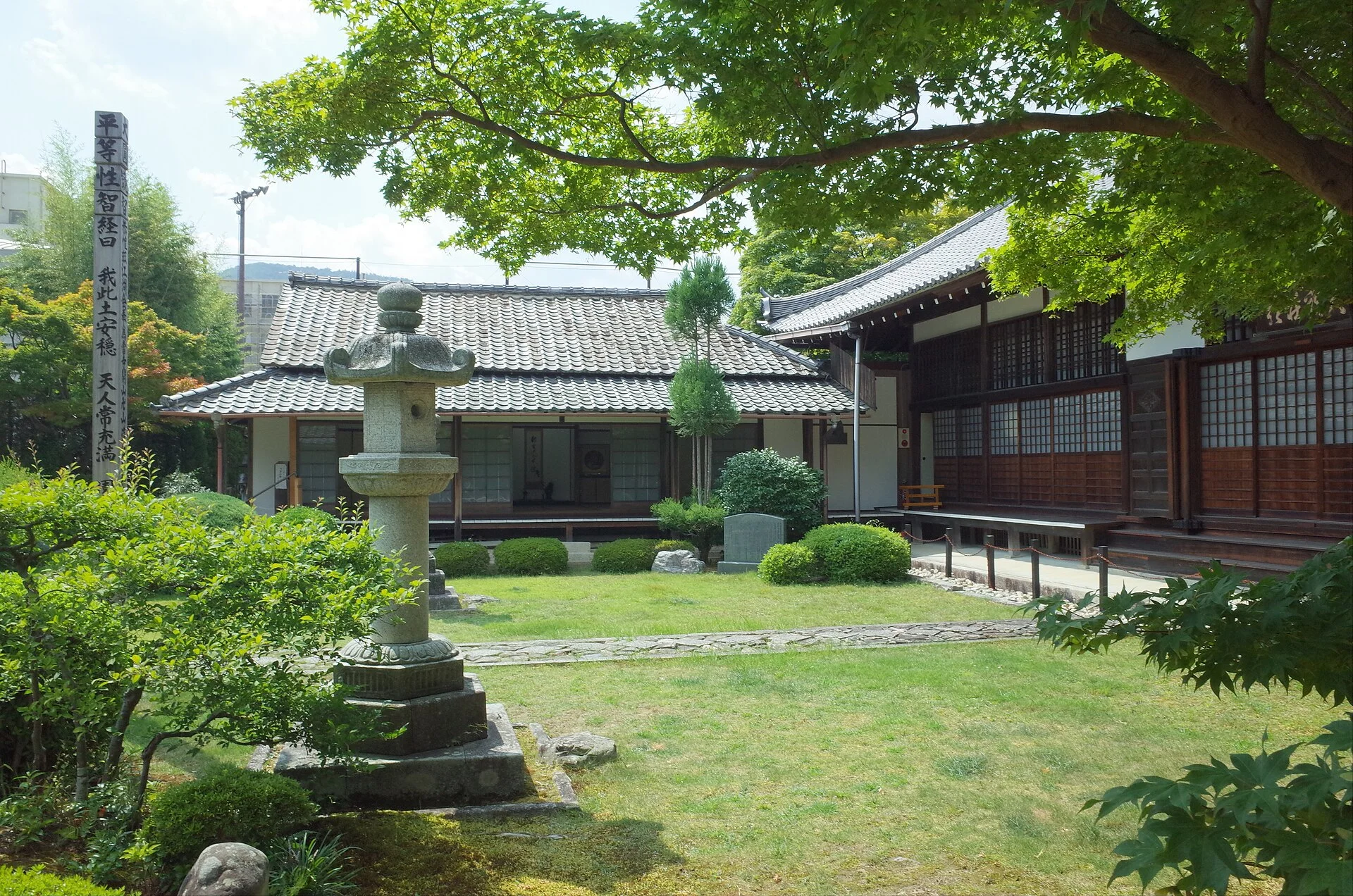
Kawai Shrine sits near the southern edge of the woods; from there, follow the main approach north past open clearings under the trees to the vermilion Romon Gate. The precinct map marks Semi-no-Ogawa Stream and Izumi River along the path, while Mitarashi Shrine and Mitarashi Pond near the main sanctuary can wait until after you pay your respects. Save the precinct map on your phone so you can navigate any side paths simply by aiming for the next landmark. Exposed roots, stream channels, and protected plantings line the trail, so stay on designated walkways for close-up shots and frame your angles with your lens. Worshippers also pause along both sides during foliage season--keep the center of the main approach clear when taking photos.
General admission to Shimogamo Shrine is free. Official worship hours for the main sanctuary inside the Romon Gate run from 6:30 to 17:00, and Kawai Shrine closes at 16:30. Save the paid Oiden hall for after you have walked the free grounds, seen the Romon Gate, and followed the main worship route. If you are mainly here for autumn colors, the round-trip between Kawai Shrine and the Romon Gate already delivers a complete forest walk; on the way back, step to an open spot along the edge to view the canopy and walkway from the opposite direction. Early in the season, follow the sunnier edges of the woods for the first bursts of color; later in the season, look for wind-blown leaf piles gathering beside the streams.
If you only have an hour in the morning, walk as far as Kawai Shrine and decide there whether to continue to the main sanctuary or spend your remaining time under the trees. For a more engaging walk with kids, duck into Kawai Shrine to see the reconstructed Hojo-an Hermitage, which Kyoto City's guide links to Kamo no Chomei, author of the Hojoki, and his family's ties to Kawai Shrine. Stepping back onto the main approach afterward to hunt for streams and fallen leaves gives children clear milestones along the way. Signage reading either "Tadasu-no-Mori" spelling variant refers to this same stretch of forest.
If you are pushing a stroller or traveling with family members whose knees tire easily, stick to a simple out-and-back along one main southern path in the morning, and only continue past the Romon Gate if everyone still feels fresh. Gravel and fallen leaves mask small dips in the ground, so agree to turn back together along the same stretch rather than having part of your group take side trails while others wait by the gate. If older travelers prioritize shrine worship over forest walking, arrive and depart via the city bus stop closer to the shrine buildings and limit the woods to a comfortable distance. That way, even if Tadasu-no-Mori's foliage is running late in late November, the morning still has a clear anchor.
Three Ways to Walk the Kamogawa River--Pick a Bridge as Your Finish
The Kamogawa Delta right beside Demachiyanagi is where the upstream Kamo River and Takano River merge. Standing on Kamo Ohashi Bridge and looking north gives you an immediate view of both channels and the triangular spit between them. For the half-day version, that bridge view is plenty--snap your photos, then follow the bridge sidewalk west onto Imadegawa-dori. Save the turtle-shaped stepping stones in the river for dry, low-water days when you have time to spare; stick to the bridge if you have a stroller, young kids, or a lunch reservation. Kyoto Prefecture maintains records of the stepping stones submerging during high water, so view the river from the bridge after rain or when the current picks up, and skip the riverbank altogether during heavy rain or flooding.
If you have extra time to drop down to the riverbank, decide in advance where you will climb back up to street level. For a brief taste of autumn by the water, walk south along either bank from Demachiyanagi, pause at any trees or open grassy stretches you like, and return to Kamo Ohashi Bridge to head toward Kyoto Gyoen. If you plan to walk all the way from the north into downtown in the afternoon, spend the first half in Kyoto Gyoen, exit on the east side, and cut back to the river toward Marutamachi Bridge. Heading south, aim first for Nijo Ohashi Bridge or Sanjo Ohashi Bridge as checkpoints, continuing to Shijo only if your legs hold up. Dropping a bridge name into your map app makes it much easier to locate ramps back to the main road.
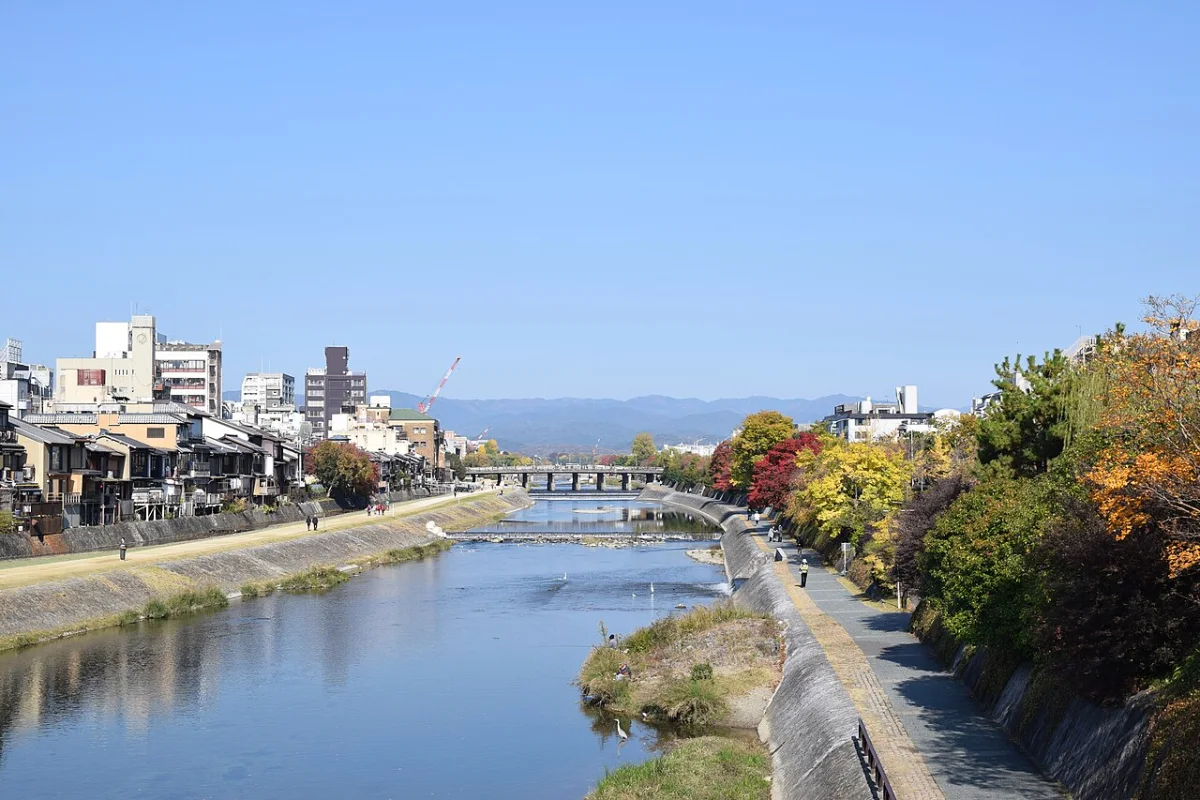
If you have already walked Kyoto Gyoen north to south during the day, ride transit downtown in the afternoon and pick a short stroll between Sanjo and Shijo. Sanjo Ohashi Bridge connects to Keihan Sanjo and Sanjo Keihan Subway stations; Shijo Ohashi Bridge links to Keihan Gion-Shijo at its east end and Shijo-dori plus Hankyu Kyoto-Kawaramachi at its west end. To match the angle in this guide's lead photo, look upstream from Shijo Ohashi Bridge to take in the riverside buildings, stepped banks, and distant mountains. On a clear day, check from the bridge which bank gets better light and color, then head down to the path for a lower angle if you want water reflections. Plan your exit before crossing a bridge or descending to the bank, since each end connects to different rail lines.
You can also walk north from Shijo Ohashi Bridge to Sanjo and catch the Keihan Line out of Sanjo Station--an easy option if you have just finished a meal around Shijo and still have daylight left. If you drop down to the path on the east bank, note where stairs lead back up to Kawabata-dori so you can easily rejoin the bridge or street at Sanjo. Starting from the west bank lets you look across at Pontocho's buildings before crossing a bridge to reach your station. When meeting companions--especially if you only have half an hour before parting ways--agree on either the east or west end of a specific bridge so nobody wastes time jogging back and forth.
Compared with Kyoto Gyoen, walking the riverbank means accounting for wind and where to pause. Plan spots to wait for friends, catch sunset, or give kids a snack somewhere slightly back from the water with easy access up to a main road. Watch for slick patches when walking through low spots or under bridges. If the wind picks up after you get your foliage shots, climb straight up to a bridge and spend the rest of the afternoon at a nearby cafe or restaurant. Spending too long by the water eats into Kyoto Gyoen's daylight--especially if you plan to see Toji's pagoda the same day, cap your post-lunch riverside goal at a single bridge.
Finding Ginkgoes in Kyoto Gyoen: North Entry and Three South Exits
Walking west from the Kamogawa River along Imadegawa-dori, enter Kyoto Gyoen from the north through Imadegawa-gomon Gate and follow the Ministry of the Environment map toward the northwest quadrant for the giant ginkgo at the Ichijo-tei Site. Maps label it as the Ichijo-tei Site, distinct from the nearby Konoe-tei Site. If arriving by subway, use Imadegawa Station Exit 3; if you want to start right along the park's western edge, walk down Karasuma-dori and enter via Inui-gomon Gate. When accompanying older travelers just to photograph one big tree, keep it to a simple north-side loop out of the Ichijo-tei Site and back to Imadegawa Station or the surrounding streets, leaving the afternoon open for another stop.
To walk Kyoto Gyoen from north to south, head from the northern giant ginkgo toward the Nakadachiuri Rest House and Nakadachiuri-gomon Gate for a rest break, then continue along Kenreimon-mae Avenue toward the Gyokado Site. The Ministry of the Environment's autumn map places the Gyokado Site in the south-central zone, pairing views of the Imperial Palace's outer walls with broad gravel paths. Rather than orienting solely by the outer city streets, use the named internal gates and intersections to confirm where you are before following signs. Turning back north from the middle of the park means retracing your steps; if you plan to take the subway south, keep going to the next ginkgo cluster and exit at Marutamachi.
In the southern section, look for the ginkgo avenue north of the Kan'innomiya Mansion Site, then take in Kujo Pond from Takakura Bridge. The Ministry of the Environment map pins Shusui-tei and Kujo Pond at the same spot; if you only want the paths, pond banks, and autumn colors, stick to the open public walkways. Shusui-tei, the former Kujo family teahouse, opens on designated days such as Thursdays through Saturdays from 9:30 to 15:30, with ¥300 admission for high school students and adults. The nearby Kan'innomiya Exhibition Hall is free and generally open 9:00 to 16:30, closed Mondays (open on national holidays) and over the New Year period. Afterward, follow the southern exit to Marutamachi Station--the Ministry estimates about a 5-minute walk from Exit 1, though travelers needing the elevator at Exit 5 should allow extra street-level walking time.
With just one hour, pick either the Ichijo-tei Site in the north or Kujo Pond in the south. The north end offers more dining and transit choices around Imadegawa, while the south end puts you right on the Karasuma Line bound for Takeda and Kyoto Station. Wheelchair and stroller users should check the Ministry of the Environment map for barrier-free paths and accessible restrooms; park management marks an accessible route from Inui-gomon Gate to Ainomachi-guchi Gate, keeping gate options flexible along Karasuma-dori. Because gravel paths require more effort than paved sidewalks, group your sightseeing on one side of the park and take the subway elevator rather than detouring across extra distance just to reach the nearest staircase.
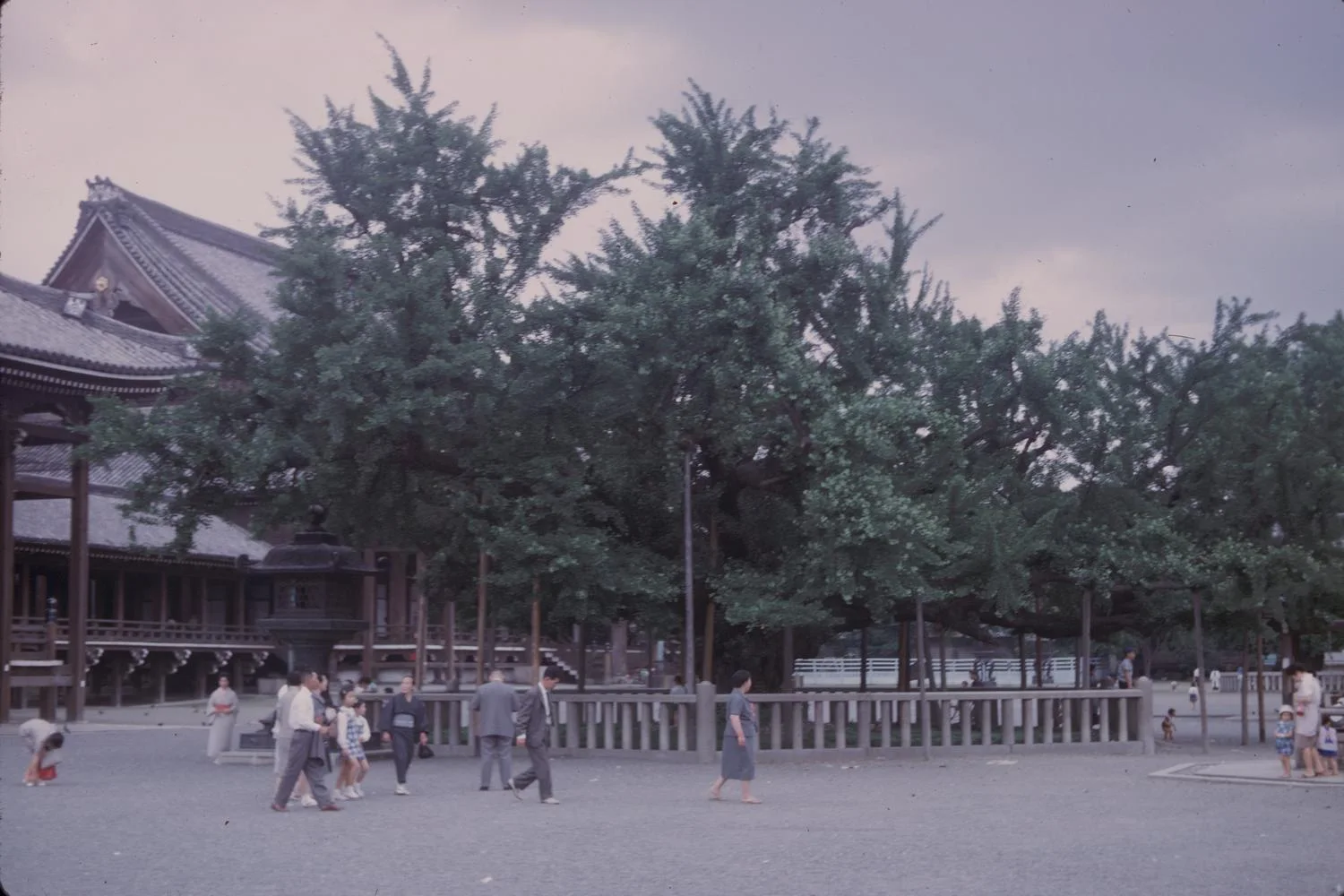
Before stepping right under a yellow ginkgo for photos, glance at the ground first. After rain, wet leaves cling to the gravel, so stepping slightly back actually shows off both the crown shape and the carpet beneath. In bright sun, frame your shot with colorful lower branches in the foreground and the giant ginkgo behind them to capture the wide sweep of the park path. On busy foliage weekends when crowds gather for full-tree shots, shift along the open path for a side angle where colored boughs frame the tiled roofs and tall palace walls behind.
Kyoto Imperial Palace and Park Facilities: Separate Gates and Hours
Kyoto Gyoen is a national garden surrounding the Kyoto Imperial Palace and other historic grounds, and its outdoor paths are free to enter anytime. The Kyoto Imperial Palace itself is also free for unguided individual visits with no advance reservation required; enter through Seisho-mon Gate on the west side, where all visitors pass through a baggage check (check rolling suitcases beforehand). From October through February, entry runs from 9:00 with last admission at 15:20 and exit by 16:00. The Imperial Household Agency generally closes the palace on Mondays (or Tuesday if Monday is a holiday), from December 28 through January 4, and for special events. Park paths remain open on Mondays for foliage walks, while anyone hoping to enter the palace should coordinate their timing with the Imperial Household Agency visit calendar.
If you reach Kyoto Gyoen in the afternoon and still want to go through Seisho-mon Gate, visit the Imperial Palace first, then check nearby ginkgoes and gates afterward. If you want to join the agency's Chinese-language guided tour--officially scheduled at 10:00 and 14:00 for roughly 50 minutes--put that ahead of other stops. Inside Seisho-mon Gate, the outdoor viewing loop passes palace halls and gardens along gravel paths. Walking back to Seisho-mon Gate from the far end of Kyoto Gyoen, clearing security, and completing the palace loop means trimming the northern half of your half-day walk. Note that Sento Imperial Palace requires separate advance application or a same-day numbered ticket. Search specifically for "Kyoto Imperial Palace Seisho-mon Gate" in map apps so you do not accidentally line up at a nearby agency office or different palace gate.
If entering from the north to walk all the way south, make Nakadachiuri Rest House your first stop. The Ministry of the Environment lists free rest areas here alongside a restaurant and restrooms. On crowded foliage days, sit down to review the park map before deciding whether to head into Seisho-mon Gate or continue south for the second ginkgo area. For coffee inside the northern grounds, Konoe-tei Rest House sits nearby, or you can step out of Nakadachiuri-gomon Gate onto Karasuma-dori. You can eat a packed lunch at Kyoto Gyoen's open rest areas, while visitors focusing only on the southern section can use the General Information Center near the Kan'innomiya Mansion Site as a meeting point before walking to Marutamachi.
Pick Your Starting Point by Hotel Location, and Match Tickets to Your Actual Route
If you are staying around Shijo-Kawaramachi, Gion, or Sanjo, taking the Keihan Line toward Demachiyanagi is the smoothest start. Walking from Hankyu Kyoto-Kawaramachi Station to Keihan Gion-Shijo Station requires crossing Shijo Ohashi Bridge, as the two stations belong to different rail operators. From Kyoto Station, the all-rail route takes the JR Nara Line to Tofukuji and transfers to the Keihan Line to Demachiyanagi; JR and Keihan use separate fare gates, so follow transfer signs after stepping off the train. Alternatively, check Shimogamo Shrine's access page for city buses from Kyoto Station--if companions want fewer transfers, ride straight to the Shimogamo-jinja-mae bus stop. On busy autumn weekends when you have a timed entry later in the day, rail is far easier to time into Demachiyanagi.
If you are staying along the Karasuma Subway Line and want to chase the Ichijo-tei Site's yellow leaves first in November, ride the subway straight to Imadegawa in the morning, walk east along Imadegawa-dori to the Kamogawa River, and cross the bridge into Tadasu-no-Mori. That reverses the route and finishes with a Keihan ride from Demachiyanagi to Sanjo or Shijo. However, if you plan to add Toji Temple on the same day, starting in the north at Demachiyanagi usually flows better, letting you finish at Kyoto Gyoen in the afternoon and hop straight onto the Karasuma Line to Kyoto Station without backtracking from the riverbank to a subway station.
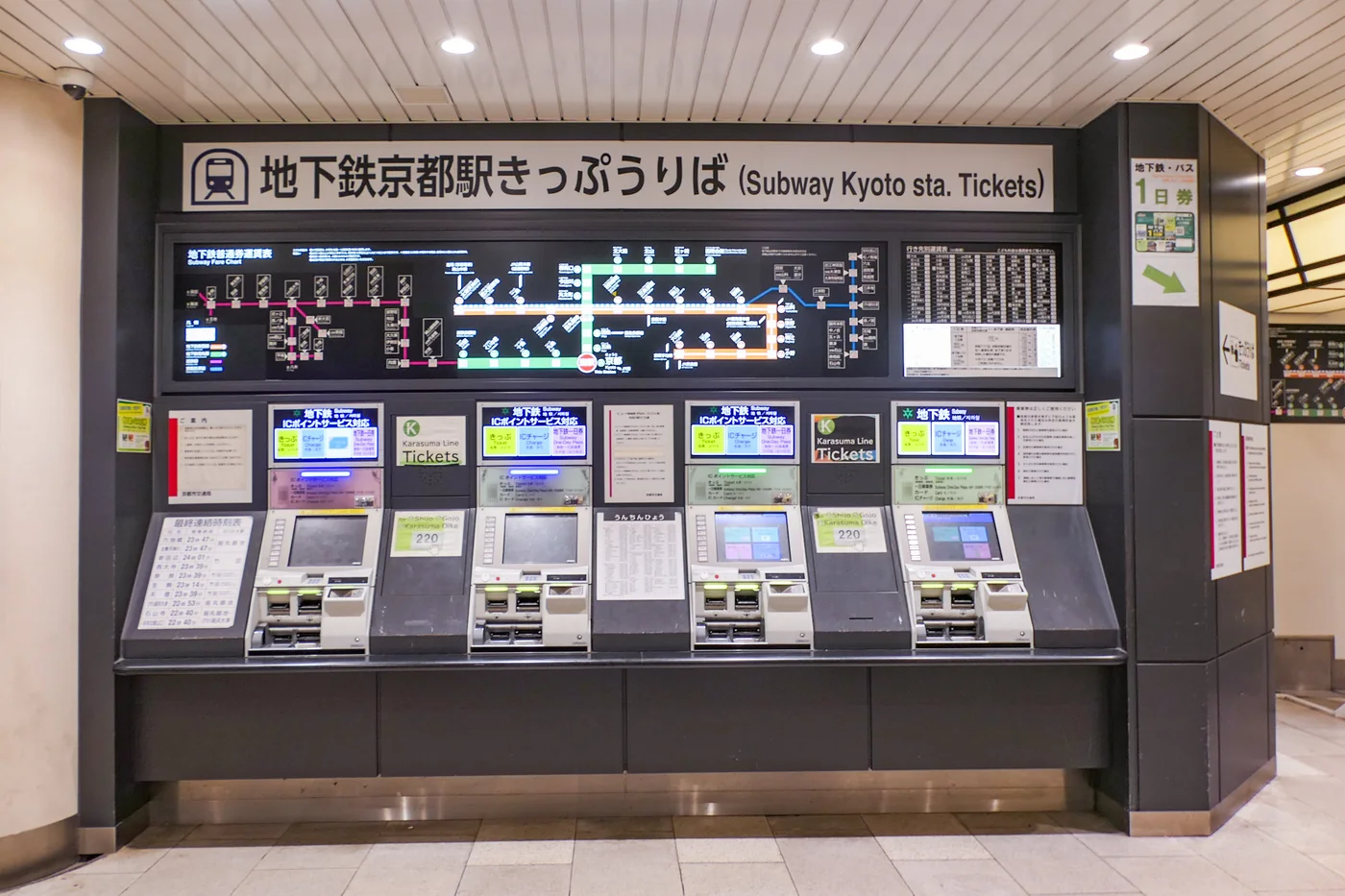
Your admission fees for this route can be ¥0, so budget primarily for transit to the start, transit from the finish, and lunch. When taking just one ride at each end--such as Keihan in the morning and the subway in the evening--simply tap an IC card or buy single-ride tickets for each operator. Kyoto's Subway & Bus 1-Day Pass covers municipal subways, city buses, and designated bus lines, whereas Keihan Electric Railway, Kintetsu, and JR trains require separate fares even if pass brochures mention Keihan Bus or West Japan JR Bus--always match your fare to the actual operator you board. Only compare pass pricing if you start by city bus and plan multiple subway or bus hops during the day. For station lists and covered routes, see our Kyoto Subway & Bus 1-Day Pass guide.
Where you eat lunch determines which park gate makes the best afternoon entry. Eating around Demachiyanagi before heading west works best if you start in Tadasu-no-Mori. If you already picked up a bento, head straight to the Nakadachiuri Rest House on the west side of Kyoto Gyoen to eat. If your chosen restaurant near Kawaramachi-Imadegawa has a long wait, it is much more comfortable to enter Kyoto Gyoen through the north gate first and push lunch until after you exit at Imadegawa or Marutamachi rather than standing on the sidewalk. Anyone entering the Kyoto Imperial Palace should eat beforehand, as food and drinks are prohibited inside the Imperial Household Agency viewing area.
See Toji's Pagoda by Day, or Buy Night Illumination Tickets at the East Gate
Take the Karasuma Subway Line from Kyoto Gyoen back to Kyoto Station, walk out the southern Hachijo Exit, and head southwest toward Toji Temple. The temple estimates about 15 minutes on foot from the Hachijo Exit, or roughly 10 minutes from Kintetsu Toji Station. Walk straight from Kyoto Station to skip a transfer, or switch to the Kintetsu Line if someone in your group wants less street walking. Set your navigation to "Toji Temple East Gate" to line up cleanly with the evening event entrance, and look for public sidewalk viewpoints along Kujo-dori if you want to admire the pagoda's silhouette--the tower is visible from the street, while the inner garden and illuminated pond reflection require a paid ticket.
Toji Temple's general grounds are open from 5:00 to 17:00, with free daytime entry to areas like the Mieido Hall and Jikido Hall, while the Kondo Hall and Kodo Hall require admission. In 2026, the special autumn opening of the five-story pagoda's ground floor runs from October 31 to December 13, 8:00 to 17:00, with single-hall ticket sales typically closing at 16:30 and some combo tickets ending earlier. If you only want the pagoda as a final landmark at dusk, time your walk along the street accordingly. To tour the paid daytime halls, leave Kyoto Gyoen earlier and buffer extra time for transfers at Kyoto Station. Note that the Kobo-ichi Flea Market takes place on the 21st of every month, when the temple's on-site parking lot is closed.
For 2026, Toji's autumn foliage illumination and special evening viewing of the Kondo and Kodo halls run from October 31 to December 13, 18:00 to 21:30 (last entry 21:00) via the East Gate. Admission is ¥1,000 for adults and high school students, and ¥500 for junior high school students and younger, with no combo tickets or group discounts for night entry. Between daytime closing and evening opening, have dinner near Kyoto Station's Hachijo Exit before walking over to the East Gate. If you are sticking strictly to a free walk, viewing the exterior by daylight before heading back to the station is plenty. Travelers planning a 2027 night visit should wait for the temple's seasonal special-opening page to confirm dates and ticket cutoff times before locking in evening plans.
If you find yourself back at Kyoto Station in the afternoon with time to kill before a train, you can also walk west to the free public areas of Umekoji Park, listed by the Kyoto City Tourism Association for mid-to-late November foliage. Stick to the open lawns and Streetcar Plaza for a zero-cost stroll, as Suzaku-no-niwa Garden and Inochi-no-mori Forest are paid enclosures inside the park. After a morning at Shimogamo and Kyoto Gyoen, a brief pause here works well before turning back--or stick to the exterior walk at Toji if temple architecture is your priority. Both lie west of the station, though reaching Toji from the park adds an extra walk south, so pick just one if you have an evening train to catch.
Which Stretches to Cut When It Rains, Energy Runs Low, or Kids Are Along
To trim this itinerary down to its lowest-effort version, drop the cross-town trip to Toji and the long Kamogawa stretch, and choose a single subway exit or bus stop matching the latest foliage report. For Kyoto Gyoen's giant ginkgo, take Imadegawa Station's elevator-equipped Exit 3 and stick to a compact loop around Inui-gomon Gate. For a short walk to Kujo Pond, start at Marutamachi Station--Exit 1 is closest, while Exit 5 has an elevator. Note that Marutamachi Station Exit 7 closed on March 3, 2026 and the Kyoto Municipal Transportation Bureau expects it to remain closed until around March 2029, so 2027 visitors should plan on North Exit 1 or South Exit 5.
With children at Demachiyanagi, start on the bridge to spot the river confluence and decide from there whether to walk into Tadasu-no-Mori. If kids are getting tired before lunch, head to Kawaramachi-Imadegawa for food and spend the afternoon around northern Kyoto Gyoen's ginkgoes and lawns instead. When traveling with a stroller-napping toddler, keep lunch and nap time within the same block before entering the park once they wake up. If part of your group wants to split off and explore southern Kyoto Gyoen, meet up at a specific street-level exit at Imadegawa or Marutamachi rather than vaguely saying "the palace gate"--that way you can text exact station names, exit numbers, and train directions.
In light rain, do a short section of Kyoto Gyoen entering and exiting from either Imadegawa or Marutamachi so you can duck back into the subway quickly if your shoes get soaked. On open days, the free Kan'innomiya Exhibition Hall in the southern section makes an easy indoor refuge; if it is closed, duck into a cafe near the station instead. In steady downpours, cut the riverbanks and forest paths altogether and switch to indoor plans near Kyoto Station using our Kyoto Aquarium and Umekoji Park guide for ticketing and layout. If you only have one foliage day and prefer to dedicate the entire afternoon to temples and night illuminations, check our Kyoto autumn foliage zones and transit guide to pick a cluster aligned with your return station.
If you originally planned to walk from the east side of Kyoto Gyoen to the river and heavy wind or rain moves in beforehand, swap in the free Kyoto City Archives on Teramachi-dori. Sitting right between the park and the Kamogawa River, it lets you browse exhibits before catching a bus from Kawaramachi-Marutamachi or crossing the bridge along Marutamachi-dori to Jingu-Marutamachi Station on the Keihan Line. Hours are typically 9:00 to 17:00, closed Mondays, Japanese national holidays, and December 28 through January 4. Its special exhibition from October 31, 2026 to January 17, 2027 focuses on Nijo Castle and the founding of the Edo shogunate, pairing naturally with a Kyoto Imperial Palace visit for central Kyoto history.
Travelers arriving in Kyoto in the afternoon can skip the northern leg altogether. Ride the Karasuma Line straight from Kyoto Station to Marutamachi, explore around Kujo Pond, and head out before sunset. If you are waiting at Kyoto Station for companions arriving from Osaka, meet at nearby Umekoji Park before grabbing dinner together. Those with reserved Shinkansen or limited express seats should work backward from departure time--subtracting baggage retrieval, ticket-gate entry, and platform transfers--before deciding how long to linger in the park, and anyone unfamiliar with Kyoto Station should build in a 15-minute buffer just to navigate the concourse.
A few useful answers
What is the easiest free autumn foliage route in central Kyoto?
Start at Demachiyanagi Station, walk through Tadasu-no-Mori and the Kamogawa Delta, and cross Kamo Ohashi Bridge toward Kyoto Gyoen. In half a day you can walk from Keihan Demachiyanagi to Imadegawa Subway Station, or continue through the park to exit at Marutamachi.
Which turns color first, Kyoto Gyoen or Tadasu-no-Mori?
According to the Kyoto City Tourism Association, typical peak viewing is mid-November to early December for Kyoto Gyoen, and from early December onward for Shimogamo Shrine. Focus on Kyoto Gyoen's ginkgoes in mid-November, then make Tadasu-no-Mori your main stop in December.
Do Kyoto Gyoen and the Kyoto Imperial Palace require reservations?
Kyoto Gyoen's outdoor paths are free and open without booking, and the Kyoto Imperial Palace is also free for individual visits with no advance reservation required. Enter the palace via Seisho-mon Gate--last entry from October through February is 15:20, and it is typically closed on Mondays.
Should I get off at Imadegawa or Marutamachi to see the ginkgoes in Kyoto Gyoen?
Get off at Imadegawa for the giant ginkgo at the Ichijo-tei Site in the north, or Marutamachi for the ginkgo avenue north of the Kan'innomiya Mansion Site in the southwest. To see both, enter from the north gate and exit at the south end.
Can you see Toji Temple's autumn night illumination for free?
You can view the five-story pagoda's exterior from the surrounding streets for free, but entering the grounds for the night illumination requires a ticket. From October 31 to December 13, 2026 (18:00 to 21:30, last entry 21:00 via the East Gate), admission is ¥1,000 for adults and high school students and ¥500 for junior high school students and younger.
Which part of the route works best in the rain?
In light rain, enter and exit Kyoto Gyoen from one end for a short outdoor walk, and step inside the free Kan'innomiya Exhibition Hall in the south if it is open. If rain intensifies or river levels rise, leave the riverbank and take the subway back downtown.
Official information and references
Sources used in this guide.
- Kyoto City Tourism Association | Kyoto Autumn Foliage Updates & Spot-by-Spot Conditions
- Shimogamo Shrine | Access, Walking Routes & Precinct Map
- Shimogamo Shrine | Main Sanctuary Hours, Fees & Oiden Hall
- Kyoto City Tourism Association | Kamogawa Delta & Demachiyanagi Access
- Kyoto Prefecture | Demachi Stepping Stones & Kamogawa High-Water Records
- Ministry of the Environment | Kyoto Gyoen Autumn Foliage Map, Gates & Barrier-Free Paths
- Ministry of the Environment | November 2026 Kyoto Gyoen Foliage Report
- Ministry of the Environment | Kyoto Gyoen Entry, Shusui-tei & Kan'innomiya Mansion Site Hours
- Ministry of the Environment | Kyoto Gyoen Access & Subway Exits
- Imperial Household Agency | Kyoto Imperial Palace Public Visits & Opening Calendar
- Imperial Household Agency | Visiting Rules for Kyoto Imperial Palace & Kyoto Sento Imperial Palace
- Toji Temple | 2026 Autumn Special Opening, Night Illumination & Ticket Prices
- Toji Temple | General Opening Hours & Free Worship Areas
- Toji Temple | Access from Kyoto Station Hachijo Exit & Kintetsu Toji Station
- Kyoto Municipal Transportation Bureau | Closure of Marutamachi Station Exit 7
- Kyoto City Tourism Association | Kyoto Transit Passes & Covered Routes
- City of Kyoto | Umekoji Park & Park Facilities
- Kyoto City Tourism Association | Walking Map from Demachiyanagi Station to Southern Shimogamo Shrine
- Kyoto City Tourism Association | Kawai Shrine & Hojo-an Hermitage
- Ministry of the Environment | Kyoto Gyoen Rest Houses, Restaurants & Free Rest Areas
- City of Kyoto | Kyoto City Archives Hours & Special Exhibitions
- Kyoto City Tourism Association | Umekoji Park Historical Autumn Foliage Dates
- Ministry of the Environment | Kyoto Gyoen Barrier-Free Paths & Southern Walking Course
- Ministry of the Environment | Kyoto Gyoen FAQ & Packed-Lunch Dining Areas