Compare flights from Naha with seasonal Oceanjet sailings. Choose a base around Eef, Kanegusuku Port or the airport, then use dated bus services to plan Tatami-ishi, northwestern Mifuga and Hatenohama, with one-night car-free and two-night driving options.
- Region & Focus
- Okinawa
- Reading Scope
- 30 min read · 11 chapters · 5 Q&As
- Official Verification
- 17 official sources checkedUpdated November 9, 2026
- Key Topics
- ItinerariesWhere to stayBooking
Chapter Route Map (tap any stop)
- One night or two: the difference is a full day for a boat activity
- Flights, fast ferries and conventional ferries use different gateways
- Stay around Eef, the port or the airport to simplify dinner and luggage
- Four town bus routes: choose the date, direction and day type
- Delayed flights, late arrivals without buses and luggage
- Eef and Oujima’s Tatami-ishi make a light half-day outing
- Northwestern Mifuga: reserve the return trip before adding stops
- Book Hatenohama separately; use winter–spring plans from November
- One night without a car: base in Eef and choose the sea outing or north coast
- Two nights with driving and winter returns: preserve a full day
- Calculate transport, child categories and cancellation for the same group
- Quick Q&A
One night on Kumejima gives you time for Eef Beach, Tatami-ishi or one boat activity. Stay two nights to include northwestern Mifuga more easily. Choose island transport and your accommodation area first, then use buses for your travel date, activity meeting times and return check-in to decide which coast to explore.
One night or two: the difference is a full day for a boat activity
Two days and one night suit a complete visit to one coastal area. Stay near Eef, enjoy the sea and dinner after arrival, then choose a Tatami-ishi walk or a booked Hatenohama activity before returning to Naha. If Mifuga on the north coast is essential, make it three days and two nights, with a day each for sea and land. Trying to fit the north coast, Tatami-ishi, sandbar and relaxed meals into one night lets travel consume your beach time.
Mark arrival and departure on your calendar first. A morning fast ferry reaches Kanegusuku Port in the morning. Flying can shorten the sea journey, but the airport is on the west side and you still need to reach your accommodation. Arriving in the afternoon and leaving before noon the next day gives only one short afternoon, despite spanning two dates. For Hatenohama, identify a full morning when you can join an activity before choosing your return transport.
Hatenohama is an offshore sandbar, Tatami-ishi is on Oujima, and Mifuga is on the northwest coast. Each needs a different route. Oujima is accessible by island roads; the sandbar needs a separate activity boat. The fast ferry from Naha does not also take you to the sandbar. This affects accommodation, luggage and meeting times, so book the long-distance journey and sea activity separately.
For two days without a car, start with an Eef base, the Airport Line and one short coastal transfer. Book a return taxi for the north coast. With driving and two nights, concentrate the rental on a land day and stay in the southeast for the boat day. If some companions want snorkelling and others only sea views, decide whether separate activities suit you, then choose a meeting point near your accommodation so those resting do not have to cross the island.
Compare flights from Naha with seasonal Oceanjet sailings. Choose a base around Eef, Kanegusuku Port or the airport, then use dated bus services to plan Tatami-ishi, northwestern Mifuga and Hatenohama, with one-night car-free and two-night driving options.
Flights, fast ferries and conventional ferries use different gateways
The tourism association access page gives about 30 minutes for the flight from Naha. It suits people prone to seasickness, those seeking a shorter journey, or domestic connections at Naha Airport. Include check-in, baggage collection and transfer time for both flights when comparing tickets. Ground transport remains after arrival on Kumejima. A short flight does not make the whole first hour after landing available for sightseeing.
Kumejima Oceanjet runs from Naha Wharf to Kanegusuku Port. The official seasonal schedule for October 19–November 30 lists daily departures from Naha at 8:00, arrival 9:32, return from Kanegusuku at 16:00 and Naha arrival 17:32. December 1–March 31 uses 8:00–9:50 outbound and 15:30–17:20 return. The winter schedule therefore gives 1 hour 50 minutes each way. Use the actual arrival and departure times for your date.
The fast ferry requires arrival at the port 30 minutes before sailing and check-in completed 15 minutes before. For 8:00, write 7:30 arrival at Naha Wharf and check-in by 7:45 into your plan, then work back to departure from your accommodation. Naha Wharf and Tomari Port are different boarding places. Do not reuse a Tomari route for Kerama or other islands. Match the port on your confirmation, navigation destination and location shown to your driver.
Kume Shosen’s conventional ferry is another sea option. The tourism association FAQ gives telephone reservations and says tickets can be bought at the head office or counter from one month before use. Obtain your date’s return services, intermediate stops and passenger or vehicle reservation details from Kume Shosen before arranging island transfers. Taking a vehicle also needs shipping arrangements and the rental company’s permission. Arriving as a passenger and renting on the island is a separate option.
For one night, choose transport by arrival time: an early ferry allows a relaxed transfer to the southeast, while an afternoon flight suggests staying near your accommodation that day. With two nights, compare flying one way and sailing the other, but match car pickup and return to the correct gateway. If collecting at the airport and leaving by Kanegusuku, request a different return location and port transfer when booking, then connect the sailing only after the rental company replies.
| Transport | Kumejima gateway | Check first |
|---|---|---|
| Flight | Kumejima Airport | Flight check-in, actual fare, Airport Line or accommodation transfer |
| Oceanjet fast ferry | Kanegusuku Port; Naha Wharf at the Naha end | Different November and December-onward schedules; arrive 30 minutes before sailing |
| Kume Shosen conventional ferry | Confirm Kanegusuku and the Naha terminal on the booking | Dated services, intermediate stops and separate passenger / vehicle booking conditions |
Stay around Eef, the port or the airport to simplify dinner and luggage
For coastal walks and Hatenohama without driving, start with accommodation around Eef. Airport Line stops include Eef Joho Plaza-mae, Eef Beach Hotel-mae and Kume Island Hotel-mae. This puts hotels, stops, restaurants and activity contacts within one southeastern area. A beach name in a hotel title does not locate your required bus stop. Zoom in on the main entrance and stop before comparing prices so the final walk with bags is clear.
Eef suits returning to your room after dinner and avoiding an island crossing before morning activities. Compare breakfast start and activity meeting times when booking, especially for early boats. With a room plan excluding dinner, choose nearby restaurants and check their closing days before deciding which night to eat at the accommodation. If drinking alcohol, use a restaurant within walking distance or arrange a transfer.
The Kanegusuku Port area suits arrival and departure by boat or a focus on western short routes. The Airport Line passes the port, and Eef routes also run via Hiyajo or Kadekaru. Different routes from the same port to the southeast have different journey times and fares. Staying by the port saves luggage transfers before and after sailing. If you meet activities at Eef daily, that becomes repeated travel, so map both days’ activities before choosing the port.
The airport side suits western accommodation and airport arrivals and departures. The official route has a Cypress Resort Kumejima-mae stop after the airport, and the town scenery page places Shinri Beach nearby. Compare this area for western coastal views and an early airport return. For southeastern dining and morning activities, add cross-island fares and time to the room total. One base usually suffices; two nights do not require two rooms for different sea views.
Before booking, ask about the conditions you will use: luggage storage before arrival and collection after checkout, included breakfast and dinner, and activity pickup at the main entrance. With children or older people, beds, laundry and boarding access come before the sea-view floor. Save separate cancellation contacts for flights, boats, accommodation and activities so a change to one part can be handled with the right supplier.
Four town bus routes: choose the date, direction and day type
The town’s bus page, updated October 22, 2026, lists four routes: Airport, Kanegusuku Port–Eef via Hiyajo, Kanegusuku Port–Eef via Kadekaru, and Shimajiri. Use these current names with the town route map. Hiyajo goes around the north and Kadekaru takes the south. The same Eef destination does not make times or fares interchangeable.
The current Airport Line PDF covers October 25–December 24, 2026. The separate port routes PDF starts October 25 and separates weekdays from Saturdays, Sundays and holidays. Find your date in the heading, choose Airport → Eef or the reverse, then read down one column. Flight arrival times at the top are connecting flights; the Airport row below gives the actual bus departure. For travel from December 25, obtain a new timetable covering your date from the town page.
For Thursday, November 5, 2026, the bus leaves the airport at 13:15, passes Kanegusuku Port at 13:28, reaches Nishi-Ou (Tatami-ishi) at 13:49 and Eef Joho Plaza-mae at 13:54. Airport to Eef takes about 39 minutes. Stopping for Tatami-ishi requires a later onward bus and plans for luggage and check-in. For a first arrival, go to your accommodation first and visit Tatami-ishi without a suitcase.
On the same date, an early Oceanjet arrival at 9:32 can connect to the 10:05 port–Eef service via Hiyajo, reaching Eef Joho Plaza-mae at 10:47. That is about 42 minutes between stops and 33 minutes from scheduled ferry arrival to bus departure. Alternatively, wait at the port for the Airport Line at 11:07, reaching the same stop at 11:33 in about 26 minutes. The former reaches the accommodation area earlier; the latter has a shorter ride but a longer wait. Choose according to luggage handling and rest at the port.
Early Hiyajo services differ by weekday or weekend/holiday, and Kadekaru also has weekday-only runs. Yellow columns and arrows in the PDF show connections between the routes. Read the whole return path rather than mixing an earlier passage through Kanegusuku with a later circuit. For car-free sightseeing, favour direct return combinations and fit lunch into the available stay. Official times are scheduled passing times, so arrive early. The port FAQ suggests waiting five minutes before the bus.
| Start and route | Board → alight | Use |
|---|---|---|
| Airport Line, airport to Eef | Airport 13:15 → Eef Joho Plaza-mae 13:54 | Go to accommodation before the coast |
| Hiyajo route, port to Eef | Kanegusuku Port 10:05 → Eef Joho Plaza-mae 10:47 | Connect from the 9:32 ferry arrival and reach the area earlier |
| Airport Line, port to Eef | Kanegusuku Port 11:07 → Eef Joho Plaza-mae 11:33 | Longer port wait, shorter ride |
Delayed flights, late arrivals without buses and luggage
The town says the Airport Line does not add buses for some flights, delayed arrivals or extra flights. The tourism association also says buses normally run on time and do not wait at the airport for delayed passengers. In the October 25–December 24 table, the RAC883 arrival at 18:40 explicitly has no bus. Book an accommodation transfer or taxi before travelling on it. If a flight meant to connect with 18:30 is delayed, contact your planned transfer rather than assuming the 18:40 column offers another bus.
If you miss the bus at the airport, check the next departure before choosing to wait or call a taxi. The association lists Kyoei Taxi and Kumejima Sogo Taxi through its transport FAQ, and also lists the DD Taxi app. Give the full accommodation name, flight, passenger and luggage counts. For a north-coast trip, give the return time and pickup location too. Supply mobility-aid dimensions or children’s ages when asking about aids or child seats.
Coin lockers are near the central hall on the airport’s ground floor; ask the terminal tourist office if needed. They suit travellers returning to the airport that day, with charges and available sizes shown on site. If your next stop is Eef accommodation, taking bags there is usually more direct. Storing them at the airport before crossing the island adds a return trip for collection that belongs in the transport plan.
At Kanegusuku Port, use your boat operator’s office for luggage storage: the ferry office for conventional ferry passengers and Oceanjet’s office for Oceanjet passengers. State your return sailing and collection time. Fit collection, toilets and check-in before sailing. To find the bus stop, go inward between the waiting room and ticket office, then left. Locate it on arrival rather than searching after collecting bags.
Prepare yen cash before departure. The association FAQ says there are no ATMs at the airport or port and some island businesses accept only cash. For withdrawals, use listed locations such as post offices, Bank of the Ryukyus, JA or convenience stores. Keep bus and possible taxi money separately and save your accommodation address and taxi contact page. After a late flight, move the beach walk to the next day and complete check-in and dinner.
Eef and Oujima’s Tatami-ishi make a light half-day outing
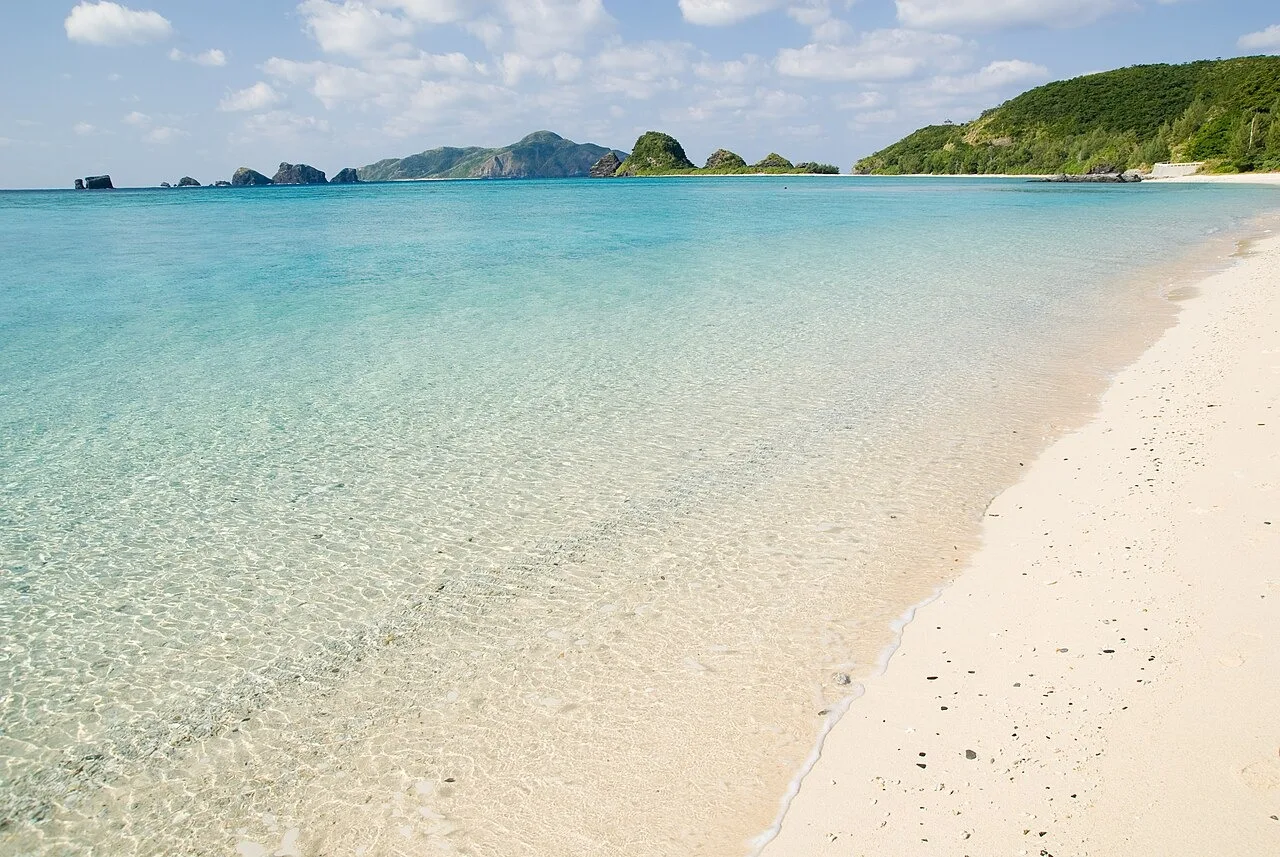
Eef Beach is a long southeastern beach, described by the town scenery page as about two kilometres. Staying nearby lets you walk after breakfast or check-in and choose the distance by energy. Arrange water, shade and a return to change clothes before adding another sight. Sea views, coastal walking and snorkelling need different equipment and time. In winter, a shore walk still provides coastal scenery.
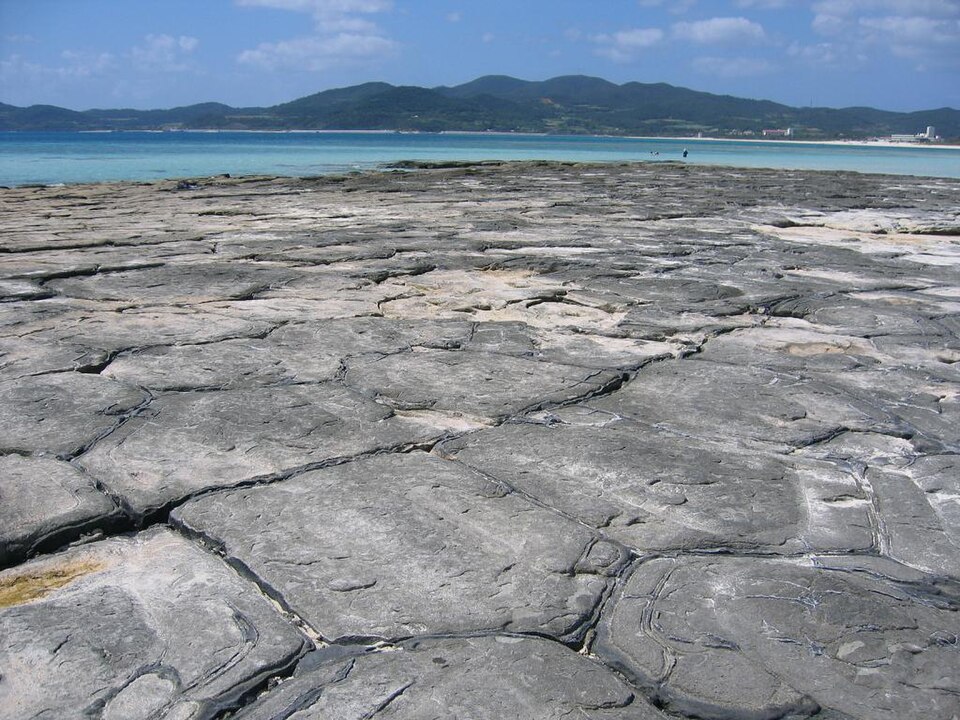
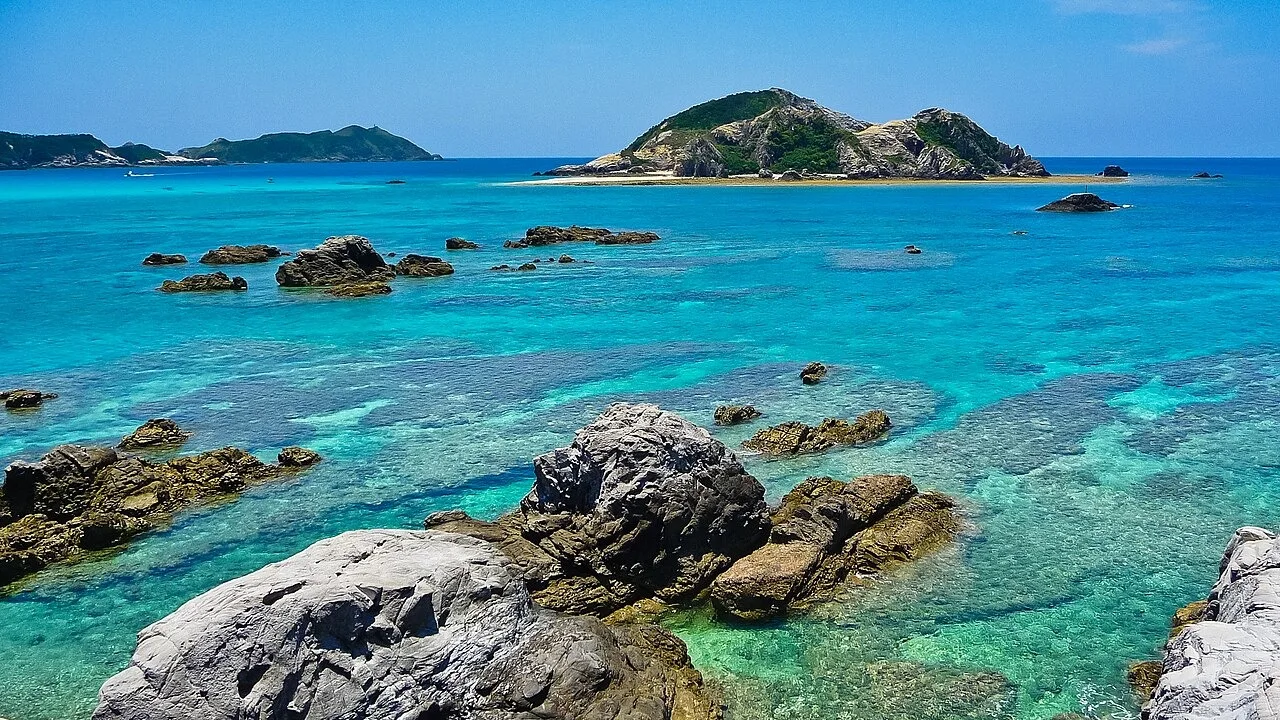
Tatami-ishi is on Oujima beside Kumejima, separate from Hatenohama. The current Airport Line serves both Nishi-Ou (Tatami-ishi) and Oujima Iriguchi; plan around your chosen stop. Its feature is densely packed polygonal coastal rock resembling a turtle shell. Combine beach and rock platform in one short visit rather than repeatedly crossing the island for photographs. The photograph showing the exposed rock was taken in 2005; choose viewing time from your travel date’s tides and open access on site.
For November 5 from Eef Joho Plaza-mae, take the airport-bound 11:54 bus to Nishi-Ou at 11:59. Return on the Eef-bound 13:49 service, reaching the plaza stop at 13:54. The two Nishi-Ou times leave 1 hour 50 minutes for walking between stop and coast, viewing and rest. This suits a day without a flight deadline. If the tide is unsuitable, adjust a short transfer or walk Eef Beach instead.
Wear shoes with grip and covered feet at the rocky shore. Stay on dry areas where access is allowed. Avoid wet wave-washed rocks, gaps and moss. For knee problems or strollers, view the platform from a distance and reduce uneven-ground walking. Low tide exposes more rock, but leave time to return by the same route and move away from low ground as water rises.
Do not add the north coast to this half day. An outing from and back to Eef leaves rest around lunch. With a boat activity on day two of a two-night stay, place Tatami-ishi on the first afternoon or third morning according to tide and return transport. For more small islands or coastal passages, check each opening and tide. A photograph of a broad exposed platform does not establish that the whole shore is walkable on your date.
Northwestern Mifuga: reserve the return trip before adding stops
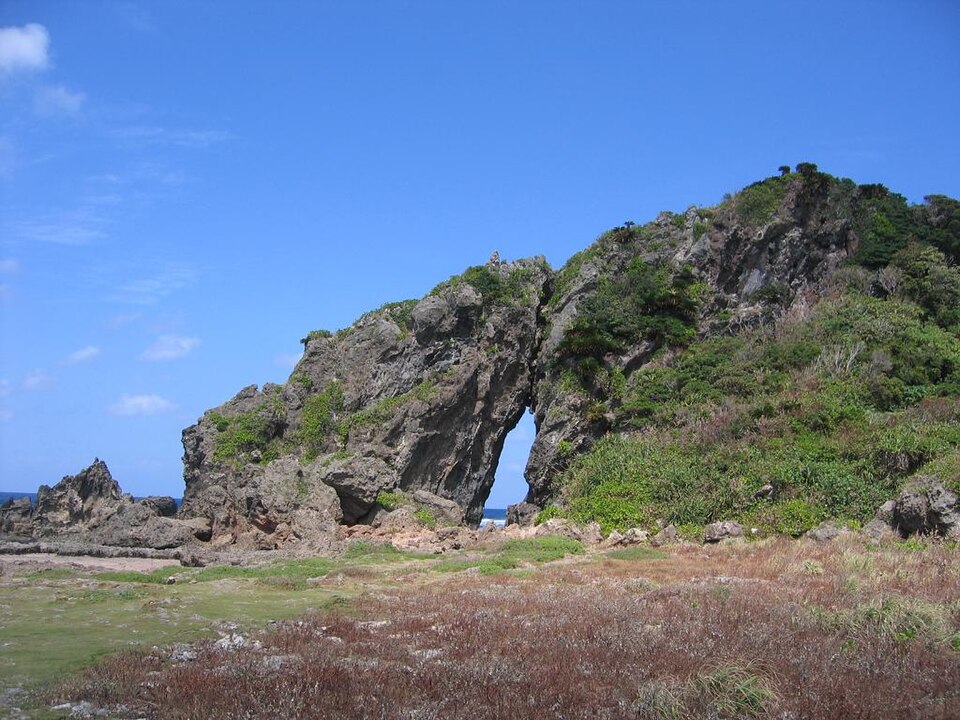
Mifuga is in the Gushikawa area on northwestern Kumejima. Its main feature is an opening through an upright rock mass, with sky visible through it and uneven rocky coast around it. It lies in a different direction from Oujima’s Tatami-ishi and suits a separate northwestern drive or reserved taxi route. If rocky coastal landforms interest you, spend time viewing the whole rock and shore from the entrance rather than seeking only a photograph centred in the opening.
The town’s Hiyajo bus route passes Gushikawa, Nakandakari, Uejo and Hiyajo, but the stop table has no stop named Mifuga. Without a car, include the route from stop to sight and back. For two days, ask a taxi company for one trip from accommodation to Mifuga, a visit and return to accommodation or an airport drop-off. Reserve both directions before adding another sight so you do not need to find transport at a coast away from the main road.
For northern scenery by bus, choose Hiyajo Banta, a direct listed stop. On November 5, for example, leave Eef Beach Hotel-mae at 11:46 and reach Hiyajo Banta at 12:03. The Eef-bound return leaves at 13:25 and reaches the hotel stop at 13:43, leaving about 1 hour 22 minutes between viewpoint-stop services. This is a different destination for high coastal views. If the rock opening is your priority, retain the reserved vehicle to Mifuga.
On the land day of a two-night driving trip, head from western accommodation or the airport area to the northwest, then decide whether to continue north towards Hiyajo before returning southeast. Find legal parking at every stop and park before walking. Keep sightseeing, lunch and return in the same day. With a one-day rental, put refuelling, return and travel from the rental office to the hotel in the final section so the driver has rest too.
In strong sea wind, rain or slippery rock conditions, shorten the visit and avoid wave-exposed positions. If a boat activity is cancelled, check why. A timing change may allow a short land trip; strong wind and high seas also make northern headlands and the rock opening poor substitutes. Rest at your accommodation until conditions improve rather than immediately replacing a cancelled morning with another exposed coast.
Book Hatenohama separately; use winter–spring plans from November
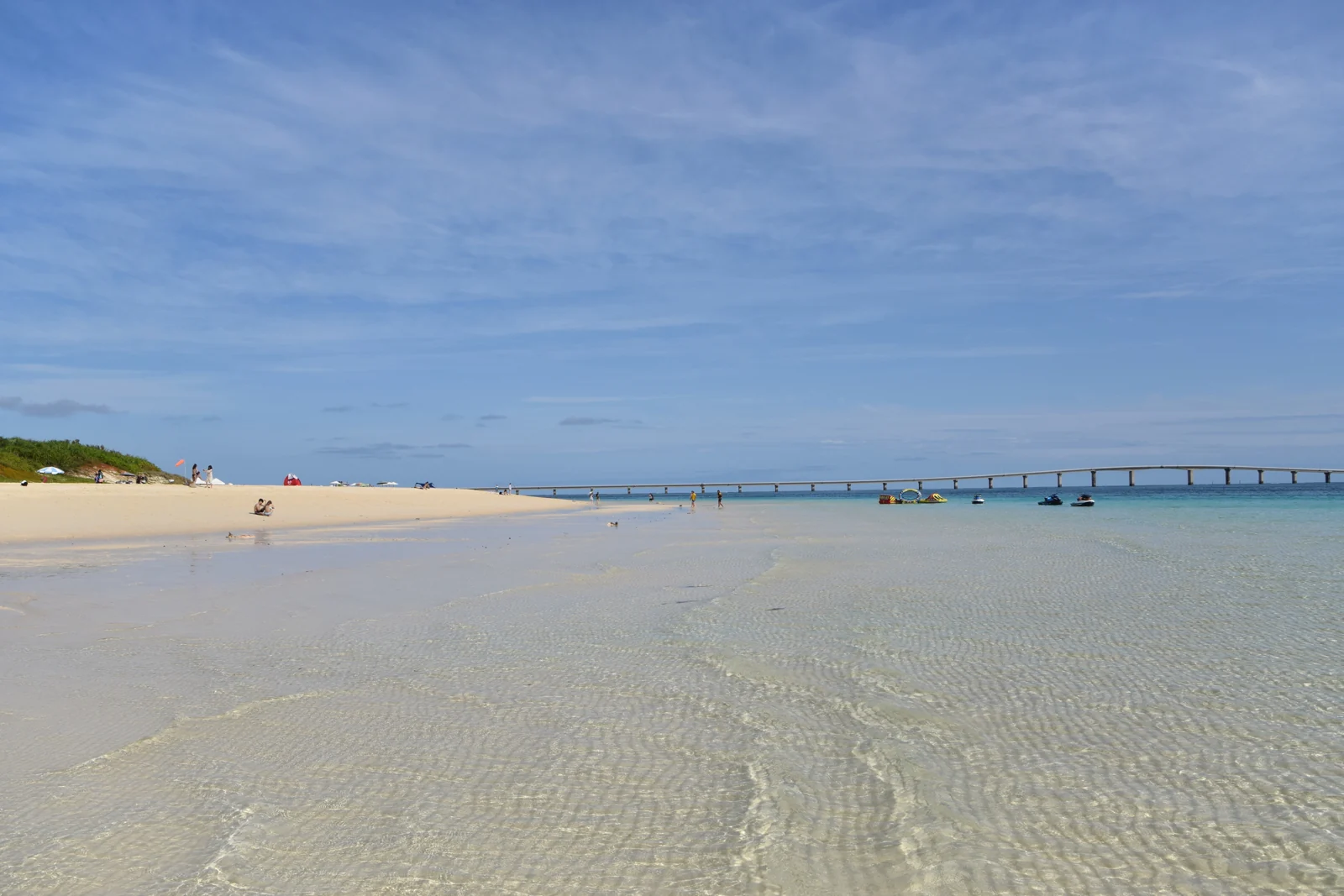
The tourism association’s Hatenohama page describes an approximately seven-kilometre sandbar reached by a boat ride of about 20–30 minutes from Kumejima’s east coast. Hatenohama collectively covers Menuhama, Nakanohama and the outer sandbar, with landing places varying by activity. Choose whether you want a white-sand walk, underwater views from a glass-bottom boat or guided snorkelling before comparing photographs and names.
The association FAQ lists several operators. Its Island Expert Kumejima profile identifies one and links to the official site. That operator’s activity page lists a summer Oku-no-hama plan from mid-June through October and a winter–spring Nakanohama glass-bottom boat plan from November to mid-June. For November, open the winter–spring section first rather than placing summer activities in a winter itinerary.
The operator gives basic activity hours of 9:00–13:00, about four hours in all, and says it generally does not accept participation on arrival day because flights may be delayed and activities may start earlier. With one night and an afternoon arrival, the activity falls on your departure morning. Two nights separate the boat outing from the return journey. Four hours is also much longer than the 20–30-minute boat ride: equipment, landing, activities and return all take time.
When booking, give your accommodation, return flights or sailings, everyone’s age, whether you want to land or enter the water, and the languages you can use. The association profile limits this operator’s foreign-language service to the Hatenohama free-time plan; snorkelling, diving and fishing require Japanese. For activities requiring you to understand instructions, have the operator confirm communication first. Ask for the meeting address, actual departure, pickup area and weather cancellation refund or rescheduling details in the reply before buying connecting transfers.
The official booking page asks for website forms at least three days before the requested date. Two days before, the previous day and on the day, enquire by phone, accepted 9:00–18:00. Save the operator’s reply confirming availability and meeting details after enquiring. Completing a form alone is not enough to schedule the next fixed journey. Across the summer–winter boundary, state the date and intended activity clearly so different monthly plans do not enter one booking.
If the activity is cancelled and island transport and weather remain suitable, use Tatami-ishi or Hiyajo viewpoint as an alternative. Stay at your accommodation during strong-wind alerts. If sea conditions also affect your return off the island, first handle Naha travel, extra accommodation and onward flights, then consider replacing the activity. Leave half a day around the outing for a shower, food and luggage rather than rushing straight to the port.
A Hatenohama video included in Kumejima Town Office’s Nuchigusui journey series, accompanying this section’s introduction to the offshore white sandbar and surrounding sea.
One night without a car: base in Eef and choose the sea outing or north coast
This example uses weekdays November 5–6, 2026, Oceanjet both ways and an Eef stay. On day one, sail from Naha at 8:00, arrive at Kanegusuku at 9:32, then take the 10:05 Hiyajo service to Eef Joho Plaza-mae at 10:47. Store luggage as agreed with your accommodation and have lunch. If weather and tide suit, take the 14:04 Airport Line to Nishi-Ou at 14:09, returning at 16:02 to reach the plaza stop at 16:08. Or stay at Eef Beach. If arrival leaves too little time, move Tatami-ishi to the next day rather than squeezing lunch and storage into minutes.
For Hatenohama on day two, use a morning plan the operator has confirmed will finish before your return sailing. Collect bags and travel to Kanegusuku afterwards. The basic 9:00–13:00 page is a reference; obtain the actual return time and drop-off for your date. A different port, changing clothes and collecting luggage affect which transfer works. For a free afternoon, choose a later confirmed flight or stay another night.
For a land day, reserve a taxi after breakfast to Mifuga and then Kanegusuku, with lunch and luggage collection on the return route. Alternatively, skip the north and spend the morning at Eef and Tatami-ishi. Work back from the single fixed island departure when booking the vehicle. Choosing between north coast and boat activity leaves proper space for photographs, food and rest.
The November return sailing leaves at 16:00. Official requirements are port arrival at 15:30 and completed check-in by 15:45. The Airport Line from Eef Joho Plaza-mae at 14:04 reaches Kanegusuku at 14:31 and leaves a generous port margin. The 15:04 departure arrives at 15:31, one minute after the advised arrival, making it a tight sole return plan. Use the earlier bus’s margin for luggage and procedures rather than another distant sight.
For a return flight, work back from the airport instead. That 14:04 bus reaches Kumejima Airport at 14:43. Whether it connects depends on your airline’s check-in and boarding deadlines. The bus passes Kanegusuku before the airport. Give accommodation and transfer providers the correct final destination and departure time—airport for a flight, port for a boat—so pickup matches your ticket.
Two nights with driving and winter returns: preserve a full day
With three days and two nights, use day one for arrival, the southeast and check-in, day two for Hatenohama, and day three for the west or northwest before departure. For more land exploration, make day two the rental-car day and put the boat activity on the first full morning the operator confirms. Respect the no-arrival-day rule; afternoon arrivals should leave the boat outing until day two. Two nights avoid combining an activity, checkout and a long return-to-port journey in one morning.
You can rent only for the middle land day. Take a bus to accommodation on day one, link Mifuga and northern scenery in one direction on day two and return the car that evening. Walk Eef or Oujima briefly on day three before your boat or flight. If the boat activity has priority, move the rental to day one or three according to pickup and return hours. Compare rental, cover, fuel, transfers and return location together. Whether one fewer rental day saves money depends on the extra journeys it creates.
In December, Oceanjet’s return moves to 15:30, so advised port arrival becomes 15:00 and check-in must finish by 15:15. Under the October 25–December 24 Airport Line table, the 14:04 Eef departure reaches Kanegusuku at 14:31, 29 minutes before advised arrival. The 15:04 bus arrives at 15:31, after sailing. Finish winter afternoon activities before walking to the stop, collecting bags and boarding.
Winter arrival is later too: 9:50 at Kanegusuku leaves only 15 minutes before the weekday 10:05 Hiyajo bus. For a bus to accommodation, consider the Airport Line through the port at 11:07, arriving at Eef Joho Plaza-mae at 11:33, or reserve a taxi so bags need not be rushed. Weekend early Hiyajo services differ again. Check arrival and departure dates separately for winter.
Sea transport and town buses make separate operating decisions. The town says buses stop under storm warnings and resume after the warning is lifted according to wind, rain and road conditions. Boats may also cancel or change for sea conditions. First ask accommodation and transport providers what arrangements are available. Returning to Naha the night before an important international flight removes the need to leave an island that morning. If you need another night, secure a room before handling existing bookings and activities.
Calculate transport, child categories and cancellation for the same group
The current Oceanjet basic fares list ¥7,800 for an ordinary adult and ¥5,800 for a child. The Kumejima route fare rules define the second-class child category as age three through the first March 31 after the eighteenth birthday. Each adult may bring one child under three free without a seat. Additional infants or those needing a seat pay the child fare. Use the full age condition rather than the fare table’s shorthand “high school and below”.
Two adults and a ten-year-old elementary pupil pay ¥7,800 × 2 + ¥5,800 = ¥21,400 for an ordinary single journey, or ¥42,800 for two singles. The ¥15,000 Family fare is for one adult and two eligible children on the same service and section. Two adults and one child do not fit. For one adult and two eligible children, the ordinary single total of ¥19,400 exceeds Family ¥15,000 by ¥4,400. Choose by the actual group.
Town buses use another classification. The official fare page classifies age 12 and above / junior high and above as adults, and ages six to under twelve / elementary pupils as children. Child fares are half the adult fare, rounded up to the next ¥10. Airport to Eef Joho Plaza-mae costs ¥500 for an ordinary adult and ¥250 for that pupil. Plaza to Nishi-Ou costs ¥150 adult and ¥80 pupil. Resident discounts and older-person exemptions require local residence and proof; ordinary visitors use regular fares.
For the same two adults and ten-year-old, airport–Eef buses both ways cost (¥500 × 2 + ¥250) × 2 = ¥2,500. Eef–Tatami-ishi return adds (¥150 × 2 + ¥80) × 2 = ¥760, for ¥3,260 across both bus groups. This example assumes flights and an Eef base. For boat travel, recalculate the actual port-to-accommodation route. The Airport Line via Kanegusuku and the northern Hiyajo route both reach Eef but have separate fare tables.
Use the right ticket rules for changes too. Oceanjet’s conditions of carriage permit one ordinary-ticket change within validity, before the specified sailing, at a designated sales office, subject to availability and payment or refund of the difference. The official FAQ also lists early-bird and travel-agency tickets as non-changeable; the ordinary ticket’s one free change does not apply to them. Compare early-bird purchase windows and prices under the fare rules. With ordinary tickets, settle dates and companions and retain each direction’s ticket.
The official booking page lists passenger-initiated cancellation charges for specified sailings: 30% from ten to seven days before departure, 50% from six to three days before, and 100% from two days before through departure and after sailing. On an adult face value of ¥7,800, those are ¥2,340, ¥3,900 and ¥7,800. If the operator cancels under the terms for sea conditions or similar reasons and the passenger terminates and requests a refund, the unused portion is handled without that refund charge. Hotels, rentals and activities still require separate contact under their own bookings.
Finally add accommodation, food, chosen activities, island vehicles and cancellation costs you can accept. The extra room cost of two nights buys a full activity day and less rushing. For just Eef and Tatami-ishi, one night and buses can work. Record each child’s birthday and school stage, boarding places, meeting times and cancellation contacts so you can see what the trip actually includes before paying.
| Item | Calculation | Subtotal |
|---|---|---|
| Oceanjet ordinary single | 7,800 × 2 + 5,800 | 21,400 |
| Two Oceanjet ordinary singles | 21,400 × 2 | 42,800 |
| Airport–Eef bus return | (500 × 2 + 250) × 2 | 2,500 |
| Eef–Tatami-ishi bus return | (150 × 2 + 80) × 2 | 760 |
| Both island bus groups above | 2,500 + 760 | 3,260 |
A few useful answers
Can I spend two days and one night on Kumejima without renting a car?
Yes. Base yourself around Eef. The Airport Line links the airport, Kanegusuku and Tatami-ishi; reserve a return taxi for the northwest away from stops. For one night, choose either a Hatenohama boat activity or northern scenery as your focus.
Are Hatenohama and Tatami-ishi the same place?
Hatenohama is an eastern offshore sandbar requiring a separately booked boat landing. Tatami-ishi is on Oujima, accessible by island roads and the Airport Line’s Nishi-Ou (Tatami-ishi) stop.
Does Oceanjet still take 92 minutes in winter?
For December 1–March 31, the official table gives Naha 8:00–9:50 and return 15:30–17:20, or 1 hour 50 minutes each way.
Is there a bus for the flight arriving at 18:40?
The October 25–December 24, 2026 Airport Line table has no bus for RAC883 arriving at 18:40. Arrange an accommodation transfer or taxi first.
Do junior high pupils use child tickets on both boats and buses?
Oceanjet’s second-class child fare applies from age three through the first March 31 after turning eighteen. Town buses charge adult fares from junior high school; elementary pupils pay half, rounded up to the next ¥10.
Official information and references
Sources used in this guide.
- Kumejima Town | Current town bus timetables
- Kumejima Town | Airport Line PDF, October 25–December 24, 2026
- Kumejima Town | Two Kanegusuku routes PDF from October 25
- Kumejima Town | Bus route map
- Kumejima Town | Bus fares and child rules
- Kumejima Town | Ordinary and resident bus fare PDF
- Oceanjet | Seasonal sailings, port arrival and check-in
- Oceanjet | Kumejima route fare rules
- Oceanjet | Conditions of carriage
- Oceanjet official booking | Specified-sailing changes and cancellations
- Kumejima Tourism Association | Transport, storage and taxi FAQ
- Kumejima Tourism Association | Getting to Kumejima
- Kumejima Town | Coasts and natural scenery
- Kumejima Tourism Association | Hatenohama
- Kumejima Tourism Association | Island Expert, language service and official site
- Kumejima Town Office | Go to paradise beach! (Hatenohama video)
- Kumejima Nuchigusuitrip | Hatenohama