Compare flights from Naha with Oceanjet’s seasonal sailings. Choose an Eef, Kanegusuku Port or airport base, then use the applicable bus timetable for Tatami-ishi, northern Miifugaa and Hatenohama, with a car-free overnight plan and two-night driving options.
- Region & Focus
- Okinawa
- Reading Scope
- 30 min read · 11 chapters · 5 Q&As
- Official Verification
- 17 official sources checkedUpdated 9 November 2026
- Key Topics
- ItinerariesWhere to stayBooking
Chapter Route Map (tap any stop)
- One or two nights on Kumejima: the difference is a full boat-trip day
- Flights, high-speed boats and conventional ferries arrive through different gateways
- Stay around Eef, Kanegusuku Port or the airport to reduce detours for dinner and luggage
- Four town bus routes: choose the date before the direction and day type
- Delayed flights, late arrivals without a bus and luggage storage
- Eef and Ou Island’s Tatami-ishi make a light half-day outing
- Miifugaa on the north-west coast: book the return journey before adding stops
- Book Hatenohama separately; from November, start with winter–spring options
- Two days and one night without a car: choose a boat trip or the north coast from Eef
- Three days and two nights with a car, and winter returns: retain a full day
- Calculate fares, child categories and cancellations for the same group
- Quick Q&A
One night on Kumejima gives time for the Eef coast, Tatami-ishi or one boat activity. Two nights make it easier to include Miifugaa on the north-west coast. Choose island transport and your accommodation area first, then use your travel date’s buses, activity meeting times and return check-in deadline to decide which coast to visit.
One or two nights on Kumejima: the difference is a full boat-trip day
Two days and one night on Kumejima suit a proper visit to one coastal area. Stay near Eef, see the sea and eat after arrival, then choose a Tatami-ishi walk or a booked Hatenohama trip before returning to Naha the next day. If Miifugaa on the north coast is essential too, allow three days and two nights, giving land and sea activities a day each. Trying to fit the north coast, Tatami-ishi, the sandbank and unhurried meals into one night lets travel consume your time by the sea.
Mark arrival and departure on your calendar first. An early high-speed boat reaches Kanegusuku Port in the morning. Flying can shorten time at sea, but the airport is on the island’s west and you still need to reach your accommodation. Arriving in the afternoon and leaving before noon the next day gives you only one short afternoon, despite being “two days”. If Hatenohama is the reason for coming, find a full morning available for the activity before booking your outward and return transport.
Hatenohama is an offshore sandbank, Tatami-ishi is on Ou Island, and Miifugaa is on the north-west coast. Each requires a different journey. Ou Island is accessible by island roads, while the sandbank needs a separate activity boat. The high-speed boat from Naha does not also take you to the sandbank. This distinction affects accommodation, luggage and meeting times. Book long-distance transport and the sea activity as two separate arrangements.
For two days without a car, start with one Eef base, the Airport Line and a short coastal transfer. For the north coast, book a return taxi in advance. If you can drive and have two nights, concentrate car hire on the land day and stay in the south-east on the boat-trip day. If some companions want snorkelling and others only sea views, first decide whether separate activities are acceptable. Choose a meeting point near your accommodation so those returning to rest need not cross the island.
Compare flights from Naha with Oceanjet’s seasonal sailings. Choose an Eef, Kanegusuku Port or airport base, then use the applicable bus timetable for Tatami-ishi, northern Miifugaa and Hatenohama, with a car-free overnight plan and two-night driving options.
Flights, high-speed boats and conventional ferries arrive through different gateways
For Naha to Kumejima, the tourism association’s access page gives a flight time of about 30 minutes. Flying suits travellers prone to seasickness, those seeking a shorter journey, or those already connecting at Naha Airport. Include check-in, baggage collection and connection time for both flights when comparing tickets. Ground transport still follows arrival on Kumejima. A short flight does not free the whole first hour after landing for sightseeing.
Kumejima Oceanjet runs from Naha Wharf to Kanegusuku Port. The official sailing schedule lists daily departures from Naha at 08:00, arriving 09:32, and from Kanegusuku at 16:00, arriving Naha 17:32, for 19 October–30 November. For 1 December–31 March, departure is 08:00 with arrival 09:50, and the return is 15:30–17:20. The winter schedule gives one hour 50 minutes each way. Use the actual arrival and departure times for your chosen date.
The high-speed boat requires arrival at the port 30 minutes before sailing and check-in completed 15 minutes before departure. For an 08:00 sailing, write 07:30 arrival at Naha Wharf and check-in before 07:45 into your plan. Work back to departure from your accommodation. Naha Wharf and Tomari Port are different boarding places. Do not reuse directions for Kerama or other islands from Tomari. The port on your confirmation, navigation destination and location shown to the driver must agree.
Kume Shosen operates the conventional ferry, another sea option to compare. The tourism association’s FAQ gives telephone booking details and says tickets can be bought at the head office or counters from one month before use. First obtain your travel date’s outward and return services, intermediate stops and passenger or vehicle booking arrangements from Kume Shosen, then plan island transfers. Taking a car also needs vehicle passage and the rental company’s permission. Arriving as a foot passenger on the high-speed boat and hiring locally is a separate option.
For one night, choose transport by arrival time. The early boat leaves time to move towards the south-east coast, while an afternoon flight suits a first day near your accommodation. With two nights, compare flying out and sailing back or the reverse, but put car collection and return at the correct gateways. If collecting at the airport and leaving from Kanegusuku Port, ask the hire company directly about one-way return and port transfer. Get its reply before linking to the return boat.
| Transport | Kumejima gateway | First checks |
|---|---|---|
| Flight | Kumejima Airport | Flight check-in, actual fare, Airport Line or accommodation transfer |
| Oceanjet high-speed boat | Kanegusuku Port; Naha Wharf at the Naha end | Arrival and departure differ between November and December onwards; arrive 30 minutes before sailing |
| Kume Shosen conventional ferry | Confirm Kanegusuku Port and the Naha terminal on the booking | Travel-date services, intermediate stops and separate passenger/vehicle booking conditions |
Stay around Eef, Kanegusuku Port or the airport to reduce detours for dinner and luggage
Without a car, prioritise accommodation around Eef if your main interests are coastal walks and Hatenohama. The Airport Line serves Eef Joho Plaza-mae, Eef Beach Hotel-mae and Kume Island Hotel-mae. Your hotel, bus stop, restaurants and activity contact point can share the same south-eastern base. A hotel with ‘beach’ in its name does not necessarily have your required stop outside. Zoom in on its main entrance and the stop before comparing prices, so you can plan the last stretch with luggage.
Eef suits travellers who want to return to their room after dinner and avoid crossing the island before activities the next morning. Compare breakfast starting times with activity meeting times when booking, particularly before an early boat trip. With a room plan excluding dinner, choose nearby restaurants and check their closing days before deciding which evening to eat at the accommodation. If drinking alcohol, choose somewhere within walking distance or arrange transport in advance.
The Kanegusuku Port area suits boat arrivals leaving by boat the next day, or travellers concentrating on the west. The Airport Line passes through the port, while separate routes reach Eef via Hiyajo or Kadekaru. Different routes from the same port to the south-east have different journey lengths and fares. Staying near the port saves luggage transfers before and after sailing. If you need to meet in Eef every day, that convenience becomes a daily return journey. Plot both days’ activities before choosing the port area.
The airport side suits travellers using the airport and resting at western accommodation. The official route includes Cypress Resort Kumejima-mae after the airport, and the town’s landscape page places Shinri Beach nearby. Compare this area for western coast views and an early return to the airport. If south-eastern restaurants and morning activities are your priority, add cross-island time and fares to the accommodation total. One base is usually enough for these three areas; a two-night stay need not mean changing rooms for two sea views.
Before booking, ask about the conditions you will use: luggage storage before check-in, collection after checkout, whether breakfast and dinner are included, and whether activity transfers can meet at the main entrance. With children or older companions, prioritise beds, laundry and boarding arrangements over a higher sea-view floor. Save separate cancellation contacts for flights, boats, accommodation and activities so a change leads directly to the correct supplier.
Four town bus routes: choose the date before the direction and day type
Kumejima Town’s bus page, updated on 22 October 2026, lists four routes: the Airport Line, Kanegusuku Port–Eef via Hiyajo, Kanegusuku Port–Eef via Kadekaru, and Shimajiri. Use these current route names alongside the town bus map. The Hiyajo route runs around the north; the Kadekaru route takes the south. A shared Eef destination does not make journey times or fares interchangeable.
The current Airport Line PDF covers 25 October–24 December 2026. The separate Kanegusuku Port timetable starts on 25 October and separates weekdays from Saturdays, Sundays and holidays. Find your date in the heading, choose airport to Eef or the reverse, then read down one column. The flight arrival at the top identifies the connecting flight; the ‘Airport’ row below is the actual bus departure. Do not confuse them. For travel from 25 December, obtain a new timetable covering your date from the town’s main bus page.
On Thursday 5 November 2026, for example, the 13:15 airport bus passes Kanegusuku Port at 13:28, reaches Nishi-Ou (Tatami-ishi) at 13:49 and Eef Joho Plaza-mae at 13:54. Airport to Eef takes about 39 minutes. Stopping at Tatami-ishi en route requires another onward service and a plan for luggage and check-in. For a first arrival, go to your accommodation first and make Tatami-ishi a short outing without suitcases.
After the early Oceanjet’s scheduled 09:32 arrival at Kanegusuku Port that day, take the 10:05 Hiyajo-route bus to Eef Joho Plaza-mae at 10:47. The ride takes about 42 minutes, with 33 minutes between docking and departure. Alternatively, wait near the port for the Airport Line passing at 11:07, reaching the same stop at 11:33, a ride of about 26 minutes. The former gets you to the accommodation area earlier; the latter has a shorter ride but longer wait. Choose according to whether you want time for luggage and a rest at the port.
The Hiyajo route has different early services on weekdays and weekends or holidays; the Kadekaru route also has weekday-only services. Yellow columns and arrows in the PDF show connections between the two. Follow the whole return route rather than mixing an earlier passage through Kanegusuku Port with a later circuit. For a car-free sightseeing day, favour an outward and return pair without changing routes, then fit lunch into the available stay. Official times are scheduled passing times, so arrive early. The Kanegusuku Port FAQ recommends waiting five minutes before the bus.
| Starting point and route | Board → alight | Use |
|---|---|---|
| Airport Line, airport to Eef | Airport 13:15 → Eef Joho Plaza-mae 13:54 | Go to accommodation before the coast |
| Hiyajo route, port to Eef | Kanegusuku Port 10:05 → Eef Joho Plaza-mae 10:47 | Connect from the 09:32 boat arrival and reach the accommodation area earlier |
| Airport Line, port to Eef | Kanegusuku Port 11:07 → Eef Joho Plaza-mae 11:33 | More time near the port, shorter ride |
Delayed flights, late arrivals without a bus and luggage storage
The town states that the Airport Line does not serve some flights or add services for delays or extra flights. The tourism association also says buses normally run to schedule and do not wait at the airport for delayed passengers. In the 25 October–24 December timetable, the column for RAC883 arriving at 18:40 explicitly shows no bus. Arrange an accommodation transfer or taxi before departure if booking that flight. If a flight intended to connect with the 18:30 bus is delayed, contact your planned transfer provider rather than imagining another bus in the 18:40 column.
If you miss the bus at the airport, check the wait for the next service before choosing to wait or take a taxi. The tourism association lists Kyoei Taxi and Kumejima Sogo Taxi through its transport FAQ, along with the DD Taxi app. Send your full accommodation name, flight, passenger count and luggage quantity when booking. For north-coast sightseeing, include the return time and collection point. Give dimensions and ages when asking about mobility aids or child seats.
Coin lockers are near the central hall on the airport’s ground floor. Ask the terminal tourist information office if you cannot find them. They suit travellers returning to the airport that day; check prices and available sizes on site. If your next stop is accommodation in Eef, taking luggage there first is usually simpler. Leaving it at the airport before crossing the island adds a return trip to collect it, which must go into the day’s transport plan.
At Kanegusuku Port, use the office for your boat operator: the ferry office for ferry passengers and Oceanjet’s office for its passengers. State your return sailing and intended collection time. Fit collection, toilets and check-in before departure. To find the port bus stop, walk in between the waiting room and ticket office, then look left. Identify it on arrival rather than searching for transport after collecting luggage.
Bring yen cash before setting out. The tourism association’s FAQ warns that the airport and port have no ATMs, and some island businesses accept cash only. For withdrawals, use listed locations such as post offices, Bank of the Ryukyus, JA or convenience stores. Keep money for buses and an unplanned taxi separate, and save your accommodation address and taxi contact pages on your phone. After a late flight, move the coastal walk to the next day and use arrival day for check-in and dinner.
Eef and Ou Island’s Tatami-ishi make a light half-day outing
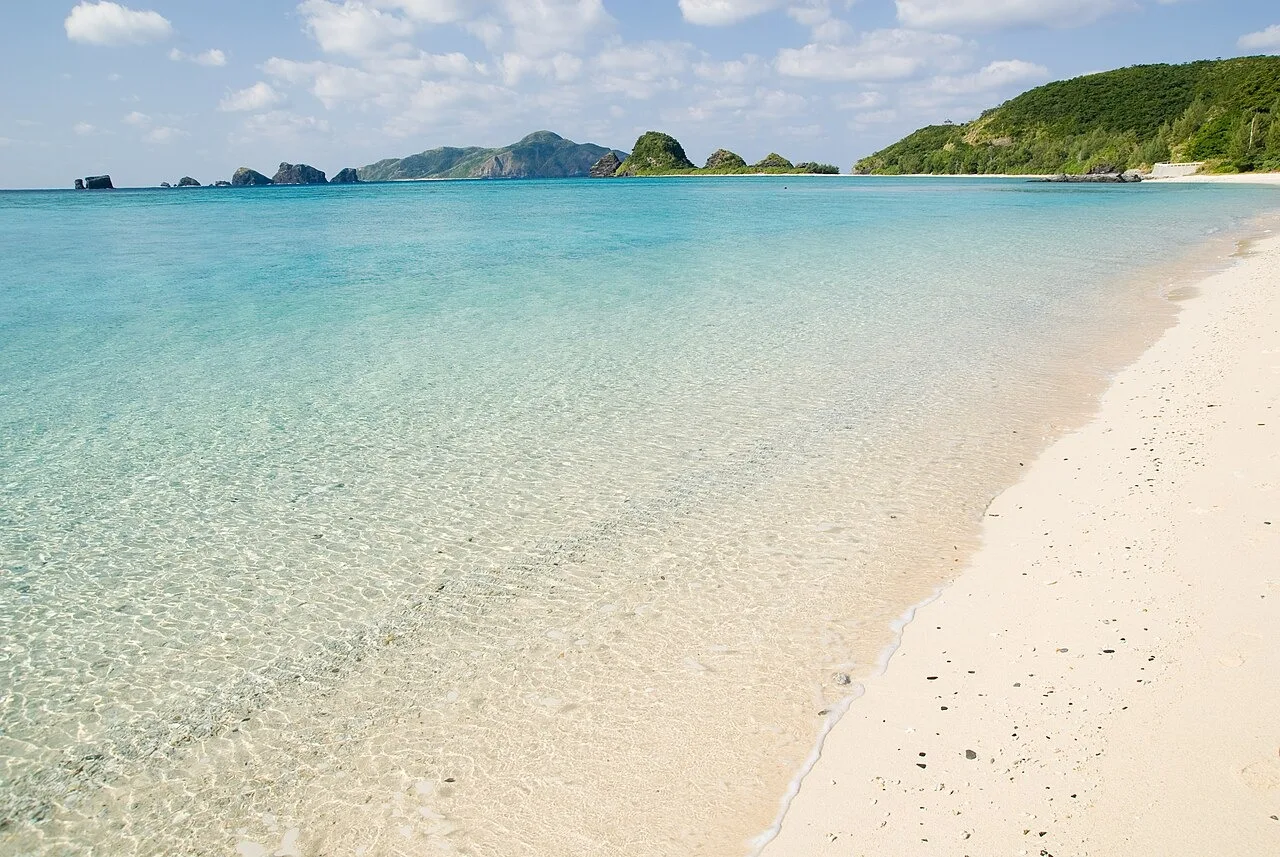
Eef Beach is a long south-eastern beach, described by the town’s landscape page as about two kilometres of coast. Staying nearby lets you walk after breakfast or check-in and choose the distance by your energy. Plan water, shade and changing back at your room before adding another sight. Looking at the sea, walking the shore and snorkelling each need different equipment and time. In winter, an onshore walk can still give you coastal scenery.
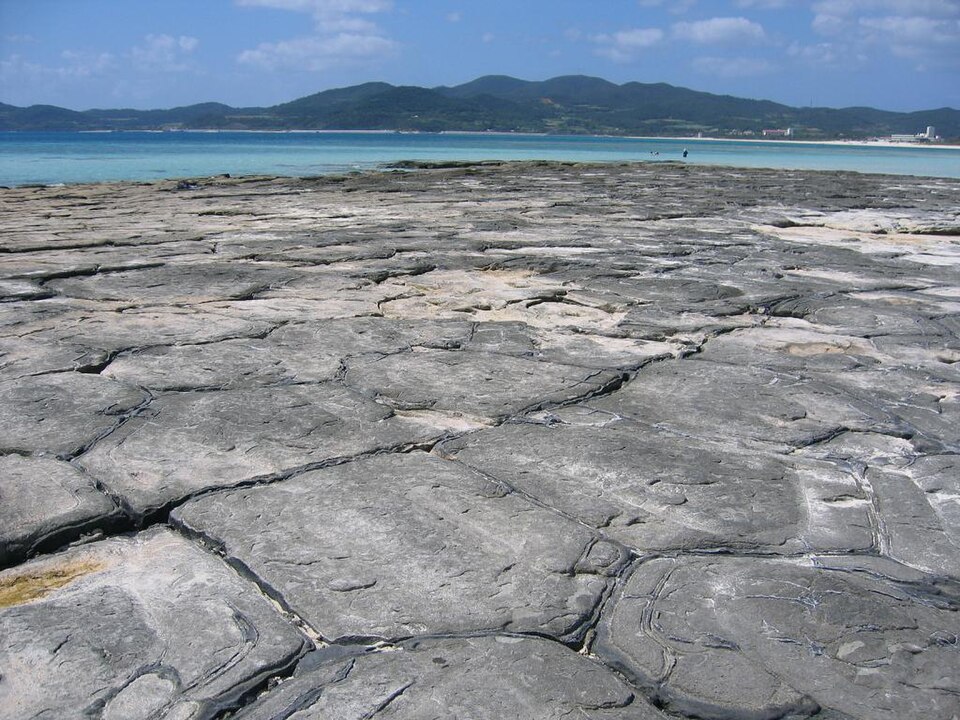
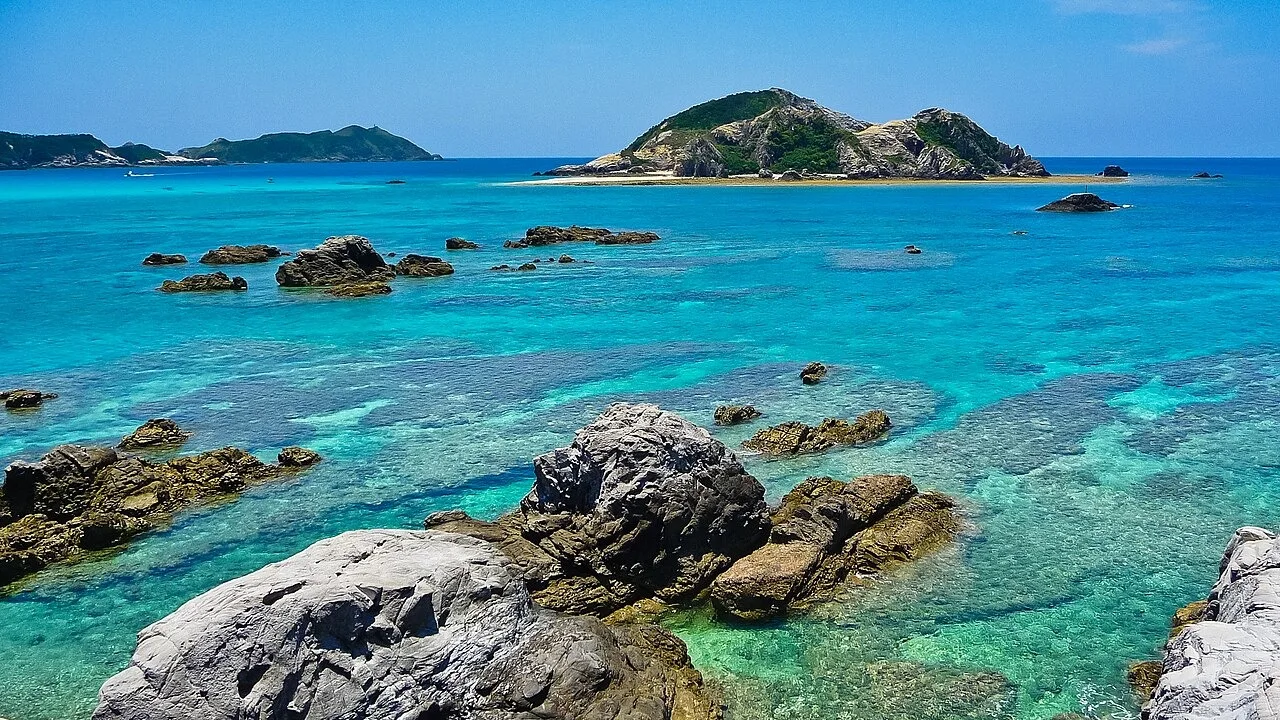
Tatami-ishi is on Ou Island beside Kumejima, separate from the Hatenohama sandbank. The current Airport Line has both Nishi-Ou (Tatami-ishi) and Ou-jima Iriguchi stops. Plan around your selected stop. The sight is a dense arrangement of polygonal rock surfaces resembling turtle shells. Combining beach and rock platform in one short stop is more natural than crossing the island repeatedly for photographs. The exposed platform pictured was photographed in 2005; choose viewing times using your travel date’s tides and the paths open on site.
On 5 November, for example, board towards the airport at Eef Joho Plaza-mae at 11:54 and reach Nishi-Ou (Tatami-ishi) at 11:59. Return from Nishi-Ou towards Eef at 13:49, reaching Joho Plaza-mae at 13:54. The stop times leave one hour 50 minutes, including walking between stop and shore, sightseeing and rest. This suits a stay day without a flight to catch. If tides do not suit, adjust a short transfer or walk the Eef coast instead.
Wear shoes with grip that cover your feet and stay in dry areas permitted on site. Do not cross wet rock reached by waves, gaps or algae-covered surfaces. For sore knees or pushchairs, view the platform from a distance and reduce uneven walking. Low tide reveals more rock, but still allow time to return to shore by the same route. Leave low ground as the water rises.
This half-day need not include the north coast. Start from Eef and return to the same accommodation, leaving rest time around lunch. If the second day of a two-night trip is for a boat activity, place Tatami-ishi on the first afternoon or third morning, choosing by tides and return transport. For more small islands and coastal paths, check each opening and tide condition. A photograph of extensive exposed rock does not establish that the whole shoreline is walkable on your date.
Miifugaa on the north-west coast: book the return journey before adding stops
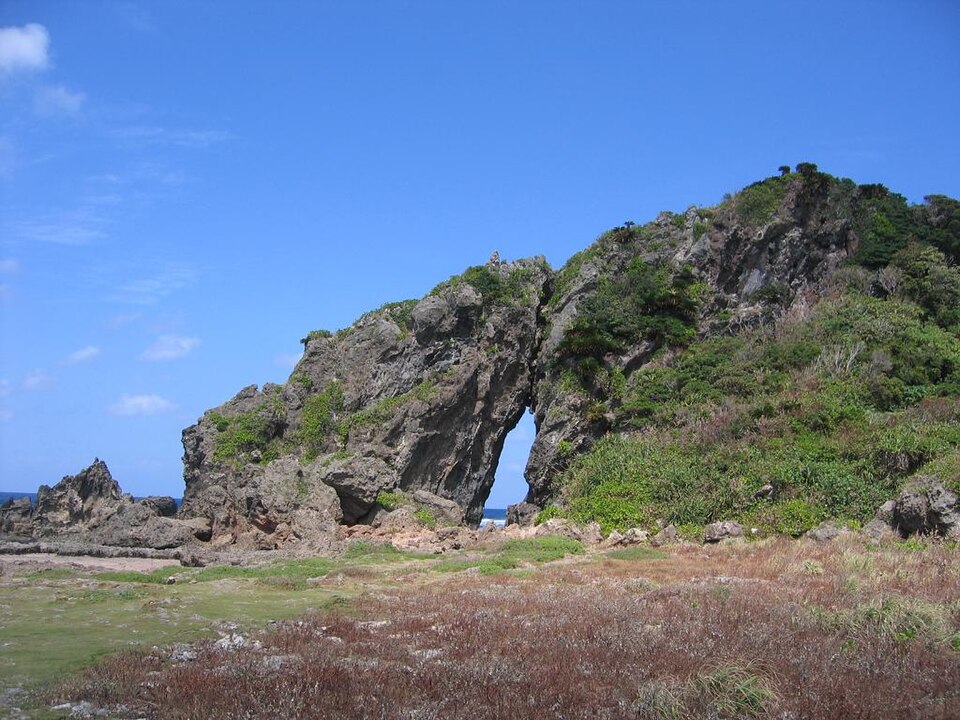
Miifugaa lies around Gushikawa on Kumejima’s north-west coast. Its main feature is an opening through an upright rock mass, with sky visible through it and uneven rocky coast around it. It lies in a different direction from Ou Island’s Tatami-ishi and suits a separate north-western drive or booked taxi outing. If rocky landscapes interest you, take time near the entrance to see the whole formation and coast rather than seeking only a photograph centred in the opening.
The town bus’s Hiyajo route passes Gushikawa, Nakamurakyo, Uegusuku and Hiyajo, but its stop list has no stop named Miifugaa. Without a car, include the journey from the stop to the sight and back. For a two-day trip, ask a taxi company for a package from your accommodation to Miifugaa, time there and a return to your accommodation or transfer to the airport. Book both directions before adding another stop, so reaching a coast off the main road does not leave you looking for transport.
For northern scenery by bus, choose Hiyajo Banta, which has a direct listed stop. On 5 November, for example, leave Eef Beach Hotel-mae at 11:46 and reach Hiyajo Banta at 12:03. Return from the same-named stop at 13:25 to reach Eef Beach Hotel-mae at 13:43. The viewpoint stop times leave about one hour 22 minutes. This is a different destination, suited to sea views from above. If the rock opening is the priority, keep the booked vehicle to Miifugaa.
On the land day of a two-night driving trip, head from western accommodation or the airport area to the north-west coast, then decide whether to continue along the north towards Hiyajo before returning south-east. Find legal parking at each stop and walk only after parking. Put viewpoints, lunch and the return in the same day. With a one-day rental, include refuelling, return and transport from the office to your hotel in the final stretch, giving the driver rest too.
In strong sea winds, rain or slippery conditions, shorten outdoor stops and avoid wave-facing photo positions. If a boat activity is cancelled, check why. A timing change may permit a short land outing; strong wind and high waves also make northern headlands and rock openings poor alternatives. Rest at your accommodation until conditions improve rather than immediately replacing a cancelled morning with another exposed shore.
Book Hatenohama separately; from November, start with winter–spring options
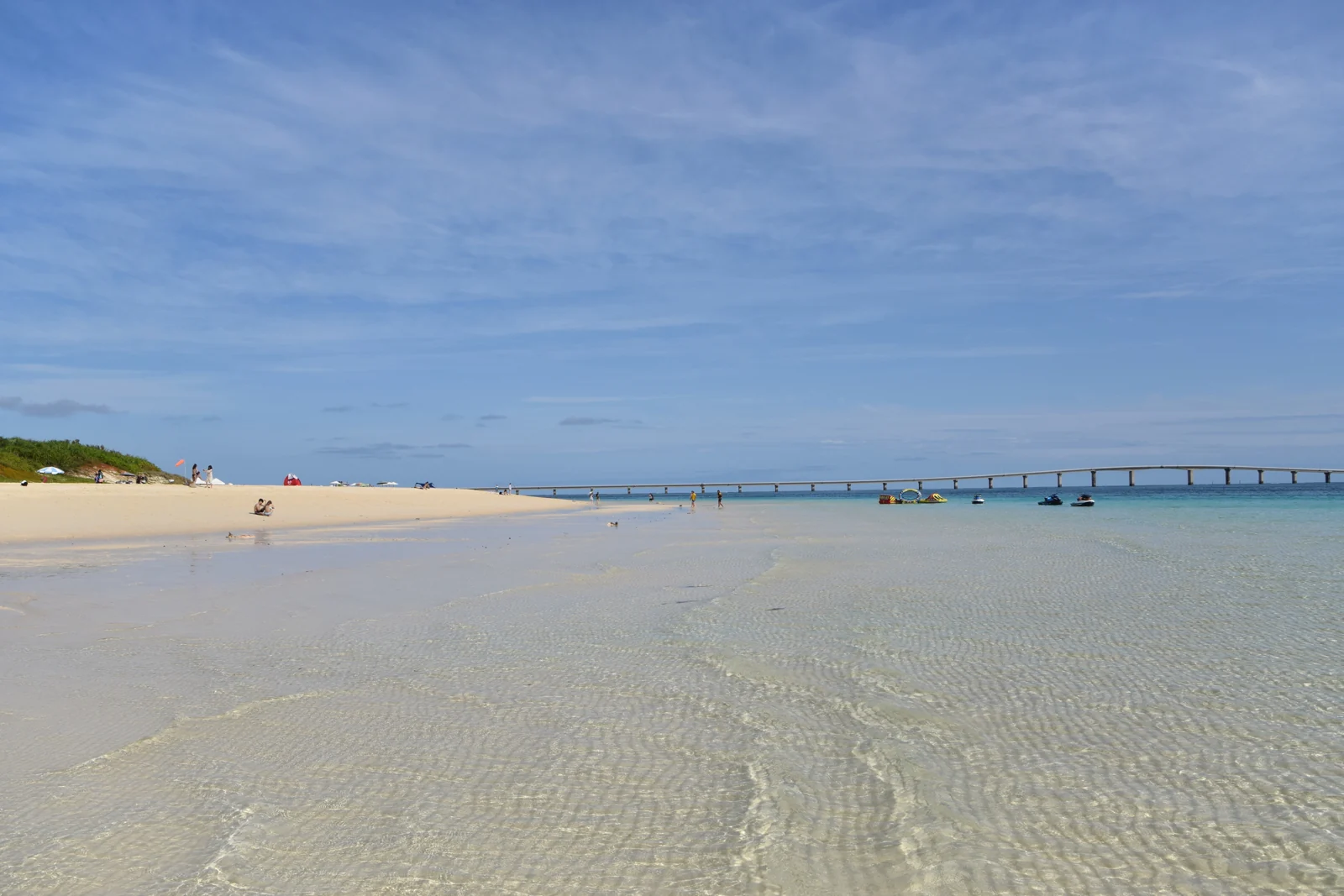
The tourism association’s Hatenohama guide describes a sandbank about seven kilometres long, seen after a boat ride of about 20–30 minutes from Kumejima’s east coast. Hatenohama collectively refers to Menuhama, Nakanohama and the outer sandbank; landing places vary by activity. Choose by whether you want a white-sand walk, underwater views from a glass-bottom boat or guided snorkelling, then compare names and photographs.
The association FAQ lists several activity operators. Its Island Expert Kumejima profile identifies one and links to the operator’s official site. That site lists a summer Okunohama programme from mid-June to October, and a winter–spring Nakanohama glass-bottom-boat programme from November to mid-June. For November travel, open the winter–spring section first rather than carrying summer Okunohama activities into winter.
This operator lists a basic activity time of 09:00–13:00, about four hours overall. It says arrival-day participation is normally not accepted because flights can be delayed and activity times may move earlier. If you stay one night and arrive in the afternoon, the activity falls on departure morning. Two nights give more room to separate the boat trip from the return journey. Four hours is far longer than the 20–30-minute crossing alone: equipment, landing, activities and return all take time.
Give the operator your accommodation, outward and return flights or sailings, everyone’s age, whether you want to land or enter the water, and the languages you can use. The association profile limits this operator’s foreign-language service to the Hatenohama free-time programme; snorkelling, diving and fishing require Japanese. For activities requiring you to understand instructions, confirm communication with the operator first. Ask for the meeting address, actual departure, transfer coverage and weather-cancellation refund or rescheduling arrangements in the booking reply, then buy connecting transport accordingly.
The operator’s booking page requires web forms at least three days before the desired activity. Two days before, the day before and on the day, enquire by telephone, with calls accepted 09:00–18:00. Save the operator’s confirmation of space and meeting details after enquiring. Completing a form alone is not a basis for fixed onward travel. Across the summer–winter boundary, state the date and intended activity directly to avoid mixing different seasonal programmes in one order.
If cancelled and island transport and weather remain suitable, replace the boat day with a short Tatami-ishi outing or Hiyajo viewpoint. Stay at your accommodation under strong-wind warnings. If sea conditions also affect your return off the island, deal first with getting to Naha, extra nights and onward flights, then consider another activity. Leave half a day around the boat trip for a shower, food and packing rather than rushing straight to the port.
A Hatenohama video included in Kumejima Town Office’s Nuchigusui travel series, accompanying this section’s introduction to the offshore white sandbank and surrounding sea.
Two days and one night without a car: choose a boat trip or the north coast from Eef
This example uses weekdays 5–6 November 2026, Oceanjet both ways and accommodation in Eef. On day one, leave Naha at 08:00, arrive at Kanegusuku Port at 09:32 and take the 10:05 Hiyajo route to Eef Joho Plaza-mae at 10:47. Store luggage as arranged with your accommodation and eat lunch. If afternoon weather and tides suit, take the 14:04 Airport Line from Eef Joho Plaza-mae to Nishi-Ou (Tatami-ishi) at 14:09, returning at 16:02 to reach Joho Plaza-mae at 16:08. Alternatively, stay on the Eef coast. If arrival leaves insufficient time, move Tatami-ishi to day two rather than compressing lunch and luggage storage into minutes.
For Hatenohama on day two, use a morning programme the operator has confirmed will finish before your return boat. Collect luggage from your accommodation afterwards and head to Kanegusuku Port. The official basic 09:00–13:00 activity is a guide; obtain that day’s actual return time and drop-off point. A different return port, changing clothes and collecting cases all affect the bus you can catch. For a free afternoon, choose a later flight you can definitely catch or stay another night.
For a land day, book a taxi after breakfast to Miifugaa and onward to Kanegusuku Port, fitting lunch and luggage collection into the return route. Or omit the north coast and spend the morning slowly around Eef and Tatami-ishi. Work back from the day’s one fixed island departure when booking transport. Choosing between the north coast and a boat activity preserves proper time for photographs, meals and rest.
The November return boat leaves at 16:00. The operator requires arrival at 15:30 and check-in completed before 15:45. From Eef Joho Plaza-mae, the 14:04 Airport Line reaches Kanegusuku Port at 14:31 and gives a larger port buffer. The 15:04 service arrives at 15:31, one minute after the recommended arrival, making it tight as your only return option. Use the earlier bus’s extra time for luggage and formalities rather than another distant sight.
For a return flight, work back from the airport instead. The same 14:04 Airport Line from Eef Joho Plaza-mae reaches Kumejima Airport at 14:43. Whether it connects depends on your airline’s check-in and boarding cutoffs. The bus passes Kanegusuku Port before the airport. Use the airport as the endpoint for a flight and the port for a sailing. Give both endpoint and departure time to your accommodation and transfer provider so transport matches the ticket you bought.
Three days and two nights with a car, and winter returns: retain a full day
With three days and two nights, use day one for arrival, the south-east coast and check-in, day two for Hatenohama, and day three for only the west or north-west before departure. If land exploration matters more, make day two the rental-car day and put the boat trip on the first confirmed full morning. Respect the activity’s rule against arrival-day participation; afternoon arrivals should leave the boat trip until day two. Two nights remove the need to finish an activity, check out and make the long return-boat connection in one morning.
You can hire a car only for the middle land day. Take the bus to your accommodation on day one, link Miifugaa and northern scenery in one direction on day two, and return the car that evening. On day three, make a short Eef or Ou Island visit before leaving by boat or plane. If the boat activity takes priority, move the car to day one or three, subject to collection and return hours. Compare rental, cover, fuel, transfers and return location together. Hiring for one less day saves money only according to the extra journeys it creates.
In December, Oceanjet’s return leaves at 15:30, moving recommended port arrival to 15:00 and check-in completion to before 15:15. Under the 25 October–24 December Airport Line timetable, the 14:04 departure from Eef Joho Plaza-mae reaches Kanegusuku Port at 14:31, 29 minutes before the recommended arrival. The 15:04 bus arrives at 15:31, after sailing. Finish winter afternoon activities before walking to the stop, collecting luggage and boarding.
Winter arrival is later too: docking at 09:50 leaves only 15 minutes before the weekday 10:05 Hiyajo bus. For accommodation transport, consider the Airport Line passing the port at 11:07 and reaching Eef Joho Plaza-mae at 11:33, or book a taxi. You need not rush luggage off the boat for one bus. Weekends also have a different early Hiyajo timetable. Check arrival and departure dates separately for winter travel.
Sea transport and town buses make separate operating decisions. The town says buses stop under a storm warning; after it is lifted, wind, rain and road conditions determine resumption. The boat operator may also cancel or change services for sea conditions. Ask your accommodation and transport providers what arrangements are available. Spending the night before an important international flight back in Naha removes the pressure of first having to leave Kumejima that day. If an extra night is needed, secure a room before dealing with existing bookings and activities.
Calculate fares, child categories and cancellations for the same group
Oceanjet’s current basic fare lists ¥7,800 for a standard adult and ¥5,800 for a child. Its Kumejima route fare rules define the second-class child category as age three until the first 31 March after turning 18. One child under three travelling without a seat is free per adult. Additional infants or those requiring seats pay the child fare. Use the full age conditions when booking, rather than only the tariff’s abbreviated “high-school pupils and younger”.
Two adults and one ten-year-old primary-school child pay ¥7,800 × 2 + ¥5,800 = ¥21,400 for a standard single journey, or ¥42,800 for two singles. The ¥15,000 Family fare is for one adult and two eligible children travelling together on the same service and section. Two adults and one child do not meet that grouping. For one adult and two eligible children, the normal ¥19,400 single total exceeds Family’s ¥15,000 by ¥4,400. Choose tickets for your actual party.
Town buses use a different classification. The official fare page classes age 12 and above, lower-secondary pupils and above, as adults. Primary-school children aged six to under 12 pay half the adult fare, rounded up to a multiple of ¥10. Airport to Eef Joho Plaza-mae costs a standard adult ¥500 and that primary-school child ¥250. The short Joho Plaza-mae to Nishi-Ou journey is ¥150 adult and ¥80 primary-school child. Resident discounts and older-person exemptions require local residence, proof and other conditions; ordinary visitors use standard fares.
For the same two adults and ten-year-old, one airport bus each way costs (¥500 × 2 + ¥250) × 2 = ¥2,500. Add Eef–Tatami-ishi return at (¥150 × 2 + ¥80) × 2 = ¥760, making ¥3,260 for the two bus pairs. This example assumes flights and an Eef base. If arriving by boat, recalculate the actual port-to-accommodation route. The Airport Line via Kanegusuku Port and the Hiyajo route around the north both reach Eef but have separate fare tables.
Changes and cancellations also depend on the ticket. Oceanjet’s conditions of carriage allow one change to a general ticket within its validity, before the designated sailing, through a specified sales office, subject to seats and payment or refund of the difference. The official FAQ also lists early-bird and travel-agency tickets as non-changeable; a general ticket’s single change does not extend to them. Compare early-bird purchase periods and prices under the fare rules. For ordinary tickets, settle dates and passengers first and retain tickets for each direction.
The official ticketing page lists passenger-initiated cancellation fees for designated sailings: 30% from ten to seven days before departure, 50% from six to three days before, and 100% from two days before until sailing and after departure. On a ¥7,800 adult face value, these are ¥2,340, ¥3,900 and ¥7,800 respectively. If the operator cancels under the contract for sea conditions or similar reasons and the passenger terminates and requests a refund, the unused portion is handled without that refund fee. After boat tickets, contact hotels, car hire and activities under their separate bookings.
Finally add accommodation totals, meals, selected activities, island vehicles and cancellation costs you can absorb. The extra room night buys a full activity day and one less rush. If Eef and Tatami-ishi are enough, one night plus buses also works. Record each child’s birthday and school stage, every boarding place, meeting time and cancellation contact so you can see what the trip actually includes before payment.
| Item | Calculation | Subtotal |
|---|---|---|
| Oceanjet standard single | 7,800 × 2 + 5,800 | 21,400 |
| Two Oceanjet standard singles | 21,400 × 2 | 42,800 |
| Airport–Eef return bus | (500 × 2 + 250) × 2 | 2,500 |
| Eef–Tatami-ishi return bus | (150 × 2 + 80) × 2 | 760 |
| Both island bus pairs above | 2,500 + 760 | 3,260 |
A few useful answers
Can I spend two days and one night on Kumejima without hiring a car?
Yes. Base yourself in Eef. The Airport Line links the airport, Kanegusuku Port and Tatami-ishi; book a return taxi for the north-west coast away from bus stops. For one night, choose either a Hatenohama boat trip or northern scenery as the main activity.
Are Hatenohama and Tatami-ishi the same place?
Hatenohama is an offshore eastern sandbank requiring a separately booked boat landing. Tatami-ishi is on Ou Island, accessible by island roads and the Airport Line’s Nishi-Ou (Tatami-ishi) stop.
Does Kumejima Oceanjet still take 92 minutes in winter?
For 1 December–31 March, the official timetable gives Naha 08:00–09:50 and the return 15:30–17:20, or one hour 50 minutes each way.
Is there a bus for the flight arriving at Kumejima at 18:40?
In the 25 October–24 December 2026 Airport Line timetable, the column for RAC883 arriving at 18:40 has no bus. Arrange an accommodation transfer or taxi first.
Do lower-secondary pupils use child fares on both boats and buses?
Oceanjet’s second-class child fare applies from age three until the first 31 March after turning 18. Town buses charge lower-secondary pupils adult fares. Primary-school children pay half, rounded up to a multiple of ¥10.
Official information and references
Sources used in this guide.
- Kumejima Town | Current town bus timetables
- Kumejima Town | Airport Line PDF, 25 October–24 December 2026
- Kumejima Town | Two Kanegusuku Port routes PDF from 25 October
- Kumejima Town | Bus route map
- Kumejima Town | Bus fares and child rules
- Kumejima Town | Standard and resident bus fare PDF
- Oceanjet | Seasonal sailings, port arrival and check-in times
- Oceanjet | Kumejima route fare rules
- Oceanjet | Conditions of carriage
- Oceanjet official ticketing | Designated-sailing change and cancellation terms
- Kumejima Tourism Association | Transport, luggage and taxi FAQ
- Kumejima Tourism Association | Getting to Kumejima
- Kumejima Town | Coasts and natural scenery
- Kumejima Tourism Association | Hatenohama
- Kumejima Tourism Association | Island Expert profile, language services and official website
- Kumejima Town Office | To a heavenly beach! Hatenohama video
- Kumejima Nuchigusuitrip | Hatenohama