Every winter, humpback whales migrate to the waters off the Kerama Islands. Using the Zamami Village Whale Watching Association's 2026 season (8 January to 25 March) and observation rules as a baseline, this guide compares both ferries from Tomari Port, booking windows, weather cancellations, and day-trip versus overnight itineraries.
- Region & Focus
- Okinawa
- Reading Scope
- 15 min read · 9 chapters · 7 Q&As
- Official Verification
- 6 official sources checkedUpdated 20 November 2026
Chapter Route Map (tap any stop)
- Whale watching in Zamami: season, waters, and why here
- Reading the rules: 100 metres, calves, and staying on board
- Ferries and bookings: two routes from Tomari Port
- Booking a whale-watching boat: operators, check-in, and costs
- Pre-departure prep from Naha: Tomari Port, timing, and comfort
- Shoulder months: December warm-ups and April wrap-ups
- Winter in Kerama Shoto National Park
- Two ways to plan it: a day trip versus an overnight stay
- Beyond the season: no-sighting days, cancellations, and next winter
- Quick Q&A
Every winter, North Pacific humpback whales migrate south to breed and nurse their calves in the sheltered waters of Okinawa's Kerama Islands, with whale-watching boats setting out from Zamami Port to find them. For 2026, the Zamami Village Whale Watching Association has set the official season from 8 January to 25 March and strictly enforces a voluntary code of conduct: boats must not actively approach within 100 metres of a whale, and combined viewing time for mother-and-calf pairs across all vessels is capped at one hour. With both a conventional ferry and a high-speed craft connecting Naha's Tomari Port to Zamami, understanding the sailing links, viewing boundaries, and booking order makes this winter island trip far easier to pull off.
Whale watching in Zamami: season, waters, and why here
Each winter, humpback whales travel down from higher latitudes to mate, give birth, and nurse their young in the warm waters surrounding the Kerama Islands, making Zamami Village the closest dedicated whale-watching base to Okinawa's main island. Formed by local boat operators, the Zamami Village Whale Watching Association enforces a shared commitment to minimal disturbance. Its official 2026 season runs from 8 January to 25 March, with exact dates for the following year posted on the association's blog ahead of opening.
The voluntary code clearly defines its protected waters: within 10 nautical miles (about 18 km) of Zamami Village's islands and within 7 km of neighbouring Tokashiki Village's islands. Protection covers humpbacks, other baleen whales, and sperm whales, and applies to non-motorised craft such as sailing boats, kayaks, and paddleboards as well. In other words, whale watching in Okinawa is not something you do from the Naha waterfront; you have to head out by boat, with neighbouring Tokashiki Village also operating its own fleet under local rules.
January through March is the peak calving and nursing window, sharply increasing the odds of seeing mothers with calves—and therefore triggering the stricter time limits on family pods. Winter sea conditions also shift quickly, and skippers will never force a sailing when wind and swell exceed safety thresholds. Treating weather cancellations as a normal planning variable is far less stressful than finding out at the pier.
Geography is what makes the Kerama inland sea such a reliable natural nursery. Outer islands including Zamami, Aka, and Tokashiki block heavy Pacific swells, creating calmer, moderately deep channels where mothers bring newborn calves to rest. That is why the association designates parts of the inland sea between Zamami and Tokashiki as a mother-and-calf sanctuary off-limits to commercial whale-watching boats. Departing from Zamami Port, vessels often reach active whale grounds in under 30 minutes.
Beyond dramatic breaches, humpbacks offer quieter spectacles from the deck: vertical spyhopping to scan their surroundings (known in Okinawan dialect as takkuwari), raising long pectoral fins to slap the surface, or rolling to heave a broad tail fluke clear of the water. Underwater photography is barred in principle, though if a curious whale approaches the boat on its own, lowering a camera gently from the gunwale is permitted—often yielding the most memorable shots of the trip.
Getting to the morning boat from central Naha is straightforward. Tomari Port (Tomarin), the city's gateway to the outer islands, sits on Naha's western edge not far from Kokusai-dori and houses ticket counters and luggage check-in for both the ferry and the high-speed craft under one roof. Winter brings far fewer crowds than peak summer, so morning traffic to the port is rarely heavy; still, island ferries run far less frequently than main-island buses, and your entire day hinges on making your scheduled departure.
In practice, a Zamami whale-watching trip comes down to three bookings: return ferry or high-speed boat tickets between Naha and Zamami, island accommodation if you are staying overnight, and a berth on a local member whale-watching boat. Each has its own booking window and cancellation terms, and sequencing them properly prevents one delay from derailing the rest.
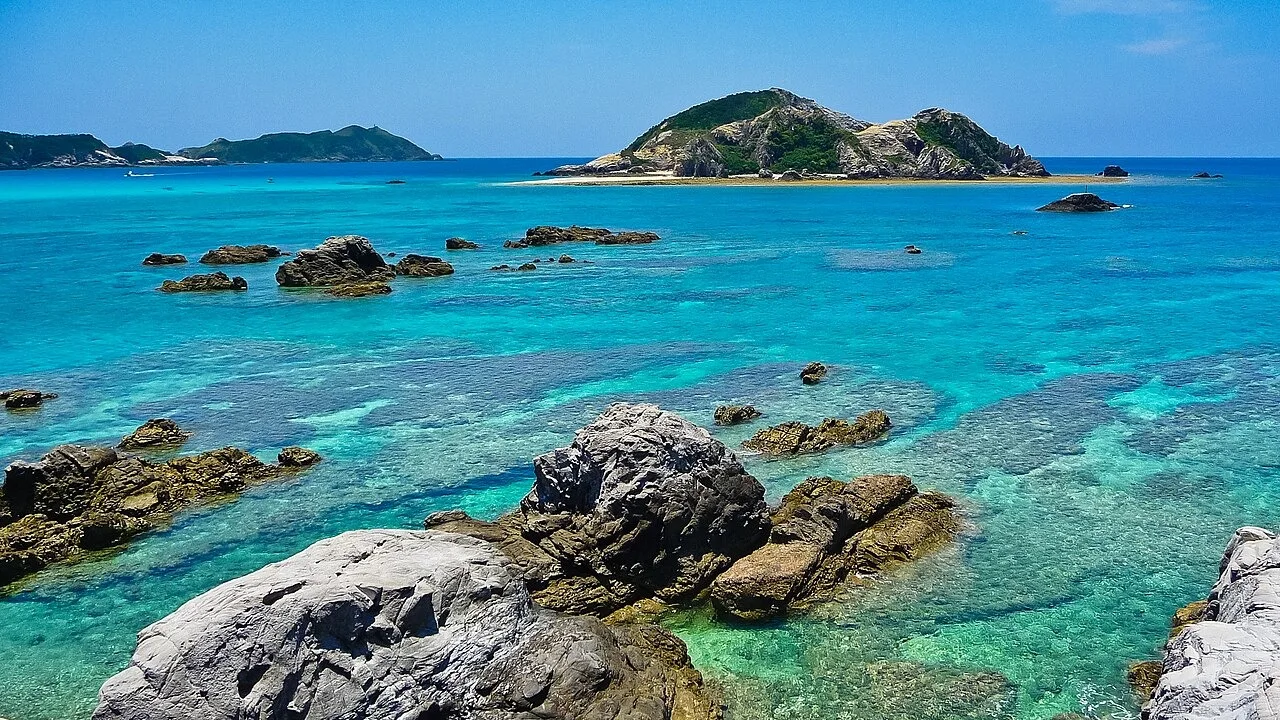
Every winter, humpback whales migrate to the waters off the Kerama Islands. Using the Zamami Village Whale Watching Association's 2026 season (8 January to 25 March) and observation rules as a baseline, this guide compares both ferries from Tomari Port, booking windows, weather cancellations, and day-trip versus overnight itineraries.
Reading the rules: 100 metres, calves, and staying on board
The Zamami Village Whale Watching Association enforces two concentric buffers around whales. Within 300 metres lies the slow-speed zone, where vessels must throttle back and avoid cutting across a whale's path. Within 100 metres lies the restricted zone, which boats are strictly forbidden from entering under power; if a curious whale swims up to the hull, the skipper must halt the engines and wait until it moves off, with no sudden acceleration or sharp turns. Because these boundaries dictate viewing distance, pack a telephoto lens for crisp close-ups or test your phone's zoom settings beforehand.
Restrictions tighten further around mothers with calves. While adult whales may be observed for up to two hours, viewing a mother-and-calf pair is capped at one hour in the morning and one hour in the afternoon across the entire fleet combined. Commercial boats are also banned from the mother-and-calf sanctuary in the inland sea between Zamami and Tokashiki, where only flagged research vessels may enter. On days when pods shelter inside the sanctuary or consist mainly of calves, routes and viewing durations adjust accordingly.
The strictest rule of all is a complete ban on entering the water with whales—no swimming, snorkelling, or scuba diving is permitted. Underwater cameras are likewise prohibited unless a whale initiates close contact alongside the boat to perform takkuwari, when a camera may be lowered carefully from the deck edge. If you are travelling with children or keen snorkellers, make sure everyone knows beforehand that this is strictly an on-deck excursion.
The code also limits human disturbance above and below the waterline. Beyond normal engine noise while underway, passengers and crew may not mimic whale calls or generate similar sounds in the water; educational or scientific projects seeking closer access must submit a formal plan to the association and fly a special permit flag. To prevent boats from crowding a single pod, member vessels share sightings by radio and rotate in and out, which is how the fleet-wide one-hour calf limit is enforced in practice.
Once on board, the routine is smooth and unhurried. You sign the passenger manifest and put on a life jacket at the terminal counter, then head out as skippers track radio reports. After spotting a blow or dorsal fin, the boat throttles back outside 300 metres and drifts to a stop beyond the 100-metre line. Rather than staring at one whale for two straight hours, captains work within time limits and rotation turns to find clear sightlines; photographers should have telephoto lenses mounted and burst mode ready for sudden surface action.
Calibrating expectations before you board makes the outing far more enjoyable. Wild humpbacks do not perform on cue like aquarium shows—a whale can dive for more than ten minutes between breaths while the boat rolls gently with engines off. Prepare younger children and older relatives for patient waiting. When a tall column of spray or a massive tail fluke finally breaks the surface to a chorus of gasps on deck, the wait feels well worth it.
Many travellers assume you can hop on a whale-watching boat almost anywhere along Okinawa's main island, whereas the prime breeding grounds lie squarely around the Kerama Islands (within 10 nautical miles of Zamami and 7 km of Tokashiki). Rather than trying to squeeze this into a day spent up north in Nago or out on distant Yonaguni, set aside dedicated time in your itinerary for the Tomari Port crossing to the Keramas.
Ferries and bookings: two routes from Tomari Port
Two vessels link Naha's Tomari Port with Zamami Island. The large car-and-passenger Ferry Zamami runs two daily round trips from the South Wharf: the morning sailing leaves Tomarin at 09:00, stops at Aka Island at 10:30, and reaches Zamami at 12:00, returning at 15:00 to arrive in Naha at 17:00; the afternoon sailing departs at 13:15, arrives directly in Zamami at 14:45, calls at Aka at 15:15, and docks back in Naha at 17:00. Meanwhile, the high-speed Queen Zamami departs from the North Wharf on multiple daily round trips, taking just 50 to 70 minutes direct. With the ferry on the south quay and the fast boat on the north quay, double-check which side of the harbour you need before setting off.
Comparing the two boats against a whale-watching schedule makes the trade-offs clear. The large ferry offers a steadier ride and takes bulky luggage or vehicles, but its 12:00 arrival rules out morning whale-watching tours. The high-speed boat trims the crossing to around an hour—essential if you plan a day trip—yet it cancels more easily in heavy swell, enforces a strict limit of two carry-on bags per passenger, and undergoes annual dry-dock maintenance in winter. Deciding between a day trip and an overnight stay starts with picking your boat.
Tickets can be reserved by phone or online. Telephone bookings go through the Zamami Village Office Naha Branch inside Tomari Port (098-868-4567, open 10:00–17:00 JST), opening one calendar month before departure with payment taken at the counter on the day. Online bookings open earlier—from 55 days before departure until the day prior—and require card payment upfront. Bear in mind the high-speed vessel's maintenance schedule: the Queen Zamami is completely suspended for dry-docking from 20 October to 3 December 2026, leaving only the conventional ferry running during that window.
Weather disruption comes down to the daily sailing announcement issued around 08:00 JST, and the Zamami Village Office explicitly disclaims liability for onward transport or lodging costs caused by cancellations. If you are combining the ferry crossing and whale watching on the same day, sleeping in Naha the night before and waiting for the 08:00 confirmation is far safer than risking getting stranded on the island. If you are already staying on Zamami when rough weather rolls in, keep your return sailing flexible rather than locking yourself into rigid onward connections.
Keep boarding cut-offs and local connections in mind as well. Freight and checked baggage on the Ferry Zamami close 30 minutes before sailing, passenger boarding wraps up 10 minutes prior, and Queen Zamami passengers are limited to two pieces of hand luggage each—so allow plenty of time to reach the right Tomarin wharf from Kokusai-dori. Once on Zamami, the village boat Mitsushima links Zamami and Aka daily with cash fares paid on the spot and no booking required (for the 07:45 morning departure from Zamami Port, pay the skipper in cash on board). Crossing to Aharen Port on Tokashiki Island, however, requires a telephone reservation by 17:00 the day before.
Travellers hoping to catch early arrivals in the first half of December should watch the transition right after the high-speed boat's maintenance window. Following dry-docking from 20 October to 3 December 2026, exact early-December resumption dates depend on official village notices; until the Queen Zamami reliably resumes service, only the slower ferry operates, making a same-day return virtually impossible. Always confirm on the village website that the fast boat is back in service before booking accommodation.
As for fares, the Zamami Village Office revised its ferry tariffs in early 2026, leaving many figures quoted in older blogs and travel forums out of date. When budgeting, check the current fare table directly on the Zamami Village Office website for accurate return prices; whether you paid online by card or at the window, weather-cancellation refunds follow the standard counter policy.
Booking a whale-watching boat: operators, check-in, and costs
Whale-watching berths are not booked centrally through the association; instead, you reserve directly with individual member dive shops or boat operators. The association's booking page advises locking in a spot just one day ahead, because winter sea conditions shift rapidly and booking too far in advance only complicates rescheduling. On the day, passengers gather at the check-in desk inside Zamami Port terminal, fill out the manifest, put on life jackets, and board with their skipper before returning to the same pier. Only large groups or school excursions go through the association secretariat (080-8370-1084, answered 09:00–10:00 and 16:00–16:30 JST).
Fares are set independently by each operator, as the association publishes no flat rate. Rather than choosing purely on the lowest ticket price, compare actual hours at sea and whether the operator offers a partial refund or free re-boarding if no whales are spotted. Standard trips run two to three hours, though encounters limited to mother-and-calf pairs can mean an earlier return under the one-hour rule. If you are prone to seasickness, pick up motion-sickness tablets at a Naha or island chemist the night before and take them well before casting off.
When budgeting for the day, keep island transport and whale watching in two separate ledgers: ferry or high-speed fares go to the Zamami Village Office, while whale-watching fees go to your chosen operator. Their cancellation rules are completely independent—ferry bookings are either paid on the day or refunded in full when cancelled for weather, whereas tour cancellations follow each shop's terms. Most scheduling snags stem from Tomari Port ferry cancellations rather than the tour itself.
Because the village runs the ferries and private shops run the whale-watching boats, liability is not linked between the two: the village will not reimburse missed tours if a ferry cancels, and tour rescheduling or refunds remain at the operator's discretion. To keep financial exposure low, sleep in Naha the night before and travel only after the 08:00 sailing check—or, if staying overnight on Zamami, keep your ferry return flexible rather than boxed into tight onward plans.
When browsing member operators online, check vessel tonnage and passenger capacity. Smaller boats sit closer to the waterline with nimble viewing angles, though they pitch harder in chop; larger vessels offer extra deck space and stability, though prime rail spots can get crowded when full. If you are travelling with older relatives or young children, prioritise a stable hull and a sheltered cabin.
Whether emailing or calling to reserve, confirm four points upfront: exact check-in and departure times, expected duration at sea, how the itinerary adjusts if only a time-limited mother-and-calf pod is found, and whether any discount or re-sail applies if no whales appear. Asking two or three operators the same questions makes the best fit obvious straight away.
Finally, factor in language support. Most operators on Zamami are small family outfits that deliver safety briefings and whale commentary in Japanese; a few keep English illustrated cards on board, while Chinese-speaking staff are rare. If anyone in your group speaks Japanese, put them in charge of booking so you do not miss crucial updates if rough seas force a last-minute change to meeting times.
Pre-departure prep from Naha: Tomari Port, timing, and comfort
On departure morning from Naha's Tomari Port (Tomarin), break your schedule into three blocks: transit from your city hotel to the quay, the 30-minute baggage cut-off and 10-minute boarding window, and a buffer around 08:00 JST to check official sailing updates. Walking from Kokusai-dori to Tomarin is doable, though taking a taxi with suitcases or young children saves energy for the open water.
Conditions offshore feel noticeably colder and rougher than central Naha, so dress and pack accordingly. Take seasickness medication at least 30 minutes before boarding so it takes effect before the boat switches off its engines and drifts in the swell—a far choppier motion than a steady ferry crossing. A windproof, waterproof jacket is essential against chilly sea spray, and telephoto lenses plus spare batteries should already be fitted inside a daypack, as a rolling deck leaves little room to swap gear.
Families can turn Zamami's strict viewing rules into a clear reassurance for children: with zero swimming involved, fixed observation caps, and boats sharing locations by radio, the trip stays safe without endless hours baking or freezing at sea. Once everyone has their life jacket secured, seat younger children toward the centre of the cabin or at a sheltered rail spot for a calmer, steadier outing.
Let your choice of vessel dictate how you pack. While the large ferry accommodates big suitcases, the Queen Zamami strictly limits each passenger to two carry-on bags—ideal for travelling light with a daypack on a same-day return. If you are staying overnight on Zamami, leave main luggage at your Naha hotel or in a Tomarin coin locker and bring just an overnight bag across to the island. Packing windproof layers, seasickness tablets, camera gear, water, and light snacks covers everything you need.
Shoulder months: December warm-ups and April wrap-ups
Beyond the official 8 January to 25 March window, both shoulder months follow a distinct rhythm. December serves as a warm-up period: early humpback scouts begin arriving in the Keramas, yet operators are still prepping boats and the Queen Zamami has only just wrapped up its annual maintenance, leaving ferry sailings and tours sporadic. If you visit in December, anchor your plans around Naha and Okinawa's main island and treat a successful whale-watching sailing as a bonus.
After the official season closes on 25 March, a handful of operators run ad hoc trips into early April whenever weather and sightings hold up, though warming water pushes mothers and calves back north and sighting odds drop week by week. If you visit the islands in early April for beaches and viewpoints and hope to catch late stragglers, call local operators directly to check whether boats are still running rather than banking on it.
Both shoulder windows share one pitfall: slow online updates. Official blogs and operator pages do not always post daily sailing status in real time, so a quick phone call to a local shop beats refreshing websites. The closer your visit sits to the start or end of the season, the smarter it is to keep both an offshore plan and a Naha or island backup ready to choose from at 08:00.
Turning those shoulder months into clear decisions keeps planning painless. Before travelling in mid-December, verify that the high-speed boat has resumed service and whether operators have set a start date; if not, stay on the main island. In early April, skip old forum posts and ring a local boat operator directly to ask if they are still sailing, building an itinerary on land that stands on its own either way.
Winter in Kerama Shoto National Park
Designated a national park in 2014, the Kerama Islands are famed for summer "Kerama Blue" snorkelling, yet in winter the humpback whales take centre stage. Colder months bring remarkably clear water and far fewer tour groups; standing on the Ferry Zamami's upper deck as the deep-blue silhouettes of Zamami, Aka, and Tokashiki line up behind you offers a sweeping vista you rarely see in peak summer.
Japan's Ministry of the Environment has also backed winter conservation events here during the January-to-March season, including the "Whale Watching Festa". Independent travellers have no need to chase formal events, yet appreciating the waters' national park status makes sense of why everything from vessel speed to viewing hours is so tightly regulated: the goal is ensuring these humpbacks return year after year to raise their young.
Between sailings, climb to one of Zamami's hilltop viewpoints overlooking the channel, where winter water clarity reveals vivid coral reefs and shifting bands of blue below. Treating the winter national park landscape as half the reason to visit means the island crossing remains rewarding whatever the sea state.
Understanding how local geography shapes winter weather also takes the anxiety out of forecasts. Winter brings prevailing north-easterly winds that whip up open-ocean swell, yet the surrounding islands shelter the inner channels; captains pick leeward routes depending on the wind direction. Still, the only verdict that decides whether you cross is the 08:00 JST ferry announcement, so keep a main-island backup plan ready the night before.
Visiting a national park island comes with basic environmental etiquette too. Check with your skipper about eating or drinking on board, and remember that small islands have limited shops and waste facilities—carry every bottle, wrapper, and piece of rubbish you brought from Naha back with you to keep the island welcoming.
Two ways to plan it: a day trip versus an overnight stay
Time and budget permitting, spending one night on Zamami Island is easily the most reliable blueprint. Catch the 13:15 Ferry Zamami from Tomari Port on Day 1 to dock at 14:45, drop your bags, and catch sunset over the sea. The next morning, join a member operator's morning whale-watching trip, return by midday for lunch and an unhurried walk, then take the 15:00 ferry back to Naha for 17:00. Because guesthouses and restaurants on the island are scarce, secure your island room during the January-to-March peak before booking ferries or tours.
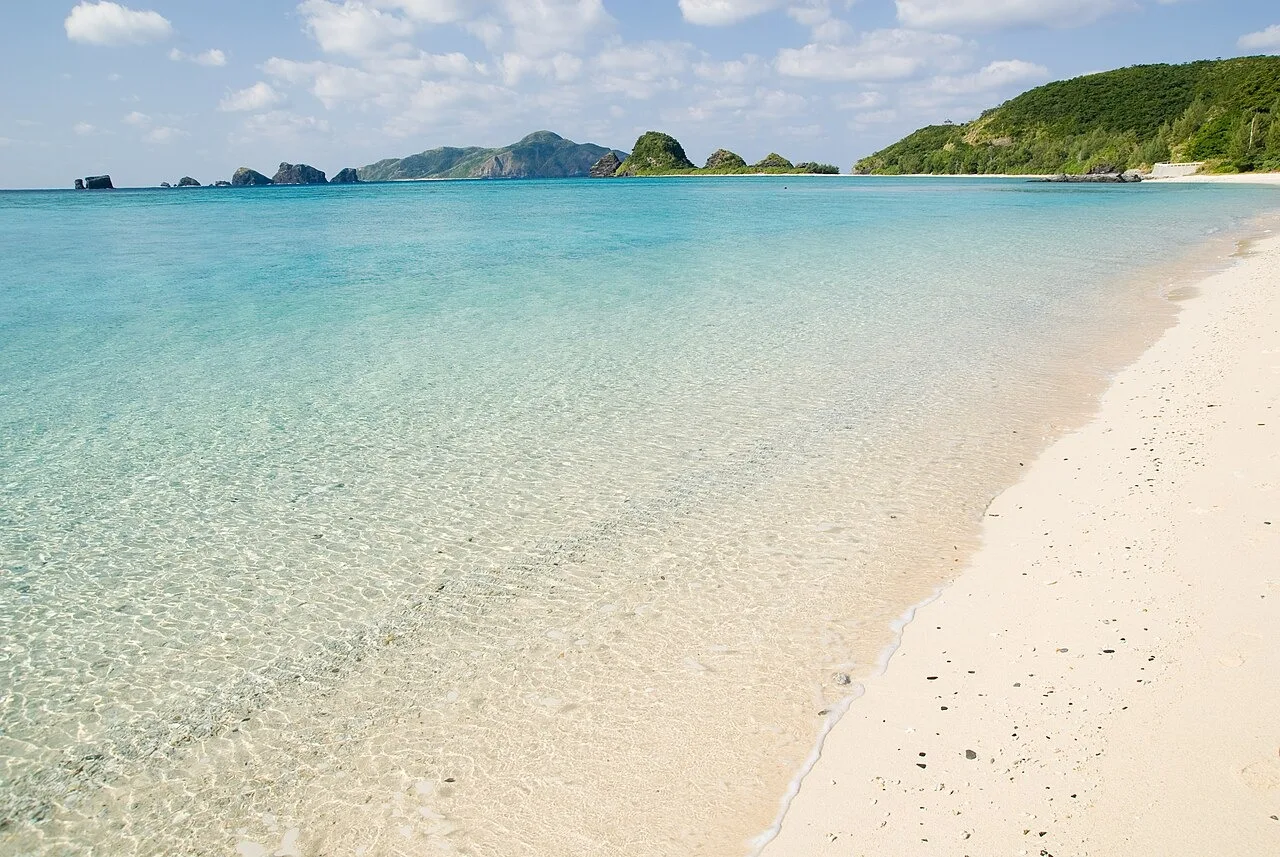
A same-day return is still possible, though completely dictated by ferry connections. Since the first large ferry only reaches Zamami at 12:00, you cannot make morning whale-watching boats and must rely on an afternoon sailing if an operator runs one. Taking the 50-to-70-minute high-speed Queen Zamami gets you across earlier, yet exposes you to higher winter cancellation rates. If doing a day trip, treat the 17:00 arrival back in Naha as your hard cut-off rather than assuming you can find a spare room on the spot if you miss the last boat.
If anyone in your party gets severely seasick and prefers to skip the boat, Zamami offers plenty on dry land. Scenic trails and hilltop lookouts ring the harbour, the village bus reaches the fine white sands of Ama Beach in minutes for quiet winter walks, and non-sailors can even buy a walk-up ticket at the pier for the local Mitsushima boat over to Aka Island before rejoining the group back at port.
Staying overnight also rewards you with Zamami's quiet dusk and starry evenings. Standing on a lookout or beach at sunset, you face directly west toward Naha as the sun drops into the ocean in near-total calm. Because dinner spots in the village are few and small, ask your guesthouse to arrange dinner or book a table well ahead during peak season, and check your whale-watching meeting time before pencilling in afternoon walks.
Basing yourself on neighbouring Aka Island works neatly too. Both Naha ferries call at Aka, the local inter-island shuttle links Aka and Zamami in just over ten minutes, and Aka's whale-watching operators belong to the same Zamami Village association. Aka has even fewer lodgings than Zamami, yet rewards guests with quiet beaches steps from their guesthouse door—making either island worth checking when rooms are tight.
Wild animals offer no guarantees, yet even a rare blank sighting day in the Keramas is far from wasted. Crisp winter skies, empty white-sand beaches, and the absence of crowded summer snorkel tours show the islands at their unhurried best. Viewing the two-hour boat trip and half-day island stroll as separate pleasures takes the pressure off and makes the whole outing far more enjoyable.
Laid out hour by hour, the gold-standard overnight schedule runs smoothly: Day 1 departs Tomari Port at 13:15, reaches Zamami at 14:45, and leaves plenty of light for a harbour walk and sunset lookout; Day 2 starts with a morning check-in at Zamami Port for a two-to-three-hour whale-watching cruise, returns before lunch, leaves the afternoon free for the village or beach, and boards the 15:00 ferry to arrive back at Tomari Port at 17:00. With accommodation and ferry tickets secured early, booking your tour the day before slots everything into place.
By contrast, the day-trip version leaves almost zero margin for error. You catch the earliest high-speed boat over to Zamami (checking the latest village timetable), transfer straight into an afternoon whale-watching tour, and race back onto the 17:00 ferry or late high-speed boat to Naha. If the fast boat cancels, afternoon tours fill up, or afternoon squalls move in, the day turns into an island walk—making it best suited only to flexible travellers who have confirmed operations with their skipper beforehand.
When deciding between Zamami and Aka as your overnight base, follow one simple rule: Zamami's ferry terminal sits right across from the whale-watching check-in counter, so you can walk out of your guesthouse and board within minutes with zero fuss. Aka feels quieter and puts beaches closer to your door, yet getting to Zamami Port for a morning check-in means timing the local shuttle carefully (paying cash on board only for the 07:45 sailing, and checking schedules for other departures). If travelling with children or older relatives, staying close to the Zamami meeting point wins every time.
Beyond the season: no-sighting days, cancellations, and next winter
Travelling for wildlife always calls for flexibility: rough seas mean accepting cancellations, and encountering mother-and-calf pairs shortens viewing time under local rules. Build your expectations around the Keramas' turquoise waters, hilltop views, and slow island pace so humpbacks feel like an unforgettable highlight rather than an all-or-nothing gamble. If a no-sighting guarantee matters to you, check the operator's refund or free re-boarding terms before paying.
Planning ahead for winter 2027, keep an eye on the Zamami Village Whale Watching Association's blog and booking page; next-season dates are typically announced around November, following the familiar rhythm of an early January opening and late March close. If your trip falls in December or April, do not write whale watching off automatically—a few calls to local operators often turn up ad hoc sailings.
A Kerama whale-watching excursion slots neatly into a wider Okinawa itinerary alongside an Okinawa main-island road trip and three days across Naha and central Okinawa. Simply carve out one or two days for the Tomari Port crossing while keeping the rest of your route intact; back in Naha by evening, plenty of seafood izakaya and Okinawa soba shops around Tomarin make dinner effortless.
If you are staying on Naha's southern side or prefer fewer transfers, neighbouring Tokashiki Village (Aharen and Tokashiki Island) within the same Kerama group also runs winter whale-watching tours under the 7-km coastal code. Keep in mind that Tokashiki routes use separate piers, timetables, vessels, and fare structures at Tomari Port, so compare departure docks and cancellation policies side by side before choosing.
Booking in the right sequence eliminates almost every logistical headache: lock in scarce island guesthouses first for the January-to-March peak, book your Tomari Port ferry or high-speed boat online once the 55-day window opens, and confirm your whale-watching operator the day before sailing when forecasts settle. Following that order—lodging, ferry, then whale boat—minimises fees if weather forces a change.
After stepping off the evening ferry back at Tomari Port, enjoying Okinawan dishes in Naha before turning in makes an easy finish. The next morning you can head straight back into your main-island route—whether driving north to Nago, browsing central Okinawa's cultural districts, or catching your flight home—without disrupting your Okinawa main-island itinerary or three days in Naha and central Okinawa.
In the end, winter whale watching in Okinawa comes down to four basics: check the association's official season dates (8 January to 25 March in 2026), watch the 08:00 JST ferry status notice each morning, confirm departure times and no-sighting terms before booking an operator, and secure island lodging before buying boat tickets. Nail those four steps, and your winter outing into the Kerama Sea is virtually set.
A few useful answers
When is the best time for whale watching in Okinawa?
The Zamami Village Whale Watching Association's official 2026 season runs from 8 January to 25 March. Peak calving and nursing falls between January and March, offering the highest chance of spotting mother-and-calf pairs. Some member operators also run ad hoc sailings in December and April depending on sightings, so it is best to call ahead directly.
What are the whale-watching rules in Zamami?
Under the association's voluntary code, vessels must slow down within 300 metres of a whale and must not actively approach within 100 metres. For mother-and-calf pairs, all boats combined are limited to one hour of viewing in the morning and one hour in the afternoon. Entering the water to swim with whales is strictly banned, underwater photography is prohibited in principle, and a no-entry sanctuary between Zamami and Tokashiki is closed to commercial boats.
How do I get to Zamami Island?
Catch either the Ferry Zamami from Tomari Port's South Wharf in Naha (departing at 09:00 and 13:15; roughly 1.5 to 2 hours) or the high-speed Queen Zamami from the North Wharf (50 to 70 minutes). Telephone bookings open one month ahead, while online bookings open 55 days ahead until the day before travel. Note that the Queen Zamami is out of service for annual maintenance from 20 October to 3 December 2026.
How do I book a whale-watching boat, and how much does it cost?
Book directly with one of the association's member dive shops or boat operators rather than through a central desk; the association recommends reserving the day before you sail. On the day, meet at the check-in counter inside Zamami Port terminal. Prices are set individually by each operator, so compare trip duration and no-sighting refund or re-boarding policies alongside the fare.
Can I do Zamami whale watching as a day trip?
Because the first Ferry Zamami only docks at 12:00, you will miss morning departures; a day trip requires catching the high-speed boat or confirming an afternoon whale-watching sailing with an operator. The safest, unhurried option is to take the afternoon ferry over, stay one night on Zamami, go whale watching the next morning, and return on the 15:00 ferry to Naha.
Are boats cancelled in rough weather?
Yes. Ferry and high-speed boat sailings are normally confirmed or cancelled around 08:00 JST on the morning of departure, and the Zamami Village Office does not compensate onward transport or accommodation losses caused by cancellations. If you want to avoid getting stranded, stay in Naha the night before and head to the port only after the 08:00 green light.
What if we don't see any whales?
Treat the trip as a winter island-hopping excursion across the Kerama Islands: Zamami's hilltop observatories, a stroll along Ama Beach, or a quick hop across to Aka Island on the local Mitsushima boat are all worthwhile. If a refund or free re-sail guarantee matters to you, check the operator's no-sighting policy before paying.
Official information and references
Sources used in this guide.
- Zamami Village Whale Watching Association — Season & Bookings (8 January–25 March 2026)
- Zamami Village Whale Watching Association — Voluntary Rules (300 m / 100 m Buffers, Calves, No Swimming)
- Zamami Village Whale Watching Association — Reservation Guide
- Zamami Village Office — Ship Information (Ferry Zamami Timetable & Queen Zamami Suspension Notices)
- Zamami Tourism Association — Transport (Crossings, Durations & Wharves)
- Zamami Tourism Association — Ferry Booking Rules (Phone & Online Windows)