The 2027 Okinawa Zento Eisa Festival is scheduled for 27–29 August. Plan around the announced dates, the 2026 programme and ticket prices, current Naha bus examples, Koza accommodation and daytime visits.
- Region & Focus
- Okinawa City and Koza
- Reading Scope
- 39 min read · 17 chapters · 6 Q&As
- Official Verification
- 17 official sources checkedUpdated 6 November 2026
- Key Topics
- SeasonsItinerariesFood
Chapter Route Map (tap any stop)
- 27–29 August 2027: settle the dates and accommodation first
- What is eisa? From Obon processions to stage performances
- From a 1956 competition to an island-wide festival
- The three-day 2026 programme: parade, youth festival and main festival
- 2026 tickets: paid grandstand seats and free grass areas
- Buses between Naha and Koza: plan to leave early
- Stay in Naha or Okinawa City?
- Daytime: the Eisa Museum and Koza streets
- Dinner, Gate Street and the beer festival
- 2026 venue rules: bags, shade and photography
- Changing weather: check the festival, buses and flights separately
- A three-day example: 2027 dates with adjustable time slots
- For one day, choose the programme you want to see
- Watching the parade: positions, passages and your exit direction
- Reading the programme: find local differences in association names
- Local Obon processions, the island-wide festival and permanent exhibitions
- Airport to venue, and the actual 2026 shuttle arrangements
- Quick Q&A
Okinawa Zento Eisa Festival has announced its dates: 27–29 August 2027. To watch the Goya crossroads parade and performances at Koza Sports Park, first decide where to spend the night. A return trip from Naha works if you leave early; stay in Koza or book your return vehicle if you want to watch until the end. The 2027 dates, 2026 event information and bus services currently available to check are set out separately below.
27–29 August 2027: settle the dates and accommodation first
Okinawa Zento Eisa Festival (沖縄全島エイサーまつり) has announced Friday 27, Saturday 28 and Sunday 29 August 2027 as its dates. The official venues are the area around Goya crossroads in Okinawa City and the athletics stadium at Koza Sports Park. Both are in Okinawa City, in the central part of the main island. Allow for the road journey from Naha when choosing accommodation and planning each day's return trip.
As of 6 November 2026, the official programme page still covers the 71st festival, held on 4–6 September 2026. The ticket page also remains the version with sales opening on 1 July 2026. The programme, ticket prices and shuttle arrangements from that edition are labelled below. For 2027, the three dates can go in your calendar; performance times, participating groups and ticket arrangements have yet to be announced.
Choose how you will leave before planning the rest of the visit. If you are staying in Naha and using scheduled buses, arrive in the afternoon and leave early in the evening. To watch the final performance, stay in Koza or book your return vehicle in advance. Planning the outward and return journeys separately is easier than buying a grandstand ticket and looking for the last bus after you arrive.
Combine Goya crossroads with the Eisa Museum and Gate Street. At the sports park, you can focus on watching the performances. If attending all three days, there is no need to tour the entire main island each day. Walk around the city on parade day, and leave another daytime period for resting at your hotel and sorting luggage. This makes several consecutive evenings outdoors more manageable.
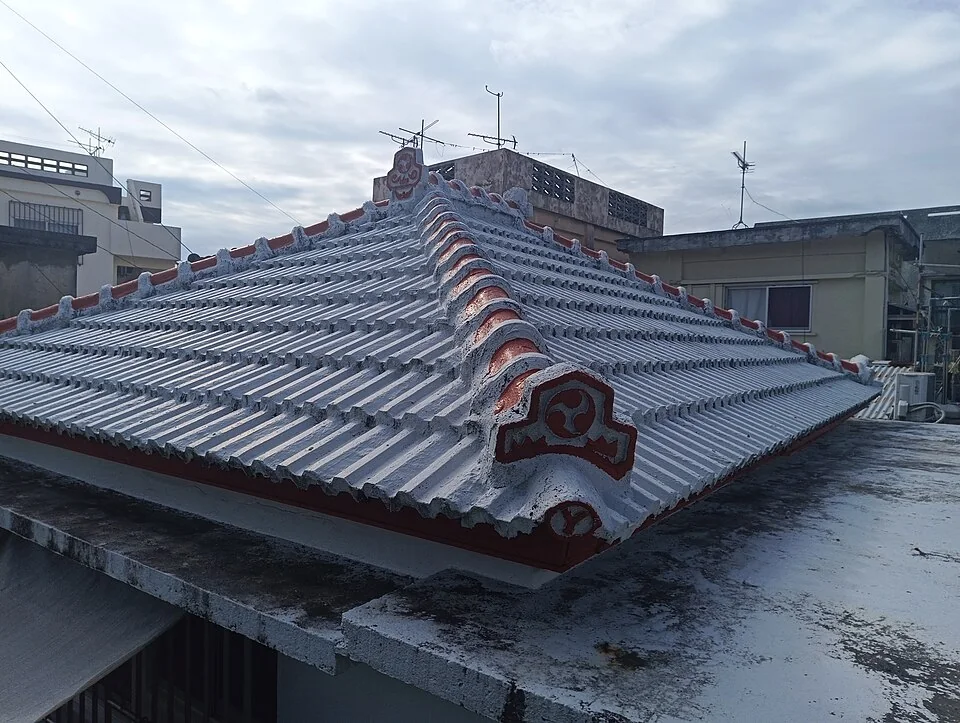
The 2027 Okinawa Zento Eisa Festival is scheduled for 27–29 August. Plan around the announced dates, the 2026 programme and ticket prices, current Naha bus examples, Koza accommodation and daytime visits.
What is eisa? From Obon processions to stage performances
Eisa is a traditional Okinawan performing art associated with local youth associations' observances of Obon on the lunar calendar. Associations move through their own communities to singing, sanshin, drums and dance steps. Michi-junee is the form performed while moving along roads. The island-wide festival brings groups to Okinawa City, so visitors can compare formations and musical styles from different communities in one place.
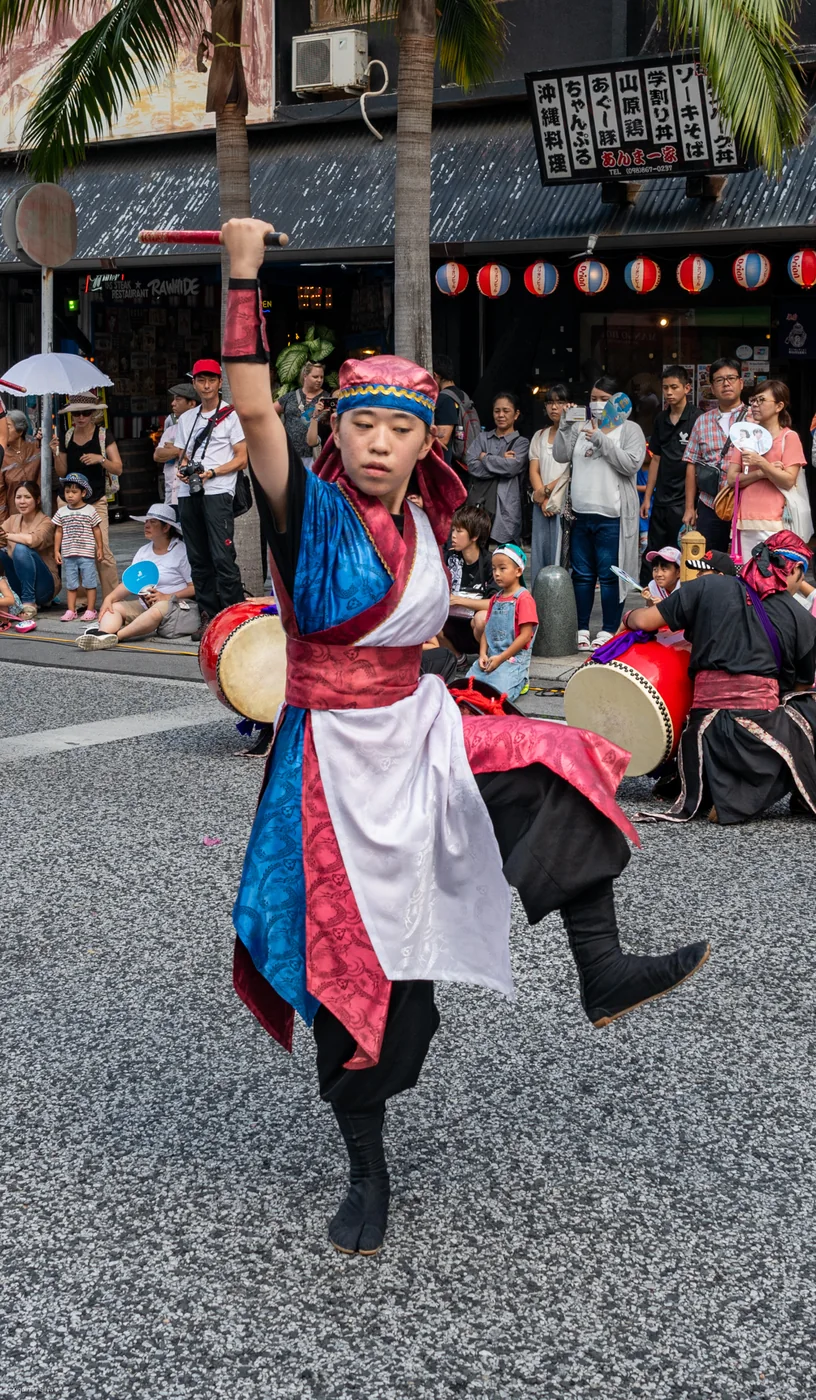
Start by recognising the drums. Dancers carry large odaiko drums, with conspicuous movements and a strong sound. The smaller shime-daiko lets dancers make wider movements. The paranku is a single-sided drum, particularly common in eisa from the former towns of Yonashiro and Katsuren. There is also te-odori, hand dancing without drums; the official introduction describes traditions of this kind in the north of the main island.
Some performers carry no drum. The jikata singers play sanshin and lead the rhythm; men's and women's hand dances each have their own movements. Spend part of a performance watching the hand movements, footwork and singers as well as the loudest drums. You can see how the members work together. The combination of roles varies between groups; use the youth association names in the programme to identify them.
The hatagashira flag bearer at the front helps identify each group. The official introduction calls the flag bearer the face of the youth association, and each has a different flag. Sanaja performers, with striking face make-up, move among the group to keep the formation in order and encourage the crowd. Leave the road clear for the procession and space for these guides to move.
Creative drumming groups use eisa movements with popular music and costumes of their own design. With traditional youth associations, listen for sanshin, singing and local traditions; with creative groups, pay more attention to the arrangement and choreography. Note the names of groups you like, then find out more at the museum. This is more useful than trying to classify every performance at your first event.
From a 1956 competition to an island-wide festival
The festival began as an eisa competition in 1956, around the time Koza became a city. The organising committee's history explains that post-war Koza commerce depended on the military-base economy. The US Civil Administration's off-limits restrictions barred military personnel, civilian employees and their families from civilian areas, which hurt local businesses. Eisa was used to encourage residents and draw people back to the streets.
Nine groups were selected for the first event, and the official record gives an audience of about 30,000. Groups were judged on formation, technique, composition and costumes. Youth associations devised performances for the stage. The coordinated lines and group costumes seen today are also linked to this move from community observance to public performance.
The competition later faced a problem. Each community's eisa had its own aesthetics and traditions, and some youth associations objected to being judged by a single standard. Competition ended with the 22nd event in 1977, which became Okinawa Zento Eisa Matsuri. Today's running order is a programme choice; a closing slot or position in the programme is not a ranking.
Koza City merged with Misato Village in 1974 to form Okinawa City. Koza remains in the names of districts, venues and tourism information. For transport searches, use 沖縄市, 胡屋 or 園田 rather than the broad term Okinawa. For the performance venue, use the full コザ運動公園陸上競技場 to avoid confusing it with similarly named parks elsewhere in the prefecture.
The three-day 2026 programme: parade, youth festival and main festival
The first day of the 71st event was Friday 4 September 2026. The official programme opened with performances at fixed locations from 19:00 to 19:30, followed by michi-junee from 19:30 to 21:30. Nine youth associations were listed for the parade, including Kamara, Matsumoto, Goeku and Ageda. Fixed performance areas A and B had their own line-ups, so nine was not the total number of groups appearing on the first day.
Saturday 5 September 2026 was the 48th Okinawa City Youth Festival, with a programme from 15:00 to 21:00 and 13 groups. These included associations from Okinawa City and groups from Shimabuku in Kitanakagusuku, Ojana in Ginowan and Tsuha in Nakagusuku. Use this day to compare the youth associations. The city youth festival also includes groups from outside the city.
The final day, Sunday 6 September 2026, also listed 15:00–21:00, with 14 groups. It began with the Sonoda Children's Association, followed by performers including Ikehara District, Meio Eisa, Takashiho from Yomitan, Biimata from Nago and Ryukyu Koku Matsuri Daiko. To see a particular group, mark its name and position in the year's programme and allow time for the performances either side.
The official history page describes previous endings with kachashi dancing and fireworks. The current fireworks page says details will be announced once decided, so plan a 2027 visit around the eisa performances first. For a dedicated fireworks photography visit, wait for the fireworks page to publish dates and times before choosing a position and that evening's transport. The end time in the 2026 performance programme cannot serve as a 2027 fireworks time.
The embedded video below is a festival introduction from Okinawa City's tourism programme Koza no Uragawa. Its title translates as ‘[Official] Okinawa Zento Eisa Festival video: Okinawa City's eisa is incredible!’ Watch it before travelling to see the drumming groups, dances and festival setting. Use the organising committee's programme page for the complete line-up and times for your year.
A festival introduction from Okinawa City's tourism programme. Watch the drumming groups, dances and festival scenes, then use the official programme for your year to choose performances.
2026 tickets: paid grandstand seats and free grass areas
The following main-grandstand prices are for the 71st festival in 2026; tickets went on sale on 1 July 2026. SS, S and A are allocated seats. B seats are unallocated on the two wings of the grandstand and have no advance sales. Grass and other areas around the performance ground are free. If watching only part of the programme, use the free areas under their entry rules.
The listed 2026 sales outlets were Okinawa City Tourism and Local Products Association, the Koza Sports Park athletics stadium and e-plus at FamilyMart. The association is on level 1 of Koza Music Town, and e-plus lists seat selection. Check the performance date, seat category and party size before buying. Choose adjacent seats together if your group needs to sit together.
The ticket page lists no reduced child fare. Pre-school children can sit on an adult's lap free; a child using a seat needs a ticket. For a long performance with children, consider whether they need their own seat, breaks and an early departure, as well as their age. Grandstand re-entry uses a wristband. Keep it on your wrist and legible.
An allocated seat gives you a specific place to sit. In grass areas, arrange your own mat and viewing position. Check the seating plan for sections, steps and entrances so your party can enter and leave together. Wheelchair users can ask staff about the grandstand wheelchair viewing area. There is also a first-come priority area for wheelchair users and visitors with disabilities by the entrance to the performance ground.
Mats are allowed in free areas; occupy only the space your party needs. Do not spread a large mat and leave as a group. Officials deal with spaces left unattended for a long time. If someone cannot sit on the ground for long, choose a viewing area that suits their mobility before deciding how long to stay. For a fixed seat, use the plan to choose an allocated category. If buying on the day, keep the free area or another performance day as an option.
| Seat category (2026) | Seating | Advance | On the day |
|---|---|---|---|
| SS | All allocated | ¥4,000 | ¥4,500 |
| S | All allocated | ¥3,300 | ¥3,800 |
| A | All allocated | ¥2,000 | ¥2,500 |
| B | Unallocated, grandstand wings | Not sold | ¥1,500 |
Buses between Naha and Koza: plan to leave early
From Naha, use Ryukyu Bus Kotsu route 23, the Gushikawa Line. Regular services leave stand 4 at Naha Bus Terminal and run towards Gushikawa via Futenma, Yamazato, Sonoda, Nakanomachi and Goya. Alight at Goya for the parade around the crossroads. For the stadium, alight at Sonoda and walk; the festival's estimate is about 10 minutes. Its road travel estimate from Naha to the venue is 60–90 minutes.
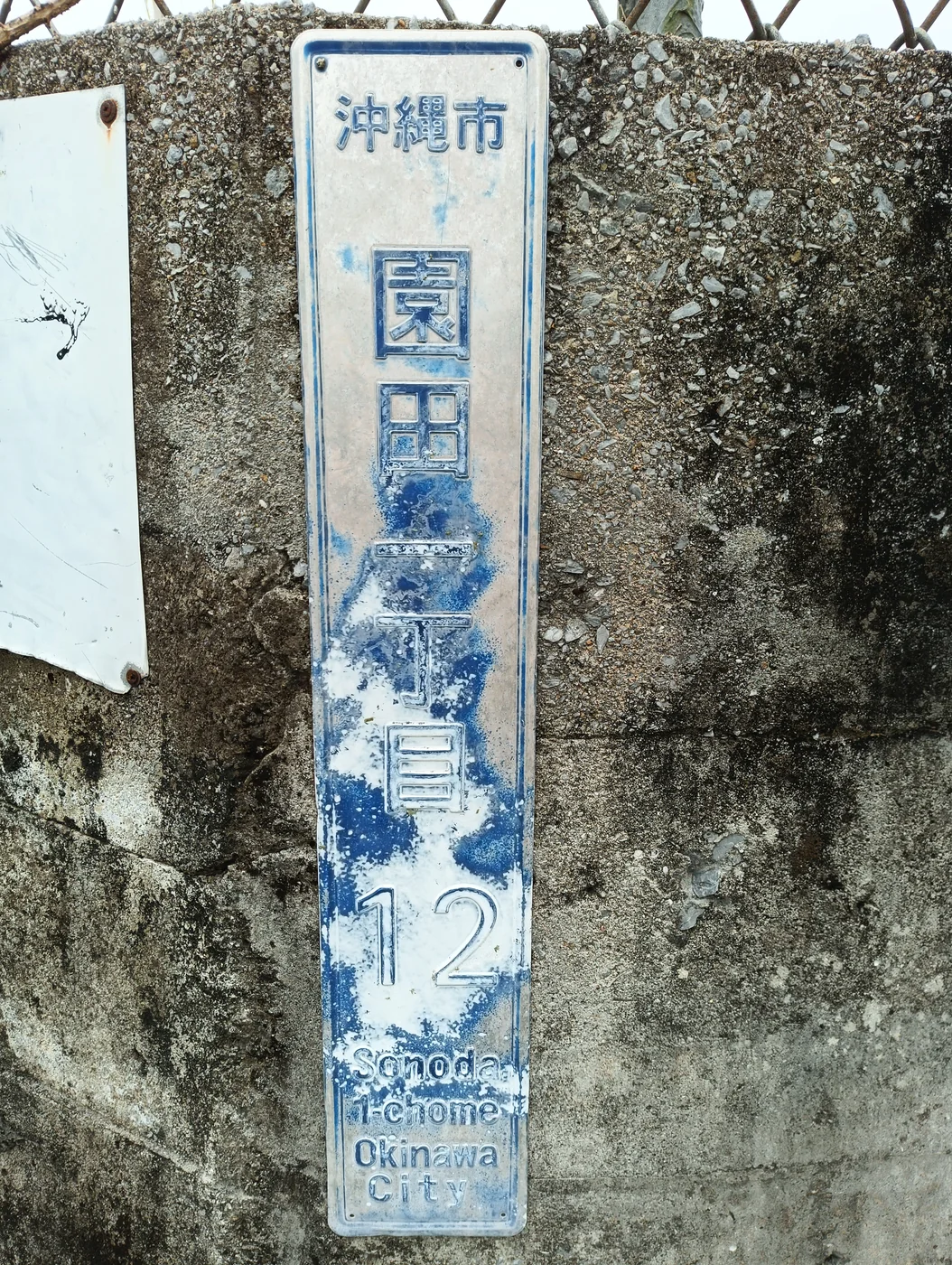
One weekend timetable example checked on 6 November 2026 is route 23 departing Naha Bus Terminal at 12:55. It runs on Saturdays and Sundays/public holidays via Kumoji. Using the 15:00 stadium start in the 2026 programme as a viewing example, leave around midday. On reaching Sonoda, find the stop for the return direction before walking to the park. Add walking, ticket purchase and entry time to the bus journey.
One possible plan is to leave the stadium at 19:30, reach Sonoda stop before 19:50 and take the 20:08 route 23 to Naha. 19:30 and 19:50 are suggested planning targets; 20:08 is the departure in the current timetable. Saturday and Sunday/public-holiday tables also list an airport-bound service at 20:36 and a Naha Bus Terminal service at 20:58. The 20:36 bus stops at 旭橋・那覇バスターミナル; use the onboard display to choose your stop.
At the same stop, check Naha-bound route 90, the Chibana Line. Its current weekend evening departures include 20:18, 20:48 and 21:13. Although 21:13 is later than the 21:00 end in the 2026 programme, 13 minutes is too short for walking and queuing with a departing crowd. To stay until the end, book a vehicle or stay in Koza. Festival shuttles serve designated stops and do not run directly to Naha.
For timetables, follow the operator's link to Norimono NAVI. Select 園田(山里・沖縄南IC向け) as the departure stop, route 23 具志川線上り or route 90 知花線上り, then weekday, Saturday or Sunday/public holiday. Sonoda stop towards Goya is on the other side; selecting it shows services towards the event instead of back to Naha. These are current-service examples checked on 6 November 2026. Once 2027 event transport is published, plan with that year's operating dates and diversion notices.
Road buses can be delayed by traffic. Use the timetable to decide when to leave the venue and live vehicle information to see where the bus is. Do not leave the stop for food because the display shows a delay. Prepare cash or OKICA before taking route 23 or 90. Ryukyu Bus Kotsu's FAQ says its regular route buses do not accept Suica or PASMO, and notes of ¥2,000 or more cannot be changed onboard.
Stay in Naha or Okinawa City?
Naha suits a visit to the festival for one afternoon or evening. Leave luggage at the same hotel, keep daytime plans in Naha and leave early as described above if using buses. Consider accommodation around Asahibashi and the bus terminal to reduce transfers on returning to the city. If staying at the other end of Kokusai Street, allow for the journey from the bus stop to your hotel.
Staying in Koza is simpler if you want the final performance, dinner on Gate Street or two consecutive evenings. Compare actual hotel locations against Goya crossroads, Koza Music Town and Koza Sports Park. Near Goya suits the parade and city walks; near the park suits stadium performances. Okinawa City covers a large area on booking sites. Check the map and walking route before booking.
Another option is a single hotel move: stay in Naha first, take a small bag to an Okinawa City hotel for the performance night and leave the next day. Ask the Naha hotel about storing larger luggage and read the Koza hotel's check-in deadline. Some plans require checking in before going to the venue. Do not assume every property can accept arrival after the programme finishes.
For children and older relatives, room capacity, bed count and the night-time walking distance are more useful than a stated number of minutes from an attraction. Book a room for three if three people are staying, and a rate including an extra bed if needed. Drivers should check whether hotel parking needs a reservation and whether they can enter or leave after the performance. These conditions affect whether everyone can return to the room to rest.
Compare hotel prices for the same date, number of guests, breakfast and cancellation terms. Record the free-cancellation deadline for refundable rates; record each deadline separately if booking two hotels. If the festival arrangements or flights change, you can identify the booking to amend without relying on an assumption that earlier is always cheaper.
Daytime: the Eisa Museum and Koza streets
The Eisa Museum is in Koza Music Town at 1-1-1 Uechi, Okinawa City. Current hours are 10:00–18:00, with last entry at 17:30. It closes on Wednesdays, or the next weekday when Wednesday is a public holiday, and on 31 December–1 January. General admission is ¥300; primary, junior-high and senior-high pupils pay ¥200. Pre-school children enter free.
Visit the museum before the performances to connect youth association names with their communities. The official exhibition description includes past footage, participating-group information and posters. Pick a few memorable group names and find them in the live programme. If attending for only one evening, watch footage from other years here and save your time at the event for the sound of the drums and the formations in person.
Museum parking discounts and festival temporary parking are separate schemes. The current official site lists Koza Music Town parking as open 24 hours. Visiting the paid museum area gives a ¥300 discount, equivalent to three hours; using only the free area gives ¥100, equivalent to one hour. If leaving your car into the evening after a daytime visit, calculate the hours beyond the discount.
Start a neighbourhood walk at Goya crossroads and Music Town, then head along Gate Street with lunch and rest stops. The festival's tourism page describes international restaurants, old local diners, live-music venues and guided walks. For a machi-mai guided walk, ask Koza Information Centre which routes and times can be booked, then leave the afternoon for the festival venue.
Southeast Botanical Gardens and Okinawa Zoo & Museum are options for another daytime period. The festival's tourism information gives drives of about 20 and 15 minutes respectively from around the venue. These are driving estimates. Bus users need separate route plans. Do not fit both into the first half of a performance day; dinner and entry still need time after returning to the city.
Dinner, Gate Street and the beer festival
Begin an evening in Koza with dinner. Gate Street has varied restaurants; the festival's tourism page lists Indian, Thai and American food and old Okinawan diners. On parade day, eat before choosing a viewing position. This avoids leaving the crowd and making another return trip after the procession starts. Include your departure transport time in the meal plan.
On a stadium day, use the time before entry if you want to eat in town. Paid-grandstand visitors can re-enter with a wristband; identify where to re-enter and have your wristband checked before leaving. In grass areas, an unattended mat is not a way to reserve space all evening. If buying food separately, agree on a specific meeting point. A description such as ‘Beside the stage’ makes people harder to find.
Orion Beerfest took place on the sports park's auxiliary ground on 5 and 6 September 2026, opening at 15:30 and finishing at 21:00 both days. Allow a separate slot for beer and music. Leaving the eisa performance at 21:00 is too late to join it. The 2027 dates and hours have yet to be announced; decide whether the performances or the beer festival matter more to you.
The 2026 beer festival had its own admission rules. Under-20s had to be accompanied by a parent or guardian, alcohol was not sold to under-20s, and outside food, drinks and cool boxes were prohibited. Before moving there from the stadium, follow the entrance instructions for food and drink you are carrying. If family members watch different programmes, agree on a meeting point and how to return to your accommodation.
Koza also has live-music venues. The official tourism page describes rock, folk and jazz culture that developed here in the 1970s and 1980s. For another show outside the festival, check the venue's programme, opening time and entry arrangements for your date. On a Naha-based evening using scheduled buses, eat in the neighbourhood before reaching the performance venue and return directly after the performances instead of adding an unplanned show.
2026 venue rules: bags, shade and photography
The 2026 official FAQ gives specific restrictions for the paid grandstand. Glass bottles are prohibited; cans and plastic drinks bottles are allowed. Cool boxes at or above 32 cm high, 48 cm wide and 41 cm deep are prohibited. These dimensions are the cool-box rule, not a general limit for all baggage. Pushchairs cannot enter the grandstand. Families with infants should arrange how to store the pushchair and carry the child.
Mats are allowed on grass, but wooden pegs must not be driven into it. Do not use folding chairs or other items that block the view behind, erect tents or put up large parasols. Handheld parasols can provide sun protection; consider the people behind. Leave passages clear once you have chosen a place, so your party and staff can move through.
For an afternoon outdoors extending into the evening, prioritise water, a hat, something to wipe away sweat, light rainwear and a charged phone. A mat is useful in the free area; leave suitcases at your accommodation. Your phone is also for the programme, live bus information and contacting companions. Keeping enough charge for the return trip is more useful than another photography accessory.
The venue has permanent and temporary toilets. The official FAQ also lists a nursing room and luggage storage inside the gymnasium. Storage costs ¥500. Wheelchair users and families needing the nursing room can ask staff how to enter the gymnasium. General spectators cannot assume that it is a rest area with all toilets open. Find toilets, general information and exits on arrival to make evening movement easier.
Drones and small remote-controlled helicopters are prohibited around the venue. Smoking is restricted to designated areas, and pets cannot enter. The organisers prohibit photography for commercial purposes and photography that infringes portrait rights; use the committee's application procedure for commercial filming. For personal records, stay in spectator areas, keep equipment out of the procession route and avoid blocking people behind.
Changing weather: check the festival, buses and flights separately
On 1 September 2026, the organising committee issued an event notice as a typhoon approached. On 3 September it announced that the 71st festival would proceed. The later notice mentioned Typhoon 24 and listed information from the meteorological observatory, Okinawa Bus Association and airlines, with the times when these were checked. It gives a practical checking order: first check whether the event is going ahead, then whether road transport is operating, and finally whether your own flight will operate.
Festival announcements appear under お知らせ on zentoeisa.com. Read the date and text of the relevant year's notice before departure, as well as the annual banner at the top. Old notices remain after the homepage changes to the next year. For buses, check the operator's suspension and diversion notices, then live vehicle information on the day. Verify flights with the airline and your own booking record.
For cancellable accommodation, record the deadline and charge after it. Compare the actual flight terms for changing dates, refunds and fare differences. Calculate differences between options from the prices you find. If the event is postponed or cancelled, deal first with accommodation and transport deadlines that are near, then rearrange daytime visits. This helps avoid missing a separate booking with a different deadline.
In strong wind or heavy rain, base alternatives around your hotel and indoor facilities you can reach safely. The Eisa Museum has closing days and temporary operating notices too. Being indoors does not mean it will be open during bad weather. If buses stop running, remain somewhere safe instead of crossing affected roads to reach another attraction.
A three-day example: 2027 dates with adjustable time slots
Keep Friday 27 August for central Koza. Leave luggage at the hotel during the day, visit the Eisa Museum, walk around Goya crossroads and Gate Street, and eat before the parade. Once first-day performance times are published, plan your early evening around your chosen fixed performance area or stretch of the parade. Stay near Goya that night to connect the walk and performances.
Keep Saturday 28 August for the stadium. Leave the morning free of a distant coastal trip. Eat at midday, prepare water and essentials, then go to Koza Sports Park for that year's opening time. Check the date on a paid ticket; bring a mat for the grass area. On entry, find exits and toilets. The open morning allows rest after the previous evening and prepares you for a longer stay outdoors.
Reserve Sunday 29 August for the final day. Sort the next day's transport out of Okinawa City and your luggage during the day, then return for the afternoon performances. Stay in Koza again if watching to the end, and travel to Naha or the airport the next day in daylight. If photographing fireworks announced for that year, add their time to the viewing plan and retain a way back to your accommodation that night.
For a single return visit from Naha, take the stadium afternoon from this plan and use the current bus example above: outward at 12:55, leave the venue at 19:30 and aim for the 20:08 return. You will miss the later programme, but have a specific departure stop, direction and return target. Once the 2027 timetable appears, replace the buses and opening time without rebuilding the whole holiday.
For one day, choose the programme you want to see
For several regional groups at one venue, choose the final day's main festival first. For a moving road procession, flags and street setting, choose the first day's michi-junee. If Saturday is your only available day, the youth festival also offers full youth-association performances. There is no need to change all your flight and hotel bookings to reach the final day. The three 2026 programmes help explain the differences.
For a family visit, start with how long the children can stay. The first-day parade is largely at night and involves standing and waiting. At the stadium, choose part of that year's programme and leave during it if needed. Children needing an early bedtime can watch in the afternoon, eat and return to the hotel. A shorter stay is more useful than assuming one day suits every family best.
For two days, combine the first day with a stadium performance to get different street and stadium perspectives. To follow a particular youth association, choose from that year's line-up: groups can appear at fixed performance areas, the youth festival or different points on the final day. If a programme lists only running order, do not calculate an invented start time for each group. Reserve a whole viewing period.
If the budget covers paid seating for one day, use an allocated seat on the day you expect to sit longest and a free viewing area on the other. On a passing visit to Koza, visit the museum and choose a live performance segment to learn about eisa. Budget tickets, transport and accommodation separately. Free grass areas let you choose viewing time separately from spending on seats.
Watching the parade: positions, passages and your exit direction
Michi-junee moves along the road; at fixed performance areas, groups perform in a designated place. The 2026 programme labels area B as the Gate Street side, with a separate list for A. Choose an area by the group you want, then watch the nearby parade. On the year's venue map, find Goya crossroads, controlled roads and fixed stages. Mark restaurants and your route back to the hotel on the same map.
When choosing a position, check whether the space ahead will become the procession route and whether you can leave the crowd behind you. Keep clear of junctions staff need to guide groups, even if they offer a photograph of a turn, and do not stand in shop entrances. For companions needing frequent rests, the edge of a spectator area with access back to the neighbourhood makes staying together easier than the front row.
For small children, prepare suitable hearing protection and agree where to move away from the drums. Flags, drums and dancers move; children must not enter the performance route to retrieve things or take pictures. Choose a named building or bus stop for a meeting point, plus another place further from the procession route in case the moving crowd prevents a reunion at the first.
Watch part of a performance before choosing a composition. Flags, drummers and the street in one frame record the parade setting. For close views, stay in spectator space and wait for the group to pass. Adjust camera settings to the evening's light. Do not follow the group into the procession for a photograph, and leave at your planned time if catching a bus.
Reading the programme: find local differences in association names
The 2026 final-day line-up is a useful geographical index. Takashiho in Yomitan, Heshikiya in Uruma, Jagaru in Chatan, Aichi in Ginowan and many Okinawa City youth associations include place names. Find their locations on a map, then compare costumes, drums and movements at the venue. Names become easier to recognise when announced in Japanese.
Sonoda, Goya, Nakanomachi and Goeku all have their own youth associations within Okinawa City. The official performing-arts introduction emphasises each shima's local tradition. Choose one feature to compare, such as flags, drum types or the arrangement of hand dancers. Follow one detail at a time and change it for the next group, rather than trying to remember every costume and song title at once.
Kodomo-kai, children's association, and seinen-kai, youth association, also help identify a group. The first item on the 2026 final day was Sonoda Children's Association; the third was Meio Eisa from Nago, the seventh Ryukyu Koku Matsuri Daiko and the last Kubota Youth Association. Read names and running order to distinguish performances without assigning competition places that do not exist.
Between performances, note a group name and one memorable movement, then consult museum or official information at the hotel. To see that group again, wait for the next year's line-up before choosing a day, or look for its community's events in official tourism information. Starting with the group makes differences clearer than treating all eisa as a single standard show.
Local Obon processions, the island-wide festival and permanent exhibitions
In local lunar-calendar Obon processions, youth associations dance through their own neighbourhoods as part of community life. The island-wide festival puts several communities' groups on a shared programme. If your aim is to compare youth associations, visiting the festival in Okinawa City is easier to arrange. At local observances, follow directions and leave doorways and procession routes for the community's activity.
The festival is generally arranged for the weekend after lunar-calendar Obon, so its Gregorian calendar month changes. It ran on 4–6 September in 2026, while 27–29 August has been announced for 2027. These years show that it is not fixed to the same late-August week. When an old article appears under an Okinawa August events search, check its year and dates before using the month to book flights.
Outside the three festival days, the Eisa Museum remains a permanent place to learn about the art. Exhibition footage lets you study formations; live festivals let you hear the drums in person and see groups move. Both are useful. For a practical class, use the museum's current programme and reservation method. Admission to the permanent exhibition does not mean a class is available that day.
When searching for other events, retain the full name, location and organiser. Distinguish youth-association processions, creative drumming shows and gatherings of several groups. An eisa label on a poster does not bring the island-wide festival's prices, shuttles or venue rules with it. Choose the event, then fit it into your existing Naha, Chatan or Okinawa City route.
Airport to venue, and the actual 2026 shuttle arrangements
On arrival at Naha Airport, decide where the luggage will go first. For a Naha stay, take the monorail to Asahibashi and transfer to route 23 at the bus terminal. Visit the hotel first so you carry only essentials to the venue. Allow for disembarkation, immigration, baggage reclaim and walking between scheduled landing and boarding a bus. Landing time is not your bus departure time.
For a Koza stay, put hotel check-in and road transport first, with time to spare if you miss the planned service. An afternoon arrival should not make a particular first-day group a fixed commitment. Leave luggage at your accommodation, then enter the parade area from around Goya. If flying home the next day, return to Naha or the airport first; do not plan to catch a flight straight after watching the performances to the end.
Drivers going to the stadium must not use neighbouring supermarkets or convenience shops for parking. The 2026 shuttle page lists temporary weekend parking at Okinawa City Hall and the Farmers Training Centre, open 13:30–23:00. Shuttle terminals also include the municipal library, Awase Fishing Port and Aeon Mall Okinawa Rycom, making five locations. Read the shuttle-stop list separately from the list of open car parks.
The same 2026 page lists outbound shuttles to the venue on 5 and 6 September from 13:30 to 20:00, with returns to the terminals from 14:00 to 22:30, about every 20 minutes. Remember which queue returns to the place where you left the car. If you will drive after the shuttle, dinner and beer-festival plans must also suit the driver.
Additional shuttles ran on the first day in 2026 between the Farmers Training Centre or Awase Fishing Port and Okinawa City Hall near the venue. The page gives an operating period of 15:00–23:30, last departures to City Hall from the two terminals at 20:00 and the last return from City Hall at 23:00. The general access page still carries the broad statement that there is no temporary parking on the first day. Use the specific first-day notice for actual 2026 services. For 2027, use that year's shuttle map and hours rather than setting out for an old stop.
A few useful answers
When is Okinawa Zento Eisa Festival in 2027?
The organising committee has announced Friday 27 to Sunday 29 August 2027. As of 6 November 2026, detailed programme, ticket and shuttle pages mainly still cover the 71st festival in 2026. Performance times and participating groups for 2027 have yet to be announced.
Can I watch without a ticket?
At the 71st festival in 2026, grass and other areas around the performance ground were free; the upper grandstand had paid seats. Use only the mat space you need in free areas. Avoid chairs that block people behind, tents, large parasols and leaving spaces unattended for long periods.
How do I return to Naha by bus in the evening?
Use Ryukyu Bus Kotsu route 23, the Gushikawa Line, and alight at Sonoda for the stadium. Timetables checked on 6 November 2026 listed Saturday and Sunday/public-holiday returns to Naha at 20:08 and 20:58, plus an airport-bound service at 20:36. One plan is to leave at 19:30 and reach the stop before 19:50 for 20:08. Route 90's current last weekend service is 21:13, too tight for an event ending at 21:00. Stay in Koza or book a vehicle to watch the full evening.
How much are grandstand tickets, and do children need them?
For the 71st festival in 2026, SS cost ¥4,000 in advance or ¥4,500 on the day, S ¥3,300/¥3,800 and A ¥2,000/¥2,500. B was sold only on the day at ¥1,500. Pre-school children on an adult's lap were free; anyone occupying a seat needed a ticket. The 2027 prices and sales date have yet to be announced.
Is there a first-day shuttle, and can it take me back to Naha?
On 4 September 2026, extra first-day shuttles linked the Farmers Training Centre and Awase Fishing Port with Okinawa City Hall; the last return from City Hall was 23:00. On 5 and 6 September, separate shuttles linked five terminals with the stadium. None ran directly to Naha. The 2027 stops and times have yet to be announced.
Can I visit the Eisa Museum during the day?
Current hours are 10:00–18:00, with last entry at 17:30. It closes on Wednesdays, or the next weekday if Wednesday is a holiday, and on 31 December–1 January. Admission is ¥300 for general visitors and ¥200 for primary, junior-high and senior-high pupils; pre-school children enter free. It is in Koza Music Town at 1-1-1 Uechi, Okinawa City.
Official information and references
Sources used in this guide.
- Organising committee: announcement of 27–29 August 2027 dates
- 71st festival groups and programme: 4–6 September 2026
- 71st festival grandstand prices and sales outlets: 2026
- Festival access: Goya and Sonoda stops and walks to the venues
- 2026 temporary parking and shuttles, including extra services on 4 September
- Ryukyu Bus Kotsu FAQ: official timetable links, boarding and payment
- Norimono NAVI: route 23 and 90 timetables and live bus information
- Festival history: origins in 1956 and competition ending in 1977
- Introduction to eisa: drums, hand dances and formation roles
- Venue FAQ: 2026 grandstand, free-area and baggage rules
- Fireworks page: detailed schedule awaiting announcement
- Koza tourism: Gate Street, music district and nearby attractions
- Orion Beer: 5–6 September 2026 Beerfest programme and admission rules
- Eisa Museum: opening hours, admission and parking discounts
- 3 September 2026 announcement that the 71st festival would proceed
- 1 September 2026 approaching-typhoon notice
- Koza no Uragawa: embedded introduction to the Zento Eisa Festival