Where should you go when it rains in Naha, and how do DMM and Churaumi compare? Choose by children’s ages, your base and transport, with DMM calendar pricing, changes, refunds and re-entry, Okimyu during building works, a northern Churaumi day and family budgets.
- Region & Focus
- Okinawa Main Island
- Reading Scope
- 36 min read · 21 chapters · 7 Q&As
- Official Verification
- 31 official sources checkedUpdated 7 November 2026
- Key Topics
- ItinerariesBookingTravel budget
Chapter Route Map (tap any stop)
- Choose your main rainy-day outing near your base
- Distinguish ordinary rain from weather that calls for staying in
- DMM keeps animal exhibits, food and rest in one place
- DMM has three date-based price bands; child tickets start at four
- DMM website ticket changes, refunds and re-entry
- Naha to DMM: choose the bus stop, as the monorail does not reach the door
- Driving to DMM: plan the entrance, luggage and parking separately
- DMM baby facilities and food: break up the visit with re-entry
- DMM on departure day: work backwards from flight check-in
- At Okimyu, choose museum or art galleries, then check access during works
- A half-day at Okimyu includes the walk from Omoromachi Station
- One museum question for a child is more useful than every display case
- Give Churaumi a full northern day; in rain, focus on the aquarium
- Churaumi uses school years; do not apply DMM’s age chart
- Churaumi parking and pushchairs: there is still an outdoor walk
- Without a car, decide your return from Churaumi before buying tickets
- Two half-day examples: a slower Naha visit or a compact southern outing
- A northern day: visit first, eat, then keep one part optional
- Family budget: put tickets and return travel on the same page
- With children of very different ages, leave room for the carers
- When plans change, deal first with expiring tickets and the return
- Quick Q&A
If you are staying in Naha and want a good rainy half-day, first compare Okimyu in Shintoshin with DMM Kariyushi Aquarium in Toyosaki. Save Churaumi for an already planned northern day or a stay in Nago or Motobu. The key questions are what your children want to see, how much outdoor walking lies between your accommodation and the entrance, and whether the return journey is manageable. Settle those first, then buy tickets for the right ages, school years and date.
Choose your main rainy-day outing near your base
From Kokusai-dori or the Naha monorail corridor, a practical rainy day combines one main indoor visit, lunch in the same area and a return to your accommodation for a rest. Okimyu in Naha’s Shintoshin suits families interested in Okinawan nature, history and objects. DMM Kariyushi Aquarium in Toyosaki, Tomigusuku, suits children keen on fish, penguins and land animals, with food and shopping in the same complex. Either one plus lunch fills a half-day. Stay longer if the children are absorbed; there is no need to cross town for a second paid attraction simply to fill the afternoon.
Churaumi in the north has large marine exhibits worth a dedicated visit, but the road journey from Naha takes a substantial part of the day. If only one rainy afternoon remains, DMM fits the Naha area more easily. If the family’s priority is Churaumi’s large tank, restore it to a full northern day and leave in the morning. For families already in Motobu or Nago, the reverse applies: staying in the north reduces travel compared with a last-minute trip south to Toyosaki.
For the original five-day, four-night sequence between Naha and the west coast, use the Okinawa main island bases and transport guide. In a half-day plan, protect time for meals, feeding and rest so there is room when children stop at an exhibit. One activity everyone wants to spend time on is more useful than a schedule filled by counting rainy-day attractions.
| Base or need | Compare first | How to plan |
|---|---|---|
| Naha; keep travel and admission costs down | Okimyu | Choose tickets for currently open galleries and add lunch in Shintoshin |
| Naha or the south; children want animals | DMM Kariyushi Aquarium | Aquarium and iias Okinawa Toyosaki, allowing half to most of a day |
| Nago, Motobu or an existing full northern day | Okinawa Churaumi Aquarium | Focus on the aquarium; add nearby park facilities only in lighter rain |
| Approaching typhoon or suspended transport | Activities at your accommodation | Arrange meals and bookings; cancel cross-island sightseeing |
Where should you go when it rains in Naha, and how do DMM and Churaumi compare? Choose by children’s ages, your base and transport, with DMM calendar pricing, changes, refunds and re-entry, Okimyu during building works, a northern Churaumi day and family budgets.
Distinguish ordinary rain from weather that calls for staying in
In ordinary rain, replace beaches and coastal paths with indoor visits, checking return transport and facility notices before leaving. Naha and Motobu are some distance apart, so check rain and wind separately. Brighter skies in Chatan alone are not a sound basis for heading north or south. Check at least your accommodation area, destination and return route, and keep part of the plan easy to finish early.
When a typhoon approaches or storm winds and heavy rain affect roads and transport, stay at your accommodation. The Okinawa Meteorological Observatory’s main-island disaster information provides warnings, risk maps and local forecasts. Search by your destination’s municipality. Before winds strengthen, sort out food, water, phone charging and accommodation contact details. Remove seaside walks and wave photography from the plan.
Parents can settle the day after breakfast: if transport is normal and walking sections are usable, visit an indoor facility in the same area; if hours are reduced, make it a half-day; if services or facilities are closed, handle changes or refunds and stay in. Children then know the plan, and adults need not keep searching for another place in the car. The Okinawa Convention and Visitors Bureau’s typhoon information covers transport suspensions and staying at accommodation. Save it as an easy-to-find bookmark.
DMM keeps animal exhibits, food and rest in one place
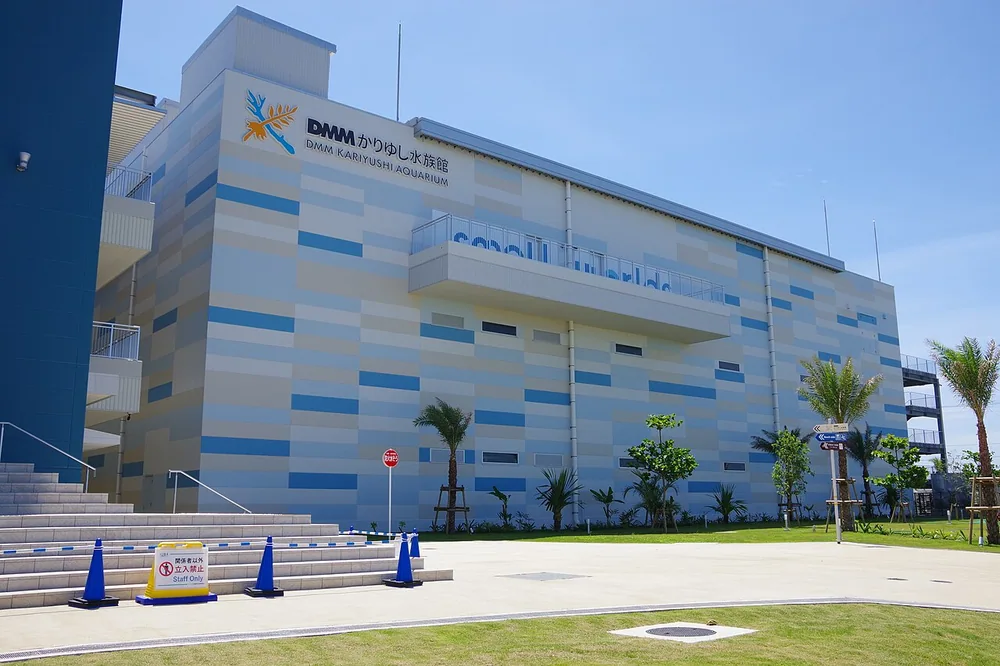
Enter DMM Kariyushi Aquarium from level 2 (2F) of iias Okinawa Toyosaki. Exhibits occupy levels 2 and 1 (2F and 1F). The official floor guide lists forest, penguin, reptile and amphibian areas upstairs, with an underwater tunnel, jellyfish and a large tank downstairs. The visit includes both aquatic and land animals. This suits families wanting several ways to observe animals in a short half-day, with an easy meal afterwards.
If your child dislikes darkness or changing light and sound, start with a small section to find a comfortable pace. Stop at tanks they want to see and skip areas that upset them. Parents can take turns; everyone need not see everything. Walking on the glass above the large tank, passing through a tunnel and seeing animals close up may each take different adjustment time. Choosing a few areas your child likes is easier than requiring a complete tour.
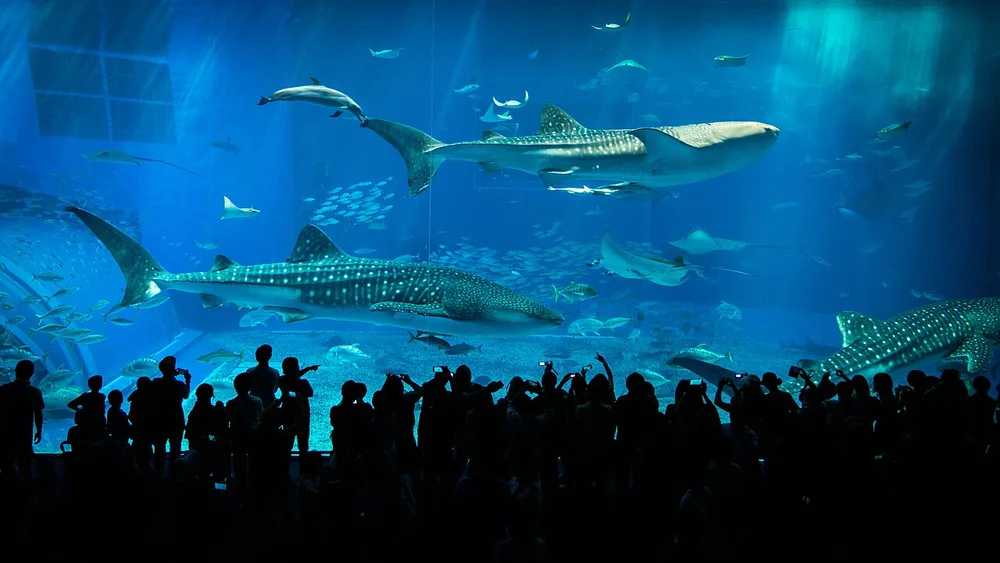
If you will also visit Churaumi, put the two aquariums on different days with different priorities. At DMM, combine the forest and wider variety of animal exhibits with a shopping-centre meal. At Churaumi, allow time for Okinawa’s marine ecology and large tanks. If choosing only one, pick DMM for a short stay in Naha, or Churaumi if you can devote a full day to the north and want its main exhibits. Compare the ticket difference together with transport and children’s energy.
The tetote animal encounter plaza expanded outdoors in autumn 2026. It lists separate hours of 10:00–18:00, last entry 17:30, rather than the aquarium’s general hours. Biosecurity rules bar entry to tetote within one week of arriving in Japan. Anyone who has had contact with pigs outside the aquarium in the previous two days, or carries food containing meat products, also cannot enter. Families on a four- or five-day Japan trip can make the regular aquarium exhibits their main visit. If rain removes the outdoor area, choose the remaining indoor exhibits by the children’s interests.
A DMM Kariyushi Aquarium staff member introduces exhibits in front of a tank.
DMM has three date-based price bands; child tickets start at four
DMM’s official admission prices use Value, Regular and Peak dates. Adults are 18 and over, youth tickets cover 13–17 and child tickets 4–12. Children aged three and under enter free with a parent. Prices changed on 15 October 2026; adult admission is now ¥3,100, ¥3,250 or ¥3,500. Families with four- or five-year-olds must include child tickets. Hotel bed-sharing age rules are separate.
Choose the visit date, calendar price band, numbers and ages, then check the total. The official operating calendar shows both price bands and special hours. Do not price a future date simply as a weekday or weekend. General hours are 09:00–19:00, with last admission 60 minutes before closing. Where the calendar shows shorter opening, plan around that date’s hours.
If you can swap dates, compare official advance offers too. As at 26 October 2026, the advance-purchase admission offer lists up to 10% off when booked by 23:59 the previous day, with both the visit and booking periods running until 28 February 2027. Include transport, food and any additional animal experiences in the total before deciding whether changing dates or paying early is worthwhile.
| Age | Value | Regular | Peak |
|---|---|---|---|
| 18 and over | ¥3,100 | ¥3,250 | ¥3,500 |
| 13–17 | ¥2,500 | ¥2,650 | ¥2,900 |
| 4–12 | ¥2,000 | ¥2,150 | ¥2,400 |
| Three and under | Free with a parent | Free with a parent | Free with a parent |
DMM website ticket changes, refunds and re-entry
A flexible rainy-day plan depends on where you buy tickets. The official DMM ticketing FAQ says web tickets are date-specific. Within their validity period, you can change or cancel for a refund through My Page if every ticket in the same purchase remains unused. Read the selected product’s cancellation deadline too. The advance-admission product above currently lists a 0% cancellation fee before 18:00 on the visit day and 100% afterwards. Complete changes before the deadline. Same-day tickets bought on site are generally non-refundable; other authorised sellers apply their own terms.
If tickets were bought together and someone decides to stay behind, make changes before any ticket is used. If one person has already entered and others want a different date, contact the seller using the original booking. Assign each ticket to a companion, with one adult managing the purchase email and account while another looks after the children. On 26 October 2026, the official ticketing homepage also announced restrictions on some connections from outside Japan. If payment cannot be completed, use the official contact method listed there.
For lunch in the shopping centre, use same-day re-entry. The official facilities FAQ requires a transparent UV hand stamp at the designated point before leaving, then the stamp and admission ticket at the level 2 (2F) entrance on return. Complete that step before heading out to lunch. A payment screenshot alone does not meet the checks. Re-entry still follows the day’s last admission time, so work backwards from closing if returning after a nap.
Naha to DMM: choose the bus stop, as the monorail does not reach the door
DMM is in Toyosaki. The monorail may take you from your hotel to a connection, but the final section needs a bus or car. The aquarium’s access page lists Tokyo Bus TK02 Umikaji Liner and Naha Bus route 95 from Naha Airport to “iias Okinawa Toyosaki”. From Naha Bus Terminal, compare routes 55, 56 and 98 to “Toyosaki Chura SUN Beach-mae”. Save the two stops separately on your map. With a pushchair in particular, the stop name and direction are more useful than the aquarium pin alone.
From the airport, official journey estimates are about 35 minutes for TK02 and 20 minutes for route 95, or around 20 minutes by taxi or car. Use these figures to understand distance, adding waiting, traffic and the walk from the stop to the level 2 (2F) entrance. From Kokusai-dori, check departures in the right direction from your actual local stop. You need not detour to the airport for an airport service.
With young children on buses, include transfers in the cost comparison. Two adults, a pushchair and several bags need coordinated boarding in rain: one looks after the child while the other folds the pushchair and checks payment. If choosing a taxi to reduce walking, arrange how to book both directions before leaving. Allow a snack or toilet stop before the return, rather than starting those tasks at the bus stop.
Driving to DMM: plan the entrance, luggage and parking separately
Set your navigation to the iias Okinawa Toyosaki car park and follow the shopping centre’s signs to the level 2 (2F) aquarium. The official access page lists around 3,000 free parking spaces. Prepare raincoats, a small bag and pushchair before getting out. Photograph the parking floor, zone and route back so you are not searching each floor carrying a tired child. Counting visit time from when you have parked also gives a clearer picture of the time left.
Large luggage is common around flight days, but DMM’s entry rules list large suitcases among restricted items. Store them before entering. Lockers near the entrance come in several sizes; compare your actual case with the compartments rather than assuming all large bags will fit. Carry valuables and essential child supplies, and keep belongings properly stowed in the rental car.
For anyone needing lifts or ramps, the official accessibility information lists facilities on each floor, while noting that some viewing positions remain difficult for wheelchair users to reach. Focus on accessible places where you can stay comfortably rather than repeatedly moving someone to match every viewing angle. The driver should rest before leaving, then decide whether to return to the hotel or continue according to everyone’s alertness.
DMM baby facilities and food: break up the visit with re-entry
You may bring your own pushchair into DMM, but the aquarium does not hire them out. There is a nursing room and nappy-changing area on level 1 (1F). Locate these on entry if you often need to step out to care for a child. Keep milk, nappies and spare clothes in a bag accessible with one hand. Put wet rain gear in a separate bag and dry the pushchair and children’s coats before going indoors, so rest stops do not require unpacking a whole suitcase.
The shopping centre has separate family facilities. The official iias Okinawa Toyosaki services page lists nursing rooms on levels 1 and 3 (1F and 3F) and children’s toilets on levels 2 and 3 (2F and 3F). Loan pushchairs are for children aged four to 24 months, up to about 14 kg, with a refundable ¥100 coin deposit. Bring your own for older children or those needing a familiar pushchair. Record aquarium and shopping-centre supplies, floors and service hours separately. A 09:00 aquarium arrival also needs to account for shops not yet fully open.
The aquarium’s food FAQ lists a café on level 1 (1F), with no low-allergen labels. The entry rules allow baby food to be brought in and eaten at that café. For allergies or specific diets, write ingredient requirements in Japanese and contact the aquarium beforehand. For other meals in the shopping centre, use the re-entry stamp. If your child eats slowly, finish the meal before the main exhibits rather than queuing while hungry.
A half-day might begin with the aquarium and a few areas the children like most, followed by lunch outside in the shopping centre, then either re-entry or a return to the hotel according to their energy. Shop after the exhibits to avoid carrying several bags through them. If everyone is tired, buy what lunch requires and finish. This order builds rest into the visit rather than waiting until nobody can walk further to find seats.
DMM on departure day: work backwards from flight check-in
Toyosaki is relatively close to Naha Airport, so it often appears on the final day. It works when the flight leaves a full half-day, luggage is arranged and car return or the bus journey can be completed. Work backwards from the airline’s international check-in and bag-drop deadlines, adding terminal walking, travel to the airport and the rental company’s vehicle checks and shuttle. Only the remaining time is available for the aquarium, lunch and shopping.
If that leaves only a rushed visit, use the day for a shopping-centre lunch and airport travel, putting the aquarium on the previous full afternoon. The website’s “around 20 minutes from the airport” describes the drive itself. A rental return office may be elsewhere, and its shuttle involves waiting. With a pushchair, large bags or fixed meal times for children, write each stage into the schedule.
Assess arrival day in the same way: decide only after immigration and luggage collection are complete. If you are late or everyone lacks sleep, go to the hotel first. If early and rested, fit a visit into the available time. Save flexible ticket conditions in advance, so a last-minute change follows the booking rather than spending another valuable part of the afternoon researching it.
At Okimyu, choose museum or art galleries, then check access during works
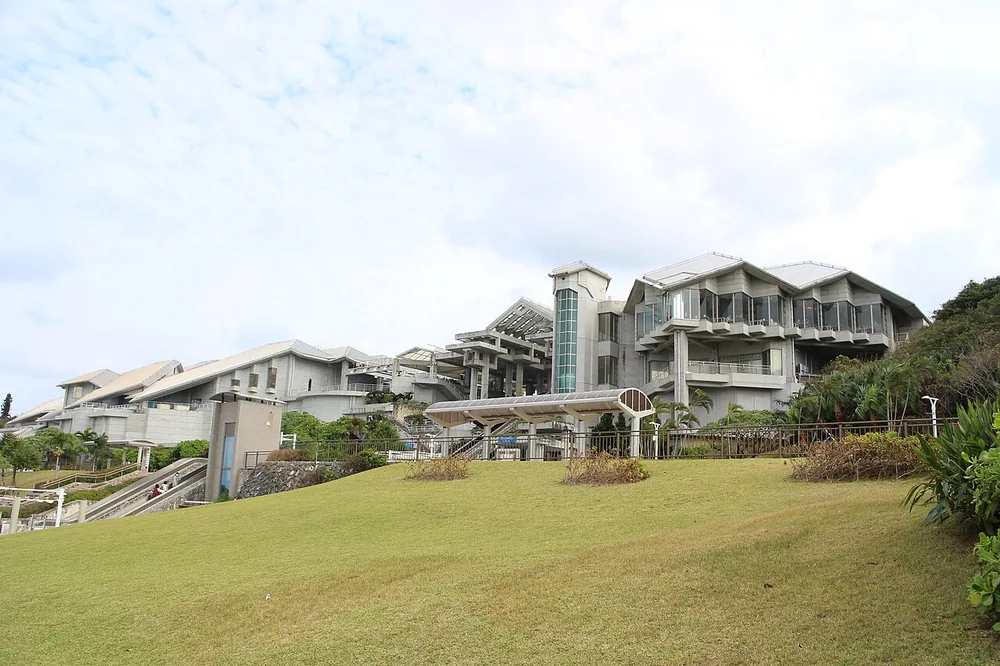
Okinawa Prefectural Museum and Art Museum, known as Okimyu, houses two separately ticketed collections in one building. For a first introduction to Okinawa’s nature, everyday objects and island history, choose the museum’s permanent exhibition. Choose the art museum for painting, photography or the current art theme. With only one family morning, one paid exhibition and a rest are enough; sharing a building does not require buying both.
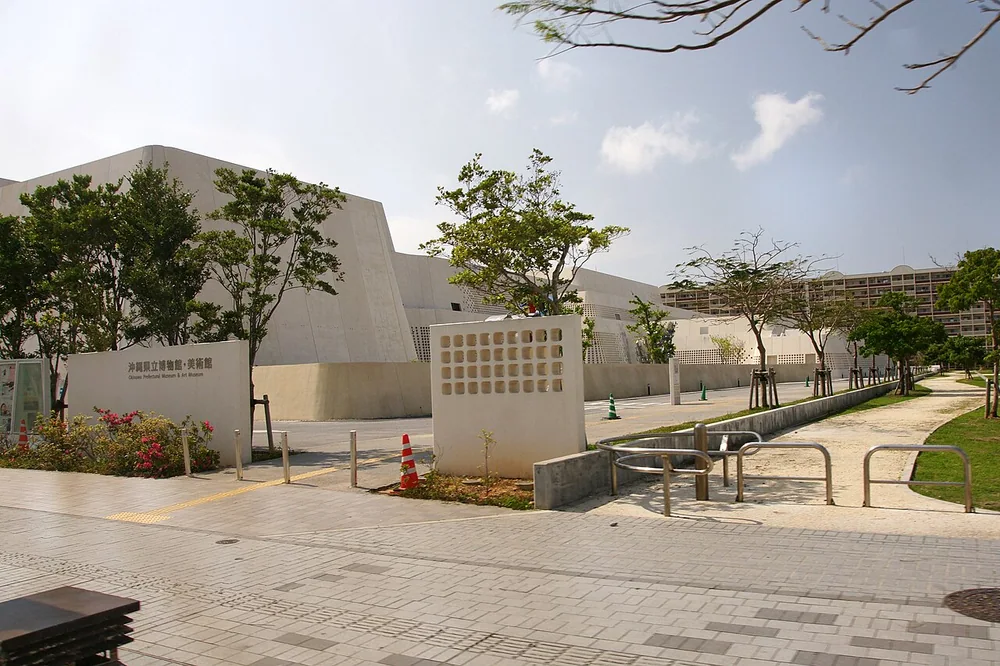
Okinawa Prefecture’s visitor information updated in July 2026 lists museum permanent admission at ¥530 for adults, ¥270 for high school and university students and ¥150 for primary and junior high school pupils from outside the prefecture. Art museum admission is ¥400, ¥220 and ¥100 respectively. Temporary and special exhibitions are priced separately. Primary and junior high school pupils visiting from outside Okinawa use the outside-prefecture category; do not include Okinawa resident student concessions in the family budget.
The museum’s closure plan for LED lighting, seismic and other works, updated on 15 July 2026, moves some closures to roughly April 2027–March 2028, affecting galleries and shared spaces. Services such as the Fureai hands-on room have separate closures of two to three months. Check the exhibition schedule for the year and museum announcements before choosing what to see that day. You can also call 098-941-8200 to ask about your chosen exhibition and hands-on room. If your intended area is closed, stay in Shintoshin for food and shopping, or arrange separate transport to DMM in Toyosaki.
Lower admission is an advantage, but children’s interest matters more. If they like animals and minerals, explore a few details in the open nature exhibits. If they like making things, check the hands-on room. Treating the museum only as shelter without anything you want to see can lead to a very short visit. Let children choose one topic beforehand to help decide where to stop.
A half-day at Okimyu includes the walk from Omoromachi Station
The museum gives about 10 minutes on foot from Omoromachi Station. This is a city-street walk, so prepare rain gear and the pushchair. The Yui Rail station page lists a lift, multifunction toilet and taxi rank. Families needing less walking can take a car from the station rather than following the shortest map line in the rain. Find the lift and correct side on leaving, and save both directions consistently.
Usual opening is 09:00–18:00, last entry 17:30, extending on Fridays and Saturdays to 20:00, last entry 19:30. It closes Mondays, moving to the next weekday under the rules for national or substitute holidays and Okinawa Memorial Day. Monday is therefore the first condition to check for a rainy-day backup. Even on late-opening days, families with toddlers can finish after an afternoon snack and keep normal dinner and bedtime.
Start the half-day with an open exhibition, sit down along the way and have lunch nearby. Follow the rules for eating in each area, finding an authorised place even for a packed lunch. In rain, do not assume an outdoor park will provide lunch seating. If a child is asleep on the return, go straight to your accommodation by monorail or car. Save Kokusai-dori shopping for a time with more energy rather than stacking two city walks on the same day.
One museum question for a child is more useful than every display case
Okimyu’s Fureai hands-on room links Okinawan nature, stone-building techniques and everyday tools through materials and equipment visitors can use. The official introduction describes it as a free area, normally open 09:00–17:30, with closures set by the museum. When open, start with a tool your child wants to touch or try, then look for related objects in the permanent exhibition. Even on Fridays and Saturdays when the main building stays open later, the hands-on room has its own closing time.
Parents need not explain Okinawa’s entire history first. Ask what a material could be used for, or compare one feature when children notice different animal shapes. This gives the family a reason to stop together without extensive Japanese reading beforehand. Look at objects marked for viewing only and handle only materials labelled for hands-on use, helping children understand the two kinds of display.
In the art museum, each person can choose one work they like and give one reason. If children want only a short stay, limit the visit to your chosen exhibition. Adults wanting longer can take turns while another rests with the children. If nothing suitable is open that day, use the time elsewhere. Choose tickets by interest rather than adding a visit nobody enjoys just because adult admission is inexpensive.
Give Churaumi a full northern day; in rain, focus on the aquarium
Churaumi Aquarium stands in Ocean Expo Park in Motobu. The Japan National Tourism Organization’s access guide gives about two hours by car or two and a half hours by bus from Naha to show the scale of the journey. A day return needs time for both the morning outbound and return trip. From Nago or Motobu it is easier to make this the main rainy-day visit. With only half a day left in Naha, choose the south or city instead.
The official average aquarium visit is about one and a half to two hours, excluding nearby dolphins, sea turtles and manatees. Allow longer with children, building rests between the large tank, smaller creatures and deep-sea areas. If rain continues, keep the aquarium as the core. You need not see every angle of the large tank at once. Stay where children want to linger, then decide after lunch whether to re-enter or finish.
The aquarium’s rainy-day FAQ says sea turtle, manatee and some park facilities are roofed, while dolphin programmes depend on weather and animal conditions. Outdoor walks remain between buildings, so do not force a full circuit in sudden rain. If your Churaumi day also included Kouri, coastal paths and sunset, remove those extras first and retain a main visit where you can spend time comfortably.
Churaumi uses school years; do not apply DMM’s age chart
Churaumi’s standard tax-inclusive admission is ¥2,180 for adults, ¥1,440 for high school students and ¥710 for primary and junior high school pupils. Preschool children under six enter free. School-year categories follow Japan’s April school-entry basis, and identification or student documents may be checked. For children near school-entry age, have birth date and school-year details ready. Do not reuse the hotel, bus or DMM child categories from the same trip.
For two adults, a seven-year-old primary school pupil and a three-year-old, standard admission totals ¥5,070. This applies to those people and ticket categories, before transport, meals and extra experiences. If both children are primary school pupils, add another ¥710 ticket. If one is a high school student, substitute ¥1,440. This is clearer than treating all minors as “children at half price”.
Churaumi currently lists opening hours of 08:30–18:30, last admission 17:30. After reaching the park from a bus stop or parking space, you still need to walk to the entrance. Enter when a full family visit fits. Standard admission and optional experiences have separate conditions. If you mainly want the exhibits, buy the necessary general tickets first and add activities only if time allows.
Churaumi parking and pushchairs: there is still an outdoor walk
The official FAQ identifies the North Gate multi-storey P7 and North Gate-front P6 as convenient parking areas. Ocean Expo Park parking is free. The walk to the aquarium has uncovered sections, so keep umbrellas, raincoats and a pushchair rain cover easy to reach. Stow wet items at the entrance rather than searching through raincoats for tickets. Navigating to the parking area rather than just the park name makes the final walk easier to plan.
Pushchairs are available at park loan points including P7’s level 1 (1F), in limited numbers on a first-come basis. Bring your familiar pushchair if your child also needs it during travel. Aquarium routes use ramps and other connections. When adults take turns helping children at tanks, park without blocking passage and avoid occupying the glass for long photographs. Return to the same parking area afterwards, leaving time to find the car and change into dry clothes before driving.
The aquarium’s baby information lists nursing rooms at the level 3 (3F) entrance and in front of the level 2 (2F) Churaumi Theatre, with changing tables in some men’s and women’s toilets. Feed on entry if needed or note the next suitable location, bringing your usual formula and supplies. The aquarium shop only sells size L nappies, for children of about 9–14 kg. Bring other sizes yourself. For children with fixed feeding routines, shape the day around them rather than chasing every programme.
Without a car, decide your return from Churaumi before buying tickets
From Naha, compare Yanbaru Express Bus. The operator’s FAQ says there are no reservations and no standing on motorway sections, so a full bus cannot take more passengers. An advance electronic ticket completes payment only. Match child tickets to seats: primary and junior high school pupils use child fares, with junior high pupils required to show identification; preschool children occupying a seat also need a child ticket. If everyone needs a seat, budget for the actual number required.
The nearest stop is “Royal View Hotel Churaumi (Churaumi Aquarium)”. From Naha, follow signs towards the North Gate after getting off. The hotel name helps identify the stop; booking a hotel and taking the bus are separate arrangements. Check the return stop and direction on arrival, noting the next suitable departure before entering. If children tire, you can leave early rather than waiting for the final service in your plan.
Check both northbound and southbound services in the timetable, with a flexible option in each direction. If only one workable return remains, limit your visit to the aquarium. Do not add Kouri or activities far from the boarding stop that afternoon. In rain, allow time for raincoats, folding the pushchair and toilets before boarding. Keep dinner near your Naha accommodation flexible.
Two half-day examples: a slower Naha visit or a compact southern outing
For half a day in Naha’s Shintoshin, go to Okimyu after breakfast, choose an open exhibition and add the hands-on room if the children are interested. Have lunch locally, then return for a nap or packing. Short journeys and an easily limited paid visit suit families who arrived late the night before or have a full outdoor day tomorrow. If it is Monday or your target gallery is closed, switch directly to the southern plan rather than waiting at the door to preserve the original schedule.
For Toyosaki, treat DMM and iias Okinawa Toyosaki as one visit area: aquarium in the morning, a re-entry stamp before lunch, then return if you still want to see more or head to the hotel for rest. Shop only for priorities, keeping one simple route out and back. If some prefer shopping and others animals, meet at an agreed place rather than making everyone retrace every floor together.
Either half-day can grow into most of a day, but give the extra time to what you have already chosen. A child spending longer at a tank or repeatedly trying a hands-on material is worth accommodating. Adjust the return slightly rather than interrupting for the next map pin. If dinner has a fixed reservation, work back to a firm leaving time and remove optional afternoon activities early, so the booking fits the pace on the day.
A northern day: visit first, eat, then keep one part optional
Make reaching the aquarium the morning’s main task. On arrival, sort toilets, rain gear and tickets before the main exhibits. Have lunch around the children’s normal routine, then assess a short nearby stop. In stable weather, if everyone still wants to walk, choose one park building that interests you. If rain strengthens or return time approaches, head to the car or bus stop. With only one essential core visit, changes are easier.
For families staying in Naha, treat the northern return journey as another afternoon task. From Nago or Motobu, finish earlier and have dinner back at your accommodation. For a booked hotel dinner, work backwards from seating time, adding parking, toilets and children’s clothing changes beyond the long drive. Even a restaurant inside the hotel needs time for returning to your room. Reaching the car park is not the same as being ready to sit down.
If the large tank is all the family wants, it is enough to be the day’s focus. Even free surrounding programmes take walking, waiting and return-planning time. Rank choices by interest and available time. Save unvisited places as map bookmarks. Once you have enjoyed the visit you wanted, you can go back and rest.
Family budget: put tickets and return travel on the same page
For the same two adults, seven-year-old primary pupil and three-year-old, standard DMM admission before advance discounts totals ¥8,200 on Value dates, ¥8,650 on Regular dates and ¥9,400 on Peak dates. Churaumi costs ¥5,070. At Okimyu, two adult museum permanent-exhibition tickets and one outside-prefecture primary/junior high ticket total ¥1,210. Buy museum, art museum and special exhibition tickets for the galleries actually open and your chosen categories. These examples cover their respective standard admission only.
For a Naha-based family, Churaumi’s lower admission requires a long return journey that can change the overall cost. Separate buses, taxis or car hire, parking, lunch and experiences into columns to see what creates the difference. With a rental car and a northern hotel already arranged, the added travel cost to Churaumi differs again. There is no need to change the whole accommodation plan for a ticket-price ranking.
The budget can also decide which extras to choose on site. Set general admission first, then let each person choose an animal-feeding activity, souvenir or snack, or set a total allowance so everyone knows the arrangement before leaving. An unplanned short taxi ride in rain may secure dry clothes and an easy return. Balance it against optional shopping rather than adding attractions to make up for ticket spending.
With children of very different ages, leave room for the carers
A baby needs feeds and sleep while a primary school child may linger at displays. Divide tasks before leaving: one adult manages tickets, routes and return travel, while another handles immediate child supplies. Swap midway so both have time to enjoy the exhibits. If children have different interests, agree on a specific meeting point on the same floor rather than making the younger child follow the older one’s pace throughout.
If darkness, sounds or close animal displays frighten a child, move somewhere quiet instead of waiting beside the display until they accept it. Keep ear defenders, familiar comfort items and spare clothes in the small bag you carry, not deep in stored luggage. Aquariums and museums are places to observe and learn. Encouraging children to point things out and take turns at the glass also helps respect other visitors.
DMM’s rules prohibit flash photography indoors, so turn off your phone’s flash before entering. Choose a place clear of the walkway for a family picture. Some time without photographs helps parents notice what children see and when they tire. Stop at the planned rest point so you still have choices for the second half.
When plans change, deal first with expiring tickets and the return
If the weather worsens the previous evening, find tomorrow’s time-limited attraction, activity and vehicle bookings and note the last change times. The DMM advance ticket above has a free cancellation deadline of 18:00 on the visit day, subject to every ticket in the purchase being unused and still valid. Other sellers handle their own bookings. Save cancellation results and amounts, then check the old booking’s status before buying again to avoid keeping two orders.
If transport or opening hours are shortened while you are out, arrange the return to your accommodation before dealing with unused activities. If a vehicle is delayed, wait in an appropriate sheltered place with staff. For an extra night or flight change, use the accommodation’s or airline’s official contact channels. Arrange children’s food, dry clothes and rest first. Keep that day’s bookings and contact details on your phone and work through them one by one.
A few useful answers
In rain, should we choose DMM or Churaumi?
From Naha, with only half a day and meals in a shopping centre, compare DMM first. From a northern base, or for a full day devoted to large marine exhibits, choose Churaumi. Include return transport and children’s routines.
Do three- and four-year-olds pay the same at DMM?
No. Children aged three and under enter free with a parent. Ages 4–12 need a child ticket, priced from 15 October 2026 at ¥2,000, ¥2,150 or ¥2,400 according to the visit-date calendar band.
Can DMM website tickets be changed because of rain?
Official web tickets can be handled through My Page within their validity period if all tickets in the purchase remain unused. The product’s cancellation deadline also applies. The advance-admission product above currently lists a 0% fee before 18:00 on the visit day and 100% afterwards.
Can we leave DMM for lunch and return?
Same-day re-entry is allowed. Get a transparent UV hand stamp before leaving and show it with your admission ticket at the level 2 (2F) entrance on return, within the day’s last admission time.
Is Okimyu a good rainy Monday choice?
It normally closes Mondays. Specified holidays and Okinawa Memorial Day move closure to the next weekday under its rules. Check current notices for galleries affected by building works or exhibition closures.
Is the whole walk from Churaumi parking to the aquarium sheltered?
There are uncovered sections. Bring an umbrella or raincoat and pushchair rain cover. Compare the officially recommended P7 and P6 parking areas, then follow the day’s route to the entrance.
Does buying a bus e-ticket reserve a seat for Churaumi?
Yanbaru Express Bus is unreserved. An e-ticket completes payment; no standing is permitted on motorway sections, so you cannot board a full bus. Keep other suitable departures for both directions.
Official information and references
Sources used in this guide.
- DMM Kariyushi Aquarium | Standard admission and tickets
- DMM Kariyushi Aquarium | Date-specific operating calendar
- DMM Kariyushi Aquarium | Tickets, validity and refunds
- DMM Kariyushi Aquarium | Access and parking
- DMM Kariyushi Aquarium | Floor guide
- DMM Kariyushi Aquarium | Facilities, re-entry and baby services
- DMM Kariyushi Aquarium | Accessible routes
- DMM Kariyushi Aquarium | Food services
- DMM Kariyushi Aquarium | Entry and photography rules
- iias Okinawa Toyosaki | Family services
- Okinawa Prefecture | Okimyu opening rules and admission
- Okimyu | Partial closures for works: plan updated on 15 July 2026
- Okimyu | Current gallery opening and closure notices
- Okimyu | Access
- Okimyu | Fureai hands-on room
- Yui Rail | Omoromachi Station facilities
- Japan National Tourism Organization | Churaumi access and park
- Okinawa Churaumi Aquarium | Admission
- Okinawa Churaumi Aquarium | Opening hours
- Okinawa Churaumi Aquarium | Rainy-day visits
- Okinawa Churaumi Aquarium | Usual visit duration
- Okinawa Churaumi Aquarium | Parking, outdoor sections and baby services FAQ
- Okinawa Churaumi Aquarium | Baby services
- Yanbaru Express Bus | Seats, child fares and stops
- Yanbaru Express Bus | Timetables in both directions
- Okinawa Meteorological Observatory | Main-island typhoons and local disaster information
- Okinawa Convention and Visitors Bureau | Transport and accommodation during typhoons
- DMM Kariyushi Aquarium | Price change from 15 October 2026
- Official DMM ticketing | Advance offers and product cancellation deadline
- Official DMM ticketing | Changes and refunds when all tickets are unused
- Official DMM ticketing homepage | Overseas connection notice