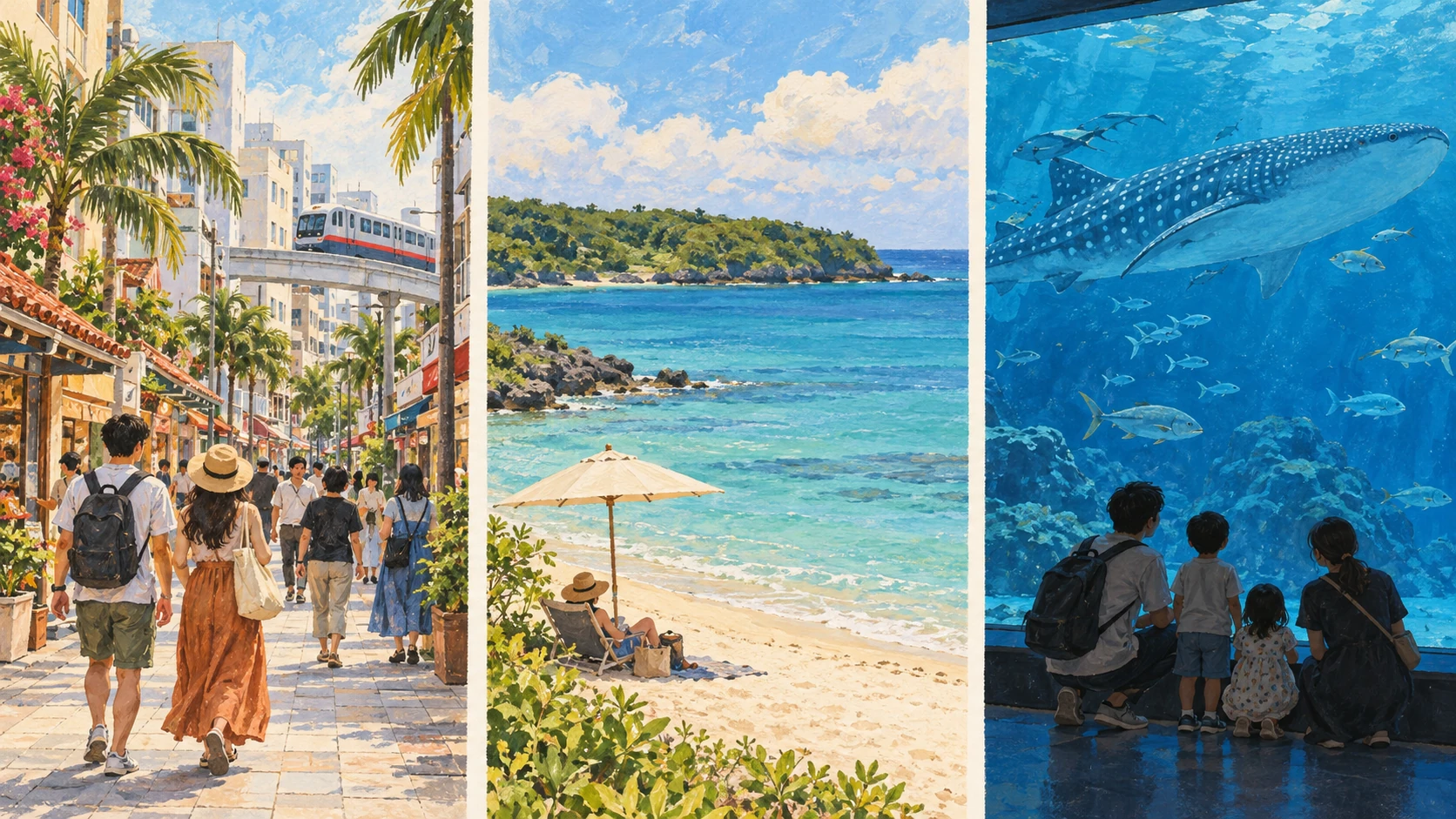
Planning car hire in Okinawa? Here is what to know about Taiwanese licence Japanese translations, Naha Airport shuttles, CDW and NOC cover, the ETC toll discount extended until the end of March 2027, and driving routes through Chatan, Onna, Motobu and Kouri Island.
- Region & Focus
- Okinawa Main Island
- Reading Scope
- 23 min read · 13 chapters · 5 Q&As
- Official Verification
- 32 official sources checkedUpdated 22 November 2026
- Key Topics
- First tripAirport transfersBooking
Chapter Route Map (tap any stop)
- Decide Which Days Need a Car Before Choosing Pick-up and Drop-off Branches
- How to Apply for a Japanese Translation of a Taiwanese Driving Licence
- Compare Quotes on Identical Terms and Check Luggage and Child Seats First
- Picking Up at Naha Airport: Exit on the 1st Floor for the Shuttle Bays
- Read CDW and NOC Cover Separately
- Note the Return Address, Fuel Type and Existing Marks Before Leaving the Lot
- Get Used to Keeping Left Before Joining Major Roads
- Use Route 58 for Coastal Stops and the E58 Expressway for Distance
- Two Days Up the West Coast: Give the Aquarium and Kouri Island Their Own Blocks
- Half a Day in the South: Pick One Direction and Watch for Sefa Utaki Works
- On Kerama Island Days, Put Your Travel Time Towards Tomari Port
- Minor Scrapes, Heavy Rain or Typhoons: When to Pull Over
- Work Backwards from Airport Check-in and Refuel Last
- Quick Q&A
Hiring a car in Okinawa makes the most sense on the days you head north up the west coast to Chatan and Onna, or onward to Motobu and Kouri Island. While staying in Naha for Kokusai-dori and Shuri, the Yui Rail monorail handles getting around, so you can wait until the day you leave town to pick up a vehicle. Keep your valid original driving licence, official Japanese translation (for Taiwanese licence holders) and passport together, and factor shuttle transfers and drop-off depot locations into your booking. If it is your first time driving on the left, keep the first leg short and return the car the evening before an early flight home.
Decide Which Days Need a Car Before Choosing Pick-up and Drop-off Branches
Map out your hotels and sights on a single sheet first. Kencho-mae, Makishi and Shuri in central Naha all sit along the Okinawa Urban Monorail (Yui Rail), so spending your first night or two near a station usually saves both hotel parking fees and the hassle of hunting for a space. Kokusai-dori enforces timed traffic restrictions, and the backstreets around Makishi Market have plenty of one-way lanes. Treat central hotels and the market as walking days, then load all your luggage into the car on the morning you head out of the city.
If you are staying two nights in Onna Village, or driving from Motobu to Bise, Nakijin and across Kouri Bridge, a hire car pays for itself on those short hops. Buses connect major trunk stops and direct coaches run between the airport and Okinawa Churaumi Aquarium, yet waiting between local connections eats into sightseeing time. Conversely, if the aquarium is your only northern stop, booking round-trip direct buses from Naha and spending the whole day at Ocean Expo Park is often simpler than collecting a car, driving long distances twice and returning it the same day.
Two branches of the same brand can sit in very different places—one near Akamine Station and another down in Toyosaki—even though both carry "Naha Airport" in their name. Filtering purely for "airport pick-up" on booking portals hides the shuttle transfer after landing. If your first night is in Naha, compare total door-to-door time between picking up in town and dropping off near the airport versus collecting and returning at a city branch and riding the monorail. If you are staying in Chatan or Onna on night one and arriving in daylight, picking up near the airport lets you head straight north. For getting into town from the terminal, see how to travel from Naha Airport to central Naha.
Do not schedule a long evening drive north if you are flying in early and driving a right-hand-drive car on the left for the first time. Even when a flight lands with daylight left, immigration queues, baggage claim, the shuttle ride and vehicle handover quickly eat into the afternoon. Stopping in Chatan on the first night before continuing to Yomitan and Onna the next morning—or sleeping in Naha and collecting the car the following day—gives you daylight to get used to corners and vehicle width.
Planning car hire in Okinawa? Here is what to know about Taiwanese licence Japanese translations, Naha Airport shuttles, CDW and NOC cover, the ETC toll discount extended until the end of March 2027, and driving routes through Chatan, Onna, Motobu and Kouri Island.
How to Apply for a Japanese Translation of a Taiwanese Driving Licence
Visitors driving in Japan on a Taiwanese licence on a short stay must carry their valid original Taiwanese car driving licence, an officially recognised Japanese translation and their passport. International Driving Permits issued in Taiwan are not accepted in Japan, and photocopies, phone photos or self-made translations cannot replace official paperwork. According to Japan's National Police Agency, the permitted driving period is one year from the date of entry or until the original licence expires, whichever comes first. Because the translation's issue date differs from your arrival date, read your hire provider's document requirements carefully when booking.
In Taiwan, bring your original national ID card and original driving licence to any motor vehicle office; the fee is NT$100 per copy and applications can be filed across jurisdictions. Taiwan's Directorate General of Highways also offers online applications via its motor vehicle portal, so leave enough time for dispatch and delivery if you choose postage. If you have renewed your licence, apply for the translation using the new licence so the name, ID number and expiry date match across both documents. Check the two side by side as soon as the translation arrives rather than discovering a mismatch at the rental desk.
If you arrive in Japan and realise the translation is missing, contact one of the organisations recognised by Japan's National Police Agency, such as the Japan Automobile Federation (JAF). Taiwan's Directorate General of Highways notes that applications via Taiwanese representative offices in Japan involve inter-agency verification and take roughly seven working days, so same-day issue is not possible. If nobody in your group holds valid documents, contact the hire company immediately to reschedule and take the monorail or an airport bus to your first hotel. If another member of your party holds valid driving documents, ask the branch to amend the main driver or register them under the contract before handover.
When two people plan to share the driving, both must hold valid documents covering the same vehicle class for the entire trip. Enter the second driver's details at booking and check in together as required by the branch. The booking account holder, the credit cardholder and the actual driver are sometimes different people, so verify the renter and driver fields on your confirmation—if the branch requires the named cardholder to be present, make sure that person rides the shuttle to the counter too.
Compare Quotes on Identical Terms and Check Luggage and Child Seats First
Enter the exact same pick-up and drop-off times, branch locations and protection options across each provider's official site before comparing final totals. Base hire rates, Collision Damage Waiver (CDW), Non-Operation Charge (NOC) cover, child seats, ETC card hire and one-way drop-off fees may be itemised separately, while fuel, parking and expressway tolls depend on your route. If you stay an extra night in Naha and do not need the car until morning, delaying pick-up saves one night of hotel parking and can drop you into a lower pricing bracket. Whenever a rental crosses a 24-hour boundary, open the full breakdown to see how extra hours are billed.
For a party of four, count large suitcases before counting seats. Once four people sit in a five-seat hatchback, the boot may barely fit a pushchair alongside luggage. Even in a seven-seater, check how much boot depth remains once the third row is upright. Check step height and rear-door clearance if travelling with older relatives, and if you need two child seats, confirm which positions take them and whether an adult can still sit between or beside them. For "or similar" categories, choose based on seating and luggage diagrams for the class, paying extra for a guaranteed model only when your itinerary genuinely requires it.
Japanese law requires child safety seats for children under six years old. Enter each child's age, height and weight when booking so the branch prepares the right seat, or check mounting compatibility in advance if bringing your own. Two families hiring two compact cars must budget separately for each car's cover, tolls and parking. Choosing a single larger MPV instead makes the driver's comfort with vehicle length, hotel car park dimensions and third-row access far more important than who gets a window seat.
When prices are close, favour bookings that allow flexible changes to pick-up times. If you land late and only need to sleep in Naha, there is no reason to lock yourself into a booking that forces a sprint for the final shuttle. Over the New Year period or when you need a specific class, inspect the actual branch calendar and shuttle hours rather than relying on brand-wide year-round listings. Keep your airline flight alerts alongside your rental confirmation so you can give customer service the exact branch name, flight number and revised arrival time if delayed.
Picking Up at Naha Airport: Exit on the 1st Floor for the Shuttle Bays
After collecting your bags at Naha Airport, check your confirmation for the provider name and signs reading "Rental Car Shuttle Pick-up" (*Rentaka Sogeisha Noriba*). For Toyota Rent a Car Naha Airport, follow the 1st-floor walkway towards the domestic terminal shuttle zone, cross the pedestrian crossing outside and look for staff at bay 11-A before boarding the free shuttle to the Akamine depot. The stated five-minute transfer covers only the road journey to the depot; total pick-up time also includes queuing, counter check-in, fitting child seats and inspecting the car. Times Car Rental likewise guides passengers from Area 11, so international arrivals should walk towards the domestic terminal side first.
The same 11-A sign can serve shuttles heading in different directions. Nippon Rent-A-Car estimates around 20 minutes for the shuttle to its Naha Airport Toyosaki branch, and its return shuttle drops passengers off on the 3rd floor of the domestic terminal, leaving international flyers with an indoor walk afterwards. Toyota Rent a Car Naha Airport lists operating hours of 08:00–20:00 JST, so a delayed flight landing after closing means collecting the car during the next day's hours. If your first night's hotel is in the north, you will need a plan for both getting there and adjusting your pick-up window.
Between 30 December 2026 and 3 January 2027, J-net Rent-A-Car Naha Airport lists branch hours of 08:00–20:00 JST alongside shuttle hours of 09:00–19:30 JST, requiring online bookings that use the shuttle to include flight details. That gap between counter and shuttle hours affects tight flight connections. If you land close to the final shuttle departure, confirm directly with the branch how late arrivals may reach the depot and what the final check-in cut-off is before deciding whether to collect that night or the next morning.
If members of your group arrive on different flights, agree on a meeting point inside a terminal zone everyone can reach easily. All drivers whose licences must be verified should ride the shuttle together so the lead person does not reach the counter only to wait for the second driver. Passengers with mobility needs should ask beforehand how folding wheelchairs are stowed on the shuttle and whether there are steps between the drop-off point and the counter. With heavy luggage, assign one adult to watch the bags rather than repacking suitcases beside the driveway.
Read CDW and NOC Cover Separately
Scraping a car park pillar so the vehicle has to go into the workshop can trigger two distinct charges. The first is the deductible (excess) payable by the renter for damage to third-party property or the hire vehicle under the base insurance. The second is the NOC (Non-Operation Charge), which compensates the hire company for lost business while the vehicle undergoes repairs or cleaning. Standard CDW (Collision Damage Waiver) removes the first deductible within policy terms, whereas NOC still applies unless your package explicitly waives it too.
Take Toyota Rent a Car's standard passenger-car terms as an example. Base rates include insurance and coverage with a ¥50,000 deductible each for third-party property and vehicle damage. Optional CDW costs ¥1,100 per 24 hours, while the Safety W Plan—which covers both CDW and NOC—is ¥1,650 per 24 hours; special-plate classes carry their own rates. When NOC applies, Toyota lists ¥20,000 if the car can still be driven back to the scheduled branch and ¥50,000 if it cannot, or if it is drivable but left elsewhere. These figures are Toyota's published examples, so always check exact amounts in your own provider's contract.
When an online travel agent advertises "full insurance", scroll down to the small print covering deductibles, NOC, towing and tyres. Counter-purchased CDW and third-party reimbursement policies work differently at the desk: the former waives charges directly under your rental contract, whereas the latter often requires you to pay the hire company up front and claim later with police reports and official receipts. If relying on credit-card rental cover instead of buying waivers at the counter, verify covered drivers, card-payment rules and required paperwork in advance, and check whether the Japanese contract still collects a deposit or repair charge on the spot.
Even with comprehensive cover, driving under the influence, letting an unregistered driver take the wheel, failing to report an accident or otherwise breaching the contract voids protection. Save offline screenshots of your contract summary, emergency phone numbers and booking reference before setting off. Minor car park scrapes often tempt drivers to skip calling, yet the hire company needs the exact time, location and photos on record—waiting until return day leaves no time to document the scene properly.
| Plan tier | Third-party property & vehicle damage deductible (within policy terms) | Non-Operation Charge (NOC) |
|---|---|---|
| Base insurance & cover | ¥50,000 deductible each for property and vehicle damage | Charged under rental contract terms |
| Optional CDW add-on | Eligible property and vehicle deductibles waived | Charged under rental contract terms |
| Safety W Plan (CDW + NOC) | Eligible property and vehicle deductibles waived | Eligible NOC waived |
Note the Return Address, Fuel Type and Existing Marks Before Leaving the Lot
Walk around the car with the branch attendant while it is still parked in the bay. Check the bumpers, door panels, wing mirrors, alloy wheels and glass against the condition sheet, paying close attention to low front lips and the boot sill. Ask staff to mark any unrecorded scuffs and take clear timestamped photos yourself. Snap the fuel gauge and odometer before pulling out so refuelling and final checks have a baseline. If it is raining or dark, ask whether you can inspect the vehicle under brighter lighting.
Have the attendant point to the fuel-flap release, confirm whether the car takes regular petrol or diesel and note where to refuel before returning. If you are hiring an ETC card, verify how it slots into the reader, how the unit confirms it is active and how tolls are settled at drop-off. Enter your first stop's car park into the sat-nav, then save the return entrance on your phone. On Toyota Rent a Car Naha Airport's official page, the return MAPCODE is 33094071*77—different from the main branch MAPCODE on the same page—so select the one marked for returns (*Henkyaku*). If dropping off at another branch, use the address on your updated confirmation.
Adjust the driver's seat until you can see both front corners, test P, R and D on the automatic selector while stationary, and locate the handbrake, indicators, windscreen wipers, headlights and demister. Buckle children into their seats, set the rear air vents and adult seat positions, and wedge large bags securely before moving—rear passengers must wear seatbelts by law in Japan. Trying to figure out the controls at the depot exit while traffic queues behind you is an unnecessary headache.
Once your phone navigation is connected, let a passenger call out upcoming exits and car park entrances. Download offline maps and save Japanese place names in case mobile data drops. If the car's sat-nav does not support your preferred language, enter the official MAPCODE or listed telephone number instead. Test your charging cable and phone mount before leaving the bay, and pull over somewhere safe whenever you need to zoom into a map or change destinations.
Get Used to Keeping Left Before Joining Major Roads
Traffic in Japan drives on the left, and hire cars are normally right-hand drive. Drivers accustomed to driving on the right most often slip back into old habits at quiet junctions with no other vehicles in sight. Keep tight to the left kerb when turning left; when turning right, wait for a clear gap in oncoming traffic and enter the left-hand lane of the new road. Pick a quiet stretch after leaving the depot to judge the position of the left front wheel against the kerb before merging onto busy arteries. Having your passenger call out the next lane for the first two junctions works far better than two people staring at separate maps.
Stop behind the white stop line at red lights and follow dedicated turn arrows or signals where posted. At red inverted-triangle "STOP" (*Tomare*) signs, come to a complete halt and check both ways before pulling out. Always stop for pedestrians crossing or waiting at unsignalised zebra crossings. When threading through urban side streets, watch for pedestrians, cyclists in low sun and blind spots tucked behind the left side of the bonnet. If you miss a turning, stay in your lane and let the sat-nav recalculate safely ahead.
From 1 September 2026, Japan's statutory speed limit on certain residential roads without a marked centre line, traffic lanes or physical separation between opposing flows drops from 60 km/h to 30 km/h; where speed-limit signs or road markings are posted, obey the indicated limit. Keep that rule in mind whenever turning off marked avenues towards guesthouses in Yomitan, villages in Nakijin or coastal car parks in Nanjo. Ease off the accelerator early when low coral walls block sightlines, and wait in wider passing spots whenever a lane narrows to single-file width.
Central Naha carries another rule that catches visitors out while keeping left. Okinawa Prefectural Police note that sections of Route 58 enforce bus-only lanes, and parts of Kokusai-dori restrict general traffic during posted hours in favour of buses and authorised vehicles. Check overhead and roadside signs for active hours, directions and permitted vehicle classes rather than blindly following a bus into the kerbside lane. Look up your hotel's garage entrance and legal turn approaches on the map beforehand so you can take an alternative street if a bus lane is active.
Use Route 58 for Coastal Stops and the E58 Expressway for Distance
Heading north from Naha, ordinary surface roads make it easier to drop into beaches, cafes and shops along Chatan, Yomitan and Onna. Route 58 is the main west-coast spine, though commuter congestion in urban stretches means even short hops can stall through multiple signal cycles. If Churaumi Aquarium in Motobu is your main goal for the day, join the E58 Okinawa Expressway towards Kyoda and connect onto Nago and Motobu roads from the exit rather than stopping all the way up the coast. You can always save a coastal stretch for the drive back south if time allows.
NEXCO West has announced that the 35.5% special ETC discount across the entire Okinawa Expressway is extended until the end of March 2027. On its published example between Naha and Kyoda for a standard car, a single journey drops from ¥1,610 in cash to ¥1,040 with ETC—a saving of ¥570 each way, or ¥1,140 on a return trip before deducting any card rental fee. Trips joining from the airport side via Nishihara JCT, exiting at other interchanges or using *kei* cars follow their own section rates; for travel from April 2027 onwards, check NEXCO's published tariffs at the time.
An in-car ETC reader only works when a valid ETC card is inserted. If renting the card from your car hire company, check pick-up procedures and rental charges in advance, and verify that the unit reads the card before setting off. Drivers paying cash must use lanes marked "General" (*Ippan*) or cash-accepted and avoid ETC-only interchanges. Kishaba Smart IC, for instance, is ETC-only, operates from 06:00–22:00 JST and allows entry solely in the Naha-bound direction—pick another junction if your sat-nav routes you there without a card or heading the opposite way.
Watch overhead gantries as you approach toll plazas, slow below 20 km/h before entering an ETC lane and leave generous space behind the vehicle ahead. If the card fails to read and the barrier stays down, stop in the lane and follow attendant instructions—never reverse or swerve across lanes. Rental ETC cards are normally returned at the desk for final toll settlement on drop-off; never leave the card sitting in plain sight inside a parked car.
Two Days Up the West Coast: Give the Aquarium and Kouri Island Their Own Blocks
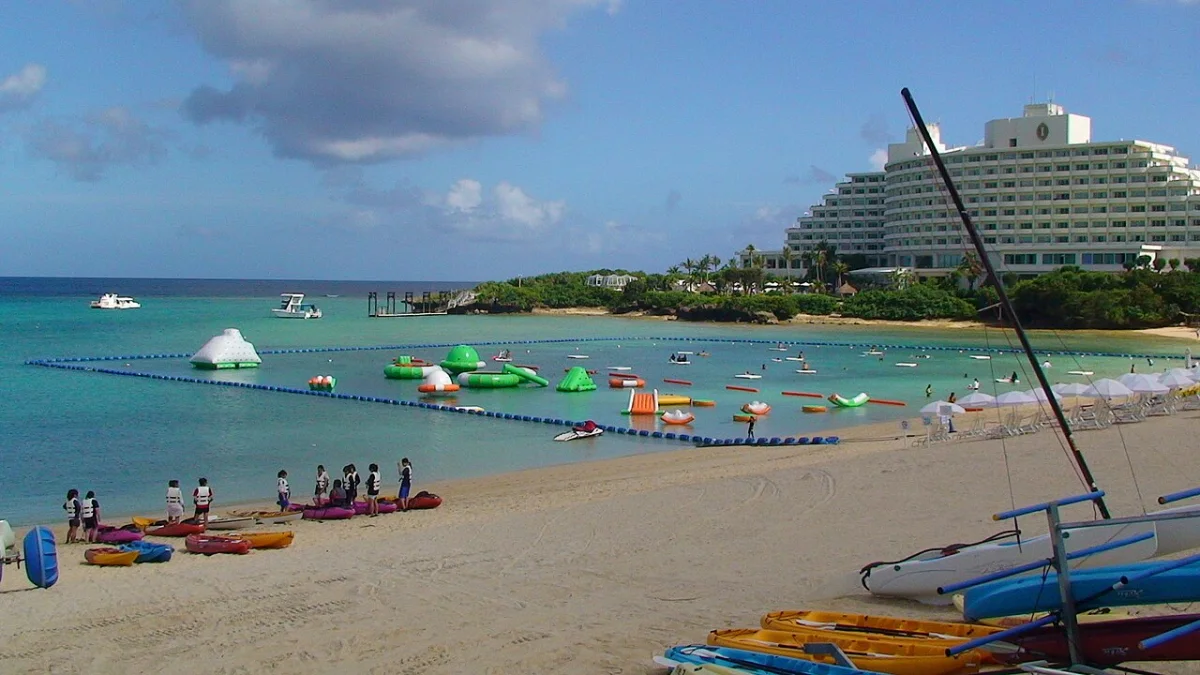
Leaving Naha in daylight, start at Mihama in Chatan. Chatan Town's official access guide points drivers to the Mihama Public Car Park, so set that car park name as your sat-nav target for American Village. Keeping shopping and lunch in one zone lets you park once and cover the area on foot. After lunch, continue north to Cape Zanpa in Yomitan for cliff views before checking in at Onna Village. Because Chatan sits south of Yomitan, running in that order avoids doubling back; if rain sets in, trim the cape stop so you still reach your hotel entrance before dark.
Leaving Onna the next morning with Churaumi Aquarium as top priority, head straight for Ocean Expo Park in Motobu. Parking inside the park is free; North Gate P6 and multi-storey P7 sit closest to the aquarium. If your sat-nav cannot find the aquarium by name, use "Ocean Expo Park" or the official MAPCODE 553075797. Families with pushchairs can unload at the multi-storey car park before deciding which pavilions to cover; if you park at Central Gate P3 or P5, walk north past the information centre rather than moving the car.
At North Gate multi-storey car park P7, the 1st-floor loan desk provides wheelchairs and pushchairs, including free electric wheelchairs in limited numbers on a first-come, first-served basis. Visitors bringing their own wheelchairs should consult the park's accessibility map to match car park levels, lifts and entrances before sharing the plan with family. Factor in the walk back to the car park if you also stroll down to the beach or visit neighbouring pavilions. For structuring the day inside the grounds, see Okinawa Churaumi Aquarium and northern day route.
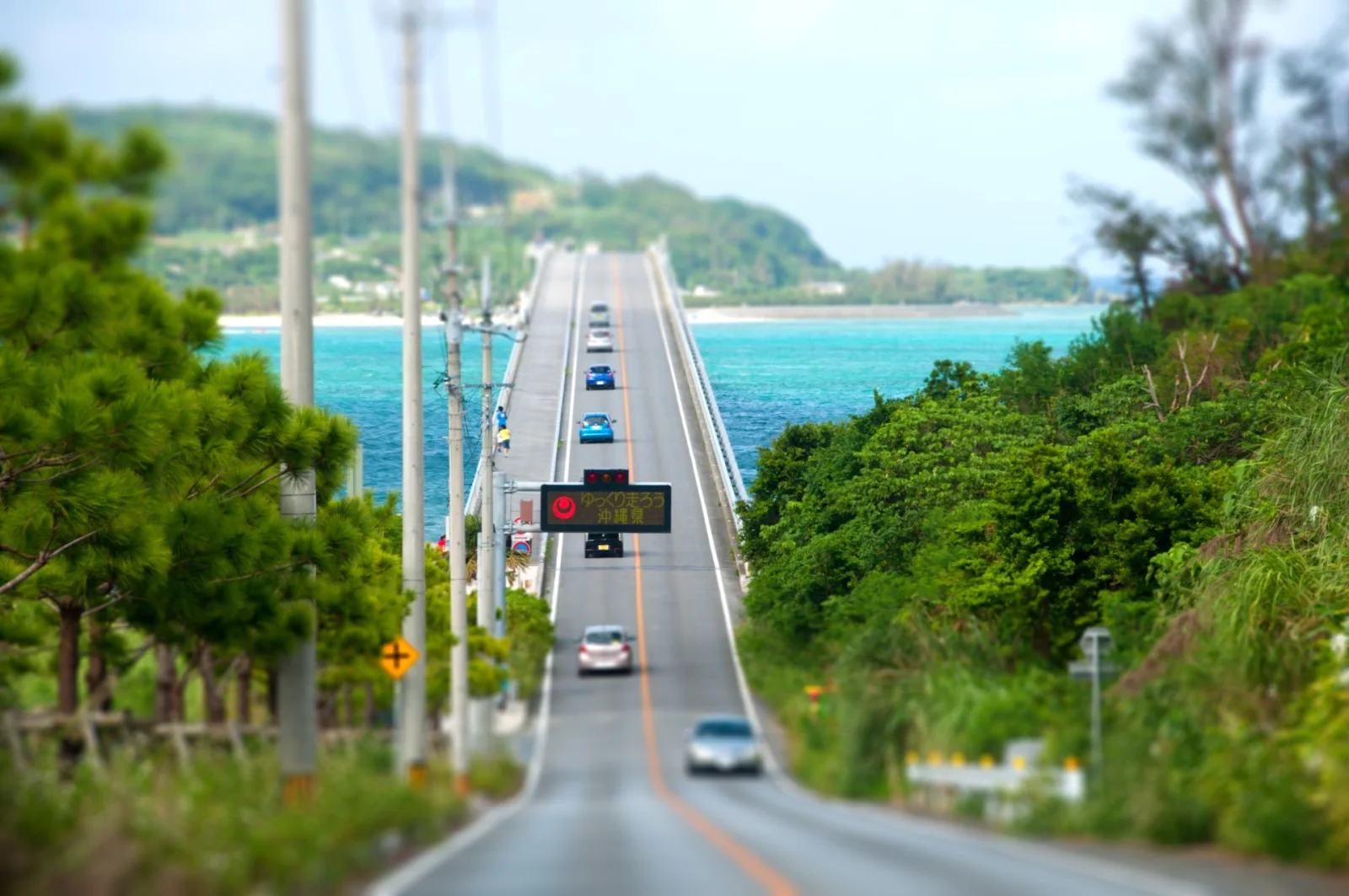
Kouri Island lies just off the Motobu Peninsula across Yagaji Island and the roughly 2 km Kouri Bridge. Choose your viewpoint or car park before driving onto the bridge so passengers can enjoy the sea views while the driver focuses on the lane, then stop at the far end. If you want to follow a morning at the aquarium with an afternoon on Kouri Island's beaches, stay overnight in Motobu or Nago and head south the next day. On a day trip back to Naha, the aquarium plus Kouri Island already fill two major stops—move Chatan and Cape Zanpa to a separate day instead of cramming everything into the drive north.
If the aquarium is not high on your list, base yourself in Chatan, explore Yomitan and Onna beaches during the day and still make it back to Mihama for dinner. Travellers focused on Motobu and Kouri Island save backtracking by staying in Motobu or Nago. Families with young children or older relatives benefit most from keeping a single two-night base so each morning requires packing only water, jackets and day bags instead of loading suitcases into the boot every day.
On a three-day, two-night trip bracketed by a late arrival and an early departure, devote the middle day to one clean northbound loop: either Chatan, Cape Zanpa and Onna for coastal stops and dining, or straight up the E58 to Churaumi Aquarium with optional stops only if time permits, returning the car in Naha that evening. On a five-day, four-night itinerary, staying sequentially in Naha, Onna, Motobu and Naha gives you day three at Ocean Expo Park, day four for either Kouri Island or Bise before dropping the car back in Naha, and day five for a direct morning airport transfer—or lunch in town before an afternoon flight.
Half a Day in the South: Pick One Direction and Watch for Sefa Utaki Works
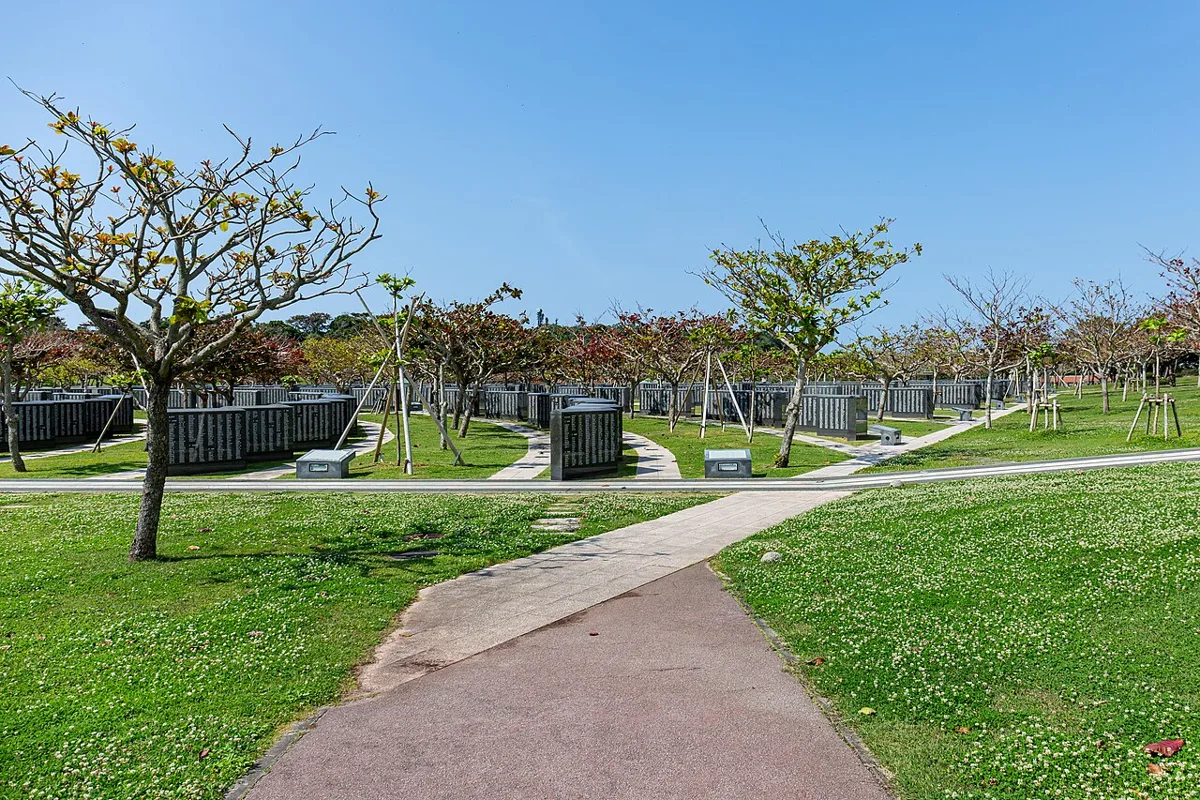
Sefa Utaki in Nanjo and Peace Memorial Park in Itoman sit on opposite sides of the southern peninsula. For a half-day visit focused on Sefa Utaki, set your sat-nav to the Nanjo City Regional Products Centre car park, around 500 m—a 7 to 10-minute walk—from the sanctuary entrance. Nanjo City has announced drainage works between Uguguchi and the three-way junction (Mitsumata) from 2 November 2026 to 5 January 2027. Except on closed days, admission is waived during the works, with access open as far as Uguguchi and the Kudaka Island worship point (*Yohaisho*), while most inner areas remain restricted; anyone hoping to walk the inner grounds should schedule Nanjo after the works finish.
If your priority is Peace Memorial Park and the Himeyuri Monument, drive directly to Itoman from your hotel and allow time for walking the park grounds, visiting the museum and driving back to your airport-area depot. Only slot a southern stop into departure day if you have a clear half-day before check-in; if rain rolls in after lunch, hold to your planned drop-off time and finish with an early lunch nearby or extra time in the terminal. For stops and transport around the south, see the southern Okinawa Peace Memorial Park route.
Senaga Island makes an easy bridge-crossing stop near the end of a trip for a short stroll, though keep in mind that while it sits close to the airport, you still have to drive onwards to your specific rental depot—pin all three locations separately on your map. Keep Senaga Island optional: if earlier stops overrun, skip the island and head straight to refuel on schedule.
On Kerama Island Days, Put Your Travel Time Towards Tomari Port
While Kouri Island is connected by road, ferries to Zamami, Aka and neighbouring Kerama Islands depart from Tomari Port in Naha. The Zamami Village car ferry sails from Tomari Port's south quay, whereas the Queen Zamami high-speed craft boards from the north quay; because both show up under "Tomari Port", verify your vessel type and pier before setting off. If you are staying in Naha before and after the island trip, returning your hire car when coming back from the north is usually simplest—you can reach the pier on foot, by taxi or via city transport, and eat along Kokusai-dori that night without parking worries.
Zamami Village opens ferry bookings from the same calendar date one month ahead until the day before sailing, with its telephone desk open 10:00–17:00 JST and no same-day reservations accepted. If you want to take the high-speed craft outbound and the slower car ferry back on the same day, the standard online form cannot combine both vessel types in one round-trip booking, so book them separately as instructed on the reservation page. Lock in your return sailing time before picking beaches or activities on the island so you keep a buffer for pier changes or early boarding calls.
Zamami Village publishes vehicle tariffs for the car ferry, though taking a hire car across requires both confirmed deck space and explicit permission from your car hire company, plus pre-arranged island parking. Most day-trippers only need passenger tickets and local island transport. Pack light, keep one bag per person for boarding and—if travelling with young children or anyone prone to seasickness—choose a sailing that leaves enough time for breakfast and an unhurried walk to the quay.
Minor Scrapes, Heavy Rain or Typhoons: When to Pull Over
In any collision, secure everyone's safety first, switch on hazard lights and call 119 immediately if anyone is injured. Even for minor damage limited to the car or car park fittings, dial 110 for the police and notify your hire company's accident desk. Once safe, note nearby street signs, building numbers or GPS pins, registration plates and photos of the scene, and follow police and branch instructions before moving vehicles, arranging towing or exchanging details.
If a warning light comes on or a tyre starts making an unusual noise, find a safe bay to pull off and phone the hire company. Should the car break down on the expressway, set out warning markers according to site conditions and wait safely behind the crash barrier—never stand behind the vehicle inspecting damage. Call the roadside assistance number in your contract to arrange recovery, ask about a replacement car and confirm how to collect your luggage; saving branch numbers on your phone at pick-up avoids scrambling to log into a booking app roadside.
In ordinary rain, swap coastal capes for indoor stops. When strong coastal gusts, poor visibility or standing water hit, skip exposed bridges and narrow seafront lanes. During typhoons with severe wind and rain, Visit Okinawa Japan advises suspending self-driving and avoiding unnecessary travel; buses and the monorail may also halt. Follow local shelter notices where you are staying, then contact your branch with your location, vehicle status and flight updates to reschedule return or pick-up—any extension or branch switch during road closures must be approved by the operator.
Keeping daily pacing relaxed starts at lunch. If you are driving back from Nago to Naha in the afternoon, avoid squeezing two final stops along narrow residential lanes or queued attractions at the end of the day. Rotate only among registered drivers at rest stops so the incoming driver has time to adjust the seat and mirrors. Whenever anyone drinks alcohol with dinner, leave the car at the hotel and walk; the next morning, wait until every trace has cleared or let a registered, sober driver take the wheel.
Work Backwards from Airport Check-in and Refuel Last
Start from the airline's recommended terminal arrival time and count backwards through shuttle waiting, road transfer, depot inspection, final payment and refuelling. Nippon Rent-A-Car cautions that transfers between its branch and Naha Airport can take roughly an hour depending on traffic and crowds. When driving straight from northern Okinawa to drop off before a flight, build that full window into your route—reaching the hire depot on your sat-nav is only halfway through returning the car. If the branch or first morning shuttle opens too late for check-in, return the car the previous evening and take a taxi or the monorail from your hotel.
Make the petrol station your very last stop before entering the depot. On a full-to-full policy, fill up near the branch and hand the receipt to the staff on arrival. Toyota Rent a Car offers mileage-based fuel settlement on standard plans when a tank is not topped up, as well as a dedicated fuel rule for hybrids—confirm your preference at pick-up so you know whether a final petrol stop is needed. If traffic puts you behind schedule, pull over safely and call the branch for approval before extending your return time.
At self-service forecourts in Japan, Regular (*Regyura*) is standard unleaded petrol, High-Octane (*Haioku*) is premium unleaded and Diesel (*Keiyu*) is diesel; match the exact fuel named on your rental paperwork. Note the terminology trap: *kei* cars are compact city vehicles, whereas *keiyu* on a pump is diesel fuel. If unsure, choose an attended petrol station and show your rental slip to the staff; at self-service pumps, switch off the engine, follow the screen prompts in order, collect your receipt and change, and check the filler cap is clicked shut.
At final settlement, review the check-out sheet alongside your pick-up photos, hand back any hired ETC card and accessories, and verify toll charges and extra fees. Small items belonging to children easily slip under child seats—sweep the door pockets, cupholders, sun visors and boot compartments before stepping out. Make sure every passport and bag is in hand before boarding the shuttle so a phone charging beside the dashboard does not stay behind for the next driver.
A few useful answers
Can I hire a car in Okinawa with a Taiwanese International Driving Permit?
No. An International Driving Permit issued in Taiwan is not valid in Japan. You must carry your valid original Taiwanese car driving licence, an officially recognised Japanese translation and your passport. In Taiwan, the translation can be obtained from motor vehicle offices for NT$100 per copy.
Where do I catch the car hire shuttle at Naha Airport?
Head out from the 1st-floor arrivals area following your provider's instructions to the shuttle pick-up bays. Both Toyota Rent a Car Naha Airport and J-net use bay 11-A as their meeting point, while other branches use their own designated stops and schedules.
Do I need to rent an ETC card when hiring a car in Okinawa?
If you stick to ordinary roads along the west coast, you do not need an ETC card. However, if you plan to use the E58 expressway repeatedly or take ETC-only interchanges, reserve a card with your hire branch in advance. On the example Naha-to-Kyoda route for a standard car, ETC costs ¥570 less each way than cash, and the special discount has been extended until the end of March 2027.
If I buy CDW cover, could I still be charged a Non-Operation Charge after a scrape?
Yes, potentially. Collision Damage Waiver (CDW) usually covers the insurance deductible (excess), whereas NOC (Non-Operation Charge) compensates the hire company for lost rental income while the vehicle is off the road. Choose a plan that explicitly waives NOC in the contract, and always report any incident to the police and the hire company straight away.
Can I drop off a hire car directly at the Naha Airport terminal for an early-morning flight?
Branches operating airport shuttles normally require you to return the car to their designated depot for inspection and final settlement before taking the shuttle back to the terminal. If the branch or first morning shuttle opens too late for check-in, return the car the night before and travel from your hotel to the airport by taxi or monorail.
Official information and references
Sources used in this guide.
- Directorate General of Highways (Taiwan) | Taiwan-Japan Driving Licence Reciprocity, Japanese Translation Applications and Fees
- National Police Agency (Japan) | Foreign Driving Licences and Permitted Driving Periods
- National Police Agency (Japan) | Statutory Speed Limits on Residential Roads from September 2026
- Okinawa Prefectural Police | Traffic Rules for Foreign Drivers
- Okinawa Prefectural Police | Bus-Only Lanes and Restricted Roads
- Naha Airport | Terminal Floor Map and Car Hire Shuttle Pick-up Area
- Naha Airport | Central and Northern Okinawa Buses and Boarding Stops
- Okinawa Urban Monorail (Yui Rail) | Station Route Map
- Toyota Rent a Car | Naha Airport Branch Opening Hours, Shuttle and Return Guide
- Times Car Rental | Naha Airport Shuttle Pick-up Route
- Nippon Rent-A-Car | Shuttle Access for Naha Airport Toyosaki and Nearby Branches
- J-net Rent-A-Car | Naha Airport Branch Year-End Operating and Shuttle Hours
- Toyota Rent a Car | Insurance Coverage, CDW and Safety W Plan
- Toyota Rent a Car | NOC Charges, Accident Reporting and Fuel Policy
- Toyota Rent a Car | Pick-up and Return Procedures and Full-Tank Settlement
- NEXCO West | Extension of the Okinawa Expressway ETC Special Discount
- NEXCO West | Okinawa Expressway Section Toll Examples
- NEXCO West | Smart IC Operating Hours, Vehicle Classes and Permitted Directions
- NEXCO West | ETC Lane Safety Rules and Expressway Emergency Procedures
- Visit Okinawa Japan | Car Hire and Child Seat Regulations in Okinawa
- Visit Okinawa Japan | Kouri Island and Kouri Bridge
- Visit Okinawa Japan | Typhoon Precautions and Transport Updates
- Chatan Town Tourism Association | Mihama Public Car Park
- Okinawa Churaumi Aquarium | Access, Free Parking and Sat-Nav Details
- Okinawa Churaumi Aquarium | Accessibility Facilities and Wheelchair Loan
- Ocean Expo Park | Car Parks by Park Entrance
- Nanjo City | Sefa Utaki 2026-2027 Drainage Works and Restricted Area
- Sefa Utaki | Regional Products Centre Parking and Walking Distance to Entrance
- Zamami Village | Tomari Port Boarding Quays and Vessel Types
- Zamami Village | Ferry Booking Windows and Telephone Desk Hours
- Zamami Village | Online Ferry Reservation Terms
- Zamami Village | Passenger Fares and Ferry Vehicle Transport Rates