How to rent and drive a car in Okinawa: Taiwan license Japanese translations, Naha Airport shuttles, CDW and NOC coverage, ETC discounts through March 2027, and routes through Chatan, Onna, Motobu, and Kouri Island.
- Region & Focus
- Okinawa Main Island
- Reading Scope
- 23 min read · 13 chapters · 5 Q&As
- Official Verification
- 32 official sources checkedUpdated November 22, 2026
- Key Topics
- First tripAirport transfersBooking
Chapter Route Map (tap any stop)
- Decide Which Days Need a Car Before Choosing Pick-up and Drop-off Branches
- How to Get a Japanese Translation of a Taiwan Driver's License
- Compare Total Quotes Side by Side and Check Luggage and Seat Fit First
- Picking Up at Naha Airport: Exit on the First Floor for Rental Shuttles
- Separate Collision Damage Waiver (CDW) from Non-Operation Charge (NOC)
- Log Return Address, Fuel Type, and Vehicle Condition at Pick-up
- Get Comfortable Driving on the Left Before Joining Highways
- Use Route 58 for Coastal Stops and the E58 Expressway for Distance
- Two Days Up the West Coast: Split Churaumi Aquarium and Kouri Island
- Pick One Direction for a Half-Day in the South and Watch Year-End Construction at Sefa-Utaki
- Build Port Transfer Time Around Tomari Port on Kerama Day Trips
- When to Pull Over for Minor Scrapes, Heavy Rain, or Typhoons
- Count Backward from Flight Check-in and Make Refueling Your Last Stop
- Quick Q&A
The best days to rent a car in Okinawa are when you head up the west coast to Chatan and Onna Village, or farther north to Motobu and Kouri Island. If you are staying in Naha to see Kokusai-dori and Shuri, stick to the monorail and wait to pick up your car on the day you leave the city. Drivers using a Taiwan license should keep their original valid license, official Japanese translation, and passport together, and factor shuttle transfers and return-branch timing into the booking. If it is your first time driving on the left, keep the first day's drive short to get comfortable, and return the car the night before if you have an early flight home.
Decide Which Days Need a Car Before Choosing Pick-up and Drop-off Branches
Plot your hotels and sights on a map first. In central Naha, Kenchomae, Makishi, and Shuri all sit along the Okinawa Urban Monorail (Yui Rail), so staying near a station for your first night or two saves overnight parking fees and the hassle of hunting for a spot. Kokusai-dori enforces time-based traffic restrictions, and streets around the markets have plenty of one-way lanes. Treat your city hotel and market stops as walkable days, then load your luggage into the car once when you head out of town.
A rental car pays off most when you spend two nights in Onna Village or link shorter hops from Motobu to Bise, Nakijin, and across Kouri Bridge. Buses connect major trunk stops, and direct airport buses run to Okinawa Churaumi Aquarium, but transfers and headways between smaller stops eat into sightseeing time. Conversely, if the aquarium is your only stop in the north, booking round-trip direct buses from Naha and spending the day at Ocean Expo Park is usually easier than picking up a car, driving long distances twice, and returning it the same day.
Two branches of the same rental brand may both carry 'Naha Airport' in their name while one sits near Akamine Station and the other is down in Toyosaki. Looking only at an 'airport pick-up' filter on a booking site hides the shuttle ride after landing. If your first night is in Naha, compare total door-to-door time between a city-branch pick-up with an airport-area return versus picking up and returning in the city and riding the monorail. If you stay in Chatan or Onna on night one and can hit the road in daylight, pick up near the airport and head straight north. For getting into town and connecting to hotels, check how to get from Naha Airport to central Naha.
If you are new to right-hand-drive cars and taking an early-morning flight, do not schedule a long drive to the north for that same evening. Even if you land early, immigration, baggage claim, the rental shuttle, and getting familiar with the vehicle will consume daylight. Stop in Chatan for the first night before continuing to Yomitan and Onna the next day, or stay in Naha and pick up the car the following morning so you have daylight to get used to turns and vehicle width.
How to rent and drive a car in Okinawa: Taiwan license Japanese translations, Naha Airport shuttles, CDW and NOC coverage, ETC discounts through March 2027, and routes through Chatan, Onna, Motobu, and Kouri Island.
How to Get a Japanese Translation of a Taiwan Driver's License
To drive in Japan on a short visit with a Taiwan driver's license, you must carry your valid original Taiwan automobile license, an approved Japanese translation, and your passport. International Driving Permits (IDPs) issued in Taiwan are not valid in Japan, and photocopies, phone photos, or self-made translations are not accepted. According to Japan's National Police Agency, you may drive for one year from your entry date or until your original license expires, whichever comes first. The translation's issue date is separate from your entry date, and you should check each rental agency's document rules when booking.
In Taiwan, bring your original National ID card and original driver's license to any Motor Vehicles Office; the fee is NT$100 per copy, and you can apply at any branch regardless of household registration. The Highway Bureau also offers online applications through its Motor Vehicle Driver Information Service portal, though you should allow time for mail delivery if you choose shipping. If you have renewed your license, apply for the translation using the new license so the name, ID number, and expiration date match. Check both documents side by side as soon as you receive the translation rather than discovering a mismatch at the rental counter.
If you arrive in Japan and realize you forgot the translation, check with an agency recognized by Japan's National Police Agency, such as the Japan Automobile Federation (JAF). Taiwan's Highway Bureau notes that applying through diplomatic missions in Japan involves cross-agency verification and takes roughly seven business days, so same-day walk-in pickup is not possible. If nobody in your group has valid documents, contact the rental company to reschedule and take the monorail or a coach bus to your first hotel. If another traveler holds valid documents, ask the branch to update the primary driver on the contract and present the paperwork at check-in.
If two people plan to share driving duties, both must carry valid documents covering that vehicle class for the entire trip. Add the second driver's details when booking and have both drivers check in at the counter as required. On booking platforms, the account holder, credit card holder, and actual driver can be three different people, so check the renter and driver fields on your reservation; if the branch requires the cardholder to be present, bring that person on the shuttle as well.
Compare Total Quotes Side by Side and Check Luggage and Seat Fit First
Enter the exact same pick-up and return times, branch locations, and coverage options on each agency's official site before comparing totals. Base rental rates, Collision Damage Waiver (CDW), Non-Operation Charge (NOC) coverage, child seats, ETC card rentals, and one-way drop fees may appear as separate line items, while fuel, parking, and expressway tolls depend on your route. When staying an extra night in Naha and only needing the car the next morning, pushing pick-up to that morning saves a night of hotel parking and can drop you into a lower rate tier. If a rental crosses a 24-hour boundary, open the full breakdown to see how extra hours are billed.
For a group of four, count large suitcases before counting seats. Putting four passengers in a five-seat compact car leaves little room if you also have a stroller. Even in a seven-seater, check cargo depth with the third row upright. When traveling with older adults, consider step-in height and rear-door clearance; if you need two child seats, verify anchor positions and whether an adult can still sit beside them. For 'or similar' vehicle categories, compare the class's stated passenger and luggage capacity, and only pay extra to guarantee a specific model if your itinerary depends on it.
Japanese law requires child safety seats for children under age six. Enter your child's age, height, and weight when booking so the branch prepares the right seat, and check compatibility beforehand if you bring your own. If two families split into two compact cars, budget separate coverage, tolls, and parking for both vehicles. If you share one larger van, whether the driver has handled a similar vehicle length, whether hotel parking bays fit it, and how easy third-row access is matter more than who gets a window seat.
When prices are close, favor a booking that lets you adjust your pick-up window. If you land late and only need to sleep in Naha that night, avoid booking a reservation that forces a mad dash for the last shuttle. When looking for specific vehicle classes over New Year's, check the branch-specific calendar and shuttle operating hours rather than relying on general year-round brand pages. Keep your airline flight alerts alongside your rental confirmation so you can quickly give customer service the exact branch name, flight number, and revised arrival time if delayed.
Picking Up at Naha Airport: Exit on the First Floor for Rental Shuttles
After collecting your bags at Naha Airport, follow signs for the Rental Car Shuttle Pick-up area and look for your company's name on your voucher. For the Toyota Rent a Car Naha Airport branch, head along the first floor toward the domestic terminal shuttle zone, cross the pedestrian crossing outside, check in with staff at stop 11-A, and board the free shuttle to the Akamine branch. The roughly five minutes listed online covers only the shuttle ride itself; total pick-up time also includes waiting, check-in, installing child seats, and the walk-around inspection. Times Car Rental also directs passengers at shuttle bay 11, so international arrivals should walk toward the domestic terminal side first.
Stop 11-A can serve buses heading in completely different directions. For instance, Nippon Rent-A-Car's shuttle to its Naha Airport Toyosaki branch takes an estimated 20 minutes, and return shuttles drop passengers at the domestic terminal's third floor, leaving international travelers with an indoor walk afterward. Toyota's Naha Airport branch lists hours of 8:00-20:00 JST, so if a delayed flight lands after closing, you will need to pick up the car the next morning during business hours. If your first night's hotel is in northern Okinawa, arrange both how to reach it and whether the branch can shift your pick-up time.
From December 30, 2026 to January 3, 2027, J-net Rent-A-Car's Naha Airport branch lists counter hours of 8:00-20:00 JST but shuttle hours of 9:00-19:30 JST, and requires airport shuttle users to note their flight number in the online reservation. That gap between counter and shuttle hours directly affects flight planning. If your landing time sits close to the shuttle cutoff, confirm accepted arrival methods and the latest check-in time with the branch before deciding between same-night and next-day pick-up.
If members of your group arrive on different flights, meet inside a terminal area everyone can reach easily. Have all drivers who need document checks ride the shuttle together so the first person at the counter does not get stuck waiting for a second driver. Travelers with mobility needs should ask ahead how folding wheelchairs are stowed on the shuttle and whether there are stairs between the drop-off stop and the counter. With heavy luggage, assign one adult to count bags beside the curb rather than repacking next to the shuttle lane.
Separate Collision Damage Waiver (CDW) from Non-Operation Charge (NOC)
If you scrape a parking garage pillar and the branch has to take the car off the road for repairs, charges can come from two places. The first is the deductible you owe under the policy for vehicle damage or third-party property damage. The second is the Non-Operation Charge (NOC), which compensates the rental agency for lost business while the vehicle is being repaired or cleaned. Buying CDW typically waives the deductible under policy terms, while NOC still applies unless your plan explicitly waives it too.
Take Toyota Rent a Car's standard passenger car policy as an example. Base rates include insurance and compensation with a ¥50,000 deductible each for property damage and vehicle damage. Optional CDW costs ¥1,100 per 24 hours, while the Safety W Plan covering both CDW and NOC costs ¥1,650 per 24 hours (separate rates apply to certain vehicle classes). When NOC applies, Toyota lists ¥20,000 if the car can still be driven back to the scheduled return branch and ¥50,000 if it cannot—or if a drivable car is left elsewhere. Those figures are Toyota's published examples; check your own contract for other agencies' exact amounts.
When an online booking platform advertises 'full insurance,' open the fine print for deductibles, NOC, towing, and tire coverage. Counter-purchased CDW differs in billing flow from third-party reimbursement plans sold by aggregators: the former settles covered costs directly under the rental contract, while the latter often require you to pay the branch upfront and submit police reports and receipts later for reimbursement. If relying on credit card rental coverage instead, verify who is covered, how much of the rental must be charged to the card, what documentation is required, and whether the Japanese branch will still charge you first.
Even with top-tier coverage, drunk driving, an unlisted driver, failing to report an accident as required, or other contract breaches can void protection. Save offline screenshots of your contract, accident hotline, and reservation number when choosing your plan. Minor parking scrapes tempt drivers to skip calling, but agencies need the accident time, location, and photos to process claims; waiting until drop-off cuts short the window to document everything properly.
| Plan | Eligible Property & Vehicle Damage Deductible | NOC |
|---|---|---|
| Basic Insurance & Coverage | ¥50,000 deductible each for property and vehicle damage | Charged per rental contract |
| Optional CDW Add-on | Waives eligible property and vehicle damage deductibles | Charged per rental contract |
| Safety W Plan | Waives eligible property and vehicle damage deductibles | Waives eligible NOC |
Log Return Address, Fuel Type, and Vehicle Condition at Pick-up
Walk around the parked vehicle with branch staff before leaving the lot. Compare the condition sheet against bumpers, door panels, side mirrors, wheel rims, and glass—paying close attention to the lower front lip and tailgate edges. Ask staff to mark any unrecorded scratches and take clear photos yourself. Snap the fuel gauge and odometer before driving out so refueling and final billing have a clear baseline. If it is raining or getting dark during inspection, ask to check the car under better lighting.
Have staff show you how the fuel door opens, whether the car takes regular gasoline or diesel, and where to refuel before returning. If renting an ETC card, confirm how to insert it, where to check that it is active, and how tolls are settled at return. Enter your first parking lot into the car's navigation system and save the return-entrance address on your phone. Toyota's Naha Airport branch lists MAPCODE 33094071*77 specifically for returns—different from the main branch MAPCODE on the same page—so pick the one labeled for return; if returning to a different branch, pull the address from that order.
Adjust the driver's seat so you can clearly judge both sides of the car, cycle the automatic shifter through P, R, and D while stationary, and locate the parking brake, turn signals, wipers, headlights, and defoggers. If traveling with kids, test-fit the seats, tighten harnesses, and set rear vents and adult seating before packing heavy bags. Rear passengers must wear seatbelts by law. Once you are queued at the exit onto a busy road with cars behind you, it is much harder to adjust these controls calmly.
After connecting phone navigation, let a passenger call out highway exits and parking entrances. Download offline maps and save Japanese place names in case mobile data drops. If the built-in car navigation lacks your preferred language, enter the MAPCODE or the venue's official phone number instead. Test your phone charger cable and mount before leaving the lot, and pull into a legal parking spot whenever the driver needs to zoom in on a map or change destinations.
Get Comfortable Driving on the Left Before Joining Highways
Cars in Japan drive on the left, and rental vehicles are normally right-hand drive. Drivers used to right-hand traffic most often drift onto the wrong side when turning into an empty intersection. Keep tight to the near (left) curb on left turns, and wait for a clear gap in oncoming traffic before swinging across into the left lane on right turns. Drive through a quiet stretch right after leaving the branch to feel where the left front tire sits relative to the curb before merging onto busy avenues. Having a passenger call out the next turn at the first couple of intersections helps more than two people staring at separate screens.
Stop behind the white stop line at red lights and follow directional signal arrows when turning. At inverted red triangle 'STOP' (Tomare) signs, come to a full stop before checking both directions. Yield and stop for pedestrians crossing or waiting at unsignalized crosswalks. At urban side-street intersections, watch carefully for backlit pedestrians, cyclists, and blind spots blocked by your left A-pillar. If you miss a turn, stay in your lane and let the navigation reroute ahead.
Starting September 1, 2026, the statutory speed limit on certain residential roads in Japan—roads without a marked centerline, lane markings, or physical median separating opposing traffic—drops from 60 km/h to 30 km/h. Always obey posted speed limit signs or pavement markings where present. Keep this change in mind when turning off main marked highways onto narrow lanes toward Yomitan guesthouses, Nakijin villages, or Nanjo parking lots. Ease off the throttle early when low stone walls block sightlines, and wait at wider passing spots on single-lane alleys for oncoming cars to clear.
Central Naha also has a rule easy to miss when keeping left. Okinawa Prefectural Police designate bus-only lanes on stretches of Route 58 during posted hours, and parts of Kokusai-dori restrict entry to buses and authorized vehicles at set times. Read roadside signs for active hours, direction, and vehicle types instead of blindly following a bus into the curb lane. Check garage entrances and legal turn directions on the map before driving to city hotels, and take alternate streets whenever bus-lane restrictions apply.
Use Route 58 for Coastal Stops and the E58 Expressway for Distance
Heading north from Naha, surface roads work best if you plan to stop along the coast in Chatan, Yomitan, and Onna. Route 58 is the main west-coast artery, though commuter rush hours in urban stretches can add several red-light cycles over short distances. If Okinawa Churaumi Aquarium in Motobu is your main target for the day, take the E58 Okinawa Expressway toward Kyoda Interchange and follow Nago and Motobu roads from there to skip stop-and-go traffic. Leave any extra coastal stops for the return drive south if time allows.
NEXCO West announced that its 35.5% special ETC discount across the entire Okinawa Expressway is extended through the end of March 2027. In its published example for a standard car traveling one way between Naha and Kyoda, cash costs ¥1,610 while ETC costs ¥1,040—a ¥570 saving. Over a round trip on the same segment, that comes to ¥1,140 saved before subtracting your ETC card rental fee. If you enter from the airport side via Nishihara JCT, use different interchanges, or drive a kei car, calculate tolls for that specific segment and vehicle class; for trips from April 2027 onward, check NEXCO's published rates at the time.
Having an on-board ETC reader is not enough—you need an active ETC card inserted to use ETC lanes. If reserving an ETC card through your rental agency, check pickup rules and billing terms, and confirm the reader recognizes the card before setting off. Paying cash means choosing lanes marked 'General' (Ippan) or cash-accepted, and using interchanges with staffed or cash booths. Kishaba Smart IC is ETC-only, operates 6:00-22:00 JST, and only permits entry heading toward Naha; if navigation routes you there without a card or going the other way, choose a different entrance.
Watch overhead lane signs as you approach toll plazas, slow below 20 km/h when entering an ETC lane, and leave plenty of space behind the car ahead. If the card fails to read and the barrier stays down, stop in the lane and follow staff instructions—never back up or switch lanes across barriers. Rental ETC cards are typically returned and settled at the counter when you drop off the car; take the card out or keep it out of sight when leaving the vehicle parked.
Two Days Up the West Coast: Split Churaumi Aquarium and Kouri Island
Leave Naha during daylight and start in Chatan's Mihama area. Chatan Town's visitor guide marks Mihama Public Parking, which makes a clean navigation target for American Village. Park once and keep lunch and shopping within the same walkable block. After lunch, continue north to Cape Zanpa in Yomitan before checking into your Onna Village hotel. Since Chatan sits south of Yomitan, heading north in this order avoids backtracking; if the weather turns rainy, shorten the cape stop so you reach your hotel entrance before dark.
Setting out from Onna the next morning, head straight to Ocean Expo Park in Motobu if Okinawa Churaumi Aquarium is your priority. Parking inside the park is free, and lots P6 or P7 (a multi-story garage) at the North Gate sit closest to the aquarium. If your GPS cannot find the aquarium by name, use 'Ocean Expo Park' or MAPCODE 553075797 as listed officially. Families with strollers can unload gear before deciding which pavilions to visit; if you park in Central Gate lots P3 or P5, walk north from the information center toward the aquarium and leave the car where it is.
The first floor of the North Gate P7 parking garage has a loan counter for wheelchairs and strollers, with free electric wheelchairs available first-come, first-served in limited numbers. Wheelchair users traveling with their own chair should review the park's accessibility map beforehand to match parking levels, elevators, and entrances, then share the route with family members. If you plan to walk down to the beach or visit other pavilions after the aquarium, leave extra time for the walk back to the car. For pacing inside the complex, see Okinawa Churaumi Aquarium and northern day-trip routes.
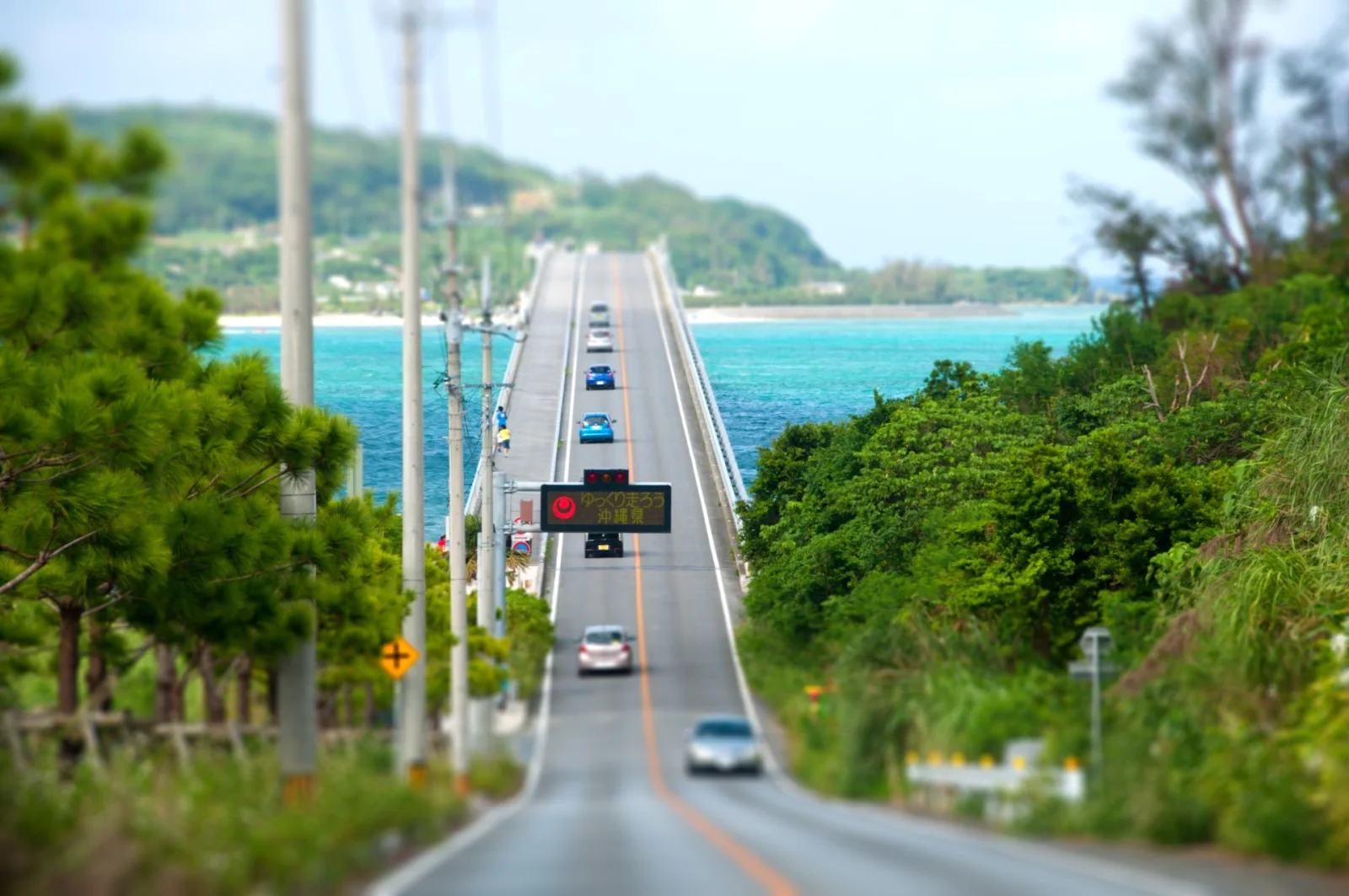
Kouri Island lies just off Motobu Peninsula via Yagaji Island and the roughly 2-kilometer Kouri Bridge. Set your viewpoint or parking destination before driving onto the bridge so passengers can enjoy the view and everyone steps out safely at the far end. If you want an afternoon beach stop on Kouri Island after visiting the aquarium, book a hotel in Motobu or Nago that night and drive south the following day. On a single day trip back to Naha, combining the aquarium and Kouri Island already makes two full stops—move Chatan and Cape Zanpa to a separate day rather than cramming everything into the drive north.
If the aquarium is not high on your list, base yourself in Chatan, explore the Yomitan and Onna coastlines during the day, and return to Mihama for dinner. Travelers focused on Motobu and Kouri Island save return mileage by staying in Motobu or Nago. Families with young children or older travelers especially benefit from staying two nights in one base hotel—carrying only water, jackets, and day gear instead of hauling suitcases in and out of the trunk every day.
On a 3-day, 2-night trip with a late arrival and early departure, keep only one northbound route for the full middle day. Pick Chatan, Cape Zanpa, and Onna stops if you prefer beaches, dining, and shopping; or take the E58 round-trip for the aquarium, adding midway stops only if time allows before returning the car in Naha that evening. On a 5-day, 4-night trip, stay sequentially in Naha, Onna, Motobu, and Naha: devote day three to Ocean Expo Park, pick either Kouri Island or Bise after checkout on day four before driving south to return the car, and head straight to the airport on day five (or grab lunch in Naha before an afternoon flight).
Pick One Direction for a Half-Day in the South and Watch Year-End Construction at Sefa-Utaki
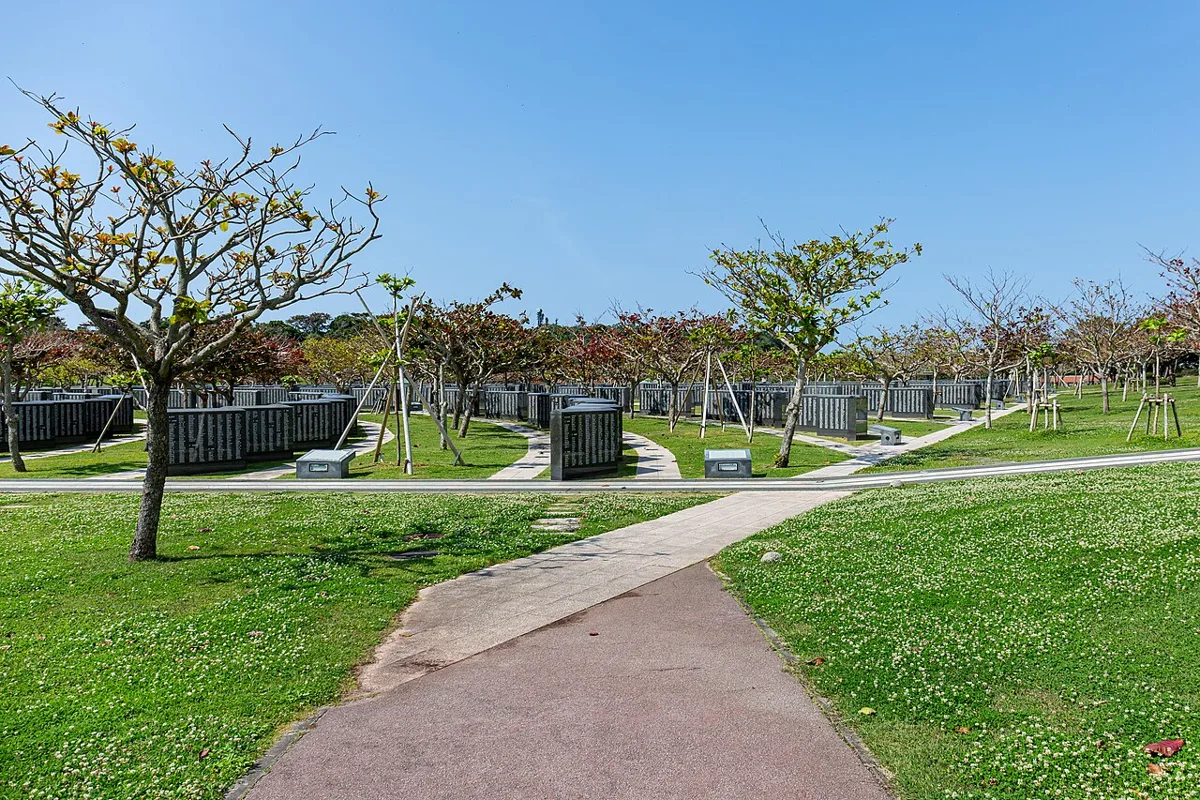
Sefa-Utaki in Nanjo and Peace Memorial Park in Itoman sit in different directions. For a short half-day focused on Sefa-Utaki, set your navigation to the Nanjo City Regional Products Center parking lot, roughly 500 meters (a 7- to 10-minute walk) from the sacred site's entrance. Nanjo City announced scheduled drainage work between Ujoguuchi and the three-way junction from November 2, 2026 through January 5, 2027. Except on closed days, admission is free during construction, with access open up to Ujoguuchi and the Kudaka Island worship spot while most inner areas remain restricted. To walk the full inner grounds, time your Nanjo visit after construction wraps up.
If your priority is Peace Memorial Park and the Himeyuri Peace Museum, drive straight to Itoman from your hotel and allow time for walking the grounds before returning the car near the airport. Only slot a southern suburb stop onto departure day if you have a full free half-day before check-in. If afternoon weather turns bad, keep your scheduled return time and swap the last stop for a nearby lunch or relaxing at the terminal. For stop-by-stop details in the south, see southern Okinawa Peace Memorial Park routes.
For a quick coastal walk near a bridge, Senaga Island makes an easy final stop. Although close to Naha Airport, you still have to drive to your specific rental branch to return the car, so pin the island, branch, and airport separately on your map. Keep the Senaga Island detour optional: if an earlier stop runs long, skip the island and head straight to refuel before your scheduled drop-off.
Build Port Transfer Time Around Tomari Port on Kerama Day Trips
While Kouri Island is connected by bridge, ferries to Zamami, Aka, and other Kerama Islands depart from Naha's Tomari Port. Zamami Village's car ferry boards from the south wharf of Tomari Port, while the Queen Zamami high-speed boat departs from the north wharf. Both share the 'Tomari Port' name, so check your vessel type and pier before setting out. If you are staying in Naha both before and after your island day, it is simplest to return the rental car when you come back from the north and walk, taxi, or ride transit to the pier—leaving you free to grab dinner on Kokusai-dori that evening without picking up a car again.
Zamami Village opens ferry bookings from the same calendar date one month prior to departure through the day before sailing, with phone reservations open 10:00-17:00 JST and no same-day reservations accepted. If you plan to take the high-speed boat out and the slower car ferry back on the same day, the village's standard online booking form cannot combine both vessels into one round-trip order, so follow its instructions to book them separately. Lock in your return sailing time before choosing beaches or activities on the island so you have margin if a pier changes or early boarding is called.
Zamami Village publishes vehicle ferry rates, though bringing a rental car requires both deck space and prior approval from your rental company, plus arranged parking on the island. Most day-trippers only need passenger tickets and local island transport. Pack light into one easy-to-stow bag per person; travelers prone to seasickness and families with small children should pick sailings early enough to eat breakfast and walk calmly to the berth after arriving at port.
When to Pull Over for Minor Scrapes, Heavy Rain, or Typhoons
In any collision, check everyone's safety first, switch on hazard lights, move out of danger, and call 119 if anyone is injured. Even if damage involves only the rental car or a parking-lot fixture, call 110 for the police and contact your rental company's accident line. Once safe, record nearby street signs or GPS coordinates, license plates, and photos of the scene. Follow police and rental-agency instructions before moving the vehicle, arranging a tow, or exchanging details.
If a dashboard warning light comes on or a tire makes an unusual noise, pull over at the first safe spot and call the rental agency. If the car breaks down on the expressway, set out warning markers as conditions allow and wait behind the guardrail in a safe place—never stand behind the car to inspect damage. Call the roadside assistance number in your contract to ask who dispatches the tow, whether a replacement vehicle is available, and how to collect your luggage. Save the branch phone number on your phone at pick-up so you are not scrambling to log into a booking app roadside.
During ordinary rain, swap exposed capes for indoor stops. If strong coastal gusts, poor visibility, or pooled water hit the roads, skip long bridges and narrow seaside lanes. When a typhoon brings severe wind and rain, Okinawa's official travel guide advises stopping all driving and avoiding unnecessary trips. Buses and the monorail may also suspend service, so follow local shelter instructions in a safe building first, then contact your rental agency with your location, vehicle condition, and flight updates to reschedule pick-up or drop-off. If roads close, any extension or branch change must be cleared through the agency.
Managing fatigue starts around lunchtime. If driving back to Naha from Nago in the afternoon, do not pack your final two stops with tight residential alleys or venues with long queues. When sharing driving duties, swap registered drivers at rest stops so each person has time to reset the seat and mirrors. Anyone drinking alcohol at dinner should leave the car at the hotel and dine within walking distance; if you are still affected the next morning, skip driving or hand the keys to a sober, contract-registered driver.
Count Backward from Flight Check-in and Make Refueling Your Last Stop
Start with your airline's terminal arrival deadline, then subtract time for shuttle waiting, the ride to the airport, branch inspection and settlement, and your final fuel stop. Nippon Rent-A-Car notes that transfers between its branch and Naha Airport can take around an hour depending on conditions. If driving straight from the north on departure day, build that transfer buffer into your route—reaching the rental lot on GPS is only halfway through returning the car. If the branch or first morning shuttle opens too late for check-in, return the car the night before and take a taxi or monorail from your hotel to the airport.
Save the gas station as your very last stop before pulling into the rental branch. On a full-to-full plan, top up near the branch, keep the receipt, and hand it to staff at check-in. Toyota's standard plan calculates fuel by mileage if you do not refill, with separate fuel settlement rules for hybrid vehicles—confirm your plan at pick-up so you know whether a final fuel stop is needed. If traffic puts you behind schedule, pull over safely and call the branch for approval before extending your return time.
At Japanese self-serve pumps, 'Regular' (Regyura) is standard unleaded gasoline, 'High-Octane' (Haioku) is premium unleaded, and 'Diesel' (Keiyu) is diesel fuel—match the label printed on your rental paperwork. Note that while 'kei' cars are light passenger vehicles, the fuel word keiyu means diesel, not fuel for kei cars. When unsure, visit a full-service station and hand your rental folder to the attendant. At self-serve stations, switch off the engine, follow the screen prompts, take your receipt and change after filling, and verify the fuel cap clicks shut.
At final check-out, compare the vehicle against your pick-up sheet and photos, return the rented ETC card and accessories, and review any tolls or extra charges. Small kids' items easily slide under safety seats, so do a quick sweep of door pockets, cup holders, sun visors, and under-floor trunk compartments. Gather all passports and bags before boarding the shuttle so you do not leave a phone still charging next to the dashboard screen.
A few useful answers
Can I rent a car in Okinawa with a Taiwan International Driving Permit?
No. International Driving Permits issued in Taiwan are not valid in Japan. Bring your valid original Taiwan automobile license, an official Japanese translation, and your passport. Translations cost NT$100 per copy at Motor Vehicles Offices in Taiwan.
Where do I catch the rental car shuttle at Naha Airport?
Walk along the first-floor arrivals level toward the shuttle pick-up zone as directed by your agency. Both Toyota Rent a Car Naha Airport and J-net Rent-A-Car meet passengers at stop 11-A, while other agencies use their own designated bays and schedules.
Do I have to rent an ETC card for driving in Okinawa?
Not if you stick to surface roads along the west coast. Reserve an ETC card with your rental branch if you plan to use the E58 Okinawa Expressway often or pass through ETC-only interchanges. In NEXCO West's standard-car example between Naha and Kyoda, ETC saves ¥570 over cash each way, with the special discount extended through March 2027.
If I buy Collision Damage Waiver (CDW), will I still owe NOC after a scrape?
Possibly. CDW typically waives your insurance deductible, whereas NOC (Non-Operation Charge) compensates the agency for downtime while the car is repaired. Look for a plan whose terms explicitly waive NOC as well, and always report accidents to the police and rental company.
Can I drop off my rental car directly at the Naha Airport terminal for an early flight?
Shuttle-served rentals normally require returning to the branch for inspection and settlement before taking the shuttle to the terminal. If branch hours or the first shuttle are too late for your flight check-in, return the car the night before and go straight from your hotel in the morning.
Official information and references
Sources used in this guide.
- Taiwan Highway Bureau | Taiwan-Japan Driver's License Reciprocity, Japanese Translation Application, and Fees
- National Police Agency (Japan) | Foreign Driver's Licenses and Permitted Driving Period
- National Police Agency (Japan) | Statutory Speed Limit on Residential Roads Starting September 2026
- Okinawa Prefectural Police | Traffic Rules for Foreign Drivers
- Okinawa Prefectural Police | Bus-Only Lanes and Restricted Roads
- Naha Airport | Terminal Floor Map and Rental Car Shuttle Pick-up Area
- Naha Airport | Central and Northern Okinawa Buses and Boarding Stops
- Okinawa Urban Monorail (Yui Rail) | Station Route Map
- Toyota Rent a Car | Naha Airport Branch Hours, Shuttle, and Return Details
- Times Car Rental | Naha Airport Shuttle Route
- Nippon Rent-A-Car | Shuttles for Naha Airport Toyosaki and Nearby Branches
- J-net Rent-A-Car | Naha Airport Branch Year-End/New Year Hours and Shuttle
- Toyota Rent a Car | Coverage Details, CDW, and Safety W Plan
- Toyota Rent a Car | NOC Rates, Accident Reporting, and Fuel Rules
- Toyota Rent a Car | Pick-up, Return Flow, and Full-Tank Settlement
- NEXCO West | Extension of Special ETC Discount on the Okinawa Expressway
- NEXCO West | Okinawa Expressway Segment Toll Examples
- NEXCO West | Smart IC Operating Hours, Eligible Vehicles, and Directions
- NEXCO West | ETC Lane Safety Rules and Expressway Emergencies
- Visit Okinawa Japan | Rental Vehicles and Child Safety Seats
- Visit Okinawa Japan | Kouri Island and Kouri Bridge
- Visit Okinawa Japan | Typhoon Transportation and Shelter Precautions
- Chatan Tourism Association | Mihama Public Parking
- Okinawa Churaumi Aquarium | Access, Free Parking, and Car Navigation
- Okinawa Churaumi Aquarium | Accessibility Facilities and Wheelchair Loans
- Ocean Expo Park | Parking Lots by Park Gate
- Nanjo City | Sefa-Utaki 2026-2027 Drainage Construction Restricted Area
- Sefa-Utaki | Products Center Parking and Walking Distance to Entrance
- Zamami Village | Tomari Port Boarding Wharves and Vessel Types
- Zamami Village | Ferry Reservation Window and Phone Service Hours
- Zamami Village | Online Ferry Booking Terms
- Zamami Village | Ferry Fares and Vehicle Shipping Rates