Follow international and domestic arrival routes, then compare monorail fares, new 2026 bus stops, TK02 services, taxis and luggage storage or delivery for Kokusai Street, Asahibashi and Nishimachi hotels.
- Region & Focus
- Naha
- Reading Scope
- 30 min read · 20 chapters · 6 Q&As
- Official Verification
- 26 official sources checkedUpdated November 7, 2026
Chapter Route Map (tap any stop)
- Choose transport for your hotel entrance: the two ends of Kokusai Street differ
- International arrivals: taxis downstairs, buses and monorail toward the domestic area
- Domestic arrivals: collect bags before choosing the first-floor road or second-floor bridge
- At Naha Airport Station, sort out tickets before going up to the platform
- Match the final walk to Asahibashi, Kencho-mae, Miebashi or Makishi
- Two Naha hotels show the difference between five and fifteen minutes on foot
- Suica, OKICA, credit card or QR ticket: use a payment method that works at exit
- Buy child tickets by age and school status; credit-card taps charge adult fares
- For one city trip, buy a single ticket; calculate passes using actual journeys
- Use current bus stops: city-bound stop 4 differs from southbound stop 6
- TK02 to western Kokusai Street costs ¥240: include waiting time
- On route buses, consider payment and the space beside your feet
- Compare taxis for the whole party, especially for distant hotels, rain and groups
- For late arrivals, include the walk to the platform; Friday's extra train ends at Makishi
- For a half-day city visit, choose a staffed storage counter you can return to in time
- Lockers have size and collection limits that differ between station and terminal
- Hotel delivery: Yamato's 13:00 cutoff determines same-evening availability
- Strollers and wheelchairs: connect elevator routes with the hotel entrance
- Three arrival plans based on accommodation and luggage
- For departure, use your local station's airport-bound timetable and collect bags before check-in
- Quick Q&A
A hotel beside Kencho-mae Station and a waterfront hotel in Nishimachi can involve very different amounts of luggage handling, although both are in Naha. Locate the hotel entrance first, then choose transport by party size, bag count and the time you leave the terminal. The monorail suits hotels along its route. City buses require the correct direction and current stop. For a group or a hotel far from a station, budget for a direct taxi.
Choose transport for your hotel entrance: the two ends of Kokusai Street differ
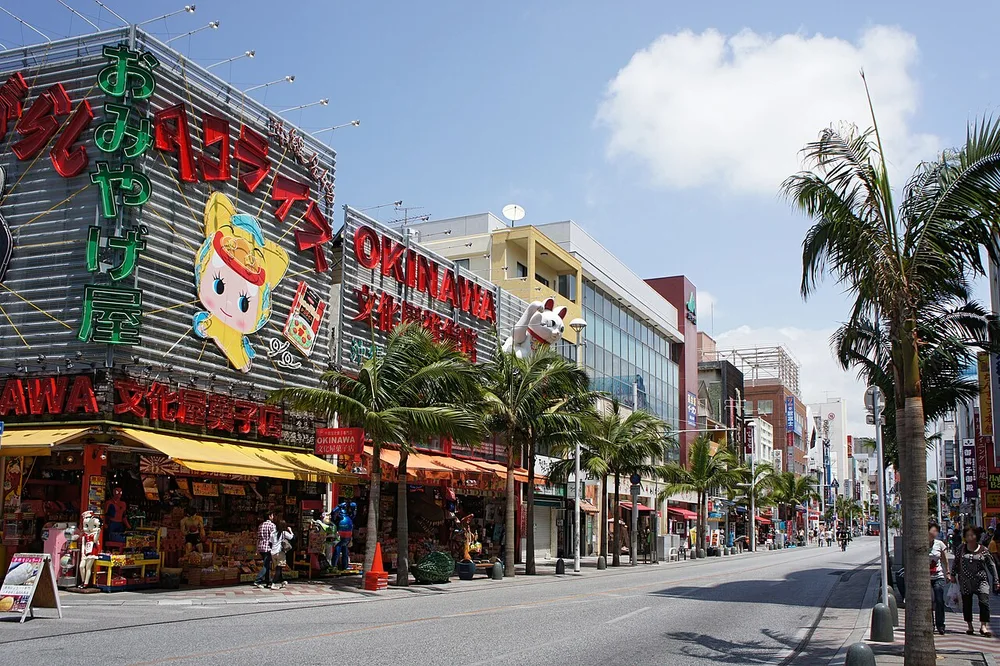
Even for a Kokusai Street stay, locate the hotel on a map. Kencho-mae is near the west end and Makishi near the east. Lanes behind the market, waterfront Nishimachi and onward travel to Tomari Port require different routes. Save the full Japanese hotel name, address and entrance before choosing a station or bus stop to avoid backtracking with bags. Treating central Naha as one stop can leave an unexpected walk at the hottest or most tiring point.
For one or two people, each able to pull one suitcase, staying near a station, start with the monorail. For Kumoji, Matsuyama or Naminoue, compare a city bus that passes near the hotel. For a group with large bags, sleeping children or a long station-to-hotel walk, take a taxi directly to the entrance. Compare costs for the whole party and actual bag count. Allow time for stairs, waiting, road crossings and pulling luggage as well as the ride.
If you stay in Chatan, Onna or Nago tonight, first find a bus toward the accommodation. The monorail only serves the Naha–Urasoe corridor. Going downtown before returning to the airport or making a distant bus connection adds luggage handling. Use the Okinawa main island accommodation and transport guide to choose between a Naha night and heading north on arrival.
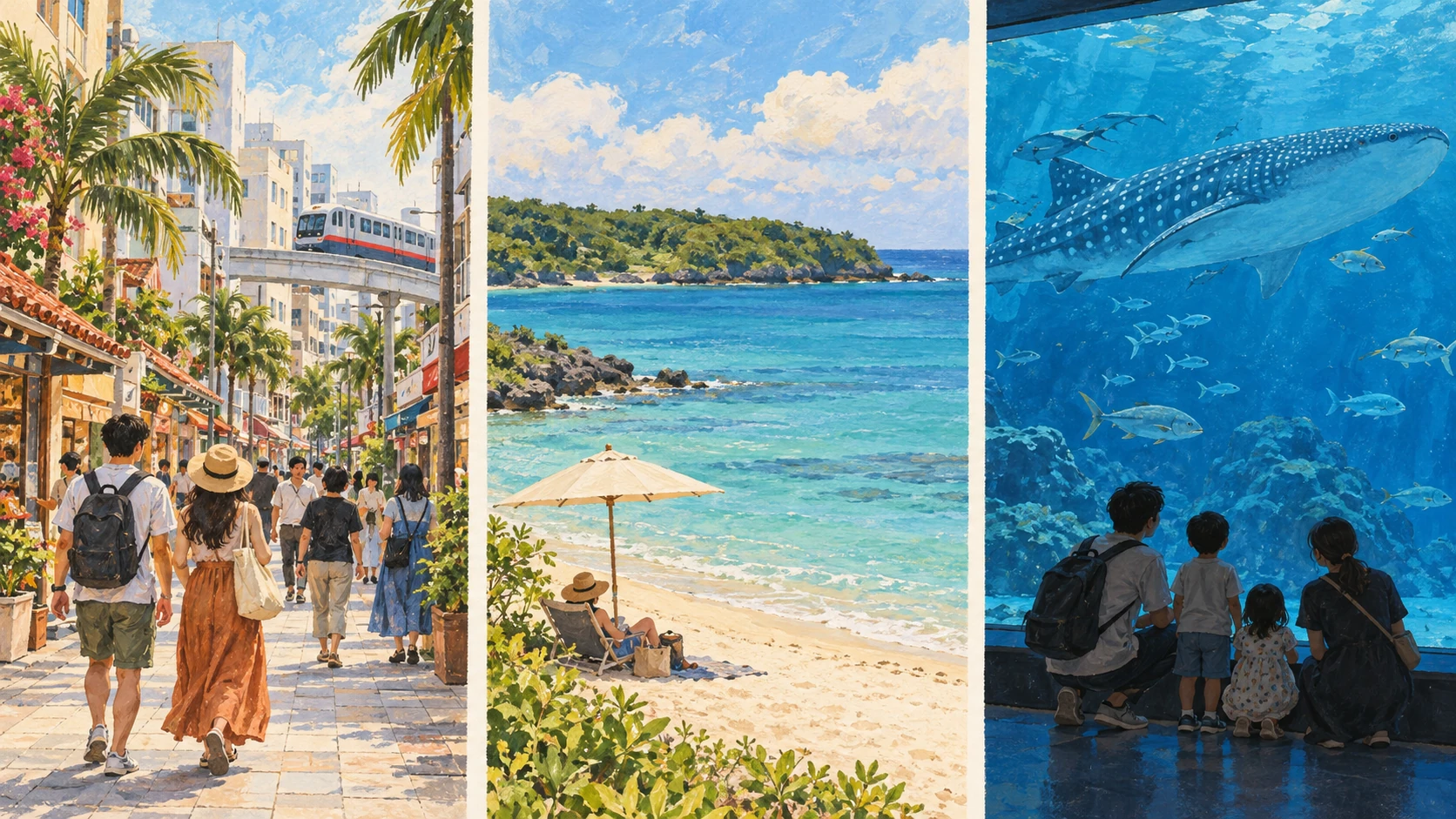
Follow international and domestic arrival routes, then compare monorail fares, new 2026 bus stops, TK02 services, taxis and luggage storage or delivery for Kokusai Street, Asahibashi and Nishimachi hotels.
International arrivals: taxis downstairs, buses and monorail toward the domestic area
Naha Airport's international arrival guide lists quarantine, immigration, baggage collection, customs and the arrival hall in that order. Your usable transport time starts when you leave the hall. These procedures still lie between landing and a bus departure. For a timed pickup, give the operator your flight number and save meeting-point details for offline access.
After leaving the international arrival hall, the taxi rank is outside on the first floor. For buses, rental-car shuttles or Yui Rail, follow airport signs toward the domestic area. For the monorail, continue along Monorail signs to the second-floor connecting passage. Decide your transport before leaving the hall, then follow its signs.
Keep passports, phones and tickets in a small bag and suitcases closed. If someone changes money or collects a SIM card, agree on a specific counter in the hall and move on together. Include floor changes and elevator waits in the indoor walk to the monorail. Late arrivals should secure city transport before shopping.
Domestic arrivals: collect bags before choosing the first-floor road or second-floor bridge
The official domestic arrival route places the hall on the first floor, with buses, taxis and rental-car shuttles outside. The monorail uses the second-floor passage. Match baggage-tag numbers at collection. Before leaving the hall, take out rainwear, your phone and payment method so you do not need to open a suitcase beside the road.
For the monorail, go upstairs after collecting bags and follow signs across the passage to Naha Airport Station. Airline check-in counters on the departure level serve a different purpose; follow Yui Rail signs. Use elevators with strollers or wheelchairs. A companion with free hands can read signs and handle the phone while others push luggage.
Skip the rental-car shuttle area if you are not renting tonight. You need not detour through a rental office to reach Naha. If collecting a car tomorrow before heading north, compare first-night parking, office hours and the next day's branch location. Arrival day then only needs the airport-to-hotel journey.
At Naha Airport Station, sort out tickets before going up to the platform
Enter through the gates with a single ticket, a ready transit IC card or a supported contactless credit card. The official riding guide shows readers for QR paper tickets and transit cards, plus separate credit-card readers. Scan a paper ticket's QR code and keep the ticket in a fixed pocket for exit.
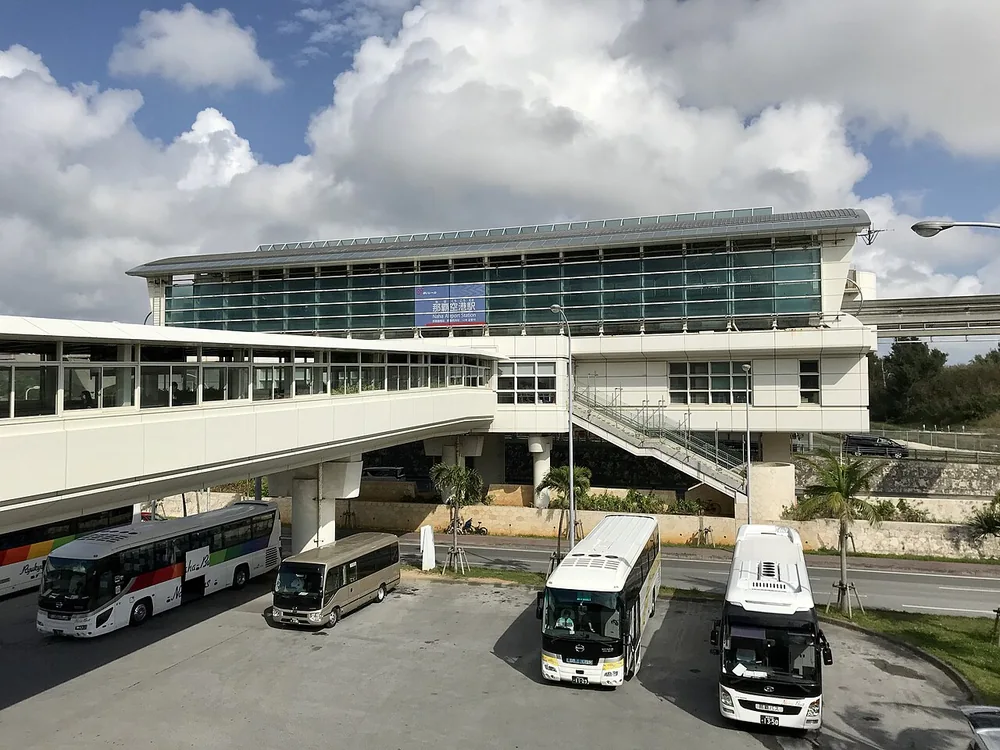
The platform is above the gate level. Follow boarding signs upstairs or use the elevator for large bags. The airport is the starting station; city-bound trains go toward Tedako-Uranishi. Follow platform and next-departure displays rather than assuming which side will leave first. Keep bags beside you, hold the handle or secure the wheels, and leave doors and aisles clear.
At your destination, descend to the gates, exit and continue to street level. The official guide says there are no downward escalators, so use elevators for heavy items. Start hotel navigation at the street-level station exit to see which intersection to approach.
An introduction to traveling from Naha Airport to Yui Rail, published by the Okinawa Convention & Visitors Bureau in 2023.
Match the final walk to Asahibashi, Kencho-mae, Miebashi or Makishi
The current official Naha Airport Station fare table lists adult fares of ¥290 to Asahibashi or Kencho-mae, and ¥320 to Miebashi, Makishi, Asato or Omoromachi. Asahibashi serves Naha Bus Terminal; Kencho-mae connects to western Kokusai Street. Compare Miebashi for northern Kumoji and the Tomari direction, and Makishi or Asato for eastern Kokusai Street.
Standard train times are eleven minutes to Asahibashi, thirteen to Kencho-mae and sixteen to Makishi. These are station-to-station figures. Add the terminal walk, ticket purchase, waiting and hotel search. With a large suitcase, two extra train stops often matter less than another block on foot. Riding to the station closest to the entrance usually takes less effort.
Distinguish Miebashi from Tomari Port. For a waterfront stay before an early ferry, save both the hotel entrance and the port check-in building. A city walk remains after the airport train to Miebashi. With multiple bags in rain, a direct hotel taxi is more suitable. Putting bags away on the first night makes the next morning's fixed ferry departure easier to manage.
| Destination station | Adult / child, yen | Standard station-to-station time | Hotel areas to compare |
|---|---|---|---|
| Asahibashi | 290 / 150 | 11 minutes | Izumizaki and Naha Bus Terminal |
| Kencho-mae | 290 / 150 | 13 minutes | Kumoji and western Kokusai Street |
| Miebashi | 320 / 160 | 14 minutes | Northern Kumoji and the Tomari direction |
| Makishi | 320 / 160 | 16 minutes | Eastern Kokusai Street and Makishi |
| Asato | 320 / 160 | 18 minutes | Asato |
| Omoromachi | 320 / 160 | 19 minutes | Shintoshin |
Two Naha hotels show the difference between five and fifteen minutes on foot
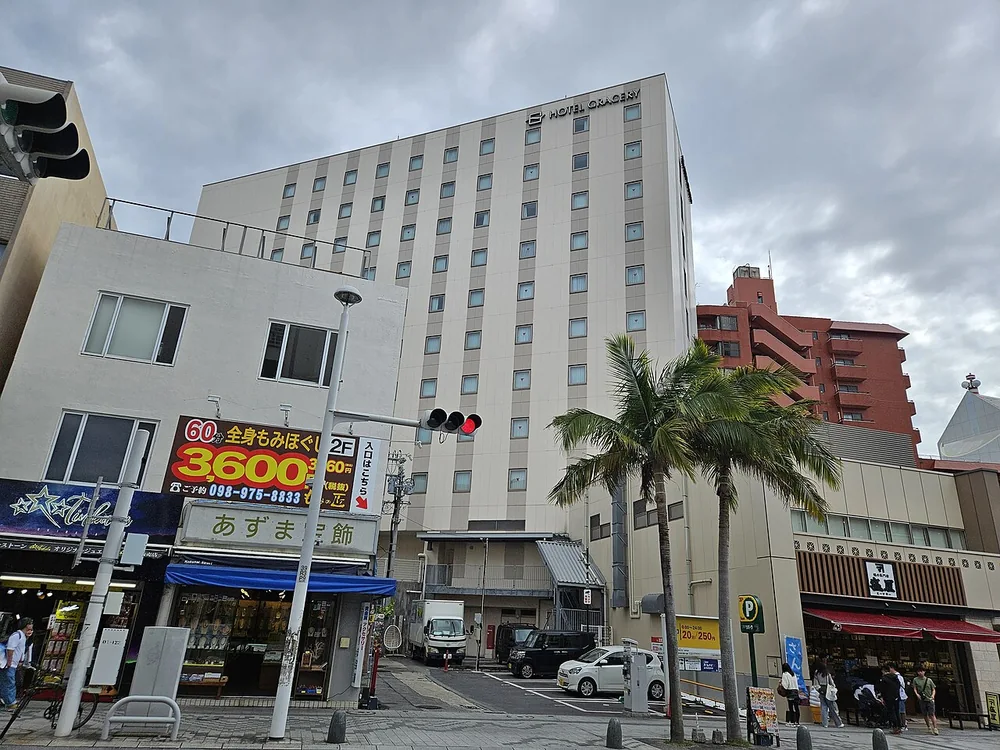
Hotel Gracery Naha's access page gives about five minutes on foot from Kencho-mae Station to 1-3-6 Matsuo, on Kokusai Street. This suits the monorail followed by a short walk. Navigate straight to the entrance to leave bags on your first night, then explore the shops without dragging luggage.
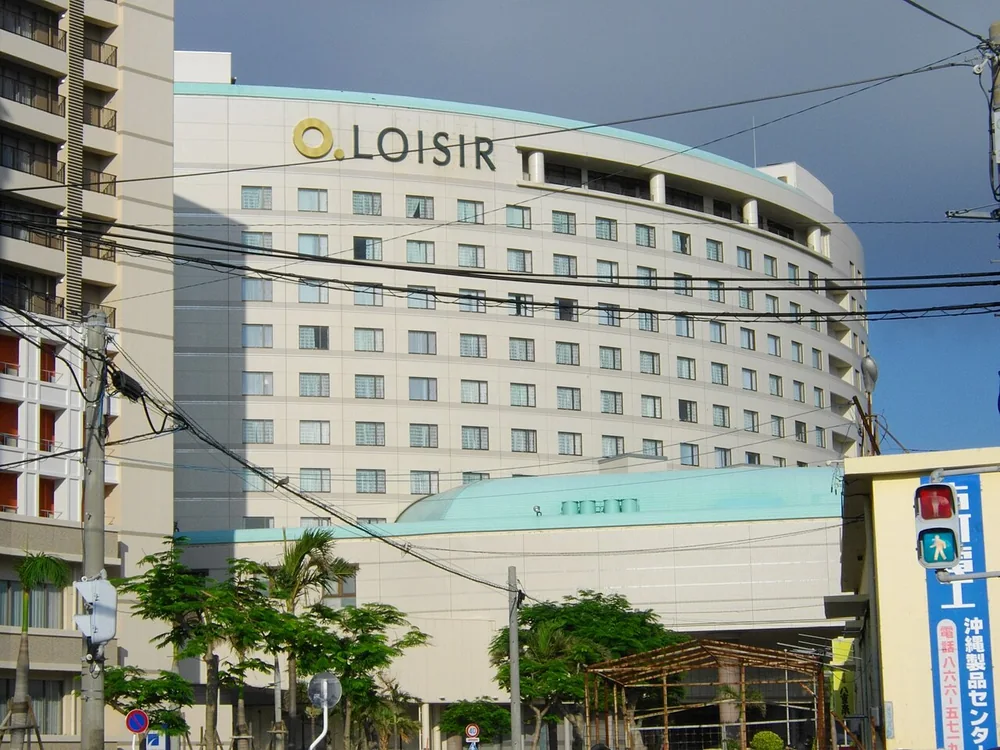
LOISIR HOTEL NAHA's official access page gives about fifteen minutes on foot from Asahibashi, or about seven to fifteen minutes by airport taxi through Umisora Tunnel, to 3-2-1 Nishi. The main difference between monorail plus walking and a direct taxi is the final stretch. A lightly packed solo traveler can walk; two people with large suitcases or tired late arrivals have a clear reason to go directly by car.
A Sunday midday taxi arrival at Gracery Naha has another entrance detail. The hotel says traffic restrictions on Kokusai Street every Sunday from 12:00 to 18:00 prevent vehicle access, so use the rear entrance. Its driving-navigation address is 1-7-5 Matsuo. Show the driver the official rear-entrance directions when boarding rather than searching for a drop-off lane at the front.
For similarly named hotels, show the driver the reservation's main-building or annex name and address, not just the brand. Interpret walking times with luggage in mind: walking five minutes and taking bags across stairs and junctions are different tasks. If a companion needs help, assign one adult to their care while the others handle suitcases.
Suica, OKICA, credit card or QR ticket: use a payment method that works at exit
Existing Suica, ICOCA and other compatible transit IC cards work on Yui Rail. The official IC-card page also lists Mobile Suica and interoperable cards. Stations can top up supported cards but do not sell Suica, and Suica auto-charge does not work here. Check the balance before arrival to reduce phone handling at the gates.
Without a transit card, a QR single ticket is enough for one airport-to-hotel trip. OKICA is Okinawa's transit card and has a ¥500 deposit. Consider it if you will use supported main-island buses in the following days. Monorail and bus card acceptance differ. Prepare the card or cash required by each operator before transferring.
Contactless credit-card travel on Yui Rail covers all nineteen stations and supports Visa, Mastercard, JCB and other officially listed brands. Each card is for its holder alone, one person per card. Entering with a physical card requires the same physical card at exit; entering with a phone requires that same phone. Even when the same card is loaded on the phone, do not mix phone and plastic. Assign each family member a ticket or card before entering. The adult accompanying children should check that everyone has passed through.
Buy child tickets by age and school status; credit-card taps charge adult fares
Ordinary ticket rules define adults as age twelve and above, except twelve-year-old elementary students use child tickets. Children are age six to under twelve, except six-year-olds not yet in elementary school use the younger-child rules. Each adult- or child-ticket holder can accompany two qualifying younger children free; the third onward requires a child fare. For several young children, tell station staff all ages and numbers and buy the correct tickets together.
Credit-card travel has no child fare. A child tapping a credit card pays the adult price. Airport to Makishi is ¥160 with an ordinary child ticket but ¥320 with a credit-card tap. Adults can tap while children use separate QR child tickets. Let the accompanying adult keep those tickets for exit rather than searching through documents at the gate.
Two adults and two children eligible for child tickets pay ¥960 to Makishi; four adults pay ¥1,280. That difference changes a taxi comparison. Include strollers, large bags and tired children too. Free travel settles the fare, while accompanying adults still arrange care and carrying.
For one city trip, buy a single ticket; calculate passes using actual journeys
The monorail one-day unlimited pass costs ¥1,000 for adults or ¥500 for children and lasts twenty-four hours from purchase. The two-day pass costs ¥1,800 or ¥900 and lasts forty-eight hours. An adult traveling from the airport to Kencho-mae on arrival night and back the next morning pays ¥580 in single fares, so the ¥1,000 pass saves nothing.
If the next day includes Shuri, Shintoshin and several city journeys, list each trip and check whether they fit within one twenty-four-hour period. A pass bought at 22:00 remains valid the following afternoon. If you buy during the day but first ride that evening, part of the pass's validity has already elapsed. Decide the actual journeys before buying; a single ticket is often simplest when the first night's only plan is a shower and sleep.
The pass covers the entire Yui Rail line. Buses and taxis after leaving a station cost separately. Adding another transfer with suitcases merely to use a pass can save less than the effort of an unnecessary final journey. Put luggage storage, your hotel and the next day's activities on one map to count the rides you will actually take.
Use current bus stops: city-bound stop 4 differs from southbound stop 6
The airport's current bus page divides routes into six stop groups. Stop 4 serves city and central west-coast routes 26, 99, 132 and northbound TK01/TK02. Stop 5 serves Chatan and the north, including 120, 143 and Chatan direct services. Stop 6 serves southern destinations including Senagajima, Toyosaki and Itoman. Waiting for the same brand's southbound bus when staying on Kokusai Street takes you in the opposite direction.
Tokyo Bus's new-stop notice effective January 9, 2026 places TK01/TK02 toward Kokusai-dori Iriguchi at new stop 4, and services toward Senagajima and Ryukyu Hotel at new stop 6. Check both stop number and front destination display. Boarding simply because a bus says Umikaji Liner misses the route's direction.
The current airport map places bus stops 4, 5 and 6 on the terminal side. R10–R14 and similar positions across the road are rental-car shuttle areas. After leaving domestic arrivals with bags, find the numbered bus signs first. Following rental-car passengers across the road leads to another service's waiting area. Check the destination and departure indoors, then move to the correct stop together.
For Chatan and Onna, distinguish expressway, direct, local stopping and hotel limousine services. Stop 1 groups some central/northern shuttles and limousines, while stop 2 lists expressway routes 111 and 117. Not every northbound bus uses stop 5. For a direct resort trip, compare the operator, service and drop-off on your hotel's access page before joining a queue.
TK02 to western Kokusai Street costs ¥240: include waiting time
Tokyo Bus's TK01/TK02 route page gives airport-to-Kokusai-dori Iriguchi fares of ¥240 for adults and ¥120 for children. The terminus is at Kokusai Street's west end. For Kencho-mae or Kumoji, compare it with the ¥290 monorail. For eastern Makishi, a further street journey remains, so riding the monorail to Makishi is usually more direct.
The August 2026 timetable linked from the main route page lists weekday airport departures from 7:17 to 21:13 and weekend/holiday departures from 7:48 to 21:21. Morning services include TK01 expresses. A weekday example leaves at 10:05 and arrives at 10:17, a scheduled twelve-minute ride. Waiting after missing the preceding bus is additional.
The new table also lists Naminoue Beach (Naha Cruise Terminal) and Naha Commercial High School (Matsuyama Entrance), which may suit western hotels better than a monorail detour. The former's actual stop is on Wakasa Nakamichi outside MaxValu Wakasa. Navigate using the full stop name, then compare the walk to the hotel entrance. The operator's FAQ places Tokyo Bus's Kokusai-dori Iriguchi stop outside Bank of Okinawa's head office, toward Kumoji intersection. Identify the return stop when arriving so you need not search with bags on departure day.
Open the main route page's complete timetable and read the airport boarding time in the weekday or weekend/holiday column. For a fixed hotel dinner during busy evening traffic, the monorail to the closest station plus a short walk makes arrival easier to control. With a bus, allow for both waiting and congestion.
On route buses, consider payment and the space beside your feet
Official TK01/TK02 instructions specify boarding at the middle door, taking a numbered ticket and paying afterward with cash or a supported contactless credit card. The ticket identifies the boarding section. Prepare it and your payment before getting off, then follow the driver's instructions. Credit-card taps differ from Suica. If you only have Suica, prepare cash rather than searching for change at the exit.
Tokyo Bus requires hand luggage to fit on a rack or at your feet without disturbing neighboring passengers. A route bus differs from a long-distance coach with an underfloor luggage hold. With large cases, a stroller and shopping bags, consider aisles and boarding even when group fares total only a few hundred yen. A direct taxi is easier for a party needing substantial space.
State your destination when boarding, secure the bags and sit down. Gather small bags and suitcases before your stop, then move after the bus stops. For a seaside detour on your first city trip, deal with large luggage first. Taking all your travel bags around southern sightseeing stops turns every boarding into a carrying task.
Compare taxis for the whole party, especially for distant hotels, rain and groups
The small-car estimate linked from the airport's official taxi page uses a July 1, 2025 basis: about ¥1,400 to Asahibashi/Naha Bus Terminal, ¥1,700 to Kokusai Street and ¥1,600 to Tomari Wharf. Use these estimates for budgeting. Actual charges depend on route, congestion and nighttime travel. For a reserved car with separate pickup terms, read that booking's vehicle type and price.
For a hotel near Kokusai-dori Iriguchi, four adults pay ¥1,160 by monorail to Kencho-mae, ¥540 below the Kokusai Street taxi estimate. Two adults pay ¥580, a much larger difference. Groups can share the fare, but bags must fit too. For four people and several large suitcases, tell rank staff the full load and use a suitable vehicle. Do not pile cases that cannot fit the trunk onto passengers.
Outside domestic arrivals, choose the queue for your destination direction. International arrivals also have a first-floor taxi rank. Show the full hotel name and address rather than simply saying Kokusai Street. Before leaving the car, prepare payment and count cases, checking children, phone and passport bag too. Those exiting first should stand on a safe pedestrian area while an adult with free hands helps unload.
For late arrivals, include the walk to the platform; Friday's extra train ends at Makishi
Yui Rail's official standard weekday timetable gives a 6:00 first departure from Naha Airport Station and a usual last departure of 23:30. A 23:00 landing still leaves immigration, baggage collection and the walk through the terminal, so make a taxi the main plan. If enough time remains when you leave arrivals, use the monorail. Tell the hotel about your delayed arrival while arranging transport so you can complete both arrangements together.
The official March 9, 2026 announcement continues the Friday-only extra departure at 24:00 from Naha Airport Station, terminating at Makishi. For Asato or Omoromachi, arrange the remaining journey. It also specifies an extra train on Thursday, December 31, 2026 and none on Friday, January 1, 2027. Check the specific date for New Year arrivals.
Use the Friday midnight train if you can reach it and your hotel is near a served station. If everyone is tired and the hotel remains far beyond the terminus, go directly by taxi. After available train services end, wait at the formal airport taxi rank and preserve phone battery and the hotel's number. Use the restroom and obtain necessary water before leaving the terminal so you can check in directly on arrival.
For a half-day city visit, choose a staffed storage counter you can return to in time
The airport luggage-storage page lists Okinawa Yamato's domestic first-floor counter as 7:30–20:00 and its second-floor counter near Security Checkpoint C as 9:00–19:00. Storage is priced per item per day by total three-side dimensions: S under 120 cm costs ¥600, M from 120 to under 150 cm costs ¥800, and L from 150 to 250 cm costs ¥1,000.
Before U Go on second-floor Yuinichi Street opens 9:00–20:30, charges by size and accepts cashless payments only. First-floor Sagawa Express opens 9:00–18:00. Choose a counter using your airport return time. A service closing at 18:00 is unsuitable if you will only arrive back at six. Record the pickup counter on your receipt and return to that location.
Okinawa Yamato's own storage page says advance reservations are unavailable and payment is cash on collection. Keep the collection fee with you. For a first night downtown, take bags to the hotel or arrange delivery instead of returning to the airport that evening. Terminal storage suits a connection gap or the half-day before departure. Remove medicines and same-day essentials before handing bags over.
Lockers have size and collection limits that differ between station and terminal
The official terminal locker page lists lockers on the first, second and third floors. Look on your current floor. Include wheels and handles in bag dimensions and compare with the locker label if unsure. Do not force the door. Photograph the locker number and nearby floor signs for companions, and retain the key or collection receipt.
The official Naha Airport monorail station page separately lists four large lockers, each with internal dimensions of 346 mm wide, 569 mm deep and 774 mm high, costing ¥600 per use until that day's last train. Those station rules differ from staffed airport counters' daily rates and opening hours. Large lockers are few. If full, use staffed storage rather than repeatedly circling the station for another locker of the same size.
Consider the return direction when choosing storage. For a daytime city trip before an evening flight, terminal storage is easy to collect before check-in. For a city stay followed by onward travel tomorrow, use hotel storage or a suitable city service. Airport storage removes sightseeing weight but fixes collection at the airport, making it convenient only when you already need to return.
Hotel delivery: Yamato's 13:00 cutoff determines same-evening availability
Okinawa Yamato's Rakuchin luggage service costs ¥1,000 per item from the airport to main-island accommodation. Bags accepted from 7:30 to 13:00 are expected by 19:00 that day. Deliveries for acceptance after 13:00 start the next morning. Afternoon arrivals needing their bag that night should take it into the city. Morning arrivals wanting to sightsee can compare delivery with an initial hotel luggage drop.
Remove the day's clothes, medicines, documents and valuables before handing over bags. Write the hotel name and check-in date clearly and confirm that the hotel accepts delivery. Two large cases cost ¥2,000. Sending all family bags can approach a city taxi fare, so include passenger transport in the comparison. For accommodation near the airport, going directly to leave bags may be simpler.
For delivery back from participating hotels, Yamato lists airport collection at its second-floor counter from 16:00 that day. Hotel handover deadlines vary. A morning departure cannot use afternoon collection. For an evening flight, allow for collection, walking to the airline counter and check-in. Collect the bags before going through security.
Strollers and wheelchairs: connect elevator routes with the hotel entrance
Yui Rail's accessibility information lists elevators between street, gates and platforms, plus wheelchair facilities. Before traveling, read both stations' layouts and connect the elevator exit to the hotel route. Platforms are elevated. If the nearest mapped exit uses stairs, take the elevator exit with a stroller and follow pedestrian routes back.
With children, assign one adult their tickets and another the luggage before entering the gates. Regroup in a spacious place after exit. Wheelchair users needing help across the platform gap should tell staff their destination and assistance needs. For a wheelchair taxi, state whether the chair folds, whether the passenger can transfer to a seat and how many bags you have so the operator can provide a suitable vehicle.
Three arrival plans based on accommodation and luggage
Two adults, each pulling one manageable case, arrive in the afternoon for Gracery Naha. After customs, walk toward the domestic area and use the second-floor passage to the monorail. Two tickets to Kencho-mae cost ¥580, followed by the hotel's stated five-minute walk. For TK02, check the next departure at stop 4. If it is nearly due and its stop suits the hotel better, take it. The saving is ¥100 for both people; weigh that against the wait.
Four adults with three large cases arrive at night for LOISIR HOTEL NAHA. Tell taxi staff the four-person, three-case load and queue for or reserve a suitable vehicle. Four monorail fares to Asahibashi total ¥1,160, still followed by about fifteen minutes on foot. The group can share a direct fare, with a clear destination, so prioritize reducing nighttime luggage handling.
One adult arrives in the morning and returns for an evening domestic flight. Store the large bag at a terminal counter whose hours fit the return, take a small bag into the city by monorail, then collect the case on the same floor before airline check-in. If staying downtown instead, take the bag to the accommodation and return directly to the room that night.
For departure, use your local station's airport-bound timetable and collect bags before check-in
Work back using the airport-bound timetable at the station near your hotel. The airport's 6:00 first departure does not apply to every city station. For an early flight, start with the airline's required arrival and check-in deadline, then add hotel checkout, the station walk and waiting. Arrange a taxi in advance if no train fits. At the airport, you still need the connecting passage and, for international flights, the walk to the relevant counters.
For a return bus, check your actual boarding stop, such as Kokusai-dori Iriguchi, and its direction. Read weekdays and holidays separately. Do not schedule a road journey against the final check-in deadline. Consider the monorail in morning congestion or on event days. Collect stored or delivered bags first, count and inspect them, then check in. Add this time from your transport arrival at the airport.
During typhoons or strong winds, check airline and transport-operator service notices. The official monorail FAQ says operations stop at winds of 25 m/s; buses may also suspend service for safety. If a flight changes date, update hotel and pickup arrangements too. Save the hotel's address and contact details before leaving so they are ready for a transport change.
A few useful answers
Which monorail station serves Kokusai Street from Naha Airport?
Compare Kencho-mae for western hotels and Makishi or Asato for the east. Adult airport fares are ¥290 to Kencho-mae and ¥320 to Makishi. Include the walk from the station to the hotel entrance.
Where do I board the monorail after an international arrival?
After immigration, bags and customs, walk toward the domestic area and take the second-floor connecting passage to Naha Airport Station. The international taxi rank is outside on the first floor.
Which stop serves TK02 toward Kokusai-dori Iriguchi?
Since January 9, 2026 it uses new stop 4. Check that the front display says Kokusai-dori Iriguchi. Opposite-direction services toward Senagajima and Ryukyu Hotel use new stop 6.
Can a family share one contactless credit card on the monorail?
No. Each card is for its holder alone. Use the same physical card or device at entry and exit. Contactless credit-card travel has no child fare; buy separate QR child tickets for children.
Is there a midnight monorail from Naha Airport?
The usual last train is 23:30. The official notice adds a Friday 24:00 train ending at Makishi, with an extra service on December 31, 2026 and none on January 1, 2027. Include arrival procedures and the platform walk for late flights.
If I hand bags to Yamato in the afternoon, can I collect them at the hotel that evening?
The current airport-to-hotel cutoff is 13:00. Bags accepted from 7:30 to 13:00 are expected by 19:00 that day; delivery for later acceptance starts the next morning. Keep that evening's essentials in your hand luggage.
Official information and references
Sources used in this guide.
- Naha Airport | International arrivals
- Naha Airport | Domestic arrivals
- Yui Rail | Airport station fares, times and facilities
- Yui Rail | How to ride
- Yui Rail | Suica and interoperable cards
- Yui Rail | Contactless credit-card travel
- Yui Rail | Child and ordinary tickets
- Yui Rail | 24- and 48-hour passes
- Naha Airport | Current six bus-stop groups
- Tokyo Bus | January 2026 stop changes
- Tokyo Bus | TK01/02 main route and fares
- Tokyo Bus | Complete August 2026 timetable
- Tokyo Bus | Stops, luggage and service FAQ
- Tokyo Bus | Boarding and payment instructions in the 2024 airport timetable
- Naha Airport | Taxis
- Naha Airport | July 2025 taxi estimates
- Yui Rail | Date-specific timetables
- Yui Rail | Friday midnight train and year-end exceptions
- Naha Airport | Staffed luggage storage
- Naha Airport | Terminal lockers
- Okinawa Yamato | Storage and airport–hotel delivery
- Yui Rail | Accessibility facilities
- Yui Rail | Wind-related suspension rules
- Hotel Gracery Naha | Access
- LOISIR HOTEL NAHA | Access
- OCVB | Official public-transport video