
Your 2026–27 season guide to Kagura Ski Resort. Choose between the Mitsumata and Tashiro base entrances by bus from Echigo-Yuzawa Station, compare lift passes and Dragondola transfer times, and plan spring skiing and lodging.
- Region & Focus
- Echigo-Yuzawa and NaebaSkiing
- Reading Scope
- 19 min read · 11 chapters · 8 Q&As
- Official Verification
- 20 official sources checkedUpdated November 22, 2026
- Key Topics
- WinterBookingRail travel
Chapter Route Map (tap any stop)
- Mitsumata, Tashiro, and Naeba: Sorting Out the Three Base Areas
- Picking Your Dates for the 2026–27 Season
- Taking the Bus from Echigo-Yuzawa Station East Exit Stop 1
- Kagura-Only, Half-Day, and Mt. Naeba Common Lift Passes
- Entering via Mitsumata: Spot Your Return Markers Before Dropping In
- Planning Lake Tashiro Runs and the Dragondola Traverse
- First-Time Skiers, Family Lessons, and Gear Rentals
- Wind, High-Elevation Closures, and Heavy Spring Snow
- Pick Lunch on the Side Where You Plan to Exit
- Where to Stay: Echigo-Yuzawa, Mitsumata, Naeba, or Wada-goya
- 1-Day, 2-Day, and Lift-Closure Itineraries
- Quick Q&A
For a single day on the slopes at Kagura Ski Resort, take the bus from Echigo-Yuzawa Station to Mitsumata and buy a Kagura-only pass—it covers Kagura, Mitsumata, and whichever parts of Tashiro are open. If you want to cross over to Naeba, schedule your trip while the Dragondola is operating and pick up the Mt. Naeba common pass. For the 2026–27 season, Kagura and Mitsumata are slated to stay open through May 16, whereas the Dragondola closes much earlier on March 22. Whether you are commuting from Tokyo for the day, taking kids to ski school, or traversing from Naeba into Kagura, your return gondola and bus depend on where you finish. Decide which base area you will exit from before deciding how far across the mountain to ski that morning.
Mitsumata, Tashiro, and Naeba: Sorting Out the Three Base Areas
Kagura, Mitsumata, and Tashiro are the three connected zones of Kagura Ski Resort. Both Mitsumata and Tashiro have their own ropeway rising from beside the highway, while the Kagura Gondola sits higher up on the mountain and carries you into the main Kagura area. When booking lodging, checking bus schedules, or calling a taxi, use the full base names—Mitsumata Station or Tashiro Station. If your group is taking separate cabs, sharing the exact base station name avoids far more confusion than simply sending "Kagura."
Choose Mitsumata if you are coming from Tokyo, renting gear at the base, or heading straight for Kagura's main runs. The Mitsumata Ropeway lifts you from Route 17 up to the beginner area, where Mitsumata's slopes and chairlifts lead directly to the base of the Kagura Gondola. Boot fittings, free child tickets, and luggage storage are all handled at Mitsumata, and you exit the same way at the end of the day. The Mitsumata Station address is 742 Mitsumata, Yuzawa-machi—save it in your itinerary so you can give clear directions to a taxi driver or forward an exact meeting spot to your group.
The Tashiro entrance sits farther down the highway past Echigo-Yuzawa toward Naeba, at 1066 Mikuni, Yuzawa-machi. Riding the Tashiro Ropeway drops you on the Lake Tashiro side, making it the fastest base if you want to spend your day cruising the green runs around the lake. For early-season practice, check Tashiro's separate opening date first. Guests staying on the Naeba side with their own gear can also travel along the highway straight to the Tashiro base, skipping the mountain traverse from Mitsumata.
Naeba is a separate ski resort linked to Tashiro by the Naeba Dragondola, from which chairlifts and connecting trails lead onward to Kagura. Note that the Dragondola summit station and the Tashiro Ropeway summit station are in different locations—even though both platforms sit in the Tashiro zone, always specify the exact lift name when meeting up. If your group plans to regroup near Lake Tashiro, pick a specific restaurant or chairlift on the trail map rather than leaving people asking for directions at opposite ends.
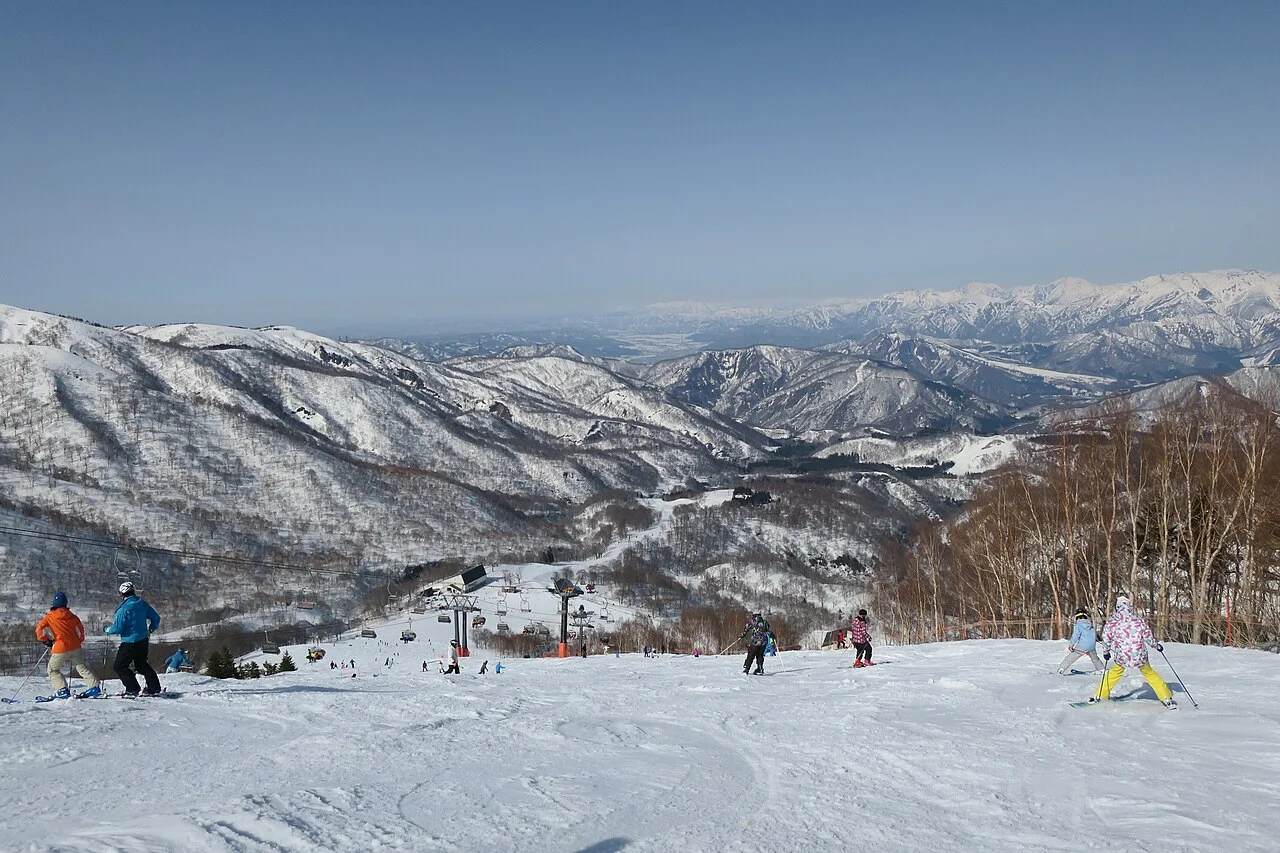
Your 2026–27 season guide to Kagura Ski Resort. Choose between the Mitsumata and Tashiro base entrances by bus from Echigo-Yuzawa Station, compare lift passes and Dragondola transfer times, and plan spring skiing and lodging.
Picking Your Dates for the 2026–27 Season
Prince Hotels lists the scheduled 2026–27 operating window for Kagura and Mitsumata as November 28, 2026, through May 16, 2027, while Tashiro is slated to run from December 19 through May 5, 2027. Naeba's main ski area is scheduled for December 18 through April 4, 2027, but the Dragondola's winter season is shorter, running from December 26 through March 22. Plan any cross-resort traverse within that Dragondola window so Mitsumata, Tashiro, Kagura, and Naeba are all connected.
If you are visiting in late November or early December for early-season turns, use Mitsumata as your entry and exit point. Terrain early in the season is often limited to a handful of initial runs, and when snow cover is thin on lower slopes, open trails near the bottom may serve mainly as download or connecting routes. Check the official trail status page first thing in the morning to see which practice slopes are open above Mitsumata and whether the Kagura Gondola and return trail to Mitsumata are running. If only the upper mountain is skiable, total beginners and young kids will spend extra time riding lifts up and down—a simpler resort setup is easier to manage on those days.
In midwinter, if you are chasing fresh powder, staying around Echigo-Yuzawa makes it easy to pivot between Mitsumata, Tashiro, or neighboring resorts. Before heading up, check live lift, gondola, and trail openings. When fresh snow arrives but connecting trails remain closed, pick one zone and lap it instead of forcing a traverse. On clear days when you want views of Lake Tashiro, start from the lake side and choose from the runs open that day. For a half-day session, head straight to your target zone as soon as you get up the mountain and start heading back to your entry base early in the afternoon.
For spring skiing, circle March 22 and May 5 on your calendar. Starting March 23, moving between Naeba and Kagura requires taking the highway by bus or car; starting May 6, planned operations shrink back to Kagura and Mitsumata only. Even during the same Golden Week holiday, you may need to switch base entrances between the first half and the final days of the week. Spring snow is firm early and late in the day, softens in midday sun, and turns heavy and slushy by mid-afternoon. If you only have one spring day, ski the longer upper runs in the morning and drop back to Mitsumata in the afternoon to ease off, return gear, catch your bus, or hit a hot spring.
| Operating Zone | Opening Date | Closing Date |
|---|---|---|
| Kagura & Mitsumata | 2026/11/28 | 2027/5/16 |
| Tashiro | 2026/12/19 | 2027/5/5 |
| Naeba Main Area | 2026/12/18 | 2027/4/4 |
| Naeba Dragondola | 2026/12/26 | 2027/3/22 |
| Naeba Night Skiing | 2026/12/18 | 2027/3/21 |
Taking the Bus from Echigo-Yuzawa Station East Exit Stop 1
Ride the Joetsu Shinkansen from Tokyo, Ueno, or Omiya to Echigo-Yuzawa Station, head out the East Exit, and look for Minami Echigo Kanko buses bound for Naeba at Bus Stop 1. For the Mitsumata entrance, get off at Kagura Mitsumata Ski-jo-mae. On the local Naeba Line to Tashiro, watch for Futai Tashiro Ski-jo-mae; on winter express buses, the Tashiro stop is listed as Tashiro Ski-jo. If you are staying at the Naeba Prince Hotel, check for buses that stop at Naeba Prince Hotel-mae—there is also a separate Naeba Ski-jo stop along the route, so pick the stop closest to whichever building holds your gear.
The resort trail map estimates express bus segment times at roughly 20 minutes from Echigo-Yuzawa to Mitsumata, 15 minutes from Mitsumata to Tashiro, and 20 minutes from Tashiro to Naeba Prince Hotel. Check the local Naeba Line and winter express timetables separately, as some express buses terminate at Mitsumata or Tashiro. Always verify a bus's final destination rather than just looking for "Naeba." Minami Echigo Kanko splits its local Naeba Line into weekday and weekend/holiday schedules, and the current timetable applies the holiday schedule from December 29 through January 3.
Save your bus plan on your phone with one target outbound bus and a backup in case you arrive late. For the return trip, work backward: pick the Shinkansen you need to catch, find the bus that connects to it, and set your cutoff time on the mountain accordingly. First-time visitors renting boots at Mitsumata still need time after stepping off the bus to fill out rental forms, try on boots, pick up lift tickets, and ride the first ropeway. Scheduling ski school check-in right after your train arrives is a recipe for getting stuck at the rental counter, especially with kids trying on ski boots for the first time.
According to the local Naeba Line fare chart, one-way bus fares from Echigo-Yuzawa Station are ¥400 to Mitsumata, ¥570 to Futai Tashiro, and ¥700 to Naeba Prince Hotel-mae. While the local timetable notes contactless credit card tap-to-ride support—requiring a tap both when boarding and exiting—buses without card readers are occasionally dispatched, so carry cash as a backup, especially if your group is splitting up with shared gear bags. Always check the current season's local timetables and winter express notices under the Muikamachi and Yuzawa area listings on the bus operator's site.
If you are driving, exit the Kan-etsu Expressway at Yuzawa IC and head south on Route 17 toward the Mitsumata, Tashiro, or Naeba address. This season's trail map designates weekends, Japanese national holidays from November 28, 2026, through May 16, 2027, plus December 28, 2026, through January 1, 2027, as paid parking days at ¥1,500 per standard passenger car. A group with mixed skill levels should park at whichever base everyone can comfortably reach at the end of the day—if your car is at Mitsumata and you ski down to Tashiro in the afternoon, you still have a mountain traverse or highway bus ride left before going home.
Kagura-Only, Half-Day, and Mt. Naeba Common Lift Passes
If you are sticking to Kagura's three zones, a Kagura-only pass covers everything you need. Standard 1-day passes for junior high students and adults cost ¥8,500 (¥8,000 for Seibu Prince Global Rewards members), and a 2-consecutive-day Kagura pass is ¥15,500. One Kagura pass lets you ride freely across Mitsumata, Kagura, and Tashiro whenever the connecting trails are open. Even if you enter via Mitsumata one day and Tashiro the next, the 2-day pass saves ¥1,500 over two standard 1-day tickets and ¥500 over two member 1-day tickets.
Morning passes are ¥6,700 and valid until 13:00 JST. Afternoon passes are ¥6,200, go on sale at 11:30 JST, and are valid from 11:45 to 16:30 JST. If you arrive at Mitsumata around midday for a few practice laps, change and gear up before 11:45 so you can head straight up the ropeway as soon as the ticket activates. Keep in mind that if you start in the afternoon and plan to ski from Mitsumata over to Tashiro and back, you need to budget time for lift lines as well as skiing. Morning pass holders should finish gear rentals early enough to get ample slope time and catch any required return lifts before 13:00.
To ride the Dragondola into Naeba, you need the Mt. Naeba Common 1-Day Pass at ¥11,800 regular adult price—¥3,300 more than a standard Kagura 1-day pass. Naeba's ticket page also lists a member counter rate of ¥10,800, while a Naeba-only 1-day pass is ¥9,800 regular (¥9,000 member). If you plan to ski one resort per day and start and finish from the same base each day, buying single-area 1-day passes saves noticeably compared to buying common passes for both days—save the extra spend for the specific day you actually cross over.
Elementary school children and younger ski free, though you still need to pick up a dedicated free child ticket at the ticket window. Factor gear rentals, outerwear, and lessons into your family budget separately, especially when adults bring their own equipment and kids need full rental sets. Official Webket e-ticket QR codes can be shown on a phone or printed on paper; if you are in a group, distribute each person's QR code beforehand and agree whether to pick up tickets separately or meet at the window together so nobody reaches the upper mountain only to realize a child's ticket was never collected. Note that Webket explicitly prohibits changes, cancellations, or refunds after purchase.
During early season (November 28–December 18, 2026) and late spring (May 6–16, 2027), full-price Kagura 1-day and 2-day passes include a ¥1,000 on-mountain credit voucher. Half-day, early-bird, and other discounted passes are excluded. Since the voucher can only be spent at resort facilities, compare the net ticket price against what you actually plan to spend on lunch and drinks on the mountain if you are considering a discounted pass instead.
Entering via Mitsumata: Spot Your Return Markers Before Dropping In
After stepping off the Mitsumata Ropeway, beginners should look on the trail map for course A1 (Family Course) around the Mitsumata No. 1 High-Speed Lift. Once you can link turns and control your speed, follow the open connecting trails toward the Kagura Gondola. Mitsumata also has a terrain park; check the map carefully to distinguish the beginner practice slope near the ropeway entrance, the family run beside the chairlift, and the park features. Mixed-ability groups can meet at the bottom of the Family Course first to get oriented before splitting up.
To reach the main Kagura zone, ride the 3,132-meter Kagura Gondola. Once at the top, locate the nearby restaurant, Wada-goya, and the Kagura No. 1 High-Speed Lift before picking your next run. Trails branch in different directions from here—the green E1 Gondola Course leads back toward Mitsumata, while a separate marked route heads toward Tashiro—making the Kagura Gondola summit station the clearest landmark for meetups. Kagura's main F1 run is rated intermediate; to bypass its steeper pitch, take the F2 detour trail when open.
The trail map estimates roughly 30 minutes for an intermediate skier to travel from the Mitsumata Ropeway summit station to Wada-goya, and about 25 minutes on the return. On the way back, treat reaching the Mitsumata slopes and reaching the Mitsumata highway base as two separate steps, because you still have to queue for the download ropeway at the Mitsumata Ropeway summit station. If you want an extra lap at Mitsumata after returning from Kagura, stay near the Mitsumata Ropeway so you remain close to the exit in case a download line builds up.
There is also an intermediate ski-out trail, MR1, running down to the Mitsumata base alongside the ropeway. Beginners, or anyone visiting when snow conditions are poor or MR1 is closed, should follow signs and ride the ropeway back down. Even when MR1 is open, check everyone's leg fatigue and confirm your meetup point on the map before committing to skiing down. Remember that returning rental boots, grabbing lockers, and changing back into street shoes means you need to arrive at the base well ahead of your bus departure.
Planning Lake Tashiro Runs and the Dragondola Traverse
From the Tashiro entrance, beginners should head for T1 (Rakuraku Course), leaving the steeper T3 (Tashiro No. 1 Course B) to advanced skiers. The map also marks lakeside green trails such as Y1 (Lake Tashiro Course). If a group wants to split up within the zone, agree to meet at an open lakeside restaurant or specific chairlift and ride the same ropeway back down. If someone in your party needs to leave at noon, staying on the Tashiro side keeps their exit completely independent of everyone else's afternoon laps.
The Naeba Dragondola spans 5,481 meters, and the Prince trail map estimates roughly 20 minutes from the Naeba base station to the Tashiro summit station, followed by a long sequence of runs and chairlifts. Official intermediate estimates put the traverse from the Dragondola summit station to Wada-goya at about 50 minutes (and 45 minutes in reverse), not counting extra margin for high winds, lift queues, or wrong turns. If you start at Naeba and want several runs in Kagura, ride straight through to Kagura first before choosing trails—setting out after lunch leaves most of your afternoon eaten up by the return commute.
If you start from Naeba and need to return to your hotel there, take the Dragondola in the morning and take note of return signs and connector closing times as you pass through Tashiro. Continuing past Wada-goya to Mitsumata and back adds nearly an hour of transit time alone according to official estimates. When daylight is short in midwinter or your group moves at different speeds, save Mitsumata for another day. Also, never assume every lift stays open until the resort's 16:30 overall closing time—Tashiro, the Kagura connectors, and the Dragondola each enforce their own final boarding cutoffs.
For a one-way traverse, you can ride the Dragondola up from Naeba, ski across Tashiro, Kagura, and Mitsumata, and catch the bus from the Mitsumata base back to Echigo-Yuzawa Station. This eliminates the return mountain crossing, though you must carry all your own gear and layers with you—and if you left luggage at a hotel in Naeba, you still face a highway bus ride to retrieve it. Another option for split-gear groups is having renters ski out-and-back from Mitsumata while guests with their own gear ski one-way from Naeba to Mitsumata, then meet up at the Mitsumata base for the bus back to the station.
If the Dragondola shuts down for weather while you are already on the Kagura side and staying at Naeba, ask ski patrol or lift staff whether you should download via Tashiro or Mitsumata, then check the highway bus schedule to Naeba. If it is closed before you head out, guests staying at Naeba can simply ski the slopes right outside the hotel, while guests staying at Echigo-Yuzawa can pick Mitsumata or Tashiro based on which ropeway is operating. On days when the ridge connectors are closed but both resorts are spinning, using the highway bus to return to your hotel or meet companions beats burning prime post-lunch ski time waiting in transit.
First-Time Skiers, Family Lessons, and Gear Rentals
The ski schools at Kagura, Tashiro, and Mitsumata each run their own schedules. Kagura Ski School group lessons accept students from 4th grade and up, with check-in by 9:00 JST and class from 9:30 to 11:30 JST; English or Chinese ski instruction requires advance booking. Group ski and snowboard lessons at Tashiro and snowboard lessons at Mitsumata also start at 4th grade and up. Private lessons must be booked in advance—be sure to specify young children's ages and exact meeting locations when reserving. Guests staying in Echigo-Yuzawa who want to minimize morning rush on day one should book an afternoon lesson and use the morning for gear fitting, finding the school desk, and getting comfortable on the ropeway.
Group snowboard lessons at Mitsumata cost ¥5,500 for 2 hours, starting at 10:00 and 13:30 JST. Tashiro group lessons also run morning and afternoon 2-hour sessions at ¥5,000. Your discipline determines which school desk and meeting time you use. If parents plan to ski different zones while kids are in class, decide beforehand who is doing pickup so the other parent can head back early if needed—who gets back first depends just as much on open connecting trails and lift lines as on how fast you ski down Kagura's main run.
Kagura's official rental counters operate walk-in only on the day of your visit, requiring an ID and a registration form with no advance reservations. A 1-day adult ski or snowboard set is ¥7,000, or ¥12,000 with outerwear included; rates for elementary school students and younger are ¥5,000 and ¥8,000, respectively. Helmets are listed as a separate ¥2,500 per day rental, and gloves, goggles, and beanies are not rented at all, so bring your own. Because the official Mitsumata and Tashiro rental pages list slightly different boot and clothing size ranges, travelers with very small or very large feet should check the sizing chart for their chosen entrance.
For a first boot fitting, pack an extra pair of dry socks and wear only one pair of ski socks when trying on boots—layering thick socks creates pressure points around the ankles and toes. Have kids walk around indoors for a few minutes and fix any rubbing, heel lift, or buckle pinch at the counter before heading up. Full-day lift tickets cover opening to closing, so factor boot-fitting time into your morning plan. Both the Mitsumata and Tashiro parking complexes offer changing rooms and coin lockers; if you have luggage for a two-day trip, packing mountain-only items like pads and spare dry gloves in a separate day bag saves time.
For non-skiing family members who still want snow play, set aside half a day at Naeba Family Snow Land (scheduled December 19, 2026, through March 31, 2027). Admission is ¥3,000 per day for children (free under age 3) and ¥2,000 for junior high students and adults. If your group includes toddlers or older grandparents who need easy indoor warm-up breaks right by the slopes, staying at Naeba makes regrouping effortless—one adult can stay with the kids for lunch or lessons right outside the hotel while the other crosses over to Kagura.
Wind, High-Elevation Closures, and Heavy Spring Snow
Kagura's official trail status page lists trails, lifts, and terrain parks together. Scan it in three steps: first confirm your inbound ropeway is running, then verify an open route back from your furthest destination, and finally check the status of your exit path. Even when two zones are open, a single closed connecting lift or trail cuts off the traverse. If upper lifts are on wind hold in the morning, warm up at Mitsumata or lap a single run beside Lake Tashiro. When fog obscures trail junctions, slow down and stick to lower, familiar runs until visibility clears.
The Kagura trail map marks in-bounds uncompacted powder zones with yellow diagonal hatching, while Kagura's F4 (Giant Course) and F5 (Technical Course) are rated expert. Open ungroomed slopes hold a mix of loose snow, moguls, and icy patches—if it is your first time off-groomers, practice stopping cleanly on slopes with bailout options before committing while your legs are fresh, and always turn back at ropes or "Closed" signs. There is also a backcountry gate next to Kagura Lift No. 5 leading outside resort boundaries; stick to open in-bounds runs if you want resort-patrolled powder.
In wet snow, swapping to dry gloves beats pushing through an uncomfortable final couple of laps. In spring especially, snow turns sticky on long flat connectors, causing snowboarders to lose speed—riders behind them need to leave plenty of braking room. When wind picks up higher on the mountain, wear a windproof waterproof shell over a mid-layer you can add or shed at gondola stations, since sitting on a chairlift chills you far faster than skiing. When stopping mid-run to regroup, pull over to the side of the trail where uphill skiers can clearly see your whole group, then merge back onto the slope one at a time.
If visibility drops or kids start getting cold, take your break in the zone where you plan to finish the day to avoid riding another exposed chairlift. While waiting out wind holds, check the next bus departure and shift your lunch spot accordingly if gaps between buses are long. If anyone is injured, ask resort staff to alert ski patrol with your zone, trail number, and nearest lift. The trail map lists the Kagura office emergency number as 025-788-9221—save it alongside an offline copy of the map.
Pick Lunch on the Side Where You Plan to Exit
If you are skiing the main Kagura zone, meet for lunch at Restaurant Kagura on the first floor of the Kagura Gondola summit station. Scheduled for November 28 through May 16 this season, it serves food from 10:00 JST with last order at 15:00 JST. Anyone planning to cross into Tashiro should eat here before heading over so nobody has to backtrack mid-afternoon just for a meal. If your party spreads out across different trails, setting a restaurant meetup lets stragglers walk straight in and order when they arrive.
Skiers focusing on Tashiro can stop lakeside at Alieska, scheduled December 19 through May 5 with last order at 14:30 JST. Beginners often spend their whole morning in lessons and lift lines; keeping lunch in the same zone saves tired legs from having to navigate an unfamiliar connector. For families with young kids, grabbing tables early lets parents take turns ordering food or returning rental gear.
If you are staying at Mitsumata for practice laps, look for dining near the Mitsumata Ropeway summit station—Cafe & Restaurant Snowman is listed from December 5 through late April with last order at 14:00 JST. During May spring skiing, plan to eat lunch after riding down to the base or head up to the open dining hall at Kagura. Whenever your itinerary crosses between zones, pack water and pocket snacks in the morning so you have fuel while waiting for buses and can avoid the midday rush.
Where to Stay: Echigo-Yuzawa, Mitsumata, Naeba, or Wada-goya
Staying near Echigo-Yuzawa Station works best for travelers arriving by Shinkansen who want flexibility across multiple resorts. Booking on the East Exit side shaves a few minutes off the morning walk to the Naeba Line bus stop, while the West Exit onsen town offers far more restaurants, ryokan, and evening strolls once you are off the mountain—you just walk through the station the next morning to catch the bus. Compare walking routes with ski bags carefully, as straight-line map distances sometimes cut across the station concourse or force road detours. A two-night stay also gives you an unhurried evening for hot springs instead of cramming a soak into a tight train transfer.
If you are skiing Kagura two days in a row and want first-chair access on the morning ropeway, staying at the Mitsumata base is far easier than commuting from the station every morning. Check walking distances from lodging listed on the resort's Mitsumata accommodation page to Mitsumata Station, and if you do not have a car, confirm shuttle availability, nearby dinner options, and post-checkout luggage storage in advance. Many travelers head back to Tokyo after a morning session on day two, and being able to ski back to Mitsumata, return rentals, and grab bags before boarding the bus is much smoother than scrambling from Tashiro.
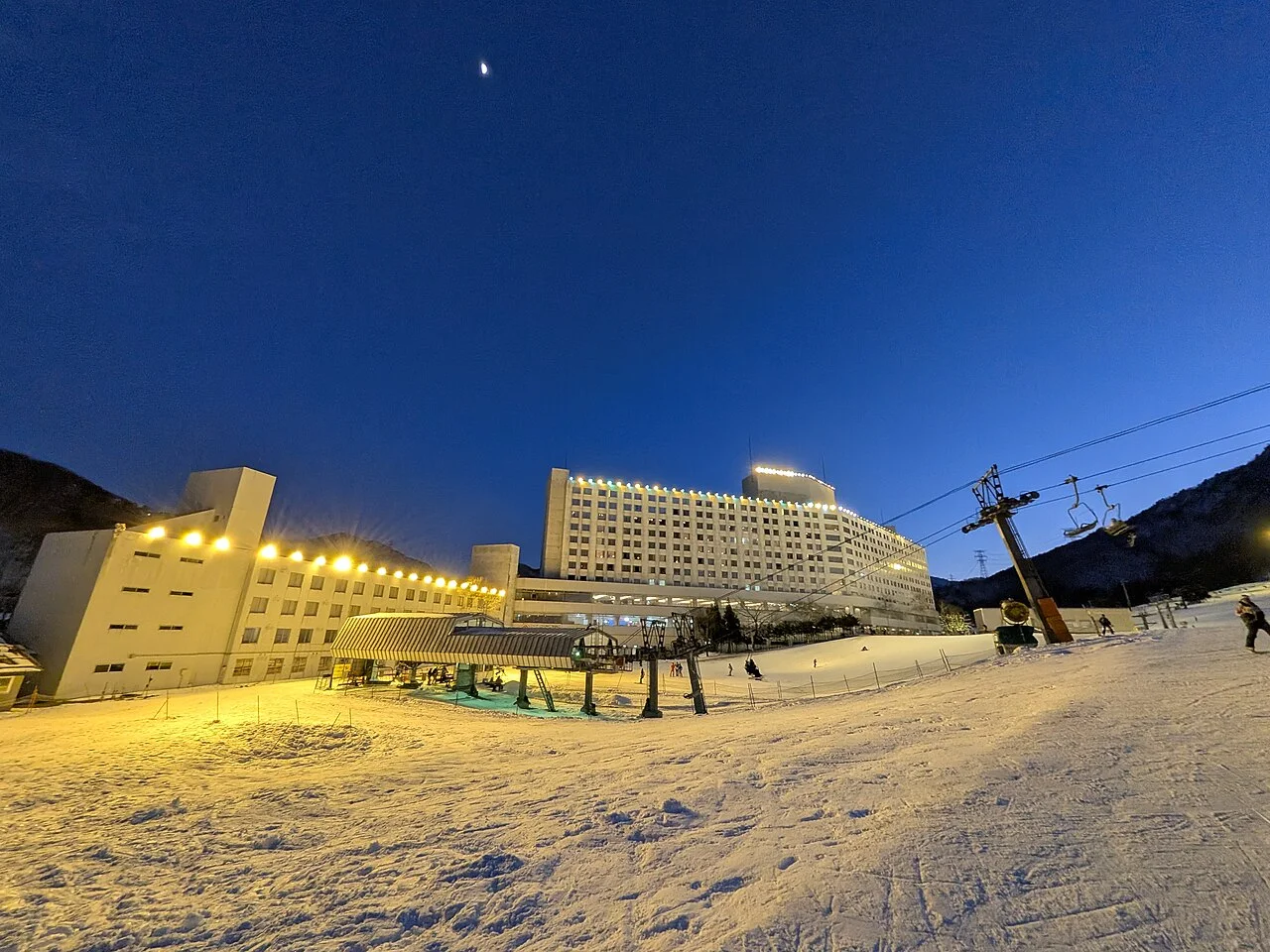
The Naeba Prince Hotel sits right at the base of the Naeba slopes, making it ideal for night skiing, kids' lessons, or groups who want to step indoors after just a few runs. Naeba night skiing is scheduled through March 21 this season, and per Naeba's ticket page, a Naeba 1-day pass remains valid until lifts close for the night. If you ski back from Kagura to catch Naeba night skiing, treat the afternoon Dragondola return and the evening hotel-front session as two separate legs. Staying at Naeba also eliminates the stress of catching a late bus back to Echigo-Yuzawa for the Shinkansen—just note that from March 23 onward, getting to Kagura from Naeba requires highway transit, so anyone skiing Kagura daily saves commute time by staying in Mitsumata.
Wada-goya sits right on the Kagura slopes: after checking in at the Mitsumata base, you ride the ropeway, chairlift, and Kagura Gondola, then ski a short distance to reach the lodge. For 2026–27, winter stays run on select dates from December 19 through May 4, 2027, by phone reservation only via Mitsumata Station between 9:00 and 16:00 JST (025-788-9221). Half-board rates (two meals included) are ¥16,000 for adults (¥14,500 for members), and guests can purchase an exclusive ¥6,500 1-day Mt. Naeba pass—factor your total 2-day ticket cost into the lodging budget when booking a single night.
Wada-goya features shared dormitory-style sleeping quarters and accepts guests aged 4 and up. You must check in at the resort office lodging desk by 14:00 JST, arrive at the mountain hut by 16:00 JST, and check out by 8:00 JST the next morning. For confident skiers happy to eat dinner and breakfast on the mountain, waking up mid-slope cuts out the entire morning transfer. However, if you arrive on a late Shinkansen, want dinner in an onsen town, or have companions who cannot ski down independently, book a regular hotel down in the valley instead—and if you do stay at Wada-goya, pack your overnight gear in a compact backpack that is easy to manage on lifts and in ski boots.
1-Day, 2-Day, and Lift-Closure Itineraries
For a Kagura day trip from Tokyo, travel from Echigo-Yuzawa East Exit to Mitsumata, ride up to the main Kagura area around midday, and work your way back toward Mitsumata in the afternoon for a final lap near the ropeway if time permits. If you only have a half morning to ski, stay at Mitsumata altogether. When booking reserved seats on your return Shinkansen, build in generous bus transfer margin—and if two people ski at different paces, set a firm meetup time at the Mitsumata base rather than deciding on the last run who is escorting the beginner down.
With two full days at Kagura, spend day one on Mitsumata and the main Kagura slopes while your legs are fresh for navigating upper-mountain junctions, then explore the Lake Tashiro side on day two—or swap the two days depending on wind conditions. Families splitting two days across two resorts can spend day one at Naeba for lessons and snow play, then practice at Mitsumata on day two, or cross from Naeba into Kagura while the Dragondola is running. Whenever your bags and gear are stored at one base, prioritize routes on day two that guarantee an easy return to that same entrance.
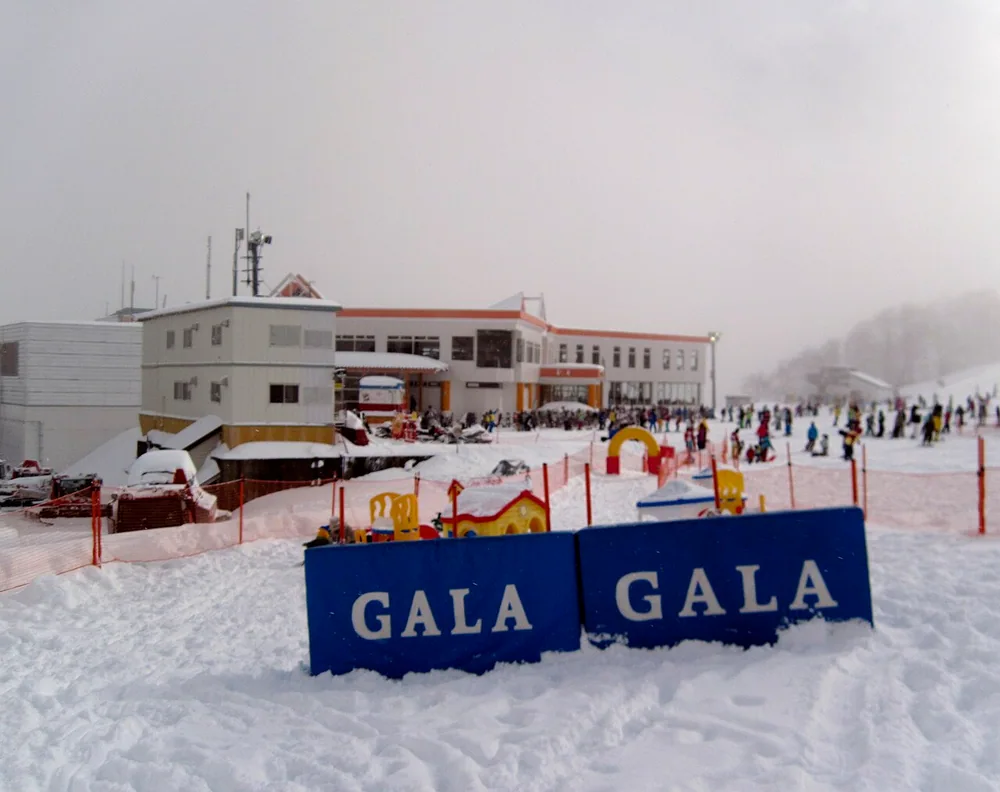
If overnight rain or high winds hit while you are still near Echigo-Yuzawa Station in the morning, check live trail openings before heading up. On days when Gala Yuzawa is operating normally and the Shinkansen pulls straight into Gala-Yuzawa Station (scheduled December 19 through May 5), switching to Gala cuts out bus transfers altogether. If weather forces closures across both mountains, it is easy to pivot to indoor plans around Echigo-Yuzawa Station and watch for an afternoon weather window.
If you wrap up early at Mitsumata, head to Kaido-no-Yu, the public bathhouse next to Michi-no-Eki Mitsumata. Admission is ¥850 for adults and ¥350 for children aged 4 through elementary school, open 10:00 to 21:00 JST (last entry 20:30, generally closed Tuesdays). Skis and snowboards are not allowed inside the bathhouse, so return rental gear first or store your own equipment in a car or hotel. If you plan to soak before catching the bus back, check return departures from the Michi-no-Eki Mitsumata-mae bus stop—and give yourself extra time for walking on snowy roads if you hold reserved Shinkansen tickets.
To stay close to the station, walk about 7 minutes from Echigo-Yuzawa Station West Exit to the Yuzawa History and Folklore Museum, Yukiguni-kan. The first floor highlights Yasunari Kawabata's novel *Snow Country*, while the upper floors cover local winter life and regional history (¥500 for adults; open 9:00 to 17:00 JST, last entry 16:30; closed Wednesdays, or the following day if Wednesday is a national holiday). It makes an unhurried fallback on full wind-hold days, or an easy final stop before boarding your train after a normal ski day. For comparisons with neighboring resorts and round-trip options from the capital, read Tokyo Ski Day Trips and Echigo-Yuzawa Stays.
A few useful answers
Which bus stop should first-time visitors use for Kagura Ski Resort?
Take the Naeba-bound bus from Echigo-Yuzawa Station East Exit Stop 1 and get off at Kagura Mitsumata Ski-jo-mae. Only choose the Tashiro entrance (Futai Tashiro Ski-jo-mae on the local Naeba Line) if you specifically want to ski around Lake Tashiro.
When does Kagura Ski Resort close for the 2026–27 season?
Prince Hotels schedules Kagura and Mitsumata to operate through May 16, 2027, and Tashiro through May 5. The Dragondola connecting from Naeba is scheduled to close much earlier, on March 22.
Can a Kagura-only lift pass be used on the Dragondola to Naeba?
No—crossing into Naeba requires the Mt. Naeba Common Pass. A Kagura-only pass already covers Kagura, Mitsumata, and Tashiro and works from both Kagura base entrances.
How do half-day tickets work at Kagura?
For junior high students and adults, a morning pass is ¥6,700 (valid 8:00–13:00 JST). An afternoon pass is ¥6,200, goes on sale at 11:30 JST, and is valid from 11:45 to 16:30 JST.
Elementary school kids ski free—do I still need to line up at the ticket window?
Yes. Children elementary school age and younger ski free, but you must collect a dedicated free child pass at the ticket counter. Gear rentals and ski lessons cost extra.
Can I reserve rental gear in advance at Kagura Ski Resort?
Kagura's official rental counters are walk-in only and require photo ID on site. Gloves, goggles, and beanies are not available to rent, though helmets can be rented separately.
Can I enter via Mitsumata and exit via Tashiro (or vice versa)?
Yes, whenever the connecting trails and lifts are open. Just check return bus times from the opposite base and plan around your rental gear, lockers, and parked car—if you have rentals or lockers at one base, returning to the same entrance is far simpler.
Is there night skiing at Kagura?
For night skiing, head to Naeba instead. Naeba's night skiing is scheduled through March 21, 2027, and the Dragondola's last day of service is March 22.
Official information and references
Sources used in this guide.
- Kagura Ski Resort 2026–27 Operating Dates & Live Trail Status (Prince Hotels)
- Kagura 2026–27 Trail Map & Inter-Area Transit Guide (PDF)
- Kagura Ski Resort Lift Tickets & E-Ticket Rules
- Naeba Ski Season, Night Skiing & Dragondola Schedule
- Naeba Ski Resort & Mt. Naeba Ticket Price List
- Kagura Mitsumata & Tashiro Access, Addresses & East Exit Bus Stop
- Minami Echigo Kanko Bus Local Naeba Line Timetables, Fares & Winter Routes
- Minami Echigo Kanko Bus Local Naeba Line Fare Chart (PDF)
- Niigata Official Tourism Guide: Kagura Ski Resort
- Kagura Ski Resort Gear Rentals & Base Services
- Kagura, Tashiro & Mitsumata Ski and Snowboard Schools
- Kagura Ski Resort Safety Rules
- Kagura Winter Mountain Restaurants by Area
- Naeba Family Snow Land
- Accommodations Near Kagura Ski Resort
- 2026–27 Wada-goya Winter Lodging Announcement
- Wada-goya Check-In & Mountain Lodge Facilities
- Mitsumata Public Bathhouse Kaido-no-Yu (Yuzawa Onsen)
- Echigo-Yuzawa Tourism Guide: Yukiguni-kan Museum Visitor Info
- GALA Yuzawa Snow Resort 2026–27 Operations


.jpg)