
GALA Yuzawa 2026–27 ski guide. Check season opening dates, lift pass and rental prices, Tokyo Shinkansen or Echigo-Yuzawa shuttle options, kids' snow play, lessons, and return trains.
- Region & Focus
- Echigo-Yuzawa and NaebaSkiing
- Reading Scope
- 24 min read · 12 chapters · 6 Q&As
- Official Verification
- 18 official sources checkedUpdated November 22, 2026
- Key Topics
- WinterRail travelBooking
Chapter Route Map (tap any stop)
- Which Week in December Can You Ski?
- Which Station to Book from Tokyo—and Planning the Return
- 1-Day, 4-Hour, and Sightseeing Passes Explained
- Two-Day Trips and When a Season Pass Pays Off
- Rent Gear at the Base Before Heading Up
- When Is PICK UP BOX Worth the Extra Fee?
- Start Around Cheers in the Central Area Before Heading North
- With the South Area Closed, How to Reach Ishiuchi Maruyama and Yuzawa Kogen
- Timing Your Transit for a First Ski Lesson
- How Non-Skiers Can Spend Half a Day
- Work Backward from Lunch and Your Return Train
- Town Alternatives in Bad Weather and Two-Day Stays
- Quick Q&A
For a ski day trip from Tokyo, the Joetsu Shinkansen drops you right at the base of GALA Yuzawa, or you can take a free shuttle from Echigo-Yuzawa Station if your train terminates there. For the 2026–27 season, sightseeing operations open on December 12, skiing starts on December 19, and the South Area is closed all season. Adult 1-day lift passes cost ¥7,500 online. If you are renting gear and booking a morning lesson, pick your outbound train first, work backward from the upper-mountain check-in time to leave room for rentals and the gondola, and then lock in your train back to Tokyo.
Which Week in December Can You Ski?
From December 12 to 18, sightseeing-only operations run just the gondola and sightseeing chairlift; even if snow has already piled up, skiing and snowboarding are prohibited during this window. Ski operations are scheduled from December 19, 2026, through May 5, 2027. If you already booked mid-December Shinkansen tickets hoping to practice, pivot that week to snow viewing and snow play, and save lessons for a full ski day. If your trip lands on opening weekend, stick to a single area to warm up and learn the layout, checking the resort's daily run schedule slope by slope.
After New Year's, if your focus is practice and your dates are flexible, aim for regular weekdays and save weekends for central Tokyo. Moving from a weekday to a weekend may not raise your ticket price much, but the real bottlenecks are rental pickups, lunch seating, and reserved seats on the evening train back. On a single-day round trip, no matter how crowded it gets, you still have a hard cutoff to return gear, pack up, and board, so factor those transitions into your date choice.
Spring rental hours begin on April 5. That cutoff affects family gear and lesson scheduling first, especially with non-skiing kids arriving from Tokyo in the afternoon, when the window to pick up boots and sleds is shorter than in midwinter. If your trip falls around Golden Week in early May, do not pack a full-day itinerary based on January hours. Leave spring afternoons for dining near the station, and let that day's open trails and your return train dictate how long you stay on the snow.
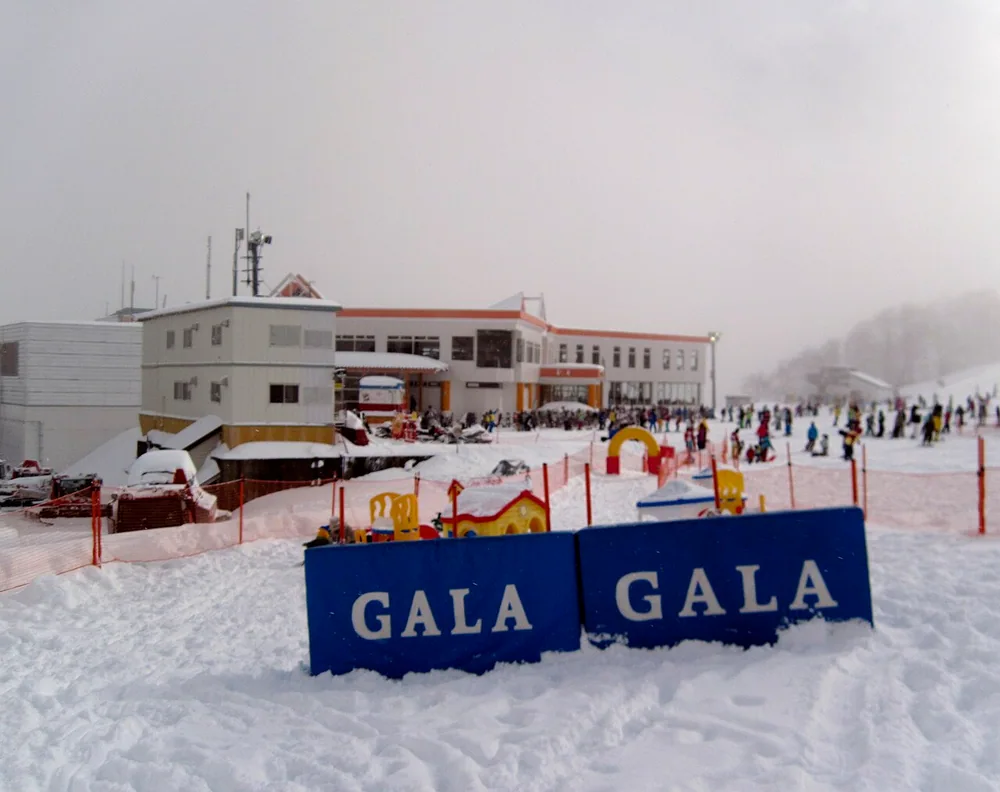
GALA Yuzawa 2026–27 ski guide. Check season opening dates, lift pass and rental prices, Tokyo Shinkansen or Echigo-Yuzawa shuttle options, kids' snow play, lessons, and return trains.
Which Station to Book from Tokyo—and Planning the Return
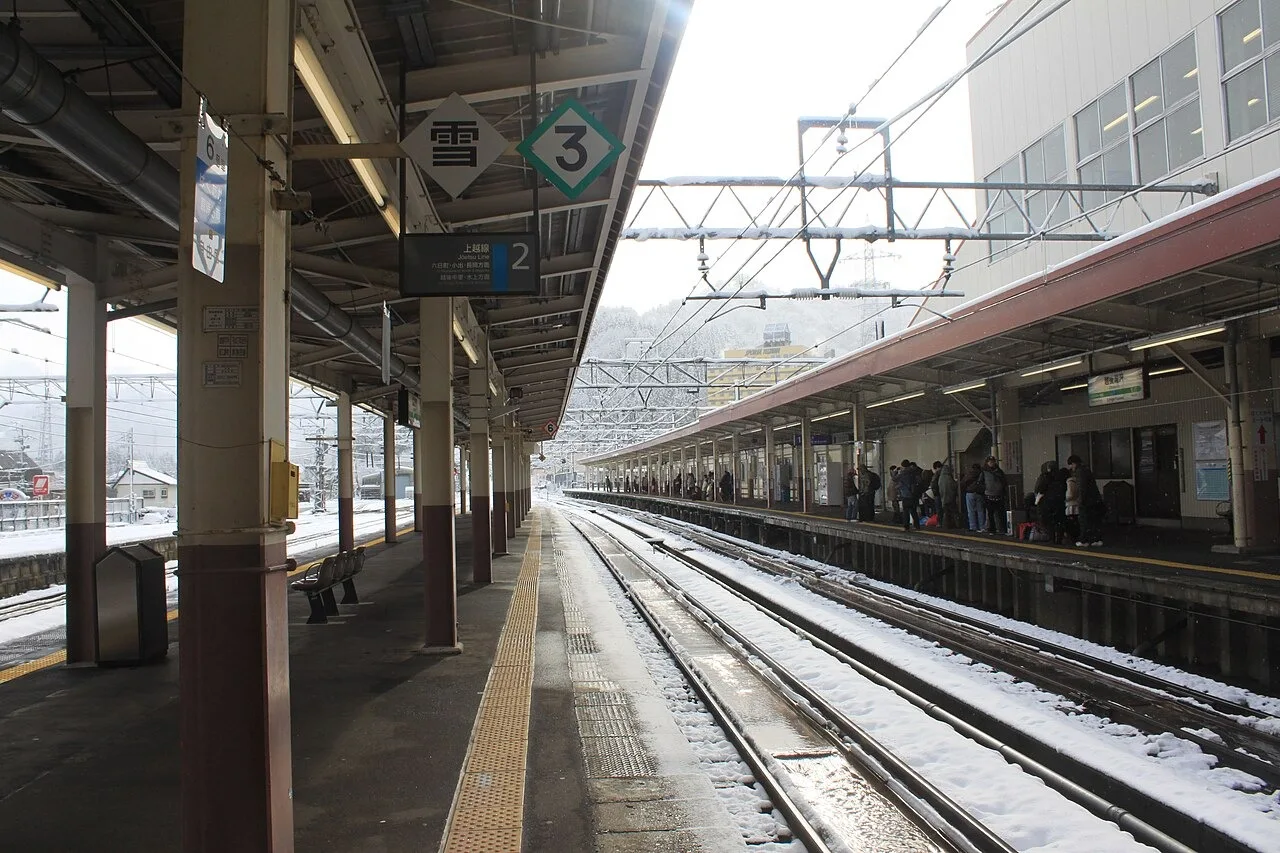
Watch for two distinct station names when booking. GALA Yuzawa is the resort's seasonal station, where the ticket gates open directly into the Cowabunga ski center. Echigo-Yuzawa is the main Shinkansen hub in town. GALA Yuzawa is best if you want to grab rentals straight at the base, while Echigo-Yuzawa has more frequent trains and makes an easy meetup point for hot-spring hotels along the town strip. JR East extends select Tanigawa trains to GALA Yuzawa and adds seasonal services; if your booking screen only shows Echigo-Yuzawa, plan to transfer to the shuttle bus outside and purchase your train and lift tickets separately.
Boarding at Tokyo Station works smoothly from southern Tokyo, Ueno suits stays around Ueno or Keisei-Ueno, and Omiya is worth comparing if you are already staying nearby. Seasonal winter trains run on specific dates—for example, JR East lists Tanigawa 71 on January 2, 2027, departing Tokyo at 6:24 and arriving at GALA Yuzawa at 7:35. Early trains fit anyone renting a full kit who needs to make an upper-mountain lesson check-in on time. If part of your group prefers a later start, take separate trains and meet in the base lobby rather than juggling skis on a crowded platform while waiting.
When transferring at Echigo-Yuzawa, head for the East Exit and look for buses signed for GALA Yuzawa. The official free shuttle takes about 10 minutes, not counting time in line, walking to the stop, and stowing bulky bags. Multiple resorts run buses from the station plaza, so save the Japanese resort name on your phone to avoid boarding the wrong coach. Guests at West Exit ryokan should track their hotel pickup point separately from the next morning's shuttle stop to the slopes.
Booking direct trains to and from GALA Yuzawa Station cuts down on carrying gear. If you want dinner or an onsen soak in Echigo-Yuzawa after skiing, ride out to the resort station and depart from Echigo-Yuzawa on the way back. When your return ticket leaves from GALA Yuzawa, change clothes and pack up at Cowabunga before heading to the concourse. JR notes that this seasonal station generally operates only when trains are running and opens its ticket gates after the train pulls in, so arriving early gives you a calm window to sort passes and phones. Because the two stations are separate origins for return tickets, label your booking confirmation by departure station so you are not scrambling at dusk.
Standard reserved Shinkansen seats go on sale at 10:00 JST one month before the train's origin departure date. Ekinet also offers early reservations for basic Shinkansen e-tickets from 14:00 three months prior until 23:50 one month and eight days before travel. Seat assignments from early requests arrive closer to the general on-sale date, after which you link each ticket to an individual IC transit card. When booking for a family, jot down every traveler's name alongside the last digits of their IC card on one sheet so each person taps through the gates smoothly.
If you are bringing your own skis or snowboard, pack them in a bag under JR East's carry-on baggage rules. Passengers may generally bring up to two carry-on bags they can manage themselves, each up to 250 cm in combined dimensions, 30 kg, and normally 2 meters in length. Sporting goods packed in dedicated bags that can be carried upright on board qualify for JR's length exception. Oversized baggage spaces on the Joetsu Shinkansen are first-come, first-served and cannot be reserved individually. Pack only what you can lift and turn with on your own, arrange luggage spots with your group before sitting down, and keep aisles and doorways clear for boarding passengers.
Drivers should set Cowabunga as their destination: the resort lists roughly 3 km (about 5 minutes) from the Kan-etsu Expressway Yuzawa IC, or roughly 6 km (about 13 minutes) from the Shiozawa-Ishiuchi IC. Those figures cover the highway-to-base leg only, so add time on weekends for parking, changing, and riding the gondola. If someone in your car has an early upper-mountain lesson, let them head straight into rentals after arriving while the driver parks, then ride up together. Storing dry shoes and change-of-clothes bags in a base lobby locker also saves an awkward trudge through slush back to the car.
1-Day, 4-Hour, and Sightseeing Passes Explained
The standard full-day ski and snowboard pass is called the Gondola & Lift Ticket. Adult pricing is ¥8,000 at the ticket window or ¥7,500 online. If you only plan to ski half a day and are confident you can clear rentals on time, a 4-hour ticket is ¥7,000 online for adults—a ¥500 difference. Anyone with a morning lesson and mid-day kid handoffs will find the 1-day pass much easier for fitting in lunch and breaks, while experienced skiers riding purely for laps can save with the 4-hour pass during their punctual half-day window.
Visitors riding up solely to see the snow, sled beside Cheers, or join family for lunch should buy the Gondola & Barouche Ticket. It covers the gondola, the sightseeing chairlift, and admission to the upper-mountain snow play area for ¥5,500 online for adults, ¥2,000 less than an adult 1-day ski pass. Everyone in your group does not need the same ticket type. Decide beforehand who is renting sleds and who is skiing, split up once you reach Cheers, and reconvene indoors later.
Preschoolers ride free based on accompanying adults: each paying adult may bring up to two preschoolers free of charge, with a third preschooler billed at the elementary school rate. One adult bringing three preschoolers for sightseeing should budget for one adult ticket plus one elementary ticket. Older elementary-age siblings in the same group need their own tickets. Snow wear, boots, and sleds are charged individually, so even kids riding free on lift tickets still need proper snow gear.
If your travel dates are locked in early, look at advance-purchase discounts. GALA's ¥4,800 early-bird 1-day lift pass is sold on Webket and JRE MALL until 23:00 JST on November 30, 2026—¥2,700 below the standard online adult rate. Double-check valid usage dates on the product page before paying, and match them to your round-trip train day. Non-skiers riding only the gondola and sightseeing lift can stick with the regular sightseeing pass.
After buying online, keep your ticket QR codes on your phone in a separate folder or screenshot from your rental codes. The resort has expanded to 8 automated SKIOSK ticket machines this season. If one person holds the confirmations for the whole family, leave gear and backpacks with the rest of your group in the lobby, print everyone's passes first, and then meet at the rental zone. The minutes you save by arriving early are best spent fitting kids' boots and dialing in helmets.
| Ticket Type | Adult (Window / Online) | Elementary (Window / Online) |
|---|---|---|
| 1-Day Gondola & Lift Ticket | 8,000 / 7,500 | 4,000 / 3,500 |
| 4-Hour Ticket | 7,500 / 7,000 | 3,500 / 3,000 |
| Gondola & Barouche Sightseeing Ticket | 6,500 / 5,500 | 3,400 / 2,900 |
Two-Day Trips and When a Season Pass Pays Off
At standard online prices, two full days of skiing cost ¥15,000. If you only reach town around noon on day one before a full day two, pairing a 4-hour pass with a 1-day pass totals ¥14,500. Weigh that ¥500 gap against your arrival sequence: checking into a hotel to drop bags, hitting midday rental queues, or waiting for a companion's late lesson can quickly eat up a half-day pass. When arriving late near the station, it often makes more sense to buy gloves and grab dinner on night one, then start fresh on the snow the next morning.
A full-season pass runs ¥70,000 for adults and ¥35,000 for children. Compared against the ¥7,500 online adult 1-day rate, nine days total ¥67,500, making day 10 the break-even point. Starting March 1, 2027, the spring season pass drops to ¥35,000 for adults and ¥17,500 for children, breaking even on day five at the same adult benchmark. Anyone holding early-bird passes, rail packages, or multi-resort plans should recalculate using what they would actually pay. Returning adult season-pass holders qualify for a ¥49,000 renewal rate (¥24,500 for children); bring your old card to claim it.
GALA's November season update also introduced new 30-hour and 60-hour passes. Skiers squeezing multiple short sessions across several days should compare those against 1-day, 4-hour, and season passes. Map out which days you are in town, which mountains you plan to ski, and how much time goes to transit or lessons. If members of your group ski different hours, each person can buy the pass that fits their schedule and still meet up for the same train home.
Rent Gear at the Base Before Heading Up
Standard rentals are picked up at the Cowabunga ski center at the base. A 3-piece ski set (skis, boots, poles) or 2-piece snowboard set (board, boots) costs ¥6,500 per day for junior high schoolers and adults, or ¥4,000 for elementary schoolers and younger. Outerwear (jacket and pants) adds ¥5,500 for adults and ¥3,000 for kids per day. Consecutive two-day rentals of the same standard gear are listed at double the single-day rate. If you are staying overnight and keeping the same equipment for two days, arrange overnight storage and day-two drop-off on arrival so you can suit up immediately the next morning.
Outerwear rentals cover only the jacket and snow pants. Bring your own moisture-wicking base layers and ski socks; gloves, beanies, and neck gaiters are sold on site rather than rented. At the base, snow boots and goggles rent for ¥1,800 each, and helmets are ¥2,300. Non-skiers who bring their own waterproof boots and gloves only need to rent sleds once they reach the upper mountain. If your kids need rental snow boots, pick them up at the base before boarding the gondola; sleds are paid for and collected upstairs at the Cheers counter, and mixing up the two desks costs an extra trip.
Shoe sizes use centimeters, so measure children's feet beforehand and bring the exact ski socks they will wear for fitting. Give ankles and toes a minute inside the boots before signing off—ask staff at the counter to swap sizes immediately if there is pinching or heel lift. Lesson students should finish fitting skis or boards, boots, and helmets before riding up so they can walk straight to the meeting point. GALA also offers a once-per-day equipment swap between skis and a snowboard for ¥1,000; if you want to switch disciplines between morning and afternoon, budget extra time for changing gear.
Standard online rental reservations issue a QR code and allow you to pay online or at the counter—choose counter payment if you hold a rental discount coupon. During the December 12–18 sightseeing period and the April 5–May 5 spring season, rental pickup runs 7:45–14:30 with base return due by 16:30. During peak winter from December 19 to April 4, pickup runs 7:30–15:30 with base return due by 17:30. Groups can submit individual forms and pool confirmation codes on one phone, then wait together through the standard fitting line.
Near the third-floor family locker entrance at Cowabunga, GALA is adding extra large lockers this season—24 L-size and 8 LW-size units are scheduled to open from December 21. On a day trip, keep your return train ticket, hand warmers, dry gloves, and phone in a small daypack before locking away street shoes and dry clothes. If your group plans to come down at different times, agree upfront on who holds the locker key or phone pass so early finishers can pack up wet gear and wait comfortably indoors.
When Is PICK UP BOX Worth the Extra Fee?
Following system maintenance checks, GALA announced on November 17 that PICK UP BOX reservations are expected to open on November 30. The service operates from December 19, 2026, through March 31, 2027, for an extra ¥1,000 per person, allowing same-day pickup between 7:30 and 12:00. If you are leaving Tokyo after lunch or visiting in April, skip it and use standard online reservations or walk-up rentals. Guests staying overnight who plan to ski the next morning should book PICK UP BOX for the actual day they collect gear.
Each traveler needs a separate booking, and both applications and free cancellations close at 12:00 JST two days before your rental date; cancellations after that cutoff incur a 100% fee. Payment is credit card only upfront, and single-item rentals must use the standard counter process. For a family taking a Saturday morning lesson, treat Thursday at 12:00 JST as your hard deadline. Gather everyone's ski-vs.-snowboard choice and exact foot measurements in advance so you are not rushing last-minute edits.
If you take an early morning train and need the whole family at lesson check-in on the same wave, PICK UP BOX pays off by bypassing the regular pickup queue. Visitors bringing their own skis or boards who only need a helmet or outerwear are better off at the standard desk. Gondola lines, changing areas, and ski school counters each have their own bottlenecks, so subtract kid boot-adjustment time from your check-in deadline too. Once off the train, keep that day's rail tickets separate from pickup emails, test boots on a dry floor after retrieving gear, and stow street shoes last.
Start Around Cheers in the Central Area Before Heading North
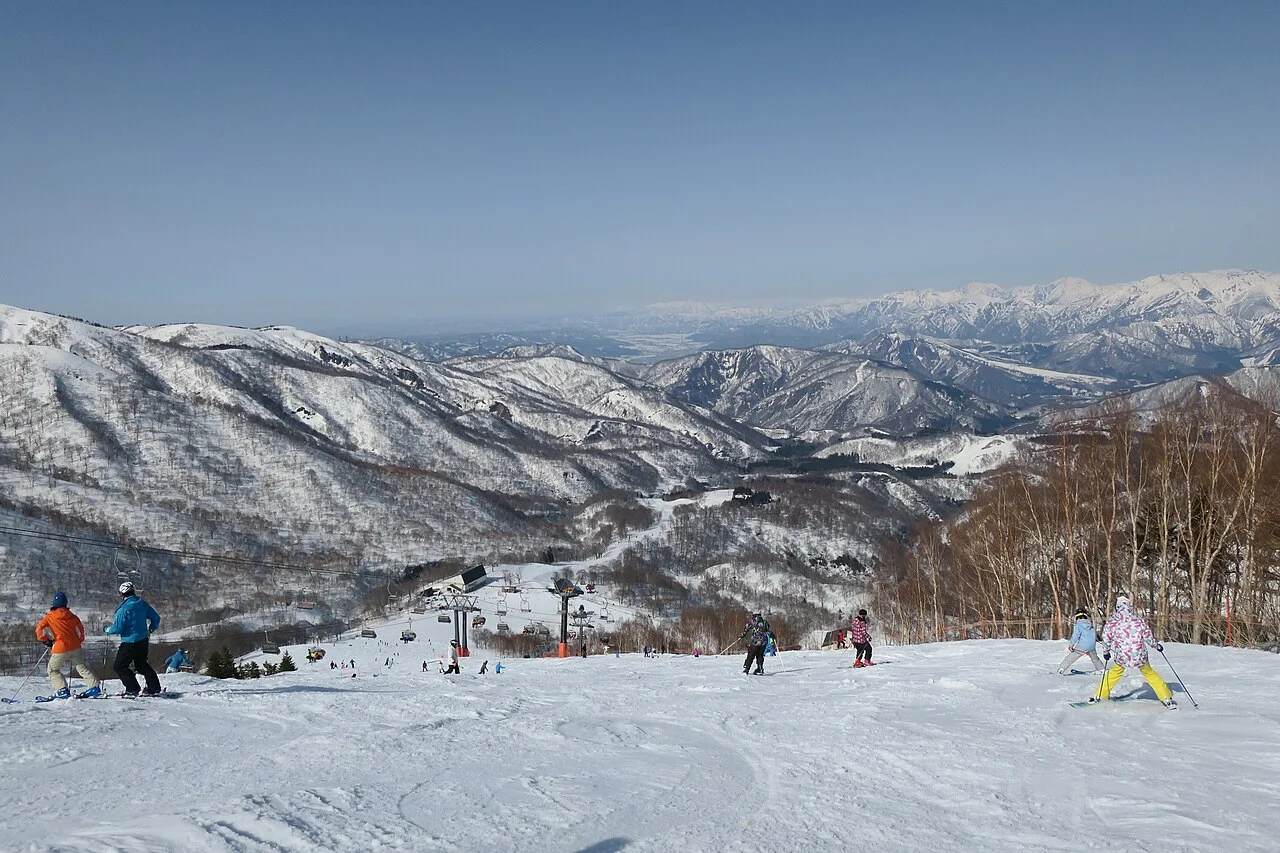
Diligence is the 8-person gondola linking the base to the main upper-mountain hub. Step out at the Cheers rest house, which anchors the Central Area's beginner slopes, ski school desks, dining, and snow play. Skiers and non-skiers split up here. Name a specific indoor entrance at Cheers when setting a meetup spot, and pair a compass direction with a clear sign if meeting outside so two groups can find each other in blowing snow.
Melody in the Central Area is a roughly 350-meter beginner run. Have an instructor walk you through flat-ground gliding, stopping, and basic turns first, then repeat those fundamentals on this gentle pitch. Edelweiss is also rated beginner but runs longer than Melody—ask your instructor or check trail signs to see how it connects to lower runs. After unloading from a chairlift, glide off to a flat side area before waiting for your group rather than stopping in the unload zone or below a blind corner.
The North Area offers beginner runs such as Swan alongside intermediate terrain like Broadway. Because green markings rate individual trails rather than whole zones, check both your outbound and return routes first to confirm which chairlift brings you back to Cheers. Mixed-ability groups can ski together in the Central Area all morning, then have intermediate skiers head north after lunch without forcing beginners onto extra lifts.
Falcon is a roughly 2.5-kilometer intermediate downhill course running from the North Area back to Cowabunga. Experienced skiers comfortable with edge control and variable afternoon snow can take it as their final run of the day. If kids are tired, just finished their first lesson, or the lower snow turns icy, call it a day at the top and ride the gondola down. Keep in mind that hitting the base on skis still leaves rental returns, changing, and locker retrieval before boarding your train.
With the South Area Closed, How to Reach Ishiuchi Maruyama and Yuzawa Kogen
The entire South Area is closed for the 2026–27 season, taking runs like 2.6 Million Dollar and Bronco offline along with the Landau ropeway to Yuzawa Kogen. Resort overviews that cite 16 trails reflect the full-mountain map, so check daily operating status for the Central Area, North Area, and the downhill course when planning runs. If you used to cross via the South Area, plan to ski or ride down to the base and transfer by shuttle bus instead, adding lift descent and transfer buffers on both ends.
To cross over to neighboring Ishiuchi Maruyama, head toward Roman Holiday from the North Area only on days when the ski connection is open, following posted signs. If the connecting lift is suspended, ride down and take the shuttle bus—or drive between bases if you have a car. For Yuzawa Kogen, plan on taking the shuttle directly. The three-mountain joint pass covers Yuzawa Kogen, GALA, and Ishiuchi Maruyama, while the shared four-resort shuttle bus also stops at NASPA; seeing NASPA on the bus route does not expand your ticket's resort coverage.
The joint operators list shared pass and four-resort shuttle service for December 24, 2026, through March 22, 2027. On opening weekend from December 19, sticking to a single resort keeps logistics simple. After March 23, shuttle service shifts to a dedicated GALA–Ishiuchi Maruyama schedule. If you buy an eligible 1-day pass during the joint period, you can upgrade it at designated ticket counters for ¥3,000. Once mountain-top links close, switching resorts means descending, changing boots, hauling gear onto a bus, and riding back up—so staying put on one mountain usually gives you more actual snow time on a half-day.
Standard adult pricing for the three-mountain 1-day joint pass is ¥10,300 at the window or ¥9,300 online, and ¥6,500 or ¥6,000 for children. Note that the joint pass child rate applies from age 3 through elementary school, differing from GALA's single-resort rule where each adult brings up to two preschoolers free. Families staying near GALA ski school meeting points are better off with single-resort tickets. Compare the joint pass against individual resort rates only if your group is committed to skiing two mountains in one day and leaves plenty of transfer buffer.
On a two-night trip, spend day one at GALA to learn the transit and rental flow before branching out on day two. To give non-skiing family members scenic ropeway rides and hot-spring town strolls, visiting Yuzawa Kogen on its own day is far calmer than rushing both resorts before dusk. Skiers aiming for longer laps at Ishiuchi Maruyama can also head straight there from their hotel the next morning. Line up your day-two starting base with where you return rentals so you are not hauling skis on extra detours; to compare hotels by shuttle access, dinner hours, and public baths, see our Echigo-Yuzawa accommodation guide.
Timing Your Transit for a First Ski Lesson
GALA lists five official partner ski schools this season, including Giant Ski School, which offers instruction in English, Mandarin, and Cantonese. When booking, check lesson language, minimum age, ski vs. snowboard options, group vs. private format, and the exact meeting point. If skill levels vary widely—or someone has never seen snow—splitting into separate classes works far better than dragging one group along at a mismatched pace. Parents escorting kids to the lesson check-in need their own gondola ticket upfront, so build that cost and route into your plan.
Several schools—including GALA Ski & Snowboard School per its official venue guide—check students in at desks inside Cheers. When your confirmation says upper-mountain meetup, an on-time train arrival still leaves picking up rentals, changing clothes, riding the gondola, and finding the desk. Pair later train arrivals with afternoon sessions, and reserve morning lessons only when your outbound train leaves generous fitting time. If you want a warmup lap before class, book a later slot and ride together first.
For first-timers, mastering safe stops, getting back up, and controlling direction in the morning leaves plenty to practice on one gentle pitch after lunch. If someone discovers pinching boots mid-morning or younger kids hit a wall after lunch, heading indoors early is an easy fallback. Set your afternoon rendezvous inside Cheers so anyone finishing early can warm up and stow gear while others finish their final runs.
How Non-Skiers Can Spend Half a Day
Just outside Cheers, Yukiasobi Park splits into a sledding lane and an open snow play area. Scheduled hours are 8:30–16:00, with sled rentals costing ¥2,500; last sled rental is at 15:30 in peak winter, moving up to 15:00 during the December sightseeing window and spring. Because the snow play desk sits upstairs while full ski rentals are downstairs, have kids drink water, use the restroom, and pack spare layers before stepping onto the snow. Skiers heading to lessons can split off right from the same building without anyone wandering between slopes and sled runs.
When visibility holds, ride the Barouche sightseeing chairlift up to the Bell of Love Observation Deck. The resort's activities page lists hours of 10:00–16:00 with last ascent at 15:30; budget about 30 minutes for the round trip. If you plan to play in the snow all morning and already hold an afternoon Shinkansen ticket, fit the lookout in before lunch. When winds pick up or time gets tight, stay warm inside Cheers over a meal instead. Note that the downhill gondola runs until 16:30, and you still have to walk back from the chairlift exit to the gondola station—do not confuse the sightseeing lift's last ride with the final descent off the mountain.
For snow play without skiing, pack waterproof outer layers, a warm hat, spare gloves, and dry socks. Walking sleds back up the lane and stepping through slush quickly soak cuffs and hems. Carry dry layers, water, and snacks for kids in a daypack while leaving Tokyo street shoes and heavy coats in a base locker. Children who already own snow boots can wear them straight up the gondola and only rent a sled at Cheers, letting older relatives relax indoors nearby.
Work Backward from Lunch and Your Return Train
As soon as you arrive, count backward from your Shinkansen departure to lock in your latest off-snow time. If your return train leaves from GALA Yuzawa Station, you need to ride the gondola down or ski back from the North Area to Cowabunga, return rentals, change shoes, clear your locker, and reach the ticket gates. Departing from Echigo-Yuzawa adds waiting for the shuttle bus. Before boarding any bus outside the base, confirm whether it runs nonstop to the station or loops through the hot-spring strip. When your group descends at different times, pick an exact Shinkansen station and lobby landmark instead of saying 'meet at the station.'
A day-trip adult buying a standard online 1-day lift pass plus ski or snowboard set and outerwear spends ¥19,500 for those three items—or ¥20,500 with PICK UP BOX. Anyone bringing their own helmet and gloves only needs to add rail fares, meals, and optional lessons. Two adults renting full kits can baseline ¥39,000 for mountain passes and gear before adding individual extras. For one sightseeing adult taking an elementary-school skier, online passes total ¥9,000 plus ¥7,000 for the child's standard equipment and outerwear, giving a ¥16,000 baseline for tickets and rentals.
Having lunch at Cheers keeps you steps away from afternoon laps. Skier groups on 4-hour passes can save a sit-down meal until after their lift clock ends. Parents waiting on kids' afternoon lessons can take an unhurried lunch and walk straight to the afternoon meeting zone in the same building. Anyone rushing to return gear can drop down early: Senkyoku on Cowabunga's first floor lists 10:30–16:00 hours this season with Japanese dishes, noodles, and newly added Italian plates. If you plan to head into Echigo-Yuzawa right after eating, drop off your rental gear at the base before sitting down rather than hauling boards across the lobby.
Even when peak winter rentals stay open until 17:30 at the base, factor in earlier upper-mountain lift closures. Rental counters remain open to accept gear after connecting chairs stop loading uphill. Check live lift statuses and trail signs from early afternoon, and leave far-flung chairs early if you are still building confidence. Travelers with lockers at the base should return gear and claim bags before picking up train snacks, avoiding a messy last-minute repack of wet layers right in front of the ticket gates.
Town Alternatives in Bad Weather and Two-Day Stays
Check the resort's daily course and lift schedule first thing in the morning, reading the gondola, Central Area, North Area, and downhill trail separately. If the North Area or downhill trail closes while the gondola and Central Area stay open, drop cross-mountain laps and stick to runs around Cheers. If the base gondola suspends operations, both the main beginner slopes and snow play park are cut off, so pivot right away. Travelers still in Tokyo before boarding the Shinkansen can swap to indoor plans, while anyone already in Echigo-Yuzawa can stay in town without hauling gear up the mountain.
In town, walk over to Yukigunikan (Snow Country Museum) on the West Exit hot-spring street. Open 9:00–17:00 (last entry 16:30), admission is ¥500 for adults and ¥250 for elementary through high school students; it closes Wednesdays, or the following day if Wednesday is a national holiday. Its exhibits on Yasunari Kawabata's Snow Country and local winter life make an easy loop back to the station. In heavy storms, browse Ponshukan's sake tasting hall and giant Niigata rice balls inside CoCoLo Yuzawa right inside Echigo-Yuzawa Station. Its sake bath costs ¥950 for adults, ¥400 for elementary students, and is free for preschoolers, with towel sets available to rent and separate men's and women's baths starting from elementary age.
For a two-day ski trip, staying near Echigo-Yuzawa's West Exit simplifies dinners, onsen visits, and splitting up by schedule. Skiers can walk to morning pickup stops while non-skiers sleep in and meet back at the station later in the day. If you choose a hillside hot-spring ryokan, pair its shuttle schedule with your next morning's ski departure so you are not dragging boards downhill in a rush. Ryokan with fixed dinner seatings also set your real afternoon cutoff for returning gear and catching a ride back. If you check out before skiing on day two, confirm bag storage and pickup windows early.
Wrapping up a spring afternoon means bagging wet gloves and socks separately before the trip home. Overnight guests should lay out next-day essentials the night before, and families with kids should keep dry spares in the hotel or a daypack rather than discovering soaked gloves at breakfast. When afternoon snow turns slushy and kids lose control easily, call it early. Anyone in your group staying out for final laps can return gear and meet everyone else at the West Exit or inside the station—even after a soak, there is plenty of space to wait.
A few useful answers
Can you ski at GALA Yuzawa on December 12, 2026?
From December 12 to 18, only the gondola and sightseeing chairlift operate. Skiing and snowboarding open on December 19, with the season scheduled through May 5, 2027.
Should you book Shinkansen tickets to GALA Yuzawa or Echigo-Yuzawa?
Book GALA Yuzawa to step directly into the ski center. At Echigo-Yuzawa, take the free shuttle bus from the East Exit (about 10 minutes listed ride time). For dinner or an onsen soak near town afterward, you can book your return train from Echigo-Yuzawa.
When can you reserve PICK UP BOX, and what are the pickup hours?
Reservations for this season are scheduled to open November 30, covering usage from December 19 through March 31, 2027, with same-day pickup from 7:30 to 12:00. It costs an extra ¥1,000 per person, and both bookings and free cancellations close at 12:00 JST two days prior.
What ticket should non-skiing companions buy?
Buy the Gondola & Barouche Sightseeing Ticket, priced online at ¥5,500 for adults and ¥2,900 for elementary students. It includes access to the snow play park, where sleds can be rented separately at Cheers.
Can you ski GALA Yuzawa and take the ropeway from the South Area to Yuzawa Kogen?
Both the South Area and the Landau ropeway are closed for the 2026–27 season, so take the shuttle bus between resorts instead. The four-resort joint shuttle is scheduled from December 24, 2026, to March 22, 2027.
Do you need to reserve oversized baggage space for a ski or board bag on the Joetsu Shinkansen?
Oversized baggage spaces on JR East's Joetsu Shinkansen are available on a first-come, first-served basis without separate reservations. Pack your ski or snowboard bag within JR carry-on rules and allow time to load and stow it yourself.
Official information and references
Sources used in this guide.
- GALA Yuzawa Winter Official Site and Access Guide
- GALA Yuzawa 2026–27 Operating Dates, Lift Tickets, and Season Passes
- GALA Yuzawa Trail Map, Difficulty Ratings, and Daily Operations
- GALA Yuzawa South Area and Connecting Ropeway Closure Notice
- GALA Yuzawa Equipment, Outerwear, and Sled Rentals
- GALA Yuzawa PICK UP BOX Reservation Opening Update
- GALA Yuzawa 2026–27 Early-Bird Ticket Announcement
- GALA Yuzawa November 19 Winter Season Notice
- GALA Yuzawa Snow Play, Sledding, and Observation Deck
- GALA Yuzawa Official Partner Ski Schools
- JR East 2026–27 Winter Niigata Seasonal Train Schedule
- JR East GALA Yuzawa Seasonal Station Information
- JR East Oversized Baggage Guide
- JR East Ekinet Shinkansen E-Ticket Early Reservation Guide
- JR East Reserved Seat Ticket Sales Schedule
- YUZAWA SNOW LINK 2026–27 Joint Resorts and Shuttle Info
- Echigo-Yuzawa Yukigunikan Hours and Admission
- Echigo-Yuzawa Station Ponshukan Facilities and Sake Bath

.jpg)


