
Your 2026–27 GALA Yuzawa ski guide: season opening dates, lift pass and rental prices, direct Shinkansen vs Echigo-Yuzawa shuttle transfers from Tokyo, snow play, lessons, and return trains.
- Region & Focus
- Echigo-Yuzawa and NaebaSkiing
- Reading Scope
- 24 min read · 12 chapters · 6 Q&As
- Official Verification
- 18 official sources checkedUpdated 22 November 2026
- Key Topics
- WinterRail travelBooking
Chapter Route Map (tap any stop)
- Which Week in December Can You Actually Ski?
- Which Tokyo Station to Board From, and Choosing Your Return
- One-Day, 4-Hour, and Sightseeing Passes Compared
- Two-Day Ski Trips vs Season Passes
- Rent Gear at the Base Before Checking In on the Mountain
- When Is the PICK UP BOX Add-On Worth Paying For?
- Start at Cheers in the Central Area Before Heading North
- With the South Area Closed, Reaching Ishiuchi Maruyama and Yuzawa Kogen
- Timing Your Journey for a First Ski Lesson
- How Non-Skiers Can Spend Half a Day
- Building Lunch and the Return Train Into a Day Trip
- Bad-Weather Plans in Town and Where to Stay for Two Ski Days
- Quick Q&A
For a day trip on the snow from Tokyo, the Joetsu Shinkansen drops you straight at the foot of GALA Yuzawa, or a free shuttle runs from outside Echigo-Yuzawa Station when trains terminate in town. The 2026–27 season opens for sightseeing on 12 December, skiing and snowboarding begin on 19 December, and the South Area is closed all winter. An adult one-day lift pass costs ¥7,500 online. If you are renting gear and taking a morning lesson on your first visit, book your outbound train first, work backwards from your on-mountain check-in time to leave room for rentals and the gondola, and only then choose your train back to Tokyo.
Which Week in December Can You Actually Ski?
During the sightseeing-only period from 12 to 18 December, only the gondola and the sightseeing chairlift operate; skiing and snowboarding are prohibited even if snow has already settled. Full ski operations are scheduled from 19 December 2026 to 5 May 2027. Travellers who have already booked mid-December Shinkansen tickets hoping to practise should switch that week to snow viewing and snow-play activities, and save lessons for a regular ski day. If your trip falls on the opening weekend, plan around one area to practise and learn the layout, checking the resort's daily operating schedule piste by piste.
After New Year, anyone focused on practice with flexible dates should pick regular weekdays and leave weekends for central Tokyo. Moving from a weekday to a weekend rarely changes the lift pass price itself, but queues for rentals, lunch seating, and reserved return seats all tighten up. On a single-day round trip, no matter how busy the resort gets, you still have to return your gear, pack up, and board on schedule, so factor those bottlenecks in when choosing your date.
Spring rental hours begin on 5 April. That cut-off mostly affects family kit and lesson schedules, especially if you are travelling with non-skiing children and arriving from Tokyo in the afternoon, when the window to pick up snow boots and sledges is shorter than in midwinter. If your trip falls during May's Golden Week, do not pack a full day based on early-season timetables. Leave spring afternoons for dining near the station, and let the day's open runs and your return train dictate how long you stay on the slopes.
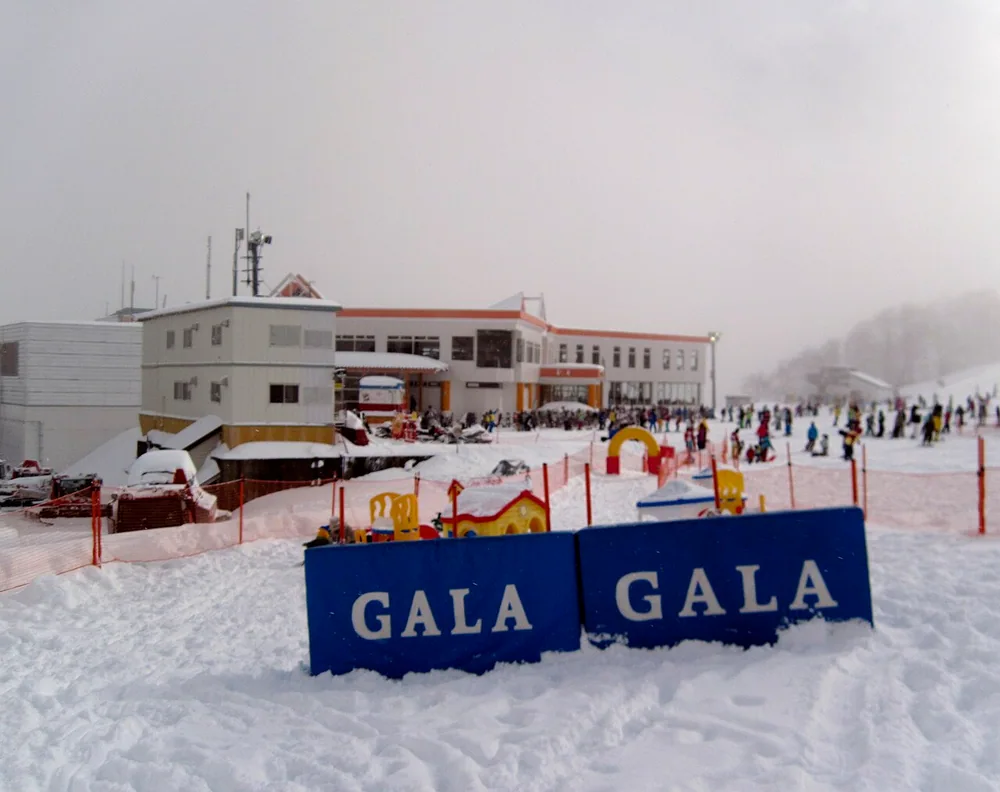
Your 2026–27 GALA Yuzawa ski guide: season opening dates, lift pass and rental prices, direct Shinkansen vs Echigo-Yuzawa shuttle transfers from Tokyo, snow play, lessons, and return trains.
Which Tokyo Station to Board From, and Choosing Your Return
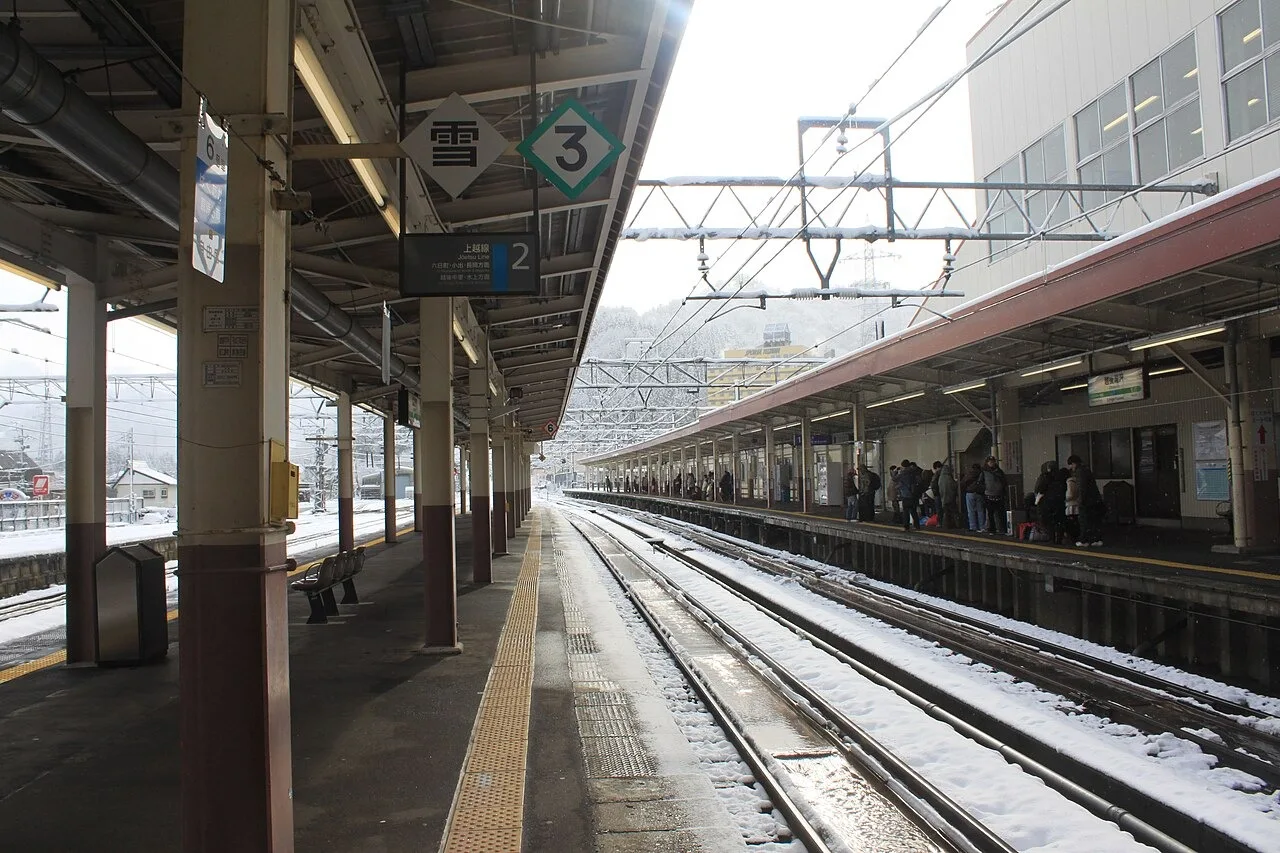
When booking tickets, watch out for two station names. Gala Yuzawa is the resort's seasonal station, where stepping through the ticket gates puts you straight inside the Cowabunga ski centre. Echigo-Yuzawa is the main Shinkansen hub in town. The former is best if you want to collect rental gear at the base right away, while the latter offers far more frequent trains and makes it easier to meet at hot-spring hotels along the town strip. JR East extends select Tanigawa services to Gala Yuzawa and runs additional seasonal trains. If your booking screen only shows Echigo-Yuzawa, take the shuttle bus after arriving and arrange train tickets and lift passes separately.
If you are staying in southern Tokyo, boarding at Tokyo Station is straightforward; around Ueno or Keisei-Ueno, look for trains that stop at Ueno; and if you are based near Omiya, compare departures from there first. Winter seasonal trains run on designated dates: for example, on 2 January 2027, JR East schedules Tanigawa No. 71 to depart Tokyo at 06:24 and arrive at Gala Yuzawa at 07:35. Early trains suit travellers renting a full set who also need to make an on-mountain lesson check-in on time. Companions who prefer a slower morning can take a later train and meet in the base lobby, sparing everyone the hassle of hauling kit while waiting on the platform.
When transferring at Echigo-Yuzawa, head to the East Exit (Higashiguchi) and look for buses signed for Gala Yuzawa. The official free shuttle takes roughly 10 minutes on the road, not counting time spent queuing, walking to the stop, and stowing bulky bags. Buses for several ski resorts line up outside the station, so keep the destination name saved on your phone to avoid boarding the wrong coach. Guests staying at ryokan or hotels on the West Exit side should confirm their accommodation's pick-up point first, keeping the hotel shuttle separate from the next morning's bus to the slopes.
Taking the direct resort train both ways cuts down on carrying gear. If you want dinner or an onsen soak in Echigo-Yuzawa afterwards, book your outbound leg to Gala Yuzawa and your return from Echigo-Yuzawa. For return tickets departing Gala Yuzawa, get changed and pack up at Cowabunga before heading to the station concourse. JR notes that this seasonal station generally opens for boarding only while Shinkansen services are operating, and ticket gates open once the train pulls in, so arriving early gives you time to get your tickets and phone ready. Because Echigo-Yuzawa and the resort station are different departure points, label your booking confirmation by origin station so you are not scrambling to change trains at dusk.
Standard reserved seats go on sale at 10:00 JST one month before the train's departure date from its origin station. JR East's Ekinet also offers early-bird applications for basic Shinkansen e-tickets from 14:00 three months ahead until 23:50 one month and eight days before travel. Seat numbers for early-bird bookings are confirmed closer to the general release date, after which you link each ticket to an individual IC travel card. When booking for a family, jot down each traveller's name and the last digits of their IC card on one list so everyone can tap through the gates with their own card.
If you are bringing your own skis or snowboard, pack them in a bag that meets JR East's carry-on rules. Passengers may generally bring two pieces of manageable luggage, each measuring no more than 250 cm in combined length, width, and height, up to 30 kg, and normally no longer than 2 metres. Sporting equipment packed in a dedicated bag that can stand upright inside the carriage qualifies for JR's length exception. The oversized luggage racks on the Joetsu Shinkansen are unreserved and first come, first served. Make sure your ski or board bag is light enough to lift and manoeuvre single-handedly throughout the journey, agree on storage spots with your group before sitting down, and keep aisles and doorways clear for boarding passengers.
If driving, set Cowabunga as your destination; the resort lists the drive at roughly 3 km (about 5 minutes) from the Kan-etsu Expressway Yuzawa IC, or roughly 6 km (about 13 minutes) from Shiozawa-Ishiuchi IC. Those estimates cover the motorway exit to the base only, so allow extra time on weekends for parking, changing, and heading up the mountain. If someone in your group has an early lesson, drop them off at the meeting area to start rentals while the driver parks and rejoins them for the gondola. Stashing dry shoes and clothes for the drive home in a base locker makes walking back across the snow to the car much easier.
One-Day, 4-Hour, and Sightseeing Passes Compared
The standard one-day pass for skiers and snowboarders is officially called the Gondola & Lift Ticket. It costs ¥8,000 at the ticket window or ¥7,500 online for adults. If you only plan to ski half a day and are confident you can collect rentals promptly, the 4-Hour Ticket costs ¥7,000 online for adults—a ¥500 difference. Travellers taking morning lessons who also need to pick up children midday usually find the one-day pass leaves much more breathing room for lunch and breaks, whereas experienced skiers riding non-stop can use the 4-hour pass for whichever half of the day they reach the mountain on time.
For riding up solely to see the snow, sledge beside Cheers, or join family for lunch, choose the Gondola & Barouche Ticket. It covers the gondola, the sightseeing chairlift, and admission to the upper snow-play area for ¥5,500 online (adult), ¥2,000 less than an adult one-day ski pass. Everyone in a family does not need the same ticket type. Decide before buying who will rent a sledge and who will ski, split up once you reach Cheers, and meet back indoors later.
Pre-school children are priced per accompanying adult: each adult may bring up to two pre-schoolers free of charge, with a third pre-schooler charged at the elementary-school rate. One adult taking three pre-schoolers on sightseeing passes therefore needs one adult ticket plus one elementary-school ticket. If there is also an elementary-school child in the group, buy their ticket separately. Skiwear, snow boots, and sledges are charged per person, so even children riding free on lift passes still need proper footwear and clothing for walking on snow.
If your ski dates are already locked in, factor early-bird passes into your budget. GALA's announced ¥4,800 early-bird one-day pass is sold via Webket and JRE MALL until 23:00 JST on 30 November 2026—a ¥2,700 saving against the standard online adult day pass. Check the valid dates on the product page before paying, and match your outbound and return trains to the same ski day. Non-skiers riding the gondola purely for views can stick with the sightseeing pass.
After buying tickets online, save the order QR code on your phone separately from any rental confirmation codes. This season the resort has expanded its SKIOSK automated ticket machines to eight units. If one person is holding the group's redemption details, leave skis and rucksacks with the rest of your party in the lobby, pick up the passes first, and then regroup at the rental counter. Any minutes saved by arriving early can go towards fitting children's boots or adjusting helmets properly.
| Ticket Type | Adult (Window / Online) | Elementary School (Window / Online) |
|---|---|---|
| Gondola & Lift 1-Day Pass | 8,000 / 7,500 | 4,000 / 3,500 |
| 4-Hour Pass | 7,500 / 7,000 | 3,500 / 3,000 |
| Gondola & Barouche Sightseeing Pass | 6,500 / 5,500 | 3,400 / 2,900 |
Two-Day Ski Trips vs Season Passes
At standard online rates, two full ski days cost ¥15,000. If you only reach town around midday on day one and have all of day two, a 4-hour pass plus a one-day pass comes to ¥14,500. Weigh that ¥500 difference against your arrival order: dropping bags before hotel check-in, hitting rental handover peaks, or waiting for a companion's late lesson can eat into a half-day fast. If you stay near the station and arrive late, consider spending the first evening buying gloves and having dinner, then heading up fresh the next morning.
A full-season pass costs ¥70,000 for adults and ¥35,000 for children. Compared against the ¥7,500 online adult day pass, nine days total ¥67,500, so the tenth day is where the full-season pass breaks even. The spring season pass starting 1 March 2027 is ¥35,000 for adults and ¥17,500 for children, breaking even on the fifth day at the same adult benchmark. Early-bird buyers, package-deal holders, or visitors splitting days across other resorts should recalculate using what they will actually pay. Returning adult pass holders from the previous season receive a ¥49,000 renewal rate (¥24,500 for children)—bring your old card to apply.
The resort's November season notice also introduces new 30-hour and 60-hour passes. Skiers spreading several days across shorter sessions can compare those directly against one-day passes, 4-hour passes, and season passes. Map out which days you are in town, which resort you will ski, and how much time goes to transit or lessons. If people in your group ski different hours, buy each person the pass that fits them and simply meet back up for the same train home.
Rent Gear at the Base Before Checking In on the Mountain
Standard equipment is collected at the Cowabunga ski centre at the base. A three-piece ski set includes skis, boots, and poles, while a two-piece snowboard set includes board and boots; both cost ¥6,500 per day for junior high school age and above, and ¥4,000 for elementary school age and below. Jacket-and-trousers skiwear sets cost ¥5,500 per day for adults and ¥3,000 for children. Renting the same standard kit for two consecutive days is listed at twice the single-day rate. If you are staying overnight and keeping the same gear for two days, arrange overnight storage and day-two base return when collecting so you can get dressed straightaway the next morning.
Skiwear rentals cover the outer jacket and trousers only. Bring your own moisture-wicking base layers and ski socks; gloves, beanies, and neck warmers are sold on site rather than rented. At the base, snow boots and goggles are listed at ¥1,800 each, and helmets at ¥2,300. Non-skiers playing in the snow can bring their own waterproof boots and gloves and simply rent a sledge up the mountain. If a child needs resort snow boots, rent them at the base before boarding the gondola—sledges are paid for and collected at Cheers, so mixing up the two floors means an extra trip.
Boot sizes are entered in centimetres, so measure children's feet beforehand and wear the actual ski socks you plan to use when trying boots on. Give ankles and toes a moment inside the shell: if there is obvious pinching or heel lift, ask staff at the counter to swap sizes before leaving. Anyone booked into a lesson needs skis or board, boots, and helmet fitted prior to check-in so they can head straight to the meeting point at the top. If you want to switch disciplines mid-day, the resort offers a once-daily equipment swap between skis and snowboard for ¥1,000; just subtract the changeover time if splitting morning and afternoon.
Standard online rental applications issue a QR code and allow you to pay ahead or on site—choose pay on site if you hold rental discount vouchers. During the 12–18 December sightseeing period and the 5 April–5 May spring period, pick-up runs 07:45–14:30 with base return by 16:30. During the main winter period from 19 December to 4 April, pick-up runs 07:30–15:30 with base return by 17:30. Groups can fill out individual forms in advance and pool confirmation codes on one phone before joining the regular fitting queue.
For this season, additional large lockers have been installed by the third-floor family locker entrance at Cowabunga, with 24 size-L and 8 size-LW lockers scheduled to open from 21 December. Day-trippers should keep return rail tickets, hand warmers, dry gloves, and phones in a small daypack before stowing street shoes and spare clothes. If your group plans to come down the mountain separately, decide beforehand who holds the locker key or phone code so early finishers can pack wet kit away and wait indoors comfortably.
When Is the PICK UP BOX Add-On Worth Paying For?
Following system checks, GALA announced on 17 November that PICK UP BOX bookings for this season are scheduled to open on 30 November. The service operates from 19 December 2026 to 31 March 2027 at an extra ¥1,000 per person, with collection between 07:30 and 12:00 on the day. If you are leaving Tokyo after lunch or visiting in April, use standard online registration or walk-up rental instead. If you are staying overnight and skiing the following morning, select the date you will physically pick up your kit.
Each booking covers one person only, and both applications and free cancellations close at 12:00 JST two days before the rental date; cancellations after that incur a 100% charge. Payment is by credit card upfront, and single-item rentals follow the standard process. For a Saturday morning family lesson, treat Thursday at 12:00 JST as your firm cut-off. If you are still undecided between skis and a snowboard, or have not measured everyone's foot length yet, gather those details early rather than scrambling on the final day.
The ¥1,000 add-on earns its keep when you catch an early train and need the whole family at check-in together without standing in the main rental queue. Travellers bringing their own main gear who only need a helmet or outerwear are better served at the regular counter. Once inside, the gondola, changing rooms, and ski-school desk each have separate flows, so count backwards from lesson check-in to allow time for adjusting children's boots. After stepping off the train, keep that day's rail tickets separate from your rental email, try on boots on dry flooring after collecting your kit, and stow street shoes last.
Start at Cheers in the Central Area Before Heading North
The Diligence eight-seater gondola carries visitors from the base to the main mountain hub. Stepping off puts you at the Cheers rest house, which anchors all Central Area practice, lessons, dining, and snow play. Skiers and non-skiers divide up here. When setting a rendezvous, name the exact indoor entrance rather than just the building, and outdoors specify both direction and signage so the two groups can spot each other easily in falling snow or mist.
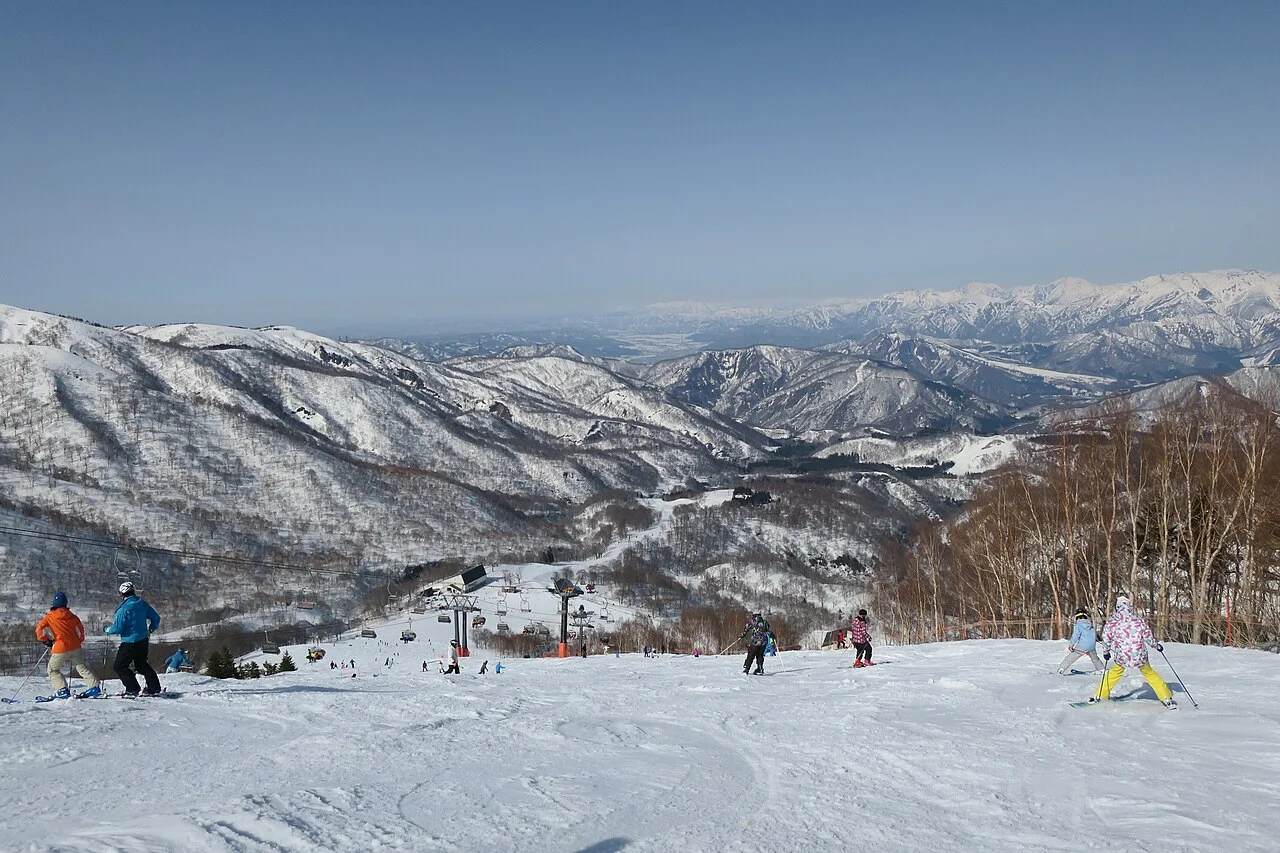
In the Central Area, Melody is an approximately 350-metre green run graded for beginners. Work with an instructor to master sliding on flat snow, braking, and basic turns first, then repeat those fundamentals on this short slope. Edelweiss is also a beginner trail, though longer than Melody—ask your instructor or check the on-slope signs before linking into the next section. After unloading from a chairlift, ski clear to a safe stopping spot at the side before waiting for companions; stopping near the exit or just below a crest hides you from skiers turning down behind you.
The North Area features beginner runs such as Swan alongside intermediate pitches like Broadway. Because trail-colour grades describe individual runs, trace both your outward and return route before moving across, confirming which chairlift brings you back to Cheers. Mixed-ability friends can ski together in the Central Area all morning, split off after lunch for those heading north, and let beginners stay put without having to ride a chain of unfamiliar lifts.
Falcon is an approximately 2.5 km intermediate home run descending from the North Area side all the way back to Cowabunga. Confident skiers with reliable speed control who have checked snow conditions can save it for their final run. If children are tired, have just finished a first lesson, or the piste has iced over, pack up early at the top and ride the gondola down instead. Remember that reaching the base still leaves returning rentals, changing, and collecting bags before you board the train.
With the South Area Closed, Reaching Ishiuchi Maruyama and Yuzawa Kogen
The entire South Area is closed for the 2026–27 season, including runs such as 2.6 Million Dollar and Bronco as well as the Landou connecting ropeway to Yuzawa Kogen. Resort overviews that mention 16 courses refer to the full map layout. When planning your actual ski day, check only whether the Central Area, North Area, and the home run down to the base are open. Travellers used to crossing over via the South Area should plan on descending to the base and taking a shuttle bus instead, allowing transfer time on both ends.
To ski next door at Ishiuchi Maruyama, look for the Roman Holiday direction from the North Area only on days when the snow link is open and follow on-mountain connection signs. If the connecting lift is closed, ski down and take the shuttle bus, or drive along the road if you have a car. For Yuzawa Kogen, plan on taking the bus directly. The Yuzawa Snow Link three-resort pass covers Yuzawa Kogen, GALA, and Ishiuchi Maruyama; the four-resort shuttle bus connecting them also stops at NASPA, though the joint lift pass itself remains valid at those three resorts only.
The joint operators list the shared pass and four-resort shuttle period from 24 December 2026 to 22 March 2027. On opening weekend from 19 December, sticking to a single resort is the simplest plan. From 23 March onwards, operations shift to the separate GALA–Ishiuchi Maruyama shuttle schedule. During the joint period, eligible one-day passes can also be upgraded at designated ticket windows for an extra ¥3,000. When upper mountain links are shut, descending, changing boots, carrying gear onto a bus, and riding back up eats into a short half-day, so staying in one zone usually gives you more time on snow.
The three-resort Yuzawa Snow Link one-day pass is priced at ¥10,300 at the window and ¥9,300 online for adults, or ¥6,500 and ¥6,000 for children. Note that the joint pass charges the child rate from age three through elementary school, unlike GALA's single-resort pass which lets each adult bring two pre-schoolers free. Families staying near GALA's ski-school slopes are better off with single-resort tickets. Only compare the three-resort pass against individual resort tickets if your group is committed to skiing two mountains in one day and has built in generous transfer buffers.
Travellers staying two nights can spend day one at GALA getting familiar with trains and rentals, then switch resorts on day two. If non-skiing companions want scenic ropeway views and a stroll through the hot-spring town, visiting Yuzawa Kogen on a separate day is far more relaxed than rushing between two mountains on the same afternoon. Similarly, anyone eyeing longer runs at Ishiuchi Maruyama can head straight there from their hotel the next morning. Keeping day two's starting point close to your gear-return spot avoids detouring with heavy bags. For choosing hotels by shuttle access, dinner times, and bath facilities, see our Echigo-Yuzawa accommodation guide.
Timing Your Journey for a First Ski Lesson
GALA lists five official ski schools this season, including Giant Ski School, which offers instruction in English, Mandarin, and Cantonese. When booking, check the teaching language, minimum age, ski vs snowboard options, group vs private format, and the exact meeting point. If abilities vary widely within your group—or someone has never seen snow—splitting into separate classes works far better than forcing everyone into one pace. Parents walking children to the lesson area should buy their own sightseeing or lift pass in advance and factor both the ticket cost and route into the morning.
Several schools check in at their desks inside Cheers, as noted in the GALA Ski and Snowboard School venue guide. Where a booking specifies an on-mountain meeting point, remember that after your Shinkansen arrives on time you still need to collect rentals, change, ride the gondola, and locate the check-in desk. Match later train arrivals to afternoon classes, and pick an earlier train with ample changing margin for morning sessions. If you want a warm-up run before class, book a later slot so you can ski an easy lap with friends first.
Once beginners learn how to stop safely, stand up, and read the fall line in the morning, repeating short laps on a gentle pitch all afternoon is plenty. If someone's boots start pinching or a child needs a rest after lunch, they can duck straight back indoors. Agree on an afternoon rendezvous inside Cheers so anyone finishing early or returning alone can warm up and sort out their kit while still easy for the rest of the party to find.
How Non-Skiers Can Spend Half a Day
Right outside Cheers, Yukiasobi Park offers dedicated sledging lanes and an open snow-play zone. Scheduled hours are 08:30–16:00, with sledge rental at ¥2,500; last rental is 15:30 in winter, moving forward to 15:00 during the sightseeing and spring periods. Because sledges are rented on the mountain while boots and outerwear sit at the base, take children for water and the toilet and gather spare kit indoors before heading outside. Companions taking ski lessons can also split off from the exact same building without anyone hiking between slopes and play zones.
In clear visibility, ride the Barouche sightseeing chairlift up to the Ai no Kane Observation Deck. The resort's activity page lists operating hours as 10:00–16:00 with the last uphill ride at 15:30; allow about 30 minutes for the round trip. Travellers playing in the snow all morning with an afternoon Shinkansen ticket should slot the viewpoint in before lunch. When ridge winds pick up or time is tight, stay at Cheers for a hot meal instead. Note that the downhill gondola closes at 16:30 according to the activity page, and you still have to walk back from the viewpoint to the gondola station—never treat the sightseeing lift's last ride as your end-of-day cut-off.
Pack waterproof outer layers, a warm hat, spare gloves, and dry socks when coming purely for snow play. Walking back up to the sledge start, stepping on and off lifts, and crossing slushy patches soak clothing faster than expected. Keep dry spares, water, and snacks for children in a carry-on bag, leaving street shoes and town coats in a base locker. Kids who already own snow boots can wear them straight up the mountain and just rent a sledge at Cheers, while older relatives can relax indoors nearby.
Building Lunch and the Return Train Into a Day Trip
The moment you enter the resort, work backwards from your Shinkansen departure time to set the latest minute you will leave the snow. If your train leaves from Gala Yuzawa Station, you must ride the gondola down or ski from the North Area to Cowabunga, return rentals, change shoes, clear your locker, and reach the ticket gates. Departing from Echigo-Yuzawa adds waiting for the shuttle bus. Before stepping onto a coach outside the base, confirm whether it runs direct to the station or loops through the hot-spring district. When a group comes down at different times, name the exact Shinkansen station and a lobby landmark rather than just saying 'meet at the station'.
For a solo adult day-tripper booking standard online tickets, a one-day pass plus a ski or snowboard set and outerwear totals ¥19,500—or ¥20,500 with PICK UP BOX fast collection. Travellers bringing their own helmet and gloves only need to add rail fares, meals, and any lessons. For two adults renting full sets, use ¥39,000 as the baseline for those three on-mountain items and add extras per person. An adult sightseeing with one elementary-school skier spends ¥9,000 on online lift/sightseeing passes plus ¥7,000 for the child's standard gear and skiwear, making ¥16,000 a sensible starting budget for tickets and rentals.
Having lunch at Cheers keeps you positioned for afternoon laps. Skiers on a 4-hour pass can save a longer sit-down meal until after their time expires, whereas parents accompanying children to afternoon lessons should sit down early and walk straight to the school desk in the same building afterwards. Anyone rushing to return kit can drop down to the base first: Senkyoku on Cowabunga's first floor is scheduled for 10:30–16:00 this season, serving Japanese dishes, noodles, and new Italian menu options. If you plan to head straight back to Echigo-Yuzawa after eating, returning your gear before sitting down saves lugging skis across the lobby.
To ski late towards winter's 17:30 base rental deadline, watch the gap between upper lift closures and the home run. Even while the rental desk is still open to receive gear, upper connecting lifts may have already stopped carrying skiers uphill. Check the live status board and slope signs from early afternoon, and leave distant chairlifts with time to spare. If your street clothes are stored at the base, finish returning gear and clearing lockers before buying food for the train so you are not repacking soggy kit in front of the ticket gates.
Bad-Weather Plans in Town and Where to Stay for Two Ski Days
First thing in the morning, check the resort's 'Today's Course & Lift Schedule', reading the gondola, Central Area, North Area, and home run lines separately. If the North Area or home run shuts early while the gondola and Central Area stay open, drop cross-area laps and long descents and stick to the slopes around Cheers. If the base gondola halts, both the main practice runs and the snow-play park are up the mountain, so pivot your plans immediately. Travellers still in Tokyo before boarding can switch to an indoor city day, while anyone already in Echigo-Yuzawa should stay by the station to avoid hauling gear unnecessarily.
In town, visit the Yukigunikan (Snow Country Museum) in the West Exit hot-spring district. Listed hours are 09:00–17:00 (last entry 16:30), admission is ¥500 for adults and ¥250 for elementary and junior high students, and it closes on Wednesdays (or the following day if Wednesday is a public holiday). Inside are exhibits linked to Yasunari Kawabata's novel Snow Country alongside local folk history, making an easy walk back to the station. In heavy snow when walking is unpleasant, stay inside Echigo-Yuzawa Station at CoCoLo Yuzawa for the sake tasting cellar and Niigata rice-ball counter. The station's sake bath (Sakaburo) costs ¥950 for adults, ¥400 for elementary-school children, and is free for pre-schoolers, with towel sets available to rent and separate men's and women's baths from elementary-school age up.
For two consecutive ski days, staying near Echigo-Yuzawa Station's West Exit makes dinner, onsen visits, and splitting schedules easy: skiers walk to the morning bus stop while non-skiers head out later and meet back at the station in the afternoon. If you prefer a hot-spring ryokan higher up the hillside, match the inn's shuttle timetable to your morning ski departure so you are not dragging gear downhill to make a lesson. At ryokan with fixed dinner seatings, count backwards from dinner to set your final gear-return and bus times. If you plan to check out before skiing on day two, confirm luggage storage and collection times in advance.
When wrapping up a spring afternoon, bag wet gloves and socks separately before heading home. Overnight guests should air out and lay out tomorrow's layers that evening, while families with children should keep dry spares in the hotel or a warm daypack so nobody discovers a missing pair of usable gloves in the morning. If slush makes it hard for younger skiers to steer, call it a day early. If others in your group are still riding, arrange to meet at the West Exit or inside the station after they return rentals—there are plenty of warm spots to wait after a soak.
A few useful answers
Can you ski at GALA Yuzawa on 12 December 2026?
From 12 to 18 December 2026, only the gondola and sightseeing chairlift operate. Skiing and snowboarding open on 19 December, with the season scheduled to run until 5 May 2027.
Should I book the Shinkansen to Gala Yuzawa or Echigo-Yuzawa?
Booking to Gala Yuzawa drops you straight inside the ski centre. Trains to Echigo-Yuzawa connect via a free shuttle bus from the East Exit, listed at around 10 minutes. If you want dinner or an onsen near the station afterwards, book your return from Echigo-Yuzawa.
When can I book PICK UP BOX and what are the collection hours?
Bookings for this season are scheduled to open on 30 November for use between 19 December 2026 and 31 March 2027, with collection from 07:30 to 12:00 on the day. It costs an extra ¥1,000 per person, and both applications and free cancellations close at 12:00 JST two days before use.
Which pass should non-skiers buy just for snow play?
Buy the Gondola & Barouche Sightseeing Pass, priced online at ¥5,500 for adults and ¥2,900 for elementary-school children. It grants access to the snow-play park, where sledges can be rented separately at Cheers.
Can I still take the ropeway from GALA Yuzawa's South Area to Yuzawa Kogen after skiing?
No. Both the South Area and the Landou ropeway are closed for the 2026–27 season, so take the shuttle bus between resorts instead. The four-resort joint shuttle period is scheduled from 24 December 2026 to 22 March 2027.
Do I need to reserve oversized luggage space for a board bag on the Joetsu Shinkansen?
The oversized luggage areas on JR East's Joetsu Shinkansen are unreserved and available on a first-come, first-served basis. Pack your board bag within JR carry-on rules and leave enough time to carry and stow it yourself.
Official information and references
Sources used in this guide.
- GALA Yuzawa Winter Official Website & Access Portal
- GALA Yuzawa 2026–27 Operating Dates, Lift Passes & Season Passes
- GALA Yuzawa Trail Map, Grading & Daily Operations
- GALA Yuzawa Notice on South Area & Connecting Ropeway Closure
- GALA Yuzawa Equipment, Skiwear & Sledge Rentals
- GALA Yuzawa PICK UP BOX Booking Opening Date Update
- GALA Yuzawa 2026–27 Early-Bird Pass Announcement
- GALA Yuzawa 19 November Winter Season Operations Notice
- GALA Yuzawa Snow Play, Sledging & Observation Deck Activities
- GALA Yuzawa Recognised Ski & Snowboard Schools
- JR East 2026–27 Winter Niigata Seasonal Train Schedule Announcement
- JR East Gala Yuzawa Seasonal Station Information
- JR East Oversized Baggage Guide
- JR East Ekinet Shinkansen e-Ticket Early-Bird Reservations
- JR East Standard Reserved Seat Release Dates
- YUZAWA SNOW LINK 2026–27 Joint Resorts & Shuttle Transfers
- Echigo-Yuzawa Yukigunikan Opening Hours & Admission
- Echigo-Yuzawa Station Ponshukan Facilities & Sake Bath

.jpg)


