Jingo-ji is where Kukai performed his first state-protection rituals and the historic Takao Abhisheka initiations. Open daily 9:00 AM–4:00 PM year-round (¥1,000 for adults since July 2024). The Tahoto Pagoda's Five Great Kokuzo Bosatsu statues open May 13–15, and the Daishi-do's wood-relief Kukai statue opens Nov 1–7 (¥500 extra each). Take the JR Bus Takao-Keihoku Line (~50 min, ¥230 flat fare) plus a 20-minute walk with stone steps. Full guide to visiting and hiking the Takao Sanbi three-temple route.
- Region & Focus
- KyotoShrines and temples
- Reading Scope
- 13 min read · 6 chapters · 4 Q&As
- Official Verification
- 8 official sources checkedUpdated November 20, 2026
- Key Topics
- ItinerariesSeasonsKyoto, Osaka & Kansai
Chapter Route Map (tap any stop)
- Essential Visitor Info: Hours, Revised Fares, and Practical Rules
- Three Major Special Viewings: Tahoto Pagoda, Daishi-do, and the Treasure Airing
- Kukai and Jingo-ji: State-Protection Rituals and the Takao Abhisheka
- Getting There: JR Bus Takao Line and the Stone Stair Approach
- The Takao Sanbi Walk: A Day Connecting Jingo-ji, Saimyo-ji, and Kozan-ji
- Annual Calendar and Seasonal Rhythm of Worship
- Quick Q&A
Tucked into the valleys of Mount Takao at roughly 900 meters elevation in northwestern Kyoto, Jingo-ji preserves two defining chapters of Shingon Buddhism. Here in 810, Kukai conducted his first rituals for the protection of the state; in 812, he conferred the Diamond and Womb Realm esoteric initiations on Saicho, leaving behind the handwritten Kanjo Reimei ledger—now a National Treasure. Deep in Umegahata Takaomachi, the temple is reached via a 50-minute ride on the JR Bus Takao-Keihoku Line from Kyoto Station, followed by a 15-minute riverside promenade and another 15-minute climb up stone steps to the main gate. Drawing on current official schedules, this guide covers opening hours, the revised admission fees introduced in July 2024, the three major special viewings and annual treasure airing, Kukai's early ties to Mount Koya, and JR Bus's official Takao Sanbi walking loop linking Jingo-ji, Saimyo-ji, and Kozan-ji into one rewarding mountain day trip. Before heading up, get clear on seasonal rules—like November's paper-slip goshuin policy and May's National Treasure airing—and skip the outdated tips still circulating online.
Essential Visitor Info: Hours, Revised Fares, and Practical Rules
Jingo-ji is open every day of the year from 9:00 AM to 4:00 PM. Because mountain temples close earlier than sights in central Kyoto, plan to pass through the main gate before 3:30 PM. Under the official fee schedule effective July 1, 2024, admission is ¥1,000 for adults, university students, and junior and senior high school students, and ¥500 for elementary school students. Groups of 30 or more receive discounted rates (¥800 for adults, ¥600 for junior/senior high students, ¥400 for elementary students), and visitors with disabilities pay ¥500 (¥400 for elementary students).
Many older travel blogs still list Jingo-ji's admission at ¥600—that was the previous rate before the July 2024 increase to ¥1,000, so budget accordingly. The temple does not use seasonal pricing; autumn foliage admission costs the same as any other day. Furthermore, Jingo-ji has never announced extended evening hours or night illuminations for fall colors—rumors of 'Jingo-ji night foliage viewing' have no official basis, so do not build an evening itinerary around them.
The temple's full official name—Kobo Daishi Reijo Iseki Honzan Takaosan Jingo-ji—highlights its dual identity as both a sacred site of Kobo Daishi (Kukai) and a historic head temple preserving Shingon's earliest landmarks. Located at 5 Umegahata Takaomachi, Ukyo-ku, Kyoto (tel. 075-861-1769), calling the temple office directly is the surest way to confirm details before special viewings or major ceremonies.
During the peak November foliage season, goshuin (temple stamp) procedures change slightly. To prevent crowding, stamps are issued exclusively as pre-printed paper slips (shuin-shi) rather than written directly into books, except for pre-booked groups. During the Daishi-do Hall special viewing from November 1 to 7, a commemorative goshuin is also available, while other seasonal editions are announced on the temple's official Instagram—knowing this upfront saves a surprise at the counter.
There is no electronic ticketing system; pay cash at the entrance counter upon arrival. To dive deeper into the temple's National Treasures, download the free audio guide from the Cassette Museum website before leaving town—its commentary on earphones is far richer than the brief plaques on-site. Esoteric Buddhist art enthusiasts can also pick up the Takao Mandala Catalog published in May 2023 inside the temple for ¥3,000 (or ¥4,000 by mail order including ¥1,000 registered shipping), the most thorough visual reference on the work. For real-time autumn color updates and limited stamps, check Jingo-ji's official Instagram or call ahead.
The climb up is part of the temple experience itself. After stepping off at the Takao bus stop, follow the riverside path along a tributary of the Kiyotaki River onto the Kehi-gu Approach, then ascend a long flight of stone stairs straight to the main gate. The temple does not publish an official step count, and JR Bus's official map estimates about 15 minutes for the stair climb—pace yourself to that benchmark. During peak November foliage, queues often back up along these stairs, which is why the temple switches to pre-printed goshuin slips; catching an early morning bus is the best way to beat the bottleneck.
The title Iseki Honzan (Historic Head Temple) carries real weight: it designates Jingo-ji not as an administrative headquarters in modern sect hierarchies, but as the guardian of Shingon Buddhism's foundational sites. Mountain schedules run differently from downtown Kyoto—gates shut at 4:00 PM, buses are infrequent, and daylight fades early in the valley. Always schedule Jingo-ji as your first stop in the morning rather than late afternoon; getting that order right ensures you have time to finish the rest of the Takao Sanbi trail at an easy pace.
If you are traveling with family or a large group, official discounts help lower costs: parties of 30 or more pay ¥800 per adult or university student, ¥600 per junior/senior high student, and ¥400 per elementary student, while visitors with disabilities pay ¥500 (¥400 for elementary students). There are no multi-temple combo passes in Takao—tickets are purchased individually on-site. Simply multiply the ¥1,000 base ticket by your party size, and add ¥500 per person if a special viewing is open.
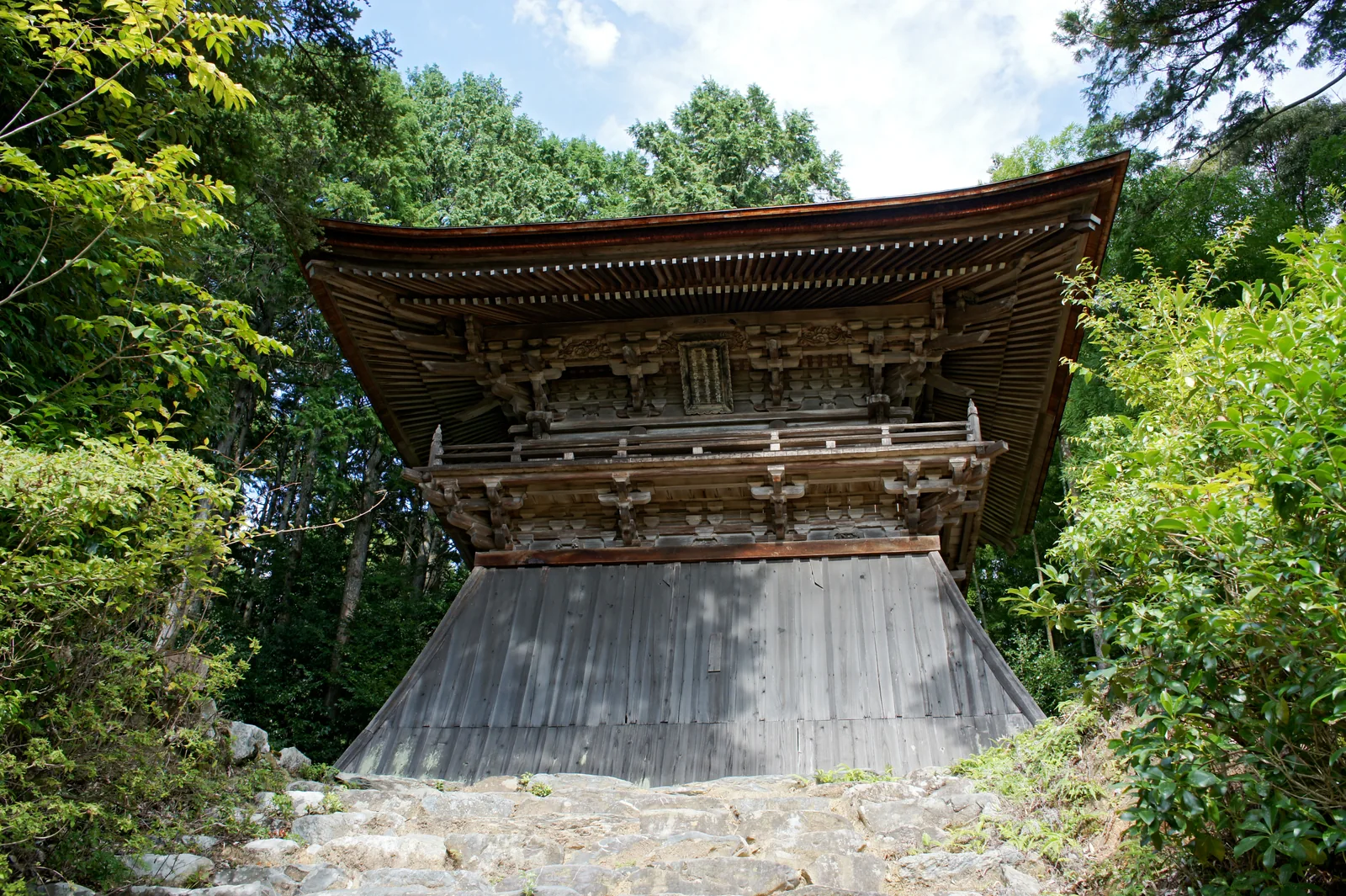
Jingo-ji is where Kukai performed his first state-protection rituals and the historic Takao Abhisheka initiations. Open daily 9:00 AM–4:00 PM year-round (¥1,000 for adults since July 2024). The Tahoto Pagoda's Five Great Kokuzo Bosatsu statues open May 13–15, and the Daishi-do's wood-relief Kukai statue opens Nov 1–7 (¥500 extra each). Take the JR Bus Takao-Keihoku Line (~50 min, ¥230 flat fare) plus a 20-minute walk with stone steps. Full guide to visiting and hiking the Takao Sanbi three-temple route.
Three Major Special Viewings: Tahoto Pagoda, Daishi-do, and the Treasure Airing
Spring's headline event is the special opening of the Tahoto Pagoda, where the National Treasure Five Great Kokuzo Bosatsu statues are unveiled annually from May 13 to 15 (10:00 AM–3:00 PM; ¥500 special viewing fee, excluding base temple admission). These statues trace back to Kukai's disciple Shinzei, who took charge after Kukai's passing and spent twelve years inside the mountain precinct developing the temple complex; Emperor Ninmyo later commissioned the pagoda to house these five deities. The 2027 spring viewing falls on the same dates, May 13–15.
In autumn, the spotlight shifts to the Daishi-do Hall. The wood-relief statue of Kobo Daishi (Itabori Kobo Daishi) opens to the public from November 1 to 7 (9:00 AM–4:00 PM; ¥500 extra), accompanied by a commemorative goshuin just as Takao's maples begin to turn. The Tahoto Pagoda's Five Great Kokuzo Bosatsu statues also open for a second time in fall: per the official annual calendar, this runs over the three-day holiday weekend containing the second Monday of October. Since the temple's homepage has occasionally carried mismatched dates from past typos, always follow the October long-weekend rule on the annual calendar.
From May 1 to 5 (9:00 AM–4:00 PM), the Shoin abbot's quarters hosts the annual Treasure Airing Ceremony (Mushiboshi), offering a sweeping showcase of roughly 70 temple treasures for ¥1,000 extra (base ticket required). For five days only, visitors can see National Treasure portraits of Minamoto no Yoritomo and Taira no Shigemori, the National Treasure Shaka Nyorai painting, and other masterpieces side by side, while enjoying the Kanjo no Niwa rock garden and paid matcha service at the Ryoryoken tearoom.
Pricing across all three special openings follows the exact same formula: start with the ¥1,000 grounds admission, then add the special viewing fee—¥500 for the Tahoto Pagoda or Daishi-do (¥1,500 total), and ¥1,000 for the Treasure Airing (¥2,000 total). Travelers hoping to see the full collection usually plan one visit in May and another in November.
Mushiboshi began as a traditional spring preservation ritual at Japanese temples, taking advantage of dry late-spring weather to air out priceless scrolls and artifacts against humidity and insects—turning conservation into a rare annual viewing for devotees and art lovers alike. Jingo-ji fixes this ceremony to May 1–5, pairing it with access to the Kanjo no Niwa garden (named after the historic Takao Abhisheka) and tea service in Ryoryoken. Sipping matcha in a quiet mountain study surrounded by Kamakura-period masterpieces makes for the most atmospheric five days of Jingo-ji's year.
Because Jingo-ji's National Treasure statues are never on permanent display, these special openings are narrow windows worth targeting: twice a year for the Five Great Kokuzo Bosatsu (mid-May and the October long weekend), once a year for the wood-relief Kobo Daishi (early November), and once a year for the Treasure Airing (early May). Together, those four dates form Jingo-ji's 'National Treasure calendar.' For dedicated visitors, May 1–15 bridges both the Treasure Airing and the spring pagoda viewing—the single richest fortnight of the year.
While combining admission and special fees pushes a single visit to ¥1,500–¥2,000—steeper than standard temple entry in central Kyoto—it buys rare face-to-face access to first-tier National Treasures only shown a few days each year. Linking early May's airing with the mid-May pagoda viewing, or pairing early November's Daishi-do opening with Takao's early autumn maples, lets you experience Jingo-ji's deepest cultural heritage in a single well-timed day.
Kukai and Jingo-ji: State-Protection Rituals and the Takao Abhisheka
Jingo-ji's monumental place in Japanese Buddhist history rests on two pivotal events led by Kukai. First, in 810 (Konin 1), Kukai entered the mountain temple to perform seven days of state-protection rituals—described in temple records as the very first such rite Kukai conducted after returning from Tang China. Second came the Takao Abhisheka of 812 (Konin 3): on November 15, Saicho received the Diamond Realm initiation, followed by the Womb Realm initiation on December 14, and in March of the next year 17 of Saicho's disciples received the Diamond Realm initiation. The three-part attendance ledger brushed by Kukai himself, the Kanjo Reimei, survives today as a National Treasure.
The temple's roots stretch even further back. In 781 (Ten'o 1), nobleman Wake no Kiyomaro founded Takaosan-ji; in 824 (Tencho 1), it merged with Shingan-ji and was renamed Jingokoku-so Shingon-ji, with Kukai entrusted full management—cementing its role as an early pillar of the Shingon school. After devastating fires in 994 and 1149, the priest Mongaku spearheaded its restoration. Mongaku's 45-Article Petition, along with handwritten letters from Minamoto no Yoritomo and Hojo Masako, remain in the temple collection, giving this mountain sanctuary the archival weight of a premier historical museum.
Official temple chronicles lay out the exact timeline linking Jingo-ji to Mount Koya: Kukai began founding Mount Koya in 816, received To-ji in Kyoto in 823, and entered eternal meditation on Mount Koya in 835. Jingo-ji predates Mount Koya as Kukai's earliest operational base for spreading Shingon teachings. Temple histories note explicitly that the Heian-period treasures preserved here prove Jingo-ji held a stature 'in no way inferior to To-ji or Kongobu-ji'—visiting means standing at the true birthplace of Japanese Shingon.
The Main Hall's principal deity, a National Treasure standing Yakushi Nyorai (Medicine Buddha), is said to have originated at Shingan-ji. Meanwhile, items on the temple treasure roster—such as the Takao Mandala and the Landscape Screen—appear repeatedly in Japanese art history textbooks. Hidden in the mountains, this single temple safeguards nearly half the canon of early Shingon visual art.
Several signature treasures are worth knowing before you climb the steps. Commissioned by Emperor Junna during the Tencho era (824–834), the Takao Mandala faithfully reproduces the twin mandalas of Tang master Li Zhen in gold and silver pigment on indigo silk, anchoring Chang'an's esoteric iconography in Kyoto's hills. The Gold-inked Tripitaka on Indigo Paper represents the pinnacle of Heian sutra copying, while the Futarasan Inscription and Priest Mongaku's letters document the temple's revival. Because most of these works stay locked in storage year-round, review the list beforehand and time your visit to the Treasure Airing or special viewings.
Two more milestones in painting history stand out: the Shaka Nyorai hanging scroll and the Landscape Screen (Senzui Byobu). Painted in ink and soft color to depict wooded hills, the Landscape Screen is recognized as an early landmark of Yamato-e landscape painting, often discussed alongside its counterpart at the Tokyo National Museum. Because both paintings and statues spend almost all year in climate-controlled storage, 'not on view' is the normal rule at Jingo-ji—seeing them on special opening days feels less like routine sightseeing and more like a rare festival.
Finally, three late-Heian to early-Kamakura portraits—depicting Minamoto no Yoritomo, Taira no Shigemori, and attributed Fujiwara no Mitsuyoshi—rank among the foundational masterpieces of Japanese portraiture. Scholars have debated the sitters' identities and why they hang at Jingo-ji for decades, drawing packed crowds whenever they emerge for May's Treasure Airing. Viewed alongside letters from Minamoto no Yoritomo and Hojo Masako and Mongaku's 45-Article Petition, they trace the real fundraising campaign behind Mongaku's reconstruction—artworks and primary documents reinforcing each other on the same mountain.
Getting There: JR Bus Takao Line and the Stone Stair Approach
Two main public transit routes reach Jingo-ji. The primary option is the JR Bus Takao-Keihoku Line from JR Kyoto Station (or Karasuma Subway Line Kyoto Station), taking about 50 minutes to the Takao stop. Active routes include 47 and 47S (via Ichijo-dori toward Shuzan), 48 and 48S (via Ritsumeikan University toward Shuzan), and 49 (via Karasuma toward Toganoo). Any route from Kyoto Station to Toganoo—including getting off at Takao—is a ¥230 flat fare. Alternatively, Kyoto City Bus Route 8 runs from Hankyu Karasuma Station or Subway Shijo Station to Takao in roughly 45 minutes.
Official walking estimates from the bus stop differ slightly depending on the source: JR Bus's map states 15 minutes along the promenade to Jingo-ji's main gate plus 15 minutes up the approach stairs into the grounds (about 30 minutes total), while Jingo-ji's website lists roughly 20 minutes on foot from Takao (measured to the main gate). Plan on 20 to 30 minutes from the bus stop into the temple precinct, including the Kehi-gu stair climb, and leave extra breathing room in chilly autumn or winter mornings. The temple has never released an official step count, so treat numbers quoted on random blogs with skepticism.
Drivers can take National Route 162 to the Fukuoji intersection and turn toward Keihoku/Takao for roughly 6 kilometers, though official guidance warns that traffic congestion can stretch travel times. The Fukuoji-to-Takao corridor is one of northwestern Kyoto's worst autumn bottlenecks, making public buses far more predictable than driving. There is no direct transit listed from Osaka—the smoothest approach is riding the train to Kyoto Station and transferring to the JR Bus.
Here is a smart leg-saving trick for the return trip: Route 49 terminates at Toganoo, right beside Saimyo-ji and Kozan-ji. Walking the Takao Sanbi trail onward to Kozan-ji and catching the bus back to Kyoto directly from Toganoo is the official recommended finish, sparing you a long backtrack up and down to the Takao bus stop.
All three JR Bus numbers depart from Kyoto Station: 47/47S run via Ichijo-dori, 48/48S loop past Ritsumeikan University, and 49 runs up Karasuma-dori, heading onward to Shuzan or Toganoo. Going up to Jingo-ji, any of them drops you at Takao for the exact same ¥230 flat fare, differing only slightly in city routing and ride time. Taking Route 49 back from Toganoo creates a clean one-way loop (off at Takao, on at Toganoo) that cuts backtracking in half. Keep in mind that mountain temperatures in Takao run several degrees cooler than downtown Kyoto, so pack an extra warm layer for early-morning bus rides and stair climbs.
Some older online posts suggest getting off at 'Yamagoe' and hiking up, but West Japan JR Bus's official fare and stop tables list no Yamagoe stop for this route, and both Jingo-ji and JR Bus designate Takao as the standard alighting point. Anyone considering other Kyoto City Bus routes should consult the latest Kyoto Municipal Transportation Bureau route map. Fares can be paid with standard transit IC cards or cash—simply follow the boarding and payment instructions posted inside the bus.
The Takao Sanbi Walk: A Day Connecting Jingo-ji, Saimyo-ji, and Kozan-ji
West Japan JR Bus's official 'Takao Sanbi Meguri MAP' links all three mountain temples into one seamless route: ride the bus ~50 minutes from Kyoto Station to Takao, walk 15 minutes along the valley path to Jingo-ji's gate and climb 15 minutes of stone stairs to explore the grounds; exit Jingo-ji and walk ~20 minutes along the promenade to Saimyo-ji's gate; continue ~20 minutes via trail and roadside path to Kozan-ji; then board the bus at Toganoo for the 50-minute ride back to Kyoto Station. Counting temple visits and walking, the full three-temple circuit takes roughly four to five hours.
Each temple has a distinct focus: Jingo-ji anchors Shingon history and National Treasures, while Saimyo-ji and Kozan-ji unfold down the Kiyotaki River valley, with Kozan-ji famed for the National Treasure Choju-jinbutsu-giga (Scrolls of Frolicking Animals) and Japan's oldest tea fields. JR Bus refers to this trio officially as Sanbi Meguri (Takao Sanbi)—not Sanzan ('three mountains')—reflecting the local place names Takao, Makinoo, and Toganoo. Saimyo-ji and Kozan-ji keep separate admission fees and hours, so check each temple's official site before setting out.
If you are coming for fall foliage, note that Jingo-ji does not publish a peak-color forecast table, sharing only on-site photo updates instead. The temple's fixed November changes are the November 1–7 Daishi-do viewing and month-long paper-slip goshuin policy; for foliage timing, rely on Kyoto Prefecture and Kyoto City seasonal foliage reports. In practice, arriving early to finish Jingo-ji before noon and strolling downstream to Saimyo-ji and Kozan-ji in the afternoon lets you dodge the worst stair crowds.
What catches most visitors off guard is the cumulative leg work. Between the valley promenade, steep stone stairways, and riverside stretches linking the three temples, elevation changes add up quickly—and early-morning frost can make stone steps slick in late autumn and winter. Wear sturdy, grippy walking shoes, pack enough water, and treat Takao Sanbi like a light mountain hike rather than a flat city temple stroll.
For pinpointing peak autumn color, Jingo-ji posts real-time video clips on Instagram rather than fixed calendar tables. The smartest strategy is to anchor your trip around guaranteed dates first—the November 1–7 Daishi-do opening coincides with early foliage, and paper-slip goshuin run all November—then cross-reference municipal foliage trackers and the temple's clips, leaving a one-day buffer around projected peak week for the best odds.
Dining and resupply options are sparse in the Takao hills, and there are no convenience stores along the riverside trails or roadside stretches between the three temples. Pack light snacks or onigiri rice balls, or eat a solid breakfast around Kyoto Station before boarding the bus. After rain, stone steps and forest paths turn slippery; non-slip footwear, seasonal layers, and drinking water are essential so the whole mountain walk stays comfortable.
Running like a thread through all three temples is the Kiyotaki River gorge. The walking path hugs clear mountain rapids and cedar groves that ignite in crimson foliage from riverbed to ridgeline each autumn, with the same river system flowing south toward Arashiyama and Hozu Gorge. Summer brings cool shaded relief, autumn delivers layered foliage, and winter offers quiet snow-dusted sanctuaries—and because Jingo-ji stays open year-round, every season reveals a completely different side of the valley.
Annual Calendar and Seasonal Rhythm of Worship
Jingo-ji keeps a full calendar of Buddhist services throughout the year: New Year's Service on January 1 (Main Hall), Principal Deity Service on January 8, Mieku Memorial on January 21 (Daishi-do), Nirvana Day on February 15, Spring and Autumn Equinox Services on March 21 and September 23, Buddha's Birthday on April 8, Wake Memorial Festival on May 4 (Mausoleum), Kobo Daishi's Birthday on June 15, Priest Mongaku Memorial on July 21, Obon Service on August 15, Prince Shonin Memorial on September 18, and the autumn Wake Memorial Festival on November 4 (Main Hall). If you plan a trip around a specific ceremony, call the temple ahead to confirm that year's schedule.
Goma fire rituals take place in the Myo-o-do Hall, which houses a mid-Heian statue of Fudo Myo-o open to public view. Special annual rituals include the First Great Goma Service (Hatsu Daigoma-ku) on the second Sunday of January at 2:00 PM and the Segaki Goma Service on August 16 at 2:00 PM; from February through July and September through December, regular Goma rituals are held on the second Sunday of every month at 2:00 PM. Individual prayer requests (soe-goma) can be submitted directly at the Main Hall.
Beyond walking the grounds, two official resources add real depth to the visit: the free Cassette Museum audio guide downloadable beforehand, and the Takao Mandala Catalog published in May 2023 (¥3,000 on-site, or plus ¥1,000 registered shipping by mail), which documents the National Treasure mandala in sharp detail—a far better keepsake than a standard souvenir for esoteric art fans. Follow Jingo-ji's official Instagram for the fastest updates on limited goshuin and foliage conditions.
With a 50-minute bus ride, a 20–30 minute climb, and a ¥1,000 ticket, Jingo-ji demands more effort than temples in central Kyoto. In return, it delivers the birthplace of Kukai's Shingon school, multiple annual National Treasure openings, and the scenic Takao Sanbi river walk. Budget your time and energy carefully, and consider pairing the afternoon with Arashiyama or northwestern Kyoto to round out the day.
Before climbing the mountain, it is also worth reading up on founder Wake no Kiyomaro. When he established the temple on Mount Takao in 781, he had just survived the turbulent Dokyo Incident under Empress Shotoku—enduring exile before returning to court—and legends of a state-protecting temple under Emperor Konin tie closely to his name. The May 4 Wake Memorial Festival at his mausoleum honors this foundational figure. Combined with the standing Yakushi Nyorai brought over from Shingan-ji, the merger layered Nara-period devotion directly beneath Heian esoteric Buddhism—stepping through the gate means walking across multiple eras at once.
Placing Jingo-ji on a broader Shingon pilgrimage map clarifies its unique coordinates: Kukai's path began here on Mount Takao with state-protection rites and the historic Abhisheka, then expanded to Mount Koya in Wakayama (founded 816, where he entered eternal meditation in 835) and To-ji in Kyoto (granted 823). Together, those three sites form the essential triad of Kukai's life—see the Five Wisdom Kings and lecture hall statues at To-ji, walk Danjo Garan and Okunoin on Mount Koya, and return to Takao's Jingo-ji where the initiations began. Saving Jingo-ji for the final leg of that pilgrimage often makes the historical connections click into focus.
If your schedule lines up with the second Sunday afternoon of the month, stay outside the Myo-o-do Hall for a Goma fire ritual. Goma is an esoteric fire offering in which monks chant sutras and form mudras before a blazing altar while visitors join their palms in silent prayer outside; on ordinary days, personal prayer sticks (soe-goma) can be arranged at the Main Hall. For anyone witnessing an esoteric rite up close for the first time, look past the spectacle and listen to the cadence of flame and mantra—the solemnity of the ritual speaks for itself.
A few useful answers
What are Jingo-ji's opening hours and admission fees?
Jingo-ji is open daily from 9:00 AM to 4:00 PM, year-round. Effective July 1, 2024, admission is ¥1,000 for adults, university students, and junior/senior high school students, and ¥500 for elementary school students, with discounts for groups of 30+ and visitors with disabilities. Older articles quoting ¥600 are outdated. Admission does not increase during autumn foliage, and the temple has never announced evening or night illuminations.
When are Jingo-ji's special viewings held?
There are three main events: the Tahoto Pagoda's National Treasure Five Great Kokuzo Bosatsu statues open every May 13–15 (10:00 AM–3:00 PM, ¥500 extra) and again in autumn over the three-day holiday weekend including the second Monday of October; the Daishi-do Hall's wood-relief Kobo Daishi statue opens November 1–7 (9:00 AM–4:00 PM, ¥500 extra, with a commemorative goshuin); and the Shoin Treasure Airing runs May 1–5, displaying ~70 works including National Treasure portraits of Minamoto no Yoritomo and Taira no Shigemori (¥1,000 extra).
How do I get to Jingo-ji from Kyoto Station?
Take the JR Bus Takao-Keihoku Line (Routes 47, 48, or 49; ¥230 flat fare from Kyoto Station all the way to Toganoo) for about 50 minutes to the Takao stop, or take Kyoto City Bus Route 8 for roughly 45 minutes. From the bus stop, walk about 15 minutes along the promenade to the main gate and climb another 15 minutes of stone stairs into the grounds (the temple's website estimates ~20 minutes to the gate). Drivers can turn off National Route 162 at Fukuoji intersection for ~6 km toward Takao, though heavy foliage traffic makes the bus more reliable.
Can I combine Jingo-ji with Kozan-ji and Saimyo-ji in one trip?
Yes—that is JR Bus's official 'Takao Sanbi Meguri' walking route. Get off at Takao to visit Jingo-ji (15-minute path plus 15-minute stair climb), walk ~20 minutes along the valley promenade to Saimyo-ji, continue ~20 minutes to Kozan-ji, and catch the bus back to central Kyoto from Toganoo (~50 minutes). Expect four to five hours total including temple visits; wear sturdy, non-slip shoes since stone steps can frost over on autumn and winter mornings.
Official information and references
Sources used in this guide.
- Jingo-ji Official Website (9:00 AM–4:00 PM year-round hours & full admission table effective July 1, 2024)
- Jingo-ji Access Guide (JR Bus Takao-Keihoku Line ~50 min & ~20-minute walk from Takao)
- Jingo-ji History (Founded 781 by Wake no Kiyomaro, renamed 824, restored by Mongaku)
- Jingo-ji: Kukai and Mount Koya (Takao Abhisheka Kanjo Reimei, 816 Mount Koya founding, 835 eternal meditation)
- Jingo-ji Annual Calendar (Special viewings, Goma fire rituals, and yearly services)
- Jingo-ji Temple Treasures (Yakushi Nyorai, Five Great Kokuzo Bosatsu, Takao Mandala, Kanjo Reimei)
- West Japan JR Bus: Takao-Keihoku Line (Routes 47/48/49 & ¥230 flat fare from Kyoto Station to Toganoo)
- West Japan JR Bus: Takao Sanbi Meguri Map (Official walking times for Jingo-ji, Saimyo-ji, and Kozan-ji)