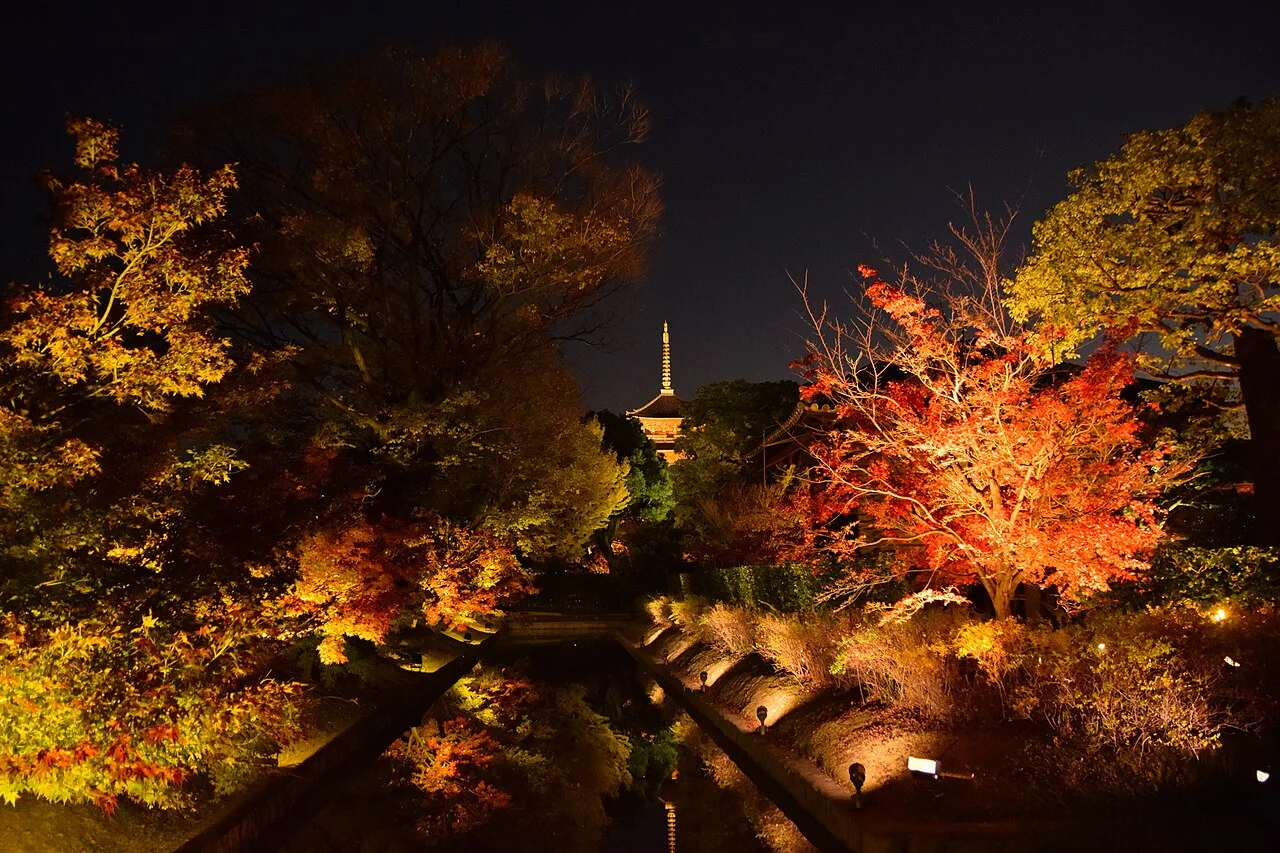
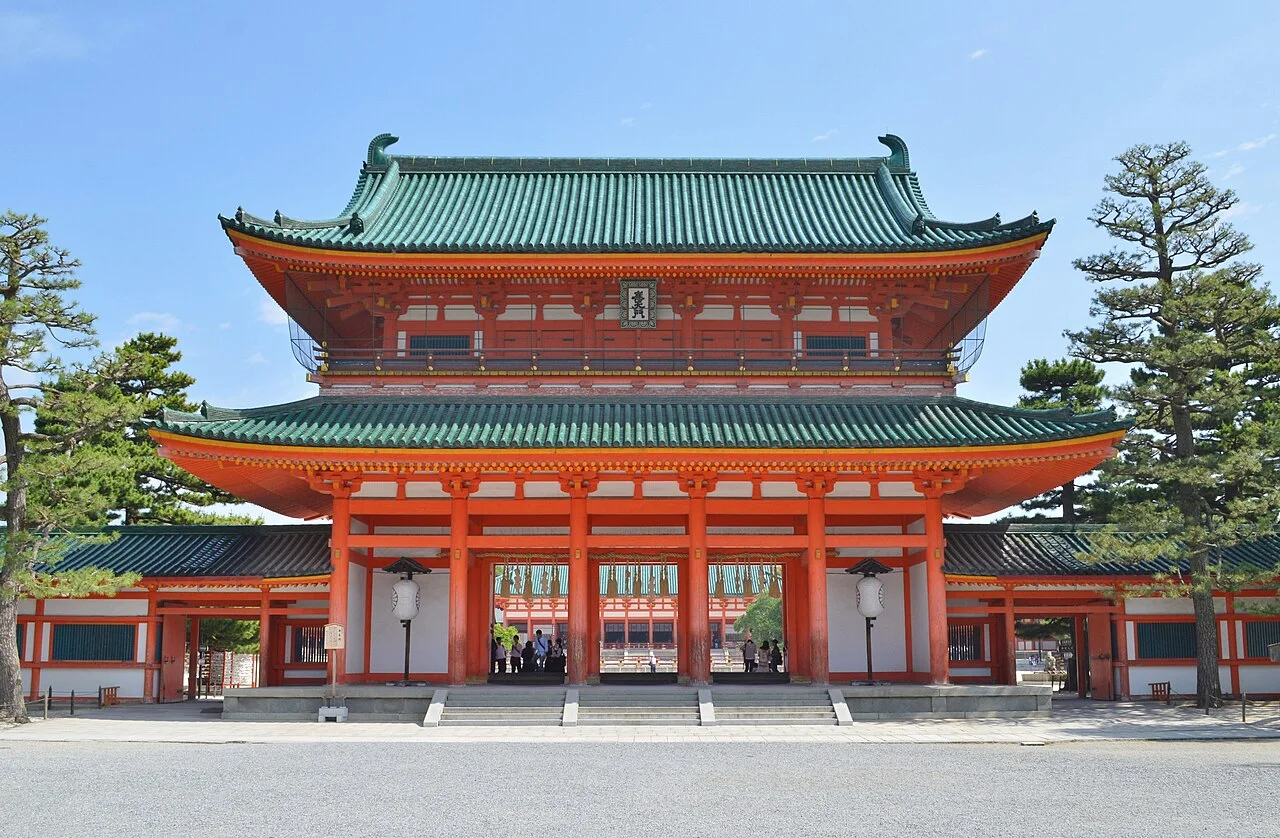
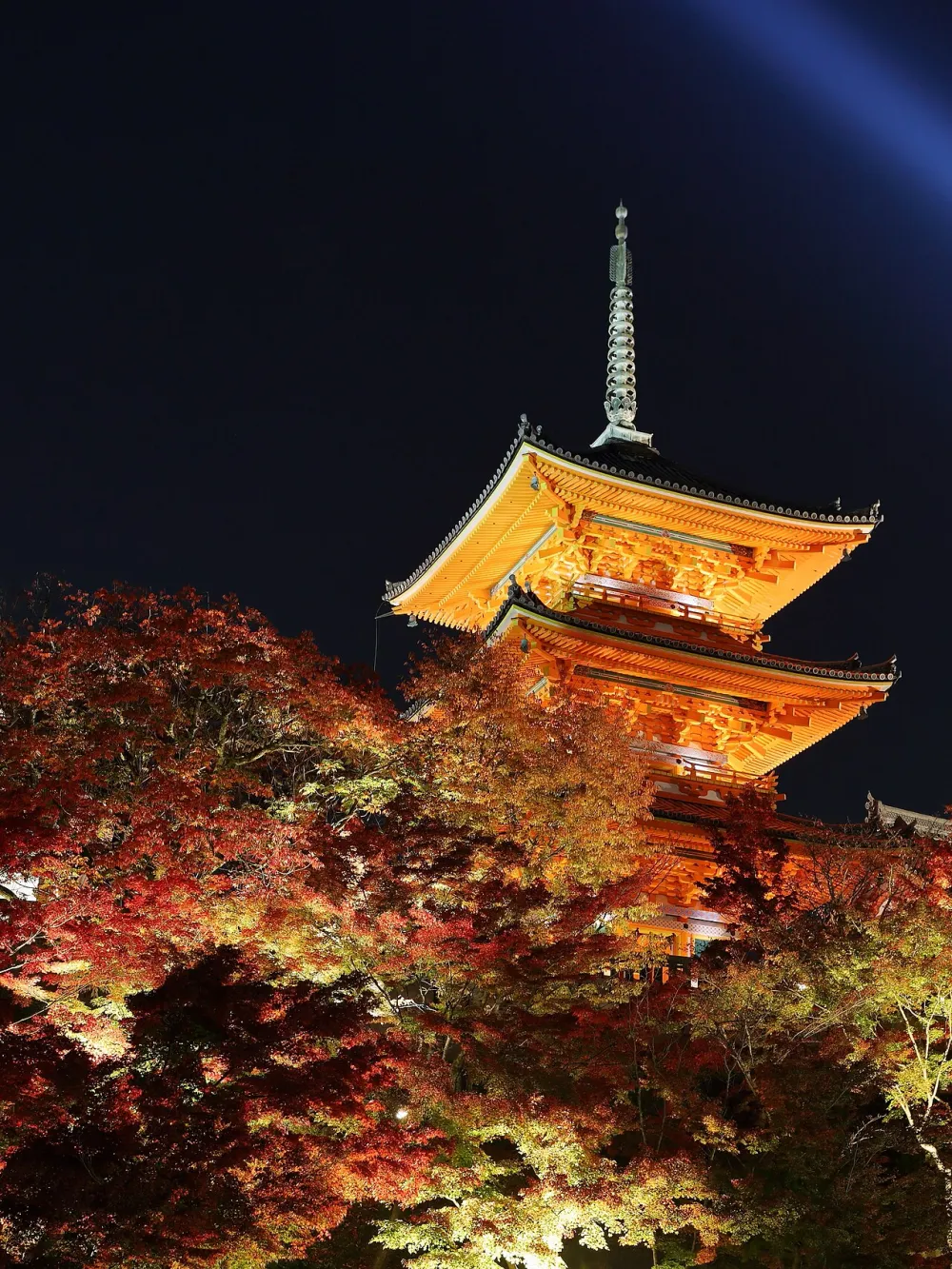
How to visit Nanzen-ji Temple in Kyoto: walking routes from Keage Station, Sanmon and Hojo admission fees, fall 2026 Nanzen-in opening dates, year-end closures, and connections to Okazaki or Eikan-do.
- Region & Focus
- KyotoShrines and temples
- Reading Scope
- 18 min read · 8 chapters · 7 Q&As
- Official Verification
- 29 official sources checkedUpdated November 22, 2026 at 08:00 AM GMT+8
- Key Topics
- First tripItinerariesSeasons
Chapter Route Map (tap any stop)
- Nanzen-ji Tickets, Hours, and How Long to Stay
- Getting from Keage Station to the Chumon Gate
- The Sanmon Gate and Hatto: Take Time to Look Up
- Hojo Garden: Where to Start Reading the Stones
- Suirokaku Aqueduct and the Keage Incline Are Two Separate Works
- Choosing Subtemples and Nanzen-in's Fall 2026 Opening Dates
- Linking Nanzen-ji to Okazaki or Heading North Along the Philosopher's Path
- Spring Canal Walks and Rainy-Day Alternatives
- Quick Q&A
Nanzen-ji Temple in Kyoto is about a 10-minute walk from Keage Subway Station. Strolling the grounds to see the exterior of the Sanmon Gate and the Suirokaku Aqueduct is free. Climbing the Sanmon Gate and visiting the Hojo Garden each cost ¥600 for adults; plan on two hours for a first visit. In November 2026, the Nanzen-in garden opens for a limited run, and regular paid admission closes December 28–31 while the grounds remain open for walking. Afterward, head west for museums in Okazaki or north toward Eikan-do and the Philosopher's Path.
Nanzen-ji Tickets, Hours, and How Long to Stay
On a first visit, enter through the Chumon Gate and follow the main approach straight to the Sanmon Gate, where you can buy a ticket if you want to climb to the upper floor. At ground level, the path continues to the Hatto (Dharma Hall) before turning toward the Hojo and the Suirokaku Aqueduct. Budget 45 minutes to an hour just to see the Sanmon exterior, the outside of the Hatto, and the aqueduct. If you plan to climb the Sanmon and tour the Hojo Garden, give yourself two hours from Keage Station—more on fall foliage weekends when lines form. Set aside the morning if you are also adding subtemples like Nanzen-in or Tenju-an.
Standard individual admission is ¥600 each for the Sanmon Gate and the Hojo Garden (¥500 for high school students; ¥400 for elementary and junior high students). Tickets are sold separately, so visiting both costs ¥1,200 per adult. If a group of three only wants to see a garden together, skip the gate climb and head straight to the Hojo. Anyone who wants the city view can climb the Sanmon separately while the rest wait along the approach, agreeing to meet on the Hatto side of the gate so nobody wastes time looking for each other front and back.
From March 1 through November 30, regular hours are 8:40 AM–5:00 PM, with last entry at 4:40 PM. Winter hours from December 1 through the end of February run 8:40 AM–4:30 PM, with last entry at 4:10 PM. Arriving right before last entry only leaves time for one paid area, especially at the Hojo, where the walk from the ticket counter to the garden winds through interior corridors. If you get there late and want to see both, start with the spot you care about most and save the other for another trip.
In November 2026, the temple extends regular hours on Saturdays, Sundays, and national holidays until 5:15 PM (last entry at 4:55 PM). Those extended hours apply only to standard admission; special openings such as the Hatto interior follow separate schedules. From December 28–31, general paid admission and goshuin (temple stamp) service shut down, though the grounds stay open to walkers. At year-end, stick to the same walking route to see the exteriors of the Sanmon Gate and Suirokaku Aqueduct, and schedule indoor halls and paid gardens for another day.
Visitors holding an official disability certificate receive free admission for themselves and one companion upon showing the ID. While the grounds have paved walkways, you will still encounter gravel, slopes, and steps. Indoor wheelchairs can be borrowed at the Hojo Garden ticket counter; if anyone in your party uses a wheelchair, make the Hojo your main stop. Reaching the top of the Sanmon Gate requires climbing steep stairs, though you can still take in the scale of its pillars, eaves, and stone lantern from the plaza out front.
You must remove your shoes before entering both the Sanmon Gate and the Hojo. The temple provides plastic shoe bags, which you are asked to take with you afterward—bringing your own bag also helps keep wet shoes separate from camera gear on rainy days. If you are in a group, get your cash, IDs, and shoe bags ready outside the ticket booth so you do not block the entryway sorting footwear. Eating and drinking are prohibited anywhere on the temple grounds; save lunch, snacks for kids, or a rainy-day coffee break for Okazaki after you leave.
If you want matcha inside the temple, plan around the midday closure. For November and December 2026, the matcha tea room runs 9:30 AM–3:30 PM, closed from 12:00 PM–1:00 PM (groups of 10 or more should contact the temple in advance). If you tour the Hojo in the morning, have tea just before exiting. If you visit the Sanmon Gate and Nanzen-in first and finish near noon, head straight to Okazaki for lunch instead of waiting around for the tea room to reopen.
How to visit Nanzen-ji Temple in Kyoto: walking routes from Keage Station, Sanmon and Hojo admission fees, fall 2026 Nanzen-in opening dates, year-end closures, and connections to Okazaki or Eikan-do.
Getting from Keage Station to the Chumon Gate
From Kyoto Station, take the municipal subway Karasuma Line to Karasuma Oike and transfer to the Tozai Line for Keage. Kyoto City's transit guide estimates about 17 minutes by subway from Kyoto Station to Keage, followed by a 10-minute walk to Nanzen-ji. Coming by JR from the Otsu area, you can also transfer to the Tozai Line at Yamashina and walk the same route from Keage. If you are already near Keihan Sanjo Station, board the Tozai Line at the connecting Sanjo Keihan Station to avoid backtracking through Kyoto Station.
Leaving Keage Station via Exit 1, look on the east side of Sanjo-dori for the brick tunnel known as Nejiri Manpo. Looking up at the entrance, you can see the brickwork spiraling along the vault right beneath the slope of the Keage Incline. Walk through the tunnel toward the temple and turn onto the main approach once you spot the Chumon Gate. If you want to climb the Sanmon first thing in the morning, treat the brick tunnel strictly as a landmark on the way in and save photos of the tracks and tunnel entrance for the walk out.
If you need an elevator, use Exit 2 on the west side of Sanjo-dori. From the train platform, take the elevator at the north end up to the ticket gate level, then take a second elevator to the street and find a crosswalk. Keep in mind that station accessibility and temple terrain are two different things: elevators get you out of the subway smoothly, but inside the grounds you still need to plan around steps and gravel. To avoid sloped gravel paths, ask the Hojo reception desk where to pick up an indoor wheelchair and set your meeting point inside the grounds accordingly.
Approaching from Okazaki, take a Kyoto City Bus to either Nanzenji-Eikandomichi or Higashi-Tennocho; the temple estimates roughly a 10-minute walk from either stop. City Bus 5 runs directly to Nanzenji-Eikandomichi from Kyoto Station and Sanjo Keihan, making it an easy link to Eikan-do as well. On peak autumn foliage mornings when you want to catch the first wave up the Sanmon Gate, the subway offers far more predictable arrival times. If you are already around Heian Shrine or the nearby museums, simply walk over.
For drivers, the first parking lot sits right outside the Chumon Gate. Nanzen-ji's official site lists passenger car parking at ¥1,000 for the first two hours and ¥500 for each additional hour. From mid-November to mid-December, however, that lot may be restricted to tour buses only. If older passengers need to be dropped off near the gate, factor in extra time for drop-off and finding a spot elsewhere—or transfer onto the Tozai Line at an elevator-equipped station on busy foliage days so the whole group isn't stuck hunting for parking.
Set your navigation pin to 'Nanzen-ji Sanmon Gate.' When coordinating a meetup, specify 'outside the Chumon Gate' or 'the Hatto side of the Sanmon Gate' so the landmark is unmistakable. Saying 'at the entrance to Nanzen-ji' causes confusion when half your group is walking over from Eikan-do and the other half is arriving from Keage—naming an exact gate or walkway works much better than texting a zoomed-in map screenshot.
The Sanmon Gate and Hatto: Take Time to Look Up
Nanzen-ji was founded in 1291 when Cloistered Emperor Kameyama converted his detached palace into a Zen temple and invited Mukan Fumon as its founding abbot. Standing before the Sanmon Gate today helps illustrate the temple's historic rank above the Kyoto Gozan. As Kyoto City's interpretive sign outside the temple notes, Nanzen-ji once held the top spot among the Five Great Zen Temples before Ashikaga Yoshimitsu elevated it to a singular tier above all five. Following the central axis from the Sanmon Gate to the Hatto lays out the core buildings clearly before the path veers off toward the Suirokaku Aqueduct.
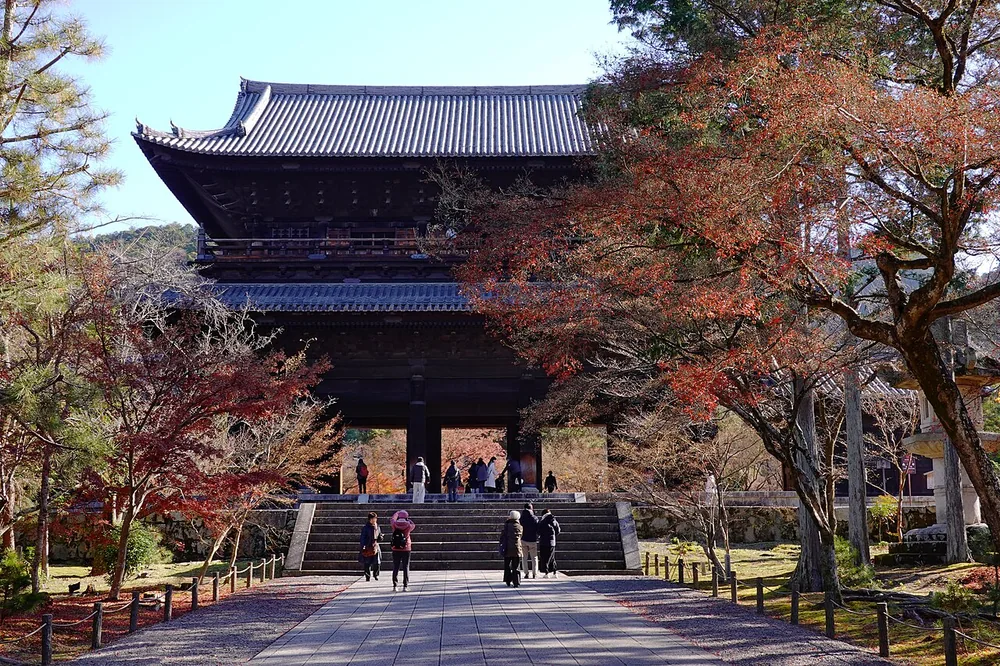
The current Sanmon Gate was built in 1628 by Todo Takatora to honor retainers killed during the Summer Siege of Osaka. Standing roughly 22 meters tall, the facade spans five bays with three central passageways. View the gate straight on from the middle of the approach first, then step to the side and look up at the massive pillars and bracket complexes supporting the eaves to appreciate its two-story proportions. On the right side in front of the gate stands a stone lantern over 6 meters tall, donated by Sakuma Katsuyuki upon the gate's completion; step back a bit to fit both the base and the upper eaves into one view.
The temple explains 'Sanmon' as the three gates of liberation—emptiness, formlessness, and non-action—and calls the upper story Gohoro. Climbing up requires navigating steep wooden stairs, so stow phones and cameras in a bag before heading up. Once at the top, orient yourself: looking back along the approach gives a sweeping view over central Kyoto, while the opposite side overlooks the Hatto and the wooded temple grounds against the hills. Kabuki fans may also recognize the setting from *Sanmon Gosan no Kiri*, made famous by Ishikawa Goemon's soliloquy, though the existing structure reflects its early Edo-period reconstruction.
If you arrive early, climb the gate first. Even if the boards are slick with rain, someone in your group dislikes heights, or you are carrying heavy camera gear, there is plenty to take in from the ground. Stand beneath the gate looking back toward the approach to see how the thick timber columns frame the view into separate panels, then walk down the stone-paved path toward the Hatto and glance back at the gate's differently proportioned rear facade. Because people pass continuously through both sides, step to the edge of the walkway if you are waiting for an unobstructed shot.
The Hatto is where Nanzen-ji holds its major ceremonies. Rebuilt in 1909, the hall features huge keyaki zelkova pillars supporting the roof and a ceiling painting of a Coiled Dragon by Imao Keinen. On ordinary days, viewing the eaves and facade from outside is the extent of the stop. Compared against the Sanmon Gate, the central axis leads straight up to the front of the Hatto—once you have looked over the exterior, head toward the Hojo ticket booth or turn aside toward the Suirokaku Aqueduct.
From November 16–29, 2026, the Hatto interior opens for special viewing from 9:00 AM–4:00 PM, closing from 12:00 PM–1:00 PM and closed all day on November 26 for a temple ceremony. Admission is ¥500 for high school students and adults, and free for elementary and junior high students. If your visit lands during the midday break, tour the Sanmon Gate or Hojo first. If you specifically want to see the Coiled Dragon ceiling, do not wait until nearly 4:00 PM—the extended weekend hours in November apply only to general grounds admission, not the Hatto interior.
Hojo Garden: Where to Start Reading the Stones
A temple's Hojo originally served as the abbot's residence and reception hall. Nanzen-ji's Hojo is a designated National Treasure consisting of the Ohojo (Large Hojo) and the adjoining Kohojo (Small Hojo). Rebuilt in 1611 using palace buildings gifted from the imperial court, the Ohojo still shows imperial architectural touches in its veranda transoms, ceilings, and sliding wooden doors. While the temple refers to it as the former Seiryoden, its official site notes research suggesting the structure came from the Nyoin Imperial Palace. As you walk through the Ohojo, notice how the rooms align along the veranda, framing the garden right outside.
Looking out from the front veranda of the Ohojo, the largest stone grouping anchors the far left corner while broad expanses of raked white gravel open across the center and right. Start by taking in the space created by the white gravel, then follow the earthen wall to spot the low, reclining stones. Shifting from sitting low to standing along the corridor changes how the rocks overlap with the wall behind them. Attributed to Kobori Enshu in the early Edo period, this dry landscape garden is popularly known as Toranoko-watashi no Niwa ('Tiger Cub Crossing the River' Garden) and is a nationally designated Place of Scenic Beauty.
Picture the white gravel as water and trace the rock placement to see how the garden earned its nickname—the stones are not carved like tigers, so read their scale, orientation, and the way the gravel opens toward the right. If you have seen Ryoan-ji's rock garden, try viewing this one with the same eye: Nanzen-ji concentrates its boulders at one end near the building, letting the composition stretch along the long veranda so the balance of empty space shifts as you move. Even with no pond, the white gravel reflects daylight right under the eaves.
Continuing deeper along the Hojo route brings you to the Kohojo's Joshin-tei, a 1966 dry landscape garden whose stones are arranged in the shape of the character for 'heart' or 'mind.' The same corridor leads onward to Rokudo-tei, where stones rest in cedar moss and the bright glare of white gravel fades. If you only glanced at the Ohojo garden map near the entrance, keep an eye out for signs to Joshin-tei and Rokudo-tei toward the back—they are included on the main Hojo circuit, saving you from hunting for another ticket gate outside.
Along the narrower interior corridors, turn your attention to the painted sliding doors (fusuma) and carved transoms. The temple has placed 84 of the Ohojo's 124 original wall and door panels in storage, displaying high-precision reproductions in their original positions along the public route. Follow the length of the partitions to watch single compositions of birds, flowers, or figures span across multiple panels. Behind them in the Kohojo, rooms painted with *Tigers* attributed to Kano Tanyu give the space its name, the Tiger Room (Tora-no-ma). Follow posted indoor photography signs carefully; photography is completely prohibited during early-morning special visits.
The Hojo works much better than the Sanmon Gate on a rainy day. Several viewing spots sit under deep eaves, letting you watch rain fall onto the rocks, moss, and raked gravel from a dry veranda. Fold up umbrellas before taking off your shoes and follow the marked one-way route inside. During heavy downpours, finish up after the temple at the Lake Biwa Canal Museum or the museums in Okazaki, pausing only briefly at ground level to see the Suirokaku Aqueduct.
Suirokaku Aqueduct and the Keage Incline Are Two Separate Works
Beside the Hatto, follow the signs toward the hillside to reach the red-brick arches of the Suirokaku Aqueduct. Built as part of a branch line of the Lake Biwa Canal, Kyoto City preservation records state it was completed in 1888, before the main first canal opened in full. According to canal museum materials, the aqueduct measures 93.2 meters long and roughly 9 meters high. Pedestrians walk right underneath the arches while water flows overhead along the top channel, though from below you initially see only the arcade and brick piers.
The aqueduct was designed by Tanabe Sakuro, chief engineer of the Lake Biwa Canal. Branching off the first canal at Keage and running north along the base of the Higashiyama hills, it originally supplied water for irrigation, firefighting, and hydropower. According to Kyoto City's Suirokaku management plan, water from this branch still feeds the waterways around the Philosopher's Path. Seeing how water cuts straight through the temple after walking past the stone and gravel of the Hojo makes it easy to trace where the canal heads once you leave the grounds for the Philosopher's Path.
To photograph the arches, hold your camera or phone a little lower and frame straight through the repeating openings. Because the space beneath the arches is an active walkway, take detail shots of the brickwork, piers, and treetops while crowds pass, then wait for a brief gap down the center. Nanzen-ji prohibits tripods and monopods as well as model shoots and organized group photo sessions. Do not step onto the brick piers or cross barriers, and keep to the sides when pausing for close-ups so visitors with umbrellas or strollers can get by.
The Keage Incline served a different job: moving canal boats between two water levels by loading them onto wheeled cradles hauled up and down the slope. Walking through the Nejiri Manpo tunnel puts you right underneath those tracks. If you want to see the boat and cradle display, walk up to the upper section of the incline before heading to Nanzen-ji, then circle back through the tunnel to enter the temple. If you already have timed plans for the Sanmon Gate or Hatto, tour the temple first and view the lower end of the incline from the Nanzen-ji Funadamari boat basin afterward.
The Okazaki canals lie in the opposite direction. Exiting west from the Suirokaku Aqueduct leads along the street to the Lake Biwa Canal Museum, roughly a nine-minute walk according to the museum's walking map. Inside, exhibits cover canal construction, boat transport, hydroelectric power, and water supply, alongside a model of the incline railway. Continue to the Nanzen-ji Funadamari basin and head west along the Kamo-Higashi Canal into Okazaki—or turn north instead toward Nyakuoji to pick up the Philosopher's Path and follow the aqueduct's branch stream.
The Lake Biwa Canal Museum offers free admission and is open 9:00 AM–5:00 PM (last entry at 4:30 PM). It closes Mondays (or the following weekday if Monday is a national holiday) and from December 29 through January 3. In spring, leave extra time to stroll along the cherry trees lining the boat basin and canal edge. On cold, windy winter days, stop into the museum right after getting off the subway to warm up before walking to the aqueduct, rather than cramming lunch, indoor exhibits, and the walk back to the station into the final hour before sunset.
Choosing Subtemples and Nanzen-in's Fall 2026 Opening Dates
For a complete contrast to the Hojo's raked white gravel, look to Nanzen-in, which opens for a limited run in November 2026. Built on the site of Cloistered Emperor Kameyama's detached palace, this is where Nanzen-ji began. Climbing the sloped steps from the Suirokaku Aqueduct brings you to a late Kamakura-period pond stroll garden featuring the upper Sogen-chi Pond with Horai Island and a lower pond with Shinji-jima (Heart-shaped Island). Nearby stands the Nanzen-in Hojo, rebuilt in 1703 with donations from Keisho-in, and the mausoleum of Cloistered Emperor Kameyama sits in the garden's southeast corner. History buffs should see the main Hojo first, then walk up here to see the original palace site tucked against the hillside.
Regular public admission to Nanzen-in remains suspended until spring 2027 due to extended restoration work. However, the garden itself opens for a special run from November 1–30, 2026, with admission set at ¥500 for adults, ¥450 for high school students, and ¥350 for elementary and junior high students. If you are visiting Kyoto from December onward and want a third garden, head to Tenju-an or Konchi-in instead. Standard ticket summary pages may still list Nanzen-in's usual price, so double-check the temple's autumn special-opening and renovation notices before locking in your dates.
Just south of the Sanmon Gate, Tenju-an stays open regularly and pairs a white-gravel dry garden with a pond stroll garden. Near the entrance, crisp lines of geometric stone pavers cut across moss and white gravel before the path opens onto reflections of trees across the pond. The Kyoto Prefecture Tourism Federation lists admission at ¥500 for adults, ¥400 for high school students, and ¥300 for elementary and junior high students. Winter hours run until 4:30 PM; visitors using wheelchairs are better off sticking with the main Hojo Garden, where indoor wheelchairs are available.
On your walk back toward Keage Station, Konchi-in makes an easy detour if you want a second Kobori Enshu garden. Kyoto City describes the main hall's front garden as the Tsurukame Garden (Crane and Turtle Garden), and the grounds also include a Toshogu Shrine dedicated to Tokugawa Ieyasu. Garden enthusiasts can contrast the left-side rock cluster and white gravel of Nanzen-ji's main temple with the crane-and-turtle motif at Konchi-in. If you prefer water gardens, pick Tenju-an—or Nanzen-in during its November opening. Both subtemples sell tickets separately from the main temple, so companions can easily split up depending on energy levels.
Nanzen-ji's November 2026 early-morning special visits require a separate ticket. A monk leads a Japanese-language tour through the Hojo's Ohiru-no-ma and the interior of the Sanmon Gate's Gohoro, and the ticket includes access to Nanzen-in starting at 8:40 AM that day. Tours run 7:30 AM–8:20 AM, with check-in around 7:20 AM at the Hojo ticket entrance. Each session is capped at 30 people, first-come, first-served, for ¥3,000, and requires advance registration via the form linked in the temple's announcement.
As of November 22, remaining sessions fall on November 23, 28, and 29, with applications closing at 4:00 PM JST three days prior to each date. The November 23 deadline has already passed, leaving November 28 and 29—meaning forms must be submitted by 4:00 PM JST on November 25 and 26, respectively, and you will need the automated confirmation email from the temple's system to check in. If early wakeups or trains from outside Kyoto make a 7:20 AM arrival impractical, simply show up at 8:40 AM for standard hours—throughout November you can still visit the Sanmon Gate and buy a separate garden ticket for Nanzen-in.
Linking Nanzen-ji to Okazaki or Heading North Along the Philosopher's Path
If your group likes museums, enter Nanzen-ji from Keage for the Sanmon Gate and gardens in the morning, walk west into Okazaki for lunch, and spend the afternoon at the Lake Biwa Canal Museum and a major art museum. The Kyoto City KYOCERA Museum of Art is open 10:00 AM–6:00 PM (closed Mondays unless a national holiday, and closed December 28 through January 2). Special exhibitions set their own last-entry times; if you booked timed tickets, anchor your afternoon around that slot. Afterward, return to downtown from Higashiyama Station rather than retracing your steps back to Keage.
To compare two very different styles of Kyoto garden design, Murin-an sits right along the walk from Nanzen-ji toward Okazaki. While the Hojo frames white gravel and rock clusters from under deep eaves, Murin-an draws the Higashiyama mountains in as borrowed scenery and channels canal water directly through the lawn. Entry is controlled by timed slots: reservations open 30 days ahead and close one hour before each slot. Tickets must be prepaid online, late arrivals are not admitted, and cancellations are non-refundable. If you book Murin-an for the afternoon, check which exit of Nanzen-ji gets you there fastest—and only squeeze in an extra subtemple if you have buffer time.
Murin-an charges ¥1,500 from October 31 through December 6, 2026, ¥1,000 from January 1–3, 2027, and a base rate of ¥600 on non-peak days. From October through March, hours run until 5:00 PM with last entry at 4:30 PM, and the villa closes December 29–31. If you only want one garden in the afternoon, stick with the Hojo for Zen architecture and dry landscaping, or book Murin-an separately if borrowed scenery and modern Meiji-era gardens interest you more.
To continue north toward Ginkaku-ji, walk up to Eikan-do first and then follow Nyakuoji to the southern end of the Philosopher's Path. That canal-side walk leads to Ginkaku-ji-michi, followed by a short stretch up to the temple gate. Ginkaku-ji's official hours are 8:30 AM–5:00 PM from March through November and 9:00 AM–4:30 PM from December through February; starting April 2026, admission is ¥1,000 for adults and high school students and ¥500 for elementary and junior high students. To fit all three temples into one day, plan to leave Nanzen-ji before lunch—or, if Ginkaku-ji is your top priority, give it the whole afternoon.
Eikan-do's 2026 Autumn Temple Treasures Exhibition runs November 11 through December 6 (tickets sold 9:00 AM–4:00 PM; closes at 5:00 PM), while evening illuminations run November 20 through December 6 (tickets sold 5:30 PM–8:30 PM; closes at 9:00 PM). The temple clears all visitors between the daytime and evening sessions, and tickets are sold on-site the same day—¥1,000 for junior high students and older for the night session. Coming from Nanzen-ji in the afternoon, decide whether you want the daytime hall and treasure displays or the illuminated Amida Hall and garden after dark; doing both means stepping out for dinner or a break in between.
If it is your first trip to Kyoto and you want to see Eikan-do's night illumination, stroll Nanzen-ji's Hojo Garden and the Suirokaku Aqueduct in the late afternoon before walking over around dusk. Afterward, catch a bus from Nanzenji-Eikandomichi or follow the temple's estimate of about a 15-minute walk back to Keage Station. During the autumn exhibition, visitors are asked to bring their own shoe bags, tripods and monopods are banned, and photography of cultural properties inside the halls is prohibited. Pull your shoe bag out of your backpack before reaching the gate so changing shoes at the Amida Hall goes smoothly.
If you prefer Eikan-do's daytime exhibition, enter right at opening, stop by Nanzen-ji afterward for the Sanmon Gate and Suirokaku Aqueduct, and head into Okazaki for indoor museums in the afternoon. If lingering at both temples leaves you short on daylight for the Philosopher's Path, save the canal walk for the next morning—starting from the Ginkaku-ji end and walking south to Nyakuoji in time for lunch. Still deciding which neighborhoods to cover after dark? Compare options in our guide to Kyoto autumn night illumination areas so Eikan-do doesn't clash with another evening spot.
Spring Canal Walks and Rainy-Day Alternatives
In cherry blossom season, if the Keage Incline is your top photo priority, make it your very first stop right out of the subway before cutting through the brick tunnel to Nanzen-ji—just don't spend the whole morning stuck on the tracks. For blossoms hanging over the water, head toward the Okazaki boat basin after leaving the temple. Alternatively, join the Philosopher's Path near Eikan-do and stick to the northern canal stretch, leaving tea stops or transit decisions for the walk back.
Summer visitors often underestimate how exposed the Sanmon plaza, the Keage tracks, and the streets into Okazaki feel in direct sun. Cluster the shoe-off Hojo tour and the Sanmon climb into the morning, and leave heavy gear at your hotel. If you still want the history behind the Suirokaku Aqueduct after lunch, walk through Okazaki to the Lake Biwa Canal Museum and match the maps inside to the bridge and incline you saw earlier, rather than trudging along the exposed tracks again. On rainy June days when moss looks its best, pick either the back gardens of the Hojo or Tenju-an and take your time watching the rain from under the eaves.
Autumn color peaks at slightly different speeds around the Sanmon Gate, along the woods beside the Suirokaku Aqueduct, and inside the subtemples. If people in your group shoot photos at different paces, set a meetup time back at the gate in the morning before splitting up between the aqueduct and the Hojo. If you arrive in late afternoon after garden ticket booths have closed, stick to the outer Sanmon plaza and ground-level aqueduct and put the saved time toward Eikan-do's night illumination. When crowds build up, frame the dark timber pillars and eaves from a well-lit angle with a bit of open walkway in the shot instead of waiting endlessly for the exact center to clear.
In winter, work backward from the 4:10 PM last-entry cutoff—especially if you are commuting into Kyoto from Osaka or Otsu before heading to the temple. With only two hours in the afternoon, walk straight from Keage to the Hojo Garden and finish at the red bricks of the Suirokaku Aqueduct. If you want to add the Keage Incline, loop past one side on your way back to the station rather than walking the entire track length. When snow or ice coats the stone paths, take the approach slowly and skip both the steep stairs of the Sanmon Gate and the sloped steps between the aqueduct and Nanzen-in.
If rain picks up in the afternoon, pivot to the Hojo, the Lake Biwa Canal Museum, or Okazaki's art museums. Pause briefly under the Suirokaku Aqueduct for a few shots, but save the loose gravel of the Keage Incline and the long, exposed Philosopher's Path for clear weather. Remember that on non-holiday Mondays, both the Lake Biwa Canal Museum and the Kyoto City KYOCERA Museum of Art are closed, making Nanzen-ji's covered corridors and gardens your best rainy-day shelter. If anyone's feet are already wearing out, heading back from Keage early protects the next day's plans far better than forcing the full walk to Ginkaku-ji.
Year-end visits require a different plan. From December 28–31, both the Sanmon Gate and the Hojo stop admitting visitors, though you can still walk in past the Chumon Gate to view the exteriors and continue to the Suirokaku Aqueduct. The Lake Biwa Canal Museum closes from December 29, and the Kyoto City KYOCERA Museum of Art closes from December 28. Wrap up your walk and hop on the subway at Keage for dinner downtown, saving paid temple interiors for the New Year.
A few useful answers
Do you need a ticket to visit Nanzen-ji Temple?
Walking the grounds and viewing the exterior of the Suirokaku Aqueduct are free. Climbing the Sanmon Gate and entering the Hojo Garden each cost ¥600 for adults (¥500 for high school students; ¥400 for elementary and junior high students). Subtemples charge separate admission.
How much time should I plan for Nanzen-ji Temple?
Plan 45 minutes to an hour just to walk the grounds and see the Suirokaku Aqueduct. Starting from Keage Station, budget about two hours if you are climbing the Sanmon Gate and touring the Hojo Garden, plus extra buffer for lines during fall foliage season.
How do I get to Nanzen-ji Temple from Kyoto Station?
Take the Kyoto Municipal Subway Karasuma Line to Karasuma Oike and transfer to the Tozai Line to Keage Station. Walk through the Nejiri Manpo brick tunnel near Exit 1; the temple is about 10 minutes on foot. Use Exit 2 if you need an elevator.
Is Nanzen-in open in November 2026?
Yes, the Nanzen-in garden opens for a limited run from November 1–30, 2026, with adult admission at ¥500. Regular year-round admission remains suspended until spring 2027 due to ongoing restoration work.
Can I visit Nanzen-ji between December 28 and 31, 2026?
You can walk through the grounds and see the Suirokaku Aqueduct exterior, as the gates remain open to pedestrians. However, climbing the Sanmon Gate, entering the Hojo, and goshuin stamp services are closed.
Are tripods allowed at the Suirokaku Aqueduct?
No. Tripods and monopods are prohibited anywhere on the Nanzen-ji grounds. The brick arches span an active pedestrian path, so step to the side when shooting handheld.
Can I combine Nanzen-ji with Eikan-do's autumn night illumination?
Yes. From November 20 through December 6, 2026, you can visit Nanzen-ji in the afternoon and walk over to Eikan-do's evening session, where tickets are sold 5:30 PM–8:30 PM (closing at 9:00 PM). Daytime temple treasures and evening illuminations require separate tickets.
Official information and references
Sources used in this guide.
- Nanzen-ji Temple: Visiting Hours, Admission Fees & Discounts
- Nanzen-ji Temple: November 2026 Visiting Hours
- Nanzen-ji Temple: December 2026 Hours & Year-End Closures
- Nanzen-in Garden & Hatto: Fall 2026 Special Openings
- Nanzen-in Restoration Notice
- Nanzen-ji Temple: Fall 2026 Early-Morning Special Visits
- Nanzen-ji Temple: Access & Parking
- Kyoto Municipal Transportation Bureau: Keage Station Facilities
- Kyoto City Travel Guide: Okazaki Area Access
- Kyoto City Travel Guide: History of Nanzen-ji Temple
- Nanzen-ji Temple: Sanmon Gate
- Nanzen-ji Temple: Hatto (Dharma Hall)
- Nanzen-ji Temple: Hojo & Fusuma Sliding-Door Paintings
- Nanzen-ji Temple: Hojo Garden
- Nanzen-in & Pond Stroll Garden
- Nanzen-ji Temple: Wheelchair Access & Indoor Wheelchair Loans
- Nanzen-ji Temple: Shoe Bag Policy
- Nanzen-ji Temple: Grounds & Photography Rules
- Kyoto Prefecture Tourism Federation: Tenju-an
- Kyoto City Tourism Association: Konchi-in
- Lake Biwa Canal Museum: Okazaki & Keage Walking Map
- Lake Biwa Canal Museum: Hours & Admission
- Kyoto City: Suirokaku Aqueduct Conservation Management Plan
- Murin-an: Reservations & Visitor Information
- Kyoto City KYOCERA Museum of Art: Visitor Information
- Eikan-do: Regular & Autumn Visiting Hours
- Ginkaku-ji: Hours & Admission Fees
- Nanzen-ji Temple: Founding History with Mukan Fumon
- Eikan-do: Fall 2026 Night Illuminations & Access