Jingo-ji is where Kūkai performed his first state-protecting ritual and the Takao abhisheka initiations. Open daily 09:00-16:00; adult admission is ¥1,000 (since July 2024). The Tahōtō Pagoda's Five Great Akasagarbha statues open 13-15 May and the Daishidō's wooden Kūkai statue opens 1-7 November (¥500 extra each). Take the JR Bus Takao-Keihoku Line (~50 mins, ¥230 flat fare), followed by a 20-minute walk up stone steps. Covers visitor logistics and the Takao Sanbi walking route.
- Region & Focus
- KyotoShrines and temples
- Reading Scope
- 13 min read · 6 chapters · 4 Q&As
- Official Verification
- 8 official sources checkedUpdated 20 November 2026
- Key Topics
- ItinerariesSeasonsKyoto, Osaka & Kansai
Chapter Route Map (tap any stop)
- Visitor Basics: Opening Hours, Revised Admission and Mountain Etiquette
- Three Major Special Viewings: Tahōtō Pagoda, Daishidō and the May Airing of Treasures
- Kūkai and Jingo-ji: State-Protecting Rituals and the Takao Abhisheka
- Getting There: JR Bus Takao Line and the Stone Approach
- The Takao Sanbi Walk: A Day Linking Jingo-ji, Saimyō-ji and Kōzan-ji
- Annual Calendar and the Seasonal Rhythm of Worship
- Quick Q&A
Jingo-ji sits high among the slopes of Mt Takao northwest of Kyoto at an elevation of roughly 900 metres, preserving two of Shingon Buddhism's defining historical moments: in 810 CE (Kōnin 1) Kūkai conducted a state-protecting ritual here, and in 812 CE (Kōnin 3) Saichō received both the Diamond Realm and Womb Realm abhisheka initiations, recorded in Kūkai's handwritten Kanchō Rekimei (now a National Treasure). Tucked deep in the valley of Umegahata Takao-chō, the temple is reached in about 50 minutes from Kyoto Station on the JR Bus Takao-Keihoku Line, followed by a 15-minute riverside walk to the gate and another 15 minutes climbing stone approach steps. Drawing directly on current official guidance, this guide sets out opening hours, the revised admission fees introduced in July 2024, the three special viewings and May Airing of Treasures, and the historical thread linking Kūkai to Mt Kōya. It also walks step by step through JR Bus's official Takao Sanbi route connecting Jingo-ji, Saimyō-ji, and Kōzan-ji into a rewarding mountain day out—clearing up common misconceptions from older travel blogs before you set off for November autumn colour or the May treasure viewings.
Visitor Basics: Opening Hours, Revised Admission and Mountain Etiquette
Jingo-ji is open year-round, daily from 09:00 to 16:00. Mountain temples close earlier than sights in central Kyoto, so aim to pass through the main gate before 15:30. Under official rates effective from 1 July 2024, admission is ¥1,000 for adults, university students, and secondary school pupils, and ¥500 for primary school pupils. Groups of 30 or more qualify for concession rates (¥800 adults, ¥600 secondary pupils, ¥400 primary pupils), while visitors with disabilities pay ¥500 (¥400 primary pupils).
Many older travel guides still quote admission at ¥600—the outdated rate prior to July 2024—so budget ¥1,000 per adult. There is no seasonal surcharge during autumn foliage, and the temple has never announced extended hours or evening illuminations; rumours of "Jingo-ji night foliage viewings" have no official basis and should not be factored into your itinerary.
The temple's full name—Kōbō Daishi Reijō Iseki Honzan Takao-san Jingo-ji—highlights its dual identity as a sacred site of Kōbō Daishi Kūkai and the "head temple of founding historic remains". Located at 5 Umegahata Takao-chō, Ukyō-ku, Kyoto (tel: 075-861-1769), the temple office is the most reliable source to call before special openings or major rituals.
During the November autumn peak, rules for goshuin (temple seal stamps) shift slightly. To prevent bottlenecks, all visitors apart from pre-booked groups receive pre-written sticker-style sheets (shuinshi) rather than direct ink entries in stamp books. A commemorative goshuin is issued during the Daishidō special viewing from 1 to 7 November, while other seasonal designs are announced on the temple's official Instagram.
There is no electronic or advance ticketing; purchase tickets in cash at the entrance counter. To get more out of the National Treasures, download the free audio guide from the Cassette Museum website beforehand and bring headphones, as its commentary goes far deeper than the brief on-site signs. Those interested in Esoteric Buddhist art can also pick up the Takao Mandala Catalogue (published May 2023) at the temple for ¥3,000 (or ¥4,000 by mail order including ¥1,000 registered postage). Follow the official Instagram or call for the fastest foliage and stamp updates.
The climb up forms an integral part of visiting this mountain sanctuary. After alighting at the Takao bus stop, follow the footpath along a tributary of the Kiyotaki River to the Kehigū Approach (Kehigū Sandō), then climb the stone steps to the Sanmon gate. The temple does not publish an exact step count, though the official JR Bus map estimates 15 minutes for the staircase—a sound benchmark for pacing yourself. Queues build along these steps during November's autumn peak (prompting the switch to sticker goshuin), so catching an early morning bus is key.
The title "Head Temple of Historic Remains" (Iseki Honzan) carries specific historical weight: Jingo-ji stands as custodian of Shingon Buddhism's earliest ground rather than an administrative headquarters in the modern hierarchy. Life in the valley follows a different clock from central Kyoto—closing at 16:00, with infrequent buses and early dusk—so make Jingo-ji your first stop of the morning rather than leaving it until late afternoon if you plan to walk the full Takao Sanbi circuit unhurriedly.
Families and larger parties can take advantage of the official group and disability discounts (¥800 for adults and university students, ¥600 for secondary pupils, and ¥400 for primary pupils in groups of 30 or more; ¥500, or ¥400 for primary pupils, for visitors with disabilities). There is no joint ticket covering neighbouring temples; pay in cash at each site, budgeting ¥1,000 base entry per person plus ¥500 for any special viewing.
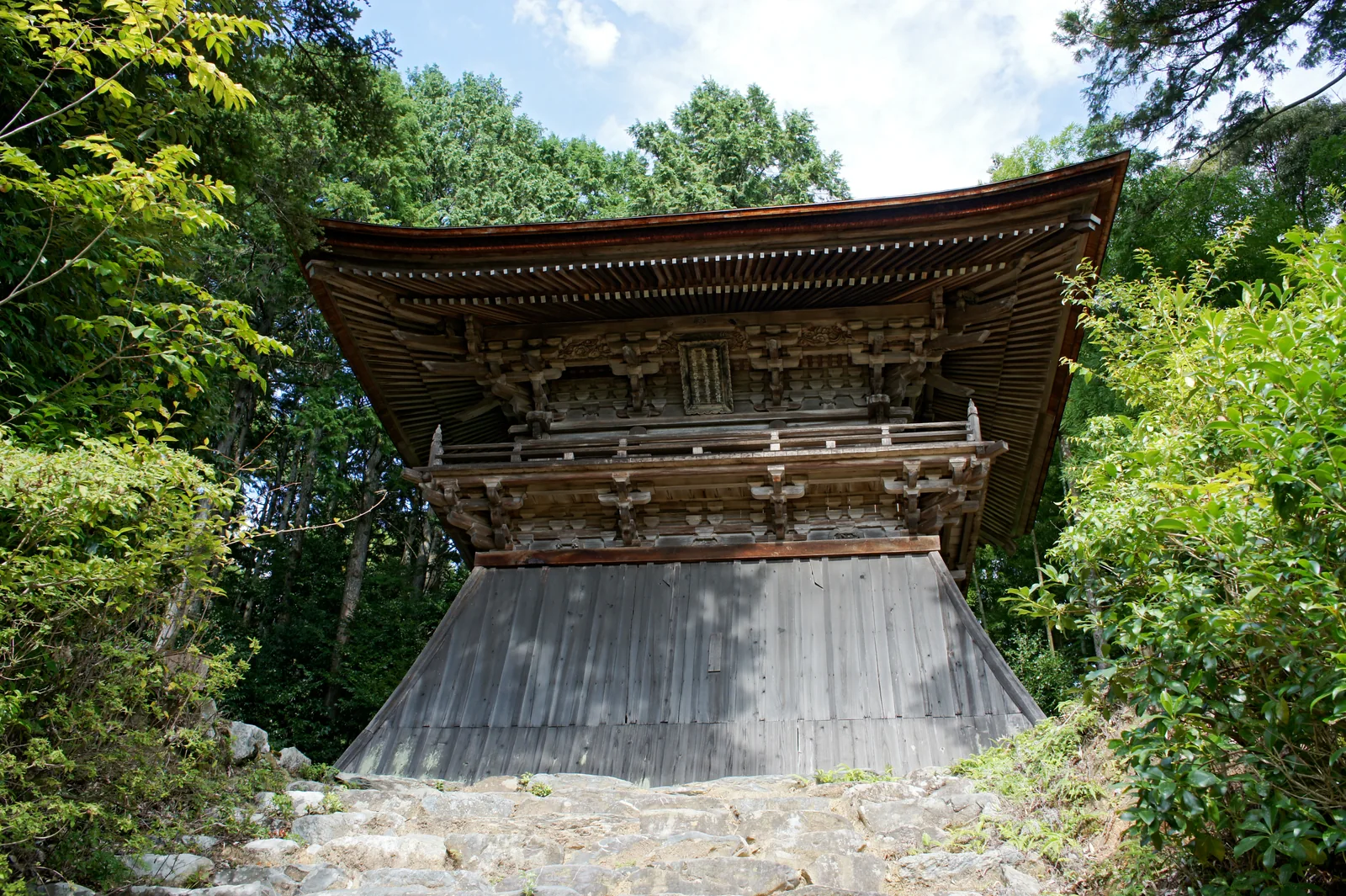
Jingo-ji is where Kūkai performed his first state-protecting ritual and the Takao abhisheka initiations. Open daily 09:00-16:00; adult admission is ¥1,000 (since July 2024). The Tahōtō Pagoda's Five Great Akasagarbha statues open 13-15 May and the Daishidō's wooden Kūkai statue opens 1-7 November (¥500 extra each). Take the JR Bus Takao-Keihoku Line (~50 mins, ¥230 flat fare), followed by a 20-minute walk up stone steps. Covers visitor logistics and the Takao Sanbi walking route.
Three Major Special Viewings: Tahōtō Pagoda, Daishidō and the May Airing of Treasures
Spring's centrepiece is the Tahōtō Pagoda special viewing, when the National Treasure Five Great Akasagarbha Bodhisattva statues (Go-dai Kokūzō Bosatsu) are unveiled annually from 13 to 15 May (10:00-15:00; ¥500 special fee on top of standard grounds admission). After Kūkai entered eternal samadhi, his disciple Shinzei took charge of Jingo-ji and spent 12 years without leaving the mountain developing the complex, during which Emperor Ninmyō vowed to erect the pagoda housing these five statues. The 2027 spring viewing is scheduled for the same dates, 13-15 May.
In autumn, the spotlight moves to the Daishidō Hall. The carved wooden relief statue of Kōbō Daishi (Itabori Kōbō Daishi-zō) opens annually from 1 to 7 November (09:00-16:00; ¥500 extra), accompanied by a commemorative goshuin just as Takao's maples begin to turn. The Tahōtō Pagoda's Five Great Akasagarbha statues also open once in autumn; under the official annual calendar, this falls on the three-day holiday weekend containing the second Monday of October. Because earlier homepage notices occasionally contained date typos, follow the annual calendar's October long-weekend rule when planning.
From 1 to 5 May (09:00-16:00), the Shoin study hall hosts the annual Hōmotsu Mushiboshi (Airing of Treasures), a major showcase of Jingo-ji's National Treasures (¥1,000 special fee in addition to grounds entry). Across five days, roughly 70 prized works go on display—including the National Treasure portraits of Minamoto no Yoritomo and Taira no Shigemori and the silk painting of Shakyamuni Buddha—alongside access to the Kanjō-no-niwa stone garden and paid matcha service at the Ryōryō-ken teahouse.
All three special openings follow the same pricing structure: the ¥1,000 grounds ticket serves as the base, plus ¥500 for the Tahōtō Pagoda or Daishidō (¥1,500 total) or ¥1,000 for the Airing of Treasures (¥2,000 total). Travellers keen to see the full breadth of treasures generally split their visits between May and early November.
Mushiboshi is a traditional annual conservation ritual at historic Japanese temples, using crisp late-spring air to ventilate scrolls and artefacts against damp and insects—while granting devotees and art enthusiasts rare proximity to original works. Jingo-ji pairs this 1-5 May window with the Kanjō-no-niwa rock garden (named for the historic Takao abhisheka) and tea service at Ryōryō-ken; sipping matcha in a mountain study hall surrounded by National Treasures makes for one of the temple's finest five days of the year.
Because Jingo-ji's National Treasure statues and paintings are kept off permanent display, these four windows make up the temple's "National Treasure calendar": the Five Great Akasagarbha twice yearly (mid-May and the October long weekend), the wooden Kūkai relief once yearly (early November), and the Airing of Treasures once yearly (early May). For dedicated visitors, 1-15 May packs both the Airing of Treasures and the spring pagoda viewing into a single fortnight.
Adding special viewing fees brings a visit to ¥1,500-¥2,000—higher than most city temples—but buys rare access to top-tier National Treasures shown only a few days a year. Linking early May with mid-May, or timing an early November trip to catch the Daishidō viewing alongside early autumn colour, allows you to take in Jingo-ji's finest works in a single well-timed day.
Kūkai and Jingo-ji: State-Protecting Rituals and the Takao Abhisheka
Jingo-ji's prominence in Buddhist history rests on two landmark events led here by Kūkai. First, in 810 CE (Kōnin 1), he entered the mountain temple to perform a seven-day state-protecting ritual—explicitly recorded in the temple chronicle as the very first such rite he held after returning from Tang China. Second came the 812 CE (Kōnin 3) Takao Abhisheka: on 15 November Saichō received the Diamond Realm initiation, followed by the Womb Realm initiation on 14 December, and 17 of Saichō's disciples received the Diamond Realm initiation the following March. Kūkai's handwritten roster of these three ceremonies, the Kanchō Rekimei, survives today as a National Treasure.
The site's history reaches back even further. Wake no Kiyomaro founded Takaosan-ji in 781 CE (Ten'ō 1), and in 824 CE (Tenchō 1) it merged with Jingan-ji as Jingokokusō Shingon-ji, with full stewardship entrusted to Kūkai—laying the foundation of an early Shingon stronghold. After major fires in 994 CE (Shōryaku 5) and 1149 CE (Kyūan 5), the monk Mongaku championed its revival. Mongaku's 45-article vow alongside autographed letters from Minamoto no Yoritomo and Hōjō Masako remain in the temple's archive, giving Jingo-ji the standing of a first-rate historical repository.
Official chronicles also trace the sequence linking Takao and Mt Kōya: Kūkai began founding Mt Kōya in 816 CE (Kōnin 7), was granted Tō-ji in Kyoto in 823 CE (Kōnin 14), and entered eternal samadhi on Mt Kōya in 835 CE (Jōwa 2). Jingo-ji predates Mt Kōya as Kūkai's early base for spreading Shingon teachings; as the temple's record notes, its surviving Heian-period treasures demonstrate a standing "in no way inferior to Tō-ji or Kongōbu-ji", placing visitors at the true birthplace of Shingon Buddhism.
The main hall's principal image, a National Treasure standing wooden statue of Yakushi Nyorai (Medicine Buddha), is believed to have come from Jingan-ji, while holdings such as the Takao Mandala and the Landscape Screen (Senzui Byōbu) appear regularly in Japanese art history textbooks. Tucked into this mountain valley is effectively half the canon of early Shingon art.
Several signature treasures merit reading up on before you climb the steps. Commissioned under Emperor Junna during the Tenchō era, the Takao Mandala faithfully renders Tang painter Li Zhen's Twin Mandalas in gold and silver pigment on purple damask, preserving the esoteric iconographic lineage Kūkai brought from Chang'an. The Konshi Kinji Issaikyō (Tripitaka written in gold ink on indigo paper) showcases sutra calligraphy at its peak, while the Futarasan Inscription and Mongaku's letters document the temple's medieval restoration. Since most pieces stay vaulted year-round, checking the inventory beforehand helps you align your visit with the May or autumn openings.
Two further highlights of Japanese painting are the Shakyamuni Nyorai scroll and the Landscape Screen, an early benchmark of Yamato-e landscape painting in ink and colour often compared with the related screen at the Tokyo National Museum. Because these paintings and sculptures stay in storage most of the year, "not on view" is the mountain temple's normal state; encountering them on an open day feels genuinely celebratory, making the seasonal queues easier to take in stride.
Rounding out the collection are three late-Heian to early-Kamakura portraits—the Portrait of Minamoto no Yoritomo, Portrait of Taira no Shigemori, and Portrait of Fujiwara no Mitsuyoshi—cornerstones of Japanese portraiture. Scholars have debated the sitters' exact identities for decades, drawing crowds whenever they appear during May's Airing of Treasures. Viewed alongside letters from Yoritomo and Hōjō Masako and Mongaku's 45-article vow, they trace how Mongaku raised rebuilding funds from both the Minamoto and Taira clans—art and primary documents corroborating each other on the same hillside.
Getting There: JR Bus Takao Line and the Stone Approach
Two main public transport routes reach Jingo-ji. First is the West Japan JR Bus Takao-Keihoku Line, taking roughly 50 minutes from JR Kyoto Station (or Karasuma Line Kyoto Station on the underground) to the "Takao" stop; routes 47 and 47S (via Ichijō-dōri to Shūzan), 48 and 48S (via Ritsumeikan University to Shūzan), and 49 (via Karasuma to Togano-o) all charge a flat ¥230 fare from Kyoto Station to Togano-o, including alighting at Takao. Second is Kyoto City Bus Route 8 from Hankyū Karasuma Station or Subway Shijō Station, taking about 45 minutes to Takao.
Official walking times from the bus stop differ slightly: the JR Bus map states roughly 15 minutes along the footpath from Takao stop to the Sanmon gate plus 15 minutes up the stone approach steps into the grounds (around 30 minutes total), whereas Jingo-ji's website lists roughly 20 minutes on foot from Takao (measured to the gate). Allow 20 to 30 minutes from bus stop to inner precincts, factoring in the climb up the Kehigū Approach steps—steep work on crisp autumn or winter mornings. No official step count exists, so disregard unofficial figures online.
If driving, follow National Route 162 to the Fukuōji junction and continue around 6 km toward Keihoku and Takao, though official advice explicitly warns of traffic delays. During autumn foliage season, the Fukuōji-to-Takao stretch becomes one of northwest Kyoto's worst bottlenecks, making the bus far more predictable than a car. There is no direct service from Osaka; travel to Kyoto Station first and change to the JR Bus.
On the way back, a clever routing detail saves your knees: Route 49 terminates at Togano-o, directly beside Saimyō-ji and Kōzan-ji. Walking the Takao Sanbi route through to Kōzan-ji and boarding the return bus at Togano-o is the officially recommended finish, sparing you a climb back uphill to the Takao stop.
All three JR Bus routes depart from Kyoto Station—47 and 47S via Ichijō-dōri, 48 and 48S past Ritsumeikan University, and 49 along Karasuma-dōri, bound for Shūzan or Togano-o. Any of them drops you at Takao for the same ¥230 flat fare, differing only slightly in city routing and journey time. Returning from Togano-o on Route 49 completes a neat one-way traverse—off at Takao, back from Togano-o—that cuts out half the backtracking. Note that winter temperatures in the Takao valley run several degrees colder than central Kyoto, so pack an extra warm layer for early morning climbs.
Some online guides mention alighting at "Yamagoe" to walk up, but West Japan JR Bus fare and stop tables list no Yamagoe stop; both Jingo-ji and JR Bus specify "Takao" as the standard alighting point. Anyone considering other Kyoto City Bus lines should check the latest Kyoto Municipal Transportation Bureau route map. Fares can be paid with IC transport cards or cash as indicated onboard.
The Takao Sanbi Walk: A Day Linking Jingo-ji, Saimyō-ji and Kōzan-ji
West Japan JR Bus's official Takao Sanbi Meguri Map joins three mountain temples into one cohesive route: take the bus roughly 50 minutes from Kyoto Station to Takao, walk 15 minutes along the trail to Jingo-ji's gate and climb 15 minutes of stone steps into the grounds; exiting Jingo-ji's gate, walk roughly 20 minutes along the footpath to Saimyō-ji's gate, then about 20 minutes via footpath and roadside trail to Kōzan-ji's gate; after visiting Kōzan-ji, board the bus at Togano-o for the roughly 50-minute return to central Kyoto or Kyoto Station. Allowing for temple visits and walking, the full circuit takes around four to five hours.
Each of the three temples has a clear focus: Jingo-ji serves as Shingon Buddhism's historical birthplace and National Treasure archive, while Saimyō-ji and Kōzan-ji unfold further down the Kiyotaki River valley, with Kōzan-ji renowned for the National Treasure Chōjū-giga (Scrolls of Frolicking Animals) and as an early birthplace of Japanese tea. JR Bus consistently refers to this route as Sanbi Meguri ("Three-O Tour", after Takao, Makino-o, and Togano-o—never "Sanzan"), so "Takao Sanbi" is the most faithful name. Saimyō-ji and Kōzan-ji keep separate admission fees and hours; check each temple's official website before setting out.
If coming for autumn colour, note that Jingo-ji does not publish a peak-foliage calendar table, posting real-time foliage photos instead. The only fixed November changes are the Daishidō viewing (1-7 November) and month-long sticker goshuin. Pair Kyoto Prefecture and Kyoto City autumn foliage bulletins with the temple's Instagram to time the peak. Practically, arriving early—visiting Jingo-ji before noon and strolling down the Kiyotaki River to Saimyō-ji and Kōzan-ji in the afternoon—sidesteps the worst midday queues on the steps.
What travellers underestimate most on this route is stamina. Combining the steep climb and descent of Jingo-ji's approach steps with undulating valley paths between the three temples adds up to noticeable elevation change, and autumn or winter mornings can leave stone steps frosty and slick. Wear grippy walking shoes, carry plenty of water, and treat Takao Sanbi as a light mountain walk rather than a flat city temple tour.
Because Jingo-ji shares foliage progress through real-time Instagram clips rather than forecast tables, the most reliable plan is to anchor your dates on what is fixed—1-7 November catches the Daishidō opening at the start of the season, with sticker goshuin running all month—and cross-reference Kyoto's official foliage updates with a day's buffer either side of predicted peak.
Food and supply stops in the Takao valley are limited, with wooded riverside trails and highway-edge footpaths between the three temples and no convenience stores along the route. Pack light snacks such as rice balls (onigiri) or eat a proper breakfast at Kyoto Station before boarding. After rain, stone steps and forest tracks turn slippery, so non-slip shoes, seasonal layers, and drinking water are essential for a comfortable day out.
Running through all three temples is the Kiyotaki River valley itself. The trail hugs rushing water and cedar groves, ablaze with crimson maples from riverbed to ridge in autumn before the river flows south toward Arashiyama and the Hozukyō gorge. Summer brings cool woodland shade, autumn vivid foliage, and winter quiet snow-dusted roofs—because Jingo-ji stays open year-round, every season shows the valley in a completely different light.
Annual Calendar and the Seasonal Rhythm of Worship
Jingo-ji observes a packed calendar of annual rites: New Year Service at the Kondō (1 January), Principal Image Offering (8 January), Miedō Memorial Service at the Daishidō (21 January), Nirvana Service (15 February), Spring and Autumn Equinox Services (21 March and 23 September), Buddha's Birthday / Hanamatsuri (8 April), Wake-kō Festival at the Wake Mausoleum (4 May), Kūkai's Birthday Service (15 June), Mongaku Shōnin Memorial (21 July), Obon Service (15 August), Imperial Prince Shōnin Memorial (18 September), and the autumn Wake-kō Festival at the Kondō (4 November). If planning around a specific ceremony, telephone the temple beforehand to confirm that year's schedule.
Goma fire rituals are held in the Myōō-dō Hall, where a mid-Heian statue of Fudō Myōō (Acala) is on view. Special annual ceremonies are the First Great Goma (Hatsu-daigoma-ku) on the second Sunday of January at 14:00 and the Segaki Goma on 16 August at 14:00; from February to July and September to December, regular Goma rites take place on the second Sunday of each month at 14:00. Individual petitions for personal wishes (soe-goma) are accepted at the Kondō Hall according to current temple notices.
Beyond on-site worship, the temple's study resources deepen the experience: download the free Cassette Museum audio guide before arriving, or pick up the May 2023 Takao Mandala Catalogue (¥3,000 at the temple, plus ¥1,000 registered postage for mail orders), which captures National Treasure details far more rewarding as a keepsake than ordinary souvenirs. Follow the official Instagram for the fastest updates on seasonal goshuin and autumn foliage.
With a 50-minute bus journey, a 20-to-30-minute uphill climb, and a ¥1,000 admission fee, Jingo-ji requires more effort than central Kyoto temples—yet repays it with the historic birthplace of Shingon Buddhism, multiple annual National Treasure viewings, and the scenic Takao Sanbi valley walk. Plan your budget and pacing carefully, and pair the day with Arashiyama or northwest Kyoto sights if time allows.
Before climbing up, it is worth recalling founder Wake no Kiyomaro's story. When he established Takaosan-ji in 781 CE, he had recently come through the Dōkyō political crisis under Empress Shōtoku—surviving exile before returning to court—and legends of Emperor Kōnin's state-protecting temple remain woven into his legacy, honoured every 4 May at the Wake Mausoleum. Merged with Jingan-ji's Yakushi Nyorai statue, the mountain layers Nara-period devotion directly beneath Heian esotericism.
Placing Jingo-ji on a wider Shingon pilgrimage map clarifies its place: Kūkai's mission began on Mt Takao (the state-protecting rite and Takao Abhisheka), expanded to Mt Kōya in Wakayama (founded 816 CE, where he entered eternal samadhi in 835 CE), and culminated at Tō-ji in Kyoto (granted 823 CE). Together these three sites anchor the key chapters of his life—viewing the Five Great Wisdom Kings in Tō-ji's Lecture Hall, walking Danjō Garan and Okunoin on Mt Kōya, and returning to Jingo-ji where the initiations began. Placing Jingo-ji at the end of such a journey often makes the entire lineage fall into place.
If your visit coincides with the second Sunday afternoon of the month, pause outside the Myōō-dō for the Goma fire ritual. As monks chant sutras and form mudras before roaring flames, visitors may join silently in prayer from outside the hall (personal soe-goma petitions can be arranged on regular days at the Kondō). Rather than viewing an esoteric fire rite as mere spectacle, take a quiet moment to absorb the rhythm of flames and mantras—the quiet gravity of the mountain sanctuary comes through effortlessly.
A few useful answers
What are Jingo-ji's opening hours and admission fees?
Jingo-ji is open daily from 09:00 to 16:00 all year round. Since 1 July 2024, admission is ¥1,000 for adults, university students, senior high and junior high students, and ¥500 for primary school pupils, with discounts for groups of 30 or more and visitors with disabilities. Older articles listing ¥600 are outdated. Fees remain unchanged during autumn foliage, and there are no official night viewings.
When are Jingo-ji's special viewings held?
There are three main windows: the Tahōtō Pagoda's National Treasure Five Great Akasagarbha statues open 13-15 May (10:00-15:00; ¥500 extra) and again during the October long weekend containing the second Monday; the Daishidō's wooden relief statue of Kōbō Daishi opens 1-7 November (09:00-16:00; ¥500 extra, with a commemorative goshuin); and the Shoin hosts the Airing of Treasures from 1-5 May, displaying around 70 items including portraits of Minamoto no Yoritomo and Taira no Shigemori (¥1,000 extra).
How do I get to Jingo-ji from Kyoto Station?
Take the West Japan JR Bus Takao-Keihoku Line (Routes 47, 48, or 49) from Kyoto Station for about 50 minutes to the Takao stop (¥230 flat fare to Takao and Togano-o), or Kyoto City Bus Route 8 (about 45 minutes). From the stop, walk 15 minutes along the footpath to the gate and climb 15 minutes of stone steps to the grounds (Jingo-ji's website estimates 20 minutes to the gate). Driving via National Route 162 from Fukuōji (around 6 km) is prone to severe autumn traffic jams.
Can I combine Jingo-ji with Kōzan-ji and Saimyō-ji?
Yes, this is the official JR Bus Takao Sanbi walking route. Alight at Takao to visit Jingo-ji (15-minute footpath plus 15-minute stairs), walk roughly 20 minutes to Saimyō-ji, continue another 20 minutes to Kōzan-ji, and catch the bus back to Kyoto from Togano-o (about 50 minutes). The full three-temple circuit takes around four to five hours. Wear grippy shoes, as steps can be frosty on autumn and winter mornings.
Official information and references
Sources used in this guide.
- Jingo-ji Official Website (Hours 09:00-16:00 Year-Round & Admission Table from 1 July 2024)
- Jingo-ji Access Guide (JR Bus Takao-Keihoku Line ~50 mins, ~20-min Walk from Takao)
- Jingo-ji History (Founded 781 by Wake no Kiyomaro, 824 Jingokokusō Shingon-ji, Revived by Mongaku)
- Jingo-ji: Kūkai and Mt Kōya (Takao Abhisheka, Kanchō Rekimei, 816 Founding of Mt Kōya & 835 Samadhi)
- Jingo-ji Annual Calendar (Special Viewings, Goma Fire Rituals & Event Schedule)
- Jingo-ji Temple Treasures (Yakushi Nyorai, Five Great Akasagarbha, Takao Mandala & Kanchō Rekimei)
- West Japan JR Bus: Takao-Keihoku Line (Routes 47/48/49, ¥230 Flat Fare from Kyoto Station to Togano-o)
- West Japan JR Bus: Takao Sanbi Meguri Map (Official Walking Times for Jingo-ji, Saimyō-ji & Kōzan-ji)